Behind the Scenes: “100 Rifles” (1969)

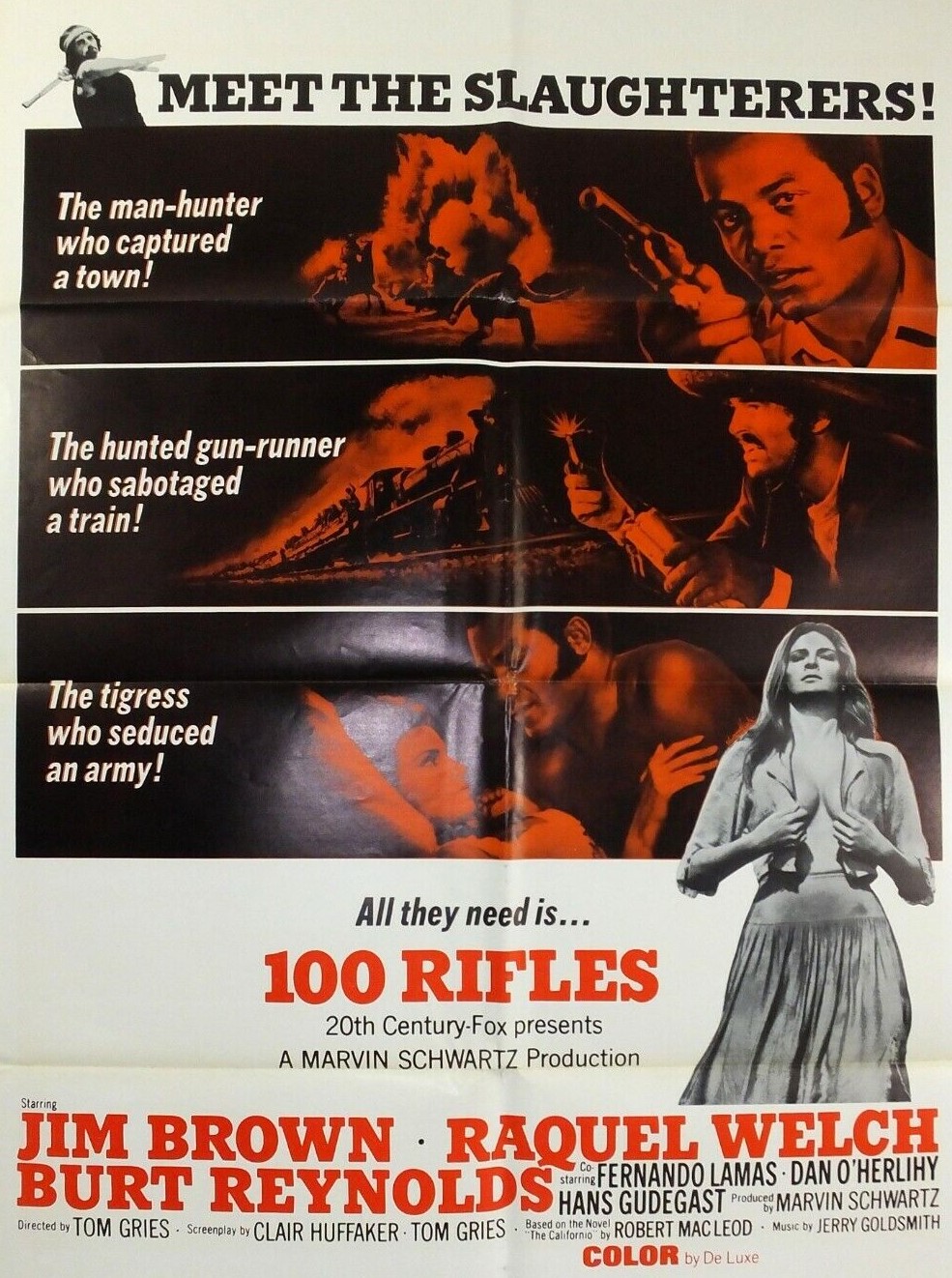
100 Rifles was easily the most underrated film of the year. Even if the sum of all its parts did not add up to greatness, it had a lot more going for it than has generally been attributed. For a start, there was the attempt to build Jim Brown into a mainstream African American star. Secondly: the return of the bold female character that had largely disappeared since the heyday of Barbara Stanwyck, and Joan Crawford. Thirdly: the conjunction of these first two elements in a sex scene raised the issue of miscegenation that Hollywood had otherwise sought to avoid.

Fourthly, and perhaps most hard- hitting of all: the issue of genocide, the mass slaughter of the Yaqui Indian population providing an uneasy parallel not just to the United States treatment of its own indigenous Native American population but also to its actions in Vietnam.
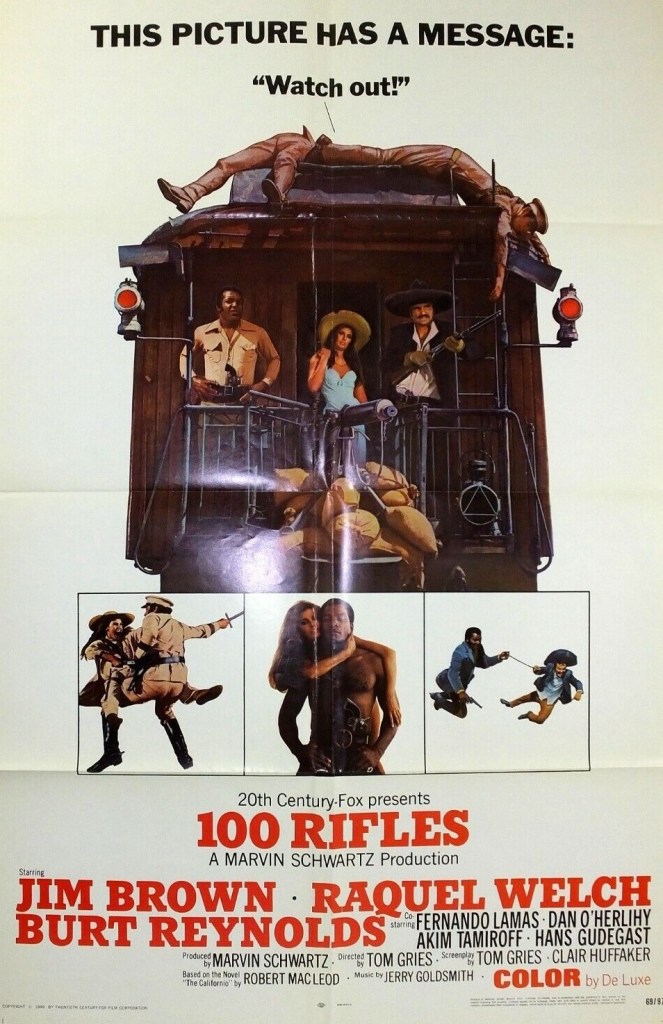
But there was a danger that, without both incisive direction and potent performances, the movie would spiral downwards into another simple case of “When Beefcake (Jim Brown) Met Cheesecake (Raquel Welch).” Since nobody had expected Sidney Poitier to ascend the Hollywood ladder so fast, and in so doing set a trend, the industry had nobody lined up to ride in his wake and exploit what now appeared to be, at the very least, acceptance of African Africans as stars in their own right, with an audience ready to embrace a new kind of hero. Although MPAA president Jack Valenti called for more African Americans in more African American films, the number of highly touted big- budget African American–oriented pictures that offered stardom potential rarely made it out of the starting blocks.

But there was one potential crossover star waiting in the wings: Jim Brown. While lacking Poitier’s acting chops, he had the physique, looks and charisma. Cleveland Browns football legend with strong supporting roles in The Dirty Dozen (1967), Dark of the Sun (1968) and Ice Station Zebra (1968), top-billing had been limited to low-budgeters like Kenner (1968), The Split (1968) and Riot (1969).

But Variety had singled him out at the start of 1969 as one of its “new stars of the year” and judged him “the strongest contender to inherit some of Sidney Poitier’s earning power.” 100 Rifles had double the budget of any of his previous pictures.

Raquel Welch was in a similar situation to Jim Brown regarding Hollywood acceptance. However, she was not in a minority as far as female stars were concerned. The 1960s had been dominated by the likes of drama queen (in more ways than one) Elizabeth Taylor,  comedy queen Doris Day and musical queen Julie Andrews, not to mention Audrey Hepburn, (Breakfast at Tiffany’s, 1961), Italian import Sophia Loren (El Cid, 1961), Jane Fonda (Cat Ballou, 1965), Natalie Wood (Sex and the Single Girl, 1964) and Shirley MacLaine (Sweet Charity, 1968). There was also an overabundance of new talent in Julie Christie (Doctor Zhivago, 1965), Vanessa Redgrave (Blow Up, 1966), Lynn Redgrave (Georgy Girl, 1965), Mia Farrow (Rosemary’s Baby, 1968) and Faye Dunaway (Bonnie and Clyde, 1967).

But those stars had more to offer than mere beauty, whereas Welch, having made her name primarily as a pin- up and as eye candy in movies like One Million Years B.C. (1966) and Fantastic Voyage (1966), had trouble shaking off the idea that she won more parts on the basis of her body than for the acting skills, appearing in a dry bikini in Fathom (1967) and a wet one in Lady in Cement (1968).

However, like Jim Brown, she was actively looking to fill a niche, and set out her stall as a player of dramatic intensity, and she found it in the most unlikely of places: the western. That she chose 100 Rifles was interesting given her other choices. She was offered the Katharine Ross part in Butch Cassidy and the Sundance Kid when the lead roles had been offered to Steve McQueen and Warren Beatty and again when Paul Newman came into the frame. She was also up for the Faye Dunaway role for The Crown Caper (title later changed to The Thomas Crown Affair), again with McQueen, and a film with Terence Stamp (which was never made). But she clearly felt those roles were more decorative.

At one time, the female western star had been a staple. Claire Trevor was the star of Stagecoach (1939) and Texas (1941). Gene Tierney made her name with The Return of Frank James (1940) and Belle Starr (1941). Barbara Stanwyck carved out her own niche as a western icon after taking top billing in Union Pacific (1939), California (1947), The Furies (1950), Cattle Queen of Montana (1954), The Maverick Queen (1956) and Forty Guns (1957). While Maureen O’Hara took second billing in Rio Grande (1950), McLintock! (1963) and The Rare Breed (1965), she was the star of Comanche Territory (1950), The Redhead from Wyoming (1953) and The Deadly Companions (1961). Yvonne De Carlo headlined Black Bart (1948), The Gal Who Took the West (1949) and Calamity Jane and Sam Bass (1949). Rhonda Fleming had the female lead in The Redhead and the Cowboy (1951), The Last Outpost (1951), Pony Express (1953) and Gunfight at the O.K. Corral (1957). Johnny Guitar (1954) achieved classic status largely on the performance of Joan Crawford.
There had even been modern precedent: Inger Stevens had nearly cornered the recent market after A Time for Killing (1967), Firecreek (1968), Hang ’Em High (1968) and 5 Card Stud (1968) while Claudia Cardinale went from a supporting role in The Professionals (1966) to top billing in the forthcoming Once Upon a Time in the West.

Raquel Welch set out to follow suit. In Bandolero (1968) she proved capable not only of holding her own against veterans James Stewart and Dean Martin but as adept on the pistol- packing side of things. While Welch professed herself “no Anne Bancroft,” she was pleased that she was not “running around half- naked all the time.” After that punched a hole in the  box office, she was offered the female lead in 100 Rifles to be directed by Tom Gries who had made his name as a director with his unflinching portrayal of the cowboy in Will Penny (1968).

The basis of the film was Robert MacLeod’s The Californio, published in 1966, and the essence of the story concerned a “reckless stranger” who refused to turn the other cheek while innocent people were being killed. After Clair Huffaker turned in his screenplay, Gries wrote two further drafts. It is safe to assume that the casting of Jim Brown came after the Huffaker script had been handed in. When Huffaker did not like the way his work had ended up on screen, he insisted on using the pseudonym Cecil Dan Hansen, as he had done on The Second Time Around.

For 100 Rifles, he was so upset at the end result that he demanded either his name removed or the pseudonym installed, complaining that the finished product “bears absolutely no resemblance to my script.”

The story of The Californio bears little resemblance to 100 Rifles. Not only is the hero of the book, Steve McCall, white, he is a rawboned young man and not a lawman in his 30s. He is not a gunman either, being more proficient with the lasso. In fact, when forced into bloody action, he discovers that he abhors violence. The book could more aptly be described as a “rite of passage” novel where a young man, sent south “on legitimate business in the interests of the (U.S.) Federal Government,” leaves home for the first time, becomes a man, loses his virginity and kills his first man.
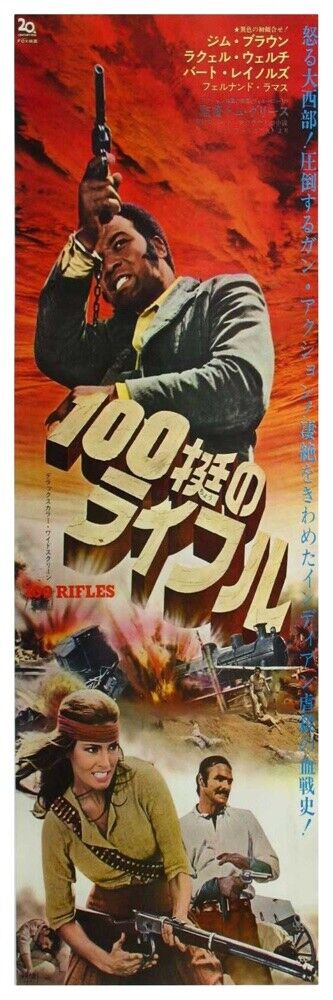
Nor is Yaqui Joe a bank robber in the book, and after meeting up with McCall, they embark on further legitimate business. Maria, named Sarita in the film, is most like her feisty movie counterpart, and although in the MacLeod version she is married, that does not prevent her taking Steve’s virginity. Of the villains, Verdugo (the name means “Hangman”), while not elevated to general, is still as ruthless, but the foreign adviser is not.

Most of the film’s action was invented by the screenwriters, including the concept of the 100 Rifles, Sarita’s sexy shower as a way of stopping the troop train, and the children being taken hostage (although in one episode in the book, children are shot). Trying to reshape the book to suit the new requirements of the characters makes the picture unnecessarily complicated. Burt Reynold’s solution was simpler: “Keep his shirt off and her [Raquel Welch’s] shirt off and give me all the lines,” he reportedly advised producer Marvin Schwartz.

The movie was shot over a ten- week period in Spain beginning in July 1968. Although that country had become a viable alternative for westerns looking to keep budgets low, in part in 1968 due to the devaluing of the peseta against the dollar, the volume of films shot there had declined by nearly a third compared to the previous year.

Despite the popularity of the location, Almeria, the actual area of countryside where most spaghetti westerns were shot, was very small. This resulted in a limited variety of available landscapes compared with films shot in the U.S. such as The Stalking Moon. The actors had to contend with extreme heat, and Gries was laid low for three days after contracting typhus. Gries decided to get the sex scene out of the way on the first day of shooting, probably to ensure that tension about the content was not allowed to linger until later in the shoot. However, it had the opposite effect. Neither Brown nor Welch had been given time to get to know one another nor to adjust to different styles of acting and to understand the perspectives of each other’s characters. Welch was not happy with the scene and tensions between the two stars continued throughout the film, some press reports putting this down to squabbles over close- ups, others to unresolved sexual tension. Welch later complained that scenes edited out of the picture had reduced audience understanding of her motivations. The MPAA also did some judicial trimming, axing Welch’s shrieks during lovemaking.

Critical reception ranged from sniffy to downright hostile. Perhaps like The Stalking Moon, advance publicity, although not this time pointing in the direction of the Oscars, had served to put critics off what sounded like an exploitative film. For the western traditionalist, sex scenes were off- putting, and although naked breasts had started appearing in a handful of movies, there were precious few full- on sex scenes, never mind one that featured miscegenation. Variety judged it a “routine Spanish- made western with a questionable sex scene as a possible exploitation hook.” On the plus side, Welch’s performance was “spirited” as was the Jerry Goldsmith score; Brown and Reynolds were just “okay.” The Showmen’s Servisection took a different view: “Fast pace, fine performances lift western several notches above the ordinary.” Roger Ebert in the Chicago Sun- Times called it “pretty dreary.” Howard Thompson, the New York Times’ second- string reviewer, said it was a “triumphantly empty exercise.”

Twentieth Century–Fox had been affected by recent financial disasters such as Doctor Dolittle (1967) and Star! (1968); the former collecting $6.2 million in domestic rentals on a budget of $17 million, the latter $4.2 million in rentals after costing $14.5 million. To counter mounting exhibitor panic about production being slashed, Fox had drawn up an ambitious program for 1969, promising one new movie every month. The program kicked off with a $7.7 million adaptation of the Lawrence Durrell classic Justine with Dirk Bogarde (January), followed by Michael Caine and Anthony Quinn in the $3.77 million film of the John Fowles bestseller The Magus (February) and the trendy $1.1 million Joanna from new director Mike Sarne (March). British star Maggie Smith in the $2.7 million The Prime of Miss Jean Brodie (April) came next with 100 Rifles (May) and another Marvin Schwarz production, Hard Contract starring James Coburn, costing $4 million (June). Summer highlights were Omar Sharif in the $5.1 million biopic of Che! directed by Richard Fleischer (July) and Gregory Peck in the $4.9 million Cold War thriller The Chairman (August). Come fall it was the turn of Paul Newman and Robert Redford in the western Butch Cassidy and the Sundance Kid coming in at $6.8 million (September), Richard Burton and Rex Harrison as aging homosexuals in The Staircase costing $6.3 million (October) and Warren Beatty and Elizabeth Taylor in George Stevens’ $10 million The Only Game in Town (November). The year ended with John Wayne and Rock Hudson in the $7.1 million Civil War western The Undefeated (December).

The studio needed several box office home runs because the following year it was already committed to three roadshows—Tora! Tora ! Tora!, Hello, Dolly and Patton—costing over $60 million. By spring it was clear that the first two movies in the schedule had been major flops, Justine bringing in only $2.2 million in rentals, The Magus $1 million. Income from Joanna and The Prime of Miss Jean Brodie barely exceeded costs.

By the time 100 Rifles swung into action with two largely untried leads and a director making only his second major picture, the pressure was on. “

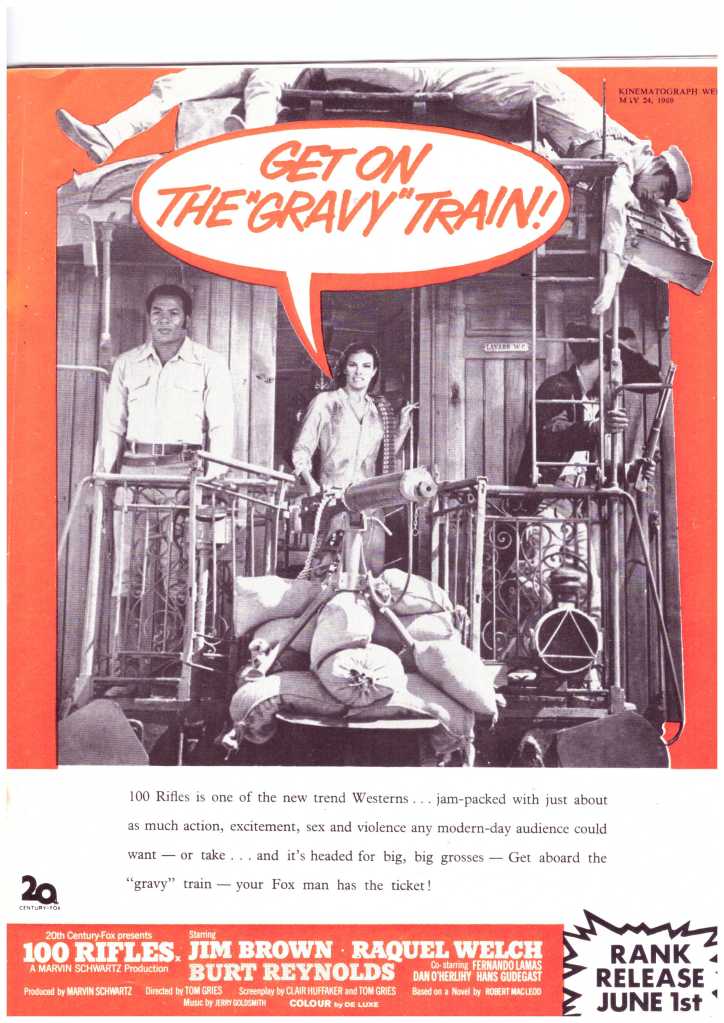
At the box office 100 Rifles got off to a great start and Twentieth Century–Fox reported with delight that it had outgrossed Bandolero! by 40 percent in Washington (and by 500 percent in the ghetto areas), and by 300 percent in Philadelphia. In Baltimore it grossed $50,000 from a single theater compared to $80,000 from eight for Bandolero! and in Atlanta first run it had been $61,000 for the new film compared to $38,000 for the previous one. However, while Brown and Welch fans were out in force in certain areas, that did not make up for less interest in regions where westerns were associated with bigger or more traditional names. Ultimately, 100 Rifles fell short of expectations given the budget. U.S. rentals amounted to $3.5 million, and it registered in 29th position on the annual chart— the sixth highest- grossing western of the year and ahead of Mackenna’s Gold, The Stalking Moon, Paint Your Wagon and Once Upon a Time in the West.

But, of course, the domestic performance did not take into account the popularity of westerns overseas and the distinct following Raquel Welch had accumulated. So where some of the studio’s major dramas stumbled in the global market, 100 Rifles hit the ground running.

SOURCES: This is an abbreviated version of much longer chapter devoted to the film that ran in The Gunslingers of ’69: Western Movies’ Greatest Year (McFarland, 2019) by Brian Hannan (that’s me). All the references mentioned can be found in the Notes section of that book.
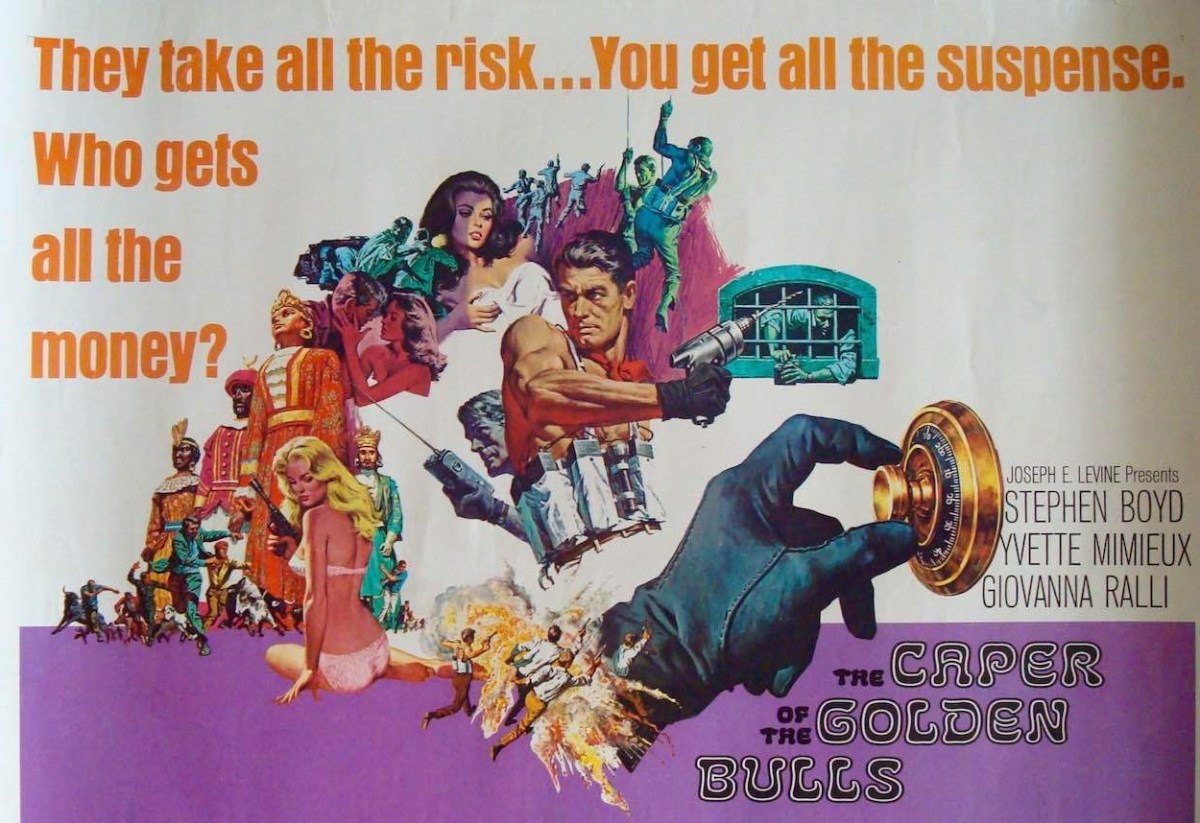
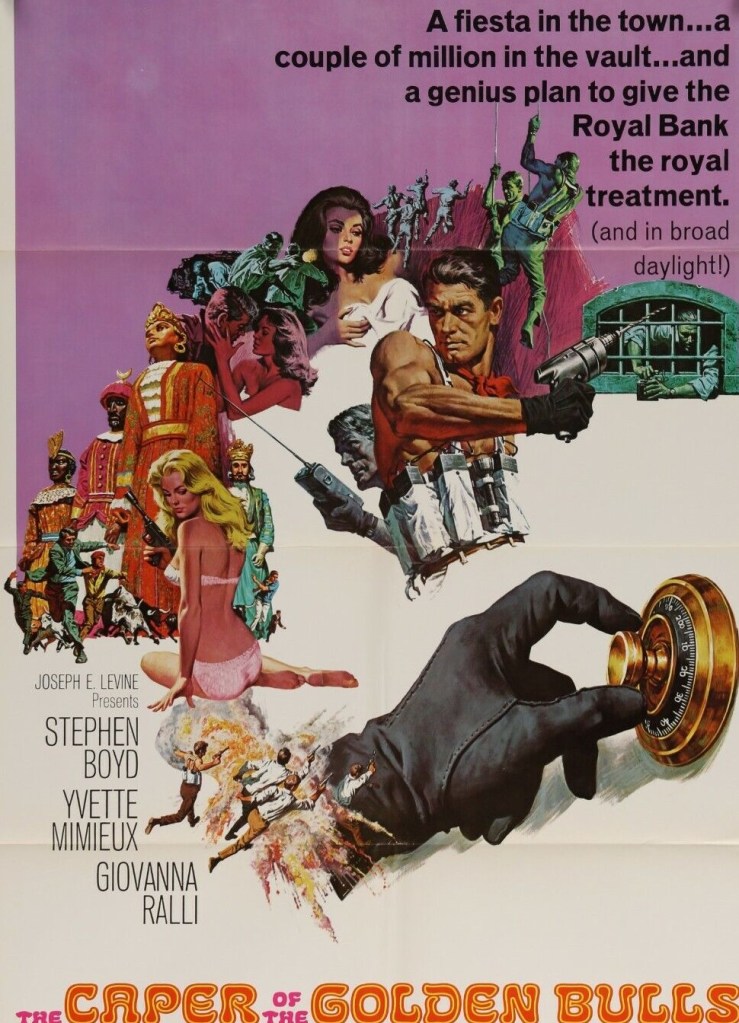
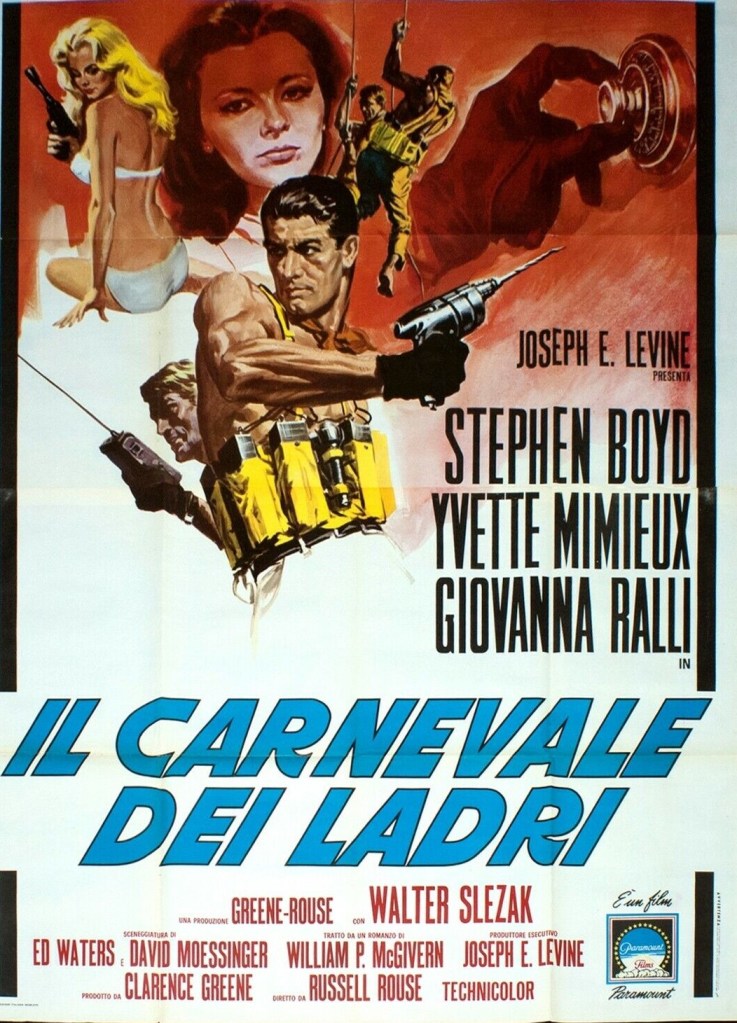
The Caper of the Golden Bulls / Carnival of Thieves (1967) ***

Just to be clear. Nobody is stealing a golden bull, though the annual running of the bulls in Pamplona in Spain is a plot element. No, this gang, led by former bank-robber Churchman (Stephen Boyd) is only going to break into an impregnable bank (par for the course) and steal priceless royal jewels.

There’s an audacious, certainly unorthodox, plan, tension throughout between Churchman’s  sexy former lover Angela (Giovanna Ralli) and current more demure squeeze Grace (Yvette Mimieux), a couple of unexpected comedy sequences, a silent heist and a superb final twist.

Just to be clear – there’s no bikini blonde with a pistol.

Churchman is not your ordinary robber. He only hit banks to make reparation for, while a World War Two pilot, mistakenly dropping bombs on a French cathedral, donating the loot to the reconstruction. Angela, with no such ideals, has spent her share of the dosh and intent on a financial top-up  blackmails Churchman, now a respected businessman, into the one-final-caper scenario.  

Key to getting the jewels out is becoming involved in the annual fiesta, of which the bull-running is a minor part. The bull-running, too, shifts the dynamic of the job, and what appears an irrelevant sub-plot of former resistance fighters hunting a traitor provides an essential pay-off.

When moral Grace uncovers the plot she is inveigled to participate, ensuring some spicy bitchy dialog between herself and the more obviously immoral Angela.  Unwittingly helping out is Spanish cop (Walter Slezak) and with Churchman committed the only person Angela needs use her wiles on is a giant, friendlier by the minute as he responds to her seductive smiles.

While this lacks the panache, guile or gloss of a Topkapi (1964) or Gambit (1966), it’s certainly well-done enough. It’s one of those films you appreciate more after you’ve watched it than during, the structure of the screenplay most of all, as all the little pieces of a finely-tuned jigsaw lock into place.

There’s a couple of excellent reversals, an ambush where firecrackers pass for bullets, imminent discovery of explosives thwarted by a quick-thinking Grace, and some split-second timing.  Explosives, timed to match the firing of a cannon, allow a bystander cop to remark, “that cannon gets louder every time.” At first the fiesta appears standard time-filling tourist-fodder but both the parade and the bull-running are allocated genuine spots in the narrative.

The sensuous, devious Giovanna Ralli (Deadfall, 1968) is the pick, a femme fatale straight out of film noir, with a knowing twist in her main seduction scene. Fans of Stephen Boyd (Assignment K, 1968) will enjoy seeing him dally with conscience rather than rely on a straight down the line hardman, albeit with more than an ounce of charm. What Yvette Mimieux (Dark of the Sun, 1968) ultimately brings to the occasion is hidden until the end so her character has more depth than initially surmised.

There was a sense here, though, of three stars still trying to make their mark on Hollywood, establishing their marquee credentials. Although Boyd had enjoyed box office success in Fantastic Voyage (1966) and The Bible (1966) he was not seen as the main element in those film’s hitting the target. Other films relying on his star potential to pull in an audience had flopped.

Outside possibly of Disney confection Monkeys, Go Home! (1967) and The Time Machine (1960) Yvette Mimieux had yet to enjoy a proper hit. Giovanna Ralli was the latest in a string of European imports, a low-level gamble since they were cheaper than Hollywood alternatives even though most never made the grade or did so only fleetingly.

You wouldn’t pick this picture to put either of the trio back on the very top since for the sake of later twists the screenplay plays around with motivation and the very lack of gloss limits the movie’s potential. But although we’ve seen much of this before, it’s still suspenseful enough.

Russell Rouse (A House Is Not A Home, 1964) directs from a screenplay by David Moessinger (Number One, 1969) and Ed Waters, who had form in this area with Man-Trap (1961).

An engrossing enough matinee.

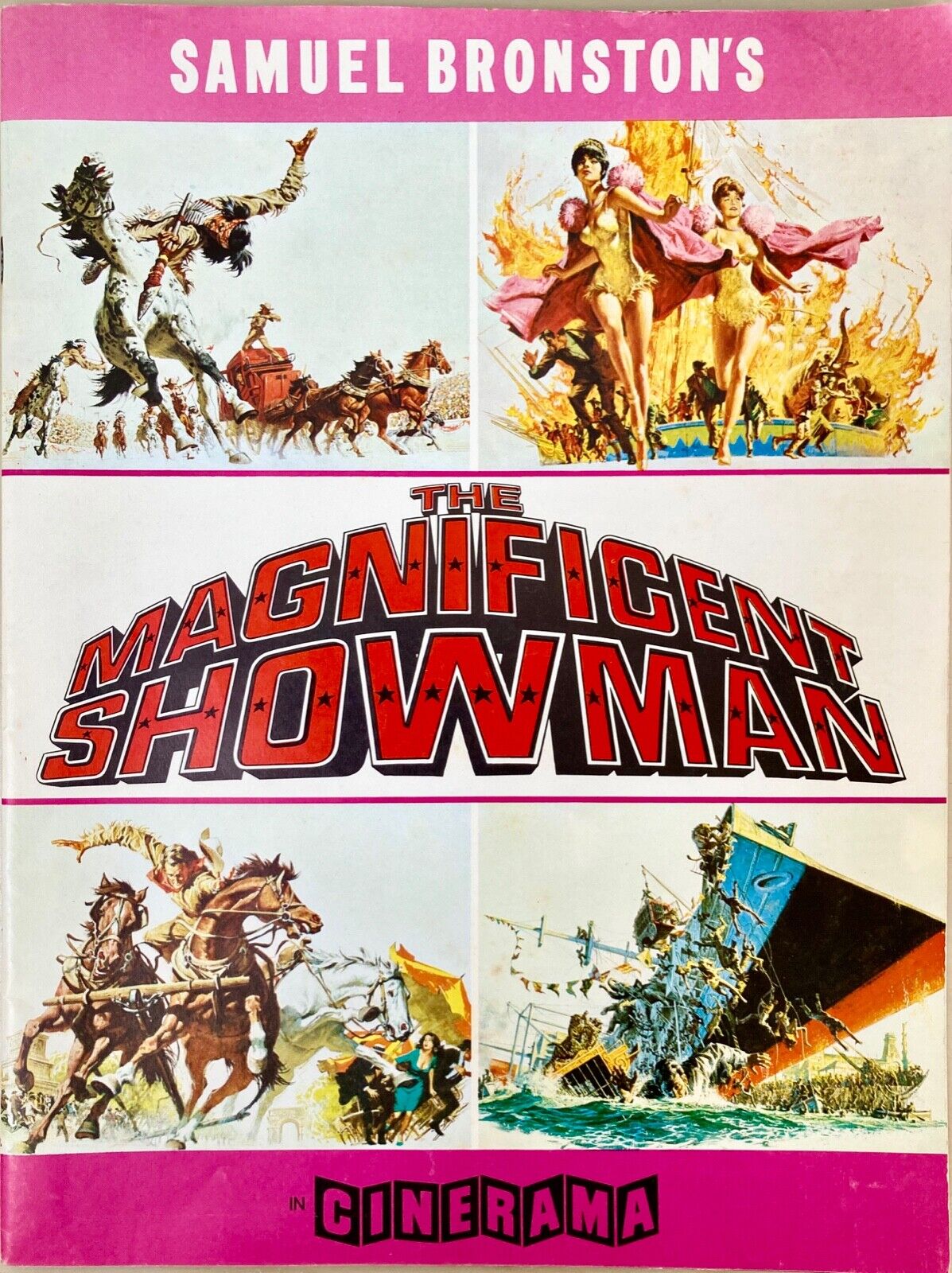
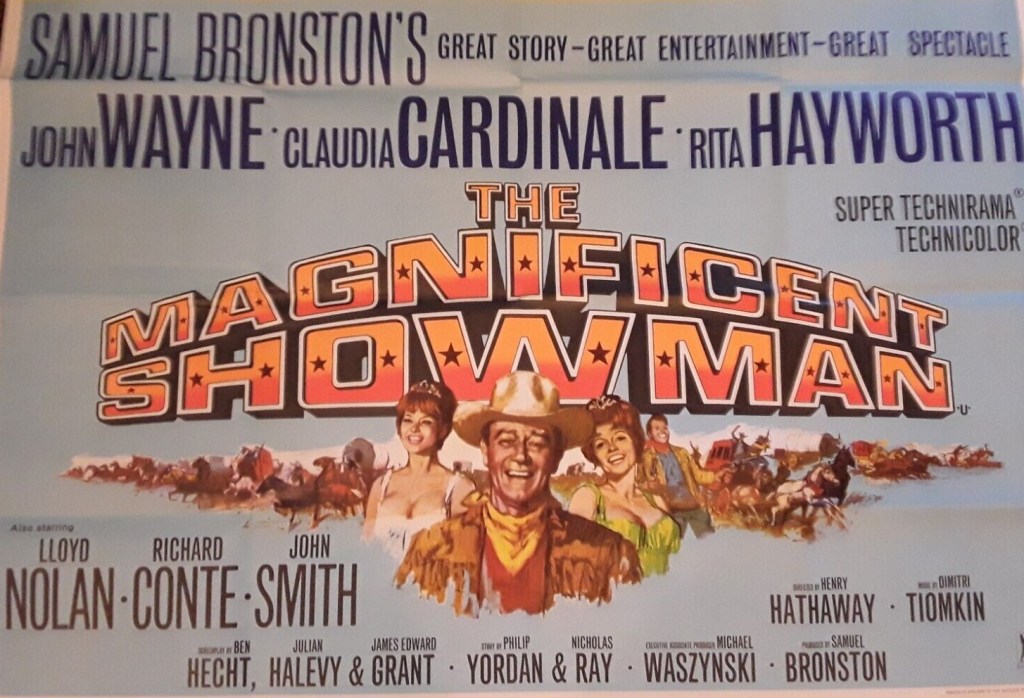
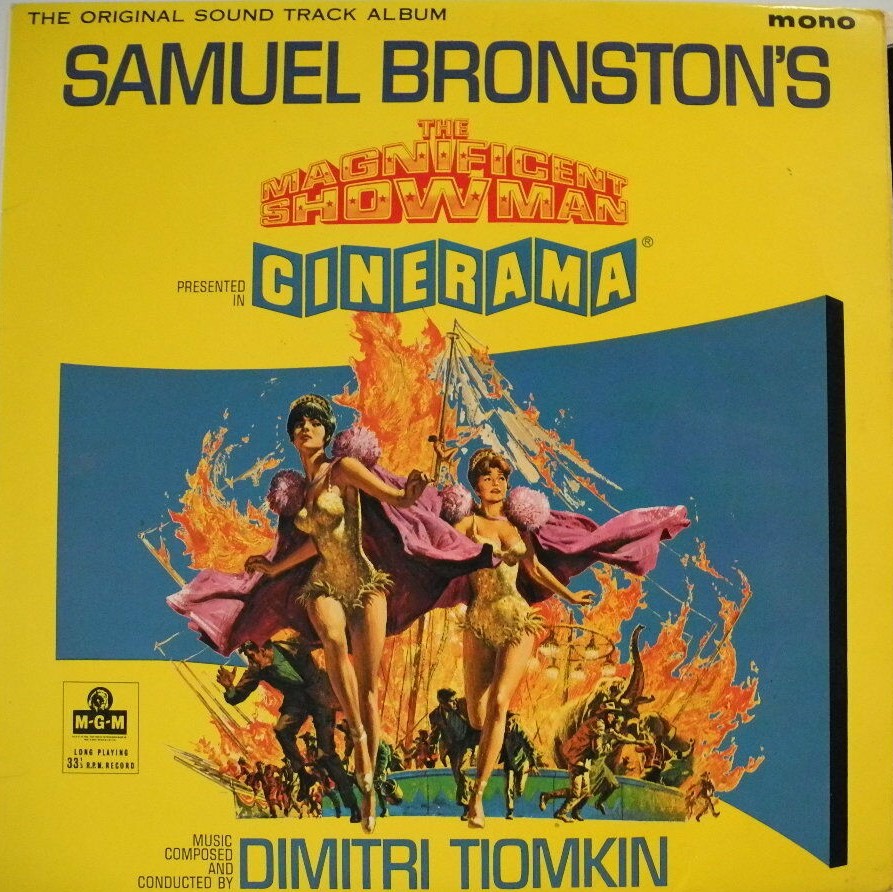
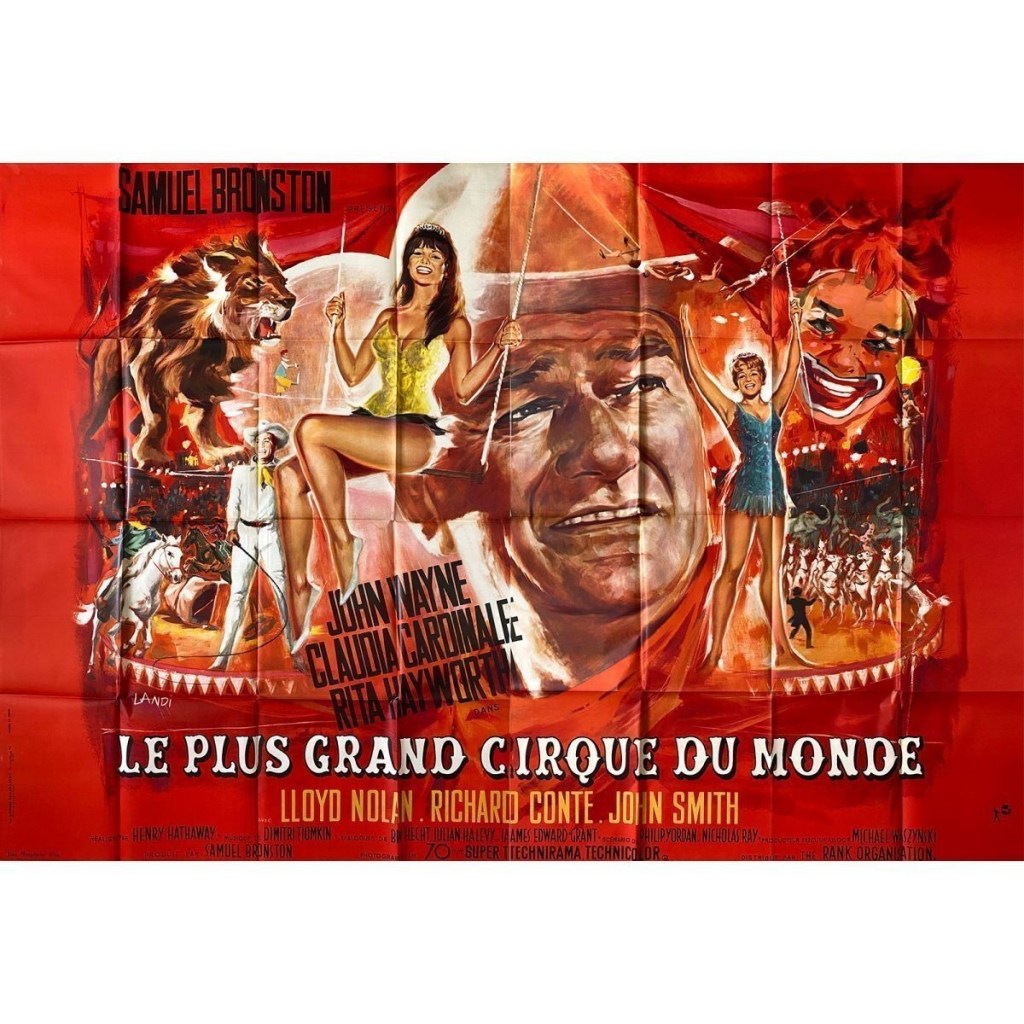
Behind the Scenes: “Circus World / The Magnificent Showman” (1964)

For John Wayne it was the best of deals and the worst of deals. He had signed a six-picture seven-year contract with Paramount. On the plus side the studio paid the entire amount  upfront, wiping out the accumulated debts from the debacle of The Alamo (1960). On the debit side, he received only $500,000 per picture, well below his standard price of $750,000. In fact, Paramount could recoup some of its expense by hiring him out at his previous going rate.

Wayne was coming off hits McLintock (1963), Hatari! (1962) and How the West Was Won (1962) but other movies The Man Who Shot Liberty Valance (1962) and Donovan’s Reef (1963) – the first in the multi-picture deal – had punctured a hole in his supposed box office supremacy. But for maverick producer Samuel Bronston (El Cid, 1961), getting his hands on a star of the magnitude of Wayne was a coup. Originally entitled Those Were the Days, the title switched to the more appealing Circus World.

Bronston was a new-style producer. Apart from a $2.5 million injection by Paramount he  financed his pictures by country-by-country advances, and backed by DuPont, hardly the first big company to be seduced by the prospect of becoming a big Hollywood player. Distributors who advanced money in this fashion made hay if the film hit the bull’s eye, but if it flopped they didn’t get their money back. And a flop made it more difficult for an independent producer to raise the dough for his next picture. So Wayne’s involvement was viewed as a guarantee.

Nicholas Ray (King of Kings, 1961) was initially hired to direct followed by Frank Capra (It’s a Wonderful Life, 1946), also made a Bronston partner, who tried to sabotage the script, planning only to shoot the sections he had rewritten. Bernard Gordon (55 Days at Peking, 1963) was credited with the original idea, but when Wayne came on board he brought with him James Edward Grant (The Commancheros, 1961).

Grant was only tempted by the promise of a three-picture deal. The tussle ended with Capra evicted at a cost of $150,000 and Henry Hathaway (North to Alaska, 1960) at the helm. Hathaway instigated a week of rewrites with Ben Hecht (Spellbound, 1945) before settling down to more serious work with Grant.

Initial casting envisaged Rod Taylor (Dark of the Sun, 1968) in the role of Wayne’s partner and would-be lover of Cardinale, but he took the job without reading the script and on realizing it was little more than male romantic lead he bowed out. David Niven (55 Days at Peking, 1963) was initially signed as Wayne’s old buddy Cap but he, too, quit over the script. (Wayne and Taylor got on very well and should have teamed up for The War Wagon, 1967, until Kirk Douglas muscled his way in, later doing so for The Train Robbers, 1973. )

Their replacements John Smith (who had made his debut in Wayne picture The High and the Mighty, 1954) and the veteran Lloyd Nolan were hardly in the same box office league, but shaved cash off the budget.

A bigger concern than hiring a supporting cast was the circus. Bronston recruited famed European outfit Althoff Circus, whose 400 performers ensured the ringside element was authentic. For further realism Bronston added Bob Dover from Ringling Bros. There was no need for specialist horses, Bronston already having 125 trained from The Fall of the Roman Empire to pull circus wagons and for bareback riders.

The entire circus had to be transported by rail on 51 freight cars through the Brenner Pass to Germany and via Switzerland and France to Spain, halting at the Spanish border to unload the whole shebang onto a different train because the gauges didn’t match.

For the picture’s most spectacular scene, the capsizing of the ship transporting the circus, Bronston bought the 250ft long S.S. Cabo Huertas which was heading for the breaker’s yard. Repainted, decorated with circus posters and renamed S.S. Circus Maximus it was all set for a sinking overseen by special effects expert Alex Weldon (El Cid, 1961).

Three hundred tons of water were pumped into the half of the hold furthest away from the dock. The additional weight of 600 extras was enough to flip the ship on its side. Four 50-ton steam winches with steel cables kept the ship upright until it was time for action.

Female extras who were going to end up in the drink were fitted with corsets made of cork while the men wore cork belts hidden under their costumes. The Spanish Coast Guard cleared the harbor of debris and a local fleet of boats, just out of camera view, stood by for rescue. Seven divers patrolled the harbor bottom in case the cork failed to keep actors and extras afloat. Three sets of costumes were created for each participant so they would be kept dry as long as necessary.

Hathaway completed the scene without a single injury. He called it “the greatest job of its kind I have ever been involved in.” Bronston, who was as much a detail man as Cecil B. DeMille, ensured the band played instruments from the period

The picture went in front of the camera in September 1963 with Wayne due to end his commitment on December 18. But severe flooding in Spain knocked the movie off schedule and it went way over budget, running on until March 1964, the finishing touches added in London, the budget hitting $9 million.

Rita Hayworth, who hadn’t made a picture in two years, proved a handful, usually late on set, committing the cardinal sin of not learning her lines and, probably as worse, being rude to everyone

At  just 135 minutes long, Circus World  wasn’t originally envisaged as a roadshow until Cinerama put an estimated $2.5 million into the project, which defrayed the costs. By the time that partnership was announced, it was too late to shoot it in the Cinerama process. The 35mm Super Technirama footage was blown up to 70mm for showing in 60 U.S. theaters boasting the iconic Cinerama curved screens. Everything in Cinerama at that point was roadshow. And they had two more projects lined up with Bronston, Vittorio De Sica’s Paris 1900 and Jack Cardiff’s Brave New World, neither of which were made. Bronston also had another two movies in preparation with Paramount: The Nightrunners of Bengal to be directed by Richard Fleischer and Suez, neither made either.

Roadshow suited Paramount which had not used that method of premium release since The Ten Commandments (1956). In 1963 it had set up a roadshow department to handle the forthcoming Becket (1964) and The Fall of the Roman Empire, which were proper roadshow length of, respectively, nearly 150 minutes and over three hours. But, initially, Circus World did not fall into the roadshow category as far as Paramount was concerned. Only the arrival of Cinerama as an investor made it imperative.

To avoid a title clash with the ultra-successful It’s A Mad, Mad, Mad, Mad World (1963), British distributor Rank changed the title to The Magnificent Showman. That alteration did little to improve its box office, opening at London’s Coliseum for a “NSG” (not-so-good in Variety parlance) $11,200, not much more than The Fall of the Roman Empire in its 17th week, How the West Was Won (90th week) and Cleopatra (51st). Nonetheless it ran there for seven months, followed by a mass general release in the U.K. with a record number of prints. In the U.S., on the eve of general release in April 1965, Paramount considered a title change to Wild Across the World and a switch of marketing emphasis to John Wayne and action.

Audiences didn’t bite, certainly not enough to recoup the budget, and far from enough to prevent Bronston’s operation sliding into liquidation.

SOURCES:  Scott Eyman, John Wayne, The Life and Legend (Simon & Schuster, 2014) p379-385; Mel Martin, The Magnificent Showman (Bear Manor Media, 2007), p153-168; Sheldon Hall, Introduction to Circus World, Bradford Widescreen Festival, 2022; “Rank To distribute New Bronston Pic,” Variety, September 26, 1962, p15; “Althoff Circus Logistics for Bronston’s Film,” Variety, September 25, 1963, p4;“New Roadshow Dept at Paramount,” Variety, November 13, 1963, p3; “Bronston and Paramount in 4-Picture Deal,” Box Office, December 9, 1963, p7; “Circus World Filming in London,” Box Office, February 17, 1964, p14; “Bronston’s Circus Goes Cinerama,” Variety, February 19, 1964, p4; “Bronston-Cinerama Unite on 2 Films,” Box Office, February 24, 1964, p5; “Special Mass Release for Showman,” Kine Weekly, May 28, 1964, p3; “Paramount Retains Circus World Title,” February 24, 1965, p3.

Circus World / The Magnificent Showman (1963) **** – Seen at the Cinema

Bookended by disaster – a ship turning turtle, fire raging in the big tent – and kept aloft by giddy circus turns this long-ignored movie in the John Wayne canon is ripe for reassessment. In more down-to-earth mold, with no villains to rein in, no gun-toting required, this calls upon something more basic from the actor, the dramatic skill required to make the audience fix on a strong character within a spectacular screen event.

Presented in stunning Super Technirama, the swansong of maverick producer Samuel Bronston (El Cid, 1961), and mistakenly viewed as little more than a travelog or a compendium of circus acts, this dwells instead on transition and loss as Matt Masters (John Wayne) struggles to allow adopted daughter Toni (Claudia Cardinale) to grow up and to come to terms with the part he played in the romantic calamity – father a high-wire suicide, acrobatic mother Lili (Rita Hayworth) fleeing to Europe – that left her parentless.  

It’s no coincidence that sending his three-ring circus cum Wild West Show on a lucrative tour of Europe in the early part of the 20th century provides an opportunity to hunt for Lili, the love of his life. But the circus ship capsizes in Barcelona, leaving Masters penniless, forced to  work for a rival European promoter until he can scrape together enough dough to start again. Masters uses the opportunity of traveling through European capitals to scout new acts, including clown Aldo (Richard Conte), a lion-tamer turned tiger-tamer Emile (Hans Dante), and ballerina Katharyna (Giovana) who performs on the high wire while Toni wants to chance her arm against Matt’s objections as an acrobat and flex her romantic muscles in romantic dalliance with Matt’s new partner Steve (John Smith).

The subplots add dramatic heft, the lion-tamer is frightened of tigers, Aldo has vengeance in mind, so in between the scintillating circus acts the storyline is compressed around the drink- and guilt-sodden Lili and conflict on several fronts with Toni while old retainer Cap (Lloyd Nolan) is on hand to pep up or challenge Matt.

You wouldn’t be allowed to make this kind of film these days so it’s worth glorying in the glory days of the circus – dancing horses, lions, tigers, elephants, acrobats and genuinely hilarious clown sequences. It being a three-ring circus there’s always something going on, plus the Wild West element which comprises a stagecoach being attacked.

John Wayne is as befuddled as ever in romance, restricting his trademark double take to astonishment at Tony’s transition to womanhood. There’s an occasional reversal but mostly  it’s a battle against the odds, potential triumph leavened by gritty loss.

A modern producer would have switched the disasters – it didn’t really matter how Matt got into a fix. But the capsizing, appearing so early the effect is stunning, is brilliantly handled, not just the rescue of people and animals but Matt in lion-taming mode and ending with a clever coda. In every photograph Lili’s face has been scratched out but in among the saturated notes of Matt’s vital cash box is a picture of her.

Some critics have suggested John Wayne (In Harm’s Way, 1965), recovering from his own financial debacle caused by over-investment in The Alamo (1960), took the role for financial expediency. But I can see the attraction, as I’m sure the actor did. This is a far more rounded character than anything since The Searchers (1956) and he can’t even find redemption from a six-shooter. He’s more protective than aggressive, paternal instinct triggering character reaction, and it’s more of a James Stewart type of role, coming back from adversity, and nothing straightforward about a man whose love affair caused marital disaster.

Critics have also taken pot-shots at Claudia Cardinale (The Pink Panther, 1963) as if she was not already an accomplished actress (a favorite of Visconti, for example) in a compelling role and competing on even terms with a star of John Wayne’s charisma without being able to fall back on the old saw of the romantic interest. Although playing a character nearly a decade younger, Cardinale  brings an earthy feistiness to a character with a bucket of decisions to make, turning on its head her relationship with Matt and going through the dramatic hoops with Lili.

Rita Hayworth (The Happy Thieves, 1961) has shucked off the glamor, a worn-down relic of her former self, turning to drink and religion in equal measure in vain hope of finding peace. Veteran Lloyd Nolan (The Double Man, 1967) and Richard Conte (Assault on a Queen, 1966) hold their own, but John Smith (Waco, 1966) does not. Look out for former British star Kay Walsh (A Study in Terror, 1965).  

Henry Hathaway (5 Card Stud, 1968) does a terrific job marshalling all the elements, containing the core family drama within the wider action-oriented structure. While there’s never a dull moment, in among all the spectacular scenes are some exhibiting a particularly sensitive directorial touch such as when Matt discovers Lili’s hotel room and reflects on his own misdemeanors.

There were almost as many writers as circus performers – James Edward Grant (The Commancheros, 1961), Ben Hecht (Spellbound, 1945), Julian Zimet (A Place for Lovers, 1968), Bernard Gordon (55 Days at Peking, 1963), Nicholas Ray (The Savage Innocents, 1960) and Philip Yordan (El Cid).

Come at it from the fun perspective and you won’t go wrong. John Wayne completists will adore it.

I was lucky enough to see this is full glorious widescreen at the cinema where it was the Closing Film at this year’s  Widescreen Weekend in Bradford. What a way to end a show!

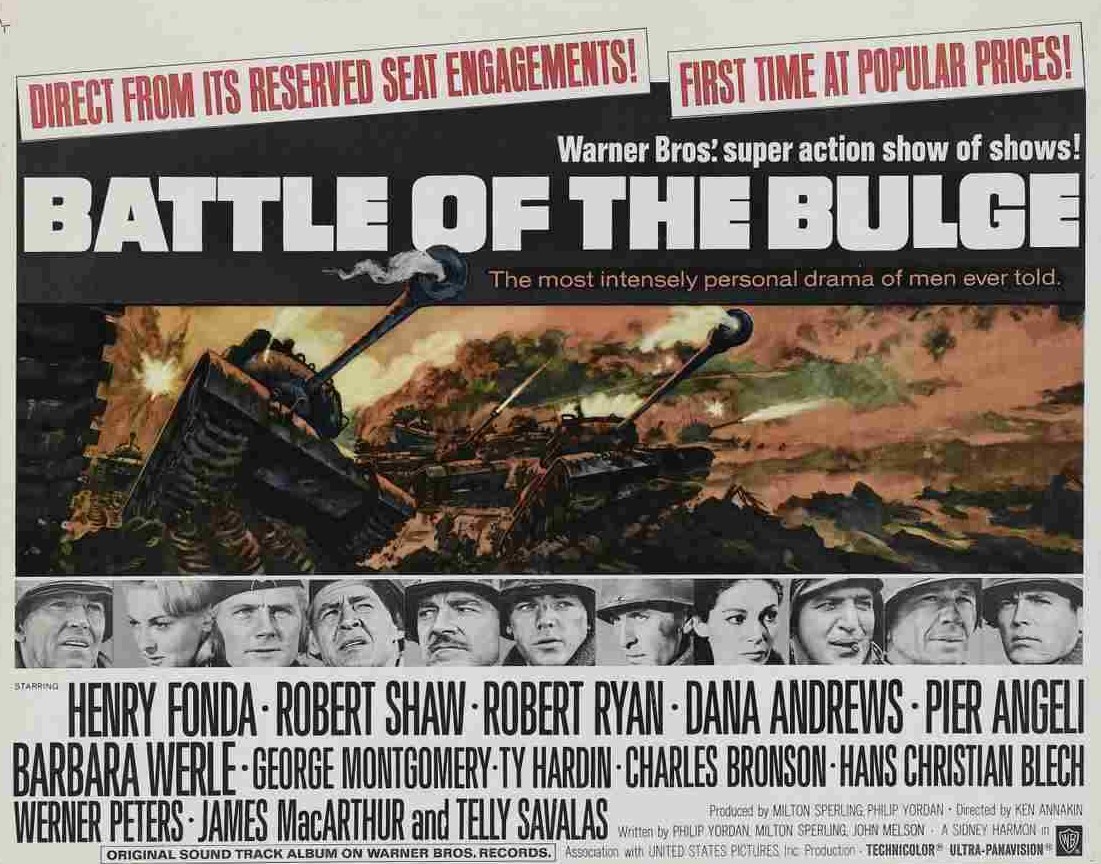
Behind the Scenes: “Battle of the Bulge” (1965)

It was Hollywood’s worst nightmare. Two major studios – Columbia and Warner Brothers –  were competing to make films about the Battle of the Bulge, one of the most famous episodes of the Second World War. Rival movies on similar or the same subject  – classic examples You Only Live Twice (1967) vs Casino Royale (1967) or Deep Impact (1998) vs.  Armageddon (1998) – risked cannibalizing each other, each entry eating into the prospective audience of the opposition.

At first it seemed like the Columbia entry had the upper hand. Writer-producer Anthony Lazzarino had spent four years preparing The 16th of December: The Story of the Battle of the Bulge (the date referring to the start of the battle). Lazzarino’s project was endorsed by the U.S. Department of Defense which offered exclusive cooperation. Advisors were of the top rank – General Omar Bradley,  General Hasso E. von Manteufel who had commanded the Panzers during the battle, British generals Sir Francis de Guingard and Robert Hasbrouck and Colonel John Eisenhower (son of Ike) plus the cooperation of the legendary Eisenhower himself and Field Marshal Montgomery.

With a budget in the $6 million – $8.4 million range, and shooting set to start in winter 1965, William Holden was lined up to play General Eisenhower and Kirk Douglas for  General Hasso. Although initially intending to film in the Ardennes and Canada, ultimately the producers settled for the cheaper option of  Camp Drum, one of the largest military installations in the U.S, a remote area in upper New York where the buildings could stand in for Bastogne, around which much of the real battle revolved, production there feasible because the Camp closed for winter. .

But that meant it would already be behind the eight-ball since Battle of the Bulge intended opening at Xmas 1965. Richard Fleischer (The Boston Strangler, 1968) was signed to direct. But he had become embroiled in a lawsuit with producer Samuel Bronston (El Cid, 1961, The Fall of the Roman Empire, 1964) whose production outfit had gone bust, killing off a deal for Fleischer to make The Night Runners of Bengal. The director was seeking $910,000 in compensation.

Warner Brothers had enlisted Cinerama as co-producer, the studio’s first involvement in the stunning widescreen process and the first time war was considered a subject. The process had been utilised in other Hollywood pictures most notably MGM How the West Was Won (1962), but that had been as a supplier of the equipment, and taking a small share of the profits. But now Cinerama planned to enter the production business and had contracted with WB to shoot the film in the single-lens process instead of the more complicated three-camera approach which had led to vertical lines on the giant screen.

Neither company was in great shape. Cinerama had posted a $17.9 million loss in 1964, WB $3.8 million. But whereas WB had My Fair Lady on the horizon, Cinerama was less reasons for optimism. Its income stream relied on sales of its equipment, either for filming or projection, and a levy from every cinema using the process. Expansion was seen as key to renewal. With only 67 cinemas equipped to show Cinerama in the U.S. and only 59 overseas, a major program was underway to reach 230 by 1967. Setting up a production division would ensure there were enough films to feed into Cinerama houses, and since such films were intended as roadshows, they would keep the cinemas product-secure for months on end.

Cinerama planned to spend $30 million on five films – John Sturges  western The Hallelujah Trail (1965) budgeted at $5 million, Battle of the Bulge ($5.75 million) while $6.5 million had been allocated to an adaptation of James Michener bestseller Caravans, $6 million for Beyond the Stars which became 2001: A Space Odyssey (1968) and $7 million for Grand Prix (1966). Added to the list was epic William the Conqueror, due to film in England in early 1966 with Robert Shaw taking top billing.

The WB-Cinerama project, which had taken a year to negotiate, was to be filmed in Spain under the aegis of producer Philip Yordan, one time associate of Bronston who had built a mini-Hollywood there. Yordan, Bronston’s chief scriptwriter, had written the screenplay along with his co-producer Milton Sperling. Instead of seeking official support or reproduce the battle in documentary detail, Yordan and Sperling aimed for a fictional account that took in the main incidents. The cast would include “ten important stars.”

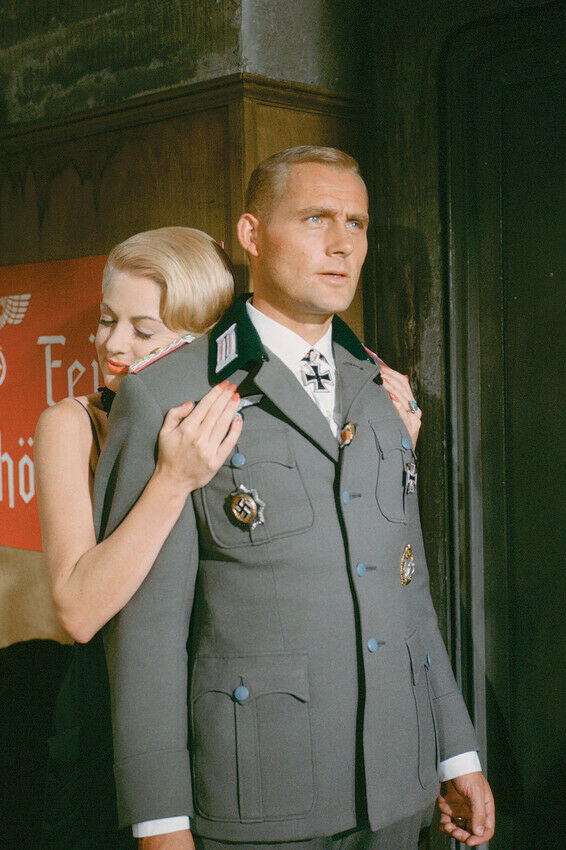
Barbara Werle seizes her moment – as a courtesan attempting to seduce Robert Shaw.

Just what constituted an “all-star cast,” one of the key ingredients of the roadshow phenomenon of the 1960s, was open to question. While The Longest Day (1962) boasted stars of the pedigree of John Wayne, Robert Mitchum, Richard Burton and Sean Connery, it was also liberally sprinkled with actors of little or no marquee value. David Lean in Lawrence of Arabia (1962) had loaded his film with the likes of Oscar winners Alec Guinness, Anthony Quinn and Jose Ferrer to offset unknowns Peter O’Toole and Omar Sharif as the leads. While The Great Race (1965) could boast Jack Lemmon, Tony Curtis and Natalie Wood, It’s A Mad, Mad, Mad, Mad World (1963) only had Spencer Tracy amid a host of television comedians.

But none of the stars of the hit Those Magnificent Men in Their Flying Machines (1964) had successfully opened a major picture. Of the Battle of the Bulge contingent only Henry Fonda could truly be called a current star, although his box office star had considerable dimmed since the days of The Grapes of Wrath (1939) and Fort Apache (1948). Former stars Robert Ryan and Dana Andrews were now supporting actors, Ty Hardin best known for television, Charles Bronson (The Great Escape, 1963) not achieved top billing and while James MacArthur had done so that was in youth-oriented movies. Initially, Italian prospect Pier Angeli (Sodom and Gomorrah, 1962) was announced as “the only principal female role” – playing a Frenchwoman – for a touching scene showing the effect of war on innocent women caught up in the conflict.

Just before filming was about to start, Fleischer pulled out, citing differences of opinion with the producers. Yordan turned to British director Ken Annakin, who had helmed the British sequences in The Longest Day and all of Those Magnificent Men in Their Flying Machines. There was soon a double whammy from the rival picture. Realizing he was losing ground, and hoping to sabotage the opposition’s progress, Larrazino sued WB for $1 million, claiming that “another film, less accurate, would be confused with his picture.” Just as filming of the Battle of the Bulge got underway in January 1965, it was hit by a temporary restraining order. While failing to shut down the production, it imposed a marketing blockade. WB was prevented from publicizing its picture, a potentially major blow given how dependent big budget roadshows were on advance bookings which could only be generated by advance publicity.

Annakin’s immediate response to the directorial opportunity was delight. He commented that he had a “lot of toys to play with.” He found inspiration for his approach from an unusual source, the Daleks (“an apparently irrevocable onslaught of metal monsters”) from the BBC television series Dr Who. He decided he would use Cinerama as “a kind of 3D, shooting in such a way that the tanks would loom up as monsters against humans whom I would make small and puny.”

Although he had no influence over the casting, Annakin was already familiar with some of the actors, James MacArthur from Swiss Family Robinson (1960) and Werner Peters and Hans Christian Blech from The Longest Day. He did not receive such a warm welcome from Robert Shaw whom he had rejected for a role in The Informers (1963).

He found Fonda “a remarkable professional…always on time, patient, eager to get to work, and always knew his lines.” Fonda confessed to being a reluctant movie actor, preferring the stage, and had not been a big office draw since his work with John Ford in the 1930s and 1940s. Even critical successes like Twelve Angry Men (1957) had lost money, some of it the actor’s own, and prestige movies like The Best Man (1964) and Fail Safe (1964) failed to attract sufficient audiences. “In the theatre,” he said, “the actor achieves fulfilment from beginning to end. But on a picture you create a minute here and a minute there over a twelve-week period. When it’s finished there’s no recollection of what you did…Films are a director’s medium.” Battle of the Bulge was his 59th picture, after completing a supporting role in Otto Preminger’s In Harm’s Way (1965) and taking second billing to Glenn Ford in modern western The Rounders (1965).  

There was a stand-off with Bronson on his first day after the actor kept the crew waiting while fiddling too long with his costume. Ty Hardin (television’s Bronco, 1958-1962) was accident-prone, tumbling into a frozen river in full kit, and whacking the director’s wife in the face with his helmet. Dana Andrews had a drink problem so that in some scenes Fonda and Ryan would be surreptitiously holding him up.

Andrews was enjoying career resurgence. His movie career had been at a standstill, a long way from a peak like Laura (1944), his last significant top-billed parts over a decade past. “I was starting to get nothing for a while but offers came swarming in when I told my agent to go ahead and try for Walter Huston parts.” After only television roles in the four years since Madison Avenue (1961), Battle of the Bulge would mark his eighth role in 1965, including The Satan Bug and In Harm’s Way.

Winter in Spain was cold which meant it provided the ideal backdrop for the WB version. The chosen location, 4,500ft high in the mountains of Segovia, provided identical conditions to the actual battle. Spain had provided 80 tanks including Tigers mounted with 90mm guns and Shermans. Half of the 20-week shoot would be spent in Segovia with interiors filmed at studios in Seville and the Roma facility in Madrid.

The WB adviser was General Meinrad von Lauchert, a divisional tank commander during the battle. He hoped the picture would show the German soldier “as he was, brave and good” rather than clichéd presentation and not give the “impression that the American Army had nothing to do but walk into Germany.” He wanted the film to reflect the truth that the “Americans had to pay a high price for every yard.”

Extras were drawn from the Spanish village of El Molar, with a population of just 2,400, which specialised in that supply. Locals could earn 200 pesetas a day. A pair of tavern owners had established this lucrative side-line, demand so high at this point that “they can play Russian World War One deserters for Doctor Zhivago (1965) one day and shipped to World War Two the next for Battle of the Bulge.” Whenever Annakin found himself in trouble with the script he turned to the senior actors, Fonda, Ryan and Andrews who could improvise their way round scenes and “give me hints and lead me into changes.”

For the first scene, a week’s worth of white marble dust, representing snow, had been spread over the ground before 40 tanks emerged from a pine forest. But just as the cameras begun to turn, unexpectedly, against all weather forecasts, it began to snow. While initially a boon, when it continued to fall for five weeks the snow turned into a liability. Nobody was prepared for snow, not to the extent of snowploughs or even salt and it was a three-mile hike uphill to reach the tank location until army vehicles could be used to transport the crew. The tanks churned up so much mud that three or four cameras were required to catch the action.

“It was a director’s feast,” recalled Annakin, salivating about the prospect of a “vast panoramic” employing the entire array of tanks. To speed production, he had two units one hundred yards apart and jumped from one to the other, thus achieving 30-40 set-ups a day while the effects team exploded tubes and burned rubber tyres to create a fog of black battle smoke. A small town, already wrecked and shelled from the Spanish Civil War, added an air of realism when standing in for Bastogne.

Midway through shooting the producers realised the movie lacked a theme and from then on Annakin was faced with daily rewrites as new scenes were added to bring out the humanity implicit in war. Then Cinerama boss William Foreman arrived and demanded the insertion of the type of shot he believed his audiences were expecting, the equivalent of the runaway train and the ride through the rapids in How the West Was Won. He angled for a jeep racing downhill or a plane spinning and diving and happy to stump up any extra costs.

Such a request was more easily accommodated than his insistence that a role be found for his girlfriend Barbara Werle, a bit part actress Tickle Me (1965). While Yordan, wearing his producer’s hat, was willing to keep one of his main funders happy, the director and Robert Shaw were not. Shaw refused to do the scene until Foreman pleaded with both, explaining that in a vulnerable period of his personal life – when, in fact, he had been imprisoned – Werle had helped him out and he owed her a favour.

In Annakin’s opinion Werle was “willing but completely dumb…as though you had picked a girl straight from the cash desk of a supermarket.” Her one scene, as a courtesan offered to Robert Shaw by a grateful superior, was used to mark out the German commander as a man of honor when he rejected such temptation out of hand.

To overcome problems of matching earlier Panzer footage with the climactic battle to be shot on the rolling hills of Campo – in the earlier shots the ground was covered in snow, but now it was summer and the ground was scorched by the sun – Annakin relied on aerial shots, shooting downwards, “keeping as close as possible so as not to reveal what the terrain actually looked like” while on the ground two units shot close-ups of the action. This was augmented by 30 model shots with miniature explosions.

When shooting was completed, there was a race to get the movie ready for its scheduled launch, on December 16, 1965, the 21st anniversary of the start of the battle. There were ten weeks left to do post-production. Four editors had already been working on the material but Yordan asked Annakin, who had not been near a moviola for two decades, to personally edit the climactic battle scene. The director found the experience exhilarating: “matching my location footage with miniature shots; a four-foot helicopter (i.e. aerial) shot cut with a couple of feet of a U.S tank rounding rocks to face a Panzer; a shot of Telly Savalas at his gun site yelling ‘Fire’ intercut with a miniature tank blowing up.” But all his intricate work never made it into the final cut. Another editor fiddled around with the material and since no one had thought to make a dupe of Annakin’s original it was lost.

Although the challenge from Lazzarino had died away, the Pentagon was unhappy with the amount of time allocated to the German perspective. Yordan had the perfect riposte, pointing  the finger at Annakin and saying “see what happens when you get a limey director.”  

Werle had the last laugh. She was billed sixth in the credits (Angeli came fifth) but in the same typeface as Fonda, Shaw, Ryan and Andrews, and above the likes of Bronson, MacArthur and Hardin who not only all had substantially greater screen experience but had a bigger impact in the movie.

With the smallest part of all the listed stars, nonetheless she managed to turn the experience to her advantage, introduced to the press as part of the marketing campaign and attending the world premiere at the Pacific Cinerama on December 16, 1965 in Los Angeles and the New York premiere the following day, brought forward four days, at the Warner Cinerama. In Los Angeles she arrived in style at the head of a marching brigade of 100 service men.

SOURCES: Ken Annakin, So You Wanna Be A Director (Tomahawk, 2001) p167-181; “Du Pont, Bronston, Co-Defendants,” Variety, July 22, 1964, p4; “Schenck-Rhodes Roll Battle of Bulge at Camp Drum in U.S.” Variety, July 22, 1964, p42; “German Military Sensitivity,” Variety, September 23, 1964, p32;  “Columbia Will Distribute Battle of Bulge Film,” Box Office, September 28, 1964, p18; “Plan Battle of Bulge As Cinerama Film,” Box Office, November 23, 1964, p4; “Tony Lazzarino To Produce The 16th of December,” Box Office, December 16, 1964, p4; “Rival Battles of Bulge; Bill Holden Up for Ike in Lazzarino Version,” Variety, December 16, 1964, p5; “Warner Reports Loss of £3,861,00,” Variety, December 23, 1964, p5; “L.A. Court Has Its Battle of Bulge Hearing, 27th,” Box Office, January 25, 1965, pW-2; “Dana Andrews Strategy: Regain Momentum,” Variety, March 10, 1965, p3; “Battle of Bulge Now Being Lensed in Spain,” Box Office, March 15, 1965, pNE2; “Winter in Spain Cold But Correct for Bulge Pic,” Variety, March 17, 1965, p10; “Cinerama Plans Five Films to Cost $30 Mil,” Box Office, April 19, 1965, p13; “For Actor, Satisfying Legit Still Beats Pix, Reports Henry Fonda,” Variety, May 3, 1965, p2; “London Report,” Box Office, May 3, 1965, p8; “One Girl in WB Bulge,” Variety, May 5, 1965, p20; “Battle of Bulge Pic May Roll Next Winter,” Variety, May 5, 1965, p29; “El Molar, Spain’s Village of Extras,” Variety, May 12, 1965, p126; “Cinerama Report Loss,” Variety, May 13, 1965, p15; Advert, Box Office, July 12, 1965, p22; “WB To Film Cinerama Epic in England,” Box Office, October 11, 1965, p11; “Introduce Barbara Werle,” Box Office, October 18, 1965, pE3; “Battle of Bulge Opens N.Y. Now Dec 21,” Box Office, October 18, 1965, p10; “Actress To Attend Bows of Bulge in L.A., N.Y.,” Box Office, December 6, 1965, pW4.

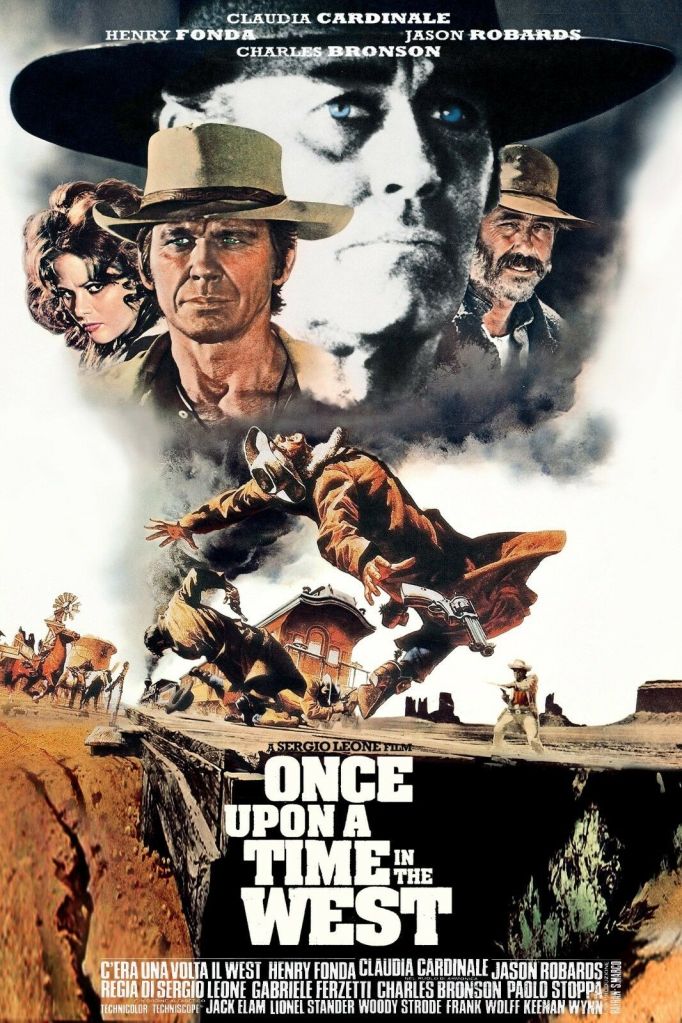
Behind the Scenes: “Once Upon a Time in the West” (1969)

“Tedium in tumbleweed,” was the verdict of Time’s magazine’s critic. That was hardly the intention of Sergio Leone, Dario Argento (then just a critic) and Bernardo Bertolucci (Before the Revolution, 1964) after they met just before Xmas 1966 in a projection booth for a screening of The Good, the Bad and the Ugly and decided to try and write the quintessential western. This was a strange notion given that a) Leone had already revolutionized the western and b) on the completion of the last of the “Dollars” trilogy, had avowed to give up westerns and in consequence turned down Hang ‘Em High (1968).

When their six-month collaboration only produced 80 pages of script, Leone turned to Sergio Donati who finished it off in 25 days, adding such essential elements as the fly tormenting Jack Elam at the railway station, turning Morton into a cripple and giving him the motif of the ocean, and many others. Donati claimed, “The best thing I did was give a meaning to the story…This railroad which unites one ocean to the other is the end of the frontier, the end of adventure.” The completed screenplay drew on such influences as Johnny Guitar (1954), John Ford’s The Iron Horse (1924), The Searchers (1956) and The Man Who Shot Liberty Valance (1962), John Sturges’ The Magnificent Seven (1960), George Stevens’ Shane (1953) and a dozen pictures besides.

With a budget of $5 million, equally shared between Euro-International – flush from being the Italian distributor of German sex education film and box office smash Helga (1967) –  and Paramount at the height of its European investment cycle, it would be the most expensive movie made in Italy since Dino de Laurentiis greenlit The Bible (1966). Twelve times as expensive as Leone’s debut western A Fistful of Dollars (1964) – the set of Flagstone alone cost more than that film’s entire budget –  it would be shot at Cinecitta in Rome as well as on location in Almeria, Spain, and the iconic Monument Valley.

“Creative geography” had been utilized to find a connection between the famed Western landmark and the new town of Sweetwater. Prior to filming, Leone had undertaken a guided tour of Monument Valley and returned able to pinpoint exactly where Ford had made use of the location in the ten westerns he had shot there. Leone was the highest-remunerated, picking up $750,000 and 10 per cent of the profits with Claudia Cardinale on $500,000, but the others nowhere near such salaries.

It was Bertolucci who had persuaded the director to give Jill (Claudia Cardinale) the pivotal role. In Leone’s previous films, women were side-lined. But now Jill would run the gamut of all the roles typically allocated to different women in westerns from the reformed whore, submissive woman, object of lust and chattel to the spitfire and woman who took charge. More, she represented, “the promise of the West.” She was central to the plot and sole survivor at the end after Harmonica (Charles Bronson) departed with Frank (Henry Fonda), Cheyenne (Jason Robards) and Morton (Gabriele Ferzetti) all dead.

When Leone wooed her for the role, he acted out the entire film in her presence, using the music to give her an insight into her character. “While I listened,” she recalled, “I understood every moment of the film shot by shot.” During filming of her scenes, Leone replayed her theme music. “This helped me concentrate, remove myself from the world.”

Although Leone and Clint Eastwood had fallen out during the shooting of The Good, the Bad and the Ugly, the actor agreed to meet to discuss the role of Harmonica, but in the end Eastwood rejected the part, perhaps because the monosyllabic character was too close to The Man With No Name. Other names in the frame were James Coburn (The Magnificent Seven), Terence Stamp (The Collector, 1963), Rock Hudson and Warren Beatty (Kaleidoscope, 1966). The last actor Paramount was interested in was Charles Bronson who was regarded as nothing more than a steady supporting actor. Leone’s insistence was because the actor had a “face made of marble.” He would not be required to act much, just represent an immoveable object, capable of expressing the sadder side of his character through his harmonica.  

Henry Fonda was Leone’s first choice for the “ignoble assassin” but the actor prove hard to recruit, the director thwarted first of all by the star’s agent, then put off by the original script and only persuaded by old friend Eli Wallach that this might represent opportunity. However, when the actor came prepared he came prepared for the wrong picture, sporting the moustache traditionally worn by the villain, and, worse, concealing the baby blue eyes which the director coveted with dark lenses.

Although accepting the exceptional stage talents of Jason Robards whose only foray into the genre at that point had been box office flop A Big Hand for the Little Lady (1966), Donati believed he had the kind of presence that did not “translate to the big screen,” especially lacking the kind of eyes the director required for close-up. Leone disagreed, believing he was tailor-made for the role of Cheyenne. The first interview was not a success, the alcoholic actor arriving drunk. Only warnings of financial consequence ensured the star remained sober during filming.

Shooting was scheduled for April-June 1968. The first scene on the agenda was the love scene between Cardinale and Robards, which accounted for two days shooting. Paramount’s eager marketing team promoted these as the first sex scenes the director had filmed, ignoring the fact that sequences showing Eastwood in bed with a woman had been shot for For a Few Dollars More and The Good, the Bad and the Ugly, although they had not made it into the final cut. It took four days to film the shoot-out at Cattle Corner, three hours alone devoted to capturing the drip of water onto Woody Strode’s head and hat. Composer Ennio Morricone had already written a theme to cover the period of the gunmen waiting, but instead opted for the exaggerated sounds such as chalk scraping on a blackboard and the insistent fly. A jar of flies were kept for this purpose but in the end only one sufficed.

Although length became an issue outside of Italy and Parisian fist-run cinemas, Paramount was already planning for a 150-minute picture. In the end the 168-minute Italian cut was shaved by 24 minutes for the U.S. release, outside of a roadshow the longest western sent into general release, and therefore a risky prospect. The idea that Paramount got cold feet over the American release does not stand up. It was part of a major promotion on a huge sign above Times Square that promoted four of the studio’s upcoming offerings – the others being Goodbye, Columbus, True Grit and Those Dangerous Young Men in their Jaunty Jalopies.  It was launched in New York on Memorial Day (not as big a box office day then as now but still a major U.S. holiday) in first run cinemas two weeks ahead of the rest of the country.  

In fact, its first week’s box office there ranked it the western of the year so far, beating The Stalking Moon, 100 Rifles and Support Your Local Sheriff. The New York figures were actually the best results for a western for the entire year with the exception Butch Cassidy and the Sundance Kid and True Grit, outgrossing the likes of the more critically-successful The Wild Bunch and more marketing-friendly Mackenna’s Gold. However, its initial New York audience appreciation was rarely not matched elsewhere, Boston being one exception.  Some cinemas found it difficult to market, the Berlin Drive-In in Hartford, for example, tying-in with country-and-western music on a local radio station. While some smaller cinemas called for another 30 minutes in cuts, others proclaimed “this is what the public wants.” Once upon a Time in the West  finished tenth for the year among westerns and a disappointing 47th overall in Variety’s annual rentals chart.

While it also flopped in Britain and, given the budget, proved a disappointment in Italy, not on a par with The Good, the Bad and the Ugly, it posted 14.8 million admissions in France, making it the seventh-best performing picture of all time. By 1984 it ranked eleventh on the all-time German rental champs list, above Star Wars and The Empire Strikes Back. In Switzerland in 1987 it came eighth on the all-time chart, easily the oldest title on the list. It was a video “blockbuster” in German homevideo setting a new sales record in 1984.

However, for such a commercial and critical failure, reassessment in the U.S. was not long in coming. In 1973, the Beverly Canon in Los Angeles launched its new “Classics At Midnight” programme with Once Upon a Time in the West, Harold and Maude and Repulsion. The prospect of the first showing in the U.S. of the full-length version captured all the headlines at the 1980 New York Film Festival. There were occasional revivals: in Toronto at Easter 1973 and Washington and New York among others in 1984, and Washington in 1985.  

It was named the best western ever made by British newspaper The Guardian newspaper and film magazine Empire. In the Sight and Sound once-in-a-decade Critics Poll in 2012 it placed third in the western category behind The Searchers and Howard Hawks’ Rio Bravo (1959). With the results of a new poll out this year I wonder if it will ascend to the top spot.

SOURCES: Brian Hannan, The Gunslingers of ’69: Western Movies’ Greatest Year (McFarland, 2019); Christopher Frayling, Sergio Leone: Something To Do with Death (Faber and Faber, 2000); Christopher Frayling: Once Upon a Time in Italy (Thames & Hudson, 2005); Christopher Frayling, Once upon a Time in the West: Shooting a Masterpiece (Reel Art Press, 2019); “Huge Sign on Times Square Plugs Paramount Product,” Box Office, May 5, 1969, pA2; “West Tie Up With WEXT,” Box Office, June 16, 1969, pNE2;  “Box Office Barometer,” Box Office, July 14, 1969, pA4; “The Big Rental Films of 1969,” Variety, January 7, 1970, p15; “The Exhibitor Has His Say,” Box Office, July 6, 1970, pA3; “Beverly Canon To Offer Midnight Classics,” Box Office, April 13, 1973, pW1; “Scorsese Speaks on Saving Prints,” Variety, October 8, 1980, p6;  “CIC Video Preps Low-Ticket Bow for Raiders,” Variety, March 21, 1984, p47; “All-Time German Rental Champs,” Variety, March 7, 1984, p336; “With Plenty of Film Buffs, NYC Is Reissue Heaven,” Variety, December 12, 1984, p74; “Box Office Barometer,” Box Office, October 1, 1985, p43-44; “All-Time Swiss Top Ten,” Variety, October 21, 1987, p498.

Once Upon a Time in the West (1969) ***** – Seen at the Cinema

A masterpiece to savor. The greatest western ever made. Sergio Leone’s movie out-Fords John Ford in thematic energy, imagery and believable characters and although it takes in the iconic Monument Valley it dispenses with marauding Native Americans and the wrecking of saloons. That the backdrop is the New West of civilisation and enterprise is somewhat surprising for a movie that appears to concentrate on the violence implicit in the Old West. But that is only the surface. Dreams, fresh starts are the driving force. It made a star out of Charles Bronson (Farewell, Friend, 1968), turned the Henry Fonda (Advise and Consent, 1961) persona on its head and provided Claudia Cardinale (Blindfold, 1965) with the role of a lifetime. And there was another star – composer Ennio Morricone (The Sicilian Clan, 1969)

New Orleans courtesan Jill (Claudia Cardinale) heads west to fulfil a dream of living in the country and bringing up a family. Gunslinger Frank (Henry Fonda), like Michael in The Godfather, has visions of going straight, turning legitimate through railroad ownership. Harmonica (Charles Bronson) has been dreaming of the freedom that will come through achieving revenge, the crippled crooked railroad baron Morton (Gabriele Ferzetti) dreams of seeing the ocean and even Cheyenne (Jason Robards) would prefer a spell out of captivity.

The beginnings of the railroad triggers a sea-change in the West, displacing the sometimes lawless pioneers, creating a mythic tale about the ending of a myth, a formidable fable about the twilight and resurgence of the American West. In essence, Leone exploits five stereotypes – the lone avenger (Harmonica), the outlaw Frank who wants to go straight, the idealistic outlaw in Cheyenne, Jill the whore and outwardly respectable businessman Morton whose only aim is monopoly. All these characters converge on new town Flagstone where their narratives intersect.

That Leone takes such stereotypes and fashions them into a movie of the highest order is down to style. This is slow in the way opera is slow. Enormous thought has gone into each sequence to extract the maximum in each sequence. In so doing creating the most stylish western ever made. The build-up to violence is gradual, the violence itself over in the blink of an eye.

Unusually for a western – except oddities like Five Card Stud (1968) – the driving force is mystery. Generally, the western is the most direct of genres, characters establishing from the outset who they are and what they want by action and dialogue. But Jill, Harmonica and Cheyenne are, on initial appearances, mysterious. Leone takes the conventions of the western and turns them upside down, not just in the reversals and plot twists but in the slow unfolding tale where motivation and action constantly change, alliances formed among the most unlikely allies, Harmonica and Cheyenne, Harmonica and Frank, and where a mooted  alliance, in the romantic sense, between Jill and Harmonica fails to take root.

There’s no doubt another director would have made shorter work of the opening sequence in Cattle Corner, all creaky scratchy noise, in a decrepit railroad station that represents the Old West, but that would be like asking David Lean to cut back Omar Sharif emerging from the horizon in Lawrence of Arabia (1962) or Alfred Hitchcock to trim the hypnotic scenes of James Stewart following Kim Novak in Vertigo (1958). Instead, Leone sets out his stall. This movie is going to be made his way, a nod to the operatic an imperative. But the movie turns full circle. If we begin with the kind of lawless ambush prevalent in the older days, we end with a shootout at the Sweetwater ranch that is almost a sideshow to progress as the railroad sweeps ever onward.

No character performs more against audience expectation than Jill. Women in westerns rarely take center stage, unless they exhibit a masculine skill with the gun. There has rarely been a more fully-rounded character in the movies never mind this genre. When we are introduced to her, she is the innocent, first time out west, eyes full of wonder, heart full of romance. Then we realize she is a tad more mercenary and that her previous occupation belies her presentation. Then she succumbs to Frank. Then she wants to give up. Then she doesn’t. Not just to stay but to become the earth mother for all the men working on the railroad.

Another director would have given her a ton of dialogue to express her feelings. Instead, Leone does it with the eyes. The look of awe as she arrives in Flagstone, the despair as she approaches the corpses, the surrender to the voracious Frank, the understanding of the role she must now play. And when it comes to close-ups don’t forget our first glimpse of Frank, those baby blue eyes, and the shock registering on his face in the final shoot-out, one of the most incredible pieces of acting I have ever seen.

And you can’t ignore the contribution of the music. Ennio Morricone’s score for Once Upon a Time in the West has made a greater cultural impact than even the venerated John Williams’ themes for Star Wars (1977) and Jaws (1975) with rock gods like Bruce Springsteen and Metallica among those spreading the word to successive generations and I wonder in fact how people were drawn to this big-screen showing by the opportunity to hear the score in six-track Dolby sound. There’s an argument to be made that the original soundtrack sold more copies than the film sold tickets.

The other element with the music which was driven home to me is how loud it was here compared to, for example, Thunderball (1965), which as it happens I also saw on the big screen on the same day. Although I’ve listened to certain tracks from the Bond film on a CD where the context is only the listener and not the rest of the picture, I was surprised how muted the music was for Thunderball especially in the action sequences. Today’s soundtracks are often loud to the point of being obstreperous, but rarely add anything to character or image.

One final point, Once Upon a Time in the West was reissued not as some kind of retrospective for the director but in memory of the composer.  

Operation Mincemeat (2022) **** – Seen at the Cinema

British espionage team embarking on a scheme to fool Adolf Hitler during the Second World War find they are susceptible to deceit and deception in their own lives. What could have been a plodding step-by-step documentary-style picture is given a huge fillip by examination of the lives of those involved. The twists and turns of this extraordinary tale, both in the professional and personal sense, make for a very enjoyable picture. It is no less thrilling for, like The Day of the Jackal (1973), being aware of the outcome.

Planning to invade Sicily in 1943, the Allies are determined to convince Hitler that they are instead more likely to attack Greece. The British come up with “Operation Mincemeat,” a variation on the Trojan horse with the “gift” this time being secret papers referring to the Greek assault that are contained in a briefcase attached to a corpse which washes up on the shores of Cadiz in Spain. The assumption is that the German high command is predisposed to being hoodwinked after having ignored the papers on a genuine corpse that came their way prior to the invasion of north Africa.

Tasked with devising the operation are the accomplished Ewen Montagu (Colin Firth) and the gawky Charles Cholmondeley (Matthew Macfadyen) into whose orbit comes Jean Leslie (Kelly Macdonald) whose persona is used to provide a romantic background for the corpse. Although the project has been given the green light from the highest authority i.e Winston Churchill (Simon Russell Beale) not everyone is in favour and the team face obstacles, since technically the plan comes under the remit of the Royal Navy, from Admiral John Godfrey (Jason Isaacs).

The romantic intrigue that ensues creates sufficient resentment for one member of the team to spy on the other at the behest of the admiral, thus ensuring that those charged with deceiving Hitler through moral means are entering into immoral personal activity.  

But what drives this picture is the detail. Finding the correct type of corpse, ensuring it is preserved and has sufficient water in the lungs to make a convincing drowned man at the same time as creating a suitable legend for the character. Films dependent on the inner workings of espionage science, for want of a better word, do not always work. Enigma (2001), a riveting book, did not translate well onto the screen while The Imitation Game (2014), covering similar territory, did.  Here, the minutiae of minutiae are presented in such detail it is an education, down to the importance of an eyelash, how to extract a letter without breaking the seal on an envelope, and, critically how to judge whether the Germans have examined the material closely enough to ensure they have taken the bait.   

The story has already been told though not in such detail as “The Man Who Never Was” (1956)
but with Hollywood stars Clifton Webb and
Gloria Grahame playing the leads.

And that’s before other twists and turns. The corpse was a down-and-out, abandoned, so it appeared, by all and sundry, until out of the blue his sister arrives to claim the body. The coroner on duty in Cadiz turns out, against all expectations, to be an expert in drowning. The British Attache in Spain must seduce both genders to ensure smooth passage of the secret documents. On the more human side, widows abound, husbands lost in combat. A spy on the British side must be unmasked or rendered harmless. A host of other smaller stories unfold within the larger narrative. Above all lies the tension of the necessity for the operation’s success, failure would mean the deaths of thousands of men on the Sicily beachheads and possibly a thwarted invasion.

Matthew Macfadyen (Succession, 2018-2021) steals the show as the over-sensitive individual with the sense of entitlement that comes from having too big a brain, Oscar-winner Colin Firth (Kingsman: The Secret Service, 2014) the imperturbable figure who finds emotion wreaks havoc, Kelly Macdonald  (Goodbye Christopher Robin, 2017) the secretary drawn deeper into a world where genuine emotion has little place.

The cream of British character actors providing sturdy support include Johnny Flynn (Emma, 2020) as spy writer Ian Fleming, Penelope Wilton (Downton Abbey: A New Era, 2022), Mark Gatiss (The Father, 2020), Alex Jennings (Munich: The Edge of War, 2021), Jason Isaacs (The Death of Stalin, 2017) and Mark Bonnar (Guilt, 2019-2021). ,

Oscar-nominated John Madden (Shakespeare in Love,  19980 directs with something approaching verve, never letting the pace drop, zipping from scene to scene, from the war effort into more intimate moments, without any sign of the tension flagging. In her movie debut Michelle Ashford (The Masters of Sex, 2014-2016) does an excellent job of distilling  Ben McIntyre’s bestselling book.

Sure, this is one of those British pictures in a long line of movies that show the country at its best, generally in the thick of war, but the story is so involving that it merits viewing. It is still showing at the time of writing in British cinemas but in the United States and Latin America it will air on Netflix on May 11.

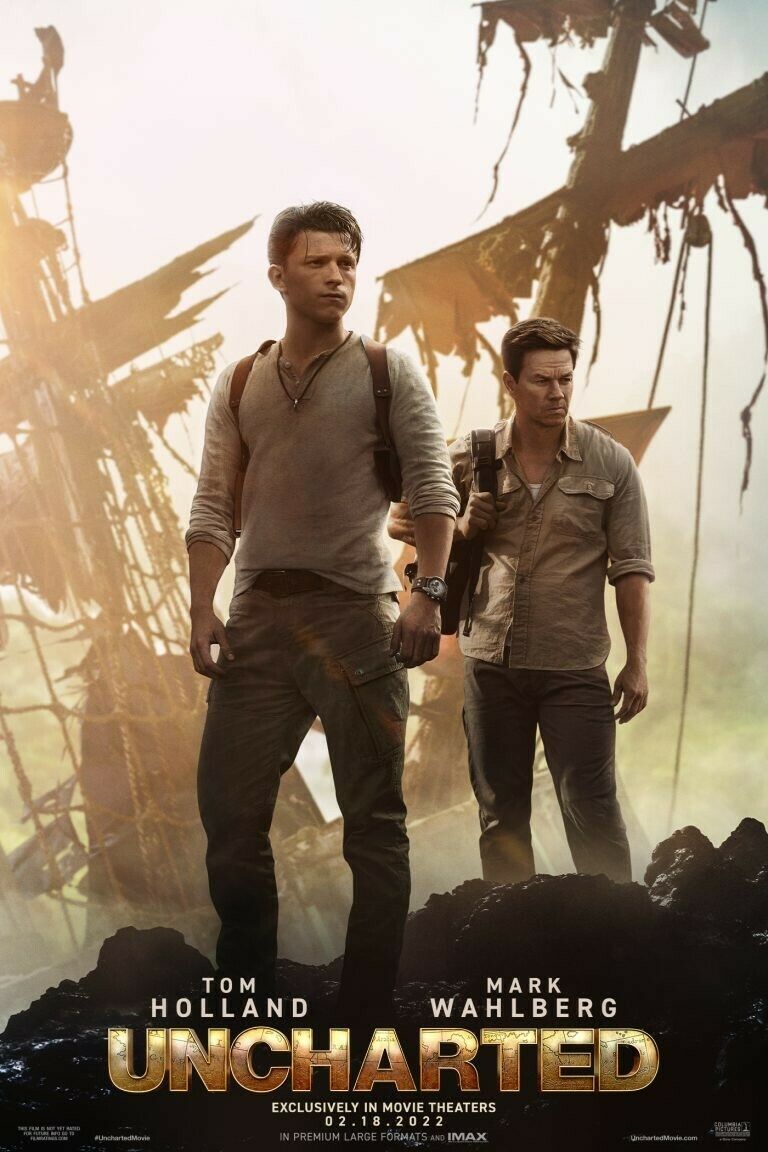
Uncharted (2022) **** – Seen at the Cinema

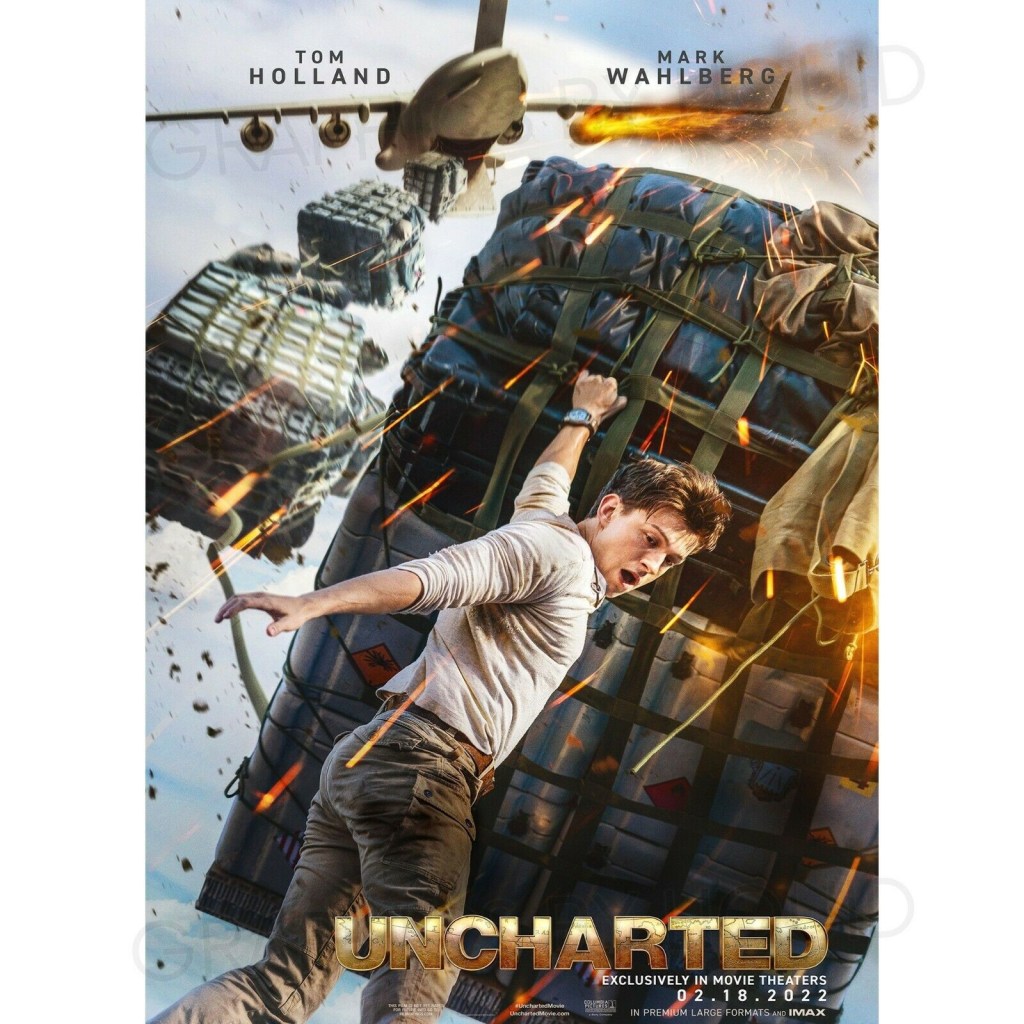
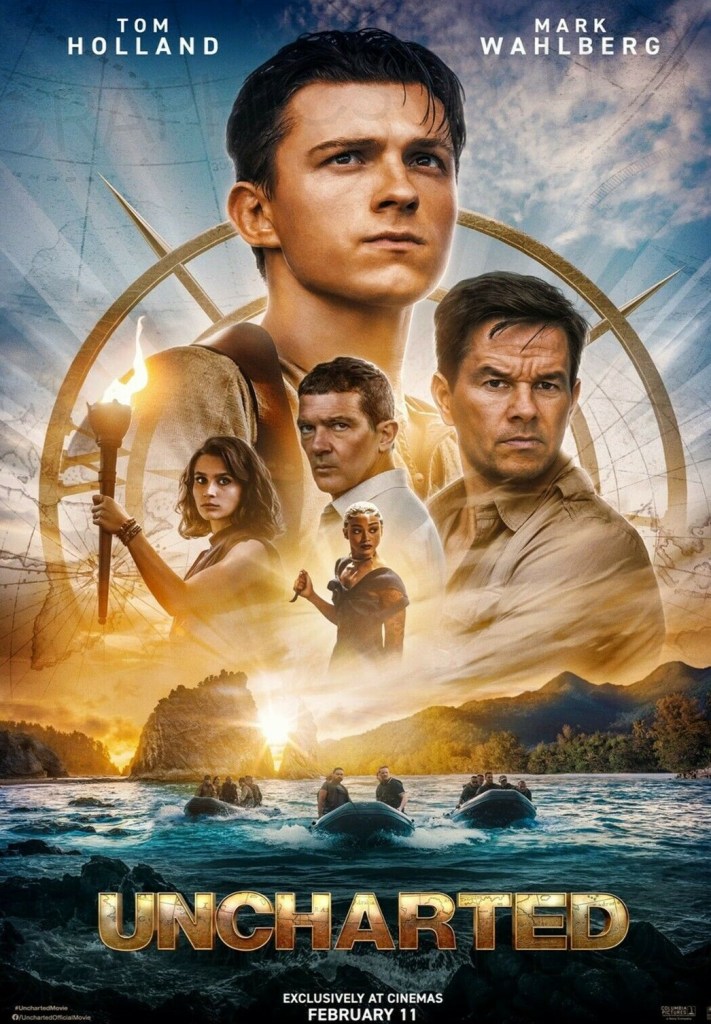
Hugely enjoyable fast-paced romp with clues, ancient maps, sunken treasure, double-cross upon double-cross, action and twists all the way in what could be the next major franchise. Barman Nathan Drake (Tom Holland) teams up somewhat unwillingly with  unscrupulous Victor Sullivan (Mark Wahlberg) and Chloe Frazer (Sophie Ali) to find $5 billion in gold. In their way: the ruthless Santiago Moncado (Antonio Banderas), henchperson Braddock (Tati Gabrielle) and assorted roughnecks.

Confession: I’ve no idea what computer game sparked this movie so come with no preconceptions. History lesson: the gold was lost by Portuguese Ferdinand Magellan, the first guy to sail round the world, while Sir Francis Drake was the first Englishman to do the same.

Two outstanding action sequences top and tail the movie, the first a battle in a cargo plane that is dumping its cargo, the second, just astonishing in its virtuosity, a duel between airborne shipwrecks. In between are a scramble in an art gallery and a roofotop chase. And to keep the audience on its toes all kinds of relics are brought into play as well as hidden tunnels, churches and chambers complete with the usual Indiana Jones-style booby traps, never mind a ton of bullets, and a bunch of clues to be deciphered from maps and walls not to mention postcards and trees. Part of the fun is that the gang don’t get it right all the time with alarming consequences.

It’s all done with such verve and although it’s certainly a close relative to the Indiana Jones series it’s minus their mystical nonsense while the characters certainly are not called upon to do good for their country or save the world from any dictatorships. The guys just want to make money. And what’s wrong with that? It lends the movie a certain solidity. And the fact that none of the characters trusts the others ensures that the status quo never remains quo for long and that swift change is going to be the order of the day.

Tom Holland (Spider-Man: No Way Home, 2021) bulks up and seizes the opportunity to become a major star outside the comic book hero. Too often franchise pictures have produced wallpaper stars, attracting audiences in the tight confines of their multiverses but failing to add any box office muscle to other projects. This character proves an inspired choice. Holland gets to be athletic, as well as the young guy making his bones in a cut-throat (pardon the pun) world, holds up his side in the edgy banter with Wahlberg, and rounds out his personality by being a prize thief and vulnerable guy who misses his lost older brother.  

Mark Wahlberg (Infinite, 2021) hasn’t had this good a role since Patriot’s Day (2016) and since he’s not relied upon to carry the picture can get up to all sorts of shenanigans, which he’s usually knee-deep in, much to his apparent enjoyment. Antonio Banderas (Hitman’s Wife’s Bodyguard, 2021) for once has a legitimate reason to use his Spanish in a Hollywood movie.

Sophie Ali (Truth or Dare, 2018) and Tati Gabrielle in her movie debut rock as female actioners, extremely convincing as mean gals, and should have been shuttled into any number of female-led action movies of the last few years that failed to bring the requisite bite. Both muscle their way into the game and refuse to be muscled out or, by dint of romantic entanglement, lose their edge. There’s a nice cameo – and a running joke – by Steven Waddington (The Imitation Game, 2014) as an incomprehensible Scotsman.

Reuben Fleischer has taken the directorial cojones he displayed in Gangster Squad (2013) and Venom (2018) and squeezed the life out of them to keep this little number zipping along, scarcely stopping to take a breath, never finding itself in a dead end, and holding enough marvel back to pull off  the audacious ending of the flying shipwrecks, on a par with any image Steven Spielberg ever pulled out of his locker. Rafe Judkins, another movie debutante, and the partnership of Art Marcum and Matt Holloway (Iron Man, 2008)  assembled the screenplay from the Playstation game.

As I said I’ve no idea what were the ingredients in the original game and whether the writers have played fast and loose with the concept but all I can say is it’s a helluva movie.

Hard Contract (1969) ***

A hitman movie that verges on the existential is always going to be intriguing. Stone cold killer John Cunningham (James Coburn) manages to keep the world at a distance until he runs into the vibrant Sheila (Lee Remick) in Spain. The film is a curiosity of an admittedly small genre dominated by such disparate offerings as The Killers (1946 and 1964), Yojimbo (1961), Le Samourai (1967) and Stiletto (1969). Here, although Cunningham does bump people off, you never see the violence. We’ve come to expect hitmen to be introspective, but there’s never been anyone as closed-off as Cunningham. No romance in his life, only hookers, no apparent depth, in fact we learn very little about him.

He only runs into Sheila because for a laugh she pretends to be a sex worker. In reality she’s a wealthy divorced socialite running with a fast set that include Adrianne (Lili Palmer) and ex-Nazi Alexi (Patrick Magee) whom she loves to taunt but whose contacts allow Cunningham to be effectively stalked. And as unsavory that might be from today’s perspective, it sheds light both on her power and whimsicality.

There’s an unusual background. Amid the extensive jet-setting in Torremolinos, Madrid and Tangiers, there are reality counterpoints, reflecting the issues of the decade – violent demonstrations with police using water cannon to control the crowds, the American elections and discussions about God, world hunger, the Holocaust, terrorism and population growth.

No doubt the script is wordy, but there’s hardly a word that doesn’t challenge convention. It’s steeped in amorality – a touchstone of the decade – good only occurs “when evil takes a rest” and the world is “immune to murder.” And you certainly get the impression that the rich can confront anything because, not having to live in the ordinary world, they can get away with it. Conversely, this is also one of those films where you wonder who did the wardrobe (Gladys de Segonzac, since you ask, who ran fashion house Schiaparelli in the 1950s) because not only does Sheila sport clothes that would have delighted Audrey Hepburn but Cunningham gets away with wearing a white jacket.

And if Korean vet Cunningham is enigmatic, the insomniac Sheila is cut from a similar cloth, and while a potential source for redemption is as likely to have sex with a casual pickup in a filthy alley. The story does not go quite the way you would expect – Cunningham’s growing dissatisfaction with his profession revealed when he can’t perform in a Brussels brothel. And his mindset allows him to consider mass murder as a solution to an emotional problem he cannot solve.

At core, of course, is whether once Cunningham’s emotional defenses are breached he can continue as a hitman, and  whether Sheila can accept his profession. The stakes rise when it transpires that (like Stiletto made the same year) retirement is not an option.

And for all the seriousness on show, there are some imaginative moments of hilarity – Cunningham’s idea of a love song is “To the Shores of Tripoli” and Adrianne proves determinedly indiscreet. In keeping with the paranoia cycle that was about to explode, you never find out why people are being murdered, or even who they are, far less the group which his boss Ramsay (Burgess Meredith) is fronting.

Far removed from the Derek Flint persona that had turned him into a star, James Coburn delved deeper into the amoral territory he had previously explored in Waterhole 3 (1967). Lee Remick (The Detective, 1968) is sheer madcap delight even when espousing her odd takes on philosophy. Lili Palmer (The Counterfeit Traitor, 1962), who by this point in her career was usually the wife or girlfriend, creates a very original character. Veteran Sterling Hayden had only made one film (Dr Strangelove, 1962) in a decade and is excellent as a contemplative retired hitman. Patrick Magee (The Skull) gives another of his tight-lipped performances. Karen Black (Easy Rider, 1969) has a small role as does Sabine Sun (The Sicilian Clan, 1969).

This marked both the debut and the demise of the directorial career of S. Lee Pogostin, best known at this point as the screenwriter of Pressure Point (1962) and Synanon (1965). In terms of argument over issues it stands comparison with Pressure Point but without that film’s intensity.

I remember being baffled by the picture when it came out and I was a teenager because the action I believed I had been promised never materialized but otherwise I could remember little about it so now it appears as an interesting antidote to the mindless action pictures.  

This is another freebie available on YouTube.

https://www.youtube.com/results?search_query=hard+contract+1969

Discover WordPress

A daily selection of the best content published on WordPress, collected for you by humans who love to read.

The Atavist Magazine

by Brian Hannan

WordPress.com News

The latest news on WordPress.com and the WordPress community.