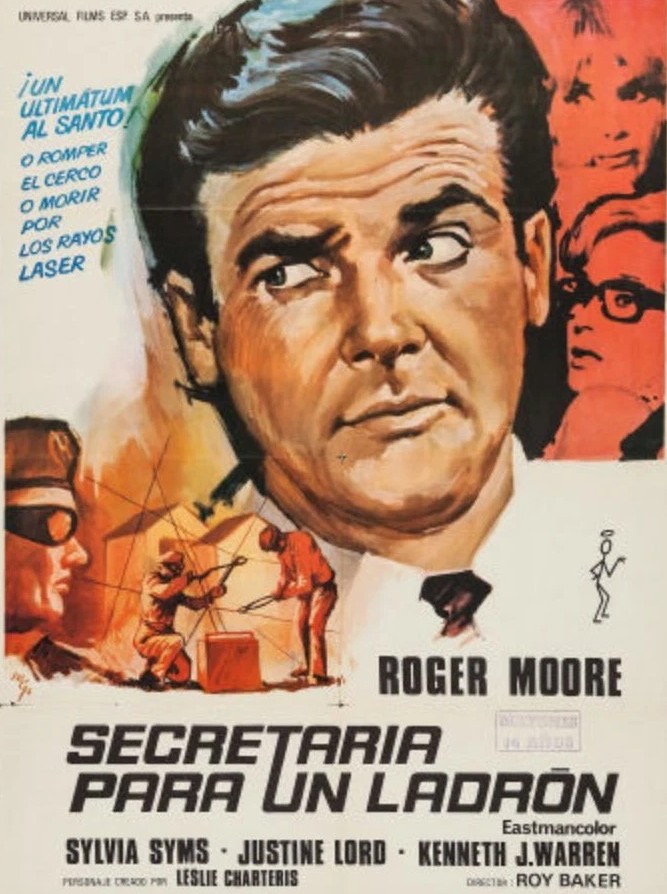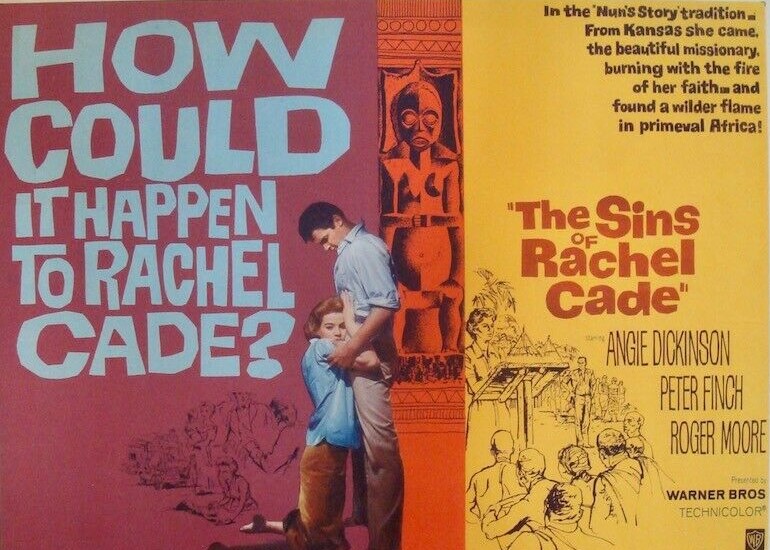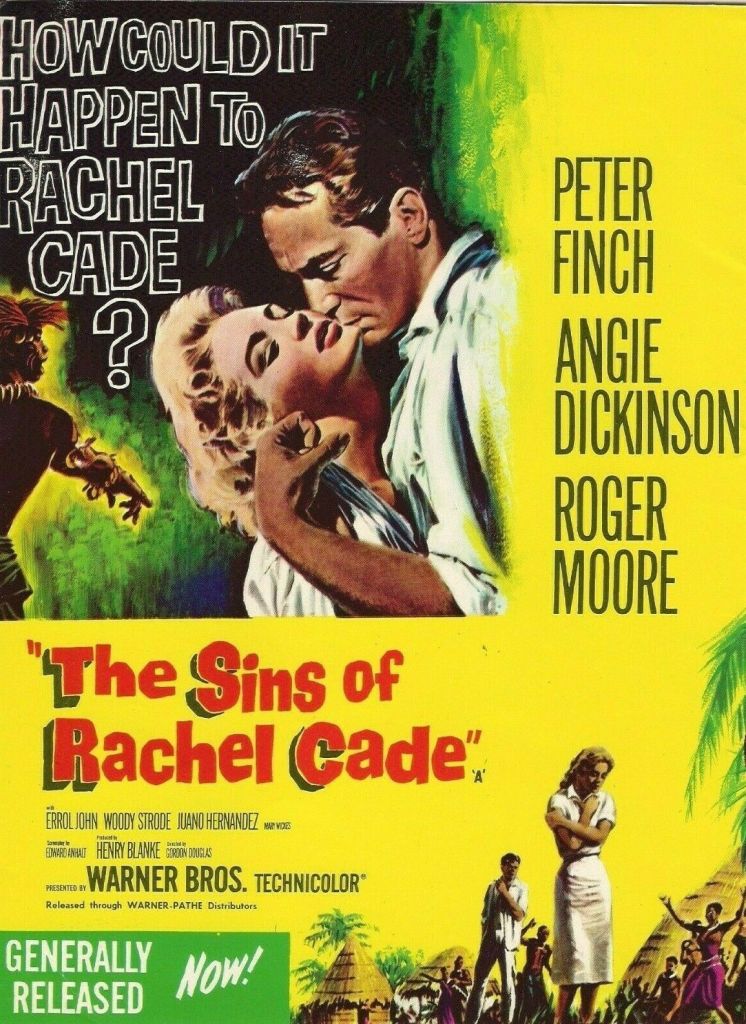
The Sins of Rachel Cade (1961) ***

In her first top-billed role Angie Dickinson (Jessica, 1962) delivers a strong performance as an American nurse/missionary in the Belgian Congo at the start of the Second World War. The usual Hollywood trope of “heathens” needing to be educated by imperialists – from The Bitter Tea of General Yen (1933) and The Keys of the Kingdom (1944) through to The Nun’s Story (1959) – was to some extent turned on its head here.

Just as Rachel Cade (Angie Dickinson) arrives at a hospital in a small village, resident Dr Bikel  (Douglas Spencer) dies. Not only does the hospital have no patients, the local Belgian commissioner Col Derod (Peter Finch) wants her to leave, believing her presence will act as provocation to the local high priest Kalanumu (Juano Hernandez) and witch doctor Muwango (Woody Strode). After standing up to all three, Rachel embarks on refurbishment of the hospital aided by assistant Kulu (Errol John).

Patients remain non-existent until she cures a small boy of appendicitis, as a result of which Muwango places a curse on her that she will lose her Protestant faith and promises the local god will take his revenge on anyone who supports her. Of course, her skills are not infinite and not only is there another boy who dies in her care but she cannot cure – and does not attempt to cure – the infertile third wife of the local chief.

While she warms to her patients and they to her, she cannot come to terms with their acceptance of incest (if a husband is called away, his brother must make love to his wife), polygamy, vaginal mutilation, the sexuality of their dancing and the fact that sin does not exist in their culture. Meanwhile, she distrusts the visions seen by the most convinced of her converts, Kulu.    

When the sexually repressed Rachel rejects Derod’s advances in favour of the  dashing but money-oriented Dr Paul Winton (Roger Moore), thus violating her own teachings, she becomes enmeshed by the principles she holds so dearly and which the Africans refute. A twist in the tale pivots the picture on whom she will marry, the sensible Derod, the cavalier Winton, or retain her own independence in defiance of the standards of the time.  

A battle of the hierarchies – the female nurse and her supporters versus male supremacy – maintains the tension but underneath is a philosophical struggle between the two faiths. The Christian religion which boasts of forgiveness is in the end unforgiving of those who break its moral code, while the African religion does not force onto its believers such ludicrous rules. On top of that is Rachel’s acceptance of her own passion, the realization that love cannot be restrained by commandment, and that men are more likely to betray her.

The reality of imperialist rule is not underplayed but since this predates the Mau Mau uprising in Kenya in the 1950s that precipitated widespread rebellion and Derod can call on soldiers for protection in the Belgian colony and is in fact a generally tolerant (though at times patronising) overseer, political issues remain in the background.

Angie Dickinson gets the movie star build-up in this British trade advertisement.

Director Gordon Douglas (Claudelle Inglish, 1961) keeps the focus on the transition of the naïve American while not ignoring nor appearing to ridicule the rituals and beliefs of the tribe – although a cynic might consider that the sexuality of the dancing, while repellant to Rachel, might be included more with an eye to attracting an audience. Overall, it appears an honest even-sided presentation, with the high priest getting the better of Rachel in arguments over the frailties of Christianity. Angie Dickinson brings conviction to a role that sees her start out a shade saintly until brought back down to earth by human weakness. Peter Finch, by coincidence the leading man to Audrey Hepburn role in The Nun’s Story, fills out his normal stoic screen personality with touches of grief. Roger Moore (Vendetta for the Saint, 1969) had not yet mastered the art of the raised eyebrow and so brought a more rounded performance to his role and is entirely believable as the lover with the mercenary streak.

The pick of the supporting parts is Mary Wickes (Sister Act, 1992) as Derod’s wisecracking housekeeper. Woody Strode (The Professionals, 1966), Scatman Crothers (The Shining, 1980),  Juano Hernandez (The Pawnbroker, 1964) and Errol John (The Nun’s Story)  provide stiff opposition for the incomers.  Edward Anhalt (The Satan Bug, 1965) based his screenplay on the bestseller by Charles Mercer.

CATCH-UP: Featured in the Blog so far are the following Angie Dickinson pictures: Ocean’s 11 (1960), A Fever in the Blood (1961), Jessica (1962), The Chase (1966), Cast a Giant Shadow (1966) and Point Blank (1967).

All-Time Top 50

It’s five years now since I started this Blog.  This little exercise that I generally undertake twice a year reflects the films viewed most often since the Blog began in June 2020. There’s no shaking Ann-Margret, a brace of her movies embedded in the top three, though the sequence has been punctured by the sudden arrival of Anora (2024) and followed by Pamela Anderson as The Last Showgirl (2024), both films making the highest ranking of any contemporary films I’ve reviewed, though I hated the former and adored the latter.  

The figures in brackets represent the positions in December 2024 and New Entry is self-explanatory. I’ve expanded the list from 40 movies to 50, which still represents a small fraction of the 1600 pictures I’ve reviewed since I started.

  1. (1) The Swinger (1966). Despite shaking her booty as only she knows how, Ann-Margret brings a sprinkling of innocence to this sex comedy.. 
  2. (New Entry) Anora (2024). Mikey Madison’s sex worker woos a Russian in Oscar-winner.
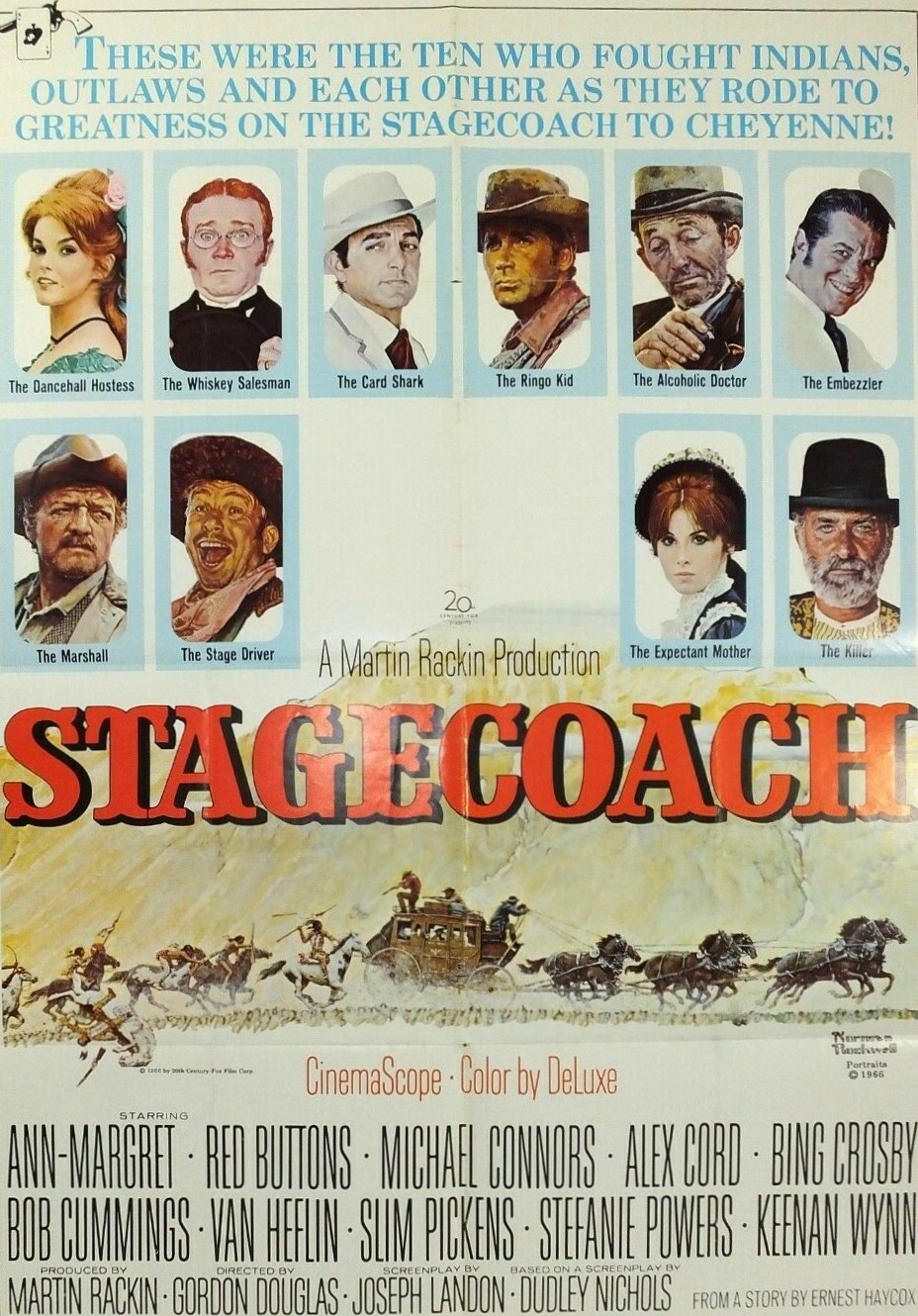
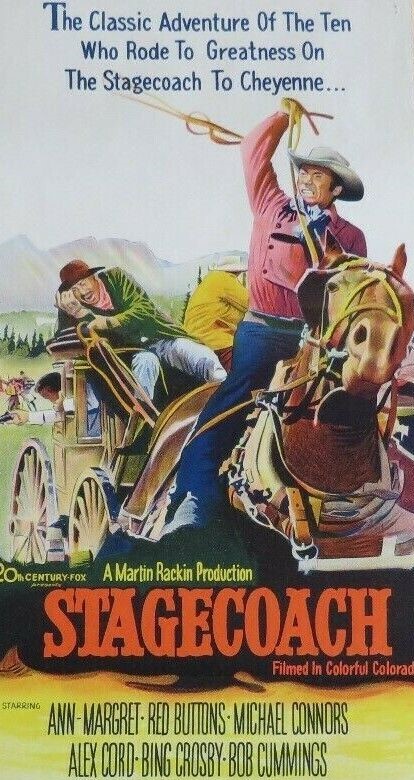
  3. (2) Stagecoach (1966). Under-rated remake of the John Ford western. But it’s Ann-Margret who steals the show ahead of Alex Cord in the role that brought John Wayne stardom.  
  4. (New Entry)) The Last Showgirl (2024). Pamela Anderson proves she can act and how in this touching portrayal of a fading Las Vegas dancer.
  5. (4) In Harm’s Way (1965). Under-rated John Wayne World War Two number. Co-starring Kirk Douglas, Patricia Neal, Tom Tryon and Paula Prentiss, director Otto Preminger surveys Pearl Harbor and after.
  6. (3) Fraulein Doktor (1969). Grisly realistic battle scenes and a superb score from Ennio Morricone help this Suzy Kendall vehicle as a World War One German spy going head-to-head with Brit Kenneth More and taking time out for romantic dalliance with Capucine.
  7. (5) Fireball XL5. The famous British television series (1962-1963) from Gerry and Sylvia Anderson, now colorized. “My heart will be a fireball…”
  8. (6) Once Upon a Time in the West (1969). Along with The Searchers (1956) now considered the most influential western of all time. Sergio Leone rounds up Claudia Cardinale, Henry Fonda and Charles Bronson and that fabulous Morricone score.
  9. (New Entry) Squad 36 / Bastion 36 (2025). Corruption and interdepartmental rivalry fuel this French flic directed by Olivier Marchal.
  10. (7) Jessica (1962). Angie Dickinson doesn’t mean to cause trouble but as a young widow arriving in a small Italian town she causes friction, so much so the local wives go on a sex strike..
  11. (20) Young Cassidy (1965). Julie Christie came out of this best, winning her role in Doctor Zhivago as a result. Rod Taylor as Irish playwright Sean O’Casey.
  12. (8) Thank You Very Much/ A Touch of Love (1969). Sandy Dennis dazzles as an academic single mother in London impregnated by Ian McKellen.
  13. (10) Baby Love (1969). Controversy was the initial selling point but now it’s morphed into a morality tale as orphaned Linda Hayden tries to fit into an upper-class London household.
  14. (30) The Girl on a Motorcycle / Naked under Leather (1968). How much you saw of star Marianne Faithfull depended on where you saw it. The U.S. censor came down heavily on the titular fantasizing heroine, the British censor more liberal. Alain Delon co-stars. These says, of course, you can see everything.
  15. (9) Pharoah (1966). Polish epic set in Egypt sees the country’s ruler at odds with the religious hierarchy.
  16. (24) A Dandy in Aspic (1968). Cold War thriller with Laurence Harvey as a double agent who wants out. Mia Farrow co-stars.  
  17. (31) Claudelle Inglish (1961). Diane McBain seeks revenge for being stood up at the altar in the Deep South.
  18. (New Entry) The Family Way (1966). Hayley Mills comes of age in this very adult drama. Co-starring her father John Mills and Hywel Bennett.
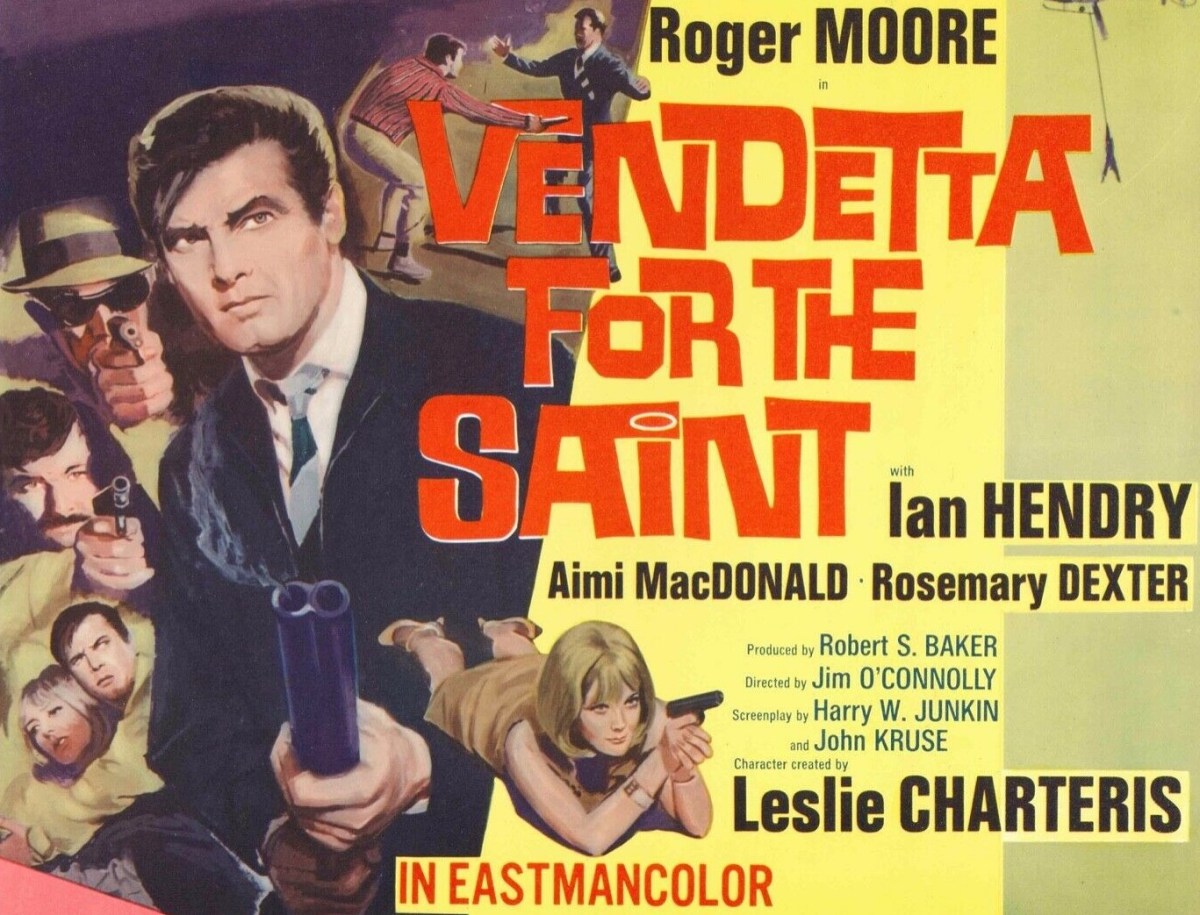
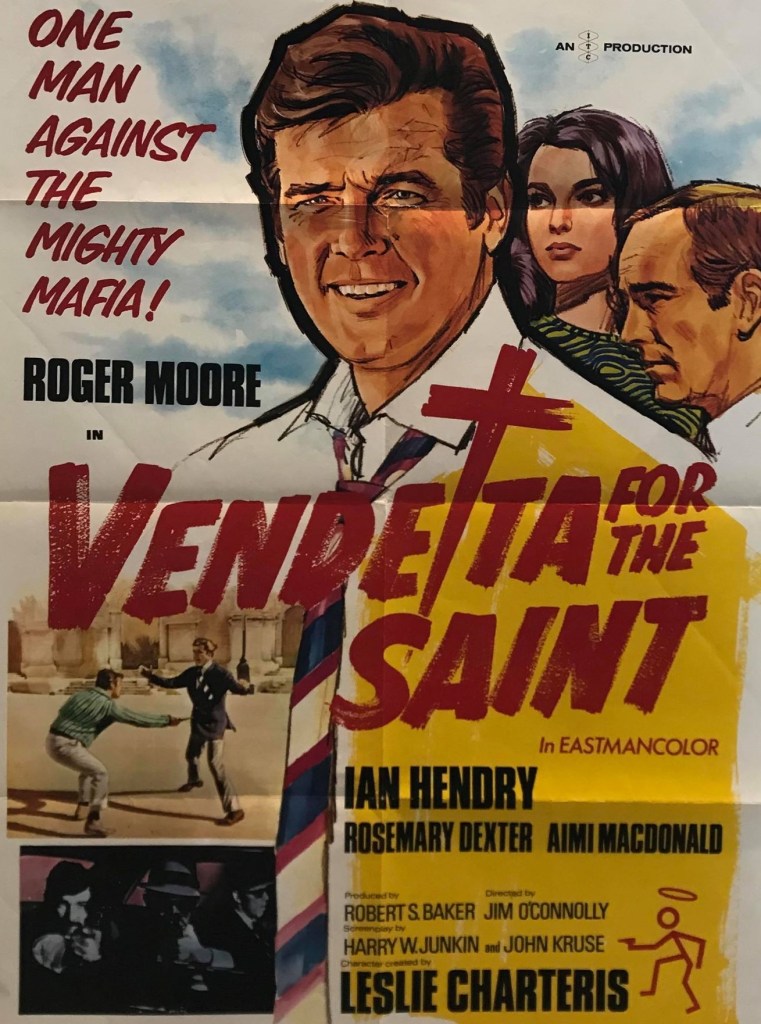
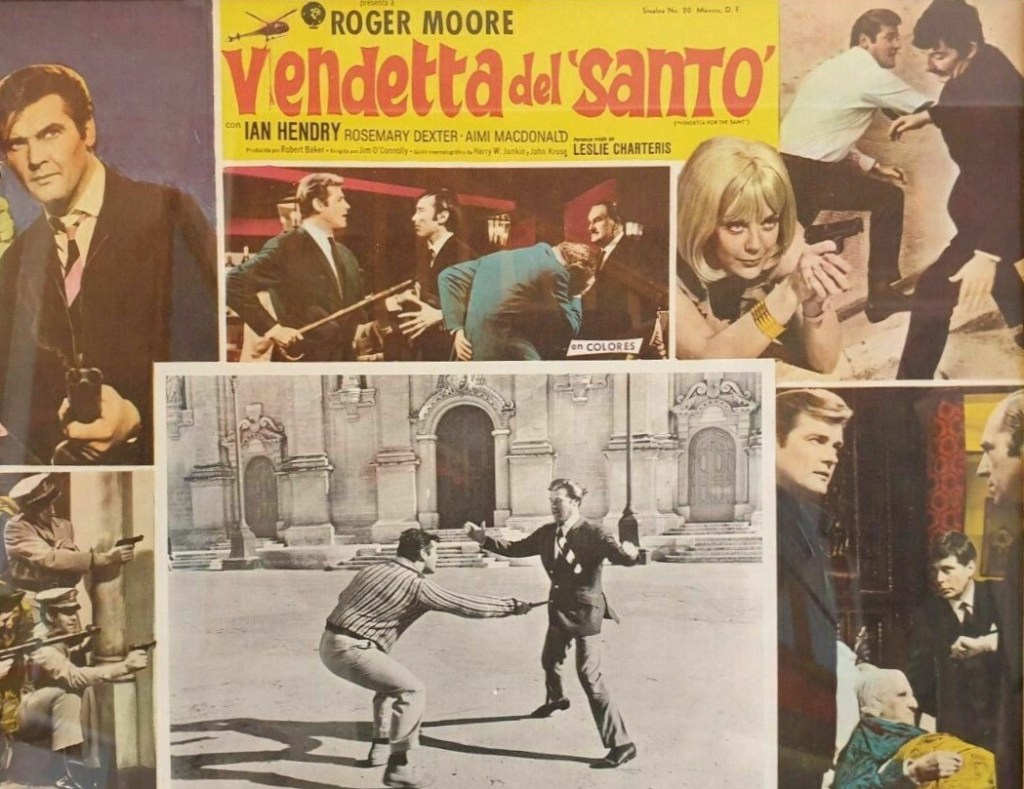
  19. (12) Vendetta for the Saint (1969). Prior to James Bond, Roger Moor was better known as television’s The Saint. Two television episodes combined sees our hero tackle the Mafia.
  20. (15) Go Naked in the World (1961). Gina Lollobrigida finds that love for a wealthy playboy clashes with her profession (the oldest). Look out for highly emotional turn from the usually taciturn Ernest Borgnine.
  21. (13) The Appointment (1969). Inhibited lawyer Omar Sharif discovers the secrets of wife Anouk Aimee in under-rated and little-seen Italian-set drama from Sidney Lumet.
  22. (New Entry) Istanbul Express (1968). Gene Barry plays a weird numbers game in spy thriller that sets him up against Senta Berger.
  23. (19) Pressure Point (1962). Nazi extremist Bobby Darin causes chaos for psychiatrist Sidney Poitier. Stunning dream sequences.
  24. (25) Pendulum (1968). Fast-rising cop George Peppard accused of murdering unfaithful wife Jean Seberg
  25. (11) The Sins of Rachel Cade (1961) Angie Dickinson (again) as African missionary falling foul of the natives and Commissioner Peter Finch. Roger Moore (again) in an early role.
  26. (16) Diamond Head (1962). Over-ambitious hypocritical landowner Charlton Heston comes unstuck in love, politics and business in Hawaii. George Chakiris, Yvette Mimieux and France Nuyen turn up the heat.
  27. (27) Fathom (1967). When not dodging the villains in an entertaining thriller, Raquel Welch models a string of bikinis as a skydiver caught up in spy malarkey.
  28. (36) Prehistoric Women / Slave Girls (1967). Martine Beswick attempts to steal the Raquel Welch crown as Hammer tries to repeat the success of One Million Years B.C
  29. (18) The Golden Claws of the Cat Girl (1968). Cults don’t come any sexier than Daniele Gaubert as a French cat burglar.
  30. (14) The Sisters (1969). Incest rears its head as Nathalie Delon and Susan Strasberg ignore husbands and lovers in favor of each other. 
  31.  (17) Moment to Moment (1966). Hitchcockian thriller set in Hitchcock country – the South of France – as unfaithful Jean Seberg is on the hook for the murder of her lover.  Also featuring Honor Blackman. 
  32. (New Entry) Age of Consent (1969). Helen Mirren frolics nude in her debut as the freewheeling damsel drawn to disillusioned painter James Mason.
  33. (28) Farewell, Friend / Adieu L’Ami (1968). A star is born – at least in France, the States was a good few years behind in recognizing the marquee attractions of Charles Bronson. Alain Delon co-stars in twisty French heist thriller featuring Olga Georges-Picot and Brigitte Fossey.
  34. (35) Horizon: An American Saga – Chapter 1 (2024). Kevin Costner’s majestic western that became one of the biggest flops of the year was underrated in my opinion.
  35. (New Entry) Genghis Khan (1965). Omar Sharif as the titular warrior up against Stephen Boyd. Co-starring James Mason and Francoise Dorleac. Robert Morley is hilariously miscast as the Chinese Empteror.
  36. (26) Once a Thief (1965). Ann-Margret again, in a less sexy incarnation, as a working mother whose ex-jailbird thief Alain Delon takes a detour back into crime.
  37. (29) Woman of Straw (1964). More Hitchockian goings-on as Sean Connery tries to frame Gina Lollobrigida in a dubious scheme.
  38. (New entry) The Demon / Il Demonio (1963). Extraordinary performance by Daliah Lavi in Italian drama as she produces the performance of her career.
  39. (New entry) Guns of Darkness (1962). David Niven and Leslie Caron on the run from South American revolutionaries.
  40. (New Entry) Operation Crossbow (1965). George Peppard is the man with the mission in Occupied France during World War Two. Co-stars Sophia Loren.
  41. (34) She Died with Her Boots On / Whirlpool (1969). More sleaze than cult. Spanish director Jose Ramon Larraz’s thriller sees kinky photographer Karl Lanchbury targeting real-life MTA Vivien Neves.  
  42. (21) Can Heironymus Merkin Ever Forget Mercy Humpe and Find True Happiness? Fellini would turn in his grave at the self-indulgence of singer Anthony Newley who manages to lament that women falling at his feet cause him so much strife. Joan Collins co-stars.
  43. (23) The Chalk Garden (1964). Wild child Hayley Mills, trying to break out of her Disney straitjacket, duels with governess Deborah Kerr.
  44. (New Entry) Dark of the Sun / The Mercenaries (1968). Rod Taylor’s guns-for-hire break out the action in war-torn Africa. Jim Brown and Yvette Mimieux co-star.
  45. (New entry) La Belle Noiseuse (1991). Emmanuelle Beart is the mostly naked model taking painter Michel Piccoli to his artistic limits.
  46. (New Entry) A Fine Pair (1968). Rock Hudson and Claudia Cardinale join forces for a heist picture.
  47. (33) Lady in Cement (1969). Raquel Welch models more bikinis as the gangster’s moll taken on as a client by private eye Frank Sinatra in his second outing as Tony Rome.
  48. (New Entry) Carry On Up the Khyber (1968). The most successful of the Carry On satires poking fun at the British in India.
  49. (New Entry) The Venetian Affair (1966). Robert Vaughn investigates spate of suicide bombs. Elke Sommer provides the glamor.
  50. (22) The Secret Ways (1961). The first of the Alistair MacLean adaptations to hit the big screen features Richard Widmark trapped in Hungary during the Cold War. Senta Berger in an early role.

Vendetta for the Saint (1969) ***

This big-screen version of a small-screen hero is as pleasant a diversion as you can get. Nostalgia pretty much gives it a free pass and in any case the action, which punctuates the drama at regular intervals, was always going to be budget-restricted. Despite being in almost constant danger the insouciance of gentleman thief Simon Templar dictates that the pace is no more than languid.

As the title suggests, we’re in Mafia country, Templar (Roger Moore) drawn into a Cosa Nostra succession scenario as the result of a casual encounter with  former bank clerk Houston (Fulton Mackay), later found dead. Houston has cast doubts on the real identity of  Mafia Don Destiamo (Ian Hendry), one of several contenders to become the next Mafia overlord. Templar sneaks into Destiamo’s world by pursuing his niece Gina (Rosemary Dexter). Although outwardly respectable, Destiamo a bit too fond of using his cigar as a weapon of disfigurement, threatening his blonde English moll Lily (Aimi MacDonald) in this fashion.

Part of Templar’s attraction is that, although he has a nefarious side, he is happy to walk those mean streets and has a strict moral code. And he moves in such elevated circles that he has a nodding acquaintance with dying Mafia chieftain Don Pasquale (Finlay Currie) who has yet to pick his successor.

The other part of his attraction is that he’s played with such suaveness by Roger Moore. For a good chunk of the time someone is trying to knife him, shoot him, blow him up, capture him, jab him with a truth serum, and generally trying to stop him. In fending off such attacks, or out-smarting the villains, there’s rarely a hair out of place. It’s not so much devil-may-care as devil-is-wasting-his-time with such an imperturbable fellow.

Although the action is pretty straightforward, Templar is not above a clever ruse – jamming a bus in a gateway preventing his pursuers continuing the chase – nor an old one such as tying sheets together to climb out of a window. While Malta stands in for Italy, the locations still look authentic enough, ancient stone buildings, the occasional horse pulling a cart. When the action/drama eases up, there’s always pleasant scenery.

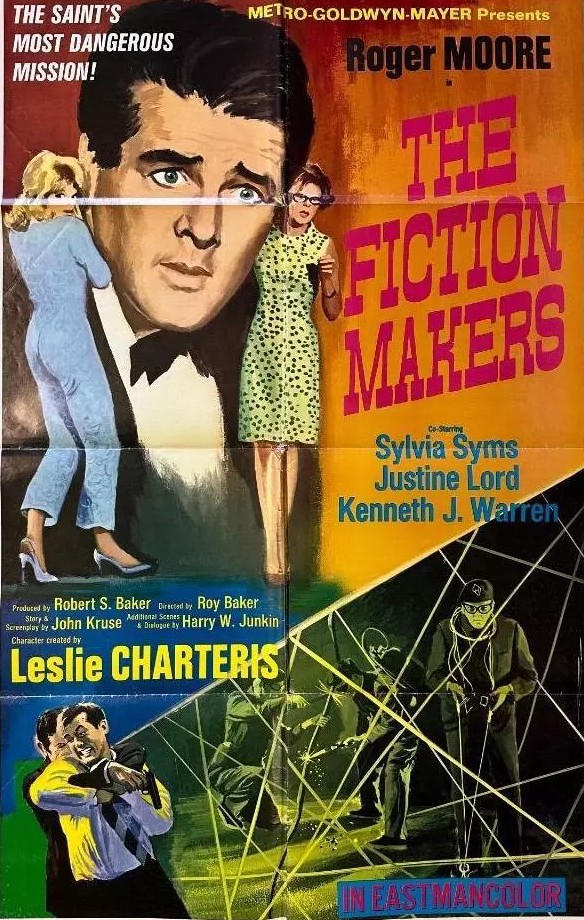
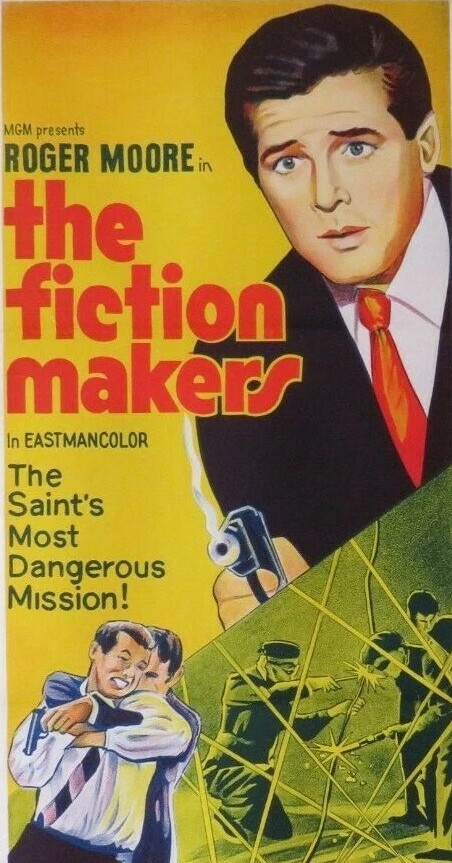
Following MGM’s success in stitching together into a movie two episodes of The Man From U.N.C/L.E. television series (which of course had pinched the idea from Walt Disney’s cinematic re-presentation of Davy Crockett episodes) it was no surprise that ATV, then under the control of future movie mogul Sir Lew Grade (Raise the Titanic, 1980), decided to adopt the same idea. Although The Saint had been showing on British television since 1962, by the end of its run in 1969 it had stepped up to bigger budgets, 35mm and colour. Given each episode lasted around 50 minutes, it was relatively simple to devise a two-part programme shown over consecutive weeks on ITV in Britain and then release it throughout the rest of the world as a feature film. The first such project was The Fiction Makers (1968) followed by Vendetta for the Saint.

Roger Moore’s movie career had been in limbo since Romulus and the Sabines (1961) and there’s no doubt that his performance as Simon Templar and later in another glossier British television series The Persuaders (1971-1972) made him a candidate for James Bond. While his interpretation of Templar, especially the wry delivery, does bear some similarities to his incarnation as 007, that only holds true as long as you set aside the year’s supply of Brylcreem dumped on his hair, the shoulder-padded shoulders and the fact that he had not yet perfected his trademark move, the raising of the single eyebrow.

While no match for the quips prevalent in James Bond, Canadian screenwriter Harry W. Junkin – best known for his television work, his only other movies being a similar melding of television episodes of The Persuaders – and John Kruse (Hell Drivers, 1957) – had some neat one-liners. Despite the obvious limitations, director Jim O’Connelly (Berserk, 1967) does a decent enough job.

But Moore carries the show. Ian Hendry makes a passable villain but not a passable Italian. In general, not surprisingly since most characters were played by British actors, the accents are all over the place though Moore, courtesy of squiring Luisa Mattioli (later his wife) manages to deliver his Italian lines in an acceptable accent. Otherwise, the only one who comes close is Rosemary Dexter (The Shoes of the Fisherman, 1968) and that’s because she was Italian. Worth checking out in the supporting cast are Finlay Currie (Ben Hur, 1959) and Fulton Mackay (BBC series Porridge, 1974-1977).

You can find a lot wrong with this without looking very hard but if you switch off your over-critical faculties you will be pleasantly surprised.

Behind the Scenes: “The Man Who Haunted Himself” (1970) – The British Are Coming, Part One

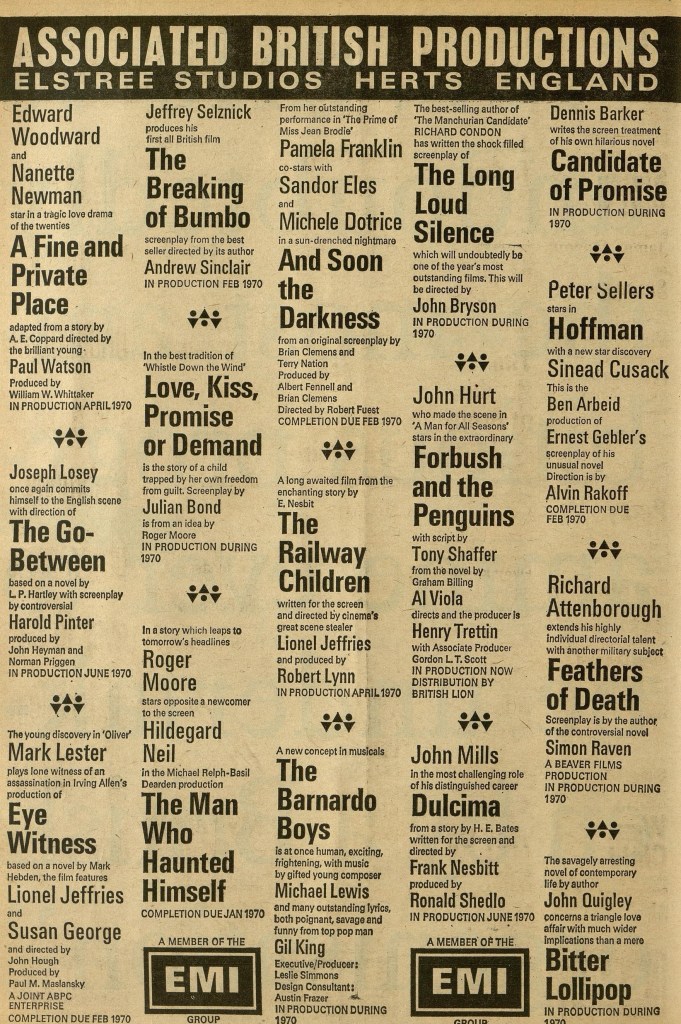
The Man Who Haunted Himself (1970) appeared as part of new British production strategy. In fact, the British had been trying to dominate the global film industry since the silent era when  the population of its Commonwealth exceeded that of the United States. At various points, the British had launched various distribution attacks on Hollywood – aligning with U.S. cinema chains, organizing their own distribution system (Gaumont-British in the 1930s for example) and even taking over major Broadway houses as a launch platform for new releases. Come the end of the 1960s , Britain had lost its production grip on the world stage. Though movies were still being made in Britain they were often funded by Hollywood, or were B-movies or genre-specific such as Hammer horror.

In 1969, Associated British Picture Corporation, following a takeover by EMI, relaunched as a major production entity, aiming to provide increased programming for its own 270-strong ABC cinema chain as well as hitting the export market. Bernard Delfont, chairman of ABPC, set up two production strategies that he intended to run in parallel. He brought in director Bryan Forbes (King Rat, 1965) as production chief of ABPC while Nat Cohen, head of ABPC subsidiary Anglo-Amalgamated, would augment that effort.

Full page ads (above and below) were taken in “Variety” to promote the MGM-EMI slate.
Of the 26 features planned, only 15 were made.

Forbes took on the role after initially signing a three-picture deal with Delfont which developed into “something wider…at a time of real crisis.” Forbes explained his motivation: “I think if you’ve been a critic as I have over the years…you’ve got to put up or shut up. And if the job is offered to you, you can’t turn it down and then go on criticising.”

The initial slate was being made with no guarantee of foreign distribution. Even getting a foothold in Britain was difficult. “We are very dependent…on getting West End outlets. There’s a long queue and we don’t have any particular pull.”

(In Britain at this point, roadshow – which to a large extent was no longer the favoured release device for big budget pictures in the U.S. – still dominated the West End and the type of picture being envisaged was more targeted towards the circuit. But a West End run was always seen as a mark of quality. The downside of the West End release was that it delayed movies reaching the provinces and by the time they did all the initial media interest was long forgotten.)

Budgets were being assessed to meet the prospect that a very successful film could recover its negative costs on a British release alone, with anything else pure profit. Trying to appeal to the international and/or U.S. market at the outset was too complicated and expensive a proposition. And there was always the prospect that with the production well running dry in American, that a distributor, with a hole to fill, would come calling.

ABPC allocated a total budget of £36 million to make 28 pictures, with Forbes’ outfit taking the lion share, leaving Nat Cohen only $7 million to make 13 movies. According to Delfont, it was the “most ambitious” program ever scheduled by a British company. While certainly an overstatement given the investment by Rank, ABPC and Gaumont-British in the past, it nonetheless captured media attention.

The Forbes project didn’t go according to plan. Hoffman (1970) with Peter Sellers, thriller And Soon the Darkness (1970), The Man Who Haunted Himself (1970) starring Roger Moore, The Breaking of Bumbo (1970) and Mr Forbrush and the Penguins (1971) headlining John Hurt and Hayley Mills all flopped, despite costing a lot less than originally expected. The Railway Children (1971) was the only undeniable hit while The Tales of Beatrix Potter (1971) made a profit. Raging Moon / Long Ago, Tomorrow (1971), with Forbes directing Malcolm McDowell and Nanette Newman, and Dulcima (1971) with John Mills and Carol White also ended up in the red. 

Forbes fared much better heading up MGM-EMI, a co-production unit set up in 1970, which produced hits The Go-Between (1971) and Get Carter (1971). Forbes resigned in 1971.

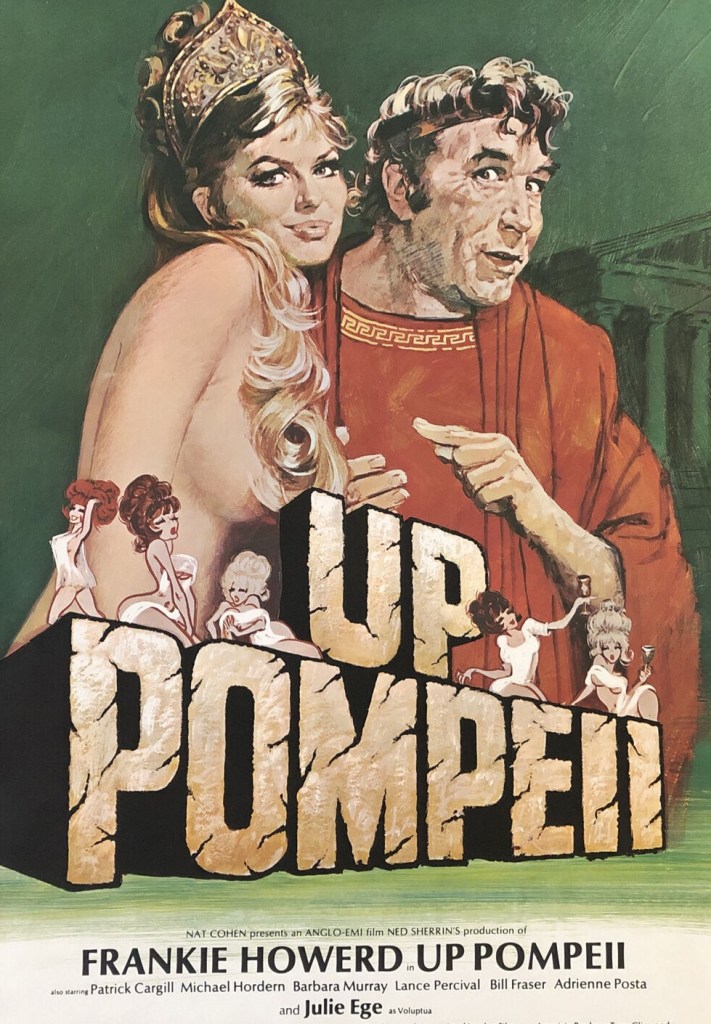
Nat Cohen, while pandering to a lower common denominator, enjoyed more straightforward success with sex-change comedy Percy (1971), and big screen versions of On the Buses (1971), Up Pompeii (1971) and Steptoe and Son (1972) – and their various sequels –  Richard Burton as Villain (1971), Fear Is the Key (1972), and Stardust (1974) while Murder on the Orient Express (1974) with an all-star cast was a huge global hit.

In 1976 Michael Deeley and Barry Spikings became joint managing directors of EMI and aiming for an international audience fronted part of the finance for The Deer Hunter (1978), Sam Peckinpah’s Convoy (1978) and Walter Hill’s The Driver (1978) and had significant investment in Columbia pictures like Close Encounters of the Third Kind (1977) and The Deep (1977).

But the British invasion amounted to very little in the end, as Hollywood, led by gargantuan hits of The Godfather (1972), Jaws (1975) and Star Wars (1977) swept all before them and made it impossible for British-made films to compete either on a commercial or artistic basis.

The experiment was a massive flop. EMI failed to break into the American market and, in fact, the box office achieved was on the dismal side. Best performers were Get Carter and The Go-Between both estimated to achieve rentals of just under $2 million. Tales of Beatrix Potter didn’t reach $1 million and Villain not $750,000. The Railway Children couldn’t manage $500,000 nor Percy $250,000 and none of the others even crossed the $100,000 mark. It was considered such a footnote in British movie history that it didn’t merit a mention in Sarah Street’s Transatlantic Crossing, British Feature Films in the USA (Continuum, 2002).

SOURCES: Alexander Walker, Hollywood England, (Orion paperback, 2005) p426-440; Advert, Variety, January 21, 1970, p12-13; Derek Todd, “The Emperor of Elstree’s First 300 Days,” Kine Weekly, March 7, 1970, p6-8, 19; “MGM-EMI In Joint Deal On British Filmmaking,” Box Office, April 27, 1970, p7; “MGM Setting EMI CoProds,” Variety, June 10, 1970, p3; “MGM-EMI To Produce 12 Films Annually,” Box Office, July 6, 1970, p6; “From $10-Mil and Up, Rentals, to $100,000 and Less,” Variety, November 12, 1972, p5.

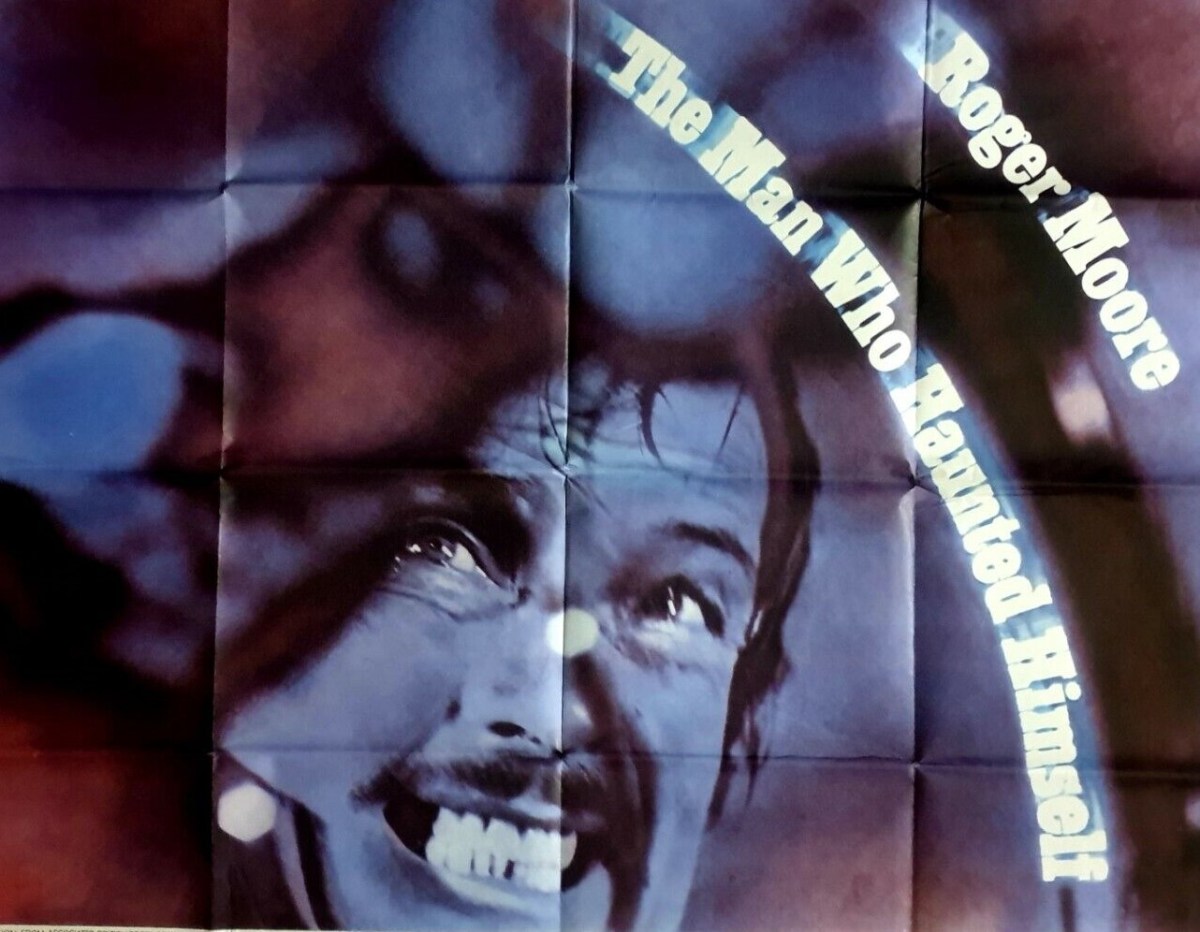
The Man Who Haunted Himself (1970) ****

I grant you, not many movies pivot on a broken matchstick. Nor, for that matter, play around with the screen persona of the imperturbable Roger Moore (Vendetta for the Saint, 1968) or call upon him to do more than raise an occasional eyebrow. No doubt I’m committing heresy in comparing this to The Wicker Man (1973) but there’s a certain similarity in the innocent being dragged into deep waters and, as in that picture, instead of our hero triumphing against sinister forces, ending up a victim.   

While the main narrative thrust is a doppelganger, the initial plot concerns murky business dealings, boardroom betrayal, and corporate espionage set against the backdrop of high living, upscale car, trophy wife, a spot of fun in a casino. The final film of Basil Dearden (The Assassination Bureau, 1969), who died prematurely aged 60, deals with the shattering of the life of strait-laced Pelham (Roger Moore).

He is fastening his car seat-belt a full decade before that was mandatory in Britain, punctuality his mantra, keeps to the speed limit, an immaculate dresser, and while hard work has taken its toll on his marriage he’s not the kind to have a mistress stashed away. But he crashes his car when, against all odds, he seems possessed by the desire to race along at 100mph, overtaking like crazy. For a moment, in surgery, his body registers two heartbeats.

Then people start reminding him of out-of-character activities, thrashing everyone at the club at snooker (and for money stakes), hitting the casino, receiving a nod-and-wink for under-the-table business dealings, while fashion photographer Julie (Olga Georges-Picot) makes sexual demands.

And outside his house his wife Eve (Hildegard Neil) spies a very swanky sports car and begins to suspect her husband is having an affair. Naturally, the upstanding Pelham tries to track down this imposter who has the habit of marking his territory with a broken matchstick. Some occurrences are downright weird. On meeting colleague Alexander (Anton Rogers) for a drink, he discovers he’s already had a drink. There’s the question of a piece of jewellery for Julie that he doesn’t recall buying. An astonished barber wonders why his client would need his hair cut two days in a row. And is someone stealing his shirts and ties?

This is the kind of picture where the normal resolution would be some kind of gas lighting, or tip into film noir with wife and/or the femme fatale involved in conspiracy, or at least some reasonable explanation for the dodgy goings-on.

Britain was going through a doppelganger mini-epidemic, Doppleganger/ Journey to the Far Side of the Sun appearing the year before, but that was a more straightforward sci-fi, being set in the future. And, of course, sci-fi was going through a new cycle what with 2001: A Space Odyssey (1968), Barbarella (1968) and Planet of the Apes (1968).

But it would be a tough call to place this in the same straightforward sci-fi category. The better fit, as I suggested, is The Wicker Man, the background one of a character upset by a different version of normality rather than inhabiting another world or discovering things have changed in the future. And there’s a psychological twist too, the sense of man losing grip on reality, battling  a madness he cannot escape, and while it could have done with dwelling on that aspect a while longer, nonetheless Dearden still achieves his result.

Roger Moore is excellent in twin roles, Hildegard Neil makes an interesting debut and Olga-Georges Picot (Farewell, Friend / Adieu L’Ami, 1968) brings surprising depth to her limited role.

The twisty stuff was written by Michael Relph (The Assassination Bureau) and Dearden based on the bestseller The Strange Case of Mr Pelham by Anthony Armstrong.

North Sea Hijack / ffolkes (1980) ****

Shouldn’t work at all not with star Roger Moore gussied up like a maiden aunt, fussing over needlepoint and cats, dolled up in tweeds and sporting an unkempt beard and a ginger wig. Our only clue in the early stages that he’s anything approaching a tough guy is that he knocks back whisky like soda pop.

And bear in mind this was a couple of years before the Brits could blithely call in the SAS (Who Dares Wins, 1982) for a ticklish rescue op and more than a decade before it became the norm to rely on a handily-available one-man band of the Die Hard persuasion and even longer before you had to worry about upsetting the pet or elderly neighbor of your local retired assassin.

When the movie flopped in the U.K. it was re-branded as some kind of James Bond number with scantily-clad women.

That it does work is very much down to Moore as the opposite of the standard Hollywood hero, avoiding rather than provoking trouble for strategic reasons, and realizing that, even with the deadliest of deadlines, time could be on his side and be used to un-nerve his opponent. After the film flopped spectacularly, Moore claimed he was miscast, but, in fact, despite the box office failure, the opposite is true. Without him brilliantly treading a very fine line this would have easily teetered into spoof.

A bunch of gangsters – not terrorists, plain cash the motive not some obscure cause – led by Kramer (Anthony Perkins) take over an oil platform supply ship, force Capt Olafson (Jack Watson) and crew, including, unusually for the time a female chef Sanna (Lea Brodie), to park under the oil platform while a couple of the gang plant explosives – to be set off as a warning – under the smaller drilling rig located some distance away, threatening to blow the whole operation sky-high if the British government doesn’t meet a ransom demand of $25 million.

As it happens the mysterious section of government that sometimes even Prime Ministers don’t know exists (as with beekeeping within the C.I.A.) has already recognized such a potential issue and hired ffolkes (Roger Moore) and his self-styled team of “fusiliers” to come up with a solution. Once the female Prime Minister (Faith Brook) – Margaret Thatcher was already in power at this point – is apprised of the cost in loss of revenue and human lives, she gives the go-ahead.

Ffolkes is despatched by helicopter with Admiral Brinsden (James Mason) and a high-ranking lackey. The supply ship crew, meantime, led by Sanna, have attempted to poison the invaders but that’s thwarted by the ruthless Kramer who by now has been chucking any dissenters over the side.

Kramer’s a clever guy. His ploy is smart. Theoretically, the drilling rig is financially worth a lot more than the platform, but that loss would account for a fraction of the lives of those on board the platform, and measured in public relations terms by any government deemed the smaller catastrophe. The platform will only be destroyed if the government is foolish enough not to meet his second deadline – if they fail to hit the first it’s just the rig that ends up in Davy Jones’ Locker.

But ffolkes is as cunning and plans a fake destruction of the rig to remove that ace in Kramer’s pack. The resulting explosion is so convincing, especially since it takes place at night, that the stakes are raised in ffolkes favor. But that’s only until Kramer smells a rat and refuses to allow ffolkes on the supply boat, ensuring the cat-lover has to resort to the more dangerous and potentially deadline-breaching Plan B. Nor, despite early action pointing to ffolkes’ efficiency, is he invulnerable in the tough-guy department, needing rescued twice, once by Sanna, hiding in a lifeboat after her failed poisoning mission.

And it does rely on the occasionally dense Admiral learning a simple trick with a cigarette packet.

This probably flopped because audiences expected some version of James Bond (it appeared within Moore’s stint as 007 in the two-year gap between Moonraker and For Your Eyes Only) or at least the cigar-chomping mercenary in The Wild Geese (1978). If Moore had carried out the required action in tweeds or naval uniform it might have been more easily accepted than dressed in a bright red frogman’s outfit (choice of that color a flaw in an op intended as subterfuge).

The irrepressible sexist character he represented might be more of a challenge to a contemporary audience but it’s delivered without malice and, theoretically at least, his aversion to women (and no overt hint of homosexuality I might add, though you could make your own mind up on that score) is explained. And Sarah (Jennifer (Hilary) , the oil platform skipper’s secretary, is his match, though that’s mostly with dry asides and rolling eyes.

There’s a bit of a sexist joke – although somewhat of a cliché – when our man discovers one of the crew is a woman and not a man. But that’s far better than the out-and-out misogyny of one of the gangsters whose reaction to cornering Sanna is attempted rape.

So, not the all-action yarn you – and audiences back in the day – might have expected, but, still pretty good fun. Director Andrew v. McLaglen melds elements of his The Wild Geese, and Shenandoah (1965), Moore’s performance reminiscent of the slow-burn of the James Stewart character. Screenplay by Jack Davies (Gambit, 1966) based on his bestseller.

Scarcely a lifted eyebrow in sight. Great fun – you couldn’t get more retro – and certainly had me chuckling – and free on YouTube.

Top 30 Films for 2023

Ann-Margret is pipped to the post by…Ann-Margret. The Swinger and Stagecoach duked it out at the top of the All-Time Top 40 with the former taking it by a good margin. But it was the reversal in the annual stakes, with the western ahead just by a nose. The films viewed most this year. As ever some surprise picks.  

  1. Stagecoach (1966). Ann-Margret and Alex Cord in decent remake of John Ford classic western.
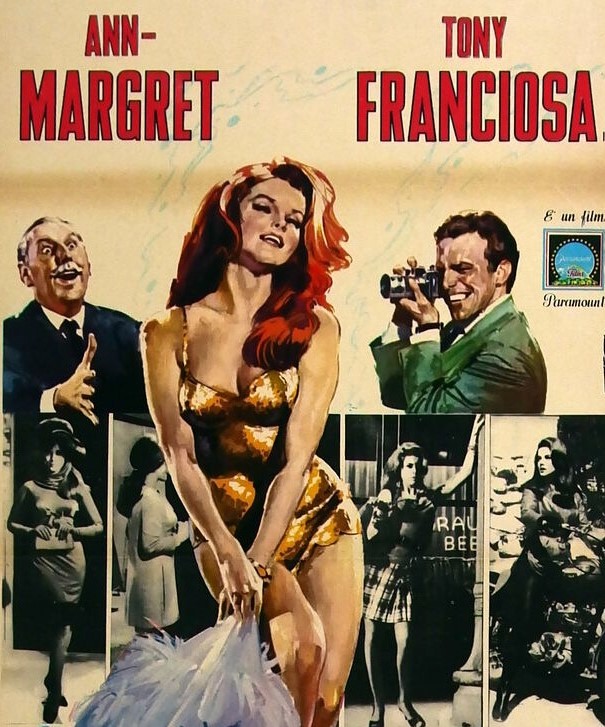
  2. The Swinger (1966). Ann-Margret as novelist who tries to live up to the sexy persona she has invented.    
  3. The Sins of Rachel Cade (1961). Angie Dickinson as African missionary with Peter Finch and Roger Moore in thrall.
  4. Fireball XL5. The famous British television series from Gerry and Sylvia Anderson, now colorized. “My heart will be a fireball…”
  5. Fraulein Doktor (1969). German spy Suzy Kendall out-foxes Kenneth More. Grisly realistic WWI battle scenes and a superb score from Ennio Morricone.
  6. Vendetta for the Saint (1968) Roger Moore vs the Mafia.
  7. Plane (2023). Gerard Butler channels his inner Bruce Willis in Die-Hard-on-a-desert-island adventure.
  8. Baby Love (1969). Orphan Linda Hayden proves too much of a temptation for upper-middle-class London family.
  9. The Best House in London (1969). David Hemmings goes into battle for sex workers.
  10. The Sisters (1969). Nathalie Delon and Susan Strasberg in complicated love triangle of love and betrayal.
  11. Pendulum (1968). Taut thriller with cop George Peppard accused of murdering unfaithful wife Jean Seberg.
  12. Moment to Moment (1966). Jean Seberg investigated for murder in Hitchcockian thriller set in the South of France.
  13. Rage (1966). Glenn Ford and Stella Stevens combat pandemic in Mexican town.
  14. The First Deadly Sin (1980). Frank Sinatra’s cop chases down a serial killer.
  15. Go Naked in the World (1961). Gina Lollobrigida finds that her profession (the oldest) and true love (with rich Anthony Franciosa) don’t mix. Great turn from Ernest Borgnine as a doting father.
  16. Lady in Cement (1969). Sinatra as private eye Tony Rome who takes on gangster’s moll Raquel Welch as a client.
  17. Champions (2023). Woody Harrelson as the basketball coach saddled with a bunch of misfits.
  18. A Dandy in Aspic (1968). Cold War thriller with Laurence Harvey as a double agent who wants out. Mia Farrow co-stars.   
  19. She Died with Her Boots On / Whirlpool (1969). Sleazy British film from cult Spanish director Jose Ramon Larraz sees kinky photographer Karl Lanchbury seduce real-life MTA Vivien Neves.   
  20. Once a Thief (1965). Less glamorous role for Ann-Margret as wife of ex-jailbird thief Alain Delon who is forced into another job.
  21. Diamond Head (1962). Charlton Heston chews the scenery in Hawaiian epic.
  22. Titanic (1997). Reissue in 3D of the James Cameron box office smash.
  23. Can Heironymus Merkin Ever Forget Mercy Humpe and Find True Happiness? (1969) Self-indulgence reaches new heights with writer-director-producer Anthony Newley’s autobiographical tale about stardom. Then-wife Joan Collins co-stars.
  24. Sergeant Ryker (1968). Lee Marvin in Korean War courtroom drama.
  25. The Misfits (1960). Clark Gable goes out on a high, ably supported by Montgomery Clift and Marilyn Monroe in John Huston tale of losers. 
  26. Once Upon a Time in the West (1969). Sergio Leone masterpiece featuring the stunning cast of Claudia Cardinale, Henry Fonda and Charles Bronson and that fabulous Morricone score.
  27. In Harm’s Way (1965). John Wayne and Kirk Douglas in Otto Preminger WW2 epic set in Pearl Harbor and after.
  28. The Invitation (2022). Gothic thriller starring Nathalie Emmanuel.
  29. Beat Girl / Wild for Kicks (1960). Gillian Hills is tempted into joining the striptease game. Christopher Lee puts in an appearance. 
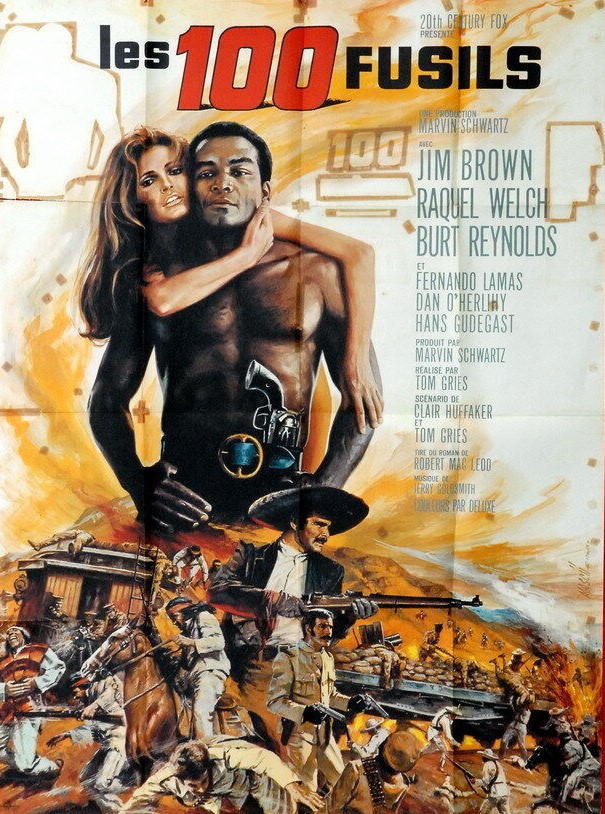
  30. 100 Rifles (1969). Raquel Welch, Jim Brown and Burt Reynolds heat up the screen in Tom Gries western set in Mexico.

All-Time Top 40

It’s Angie Dickinson vs Ann-Margret at the top of the All-Time Top 40. The two female stars take four of the top seven spots with Ann-Margret’s The Swinger replacing at the top long-time favorite The Secret Ways. These two have been duking it out over the past year, in which time the top spot has changed hands four times, with Jessica and Once Upon a Time in the West also taking a turn in the premier position. It’s also noticeable that women are top-billed in seven of the pictures in the Top Ten.

I started this Blog three years ago in June. Last year it was being read in 120 countries but that’s now gone up to 182 (out of the 193 recognized by the United Nations plus the Vatican state and the State of Palestine). Reviews have also increased and I’m now approaching 7,000 views a month, so thanks to you all.

I’ve been doing an Annual Top 40 since I started so this is the third iteration of that idea based on those reviews – out of the 900-plus posted so far – which have attracted the most attention over the three-year period. This isn’t my choice of the top films in the Blog, but yours, my loyal readers. The chart covers the films viewed the most times since the Blog began, from June 1, 2020 to July 31, 2023. (Yeah, it should have been May 31, but I’ve been remiss.)

  1. (7) The Swinger (1966). Ann-Margret struts her stuff as a magazine journalist trying to persuade Tony Franciosa she is as sexy as the characters she has written about.
  2. (-) Once Upon A Time in the West (1968). Rated the top western of all time, Sergio Leone’s operatic epic with Claudia Cardinale, Henry Fonda and Charles Bronson and the astonishing Ennio Morricone score.
  3. (2) Jessica (1962). Innocently gorgeous widow Angie Dickinson finds her looks turn so many male heads in a small Italian town that the female population seek revenge.
  4. (5) Fraulein Doktor (1969). Suzy Kendall in the best role of her career as a sexy German spy in World War One.
  5. (-) Stagecoach (1966). Ann-Margret, Alex Cord and Bing Crosby in decent remake of classic John Ford western.
  6. (1) The Secret Ways (1961).  Richard Widmark exudes menace in this adaptation of an early Alistair MacLean spy thriller set in Hungary during the Cold War. Senta Berger  has a small role.
  7. (-) The Sins of Rachel Cade (1961). Angie Dickinson as a missionary who falls in love with Peter Finch in war-torn Africa.
  8. (-) Gerry Anderson’s Fireball XL5. Colorized version of the famed sci fi television show.
  9. (11) Moment to Moment (1966). Hitchcockian-style thriller with Jean Seberg caught up in  murder plot in the French Riviera. Also features Honor Blackman.
  10. (3) Ocean’s 11 (1960). In the Rat Pack debut Frank Sinatra, Dean Martin, Sammy Davis Jr. et al plan an audacious Las Vegas robbery. 
  11. (17) Can Heironymous Merkin Ever Forget Mercy Humpe and Find True Happiness? (1969). Off-the-wall musical awash with nudity and Fellini-esque cavorting, directed by star Anthony Newley. Has to be seen to be believed. Joan Collins pops up. 
  12. (4) Pharoah(1966). Priests battle kings in Polish epic set in ancient Egypt. Fabulous to look at and thoughtful.
  13. (-) Sisters (1969). French drama bordering on the incestuous starring Nathalie Delon and Susan Strasberg.
  14. (-) Vendetta for the Saint (1969). Feature length version of the television show sees Roger Moore and Rosemary Dexter battling the Mafia in Sicily.
  15. (6) The Golden Claws of the Cat Girl (1968). Cult French movie starring Daniele Gaubert as a sexy cat burglar.
  16. (-) Baby Love (1969). Orphan Linda Hayden finds herself in a predatory middle-class London household.
  17. (-) Pendulum (1969). The under-rated George Peppard as a cop accused of murdering cheating wife Jean Seberg.
  18. (-) Lady in Cement (1969). Frank Sinatra reprises private eye Tony Rome as he tangles with Raquel Welch.
  19. (15) Subterfuge (1968). C.I.A. operative Gene Barry hunts an M.I.5 mole in London. Intrigue all round with Joan Collins supplying the romance and a scene-stealing Suzanna Leigh as a villain.
  20. (-) Plane (2023). Gerard Butler goes Die Hard as stranded pilot outwitting terrorists on a remote Pacific island.
  21. (18) Pressure Point (1962). Prison psychiatrist Sidney Poitier must help racist Nazi Bobby Darin.
  22. (31) Fade In (1968). Long-lost modern western with Burt Reynolds serenading low-level movie executive Barbara Loden whose company is actually filming Terence Stamp picture Blue.
  23. (16) A House Is Not a Home (1965). Biopic of notorious madam Polly Adler (played by Shelley Winters) who rubbed shoulders with the cream of Prohibition gangsters.
  24. (19) Deadlier than the Male (1967).  Richard Johnson as Bulldog Drummond is led a merry dance by spear-gun-toting Elke Sommer and Sylva Koscina in outlandish thriller.
  25. (-) The Girl on a Motorcycle (1968). Marianne Faithful dons – and slips out of – leathers in erotic drama with Alain Delon.
  26. (-) Some Girls Do (1969). Daliah Lavi and Beba Loncar get tough with Bulldog Drummond in sequel to Deadlier than the Male.
  27. (-) Beat Girl / Wild for Kicks (1960). London teenager heads for shady Soho. Starts out in milk bars, ends up in strip clubs.
  28. (-) Sodom and Gomorrah (1962). Robert Aldrich biblical epic sees Stewart Granger giving way to temptation in the infamous locale.
  29. (-) A Dandy in Aspic (1968). Director Anthony Mann died during shooting of spy picture so star Laurence Harvey took over. Mia Farrow co-stars.
  30. (-) The Brotherhood (1968). Martin Ritt’s Pre-Godfather take on the Mafia starring Kirk Douglas and Alex Cord as duelling brothers.
  31. (23) Once a Thief (1965). Ann-Margret (again)  is a revelation in crime drama with ex-con Alain Delon coerced into a robbery despite trying to go straight. Supporting cast boasts Jack Palance, Van Heflin and Jeff Corey. . 
  32. (-) Uptight (1968). Jules Dassin remake of John Ford classic The Informer set among black revolutionaries.
  33. (9)  A Place for Lovers (1969). Faye Dunaway andMarcello Mastroianni in doomed love affair directed by Vittorio De Sica.
  34. (-) The Misfits (1961). Stunning last hurrah for Marilyn Monroe and Clark Gable in John Huston tale of ageing cowboys.
  35. (-) Father Stu (2022). Biopic of boxer-turned-priest with Mark Wahlberg and Mel Gibson.
  36. (-) Blonde (2022). Andrew Dominik’s controversial take on the life of Marilyn Monroe with Ana de Armas.
  37. (12) 4 for Texas (1963). Frank Sinatra and Dean Martin face off in a Robert Aldrich western featuring Ursula Andress and Anita Ekberg with Charles Bronson in a smaller part.
  38. (-) Istanbul Express (1968). Gene Barry, John Saxon and Senta Berger involved in nefarious dealings on the other famous trans-European express.
  39. (33) P.J./New Face in Hell (1968). Private eye George Peppard is duped by shady millionaire Raymond Burr and mistress Gayle Hunnicutt in murder mystery.
  40. (10) The Venetian Affair (1966). Robert Vaughn hits his acting stride as a former C.I.A. operative turned journalist investigating suicide bombings in Venice. Great supporting cast includes Elke Sommer and Boris Karloff.

Dropping out of the Top 40

The surge of new entrants and other films attracting a vast new audience has meant some previous favorites tumble out of the Annual Top 40. (Previous year’s position shown in brackets).

(8) It’s Not All Rock’n’Roll (2020).  Ageing rocker Dave Doughman aims to mix a career with being a father in this fascinating documentary

(13) Age of Consent (1969). Helen Mirren stars as the nubile muse of jaded painter James Mason returning to his Australian roots.

(14) The Double Man (1967). Yul Brynner chases his doppelganger in the Swiss Alps with Britt Ekland adding a touch of glamour.

(20) Valley of Gwangi (1969). Special effects genius Ray Harryhausen the star here as James Franciscus and Gila Golen encounter prehistoric monsters in a forbidden valley.

(21) The Naked Runner (1967). With his son held hostage, Frank Sinatra is forced to carry out an assassination in east Germany.

(22) Orgy of the Dead (1965). Bearing the Ed Wood imprint, mad monster mash-up with the naked dead.

(24) The Sicilian Clan (1969). Stunning caper with thief Alain Delon and Mafia chief Jean Gabin teaming up for audacious jewel heist with cop Lino Ventura on their trail. French thriller directed by Henri Verneuil. Great score by Ennio Morricone.

(25) Dark of the Sun / The Mercenaries (1968). More diamonds at stake as Rod Taylor leads a gang of mercenaries into war-torn Congo.  Jim Brown, Yvette Mimieux and Kenneth More co-star. Based on the Wilbur Smith bestseller

(26) Stiletto (1969). Mafia hitman Alex Cord pursued by tough cop Patrick O’Neal. Britt Ekland as the treacherous girlfriend heads a supporting cast including Roy Scheider, Barbara McNair and Joseph Wiseman.

(27) Maroc 7 (1967). Yet more jewel skullduggery with Gene Barry infiltrating a gang of thieves in Morocco who use the cover of a fashion shoot. Top female cast comprises Elsa Martinelli, Cyd Charisse, Tracy Reed and Alexandra Stewart.

(28) The Rock (1996). Former inmate Sean Connery breaks into Alcatraz with Nicolas Cage to prevent mad general Ed Harris blowing up San Francisco. Michael Bay over-the-top thriller with blistering pace.

(29) The Swimmer (1968). Burt Lancaster’s life falls apart as he swims pool-by-pool across the county. Superlative performance. 

(30) Hour of the Gun (1967). James Garner as a ruthless Wyatt Earp and Jason Robards as Doc Holliday in John Sturges’ realistic re-telling of events after the Gunfight at the O.K. Corral.

(32) Dr Syn Alias the Scarecrow (1963). The British movie version of Disney American television mini-series sees Patrick McGoohan as a Robin Hood-type character assisting local smugglers.

(34) Sol Madrid/The Heroin Gang (1968). In his second top-billed role David MacCallum drags hooker Stella Stevens to Mexico to capture drugs kingpin Telly Savalas.

(35) A Twist of Sand (1968). Diamonds again. Smugglers Richard Johnson and Jeremy Kemp hunt long-lost jewels in Africa. Honor Blackman is along for the voyage.

(36) Genghis Khan (1965). Omar Sharif plays the legendary warlord who unites warring Mongol tribes. Stellar cast includes Stephen Boyd, James Mason, Francoise Dorleac, Eli Wallach, Telly Savalas and Robert Morley.

(37) Interlude (1968).Bittersweet romance between famed conductor Oskar Wener and young reporter Barbara Ferris.

(38) Woman of Straw (1964). Sean Connery tangles with Gina Lollobrigida in tangled tale of the killing of wealthy uncle Ralph Richardson.

(39) Bedtime Story (1964). Marlon Brando and David Niven are rival seducers on the Riviera targeting wealthy women.

Riding the Bond Reissue Bandwagon

The 60th Anniversary celebration of the James Bond phenomenon in British cinemas that has been running for a few months now sent me back to examine the extent of the James Bond Reissue Double Bill.

As I mentioned a few weeks back, the Dr No (1962)/From Russia with Love (1963) revival in 1965 kicked off the biggest-ever demand for a screen character, one of whom the public never seemed to grow tired, certainly for the next decade until the first of the series were sold to television. Prior to United Artists’ approach with the Bonds, unless a picture had Oscar-driven box office power it would not even be considered for revival for around seven years, considered a generation in audience terms.

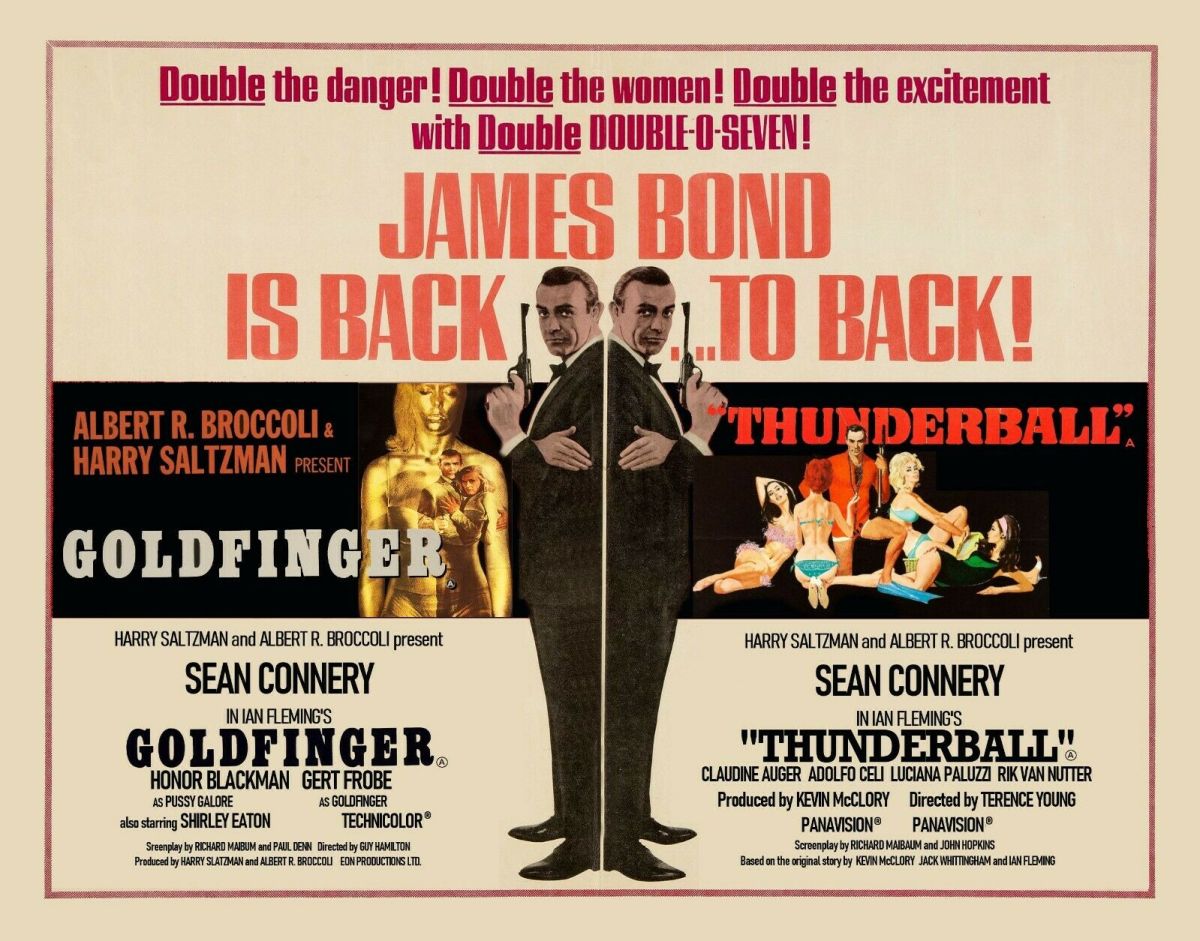
In Britain, the movies were guaranteed circuit releases on the Odeon chain. However, contrary to the approach in the United States, the movies were not thrown back into circulation right away and it wasn’t until three years later that the next double bill – Goldfinger (1964)/Thunderball (1965) – put in an appearance. But thereafter, there was no stopping the Bond bandwagon. In 1969 You Only Live Twice (1967) went out with either From Russia with Love or Dr No (cinemas could choose their preferred pairing).

In 1970, United Artists took a break from the Sean Connery reissue business by concentrating on the studio’s other big male star Clint Eastwood, doubling up For A Few Dollars More (1965) with A Fistful of Dollars (1964).  But by 1971 it experimented with playing Connery and Eastwood together, first pairing You Only Live Twice/A Fistful of Dollars and later the same year Goldfinger/For a Few Dollars More. But in 1972 the studio reverted to type with Thunderball/Dr No and the following year Diamonds Are Forever (1971)/From Russia with Love.

In 1974 it was You Only Live Twice/Thunderball and  few months later Dr No/Goldfinger. Come 1975 it was time for two of the later offerings to enter the revival business – Live and Let Die (1973) and On Her Majesty’s Secret Service (1969) followed at the end of the year by The Man with the Golden Gun (1974) and Live and Let Die. The next year brought a programme change – Diamonds Are Forever teamed up with new Bond Roger Moore in the non-Bond adventure Gold (1974).

In 1977, for the first time in nearly a decade the Bond reissue was absent from British cinemas although the following year saw a re-teaming of Live and let Die and The Man with the Golden Gun. But that pretty much spelled the end of the annual James Bond double bill, television by now too quickly eating up new product.

The British approach was almost conservative compared to the way the Bond revivals were handled in the US. After the sensational performance of Dr No/From Russia with Love in 1965 U.S. exhibitors had to wait only a year for Goldfinger/Dr No. United Artists showed little restraint, following a policy of “play them till they drop,” and launching the Connery/Eastwood combo in 1968 with You Only Live Twice/The Good, the Bad and the Ugly (1967) plus a straightforward Connery item Thunderball/From Russia with Love the same year followed by Goldfinger/Dr No in 1969.

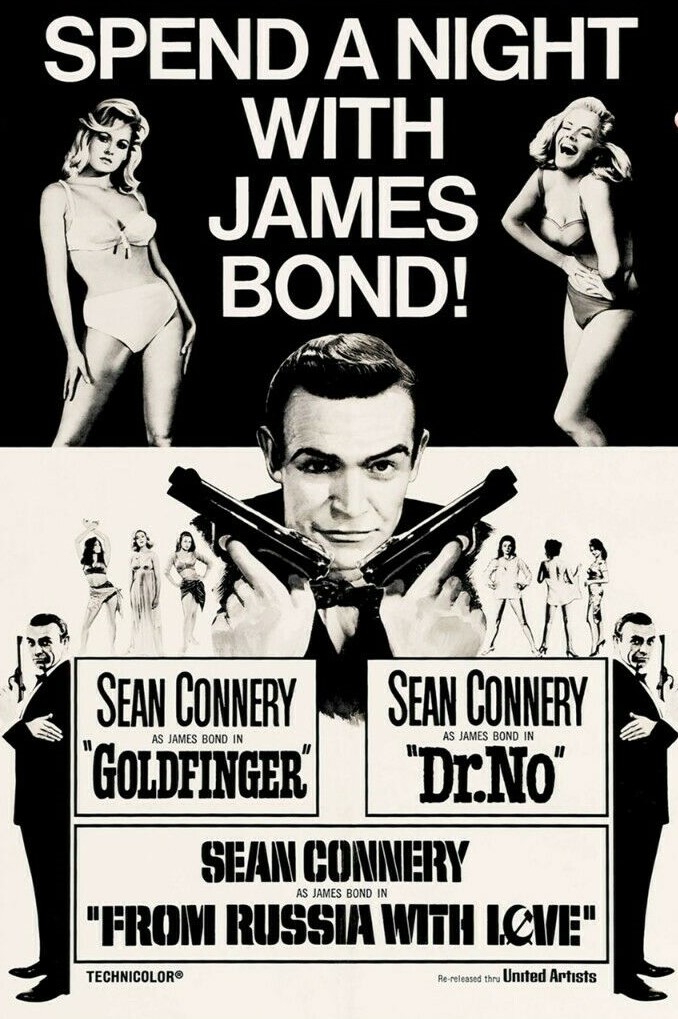
In the U.S. the year of the missing Bond reissue was 1970. But in 1971 United Artists reissued two Bond dualers six months apart. First out was Thunderball/You Only Live Twice and then Dr No/From Russia with Love. Ahead of the television premiere of Goldfinger in September 1972, UA brought back Goldfinger/From Russia with Love and then the triple bill (“Spend a Night with James Bond!”) of Goldinger/Dr No/From Russia with Love plus a double bill of Thunderball/You Only Live Twice, the last program incidentally knocking up a colossal gross of $122,000 – equivalent to $853,000 now – from 14 houses in New York in its opening week.

But the bonanza came to an end when television ponied up $17.5 million – equivalent to $126 million today – for the first seven pictures in the series. And this was before residuals kicked in from VHS, television resale and syndication, DVD, cable and streaming. Even when the MCU can guarantee billion-dollar revenues from many of its movies it’s doubtful if any one of its blockbusters made as much money as the best of the Bonds in their lifetime, much of that extra revenue coming from the way the revivals proved the enduring popularity of the series.  

SOURCES: Allen Eyles, Odeon Cinemas 2: From J. Arthur Rank to the Multiplex (Cinema Theatre Association, 2005) p211-220; Brian Hannan, Coming Back to a Theater Near You (McFarland, 2016) p147-151, 175-177, 227.

Crossplot (1969) ***

Roger Moore – in his first movie in seven years – almost auditioning for James Bond with his lothario instinct, light touch for dialogue, a nice side-line in double takes, and enough action to show that even in his early 40s he was still nimble enough. Not in the Charade (1963) or Arabesque (1966) league and over-reliant on the Swinging Sixties and other “Tourist Britain” clichés and a plot that takes far too long to get going, it takes all the actor’s charm to make it watchable.

After one of his staff Warren (Dudley Sutton) switches the photo of a model in his portfolio, ad-man Gary (Roger Moore) finds himself on the trail of Marla (Claudia Lange), a sometime fugitive hiding out on a houseboat. Meet-cute is prompted when she pushes him into the Thames. On leaving he is knocked out and framed on a dope charge and once he manages to get her into the photographic studio Warren attempts to throw her off the roof, the would-be killer himself eliminated by his boss Ruddock (Francis Matthews) who in a marvelous piece of quick-thinking throws his gun to Gary who instinctively catches it, further implicating himself.

After going all round the houses (including a stately home), evading pursuit via an antique car race and a wedding, Gary finally gets to the bottom of why Marla is in such danger – she overheard a conversation between her aunt Joe (Martha Hyer) and Ruddock. Only problem is – she can’t remember it. And it takes even more time for Gary to figure it out, (not realizing, how could he,  that the clue is in the title, in fact two clues in a crossword puzzle). You can imagine how it goes from then.

This poster takes the easy route by trying to sell the picture on the back of “The Saint.”

On the plus side is mostly Roger Moore. “I come from a long line of hippopotamuses,” isn’t the sort of line you can deliver without some skill. But Moore’s performance lifts what is for the most part  a shaggy dog story, and he’s game enough to do all the running and fighting required, even the heavy lifting (of his eyebrows), to keep the story moving. It’s far from as funny as it thinks and not as funny as it needs to be, but there are still some good stabs at humour, a pistol held to Gary’s head discovered to be a toy gun, Gary turning the tables in a shower on Marla, telling the bride that her groom is a bigamist, and a running joke about the Marla being perennially hungry.  

The politics barely touches on the conspiracy aspects that Hollywood would have pounced upon and made a better fist of, although the idea that Britain could be undermined by civil strife was not far off the mark for the times. It needed some smarter thinking, though, for that element to work.

A much better attempt at selling a thriller with scenes from the film,
including the toy pistol pointed at Roger Moore’s head.

The rest of the cast are game enough. Claudie Lang (The Gatling Gun, 1968) is no Sophia Loren or Audrey Hepburn but nobody is pretending she is and she just about gets away with the dumb model approach. Martha Hyer (The Chase, 1966) delivers a glamorous villain and the suave Francis Matthews (Rasputin: The Mad Monk, 1966) her ideal match.

There’s quite a supporting cast: Veronica Carlsen (Dracula Has Risen from the Grave, 1968), Gabrielle Drake (Suburban Wives, 1972), Dave Prowse (Star Wars, 1977),  Bernard Lee (You Only Live Twice, 1967), Alexis Tanner (The Ernie Game, 1967), Ursula Howells (BBC’s The Forsyte Saga, 1967) and Dudley Sutton (Rotten to the Core, 1965).

If Alvin Rakoff (The Comedy Man, 1964) is in charge of the material he doesn’t have enough material to work with. He does enough to keep it on course but would have benefitted from a a tighter screenplay from Leigh Vance (The Frightened City, 1961). Both had done better in the past, but it is easy to be seduced by the romantic thriller format, almost a mini-genre in itself, assuming it is easier to pull off than it looks. The likes of Alfred Hitchcock (North by Northwest, 1959) and Stanley Donen (Charade) made it look easy but they had the advantage of big stars in Cary Grant and Audrey Hepburn who possessed the ability to make the lightest confection work.

Discover WordPress

A daily selection of the best content published on WordPress, collected for you by humans who love to read.

The Atavist Magazine

by Brian Hannan

WordPress.com News

The latest news on WordPress.com and the WordPress community.