Two Weeks in September (1967) ***

Soubriquets were not common currency in Hollywood. Names might be shortened to a Christian name or a surname, as in Marilyn or Garbo, and occasionally a reporter might suggest an unlikely familiarity by referring to a star as “Coop” and for sure Bogie must have been desperate for people to call him anything other than Humphrey, hardly a name that spun off the tongue for a supposedly hardbitten hero eschewing his middle-class origins. But the world swung on its axis when simple use of the star’s initials were enough to guarantee universal acceptance.

BB was born on a wave of controversy. After And God Created Woman (1956) broke box office records all over the world, a star was born. But one who seemed to live as much on the pages of newspapers as on the screen. She could forever be guaranteed to provide a revealing photograph to spice up the more puritan newspapers.

But BB’s global fame didn’t translate into worldwide box office in part because her movies were mostly X-certificate in the U.K. and, being made generally by foreign companies, slipping past the Production Code in the U.S. and therefore into arthouses or shady emporiums in both countries rather than mainstream houses.

This isn’t the best introduction to her canon, but in many senses it’s pretty typical. The camera adores BB and shuns anyone else in her presence. There’s not much story here – bored wife dashes off to a model assignment in London and has an affair and can’t decide whether he’s ready for divorce.

To fill in the time we get plenty Carnaby St fashion shoots, certainly put into the shade by the likes of Blow-Up (1966), but of the kind that used to be so common, beautiful women in outlandish clothes against backdrops like zoo animals or suits of armor and all the while flirting with photographers and being chatted up in night clubs by all and sundry. As you might expec, red buses and mini cars are common, though the chances of a cop on horseback at night seems to stretch it a bit.

Cecile (Brigitte Bardot) seems too lively for staid husband Philippe (Jean Rochefort) and burdens him with ensuring her happiness. But he seems, I guess unusually for the time for such a wealthy character, to be happy for her to continue in her profession. She’s never been unfaithful unlike model buddy Patricia (Georgina Ward). But all this cavorting brings out the lech in photographer Dickinson (Mike Sarne) and while she flirts with him she fancies for no apparent reason the doe-eyed Vincent (Laurent Terzieff) although his doe-eyed dog is livelier.

Anyway, off they go to Scotland for a romantic idyll since every filmmaker in the world has been duped by Scottish Tourist Board fantasies of sunshine, tartan, heather and miles of unspoiled beaches (unaware they are empty because the natives have more sense than to go diving into icy water in freezing temperatures). Mostly, what they get is damp streets and grey skies, though if you have BB romping  in the water then nobody’s really going to notice the awful weather. And, naturally, the highways and byways are filled with tartan-clad gents so Brigadoon rides again.

Not quite sure how “To Their Heart’s Content” – clumsy in translation as it is –
is turned into the dull “Two Weeks in September.” Though she hardly seems happy in the poster.

In any case, by the time September comes round, the sun has already packed up for the winter in Scotland, so there’s your get-out-of-jail-card in the title. Not much happens in Scotland either, mostly soulful camera work, soulful BB and dull-as-ditchwater Vincent. There’s a contrived ending.

What impresses most is how little BB you need to make a picture work, even one as patchy as this. It is almost the same template as an Elvis picture minus the songs. Just like BB, Elvis scarcely required a working script, just any excuse to get him on screen. Some stars possess screen charisman that it’s impossible to shift. Shame it was left to Serge Bourguignon (The Picasso Summer, 1969) to get more out of the faint storyline because he  was never that bothered with narrative and inclined just to get by on close-ups and scenery. With BB she was as much scenery as audiences ever seemed to require.

Hardly falls into the recommended bracket but nonetheless an interesting example of how Bardot could get away with the mildest of trifles.

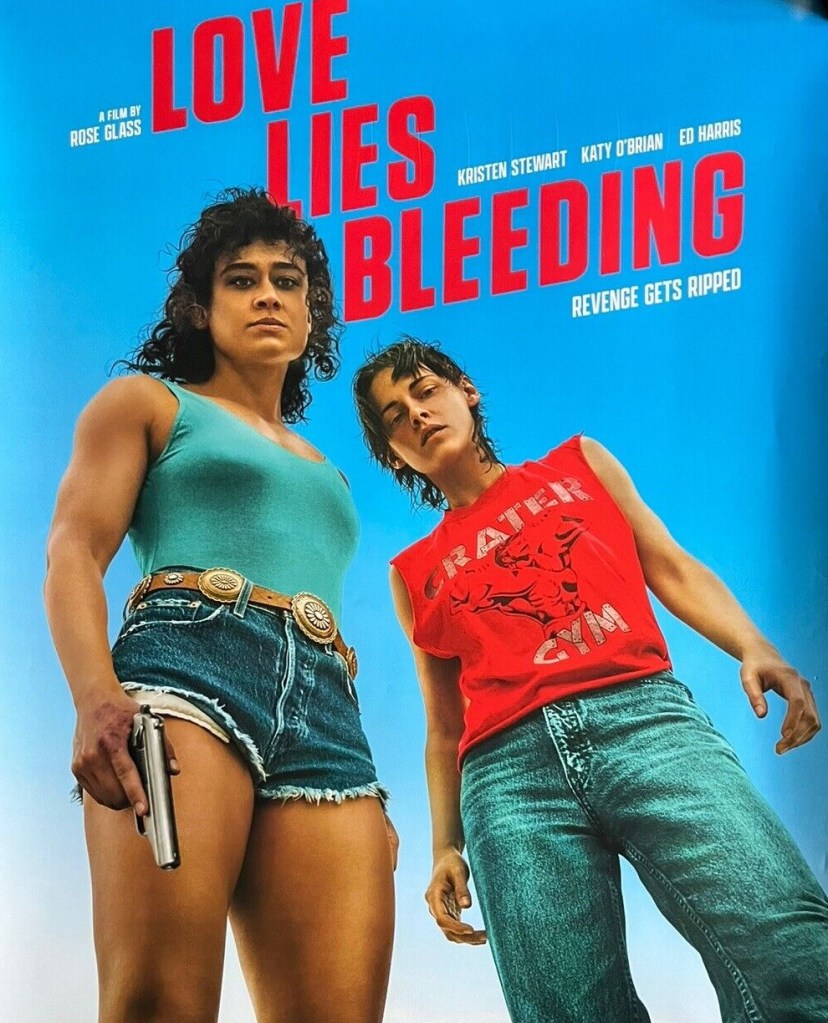
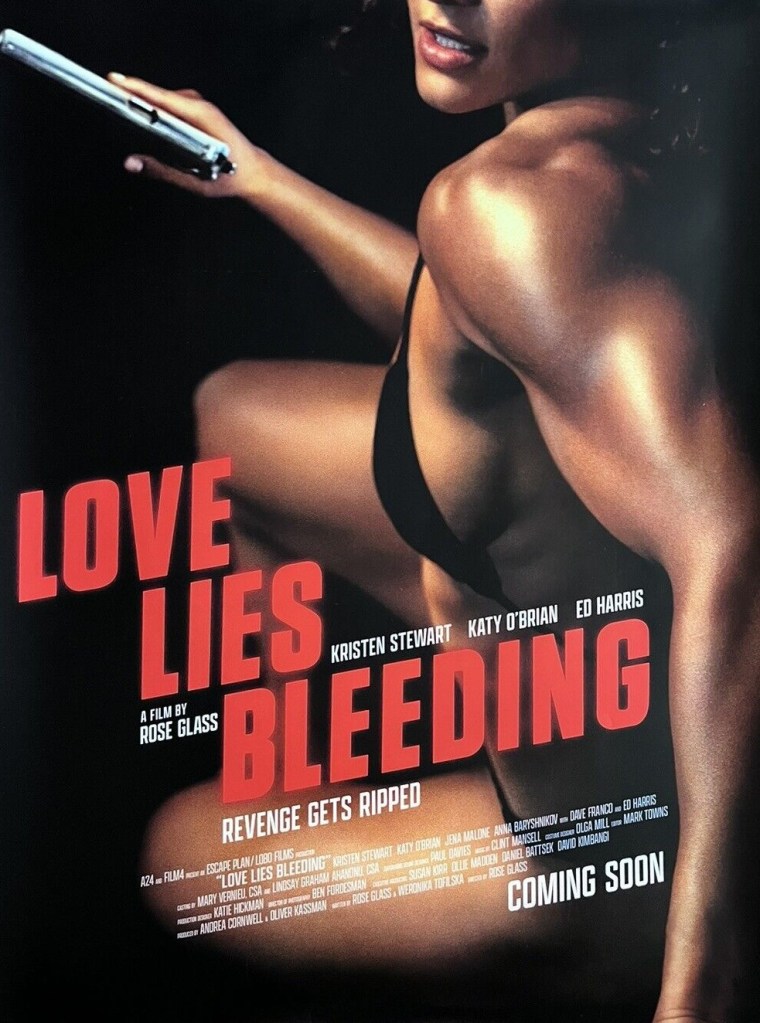
Love Lies Bleeding (2024) *** – Seen at the Cinema

This year’s Saltburn. An ethereal mix of noir, exploitation, wife beating, body building, carpetbagging, blackmail, steroids, bug snacking, daddy issues, such a long string of coincidence it could run a marathon, topped off with a healthy dose of surrealism. I guess going with the flow brings reward. Not sure it made much of being set in 1989, no signs of movie theater marquees promoting Batman or Indiana Jones and the Last Crusade though the principals might have got a buzz out of Lethal Weapon.

You do have to wonder though at choice. Was this all that Kirsten Stewart was offered or has she aligned herself as the kind of arthouse darling whose attachment makes such an unwieldy project feasible? But an actress who can switch from Seberg (2019) to Charlie’s Angels (2019) and back again to Crimes of the Future (2022) demonstrates the kind of versatility that can sit easily on both sides of the Hollywood fence. But it’s a step too far for martial artist Katy O’Brian (Ant Man and the Wasp: Quantumania, 2023).

Coincidence can only get you so far though generally you can rely on a screenwriter to attempt to magnify relationships by ensuring that nobody gets through a movie without having some difficult relationship. That guy on the corner, let’s make him an uncle. The kid who appears once, let’s make him a drug addict who’s addicted to heroin because he blames himself for his mum dying in childbirth. Coincidence overload has found a true champion here.

So hitchhiker Jackie (Katy O’Brian) has sex in the car of JJ (Dave Franco) on the understanding that he’ll find her a job on a shooting range owned by Lou (Ed Harris) who happens to be the father and shares the same name as Lou (Kirsten Stewart) a gym manager who falls for Jackie’s swelling pecs and who happens also to be JJ’s brother-in-law. Lady Lou happens to have a sometime girlfriend Daisy (Anna Baryshnikov) who happens upon Jackie driving Lady Lou’s car after Jackie’s s murdered JJ. And Lady Lou’s only happened upon the murder because – you can see where this going.

Luckily Lady Lou is experienced in getting rid of a corpse – and luckily there are plenty of good-sized rugs to spare because she has to lug out a total of three dead bodies. Her dad’s a gun-runner and corrupter of cops so he’s immune to pretty much everything unless his daughter decides to rat him out, which might be a complication for her, given that earlier she was running in his slipstream.

There’s plenty lowlife mixed in with high end angst, Lady Lou falling out with Jackie once she cottons on to the fact that she quite enjoys bisexuality and has no objection to swapping sex for a job, not even with an odious wife-beating brother-in-law. And then Lou has to come to terms with the fact that after committing murder Jackie’s only concern is in high-tailing it down to Vegas for a body building competition.

So really way too much narrative and subplot for this thin gruel. But in passing there are some memorable moments. For a start, this is the first time I can remember seeing anyone at a shooting range who isn’t a cop of the Dirty Harry persuasion or a spy. To see ordinary folks happily popping off at targets and enjoying a beer afterwards goes a long way to explain the country’s obsession with ownership of weaponry.

And the face of the victim of the wife-beating was truly shocking as was what was left of JJ’s jaw once Jackie had smashed it into a table. Then we have the surreality – a full-grown Lady Lou pops out of JJ’s mouth covered in birth residue, Jackie’s muscles audibly crack almost every time she takes a breath and when she goes into full-blown Incredible Hulk mode her tee-shirt splits in half, plus she turns into a giant to pin down Daddy Lou.

By the time you get to the end, there’s been so many changes of tempo and mood that you’re grateful that after all this is really a romantic comedy complete with making up on a tennis court and a corpse coming to life in the back of a car. It’s a good few tunes short of a decent picnic, but once you realize this is more of a cartoon than a genuine noir thriller and go with the flow it has rewarding moments. There’s a decent amount of nihilism and almost anytime anyone makes a declaration of love you can be sure they’re going to blow the loved one’s brains out or do something to totally contradict their statement.

As directed by Rose Glass (Saint Maud, 2019), it might have been better if the surrealism had infused the entire movie rather than being reseved, as if the icing on the cake, for the final segments.

As I said, this year’s Saltburn.

Candy (1968) **

Ode to the male gaze. Once a cult vehicle, this will struggle to find favor these days what with its backward attitudes. Virtually impossible to excuse the rampant self-undulgence. The sexually exploited naïve Ewa Aulin in the title role didn’t even have the benefit of being turned into a star. The satire is executed with all the finesse of a blunderbuss. And while, theoretically, picking off a wild range of targets, if this movie has anything to say it’s to point out how easy it is for men to deify themselves at the slightest opportunity.

Not much of a narrative more a series of sketches slung together with the slightest connecting thread. Most its appeal lies in watching huge marquee names make fools of themselves. Or, if you’re that way inclined, seeing how much nudity will be imposed on the star, intimacy  rarely consensual, clothes usually whipped off her.  

Teenager Candy (Ewa Aulin) has father issues, daddy (Jack Austin) being a dumb angst-ridden teacher. Randy poet McPhisto (Richard Burton) drives a class of schoolgirls into a frenzy with his lusty reading, inveigles Candy into his chauffeur-driven car, ends up in her basement drunkenly humping a mannequin while Mexican gardener (Ringo Starr) with an accent as coruscating as that of Manuel from Fawlty Towers assaults her on pool table.  Scandalized father packs her off to his twin brother in New York, that notoriously safe haven for nymphettes, while on the way to the airport they are almost driven off the road by the gardener’s vengeful biker sisters (Florinda Balkan et al).

For no apparent reason she is hitching a lift on a military plane commanded by randy Brigadier Smight (Walter Matthau) who, on the grounds that he hasn’t had sex for six years, commands her to remove her clothes for the good of the nation. In the Big Apple, rock star surgeon Dr Krankheir (James Coburn), entering the operating theater to the same kind of waves of acclaim as McPhisto, finds an excuse to have her undress and submit to him, this just after she’s managed to avoid the attentions of her randy uncle. It should come as no surprise that Krankheit treats women as his personal property to the extent of branding them like cattle.

In due course, she encounters a gang of mobsters, an underground movie director and a hunchback (Charles Aznavour) who, in return for her showing pity for his condition, proceeds to rape her. She is arrested. Guess who wants to frisk her. Naturally, when she escapes she runs into a bunch of drag queens.   

Then she finds sanctuary in a semi-trailer truck, home to guru Grindl (Marlon Brando). He’d be convincing enough as a mystic except he, too, finds an excuse to rip her clothes off. There are more cops to contend with and another guru, facial features obscured by white clay. If they’re going to have sex then naturally it must be in a Hindu temple. Turns out the latest person to take advantage of her is her father but he’s been handed a get-out-of-jail-free card because by now he’s brain damaged.

This might all be a dream/nightmare. Candy might even be an alien. It’s dressed up in enough psychedelia to sink a battleship and its highly likely that any lass as gullible as Candy will find herself at the mercy of any man, so in that context it carries a powerful message. I’m sure many beautiful young girls will attest to the truth that men feel they have the right to paw anyone who comes their way without asking permission. And the other message is just as powerful – how many young actresses have been seduced by thoughts of fame to disport themselves in this fashion only to find that all the industry wants is their nudity not their acting talent.

You might say that the target is so obvious it hardly needs pointing out but the MeToo campaign will beg to differ and you would hope that Hollywood has wised up. It’s just a shame that the satire is so heavy-handed. The military and the medical profession are sorely in need to answering tough questions. Unfortunately, this picture doesn’t ask any. It’s like an endless casting couch.

Directed by Christian Marquand (Of Flesh and Blood, 1963) in, thankfully, his final picture, from a screenplay by Buck Henry (The Graduate, 1967) and Terry Southern (Dr Strangelove, 1962) based on the novel by Southern and Mason Hoffenberg. Nobody comes out of this well and it’s rammed full of cameos from the likes of Elsa Martinelli (The Belle Starr Story, 1968), John Huston (Myra Breckenridge, 1970), Anita Pallenberg (Performance, 1970), Marilu Tolo (Bluebeard, 1972) and boxer Sugar Ray Robinson.

Ewa Aulin (Start the Revolution Without Me, 1971) isn’t given much of chance, her character whimsical, pallid and submissive and she didn’t become a major marquee name.

A mess.

The Prize (1963) ****

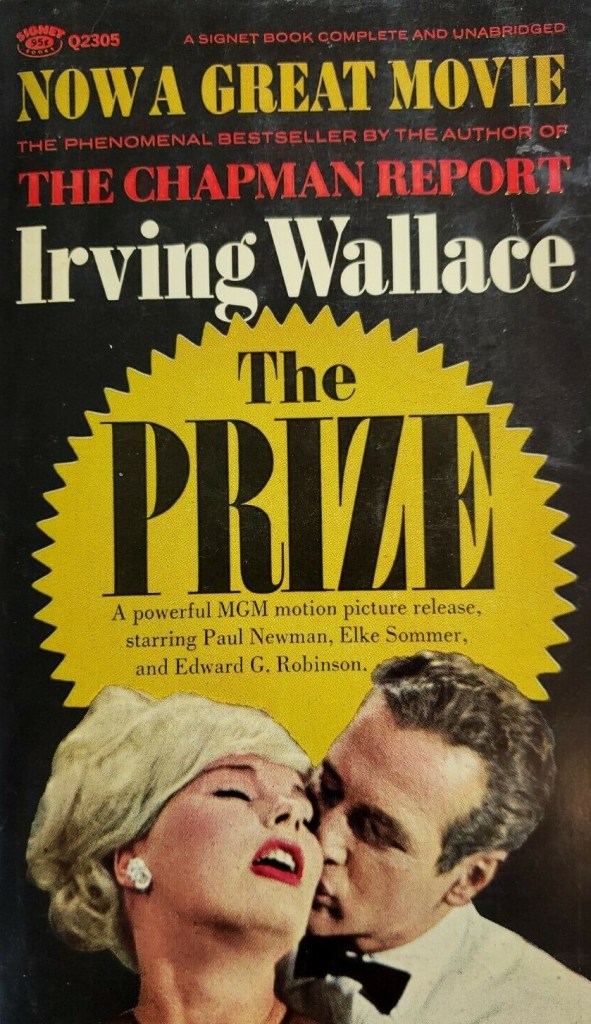
Thoroughly involving potboiler with alcoholic novelist Andrew Craig (Paul Newman) turning unlikely detective to uncover murky double-dealings at the annual Nobel Prize ceremony. Based on the Irving Wallace bestseller set in Stockholm, director Mark Robson (Von Ryan’s Express,1965) strings together a number of different stories that coalesce in a gripping climax. Screenwriter Ernest Lehman (North by Northwest,1959) brings alive what could have been a very soggy adaptation of a beefy bestseller with witty and literate dialog and a plot that hovers just the right side of hokum.

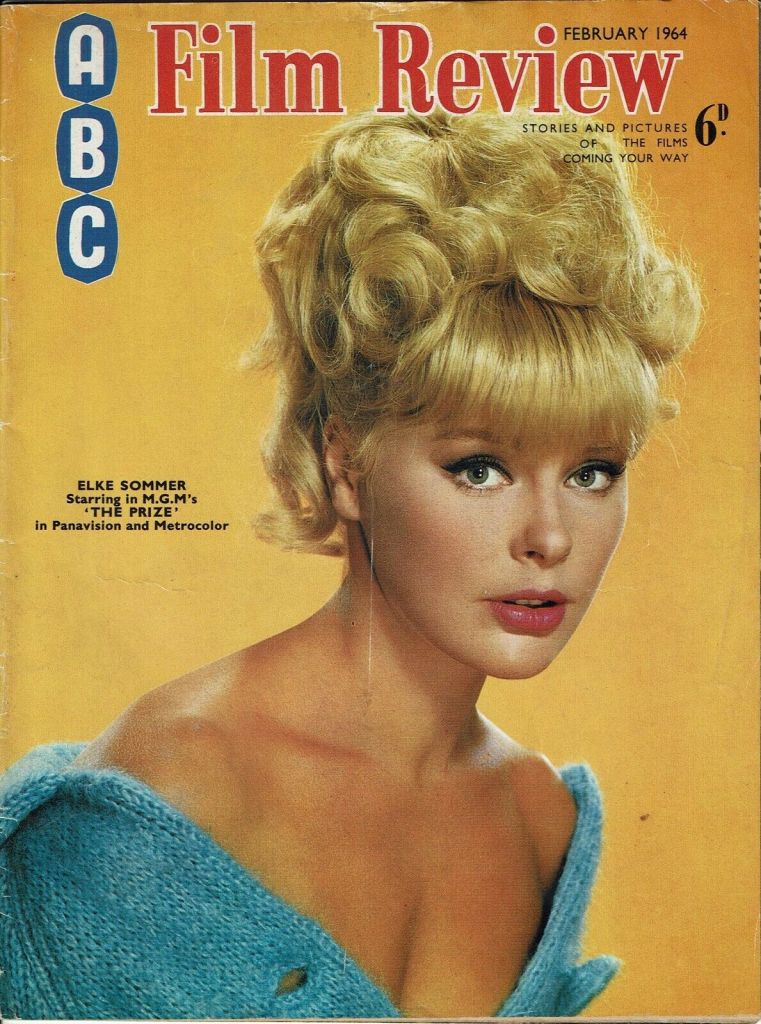
Inger (Elke Sommer), delegated to look after the author, starts out as a stuffed shirt not a sexpot, allowing Newman’s attention to drift towards Emily Stratman (Diane Baker) – daughter of another winner Dr. Max Stratman (Edward G. Robinson) – while he is dragged into romantic entanglement with neglected wife Dr Denise Marceau (Micheline Presle). Mostly, Newman just wants his next drink, and his almost continual inebriation sparks some good comedy and he is gifted good lines to extricate himself from embarrassment. Simmering in the background are warring winners – the Marceau husband-and-wife team and Dr John Garrett (Kevin McCarthy) convinced that Dr Carlo Farelli (Gerard Oury), with whom he is sharing a prize, has stolen his research.  

There are sufficient character clashes and plots to be getting along with if you were just intent on taking a Valley of the Dolls approach to the material, that is, cutting between various dramatic story arcs, but, without invalidating the other subsidiary tales, the movie takes quite a different turn, providing the potboiler with considerable edge. 

Turns out that Andrew is so impoverished that he has been writing detective novels under a pseudonym and suspecting that Dr Stratman is an imposter he starts investigating. So in some respects it’s a private eye procedural played out against the glamorous backdrop of the awards. But the clues are inventive enough and there is a femme fatale and once Inger comes along for the ride and with Andrew a target the picture picks up an invigorating pace. Echoing the humorous auction scene in North by Northwest is a sequence set in a nudist colony where Andrew seeks refuge to avoid villains while another terrific scene plays out in the docks.

Paul Newman looks as if he is having a ball. In most of his pictures he was saddled with seriousness as if every part was chosen with an eye on the Oscars. Here, he lets rip with a lighter persona, and even if he mugs to the camera once too often, the result is a screen departure that lifts the picture. Inebriation has clearly never been so enjoyable. Sommer is a delight, showing great dramatic promise. Edward G. Robinson (Seven Thieves,1960), more renowned for his gangster roles, convinces as a scientist. Diane Baker (The 300 Spartans, 1962), Kevin McCarthy (Invasion of the Body Snatchers,1956) and Leo G. Carroll (North by Northwest) provide sterling support.

Robson directs with dexterity, mostly with an eye on pace, but it is Lehman’s script with occasional nods to Hitchcock that steals the show.

Les Biches (1968) *****

Innocence and experience alike are corrupted by the destructive power of love in this elegant and compelling early masterpiece from French director Claude Chabrol. Although he owed much of his later fame to slow-burning thrillers, this is more of a three-hander drama with a twist and it says much for his skill that we sympathize in turn with each of these amoral characters.

Wealthy stylish Frederique (Stephane Audran), in an iconic hat, picks up younger pavement artist Why (Jacqueline Sassard) in Paris. They decamp to St Tropez where Frederique keeps a rather discordant house, indulging in the antics of two avant-garde house-guests. Why loses her virginity to architect Paul Thomas (Jean-Louis Trintignant) who soon abandons her in favor of the older woman. Each is guilty of betrayal and although a menage a trois might have been one solution instead the lovers dance from one to another with Frederique  apparently in control, in one scene stroking Why’s hair with her hand and caressing Paul’s  face with her foot. In an attempt to win the man back, Why dresses like her rival down to hairstyle, make-up and even the older woman’s beauty spot.   

At no point is there angry confrontation, nor does Frederique simply dismiss Why from the household, but the story works out in more subtle insinuation, Frederique clearly expecting either that Why make herself scarce or, alternatively, make herself available for whenever Frederique tires of male companionship. The movie’s focus is the baffled Why. When the older pair disappear to Paris, the camera follows Why through off-season St Tropez, chilly weather replacing glorious sunshine. Frederique and Paul are the sophisticates who expect Why  to know how to play the game. The younger woman has wiles enough to see off the avant-garde irritants.

It looks for a while as if it might be a coming-of-age tale or of young love thwarted but every time Frederique enters the picture her dominance is such that proceedings, no matter how deftly controlled, have an edge and so it becomes a study of something else entirely. At one point, each has power over the other. If Why has learned anything it is restraint, so the movie never descends to tempestuous passion. She also learns, in a sense, to submit, since the impoverished can never compete with the rich. In the end her revolt takes the only other option available, against which the wealthy have no defence.     

Excellent performances from Stephane Audran (The Champagne Murders, 1967), Jean Louis Trintignant (A Man and a Woman, 1966) and Jacqueline Sassard (Accident, 1966) but Chabrol keeps all under control, twisting them round his little finger.

Superb.       

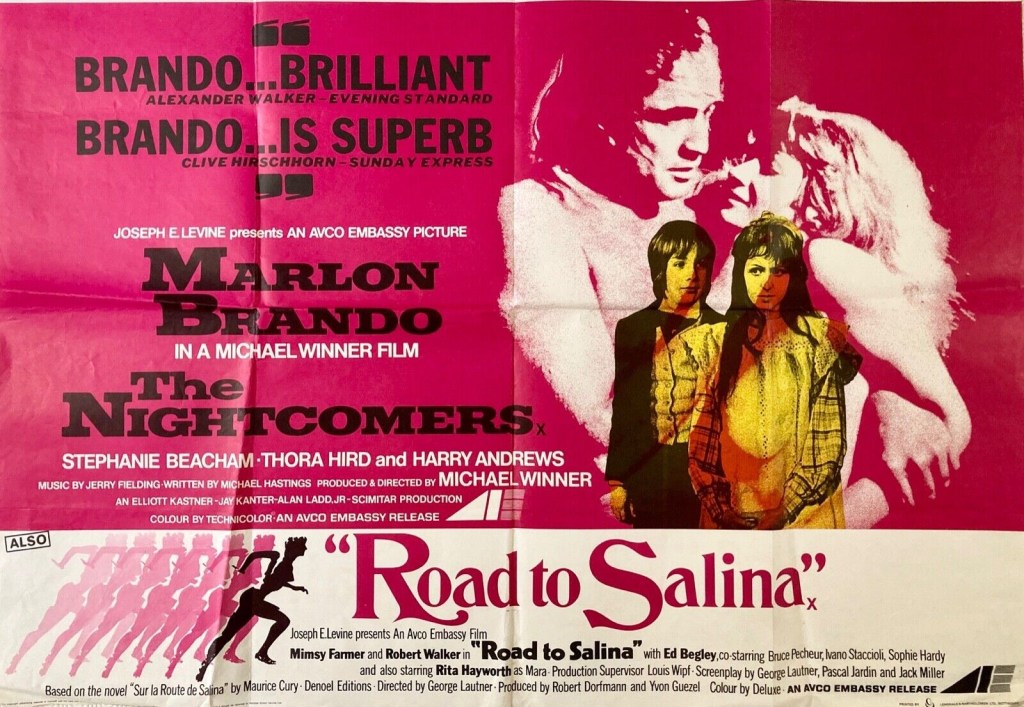
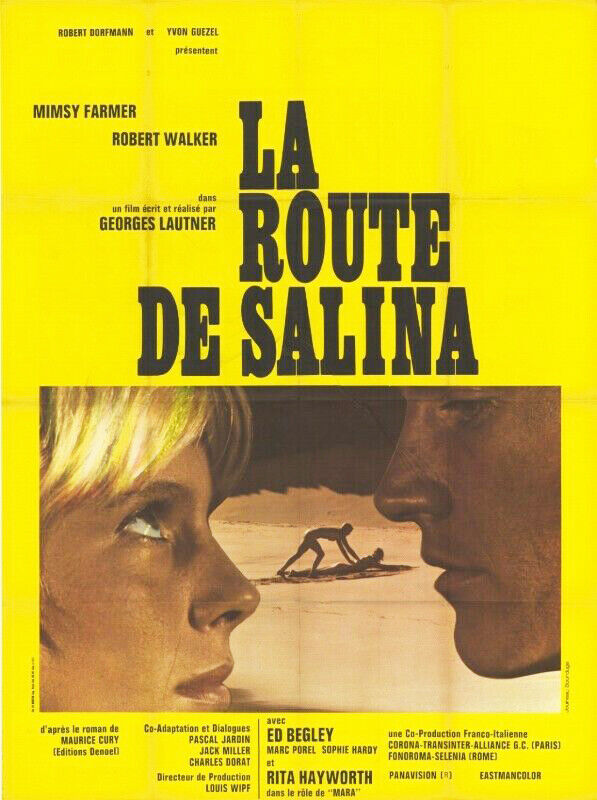
The Road to Salina (1970) ***

I thought I’d taken a stab at finding out what happened to Mimsy Farmer after More (1969) and by chance stumbled upon Rita Hayworth (The Happy Thieves, 1961), also persona non grata in mainstream Hollywood.

Pivots on the tricky trope of mistaken identity. Or, rather, someone who insists on believing that a stranger turning up is actually a long-lost son / lover / whatever. Jodie Foster was the too trusting wife in Sommersby (1993), for example, but it’s hard to pull this off once suspicions are aroused. Unless, of course, the potential dupe is determined to believe because it fills an emotional hole, thus providing sufficient narrative undercurrent.

Double bill of creepiness.

That’s the case here, when drifter Jona (Robert Walker Jr) turns up at the roadside service station run by Mara (Rita Hayworth) his resemblance to her dead son Rocky (Marc Porel) is so uncanny she believes it is the child returned. Just to be clear, Rocky died in mysterious circumstances, corpse never found, so there’s some foundation to her belief beyond maternal madness. Seizing the opportunity for a warm bed and some decent grub and the chance to be spoiled, Jona plays along – especially after Rita’s neighbour Warren (Ed Begley) supports her delusion – and soon he’s invited into another bed, that of Rocky’s sister Billie (Mimsy Farmer). The savvy daughter has her own reasons for going along with it. Then we’re into flashbacks within the flashback as the mystery unfolds and we dip in and out of incidents around the gas station and the somewhat unusual relationship between brother and sister.

As with most slow-burn dramas, you wouldn’t really call it a thriller, it depends on atmosphere, but in the same way as, for example, Don’t Look Now (1973), there’s definitely something insidious here and noir-ish if you don’t mind a story played out away from that genre’s physical darkness. It digs deep into the worst emotion of all, loneliness, and how the hankering after relationship, and an inability to steer clear of the psychosexual, anything to stop you from being alone, can bring torment and tragedy. Dangling fantasy in front of a woman incapable of dealing with reality is a dangerous temptation.

While some of the elements verge on the bizarre, and the narrative threatens to tip into confusion, the viewer is nonetheless kept on pretty much an even keel by the direction, which doesn’t play hard and loose with the facts, but just takes its own slow way heading towards resolution.

The main younger characters aren’t anything we’ve not seen before and the impetuous immoral Billie could easily be a cousin to Estelle in More (1969) while Jona is just every dopehead drifter with an eye on the main chance, except he turns patsy under the femme fatale wiles of Estelle. Rita Hayworth (The Money Trap, 1965), by now a Hollywood back number, brings a healthy dose of reality, and it’s worth the admission just to watch the former sex symbol fry eggs and dance around with the equally middle-aged and frumpy Ed Begley (Hang ‘Em High, 1968) while tacitly acknowledging the bolder elements of the counter culture.

Robert Walker Jr (The Happening, 1967) doesn’t bring much to the party but Mimsy Farmer sizzles. The movie trips easily through the decades, contemporary 1970s buzz undercut by old-fashioned  1940s sensibilities.

French director George Lautner’s stylish concoction – this begins with a downpour, character trapped in torrential rain, an unusual image for the times, and unwinds in flashback – forces you to suspend disbelief long enough to guide the endeavour to a satisfactory conclusion.

Under-rated, this should appeal beyond the Farmer and Hayworth fan clubs.

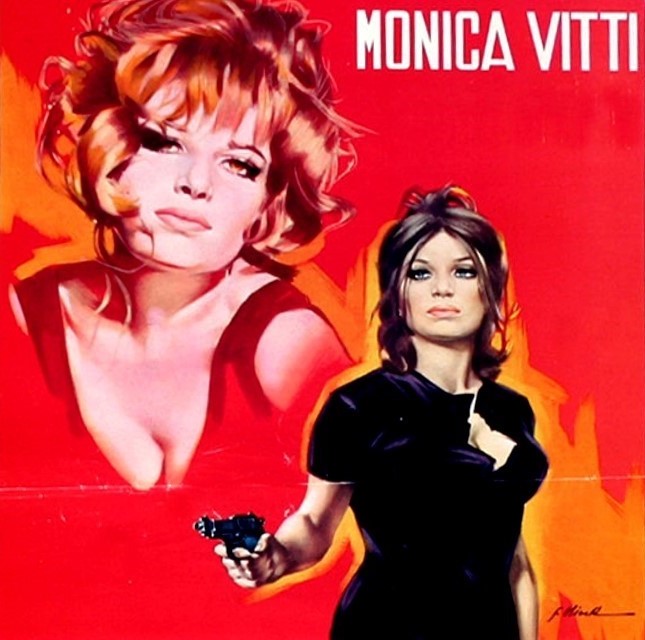
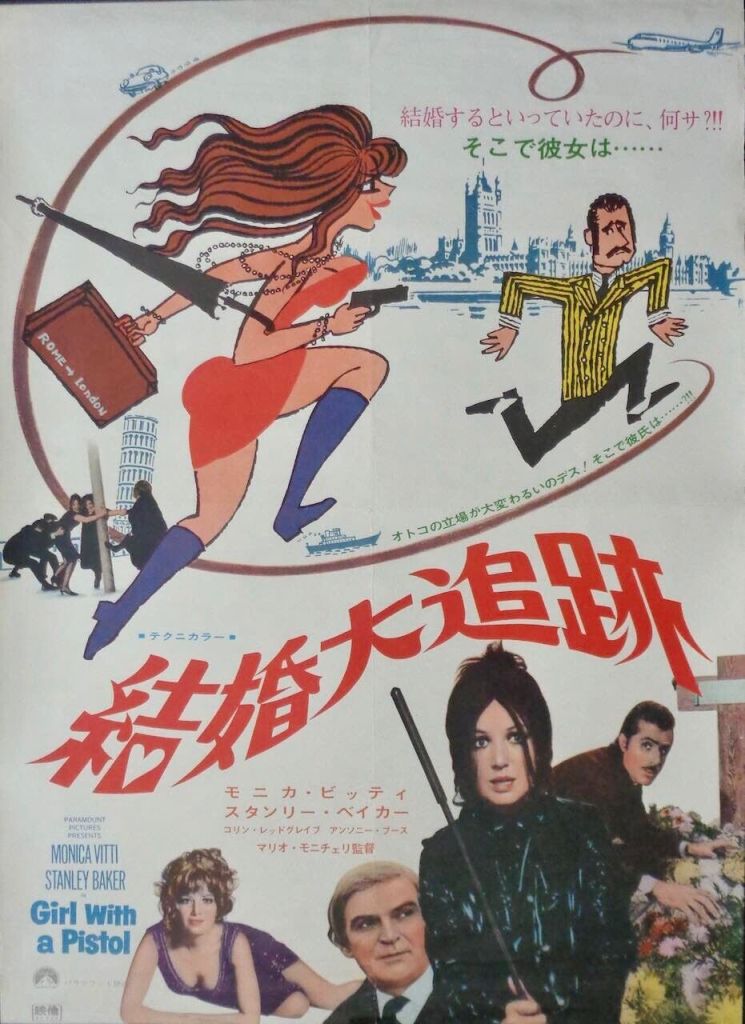
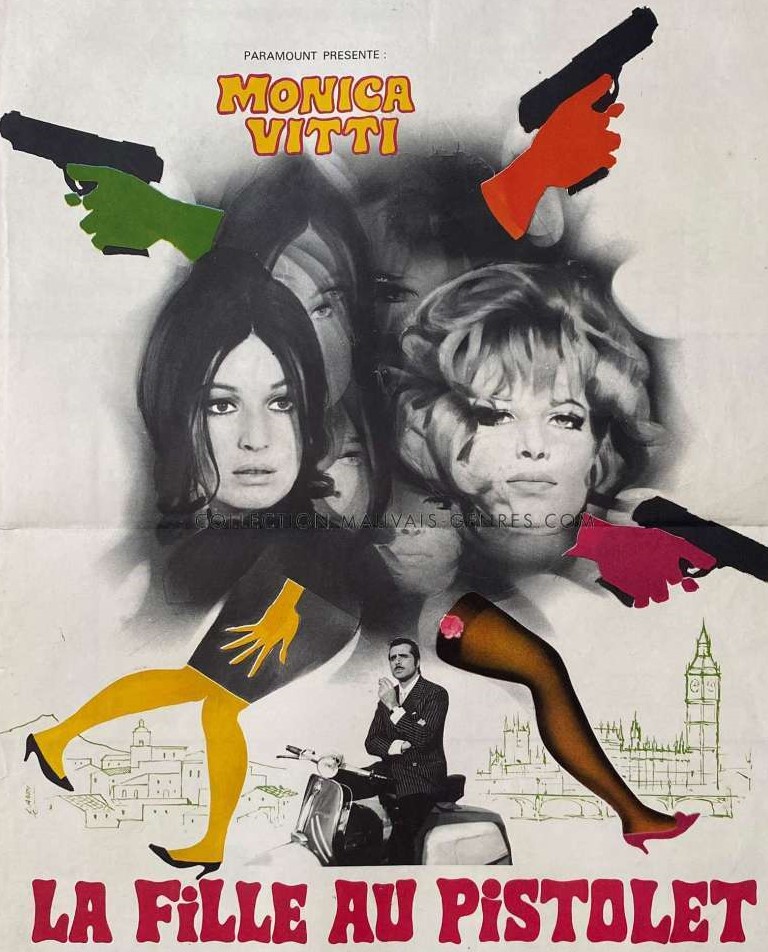
Girl with a Pistol (1968) ****

Off-beat Oscar-nominated comedy-drama that is both a marvelous piece of whimsy and a slice of social realism set in the kind of Britain the tourist boards forget, all drizzle and grime. It zips from Edinburgh to Sheffield to Bath to London to Brighton to Jersey as if the characters had been dumped from an If It’s Tuesday It Must Be Belgium sketch. If your idea of Italy was Fellini’s glorious decadence or Hollywood romance amid historic ruins and fabulous beaches, then the upbringing of Assunta (Monica Vitti) is the repressive opposite.

All women in her small town wear black. Men are not allowed to dance with women and must make do with each other. A man like Vincenzo (Carlo Giuffre) desiring sex must kidnap a woman, in this case Assunta, to which she will consent as long as he marries her. When instead he runs off to Scotland, she is dishonored and must kill him, armed with the titular pistol.

Pursuit first takes her to Edinburgh and a job as a maid, has a hilarious encounter with a Scottish drunk, and various other cross-cultural misinterpretations – in a bar she cools herself down with an ice-cube then puts it back in the bucket. Then it’s off   to Sheffield where she falls in with car mechanic Anthony Booth (television’s Till Death Do Us Part) because he is wearing Italian shoes.

She can’t imagine he can watch sport for two hours. “You’re a man, I’m a woman, nobody in the house and you look at the television.” Although tormented by images of being attacked back home by a screaming mob of black-robed women, she begins to shed her inhibitions, wearing trendier clothes, although an umbrella is essential in rain-drenched Britain and given the Italian preference for shooting exteriors.  

In between sightings of Vincenzo there are episodes with a suicidal gay man (Corin Redgrave) and a doctor (Stanley Baker). She becomes a nurse, then a part-time model, sings Italian songs in an Italian restaurant, drives a white mini, wears a red curly wig and more extravagant fashions. It turns out she can’t shoot straight. Gradually, the mad chorus of home gives way to feminist self-assertion as she becomes less dependent on men and a world run by chauvinists. It’s a startling mixture of laugh-out-loud humor and social observation. And while the narrative that at times verges on the bizarre, Assunta’s actions all appear logical given her frame of mind.

Vitti was Italian director Michelangelo Antonioni’s muse (and companion) through  L’Avventura (1960), La Notte (1961) and L’Eclisse (1962) to Red Desert (1964). She had a brief fling with the more commercial, though still somewhat arty, movie world in Joseph Losey’s Modesty Blaise (1966) and the nothing-artistic-about-it comedy On the Way to the Crusades (aka The Chastity Belt, 1968) with Tony Curtis. Director Mario Monicello had two Oscar nominations for writing but was best-known for Big Deal on Madonna Street (1958) and Casanova ’70 (1965). Girl with a Pistol was nominated in the Best Foreign Language film category at the Oscars.

Machine Gun McCain (1969) ***

Armed robbers lack the finesse of a jewel thief or burglar when it comes to pulling off a major heist. Rather than resorting to the weaponry of the title, they are more inclined, as John Cassavetes does here, to plant bombs, both as a diversionary tactic and within the target building, in this case a Las Vegas casino.

Although boasting Hollywood leads in Cassavetes and Peter Falk and rising Swedish leading lady Britt Ekland (The Double Man, 1967) and wife of star Peter Sellers, this was an Italian-made gangster thriller with the usual abundance of location work. Without the romantic complications of A Fine Pair (1968) it concentrates on the machinations of the central characters.

And it is a pretty lean machine. The robbery takes place against the background of warring Mafia chieftains, West coast boss Charlie Adamo (Peter Falk) trying to muscle in on a Vegas casino without being aware it is controlled by the New York hierarchy. Hank McCain (John Cassavetes) does not realize the robbery has been set up by his naïve son Jack (Pierluigi Apra) on behalf of Adamo. Irene Tucker (Britt Ekland) is on board as a kind of mostly mute magician’s assistant, helping out Hank.

Little dialogue comes Cassavetes’ way, either, which plays to his strength, that glowering intense unpredictable weasel-face, whose reactions are less likely to be emotional than violent. Falk gets the dialog and little help it does him, his goose is cooked when he has the temerity to shout at the New York kingpin. 

Yet this slimmed-down documentary-style hard-nosed picture in the vein of Point Blank (1967) manages several touching moments, even more effective for completely lacking sentimentality. When Hank’s son is knifed in the back, the gangster finishes him off with a burst from the titular machine gun rather than see him suffer. His old flame Rosemary (Gene Rowlands), making too brief an appearance, has a wall covered in newspaper headlines of herself with Hank celebrating her life as his moll and she accepts without enmity the new woman in his life and she proves the toughest moll of all when confronted with Mafia gunslingers.. 

The planning of the heist is well done, no explanatory dialog, just action on screen; there’s a car chase; and the gangster dragnet is unexpectedly powerful. Gabriele Ferzetti (the railroad baron in Once Upon a Time in the West, 1968) is excellent as the calm authoritative New York boss, Falk a bit too excitable, and Florinda Balkan (The Last Valley, 1971), in her third screen role, has a small part as a traitorous moll. Ekland is surprisingly good with not much to play with, a couple of lines here and there but still emoting with her face.

Cassavetes, who always claimed he was only acting to fill in the time between directing  (Faces, 1968), and as a means of financing them, was at a career peak, Oscar-nominated for The Dirty Dozen (1967) and male lead in Rosemary’s Baby (1968). He had just appeared in another Italian gangster movie Bandits in Rome (1968). Cassavetes and Falk would go on to have a fruitful partnership over another five films. Falk and Ekland had played opposite each other in Too Many Thieves (1967). Falk also had an Oscar nod behind him for Murder Inc. (1961) but his career was about to go in a different direction after the TV movie Presciption: Murder (1968) that introduced Columbo.

Trivia trackers might also note a score by Ennio Morricone. Though not one of his best, a few years later he would deliver one of his most memorable themes for Sacco and Vanzetti (1971) for the same director Giuliano Montaldo.

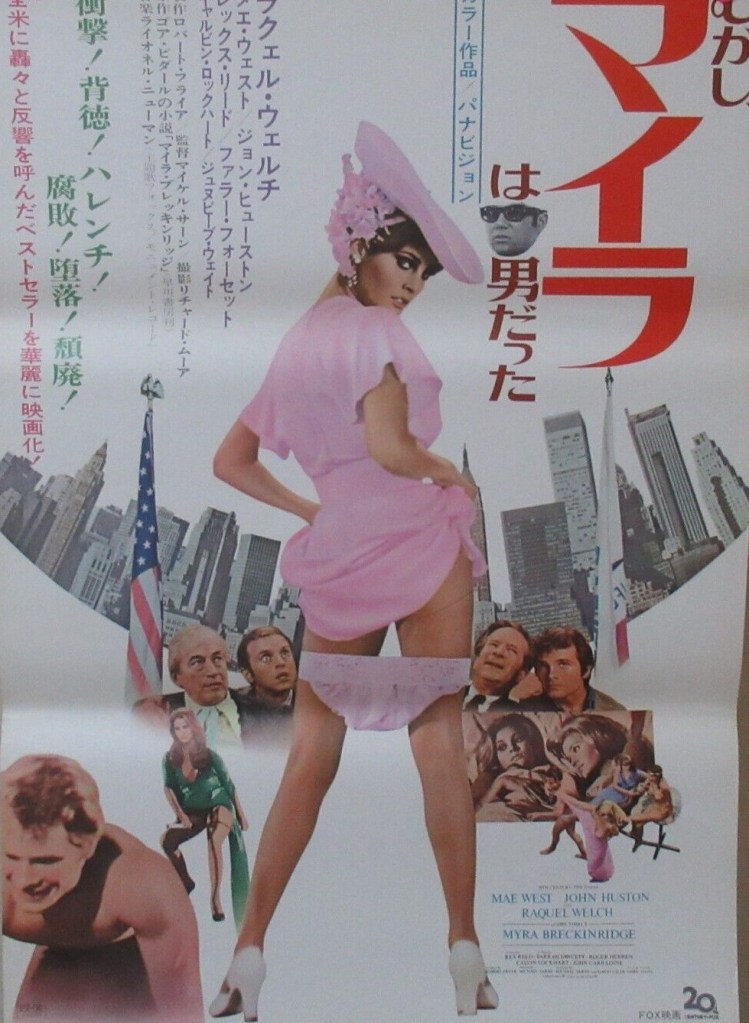
Myra Breckenridge (1970) ***

Proof that time can be kind to even the unholiest of unholy messes. Previously only appreciated/mocked for its camp values, the thin story this has to tell suddenly carries contemporary weight. Not so much the transgender elements but now revealed as the first picture to bring the MeToo agenda to light.

While it’s still terrible, with a tendency towards the really really obvious and, when that doesn’t work, bombard the audience with a That’s Entertainment smorgasbord of sexual innuendo. In fairness, even in those more feminist-awakening times, you probably still had to batter the viewer over the head to get them to accept any of the points being made.

Candy-striped oufit pure invention of the poster designer.

The first, while theoretically in a theoretical twist tranposed to the female, was the sexual predator, closely followed by the notion that every woman wanted “it”, regardless of them expressing otherwise. Even the dumbest cinemagoer could not have failed to see that putting an exclusively male casting couch at the disposal of Hollywood agent Leticia (Mae West) was actually a clever way of showing just how the movie business at its worst worked, though in reverse, the females queuing up (apparently) for the kind of sexual transaction that could give them a shot at stardom.

That it’s Myra (Raquel Welch) herself who spends most of the movie degrading men (anal rape anyone?), and women indiscriminately (I’m surprised the posters didn’t scream “Raquel Goes Lesbian”), it’s again just a play on what went on in the virtually exclusive male enclave of Hollywood. Just as pointedly it points the finger at the way Hollywood has destroyed the American Dream, snaring thousands of hopefuls who spend fortunes, whittle away their lives and prostitute themselves (and still do) in the vain hope that taking acting lessons for an eternity will somehow provide them with a talent they weren’t born with.

The narrative – what narrative? – concerns Myron (Rex Reed) having a sex-change operation to become the aforesaid Myra and then claiming an inheritance, on exceptionally spurious grounds, from her kinky uncle Buck (John Huston). And trying to part hunk wannabe Rusty (Roger Herren) from his wannabe girlfriend (Farrah Fawcett, the Major came later). You might argue that the continuous loitering presence of Myron is a distraction but occasionally it’s welcome as the movie runs out of punchbags.

And in case you didn’t get the message in what passes for dialog, Myra takes to just delivering straightforward lectures on the male-dominant Hollywood that posited the notion that women were there for the taking if you were just male enough to take them and that any women who showed the slightest ounce of onscreen intelligence and the ability to swat away predatory males was just a predatory male in disguise.

Nobody comes out of this with any dignity and though it destroyed the career of director Michael Sarne (Joanna, 1969) and Roger Herren, John Huston (The Cardinal, 1963) was inclined to self-indulgence on-screen if not restrained by a strong director, while Farrah Fawcett and, in a bit part, Tom Selleck survived to become television legends. The less said about wooden Rex Reed the better.

Quite where this left Raquel Welch is anyone’s guess. While she held the narrative together in convincing fashion, as an actress she wasn’t provided with enough material beyond the sensational to convince as a dramatic actress of anything more than middling caliber. Yet, it was an incredibly brave career decision. The contemporary likes of Joanne Woodward, Jane Fonda, Maggie Smith et al would have balked at the thinness of the material, and would have run a mile from expressing themselves in such sexual terms, despite probably recognizing what the movie was attempting to achieve.

It needed someone larger than life to play the part and, possibly with higher expectations than seemed plausible, the bold Raquel stepped up to plate. Perhaps the element that appeared most to her was that she took revenge on Rusty because (shock, horror) he didn’t fancy her at a time when she was presented as the most fanciable woman on the planet.

So discretion left at the door, blunderbuss in full operational mode, but even now it’s that approach that is wakening the industry up to the sexual misbehavior of many of its to male personnel. What was once top of the so-bad-it’s-good tree is now revealed as not too bad after all, if you swap the phantasmagoria for the stinking reality underneath.

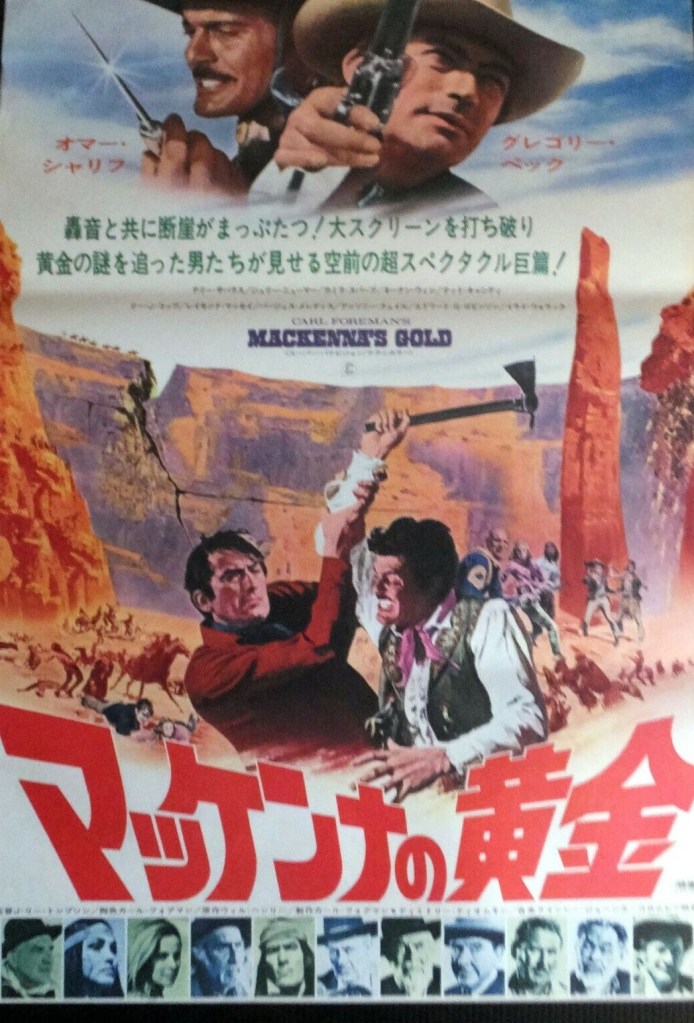
Mackenna’s Gold (1969) ***

The Treasure of the Sierra Madre (1948) set in the West – men driven mad by gold fever. Straightforward plot, however, complicated by an avalanche of characters. And  for a two-hour running time it seemed perverse to waste the first six minutes on scenery, narration – explaining the Apache legend of a fabulous hidden seam of gold – and theme song.

The real film begins with a shoot-out between Marshall Mackenna (Gregory Peck and an Indian. “You will wish you never saw this map,” says the Indian before he dies, but Mackenna burns the map. That doesn’t go down well with villain Colorado (Omar Sharif), whose gang has taken Inga (Camilla Sparv) hostage. Convinced the lawman has memorized the map, Colorado adds Mackenna to his hostage quotient.

At Colorado’s hideout Hesh-Ke (Julie Newmar) has a hostile reaction to Mackenna. Like Colorado, they have history. Mackenna and Inga bond when he fends off an Indian intent on raping her. As if this isn’t a pretty straightforward set-up, old foes reunited, potential romance brewing, a treasure hunt, further complications arise in the shape of a posse led by Ben Baker (Eli Wallach), not hunting renegades but also chasing gold. As if that wasn’t already a complication too far now we have a Cavalry troop, who confuse the posse with outlaws thus mostly eliminating a complication before it gets too complicated – the pursuing Apaches finish them off.  

And in a nearby pool, we get a deadly twist on the naked attraction, as Hesh-Ke, first trying to lure Mackenna then trying to drown the woman she views as her romantic rival. When the Cavalry reappear, they have turned rogue, led by Sgt Tibbs (Telly Savalas). So now we’ve got the narrative ironed out it’s three separate groups – outlaws, Cavalry and Apaches – searching for gold with various individual old scores to be settled. And, just in time, they’ve arrived at Shaking Rock, the tall pillar visualized in the poster, and a sunrise worth waiting for. It is a glorious scene.

After a close-up of the rising sun and the pillar, and the screen changing color, the shadow of the pillar creeps across the canyon floor and points to a crack in the canyon wall. The crack is a tunnel entrance and on the other side the sun is shining on a seam of bright gold. And that leaves only the various denouements to be played out. And some surprises – straightlaced Inga succumbing to gold fever, the supposedly barbarous Apaches revealed as good guys –  treating pillar (and gold) with reverence – and (would you believe it) an earthquake.

The earthquake might just have been too big a temptation given this was filmed in Cinerama. But it’s the least effective use of the process. A fairly standard western trope, crossing a dodgy bridge, is heightened in Cinerama but it’s still a cliché. Much better is the river crossing, the camera’s dizzying effect echoing the rollercoaster ride in This Is Cinerama and the rapids and runaway train of How the West Was Won (1962), audiences pitched headlong into camera point-of-view, racing water, oncoming rapids, thundering waterfall. The final section is triggered by the Cinerama camera racing for two minutes down the  twisting track leading to the gold. So, in Cinerama terms, the audience got its money’s worth.

And there should have been enough conflict to keep the narrative on track – Mackenna vs. Colorado, Hesh-Ke vs. Inga, Inga vs Colorado, Calvary vs. outlaws vs. Apaches, plus various fist, gun, knife and belt fights. The individual conflicts, Inga’s genuine fear over her fate, the romantic triangle and especially ruthless Colorado revealed (ditto Butch Cassidy) as a dreamer, imagining life in faraway lands (swap Butch’s Bolivia and Australia for Colorado’s Paris) were more than enough to be going on with without being drowned out by a simplistic message about greed. This is nothing more – or nothing worse – than a decent western wrapped up in the bloated shadow of a roadshow.

Gregory Peck (Arabesque, 1966) and Omar Sharif (Mayerling, 1969) are both pretty good in roles that play against type, both female roles are well-written and well played by Camilla Sparv (Downhill Racer, 1969) and Julie Newmar (The Maltese Bippy, 1969) but the film is overloaded with way too many cameos. As he had proven in The Guns of Navarone (1961) J. Lee Thompson was excellent at handling large casts especially in scenes featuring a host of characters and his visual and aural skills are superb but not so good at putting writer-producer Carl Foreman in his place.

Take away the Cinerama effects and the roadshow elements, and trim another 20 minutes off the picture, and you would have had a tight character-driven picture.

Discover WordPress

A daily selection of the best content published on WordPress, collected for you by humans who love to read.

The Atavist Magazine

by Brian Hannan

WordPress.com News

The latest news on WordPress.com and the WordPress community.