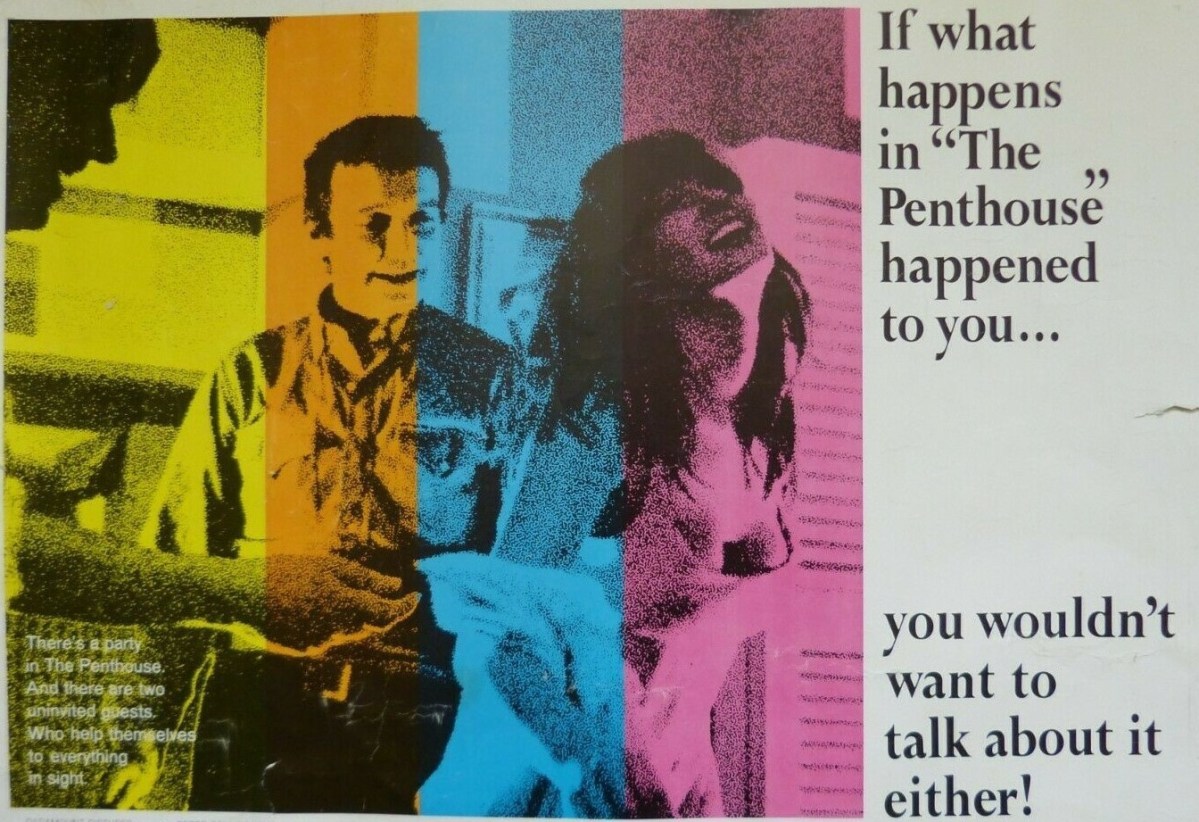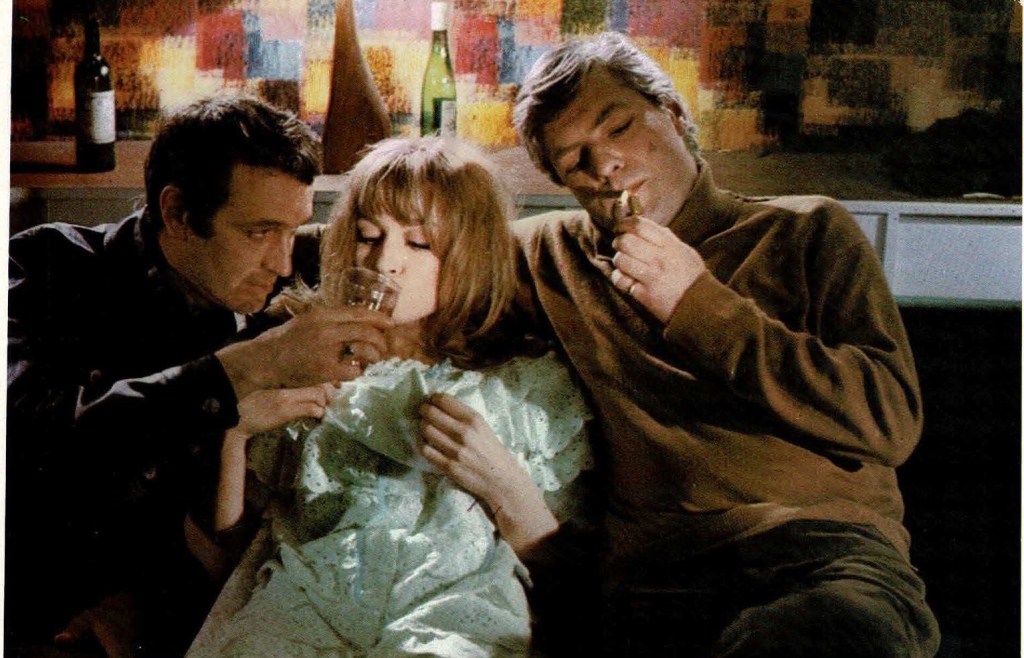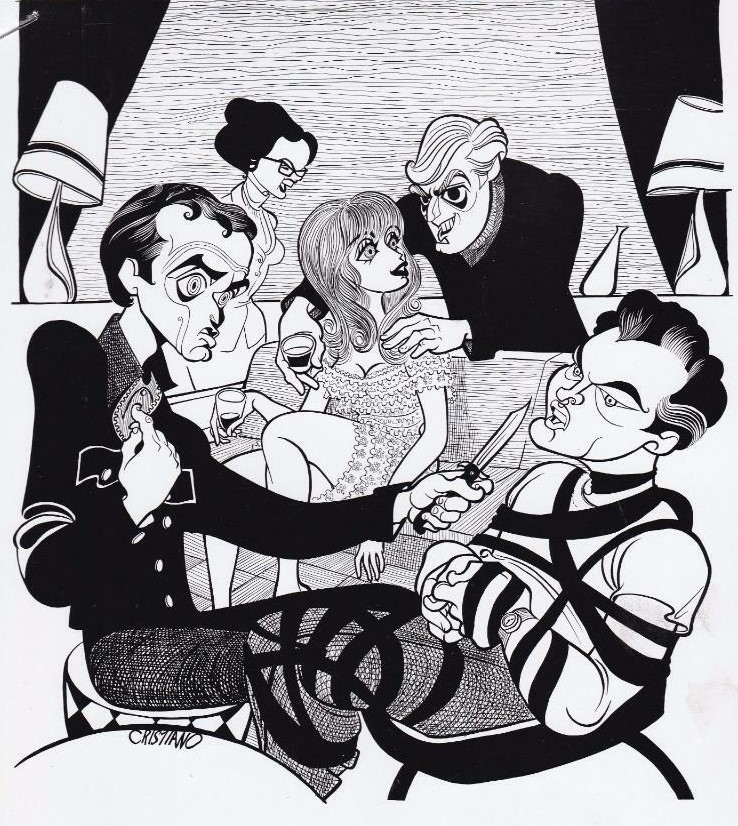
Medium Cool (1969) ***

Self-important essay on the self-entitlement of journalists who see themselves as victims, hated by the authorities whose activities they expose and hated by the public for being so cold-blooded – it opens with a television cameraman getting footage of dead people in a car crash before phoning for an ambulance – and for filming stuff that genuine victims did not want filmed.

Filmed in cinema verite style and covering much of what went down in Chicago 1968 when demonstrators clashed with police and the National Guard and tanks rolled through the streets. Certainly strikes a contemporary chord when filming is an universal pastime and many criminals have been brought to book and various issues highlighted by social media.

As if making its point about action and controversy versus talking heads, the movie begins with talking heads, discussing the role of television and journalism in society, with cameramen telling stories of occasions when the public they were trying to help turned on them. The narrative is slight, following television cameraman John Cassells (Robert Forster) going about his business, and betraying girlfriend Ruth (Marianna Hill) with single mother Eileen (Verna Bloom). John is fired after objecting to his television station handing over to the cops and the F.B.I. footage he has filmed of demonstrations and incidents.

Because of the documentary style, much of what has been filmed carries particular resonance as a sign of the times, not so much the police violence because that is widely available elsewhere, but simpler scenes that seem far truer to life. Eileen’s son Harold (Harold Blankenship) is interviewed by an off-screen canvasser about his home life, age, brothers and sisters and so on. Questioned about his father, he explains his father is not at home. “Where would I find him?” asks the interviewer. “Vietnam.”

The boy’s mother Eileen, a teacher who has to manage five grades in one classroom, and John are skirting round the physical side of their romance until jokingly John takes the plunge. “I know your husband’s not going to come charging through the door.” “Buddy’s dead.” The director could already have delivered this information to the audience in talking-heads-fashion but this carries probably the biggest dramatic punch in the picture. This family provides a solid core for a movie which makes its points in more hard-hitting style.

Questions of respect and ethics loom large. Making no bones about finding audience-grabbing material, John is disgusted that people steal hubcaps and the radio antenna from his car when clearly he feels news journalists should be given more respect. But that the public hold an opposite view is clear from Ruth who instances turtles filmed going the wrong way after nuclear explosion distorted their instincts and they went inland to lay their eggs (where they would die) rather than out to sea. She complains that none of the cameramen present thought to turn the turtles round and show them the correct way.

A plot point allows Eileen and John to mingle with the demonstrators during the actual Democratic Convention. There is a shock – and ironic – ending in which John is himself photographed by a passerby after being involved in an accident.

Robert Forster (Justine, 1969) carries off the arrogant victimized reporter well and in her debut Verna Bloom (High Plains Drifter, 1973) is excellent as the real victim of the system while Mariana Hill (El Condor, 1970) raises the tempo as the volatile girlfriend. Peter Boyle (Taxi Driver, 1976) has a small part.

Oscar-winning cinematographer for Who’s Afraid of Virginia Woolf (1966), Haskell Wexler (who also wrote the script) makes a notable debut as director, mixing fact and fiction, taking a political stance and introducing a revolutionary camera technique. Half a century on, not much has changed in attitudes to media ethics although it is another photographic revolution via social media that is leading the discussion in what takes top billing in terms of news. Its content has led the film to be seen as a landmark of the cinema.

Landman (2024) *****

The blue collar worker has not taken up much of Hollywood’s time. There was a movie  disdainfully called Blue Collar (1978) but the best pictures about people doing actual physical hard work was Five Easy Pieces (1971) about a fella who was putting in the long  yards to spite his old man and The Molly Maguires (1968) which was more about politics and anarchy. The British did it better, but concentrating on the monotony, in such ventures as Saturday Night and Sunday Morning (1960) and Gold (1974). though images of anyone  getting their hands dirty was fleeting

Generally, films about work are movies or television series about management (Wall St, 1989 or Succession, ) and/or a soap opera (Dallas). Most commonly, there’s a picture about farming – Grapes of Wrath (1940), The River (1984)– but there’s very little farming involved. You get a better idea of what it’s like to till the earth from the recurrent image in Gladiator (2000) when Maximus smells the soil.

Until Taylor Sheridan came along and realized the immense dramatic potential of actual hands-on dirty work and rode Yellowstone (2018-2024) to enormous critical success and sufficient commercial endowment to be able to write his own ticket. I rarely buy DVDs these days, not because I’ve already got thousands of themd, but because that old impetus is long gone, the days when we desperately waited for a movie to turn up at the video rental store, one that you couldn’t otherwise get your hands on or missed on its cinema release, one that you wanted to own so you could watch it again and again.

Now I tend to buy DVDs if I don’t have a subscription to a particular streamer. I did it for Yellowstone and I did it for this Taylor Sheridan enterprise Landman.

On the face of it, this might seem like another oil or big business venture where the emphasis is on wheeling and dealing and heirs fighting over money and how to spend it and everyone just the hell arguing because that’s instant drama. The element devoted here to wheeling and dealing is negligible, restricted to oil tycoon Monty Miller (Jon Hamm), one whisky away from a heart attack, at the other end of a phone getting agitated and taking out his frustration on anyone in sight.

Instead, it’s about very dirty work, the kind where workmen come home saturated in filth and the kind where you could in a flash lose your hand or your life. There have been four instantaneous deaths so far and I’m only at episode six of Series One. We’re not in the all-action Hellfighters (1968) business of quelling fires, but in the dull maintenance part of ensuring that wells with 35 years accumulated wear and rust are kept going.

I might have to buy into Paramount+ to catch the second series.
Don’t think I could wait for the DVD.

It’s the job of Tommy Norris (Billy Bob Thornton) to make sure these wells keep producing and all it takes is a stray spark or a moment’s lack of concentration and the coffins are mounting up. Along the way, we are brought up to speed on how the oil business works – or doesn’t.

Exposition used to be a hell of an issue for screenwriters until those Game of Thrones dudes invented “sexposition” where acres of naked flesh kept the audience awake through the dull stuff. Here, however, Sheridan manages something of a coup by having Monty or Tommy gush like oil wells while setting others right about the business.

This series kicks off with an oil tanker tearing along at 60mph crashing into small airplane that’s parked on a road to disburse its cargo of drugs. And that triggers two increasingly fraught, sometimes thrilling, elements. First, we’ve got the drug dealers seeking revenge and recompense. Secondly, you’ve got legal repercussions in the shape of the all-time Jaws of a lawyer Rebecca Falcone (Kayla Wallace) and how Tommy has to snake through the vagaries of the law, not, for example, pursuing thieves who steal the company’s planes or tankers to shift their ill-gotten gains because the law will invariably impound such items of transport for the couple of years it takes to get a case to court and because the drug dealers are only borrowing them for a short period and return them after use.

On top of that, Tommy is trying to blood son Cooper (Jacob Lofland) into the business, starting off as a roughneck, while turning up out of the blue are glamorous ex-wife Angela (Ali Larter) and daughter Ainsley (Michelle Randolph), who views philanthropy as a tax dodge.

There’s some terrific humor from Tommy’s housemates Dale (James Jordan) and, mostly in reaction shots, Nathan (Colm Feore).

You won’t have seen any of these storylines before, not even the returning wife and daughter, because all the characters are so original and the performances so powerful. Billy Bob Thornton (Bad Santa 2, 2016) has eschewed all his acting tropes, dumped the sarcasm and temper tantrums, and instead plays a weary debt-laden foreman who fails to resist the lure of his trophy wife.

I remember Ali Larter from such unchallenging fare as the original Final Destination (2000) so she is something of a revelation. While Angela is as vapid as any other trophy wife, majoring on shopping and looking good, actually she’s an education in how an ageing trophy wife stays the course. She is a fabulous cook, for starters, and she puts in the hours at the gym to keep trim. But she’s also a manic depressive and so her emotions spin on the toss of a coin, extremely charming, not to mention endearing, one minute, a venomous snake the next. This is a performance reverberating with depth that should qualify for an Emmy.

Jacob Lofland (Joker, Folie a Deux, 2024) is Gary Cooper reborn. The stillness, the reticence, and yet when necessary, taking no prisoners. He’s way out of his depth not just with the crew he’s landed with, but in unexpected romance with young widow Ariana (Paulina Chavez). But that’s not the last of the star-making turns. Kayla Wallace (When Calls the Heart series, 2019-2025) is phenomenal as the ball-busting lawyer eating up misogyny for breakfast and heading for a showdown with anyone in sight. Sassy Michelle Randolph (1923 series, 2022-2025) has many of the show’s best lines.

And that’s before we come to Jon Hamm (Mad Men series, 2007-2015) and Demi Moore in a more believable role than The Substance (2024). And the simple earworm of a score by Andrew Lockington (Atlas, 2024).

Truly original and riveting.

Where It’s At (1969) ****

There is probably no more stunning definition of Las Vegas than the brief shot in this otherwise widely-ignored film of a woman playing the slot machines with a baby at her naked breast.

I doubt if anybody has watched this all the way through in the fifty-odd years since its release. And I can see why. I nearly gave up on what I thought was a lame generation gap comedy. But some distinguished directors at the time clearly perceived its value, the flash cuts and overlapping dialog initiated here turning up, respectively, in Sydney Pollack’s They Shoot Horses, Don’t They (1969) and Mash (1970). And as I gamely persevered, I realized it was a different movie entirely, a cross between Succession and The Godfather.

Though saddled with a trendy catchphrase of the period for a title – though making more sense if applied in ironic fashion –  the original title of Spitting Image was much more appropriate to the material. As both veteran and new Hollywood directors struggled with understanding the burgeoning counter-culture, youth-oriented efforts of the Tammy and Gidget and beach pictures variety fast fading from view, and Easy Rider (1969) yet to appear, a generational mismatch between Hollywood veterans and younger audiences was in evidence.

And you would hardly turn to Garson Kanin to capture the zeitgeist. Although acclaimed as a screenwriter, with wife Ruth Gordon responsible for a string of Tracy-Hepburn movies like Adam’s Rib (1949), he had not directed since 1941. The story he wanted to put over – he wrote the script as well – was not an easy sell. So he’s disguised it as a coming-of-age tale exploring the generation gap and as a lurid expose of Las Vegas with behind-the-scenes footage of the reality underpinning the glamour.

It’s pretty clear early on it’s not about some middle-aged parent getting jealous over the amount of sex his child has, for widowed casino owner A.C. (David Janssen) can have as much as he wants courtesy of fiancée Diana (Rosemary Forsyth) – and a wide range of available and eager-to-please showgirls – and certainly far more than the majority of his male customers whose biggest thrill is gawping at topless women on stage. Las Vegas was the epitome of Sin City, at the beginnings of its sacred position in American popular culture where what you got up to remained secret.  The representation of the “showgirl” world is less brutal than in Showgirls, but even so an audition includes removing your bra.

A.C. wants to introduce son Andy (Robert Drivas) into the business not realizing he is laying out a welcome mat for a viper. At first Andy is happy to learn the ropes by working in menial positions and wise enough to resist obvious lures like showgirl Phyllis (Edy Williams), whose interaction with him is recorded. However, when like Michael Corleone, he is required to make his business bones – “pay your dues and stop your whining” – by transporting cash skimmed from the business and banked in Zurich back home, where if caught he will have to take the rap, a more calculating and dangerous individual emerges. A.C. has been working a Producers-type scheme where by massaging profits downwards he hopes to panic his investors into offloading their stock cheaply to him.

The ploy works but it turns out his partners have sold their stock to Andy, who hijacked the Zurich cash to pay for it. Rather than chew out Andy, A.C. is delighted at the ruthlessness of the coup, until his son, now holding the majority of shares, takes complete control, easing him out – “If I need you, I’ll send for you.” Andy’s prize could easily include, had Andy showed willing, the duplicitous Diana. However, that’s not the way the picture ends and I won’t spoil the rest of the twists for you.

This is one of the few genuine attempts to show the pressure under which businessmen operate. No wonder A.C. is so glum, barking at everyone in sight, little sense of humor, when the stakes are so high and as with any game of chance you might lose everything. Employing indulgence to insulate himself against emotion, he is surrounded by what he deduces is the best life can offer, driven by mistaken values. Optimism is the automatic prerogative of youth, pessimism the corrosion that accompanies age.

The second half of the picture has some brilliant brittle dialog. Assuming the young man has principles, when his acceptance of the Las Vegas dream is challenged Andy replies, “Who am I to police the party?” In a series of visual snippets and verbal cameos, the film captures the essence of Las Vegas, from the aforementioned woman breast-feeding while playing the slot machines to the telephone call pleading for more money, waitresses hustling drinks, a machine in A.C.’s office rigged to give high-rollers an automatic big payout and leave them begging for more, customers not even able to enjoy meal without a model sashaying up to the table to sell the latest in swimwear, never mind the more obvious tawdry elements.

There’s a superb scene involving a cheating croupier (Don Rickles). Of course, when Martin Scorsese got into the Vegas act, violence was always the answer. A.C. takes a different route, allowing the man to pay off his debt by working 177 weeks as a dishwasher. There’s a neat twist on this when Andy, guessing which way Diana is going to jump, warns “watch out you don’t end up washing dishes.”

David Janssen (The Warning Shot, 1967) gives another underrated performance, gnarly and repressed all the way through until he can legitimately feel pride in his son. Robert Drivas (The Illustrated Man, 1968) is deceptively good, at first coming over as a stereotypical entitled youngster (or the Hollywood version of it) before seguing into a more devious character. Rosemary Forsyth (Texas Across the River, 1966) is excellent, initially loving until casually moving in on the young man when he appears a better prospect than the older one. Brenda Vaccaro (Midnight Cowboy, 1969), in her debut, plays a kooky secretary who has some of the best lines. “Two heads are better than one,” avers Andy. Her response (though Douglas Adams may beg to differ): “Not if on the same person.”

Garson Kanin takes the difficult subject of ruthless businessman and provides audiences with an acceptable entry point before going on to pepper them with vivid observations. This is not a picture that divided audiences – not enough critics or moviegoers saw it to create divergence – but it’s certainly worth another look especially in the light of the shenanigans audiences have welcomed in Succession. And if you remember the pride Brian Cox took when shafted by his son, check out this picture and you will see where the idea came from.

And it’s worth remembering that the defining youth-culture movie of 1969, Easy Rider, was actually about two young businessmen. The fact that their product was drugs didn’t make them any less businessmen. The idea that what a young buck “digs” the most is making money rather than peace and love seemed anathema to critics as far as Where It’s At went but not Easy Rider.

To be sure, none of the characters are likeable. Maybe likability was an essential ingredient of 1960s movies, but we’re more grown-up now. Compared to the the horrific characters populating The Godfather and today’s Succession, these appear soft touches. One critic even pointed out that The Godfather did it better without seeming to notice that Where’s It’s At did it first.  And there’s certainly a correlation between Andy turning his nose up at his father’s business and Michael Corleone showing similar disdain until the chips are down and the old cojones kick in.

Critics who complained this had little in common with the Tracy-Hepburn pictures missed the point. The Tracy-Hepburn films were always about power, in the sexual or marital sense. Kanin has merely shifted from a male-female duel to that of father-son.

Not currently available on DVD or on streaming, but easy to get hold of on Ebay and YouTube has a print.

Best Seller (1987) ***

If nobody’s shot your dog or killed a member of your family, it’s kinda hard for an assassin to work up much audience sympathy. And although this is closer to John Wick than say The Mechanic (1972) or Day of the Jackal (1973), it doesn’t help the sympathy cause if your leading character is played by James Woods (Oscar-nominated the same year for Salvador) who so often essays an amoral fidgety weasel.

So it’s left to Brian Dennehy (F/X, 1986) to do the heavy lifting. Dennehy was the kind of stolid supporting actor who once in a while in the Hollywood Dream made it through on occasion to top billing. His brawn was not in the obvious top-off mold of muscle men Sylvester Stallone and Arnold Schwarzenneger and more in keeping with Holt McCallany (The Amateur, 2025).

It’s not unheard of for characters on either side of the law to team up to tackle the bad guys, but it’s a bit of a stretch for incorruptible widowed hero cop Dennis Meechum (Brian Dennehy) not to toss assassin Cleve (James Woods) into the pokey especially when there are ample witnesses to one of the killer’s killings. But, wait, let’s throw him a get-out-of-jail-free card because he saved the life of Meechum.

Even so, Cleve is as creepy as all get out and even if – especially if – he was a fantasist and not an accomplished assassin you would expect the sensible cop to run a mile, especially after he kidnaps Meechum’s daughter. For reasons unknown, Cleve is handed another get-out-of-jail-free card because actually he didn’t kidnap the 16-year-old Holly (Allison Balsam) but just gave her and her pals a lift home. Quite why a cop’s daughter would fall for the line given by a complete stranger that he was her dad’s pal is anyone’s guess, except it suits the script.

There’s quite a lot of what used to be called “high concept” – in other words getting away with the most unlikely of scenarios – here, not least that Meechum would go along with the psychotic Cleve in order to get the material to write a book, that particular well having dried up after the death of Meechum’s wife.

The fact that Meechum has a side hustle as a best-selling author – though still a cop – is one of the many stretches in the tale. You have to go along with quite a lot until the proper narrative kicks in, and realize that, in fact, Meechum is merely the dupe to allow Cleve to achieve his real aim which is to gain revenge by knocking off former employer David Madlock (Paul Shenar) who, regardless of whatever other malarkey he is up to, had the good sense to rid himself of the psychotic entitled gunman.

It seems inconceivable, too, that, by the simple device of employing a barrage of lawyers, big businessman and philanthropist Madlock would not be able to block publication. Meechum refuses to bow under pressure but his publisher might well do once she has been terrorized by Cleve.

And this wouldn’t work at all except for Cleve. Like Jeff Bridges in Thunderbolt and Lightfoot (1974) he’s a loner (though also like that character having no problem seducing women) who’s desperate for male friendship and appreciation. He wants to buddy up with Meechum and for the cop to enter into such a relationship willingly. In Cleve’s demented eyes, sharing the same woman appears to be one way they could cement the relationship. He appears to view the publication of the book which would uncover the illegitimate activities of the seemingly legitimate Madlock as a means of redemption. He wants to come out well in the book, even introduces Meechum to his quite normal family, and sees that as some kind of weird redemption.  

Eventually, there’s enough shoot-out action, especially when Cleve enters silent John Wick assassin mode, to make the journey worthwhile. But although Cleve is a fascinating original character and the dynamics of the relationship constantly shift, it beggars belief that Meechum would entertain him for a moment especially when he discovers Cleve was responsible for wounding him and killing some of his colleagues in a robbery several years before.

Woods is the standout though Dennehy does stake a decent claim as a leading man. Despite being third-billed Victoria Tennant (The Ragman’s Daughter, 1972) hardly appears.

Screenwriter Larry Cohen (It’s Alive, 1974) is no stranger to the genre mash-up and generally gets away with inconsistencies but here the bar is set way too low at the outset for the tale to be believable. Director John Flynn (The Sergeant, 1968) goes with the flow.

Worth it to see Dennehy get a shot at the big time and for another in Woods’ tribe of weasels but will have you scratching your head with the unlikeliness of the tale.

Isadora / The Loves of Isadora / The Incomparable Isadora (1968) ***

We’re two years away from the 100th anniversary of the death of feminist icon and pioneering dancer Isadora Duncan, but this movie has been in cold storage virtually since its release, so I’m wondering whether its sudden appearance on Amazon will trigger any interest in this long-forgotten, heavily edited, commercial flop of a movie.

Due to the clumsy structure it’s occasionally heavy going. We start off in Nice in the South of France where Isadora (Vanessa Redgrave) is dictating her memoirs to journalist (not lover) Roger (John Fraser) and the whole picture is rendered in flashback. And there’s something morbid about this structure, because essentially we’re waiting for her to die. Unfortunately, what she is most remembered for is getting her trademark long scarf tangled in the wheels of a moving Bugatti and snapping her neck. So we’re sitting around waiting for her to hop into a passing Bugatti with a Bugatti (Vladimir Leskovar).

The rest of her life was somewhat fractured, consisting of her leaping from one lover/husband – Gordon Craig (James Fox), Paris Singer (Jason Robards), Romano Romanelli, Sergei Essenin (Ivan Tchenko) – to the next so characters appear and then disappear. Never mind her rebellious nature and determination to forge her own way  and reinvent dance, her life was peppered with tragedy – all three of her children died, two drowning in the Seine (a fact repeated in a variety of ways to get the full emotional punch) – so there’s more than enough angst.

Her dancing is exuberant and uninhibited – she wore flowing dresses which looked as though any minute they would slip off her slender frame and there was scandal at one point when she bared her breasts during a performance. The first time she hits the stage is exceptionally ho-hum because it’s in a Paris nightclub and she’s a conventional, if very attractive, dancer of the ooh-la-la persuasion. But when she gets into her stride as a serious dancer, then visually it’s a treat, as she commands the stage – and screen- in a series of sexually provocative sinuous movements.

But, unfortunately, once is enough. You’d have to know a lot more about artistic dance than I do – and I guess the bulk of the original and contemporary cinematic audience – to know what changes she implemented and how, apart from her individual style (she danced solo not as part of an ensemble), her act developed and how it impacted on dance. She ran her own dance schools which probably liberated a ton of young women who were in the mood to be liberated.

But, as a biopic, even with 30 minutes knocked out, it’s way too long at the remaining 140 minutes, and the rest of the cast struggle to offer any competition to the lustrous Isadora.

Vanessa Redgrave, Oscar-nominated, is the best reason to watch and she is certainly compelling and, oddly enough, though there is plenty of incident and drama it somehow isn’t dramatically compelling.

She is generally naïve in her politics and her innocence in this department works to the advantage of the character. But mostly, we flit like a mobile time capsule through different periods, each well defined cinematically, and even though it’s clearly much harder to (in visual terms on film) convince as a genuine dancer than as, for example, a pianist, unless you were an expert on dance you wouldn’t know what to complain about.

You end up with a biopic about an interesting woman rather than a fascinating biopic. Vanessa Redgrave (Blow-Up, 1966) delivers another of her flawed characters and holds the screen effortlessly. The same cannot be said of the insipid males, James Fox (Thoroughly Modern Millie, 1967) and a miscast Jason Robards (Hour of the Gun, 1967).

Hard to know what the plans were of director Karel Reisz (Morgan!/Morgan, A Suitable Case for Treatment, 1966) because this isn’t his 168-minute version (the one that was released in the U.S. after disastrous opening weekend was trimmed to 128 minutes and in the UK to 140 minutes). Written by Melvyn Bragg (Play Dirty, 1969) and Clive Exton (10 Rillington Place, 1969) from a number of sources.

Sheds an interesting, but not enough, light on a legendary character.

Thunderbolt and Lightfoot (1974) ***

There’s a reason this has largely slipped from view, why it’s rarely included in any examination of the Clint Eastwood canon. For the most part it’s plain dull. When the best thing in it for large periods of time is the screen composition, then you know this is going to be an odd, not to mention tough, watch.

It’s confused as hell. Starts out as a road movie – and a desultory one at that – with a side hustle of a shaggy dog story, straightens out enough to fit into the nascent buddy movie genre before settling down into a heist. And all the time director Michael Cimino, with his use of widescreen and traditional arranging of the sometimes majestic scenery into thirds, thinks he is making a western.

Let’s play the phallic symbol card.

None of the characters seems to be much good at what they do. Thunderbolt (Clint Eastwood), on the run, doesn’t appear capable of evading the pursuing Red (George Kennedy), not a cop or bounty hunter as you’d expect, but an irate member of Thunderbolt’s former gang. And while Red seems excellent at tracking down his quarry, whose shifts of direction are almost whimsical, and even though he’s armed with the modern-day equivalent of a Gatling gun, he makes the basic mistake of not getting close enough to his target to make the bullets count.

The only one who comes out on top in the too-long opening section is Thunderbolt’s happy-go-lucky sidekick Lightfoot (Jeff Bridges) who has the knack of pulling the ladies and can drive. But their relationship is desultory, no zap, no funny lines in the vein of Butch Cassidy and the Sundance Kid (1969), and while clearly like the pair in Midnight Cowboy (1969) inclined to hold onto each other in the absence of anyone else it lacks the emotional power of the latter.

It takes forever to get to the point. Or the three narrative triggers, one of which involves Eastwood committing the most grievous sin a major star can ever commit – to be the one who carries the exposition. And boy does he go on. Anyways, he’s a bank robber and he planked his haul in a small two-room schoolhouse. But, blow me down, someone’s demolished the schoolhouse, without presumably happening upon the cash, and built a brand new one in its place.

Clint Eastwood…Bruce Lee…Together!

Then, just to annoy Thunderbolt, the police, because this is just how cunning they can be, have given out that they recovered the loot. Red hasn’t fallen for this ploy, believing Thunderbolt has duped the gang and made off with the stash. Eventually, Red and Thunderbolt reconcile and Lightfoot suggests they hit the bank that was originally robbed because nobody would expect it.

Thunderbolt has acquired his nickname because his idea of a heist is not to bring on board some clever dick safecracker and employ an ounce of patience but merely to barrel through any obstacle with the help of 20mm cannon.

So now – at last – we have a story, but that’s over halfway through the picture and way too late to save it. So, yes, there’s some decent action and excitement, a double cross, car chase, shoot-out, and just to complete the shaggy dog element one of the robbers is killed by a dog.

Once it gets going it’s within the Eastwood bailiwick. At the time there was a mini-trend, started off by Easy Rider (1969), for road movies so moviegoers back in the day would probably accept this more than a contemporary audience who, like me, is sitting there wondering when the heck are they going to get on with it.

Something of change of pace for Eastwood, in that he plays his age, the older man, one in not so good physical shape at that, and not catnip for the ladies. Jeff Bridges (The Big Lebowski, 1998) certainly brightens up the screen, but George Kennedy (Cool Hand Luke, 1967) overacts.

Writer-director Michael Cimino, in his debut, exhibits the strengths that would elevate The Deer Hunter (1978) and the self-indulgence that would cripple Heaven’s Gate (1980).

A long haul.

Night of the Following Day (1969) ***

As his popularity in the 1960s faded, Marlon Brando was often called upon to save, or greenlight, a picture unworthy of his talent. Except that director Hubert Cornfield failed to extract enough tension from a kidnap thriller with an inbuilt deadline and a double-crossing sub-plot this might have been one to rise out of the mediocrity.

It’s not unknown for strangers working together on a robbery to adopt pseudonyms, colors in the case of Reservoir Dogs (1992) or cities as in Spanish television hit The Money Heist. Here they are known by their designated tasks, which seemed a nod towards artistic pretension at the time. Even so, the gang have too many frailties for taking on a caper like this, the pressure of a deadline and the publicity their crime attracts exacerbating the situation. So kidnapping a millionaire’s daughter (Pamela Franklin) are: Chauffeur (Marlon Brando), in on the job because he owes a favour to Friendly (Jess Hahn), whose sister Blonde (Rita Moreno) is also the chauffeur’s drug-addict girlfriend, the psychopathic Leer (Richard Boone) and a pilot (Al Lettieri).

All except the pilot are holed up in a remote beach house in France. The first signs of cracks show when Blonde is so drugged up she fails to collect her colleagues from a small local airport and, when suspecting the chauffeur of having sex with the girl, she explodes in a tantrum. And because she can’t get her story straight she attracts the attention of a local cop (Gerard Buhr). Despite making a good job of calming down the terrified girl, Leer has other plans for her which the Chauffeur is constantly trying to thwart. At various points various people try to quit. At various points romantic and family ties are pulled tight.

The details of the cash hand-over are well done as is the unexpected double-cross and the diversion allowing them to escape but about ten minutes of the running time is people driving around in cars, only at the later stages to any useful dramatic purpose, time that would been better spent filling us in on the characters. Most of the tension derives from a gang with two loose cannons and certainly the wait for the confrontation between Chauffeur and Leer is worthwhile.

The biggest plus point is Marlon Brando (The Chase, 1966) and even – perhaps because of – sporting a blonde wig and black tee-shirt remains a compelling screen presence. He might have been slumming it but he is certainly believable as the minor criminal way out of his depth. It’s a mistake to think of him as intended to exude menace along the line of Quint in The Nightcomers (1971) because this is actually a complicated role. On the one hand he clearly never wanted to be involved, participation triggered by a sense of honor, trying to keep his girlfriend and the kidnappee safe while at the same time happy to resort to considerable violence to achieve his ends.

The malevolent Boone (The Arrangement, 1969) almost steals the show, beginning as the voice of reason and gradually succumbing to his inner vices. The love interest benefits from Brando and Moreno (West Side Story, 1961), also in blonde wig, being ex-lovers in real life and it takes little to ignite the anger in Moreno. But her portrayal of the addict who cannot stay off her chosen poison long enough to carry out a simple task is excellent. Pamela Franklin (The Prime of Miss Jean Brodie, 1968) has little to do except look scared and she has one revealing scene when in attempting to seduce the Chauffeur sets up the prospect of a different kind of liaison with Leer.

Hubert Cornfield had not directed a picture since Pressure Point (1962) which acted as a decent calling-card and showed how good he was at creating tension between opposing individuals. Instead of focusing here on the characters, Cornfield seems more interested in the visuals, none of which as it turns out are particular arresting and in one instance virtually impossible to see what is going on.

Not so much a curiosity as a masterclass in how to blow a once-in-a-lifetime gig with Marlon Brando and what not to do with a thriller.

Secret Ceremony (1968) ***

Few stars were as willing to trade their glamorous screen persona for a decent role as Elizabeth Taylor, here eschewing the trademark hip swivel, low cut dresses and elegant costumes for a clumping walk, frumpy look and eating with her mouth full. After a chance meeting on top of a bus with rich waif Cenci (Mia Farrow) middle-aged prostitute Leonora (Elizabeth Taylor) swaps a dingy bedsit for life in a massive mansion, cupboards stuffed full of furs, all her needs met. Cenci seeks a mother; Leonora, whose daughter drowned aged ten, seeks a child substitute.

Soon Leonora is prisoner to a fantasist, her own identity swamped by Cenci’s needs, accepting the role of “mummy” as the price of a life of luxury until she learns that what appears so freely given can be as easily taken away. This cloistered life is creepy. Cenci has rape fantasies. To a pair of interfering and thieving aunts, Leonora pretends to be Cenci’s dead mother’s cousin.

The fantasy conjured is threatened by the presence of Cenci’s poet stepfather Albert (Robert Mitchum) who intends to become the girl’s legal guardian. He talks like a child molester, “the extraordinary purity of my longings,” but given the depth of Cenci’s fantasies Leonora initially discounts inappropriate behavior on his part especially when Cenci wishes to become inappropriate with her. If Leonora stands in Albert’s way it is only to have the girl – and her wealth – to herself.  

A psychological drama that appears more like a stage play in structure, skirting around core issues in favor of later revelation, and in essence making a good effort at dealing with behavioral problems which would find greater currency today – inherited mental illness, PTSD, low self-esteem, abuse, and incest. Though the last area is hard to specify, on the basis that, technically, Albert is a stepfather rather than a father, underage sex would appear to be more likely.

In an era when permissiveness virtually ensured audience shock, director Joseph Losey makes a decent stab at presenting the impact of sex on the vulnerable, despite her apparent steely exterior Leonora damaged by life as a sex worker, Cenci pretending to be younger as if that can sustain her innocence, not realizing how appealing that would be to a predator.

At once hypnotic and impenetrable, this is director Joseph Losey (The Servant, 1964) at his best, a story that by its subject matter must remain obscure, a mother-daughter relationship that should be twisted but reveals nothing but tenderness, ending for a time the torment of the  emotionally unfulfilled, but when bonds appear to be strengthened they are fragmenting. However, the film is let down by the script and the somewhat grand guignol setting. Losey is wonderful at times with nothing to say just a prowling camera, only two lines of dialog exchanged in the first 15 minutes. You would certainly file it under “eclectic.”

The two main performances are electric. This is Taylor at her powerhouse best, her profession not glamorized as in Butterfield 8 (1968) and no male to bring to heel, and her last scene with Cenci is extremely touching. This was a bold role, too, for Mia Farrow after the success of Rosemary’s Baby (1967) turned her into a box office star. She brings believability to a difficult role, especially as she is far from the spoiled child one might expect.

Robert Mitchum fans must have received the fright of their life to see their hero not just with uncomely beard but portraying a sinister character, not an out-and-out villain which would have been acceptable, but fast forward a couple of years and you can see evidence here of the kind of portrayal he would evince in Ryan’s Daughter (1970). Look out for Peggy Ashcroft (The Nun’s Story, 1959) in a smaller role, her first film in nearly a decade.

Check out the “Behind the Scenes” article for this film.

Death By Lightning (2025) ***** – Netflix Hits A Home Run, At Last

Streaming at its best. Take an obscure subject, a long-forgotten character, an incident that’s a mere blip in history, actors of less than middle rank in box office terms, and by breaking it down into easily consumable parts turn a history lesson that might be an indigestible three hours on the big screen into a riveting, enthralling drama of the highest quality that takes a no-holds-barred approach to politics

Small wonder you won’t have heard of U.S. President James Garfield (Michael Shannon) given he held office for around three months. Or of his misfit assassin Charles Guiteau (Matthew Macfadyen), less than a footnote in history for making the grave mistake of gunning down a President nobody had ever heard of.

Garfield shouldn’t even have been President. A mid-level politician on the verge of retirement, he wasn’t even in the running for the Republican nomination, which should have gone to Civil War hero Ulysses S. Grant. But in one of those quirks of politics, the voters liked what they heard of Garfield and in a grass roots rebellion shooed him in. He won the Presidential election by a whisker.

And then his troubles started. He was too honest for the job. Unwilling to follow the standard corruption and hand out highly-paid posts to rank-and-file unfitting for the job, he found himself up against the New York political powerhouse headed by Roscoe Conkling (Shea Whigham) who controlled the bulk of the revenue entering the country. And the battles with Conkling would have easily made a House of Cards-style series in itself as the dueling politicians attempt to outwit each other.

But in the background, and weaseling his way into the foreground, is con man, thief, forger, misfit Guiteau with as much entitlement as could sink a battleship who, nonetheless, grasps the key essential of politics of the era which is that helping to grease the greasy pole is all you need to reap the benefits. Except his efforts to become anyone’s righthand man fall way short, as his ambition and lack of any relevant skills are widely mocked – he expects to be handed an ambassadorial role although he speaks no foreign languages – despite occasionally finding an opening.

Having been dismissed by the President himself, he decides Garfield is totally the wrong person for the highest position in the land and takes it upon himself to rid the nation of this burden. Even the assassination is ham-fisted and Garfield would have survived except for the efforts of the ham-fisted surgeon who killed him through septic poisoning.

That’s the climax to a thoroughly involving mini-series where no punches are pulled as far as politics are concerned. Conkling doesn’t mind being the man behind the throne as long as he gets credit for pulling the strings. Political wheeling-and-dealing has never been so ruthlessly exposed.

But it’s not as if Garfield is an innocent in that department. While not stooping to corruption, he pulls the legs from under Conkling by appointing Conkling’s righthand man Chester Arthur (Nick Offerman) as his Vice-President, a scheme that while initially backfiring eventually pays dividends. And it’s ironic that Conkling’s demise is down to a thwarted mistress.

The narrative switches on like a thriller, twists and turns every inch of the way. But as much as the riveting narrative, the joy of this is in the performances. Matthew Macfadyen, double Emmy award-winner for Succession (2018-2023), is rightly going to be considered to have landed the plum role, a fellow so much of a misfit that in a “free love” community nobody wants to have sex with him. But it’s a close-run thing. Michael Shannon (A Different Man, 2024) is outstanding, and Shea Whigham (F1, 2025) has immense fun especially with his eyebrows and dominating curl, while Nick Offerman (Civil War, 2024) in shifting from oaf to man of honor has a peach of a role, not forgetting Betty Gilpin (The Hunt, 2020) as the straight-talking wife of the President.

None of these are stars, not even of the indie persuasion, and yet it’s amazing what they can do with their characters.

Directed with effortless style by Matt Ross (Captain Fantastic, 2016) from a script by Mike Makowsky (Bad Education, 2019) adapting the bestseller Destiny of the Republic by Candice Millard.

Outstanding.

The Learning Tree (1969) ****

Director Gordon Parks made a big noise a couple of years later with Shaft (1971), Richard Roundtree shooting to fame as a slick and sexy private eye, memorable score by Quincy Jones. But The Learning Tree had possibly a bigger impact on the Hollywood consciousness, the first movie released by a major studio (Warner Brothers) that was directed by an African American. Although actors like Sidney Poitier and Jim Brown had smashed the Hollywood glass ceiling, directors lagged far behind. And this would have been an interesting tale in its own right of adolescence in 1920s Kansas had the leading character Newt (Kyle Johnson) and buddy Marcus (Alex Clarke) not faced such blatant racism.

Told today, the story would take a different route, concentrating on the dilemma of Newt in coming forward with the evidence that could convict Marcus’s father Booker (Richard Ward) of murdering a white man, not just the guilt at sending another African American to the electric chair but fear of the killing spree that must follow from enraged whites. Instead, that aspect comes at the tail end of a story that sees Newt and Marcus react in different ways to white supremacy. It’s not that Newt is spineless, toeing the line, but that Marcus, filled with venom, sees violence as the only way to establish any kind of equality.

When Newt, a reasonable enough scholar, though hardly in the genius class, is marked down by his teacher on the grounds that it’s a waste of time going to college when he will still end up a cook or a porter, the young man responds, “You hate us colored kids, well, we hate you, every one of you.” Marcus has a similar mantra, “this town don’t want me and I don’t want this town.” That underlying endemic racism contrasts with the more overt vicious bullying of local cop Kirky (Dana Elcar) who casually shoots any African American who sensibly runs away at his approach and who ends every sentence with the word “boy.”

What makes this so powerful is that for long stretches there’s just the ordinary coming-of-age tale of Newt falling in love with Arcella (Mira Waters), sneaking a kiss, finding their own special place among the daffodils, buying each other Xmas presents, the romance conducted among summer picnics, winter snow, rowing on the river, the young man showing his beloved every respect even given that he is not a virgin, having unexpectedly lost his cherry while sheltering from a tornado.  He has a conscience, too, going to work voluntarily for a farmer whose apples he stole.

It’s not just Newt’s equable temperament that’s prevents him from reacting like Marcus to the unfairness of the white-dominated world. He has the ability to get the best out of situations. A born negotiator he manages to triple the reward offered by Kirky for helping bring up a dead man from a river, and, having been taught to box, earns good money in a match. Marcus goes to jail for beating up a white man who attacked him with a whip and this not being a sanitised version of the African American world on release ends up working in a whorehouse while his father steals a supply of hooch.  

Even so this is a hierarchy even a prominent white person cannot overturn. When a judge’s son invites Marcus and Arcella into a drug store, the other two must take their drinks outside.

A staff photographer for Life magazine, director Gordon Parks, adapting his autobiographical novel,  avoids the temptation to pack the movie with brilliant images, instead concentrating on core coming-of-age aspects to drive forward the narrative. He doesn’t have to do much to point up the injustice. That’s inherent in the material.

It probably helped that the three young principals were inexperienced, although at the time of course roles for African Americans, except in cliché supporting parts, were hardly abundant.  Kyle Johnson (Pretty Maids All in a Row, 1971) was 16 when playing the 14-year-old, Alex Clarke (Halls of Anger, 1970) pushing 20 and making his debut as was Mira Waters (The Greatest, 1977). There’s no straining for dramatic acting effect. Everyone plays it straight.

Others involved are Estelle Evans (To Kill a Mockingbird, 1962), Dana Elcar (Pendulum, 1968), Richard Ward (Black Like Me, 1964) and Russell Thorson (The Stalking Moon, 1968). Not only did Parks write, produce and direct but he supplied the music too.

It’s an absorbing, if at times difficult, watch. It’s an accomplished picture for a beginner. And you can’t help but wondering how four decades after this story takes place little had changed for ordinary African Americans and another five decades after the film’s release the battle for equality has not been resolved.

Discover WordPress

A daily selection of the best content published on WordPress, collected for you by humans who love to read.

The Atavist Magazine

by Brian Hannan

WordPress.com News

The latest news on WordPress.com and the WordPress community.