Term of Trial (1962) ***

Notable for the debuts of Sarah Miles (Ryan’s Daughter, 1970) and Terence Stamp (The Collector, 1963) and an ending that even in those misogynistic times was wince-inducing. The halcyon era of dull English schoolteachers being celebrated (Goodbye, Mr Chips, 1939) or finding redemption or even just managing to overcome pupil hostility (The Browning Version, 1951) were long gone, replaced by a more realistic view of the casual warfare endemic in education establishments, not quite in The Blackboard Jungle (1956) vein but running it close, with bullying, sexual abuse and ridicule running riot.

Self-pitying Graham Weir (Laurence Olivier) has failed to achieve his ambitions in part due to alcoholism, in part to antipathy to his conscientious objection during World War Two. And although he has a sexy French wife Anna (Simone Signoret) in the days when any Frenchwoman was deemed a goddess, she is embittered that the future he promised has not materialized. Like To Sir, with Love (1967) his classroom is filled with no-hopers so that he responds to the meek and innocent wishing for educational betterment.  

Weir’s only defence against endless indignity is a stiff upper lip and slugs of whisky. His lack of character contrasts with a young lad who takes revenge against constantly being chucked out of his house by his mother’s lover (Derren Nesbitt) by blowing up the man’s sports car.  

Spanning the twin cultures of religion and the razor, one falling out of favor, the other holding violent sway, opportunity to rise above kitchen-sink England lies with the self-confident such as thug Mitchell (Terence Stamp) who smokes in class, gives the teachers lip, takes photographs of girls in their underwear in the toilets, physically threatens classmates and when his target is bigger gets older men to give him a good thumping.  

A somewhat unlikely development is an end-of-term trip to Paris where the infatuated Shirley (Sarah Miles), who the good-hearted Weir has been giving free private tuition, ends up in the teacher’s bedroom and later accuses him of abuse. The impending court case and threat of imprisonment scupper Weir’s chances of promotion, make him consider suicide, and Anna to leave him.

The court scenes allow a number of famous character actors a moment of acting glory. Laurence Olivier (Bunny Lake Is Missing, 1965) must in part have been attracted to the role by a terrific court monologue. The movie is very downbeat in a country universally known never to enjoy an ounce of sunshine justifying the black-and-white movie rendition. If there is liveliness in the streets, cinemas, shops, it never translates into any of the main adult characters, all determined to uphold ancient values and endure constricted lives.

Exploiting audience expectation for verbal fireworks, the tension in Laurence Olivier’s finely judged performance comes from his untypical, unshowy delivery. You can almost hear him grinding his teeth. Simone Signoret (The Sleeping Car Murder, 1965) also acts against the grain, battening down her inherent sexuality, and her very presence speaks of lost hope, the fact that she was once attracted to Weir indicating he was once a very different prospect.

Sarah Miles excels as the wannabe seducer, that hesitant voice that would become her hallmark, struggling here to turn innocence into lure, expressing her adoration in heart-breaking simplicity, and yet aware that to catch Weir would require more than just the submission a guy like Mitchell requires. While hers is a stunning debut, I’m at a loss to see what marked out Terence Stamp’s typical surly teenager for speedier stardom.     

Oscar-winner Hugh Griffiths (The Counterfeit Traitor, 1962) is the pick of the supporting roles. A remarkable scene-stealer, a shift of his head, a flicker of his eyelashes is all he needs while sitting in the background to attract the camera from another character in the foreground. Look out for Barbara Ferris (Interlude, 1968), Derren Nesbit (Where Eagles Dare, 1968), Allan Cuthbertson (The 7th Dawn, 1964), Roland Culver (Thunderball, 1965) and Thora Hird (television’s Last of the Summer Wine, 1986-2003).  

Surprisingly un-stagey direction from Peter Glenville (Becket, 1964) who was far better known as a theater director in London and Broadway. Probably in those days if you were setting a movie outside sophisticated London you had to present a gloomy version of Britain so you can’t really blame him for that and Olivier was hardly a major box office attraction so a budget trimmed of color would be a requisite. Although the older characters display grim determination, the younger ones have not had the spirit knocked out of them in the Saturday Night and Sunday Morning (1960) manner and the location shots reveal a buzzy atmosphere.

Glenville also wrote the screenplay based on the bestseller by James Barlow.

Behind the Scenes: “The Blood Beast Terror” (1968)

Sherlock Holmes vs Sherlock Holmes was the initial tantalizing casting prospect. Basil Rathbone, the most venerated actor to don the distinctive deerstalker, and Peter Cushing, just signed up by the BBC for a new 16-episode series, the former signed to play the villain, the latter his nemesis in a film that started out with the title of The Death’s-head Vampire, the first film by a new production shingle Tigon Films.

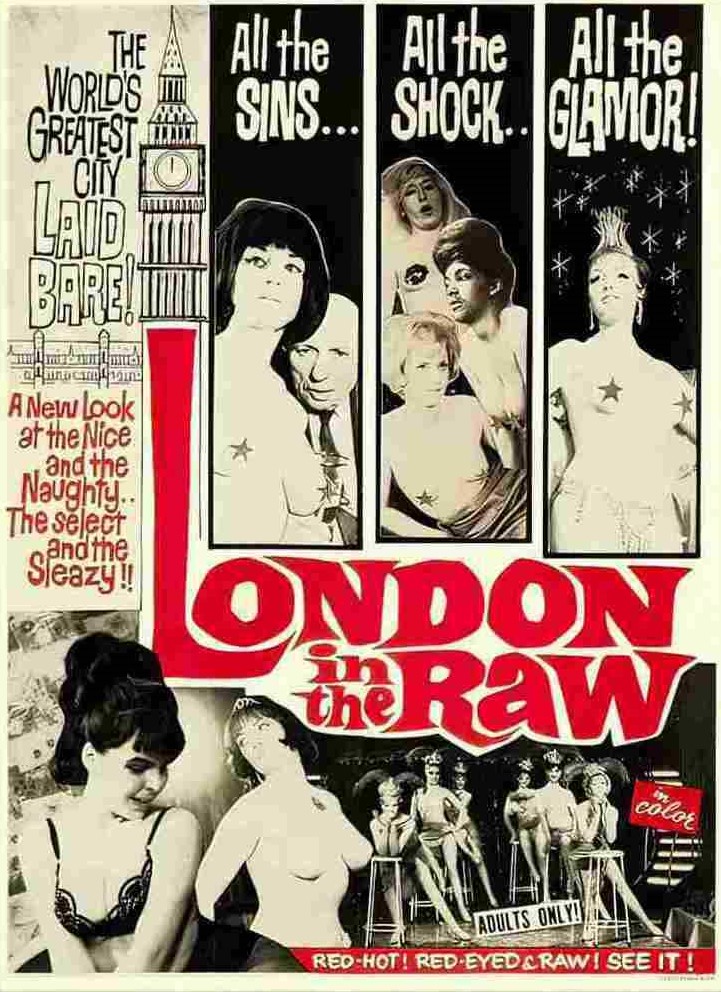
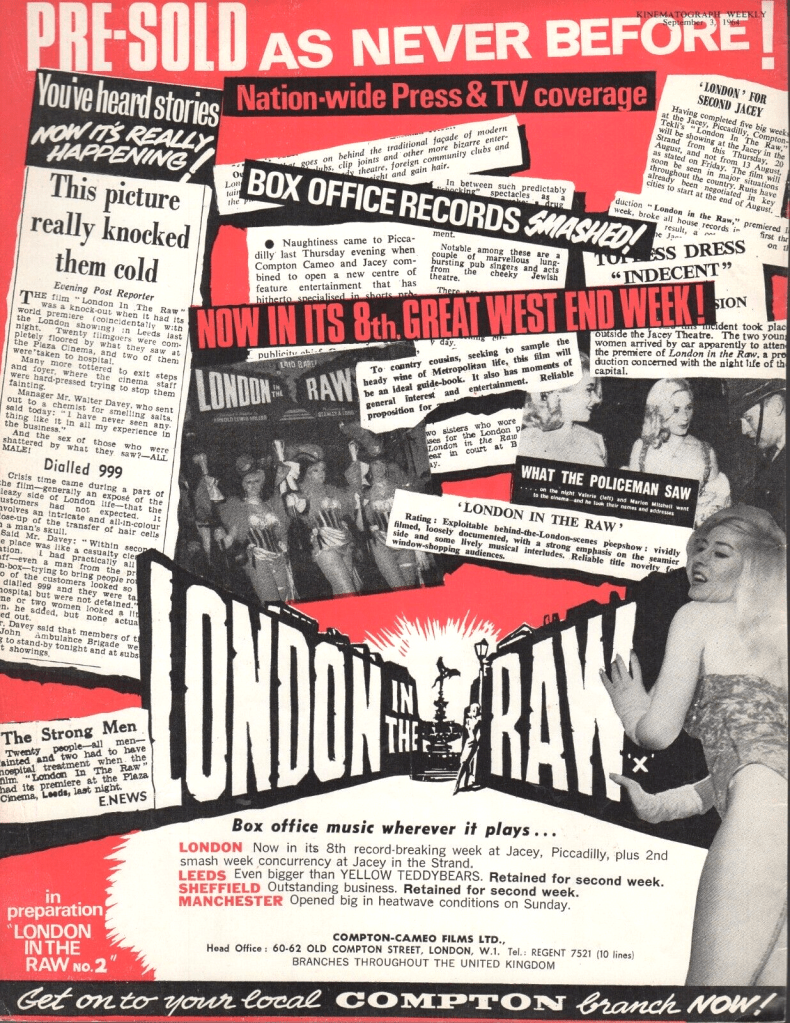
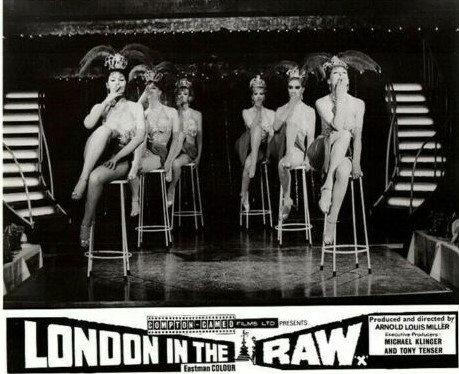
While Tigon was new, with a distinctive logo, its driving force was well-known British producer Tony Tenser who with partner Mike Klinger had initially specialized in exploitation pictures with titles such as Naked as God Intended (1961) and London in the Raw (1964). The pair split after the artistic and commercial success of Roman Polanski’s Cul de Sac, Tenser initially setting up under his own name for Mini-Weekend/Tomcat (1966), mining the exploitation vein as before, and The Sorcerers (1967) a new venture into the horror market. Expanding the business with fresh capital and new partners, Tigon was born.

Supporting feature to “Witchfinder General” on ABC circuit release in Britain.

Explaining the new departure, Tenser said, “Films needs to be inexpensive. They need to sell, they need to appeal to an international audience, and one subject that always finds a market is horror.” Horror budgets were low, the genre did not require big stars, and the films had a surprisingly long shelf life.

First movie on the new company’s agenda was not The Death’s-head Vampire. Instead, Tenser had hooked Raquel Welch for a ghost story The Devil’s Discord to be produced by her husband Patrick Curtis, who had performed a similar task on The Sorcerers, and star Peter Cushing (The Skull, 1965). When that fell through, he held onto Cushing for a proposed Horror of Frankenstein and when that also bit the dust turned to him for The Death’s-head Vampire on a budget of just £40,000 (about $100,000). Offered the choice of playing villain Dr. Mallinger or Detective Inspector Quennell, the actor plumped for the “goodie,” Basil Rathbone lined up for the other role. The concept of older man/younger woman with action concentrated on an isolated house and the surrounding countryside was a horror trope.

Vernon Sewell (Strictly for the Birds, 1964), entering his third decade as a director, had worked with Cushing on Some May Live (1965) and was primarily known for low-budget and B-movies, and more importantly from Tenser’s perspective, sticking to a budget without any artistic pretensions or improvisation. He didn’t waste time on anything that would not be captured by the lens. He was calm on set, “nothing fazed him.” Cushing was a kindred spirit, never complaining, except famously, on this picture, when he told Sewell it was the “worst picture” he had ever made. The pair, however, had a very good working relationship to the extent that Sewell never offered Cushing any advice on the role –“he didn’t need my input.”

The Sherlock Holmes connection is promoted in this poster.

Just over two weeks before the August 1967 start date, Basil Rathbone died of a heart attack. Robert Flemyng, the last-minute replacement, was Cushing’s opposite, complaining all the time. The cast was rounded out by 32-year-old Doctor Who star Wanda Ventham (mother of actor Benedict Cumberbatch) and 18-year-old Vanessa Howard whose career highpoint thus far had been a duet with Cliff Richard for a television presentation of Aladdin (1967).

Interiors were shot at Goldhawk Studios, a converted three-story building in London’s Shepherd’s Bush, with exteriors at Grims Dyke, the former home of W.S. Gilbert, in north-west London. The 19th century manor house had lain empty since 1963.

Roger Dickens, who had cut his teeth on Thunderbirds Are Go! (1966) and worked on 2001: A Space Odyssey (1968) and would be later lionized for the mini-beast bursting out of John Hurt’s stomach in Alien (1979) was responsible for creating the monster. The model for the giant larvae was a much simpler task than creating a believable female giant insect. He took a mold of Ventham’s face, giving the features a repellant slant,  using costume jewelry for the eyes, adding a furry cap and two-foot long antennae, a representation  that would only really work if you scarcely saw the creature. For art designer Wilfred Woods his woods set turned into a disaster when the trees wilted and lost their leaves.

Opinions differ as to whether Tenser interfered with production. He saw his role during the film process to ensure that the project followed the script. “Sometimes you can put something in a film which will hinder the selling, sometimes you need to put something in which will help the selling.”

Comedian Roy Hudd, playing the morgue attendant, thought the script so awful he was delighted to work with Cushing on improvements. 

When John Ford’s boast that he never shot an extra foot of film in order to prevent a producer turning in a different film has resulted in many a masterpiece, the same did not hold true for Sewell. Sticking so close to the script, not filming anything that was not absolutely necessary meant that the movie was too short. Editor Howard Lanning commented: “I put in everything that was available. Even with expanding the lecture scene and the amateur dramatics as long as possible, to the detriment of pace, the picture clocked in at just 81 minutes, not the length expected of a main feature.

To ensure the movie came in at the required length, Tenser added the African sequence at the beginning (an extra five minutes) and re-shot the morgue material (two more minutes), encouraging Cushing and Hudd to improvise. The final product was over-budget and a week late. The version shown to the censor was 87 minutes though the official running time was a minute longer.

Tenser now deemed the working title as insufficient, preferring “something catchy and something that told people what you were selling.” His first stab at a new title was Blood Beasts from Hell. But in the final analysis it was altered to The Blood Beast Terror. Hoping to sell it to a circuit as a main feature it was originally shown in a double bill with Castle of the Living Dead, but despite the supposedly attractive title, audiences were not interested. To cut his losses, the film was repackaged as the support to another Tigon production Witchfinder General (1967) which meant Tenser would not have to share receipts with another distributor.

The Blood Beast Terror did not prove so sellable overseas either. It was shelved in France until 1971, although, sold for a flat fee, it did well in South America. A.I.P. who had U.S. distribution rights to Witchfinder General – title altered to The Conqueror Worm – had no interest in The Blood Beast Terror but it was picked up by Pacemaker Pictures who were also in title-changing mood and released it in summer 1969 as Vampire Beast Craves Blood on a double bill with Curse of the Blood Ghouls (1964).

Tenser’s predictions of long shelf life were correct. In Britain, the movie was reissued on a late night double bill with The Secret of Blood Island (1961), and then was revived with The Devil’s Hand (1961) before being re-teamed with Witchfinder General on a Sunday’s-only screening. Although none of these would be circuit releases in the sense of a nationwide day-and-date opening, they were nonetheless likely to get reasonable bookings to fit specific engagement profiles. In the States where there was endless demand for horror triple- and quadruple bills and all-nighters, The Blood Beast Terror received ongoing bookings.

SOURCES: John Hamilton, “The Making of the The Blood Beast Terror,” Little Shoppe of Horror, Issue No 43, p67-91; John Hamilton, “Regretting Nothing: John Sewell, Little Shoppe of Horror, Issue No 43, p92-98.

Men (2022) ** – Seen at the Cinema

Bizarre movie seeks cult audience! You might as well have stuck that on the poster. When I tell you the film climaxes like a Monty Python sketch with four successive men giving birth – from a variety of orifices – the first three to emerge different versions of the same character, the last the dead husband James (Paapa Essiedu) of Harper (Jessie Buckley). And that men also appear fully naked, in the form of some kind of vegetation, and can survive despite having an arm spliced from elbow to fingers. And that James desperately wants her to feel guilty about his suicide, triggered by her demanding a divorce.

Of course, all this could be taking place in her tormented mind except that she steadfastly refuses to admit to torment over the suicide even though she does scream her head off in church. If any of this is remotely realistic it points to someone with a severe downer on men, since there is not a single likeable one in sight. Men, in fact, are just four-letter words (choose your own) whose sole purpose is to accuse women of not loving them enough. And women – cue symbolism – are all born of Eve and inclined to eat a forbidden apple.

None of this would be so bad if in attempting a psychological thriller and/or horror film (I am assuming horror because of the births and arms sliced in two) there was actually a shock or two or even a general sense of creepiness. On the plus side, should this ever achieve cult status – “makes Titane look like Paddington” (1 or 2, you choose) – then I am sure director Alex Garland will only be too happy to turn up for a tenth anniversary Q&A and explain his intentions and/or symbolism and if he’s very lucky find an audience composed of students who have written a thesis on the film.

So the story – or did you think there wasn’t one – sees Harper repair to a village in the country to a fantastic country house with all the trimmings including an Aga and a baby grand for two weeks holiday to recover from the suicide, her mind still so muddled that she’s not thought to change her married name. It’s the kind of village where there appears a considerable amount of inbreeding. The letting agent (Rory Kinnear) looks suspiciously like the long-haired vicar (Rory Kinnear) and the rude schoolboy (Rory Kinnear) and the policeman (Rory Kinnear) and the bollocks-naked stalker (Rory Kinnear).

Harper gets lost in the unfamiliar countryside and happens across a tunnel where the echo effects could have been created by Robert Fripp and is then chased by a man (Rory Kinnear anyone?) and then catches sight of the naked man who later appears in her garden looking like an rewilded exhibit from the Chelsea Flower Show. The various versions of the man appear at different points and even when the letting agent appears good (and brave) actually he is just as bad.

I felt sorry for the Oscar-nominated Jessie Buckley (The Lost Daughter, 2021) for having to put up with this script. I also felt sorry for Rory Kinnear (No Time to Die, 2021) with a movie career so far consisting of supporting roles who must have been convinced that the chance to channel his inner Alec Guinness/Peter Sellers and play multiple characters would have been his breakthrough.

I did not in the slightest feel any sympathy towards Alex Garland (Ex Machina, 2014) for dreaming up this pile of tosh. This is one those films that strides the critic/moviegoer divide. Around 70 per cent of critics on Rotten Tomatoes gave it a positive review but moviegoers disagreed and, as surveyed by Cinemascore, gave it a D score (on a rank from A to F).

When Caine Was King

Producer Joseph E. Levine was so carried away by the sensational performance of Zulu (1964) in Britain that he earmarked a million-dollar marketing budget for its U.S. launch. Levine was already doing the rounds of U.S. exhibitors in January 1964 and it was reviewed that same month in Variety – which predicted it would be a “sturdy box office prospect” – leading observers to believe its launch was imminent. That it was held back till the summer suggested interest from the trade, not as fascinated by an obscure war in Africa as the British, was not as high as the producer would have liked. Even then Box Office magazine reckoned it “should be a box office smash” to emulate the $589,000 it had taken in nine weeks in the first run Plaza in London’s West End coupled with two weeks in 29 houses on the British ABC circuit.

But somewhere along the line Levine had lost heart and promoted it as if was Hercules all over again, 500 simultaneous bookings in a month, little time to build on the decent box office it attracted in New York in two weeks at the first run Palace. The drubbing Zulu (1964) received at the American box office – it did not even attract the $1 million in rentals needed to place it in the Variety annual box office chart – made trade journalists, while recognizing Michael Caine’s initial promise, reserve judgement on his future, observing that he “still has some ground to cover before he becomes as familiar to filmgoers as Sean Connery.”

Michael Caine is way down the cast list.

Despite Zulu’s failure, Variety predicted that Caine’s performance had “won this blond young man a swift passport to potential stardom” and even while The Ipcress File (1965) divided critics, the trade paper reported “there’s no disputing Caine’s personal impact…the sky’s the limit.”

To justify his deal with Harry Saltzman, Caine was committed to appearing in ten films in five years, although the producer was not only happy to loan him out to other studios but share the spoils. That was an unusual trait, given that stars as varied as Sandra Dee, Carroll Baker and Rock Hudson bristled at what they saw as exploitation, when their paymaster  retained the entire amount gained from loaning their services to other studios, often pocketing a hefty profit in the process. Caine, on the other hand, “kept the major share of any loan-out loot.”

After The Ipcress File, Caine would have five films released in the U.S. in the space of eight months from July 1966 to February 1967, an output that could make or break him. In order of U.S. launch these were: black comedy The Wrong Box (1966), ribald sex drama Alfie (1966), caper movie Gambit (1966), a second outing for Harry Palmer in Funeral in Berlin (1966) and big-budget steamy Otto Preminger drama Hurry Sundown (1967) not to mention a reissue in 1967 of Zulu to capitalize on his growing fame.

The breadth of acting skills Caine brought to these diverse movies caught the attention, by and large, of the critics as well as the industry. The National Association of Theater Owners, proclaimed him their Future Star of the Year in September 1966 with the ringing endorsement of “never has a newcomer to films so fully and immediately captured the imagination of the world audience.”

Oddly enough, there was no better follow-up as far as America was concerned to The Ipcress File than The Wrong Box in which he was a last-minute replacement for American actor George Hamilton.  The Wrong Box (1966) presented Caine as the timid romantic opposite of the lothario of Alfie and the accomplished seducer of The Ipcress File (1965) but it was the kind of role to make critics sit up and wonder what else he had in his acting box of tricks. 

But the release strategies employed by the various distributors, Columbia for The Wrong Box, Universal for Gambit and Paramount for the other three, ensured that the movies did not go down the Levine saturation-release route that had done for Zulu. Limited openings in prestigious arthouse-style cinemas allowed for slow build. In fact, it was almost tantamount to creating ‘sleepers’ out of every film. A film that remained for months at a time in one or two cinemas in a major city was the best way of driving up word of mouth. And during this hectic period whenever Caine was promoting one film, he was also being asked about all the rest.

It was almost inevitable that when a new picture opened, all the others were still playing. As a measure of how well this unplanned strategy worked, at Xmas 1966 his films were playing in six first run cinemas in New York, far more than any other star, and far more than any other star in the history of Hollywood. Each new opening boosted the box office of all the rest and when Oscar consideration or Year-End Best Awards entered the equation they served notice that, through his other films, this was an actor with a wide range of skills.

What had become quickly apparent to studios was that they had no idea how to assess Caine’s box office appeal.  Such reticence proved invaluable. The limitations imposed on his film launches ensured that audience demand would dictate the release pattern. Only after Universal had opened The Ipcress File to sensational business at the Coronet in New York at the start of August 1965 did it consider widening the movie out. Audience response gave the studio the confidence to book it towards the end of the following month into Grauman’s Chinese in Los Angeles for an “unprecedented booking.” The two cinemas could not have been more opposite – the New York house seating just 590, the Los Angeles venue nearly three times as much with 1,517 seats.  The studio was “evidently convinced to go commercial with the picture nationwide as booking into Grauman’s indicates.”

Columbia almost copied that campaign to the letter. The Wrong Box opened in early July   1966 to an “amazing” $35,000 at the 700-seat Cinema One. What was just as astonishing was that it was pulling in $28,500 in its seventh week by which time it had begun first run engagements across the country – a “socko” $25,000 in Chicago, “wham” $25,000 in Philadelphia, “boffola” $20,000 in Boston, “boffo” $18,000 in Washington D.C.

Although distributed by a different studio, Alfie followed a similar pattern, opening in New York again at the Coronet and also at the 500-seat New Embassy, breaking all-time records at both cinemas. Alfie, however,was less of a risk. On the financial front, it had already recouped its $750,000 costs solely from its London run. On the critical front, the film had won the Special Jury Prize at Cannes.

Just as important was Paramount’s marketing backing. A 16-page A3 Pressbook began by detailing both the critical acclaim enjoyed by the picture on its New York opening and its subsequent commercial success. Every advertisement was garnished with critical quotes: “Alfie bubbles with impudent humor and ripe modern wit” (Bosley Crowther, New York Times), “delightful comedy” (Judith Crist, NBC Today Show), “you are going to enjoy Alfie very much” (Life). “There’s no question about it,” crowed the Pressbook, “Alfie has completely conquered New York…(and) is the new champ of the press.” The New York Times had run four separate articles on the film, major magazines lined up to profile the star, on publicity duties Caine had come across as charming and personable, and the movie’s theme song topped the charts.

Three pages of the Pressbook were devoted to Michael Caine, calling him “multi-talented” and setting out the proposition, “Will Alfie’s Michael Caine Become the Newest Teenage Idol?” Caine predicted, “I believe it takes at least five movies to make a star of anyone,” counting Zulu as his first, plus The Wrong Box and Alfie. Given Funeral in Berlin and Gambit were still to come, he was already well on the way to proving himself correct.   

Alfie launched in New York a few weeks after The Wrong Box had already whetted appetites. The Coronet delivered a $43,000 opener and the New Embassy $33,400, both all-time non-holiday records. Second weeks were equally potent, $40,000 at the Coronet, $33,000 at the New Embassy.

So Paramount “nursed” the sleeper. It didn’t properly expand until Thanksgiving and even then was limited to 56 theaters which had to commit to 14-week runs that would see it safely past Xmas and New Year so as to be “in active exhibition” during Oscar season. Before the first Oscar nomination was in, Paramount had pulled in $3m million in U.S. rentals (the studio’s share of the box office gross) and about the same again overseas (including Britain). Winning five Oscar nominations – including Best Picture and Best Actor – boosted takings.

The Xmas 1966 unofficial “Michael Caine Season” saw a three-cinema New York opening for Funeral in Berlin (budgeted at $2.6 million) and one house for Gambit while Alfie was still playing in two houses. The Harry Palmer sequel rocked up with a “wow” $40,000 – equivalent to $356,000 today – opening week at the 813-seat Forum, an “amazing” $21,000 ($187,000 equivalent) at the 450-seat Guild (extra shows to cope with the demand) and $37,000 ($330,000 equivalent) at the 568-seat Tower East. Gambit knocked up a “smash” $20,000 at the 561-seat Sutton with Alfie bringing in a “wham” £21,000 in its 18th week at the  New Embassy plus $14,000 in its first week at the 430-seat Baronet. The capacities of all these cinemas showed that, in reality, they were glorified arthouses rather than the bigger 1,000-plus-seaters where the big-budget pictures resided.

In Britain, a top box office draw, in America king of the arthouses.  

How well his movies did outside that limitation depended on popularity and accessibility. Pairings with top female stars like Shirley MacLaine (Gambit) and Jane Fonda (Hurry Sundown) ensured that the actor’s transition into the Hollywood elite was painless. His career has had many ups and downs, and many fans know him only from his appearance in Christopher Nolan films, but in celebrating a career that encompasses nearly 70 years as a star, no one should forget the eight months that turned him into one.

SOURCES: “Levine Heads Zulu showmanship Meets,” Box Office, January 13, 1964, p8;  “Big Zulu Whoop,” Variety, January 15, 1964, p3;  Review of Zulu, Variety, January 29, 1964, p6; “Levine Sells His Theatres,” Box Office, February 10, 1964, pNE2; Advert for Zulu, Variety, April 29, p26-27; “Britain Bubbles with Talent,” Variety, April 29, 1964, p58; Review of Zulu, Box Office, June 22, 1964, pA11; Review of The Other Man, Variety, September 16, 1964, p41; Review of The Ipcress File, Variety, March 1965, p6; “Newcomer Talent in British Pix,” Variety, May 12, 1965, p57; Advertisement for Zulu, Box Office, Jun 15, 1964, p3; “Ipcress File Pre-Release in NY Aug 2,” Box Office, July 26, 1965, pE4; “Michael Caine No Bottled-In Bond,” Variety, September 15, 1965, p30; “Grauman’s Sets Extended Run of Ipcress File,” Box Office, September 20, 1965, pNC1; “Preminger Signs Caine,” Box Office, April 11, 1966, pE1; “Funeral in Berlin Budget $2,600,000,” Variety, April 27, 1966, p29; “Caine Is Able at B.O. with Five Star Roles in 33 Months since Zulu,” Variety, August 31, 1966, p2; “Michael Caine Named NATO Future Star,” Box Office, September 19, 1966, p3; “Par Nurses Its Alfie with Limited Playoff Through Holidays,” Variety, October 12, 1966, p21; “Michael Caine On Tour for Funeral in Berlin,” Box Office, November 21, 1966, pE2; “Embassy Reissues Three Caine, Belmondo Films,” Box Office, January 9, 1967, p10; “Alfie Could Be Par’s Tom Jones,” Variety, February 1, 1967, p3. Box office figures taken from the “Picture Grosses” section of Variety: July 20, 1966-September 24, 1966 and December 28, 1966.

Baby Love (1969) ****

Disturbing tale about grooming marking the debut of Linda Hayden could not more accurately reflect changes in public perception from over half a century ago.  What had originally seemed a movie about a young woman wreaking havoc on a middle-class family is now more easily recognized as a more sympathetic study of a young girl denied familial attention attempting to find a stable and welcoming home.

After the suicide of her mother (Diana Dors) Luci (Linda Hayden) is taken in by Robert (Keith Barron), a highly successful doctor and ex-lover of her mother, and his wife Amy (Ann Lynn). His marriage to sophisticated housewife Amy is distinctly rocky. They live in a fabulous three-storey house on the bank of the Thames with son Nick (Derek Lamden), a typical teenager the same age as Luci but who is sexually naive, confused and hypersensitive. Amy comforts Luci when the young girl has terrible nightmares and ends up sleeping in the same bed until she realizes how inappropriate is such behavior.

Nick chances his arm with Luci but is continually rejected, not surprisingly since his approach is more than a tad creepy, spying on her in the bathroom, entering her bedroom when she is naked, leching after her in the garden. Robert is the only one to try and keep his distance and in the absence of her own father becomes the subject of a father fixation.

Conditioned to accept the advances of older men finds her in potentially unsavory situations in a cinema, a club, and with a friend of the couple (Dick Emery). That she apparently welcomes such attention reveals the depth of her grooming, not just forced to watch her mother make love, but, as suggested in a flashback, the mother complicit in not preventing her lovers making a play for her. If Luci appears sexually confident that only disguises her inner turmoil, a desperate need to be loved, lack of proper parenting and setting of boundaries and having chanced on a proper home determined to do whatever it takes to remain there.

It is actually Ann who is the disturbing element, eventually overcoming her own inhibitions and not only seducing the girl but telling her that if she wants to remain in the house she will need to twist Robert round her little finger. And the only way she knows how to do that is follow her mother’s example and exploit her sexuality. If Luci appears exploitative in the context of the family that is only because they are not privy – as is the audience – to the depth of her nightmares, the constantly reappearing image of her mother dead in the bath, her mother’s leering lovers. Even when she goes over-the-top with make-up or clothing there is an innocence to such behavior, little more than a young woman testing boundaries and trying to find her way. Any intelligent assessment of what is going on would clearly see the child as the victim.

The grandeur of her new potential home bears no comparison to the poky working-class council house she occupied up north. For a child with such an impoverished upbringing, she is fairly grounded. She is not the wild child you might expect from her upbringing. She fits well into family life, happy to listen to classical music, and to Ann’s astonishment can actually cook breakfast and knows how to lay a table, skills her spoiled son patently lacks.

Considerable efforts are made to make each character more rounded. Robert hates his wife’s sophisticated parties and is an insomniac judging from the stack of books on his bedside.  The guilt he feels for abandoning Luci’s mother, apparently his one true love, in favor of ambition, is exacerbated by Luci’s presence that reminds him not only of a path wrongly chosen but of what he has lost, that relationship ripped asunder when abortion entered the frame.

Ann clearly needs to project success, expensive clothes and champagne the least of their lifestyle, and with little outlet for pent-up emotion and a need to mother settles on Luci as the object of, initially at last, her affection. Nick hides his cigarette ends in a matchbox, would accept Luci as just a friend, occasionally rising to the role of protector, delighted to be seen in the company of a beautiful girl. Teenage fantasy in other words but with an edge of entitlement that goes too far.

In her debut Linda Hayden (Taste the Blood of Dracula, 1970) is superb in an extremely difficult role and it was a shame that it was the sexual part of her portrayal that made its biggest impact on future movie producers rather than the sensitivity of her performance, the look in her eyes when she is shown her bedroom for the first time is amazing. Also making a  movie debut Keith Barron (Nothing But the Night, 1973) lacks the mellifluous tones that were later his hallmark and his performance as unloved husband and guilty ex-lover is very well observed.

Ann Lynn (I’ll Never Forget Whatsisname, 1967) has the most challenging role of a woman tortured by desire she has until now kept hidden or under control. Derek Lamden did not make another movie. Diana Dors (Hammerhead, 1968) has a fleeting role.

It wasn’t the fault of director Alasdair Reid that uber-producer and marketing kingpin Joseph E. Levine (The Carpetbaggers, 1964) wanted to sell a different movie from the one that was made, focusing on titillation and turning Luci’s sexual confusion into something predatory. The idea that this movie is a sexualized film noir is a marketing trick. Closer re-examination reveals that Luci is entering a disturbed household, one she lacks the skills to negotiate and is in reality the exploited one.

In fact, Reid (Something to Hide, 1972) did a very commendable job. He made some bold decisions especially relating to sound. The opening credits are accompanied by the sound of a dripping tap that would turn into a cascade of water. That would become a recurring motif, along with steam. Most scenes lacked music. Although most nightmares are image-driven, the initial one is full of clashing sound as well as disturbing sights. As the movie hits its stride, a clever device is adopted, showing disturbing images outside the house that are actually, you quickly discover, another nightmare. Mostly the camera remains fairly static but it occasionally swoops to represents anxiety from one point-of-view. The bulk of the story takes place in the house but when the camera goes outside, to a disturbing scene on the river for example there are original ideas, one character speaking through a megaphone.

Passed by the British censor with an X-certificate then and an 18-certificate DVD today, it still has the power to shock. However as far as I can see it was last classified in 1994 and I have written to the BBFC to see if that classification should still stand.

Well worth a reappraisal.

Network has this on DVD.

The Wicker Man (1973) **** – Seen at the Cinema

I first saw The Wicker Man in 1973, dismissed by critics on release, on the lower half of a double bill with Nicolas Roeg’s ecstatically-reviewed Don’t Look Now (1973), the films connected less by the horror elements than that they both made by British Lion. t’s now rubbing shoulders with the most superior kind of cult picture, the ones that the public will actually fork out hard-earned cash to see on the big screen, as was my experience this week. Some clever marketing person had the bright idea, given the picture concerns May Day activities of a dark nature, of running a special revival on May Day. What surprised me more was that the cinema was full (on a Monday night, no less), the audience was 20- and 30-year-olds and younger, and judging from overheard chatter afterwards they clearly enjoyed the experience.

What struck me most when watching this was the clarity of the pagan worship, compared to, for example, The Northman where I had no idea what they were worshipping beyond a rough notion. The procreation element was very well thought-out, the idea that such paganism should be taught in schools the way in the era when the film was made religion was on the curriculum. Most horror films do not take religion seriously, But here, even if it’s not your idea of true religion, the entire community invested in the symbolism of animals and trees and fertility rites such as jumping over a fire naked (otherwise your clothes would catch fire) in order to become pregnant. A naked woman weeps over a headstone in a graveyard. You can cure a cough by letting a toad sit in your mouth. And the entire soundtrack, often performed by folk singers in the pub, is filled with songs where the emphasis is on sex. But the detail is really quite extraordinary. Beyond The Wicker Man itself which I understand comes from the Druids, I’ve no idea if this is patchwork of other religions imbued with fictional elements, but it doesn’t matter because, no matter how fantastical it appears, it all rings true.

Policeman Sgt Howie (Edward Woodward) pilots a small seaplane to Summerisle to investigate the disappearance of a young girl, Rowan Morrison. At first the villagers deny knowing about the girl’s existence, and then provide conflicting reports, even going so far as to claim she is dead, or has transmogrified into the hare that lies in her supposed coffin. The villagers appear to either discreetly or openly mock him and certainly find much humor in his steadfast Christian beliefs. The schoolteacher Miss Rose (Diane Cilento) denies that the empty desk in her classroom belongs to Rowan. Island chieftain Lord Summerisle (Christopher Lee) debates Christianity. Landlord’s daughter Willow (Britt Ekland) and the librarian (Ingrid Pitt) are on seduction duty.

Frustrated, and threatening to return with more officers, Howie intends to leave but his airplane engine has broken down and soon he is convinced Rowan has been kept alive for ritual sacrifice on May Day as a way of providing rebirth for the island’s failing crops and fruit. In disguise as Punch, he joins the villagers in their parade only to discover that is the hunter who is hunted and that he has been tricked into coming onto the island.  The climax is horrifying, in part because the lack of CGI or a bigger budget, in part down to the delight of the observers, has meant that most of what occurs is left to the imagination.

What at one point appeared an idyllic spot populated by relatively harmless if somewhat wayward people with a highly-developed sense of community and none of the infighting that might common in such a remote location. In another reversal to audience expectation there was none of the bloodlust surrounding the burning of a witch or monster. The smile on the face of a killer indeed!

The audience is brilliantly enmeshed. The investigation appears to drive the narrative, the various obstacles in the way of  the policeman just par for the course in this kind of mystery. Just as we are beginning to become more enchanted by this community’s open attitude to sex especially when compared to Howie’s repressed Christianity, the story takes a sudden switch as the deeper level of meaning is revealed, that fertility actually means rebirth and that the ancient ways of achieving that are not for the faint-hearted.

Edward Woodward (File of the Golden Goose, 1969), making a debut as the star after hitting the television ratings heights as Callan (1967-1972), is excellent as the stern God-fearing policeman who gradually loses his power in a community where there is no tolerance for his kind of law. Christopher Lee (The Devil Rides Out, 1968) breaks out of his typecasting, especially with the wigs, with a very affable performance as a benevolent landlord. It’s hard to view him as an outright villain his actions are for perceived betterment.  Britt Ekland (The Night They Raided Minsky’s, 1968) is convincing as the free-as-a-bird aphrodisiac-on-legs damsel with vulnerability to the fore. Diane Cilento (Negatives, 1968) and Ingrid Pitt (Where Eagles Dare, 1968) have little to do but keep the plot ticking.

Robin Hardy, on his debut, does a remarkable job of setting the seductive atmosphere although the film’s box office failure meant he only made two further films. Anthony Shaffer (Sleuth, 1972) adapted the novel Ritual by David Pinner.

The movie celebrates its 50th anniversary next year so look out for more showings especially if it becomes inextricably linked to the May Day festival the way Casablanca had been adopted by St Valentine’s Day marketeers.

You can catch this on Amazon Prime.

Behind the Scenes: “Bunny Lake Is Missing” (1965)

Unusually for an Otto Preminger project, this took an unconscionably long time to get off the ground, given he had purchased rights to the bestseller by Evelyn Piper which had been published in 1957. The first problem was that no one could lick the screenplay. Getting first bite was Ira Levin (Rosemary’s Baby, 1967), followed by “wholesale doctoring” by Dalton Trumbo (Exodus, 1960) who delivered a “polished script.” But that failed to satisfy the director either and triggered further attempts by Charles Eastman (Little Fauss and Big Halsy, 1970) and Arthur Kopit (Oh Dad, Poor Dad, Mummy’s Hung You in the Closet and I’m Feeling So Sad, 1967). But nobody seemed able to come up with a satisfactory job. The book had been set in New York as had the various subsequent screenplays. The solution appeared to be to shift the location some 3,000 miles to London. Penelope Mortimer (The Pumpkin Eater, 1964) wrote a draft but ended up having a fight with Preminger and withdrew and the project was completed by her husband John Mortimer (John and Mary, 1969).

The Levin screenplay was dismissed as being too faithful to the book, the kidnapper in this instance turning out to be a former teacher who was childless and afflicted with “menopausal psychosis,” a character Preminger found weak and uninteresting. Trumbo changed the villain into a wealthy woman, not just childless but judged unfit to adopt, an approach the director deemed “very theatrical and wrong.” The Kopit and Eastman versions offered no better solution. “I almost gave up Bunny Lake,” admitted Preminger, “because while working in the script I realized that women would not like the film…because they are afraid of all situations in which a child is in danger.”  After considering transplanting the story to Paris, Preminger finally settled on London, and hired the Mortimers whose villain brought the picture a 2new dimension.”

Until now, and in keeping with the original novel, Newhouse, while assisting in the investigation, had been a psychiatrist. In the hands of the Mortimers he now morphed into a police inspector. Wilson who had been Newhouse’s quite respectable friend turned into a drunken reprobate. At this point the heroine’s name remained Blanche as in the book. There was one other significant element that changed between the initial Mortimer script and the final shooting script: at the start of the film the Ann and Steven were shown reacting as if the child was there, whereas when the movie went before camera the question of the child’s existence remained in doubt. Penelope Mortimer dropped out when, summoned with her husband to Honolulu where Preminger was filming In Harm’s Way, she was roundly ignored.

Filming was originally scheduled to slip in between Anatomy of a Murder (1959) and Exodus (1960) with a budget set at $2 million. But something always seemed to get in the way. Occasionally it was a bigger project. After Columbia announced filming was scheduled for 1961, Bunny Lake was pushed back to spring 1962 to permit the filming of Advise and Consent (1961).  Then The Cardinal (1962) took precedence but only to the extent of shifting the Bunny project till later that year. Then it was set to be completed by fall 1963. Further cause of delay was the decision to accommodate the pregnancy of that Lee Remick who had signed for the leading female role. But when she was ready to go, Preminger was not and she fell out of the equation.

At one point, fearful of his schedule becoming too crowded – filled with expensive projects like The Cardinal and In Harm’s Way (1965) – Preminger had tried to wriggle out of the directorial commitment, planning to limit his involvement to producing only, but studio Columbia would not accept this. Preminger was in considerable demand, like a major movie star contracted to deals with rival studios, in 1961 for three pictures with United Artists and four for Columbia and by 1965 adding into the mix a seven-picture deal with Paramount, and most of these big pictures, leaving little time for a relatively low-budget – by his standards – picture.

A good example of the British distribution system. The film opened at the Odeon Leicester Square and quickly went into general release, first in cinemas in North London and a week later the prints shifted to South London. In the West End, it ran solo, in the suburbs as a double bill.

Finally, Bunny Lake received the green light with filming beginning in London on April 9, 1965. Unusually, the movie was shot entirely on location, the director expressing a “yen for realistic on the spot” filming in a dozen places including a pub, the Cunard office and Scotland Yard. A school in Hampstead doubled for the nursery, the mews flat was found just behind Trafalgar Square. He was quick to point this was not a matter of economy. “What you save in studio (time) you spend in other ways. But I think it leads to more urgent film-making.” Somewhat surprisingly, he aimed to shoot in black-and-white, colour now being predominant except for low-budget movies and those wishing to take advantage of black-and-white world War Two newsreel footage as was the case with his previous picture In Harm’s Way.

Carolyn Lynley (The Pleasure Seekers, 1964) was given the lead with Keir Dullea (David and Lisa, 1962) in the pivotal role of her brother. Neither could be considered a big star although Lynley had the second female lead in The Cardinal and moved up the credit rankings to female lead in the low-budget Shock Treatment (1964). But she was such a hot prospect Preminger in 1965 signed her to a four-picture deal although this was not exclusive as she also had contracts with Twentieth Century Fox and Columbia. Dullea was potentially a better prospect, picking up some acting kudos for David and Lisa, the designated star of that picture and The Thin Red Line (1964) but only second lead for Mail Order Bride (1963) and the Italian-made The Naked Hours (1963).

Although some decades away from his Hollywood box office prime, the casting of Oscar-winner and five-time nominee Laurence Olivier (Spartacus, 1960) was something of a coup, although he was only hired because another actor proved too expensive. Other parts were filled by actors experienced in the Preminger school of film-making, Martita Hunt from The Fan (1949)- and Bonjour Tristesse (1958), Victor Maddern (Saint Joan, 1958) and David Oxley (Saint Joan and Bonjour Tristesse).

The first day’s shooting was in a television studio to capture the newsreader and pop group The Zombies which the content of the show shown in the pub on television. Contrary to depictions of Preminger as a martinet on set, he was keen in rehearsals to “put everyone at ease” although he emphasised the need for “slow, thoughtful diction.” The famous Preminger wrath came down heavily on personnel failing to carry out their job correctly. But he accepted Olivier’s decision to omit a particular phrase. He was specific about the look he wished to achieve, required high contrast black-and-white cinematography while nothing was to be done “to enhance Carol Lynley’s beauty: instead…to deepen her features, bring out her emotions.”

And he was determined to get what he wanted, 18 takes required to complete a lengthy tracking shot that flows Inspector Newhouse (Laurence Olivier) and Miss Smollett (Anna Massey) as they negotiate a passage through a group of noisy children in a classroom and then across a hall. Accepting Lynley’s difficulty in expressing the pain of losing a child, he instructed her to forget about subtext and play the moment. However, 14 takes of a scene between Lynley and Olivier was too much for the actress but she was comforted when Preminger told her the famous actor was the problem not her. But on another occasion, Preminger ended up giving her an almost line for line reading of how he wanted the scene played. The only way he got what he wanted was to reduce her to “sobbing uncontrollably” and then start the camera rolling.

Without question, Keir Dullea came off first. “He would humiliate you, he would scream at you…his dripping sarcasm was the worst of it,” recalled Dullea. “I was always very prepared in terms of knowing my lines…but the stress, there was some action where I was supposed to put a glass down or pick up a glass” that Dullea kept getting wrong. In face of what he deemed incompetence, Preminger accused him of being “an actor who can’t even remember a line and if heremembers a line he can’t remember an action…what, you can’t do these two things at the same time.” In the end Dullea faked a nervous breakdown and after than “he never screamed at me again.”

Olivier would occasionally coming to rescue, persuading the director to ease off and “stop screaming at the children.” Olivier found Preminger such a bully that it “almost put me off his Carmen Jones, which I found an inspired piece of work…It’s a miracle it came from such a heavy-handed egotist.” On the other hand Noel coward, who played the landlord Wilson, believed Preminger an excellent director.

Preminger spun his marketing on a similar gimmick to that utilised by Alfred Hitchcock for Psycho (1960) in preventing the public from entering once the movie had started. To make this more dramatic, he had clocks installed in the lobbies of theaters that counted down the length of the performance and a sign that stated “nobody admitted while the clock is ticking.” Preminger was credited with coming up with a longer tagline for the advertisements: “Not even Alfred Hitchcock will be admitted after the film has started.”

The only problem was Return from the Ashes, released at the same time, had adopted a similar marketing ruse, nobody admitted “after Fabi enters the bath.” Despite this, Preminger went hell-for-leather for this marketing trick, to the extent of adding a rider to exhibitor standard contracts to that effect, not a problem in more sophisticated cities where by now patrons had become accustomed to turning up for a picture’s announced start time but a problem in smaller towns and cities where the whole point of continuous programme (i.e. no break between one film and another) was that moviegoers could walk in whenever they liked.

The whole tone of the marketing did not meet the approval of two important segments of the greater movie community. The National Association of Theater Owners opined that the marketing campaign was weak and were astonished to learn that there was nothing Columbia could so about it – Preminger had advertising-publicity approval. Allowing that some of the advertising images for Preminger pictures, courtesy of designer Saul Bass – The Man with the Golden Arm  (1953), Anatomy of a Murder, Exodus etc – were among the most famous in Hollywood history, it would appear Preminger knew what he was doing. But, in fact, although the Saul Bass credit sequence showing pieces of newspaper being torn away made sense in the framework of the picture, the idea was not so effective taken out of that context.

Not intentionally, perhaps, Preminger also riled the critics, deciding that to “preserve the secrecy of the surprise ending,” the movie would open without the normal advance screenings for reviewers. Such action was more likely to set alarm bells ringing, it being a standard assumption among critics that the only films that went down this route were stinkers. From a practical point-of-view it also ensured that marketing was undercut since the lack of timed reviews denied the picture an essential promotional tool.

Finally, the movie ended up in a war with the censors. Many states in the U.S. had their own censors. Columbia objected to having to wait on the say-so of a local censor – in this case  Kansas – before being able to release a movie. And for any release to be delayed if there was any nit-picking by the censor, especially as this movie had an undercurrent of incest. So Columbia refused to conform and failed to submit Bunny Lake Is Missing to the Kansas censors. After being promptly banned for such arrogance, Columbia objected again and the case went to the Kansas State Supreme Court which judged that the censor was unconstitutional. That resulted in the censors losing their jobs when the board was abandoned and the movie entering release a good while after its initial opening dates.

Although it made no impact at the Oscars, Village Voice critic Andrew Sarris picked it as one the year’s ten best and it was nominated for cinematography and art direction at the Baftas. The film was a flop, failing to return even $1 million in rentals at the U.S. box office. In fact it probably made more when it was sold to ABC TV for around $800,000.

SOURCES: Chris Fujiwara, The World and Its Double, The Life and Work of Otto Preminger, p330-342; (Faber and Faber, 2008) “Trends,” Variety, January 14, 1959, p30; “Ira Levin Pacted by Preminger for Bunny,” Variety, September 2, 1959, p2; “Col Primed To Start ½ Dozen Prods,” Variety, April 5, 1961, p3; “Otto Preminger Views Film Festivals As Important Marketplaces,” Box Office, May 1, 1961, p11; “Trumbo May Script for UA,” Variety, May 31, 1961, p5; “Bunny Lake Delayed,” Variety, June 7, 1961, p18; “Preminger Postpones One,” Box Office, June 12, 1961, p13; “Otto Preminger to Film Cardinal for Col,” Box Office, August 7, 1961, -10; “Otto Preminger Is Guest of Soviet Film Makers,” Box Office , May 14, 1962, pE-4; “Two Writers Signed,” Box Office, August 6, 1962, pSW-3; “Preminger,” Variety, September 12, 1962, p15; “Preminger’s New Rap at Costly U.S. Distribution,” Variety, October 10, 1962, p7; “Preminger Gets Rights to Hurry Sundown,” Box Office, November 23, 1964, p9; “Prem’s Next in London,” Variety, January 13, 1965, p18; “Preminger Signs Actress for Four More Pictures,” Box Office, February 8, 1965, pW-3; “Advertisement,” Variety, April 7, 1965, p1; “Preminger-Paramount Pact Calls for 7 Films,” Box Office, April 26, 1965, p7; “100% Location for Bunny,” Variety, May 5, 1965, p29; “Not Even Hitch,” Variety, September 1, 1965, p4;  “Preminger’s Nix on Pre-Opening Critics,” Variety, September 22, 1965, p16; “2 Pix Enforce Entrance Time on Ticket Buyers,” Variety, September 29, 1965, p5; “Time Rules Are Set for Bunny Shows,” Box Office, October 4, 1965, p13;  “Preminger’s Promotional Prerogative,” Variety, October 27, 1965, p13; “Clock for Bunny Lake,” Box Office, November 8, 1965, p2; “Village Voice Vocal on Bests,” Variety, January 26, 1966, p4; “Col Kayos Kansas Censoring,” Variety, August 3, 1966, p5.

Assignment K (1968) ****

A good notch above the routine spy thriller, this deserves another look. By the mid-1960s the screen was awash with spies so other than trying to invent a new hero in the Matt Helm/Derek Flint vein or revamping older characters such as Bulldog Drummond  or sending up the entire genre in the style of Casino Royale (1967), it was difficult to find a fresh angle.

Assignment K does in some measure succeed, in part by going down the grimy  route of The Spy Who Came in from the Cold (1965), in part by stuffing the picture full of glorious scenery – the Austrian Alps – and in part by turning Stephen Boyd into the kind of spy who has begun to question the entire business. For reasons unspecified, former racing driver turned toy salesman Boyd (The Big Gamble, 1961) is running his own spy operation loosely linked into British intelligence but when the network is compromised his life and that of new love interest Camilla Sparv (Nobody Runs Forever/The High Commissioner, 1968) endangered. Things get trickier when she is kidnapped and he has to save her while not compromising his own agents.

There is enough mystery to keep the plot, uncoiling like Russian dolls, ticking along and the entire effort is underwritten by some decent tradecraft, dead letter drops, microfilm hidden inside cigarette filters and so on. Tension is surprisingly high. And Boyd is surprisingly human, falling properly in love for one thing, not just treating women in the James Bond/Matt Helm fashion as notches on a bedpost, not ice-cool under pressure either, face knotting in fury on occasion, and not so accomplished in the old fisticuffs department. There is less reliance on just sticking out his chin and looking handsome and this is a more assured performance than in The Big Gamble.

Michael Redgrave (The Hill, 1965), Leo McKern (Nobody Runs Forever) and a pre-Please, Sir John Alderton provide decent support though Jeremy Kemp (The Blue Max, 1966) is somewhat subdued. But Boyd is a revelation. Here, his screen charm and charisma are at their best and while he was never going to attract the attention of the Oscar fraternity is entirely believable as a spy coming to wonder at decisions taken.

Sparv, too, is much better than I have ever seen her. Unlike her turn in Murderers Row (1966), her role is not merely decorative and the unfolding romance would work perfectly well just as a love story never mind tucked away in the guise of a spy thriller. There is a lovely demonstration of her acting skill, although an odd one to describe, as she pulls on a bathrobe and shimmies out of the towel underneath; I can’t believe that was ever scripted, but if you watch it you will see what I mean.  Swedish Sparv was often viewed just as another of the decade’s ubiquitous European starlets but in fact she shows genuine acting ability.  

Director Val Guest was usually labelled a “journeyman” despite a repertoire that included The Quatermass Xperiment (1955) and its sequel, Yesterday’s Enemy (1959) and sci-fi The Day the Earth Caught Fire (1961) and he had previous form in this genre with Where the Spies Are (1966) which played more to the comedy gallery and did some work on Casino Royale to boot. Guest was also involved in the screenplay along with two first-timers Bill Strutton and Maurice Foster, the former primarily a television writer, the latter a producer. Guest’s work here falls into the efficient category, but it does zip along at the same time as allowing Boyd and Sparv to develop their characters and make their relationship believable. All in all quite enjoyable.

CATCH-UP: The Blog has reviewed Camilla Sparv in Dead Heat on a Merry-Go-Round (1966) Nobody Runs Forever/The High Commissioner (1968) and Downhill Racer (1969). Stephen Boyd pictures reviewed so far are The Big Gamble (1961), The Fall of the Roman Empire (1964) and The Third Secret (1964).

The Devil-Ship Pirates (1964) ***

Despite the title and Hammer’s penchant for the unholy, there is nothing satanical about this picture. Christopher Lee (The Whip and the Body, 1963)  less cadaverous than in his better-known incarnation as Dracula, plays the captain of ship called Diablo, part of the defeated Spanish Armada, who lands in 1588 on British shores and by convincing the locals that the British have been defeated  imposes an occupation.

Writer (and later director) Jimmy Sangster’s clever premise works, the lord of the manor (Ernest Clark) immediately surrendering and befriending the invaders, most of the villagers succumbing, a few more doughty lads (Andrew Keir and son John Cairney to the fore) rebelling. 

Running alongside its regular horror output, Hammer had a sideline in swashbucklers, the Men of Sherwood Forest (1954), Sword of Sherwood Forest (1960), The Pirates of Blood River (1962) and The Scarlet Blade (1963) – aka The Crimson Blade – preceding this, and all, interestingly, aimed at the general rather than adult market. Australian director Don Sharp, in the first of several teamings with Lee, does extraordinary well with a limited budget. Although the village square was a leftover from The Scarlet Blade, there is a full-size galleon, swamps, fog, floggings, a hanging, fire, chases, a massive explosion, and a number of better-than-average fencing scenes.

In other hands, more time could have been spent exploring the psychology of occupation, but despite that there is enough of a story to keep interest taut. Lee has a high-principled lieutenant who secretly subverts his master’s wishes. Tension is maintained by Lee’s ruthlessness, the efforts of captured women to escape, and attempts to seek outside help. While the intended audience meant toning down actual violence, Sharp creates a menacing atmosphere. The final scenes involving sabotage are tremendously well done.

A rare outing for Lee outside of the horror genre, he truly commands the screen, an excellent actor all too often under-rated who holds the picture together. Andrew Keir (The Viking Queen, 1967) and Ernest Clark (Masquerade, 1965) provide sterling support. Suzan Farmer (The Crimson Blade, 1963) plays the requisite damsel in distress.  Director Don Sharp (Bang! Bang! You’re Dead!, 1966) was another horror regular responsible for, among others, Curse of the Fly (1965) and Rasputin: The Mad Monk (1966), the latter reuniting him with Lee.

I should acknowledge a vested interest as John Cairney was a distant relative and I do remember as a child being taken to see his previous outing Jason and the Argonauts (1963) but, strangely enough, this one was given a miss by my parents. I wonder if the title put them off.

CATCH-UP: Christopher Lee was so prolific I have only so far reviewed a fraction of his 1960s output: Beat Girl/Wild for Kicks (1960), Sherlock Holmes and the Deadly Necklace (1962), The Whip and the Body (1963), The Gorgon (1964), She (1965), The Skull (1965), The Brides of Fu Manchu (1966), Five Golden Dragons (1967). The Devil Rides Out (1968),  The Curse of the Crimson Altar/The Crimson Cult (1968) and The Oblong Box (1969).  Quite enough to be getting on with if want an idea of this fine actor’s range and ability.

Phantom of the Open (2021) ** – Seen at the Cinema

A sentimental ending and Oscar winner Mark Rylance (The Bridge of Spies, 2015) can’t save this latest tribute to that particularly British phenomenon – the loser. While no doubt this is in essence the true story of golfing wannabe Maurice Flitcroft who gained some kind of notoriety – and latterly some celebrity – as the world’s worst golfer after posting, on live television, by a long way the worst score in British Open history, it’s plagued with a woeful attempt at no-hoper charm that just doesn’t work.

Rylance (Maurice Flitcroft) is part of the problem. He could be a cousin to Jim Broadbent’s dour character in The Duke, but where Broadbent comes to life in the second half, Rylance does not, a one-note performance that fails to elicit any sympathy for the character. Where do I start with what is wrong with the picture?

Well, for a start, the idea that a crane driver is an awful job. My grandfather was a crane driver in the shipyards in Clydebank and it was a skilled and highly-prized job and earned him a little bit more than the other workers down below and instead of moaning about his job he drove on his children to become educated – my mother among three of the family to go to university in World War Two Glasgow. Clearly, also, “poor” Maurice earned enough to put down a deposit on a house, a big achievement in the 1960s.

And the idea that Maurice had never heard of golf until the mid-1970s seemed preposterous when hardly 80 miles away Tony Jacklin, the son of a steel worker, won the British Open at Royal Lytham St Annes in 1969. The whole of Britain was electrified. I remember with my brother peering through the window of a television shop to watch it live on television. Equally preposterous is the notion that golf was a middle-class hobby. I remember as a teenager just after Jacklin’s famous win caddying for my father at a public golf course, which required no payment of annual fees nor wearing of fancy golfing ensembles. Golf was far from a hobby restricted to the well-off.

The closest loser-hero to Flitcroft is British ski jumper Eddie the Eagle (also filmed) but Eddie was at least a recognized and official contender in his sport. He did not try to sneak in the back door without doing any of the endless training necessary for anyone who wants to compete at a high level. It’s just crazy to set Flitcroft up as some kind of official-tweaking hero, when he simply managed to gain entry to the Open by cheating. The closest comparison in golf in the winner-from-nowhere category was John Daly who won a major in the U.S. in 1991, only qualifying after one of the contenders dropped out, but he had been a professional golfer for four years by that time.

And I hate this grim mud-tainted view of the 1960s and 1970s. I grew up in that period and certainly don’t recognize the picture painted. Flitcroft’s children, luckily, didn’t inherit the delusional gene, his twins becoming world champion disco dancers and his other son becoming a successful businessman.

Flitcroft just wanted glory without any of the hard work and it’s hard to find any sympathy for such a delusional man. Anyone who pointed out to Flitcroft just how delusional he was received short shrift in the film. Woe betide any official who thought this character was going to bring derision to golf, at a time when the sport was going through a revival, thanks to Jacklin who would inspire a generation of even better golfers like Nick Faldo and Ian Woosnam.

It’s almost a cosmic joke that everyday golfers looked upon Flitcroft as their idol simply because he played the game as badly as they did and that he received some kind of celebrity as a result. Odd, too, that nobody’s ever thought to make a film about a true winner like Tony Jacklin.

Discover WordPress

A daily selection of the best content published on WordPress, collected for you by humans who love to read.

The Atavist Magazine

by Brian Hannan

WordPress.com News

The latest news on WordPress.com and the WordPress community.