Isadora / The Loves of Isadora / The Incomparable Isadora (1968) ***

We’re two years away from the 100th anniversary of the death of feminist icon and pioneering dancer Isadora Duncan, but this movie has been in cold storage virtually since its release, so I’m wondering whether its sudden appearance on Amazon will trigger any interest in this long-forgotten, heavily edited, commercial flop of a movie.

Due to the clumsy structure it’s occasionally heavy going. We start off in Nice in the South of France where Isadora (Vanessa Redgrave) is dictating her memoirs to journalist (not lover) Roger (John Fraser) and the whole picture is rendered in flashback. And there’s something morbid about this structure, because essentially we’re waiting for her to die. Unfortunately, what she is most remembered for is getting her trademark long scarf tangled in the wheels of a moving Bugatti and snapping her neck. So we’re sitting around waiting for her to hop into a passing Bugatti with a Bugatti (Vladimir Leskovar).

The rest of her life was somewhat fractured, consisting of her leaping from one lover/husband – Gordon Craig (James Fox), Paris Singer (Jason Robards), Romano Romanelli, Sergei Essenin (Ivan Tchenko) – to the next so characters appear and then disappear. Never mind her rebellious nature and determination to forge her own way  and reinvent dance, her life was peppered with tragedy – all three of her children died, two drowning in the Seine (a fact repeated in a variety of ways to get the full emotional punch) – so there’s more than enough angst.

Her dancing is exuberant and uninhibited – she wore flowing dresses which looked as though any minute they would slip off her slender frame and there was scandal at one point when she bared her breasts during a performance. The first time she hits the stage is exceptionally ho-hum because it’s in a Paris nightclub and she’s a conventional, if very attractive, dancer of the ooh-la-la persuasion. But when she gets into her stride as a serious dancer, then visually it’s a treat, as she commands the stage – and screen- in a series of sexually provocative sinuous movements.

But, unfortunately, once is enough. You’d have to know a lot more about artistic dance than I do – and I guess the bulk of the original and contemporary cinematic audience – to know what changes she implemented and how, apart from her individual style (she danced solo not as part of an ensemble), her act developed and how it impacted on dance. She ran her own dance schools which probably liberated a ton of young women who were in the mood to be liberated.

But, as a biopic, even with 30 minutes knocked out, it’s way too long at the remaining 140 minutes, and the rest of the cast struggle to offer any competition to the lustrous Isadora.

Vanessa Redgrave, Oscar-nominated, is the best reason to watch and she is certainly compelling and, oddly enough, though there is plenty of incident and drama it somehow isn’t dramatically compelling.

She is generally naïve in her politics and her innocence in this department works to the advantage of the character. But mostly, we flit like a mobile time capsule through different periods, each well defined cinematically, and even though it’s clearly much harder to (in visual terms on film) convince as a genuine dancer than as, for example, a pianist, unless you were an expert on dance you wouldn’t know what to complain about.

You end up with a biopic about an interesting woman rather than a fascinating biopic. Vanessa Redgrave (Blow-Up, 1966) delivers another of her flawed characters and holds the screen effortlessly. The same cannot be said of the insipid males, James Fox (Thoroughly Modern Millie, 1967) and a miscast Jason Robards (Hour of the Gun, 1967).

Hard to know what the plans were of director Karel Reisz (Morgan!/Morgan, A Suitable Case for Treatment, 1966) because this isn’t his 168-minute version (the one that was released in the U.S. after disastrous opening weekend was trimmed to 128 minutes and in the UK to 140 minutes). Written by Melvyn Bragg (Play Dirty, 1969) and Clive Exton (10 Rillington Place, 1969) from a number of sources.

Sheds an interesting, but not enough, light on a legendary character.

Carry On Spying (1964) ***

The potential for leering – given the squads of bikinied beauties, cleavage abounding and partial nudity a prerequisite in the standard James Bond picture  – could have gone into the stratosphere. So it’s to the producer’s credit that they opted to drop ogler-in-chief and Carry On perennial Sidney James from this enterprise. So, automatically, there’s more of a gentler  Ealing or Doctor in the House vibe to the satire.

Given the propensity for inuendo and said ogling, there’s a general perception that doesn’t stand up to scrutiny that women in this series are portrayed as objects existing solely for the pleasure of men. However, as here, women are often in charge and certainly more sensible than the males.

Here dumb Desmond Simpkins (Kenneth Williams), dumber Harold Crump (Bernard Cribbins) and dumbest Charlie Bind (Charles Hawtrey) are easily put in the shade by fellow spy Daphne Honeybutt (Barbara Windsor), she of the photographic memory, and deadly enemy Dr Crowe (Judith Furse) who has the sense to steer clear, unlike James Bond’s deadliest enemies, of cats and heads up an organization called STENCH.

And while generally the focus of the fun is the James Bond series – of which only two at this point had been made – the movie also draws on antecedents such as The Third Man (1949) and, dare I say it, Casablanca (1942) and film noir. And there’s an acceptance that Britain has not shot to the top of the espionage premier league courtesy of one bed-hopping spy but is more likely to drown in officialdom and inefficiency.

We begin with a particularly British joke that a milkman would have access to even the most top-secret laboratories simply because every living person in the country can’t do without their daily hand-delivered pint of milk, thus permitting an enemy secret agent in the most simple of disguises to nip in and steal a top secret formula and blow up the lab.

The four agents are despatched to Vienna, primarily so the movie can take advantage of jokes about sewers and zithers a la The Third Man, and prove how inadequate our quartet actually are. From there, they hare over to Algiers, because that’s the kind of locale where Crump and Honeybutt can infiltrate a club disguised as belly dancers. Naturally, they are captured by STENCH and while enemy agents are often as comfortable in bikinis and the cleavage-showing malarkey here the females, while wearing skintight outfits, reveal no flesh, and there’s – shock! horror! – no ogling.  

Typical British small town cinema requiring three changes of program a week to survive. Generally, horror pictures were limited to single showing on a Sunday, but that was when cinemas screened oldies. This one was contemporary and yes that’s Roy Scheider from “Jaws.” The movie expected to be most lucrative played the weekend. Public response to “Paris When it Sizzles” was as poor here as anywhere else, thus the midweek slot.

There’s a very humorous twist on the trope of a spy eating top secret material wherein our quartet need soup and bread to help it go down. However, there’s a clever reversal when Honeybutt’s photographic memory, allowing her to instantly recall the secret formula, makes her prey to Dr Crowe.

There’s a stab at romance, although hapless males Simpkins and Crump are ill-prepared to deal with the advances of, respectively, double agent Lila (Dilys Laye) and Honeybutt. Pratfalls are limited though Inspector Clouseau would have welcomed the comic relief afforded by doors.

This was Barbara Windsor’s first Carry On venture. Most of the rest of the cast were series regulars and pretty much played the characters they always play.

Cleaner fun than it might have been had Sid James headed the cast. One of the better spoofs in the series. Directed as usual by Gerald Thomas and written by Talbot Rothwell (Three Hats for Lisa, 1965) and Sid Colin (Up Pompeii, 1971).

Well up to standard.

The Mind Benders (1963) ****

As far as Hollywood was concerned brainwashing was ascribed to foreigners intent on disrupting democracy as with The Manchurian Candidate (1962). Such inherent hypocrisy will come as no surprise since scientists at McGill University in Canada had been carrying out C.I.A.-funded sensory deprivation experiments in the 1950s. Where the John Frankenheimer paranoia thriller went straight down the political route, The Mind Benders, based on the McGill tests, is more interested in the personal cost, although ruthless politicians and unscrupulous scientists still abound.

The suicide of renowned scientist Professor Sharpey (Harold Goldblatt), possibly selling secrets to the Russians, sends MI5 agent Major Hall (John Clements) to Oxford to investigate sensory perception tests. The guinea pigs have all been volunteers, keen to expand knowledge of human mental endurance. The latest volunteer, Dr Longman (Dirk Bogarde), is on leave recovering from his participation. To avoid branding Sharpey a traitor it is proposed that he was actually brainwashed by long immersion in a water tank and subsequent sensory deprivation.

In order to prove the point, Longman, a driving force behind the research having shifted the focus from sub-zero temperatures to water, is the unknowing guinea pig, a jealous colleague Dr Danny Tate (Michael Bryant) who fancies his wife Oonagh (Mary Ure) suggesting that the experiment would be deemed a success if Longman was turned against his wife. It transpires that sensory deprivation has already had an effect on Longman, his wife complaining his lovemaking has grown rough.

The callousness with which this stage of research is undertaken, the disregard not so much for human life but emotion and love, in a country that prides itself on honor and fair play, sets up a different register to the Frankenheimer film where at issue is the assassination of the most important person in the United States. Longman, fed lies about his wife’s infidelity, becomes a different character, distrustful, aggressive, embarking on an affair of his own, putting in jeopardy the happiness he has constructed.

Ahead of its time in analyzing the importance of the hidden persuaders (as television advertising would later be termed) and lacking a thriller element to drive the narrative, nor devised as a self-indulgent experiment like the later Altered States (1980), nonetheless this achieves tremendous power through the deliberate dislocation of individual life, personalizing in a way that others in the paranoia thriller genre do not the dangers of tampering with the unknown.

And perhaps because it is so British, with the Longman family living in a big rambling house, the children involved in myriad games, the scientist a loving husband, that the outcome is so horrible. Brainwashing was seen as a form of torture, with subjects susceptible to ideas they may have once opposed, almost forming a new identity.

The structure here sucks in the audience. It’s ostensibly initially about spies, outing a traitor, a notion that every British citizen would go along with, the film especially relevant in the wake of the Kim Philby affair the year of the film’s release, when the idea of “spies among us” took root. Then we move on to a scientific account of the deprivation experiment, the first one taking place in the Arctic Circle, footage of a volunteer emerging in a fugue state. When Longman does another experiment, himself the guinea pig, to show what is involved, the various changes the body and mind undergo, it still seems far removed, captivating and intriguing though it may be, from any human horror.

James Kennaway wrote the movie tie-in paperback based on his original screenplay.

But when Longman becomes the unknowing victim, the audience becomes privy to the worst aspects of the brainwashing. The personal price paid would put every member of the audience off endorsing its use.

This is a very measured film, cunning in its construction, that puts the viewer at the heart of the story. Without spelling out the psychological terror, the implications are nonetheless clear, a nightmare from which there is no escape, no guarantee the process could be reversed, men turned into different personalities at the behest of government for who knows what end.

Dork Bogarde (Hot Enough for June, 1964) does this kind of role so well, the well-meaning person whose life is thrown into disarray. Mary Ure (Where Eagles Dare, 1968) is superb as the fun-loving wife, fighting for her husband, Michael Bryant excels as the sly friend, determined to win his wife by illicit means. Michael John Clemens only made two films this decade and his portrayal of the MI5 agent, as dispassionate as any scientist, putting country above individual, is almost as frightening as the experiment he provokes.

The idea came from an original screenplay by Scottish novelist James Kennaway (Tunes of Glory, 1960) who had come across the Canadian research. He was adept at placing stories within institutions in some respect with their own sacrosanct traditions and while the army barracks of Tunes of Glory could not be further removed from Oxford academe both reek of unchallenged hierarchy, of sacrifice to a cause.

Basil Dearden (Woman of Straw, 1964) directs this brilliantly, the attractive countryside location in contrast with the gloom of the experimental rooms, the warmth of a happy marriage evaporating in the face of insidious threat. He returned to the theme of identity in The Man Who Haunted Himself (1970).

This is one of these films that lives on in the mind long after the viewing has ceased and will  strike a contemporary note where identity, and its shifting values, is such an issue.

Pit of Darkness (1961) ****

Occasionally I get to wondering when one of these British crime B-pictures is exceptionally well-plotted, refreshing and above all logical, whether it might have benefitted from grander treatment Hollywood-style. You could easily see Cary Grant or Gregory Peck wriggling around in this one and with a Grant or Peck involved they’d be accompanied by a glamor puss of the Sophia Loren, Deborah Kerr vintage. And that would put the whole movie in an entirely different light and ensure it wasn’t lost for decades, as was the fate of this one.

What struck me most about the opening section here, an attitude maintained for about half the picture, was that the actress wife Julie (Moira Redmond) of amnesiac Richard (William Franklyn) didn’t believe for a minute his story that he couldn’t remember where he’d been for the last three weeks. There wasn’t an ounce of sympathy. That struck me as an entirely believable reaction. Rather than going all soppy at his return, she reckoned he’d run off with another woman and only came back because the affair had gone sour.  

And it doesn’t help his case that he was found unconscious on a piece of London waste ground where four days before the private detective she had hired to find him was discovered murdered. Then there are the suspicious phone calls, leaving him to deny the existence of anyone called Mavis.

But just when we start to believe him, suddenly we don’t. He seems to be too familiar with the Mavis who calls him and agrees to meet her at a remote cottage. And then we’re back on his side, as he just avoids being blown up in the cottage. But he leaves his hat behind.

And he doesn’t own up to Mavis about being nearly killed and gives a spurious reason for buying a new hat and not keeping the old one. So we’re on her side, something is going on for sure. And then back on his, when someone tries to sideline him in a hit-and-run accident.

In turn, he’s suspicious of everyone, including his wife, and his colleagues at work, especially Ted (Anthony Booth) who seems an unlikely candidate to have won the heart of his delectable secretary Mary (Nanette Newman).

He works for a firm that makes safes and whatever’s going on appears to be linked to a burglary that occurred in his absence involving one of the safes the company made. Eventually, Julie comes round to his way of thinking. Clues lead him to a nightclub, whose mysterious owner Conrad (Leonard Sachs) somehow seems familiar. He encounters Mavis, a dance hostess, and she agrees to help him but when he goes round to her apartment finds a corpse. There’s something distinctly odd going on in the building across the street from his office. On further investigation, he uncovers an assassin. Luckily, our man is armed with the office pistol and the villain is chucked from the roof.

But, still, nothing makes much sense, even though bit by bit memory is returning. He realizes he shouldn’t have been found unconscious on the waste ground, but dead, murder only interrupted by the sudden arrival of a gang of boys.

But in retracing his steps in order to unlock the lost memories he finds himself undergoing a perilous process a second time. He works out that he was kidnapped and locked in a cellar in the club. When he confronts Conrad, that instigates a repeat.

Conrad locked him away and when bribery and the seductive wiles of Mavis didn’t work, Conrad convinced Richard that his wife was in danger if he didn’t go along with the burglary. And Conrad isn’t one to let a good opportunity go to waste, so second time around, using the same threat that worked the last time, he forces Richard to commit another burglary. But this time there’s a catch and one that Richard’s secretary hasn’t known about to pass on to Ted.

So the bad guys are caught, and in the way of the obligatory happy ending the audience is left to assume that the police will ignore his part in the robbery and the death of the man on the roof.

Not just exceptionally well-plotted, but the addition of the marital strife, the suspicious wife, adds not just to the tension but makes it all the more believable and turns the amnesia trope on its head.

Having wished for a Cary Grant or a Gregory Peck, I have to confess I was more than satisfied with William Franklyn (The Big Day, 1960) who managed to look innocent and guilty at the same time. Certainly Deborah Kerr would have managed more in the acerbic look department than Moira Redmond (The Limbo Line, 1968) but I have no complaints.

Interesting support cast at the start of their careers, so Anthony Booth (Corruption, 1968) displays just a hint of his later trademark sarcastic snarl and there’s no chance for Nigel Green (The Ipcress File, 1965)  to put his steely stare into action or effect his drawl. Nanette Newman (Deadfall, 1968) has little to do except look fetching. Leonard Sachs was taking time off from presenting TV variety show The Good Old Days (1953-1983).

More kudos for the script than the direction this time for Lance Comfort (Blind Corner, 1964).

Given it’s from the Renown stable. I would normally have expected to come upon this picture on Talking Pictures TV, so I was surprised to find it as one of the latest additions to Amazon Prime.

First class.

Brannigan (1975) ***

File under guilty pleasure. And bear in mind in the early 1970s there was no such thing as the police procedural, certainly not as we know it today, when cops have the benefits of DNA, increased forensics and computer technology. Hollywood in this era didn’t waste time with endless knocking on doors or collecting massive amounts of minutiae in the hope of uncovering a clue.

Generally speaking, cops of this period had two things in common. They were mavericks and they constantly fought authority usually represented by some dumb superior. Normally the narrative consisted of the character taking on the  persona of a bull in a china shop and thundering towards a main objective, the more set pieces to demonstrate said bullish tendencies the better, and if in the course of apprehending a criminal he can deliver a catchphrase such as “make my day” or, as here, “knock, knock,” so much the better.

John Wayne had made eight westerns in a row and having turned down Dirty Harry (1971) ventured into the cop genre with McQ (1974) and came straight back for seconds here.

Brannigan (John Wayne) has been shipped over to London to bring back under the extradition treaty Mob gangster Larkin (John Vernon) which would be pretty straightforward except the Brits don’t keep such prisoners in custody – Larkin swans around in a white Rolls Royce – and in any case he’s in custody of another kind, having been kidnapped by some British hoods.

In terms of authority Brannigan battles the sappy Brits who won’t allow him to carry a gun and do things the Chicago way. Luckily, for the picture, top cop Commander Swann (Richard Attenborough) is not the standard stiff-upper-lip buffoon but as likely to pitch in when the fisticuffs begin. There are a couple of excellent car chases and one stunt of French Connection (1971) quality when two cars go sailing over the gap in a raised Tower Bridge. This is a London mixing glory and grit, posh residences and ancient buildings share screen time with rundown docklands. And the movie has the sense not to go all May-December on us and while a certain affection builds up between the U.S. cop and his driver Jennifer (Judy Gesson), it doesn’t teeter into unlikely romance.

The plot’s clever. While in a sauna having a massage Larkin is knocked out cold and bundled into a sweatbox by two apparent delivery guys and then smooth attorney Fields (Mel Ferrer) acts as the go-between, delivering Mob ransom money to the kidnappers, the price increasing with every failed rescue attempt, until the kidnappers are sitting on a cool million. Naturally, there’s some double-crossing and the cops have one tiny magic bullet to use to their advantage.

So mainly the fun is watching Brannigan charge around in a British china shop, mostly bypassing British rules. There’s a subplot involving a hitman hunting Brannigan and even when in a normal cop movie you might think, fair’s fair, the policeman should be able to defend himself with a weapon, that doesn’t equate with the British rules, so you have our hero able to point out that if he wasn’t armed to the teeth Jennifer would be dead, while Swann does his best to insist that it would be better for the young lass to end up on a mortuary slab than British cops go rampaging around with guns.

There’s some gentle fun in poking at British tradition – the obligatory wearing a tie in certain upmarket establishments – and in Swann having to translate to a waitperson Brannigan’s breakfast order.

Except when standing up for rules, Swann is great value, a good match for the American, both in tempering his ruthlessness, and matching him punch-for-punch in a brawl.

Apart from the action sequences, John Wayne is permitted to grow old gracefully, his dialog rarely filled with barbed retorts or salty words and there’s quite nice acting on the Duke’s part when he’s called upon to demonstrate his special skill, which is “reacting”.

Richard Attenborough (Only When I Larf, 1968) has a ball, and not before time, able to let some of the usual repressed intensity burst out. Judy Geeson (The Executioner, 1970) must have been delighted to find a part that didn’t involve her taking off her clothes and she’s afforded some of the best lines. John Vernon (Topaz, 1969) is his usual hardass but Mel Ferrer (The Fall of the Roman Empire, 1964) has a good stab at a bad guy.

Not in the same league as director Douglas Hickox’s Sitting Target (1972). Written by Christopher Trumbo (The Don Is Dead, 1973), William McGivern (The Wrecking Crew, 1968), Michael Butler (The Gauntlet, 1977) and William Norton (The Scalphunters, 1968).  

Erroneously tabbed as a box office disappointment, this was made on a budget of $2.6 million but cleared $7 million in rentals (the studio share of the box office) plus another $1.5 million from television.

Obviously, if you’re in the Clint Eastwood camp this falls short, but otherwise it’s enjoyable stuff.

Secret Ceremony (1968) ***

Few stars were as willing to trade their glamorous screen persona for a decent role as Elizabeth Taylor, here eschewing the trademark hip swivel, low cut dresses and elegant costumes for a clumping walk, frumpy look and eating with her mouth full. After a chance meeting on top of a bus with rich waif Cenci (Mia Farrow) middle-aged prostitute Leonora (Elizabeth Taylor) swaps a dingy bedsit for life in a massive mansion, cupboards stuffed full of furs, all her needs met. Cenci seeks a mother; Leonora, whose daughter drowned aged ten, seeks a child substitute.

Soon Leonora is prisoner to a fantasist, her own identity swamped by Cenci’s needs, accepting the role of “mummy” as the price of a life of luxury until she learns that what appears so freely given can be as easily taken away. This cloistered life is creepy. Cenci has rape fantasies. To a pair of interfering and thieving aunts, Leonora pretends to be Cenci’s dead mother’s cousin.

The fantasy conjured is threatened by the presence of Cenci’s poet stepfather Albert (Robert Mitchum) who intends to become the girl’s legal guardian. He talks like a child molester, “the extraordinary purity of my longings,” but given the depth of Cenci’s fantasies Leonora initially discounts inappropriate behavior on his part especially when Cenci wishes to become inappropriate with her. If Leonora stands in Albert’s way it is only to have the girl – and her wealth – to herself.  

A psychological drama that appears more like a stage play in structure, skirting around core issues in favor of later revelation, and in essence making a good effort at dealing with behavioral problems which would find greater currency today – inherited mental illness, PTSD, low self-esteem, abuse, and incest. Though the last area is hard to specify, on the basis that, technically, Albert is a stepfather rather than a father, underage sex would appear to be more likely.

In an era when permissiveness virtually ensured audience shock, director Joseph Losey makes a decent stab at presenting the impact of sex on the vulnerable, despite her apparent steely exterior Leonora damaged by life as a sex worker, Cenci pretending to be younger as if that can sustain her innocence, not realizing how appealing that would be to a predator.

At once hypnotic and impenetrable, this is director Joseph Losey (The Servant, 1964) at his best, a story that by its subject matter must remain obscure, a mother-daughter relationship that should be twisted but reveals nothing but tenderness, ending for a time the torment of the  emotionally unfulfilled, but when bonds appear to be strengthened they are fragmenting. However, the film is let down by the script and the somewhat grand guignol setting. Losey is wonderful at times with nothing to say just a prowling camera, only two lines of dialog exchanged in the first 15 minutes. You would certainly file it under “eclectic.”

The two main performances are electric. This is Taylor at her powerhouse best, her profession not glamorized as in Butterfield 8 (1968) and no male to bring to heel, and her last scene with Cenci is extremely touching. This was a bold role, too, for Mia Farrow after the success of Rosemary’s Baby (1967) turned her into a box office star. She brings believability to a difficult role, especially as she is far from the spoiled child one might expect.

Robert Mitchum fans must have received the fright of their life to see their hero not just with uncomely beard but portraying a sinister character, not an out-and-out villain which would have been acceptable, but fast forward a couple of years and you can see evidence here of the kind of portrayal he would evince in Ryan’s Daughter (1970). Look out for Peggy Ashcroft (The Nun’s Story, 1959) in a smaller role, her first film in nearly a decade.

Check out the “Behind the Scenes” article for this film.

Sands of the Kalahari (1965) ****

You know the score: plane crashes in inhospitable territory (in this case a desert), personalities clash as food/water is rationed, tempers run high and/or depression sets in as attempts to attract attention fail, someone goes for help, someone else has an ingenious idea and eventually everyone rallies round in common cause. That template worked fine in The Flight of the Phoenix (1965).

It doesn’t here. This is not quite as inhospitable. There is water. Caves offer shelter from the blazing sun. There is food – lizards trapped, game hunted with telescopic rifle. But the food is lean, not fattened through farming for human consumption.  And you have to watch out for marauding baboons not to mention scorpions. And this group is split, two alpha males intent on exerting dominance with little interest in common cause.

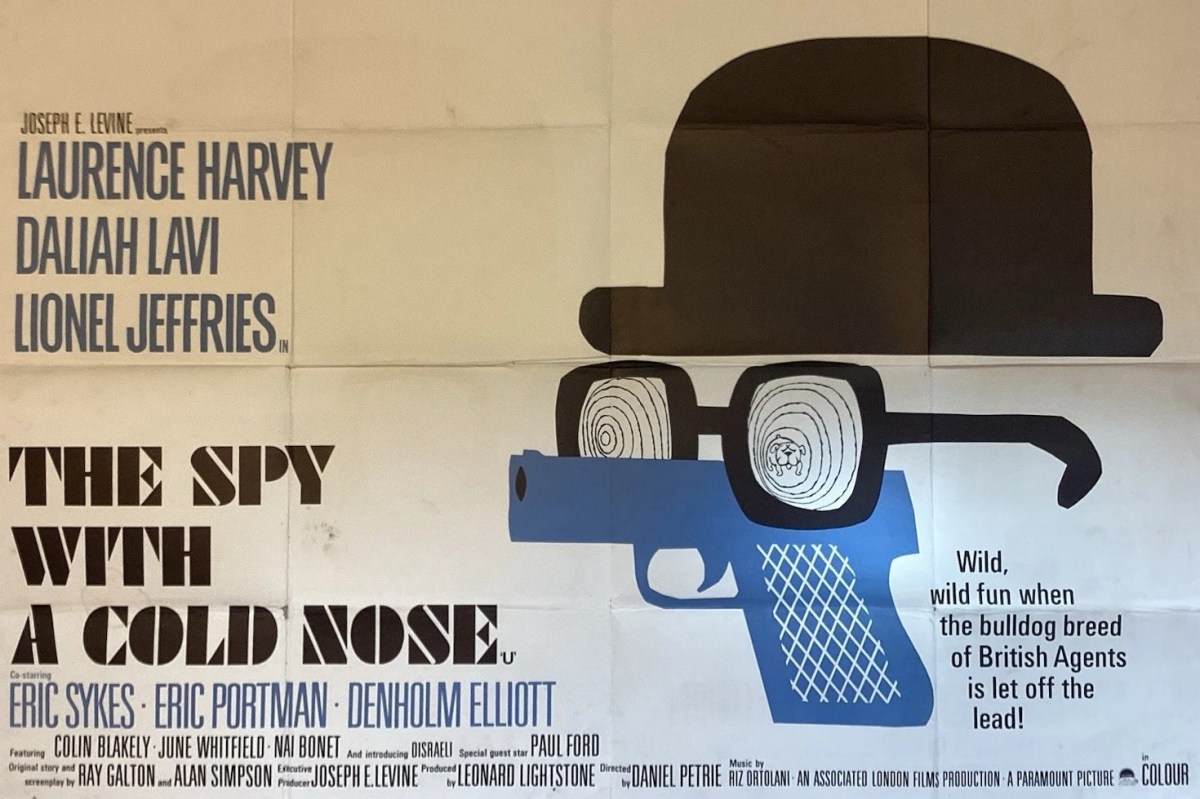
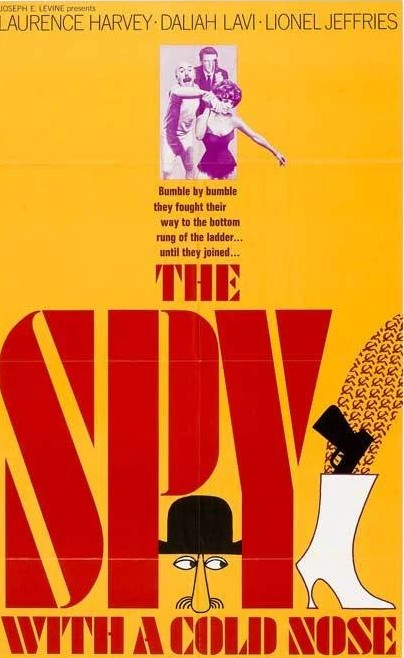
Producer Joseph E. Levine came up with the poster
without close examination of the picture’s content.

Of the six survivors of this crash, Sturdevan (Nigel Davenport) decides his leadership status entitles him to sole claim over the only woman, Grace (Susannah York). But when he accepts the genuine responsibilities of leadership, he sets off across the desert to get help. That leaves Grace to fall into the hands of O’Brien (Stuart Whitman), so alpha he could be auditioning for Tarzan, shirt off all the time.

It soon transpires O’Brien has a rather unusual idea of survival – getting rid of his companions so that he will have no shortage of food until rescue arrives. It takes a while for the others to catch on to his plan. And then rather than common cause and camaraderie, it becomes every man/woman for himself, a battle for individual survival, a return to the primeval.

The most likely challenger to O’Brien’s authority is Bain (Stanley Baker), but he has been badly injured in the crash and no match for the other man’s brawn or his weapon. So it becomes a game of cat and mouse. Except it’s in the desert, it’s the law of the jungle and the rule of autocracy brought home with sudden force to people accustomed to the comforts of civilization and democracy.  

The movie’s structure initially takes us down the obvious route of common purpose – Grimmelman (Harry Andrews) knows enough survival lore to devise a method of water transportation that would permit the group to escape the desert, Dr Bondrachai (Theodore Bikel) formulates  a method of trapping lizards, and O’Brien, at least at first, appears willing to take on the role of protector, warding off baboons with his gun.

The change into something different is subtle. While the others are desperate to escape, it becomes apparent that O’Brien has found his metier. We discover little about the lives of each individual prior to being stranded. Whatever O’Brien’s standing in society, it would not have been as high as here, where his superior skills stand out. Reveling in his supremacy, he doesn’t particularly want to go home.

Like any psychopath Bain knows how to manipulate so at first it seems his decisions are for the greater good. And only gradually does it emerge that he blames others for his own mistakes and intends to eliminate his rivals for the food supply one by one. Because he is so handsome, it is impossible to believe he could be so devious or so evil.

The three principals all play against type. Stanley Baker (Zulu, 1963) and Stuart Whitman (Murder Inc., 1960) made their names playing heroic types. Here Baker is too ill for most of the picture to do any good and Whitman plays a ruthless killer. But Susannah York (Sebastian, 1968) is the big revelation. Audiences accustomed to her playing glamorous, perhaps occasionally feisty, gals will hardly recognize this portrayal of a coward, not just abjectly surrendering to the alpha male but seeking him out for protection and guilty of betrayal.

Even though this picture is set in the days before gender equality and the independent woman was a rarity, Grace’s acquiescence to the powerful male is disturbing, in part because it takes us back to the days when a woman was impotent in the face of male dominance. Such is York’s acting skill that rather than despise this woman, she earns our sympathy.

While for the most part Harry Andrews (Danger Route, 1967) and Nigel Davenport  (Sebastian, 1968) appear in their usual screen personas of strong males, here their characters both are changed by the circumstances. Theodore Bikel (A Dog of Flanders, 1960) has the most interesting supporting role, the only one who takes delight in the adventure.

Director Cy Endfield (Zulu) – who also wrote the screenplay based on the William Mulvehill novel – delivers a spare picture. There is virtually no music, just image. Aerial shots show tiny figures in a landscape. The absence of character background frames the story in the present. As a reflection on the animal instinct, how close to the primordial a human being still operates, no matter how enlightened, this works exceptionally well, and melds allegory with thriller.

Man in the Dark / Blind Corner (1964) ***

Hammer Scream Queens rarely make an impact outside the genre, so it comes as something of a surprise to find Barbara Shelley effortlessly making the transition from The Gorgon (1964) to a slinky femme fatale spinning a deadly web around three men. While British femme fatales tend not to go all-out full throttle in terms of seduction and revenge, that suits the set-up here which is distinctly slow-burn. In fact, you might be persuaded to accuse the production of time-wasting or padding-out the story with its occasional diversions into song numbers (though that is a trope of these B-features) until you discover later on that there’s a very good reason for listening to the dulcet tones of pop singer Ronnie Carroll.

While there are echoes of Faces in the Dark (1960), blind composer Paul (William Sylvester) here is a far more sympathetic character especially once audiences latch on to what he as to put up with. And where Wait until Dark (1967) majors on terror, here the approach is much more subtle. And while audiences might wince at Audrey Hepburn’s predicament, here they will be appalled to see Paul’s wife Anne (Barbara Shelley) virtually taunt him by not just parading her secret lover Ricky (Alexander Davion), a penniless artist, but caressing him and pecking his cheek with kisses as if to test her husband’s radar.

Not only is Paul the forgiving type – turning a blind eye to his wife’s regular late nights – but he is devoted to Anne and considers himself lucky that she has stuck by him and it never occurs to him that his wealth plays a significant part in that bargain, Anne, a little-known former actress, unlikely to enjoy such bounty any other way. He’s so in love with his wife that he knocks back his secretary Joan (Elizabeth Shepherd) who has a good idea her employer is being played for a fool.

Under the guise of Ricky painting her portrait, Anne manages to legitimately spend a considerable amount of time with her lover and fine-tune her plans to rid herself of Paul. There’s a fairly easy option. Paul is an alcoholic and given to standing in an open balcony. He could easily lose his footing and topple over should there be someone around to give him the initial nudge.

Ricky is pencilled in as the murderer. And though he initially baulks at the idea, the prospect of both losing Anne and resolving at the same time his financial problems is too tempting. By now, Paul is aware of the tryst, having been alerted to the couple smooching in a restaurant, by his best pal and manager Mike (Mark Eden). Once we realize that Paul has been taping his wife’s telephone conversations, you are misdirected into thinking he will be better prepared. But this isn’t America or even sleazy Soho and there’s not a gun to hand or even a knife so Paul is vulnerable to an assailant and even as weak-minded an individual as Ricky seems to grow in confidence the minute the tussling begins.

Even then Ricky is so incompetent Paul needs to coach him into how to get away with the perfect murder and once we get to this stage it’s clear there’s something else going on and we’re in for a torrent of twists, delectably delivered. Ricky is informed that he’s a patsy, that Anne is in love with Mike and that in a courtroom she will act her socks off as the innocent victim of an overzealous lover – “a choked sob will escape her –  she did that in The Act of Cain” or “she might fall into a crumpled but not unattractive faint” as she did in Murder Undaunted.”

When Anne arrives, accompanied by Mike, to check on Ricky’s handiwork, the game is clearly up. But Paul has police hidden in the bedroom to hear what amounts to Anne’s confession. All three are locked up and Paul heads off into the sunset with his secretary.

Barbara Shelley creates a sizzling tension of her own and is a superb femme fatale, dangling three men on a string. Alexander Davion (Paranoiac, 1963) and Mark Eden (Curse of the Crimson Altar, 1968) don’t get a look-in though simply by being stoic and then clever William Sylvester (Devils of Darkness, 1965) manages to hold his own.

Quite a different proposition to Tomorrow at Ten (1963), also helmed by Lance Comfort, where the tension is upfront. You’d say this was a weighted piece of direction, with much of the pressure in the early stages reliant on whether Paul will see through his wife. Those scenes where she toys as much with her lover as her husband are unique. Written by the team of James Kelly and Peter Miller (Tomorrow at Ten) plus Vivian Kemble (Olympus Force, 1988).

Takes a while to come to the boil but well worth the wait.

Catch it on Talking Pictures TV under the title Blind Corner.

The Executioner (1970) ****

Minor gem. One of the espionage films of the era ignored by audiences because it lacked the verve of James Bond, no car chases or bedhopping hero to maintain interest when the narrative stretched credulity. Ignored by critics because it starred the vastly underrated George Peppard. Yet if you wanted an actor to show pain, to suffer from humiliations to his dignity, there was no one better, in part because on screen (and apparently in real life) arrogance was key to his persona. Here, you can add confusion to that mix of unwelcome emotions.

Beginning a scene with the aftermath of slaughter has become a modern thriller trope – see The Equalizer 3 (2023),  The Accountant 2 (2025) for the most recent examples –  but this is where the idea began and it’s how this picture opens, the only survivor of the massacre being the wife Sarah Booth (Joan Collins) whom our hero John Shay (George Peppard) covets. An immediate flashback shows them consummating their love. So you’re guessing there’s something of the James Bond in Shay, carrying on an illicit love affair.

But in fact that’s just one of the clever titbits of misdirection director Sam Wanamaker (The File of the Golden Goose, 1969) throws our way. And, gradually, we realize this is not so much about dirty dealings in the espionage business, the usual hunting down of a double agent, our hero clashing with disbelieving and frosty upper class bosses, but more about how the flaws in human nature turn characters inside out.

It’s no surprise that Shay is an outsider, not with that American accent standing out a mile in the British secret service run by the cut-glass accents of the likes of Col Scott (Nigel Patrick) and Vaughn Jones (Charles Gray). He’s not a member of the club, old boy. He bristles at not belonging – “belong to me!” wails girlfriend Polly (Judy Geeson). And he’s been passed over  by love of his life Sarah for another agent Adam Booth (Keith Michell) not because the latter has wealth and status but because Shay’s mind is too often elsewhere.

Though you are initially led to believe that Shay is having an affair with Sarah, that turns out to be far from true, although the glances he casts at her are enough to make Polly think they still are. And part of the reason his superiors distrust his assertion that Adam is a double agent is because they think he just wants rid of his rival so he can make another play for his former lover.   

Shay is so convinced that he is right that he gets Polly, who also works in the secret service but in the backroom department, to sneak out top secret files. When he stitches up enough information to make the case against Adam, it backfires and he’s suspended. But then, egged on by a discovery by top boffin Crawford (George Baker) working on some top secret stuff,  he decides to kill Adam and chuck the body out of a plane into the English Channel – hence becoming the executioner of the title.

Then the twist is truly in when Shay takes Adam’s place on a mission to Greece, which has also been planned as a second honeymoon for Adam and Sarah. This latter fact doesn’t dissuade Shay from making a romantic play for Sarah. However, there are nefarious dealings afoot espionage-wise but in what proves the first of many miscalculations Shay comes unstuck and is beaten up by the opposition and Sarah kidnapped. The ransom the Soviets demand is Crawford.

The massacre that we saw at the start solves that problem.

But it turns out Shay has let desire for Sarah muddle his brain for Adam was not a secret agent. Shay has been further duped into that belief by Crawford who also has romantic designs on Sarah, though it has to be said in her defense that Sarah has encouraged neither of these potential suitors.

There is one final twist but that’s just another nail in the coffin.

So what sets out to be a different kind of spy thriller turns into the polar opposite of what audiences might have expected, playing more on the human frailty of the hero than hitherto in the genre.

George Peppard is excellent, especially when expressing emotional pain and confusion, continuing a superb run of acting roles – ignored by the critics of course but tossing his screen persona away – that ran from Rough Night in Jericho (1967) and P.J. (1967) to Pendulum (1969). Judy Geeson (Brannigan, 1975) has the better female role as the disgruntled but faithful girlfriend. Aside from the occasional acidic remark, Joan Collins (Subterfuge, 1968)  is strictly there for the glamor.  Written by Jack Pulman (Best of Enemies, 1961) from a story by Gordon McDonnell (Shadow of a Doubt, 1943).  

Well worth a look.
Doctor in Trouble (1970) **

Limp ending to a fine series. Torpedoed by too many oddities. Leslie Philips returns in the top-billed role, but he’s not playing the suave Dr Gaston Grimsdyke of the previous iteration, but instead a more hapless version of Dr Paul Burke, the character he played a decade before in Doctor in Love (1960).

Confused? You will be. It’s clearly set up for James Robertson Justice to play two characters, a la Sinners (2025), his usual Sir Lancelot Spratt and his presumably identical brother, ship’s captain George Spratt. But Justice fell ill and the naval part was taken by Robert Morley, of similar bombastic ilk, but in diction more long-winded and fluffy and lacking the bite of the surgeon.

In the last two episodes I’d seen there had been an obnoxious salt-of-the-earth character who turned out to be surprisingly artistic. Here, we have to settle for the nouveau riche Pools-winner (a gambling game of the era) who is channeling his inner Sidney James, all leer and not much else. And if you want proof that it’s never a good idea to hire a television personality merely because he has a large following, look no further than Simon Dee.

Several notions will not endear themselves to the contemporary audience – the cross-dressing, the cliché gays, and the Englishman in brownface playing an Indian. That’s not to mention the pratfalls and endless falling into swimming pools.

There’s even less of a plot than in the last outing. Dr Burke (Leslie Philips) accidentally stows away on a cruise ship after pursuing model girlfriend Ophelia (Angela Scoular) who’s working there. He also comes up against actor Basil Beauchamp (Simon Dee), an old school bete noire, who plays a doctor in a television soap.

Dr Burke is hounded by the ship’s Master-at-Arms (Freddie Jones) so occasionally it lurches into farce. And there’s any number of sexy debutantes either desperate to climb into bed with the TV star or hook the gambler.

If it had settled on one tone – slapstick, sex comedy or farce – it might well have worked even in the face of the poor script. Cor blimey, there’s even some fleeting nudity from Ophelia and Leslie Philips and a striptease that’s way out of place for what was originally a much gentler comedy than the Carry Ons. In terms of style it’s all over the place and not a single member of the cast is appealing enough to rescue it.

Had Leslie Philips been in traditional “ding-dong” comfort zone it might have passed muster but here he’s just the butt of all the jokes without generating an ounce of sympathy. Robert Morley (Some Girls Do, 1969) isn’t a patch on James Robertson Justice. Angela Scoular (On Her Majesty’s Secret Service, 1969) seems off-key, Freddie Jones (Otley, 1969) as if he’s in a different picture while the constantly leering Harry Secombe (Oliver! 1968) belongs in a Carry On. Graham Stark (The Picasso Summer, 1969) is deplorable as the Indian waiter Satterjee.

The only person to rise above their station is Joan Sims (Doctor in Clover, 1966) who makes a cameo appearance as a Russian nurse. In bit parts you might spot Yutte Stensgaard (Zeta One, 1969) and Janet Mahoney in her debut.

Directed as usual by Ralph Thomas. Script by Jack Davies based on a Richard Gordon bestseller.

After this, the series was reimagined for television and returned to its gentle comedy roots.

For completists only – and even then…

Discover WordPress

A daily selection of the best content published on WordPress, collected for you by humans who love to read.

The Atavist Magazine

by Brian Hannan

WordPress.com News

The latest news on WordPress.com and the WordPress community.