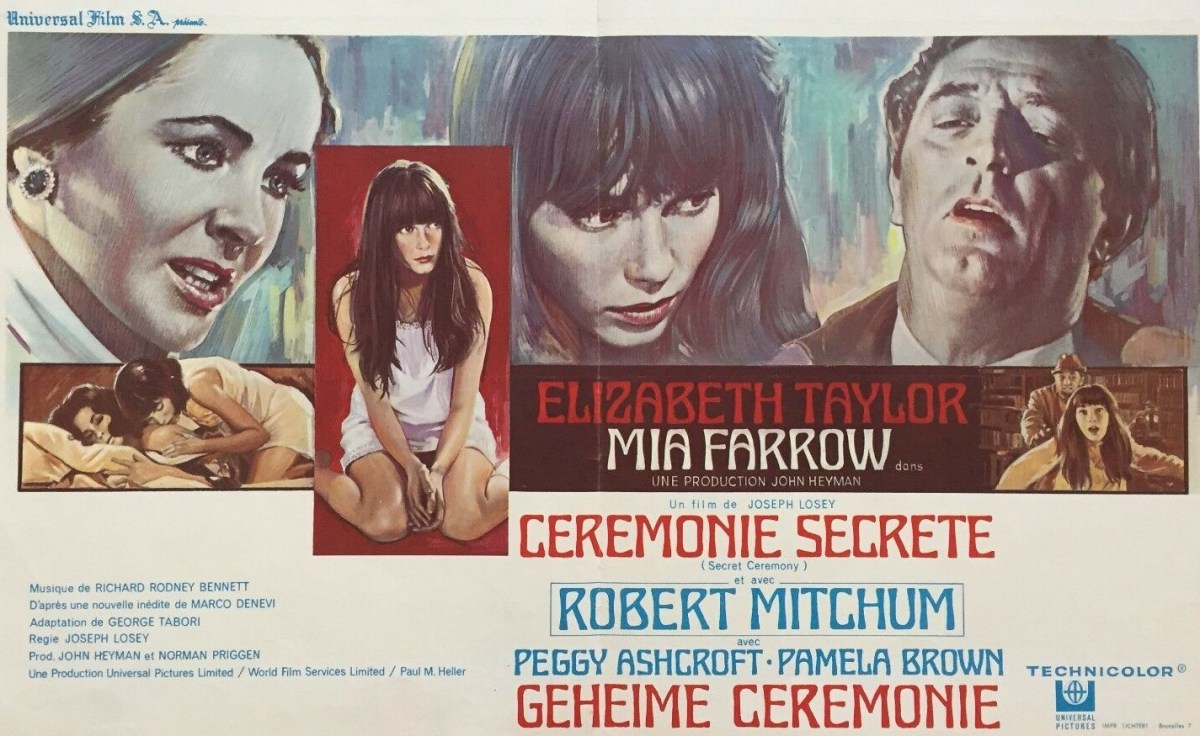
Behind the Scenes: “Secret Ceremony” (1968)

I was probably as surprised as anyone to discover that far from being a flop, Secret Ceremony was in fact a hit, taking $3 million in rentals in the  U.S., ranking among the Top 20 foreign movies at the French box office, and hitting the target in Italy, Germany and Australia. Yet, outside of France, it was universally derided by the critics.

Joseph Losey (The Servant, 1964) held the unusual position of being a cult director working in Britain. He was the “object of a vociferous cult….his following grown in scope and size with each new film” and, conversely, as his popularity among the arthouse fraternity increased, he attracted more critical ire. Courting popularity by entering the spy genre with Modesty Blaise (1966) and linking up with the Elizabeth Taylor/Richard Burton box office colossus for Boom! (1967) seemed to go against the critical grain. Losey ascribed the critical coruscation Boom! received as less to do with the merits of the film itself than “people using the opportunity to launch personal attacks on the Burtons.”
Boom! had been packaged John Heyman, who coupled acting as agent for Burton and Taylor with being the producer, not necessarily a good combination. Universal was convinced it had “Virginia Woolf in color,” a reference to the previous enormous hit, although the box office told a different story. Jay Kanter, Universal’s London production chief who greenlit the project, commented: “When the Burtons were involved a lot of my judgement was colored by the magnitude of the star she (Taylor) was considered to be.”

So it was something of a surprise to find Losey and Taylor teaming up again for Secret Ceremony. Of course, it may have been the money, Taylor at this point still holding out for a million-dollar purse. Heyman said, “We were regarded as whizz-kids just for making two consecutive films with Elizabeth Taylor and bringing them in under budget.”  

Losey’s world reflects a “highly selective form of naturalism.” Except for Accident (1966), from Sleeping Tiger (1954) through to Secret Ceremony, Losey worked with the same design consultant/production designer Richard MacDonald whom the director treated as a sounding board, to “test (ideas) and reject them in the telling.” This is a director for whom “patterned exoticism is extraordinarily precise.” A more important collaborator had been playwright Harold Pinter who had fashioned The Servant (1963) and Accident, bringing to both films his distinctive ear for dialogue. He was hardly required for Boom! whose screenwriter was the even more famous playwright Tennessee Williams (A Streetcar Named Desire, 1951) and for Secret Ceremony Losey went elsewhere for his screenwriter.

Losey was among the string of American talent who taken refuge in Britain in the wake of the anti-Communist hysteria of the late 1940s/early 1950s – others included producer Carl Foreman (The Guns of Navarone, 1961), and directors Cy Enfield (Sands of the Kalahari, 1966) and Edward Dmytryk (Mirage, 1965). By the time of Secret Ceremony, Losey had been working in Britain for nearly a quarter of a century and established himself as a director of distinctive vision, a critical fave in his adopted homeland, wildly appreciated by the French, with an occasional box office home run.
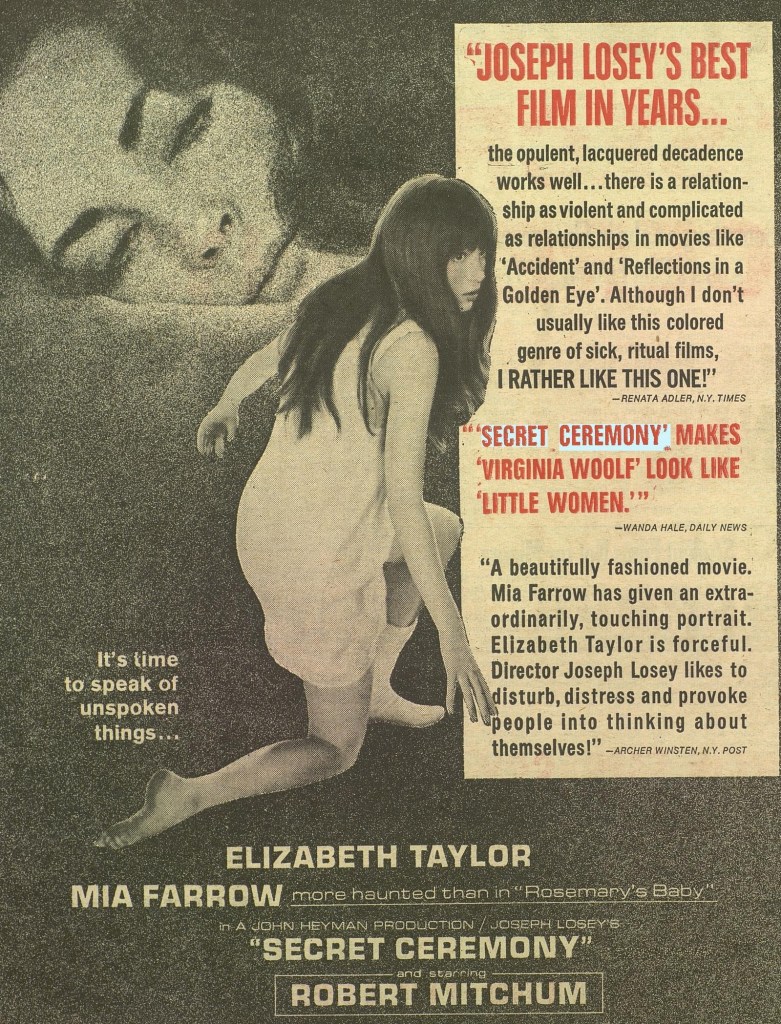
But although regarded as a British film-maker, Losey made Secret Ceremony – and Boom! for that matter – exclusively with Hollywood money, the budget 100 per cent supplied by Universal, that studio having decided that anything coming out of Britain would appeal to younger audiences. There was an untapped pool of talent available in British television who could be hired for substantially less than their U.S. counterparts. In three years Universal’s London production unit, headed by Jay Kanter, spent $30 million on a dozen projects. The biggest budget was allocated to Boom! with $3.9 million followed by $3.5 million to The Countess from Hong Kong (1967) starring Marlon Brando and Sophia Loren.  The Night of the Following Day (1968) cost $1.5 million as did Fahrenheit 451 (1967) and Three into Two Won’t Go (1968). Secret Ceremony came in at $2.45 million.

Robert Mitchum and Joseph Losey went way back to a time in Hollywood when both were working their way up the RKO ladder. As well as Losey, Mitchum had been friends with many who would fall foul of the blacklist including screenwriter Dalton Trumbo, Dmytryk and Howard Koch (Casablanca, 1942). When Mitchum’s dalliance with drugs brought him a jail sentence, Losey visited him and brought him chilli from a famed restaurant.

Mitchum was recommended for the role in Secret Ceremony by Roddy McDowell, a friend of Taylor, who had been working with the actor on Henry Hathaway western Five Card Stud (1968). Mitchum received the job offer while on holiday in Mexico. For two weeks’ work he would earn $150,000. The role itself was scarcely onerous, drawing on aspects of the loathsome character he had created for Night of the Hunter (1955), but it did require an English accent of some kind and to his amusement Mitchum found himself on the telephone, like a salesman listing available product, going through the variety of accents he bring to the part.

Whether it was almost having to sell himself to the director or some previous incident, Mitchum and Losey did not resume their friendship. In fact, their relationship was the polar opposite. “He was very unpleasant,” recalled the director, “it was extremely hard for me to work with him.” Losey never found the source of Mitchum’s contempt. “In some curious way I must have made some mistake with him; I don’t know what it was.” Even attempts to recall Mitchum’s collaboration with Charles Laughton on Night of the Hunter failed to break the ice. Losey believed that Mitchum played tough to mask “an intense sense of failure.”

Mitchum wasn’t above sneaking away from the set. On one occasion taking himself off to visit old friend Robert Parrish, he knocked back some tequila and complained about the movie. On the Holland section of the shoot, Mitchum got into a food fight with a hotel diner. In the end, Losey was so disturbed by Mitchum that he was grateful when he departed as per contract despite the fact that some scenes had not been shot, including, according to the actor, the bathtub sequence, which would have accentuated the incest theme rather than the hint of lesbianism. Mitchum’s epitaph to the movie was that he talked Mia Farrow out of True Grit (1969) claiming Hathaway was a terror to work with.

The bath scene turned out to be the cause of some marital anguish. The set was cleared for its shooting of the scene after Taylor froze on emerging from her dressing room to see so many people gathered. But this was hardly Taylor at her beautiful best as she had been gaining weight. Even so Losey filmed her at times as though she was the grand Hollywood star with hair framing her face and the camera glimpsing her cleavage, but at other times her weight was a source of determining her character, when she eats with her mouth full and belches.

Halfway through filming Taylor was afflicted by severe physical pain and she was rushed to hospital for a hysterectomy, an operation that lasted over three and a half hours. Complications followed the surgery and she was given drugs that caused her to hallucinate. Writing in his diaries, Richard Burton noted: “This is the first time I’ve seen a loved one in screaming agony for two days, hallucinated by drugs, sometimes knowing who I was and sometimes not, a virago one minute, an angel the next.” She went from commanding him to leave the room to crying out for him to return. Sometimes she believed she was on board their yacht, other times that a film was playing on the switched-off television set.

The loss of her uterus may have affected her performance since in the film she plays a mother who has lost a child and in reality was a woman who had lost the ability to have another child.

The film exacerbated the tensions in the Burton-Taylor marriage. It was usually Taylor who was the one who had to keep a watchful eye on her partner in case he strayed. In this case, ironically, it was Burton who exhibited the jealous streak. The way Losey had whispered in the actress’s ear to build up her confidence during the bath scene while getting rid of extraneous crew found its way back to Burton who misinterpreted the action as intimacy.  “My wife and Joe Losey are having a professional love affair,” he claimed. He spent a lot more time than usual on the set of his wife’s film. He even offered to take on the Mitchum role.

Losey had long been fascinated by a strange-looking house in West Kensington, London, and managed to hire it for the shoot. Debenham House in Addison Road, between Holland Park Avenue and High St Kensington, is one of a handful of truly Gothic London buildings. The church used was in Little Venice, St Mary Magdalene in Rowington Close, also in London, and the antique shop was located at the corner of St Stephen’s Mews and Westbourne Green. When the production shifted to Holland it was to the coastal town of Noordwjik with use made of the Grand Hotel there.  

By the time the film opened, Taylor found herself in the middle of a storm over foul language (“gutter talk” in Variety parlance) for which she was seen as the “chief exponent.” It was an ironic position for Taylor to find herself in given her expletive-ridden performance in Who’s Afraid of Virginia Woolf (1966) had not only been critically acclaimed and a huge box office hit but seen as helping to break down the censorship barriers. However, it appeared that the “urination expression” and a word that was prefixed by “bull” were beyond the pale and Variety proclaimed that it was “evidently assumed that if a star of her (Taylor’s) magnitude can be gotten to speak the words, everyone else – actors, actresses, distributors, exhibitors and the public – will be accustomed to strong lingo in pix.” It was hardly coincidence that on the same day that this article was the leading story on the trade paper’s front page that inside six out of seven New York critics gave Secret Ceremony a drubbing, the exception being Renata Adler of the New York Times who called it Losey’s “best film in years.”

Even producer Heyman had his doubts about the material. “It should have been the story of two people who need and trust each other,” he said, “until one leans on the other a little bit more than she should. Unfortunately, the kind of sympathy which Losey shows for people in real life was absent from the relationship which is what I think made it unacceptable.” He summed up, “A cold picture.” (This has the taint of someone trying to work out why the film was a critical failure because otherwise I think Heyman got it exactly right for the movie I saw I did not view as cold nor unacceptable.)

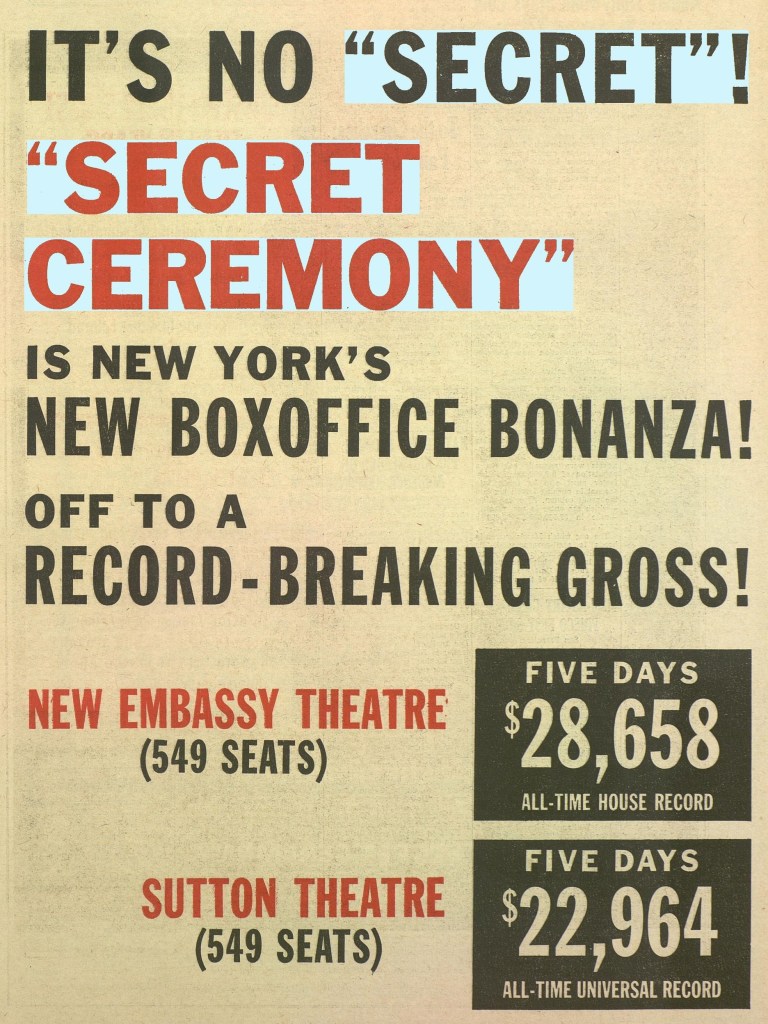
And neither, strangely enough, did the public. Although making a poor showing in Britain, it was not a box office disaster. That was averted by astute marketing, the potency of the stars and a public who, not for the first time, ignored the critics.  The movie broke records when it opened at the New York arthouse pair, the Sutton and the New Embassy, and further afield in cities like Dallas. Arthouse success would have been anticipated but nobody would have expected that when it went wide in New York the second week improved upon the first. As well as a decent showing in the States, it hit the ground running around the world, and “ought to be credited” as one of Universal’s “most successful pictures from either domestic or foreign source.” In the French box office rankings, it placed above The Detective (1968) and Hang ‘Em High (1968) and just below The Thomas Crown Affair (1968). Acclaimed by that country’s critics, the Academie du Cinema named it best foreign film with Taylor and Farrow taking the gongs for best foreign actresses.

When Universal sold the movie to television for $1.25 million, a fee which certainly provided the picture with a decent extra profit margin, fourteen minutes were cut out and replaced by a 500 lines of extra dialog and a filmed discussion of the psychological issues raised, prompting Losey to demand his name be removed, claiming it “exactly reversed the meaning an intention of my film.”

SOURCES: Lee Server, Robert Mitchum, Baby I Don’t Care, (Faber and Faber, 2001) p169, 232, 509-512; Sam Kashner & Nancy Schoenberger, Furious Love, (JR Books, 2011)p240, 242-243,2; Alexander Walker, Hollywood England, (Orion Books, 2005) p200, 345, 354-257; “Screen: Secret Ceremony,” New York Times, October 26, 1968; “Joseph Losey Following Has Grown,” Box Office, October 28, 1968, pE1;   “No End to Gutter Talk,” Variety, October 30, 1968, p1; “N.Y. Critics This Week: Ouch,” Variety, October 30, 1968, p12; “Secret Ceremony Sets House Mark at Sutton, New Embassy,” Box Office, November 4, 1968, pE2; “Secret Ceremony Setting New Records in Dallas,” Box Office, January 13, 1969, pSW1; “This Week’s N.Y. Showcases,” Variety, February 5, 1969, p9; “Jay Kanter,” Variety, February 26, 1969, p78; “Kanter No Martyr,” Variety, March 19, 1969, p26; “Ceremony, Z Nab Kudos,” Variety, May 7, 1969, p107; “French Filmgoing,” Variety, January 28, 1970, P27; “Paris First Runs,” Variety, April 29, 1970, p76;  “Losey Wants His Credit Blipped from Vidversion of U’s Secret Ceremony,” Variety, September 16, 1970, p70; “All-Time Film Rental Champs,” Variety, October 15, 1990, pM184.

The Box Office Equalizer: Part Three

Trade magazine Variety’s innovative weekly Top 50 based on grosses that had begun in April 1969 changed the way exhibitors regarded box office. Instead of waiting till the appearance of the magazine’s year-end round-up which was limited to around the top 100 movies, cinema owners now got a week-by-week snapshot of how new movies were playing. All box office figures had previously concentrated on the big movies of the day – the roadshows and pictures with big stars – that opened at the first run city center houses that were easier for Variety to track. The switch to a computerized system made it more feasible to examine the takings from hundreds of cinemas not necessarily showing the big movies sucking up all the publicity oxygen.  

An examination of the films hitting the coveted number one position in the weekly chart illuminated the changes in the business. For a start, to reach number one a movie had to be showing on over 30 cinemas, but this could rise to 100-plus, and began to show the benefits of the wider first run release. This was also really the beginning of the per-screen average.  High figures could be achieved by recruiting a large number of screens but exhibitors could easily disseminate the information and decide whether the number of screens massaged the figures or showed how successful a film really was. And this was the start of another promotional ploy, the business of a movie holding onto to the top spot for a second, third or even fourth week, proof a movie had “legs.”

The Year’s weekly Top Ten performers make interesting reading. The biggest figures posted in any one week during 1969 were for On Her Majesty’s Secret Service which hauled in a massive $1.22 million (equivalent to $9.6 million today) from 99 screens – a $12,323 screen average. This was followed by Goodbye, Columbus with $935,000 from 65 screens, a higher screen average of $14,384. Next came The Love Bug with $724,000 from 76 houses ($9,526 average). Another week of Goodbye, Columbus shouldered $681,000 from 60 ($11,350).

The Love Bug had a further two weeks at the top, pinching $658,000 from 117 ($5,623) and $633,000 from 44 ($14,386).  Seventh-best week was taken by The Killing of Sister George with $621,000 from 70 ($8,871). Snatching eighth spot was Fanny Hill with $625,000 from 49 ($12,755). Ninth was Krakatoa, East of Java with $621,000 from 68 ($9,132). Last place in the top ten went to I Am Curious, Yellow with $594,000 from 52 ($11,423).

From the exhibitor perspective there were two notable points. The first was the per-screen average. Secondly, cinema bookers could not fail to notice not only that two of the top ten in weekly gross and three of the top five films in terms of screen averages went to sexploitation pictures.

It was soon abundantly clear that producers could sell their pictures to sometimes doubting exhibitors by the simple process, not so much of bombarding them with adverts and Pressbooks extolling a film’s potential, but of getting a movie into sufficient theatres for the box office figures to tell their own story.

Although the other big films expected to top the weekly chart did achieve that aim – among them True Grit (twice), Butch Cassidy and the Sundance Kid (also twice), Ice Station Zebra, Easy Rider (three times), Midnight Cowboy, Oliver! and Paint Your Wagon – there were as many unfancied movies perching atop the weekly pile.

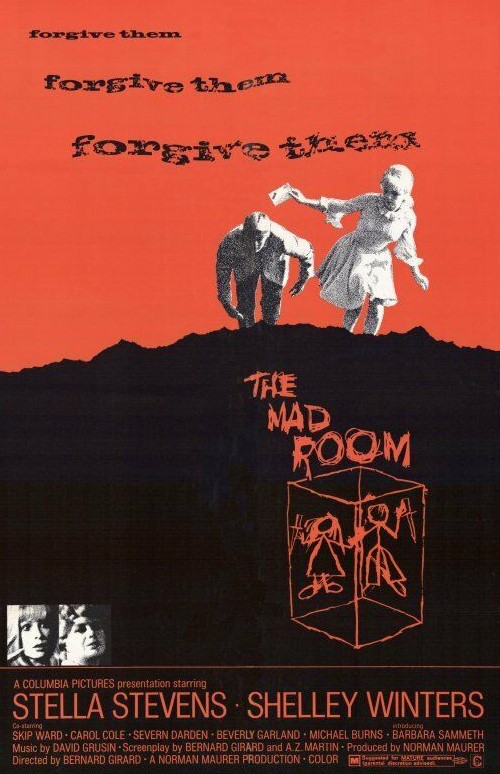
Apart from the sexploitation films and The Killing of Sister George, others holding down the number one spot for a week were British star Carol White in Mark Robson thriller Daddy’s Gone A-Hunting ($544,000 from 71), What Ever Happened to Aunt Alice ($540,000 from 48), Gordon Parks’ bittersweet drama The Learning Tree ($401,000 from 49), Stella Stevens and Shelley Winters in horror film The Mad Room ($283,000 from 38) and reissues Bonnie and Clyde/Bullitt ($546,000 from 81) and The Longest Day ($501,000 from 76).

Distributors of low-budget pictures used to have to take ads out in the trades to prove to potential customers that their movies were pulling in decent business. Now they had better proof, from the most important source of all, Variety, whose box office figures were scanned by every cinema manager in the country. Once a week without a distributor putting a hand in their advertising pocket there was all the promotional evidence they needed.  

This was the second sea change in the way cinema owners perceived the business, the first being the opening up of the collection of box office figures through Variety’s annual report on upwards of 1,000 titles. To have figures at your finger tips for the price of a subscription to a newspaper was a game changer.

But there was yet another game changer to come. 

SOURCES: The Top 50 Grossers chart appearing weekly in Variety from April to December 1969.

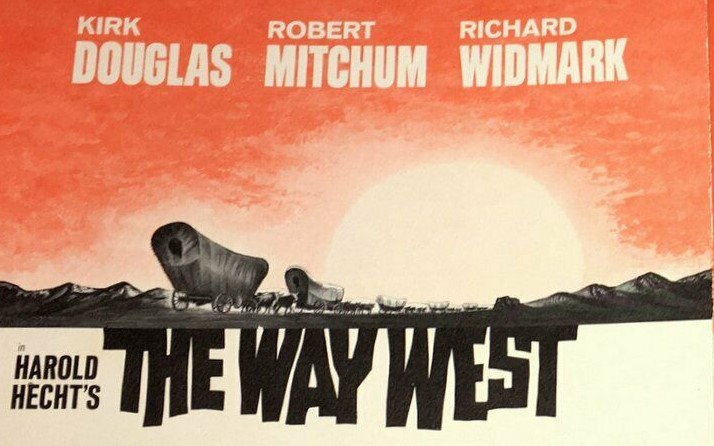
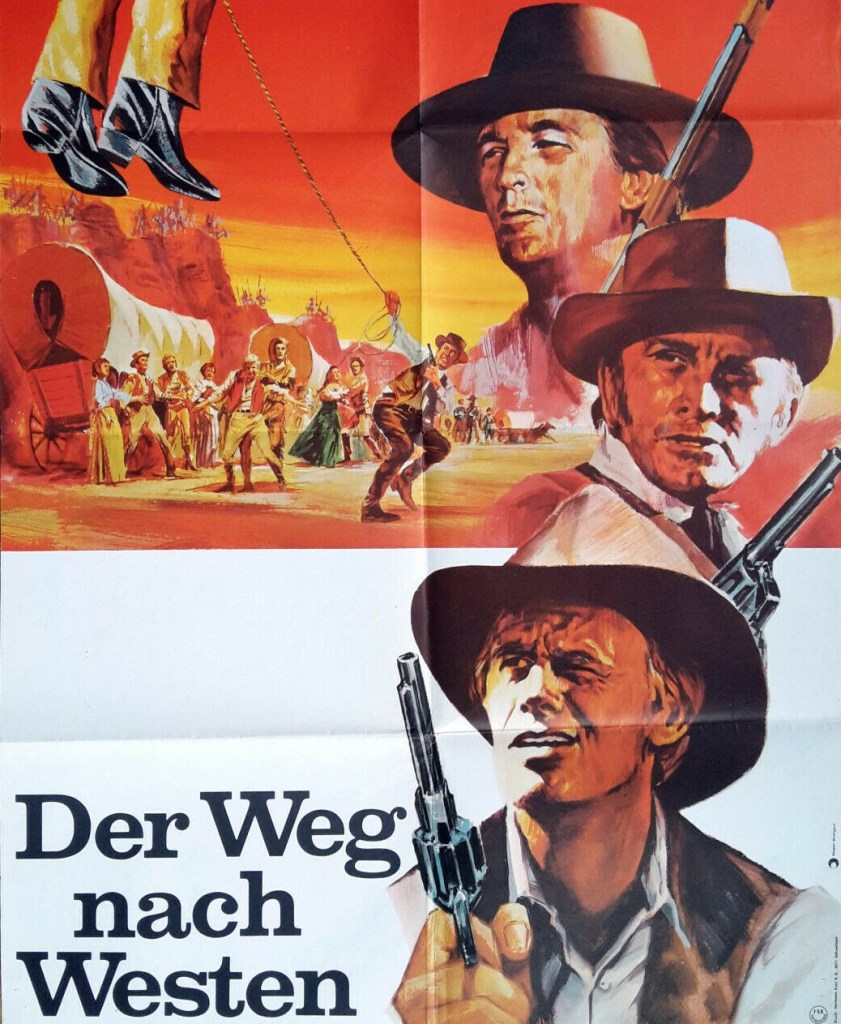
Behind the Scenes: “The Way West” (1967)

As you might expect with a title like this John Wayne was in the frame, at least at the start. But when Burt Lancaster’s production outfit Hecht-Lancaster bought the property that was the end of that casting idea. Hecht-Lancaster was at its peak in 1956, each of its first 11 pictures turning a profit, and just signed up to a $40 million three-year deal with United Artists. Biggest project on the table: $5 million for The Way West with a dream team of Lancaster, James Stewart and Gary Cooper and a script from Clifford Odets (The Sweet Smell of Success, 1957). But by 1959 the dream had soured, with $545,000 already shelled out on the western with no sign of a start date. A year later the project was shelved. When Harold Hecht split from Lancaster, the rights reverted to United Artists.

Hecht’s initial efforts as a solo producer had not paid off, Taras Bulba (1962), Flight from Ashiya (1964), both starring Yul Brynner, and Tony Curtis comedy Wild and Wonderful (1964) all covered in red ink, before suddenly resurfacing with the hit Cat Ballou (1965), making him imminently more bankable than before. However, given the impact music had in Cat Ballou, Hecht hankered after something in the same vein, except bigger, and bought the rights to Finian’s Rainbow, a Broadway hit from 1947. When casting issues caused delay, Hecht signed a one-picture deal with United Artists for The Way West. The studio had such high hopes for the movie that plans were made for its world premiere to be held at the Houston Astrodome, a first, and it was considered a natural for roadshow treatment.

A substantial rejig was required of the source material, the Pulitzer-Prize-winning novel by A.B. Guthrie, by screenwriters Ben Maddow and Mitch Lindemann, not least to ensure that the character played by Kirk Douglas remained with the wagon train until the end of the trail, unlike in the book. Andrew V. McLaglen, with three box office western hits behind him in McLintock (1963) starring John Wayne and Maureen O’Hara, Shenandoah (1965) with James Stewart and The Rare Breed (1966) co-starring Stewart and O’Hara, was first choice to sit in the director’s chair.

Charlton Heston (El Cid, 1961) was approached to play the lead of Senator Tadlock. When he turned it down, Kirk Douglas signed on for his first western in five years – although his next would also be a western, The War Wagon (1967) with John Wayne – Robert Mitchum (Villa Rides, 1968) was offered the choice of either scout Dick Summers or firebrand Life Evans. At the end of a long lunch with Hecht and McLaglen, Mitchum could not make up his mind and the producer and director assigned him the role of the scout.

“I’m awfully glad it worked out the way it did,” recalled McLaglen, “because Widmark was perfect for the other part and Mitchum was perfect for the scout.” It might not have been Widmark because Max von Sydow was also reputedly offered a part. Von Sydow was too big a star to play any of the other supporting parts and the part assigned to Widmark was Scandinavian so in that sense an ideal fit.

While Widmark did not attempt a Scandinavian accent, Mitchum spoke Lakota, apparently with a decent accent, in several scenes where he had to communicate with Native Americans. He didn’t learn the language, as modern actors might do, but simply recited the words spoken to him off-camera.  Mitchum and Douglas had acted together in Out of the Past (1947), where the former had the larger role, and, while not sharing scenes, appeared in The List of Adrian Messenger (1963), where the billing was reversed. Although not in a directorial capacity McLaglen had worked with Mitchum on Blood Alley (1956) before the actor was fired.

It was an arduous shoot, virtually the whole picture shot as exteriors, in Tucson, Arizona, and in various locations in Oregon including Bend, Christmas Valley and the Crooked River Gorge. Around 400 members of cast and crew made the trek. In the absence of CGI, everything seen on the screen was achieved for real without any recourse to blue screen. The desert was real. When the river was forded, it was with real wagons and the cast. The wagons were raised and then lowered from the tops of cliffs using the old-fashioned methods that would have been available at the time, that is by rope-and-tackle.

In order to begin filming or play less arduous scenes on top of the cliffs, cast and crew went up in a ski lift. “You’re up there, hundreds of feet up, nothing but rocks to call on,” Jack Elam remembered. “If you had to go to the bathroom it was a matter of half an hour down and half an hour up.” When the wagons were lowered down the cliff all the actors at some point had to participate and according to Elam “some people landed in the hospital.” The river crossing was no less dangerous, with the potential for drowning a constant hazard.

“Andy McLaglen…was wonderful through the whole thing. Stayed calm through thick and thin,” said Elam. Added assistant director Terry Morse, “Nothing intimidated him…for all the difficulties he kept it right on schedule.”

Given three stars with reputations, it was not surprising there were flashpoints, Kirk Douglas, apparently, at the heart of most, accused of snatching newspapers out of the hands of supporting players and trying to usurp the director. Commented Harry Carey Jr., “He tried to take over the thing at some point. Widmark got furious at it, very agitated. He screamed, ‘You’re not directing this goddam movie.’ Really raised hell with Douglas.”

Said McLaglen, “Somebody like Kirk Douglas and somebody like Mitchum, they were poles apart in personality. Bob was an easygoing guy and Kirk was more volatile. But there was never a feud.” Just how easygoing Mitchum was – a production assistant was assigned to keep an eye on him just in case he got carried away with his predilection for fishing and was wading in the water when it was time for his next scene.

Kirk Douglas thought so little of the picture there’s not a single mention of it in his autobiography The Ragman’s Son.

The movie wrapped on August 29, two days ahead of schedule, which was quite remarkable given how tough the shoot had been. The fact that it took almost a year to reach screens suggested UA had problems with the finished product. Andrew McLaglen asserted that it had been shorn by nearly 30 minutes after the first round of cinema screenings, but that memory seems faulty given that the film Variety reviewed the movie in mid-May 1967 – a month before its world premiere in Eugene, Oregon, on June 13 – ran 122 minutes, the stated running time. Critics were not kind but the director thought it was “a terrific picture” and “one of the things I dream about today.”

SOURCES: Kate Buford, Burt Lancaster, An American Life (Aurum Press, 2000) p171,192, 194; Lee Server, Robert Mitchum, Baby I Don’t Care, (Faber and Faber, 2002), p491-495; Kirk Douglas, The Ragman’s Son (Simon & Schuster, 2012); “Largest Independent Motion Picture Deal,” Variety, April 13, 1956;  “Hollywood Report,” Box Office, November 15, 1965, p20; “Hecht’s Oncer for UA,” Variety, March 30, 1966, p5; “Astrodome May Show Hollywood’s Way West,” Variety, May 4, 1966, p12; “Hecht Finishes Production of UA’s The Way West,” Box Office, September 5, 1966, pW5; “Review,” Variety, May 17, 1967, p6.

Remake Fever – The 1960s

Hollywood has been hitting the retread button for over a century. Today’s reboots and re-imaginings are nothing new. Although in the past the excuse was technological development, the splurge of remakes in the 1960s including Beau Geste (1966), Stagecoach (1966) and Goodbye Mr. Chips (1969) were superior to the originals in one particular aspect – they were in color. 

When silent films went from two-reels to four-reels and from six-reels to eight-reels, roughly the length of a modern picture, and when silent gave way to sound the remake business went into overdrive. The 80-minute Tess of the Storm Country (1914) starring Mary Pickford was transformed into a 137-minute version eight years later headlined by the same star.  Zane Grey westerns starring William Farnum Raiders of the Purple Sage (1918), The Lone Ranger (1919) and The Last of the Duanes (1919) were remade as Tom Mix vehicles between 1923 and 1925 and toplining George O’Brien between 1930 and 1931. Over 120 remakes were made between 1928 and 1930, with around 80 per cent going out with the same title. There was another remake burst at the end of the 1930s including The Hunchback of Notre Dame (1939).

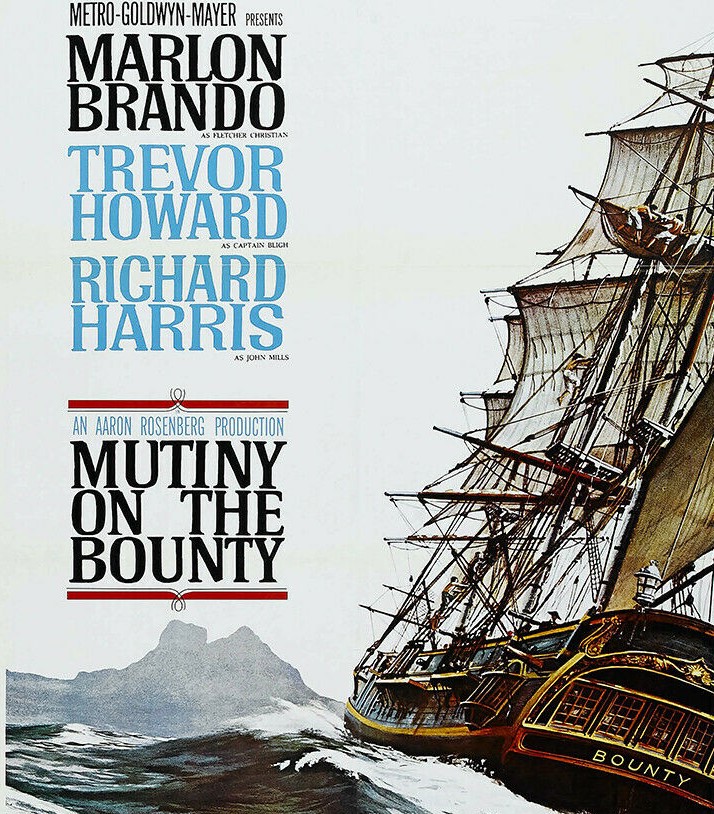
Color was the prime instigator for the remake business in the 1960s. But you could also add the technological development of 70mm, the key element of roadshow pictures. Many big-budget films of the 1920s and 1930s had hit the box office target and with studios looking for as many sure-fire winners as possible it seemed sensible to give a new look to older projects. Ben-Hur (1959) could be seen as lighting the remake touch paper especially when it scored equally highly at the box office and the Oscars. MGM followed through with roadshows of Mutiny on the Bounty (1962), one-third as long again as the 1935 original, Cimarron (1960) with an extra 20 minutes compared to the 1931 Oscar-winner. But the reimagining of The Four Horsemen of the Apocalypse (1962) ran about the same length as the Rudolph Valentino version of 1921 as did King of Kings (1961) compared to the 1927 Cecil B. DeMille version.

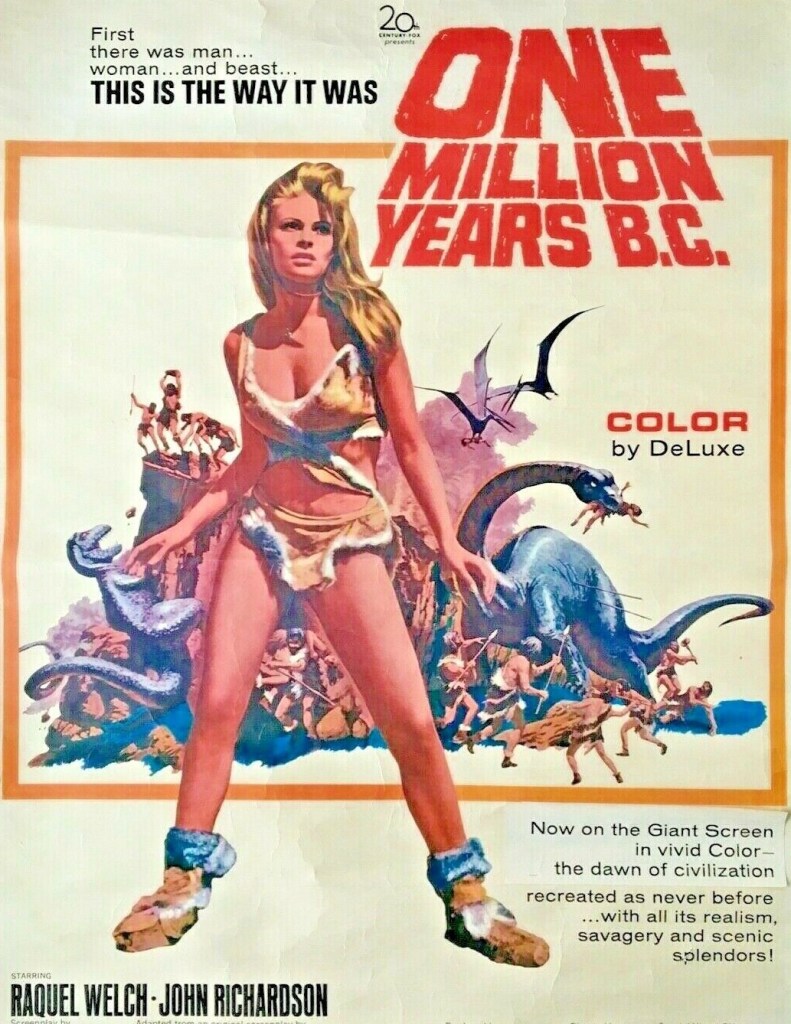
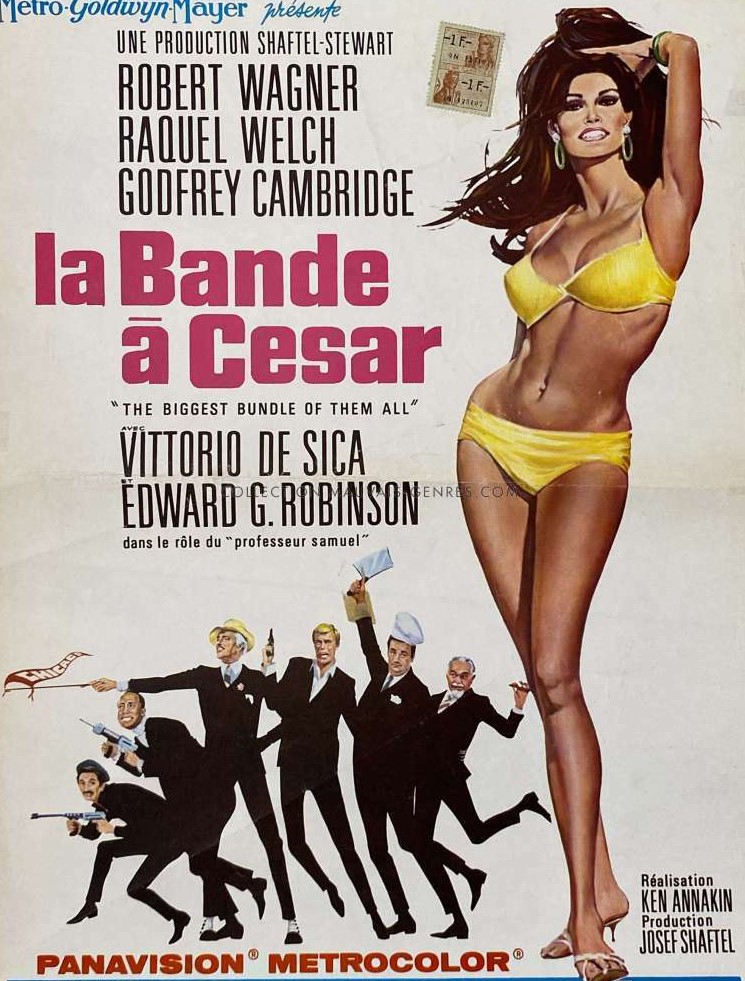
The famed Raquel Welch vehicle was based on a film of 1940.

Prior to considering the expensive business of investing in a remake, studios had been able to rely on sticking out the old movie as a reissue, limited financial exposure often resulting in considerable box office. But it was impossible to sell silent pictures, excepting comedians like Charlie Chaplin, to a modern audience and many of the big hits of the 1930s had either been already sold to television or were considered dated by contemporary standards and although black-and-white films were still being made halfway through the decade (In Harm’s Way, 1965, for example) they were a difficult re-sell.

Far easier to revamp a well-known, perhaps beloved, product with the addition of color cinematography, better sound, and possibly with major stars in the vein of Marlon Brando (Mutiny on the Bounty) and Peter O’Toole (Goodbye, Mr. Chips). It also seemed the case that lesser stars could still prop a remake with little adverse effect on the receipts especially if the lower-priced actors substantially reduced the budget and consequently the income required to turn a profit.    

Some movies appeared to be on an endless recycle. The Count of Monte Cristo (1964) had been filmed in 1956, 1954 and 1934, the latter starring Robert Donat. The Perils of Pauline (1967) had been remade twice since Pearl White had made the character her own in 1914. Back Street (1961) with Susan Hayward had been filmed twice before in 1941 and 1932. The Spanish-made The Last of the Mohicans (1963) starring Jeffrey Hunter was the fifth attempt at filming the famous novel after movies made in 1920, 1932, 1936 and 1957.

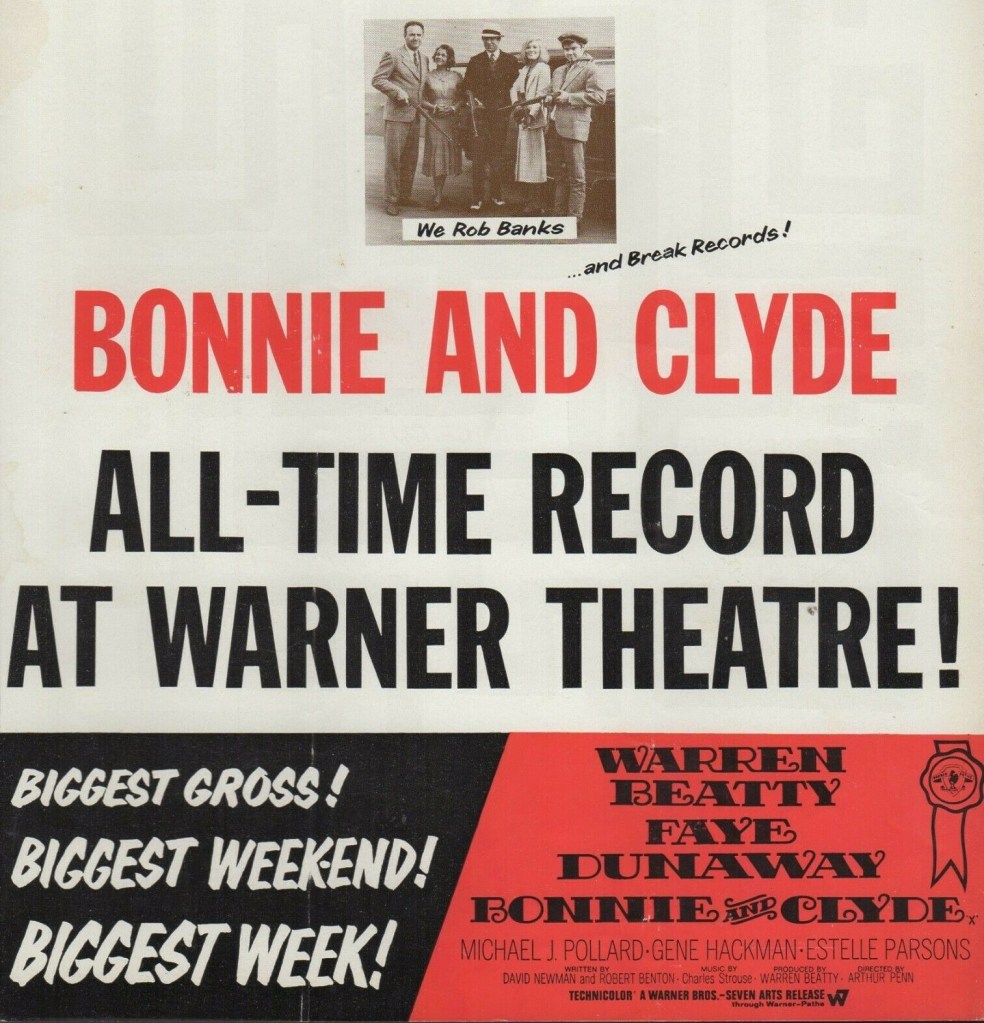
“The Bonnie Parker Story” laid the groundwork for this box office smash-and-grab.

Some remakes changed their titles. Cary Grant comedy Walk, Don’t Run (1966) was based on The More the Merrier (1943), Stolen Hours (1963) with Susan Hayward on Dark Victory (19390 with Bette Davis, Doris Day vehicle Move Over Darling (1963) on My Favorite Wife (1940), and Agatha Christie’s Ten Little Indians (1963) on The Old Dark House (1932). William Wyler’s The Children’s Hour (1961) starring Audrey Hepburn drew on These Three (1936), Uptight (1968) was a modern take on John Ford’s Oscar-nominated The Informer (1935), and comedy The Shakiest Gun in the West (1968) with Don Knotts had its origins in The Paleface (1948) starring Bob Hope. Akira Kurosawa’s Japanese classic Rashomon (1950) retuned as The Outrage (196) starring Paul Newman. The Bonnie Parker Story (1958) was drastically retuned as Bonnie and Clyde (1967). Frank Capra’s A Pocketful of Miracles (1961) was based on his own Lady for a Day (1932). Gregory Peck thriller Mirage (1965) took only three years to re-emerge as Jigsaw (1968).   

Other studios decided the original title was too big an attraction to be discarded. Of Human Bondage (1964) with Kim Novak and Laurence Harvey had been made 30 years earlier with Bette Davis and Leslie Howard. Night Must Fall (1965) starring Albert Finney had originated 27 years prior. Raquel Welch-starrer One Million Years B.C. (1966) had been slightly truncated from One Million B.C. (1940), Lee Marvin and Angie Dickinson headlined The Killers (1964) based on characters originally essayed by Burt Lancaster and Ava Gardner 18 years previously, Mayerling (1969) with Omar Sharif and Catherine Deneuve had starred Charles Boyer and Danielle Darrieux in the 1936 version.

Horror was the most obvious genre to receive a revamp. Robert Bloch rewrote The Cabinet of Dr Cagliari (1962) forty-two years after the original. Hands of Orlac (1961) with Mel Ferrer had previously been known as Mad Love (1936). Herbert Lom reprised The Phantom of the Opera (1962) following on from Lon Chaney in 1925 and Nelson Eddy in 1943. French-made The Golem (1967) was based on versions screened in 1921 and 1937.

Some films were remade with music, Goodbye Mr. Chips – the Robert Donat, Greer Garson original belonging to 1939 – the most obvious example but The Sound of Music (1965) was essentially a musical version of the Germanic The Trapp Family (1956), and Three Coins in the Fountain (1954) set in Rome turned up as the musical The Pleasure Seekers (1964) set in Madrid, both films directed by Jean Negulesco. On the other hand, State Fair (1962), which had been turned into a drama in 1945 despite being based on a Rodgers & Hammerstein musical, was restored to its roots. 

Not every remake idea proved a slam dunk. Projects that failed to get off the ground included: The Birth of Nation (1915), Ecstasy (1933), Metropolis (1927) to be directed again by Fritz Lang, Wuthering Heights (1939) to star Richard Harris, Dark Angel (1925 and 1937) with Rock Hudson, The Lives of a Bengal Lancer (1935), The Crusades (1935), The Charge of the Light Brigade (1936) with Roger Moore – although it was remade in 1968 – Wee Willie Winkie (1937), Jane Eyre (1943) to star James Mason, The Macomber Affair (1946)  and The Postman Always Rings Twice (1946). Anthony Quinn was touted for a remake of Kurosawa’s Sanjuro (1962) and Saul David planned a westernized version of that director’s The Hidden Fortress (1958).

French director Claude Chabrol had ambitions to make a version of Hamlet (1948) from Ophelia’s point of view though a Russian version appeared in 1964. MGM blocked a remake of Tarzan of the Apes (1931). Francis Ford Coppola proposed Heaven Can Wait, a reworking of Here Comes Mr. Jordan, to star Bill Cosby. Stephen Boyd was mooted for a remake of The Quiet Man (1952).

Producer Ray Stark (Funny Girl, 1967) announced new versions of Casablanca (1942) and a Peter Collinson-directed The Maltese Falcon (1941). Musical versions were announced of The Private Life of Henry VIII (1933), Our Town (1937), Rebel Without a Cause (1955) and Roman Holiday (1953), the latter to star Robert Redford.

SOURCES: Brian Hannan, Coming Back to a Theater Near You, A History of Hollywood Reissues, 1914-2014 (McFarland, 2016), p21, 27, 31; “Drift Towards Remakes Grows on Coast,” Box Office, March 11, 1939, p37; “That Birth of a Nation Title,” Variety, April 13, 1960, p6; “Sales Come-On But Never Mislabel Content – Hathaway,” Variety, October 26, 1960, p13; “Bischoff-Diamond To Make Charge,” Box Office, July 10, 1961, p11; “Bash Vindicated – After 4 Yrs,” Variety, July 12, 1961, p5; “MGM Is Upheld In Suit over Tarzan,” Box Office, July 10, 1961, p13; “New Cycle of Classics for French Prods,” Variety, July 12, 1961, p16; “Dark Angel Remake to Writer Lee Mahin,” Box Office, December 18, 1961, pW-8; “Robert Blees Plans Remake of Macomber Affair,” Box Office, March 12, 1962, p16; “Anderson-U.A. Talk Wuthering Remake,” Variety, August 28, 1963, p22; “Spain’s Latest Western,” Variety, October 23, 1963, p18; “MGM Signs for 3 Co-Productions in Spain,” Variety, January 15, 1964, p22; “Hollywood Report,” Box Office, February 10, 1964, p16;  “Japanese Sanjuro Remake for Quinn,” Variety, May 5, 1965, p4; “Weintraub Sends Down L.A. Roots,” Variety, January 12, 1966, p5;“Universal Re-Do of DeMille 1935 Crusades,” Variety, April 13, 1966, p3; “Plan Rebel Without Cause For Remake As Musical,” Box Office, April 18, 1966, p9; “Lee Thompson Busily Reprints His Musical Version of Henry VIII,” Variety, April 27, 1966, p17; “U’s Future Parks 17 Vehicles,” Variety, May 25, 1966, p33; “Re-Do of Quiet Man,” Variety, March 5, 1967, p5; “De Laurentiis in New Par Dickers,” Variety, January 10, 1968, p5; “David to Re-Do Kurosawa Plot As U.S. Western,” Variety, June 12, 1968, p4; “Re-Do of Falcon,” Variety, July 10, 1968, p14; “Star In W7 Pic,” Variety, January 15, 1969, p3.

Behind the Scenes: “Operation Kid Brother / O.K. Connery” (1967)

A new episode in the James Bond legend began on February 23, 1966, when a plasterer from Scotland made an audacious bid for movie stardom. His name was Neil Connery, currently earning $10 a week, shooting for a $5,000 payday as he took part in a screen test in Rome for producer Dario Sabatello (Seven Guns for the MacGregors, 1966) for a film entitled Operation Casbah that would later be tagged Operation Kid Brother (O.K. Connery in Italy).

Sabatello was an experienced producer beginning with The Thief of Venice (1950) starring Hollywood legend Maria Montez. Connery was a skilled laborer living in the four-year shadow of elder brother Sean and with little intention of moving out of that shadow. However, as a result of a work-related incident, he became the subject of a newspaper article and then a radio interview. Nobody was much interested in the reason for the interview – stolen tools – but everyone was impressed by the sound of Neil’s voice. “Sean’s brother spoke exactly like him.”

Archers Assemble! Connery on the bowstring.

The newspaper interview caught the eye of Sabatello, who noted the actor’s likeness to his brother and who flew over to Edinburgh to interview Neil and in so doing becoming aware of his athletic attributes, height and good looks. A month later came an invite for the screen test. Neil’s agent, who had no right to make such a claim, promised that if Neil got the part big brother Sean would play a cameo. For the test, Connery had to “embrace a girl, sing, dance and finally end up in  a hand-to-hand fight with a guy with a knife.” However, the test was so successful that the presence of Sean was not required. Sabatello signed the neophyte actor to a six-picture deal that would generate a six-figure salary if the film turned the Scot into a star.

Italian production giant Titanus sold the world rights (except for Italy) to United Artists, ironically the distributor of the James Bond pictures, thus securing the funding for the $1.2 million three-month shoot that kicked off in Cinecitta in Rome on December 14, 1966. Locations were scheduled to include Monte Carlo, San Remo, Turin, Barcelona, Malaga and Tetuan.

The supporting cast was dominated by actors with a Bond connection including Adolfo Celi, Daniela Bianchi, Anthony Dawson, who had all worked with director Alberto De Martino on Dirty Heroes (1967) and Lois Maxwell and Bernard Lee. Ennio Morricone, another De Martino aficionado, was brought in to do the score.

Affiliates Assemble! Connery with Bond regulars Bernard Lee and Lois Maxwell.

Connery’s boxing training in the British Army came in handy when he had to become an archer. Pulling a bow takes considerable physical exertion. Target practice was held at Adolfo Celi’s house outside Rome. “I had remembered everything about putting the bow down, bringing it up, pull and push, as there was quite a pull on it,” he said. Celi’s arrow managed just a few yards but Connery hit the target. His luck did not hold when filming the real thing in Monte Carlo. Celi’s shot did not go far again but this time Connery’s arrow missed the target.

Although Connery had read the script he was only given his lines in the morning as he went into make-up. He acquitted himself well in the fight scenes, except for one scene which ended with him being taken to hospital.   

The film opened in Britain at the Pavilion in London’s West End on April 25, 1667, with a general release slated for May 5. But it didn’t get a circuit release. That is, it didn’t go out on either of the two main cinema chains, ABC or Odeon, or the lesser Gaumont circuit, so its bookings would have been restricted. It didn’t appear in the United States until November, 1967, having been reviewed without much enthusiasm in Variety which posited “at best the film deserves bottom half bookings”, i.e. the bottom half of a double bill, which means it would play for a fixed rental rather than a percentage.

It did open in first run in a number of city center picture houses in November and December, to occasionally decent but hardly lush box office. Its $20,000 week in Chicago was deemed “good”, as was the $4,000 in Providence, while $13,000 in Philadelphia was considered “brisk” but $5,000 in St Louis considered only “fair.”  There was a first run showing in New York but only at a 600-seater arthouse.

But when it went wider in “Showcase” releases the box office collapsed. In New York it managed only $67,000 from 25 theatres compared to, in the same week, British film The Family Way on $223,000 from 26, and the second week of Point Blank with $145,000 from 25. Business was worse in Los Angeles, just $49,000 from 26 compared to $125,000 from 29 for Barefoot in the Park, and it was dire in Kansas City, only $9,000 from eight houses.

Given the relatively low budget, the film globally may well have broken even but it certainly did not send Neil Connery’s box office status into the stratosphere. He had small parts in two more low-budget movies, The Body Stealers (1969) and Mad Mission 3: Our Man from Bond St (1984) plus some television.

SOURCES: Brian Smith, “Bond of Brothers,” Cinema Retro, Vol 4 Issue 12 2008, p13-19; Allen Eyles, Odeon Cinemas  2, (CTA 2005), p212; Allen Eyles, ABC (CTA, 1993), 123-124; Allen Eyles, The Granada Theatres (CTA 1998)’ p247; Allen Eyles, Gaumont British Cinemas, (CTA 2005), p197; William Hall, “Big Brother Is Watching Him,” Photoplay, June 1967; “International Soundtrack,” Variety, February 23, 1966, p33; “Titanus Sets Pre-Prod Deals for Two UA Pix,” Variety, December 14, 1966, p24; “International Soundtrack,” Variety, December 21, 1966, p24; “Hollywood and British Production Pulse,” Variety, December 28, 1966, p17; Advertisement, Variety, January 4, 1967, p65; “Connery Pix a Family Affair with UA,” Variety, March 8, 1967, p24;  Review, Variety, October 11, 1967, p22; “Picture Grosses,” Variety November 1, November 8, November 15, November 29, December 13, 1967.  

Behind the Scenes: “The Biggest Bundle of Them All” (1968)

Films that reach the screen two years after filming was completed are generally stinkers. Ken Annakin caper movie The Biggest Bundle of Them All wrapped production in summer 1966 and was not released until January 1968. But the reason was not the usual.

The cause of the unseemly delay was a temper tantrum by Oscar-winning uber-producer Sam Spiegel (Lawrence of Arabia, 1962) who had been working on a similar project about incompetent amateurs kidnapping a gangster kingpin – The Happening (1967) starring Anthony Quinn (previously reviewed in the Blog). After bringing a charge of blatant plagiarism, Spiegel was mollified by being permitted to bring his movie out first, with an inbuilt eight-month gap  between both releases, the deal sweetened by a 15% cut of The Biggest Bundle’s profits and the right to vet the script.

Despite success with Those Magnificent Men in Their Flying Machines (1965) and Battle of the Bulge (1965) British director Annakin was at a career impasse. The Fifth Coin written by Francis Ford Coppola and starring George Segal failed to get off the ground. He turned down western Texas Across the River (1966) at a time when Catherine Deneuve and Shirley Maclaine were slotted in for the female roles and was fired from The Perils of Pauline (1967). The Italian Caper as it was then known, recalled Annakin, “did not seem a world-shattering movie but I found the caper fascinating and the cast irresistible.” 

Let them eat cheesecake.

It marked the movie debut for producer Josef Shaftel of The Untouchables television fame and for screenwriter Rod Amateau (The Wilby Conspiracy, 1975), also then a television regular although the final script was attributed to another neophyte Sy Salkowitz. The film made the most of Italian locations, Naples and Rome, as well as the South of France and Provence. Annakin caught pneumonia just as shooting was to commence. Shaftel took over for five days only for his material to prove unusable.

Both veteran actors proved easy to direct. “Robinson was like putty in my hands, completely trusting.” And while Vittorio De Sica was every bit as amenable he was inclined to fall asleep on the set as the result of entertaining his mistress the night before. Di Sica was also a compulsive gambler and at one point lost half his salary in a casino.

Raquel Welch, in only her second picture after One Million Years B.C. (1966) – which contained minimal dialogue – was initially a handful. Primarily, this was due to inexperience and her desire to present herself in as alluring a fashion as possible, with impeccable hairstyles and make-up. After she had kept the crew waiting once too often Annakin threatened to eliminate her close-ups unless she respected the shooting schedule.

“On the whole I was quite pleased with the results because she really applied herself and so long as one broke up the scenes into a couple of lines at a time she became able to handle them quite adequately…I was getting along excellently with Raquel – even to the extent of trying to find another picture with her,” Annakin noted in his autobiography. Since this was written three decades after the movie was made, it would have given him ample time to get rid of any latent hostility to the actress. This reaction, it has to be said, is contrary to much of what has been written about Welch’s behavior on the picture. At the time of filming he reported that “she has a marvelous flair for comedy.”

But it appeared that Annakin was the only one who spotted her star potential. “The rest of the cast, especially Bob (Robert Wagner), regarded her as a pin-up girl on the make…none of them thought she was particularly sexy at this time.”

Otherwise, the only other trouble came from Godfrey Cambridge who “had a chip on his shoulder” and from Robert Wagner’s insistence on wearing false eyelashes. Problems arose over the cinematographer’s determination to employ powerful lights even at the height of a Mediterranean  summer and a massive dust storm interrupted filming of the final scenes.  Annakin also benefitted from the locations and using his experience was able to shift 35 pages of script from interiors to outdoors, completely altering the look of the picture. This made the $2 million movie “look like it cost three or four million,” according to Annakin. 

At this point Welch, best known for having been sued by her publicist, was in the process of turning herself into a star in demand. In 1966 Welch was something of a Hollywood secret. She had three pictures in the bank, was working on a fourth and had signed up for a fifth before any of her movies had been released. On the other hand, she was fast becoming one of the most famous faces (and bodies) in the world, on the cover of of hundreds of magazines in Europe, many for the fourth or fifth time.

Having set up a company, Curtwel, managed by husband Patrick Curtis, she would earn $15,570 a week on loan to MGM for a second film Italian movie Shoot, Loud…Louder, I Don’t Understand (1966), considerably more than through her contract with Twentieth Century Fox. A year later she collected £100,000 for two weeks on portmanteau picture The Oldest Profession (1967).

Curtwel was also moving into the production arena, in 1965 attempting to set up No Place for the Dead and the following year optioning the musical comedy The Opposite Sides of the Fence and taking a quarter share in the mooted The Devil’s Discord to star Peter Cushing and Edd Byrnes under the direction of Michael Reeves (Witchfinder General, 1968). None of these ventures materialzed.

As well as having to contend with audience disinterest in the clumsy crook scenario as witnessed by the flop of The Happening, the enforced time gap allowed a second picture featuring bungling criminals called Too Many Crooks (1967) to reach cinemas prior to The Biggest Bundle. However, by January 1968, Welch was a much bigger name on movie marquees, having appeared on 400 international magazine covers and selected by U.S. exhibitors for the International Star of the Year Award while The Biggest Bundle had been preceded by another seven pictures including hits One Million Years B.C. and Fantastic Voyage (1966).

SOURCES: Ken Annakin, So You Wanna Be a Director, (Tomahawk Press, Sheffield 2001), pages 187-194; “Raquel Welch and Manager Form Curtwel Co,” Box Office, May 3, 1965, pW3; “Raquel Welch, Pat Curtis Form Curtwel Prods,” Box Office, October 5, 1965, pSE6; “Toutmasters Sue for 5% of Raquel Welch,” Variety, October 6, 1965, p14; “Raquel Welch in Rome,” Box Office, April 25, 1966, page SE1; “MGM’s Bundle Wrapping at Nice, Orders On Set in 3 Languages,” Variety, July 6, 1966, p7; “8 Pix for 2 Unseen Actresses,” Variety, August 17, 1966, p5; “Businesswoman Side of Raquel Welch,” Variety, November 2, 1966, p20; “Oldest Profession Gets New Locale in West Berlin, Raquel Welch’s 100G Job,” Variety, January 18, 1967, p24; “Columbia-Spiegel Holds 25% Share of MGM’s Bundle,” Variety, December 6, 1967, p3.

The Biggest Bundle of Them All (1968) ***

Bunch of incompetent crooks kidnap an impoverished Mafia boss who pays his ransom by setting up a major heist. By a stroke of casting alchemy this brings together Cesare (Vittorio De Sica), the epitome of old world Italian charm, knock-out gangster’s moll and scene-stealer-in-chief Juliana (Raquel Welch) replete with scanty knock-out outfits, and criminal mastermind Professor Samuels (Edward G. Robinson). In order to acquire the funds necessary to steal $5 million of platinum ingots from a train – that plan involving a tank and an WW2 bomber – the crew, initially headed by American Harry (Robert Wagner), need to carry out smaller jobs.

Problem is, none of them are any good, not even Cesare, who has lost his flair and botches an attempt to rob an old flame of her jewels. This is a twist on Topkapi (1964) which employed effective amateurs. This bunch can’t even carry out a simple theft from a restaurant. The heist itself is pretty spectacular and innovative. And the movie is quirky, with a darker edge. While there are few belly laughs, the light tone is enough to carry the gentle humor, mostly inspired by the misplaced team, amateurs for various reasons, not necessarily outright lawbreaking, on the run. These include London Cockney mechanic Davey (Davy Kaye), chef Antonio (Francesco Mule) distracted by hunger at every turn, cowardly violinist Benny (Godfrey Cambridge) and Joe (Mickey Knox) with a helluva brood to feed.

The story does a good bit of meandering, as does the camera, much of its focus on the voluptuous charms of Juliana, but the hurt pride of Cesare and the grandiose machinations of the professor keep it on course. The Italian settings, incorporating grand villas and ruins, do no harm either. The heist is terrific and there is a final twist you may or may not see coming. The interplay of characters works best when it involves Juliana, who attempts to twist Cesare around her little finger, that tactic mutual it has to be said, and who keeps the professor on his toes by dancing with him in a disco, and it soon becomes apparent that she has the upper hand over lover-boy Harry.

You could be forgiven for thinking the title refers to Raquel Welch – a cinematic infant at this stage with only One Million Years B.C (1966) in her portfolio – especially when her cleavage and looks receive such prominence, but the caper is classy and different. As well as being obvious she is both sinuous and seductive and clearly has a mind of her own, possibly the most criminally intent of the entire outfit, with weapons the others lack. By this point, she had invented the pop-out bikini, pictures of which had flooded Europe, making her the pin-up par excellence, but those who came to simply gawp quickly realized there was talent behind the body. Although of course there would be those who didn’t care.

De Sica constantly plays around with the idea of being a defunct godfather and Robinson is the antithesis of the gangster roles on which his fame relied. Robert Wagner is less effective, miscast and out of place in such august acting company and losing out to Welch in every scene.

This was a considerable change of pace for British director Ken Annakin after Those Magnificent Men in Their Flying Machines (1965) and Battle of the Bulge (1965) and he brings to this the comedy of the former coupled with the narrative complications of the latter, wrapping everything up in an easy inviting style that makes the most of his stars and the locations. Screenwriter Sy Salkowitz was a television veteran (Perry Mason, The Untouchables et al) , this marking his first venture into the big screen.     

Not in the Topkapi class – very little is – but a pleasant diversion nonetheless and for avid Raquel Welch fans, setting aside her outfits, a chance to see her develop more of a screen persona than was permitted in her debut One Million Years B.C.

We Need To Talk About Sir Sean, Part II: Who Wrote That Heinous Racist Scene: Book into Film – “Woman of Straw” (1964)

You can blame one of the screenwriters, either Robert Muller (Contest Girl, 1964) or Stanley Mann (The Collector, 1965), for coming up with the scene in Woman of Straw where the grotesque millionaire Charles Richmond (Ralph Richardson) forces his two black servants to pretend to be dogs to show his own dogs how to jump over each other. It’s not in the book. However, in fairness to the screenwriters they must have thought this preferable to the scene in the original book by Catherine Arley where Richmond offers a gold watch to the best imitation of a dog by his servants. This includes them getting down on all fours and eating food like a dog. Disgusting though this is, it is tempered by being a competition with a more than decent reward (a gold watch) for the winner.

The offensive scene in “Woman of Straw.”

And now we get into a difficult position since one of the most highly-praised episodes of Succession involved employees of grotesque millionaire Logan Roy (Brian Cox) being forced to get down on the floor and pretend to be boars and eat sausages like a boar (Boar on the Floor, Succession, Season Two, Episode Two). This sequence has a 94% rating on Rotten Tomatoes, the critical accumulation website. The episode won an Emmy for director Andrij Parekh. Scott Tobias of Vulture gave it five stars and Randall Colburn of The A.V. Club an A-minus. Various commentators referenced the Stanford Experiments, the culture of fear inherent in working with wealthy individuals, and the animalistic collapse of civilization.

So that has left me wondering if my objection to Woman of Straw was merely on racist grounds and to wonder if there would have been an outcry if the Succession episode had featured a black person grovelling on the ground.

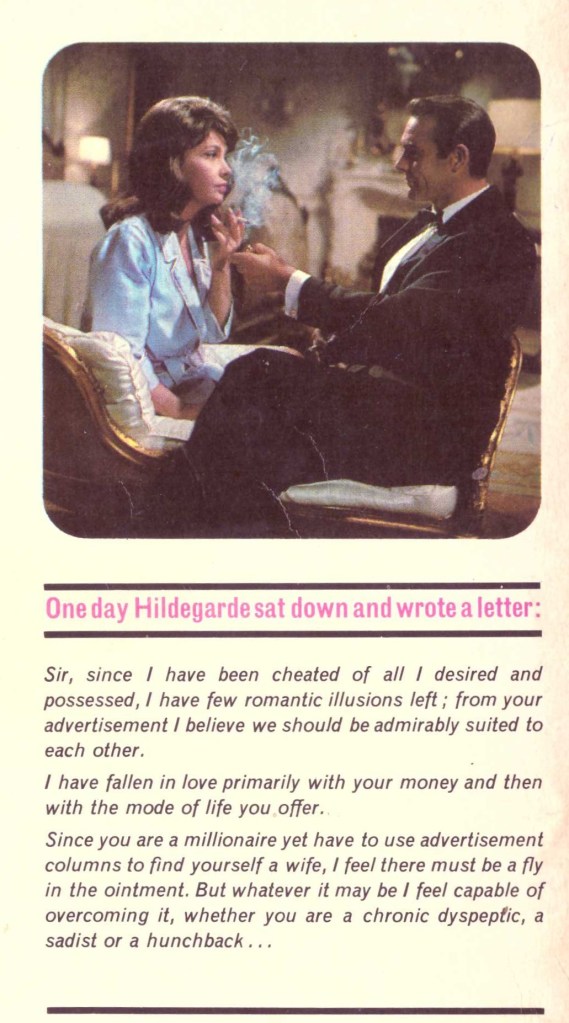
The screenwriters made significant changes to the source novel. For a start in the book both the woman and the millionaire were German. Hildegarde Meiner in the book becomes the Italian Maria (Gina Lollobrigida) in the film. But Hildegarde is not a relatively innocent nurse as in the film. Instead, she is an out-and-out gold-digger, determined to marry a wealthy man in order to make up for a desperate life in the aftermath of the Second World War.

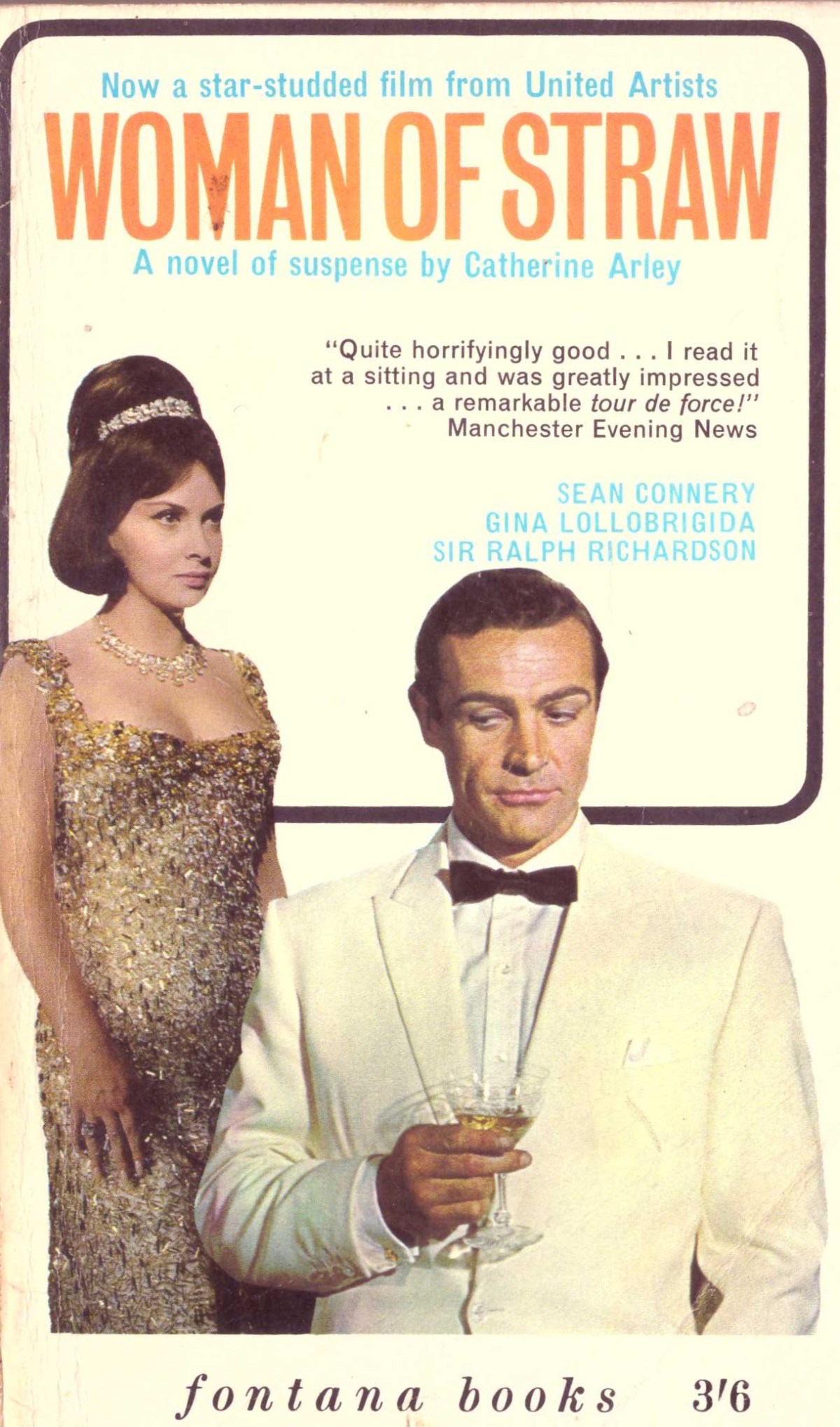
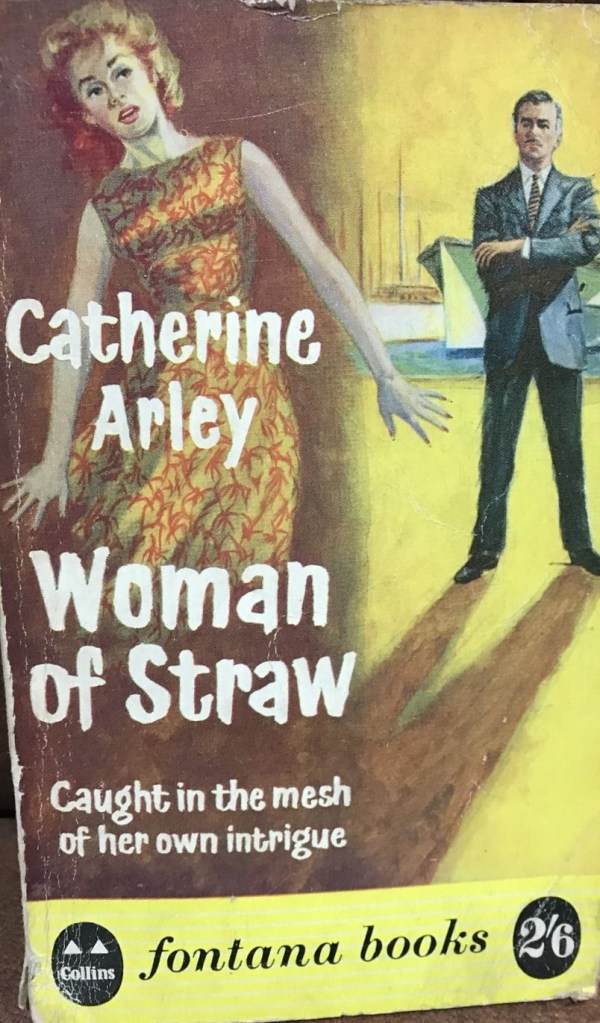
Back cover of the movie tie-in edition of the British paperback.

In the book the villain of the piece is also German, Korff, not British like Sean Connery. And he is simply the millionaire’s secretary not his nephew. The pivotal element of the story is the same, Tony Richmond (Connery) feeling he is owed much more of the old man’s fortune than the pittance provided for him in the will. Korff is also 60 years old and although Hildegarde makes a play for him, any romantic liaison is out of the question because the secretary wants to adopt her as his daughter.  Korff sets Hildegarde up as the nurse and instructs her to play it aloof and principled. Hildegarde does not fall into the category of beauty but, with better clothes and professional make-up, oozes class.

The rest of the story plays out much like the film except there is no rescue at sea and the millionaire does not listen to classical music. The novel narrative, while not in the first person, is told from the woman’s perspective. However, Korff is more devious than Anthony Richmond, ensuring in several ways that the nurse will take the rap.

Front over of earlier British paperback, not a movie tie-in.

The film’s ending is driven by the need for some kind of happy resolution, for the guilty to be brought to justice, the dupe exonerated to some extent. But the book belongs more to the film noir genre and the ending is quite different, the villain getting away with and Hildegarde seeing no way out but to commit suicide.

The deprivations that Hildegarde has undergone as a consequence of her Hamburg family being killed during the war and her struggle for survival thereafter and her desperation to find a wealthy white knight make her a more  sympathetic character.

The book is an excellent thriller in its own right.

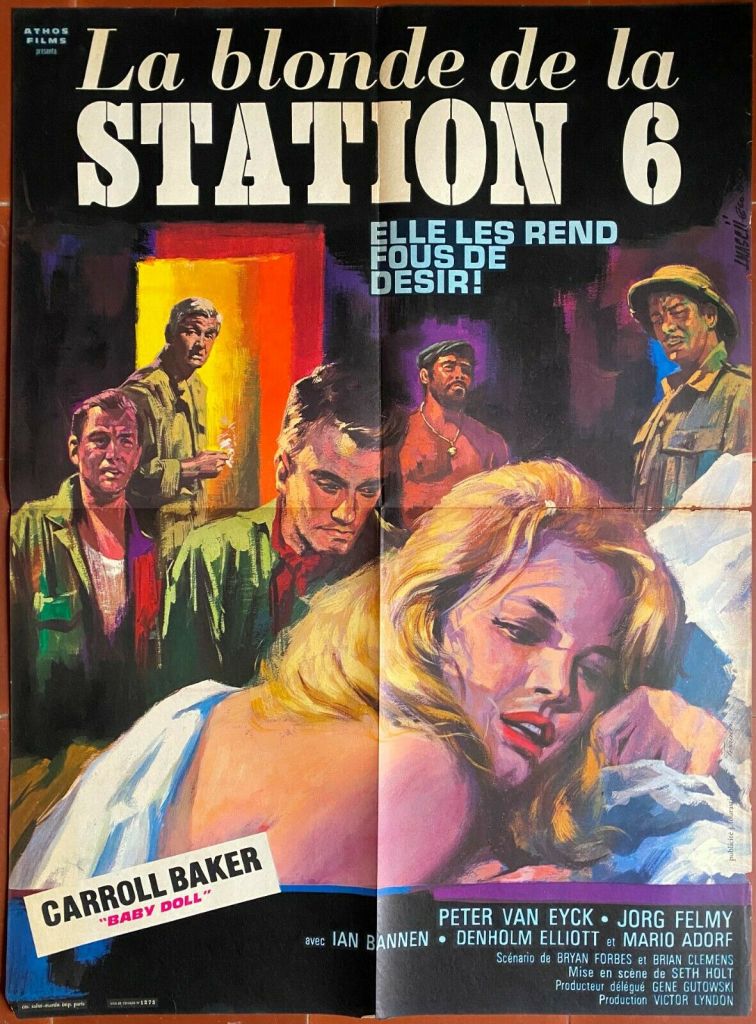
Station Six Sahara (1963) ***

Desert pictures come in two varieties – men battling the elements with little or no female distraction and men distracted from battling the elements by the presence of a female. Since the film I reviewed earlier today, Sands of the Kalahari,  fitted largely into the first camp with the sole female being viewed as a prize rather than a temptress, I thought it might be interesting to compare it to Station Six Sahara, made the year before, in which the seductive Carroll Baker disrupts the men-only oil station.

David Lean spent months in Jordan capturing his vision of the desert for Lawrence of Arabia. Seth Holt was granted no such luxury, a few weeks at Shepperton Studios in England to make this British-German co-production.  It is a surprisingly tight and effective drama made on a low budget excepting whatever fee induced Hollywood star Carroll Baker to join.

Five men trapped on an oil pipeline maintenance unit drive each other to distraction. Loud Scot Ian Bannen constantly needles stiff upper-class Denholm Elliott while overbearing German boss Peter Van Eyck cheats at poker. The arrival of steely-eyed German Hansjorg Felmy alters the status quo as he refuses in his own quiet way to knuckle down to authority. There is a wonderful psychological battle going on between Bannen and Elliott.

Extremely envious of the number of letters Elliott receives, Bannen offers a month’s pay for just one. When the offer is accepted, Elliott cannot stop fretting about what he might have given away and what secrets it revealed about himself. The arrival of Carroll Baker upsets the equilibrium further as the men attempt to win her affections. While apparently promiscuous, she is steelier than the lot of them, and tensions climb high when she begins to spread around her favors. Interestingly, she does no wooing but waits for men to come to her.

Given the budget restraints, or possibly because of them, it is surprisingly well directed. Two scenes stand out in directorial terms. In one featuring Bannen and Elliott, the Scot is only partly visible behind a piece of furniture but his dialogue continues even when out of sight. In the other, one of Baker’s suitors finds her door locked and as she is about to reply a hand appears (not in aggressive fashion) to cover her mouth, indicating she already has chosen her bedmate.

Naturally, this can only lead to a grim end. The cast of male unknowns are uniformly good but Baker steals the show as you would expect. Given the times, there was no nudity, but the overt sexuality certainly skirted the bounds of what passed as decency and Baker is alluring however little or much she wears. But her sexuality takes second place to her individuality. Her independence will not be surrendered to a man. Despite the budget restrictions it stands up very well.     

At any given moment Carroll Baker could be both a top Hollywood star and a middling box office attraction. She had just come off How the West Was Won (1963) but had really failed to justify the potential shown in Baby Doll (1956). Peter van Eyck (The 1,000 Eyes of Dr Mabuse, 1960). was best known for his role in Wages of Fear (1953). Scottish actor Ian Bannen (Psyche 59, 1964) was beginning to merge as a strong character actor, he and van Eyck had appeared together previously in The World in My Pocket (1961). The career of Denholm Elliott (Maroc 7, 1967) followed a similar arc to Bannen as a supporting player of distinction. Seth Holt (Danger Route, 1967) was considered a rising directorial star until his untimely death at the age of 41.

The Box Office Equalizer: Part Two

Variety’s revolutionary new box office tracking system, introduced in 1969, allowed it to include far more films in an annual assessment of performance. The “Annual Rentals” chart that appeared every January still covered how much of the box office pie was returned to studios and therefore gave a good indication of potential profit. But that was limited to only those pictures that met that chart’s criteria i.e. they had to return $1 million rentals. That usually meant only 80-odd films.

But now, in addition, from the computerized information gathered every week from hundreds of cinemas, Variety was able to give a pretty accurate estimate of the box office gross for ten times as many movies. In 1969, the survey covered 1,028 pictures. This wealth of information was of enormous value to exhibitors. Not only did it cover the obvious titles – the roadshows and those with top stars – but also the run-of-the-mill movies on which most cinemas now depended. In the current severe product shortage, reissues played a vital role. As did sexploitation.

Among films reviewed so far in the Blog annual grosses were shown for: They Night They Raided Minksy’s $1.9 million, Mafia picture The Brotherhood $1.9 million, Anthony Newley number Can Hieronymous Merkin Ever Forget Mercy Humpe and Find True Happiness $1.3 million, Hard Contract $1 million, Mayerling $980,000, Justine $536,000, Les Biches $391,000, Assassination Bureau $146,000, Fraulein Doktor $114,000 and The Sisters $50,000. (Multiply these figures by 50% for an accurate estimate of their rentals).

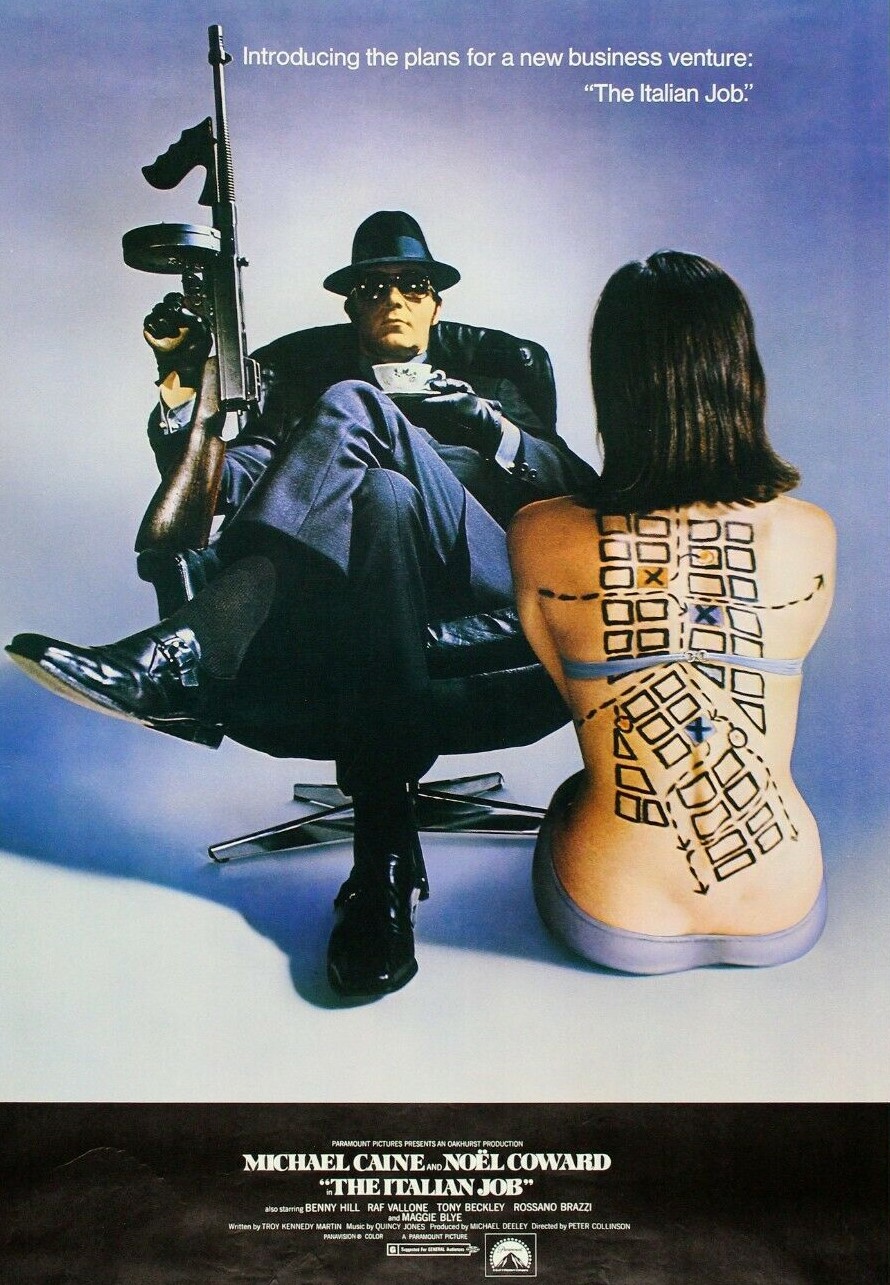
Other figures worth noting were: The Fixer $1 million, Secret Ceremony $1 million, The Italian Job $614,000, Marlon Brando in The Night of the Following Day $424,000, Shalako $78,000 and The Extraordinary Seaman $61,000. Bottom of the box office pile was motor racing documentary Hot Rod Action with just $1,000.

Given it was widely considered a flop, these are interesting figures for Hieronymous Merkin, rentals now estimated as being in the region of $2 million against a budget of $1.6 million – although other sources put the budget as low as $500,000 thus making it extremely profitable. Secret Ceremony had grossed $617,000 the previous year so its rentals would have approached $2.5 million, far more than was previously assumed. Fans of cult British thriller The Italian Job will perhaps be astonished how poorly it did in the U.S.

The top-grossing reissue was Bonnie and Clyde/Bullitt ($1 million) followed by a pair of Clint Eastwood double bills – A Fistful of Dollars/For a Few Dollars More ($912,000) and Hang ‘Em High/The Good, The Bad and The Ugly ($740,000). Also in the mix were Goldfinger/Dr No ($323,000), A Man and a Woman ($226,000), Belle de Jour/A Man and a Woman ($199,000), a revival of Lola Montes from 1955 with $148,000 and less successfully, from 1961, A Cold Wind in August with just $21,000.

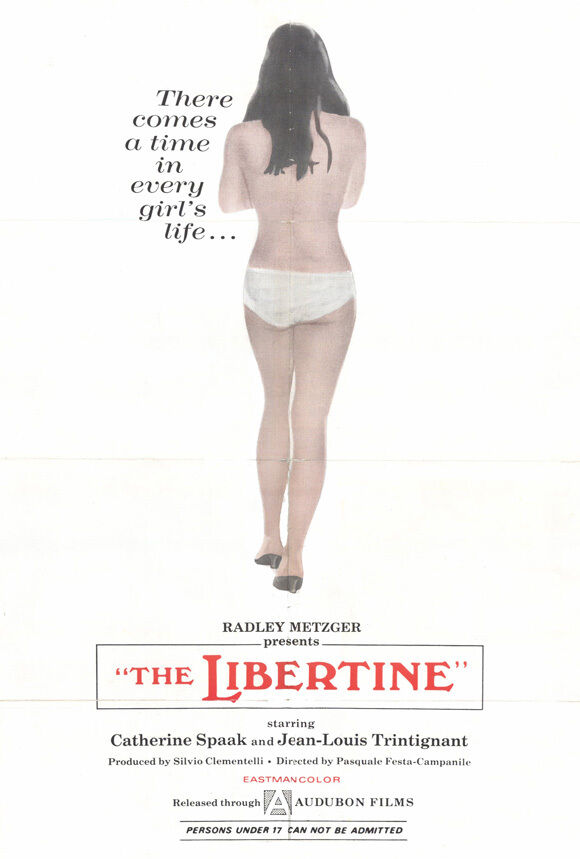
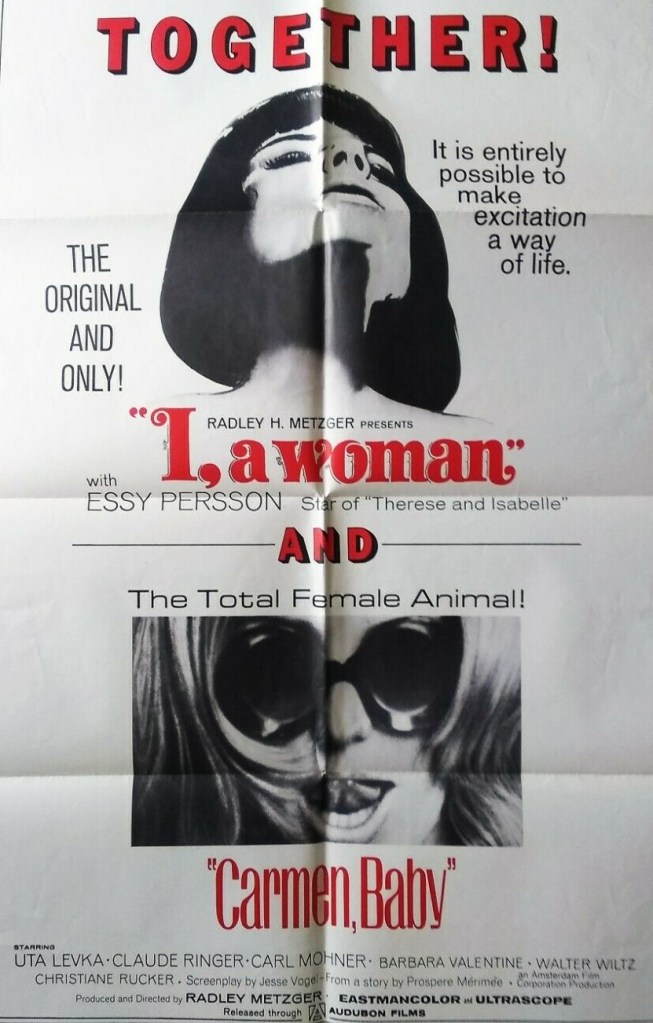
As previously noted, the impact of sexploitation was becoming more obvious. The biggest hit was The Libertine which crossed the $1 million mark followed by Camille 2000 ($868,000), Inga ($819,000) – bringing in three times as much as the previous year – Swedish Heaven and Hell ($458,000) and The Female ($279,000). Others charting included Vibrations, Without a Stitch, Erotic Dreams and The Sex Perils of Pauline. In addition, sexploitation movies were ripe for reissue, I, A Woman/Carmen Baby clocking up $363,000.

More importantly, what the chart did show and what the new weekly Top 50 was beginning to recognize was how often cheaply-made exploitation pictures held their own or even outgrossed big studio pictures for which exhibitors were often held to ransom. If ever there was a sign of the direction in which the business was now heading, this annual survey was it.

SOURCE: “Variety B.O. Charts’ 1969 Results,” Variety, April 29, 1970, p26.   

Discover WordPress

A daily selection of the best content published on WordPress, collected for you by humans who love to read.

The Atavist Magazine

by Brian Hannan

WordPress.com News

The latest news on WordPress.com and the WordPress community.