The Courier (2021) **** – Seen at the Cinema

A brilliant example of how to control your material, this low-budget old school espionage picture, virtually a two-hander, based on a true story and set against the 1960s cold War paranoia, delivers thrills against the background of a murky business. Smarmy businessman Greville Wynne (Benedict Cumberbatch) is inveigled into picking up rolls of film from Russian intelligence office Oleg (Merab Ninidze), giving away his country’s secrets in a bid to prevent nuclear war.

An anti-James Bond scenario sees Wynn employing little bits of tradecraft and spending almost every minute fearing capture while he develops a friendship with his foreign counterpart. On the domestic front, the pressure tells on Wynn, already a nervy character and relying too much on alcohol to sustain his own possibly failing business. Wife Sheila (Jessie Buckley) suspects he is engaging in another extra marital affair. Doting father Oleg wilts under the burden of betrayal, hoping that his assistance in the Western cause will lead to a successful defection, aware of the impact on his family if caught.

In the background Wynne’s ruthless handlers, Dickie Franks (Angus Wright) representing MI6 and CIA operative Emily (Rachel Brosnahan), are like circling sharks. While tense enough, this is all straightforward Tinker, Tailor… territory but in the second act the stakes suddenly rise and the movie shoots into quite different, far more realistic territory, that takes its toll on both protagonists.

It’s a very lean film and in concentrating on character rather than extraneous thrills in the manner of other recent offerings like Stillwater, The Night House or Censor, comes up triumphant in terms of plot. And without attempting to impose background through artistry as with Censor perfectly captures the mood of the times. The background characters are all well developed but the unexpected friendship that develops between the two spies and leads to the climax is exceptionally well done.

Oscar nominated Benedict Cumberbatch (The Imitation Game, 2014) drops all his mannerisms to bring alive a fascinating character who has, in any case, in his business life, had to develop an alien persona.  Merab Ninidze (Jupiter’s Moon, 2017) is every bit his equal, living a lie, trying to keep one step ahead of his own suspicious compatriots. Rachel Brosnahan (Change in the Air, 2018) is excellent as the one backroom character with an ounce of empathy and a pithy line in dealing with stuffy Brits and Jessie Buckley (Wild Rose, 2018), adding another decent accent to her collection, adds some pathos.

Director Dominic Cooke (On Chesil Beach, 2017) does an excellent job of marshalling his material and his concentration on character pays off in spades. Versatility could find no better expression than through writer Tom O’Connor who went down a completely different route in his previous movie The Hitman’s Bodyguard (2017).

I do have one slight niggle. When the British were outraged at Burgess, Philby and MacLean and the Americans Klaus Fuchs et al, the arguments given by these various traitors was that, in giving away state secrets, they were merely realigning the nuclear status quo. These characters were all roundly vilified, but not Oleg here. And although the film concentrates on a few exchanges between Oleg and his courier, in reality more than 5,000 military secrets went from Russia to Britain in this fashion.

Subterfuge (1968) ***

Worth seeing just for super-slinky leather-clad uber-sadistic Donetta (Suzanna Leigh) who  delights in torturing the daylights out of any secret agent who crosses her path, in this case Michael Donovan (Gene Barry). She’s got a neat line in handbags, too, the poisonous kind. Two stories cross over in this London-set spy drama. American Donovan is under surveillance from both foreign powers and British intelligence. When his contact comes into unfortunate contact with a handbag, he finds himself on the sticky end of the attention of Shevik (Marius Goring) while at the same time employed by the British spy chief Goldsmith (Michael Rennie) to find the mole in their camp.

The three potential British suspects are top-ranking intelligence officer Col. Redmayne (Richard Todd), British spy Peter Langley (Tom Adams) and backroom underling Kitteridge (Colin Gordon). On top of this Langley’s wife Anne (Joan Collins) adds conscience to the proceedings, growing more and more concerned that the affairs of the secret state are taking too much precedence over her marriage.

The hunt-the-mole aspect is pretty well-staged. Kitteridge always looks shifty, keenly watching his boss twisting the dials on a huge office safe containing top secret secrets. Langley is introduced as a villain, turning up at Shevik’s with the drugs that are going to send the Donovan to sleep for eight hours before being transported abroad in a trunk. But he turns out to be just pretending and aids Donovan’s innovative escape. Charming but ruthless Redmayne is also under suspicion if only because he belongs to the upper-class strata of spies (Burgess, Philby and Maclean) who had already betrayed their country.

In investigating Langley, Donovan fixes on the wife, now, coincidentally, a potential romantic target since her husband is suing for divorce. She is particularly attracted to Donovan after he saves her son from a difficult situation on the water, although that appears manufactured for the very purpose of making her feel indebted. However, the couple are clearly attracted, although the top of a London bus would not generally be the chosen location, in such glamorous spy pictures, for said romance to develop.

As you will be aware, romance is a weak spot for any hard-bitten spy and Shevik’s gang take easy advantage, putting Anne, her son and Donovan in peril at the same time as the American follows all sorts of clues to pin down the traitor.

This is the final chapter in Gene Barry’s unofficial 1960s movie trilogy – following Maroc 7 (1967) and Istanbul Express (1968) – and London is a more dour and more apt climate for this more down-to-earth drama. Forget bikinis and gadgets, the best you can ask for is Joan Collins dolled up in trendy mini-skirt and furs. Barry, only too aware that London has nothing on Morocco or Istanbul in the weather department, dresses as if expecting thunderstorms, so he’s not quite the suave character of the previous two pictures. In this grittier role, he does not always come out on top. But that does not seem to dampen his ardor and the gentle romantic banter is well done.

Joan Collins, in career trough after her Twentieth Century Fox contract ended with Esther and the King (1960), has the principled role, determining that the price paid by families for those in active secret service is too high. No slouch in the spy department himself, essaying Charles Vine in three movies including Where the Bullets Fly (1966), Tom Adams plays with audience expectations in this role. It’s a marvelous cast, one of those iconic congregations of talent, with former British superstar Richard Todd (The Dam Busters, 1955), Michael Rennie, television’s The Third Man (1959-1965), Marius Goring (The Girl on a Motorcycle, 1968) and Suzanna Leigh (The Lost Continent, 1968) trading her usual damsel-in-distress persona for a turn as terrific damsel-causing-distress.

Shorn of sunny location to augment his backgrounds, director Peter Graham Scott (Bitter Harvest, 1963) turns his camera on scenic London to take in Trafalgar Square, the zoo, Royal Festival Hall, the Underground, Regent’s Park with the usual flotilla of pigeons and ducks to fill in any blanks in the canvas.

Catch-Up: Previously reviewed in the Blog are Gene Barry in Maroc 7 (1967) and Istanbul Express (1968), Joan Collins in Esther and the King (1960) and Suzanna Leigh in The Lost Continent (1968).

This is hard to find so your best bet is ebay although it is available on Youtube for free but the print quality is not great.

The Defector (1966) ***

How often does a government hoodwink a morally upright citizen into deceitful action for the cause of the greater good? In this case physicist Professor James Bower (Montgomery Clift) doesn’t need a great deal of urging because what’s at stake are Russian space race secrets and the man selling them is a Russian scientist he knows from translating his books. It’s apparent from the outset that in setting out to make contact in East Germany, he is walking into a trap. It’s moody, and drab in the vein of The Quiller Memorandum (1966), shot in soulless German streets, and of course it is the final performance, after a four-year screen absence, of a frail-looking Clift, an iconic Hollywood star for nearly two decades.

But genres can be confusing. Although tagged as a spy picture it’s not really a spy film. It’s a character study. In fact, two character studies, the other being a far-from-typical communist. And when you get to the end and realize the sacrifice made in order not to compromise principle, it turns into quite a different movie, one with considerably more depth than you might have imagined.

Bower is a rather adept amateur spy, neatly dodging being followed, and capable of nipping between two moving trams to evade pursuit. His instructions lead him to asking for a particular prescription and being sent in apparent haphazard fashion to an intended meeting with Dr Salter (Hans Messemer), his contact. Instead he is led to Counselor Peter Heinzmann (Hardy Kruger). His hotel room is not merely bugged but fitted with electronic instruments to prevent sleep and distort his mind. Meanwhile Heinzmann is engaged in a hawk-vs.-dove battle with  Orlovsky (David Opatoshu) to determine whose methods, the latter preferring torture and brainwashing, would prove the more successful in forcing Bower to betray the whereabouts of the would-be defector. And there is also a doctor’s receptionist Frieda (Macha Meril), with whom romance so obviously beckons your natural moviegoer instinct is to regard her as lure rather than friend.

It’s a chess game, Bower a pawn, with the net growing tighter, imprisoned in more ways than one, being groomed for defection himself. Although there is double cross, triple cross, murder and an excellent Hitchcockian escape/chase, and a final unexpected, very human, twist, it’s far from your typical spy thriller, in general subtle in tone except for the nightmarish hotel scenes. Heinzmann is also a pawn, fighting a system that sees degradation as its most potent weapon and even while a danger to Bower displays humanity.

Clift’s physical state, skin drawn tight over his face, works to the movie’s advantage, turning him into more of a Glenn Ford-type actor, the staunch man-next-door with steely resolve, but not the kind of character you would imagine Elizabeth Taylor or Marilyn Monroe giving a second glance. In fact, since the story calls for him to be suffering from a mysterious malady – hence the need to seek out a pharmacy and doctor in a foreign country – his features endorse this plot point far better than if he had been fit and well.

Quite what the set was like is anybody’s guess given that not only was Clift dead by the time of the film’s release but that Belgian director Raoul Levy (Hail, Mafia, 1965) – better known as the producer of many Brigitte Bardot films and now helming only his second film – had committed suicide.  

If ever there was proof of star power, this is it. Even when the film is meandering and the plot at times impenetrable, Clift exerts an almost hypnotic hold on the viewer. Despite his clear infirmity, the intensity that enraptured audiences from films as disparate as Red River (1948), From Here to Eternity (1953) and The Misfits (1961) has not vanished. Since many scenes are just meetings that scarcely progress the story, it is quite a feat to keep audiences interested. Far from his greatest performance, he still displays screen presence.

He is helped along by Hardy Kruger (Flight of the Phoenix, 1965) in one of his more measured performances, both men sharing the knowledge that in doing good for their country they are betraying themselves. David Opatashu (Guns of Darkness, 1962) is excellent as his  quietly ruthless superior and there should be mention of  Karl Lieffen as the constantly complaining Major. Even as a dowdy East German, Macha Meril (Une Femme Mariee, 1964) still captivates.  Serge Gainsbourg contributed the music.

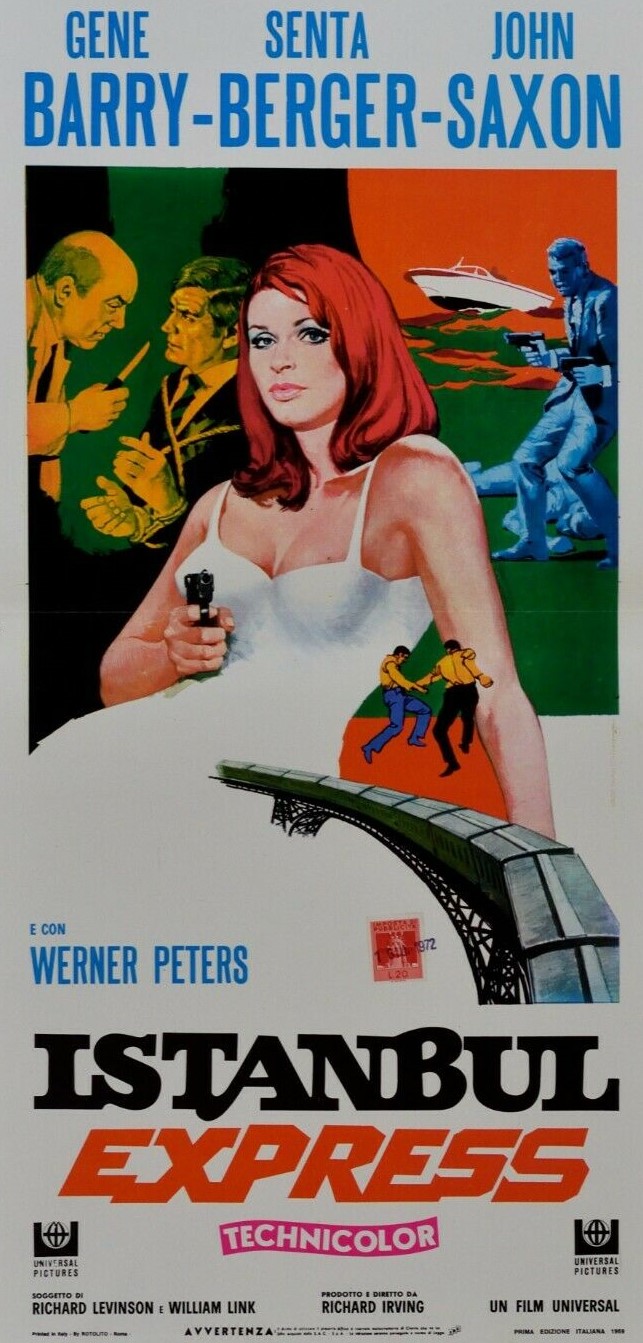
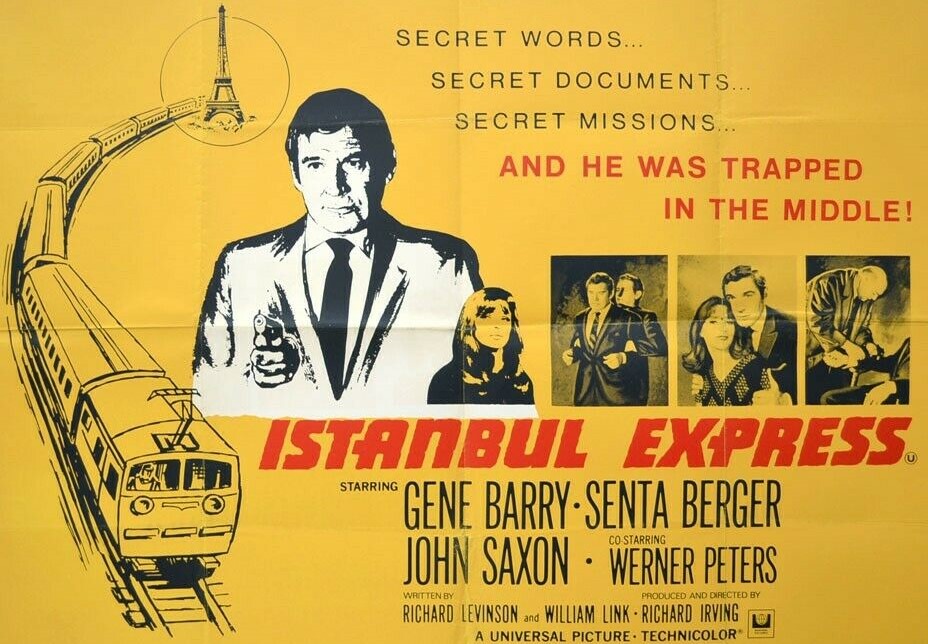
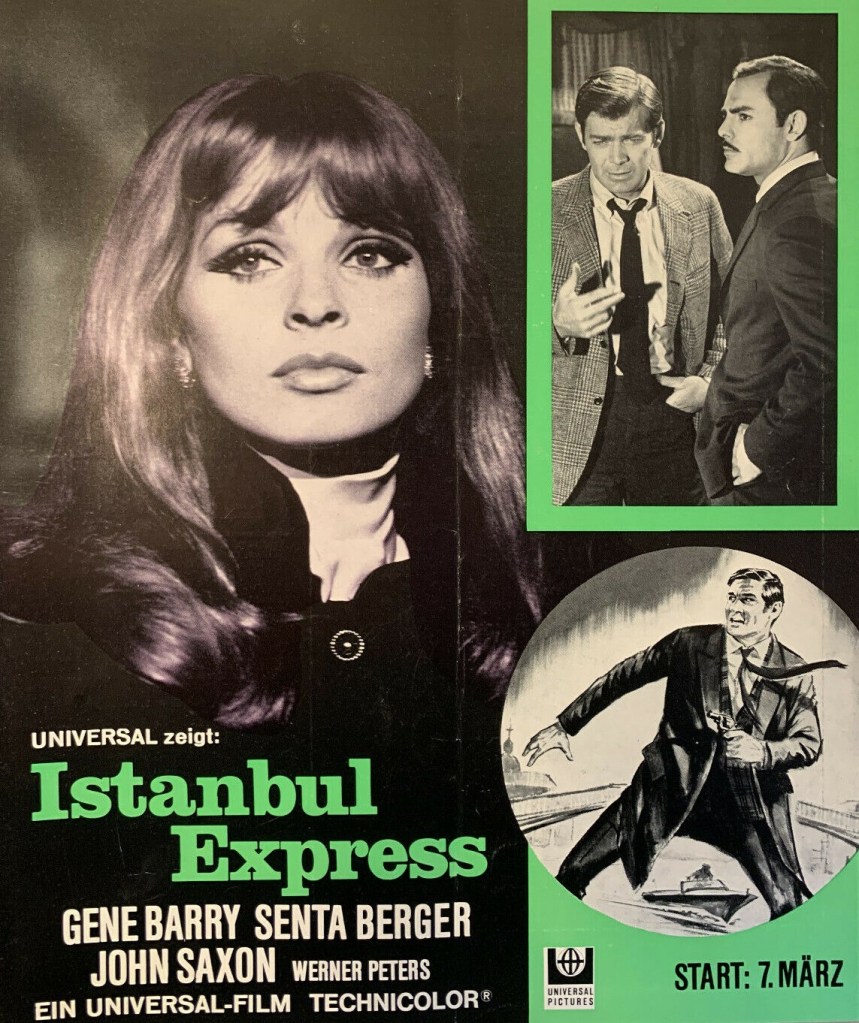
Istanbul Express (1968) ***

Calling this a by-the-numbers spy thriller does this movie no disservice since numbers are crucial to the complicated plot. On the one hand it’s quite a simple set up. Suave high-living art-dealer-cum-spy Michael London (Gene Barry) travels from Paris to Istanbul on the Orient Express to bid for secret papers in a secret auction. The complication: he must pick up the auction money from a bank in Istanbul using a code given to him along the way, each number by a different unknown person. On his side are train security chief Cheval (John Saxon), investigative journalist Leland McCord (Tom Simcox) and colleague Peggy (Mary Ann Mobley). Out to get him are Mila Darvos (Senta Berger) and Dr Lenz (Werner Peters).

The numbers business is an interesting addition to the usual spy picture formula of scenic location – Venice and the Eastern bloc as well as the other famous cities – violence and beautiful, sometimes deadly, women. You spend a good time guessing just how the numbers will be passed on and let me warn you it is sometime by inanimate means while the numbers themselves come with a twist. There’s also a truth serum, bomb threat, a traitor and every obstacle possible put in London’s way to prevent him completing his mission. London is about the world’s worst passenger, always missing the train as it sets off on the next leg of its journey, and requiring alternative modes of transport to catch up. But it’s as much about quick thinking as action and ends with a couple of unexpected twists. And it’s darned clever at times where the numbers are concerned.

Admittedly, the plot is a tad over-complicated but it’s fun to see London wriggle his way out of situations and for Cheval and McCord to turn up unexpectedly to provide assistance.

Gene Barry (Maroc 7, 1967) is little more than his television alter ego from Burke’s Law but he has an easy screen presence, never flustered, tough but charming and a winning way with the ladies. John Saxon (The Appaloosa, 1966) is the surprise turn, on the side of the angels rather than a villain, and equally commanding on screen, and certainly in one of his better roles. Austrian Senta Berger (Major Dundee, 1965) is not given as much screen time as you would like – a long way from being set up as the normal espionage femme fatale – but is certainly a convincing adversary.

This was only a movie if you saw it outside of the United States. There it was shown on television. But it had high production values for a television movie and director Richard Irving, who directed the television feature that introduced Columbo (Prescription Murder, 1968), keeps it moving at a healthy clip.  The numbers idea was probably a television device, allowing the opportunity for timed breaks in the action. Writers Richard Levinson and William Link were a class television act, creating Columbo, and prior to that the Jericho (1966-1967) and Mannix (1967-1975) television series.  

Interestingly, Senta Berger, John Saxon, Gene Barry, Levinson/Link and Richard Irving were all at various points involved in the groundbreaking U.S. television series The Name of the Game (1968-1971).

I had not realized Istanbul Express was a made-for-TV picture until I had finished watching it and in that case found it a superior piece of television and a decent-enough riff on the spy movie. You can catch it on Amazon Prime.

CATCH-UP: Senta Berger has featured in the Blog in The Secret Ways (1961), Sherlock Holmes and the Secret Necklace (1962), Major Dundee (1965), Bang! Bang! You’re Dead! (1966), Cast a Giant Shadow (1966) and The Quiller Memorandum (1966).

Topaz (1969) ****

Authentic, atypical, engrossing, this grittier Hitchcock mixes the realism of Psycho (1960) and Marnie (1964) with the nihilism of The Birds (1963), a major departure for a canon that previously mostly spun on innocents or the falsely accused encountering peril. The hunt for a Russian spy ring by way of the Cuban missile crisis forms the story core but the director is more interested in personal consequence and even the villain suffers heart-rending loss. Betrayal is the other key theme – defection and infidelity go hand in hand.

The tradecraft of espionage is detailed – dead letter drops, film hidden in typewriting spools, an accidental collision that is actually a sweet handover. In a transcontinental tale that shifts from Copenhagen to New York to Cuba to Paris, there is still room for classic sequences of suspense – the theft of secret documents in a hotel the pick – and Hitchcock at times simply keeps the audience at bay by employing dumbshow at key moments.    

In some respects the director was at the mercy of his material. In the documentary-style Leon Uris bestseller (almost a procedural spy novel), the main character is neither the trigger for the plot nor often its chief participant and is foreign to boot. So you could see the sense of employing a cast of relative unknowns, otherwise an audience would soon grow restless at long absences from the screen of a Hollywood star of the caliber of a Cary Grant or Paul Newman. It is a florist (Roscoe Lee Browne) who carries out the hotel theft, a small resistance cell the spying on Russian missiles in Cuba, a French journalist who beards one of the main suspects, not the ostensible main character, French agent Andre Devereux (Frederick Stafford), not his U.S. counterpart C.I.A. operative Michael Nordstrum (John Forsythe) nor Cuban villain Rico Parra (John Vernon).

Unusual, too, is the uber-realism. The main characters are fully aware of the dangers they face and of its impact on domestic life and accept such consequence as collateral damage. It is ironic that the Russian defector is far more interested in safeguarding his family than Devereux. Devereux’s wife (Dany Robin), Cuban lover Juanita (Karin Dor) and son-in-law (Michel Subor) all suffer as a result of his commitment to his country. And that Juanita (Karin Dor), leader of the Cuban resistance cell, is more of a patriot than the Russian, refusing to defect when offered the opportunity. Hitchcock even acknowledges genuine politics: the reason a Frenchman is involved is because following the Bay of Pigs debacle in 1961 American diplomats were not welcome in Cuba.

In terms of bravura Hitchcock, the pick of the scenes are the hotel theft and the death of one of the principals, filmed from above.

I have steered clear of this film for over half a century. I saw it on initial release long before the name Hitchcock meant anything to me. But once it did I soon realized this film did not easily fit into the classic Hitchcock and the critics on whom I relied had always represented it as shoddy goods. So I came to it with some trepidation and was surprised to find it so engrossing.  

Frederick Stafford (O.S.S. 117: Mission for a Killer, 1965) was excellent with an insouciance reminiscent of Cary Grant and a raised eyebrow to match that star’s wryness. John Vernon, who I mostly knew as an over-the-top villain in pictures such as Fear Is the Key (1972), was surprisingly touching as the Cuban bad-guy who realizes his lover is a traitor. And there is a host of top French talent in Michel Piccoli (Belle de Jour, 1967), Philippe Noiret (Justine, 1969) Dany Robin (The Best House in London, 1969) and Karin Dor (You Only Live Twice, 1967).

As you are possibly aware, three endings were shot for this picture and I can’t tell you which I saw without spoiling the plot. If you want to know, read tomorrow’s Blog.

In any case, this is worth seeing more than just to complete a trawl through the entire Hitchcock oeuvre, a very mature and interesting work.

Maroc 7 (1967) ***

With a string of Swinging Sixties fashion models providing the requisite bevy of beauties, a gang of thieves, a Moroccan heist, superb locations, great cast and a touch of archaeology with secret chambers and a long-lost relic thrown in, this splendid espionage frolic proves a welcome return to big screen top billing for Gene Barry after nearly a decade in television in Bat Masterson (1958-1961) and  Burke’s Law (1963-1966).

Something of a cat burglar himself, Simon Grant (Barry) infiltrates a gang which uses fashion as a cover and whose ingenious speciality is to steal famous heirlooms and replace them with fake ones in the assumption that on their departure from a foreign country the customs officers will not be able to tell the difference. Louise Henderson (Cyd Charisse) and Raymond Lowe (Leslie Phillips) head up the gang while Claudia (Else Martinelli) may or may not be in on the act.

Her dalliance with Simon suggests an inclination towards the right side of the law but the fact that she has been involved with the pair for so long sets up the intriguing notion that she is stringing the American agent along. Initially, she rejects Simon’s advances until told by Louise to comply and pump him for information leading to one of the movie’s best lines (and innuendo that a British audience in particular would adore). Says Simon: “We haven’t done much about pumping but maybe that will come later.”  Doubts also surround the intentions of Michelle Craig (Alexandra Stewart).  On their trail is Inspector Barrada (Denholm Elliott).

There is mystery aplenty and a fair quotient of punch-ups, romance, shoot-outs and murder while the unearthing of the hidden treasure is less heist amd more straightforward Indiana Jones. The fashion is the icing on the cake. The Moroccan fashion shoots are more than merely decorative, or an excuse to bare the charms of the gorgeous models. Instead, the shoots would not disgrace Vogue or any of the other glossy magazine temples to haute couture, with that Sixties focus on fabulous clothes, genuine location and outlandish hairstyles.

On top of that, several of the stars are either playing against type or out of their comfort zones. Legendary Hollywood dancer Cyd Charisse famed for such classic musicals as The Bandwagon (1953) and Silk Stockings (1957) sets such fluff aside to essay a criminal mastermind, whose cunning often gets the better of Simon. Leslie Phillips (Crooks Anonymous, 1962), better known as a charming Englishman with an eye for the ladies, is as ruthless a photographer as he is a criminal. Director Gerry O’Hara (The Pleasure Girls, 1965) has managed to get both Phillips and Denholm Elliott to drop their standard methods of delivery, usually embracing a drawl, making their characterisations a good bit more fresh than normal. Phillips was clearly intending to make some kind of career change since he was the producer.

Gene Barry makes a perfect entrance as an adventurer-spy, as confident in his seduction techniques without women falling at his feet like James Bond, with a nice line in self-deprecation and more than able to look after himself. Before being side-tracked by television, Barry had shown movie star potential in War of the Worlds (1953) and Thunder Road (1958) and now he delivers on that earlier promise. Elsa Martinelli (Hatari!, 1962) is the femme fatale who may or may not wish to play that role, keeping the audience completely on edge as to which side of the law she is likely to come down on. Added bonuses are Alexandra Stewart (Only When I Larf, 1968), Angela Douglas (Carry On Screaming!, 1966), Tracy Reed (Hammerhead, 1968), dancer Lionel Blair (A Hard Day’s Night, 1964) and Maggie London.

Readers’ Top 30

I’ve been writing this Blog now for one year, beginning July 2020, so I thought I’d take a look at which posts proved the most popular (in terms of views) with my readers. So here’s the annual top 30 films, ranked in order of views.

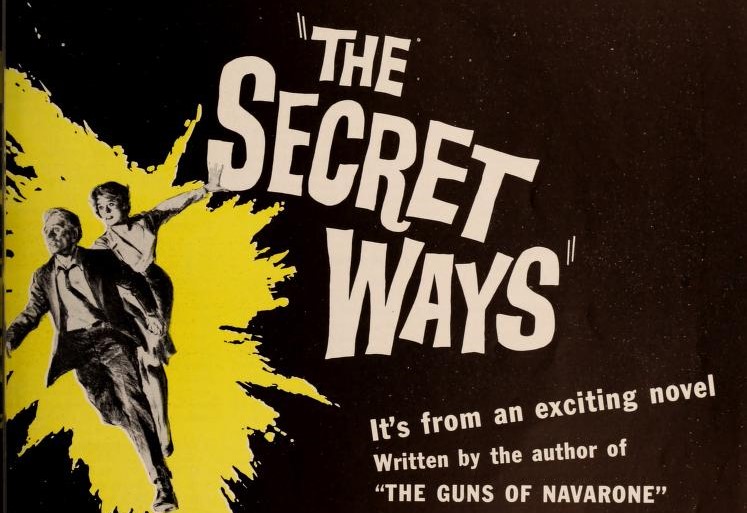
  1. The Secret Ways (1961) – Richard Widmark and Senta Berger – making her Hollywood debut – behind the Iron Curtain in gripping adaptation of the Alistair Maclean thriller.
  2. Ocean’s 11 (1960) – Frank Sinatra, Dean Martin, Sammy Davis Jr. and the Rat Pack in entertaining heist movie set in Las Vegas.
  3. It’s Not All Rock’n’Roll (2020) – remarkable documentary about the other side of the music business as ageing rocker Dave Doughman tries to keep his dreams alive.
  4. Age of Consent (1969) – British actress Helen Mirren makes her movie debut as the often naked muse for painter James Mason in touching drama directed by Michael Powell.
  5. The Venetian Affair (1966) – Robert Vaughn shakes off his The Man from Uncle persona in taut Cold War thriller also starring Elke Sommer as his traitorous wife and Boris Karloff in a rare non-horror role.
  6. The Golden Claws of the Cat Girl / La Louve Solitaire (1968) – French cult thriller starring Daniele Gaubert as sexy cat burglar forced to work for the government.
  7. Pharoah / Faron (1966) – visually stunning Polish epic about the struggle for power in ancient Egypt.
  8. The Swimmer (1968) – astonishing performance by Burt Lancaster as a man losing his grip on the American Dream.
  9. Stiletto (1969) – Mafia thriller with hitman Alex Cord and and illegal immigrant girlfriend Britt Ekland hunted by ruthless cop Patrick O’Neal.
  10. The Naked Runner (1967) – after his son is taken hostage businessman Frank Sinatra is called out of retirement to perform an assassination.
  11. Marnie (1964) – Sean Connery tries to reform compulsive thief Tippi Hedren in Alfred Hitchcock thriller.
  12. Our Man in Marrakesh / Bang! Bang! You’re Dead (1966) – Entertaining thriller sees Tony Randall and Senta Berger mixed up in United Nations plot involving the likes of Klaus Kinski and Herbert Lom.
  13. The Happening (1967) – Anthony Quinn locks horns with Faye Dunaway and a bunch of spoiled rich kids in kidnapping yarn.
  14. Dark of the Sun / The Mercenaries (1968) – Rod Taylor and Jim Brown head into the heart of darkness in war-torn Africa with a trainload of diamonds and refugees including Yvette Mimieux.
  15. The Guns of Navarone (1961) – men-on-a-mission Alistair Maclean World War Two epic with all-star cast including Gregory Peck, David Niven, Anthony Quinn, Anthony Quayle, Stanley Baker, Irene Papas, James Darren and Gia Scala.
  16. The Sicilian Clan (1969) – three generations of French tough guys – Jean Gabin, Lino Ventura and Alain Delon – clash in Mafia-led jewel heist.
  17. 4 for Texas (1963) – Frank Sinatra and Dean Martin as double-dealing businessmen in highly entertaining Robert Aldrich Rat Pack western starring Ursula Andress and Anita Ekberg.
  18. Five Golden Dragons (1967) – Innocent playboy Robert Cummings becomes enmeshed with international crime syndicate led by Christopher Lee, George Raft and Dan Duryea.
  19. Duel at Diablo (1966) – James Garner and Sidney Poitier team up to protect Bibi Andersson in Ralph Nelson western.
  20. Move Over Darling (1963) – after years marooned on a desert island Doris Day returns to find husband James Garner just married to Polly Bergen.
  21. Pressure Point (1962) – prison psychiatrist Sidney Poitier is forced to treat paranoid racist inmate Bobby Darin.
  22. Wonder Woman 84 (2020) – in one of the few films to get a cinematic screening during lockdown, Gal Gadot returns as mythical superhero to battle supervillain Kristen Wiig.
  23. Genghis Khan (1965) – Omar Sharif as the Mongol warrior who conquered most of the known world, tangling with rival Stephen Boyd and Chinese mandarin James Mason on the way.
  24. A Fever in the Blood (1961) – Warner Bros wannabes Efrem Zimbalist Jr, Angie Dickinson, Jack Kelly and veteran Don Ameche in tough political drama.
  25. The Prize (1963) – Paul Newman and Elke Sommer investigate murder in the middle of the annual Nobel Prize awards in Sweden.
  26. In Search of Gregory (1969) – wayward Julie Christie embarks on pursuit of Michael Sarrazin who may – or may not – be a figment of her imagination.
  27. Justine (1969) – Dirk Bogarde and Michael York become entangled in web woven by Anouk Aimee in corrupt pre-World War Two Middle East.
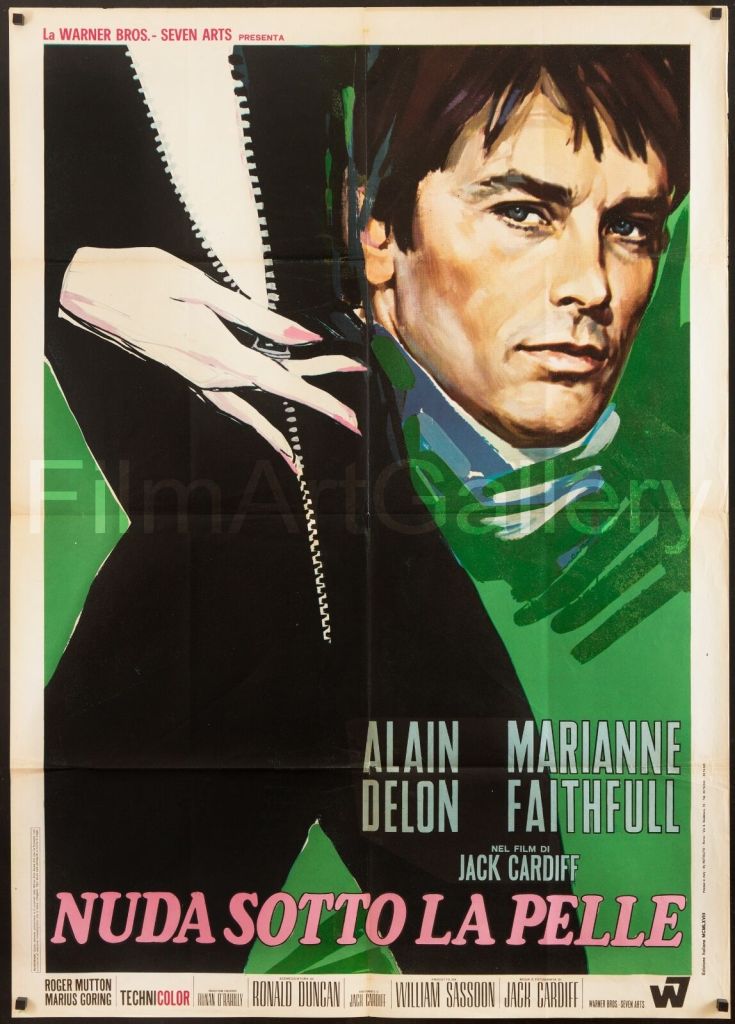
  28. The Girl on a Motorcycle (1968) – singer Marianne Faithful in a hymn to the open road and sexual freedom.
  29. Blindfold (1965) – psychiatrist Rock Hudson and dancer Claudia Cardinale in highly entertaining mystery thriller about missing scientists.
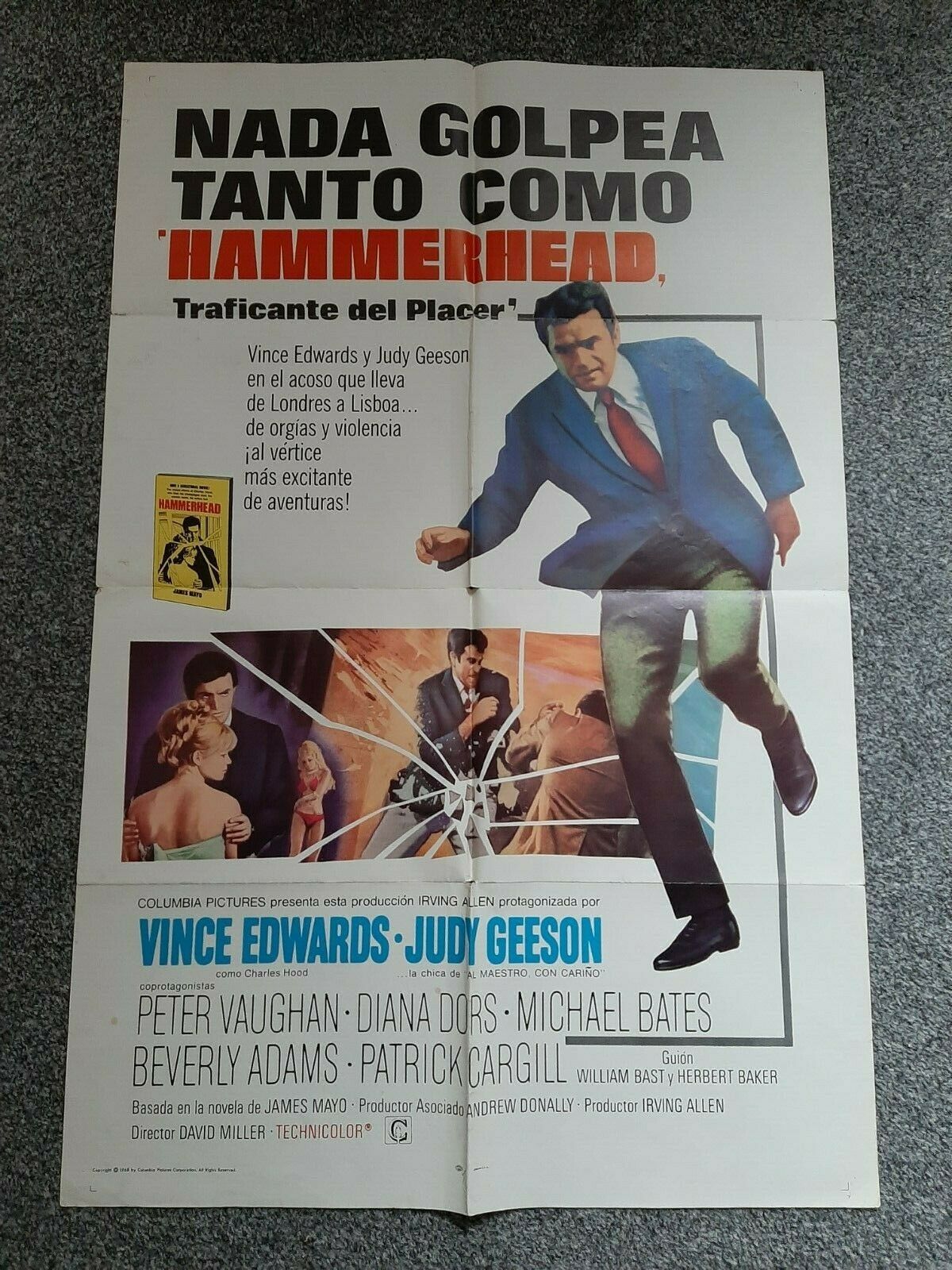
  30. Hammerhead (1968) – secret agent Vince Edwards and goofy Judy Geeson on the trail of evil mastermind Peter Vaughn.

The Liquidator (1965) ****

Brilliant premise, brilliant execution, brilliant acting. The best send-ups are driven by their own internal logic and this is no exception: spy boss, known simply as The Chief (Wilfred Hyde White), determines in most un-British fashion to get rid off a mole in the operation by eliminating all potential suspects. Bristling Colonel Mostyn (Trevor Howard) recruits Boysie Oakes (Rod Taylor) for the job, believing Oakes showed particular gallantry during World War Two, unaware this was pure accident. Oakes is given all the perks of a super spy – fast cars, fashionable apartment – and attracts women in a way that suggest this is also a perk and once realizing that being a killer is outside his comfort zone delegates the dirty work to another hit man Griffen (Eric Sykes).

The sweet life begins to unravel when Oakes takes a weekend abroad with Mostyn’s secretary Iris MacIntosh (Jill St John) and is kidnapped. Forced to battle for survival, another Oakes emerges, a proper killer.  Cue the final section which involves trapping the mole.

Where films featuring Matt Helm and Derek Flint imitated the grand-scale espionage they aimed to spoof, the laughs here come from small-scale observation and attacks on bureaucracy. According to regulations, Oakes’ liaison with MacIntosh is illicit. There is endless paperwork. Apart from an aversion to needless killing, Oakes has terrible fear of flying. Nobody can remember code names or passwords. Oakes’ automobile numberplate is BO 1 (the letters in those days being a standard acronym for “body odor”). It is all logical lunacy. And even when the story gets serious, it follows logic, a ruse, a dupe, a climax pitting resolve against human weakness.

Best of all, the parts appear custom-made for the players. Rod Taylor (The Birds, 1963), in his first venture into comedy, displays a knack for the genre without resorting to the slapstick and double takes requisite in the Doris Day pictures to follow. And he is a definite screen charmer.

By this point in his career the screen persona of Trevor Howard (Von Ryan’s Express, 1965) had been shorn of subtlety. He was generally one choleric snort away from a heart attack. Here, while the narrative pricks his pomposity, he remains otherwise ramrod certain. The audience is in on the joke, but nonetheless his genuine ability as a spy master is not in question. On the other hand Jill St John (Who’s Minding the Store, 1963) is allowed considerable leeway in the subtlety department, as a demure English rose rather than the sexier roles into which she was later typecast.  In some respects British television comedian Eric Sykes is miscast. It is a particular English joke to present him as a killer since on television (in shows unlikely to be shown in America) he was hapless.

And it is worth mentioning Akim Tamiroff whose villainous stock-in-trade is allowed greater depth. David Tomlinson (Mary Poppins, 1964) and Gabriella Licudi (You Must Be Joking!, 1965), have small parts. Aso watch out for future British television stars Derek Nimmo (Oh, Brother, 1968-1970) and John Le Mesurier (Dad’s Army, 1968-1977) as well as Jennifer Jayne (Hysteria,1965) and Betty McDowall (First Men in the Moon, 1964).

Director Jack Cardiff had tried his hand at comedy before with My Geisha (1962) starring Shirley Maclaine but was better known for Oscar-nominated drama Sons and Lovers (1960) and action picture The Long Ships (1964).  John Gardner, who wrote seven books in the Boysie Oakes series, later penned James Bond novels.

It is well worth considering whether The Liquidator would have punctured the success of both Our Man Flint (1966) and The Silencers (1966) and sent spy spoofery in a different direction. It had premiered in the U.K. prior to both but litigation held up its American launch  until long after that pair had gone on to hit box office heights.

Catch-Up: Previously reviewed in the Blog are Jack Cardiff’s The Long Ships, Rod Taylor in The Glass Bottom Boat (1966) and Hotel (1967) and Trevor Howard in Operation Crossbow (1965) and Von Ryan’s Express (1965).

Hammerhead (1968) ***

Zest and Zero might be a more appropriate title for this late “so-bad-it’s-good” addition to the 1960s spy cycle. Judy Geeson (Here We Go Round the Mulberry Bush, 1967) is the firecracker to Vince Edwards’ (television’s Ben Casey) fizzle. It’s colorful vs. colorless. Edwards, as art connoisseur Charles Hood (from the James Mayo book series), is meant to be a cut above the normal spy when in fact he hardly makes the cut. Hood is on the trail of the evil Hammerhead (a white-gloved Peter Vaughan). Sue Trenton’s (Geeson) lust for life takes her from participation in uninhibited art spectacle to classier cabaret, at various points leaping headfirst into the story, sorely disappointed to discover that Hood is not the international jewel thief of her imagination but a mere spy.

A far cry from the audacity of James Bond or the spoofery of Matt Helm or Derek Flint, nonetheless you can’t imagine this was ever taken seriously. But Geeson’s light touch is trampled all over by the ponderous Edwards. Quite how director David Miller went from Back Street (1961), Lonely Are the Brave (1962) and Captain Newman M.D. (1963) straight into this is anyone’s guess. He ran out of ideas pretty quick, the wardrobe budget minimal, Geeson much of the time restricted to a towel or bra and panties, an entire scene of Ivory (Beverley Adams) gyrating in a bikini, other sequences set against a backdrop of scantily-clad females.

The plot is non-existent. Hood doesn’t even know what he’s chasing – a “secret report” of some kind. Halfway between camp and incompetent, the picture scores in unintentional ways. Hammerhead makes a grand entrance – lowered in a cradle from a helicopter! The big chase involves a hearse. Trenton, who can’t sing, gets to sing. Occasionally the comedy is intentional, a taxi driven onto the shore a few scenes later is stranded by the incoming tide. Needing somewhere to screen some stolen footage, Hood invades a blue movie club. Avoiding a villain in a post office, Trenton plays a version of pass-the-parcel. The monosyllabic steal the picture – in reply to Hood’s pestering, a manservant’s inevitable reply is “it depends” and that of the dancing Ivory “louder.” But the biggest opportunity for Bond-style gags, Hood and Trenton trapped in a coffin, is wasted, although there is a nod to Thunderball in the harpoonery department.

Perhaps what best passes the time is the opportunity for star-spotting. British sexpot Diana Dors, complete with lipstick transmitter, puts in an appearance. There is a flock of British television actors in Patrick Cargill (Father, Dear Father), Michael Bates and Windsor Davies (both It Ain’t Half Hot, Mum), William Mervyn (All Gas and Gaiters), Tracy Reed (Doctor Finlay’s Casebook) and Kenneth Cope (Randall and Hopkirk, Deceased). Dave Prowse (Star Wars) makes his movie debut and former top British star Kathleen Byron (Black Narcissus, 1947) has a small role. Beverly Adams is almost a spy film mascot, with The Silencers (1966), Kiss the Girls and Make Them Die (1966), Murderer’s Row (1966) and The Ambushers (1967) in her locker. The gaggle of gals includes future Hammer star Veronica Carlsen (Dracula Has Risen from the Grave, 1968), Maggie Wright (Sex and the Other Woman, 1972) and former Slaygirl and 2001: A Space Odyssey stewardess Penny Brahms (The Games Lovers Play, 1971).

You half expect Judy Geeson to turn out to be a femme fatale or at least a decoy or there to provide a plot twist. But, no, she is just an adventuress, at times inventive and resourceful. Just a shame that an outing with the dull Edwards would put anyone off adventure for life.

A romp of the wrong kind for sure.

The Venetian Affair (1966) ****

Robert Vaughn gives a terrific performance as a numbed alcoholic ex-C.I.A. journalist drafted into Venice to investigate a plot involving ex-wife and Communist defector Elke Sommer. He’s the spy who lost it rather than a flashy contemporary of James Bond. This occasionally very stylish number kicks off with an excellent credit sequence that concludes with a suicide bomber blowing up a nuclear disarmament conference. Unshaven and with a Columbo cast-off overcoat, Vaughn discovers Sommer was key to the atrocity, the bomber an otherwise distinguished diplomat with no known proclivities in the area of mass murder.

Although sold as an action picture, nobody is ripping through the canals as in a Bond film, and it is altogether a more somber, reflective, intelligent  movie. Vaughn’s feelings for his ex-wife are shown when, in her apartment, he tenderly touches her clothes and smells her perfume. Far from being party to the plot, it appears Sommer has had a change of heart and wants to defect back, leaving Vaughn in a perilous dilemma. Does he believe her or is she just using him? It is beginning to sound like a modern-day film noir, except he is already being used by the C.I.A., his presence in Venice a device to draw Sommer out, C.I.A chief Rosenfeld (Edward Asner) every bit as ruthless as the villains.

His investigations lead him to Dr Pierre Vaugiraud (Boris Karloff) and power broker Robert Wahl (Karl Boehm) who possesses a mind-altering drug that can make a man terrified of a mouse, send him into a trance and on his way to deliver savage retribution. There is death aplenty, fisticuffs and chases and Sommer, in hiding disguised as a nun, is worth waiting for.

Based on the bestseller by Scottish novelist Helen MacInnes, who outsold Alistair Maclean in her day, the project was at one point to be directed by Guy Hamilton. Coincidentally, David McCallum, Vaughn’s co-star in The Man from U.N.C.L.E. television series, was in Venice at the same time shooting Three Bites of the Apple.

Vaughn is superb in a downbeat role – shaking off his Napoleon Solo television persona- never sure if he is being duped, on the rack from falling back in love, and emerging from an alcoholic haze with a few decent ruses up his sleeve. It’s often forgotten that this is an Oscar-nominated (for The Young Philadelphians, 1959) star and that the subtlety of his performance in The Magnificent Seven (1960) is generally overlooked.

Television stalwart Jerry Thorpe making his debut contributes some interesting moments. Interpreters listening in to the conference hear the magnified ticking of the bomb moments before explosion. A sequence on a train is well done and the activity surrounding the mouse is first class. There’s a solid cast, Asner menacing even as a good guy, Karl Boehm a charismatic villain, Karloff memorable in his last performance in a non-horror picture, and interesting appearances by Felicia Farr as a C.I.A agent masquerading as the murderous diplomat’s unsuspecting mistress and Luciana Paluzzi as the girlfriend of an agent. Lalo Schifrin produces an outstanding score.

It was a flop first time round because audiences, partly duped by the title (all Uncle episodes incorporated the word “Affair” although the book, in fairness, was written long before the television series was envisioned) expected to pay to see Napoleon Solo, or something quite like him, on the big screen, with all the pizzazz and gimmickry of the small-screen show. Unfairly under-rated, this is a really satisfying thriller set against a murky Cold War background with Vaughn, trapped between love and redemption, the only character with a streak of morality.

Discover WordPress

A daily selection of the best content published on WordPress, collected for you by humans who love to read.

The Atavist Magazine

by Brian Hannan

WordPress.com News

The latest news on WordPress.com and the WordPress community.