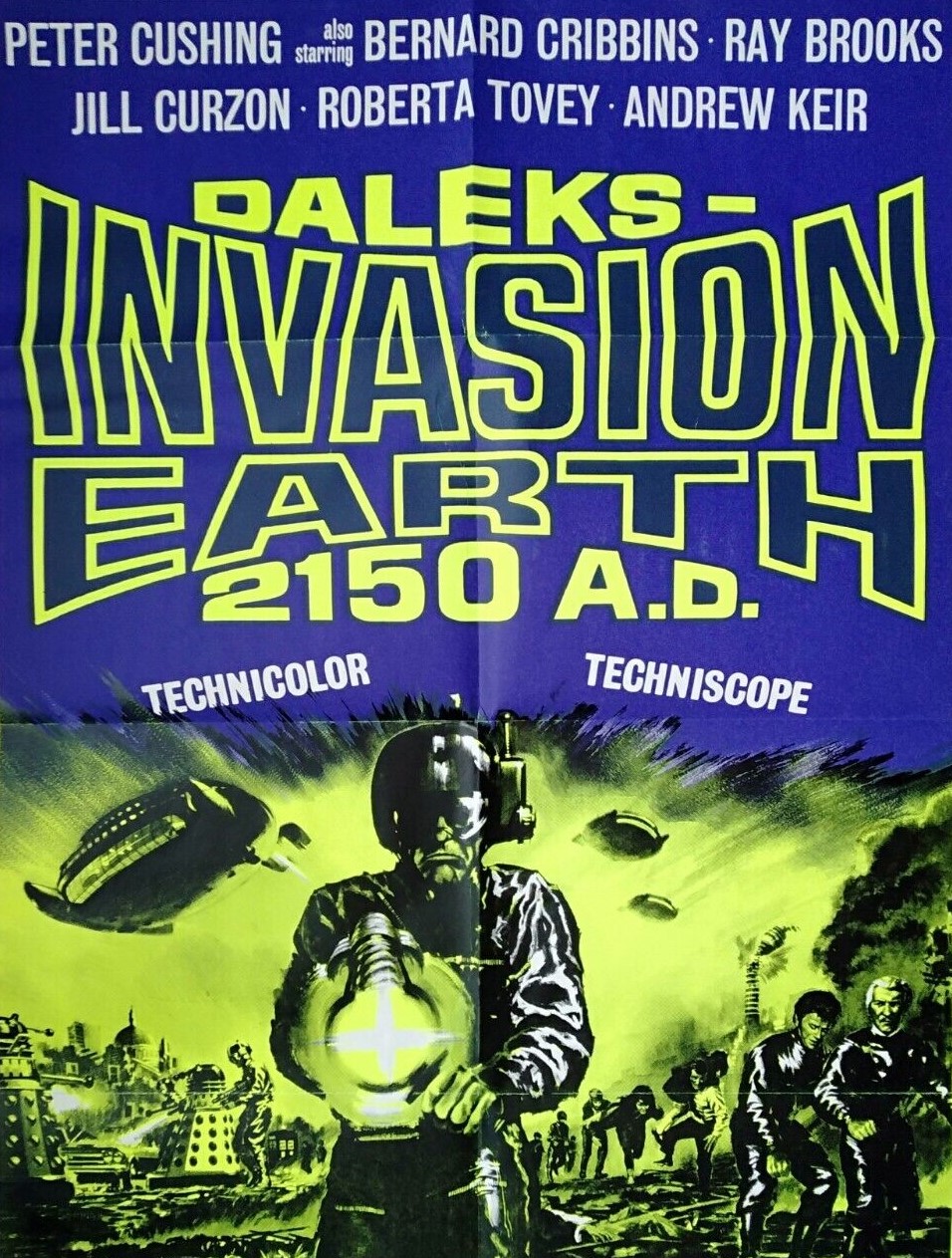
Daleks’ Invasion Earth 2150 A.D. (1966) ***

Sequels being all the rage – James Bond, Matt Helm, Derek Flint, The Pink Panther, The Magnificent Seven – in the 1960s it was no surprise that the success of Dr Who and the Daleks (20th top film at the British box office in 1965) suggested that a second go-round might be as profitable. As was standard, a recurring formula was the key.

In this case, Dr Who (Peter Cushing) and grand-daughter Susan (Roberta Tovey) repeated their previous roles though another grand-daughter Barbara (Jennie Linden) was replaced by a niece Louise (Jill Curzon) and hapless passenger Ian (comedian Roy Castle) was ousted in favour of  hapless London cop Tom (comedian Bernard Cribbins). But returning director Gordon Flemyng (The Split, 1968) upped the ante. Instead of waiting ages for the dreaded mechanical monsters with their electronic catchphrase (“Exterminate”) to appear, they turn up virtually in the first reel.

As if to emphasise the versatility of the Tardis, this time instead of space travel it’s time travel, Dr Who turning up in a blitzed London virtually two centuries ahead only to discover his nemesis rules the planet. It being set in a familiar locale, nobody is loaded down with information dumps, a tedious feature of the first picture, and it doesn’t take as long to get going, and our heroes, in various configurations, and while befriending the rebels – leader Wyler (Andrew Keir) and David (Ray Brooks) – endure a cycle of trap and escape while the good doctor tries to work out what brought the daleks to his home planet.

I’m giving this the benefit of the doubt and suggesting that the first appearance of the daleks is a homage to Dr No (1962) although one of the creatures emerging from the River Thames is hardly a patch in the sexy-entrance stakes as a bikini-clad Ursula Andress. Amidst all the mayhem, there are a couple of standout sequences, the best of which is a comedy skit involving Tom, disguised as a leather-clad member of the brainwashed automatons. This reminded me of Bob Hoskins in the first Super Mario Bros (1993 vintage) being trapped in an elevator with the Goombas. Tom is just too human to fit into this gang, constantly out of step with their actions.

Naturally, the Dr Who team are split up, allowing the action to move into two converging directions. The daleks plan to turn the planet into a giant spacecraft it can tow around, that storyline somehow involving a mining operation outside London while there’s some clever sci fi tomfoolery using the Earth’s magnetic poles to destroy the enemy.

Oops, I’ve given away the climax. Not that anybody cares that much, the main fun being the escaping formula – the daleks even use this as a plot twist, commending the intelligence of any human who can manage to escape – and watching the doctor outwit the enemy. Actually, the main fun is the dastardly daleks. Every time they appear you can imagine yourself back in a cinema crammed with thousands of kids yelling “Exteminate! Exterminate!”  

The plot keeps rolling along, no time to draw breath. And we’re not having to bother with any of the boring MCU claptrap intent on giving the super-villains a backstory or expiating their evil brains. The daleks represent alien domination, and they’re not here to give lectures on inhumanity or peace. In their determination to kill, they could almost be contemporary, given the number of serial killers and/or madmen clogging up cinema screens.

If not conspicuously inventive, Gordon Flemyng’s management of a large cast and a variety of action brought him to Hollywood attention. Given the storied career of Peter Cushing (The Skull, 1965) storied career, his performances as the doctor are generally overlooked, which is a pity, because he is certainly among the best to essay this character.  Carry On regular Bernard Cribbins livens up proceedings without needing to resort to slapstick in the Roy Castle mode. This must have seemed a bit of a come down for Ray Brooks after unexpected hit The Knack (1965) but he always seemed more at home on the small screen (although Flemyng hired him again for The Last Grenade, 1970).

The series ended here after the movie flopped on home territory. The original had bombed in the States, so the producers were heavily dependent on British box office. I guess just getting U.S. audiences aware there was such a thing in Britain as a “police box” would have been harder to grasp than the fact that it housed a time machine, and that the interplanetary craft was just there without a whole story about how it had come into being.

Made on a miserly budget by anybody’s standards, the sfx was never going to come up to scratch. But who cares.

“Exterminate! Exterminate!”

https://amzn.to/3FkXVJa

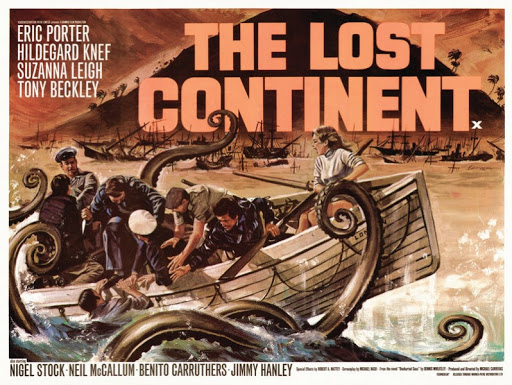
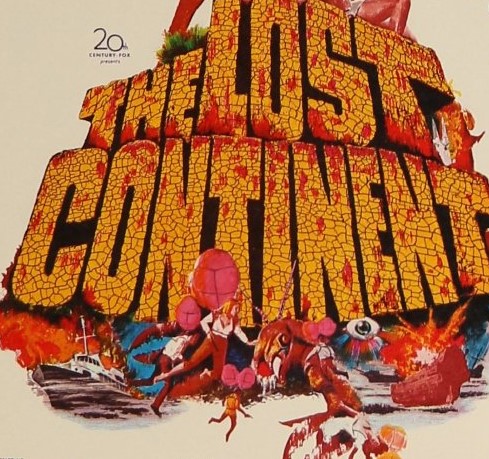
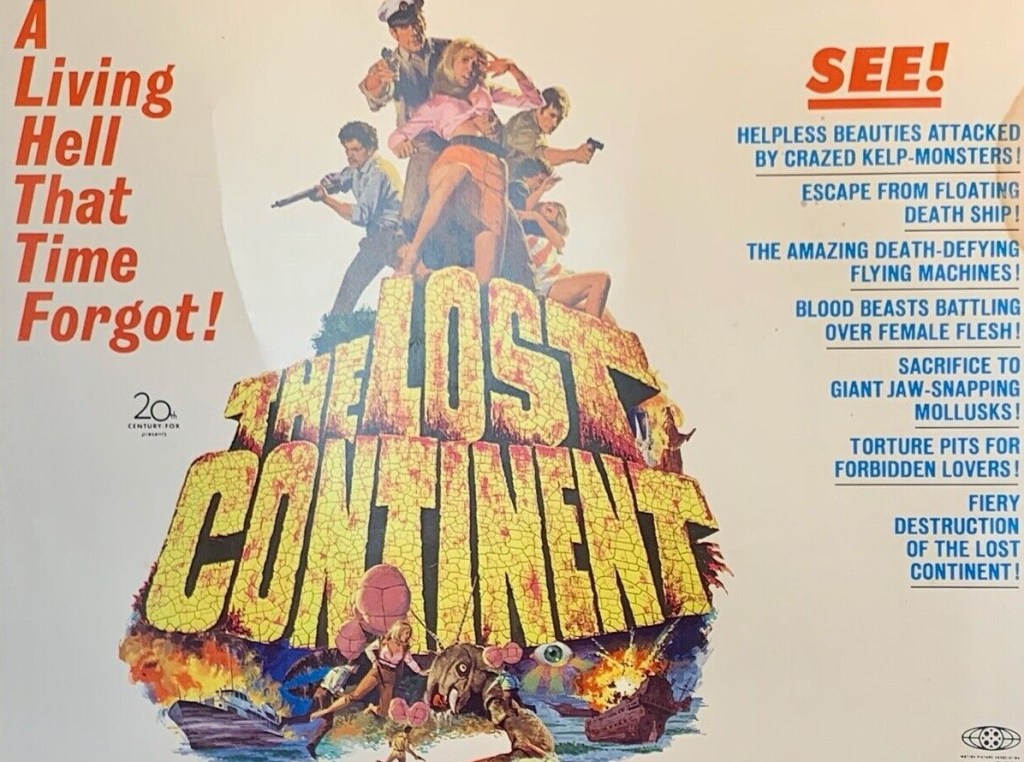
The Lost Continent (1968) ***

Hammer had struck gold revisiting ancient civilization in One Million Years B.C. (1966) and with its adaptation of Dennis Wheatley’s The Devil Rides Out (1967). The Lost Continent was another Wheatley number (source novel Uncharted Seas) mixing dangerous voyage, hints of the legendary Atlantis, and monsters. While the first half could have been marketed as The Wages of Fear At Sea the second half would come under the heading  “The Greatest Oddball Film Ever Made.”

It boasts one of the most intriguing setting-the-scene openings not just of a Hammer picture but of any film – a camera pans along a steamship on whose deck are: people dressed in furs, others in modern clothing and – Conquistadors. Attention is focused on a coffin.  How and why they got there is told in flashback. A first half of taut drama, mutiny, sharks, a ferocious octopus, and lost-at-sea a thousand miles from land segues into sci-fi with carnivorous weeds, monsters, and a weird, weird world.

It’s hard to know what’s worse, Captain Lansen (Eric Porter) with a cargo of toxic chemicals made combustible when touched by water or the equally combustible passengers all with murky pasts, so determined to escape their previous lives that they refuse to turn back in the face of a hurricane. Heading the Dodgy Half-Dozen is dictator’s mistress Eva (Hildegarde Knef) with two million dollars in stolen securities and bonds. Dr Webster (Nigel Stock), a back-street abortionist, is at odds with daughter Unity (Suzanna Leigh), who has cornered the market in backless dresses. Harry (Tony Beckley)  (The Penthouse, 1967) plays a conman while Ricaldi (Ben Carruthers) is trying to recover the pilfered bonds.

But the arrival of cleavage queen Sarah (Dana Gillespie) as an escapee from the weird world signals a shift to Planet Oddball. The only way to navigate the weeds trapping the ship is with a primitive version of snowshoes with balloons attached to the shoulders. Soon they are trapped in the past, not as prehistoric as One Million Years BC (1966), just a few centuries back to the Spanish Conquistador era. The film steals the idea from the Raquel Welch picture of giant creatures locked in battle but without going to the necessity of hiring Ray Harryhausen.

You couldn’t legislate for the movie’s logic and you shouldn’t even try, just go with the weird flow. It’s on safe enough territory until like The Hangover (20090  it has to explain the bizarre opening sequence. If ever a film has bitten off more than the special effects can chew, it’s this, but it’s still fun watching it try.

The casting relied heavily on actors best known from television or rising stars. Eric Porter was straight from BBC television mini-series mega-hit The Forsyte Saga (1967). Nigel Stock essayed Dr Watson in the BBC Sherlock Holmes series (1964-1968). Falling into the emerging-star category were:  Tony Beckley (The Penthouse, 1967), Suzanna Leigh (The Pleasure Girls, 1965) Neil McCallum (Catacombs / The Woman Who Wouldn’t Die, 1965), and Dana Gillespie (Secrets of a Windmill Girl, 1966). Hildegarde Knef (Mozambique, 1964) was just about the most experienced.

In this kind of picture, without being sexist about it, if a woman is required to do more than just scream, it often indicates she has the better part. And so it is here. Leigh and Knef hog the dramatic highlights while Gillespie, courtesy of her outfit and footwear, can’t help but steal the show.

On board ship, director Michael Carreras, fresh from Prehistoric Women (1967), does well, the characters are all solidly presented with decent back stories, but once he enters weird world budget deficiencies sabotage the picture. Even so, it’s worth a look just to see what you’re missing. If you’re looking for a genuine freak show, this ticks the boxes.

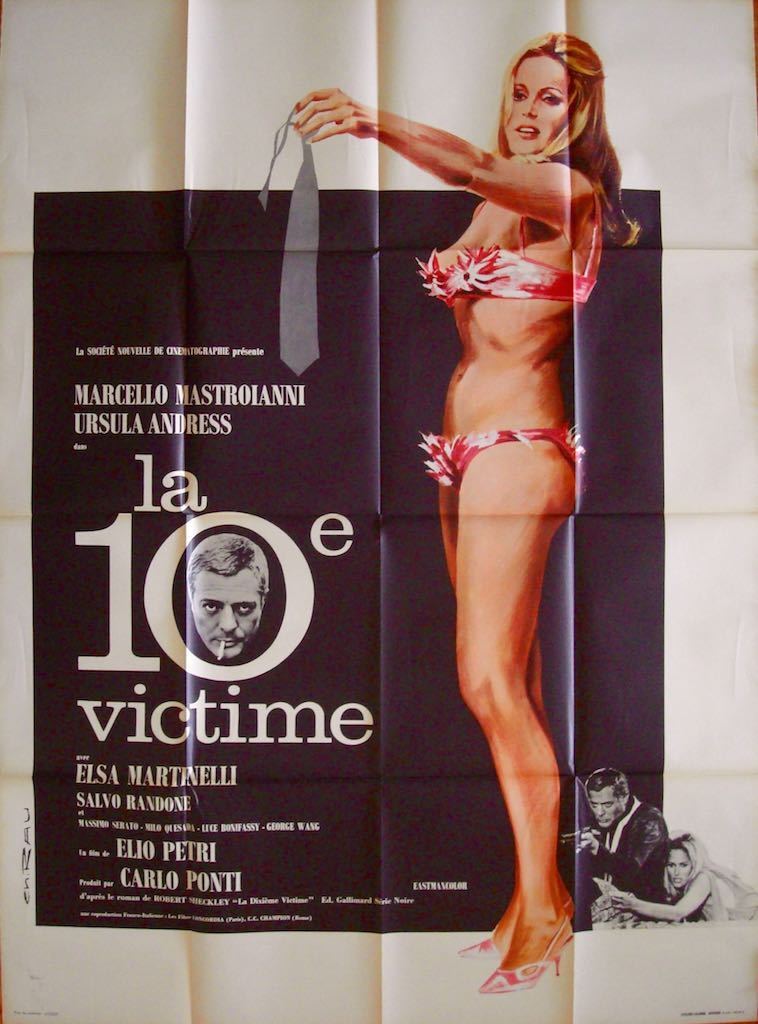
The 10th Victim (1965) ****

Sexy, stylish, sci-fi that spawned a host of imitators. Its key issue, population growth, has only  worsened since the movie appeared though killing for sport goes back to the Roman gladiators and government-sponsored killing – aka genocide – is hardly so novel. And it sets up a feminist perspective – the female killer is deadlier than the male, experience counting for everything in the assassination game.

None of the villainous females in the decade’s myriad spy films, not even the vicious pairs that gave Bulldog Drummond such a headache, could match the lethal striptease performed by authorized huntress Caroline (Ursula Andress) which culminates in a volley of bullets from her bra. Caroline is hoping to strike gold with her tenth killing, which not only brings a hefty financial bonus (and retirement) in itself, but could bring a massive bounty if captured on television and to that end she has negotiated a sponsorship deal with the Ming Tea Company, and adopts the façade of TV reporter.

Her potential victim is Marcello (Marcello Mastroianni) who would be rich enough from his six killings except his earnings have been squandered by ex-wife Lidia (Luce Bonifassy) and mistress Olga (Elsa Martinelli), not to mention the upkeep of his parents who he, illegally, has kept alive. To maintain his lifestyle he is the face of a cult worshipping the setting of the sun, but that gig is threatened by a rival cult of moon worshippers.

Set in 2079 in the aftermath of World War Three “The Big Hunt” is viewed as a legitimate method of curbing the instincts of those with violent tendencies, just the type to thirst for a fourth global conflagration. Participants must switch between being killer and potential victim, five times in each role. Naturally, victim can also take down assassin.

While attracted to Caroline, Marcello is nonetheless suspicious of the sexy reporter who in the course of claiming to be doing a story on the sexual habits of Italian men attempts to entice him to the ancient Temple of Venus in Rome where, naturally enough, sexy dancers in sexy costumes will be part of the show.

Assassination pictures are always complicated – check out The Manchurian Candidate (1962) or The Mechanic (1972) a decade later – and here the unexpected factor is love. But in the old love vs. money dynamic there’s a considerable twist, both protagonists seemingly more intent on worldly gain than enriching their souls. So it’s a twisty picture as killer and victim seek to outwit the other by any means, romance considered an acceptable weapon.

Stylistically, it’s a visual delight as director Elio Petri (A Quiet Place in the Country, 1968) meshes the burgeoning Pop Art movement with the classical architecture of ancient Rome, and the Colosseum, dismissed in the film as a unsuitable locale, though a reminder of the origins of single combat. Clever without being pretentious, sexy without veering on the side of voluptuousness, the approach is mostly ironic and can easily be viewed as a social and political commentary. Every serious element is undercut, even post-killing some bureaucrat rushes in with an official judgement on the murder. And how could you possibly take seriously the blond barnet of Marcello Mastroianni (A Place for Lovers, 1968)? That’s almost an ironic play in itself.

Austin Powers (1997) in comedic fashion took this as its stylistic cue, while other movies as wide-ranging as Death Race 2000 (1975), The Running Man (1987), Battle Royale (2000) and The Hunger Games (2012) emphasized the violence and/or political undertones. 

But none of these boasted such a stunning cast. Mastroianni performs these disaffected roles so well, while as a more than worthy adversary the generally-underrated Ursula Andress is in the form that made The Southern Star (1969) such a pleasure. Throw in Elsa Martinelli (Maroc 7, 1967) and what else could you ask for. Based on the short story The Seventh Victim – later novelized – by Robert Sheckley.

A fun ride that still makes you think.

Crack in the World (1965) ***

There’s only one thing better than a crackpot sci-fi notion. And that’s two crackpot notions. The first one might have contemporary appeal – the need to find a cheaper source of sustainable energy. Come to think of it, the second one is even more contemporary – saving the world. Although this is achieved not by cutting back on nuclear power but by doubling down on it.

With so much resting on the special effects it’s a shame producer Philip Yordan lacked as  indulgent an employer as Samuel Bronston for whom he was the go-to-guy on a string of epics like El Cid (1961) and The Fall of the Roman Empire (1964). Had Bronston been involved  this would have had world-shattering special effects. Even so, Yordan was way too smart to fall into the trap that awaited many producers of disaster movies, that the special effects would save a movie weighted down with a clunky script.

Here at least Yordan shows his pedigree. Dr Sorensen (Dana Andrews) isn’t so much the mad scientist as a guy overwhelmed by his own cleverness, his insanity of possibly a worse kind, driven by ambition and arrogance. And he’s a heck of a manipulator. When pitching the notion to Sir Charles Eggerton (Alexander Knox) and sundry political and military types he ensures his doubter Dr Rampion (Kieron Moore) isn’t around to spike his theory.

He’s got history in getting Rampion out of the way, ensuring he was in a lofty position thousands of miles away, making the coast clear for Sorensen to woo his rival’s lover Maggie (Janette Scott) to whom he is now married. Sorensen isn’t just a flawed human being, he’s a dying specimen, gradually taking on the appearance of a mummy he’s so clad in bandage one way or another as the story progresses.

Of course, it all goes wrong. Who could have foreseen there would be a pocket of hydrogen down there in the earth’s crust to knock for six Sorensen’s carefully calculated calculations. A ring of fire begins to spread around the globe, threatening to split the world in two. Of course if you drop a nuke down a volcano, as one might expect, that could possibly reverse the process.

Sorensen’s way too ill by now to take on such a physical endeavor so it falls to Rampion, naturally immune inside his Hazchem suit to the heat inside a volcano. But this proves an emotional miscalculation because it throws Maggie and Rampion together and you only need to see the look on her face when he enters the danger zone to realize that their love has only been temporarily buried not extinguished.

Oddly enough, it’s the flaws of character that hold this picture together. Sorensen determined to win his second Nobel Prize at any cost, the politicians pure suckers to anyone who can promise a new source of energy, Maggie deceiving her dying husband, Rampion principled enough to challenge Sorensen but betraying his trust to win back his former lover.

And it’s all delivered with enough believable scientific jargon snapped out in a staccato of confidence that you hardly question the concept. And Sorensen is pure scientist to the end and at least given to accepting he was wrong.

A modern audience might laugh at some of the special effects. The volcano looks like a toy and the inevitable train heading towards destruction, as though Yordan had boarded a Cinerama vehicle (which he would later do), also looks like something you’d buy in a shop. But you need to cut it some slack. This was before anyone (Fox with Fantastic Voyage, 1966, MGM on 2001: A Space Odyssey, 1968) was happy to back imagination to the tune of millions of dollars in sfx. The pressure cooker is kept on tight with the flawed characters, a traitorous romance, the fire circling the globe, Sorensen at first denying his experiment was causing earthquakes, and a simplifying of the scientific.

There’s a great scene at the start when Sorensen demonstrates the pros and cons of his scheme with the use of two panes of glass. And various maps are all we need to keep up to speed on the disaster spiralling out of control.

But if you ever want to humanize a barmy scientist call on Dana Andrews, clipped delivery, handsome, carefully coiffed silver hair, correct in every calculation until now, even emotional ones, realizing that in the September of his life he deserves romance. Astonishingly, this was his first picture in four years and he still dominates the screen.

Kieron Moore is clever casting, too, for he falls into the jutting-jaw category of handsome actor, not the bespectacled, wizened boffin, tough enough to take on Sorensen, handsome enough to challenge him romantically. Janette Scott and Moore played a couple in Day of the Triffids (1963) and she does well enough as the romantic prize. Director Andrew Marton (Texas: Africa Style, 1967) holds it all together.

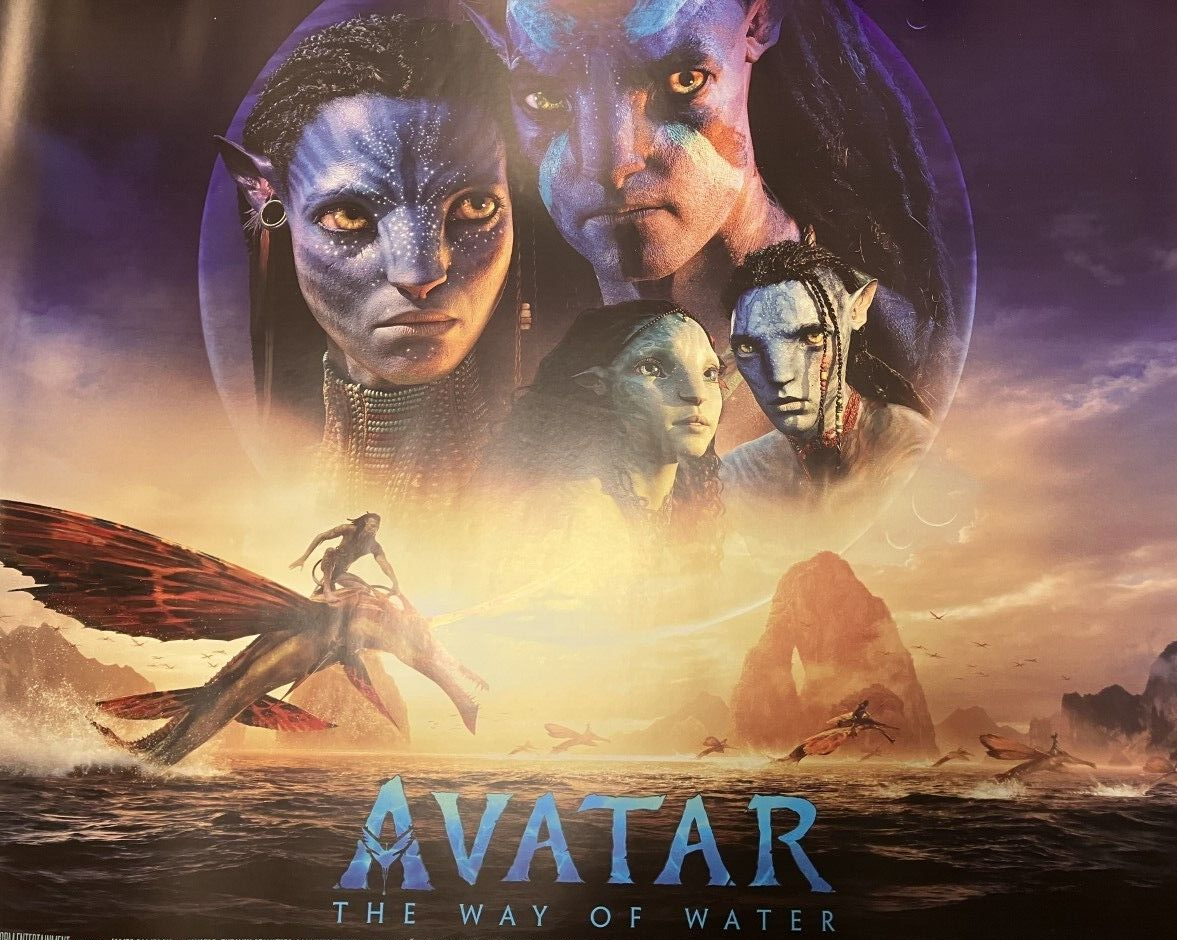
Avatar: The Way of Water (2022) *** – Seen at the Cinema

Avatar: The Next Generation and the Rescue Marathon. Not sure about that, Jim, lacks punch. How about Avatar Meets Moby Dick? Hmm. You got a MacGuffin? Yep, the Earth is dying and the bad guys need to wipe out everyone on Pandora before they ship out the emigrants. And more Impossibilium? You’ll like this, this time we’re extracting anti-ageing serum from whales, worth $80 million a pop. And there’s also Avatar Meets The Titanic, seemed a shame to waste a ship going down.

So we don’t see as much of Sam Worthington this time round, is that right? Well, we’ve got to introduce his four kids, all approaching the rebellious stage, plus Spider, who’s maybe the son of the Quaritch (Stephen Lang) who was cloned before he died, plus the kids of the water king and of course all the kids squabble and make up and squabble again – you get the picture.

So how many rescues, exactly? To be honest I’ve lost count, but basically when A gets captured he needs rescued by B who then also gets captured and needs rescued by C who also gets captured and then…Yes, we get the picture.

Sigourney Weaver? Kate Winslet? Blink and you’ll miss them. But great for the marquee, right?

So, you see, with all these complications, you’re darned lucky I can manage to cram everything into a three-hour-plus running time.

Yep, it’s a bit of a mess, but the good news is while I might have been irritated by the narrative repetition I didn’t walk out. It certainly looks amazing. And you can’t top James Cameron for extended battle scenes. And there’s an emotional twist, starts out Jake protecting his family and ends up with his kids and wife saving him. Plus if you want woke, there’s a ton of Gaia-style philosophy.   

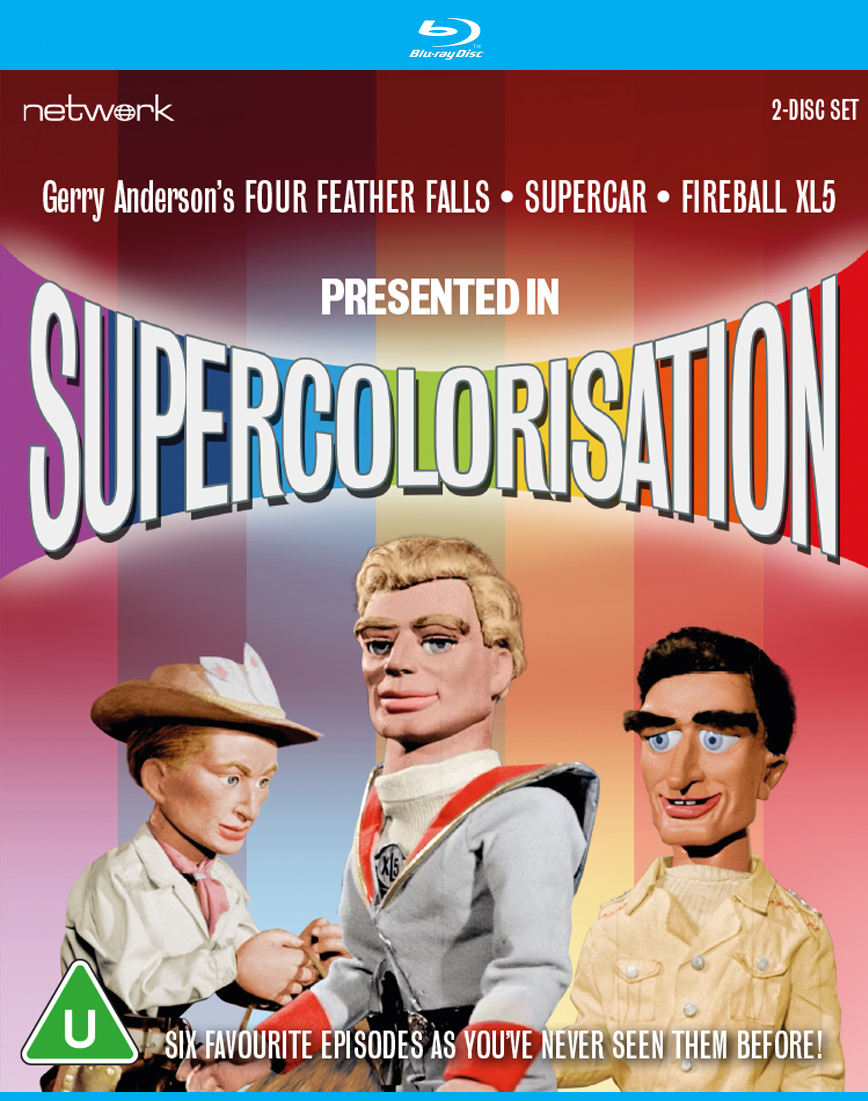
Gerry Anderson’s Fireball XL5, Supercar, Now in Color (2022) ****

Heading for the five-star bracket on nostalgia alone. Before he hit the cult heights in full color with Thunderbirds (1965-1966, plus later films) and live action Space:1999 (1975-1976) innovator Gerry Anderson created a number of television series including the three highlighted here – western Four Feathers Falls (1960) and the futuristic Supercar (1961-1962) and Fireball XL5 (1962-1963).

Now colorisation, it has to be said, is anathema to the movie buff. A whole slate of top directors exploded in anger when Hollywood had the temerity to try and make an extra buck by colorising classic black-and-white movies in a bid to reach a younger audience.

Dynamic duo from “Fireball XL5” – Venus and Steve Zodiac.

But I can’t see anything wrong in making these wonderful programs, that would otherwise just be limited to the cult audience, more accessible to the modern youngster. To achieve the correct color palette, the producers here simply used on-set stills taken during the original shooting (you didn’t think actors in black-and-white programs or movies only wore black-and-white costumes, did you?) to match the vivid visuals of the later color series. Computer wizardry did the rest.

So the result is far more interesting than mere nostalgia, which would have been the case with releasing the three series in original format. Children of all ages are going to love the results.

Anyone unfamiliar, if that is humanly possible, with the Gerry Anderson output should be aware that he uses marionettes – based on the difficult Czech style. Ever with an eye to marketing, he called the process “Supermarionation.”

Inventiveness is the key to whether old television programs can capture a new market and I reckon this succeeds hands-down. While the color makes them instantly more attractive, the worlds established are what appeals more.

Got a copy of one of these memoranilia spin-offs and you’re probably sitting on a fortune.

Gerry Anderson’s sci-fi, far from rudimentary with advanced space-age machinery, had interesting heroes and narrative drive. In Supercar square-jawed hero Mike Mercury was supplemented by interesting boffins, Professor Popkiss and Dr Beaker. Pet monkey Mitch could be counted on for comedy. In Fireball XL5 Steve Zodiac has a female sidekick Dr Venus (voiced by Sylvia Anderson) , blonde template for Lady Penelope in Thunderbirds, while Professor Matic keeps everything shipshape and lazy pet Zoonie (vocabulary only marginally bigger than Groot’s) from a distant planet provides the humor.

Villains, invariably out to disrupt or destroy the universe and invariably recurring, were straight out of James Bond: Masterspy in Supercar and a whole bunch of them, the Subterrains, from Planet 46 in Fireball XL5.   

Trademarks included a launch sequence, catchphrases, and a theme song (has any romantic lyric ever surpassed “my heart would be a fireball, a fireball, if you would be my Venus of the stars” in Fireball XL5?).

So what we’ve got here are three 30-minute episodes of Fireball XL5, two of Supercar and one 13-minute episode of Anderson’s debut series Four Feather Falls plus compilation features You’ve Never Seen These and Space City Specials. The Fireball trio are “The Sun Temple,” “The Granatoid Tanks” and “A Day in the Life of a General.” Supercar contributes “Pirate Plunder” and “Supercar: Take One” while the offering from the western is “First Train Through.”

The stories follow a similar format of threat and rescue – in “The Sun Temple” Venus is mysteriously captured and laid out to be tortured by the rays of the sun (think James Bond and the laser). And they’re none the worse for that.

Of course, I may be biased since Gerry Anderson formed a key component to my childhood, these programs followed in due course by Stingray, Captain Scarlet and the Mysterons, Joe 90 and Thunderbirds.

My only reservation is the strings often show up quite clearly. I viewed this via Vimeo on a screen that i doubt was even a foot wide, so a tiny screen by modern standards and the strings were clearly visible, so I’ve no idea what they’d look like on a 40-incher or bigger. Maybe another bout of computer wizardry in the future would erase those.

The colorization works a treat and opens up a new audience for these early Anderson programs. Hopefully, if the idea works, then we can look forward to the entire series of the three programs being colorised. If you want to make sure that happens, play your part by buying this new DVD which is available on December 12, but can be pre-ordered now. You wouldn’t want to miss out, would you? You can always pretend you’re buying it for the kids or grandkids.  

Thanks to Network for a streamer. Link below.

https://networkonair.com/coming-soon/3489-presented-in-supercolorisation-blu-ray-

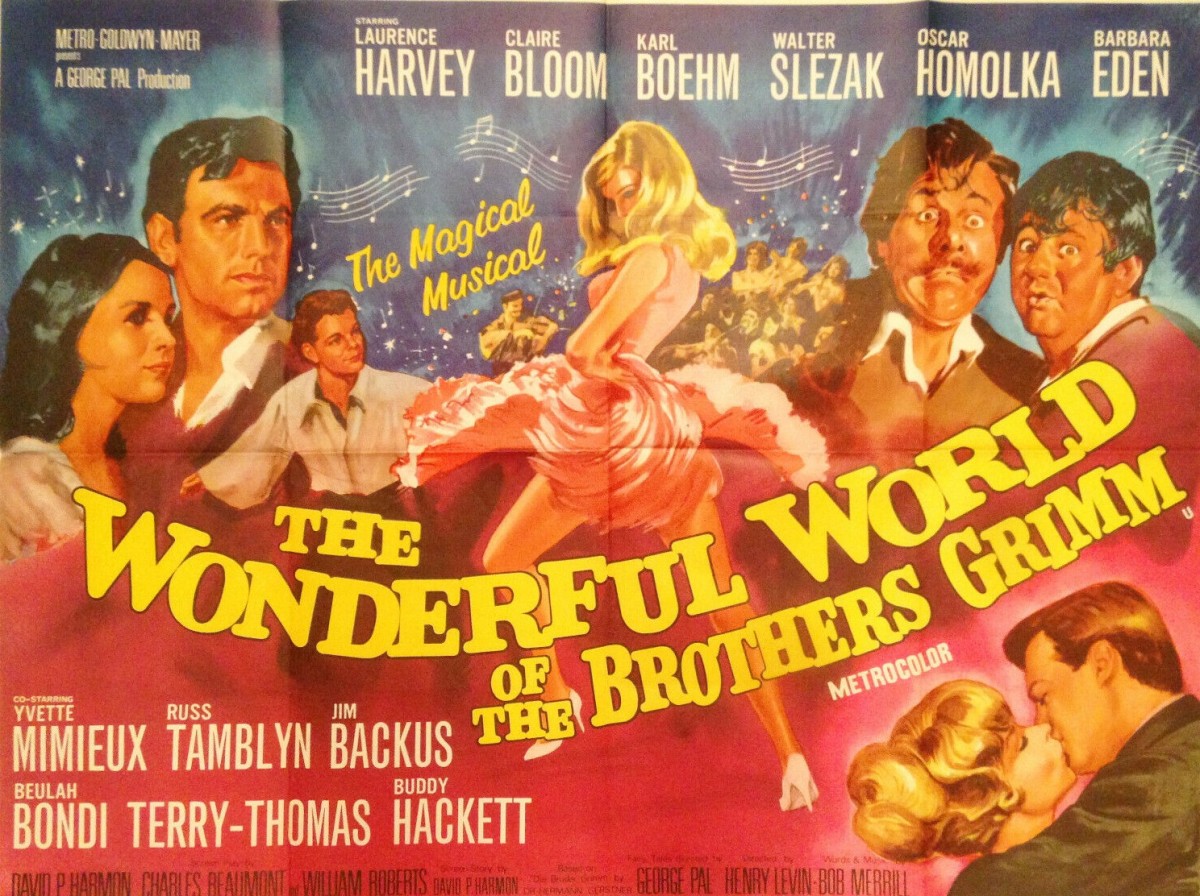
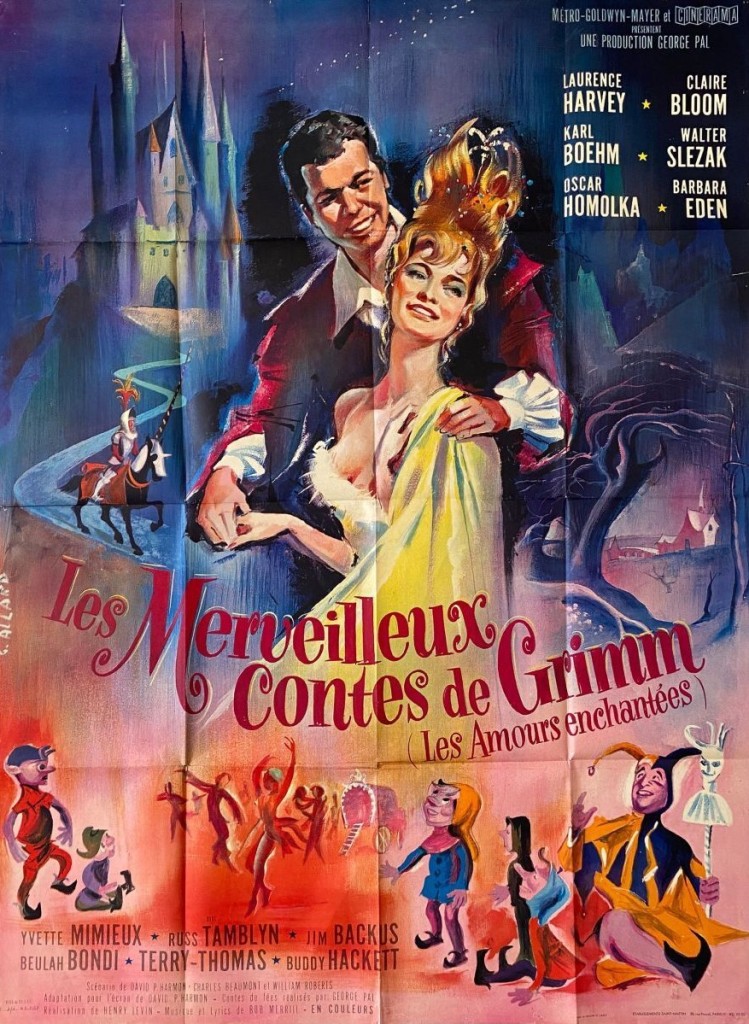
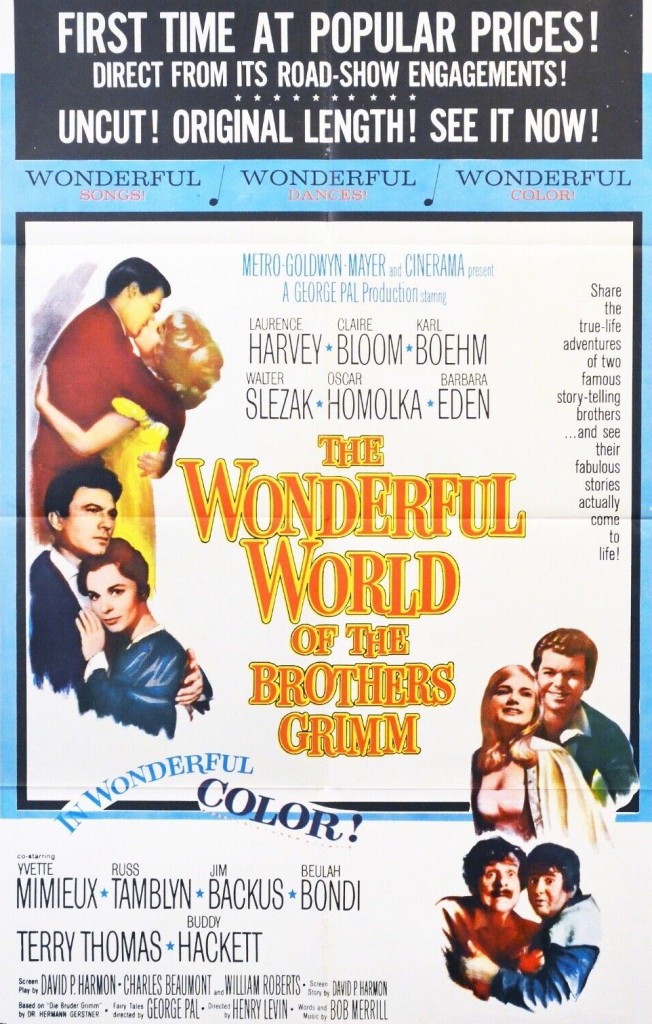
The Wonderful World of the Brothers Grimm (1963) *** – Seen at the Cinerama

With Hollywood already snagging the best characters of the Grimm inventory – Snow White, Cinderella, The Sleeping Beauty and Tom Thumb – and others like Rumpelstiltskin not deemed cute enough, George Pal (The Time Machine, 1960) had a battle on his hands to come up with a decent enough second string. Spurning for no obvious reason contenders like Hansel and Gretel and The Frog Prince, he plumped for a strange hybrid.

He incorporated three fairy stories – The Dancing Princess, The Elves and the Shoemaker and The Singing Bone – in a drama about the authors. Both sides of this tale had a common background, 19th century Germany with its rich vein of fairy castles and cobbled streets where kings ruled. The Grimms are posited as wannabe writers but with warring personalities.

Unmarried Jacob (Karl Boehm) wants to stick to the knitting and complete the work, a biography of the Duke (Oscar Homolka), they are being paid for while married Wilhelm (Laurence Harvey) prefers to use that time instead to write down the stories he has collected from a variety of sources.

The stories Pal chooses to bring to life pop into the narrative by the simple devices of telling kids a bedtime story or overhearing the tale. Jacob is actually more interested in academic writing; books on law and grammar are what capture his imagination. The narrative switches between the brothers falling out, enduring poverty and Jacob falling in love with Greta (Barbara Eden) but lacking the romantic touch mostly making heavy weather of it.

The first tale in the triptych – The Dancing Princess – is simple enough. A King (Jim Backus) promises the hand of his daughter (Yvette Mimieux) in marriage to whoever can find out what she does at night which a humble woodsman (Russ Tamblyn) manages with the help of a cloak that makes him disappear. In the second story elves come to life to save the skin of a shoemaker more interested in helping orphans than his rich clients.  

The third, demanding the biggest special effects, less successfully translates to the screen since it involves the creation of a dragon to be slaughtered. However, it is saved by humor, since the knight (Terry-Thomas) is too cowardly to do the job and relies on servant Hans (Buddy Hackett) for the actual slaying, and by the most gruesome of endings.

Plus, since it is in Cinerama, something speeding is required seen from the audience point-of-view or a hero who could fall into a canyon. And in the best fairy tale tradition the heroes are unsung and under pressure.

Laurence Harvey (A Dandy in Aspic, 1968), Karl Boehm (The Venetian Affair, 1966) , Claire Bloom (Two Into Three Won’t Go, 1969) and Barbara Eden (I Dream of Jeannie television series, 1965-1970) are just about buoyant enough to keep the main story ticking along and carve out a piece of Disney territory without so much as a decent song to help proceedings. Three unexpected twists – four if you count a miraculous recovery from serious illness – nudge this in unexpected directions.

The first is the solidity of brotherly love, with one having to choose wife over his close bond with his sibling – the kind of emotional hit that would be more common in an adult picture, though kids obviously couldn’t care less. The second is the appearance of virtually all the famous Grimm characters in what amounts to a cameo. Last is a proper fairy tale ending where it’s the kids who elevate the brothers to literary success.

Laurence Harvey hides his snide side and does his best Dirk Bogarde impression as the errant brother whose imagination brings his family to near-ruin. Despite being offered love on a plate, Karl Boehm remains steadfastly dour, while Claire Bloom as Wilhelm’s wife has little to do. Scene stealing honors go to Oscar Homolka (The Happening, 1967) while Terry-Thomas (How to Murder Your Wife, 1965) just about shades it in the comedic duel with Buddy Hackett (The Love Bug, 1968).

George Pal concentrated on the fantasy elements with Henry Levin (Genghis Khan, 1965) directing the drama so it’s a mixture of very grounded and very flighty. It’s not really long enough for a true Cinerama roadshow movie but with an overture and intermission it stretches enough.

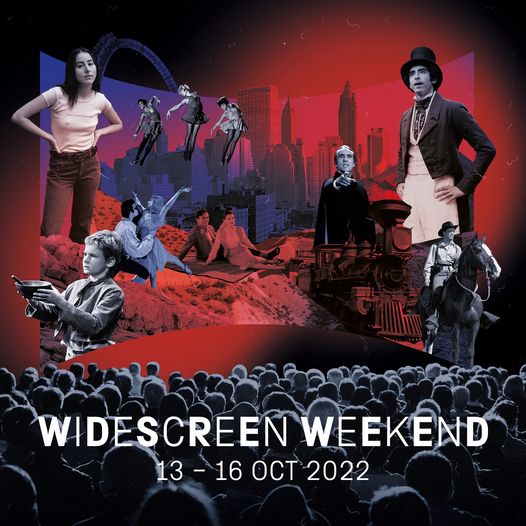
It was filmed with the traditional three Cinerama lenses and would have been projected with three projectors but at the Bradford Widescreen Weekend  I saw a new restoration that does away with the vertical lines. For contemporary audiences who only view fairy stories through the microcosm of animation and for whom live-action means Ray Harryhausen, the special effects here will come as something of a disappointment. But on the other hand it is still George Pal, so enjoy.

William Roberts (The Magnificent Seven, 1960), Charles Beaumont (Mister Moses, 1965) and David P. Harmon (Dark Purpose, 1964) cobbled up the screenplay.

As I said I saw this in the magnificence of the big screen and in widescreen Cinerama to boot so I am bound to be a shade benevolent but this still holds up, the drama dramatic enough, as a biopic interesting, and kids who might be taken with the fairy stories are way too young to complain about the effects.

Quatermass and the Pit / Five Million Miles to Earth (1967) ****

Five million dollars.  That’s roughly the budgetary difference between Hammer’s Quatermass and the Pit and Twentieth Century Fox’s Fantastic Voyage. Although the protagonists in the latter face the unexpected, the movie is (as would be 2001: A Space Odyssey, 1968) an exercise in awe, in controlled exploration of wonder, whereas Quatermass, lacking the money for special effects, concentrates more on story and human impact. The government funds the experiment in Fantastic Voyage while Professor Quatermass (Andrew Keir) finds nothing but obstruction from his superiors.

Quatermass and the Pit is a masterpiece of stealthy exposition. Virtually every minute brings another development, gradually building tension, stoking fear. The principals – Dr Roney (James Donald), Barbara Judd (Barbara Shelley) and the professor – are cleverly kept apart during the early stages. A human skull discovered on a building site for a London Underground station is followed by a skeleton. Palaeontologist Roney determines it is five million years old, older than any previous find.

A metallic object is found nearby. First guess is an unexploded bomb from the Second World War. But it’s not ticking. And a magnet won’t stick to it. Col Breen (Julian Glover) is called in along with hostile rocket expert Quatermass. They have been locking horns from the outset.

There’s a whole bunch of apparent red herrings, mostly of the demonic variety. The location, historically associated with weird occurrences, is a nickname for the Devil. A pentagram is detected. Touching the object can give you frostbite. Col Breen argues it’s a leftover German propaganda machine from World War Two. A hideous dwarf and other spectral images are sighted. Telekinesis is involved. And tremendous vibrations.

Some people, such as Barbara, have a more receptive brain and can play memories millions of years old that reveal the alien truth. But this is an alien race with genocidal tendencies and able to unleash psychic energy.

The genre requires the scientists to discover an improbable solution which of course they do. Given the miserly budget, the special effects are not remotely in the Fantastic Voyage league. But that hardly matters. The movie coasts home on ideas, marrying sci-fi, the demonic, dormant and institutionalized evil, the militarization of the Moon and the ancient infiltration of Earth by Martians, no mean achievement, and a vivid narrative.

Director Roy Ward Baker (aka Roy Baker) provides many fine cinematic moments as he chisels away at the story, finding clever methods of revealing as much of the aliens as the budget will permit, focusing on very grounded characters, concentrating on conflict, and human emotions, mainlining fear rather than awe, building to an excellent climactic battle between man and monster.

Barbara Shelley (The Gorgon, 1964) is the pick of the stars, in part because she is at such a remove from her normal Hammer scream-queen persona, but more importantly because she brings such screen dynamism to the role. It’s refreshing to see her step up, as she carries a significant element of the story. Oddlyenough, although she has as good a movie portfolio as Andrew Keir and is certainly superior to James Donald, the denoted star, in that department, she is only billed third.

While Andrew Keir (The Viking Queen, 1967), warm-hearted for an intellectual, and James Donald (The Great Escape, 1963), trying to keep a cool head in the middle of inclination to panic, are good, they don’t bring anything we haven’t seen before. Julian Glover (Alfred the Great, 1969) is never anything but imperious and/or irascible, so ideal casting here.

The innovative electronic music was down to Tristram Cary and the unsettling credit sequence deserves some recognition. Nigel Kneale, who originally explored similar ideas for the character on television, came up with the screenplay.

Triple Bill Blues: Fall (2022) ***; The Forgiven (2021) **; Three Thousand Years of Longing (2022) ** – Seen at the Cinema

You may be aware that I am partial to a triple bill on my weekly Monday trip to the cinema. I’m rather an indiscriminate cinemagoer and generally just see what’s available, though it’s true return trips to view Top Gun: Maverick have helped paper over cracks in the current distribution malaise. Sometimes a triple bill can reveal unsung gems, sometimes I am rowing against the critical tide in my opinions and sometimes, not too often thank goodness, I end up seeing movies with few redeeming qualities. That was the circumstance this week.

FALL

So now I know. If I need to get a mobile phone dropped 2,000 feet without it breaking into pieces, the thing to do is stuff it inside a cadaver. That’s one of the more outlandish suggestions in this climbing picture two-hander that for most of the time is quite gripping.

So as not to have to spend the first anniversary of her husband’s death sozzled in booze and despair, Becky (Grace Caroline Currey) agrees to partner YouTube click-hound Hunter (Virginia Gardner) in scaling an extremely high disused radio mast. Becky, a mountaineer, had watched her husband fall to his death, so is pretty iffy about the expedition. When they reach the top they can’t get down again since the ladder they climbed has disintegrated. Although there was mobile phone reception at ground level, there’s none this high up. Hunter has 60,000 followers and reckons if only her phone reached the ground it would automatically activate so they toss it down in a shoe stuffed with a bra.

That doesn’t work nor does firing a flare pistol to alert two guys in a nearby RV – all they are alerted to is the girl’s vehicle which they promptly steal. The girls are trapped without water or drone, both stuck 50ft below on radio dishes. At one point you think this is going to go in an entirely different – murderous – direction after Becky discovers Hunter had an affair with her husband. But they manage to get over that hiccup. Recuing their water and drone results in Hunter being out of action as far as further climbing goes and it’s up to Becky to reach the top of the mast and recharge the drone from the power there, fending off a passing vulture.

There’s definitely one weird bit where it turns out that Hunter, who you imagined was up there all the time supporting a defeatist Becky, is already dead. But, luckily, the corpse provides the cavity in which to bury the mobile phone. I’m not sure much of a human body survives a drop of 2,000 ft, certainly not enough to safeguard a phone, but that’s the way this plays out.

A great mountaineering film is always a welcome find in my book. This isn’t great but it’s certainly passable. And while Becky is more interesting than the gung-ho Hunter, the pair, emotions almost spinning out of control, make a very watchable pair.

Grace Caroline Curry aka Grace Fulton (Shazam!, 2019) does well in her first starring role and Virginia Gardner (Monster Party, 2018) is as convincing. Jeffrey Dean Morgan (Rampage, 2018) has a small role. A novel take on the mountaineering sub-genre, it’s kudos to director Scott Mann (Heist, 2015) – who co-wrote the screenplay with Jonathan Frank (Final Score, 2018)  that I spent a lot of time wondering just how the hell they managed to make it look so realistic.

THE FORGIVEN

Note to studios, no matter how much you plan to tart up a modern version of Appointment in Samarra – aka a tale of unavoidable fate – you ain’t going to get anywhere if it’s filled with entitled obnoxious characters. The worst of it is this is well-made.

Functioning alcoholic doctor David Henninger (Ralph Fiennes) knocks down and kills young Muslim boy Driss (Omar Ghazaoui) while on the way with wife Jo (Jessica Chastain) to a hedonistic weekend party in Morocco hosted by Richard Galloway (Matt Smith) and his partner Dally (Caleb Landry Jones). There are hints that Driss was planning to hijack the tourists, but while his death is deemed an accident by the local cops, David agrees to go back with the boy’s father Ismael (Abdellah Taheri) and observe the local funeral rites and possibly pay the father off.

While her husband is away Jo has a one-night stand with serial seducer Tom (Christopher Abbott) while the rest of the party – including Lord Swanthorne (Alex Jennings) and assorted beautiful men and woman – trade bon mots and make racist and sexist remarks. While the arrogant David changes his perspective and accepts his fate, there is not, himself included, a single likeable person in the whole of the tourist contingent which makes it impossible to care what happens to anybody. Written and directed by John Michael McDonagh (Calvary, 2014) it spends all its time trying to make clever points, not realizing the audience has long lost interest.

THREE THOUSAND YEARS OF LONGING

Note to studios, if you’re going to indulge an action director in a vanity project, make sure he hires actors who don’t just drone on. It might also help if the director could decide what story he wants to tell, and not essentially present a voice-over narrative of stuff that happened in the past, no matter how exotic the timescale.

I was astonished to discover there actually is a job called narratologist. Alithea (Tilda Swinton) is a dried-up old stick of a narratologist who summons up the dullest genie/djinn in movie history known – no names, no pack drill – just as The Djinn  (Idris Elba) who proceeds to bore the audience to death with his stories of how he came to end up in a bottle.  

There’s a bundle of academic nonsense about storytelling, a swathe of tales that sound like rejects from The Arabian Nights, and a lot of unconnected characters. The invention of director George Miller (Mad Max: Fury Road, 2015) just isn’t inventive enough and the visuals just aren’t arresting enough. I’m assuming this got greenlit on the basis Miller would turn in a couple more in the Mad Max franchise.

Fantastic Voyage (1966) ****

If this had appeared a couple of years later after Stanley Kubrick had popularised the psychedelic in 2001: A Space Odyssey (1968), and with his budget, it might have been a bigger hit. As it is, the ground-breaking sci-fi adventure, going in the opposite direction from Kubrick, exploring the mysteries of the body rather than the universe, is a riveting watch.  

Before we even get to the science fiction, there’s a stunning opening 15 minutes or so, a thriller tour de force, the attempted assassination of scientist Dr Jan Bedes (Jean Del Val), vital to the development of embryonic new miniaturization technology, baffled C.I.A. agent Charles Grant (Stephen Boyd) transported to a futuristic building (electronic buggies, photo ID) where he is seconded to a team planning invasive surgery, entering the scientist’s bloodstream and removing a blood clot from his brain. They only have 60 minutes and there’s a saboteur on board.

Heading the mission are claustrophobic circulation specialist Dr Michaels (Donald Pleasance), brain surgeon Dr Peter Duval (Arthur Kennedy) and lovelorn assistant Cora (Raquel Welch). Backing them are up Captain Bill Owens (William Redfield) who designed the Proteus submarine.  

The high concept is brilliantly delivered with ingenious improvisations, of the kind we have come to expect from the likes of Apollo 13 (1995) and The Martian (2015) that save the day. I’ve no idea how accurate the anatomical science was but it sounded very convincing to me. There’s a brilliant sequence when the scientist’s heart is slowed down and the heartbeat is reduced to a low thump but when the heart is reactivated the sub literally jumps.

The bloodstream current proves far stronger than imagined, taking them away from their planned route. After unexpectedly losing air, they need to literally suck air in from the scientist’s body. Swarms of antibodies attack. Claustrophobia and sabotage up the ante, not to mention the anxious team overseeing the operation in the control room, the minutes ticking by.

It’s not a fantastic voyage but a fantastic planet, the visualisation of the human interior – at a time when nobody could call on CGI – is as fascinating as Kubrick’s meditations on outer space. They could have landed on a distant planet judging by what look like rock formations. It’s wondrous. Sometimes the world takes on a psychedelic tone. The special effects rarely fail, the worse that occurs is an occasional flaw in a process shot, and a couple of times the actors have to fall back on the old device of throwing themselves around to make it look like the vessel was rocking.  The craft itself is impressive and all the gloop and jelly seems realistic. There’s a gripping climax, another dash of improvisation.

The only problem is the characters who seem stuck in a cliché, Grant the action man, Duval blending science with God, Michaels the claustrophobic, an occasional clash of personality. But given so much scientific exposition, there’s little time for meaningful dialogue and most of the time the actors do little more than express feelings with reaction shots. Interestingly enough, Raquel Welch (Lady in Cement, 1968) holds her own. In fact, she is often the only one to show depth. When the process begins, she is nervous, and the glances she gives at Duval reveal her feelings for him. It’s one of the few films in which she remains covered up, although possibly it was contractual that she be seen in something tight-fitting, in this case a white jump suit.

If you are going to cast a film with strong screen personalities you couldn’t do worse than the group assembled. Stephen Boyd (Assignment K, 1968), five-time Oscar nominee Arthur Kennedy (Nevada Smith, 1966) ), Donald Pleasance (The Great Escape, 1963), Edmond O’Brien (Rio Conchos, 1964) and William Redfield (Duel at Diablo, 1966) aren’t going to let you down.

But the biggest credit goes to Richard Fleischer (The Big Gamble, 1961, which starred Boyd) and his Oscar-winning special effects and art direction teams. While not indulging in wonder in the way of Kubrick, Fleischer allows audiences time to navigate through the previously unseen human body simply by sticking to the story. There are plenty of set pieces and brilliant use of sound. Harry Kleiner (Bullitt, 1968) created the screenplay based on a story by Otto Klement and contrary to myth the only part Isaac Asimov played in the picture was to write the novelization.

A joy from start to finish with none of the artistic pretension of Kubrick. This made a profit on initial release, knocking up $5.5 million in domestic U.S. rentals against a budget of $5.1 million according to Twentieth century Fox expert Aubrey Solomon and would have made probably the same again overseas plus television sale.

Discover WordPress

A daily selection of the best content published on WordPress, collected for you by humans who love to read.

The Atavist Magazine

by Brian Hannan

WordPress.com News

The latest news on WordPress.com and the WordPress community.