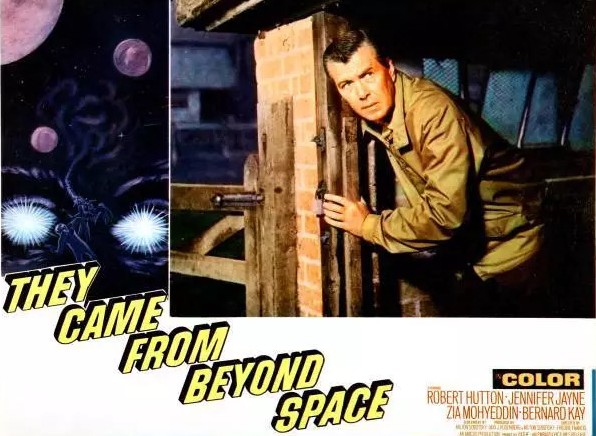
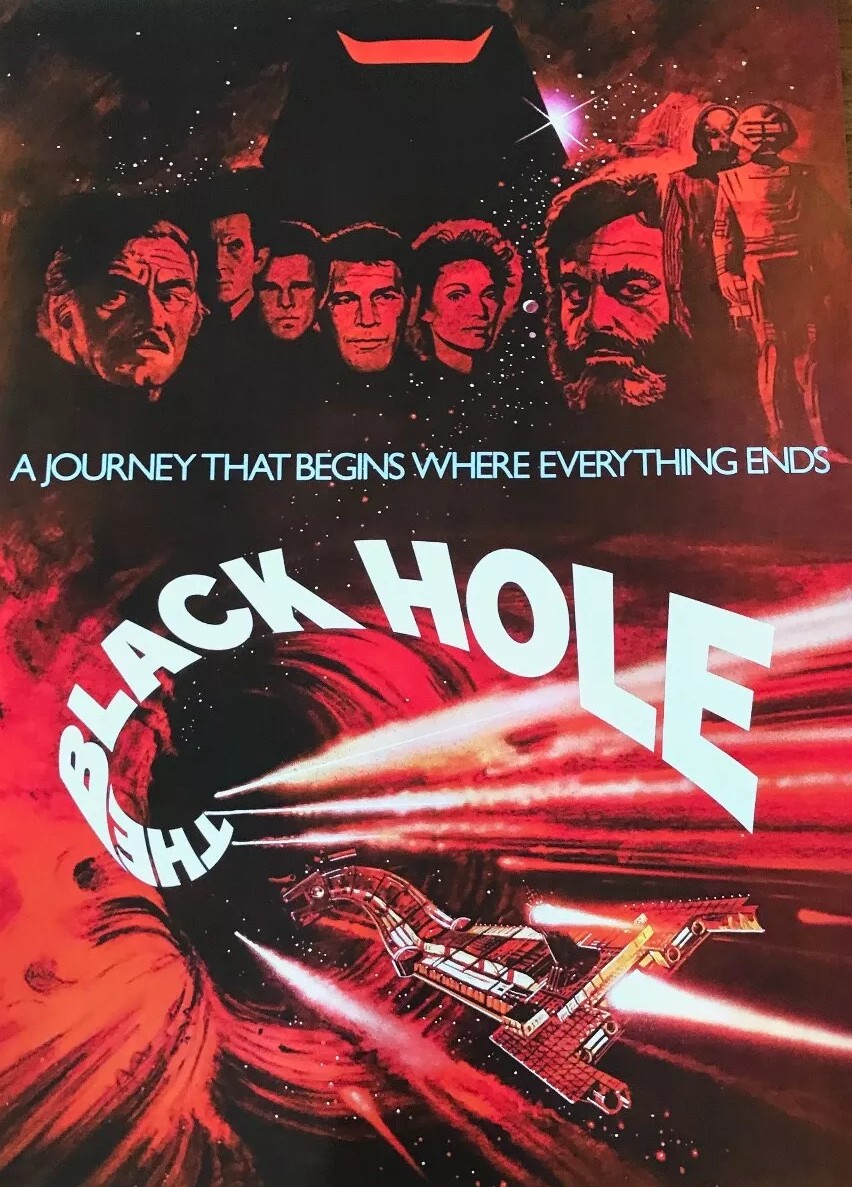
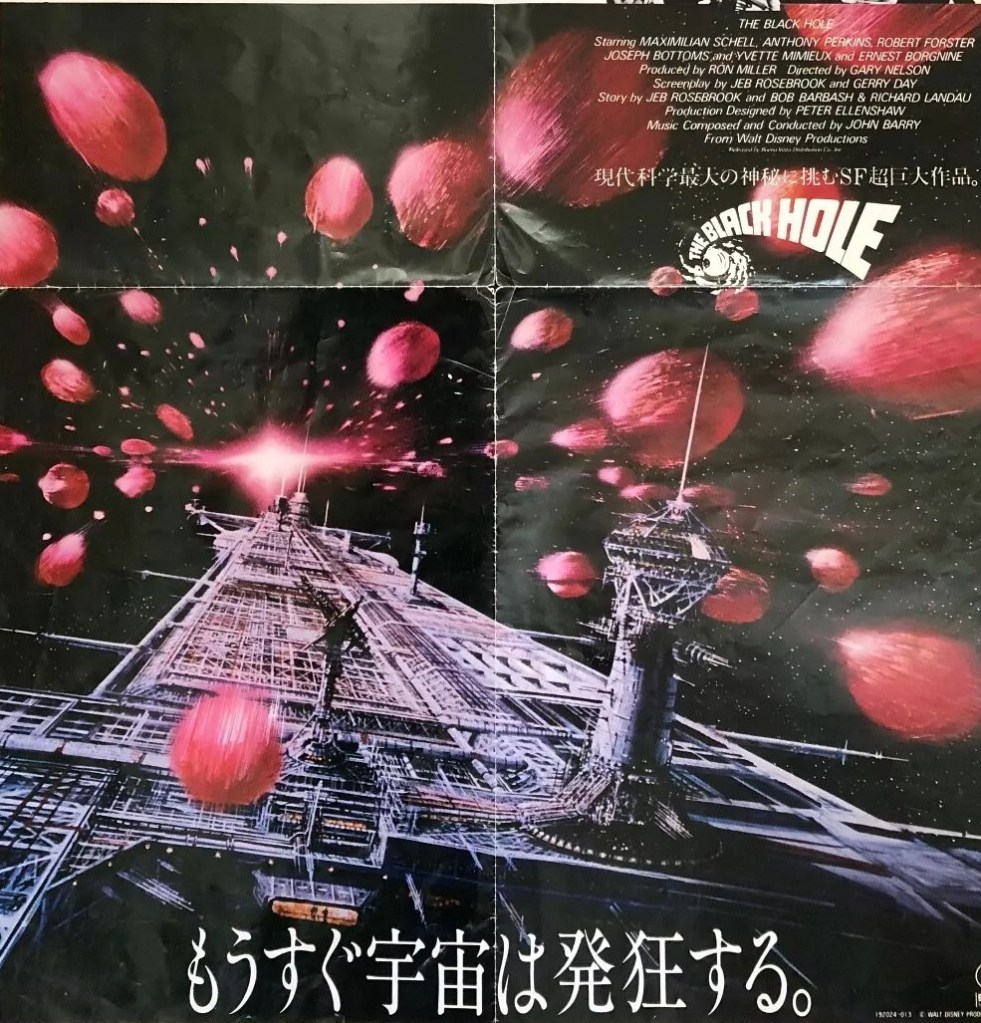
The Black Hole (1979) ***

Think of this as having been made before Star Wars (1977), Close Encounters of the Third Kind, Alien (1979), heck even Star Trek (1979), changed the sci fi world forever and imagine it’s a huge advance SFX-wise on the 1950s vanguard of sci fi pictures and you’ll probably come away very happy. A lot to admire in the matte work and some groundbreaking effects and actually the story – mad scientist lost in space – has a bit more grit than was normal for the genre.

But it’s laden down with talk and the action when it comes resembles nothing more than a first draft stab at the light sabers of  Star Wars and clunky robotic figures that come across like prehistoric Stormtroopers. A bit more light-hearted comedy than in the other three mentioned, various quips at the expense of the robots.

Scientists aboard space ship USS Palomino, a research vessel looking for life in space, is astonished to discover, hovering on the edge of a black hole, a missing spaceship USS Cygnus and are even more astonished to find out it’s not uninhabited, still on board is heavily-bearded Dr Hans Reinhardt (Maximilian Schell) and an army of robots that he has miraculously fashioned during his time lost in space.

This is a bit of an emotional blow to Dr Kate McCrae (Yvette Mimieux) whose father had been part of the crew of the Cygnus. Dr Reinhardt seems kosher enough except for his idea of, in the true spirit of space adventure, blasting off through the black hole. Although Reinhardt has been exceptionally clever in monitoring the invasion from the visitors and nullifying any threat with a blast from invisible laser, once they are on board that monitoring capability appears to vanish, allowing the visitors to search the ship where they find out that Reinhardt’s story doesn’t seem to add up.

Apart from Dr McCrae, the other personnel from the Palomino comprises Capt Dan Holland (Robert Forster), Dr Durant (Anthony Perkins) – the most inclined to follow Reinhardt into the greatest danger in the universe – quip merchant  Lt Pizer (Joseph Bottoms)  and dogsbody Harry (Ernest Borgnine). Plus there’s a cute robot Vincent (Roddy McDowall) constructed along even more rudimentary lines than R2-D2.

Vincent turns out to be a whiz at a basic version of a computer game, something between Space Invaders and Kong. But his main task is to wind up the crew with a head teacher’s supply of wisdom, spouted at the most inopportune moment. Except for the chest-bursting appearance of Alien, this might have garnered more kudos for the creepy mystery element – Reinhardt has lobotomized his crew members, turning them into these jerky robots, after they mutinied in revolt against his plan to dive into the black hole. Dr McCrae nearly joins the lobotomy brigade. And once she’s rescued it’s a firefight all the way. A stray meteor is on hand to add further jeopardy. And in the end the good guys are forced to plunge into the apparent abyss of the black hole, only to be guided by some angelic light and come out the other end unscathed, no worse for enduring the kind of phantasmagoric light show Stanley Kubrick put on in 2001: A Space Odyssey (1968).

By this point Maximilian Schell (Judgement at Nuremberg, 1961) was an accomplished bad guy, covering up inherent malignancy with charm and scientific gobbledegook. Joseph Bottoms (The Dove, 1974) is the pick of the incoming crew but that’s because he’s been dealt a stack of flippant lines. Anthony Perkins at least gets to waver from the straight-laced. But everyone else is a cipher, even Yvette Mimieux (Light in the Piazza, 1962) who might have been due more heavy-duty emotion.

This was the 1970s version of the all-star cast, all the actors at one point enjoying a spot in the Hollywood sun, but now all supporting players. Schell was variably billed in pictures like St Ives (1976), Cross of Iron (1977) and Julia (1977). Robert Forster (Medium Cool, 1969) hadn’t been in a movie in six years. Anthony Perkins was waiting for a Psycho reboot to reboot his career – only another four years to go. Yvette Mimieux had only made four previous movies during the 1970s including Jackson County Jail (1976). The most dependable of these dependables was Ernest Borgnine (The Adventurers, 1970), for whom this was the 24th movie of the decade, including such fare as Willard (1971), The Poseidon Adventure (1972) and Hustle (1975).

It didn’t prove a breakout picture for director Gary Nelson (Freaky Friday, 1976), Screenplay credits went to Jeb Rosebrook (Junior Bonner, 1972) and female television veteran Gerry Day.

Sci fi the Disney way.

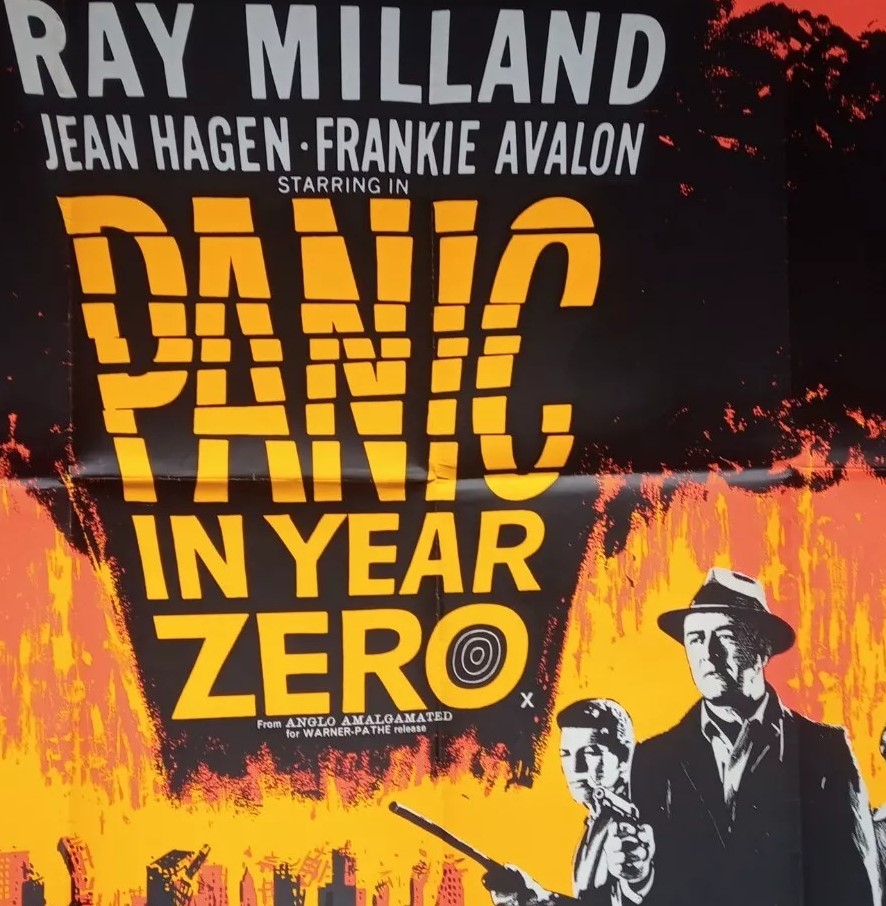
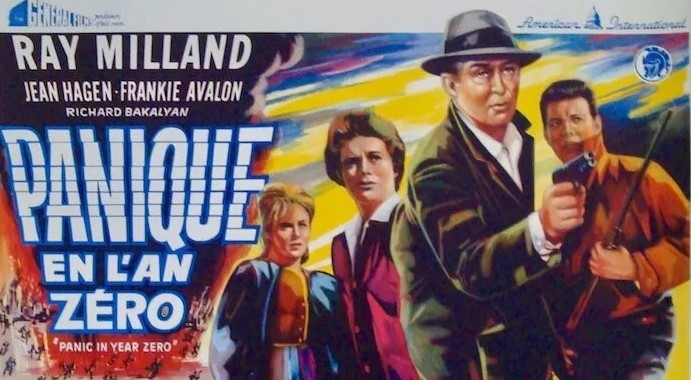
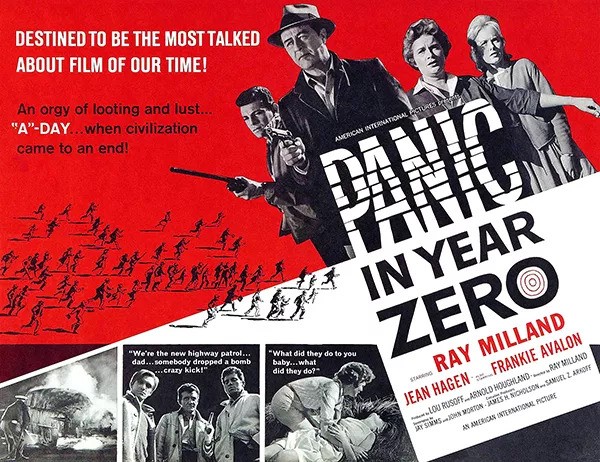
Panic in the Year Zero! (1962) ****

While the release of Conclave and Juror #2 augurs well for the future of movies made for the more mature audience, it’s worth remembering that such fare was commonplace six decades ago, even in the lower-budget strata. Well-structured, well-acted drama was never hard to find. Since I stack my DVDs on their sides and make my selection based on the title on the spine, I rarely glance at cover art, and just as well here, because the poster, I realized, in the process of selling the movie, gave away too much.

Beyond a vague notion that it concerned the aftermath of a nuclear holocaust I had no idea whether this would lean towards the dystopian or the survivalist. And there’s little clue at the start. We open on a typical suburban family holiday scene – husband Harry (Ray Milland) flexing his fishing rod, wife Ann (Jean Hagen) complaining of being overburdened with the loading of the trailer, teenage daughter Karen (Mary Mitchell) and son Rick (Frankie Avalon) moaning about being dragged out of their beds at an unearthly hour.

Not long into the journey they see flashes in the distance and a mushroom cloud above Los Angeles. Harry is alerted to potential danger when he observes a pump attendant being slugged by a driver over four bucks’ worth of fuel. Harry’s clearly the reserved kind of businessman, happily married, still flirting with a wife who giggles at such overt attention. But when the roads are filled with cars speeding away from the disaster area and the radio clams up and telephone lines are down, Harry’s personality undergoes a dramatic change, much to the disgust of his wife.

If this had been made these days, it would focus on the kids as they came to terms with post-apocalyptic catastrophe and some militaristic domineering governing body getting in their way or trying to control them. Or it would be some musclebound jerk only too ready to battle his way out of trouble.

Instead we have a gentleman tugging on his inner tough guy. Harry knocks around a storekeeper (Richard Garland), gets the better of a trio of thugs, charges through a roadblock, carves a route through a busy roadway by setting fire to it, destroys a bridge on a rural road to prevent being followed, and is capable of shooting anyone threatening his family. He’s not gone rogue, though, careful to keep more trigger-happy son in line, warning against civilization going to ruin.

This is so well-constructed you don’t know what’s going to happen next, nor, despite ample warning, to discover that Harry is quite the adaptable survivalist, not just stocking up on supplies, but dumping the trailer in favor of holing up in a remote cave, not quite going back to nature given the quantity of provisions to hand. But, yes, they do wash clothes in a stream, cook on a camping stove, shoot game and sleep in uncomfortable beds.

It’s not an idyll because the storekeeper and the three thugs have chosen the same locale. The hoodlums murder the storekeep’s family, kidnap young women including Marilyn (Joan Freeman) and are always on the prowl for easy pickings, which includes Karen, triggering a climactic shoot-out.

Despite the poster promising orgies of various kinds, there’s no glorifying the violence, Harry more like the frontiersman or law-abiding citizen forced to take the law into his own hands. Ann, whose maternal instinct has focused on its gentler aspects, turns into a lioness defending her cubs. It’s a brutal awakening for all, except Rick who appears to thoroughly enjoy the experience even as his father is trying to steer him clear of such thoughts.

Made by American International on a minimal budget, Ray Milland, doubling up as director, shows just what you can do with a decent script and cunning choice of locale. British-born Milland, a big star for Paramount in the 1930s-1940s and Oscar-winner to boot for The Lost Weekend (1945), read the runes right for the following decade and excepting Hitchcock’s Dial M for Murder (1954) and realizing his marquee value had tumbled, took to direction, beginning with A Man Alone (1955) and Lisbon (1956). He was top-billed in both, joined by Maureen O’Hara (The Rare Breed, 1966) for the second.

His last stab at direction was Hostile Witness (1968). But he only helmed five movies in all. While you wouldn’t say he was a natural stylist, Panic in the Year Zero! is something of a triumph, keeping audiences on edge with both narrative and character-led twists.

Apocalypse wasn’t even a sub-genre at this point, Eve (1951) the only previous example of any note. Timing didn’t help this picture, the Cuban Missile Crisis occurring a few months after its initial release.

Milland makes the most of his gritty characterization, pop star Frankie Avalon (The Million Eyes of Sumuru, 1967) surprisingly good. Written by Jay Simms (Creation of the Humanoids, 1962) and John Morton, in his debut, from source material by Ward Moore.

Rewarding.

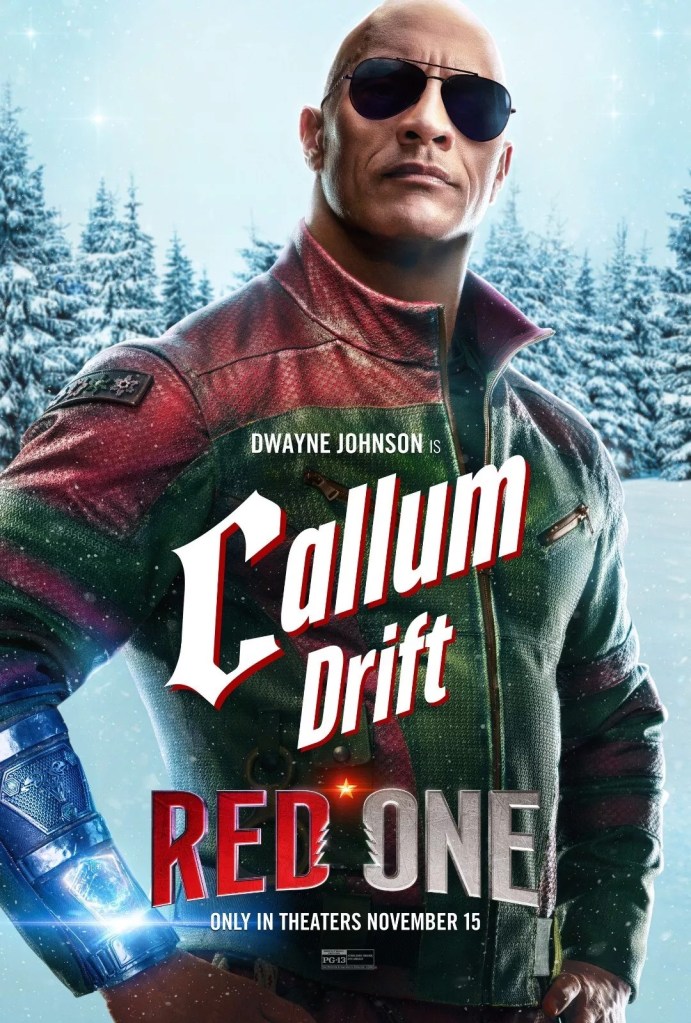
The Red One (2024) ***

Santa Claus meets Die Hard might have worked well enough if it hadn’t been padded out with all sorts of other festive characters from the dark side of Xmas and a sludge of sentiment about an absent father reconnecting with his son. Can’t quite decide if it’s family-friendly or aiming for a queasier relationship with a Beetlejuice, Beetlejuice audience. And I suspect if Amazon had the courage of its theatrical convictions, it would made this a Xmas cinema release rather than chucking it into picture houses now and lining it up for a small-screen Xmas special.

Attempts to merge James Bond-style big budget thriller with underworld shenanigans conjuring up the kind of misfits who’d have been slung out of a Star Wars cantina while at the same time as making up the rules as it goes along. There’s a mix-and-match feel to the characters – we get Gryla, a mythical Icelandic monster, Krampus, a hairy devil of Germanic extraction who has his fun the night before Xmas, but is repurposed here as a Santa’s big bad brother, as well as a bunch of gargoyles who are way too easily distracted by a hen who they, mysteriously, can’t manage to catch, and then like a throwback to Transformers we get tiny Lego style figures who turn gigantic when let loose. You can stop snowmen in their tracks by whipping off their carrot noses.

Face-slapping is reinvented, shapeshifting is the game, and as if nobody had watched  how badly Ghostbusters: Frozen Empire failed we’re back to a villain with icy superpowers. The giant polar bear featured – cousin to the armored bear in The Golden Compass (2007) – in the poster is underused. Not to mention that Xmas staple, the kids threatened with losing out on presents if they are naughty. None of this should work at all, but it does fairly well.

On the eve of said Mr Claus’s big night, he gets kidnapped. Bodyguard Callum (Dwayne Johnson), who turns out to be more than 500 years old, is on the trail and tracks down hacker Jack (Chris Evans) who’s sold Santa’s secret location to villain Gryla (Kieman Shipka), the ex- of Krampus’s (Kristofer Hivju),  who wants to trap every night child in the world inside the kind of glass snow globe that was a traditional Xmas present. She’s manufactured these in the gazillions.

Callum and Jack team up though the latter’s not much use, his contribution to the double act consisting mainly of double takes and it’s only when he doesn’t take the opportunity to escape Krampus’s lair that he becomes one of the team. Mostly, it’s one bizarre situation after another and although at just over two hours it’s already outstaying its welcome it could have done with spending some more time on outlining the background and developing the fiendish characters. It’s a world that seems surprisingly undercooked given the mega budget. On the plus side – or perhaps the minus depending on your perspective – there’s a cuteness bypass. There’s a little too much time spent on – unsuccessfully – showing how Santa manages to get himself down every single chimney in the world in the space of a night including time to gobble down some treats. Would have done better to stick to the Santa hijack than include a technologically-improved Xmas.

Xmas spirit missing in this previous red one.

This didn’t need the presence of Dwayne Johnson (Black Adam, 2022) and certainly Chris Evans (The Gray Man, 2022) is wasted but with the MCU world closing its doors on both actors, perhaps this is an attempt to set up a new series. As Mr Claus, J.K. Simmons (Juror #2, 2024) isn’t in it long enough. Jake Kasdan (Jumanji, The Next Level, 2019) directed from a script by Chris Morgan (Shazam! Fury of the Gods, 2023) and Hiram Garcia (Jumaji, The Next Level).

Not as bad as I expected.

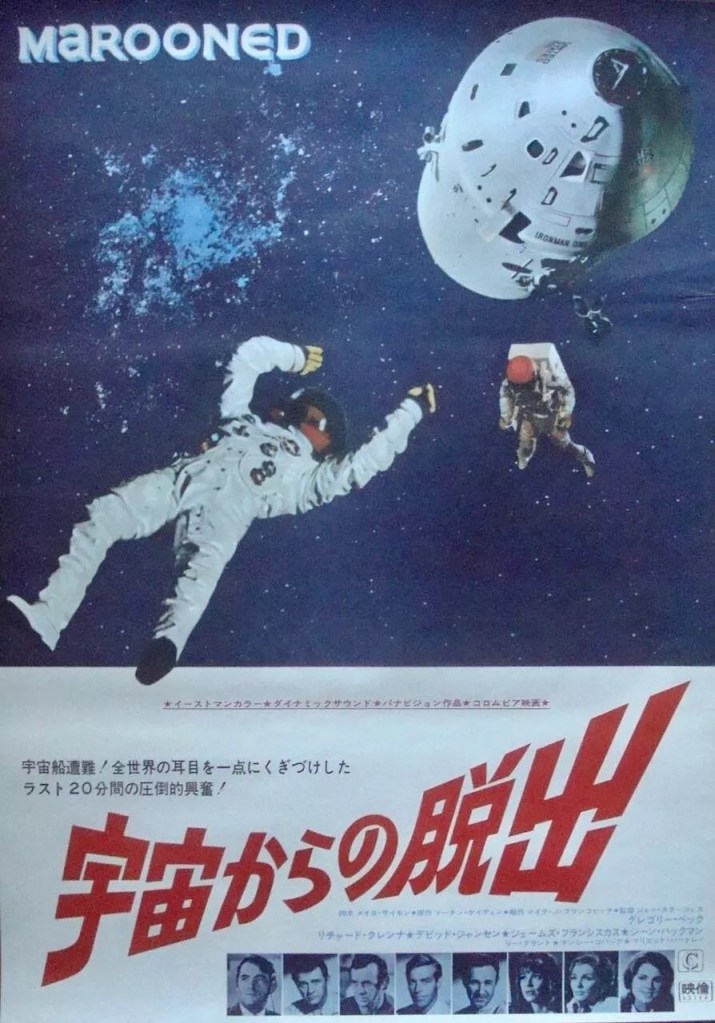
Marooned (1969) ****

The forgotten one. Left out in the cold by audiences and critics alike in the late 60s sci fi boom by the more audacious 2001: A Space Odyssey (1968), Barbarella (1968) and Planet of the Apes (1968). And that’s a shame because it’s by far the most realistic (to the nth degree) of the space movies. Audiences growing up with astronauts saving their own skins with ingenious maneuver – sling shot and whatnot – in Apollo 13 (1995) and The Martian (2015)  might be shocked by the harsh reality of space travel as evidenced here. Astronauts are little more than helpless creatures in a tiny box with ground control in obsessive control. It’s salutary that escape was the audience mindset even after the Challenger Space Shuttle disaster of 1986.

Nobody thought to tell audiences to buckle up because they were in for a hell of a ruthless ride back in the day, but this one really should come with a warning.

Casting makes this work – when it shouldn’t. It’s full of those kind of actors who scarcely move their lips and rarely engage in extraneous facial movement. You can hear director John Sturges issuing instructions: to Gregory Peck, keep those brows knitted; to David Janssen, keep your head lowered and keep with the muttering; to Richard Crenna, don’t move a muscle; to Gene Hackman, limit that trademark chuckle to just once. Why this shouldn’t work is because the big star isn’t in the goldfish bowl of the shuttle cockpit, and since there’s none of the get-to-know-the-crew backstory of The Right Stuff (1983) or Apollo 13 there’s nobody to really root for, especially as the crew is just siting there, doing (by instruction) nothing and awaiting their fate. Which, by the way, which is constantly spelled out, is to suffocate from lack of oxygen.

But there’s a reason Gregory Peck’s on the ground and not in space. Because he’s the one making the life-and-death decisions.

This is by far Gregory Peck’s toughest role. He pulled out of Ice Station Zebra (1968) because he didn’t like the slant of the character, and since then he’d been in typical upstanding heroic mode in The Stalking Moon (1968), Mackenna’s Gold (1969) and The Chairman (1969). Here he’s the king of data management and crisis control, the most ruthless, heartless sonofa you’d ever encounter, not willing to take a risk on greenlighting a rescue mission because the computer says no. The weaselling PR-speak that’s all about saving the space program and making allowance for collateral damage is nothing compared to his terrible delivery of news to one of the wives that her husband is dead. She collapses with emotion, he puts the phone down.

If you’re geek-minded, you’ll give this five stars because there’s information overload. “Go” and “Mark” are the most commonly used words. And in case you can’t judge from the visuals what’s going on, there’s usually some television commentator voice-over to help you out.

So, the Ironman One mission hits trouble when its retro rockets refuse to ignite for return to Earth after several months in space. They’ve got 40 hours or so to effect a rescue before the oxygen runs out for crew members Jim Pruett (Richard Crenna), Buzz Lloyd (Gene Hackman) and Clayton Stone (James Franciscus). The crew are forbidden to try any stunts themselves because any exertion will use up valuable oxygen.

Plan by chief astronaut Ted Dougherty (David Janssen) to mount a rescue operation via an untried spaceship XRV (smaller than a helicopter, by the way) is vetoed as too risky by NASA boss Charles Keith (Gregory Peck) until the President, terrified of public reaction, overrules him. With time running out the impending launch is hindered by an approaching hurricane. But then, in the only nod to ingenuity, someone suggests taking off in the eye of the hurricane, when wind force will be zero.

Meanwhile, up in space, the three stalwarts are slowly coming apart. Buzz, the toughest-looking of the trio, is worst affected, screaming his head off as the prospect of dying looms. Then they are faced with a terrible decision. With the rescue delayed, there’s not enough oxygen to see them through, so one has to sacrifice himself.

I told you it was brutal stuff. About the last 30 minutes are not about whether they can be saved, but who will die and how, the impact of asphyxia on the brain spelled out by resident boffin Clayton. By this point anything they do will almost certain sabotage any rescue and they’re in cloud cuckoo land as Keith tries to keep them in line.

While there’s certainly information overload and a few questionable scientific decisions (can you really open a hatch straight into space?), the reality of the drama more than holds the enterprise together. The realpolitik, the callous use of the wives to go along with the company line as they watch their husbands suffer before their very eyes, the management of potentially bad news, was perhaps a shock for audiences back in the day but would be accepted more easily by contemporary moviegoers.

The acting is first class. Gregory Peck never attempts to lighten his load, to make his character less unattractive and appease his following. David Janssen (Warning Shot, 1966) is as solid as ever. Gene Hackman (The Gypsy Moths, 1969) is the pick of the crew but Richard Crenna’s (Midas Run, 1969) less showy disintegration packs a punch. Lee Grant (The Big Bounce, 1969) is the standout among the wives.

Much as Sturges lets the computerspeak run away with itself, he doesn’t flinch when it comes to the really tough scenes. Written by Mayo Simon (I Could Go On Singing, 1963) from the Matt Caidin source novel.

Under-rated. Worth a look.

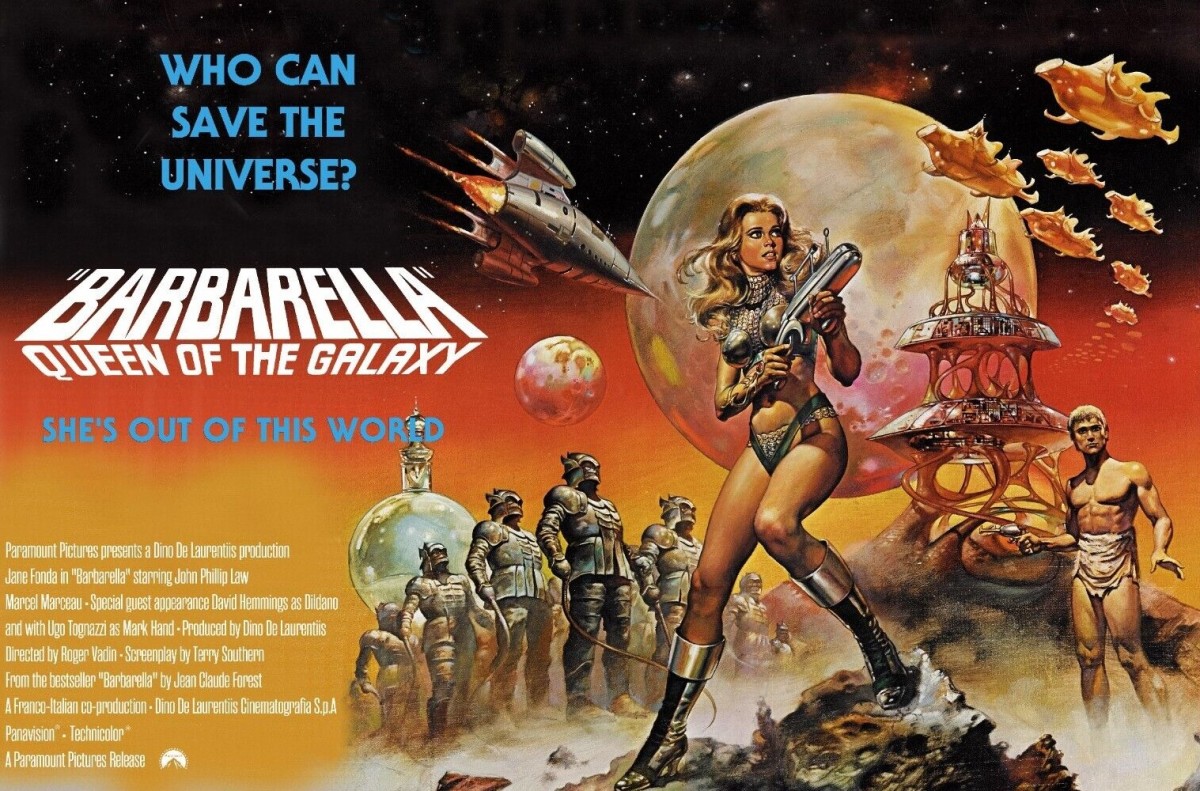
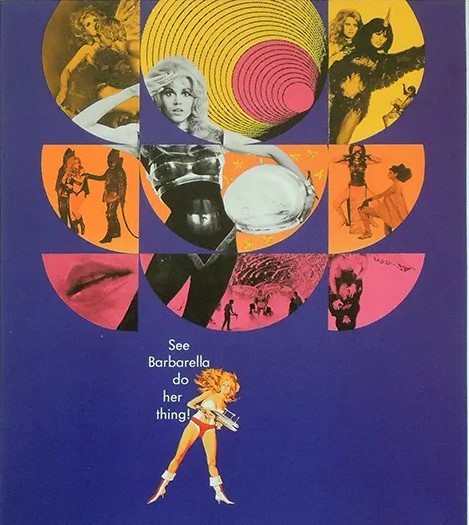
Barbarella (1968) ****

While sci-fi was being viewed through a serious glass darkly what with Fantastic Voyage (1966), 2001: A Space Odyssey (1968) and Planet of the Apes (1968) along came Roger Vadim’s little number to set up an alternative universe of camp fun. Had this been a box office smash in the nature of The Odd Couple ($18.5 million in U.S. rentals) rather than under a third of that there might have been less of the po-faced doomladen sci fi in the following decade.

But if you wonder where Star Wars got its vibe, setting aside the overt sexiness portrayed here, this is as good a place to start. Naïve adventurers, check. Ice planet, check. All sorts of weird creatures in strange otherworldly locales, check. A doomsday weapon, check.

It’s kind of newsworthy to be rewatching this given that star du jour Sydney Sweeney (Anyone But You, 2023) is going to be donning the Barbarella costume for a remake next year. And who knows to what Oscar-winning fare that might lead, if she were to follow the Jane Fonda template, given it was La Fonda’s follow-up that brought her serious attention from the Academy.

But it would be remiss of me if I didn’t bring up the testy matter of director Roger Vadim’s uncanny obsession with getting his myriad girlfriends to shed their clothes for the movies, Fonda being the latest example, and in no uncertain terms, the striptease performed during the opening credits certainly rivaling Kubrick and Spielberg for the most jaw-dropping opening to a sci-fi movie.

Whether it was Fonda or someone else and whether it was Vadim or someone else you couldn’t get away from the fact that Barbarella as a sci-fi icon was most definitely on the sexy side as determined by her creator Jean-Claude Forest, sharing like British comic strip heroine Jane a predilection for losing her clothes.

Barbarella shares something of the same innocent abroad personality, the kind who gets into one unexpected scrape after another, after being despatched from peace-loving Earth to save the world by finding Durand Durand (the pop band making homage to the movie dropped the final letter of this character’s name) and his doomsday machine.

So mostly, it’s one imaginative character or scene after another, delivered in disconnected episodic manner, and it sometimes has the feel of a jukebox movie, of the greatest hits of the comic strip writer strung together, with an occasional comment on the problems created by sex and a climactic gender-spinning twist. You’d have to remember what Pop Art was to chuck it into that short-lived category but if you think it belongs on the same planet as the more earthbound Modesty Blaise (1966) and Danger: Diabolik (1968), think again.

The best sections are truly terrific. The sharp-teethed menacing robot dolls are exceptionally scary as they nip chunks out of our heroine’s flesh and leave her blood-soaked. There’s a homage to The Birds (1963) where our plucky heroine is trapped in a cage with a flock of sparrows. You’ve also got the The Catchman, performing the same function but considerably scarier than the same year’s Child Catcher from Chitty Chitty Bang Bang. But no wonder the kids need caught because they are full of evil intent.

You’ve got a blind angel (John Phillip Law) who can’t fly, a problem mysteriously solved by sex with the ever-gracious Barbarella who, previously, has discovered, courtesy of The Catchman, the immense pleasure of the art of making love the old-fashioned way rather than just popping a pill. The angel also has no memory, permitting an ironic twist ending. You’ve got an incompetent rebel (David Hemmings). Sex is pretty much top of everyone’s agenda, even the villain (Milo O’Shea) who uses it to kill people via his own invention, which proves not much cop, since rather than murdering Barbarella with excessive pleasure, she makes it blow up.

Along the way there’s any number of interesting inventions: a manta-ray acts as the skis for a futuristic sailing ship, hollow robotic soldiers, a labyrinth.

Some of the special effects wouldn’t pass muster these days, but that’s a minor flaw compared to the rest of what’s on show. It’s not exhilarating in the real sense, but if you’re unfamiliar with the source material, it retains an endless fascination, more like a sexed-up version of the Ray Harryhausen world than anything that would have interested Kubrick. And, heck, just fun. What’s not to like.

Jane Fonda (They Shoot Horses, Don’t They, 1969) holds it all together, innocent rather than naïve, even her sexuality is innocent not exploitative, and possibly for a film deemed sexy makes greater comment on the dangers of lust than many a more self-important movie.

Great supporting cast with David Hemmings (Blow-Up, 1966), John Philip Law (Danger: Diabolik), Anita Pallenberg (Performance, 1970), Milo O’Shea (Ulysses, 1967) and Marcel Marceau.

Roger Vadim’s best film. Written by a huge squad of writers, nine in total, headed up by Vadim and Terry Southern (Candy, 1968).

Will probably be yanked out of circulation at the approach of the remake so now’s your chance to catch up on a fun sci fi.

Rocket to the Moon / Those Fantastic Flying Fools (1967) ***

The Jules Verne express grinds to a halt in part because the promise of outer space adventure fails to materialize and in part because the treatment is comedic in the manner of  The Great Race (1965). A series of sketches with a shifting array of characters rarely works. Occasionally it hits the mark in a laugh out loud fashion but too often the jokes are labored  although as a tribute to a maze of inventive invention it’s a treat.

Unusually for such an all-star cast venture, we are, long before the titular action  and a race (of sorts) commences, treated to the greatest hits from the book of all-time failures. So we have electricity setting on fire the first country house, belonging to the Duke of Barset (Dennis Price), to be so illuminated; a new-fangled suspension bridge, courtesy of Sir Charles Dillworthy (Lionel Jeffries), that collapses when Queen Victoria cuts the ribbon; and a new type of explosive invented by German von Bulow (Gert Frobe) that proves a tad overpowering. Meanwhile, making possible the idea of sending a man to the moon is the arrival in Britain of the diminutive General Tom Thumb (Jimmy Clitheroe) accompanied by the bombastic and greedy Phineas T. Barnum (Burl Ives).

Combining the various scientific advances of propulsion and engineering have the flaw of not being able to bring a manned rocket back home. And sinister forces are at work, spies and fraudsters.

As with all these all-star comedies you spend half the time wondering how your favorite star is going to be worked into the equation and, having been squeezed into the narrative, justify their ongoing involvement. Daliah Lavi (Old Shatterhand, 1964), not particulary known for her comic gifts, is a case in point. On her wedding day she (as Madelaine) jilts French groom Henri (Edward de Souza) in favor of balloonist Gaylord (Troy Donohue) who has, literally, appeared on the horizon. Henri trying to down said balloon triggers an awful joke about a shotgun wedding.

To gain revenge, Henri funds the project on the basis of Gaylord being the moon pilot, and, in anticipation of the craft’s failure, that he will regain his bride. Madelaine, having been sidelined by all the developments, suddenly rushes back to center stage when she uncovers the devious plot and is shipped off to a home for wayward girls, run by the very wayward Angelica (Hermione Gingold). But that requires she escape and find her way back to her beloved, that aspect complicated because she loves both men (it transpires).

As the script is in the invidious position of having to place the participants into similar frying pans in order to effect similar rescues it’s as much a game of ping-pong as a movie. But there are some nice gags, a rocket attached to a helmet, the ruination of a teleprinter and the criminally-inclined Washington-Smythe (Terry-Thomas) who rooks billiard players with a magnet. And there’s a very contemporary financial element in that large wagers are placed on failure rather than success, the equivalent of betting on stocks going down rather than up  (short selling in the modern idiom)

The rocket is launched, with rather a different crew than originally anticipated following further skullduggery, and although it’s something of a cosmic joke that it only gets as far as Russia it’s rather a disappointing ending for fans of Verne who anticipated a more rigorous approach. Verne’s novel From the Earth to the Moon was surprisingly accurate in imagining how a projectile would achieve its aims. The novel had even more of a contemporary feel since it left the crew floating in space, a daringly artistically inconclusive climax, leaving the way open – again the contemporary flair – for sequel Around the Moon that explained their fate.

Oddly enough, Daliah Lavi, as the bride who can’t make up her mind, has one of the better parts, more fleshed out than most of the other flimsy characterizations. The likes of Troy Donohue, caught between heroism and doing nothing much at all, often looks flummoxed. Terry-Thomas (How To Murder Your Wife, 1965) in wily mode is the pick of the rest.

Director Don Sharp (The Brides of Fu Manchu, 1966) proves that comedy is not his metier. Screenplay by Dave Freeman (British TV sitcom writer making his movie debut) after Harry Alan Towers (Five Golden Dragons, 1967) altered the author’s original premise. While it could be skewered for taking such liberties with the august author, it is far better than you might expect, but not as good as it could, or should, be.

Godzilla x Kong: The New Empire (2024) ****

Monster mash-up that delivers. Hollow Earth hits the target, a better parallel universe/ multiverse/monsterverse than all the other verses put together, not to mention it’s also of the versus inclination with any number of big beasties (I lost count to be honest) going head-to-head and super bonkers malarkey of giant apes riding prehistoric monsters. Plus, if you’re of a sentimental nature, and given that this week I’ve been hit from all side by tales of a maternal bent, whose heart would not give a whimper to see big bad Godzilla all curled up for the night in the Colosseum in Rome. Or for that matter Kong taking a paternal interest in a bad wee mini-Kong. Compared to the emotions stirred by these giants, boffin Ilene (Rebecca Hall) struggling with her maternal issues comes over as rammed-in and wishy-washy.

Having taken Mother’s Instinct to ruthless task for its illogical plotlines, I am happy to do a complete somersault and let the monster punch-up off scot-free for all its inconsistencies and coincidences because, heck you know it, fun always triumphs. Plus we’ve got a hippie vet Trapper (Dan Stevens) who, despite awkward accent and Hawaiian shirt, is loose enough to chill out straight-laced Ilene with podcaster du jour Bernie (Bryan Tyree Henry) on hand to add humor.

Throw in some Aztec/Inca-style ancient civilisation, the revival of another Japanese kaiju in Mothra, people who communicate with telepathy, all sorts of daft exposition, Godzilla snorting up radiation like it was coke, pyramids of various kinds, more rabbit holes than you could shake a bunny at, an ape that goes all Raiders of the Lost Ark with a whip made out of bones and full-on Planet of the Apes knockdown.

I’m not even going to bother with the plot, what I can remember of it, except to say Ilene and Trapper need to get Godzilla and Kong together to take on the giant ape villain and the monster he rode in on otherwise (guess what) (I think) the world as we know it (or at last this invented world) will cease to exist.

The humans do their best not to get in the way of the fun. Trapper is smart and glib and occasionally a genius and Ilene is smart but weighted down with maternity while the object of her affection is stuck with the where-do-I-belong trope and mostly stares off soulfully into the distance. It’s the monsters that bring the humanity. That little scamp of a baby giant ape takes some handling, always ready (literally) to bite the hand that feeds him while you gotta feel sorry for Godzilla having to tramp through all those cities that someone stuck in his way when all he wants is a nice nest close by a nuclear plant.

Plus we get ice ice baby. The bad ape’s chained prisoner blasts out ice instead of fire, like he’s an exile from the Night King, but at least he’s not like the latest Ghostbusters iteration that’s been heavily trumpeted in the trailer only not to appear till what seems like the last five minutes in order to give Bill Murray a weak punchline.

This was easily the best part of this week’s Quadruple Bill. I’m not even going to review Ghostbusters – it seems to have got lost in the family nonsense that’s infecting virtually every decent series, meaning we’ve now got to accommodate the size of casts that used to be an attraction in pictures like Lawrence of Arabia, but now feels like an overstuffed very threadbare cushion, and could we care less.

Adam Wingard (Godzilla vs Kong, 2021) directs though spare a nod for the CGI team.

Let’s hear it for these mean mothers.

Deathstalker II (1987) *** – Seen at the Cinema

Boldest sequel I’ve seen in a long time. Sure, the genre was biting the dust what with Legend (1986) and Highlander (1986) joining the flop parade, but still you’d think Part II would not so obviously poke fun at the original. Not in an all-out Mel Brooks or Naked Gun way, but just seriously determined not to take this particular world seriously.

By this point, while a cinematic release seemed doubtful – over one-third of independent productions in 1987 were denied theatrical distribution – there was a booming market for VHS, the U.S. enjoying spectacular growth, Germany video income of $550 million outgrossing cinema, and British sales topping $800 million, so the market was big enough to accommodate any genre falling by the big screen wayside.

Yep, as with “Deathstalker I” not much in the way of supplementary posters. And, as you might expect, misleading. Monique, you’ll be astonished to learn, lacks sword skills and Tarlevsky ain’t so ripped.

Our hero (John Terlesky) is still disinclined to perform any heroic acts and gets duped by runaway princess masquerading as seer Reena (Monique Gabrielle) – her lack of smarts no pretence, “Deathstalker, is that your first name or your last name?” one of her priceless gems – into tackling evil sorcerer Jarek (John Lazar) who has gone all doppelganger and created a murderess princess clone (Monique Gabrielle again). Of course, there are potions and spells and quite a few of the ogres and hog-faced guards of the previous outing turn up looking as though they’ve just been sliced out of the original. And he’s got a sidekick Sultana (Toni Naples) who goes in for the old head-on-a-platter routine.

But before they reach the castle there’s a zombie (rejects of the rejects from the Star Wars cantina) encounter as Deathstalker takes a notion to enter a mausoleum which has been rigged out with Indiana Jones traps while the living dead erupt from the cemetery to poke around with Reena. And there’s a bunch of inglorious bastards who are so bad they have been outlawed by the likes of Genghis Khan or Attila the Hun but who really have not been handed the correct weaponry for the job.

Finally, there’s Trial by Amazon – while decked out in the old One Million Years B.C. bikini oddly enough none manage to lose their scanty clothing. Deathstalker trounced in the ring as punishment for his “treatment of womankind” by a giant female wrestler (Queen Kong) and having, somewhat against the run of play, managed to win that bout, is ready to get merry with an adoring queen (Maria Socas) when commitment phobia intervenes, so then it’s on to the castle.

There’s still plenty blood-and-thunder – actually way more effort has gone into the swordplay – but (spoiler alert) the rampant nudity has been toned down. Celestial choir is gone, too, and little reference to the power of the sword. Deathstalker this time has acquired a sense of humor so instead of eyebrows denoting emotion it’s a grin or smile. And the clone princess is a piece of work, the villain’s cruella du jour, mounting the faces of victims above her bedpost, and, with nothing better to do, snaps out sarcasm. Jarek has the time of his life as a villain, though there’s a feeling he’s got his genres mixed up because the worst he can do to Reena is dangle her over a pot of boiling water as if he’s in a jungle picture.

Still, it all comes good in the end. It’s funny in a wink-to-the-audience kind of way, plenty intentional gags, this Deathstalker would struggled to bulge a muscle, and has more in common with the common-or-garden charming con man. Monique Gabrielle (Emmanuelle 5, 1987) gets two chances to prove she can act and if going from dumb to nasty is proof of acting then she’s got it down to a fine art. Gabrielle and Terlesky – real-life lovers – have a natural screen chemistry that’s rarely achieved in this genre and her dumb lass is believable. John Lazar (Beyond the Valley of the Dolls, 1970) manages to keep campness at tolerable arm’s length. Directed by Jim Wynorski (100 credits, who am I to choose one?)

Even without the blooper reel tacked on at the end, a hoot.

Deathstalker (1983) *** – Seen at the Cinema

Back in ye olde times before streaming killed off the ancillary market, you could make a decent buck from Z-list pictures that made no attempt to target the entire world but were quite content to feed the maw of a limited genre. Sword-n-sorcery never required anyone who could actually act, just topless beefcake and cheesecake, skin glistening as much as possible, special effects limited to an occasional explosion, monsters little more than rejects from the Star Wars cantina.

Chuck them out to an exhibition industry not so much starved of product as waiting an age to get their hands on a big-budget number, which like roadshow a couple of decades before remained in the biggest cinemas for months, and you would turn an easy profit. This one set the makers back a mere half a million bucks and picked up $1.2 million (in rentals) on U.S. release alone and, more importantly, another $2 million from video rental and the same again likely from sell-through and the same again when DVD appeared and again when cable started to run out of A-list and B-list features and scrabbled about for anything that could fill a slot. And that’s before you started talking about the overseas market, this kind of adventure, with heads, arms, eyes and fingers lopped off (and occasionally fed to pet monsters)  more acceptable worldwide than comedies or musicals

Yep, you’re right, this is exactly the same advert with the title color changed.

Heck, you didn’t even need much of a plot – any Lord of the Rings rip-off would do, a series of inanimate objects that combined to invest the owner with immeasurable power – and you didn’t even require to hide nudity under the guise of “sexposition” a la Game of Thrones, any passing gal liable to have her clothes ripped off or belong to some half-naked harem or be happy to step up for a bout of mud-wrrestling.

Must be World Deathstalker Day because a pair from this series turned up at my local multiplex courtesy of the people at DMP, who otherwise specialize in sci-fi and horror all-nighters or mini-festivals. Or it could be that Lana Clarkson attracted a cult following after being murdered by Phil Spector. Deathstalker, filmed in Argentina since you ask,  originally came out when my cinemagoing habit took a back seat to parenting so would have passed me by and I don’t remember getting a VHS/DVD fix, so I thought I’d toddle along and see why this deserved the reissue treatment along with this week’s other revival fave, Interstellar, which could at least claim tenth anniversary status.

Plot – since you insist – has our eponymous hero (Rick Hill) – no, hero’s too strong a word because he’s reluctant to put himself out for anybody unless it involves womanizing and financial reward – setting out, having been handed a powerful sword by a passing witch, to relieve the sorcerer Munkar (Bernard Erhard) of his power. Along the way he encounters a similar heroic hunk Oghris (Richard Brooker) and female warrior Kaira (Lana Clarkson) and gets sidetracked into attempting the rescue of kidnapped Princess Codile (Barbi Benton) and then taking part in a gladiatorial tournament and of course can’t help but get distracted by the half-naked women.

Munkar is a Machiavellian villain. He uses the tournament to get rid of any challengers to his throne, since they’ll kill each other in combat and he can murder the winner. Only Deathstalker is an obstacle, since his sword renders him invulnerable, and Oghris is easily tempted to turn traitor to solve that little problem. Contemporary audiences might run shy of this type of picture because, essentially, it’s Misogyny Central and there are three attempted rapes in the first five minutes and there’s hardly a minute goes by without some female losing their clothes.

Still, presumably, it does what it says on the tin, plenty action, ogres, imps, hog-faced warriors and naked women in abundance, and the usual narrative malarkey that you won’t need a degree to keep up with (unlike Interstellar, for example). And if you’re a fan of the celestial choir this one’s for you as any time Deathstalker raises the sword to the sky that comes on to indicate he’s not getting electrocuted by the sudden bolts of light saber stuff. You can come to scoff or enjoy for the genre romp it is, laugh at intentional and unintentional jokes, and sit back in wonder at the ten minutes of animated Intermission adverts that arrive at the rate of one a minute that were served up back in the day to entice Drive-In patrons to the delights of the Refreshment Counter.

Director John Watson (Under the Gun, 1987) stuck to the admittedly limited knitting, throwing in close-ups whenever the action stalled, allowing his star to demonstrate his array of knitted eyebrows and drawn lips.  Howard B. Cohen (Barbarian Queen, 1985) dreamt this one up.

Can’t say I complained too much once I knew what I was letting myself in for and a joy to see, in some eyes, a less-than-worthy vehicle being restored to the big screen.

The Magic Sword (1962) ***

Where’s Ray Harryhausen when you need him? Not much wrong in this fun low-budget adventure that a few doses of Dynamation wouldn’t fix. While it means the monsters don’t cut it – man in mask with a dodgy perm playing an ogre, two-headed dragon whose flames appear superimposed – the rest of it is as up to scratch as you might expect from a genre that relies on exploiting old myths.

And we do get a look at Gary Lockwood (The Model Shop, 1969) in embryo and Basil Rathbone (The Comedy of Terrors, 1963) having a whale of a time as a villain who somehow (point plot not explained) has lost his magic ring. That means he’s going to strike a deal with loathsome knight Sir Branton (Liam Sullivan) – who happened across it (plot point unexplained) – to kidnap Princess Helene (Anne Helm). He’s somewhat hindered in explaining his plans because his voice is often drowned out by the thunder he can summon just by lifting his arms.

But it’s magic vs. magic as the pair come up against sorceress Sybil’s (Estelle Winwood) adopted son Sir George (Gary Lockwood) who’s stolen a set of enchanted artefacts including the titular sword, armor, a shield and the fastest horse in the world and heads off to rescue fair maiden from the castle of Lodac (Basil Rathbone) where the aforementioned dragon is on a steady diet of consuming a human being (or two, if twins or sisters are to hand) once a week.

Sybil, who seems to exist in some kind of darkroom, constantly lit by red, is a hoot, when not turning herself into a cat, unable to recall spells, not surprising since her memory has to span 300 years. Her coterie includes a chimp who does nothing (what’s the point of that, you might wonder, though perhaps magic is involved in just getting it to sit still) and a two-headed man, both faces speaking the same words at the same time.

There’s a tilt at a magnificent seven scenario as Sir George brings to life six sidekicks, a multi-cultural melange if ever, or a stab at attracting audiences from six different countries if you like. You need to be mob-handed at this game because the bunch, assisted or sabotaged by the accompanying Sir Branton, need to overcome The Seven Curses of Ladoc (the film’s alternative title in various parts), including the ogre and a malodorous swamp, and sure enough those dangers soon cut the motley band down to size.

Meanwhile, the imprisoned princess has watched the dragon eat, and is tormented by dwarves (though the caged elves turn out to be friendlier). There’s going to be two showdowns, not one, since Lodac has no intention of allowing Sir Branton the glory of rescuing said princess and therefore winning her hand in marriage. He is hell-bent on revenge, since the king’s father had burned his sister at the stake as a witch.

The meet-cute if you like is princess and potential rescuer facing each other across a dungeon while tethered by rope to stakes. Sybil does try to help but damned if she can remember the final words of her spell.

Gary Lockwood, in his first leading role, takes the whole thing seriously, and only made two more films before something in this role and It Happened at the World’s Fair (1963) and Firecreek (1967) tipped off Stanley Kubrick that here was a star in the making for 2001: A Space Odyssey (1968). So it does show that no part, however preposterous, is worth turning down.

Basil Rathbone would steal the show – as he should being top-billed – were it not for the fun-loving Estelle Winwood (Games, 1967) as the dotty aunt kind of sorceress. What Hollywood dictat I wonder determined that leading actresses often made their entrance swimming naked in a pool. Anne Helm (The Interns, 1962) doesn’t have much to do except look scared. You might spot Danielle De Metz (The Scorpio Letters, 1967).

With Sybil to dupe, all the curses to overcome and deal with the duplicitous Sir Branton, the pace never lets up. And it’s short (just 80 minutes) so no time for dawdling.

Director Bert I. Gordon (The Amazing Colossal Man, 1957) has been here before with the special effects that appear dodgy to the contemporary eye but were ground-breaking at the time when SFX did not command multi-million-dollar budgets. Screenplay by Gordon and Oscar-nominated Bernard C. Schoenfeld (13 West Street, 1962).

While Harryhausen tales were always redeemed by the special effects, this is perfectly acceptable late-night entertainment when the critical guard is down.

Discover WordPress

A daily selection of the best content published on WordPress, collected for you by humans who love to read.

The Atavist Magazine

by Brian Hannan

WordPress.com News

The latest news on WordPress.com and the WordPress community.