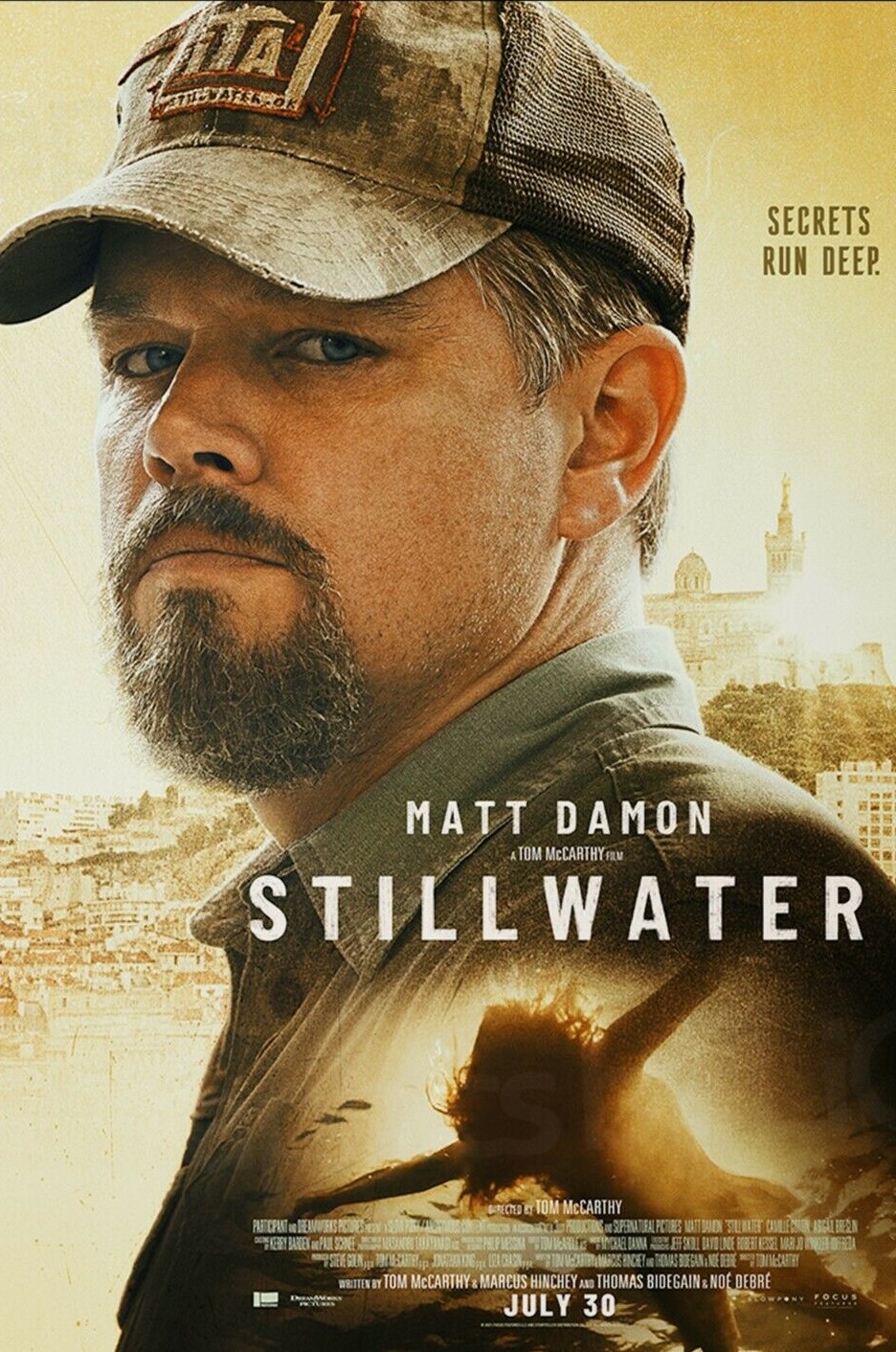
Black Widow (2021) **** – Seen at the Cinema

Like Skyfall, that rarity, an action film with a solid emotional core. Take away the action and you would still have an absorbing story of a loss, family tension, bickering siblings and an ego-driven pompous father. The action brings family together, initially the two girls, Natasha (Scarlett Johansson) and Yelena (Florence Pugh) rescuing papa Alexei (David Horsburgh) from a Russian maximum-security prison then with the addition of brainy mum Melina (Rachel Weisz) tackling criminal mastermind Dreykov (Ray Winstone) in an exceptionally clever secret location.

If you’ve come looking for simple action, this is the wrong movie for you. Family complication, on a par perhaps with the criminal clan of The Godfather and imbued with the darker hues of Christopher Nolan’s Batman, adds far more depth than normal for a superhero picture. And even for Dreykov, the issue is family. He is the repairer-in-chief, on the one hand putting back together as well as he can his own familial loss, and on the other giving a home for countless orphans worldwide, albeit to suit his own plans.

Natasha has run the gamut of raw emotion. Orphaned twice, forcibly ejected from the one place she called home, i.e. The Avengers family, her feelings about being reunited with  adoptive Romanoff parents are noticeably negative.  Yelena is more willing to embrace the errant parents. Never mind that this is the one superhero picture in The Avengers catalogue where the superhero, as fit and agile as Natasha is, has no demonstrable superhero powers. And even those powers are mocked by Yelena who makes fun of the pose we have so often seen Natasha adopt. Nearly stealing the show is the self-pitying Alexei, the over-ripe overweight over-emotional father who would always be embarrassing you, inflated with his own self-importance, as bereft now as his daughters, having been stripped of his own superhero status as the Red Guardian. Whenever any of his family are in danger you can be sure his ego will get in the way.

The story is simple enough. By accident, Yelena, a member of the Dreykov army of female orphans, accidentally discovers she is enslaved, teams up, but only after a knock-down scrap Jason Bourne would have been proud of, with on-the-run Natasha, and eventually her parents. The action is terrific, especially the jailbreak, which has time to steal the central riff from Force Majeure (2014) just to ramp up the tension. And there are plenty surprises along the way, especially apt reward for Natasha’s ruthlessness as a do-gooder.

This is an entire family up for redemption, forced to confront their pasts, and for once it is not action that provides the solution. In some respects it is the family that clings together that stays together. The Avengers aspect is mostly redundant here, so what’s left is a more solid action-fueled thriller with superb characters, each, including villain, with their own emotional story arc. And it’s not always dark either, the family scenario studded with comedy nuggets.   

Visually stunning, as you might expect, this is a welcome big-budget showcase for Cate Shortland (Berlin Syndrome, 2017) who brings emotional intelligence to bear on a genre in which that is often in short supply. Eric Pearson (Godzilla vs Kong, 2021) was the wordsmith.

Johansson (Marriage Story, 2019) has rarely been better and it says a lot for the performance of Florence Pugh (Little Women, 2019) that in their scenes together she is rarely overshadowed. Hopefully, this is the breakout picture for David Harbour (No Sudden Move, 2021), and maybe even the MCU team might recognize the comedic opportunities in a stand-alone based on his character, so effortlessly has it been constructed. And it’s a welcome return for Rachel Weisz, absent from the big screen since The Favourite (2018).  William Hurt (Avengers: Endgame, 2019) makes an expected appearance and Olga Kurylenko (The Courier, 2019) a surprise one and The Handmaid’s Tale’s O-T Fagbenie provides an interesting cameo.

This is definitely not going to work as well on the small-screen so if you’ve got the chance to see it in the cinema – where I saw it on my weekly Monday night outing – grab it while you can.

Go Naked in the World (1961) ***

Under-rated at the time and ever since, and overshadowed at the box office by MGM’s other venture into the world of the good-time-girl Butterfield 8 (1960), this raw slice of emotion delivers on every front and may be even more pertinent today in its unashamed depiction of paternal love.

Spoiled brat Nick Stratton (Anthony Franciosca), trying to escape controlling millionaire Greek father Pete (Ernest Borgnine), falls in love with widow Julie (Gina Lollobridgida), unaware that she is a high-class hooker, among whose clients number Pete.

Three tales run in parallel – the main love story, Pete’s attempts to drag his son into the family construction business, and the father’s undying love for his son. Julie is only too aware that her profession prohibits the development of true love, her world consisting of putting on a happy face for grey-haired men, while avoiding commitment. Where Butterfield 8 evaded the reality of prostitution, that is not the case here, Julie tormented by the prospect of bumping into former clients or her lover unable to accept her past. Overwhelmed by guilt, she believes she is beyond forgiveness. Nick wants none of the commitment of a rich man’s son but all the entitlement. 

Never mind the story, which was always going to tumble into tragedy, it’s the performers who steal the picture. Lollobrigida (Strange Bedfellows, 1965) gives a terrific performance, carrying the emotional baggage of the love story, devastation only inches away, self-destruction possibly the only path open, constantly aware that taking the easy path to riches and independence now stands in the way of happiness. The scenes where her self-loathing breaks through the patina of sexy gloss are tremendous as is her touching belief that somehow she can escape destiny.

While this might appear to be nothing but an over-the-top performance from Borgnine (The Split, 1968), it is anything but, and any man in an early 1960s picture who can demand a kiss from his grown-up son and constantly tells him how much he loves him is a pretty unusual character for the period. Of course, this overt show of emotion is explained by his nationality, but it’s clearly more than that. While attempting to control all around him, with hypocrisy in full spate, as heavy on religion as playing away from home, this is actually a superb piece of characterization, of a powerful man rendered impotent by the loss of love. He has the two best scenes, almost having a heart attack as he watches his son walk across a sky-high girder and later begging Julie’s forgiveness for attempting to wreck the romance.

Anthony Franciosca (Fathom, 1967) is the weak link. For all that he is saddled with a spineless character, moping and running away his default, he never quite seems worthy of romance with Julie nor for that matter of equality with his father. Former child star Luana Patten (Song of the South, 1946) makes an impact as the rebellious daughter while Nancy R. Pollock (The Pawnbroker,1964) brings dignity to her role as the doormat wife.

This was the fourth outing as a hyphenate for writer-director Ranald McDougall (The World, the Flesh and the Devil, 1959) but he was better known for screenplays such as Mildred Pierce (1945), The Naked Jungle (1954) and, later, Cleopatra (1963) and you can see he is accustomed to creating great roles for independent women and filling his picture with sharp dialogue and lines that sound like epithets. There’s more than enough going on to keep the various plots spinning and emotions teetering over a cliff edge.

Cast a Giant Shadow (1966) ***

In some respects a sequel to the film Exodus (1960) as Israel, on the eve of independence in 1948, prepares to repel invasion from neighboring Arabs. Colonel Mickey Marcus (Kirk Douglas) is recruited to help organise the Jewish forces even though he has little actual combat experience, having sat out the Second World War behind a desk until D-Day, and having already resumed his legal career.  

To facilitate entry to Palestine, he is met at the airport by Magda (Senta Berger), herself a soldier, pretending to be his sister. The journey from the airport in armored bus reveals the perilous reality of the situation, the vehicle strafed as they pass through towns. He finds a rabble of a fighting force, lacking in weaponry, disorganised, and made up of various groups at each other’s throats, and focused on defense rather than attack. Initially, Marcus is strictly an advisor, writing training manuals until he encourages a commando raid and is eventually, at the behest of Asher (Yul Brynner) put in complete command of all the units, effectively the country’s first general.

In the background, General Mike Randolph (John Wayne) is helping organise support in the United States to recognise Israel’s independence. Marcus organises a campaign to lift the siege of Jerusalem, first through direct attack, but then through an incredible foray into impassable mountains, building the “Burma Road,” equivalent in the tactical sense to Lawrence of Arabia’s trek through the desert to attack Aqaba.

A fair bit of the early part of the picture is flashback to establish Marcus’s military credentials, which are scant, in sum total no more than a week of active combat, and it would have been better to concentrate on why he was recruited in the first place, because of the name the real-life Colonel had made for himself in organizing the war crimes trials in Germany.

Apart from the action and military politics, the drama concerns Marcus abandoning wife Emma (Angie Dickinson) in New York, embarking on a romance with Magda and establishing a sense of identity with his adopted country. The action is particularly good, audacity the Israeli’s major weapon.

It is mostly through Magda that we view the Jewish experience. She married Andre (Michael Shillo) in order to save his life, although she did not love him. A veteran of many skirmishes, she suffers a breakdown when trapped in her vehicle during one particularly vicious battle. In what is possibly the most imaginative scene in the film, when Marcus encourages her to keep driving her stalled truck with cries of “Come on, Magda,” in cruel torment the surrounding Arabs take up the cry until it echoes round the hills. Once she falls for Marcus, of course, she never knows if he will return safe from battle.

Kirk Douglas (A Lovely Way to Die, 1968) leads mostly with his chin, never letting subtlety get in the way of his performance, but given the character assigned he has little option and is nonetheless effective as a leader and believable as a man torn between wife and lover. Senta Berger (Major Dundee, 1965) has never been better (or not so far in the films thus reviewed) with a meaty role that shows soldiering from a female perspective in a country where sacrifice is a given.

John Wayne (The Undefeated, 1969) has a small role as a grumpy general and Frank Sinatra (The Naked Runner,1967) a cameo as a commercial pilot who finds himself dragged into the war. Angie Dickinson (Fever in the Blood, 1961) is the long-suffering wife and singer Topol (Sallah, 1964) has a small role. The smattering of Brits includes Michael Hordern (Khartoum, 1966), Gordon Jackson (Danger Route, 1967), Jeremy Kemp (The Blue Max, 1966) and James Donald (The Great Escape, 1963).

Melville Shavelson wouldn’t be your first choice for an action picture given he made his name with comedies like It Started in Naples (1960), but does a fair job of directing, especially the action, the “Come on, Magda” scene and the confrontation with the British when immigrants land. He wrote the screenplay based on the biography by Ted Berkman.

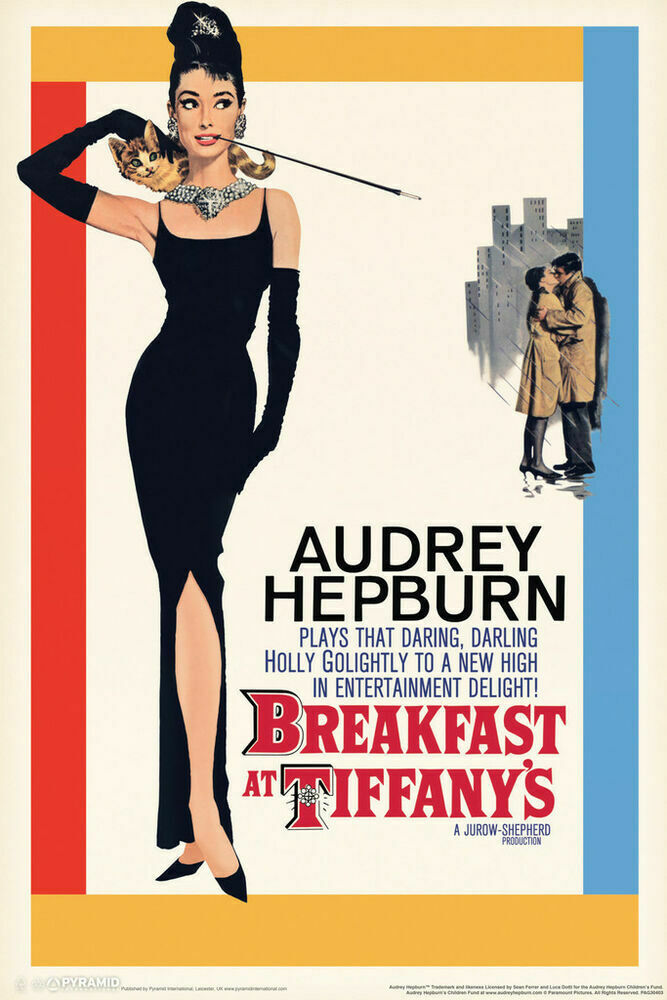
Breakfast at Tiffany’s (1961) **** – Back on the Big Screen

Reassessment sixty years on – and on the big screen, too – presents a darker picture bursting to escape the confines of Hollywood gloss. Holly Golightly (Audrey Hepburn) is one of the most iconic characters ever to hit the screen. Her little black dress, hats, English drawl and elongated cigarette holder often get in the way of accepting the character within, the former hillbilly wild child who refuses to be owned or caged, her demand for independence constrained by her desire to marry into wealth for the supposed freedom that will bring, contradictory demands which clearly place a strain on her mental health.

Although only hinted at then, and more obvious now, she is willing to sell her body in a bid to save her soul. Paul Varjak (George Peppard), a gigolo, being kept, in some style I should add with a walk-in wardrobe full of suits, by wealthy married Emily (Patricia Neal), is her male equivalent, a published author whose promise does not pay the bills. The constructs both have created to hide from the realities of life are soon exposed.

There is much to adore here, not least Golightly’s ravishing outfits, her kookiness and endearing haplessness faced with an ordinary chore such as cooking. the central section, where the couple try to buy something at Tiffanys on a budget of $10, introduce Holly to the New York public library and boost items from a dime store, fits neatly into the rom-com tradition.

Golightly’s income, which she can scarcely manage given her extravagant fashion expenditure, depends on a weekly $100 for delivering coded messages to gangster Sally in Sing Sing prison, and taking $50 for powder room expenses from every male who takes her out to dinner, not to mention the various sundries for which her wide range of companions will foot the bill.

Her sophisticated veneer fails to convince those whom she most needs to convince. Agent O.J. Berman (Martin Balsam) recognizes her as a phoney while potential marriage targets like Rusty Trawler (Stanley Adams) and Jose (Jose da Silva Pereira) either look elsewhere or fear the danger of association.

The appearance of former husband Doc (Buddy Ebsen) casts light on a grim past, married at fourteen, expected to look after an existing family and her brother, and underscores the legend of her transformation. But the “mean reds” from which she suffers seem like ongoing depression, as life stubbornly refuses to conform to her dreams. Her inability to adopt to normality is dressed up as an early form of feminism, independence at its core, at a time when the vast bulk of women were dependent on men for financial and emotional security. Her strategy to gain such independence is dependent on duping independent unsuitable men into funding her lifestyle.  

Of course, you could not get away in those days with a film that concentrated on the coarser elements of her existence and few moviegoers would queue up for such a cinematic experience so it is a tribute to the skill of director Blake Edwards (Operation Petticoat, 1959), at that time primarily known for comedy, to find a way into the Truman Capote bestseller, adapted for the screen by George Axelrod (The Seven Year Itch, 1955),  that does not compromise the material just to impose Hollywood confection. In other hands, the darker aspects of her relationships might have been completely extinguished in the pursuit of a fabulous character who wears fabulous clothes.

Audrey Hepburn is sensational in the role, truly captivating, endearing and fragile in equal measure, an extrovert suffering from self-doubt, but with manipulation a specialty, her inspired quirks lighting up the screen as much as the Givenchy little black dress. It’s her pivotal role of the decade, her characters thereafter splitting into the two sides of her Golightly persona, kooks with a bent for fashion, or conflicted women dealing with inner turmoil.

It’s a shame to say that, in making his movie debut, George Peppard probably pulled off his best-ever performance, before he succumbed to the surliness that often appeared core to his later acting. And there were some fine cameos. Buddy Ebsen revived his career and went on to become a television icon in The Beverley Hillbillies. The same held true for Patricia Neal in her first film in four years, paving the way for an Oscar-winning turn in Hud (1963). Martin Balsam (Psycho, 1960) produced another memorable character while John McGiver (Midnight Cowboy, 1969) possibly stole the show among the supporting cast with his turn as the Tiffany’s salesman.

On the downside, however, was the racist slant. Never mind that Mickey Rooney was a terrible choice to play a Japanese neighbor, his performance was an insult to the Japanese, the worst kind of stereotype.

The other plus of course was the theme song, “Moon River,” by Henry Mancini and Johnny Mercer, which has become a classic, and in the film representing the wistful yearning elements of her character.

CATCH IT ON THE BIG SCREEN: This is a restoration of the classic. The Showcase chain is showing it all this week in various cinemas throughout the United Kingdom (I caught it last week at my local Showcase). It is also showing in Barcelona on July 26; Amsterdam on July 31-August 3; Stockholm on August 5; and Gent, Belgium, on August 6.

A company called Park Circus – which has offices in London, Paris, Los Angeles and Glasgow – has the rights to the reissue and if you want to find out if the picture will be showing in your neck of the woods at a later date you can contact them on info@parkcircus.com  

Esther and the King (1960) ***

Taking a Biblical tale as a starting point, veteran director Raoul Walsh (White Heat, 1949) stirs up heady brew of intrigue, rebellion, politics and romance. Returning home victorious, King Ahasuerus (Richard Egan) discovers his wife Queen Vashti (Danielle Rocca) has committed adultery and that his minister Klydrathes (Renato Baldini) has been squeezing the people blind with punitive taxes, hanging them for non-compliance.

Casting his wife aside, the king seeks a new bride. Since he has conquered all the known world except Greece, marriage to make a political alliance is not an option, so, given women are treated as mere chattels and the king is all-powerful, all the likely virgins are rounded up including Hebrew Esther (Joan Collins) on her wedding day.

Her husband-to-be Simon (Rik Battaglia) kicks off, attacks Klydrathes and becomes a wanted man. The queen’s lover and the king’s chief minister Prince Haman (Sergio Fantoni) attempts to fix the bridal selection, inserting his hardly-virginal choice Keresh (Rosalba Neri) into the proceedings while attempting to murder clear favorite Esther. When that fails, Haman plots to usurp the crown. With the Hebrews facing possible annihilation, Esther is put in the position of giving in to the king in order to save her people. As her serenity soothes the savage beast, her initial hate turns to growing attraction.

Meanwhile, Simon is on a rescue mission and Prince Haman cooks up a devilish plot that will see the Hebrews blamed for passing on military secrets to the king’s enemies. Naturally, all hell eventually breaks loose.

More a drama than a typical big-budget DeMille offering, with battles taking place off-screen, action is limited to a few chases and skirmishes. There is a fair amount of sin on show what with a tribe of concubines at the king’s disposal, a whipping, a striptease by Vashti in a last gasp attempt to win back the king, and some very seductive dancing routines by female slaves who, at times, look as if they were coached by Busby Berkeley. Substantial amounts appear to have been spent on costumes and production design, so historical atmosphere is well captured.

Once you realize there’s not going to be any kind of big battle or major action centerpiece common to the Biblical genre, it’s easy to sit back and enjoy the political machinations, the initial torment of Esther, introduced as a rebellious soul, and the king, more at home with soldiers, shaking off his despondency at marital betrayal as he responds to Esther’s coaxing.

It was 1961 before it reached Britain.

Top-billed British actress Joan Collins (Seven Thieves, 1960) has a difficult role. Normally, you would expect expressions of passion or depths of anguish, but the rebellion she displays at the start soon disappears when she enters the palace and is helpless to change the situation except by, initially against her will, accepting the king’s desires. In that sense, her portrayal is understandable but the understated performance gets in the way of a woman who is supposed to be devastated by the loss of her husband and then trapped by the needs of her people into making the marriage.

Taking second billing, Richard Egan (300 Spartans, 1964) makes a thoughtful king, showing very little temper, possibly because he doesn’t need to with everyone, beyond the conspirators, cowering in his presence.   Regal and stately suits him fine rather than the more common explosions we are accustomed to seeing from people in that line of work.

Both stars were in need of box office redemption. It should have been a screen pairing made in heaven, both Collins and Egan coming to the fore in the mid-1950s, and if they had sustained their early promise, it would have been a star-studded picture. As it was, Collins had been billed above Richard Burton in The Sea Wife (1957) and above Jayne Mansfield in The Wayward Bus (1957) but had gradually drifted down the pecking order, in her previous outing credited behind Edward G. Robinson and Rod Steiger in Seven Thieves (1960).

Egan’s career had followed a similar trajectory – top-billed in pictures as diverse as drama The View from Pompey’s Head (1955), western Tension at Table Rock (1956), film noir Slaughter on 10th Avenue (1957), and romance A Summer Place (1959) but for his previous film, Pollyanna (1960) billed behind both Jane Wyman and Hayley Mills.

While Egan would enjoy a career resurgence it was the end of the line, at least temporarily, for Joan Collins. She was coming to the end of her seven-year Twentieth Century Fox contract but fell out with the studio after being rejected for Cleopatra, and on the evidence here you can see why. After leaving Fox, she only made five more films during the decade. This was the final picture for Irish actor Dennis O’Dea (The Fallen Idol, 1948). Director Raoul Walsh made only another two.

Sergio Fantoni (Von Ryan’s Express, 1965) excels as the spurned lover and Rik Battaglia (The Conqueror of the Orient, 1960) as the schemer. Rosalba Neri (Top Sensation, 1969) and Danielle Rocca (Behold a Pale Horse, 1964) both make striking appearances. Look out also for Gabriele Tinti (Seven Golden Men, 1965).

The Arrangement (1969) ***

It might have been better if director Elia Kazan had handed over the screenwriting chores for this adaptation of his bestseller about the midlife crisis of advertising man Eddie Anderson (Kirk Douglas). Anderson’s attempts to juggle wife Florence (Deborah Kerr) and mistress Gwen (Faye Dunaway) coupled with growing disgust at selling a new brand of cigarettes, Zephyr (“The Clean One”), in a way that pointedly avoids their cancer potential, leads to a suicide attempt.  

During convalescence he determines to quit the advertising world and go back to his first love, writing, but in fact he ends up sabotaging his career. Florence represents impossible seduction and conscience. Slinky, in dark glasses, hot-tempered rather than submissive or demure, she accuses him of self-deception in his job. The picture flits back and forth between his various choices – different job, return to wife, settle down with mistress, or what seems his ideal world, cossetted by both Gwen and Florence.

Gwen is an excellent study of the modern woman (of that fast-changing period, I hasten to add), who needs a man for sex but not necessarily love, and can use the opposite gender as ruthlessly as any man. What she actually requires in her real life is quite different to what she seeks in the fantasy love she enjoyed with Anderson, sex on the beach, the buzz of controlling a high-powered man. Florence could be seen as an old-fashioned portrait of the adoring wife except for capturing so well the bewilderment of betrayal.

Kazan conjures up some wonderful images: the tension before the suicide attempt as Anderson plays chicken between two trucks, Gwen emerging wet from the pool to eat dangling grapes or with her legs up on Anderson’s desk, Anderson’s mother lighting votive candles in her house before using the same match for her cigarette, Kerr’s futile attempts to win back her fallen husband, Anderson flying solo.

In parts well-observed and directorially savvy, quick cuts between the present and the past, however it sinks beneath its own self-indulgence. My guess is that author Kazan could not bear to kill off a single one of the characters he had created for his acclaimed novel and the upshot is a vastly over-populated picture, few of whom cast any real light on Anderson’s predicament. So we are not only introduced to mother, dying father, brother, sister-in-law and  analyst but priest and a bucket of clients and guys from the office. And there are some plot oddities – Anderson gets time off apparently to write journalistic pieces – and what is clearly intended as hard-hitting satire of the advertising world does not come off.

Dunaway (Bonnie and Clyde, 1967) is the standout as Gwen, living life according to her own rules, and with an unexpected vision of domesticity but Deborah Kerr (Prudence and the Pill, 1968) does pain like nobody else and is extremely convincing. Strangely enough, I didn’t go much for Douglas (Seven Days in May, 1964). He could have been leading a cavalry charge for all the range of emotions he exhibited. Douglas is no Montgomery Clift (Wild River, 1960), James Dean (East of Eden, 1955) or Marlon Brando (On the Waterfront, 1954) who was Kazan’s first choice. Kazan had not made a picture in six years and it had been eight years since his last hit Splendor in the Grass (1961). Not quite out-of-touch in concept and delivery, nonetheless it was shunned by the Oscar fraternity.

Readers’ Top 30

I’ve been writing this Blog now for one year, beginning July 2020, so I thought I’d take a look at which posts proved the most popular (in terms of views) with my readers. So here’s the annual top 30 films, ranked in order of views.

  1. The Secret Ways (1961) – Richard Widmark and Senta Berger – making her Hollywood debut – behind the Iron Curtain in gripping adaptation of the Alistair Maclean thriller.
  2. Ocean’s 11 (1960) – Frank Sinatra, Dean Martin, Sammy Davis Jr. and the Rat Pack in entertaining heist movie set in Las Vegas.
  3. It’s Not All Rock’n’Roll (2020) – remarkable documentary about the other side of the music business as ageing rocker Dave Doughman tries to keep his dreams alive.
  4. Age of Consent (1969) – British actress Helen Mirren makes her movie debut as the often naked muse for painter James Mason in touching drama directed by Michael Powell.
  5. The Venetian Affair (1966) – Robert Vaughn shakes off his The Man from Uncle persona in taut Cold War thriller also starring Elke Sommer as his traitorous wife and Boris Karloff in a rare non-horror role.
  6. The Golden Claws of the Cat Girl / La Louve Solitaire (1968) – French cult thriller starring Daniele Gaubert as sexy cat burglar forced to work for the government.
  7. Pharoah / Faron (1966) – visually stunning Polish epic about the struggle for power in ancient Egypt.
  8. The Swimmer (1968) – astonishing performance by Burt Lancaster as a man losing his grip on the American Dream.
  9. Stiletto (1969) – Mafia thriller with hitman Alex Cord and and illegal immigrant girlfriend Britt Ekland hunted by ruthless cop Patrick O’Neal.
  10. The Naked Runner (1967) – after his son is taken hostage businessman Frank Sinatra is called out of retirement to perform an assassination.
  11. Marnie (1964) – Sean Connery tries to reform compulsive thief Tippi Hedren in Alfred Hitchcock thriller.
  12. Our Man in Marrakesh / Bang! Bang! You’re Dead (1966) – Entertaining thriller sees Tony Randall and Senta Berger mixed up in United Nations plot involving the likes of Klaus Kinski and Herbert Lom.
  13. The Happening (1967) – Anthony Quinn locks horns with Faye Dunaway and a bunch of spoiled rich kids in kidnapping yarn.
  14. Dark of the Sun / The Mercenaries (1968) – Rod Taylor and Jim Brown head into the heart of darkness in war-torn Africa with a trainload of diamonds and refugees including Yvette Mimieux.
  15. The Guns of Navarone (1961) – men-on-a-mission Alistair Maclean World War Two epic with all-star cast including Gregory Peck, David Niven, Anthony Quinn, Anthony Quayle, Stanley Baker, Irene Papas, James Darren and Gia Scala.
  16. The Sicilian Clan (1969) – three generations of French tough guys – Jean Gabin, Lino Ventura and Alain Delon – clash in Mafia-led jewel heist.
  17. 4 for Texas (1963) – Frank Sinatra and Dean Martin as double-dealing businessmen in highly entertaining Robert Aldrich Rat Pack western starring Ursula Andress and Anita Ekberg.
  18. Five Golden Dragons (1967) – Innocent playboy Robert Cummings becomes enmeshed with international crime syndicate led by Christopher Lee, George Raft and Dan Duryea.
  19. Duel at Diablo (1966) – James Garner and Sidney Poitier team up to protect Bibi Andersson in Ralph Nelson western.
  20. Move Over Darling (1963) – after years marooned on a desert island Doris Day returns to find husband James Garner just married to Polly Bergen.
  21. Pressure Point (1962) – prison psychiatrist Sidney Poitier is forced to treat paranoid racist inmate Bobby Darin.
  22. Wonder Woman 84 (2020) – in one of the few films to get a cinematic screening during lockdown, Gal Gadot returns as mythical superhero to battle supervillain Kristen Wiig.
  23. Genghis Khan (1965) – Omar Sharif as the Mongol warrior who conquered most of the known world, tangling with rival Stephen Boyd and Chinese mandarin James Mason on the way.
  24. A Fever in the Blood (1961) – Warner Bros wannabes Efrem Zimbalist Jr, Angie Dickinson, Jack Kelly and veteran Don Ameche in tough political drama.
  25. The Prize (1963) – Paul Newman and Elke Sommer investigate murder in the middle of the annual Nobel Prize awards in Sweden.
  26. In Search of Gregory (1969) – wayward Julie Christie embarks on pursuit of Michael Sarrazin who may – or may not – be a figment of her imagination.
  27. Justine (1969) – Dirk Bogarde and Michael York become entangled in web woven by Anouk Aimee in corrupt pre-World War Two Middle East.
  28. The Girl on a Motorcycle (1968) – singer Marianne Faithful in a hymn to the open road and sexual freedom.
  29. Blindfold (1965) – psychiatrist Rock Hudson and dancer Claudia Cardinale in highly entertaining mystery thriller about missing scientists.
  30. Hammerhead (1968) – secret agent Vince Edwards and goofy Judy Geeson on the trail of evil mastermind Peter Vaughn.

My Five-Star Picks for the First Year of the Blog

It’s a been a fabulous year for watching the movies and my pictures of the year (the first full year of the Blog running from July to June, I hasten to add) make up an eclectic collection ranging from historical epics, dramas and westerns to horror, thrillers and comedy. Although this is my chosen decade, many of the films I was seeing for the first time so it was interesting to sometimes come at a film that had not necessarily received kind reviews and discover for one reason or another cinematic gems. There was no single reason why these pictures were chosen. Sometimes it was the performance, sometimes the direction, sometimes a combination of both.

The westerns I most enjoyed came from either ends of the decade – John Wayne and Rock Hudson in magnificent widescreen spectacle The Undefeated (1969) and Yul Brynner, Steve McQueen, Charles Bronson, James Coburn and the team in The Magnificent Seven (1960).

There was another ensemble all-star cast in J. Lee Thompson war film The Guns of Navarone (1961) one of the biggest hits of the decade with Gregory Peck, Anthony Quinn, David Niven, Stanley Baker et al.

Horror brought a couple of surprises in the shape of Daliah Lavi as the Italian peasant succumbing to The Demon (1963) and Peter Cushing menaced by The Skull (1965).

Not surprisingly perhaps Alfred Hitchcock headed the ranks of the five-star thrillers, but surprisingly to some, this was in the shape of Marnie (1964) with Sean Connery and Tippi Hedren rather than some of his decade’s more famous / infamous productions.  Heading the romantic thrillers was the terrifically twisty Blindfold (1965) with Rock Hudson and Claudia Cardinale teaming up to find a missing scientist. The Sicilian Clan (1969) proved to be a fine heist picture in its own right as well as a precursor to The Godfather with a topline French cast in Alain Delon, Lino Ventura and Jean Gabin.

Only one comedy made the five-star grade and what else would you expect from Billy Wilder’s Some Like It Hot (1959), slightly outside my chosen remit of films from the 1960s, but impossible to ignore the chance to see Marilyn Monroe, Tony Curtis and Jack Lemmon strutting their stuff on the big screen. For the same reason I had the opportunity to re-evaluate Ridley Scott’s Oscar-winning historical epic The Gladiator (2000) that gave Hollywood a new action hero in Russell Crowe. Stylish contemporary sci-fi chiller Possessor (2000), from Brandon Cronenberg,  was another one seen on the big screen, one of the few in this year of the pandemic.
Most people would certainly put Paul Newman as prisoner Cool Hand Luke (1967) in this elevated category but, to my surprise, I found several other dramas fitted the bill. The clever sexy love triangle Les Biches (1968) from French director Claude Chabrol made his name. Burt Lancaster turned in a superlative and under-rated performance in the heart-breaking The Swimmer (1968) about the loss of the American Dream. Rod Steiger, on the other hand, was a hair’s-breadth away from picking up an Oscar for his repressed turn as The Pawnbroker (1964).

Two films set in the Deep South also made the list – Marlon Brando in Arthur Penn’s depiction of racism in small-town America in The Chase (1966) with an amazing cast also featuring Jane Fonda and Robert Redford, and Michael Caine as a more than passable arrogant southerner in Otto Preminger’s Hurry Sundown (1967) opposite rising star Faye Dunaway. Dennis Hopper and Peter Fonda’s hymn to the freedom of the motorbike in Easy Rider (1969) turned into a tragic study of attitudes to non-conformity.

For only eighteen films out of a possible two hundred to make the cut indicates the high standards set, and I am looking forward to as many, if not more, brilliant films in the year to come.

Stark Fear (1962) ***

Unless you were unfortunate enough to get mixed up in an international conspiracy, or your wealth induced a husband into planning your murder – or a la Gaslight your insanity –  or you had taken a shower in strange motel, a wife in American movies was unlikely to live in fear of a sadistic spouse. Wife-beating (a.k.a. wife-battering) had never been high on the Hollywood agenda as an appropriate subject matter so this picture not only stands out for the period but also strikes a contemporary spark. While many marital dramas of the 1960s have quickly become outdated, this has not.

Opening with an audacious cut from a woman’s eyes seen in a car’s rear-view mirror to her face in a photograph being pelted with alcohol, Ellen (Beverly Garland) has committed the grievous sin not just of going out to work but of taking up the post of secretary to oil executive Cliff Kane (Kenneth Tobey), a previous rival of husband Gerry (Skip Homeier). But Gerry’s income had unexpectedly tumbled and the couple, married just three years, need her money. He pours a drink over the terrified woman’s head, demands a divorce and promptly disappears.

Her search for him takes her to Quehada, pop. 976, a rundown town she had never heard of and whose existence her husband made no mention despite the fact it was where he grew up. Her husband’s sleazy friend Harvey takes her to the grave of Gerry’s mother (also called Ellen) where he rapes and beats her while, unbeknownst to her, her husband watches.   

Back at the office, she begins to fall for Cliff, but Gerry, even though he no longer wants her, sets out to destroy the budding romance.

Following the classic pattern of course Ellen blames herself for making Gerry unhappy and for getting raped. Her guilt fuels her husband’s sadistic streak. She is unsure whether the threat of divorce is just the most cruel taunt her husband can imagine or is for real, which would be just as bad, given her low-self-esteem. Once she realizes Gerry had an unhappy childhood and is mother-fixated, it makes it even harder for her to abandon him, regardless of the mental and physical torment he inflicts and despite the entreaties of social worker friend Ruth (Hannah Stone). Ruth, too, however, represents an alternative equally fearful future, the now-single woman who regrets separating too quickly from her husband and has no man  in her life or none who come up to scratch.

This is not a picture where men come out well. Gerry is a fiend in a suit. On Ellen’s way to Quehada she is groped by other men who clearly feel it is their right. Harvey has a history of just taking what he wants. Even the relatively gentle Cliff appears to have an underlying reason for taking an interest in her.

In a world and a time where marriage meant not just financial security, but a safe haven from all the other men who would like as not press themselves upon the opposite sex at any opportunity, and not necessarily with any delicacy, director Ned Hockman presents life as a succession of traps for women. And we know now that not much has changed, and that for many women fear is a constant.

Hockman directs with some singularity. He uses black-and-white not quite in the film noir manner of shadows and shafts of light, but sets the subject of any night scene in a pool of light with darkness all around, which makes for some striking images. A couple of unusual backdrops including Commanche tribal dancing and a chase in a jukebox museum help place this a couple of notches above the usual B-picture..

Beverly Garland was a 1950s B-picture sci-fi and horror scream queen in movies such as  It Conquered the World (1956), Curucu, Beast of the Amazon (1956) and Not of This Earth (1957) so fear was something of a default. Here, she adds something else, desolation at the position she finds herself in, confusion that her marriage is in tatters, hunting for a solution that never emerges, and unable to summon up the anger that might free herself. Hannah Stone has an intriguing role, encouraging her friend to leave her husband, knowing that being single again is not all it is cracked up to be. Unusually for a minor character in this kind of picture, primarily there to shore up the star, she enjoys a spot of lifestyle reversal. Skip Homeier (Commanche Station, 1960) and Kenneth Tobey (X-15, 1961) are outshone by the women. Unusually, and surprisingly, this was the one shot at a movie career afforded both Stone and director Hockman.

This may have been intended as a quick B-picture rip-off to cash in on the expected success of Cape Fear (1962) which appeared eight months prior but it turned out to be a more superior effort than anyone could imagine. And since Cape Fear was far from as successful as most people believe, it possibly had to make its way on its own merits in several markets.

Catch this on Amazon Prime.

Ammonite (2020) ****

I came at this picture with some trepidation and in truth only watched it at the cinema because I had seen everything else worth a look in the few weeks since the picture houses have reopened. Although initially attracting Oscar buzz, that failed to materialize when it mattered and it was left out of the Oscar loop. While kate Winslet was a proven commercial box office draw, this appeared to have arthouse sensibilities and the few reviews I had read promised a turgid evening.

The reality was something different and as a result of what I can only describe as the magic of the big screen. Watching a film in a cinema is automatically more involving than on the small screen: there are fewer distractions, the dominating size of the screen is unavoidable and it is dark. Had I watched it at home I could well have switched it off after fifteen minutes in reaction to the slow pace. But in a cinema, slowness did not matter, and until it widened out in the final few scenes it was like an absorbing chamber piece, featuring a handful of characters.  In approach it was closest to a film about an artist, Pollock (2000) and Mr Turner (2014) come to mind, where obsession is the driving force, narrative and plot merely subservient. We are exposed to considerable detail about the character’s archaeological work, which is often filthy and undertaken outside in all sorts of weather, requiring the constitution of a miner or farmer rather than a painter, as well as the patience of a saint to brush, wash or poke clean her discoveries.

Mary Anning (Kate Winslet) was not an attractive personality, downright truculent and rude for the most part, given that she depended for her living on selling the archaeological items she had found in the Lyme Regis area to tourists and collectors. That her major archaeological discoveries resided in the British Museum brought no personal satisfaction because thanks to the male archaeological hierarchy they were presented there under the names of the purchasers rather than the finder. What she earned for major pieces could keep herself and her ageing and infirm mother (Gemma Jones) for a year. By and large, they lived in poverty, existing on soup mostly, the mother at least as obsessive as the daughter with her collection of knick-knacks, one for each of her eight children who had died prematurely, which she washed and polished every day. Mary spurned any male overtures and indeed appeared to resent any friendship, the hint of some kind of betrayal in brief scenes with Elizabeth Philpot (Fiona Shaw), a local worthy.

Mary is hired by wannabe archaeologist Roderick Murchison (James McArdle) to look after his insipid, annoying, depressed wife Charlotte (Saoirse Ronan). Gradually a friendship forms, leading to desire. Nothing is more illustrative of the Victorian attitude to sex than that the idea of a lesbian relationship ran counter to all imagination. Perhaps one of the more refreshing aspects of the picture is that while Victorian women clearly resented having sex with their husbands that was largely down to the fact the men had no idea how to satisfy a woman. That is not the case here and though the sex scenes have been criticised in places as “too strong” I thought it was essential just to be sure that the women did know what they were doing and clearly derived enormous satisfaction from the sexual act if properly performed. A chaste kiss and cuddle would hardly do justice to the passion suddenly erupted.

While Mary experiences jealousy when Charlotte is entranced by Elizabeth, romance does not produce complete fulfilment and when Charlotte, as if she were a man, appoints herself Mary’s protector that independence for which the archaeologist had fought so hard is imperilled. Love miraculously changes Charlotte’s outward demeanour, the same is not true of Mary.

This isn’t the picture-postcard version of a Victorian seaside town, rather its harsher cousin. Writer-director Francis Lee (God’s Own Country, 2017) refuses to soften the rude edges of life and the best a true romanticist can expect is that the storms occasionally abate and the surf does not pound so heavily.

Powerful roles have been in short supply of late for Kate Winslet (Blackbird, 2019) and she is superb as the stoic woman in a male-dominated world, unable to express passion except in whittling away at pieces of ammonite. Saoirse Ronan (Little Woman, 2019) moves from bitter and confused child-woman to finding joy and from then to taking charge. Veteran British character actors Gemma Jones (Rocketman, 2019) and Fiona Shaw (My Left Foot, 1989) are impressive while James McArdle (Mary, Queen of Scots, 2018) and Alec Secareanu  (Amulet, 2020) offer different interpretations of the entitled male.

To be sure there is no conclusive proof that Mary Anning was this way sexually inclined but in these days of Hollywood reinvention or reimagining for little more than comic-book glory it would be hard not to allow the director some leeway in providing his love story with an interesting backdrop and a fascinating character. At times it is a painful watch, but a rewarding one.

Discover WordPress

A daily selection of the best content published on WordPress, collected for you by humans who love to read.

The Atavist Magazine

by Brian Hannan

WordPress.com News

The latest news on WordPress.com and the WordPress community.