Based on a novella by D.H. Lawrence, The Fox, relocated to contemporary Canada, marked the debut of director Mark Rydell. Originally, Alan Bates (Georgy Girl, 1966), Patricia Neal (Hud, 1963) and Vivien Merchant (Alfie, 1966) were in the frame for the three roles. Instead, the trio were Sandy Dennis, Keir Dullea and Anne Heywood.
Dullea’s career was at a dead end after flops The Thin Red Line (1964) and Bunny Lake Is Missing (1965). Former beauty queen Heywood had been a Rank starlet which resulted in small roles of no distinction until marriage to the film’s producer Raymond Stross improved her prospects. The main marquee attraction was Sandy Dennis who had won the Best Supporting Actress Oscar for Who’s Afraid of Virginia Woolf (1966) and starred in drama Up the Down Staircase (1967). But it was a low-budget enterprise all the way.
Dennis and Heywood play spinsters running a chicken farm in rural Canada, home-body Dennis the more introspective and content, task-oriented Heywood self-sufficient but sexually frustrated. Dullea is a merchant seamen who visits the farm in search of his grandfather, now deceased. Allowed to remain, his presence threatens their lifestyle and forces them to confront the intensity of their suppressed feelings towards each other. Although a real fox is causing trouble, Dullea is the symbolic fox in the symbolic hencoop. Rydell displays considerable confidence in his material.
It is very atmospheric, the natural backdrop, early morning sunsets and wintry chill in the air adding a certain tone, with the isolation providing a thematic template. The tiny cast creates a sense of intimacy as well as tension and the acting is uniformly good. There is no sense of lust, just a gradual emergence of submerged emotion.
Tackling such a bold theme would have brought the movie some attention anyway, but nudity, masturbation and sex brought much more. That such scenes were filmed in good taste and impressed critics was hardly going to deter the salacious. The nervy, whiny Dennis has the showiest role but Heywood’s subdued performance, trapped by her conflicting sexual needs, is the central figure.
George Roy Hill might well have purloined his freeze-frame ending in Butch Cassidy and the Sundance Kid from an idea Rydell employs here, one of only two effective stylistic devices in an otherwise highly-controlled piece. The only directorial downsides are a couple of instances of unnecessary melodramatic music when otherwise Lalo Schifrin’s gentle theme is perfectly in keeping with the picture’s mood. Made on a budget of buttons and reliant entirely on acting skill, this is one of the decade’s low-budget triumphs, not least for its sensitive treatment of its subject matter.
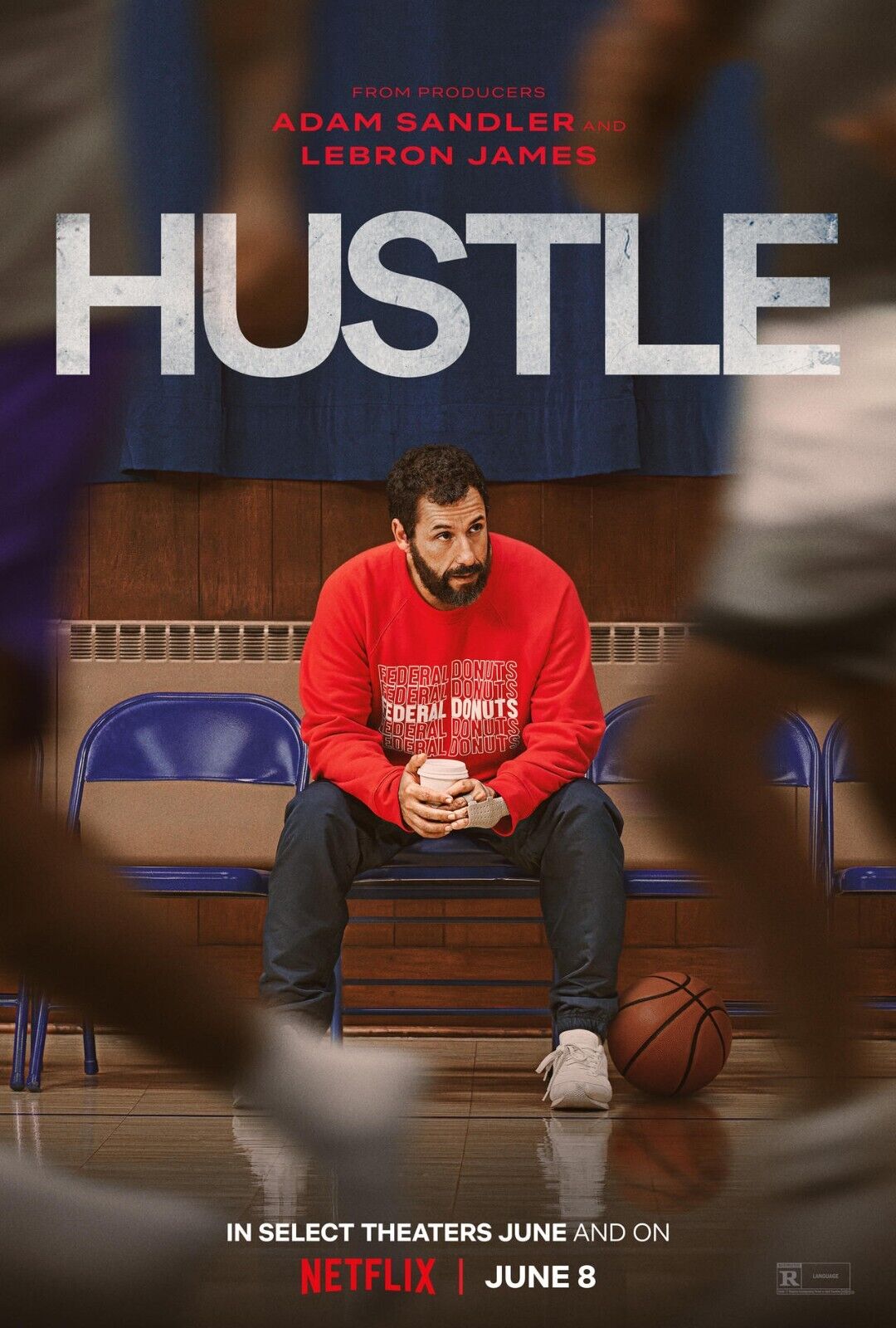
Army vet with PTSD learns how to deal with his trauma by transporting cross-country a dog with PTSD. In one of the few Covid box office winners, this has found an audience by the old-fashioned method of word-of-mouth. The trailer pitched this as a kind of Chevy Chase comedy, hapless man with unruly dog, and alternatively as a feel-good picture, but once audiences saw it and realized what it was really about nobody seemed to care they had in equally old-fashioned manner been duped by the marketing and just settled in to watch the best film yet about Army veterans. Eschewing the heavy melodramatic approach of so many other pictures addressing much the same issue, this simple tale outscores them all by sticking to the knitting, a tale with, sure, plenty laughs, but again equally old-fashioned, a movie about friendship and redemption.
Channing Tatum has built a career on playing against his physical attributes, generally excelling at a character but more brawn than brain, often lost in the modern world and this is almost an ode to that screen persona. We have witnessed so many arrogance-driven pet (no pun intended) projects by actors that fall apart under the weight of their own hubris and lack of understanding of cinema, that it is astonishing to realize that not only was Tatum a producer on this movie (and possibly giving up his salary in return for a back-end to keep the budget low enough – just $15 million – to make it low-risk) but he is also the co-director.
If I wanted to be more high-falutin’ and appeal to the arthouse crown I would say this is a cross between Ulysses and Easy Rider (1969), a man on a long journey through a land he scarcely recognizes where his military heroism earns him no points, and the values he espouses are generally derided. It’s also close at times to Rain Man (1988) in that the protagonist just wants to get a job done until he discovers a deeper emotion at work. But even closer to the opposites unwillingly paired together that made movies like 48 Hours (1982) zing and by the end it is playing like a buddy comedy with a darker, emotional core.
Anyway, after all that rambling, let’s cut to the chase. Former Army Ranger Briggs (Channing Tatum) agrees to take former Army Ranger dog Lulu on a road trip down the Pacific coast to the funeral of the dog’s former handler. Briggs, on a whole load of meds to cope with his condition, is convinced that if he completes the task he will be re-enlisted in the Army. This self-delusion is obvious from the start. His short-term memory is so shot he can’t even take an order straight at the deli joint where he is employed. This is only a sample of the general chaos of his daily life. Lulu, a breed known as Belgian Malinois (no, I had never heard of it either), looks cute but, equally distraught by her wartime experiences and missing her master, is hell to handle.
Apart from what you might expect of the comedy that ensues from a half-crazy dog left with a disenfranchised handler, the odyssey element conjures up a variety of contemporary attitudes to the military. A soldier with the medals to prove his valor is treated royally in one city but the fact of his employment cuts no ice with the women he tries to chat up in bars. He also runs into racists, psychics and a variety of oddments.
Critics didn’t like this much, audiences (and not just dog-lovers) took a different attitude. As far as I can see critics objected to the fact that the movie did not dig deeper into the human ramifications of war and make a more pointed and I would guess more anti-military statement while I felt that exactly by ignoring such an obvious trap the movie scored more highly on an emotional level since Briggs is not the kind of character who would be able to process his experiences in any manner that could bring him closure.
If you like dogs, you’ll love this, if you like Tatum – who hasn’t been on the screen in four years – you’ll love this, but even if you thought like I did that this was far too mawkish to be of the slightest interest you will be in for a hell of a surprise in how quietly effective this picture is in getting the emotional job done.
This is far more worthy of plaudits than the arthouse-seeking mess of Power of the Dog (2021) which was so boring that I left the cinema halfway through.
This also marks the directing (or co-directing) debut of Reid Carolin, best known for his screenplay of Magic Mike (2012) and its sequel. If ever a little movie punched above its weight, taking on difficult subject through a clever audience-appealing stratagem, this is it.
This overheated melodrama stands as a classic example of Hollywood’s offensive attitudes to women. Nobel prize-winning author William Faulkner could hardly blame the movies for sensationalising his misogynistic source material since if anything the movie took a softer line. Told primarily in flashback as headstrong southern belle Temple Drake (Lee Remick) attempts to mitigate the death sentence passed on her maid Nancy (Odetta). Given that such appeals are directed at Drake’s Governor father (Howard St John), and that the maid has been condemned for murdering Drake’s infant child, that’s a whole lot of story to swallow.
Worse is to follow. Drake takes up with Prohibition bootlegger Candy Man (Yves Montand) after being raped by him and thereafter appears happy to live with him in a New Orleans brothel – the “sanctuary,” no irony intended, of the title – despite him slapping her around. The film steers clear of turning her into the prostitute of the original book, but pretty much sets up the notion that high class women will fall for a low-class tough guy whose virility is demonstrated by his brutality. In other words a “real man” rather than the dilettantes she has previously rejected.
After the Candy Man dies, Drake returns home and marries wealthy suitor Gowan Stevens (Bradford Dillman) who blames himself, rightly, for Drake falling into the clutches of the gangster in the first place. But a past threatening to engulf her precipitates the infanticide.
Faulkner was a Hollywood insider, adapting Sanctuary for The Story of Temple Drake (1933) and earning high praise for his work on Bogart vehicles To Have and Have Not (1944) and The Big Sleep (1946). The success of The Tarnished Angels (1957) starring Rock Hudson, The Long, Hot Summer (1958) with Paul Newman and The Sound and the Fury (1959) headlined by Yul Brynner had sent his cachet rocketing. But all three were directed by Americans – Douglas Sirk and Martin Ritt – who had a distinctive visual style and an ear for what made melodrama work.
Sanctuary had been handed to British director Tony Richardson (Look Back in Anger, 1959) and he didn’t quite understand how to make the best of the difficult project. So while Lee Remick manages to suggest both strength and fragility, and makes her character’s wanton despair believable, Yves Montand is miscast and Bradford Dillman fails to convince even though portraying a weak character. Too many of the smaller roles appear as cliches. And it’s hard to believe the maid’s motivation in turning murderer. Watch out for Strother Martin (Cool Hand Luke, 1967).
What was acceptable steamy melodrama in the 1930s fails to click three decades on. Faulkner’s thesis that high-falutin’ women want a man to master them and furthermore will fall in love with their rapist seems to lack any understanding of the female mind and will not appeal any more to the modern sensibility than it did on release. Lee Remick is what holds the picture together, in part because she plays so well the role of a woman embracing degradation, and refusing – no matter how insane the idea appears – to let go of the man she believes is the love of her life. It’s not Fifty Shades of Grey, but it’s not that far off that kind of fantasy figure, and given the success of that book, it’s entirely possible there is a market for what Faulkner has to peddle.
Not easy to find. This is actually on YouTube if you go onto that channel and search. Strangely enough, if I post a link, it says it is no longer playing there – but just as strangely if you go looking you will find it.
Desert pictures come in two varieties – men battling the elements with little or no female distraction and men distracted from battling the elements by the presence of a female. Since the film I reviewed earlier today, Sands of the Kalahari, fitted largely into the first camp with the sole female being viewed as a prize rather than a temptress, I thought it might be interesting to compare it to Station Six Sahara, made the year before, in which the seductive Carroll Baker disrupts the men-only oil station.
David Lean spent months in Jordan capturing his vision of the desert for Lawrence of Arabia. Seth Holt was granted no such luxury, a few weeks at Shepperton Studios in England to make this British-German co-production. It is a surprisingly tight and effective drama made on a low budget excepting whatever fee induced Hollywood star Carroll Baker to join.
Five men trapped on an oil pipeline maintenance unit drive each other to distraction. Loud Scot Ian Bannen constantly needles stiff upper-class Denholm Elliott while overbearing German boss Peter Van Eyck cheats at poker. The arrival of steely-eyed German Hansjorg Felmy alters the status quo as he refuses in his own quiet way to knuckle down to authority. There is a wonderful psychological battle going on between Bannen and Elliott.
Extremely envious of the number of letters Elliott receives, Bannen offers a month’s pay for just one. When the offer is accepted, Elliott cannot stop fretting about what he might have given away and what secrets it revealed about himself. The arrival of Carroll Baker upsets the equilibrium further as the men attempt to win her affections. While apparently promiscuous, she is steelier than the lot of them, and tensions climb high when she begins to spread around her favors. Interestingly, she does no wooing but waits for men to come to her.
Given the budget restraints, or possibly because of them, it is surprisingly well directed. Two scenes stand out in directorial terms. In one featuring Bannen and Elliott, the Scot is only partly visible behind a piece of furniture but his dialogue continues even when out of sight. In the other, one of Baker’s suitors finds her door locked and as she is about to reply a hand appears (not in aggressive fashion) to cover her mouth, indicating she already has chosen her bedmate.
Naturally, this can only lead to a grim end. The cast of male unknowns are uniformly good but Baker steals the show as you would expect. Given the times, there was no nudity, but the overt sexuality certainly skirted the bounds of what passed as decency and Baker is alluring however little or much she wears. But her sexuality takes second place to her individuality. Her independence will not be surrendered to a man. Despite the budget restrictions it stands up very well.
At any given moment Carroll Baker could be both a top Hollywood star and a middling box office attraction. She had just come off How the West Was Won (1963) but had really failed to justify the potential shown in Baby Doll (1956). Peter van Eyck (The 1,000 Eyes of Dr Mabuse, 1960). was best known for his role in Wages of Fear (1953). Scottish actor Ian Bannen (Psyche 59, 1964) was beginning to merge as a strong character actor, he and van Eyck had appeared together previously in The World in My Pocket (1961). The career of Denholm Elliott (Maroc 7, 1967) followed a similar arc to Bannen as a supporting player of distinction. Seth Holt (Danger Route, 1967) was considered a rising directorial star until his untimely death at the age of 41.
Given that Ann-Margret receives top billing I had automatically assumed she was the Bus Riley in question. Although decidedly the female lead, her role is secondary to that of a sailor returning to his small town. The backstory is that Bus – no explanation ever provided for this nickname, Buster perhaps? – Riley (Michael Parks) had been too young to marry the gorgeous Laurel (Ann-Margret) before he joined the U.S. Navy and in his absence she married an older wealthy man.
Bus dithers over his future, re-engages with his mother and two sisters and finds he has not lost his attraction to Laurel. Although a handy mechanic, he has his eye on a white collar career. An initial foray into becoming a mortician founders after sexual advances by his employer (Crahan Denton). Instead he is employed as a vacuum salesman by slick Slocum (Brad Dexter). While his sister’s friend Judy (Janet Margolin) does catch his eye, she is hardly as forward or inviting as the sexy Laurel who crashes her car into his to attract his attention. But easy sex available with Laurel and the easy money from exploiting lonely housewives trigger a crisis of conscience.
Perhaps the most prominent aspect is the absence of good male role models. Bus is fatherless, his mother (Jocelyn Brando) taking in boarders to meet her financial burden – including the neurotic Carlotta (Brett Somers) – and while younger sister Gussie (Kim Darby) adores Bus the other sister Paula (Mimsy Farmer) is jealous of his freedom. Judy’s father is also missing and her mother (Nan Martin) a desperate alcoholic. The biggest male players are the ruthless Slocum and Laurel’s husband who clearly views her as a plaything he has bought. The biggest female player, Laurel, is equally ruthless, boredom sending her in search of male company, slithering and simpering to get what she wants.
Scandal is often a flickering curtain away in small towns so it’s no surprise that Bus can enjoy a reckless affair with Laurel or that a meek mortician can get away with making his desires so quickly apparent, or that behind closed doors houses reek of alcohol or repression. A couple of years later and Hollywood would have encouraged youngsters like Bus and Laurel to scorn respectability in favor of free love. But this has a 1950s sensibility when finding a fulfilling job and the right partner was preferred to the illicit.
In that context – and it makes an interesting comparison to the more recent Licorice Pizza that despite being set in the 1970s finds youngsters still struggling with the difference between sex and love – it’s an excellent depiction of small-town life.
While Michael Parks (The Happening, 1967) anchors the picture, it’s the women who create the sparks. Not least, of course, is Ann-Margret (Once a Thief, 1965), at her most provocative but also revealing an inner helpless core. And you can trace her screen development from her earlier fluffier roles into the more mature parts she played in The Cincinnati Kid (1965) and more especially Once a Thief (1965).
In her movie debut Kim Darby (True Grit, 1969) is terrific as the bouncy Gussie and Janet Margolin (David and Lisa, 1962) invests her predominantly demure role with some bite. Jocelyn Brando (The Ugly American, 1963) reveals vulnerability while essaying the strong mother. Mimsy Farmer (Four Flies on Grey Velvet, 1971) also makes her debut and it’s only the second picture for David Carradine (Boxcar Bertha, 1972). Brad Dexter (The Magnificent Seven, 1960) is very convincing as the arrogant salesman.
It’s also the first film for Canadian director Harvey Hart (The Sweet Ride, 1968) and he has some nice visual flourishes, making particular use of aerial shots. The scenes of Bus trudging through town at night are particularly well done as are those of Laurel strutting her stuff.
It was also the only credit for screenwriter Walter Gage. That was because Gage didn’t exist. Like the Allen Smithee later adopted as the all-purpose pseudonym for pictures a director had disowned, this was the name adopted when playwright William Inge (Oscar-winner for Splendor in the Grass, 1961) refused to have anything to do with the finished film.
The movie was in limbo for over a year. It was never intended as a major picture, the budget limited to $550,000. Shot in Spring 1964, release was delayed for about a year until Universal re-edited it and added new scenes. In part this was because Ann-Margret had achieved surprising movie stardom between her recruitment and the film’s completion. Along with Raquel Welch, she became one of the most glamorous stars of the decade and in building up her own career Welch clearly followed the Ann-Margret template of taking on a bucket of roles and signing deals with competing studios.
After making just three movies, Ann-Margret was contracted for three movies with MGM at an average $200,000 per plus an average 12% of the profit, substantial sums for a neophyte. On top of that she had four far less remunerative pictures for Twentieth Century Fox, three for Columbia, Marriage on the Rocks with Frank Sinatra and a couple of others.
Universal also had another property to protect. Michael Parks was one of small contingent of novice actors in whom the studio had invested considerable sums, using them in television roles before placing them in major movies. Others in this small group – at a time when most studios had abandoned the idea of developing new talent – included Katharine Ross and Tom Simcox who both appeared in Shenadoah (1965), James Farentino (The War Lord, 1965), Don Galloway (The Rare Breed, 1965), Doug McClure (The Lively Set, 1964) and Robert Fuller and Jocelyn Lane in Incident at Phantom Hill (1965).
However, the introduction of Parks had not gone to plan. He was set to make his debut in The Wild Seed (1965) – originally titled Daffy and going through several other titles besides – but that was also delayed until after Bus Riley, riding on Ann-Margret’s coat-tails, offered greater potential.
SOURCES: “Escalating Actress,” Variety, May 22, 1963, page 4; “Inge Thinks Writer Contentment May Lie in Creative Scope of Cheaper Pix,” Variety, May 6, 1964, p2; “Ann-Margret Into the Cash Splash,” Variety, July 22, 1964, p5; “Universal Puts 9 Novices Into Pix,” Variety, March 3, 1965, p25; “Fear Ann-Margret Going Wrongo in Her Screen Image,” Variety, March 24, 1965, p5.
There’s a VHS copy available on Amazon, but otherwise it’s Ebay or this decent enough print on YouTube.
It’s rare to see an actor’s screen persona complete disappear when playing a role but that’s what Jessica Chastain achieves in this potentially Oscar-winning performance as the wife of television evangelist fraudster Jim Bakker (Andrew Garfield). Responsible much of the time for holding Bakker together when he was falling apart, backing diversity at a time when it was anathema to any organised religion, although a fool for love and with an appetite for self-deception that would have floored a rhinoceros.
A fascinating docu-drama into how an opportunistic couple became the fatted calves their religion deplored. The movie doesn’t delve too deeply into the fund-raising activities of the couple any more than The Two Popes spent time wondering who funded the Vatican. Instead, it’s a character-driven study. There’s no doubt Bakker and Faye delivered on the motivational front to their legions (20 million subscribers at their peak), preaching about God’s love rather his downside of Hell and damnation. The fact that Faye got to sing and become an adored television personality was the least of it.
In keeping with a lot of modern biopics, it races through the years, new characters introduced with screen titles as we move from the trudge of freelance missionaries to low-grade television performers until, at Faye’s instigation, they set up their own television station. However big the bucks that roll in, it’s never enough, Bakker constantly in hock and coming up with more grandiose schemes to bankroll his grandiose schemes. It’s hard to say how much they actually achieved, since the film skips over this until Bakker is brought up on major fraud charges.
Instead what we have is a four-ring circus, Faye happily getting richer but missing out on the expected sex life that goes with it, excoriated for nearly having an affair, Bakker playing fast and loose with male and female but his transgressions not coming to light until much later, rival preaching kingpin Jerry Falwell (Vincent D’Onofrio) stitching them up when they fall, and Faye’s tight-permed thin-lipped mother Rachel (Cherry Jones) herself a “fallen woman.”
Although falling into the “Stand By Your Man” cateogory, Faye’s continued effervescence in the face of mounting scandal is astonishing, lack of fear of male hierarchy (calling Falwell by his Christian name instead of his title, going against inbred conservative politics) and her genuine desire to help those eviscerated by the world, namely AIDS victims, would have set her up almost for saintood had the pillar on which she depended not been made entirely of salt.
The movie is a fascinating insight into how slick evangelism parts people from their bucks, almost a masterclass in maximizing frailty and playing the victim – more money rolls in when they confess infidelity and weakness than when playing superheroic good guys. Forget the hypocrisy with which it paints the television evangelist and the viewers (i.e. suckers) keeping the enterprise afloat, the Catholic church made a mint from its parishioners, anybody who sought comfort in religion had something wrong with them as was pointed out to Clint Eastwood in Million Dollar Baby.
As I knew nothing about any of the background and was only vaguely familiar with the real-life characters, I thought it was superb, but mostly through the acting. I have rarely seen an actor play vulnerability so well without an eye to self-pity. It’s ironic of course that Faye is so in favour of love when she is denied it first by her mother and then by her husband. Only an adoring wife would fail to see the weasely character she married.
Chastain transitions from giggly teenager, too enraptured by passion, to the self-possessed puppet-master and from thence to the all-engulfing stardom to which they have opposite responses, he overwhelmed by being found out, she believing every word he says and living the dream as if she was the original Kardashian. Garfield channels inner entitlement, entirely convincing as the ultimate salesman with the ultimate item to sell to a more than willing set of loyal customers, happy to sacrifice his wife’s shame at the altar of mammon while hiding his own indiscretions. But he’s also the preacher as businessman, learning from his predecessors, planning to out-do his rivals, praying that he can keep the devil at bay.
And that’s not forgetting an excellent turn by Cherry Jones as the repressed mother who would have been disowned by her own church except they had no one else to play the piano, fearful but never tearful, her only criminal act holding on to a cherished fur coat that should have been surrendered to the law. Vincent D’Onofrio relishes playing the sanctimonious thug, wooed by politicians, kowtowed-to by preacher underlings, with a whole pile of machinations up his sleeve.
Chastain’s performance belongs to those larger-than-life real-life characters imbued by Julia Roberts (Erin Brockovich, 2000) and Jennifer Lawrence (Joy, 2015) who turned their fragility on its head and fully deserves her Oscar nomination. A fascinating film with terrific performances, and enjoyable with it.
Except for people trying to kill him, this would be a heart-warming tale of young Buddy (Jude Hill) growing up in a tight-knit community in Northern Ireland in the late 1960s. In the vein of John Boorman’s Hope and Glory (1987) with war – civil war in this case – seen through the eyes of a child, instead we witness how religious differences taken to the extreme tear neighbourhoods apart.
With violence taking up so much of the foreground, there was a danger the lives of the characters would be solely dictated by their reaction to the conflict. But, in fact, a whole world of family comes very much alive, mostly in understated and often subtle fashion, with Buddy very much on the fringes of the adult world. Just as a film about childhood it is simply marvellously evocative, the boy wanting to join a secret gang, stealing from a shop, playing in the street, going to the pictures, agog at old westerns on television, dressing up as someone from Thunderbirds. On top of that you had to somehow accommodate the deranged habits of teachers that you accepted without question, priests that scared you half to death and trying to work out in your head the insoluble problems of a universe nobody can understand anyway.
Buddy is at just at the right age of wide-eyed innocence before teenage problems take their toll and his wee romance with the girl he fancies is as cute as this rough-edged movie gets. Romance is a big thing here. Clear-sighted romance, not the kind that sends characters spinning off into passionate delirium or screaming at their partner non-stop. His mother (Catriona Balfe) is a vividly-drawn character, mother most of the time while her husband (Jamie Dornan) is away working, the kind of mother who is forced to be stoic, with bills mounting up, and yet high on romance when the opportunity arises, the Everlasting Love sequence a stand-out.
The father, except for not paying his taxes, is almost a Gregory Peck of a father, an upright, stand-up type of guy, a fount of wisdom for a son, and yet as a man never backing down. And any grandfather (Ciaran Hinds) that has the savvy to continue a half-century of romance with his wife (Judi Dench) by singing the love song from Camelot will rise in anyone’s estimation. In some senses, this is simply a rite of passage picture, Buddy engaging in first romance, doing some good things and some bad, encountering the death of a loved one.
Some of the scenes of violence are stunning, the tanks rolling through the streets, men patrolling at night with flame-lit torches, the riots. But you are more likely to remember the moments of tenderness and the family coming together whether opening presents at Xmas or thinking they are going to hurtle over the cliff along with Chitty Chitty Bang Bang though you were more likely to be interested in duelling dinosaurs at that age than Raquel Welch at her most “Raquel” (One Million Years B.C).
And all of this gets you asking: Kenneth Branagh, what have you been doing all this time? Almost two decades of throwing away your directorial talent and only Hercule Poirot memorable on the acting side. This is a brilliant autobiographical story with a crisp script with superb performances all round.
But why on earth was it in black-and-white? Directors film in black-and-white due to a) artistic pretension b) shortage of money or c) because they disdain the mass audience. Sticking on a few minutes of touristy Belfast stuff in color at the start in order to satisfy the funders seems bizarre. My hope is that worth of mouth will bring it the audiences it deserves and that people are not put off by the arrogance of a mainstream picture being made in black-and-white.
One of the few romantic dramas of the 1960s to resonate today. Neglected wife Moira (Maureen O’Hara) abandons her two children to fly to the eponymous villa on Lake Garda in Italy to take up with composer Lorenzo (Rossano Brazzi). While husband Darrell (Richard Todd) accepts the fait accompli, kids Michael (Martin Stephens) and Debby (Elizabeth Dear) set out to bring her back. Although Disney had created a hit on a similar theme with The Parent Trap (1961) – also starring O’Hara – The Battle of the Villa Fiorita failed to find an audience at the time primarily because it sailed too close to comfort regarding the reality of the effect of separation and impending divorce on children.
Nor are these kids Disney cute. While Debby occasionally calls upon her internal winsome to tug at heartstrings, both she and Michael are made of sterner stuff. Unwilling to use comedy as a means of bringing the errant adults to heel, the movie gets deeper and deeper into darker territory, as the kids embark on a war of attrition, disrupting the cushy love-nest and forcing their mother to accept her maternal responsibilities. And the ending is far from what you would term happy.
Moira injects some nascent feminism into her role, determining that she is entitled to happiness rather than merely fulfilling the part of a good mother, running a household, looking after her offspring and enjoying the life of a well-to-do matron married by a husband too often away on business and the too-familiar company of boring respectable friends. A Disney picture would have seen the kids relying on the kindness of strangers or harmless subterfuge to make the trip from Britain by boat and train to Italy. Here, they fund the journey by selling Debby’s horse. The trek is not only dull but on their miserable budget they spend most of the time famished, unable to afford food on the train, resigned to watching adults in their compartment stuff their faces (Disney would have had the grown-ups share out the tasty fare).
Arriving at the palatial villa, where Moira is waited on hand and foot, spoiled by presents and ardently wooed, the children are under no illusion about the uphill battle they face especially when Moira is not immediately stricken enough by conscience to give in to their entreaties. Lorenzo’s initial solution is to fly the children home. Adult fortitude begins to waver when the English pair join forces with Lorenzo’s estranged daughter Donna (Olivia Hussey) on a hunger strike. Lorenzo shows a sharper side to his temperament, Moira a weaker. The children’s solidarity is also, however, sorely tested by their own differences.
That there is no easy solution – the kids perhaps joining their mother full-time in Italy or some kind of child-sharing scheme – is what gives this movie its power. The classical idea of a repressed woman finding redemption in the arms of an Italian lover (as with Summertime, 1955, also starring Brazzi) is turned on its head as reality intervenes. It’s as well the kids don’t kill us with cuteness, but instead present a realistic example of what it’s like for adoring children to be abandoned. As the film progresses, and the children turn the screw, they soon face adult realization that, even if they win, the mother they will bring back will not be the mother they knew.
After turns with James Stewart (Mr Hobbs Takes a Vacation, 1962) and John Wayne (McLintock!, 1963), Maureen O’Hara had regained her marquee appeal, and although feisty enough in those outings, this was a different, and more courageous, performance than her fans might have expected. Her conflict is mostly internalized and especially when her children fail to see her point of view, that feistiness vanishes from sight replaced by a more somber, thoughtful individual. Brazzi is excellent as the lover whose paternal responsibilities he takes lightly compromised by a woman forced to come to terms with motherhood. Martin Stephens (The Innocents, 1961), Elizabeth Dear (The Pumpkin Eater, 1964) and, making her debut, Olivia Hussey (Romeo and Juliet, 1968) make convincing, conniving, children still dealing with their own hormonal and emotional growth.
Adapting the bestseller by Rumer Godden (Black Narcissus, 1947), this proved to be the final movie for veteran director Delmer Daves (3:10 to Yuma, 1957).
Contender for worst title of this and any other year, this old-fashioned biopic covers both too much and too little of the life of the eponymous cat illustrator who ended up in a mental asylum. In addition, it’s afflicted by a breezy voice-over that you think belongs to one of the participants until all potential suspects have been killed off and you realise that for no apparent reason the narrative is being delivered by the ubiquitous Olivia Colman. The voice over also serves to cover up what director Will Sharpe fails to properly dramatize.
These deficiencies aside it’s a captivating story with some brilliant acting. Both Benedict Cumberpatch as Wain and Claire Foy as his wife Emily avoid the “strained seriousness” that they fell prey to in potential award-winning projects The Power of the Dog (2021) and a Very British Scandal (2021) in favour of more natural performances that bring both characters to charming life.
As well as inventor, all-round illustrator and amateur boxer Wain became the unlikely poster boy for an emerging generation of cat lovers. The movie also touches on some aspects of Victorian society which provide an interesting contrast to today’s more gender-equal times. For although the man was the undisputed master of the household, the entire financial burden of bringing up a family fell to him. In Wain’s case, this was inherited, his father having died and left him in charge of a widow and five sisters, with expectations of maintaining a certain standard of middle-class life, and none of the siblings having the decency to get married to alleviate the financial strain.
And all very well from a male perspective if you could take advantage of such a position, with females on hand to meet your every need and never challenge your opinions. Not so easy to maintain if you were of an easy-going disposition with poor business skills and scandalized your siblings by marrying someone below your class, in this case an impoverished governess.
The strain of meeting family obligations, especially with a sister only too willing to remind him of his shortcomings, clearly proves too much for Wain, his earning power diminished by interest in many other non-remunerative activities. Quite where or when electricity entered the equation is never quite made clear though ongoing nightmares about drowning and imagining he can overhear cats speaking certainly jeopardised his mental health.
By pure accident, at a time when dogs were the prime household pets and cats kept only for the purpose of catching mice, Wain’s cat illustrations became a phenomenon. He would have been wealthy had he retained the copyrights. He fell in love with the thankfully more direct governess and for a time they lived happily together. Ever after was not on the cards once she contracted cancer. The film takes on a different hue once she departs the scene. But eventually his obsession with electricity overcomes him and he ends up in a mental asylum.
The movie covers way too long a period, from his emergence as an artist in 1880 to his commitment in the 1920s. Although Emily features large in the trailer, she is gone too soon and the picture struggles to dramatize his later life. That said, that these shy human creatures emerge from their complicated circumstances to fabricate their own cocoon in the countryside with their beloved cat Peter is a touching tale. The madness that afflicts him may well run in the family, not just in their rampant entitlement, but with one sister carried off to the asylum and the older one a tad neurotic.
Cumberpatch is far better here than in The Power of the Dog where I found his character already too set. Both charming and lacking the guile required to maximize his earning potential, but with a manic nature he can no more soothe than his hair, he dominates the screen so well you are almost taken in by his bizarre theories. As good as he is in love, he is devastating as a man adrift on his own demons. Foy is excellent as the governess doomed to a lifetime of loneliness save for chance encounter with Wain.
Andrea Riseborough (Possessor, 2020) also strikes a chord as the neurotic sister determined to keep family and errant brother together. Toby Jones (Dad’s Army, 2016) plays Wain’s benefactor. The sisters include Sharon Rooney (Dumbo, 2019) and Hayley Squires from television series Adult Material (2020). Putting in a surprise turn as H.G. Wells is musician Nick Cave.
Hollywood paranoia in the 1970s ensured that any type of electronic surveillance was treated with suspicion. Cops, too, were almost certain to be corrupt. Although he would subscribe to such paranoia and implicit corruption in Three Days of the Condor (1973), in his movie debut director Sydney Pollack turns these concepts on their head.
Crisis center volunteer Alan (Sidney Poitier) faces a battle against time to save potential suicide Inga (Anne Bancroft), using his own powers of empathy and persuasion, but helped more than a little by dedicated policemen and the system of tracking calls. On the one hand the ticking clock ensures tension remains high, on the other Alan own’s battle with his nascent abilities brings a high level of anxiety to the proceedings especially as we learn of the particular circumstances driving Inge.
Alan is studying to be a doctor and he carries within him the arrogance of his profession, namely the power to cure. But that is within the realms of the physical. When it comes to dealing with the mental side of a patient he discovers he is ill-equipped. The intimacy he strikes up with Inga ensures he cannot seek relieve by handing over the problem to anyone else, the fear being that the minute he introduces another voice the spell will be broken. His medical training means only that he knows far better than a layman the effect of the pills the woman has taken and can accurately surmise how long she has to live. In the process he experiences a wide range of emotions from caring and sympathetic to angry and frustrated.
By sheer accident Inga’s otherwise loving husband, Mark (Steven Hill), skipper of a fishing vessel, has discovered that their son is not his. On being rejected, she has nothing to live for.
The simple plotline is incredibly effective. The pair never meet but we discover something of Inga’s life through flashbacks as her life gradually unravels and elements of insanity creep in. Alan, meanwhile, is shut in a room, relying on feedback from colleagues such as psychiatrist Dr Coburn (Telly Savalas) and others monitoring the police investigation attempting to discover where she is.
Initially, the movie treats Seattle as an interesting location with aerial shots over the credits and other scenes on the shore or seafront, but gradually the picture withdraws into itself, the city masked in darkness and the principals locked in their respective rooms.
Sidney Poitier is superb, having to contain his emotions as she tried to deal with a confused woman, at various times thinking he was over the worst only to discover that he was making little headway and if the movie had gone on for another fifteen minute she might have reflected how impotent he had actually been. Anne Bancroft matches him in excellence, in a role that charts disintegration. The fact that their characters never met and that their conversations were conducted entirely by telephone says a lot about their skills as actors in conveying emotion without being in the same room as the person with whom they are trying to communicate.
Telly Savalas (The Dirty Dozen, 1967) delivers a quieter performance than you might expect were you accustomed to his screen tics and flourishes. Ed Asner (The Venetian Affair, 1966) and Steven Hill, in his last film for 15 years, are effective. This was only the second screenplay of the decade by prolific television writer Stirling Silliphant (In the Heat of the Night, 1967).
The bold decision to film in black-and-white pays off, ensuring there is no color to divert the eye, and that dialogue, rather than costumes or scenery dominates. Pollack allows two consummate actors to do their stuff while toning down all other performances, so that background does not detract from foreground. As the High Noon of the psychological thriller this ore than delivers. Gripping stuff. And it’s worth considering the courage required to undertake such subject matter for your first movie.
Winning the Oscar for Lilies of the Field (1963) had not turned Sidney Poitier into a leading man and in fact he took second billing, each time to Richard Widmark, in his next two pictures. Anne Bancroft was in similar situation after being named Best Actress for The Miracle Worker (1962) and although she took top billing in The Pumpkin Eater (1964) it was her first film after her triumph and, besides, had been made in Britain. And for both 1967 would be when they were both elevated to proper box office stardom.
CATCH-UP: Sidney Poitier performances reviewed on the Blog are Pressure Point (1962), The Long Ships (1964), The Bedford Incident (1965) and Duel at Diablo (1966); regarding Anne Bancroft only The Pumpkin Eater (1964) features here.