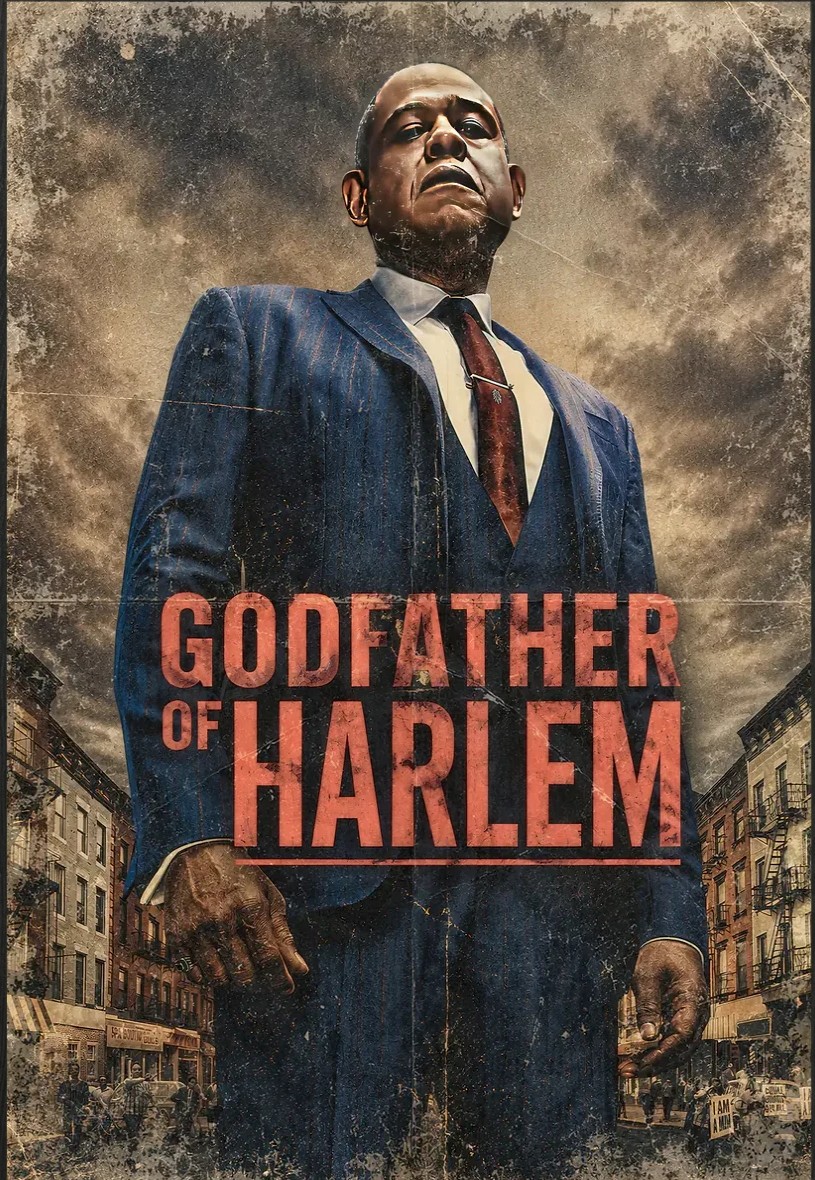
Harlem gangster kingpin Bumpy Johnson barely lasted five minutes of Ridley Scott’s masterpiece American Gangster (2007), just long enough to show the various elements of his complex character, his ruthlessness, his generosity and his awareness of a fast-changing world. To compensate, here’s a television mini-series devoted to his life, that, like the Scott epic, spreads out beyond mere shooting and killing and takes in endemic racism and politics.
As well as Johnson (Forest Whitaker) various real-life characters are knitted into the fabric: firebrand Malcolm X (Nigel Thatch), Congressman Adam Clayton Powell Jr (Giancarlo Esposito), Mafia bosses Vincent ‘Chin’ Gigante (Vincent D’Onofrio) and Frank Costello (Paul Sorvino), boxer Cassius Clay/Mohammed Ali (Deric Augustine), another Mafia thug Joey ‘Bananas’ Bonnano (Chazz Palminteri), heiress Amy Vanderbilt (Joanne Kelly) and Mafia snitch Joseph Valachi (Richard Petrocelli) – subject of an entire film The Valachi Papers (1972) played by Charles Bronson.
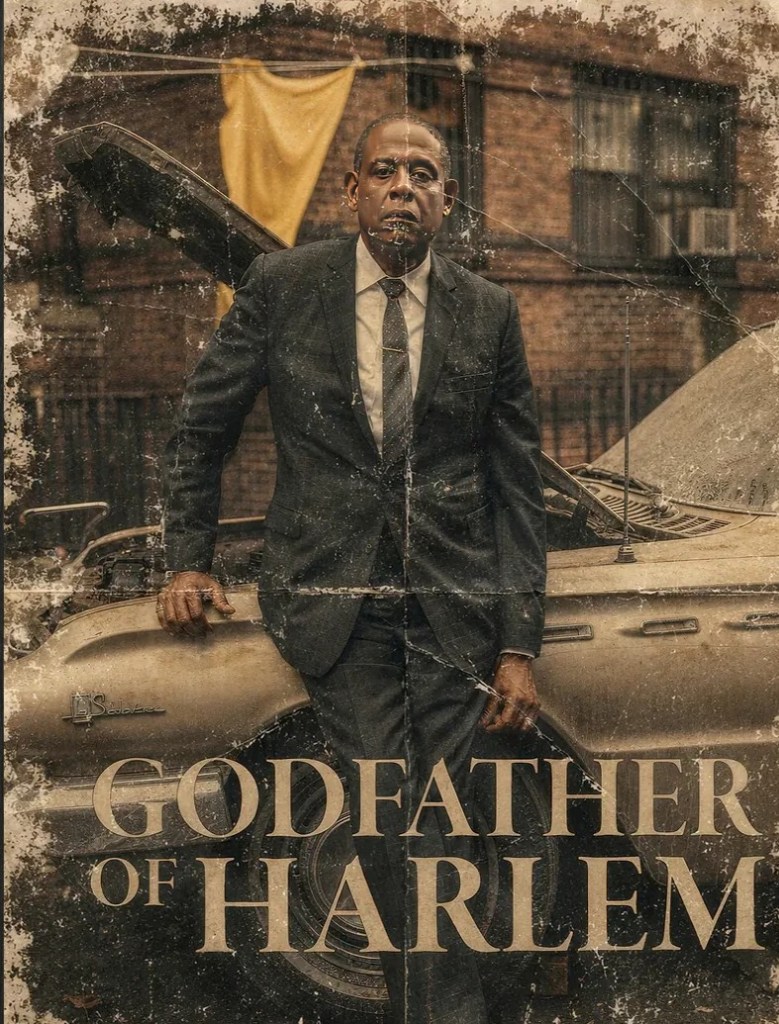
Initially, I had been less keen on this tale and was on the point of giving up after a couple of episodes, but it proved a slow-burn and once the narrative extended out into the wider world of politics I was hooked.
The story begins in 1963 with Bumpy Johnson released from Alcatraz after a ten-year stretch and trying to recover his power base in Harlem which has been encroached upon by Vincent Gigante who shows little sign of letting go. At its heart, traditionally, this would focus on the battle between Bumpy and Gigante over who controls Harlem, both restrained from all-out war by dictate of the Five Families who rule Mafia New York.
But it’s the narrative tentacles that soon take over. Bumpy, intending to go straight romantically-speaking and not play around any more, rebuffs former lover Amy Vanderbilt, even to the extent of turning down the $300,000 loan he requires for survival if it means dropping his pants for her. Ironically, though his wife Mayme (Ilfenesh Hadera), while playing the jealousy card and appearing to do her sexy best to keep him interested solely in her, is actually enjoying an affair with a young boxer.
Powell, desperate for headlines, makes the case that the cops are always pulling in Black gangsters over the numbers racket while ignoring all the Italians involved in the same illegal activity. Malcolm X, Bumpy’s longtime buddy, is planning to overthrow the pacific nature of the Islamic cause and turn it into a violent representation of the Civil Rights cause.
Even Black recording studios refuse to produce civil rights records in case it brings down the wrath of the ruling White community.
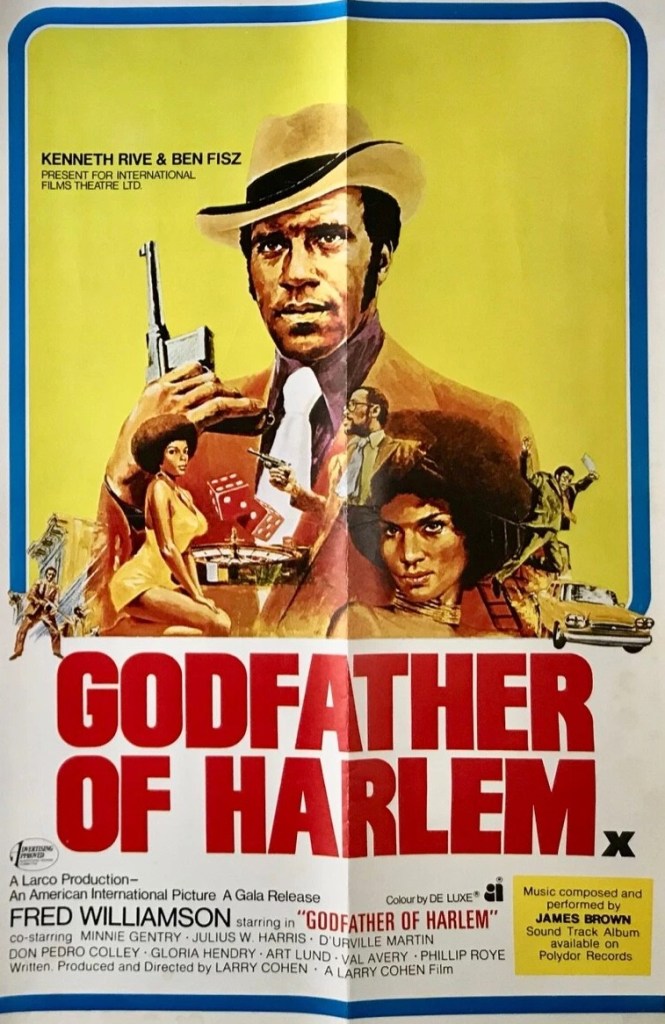
And just to add some more spark to this tinderbox, Bumpy’s daughter Elise (Antoinette Crowe-Legacy) is a heroin addict who, in her recovery, begins working for Malcolm X, though she’s not above snitching on him to the leader of the Islamic movement. Gigante’s daughter Stella (Lucy Fry) has taken as a lover Black musician Teddy Greene (Kelvin Harrison Jr), an arrangement that infuriates her father to the extent that he plans to rub out Teddy. Though, if he just let matters play out, he could rely on the cops to disrupt that relationship. Any Black man caught in a clinch with a White woman is assumed to be a pimp and the girl a prostitute, so it’s standard practice to chuck them both in prison. Gigante confesses to a priest that he killed Joey Bananas’ son. And while despised by Gigante, Bumpy is friendly enough with Frank Costello to meet up for games of chess.
And if that’s not enough to keep the narrative wheels well and truly greased, there are some terrific power play subplots. Gigante wants Cassius Clay, then just a contender for the heavyweight crown, to throw a fight and Bumpy backs the boxer as much out of the chance to annoy his rival as in sympathy for the pugilist.
Bumpy goes into partnership with Joey Bananas, again to thwart Gigante, only to find himself outsmarted when Gigante rigs the numbers racket so that Bumpy is faced with a debt of $300,000 that he doesn’t have. He tries to erase the debt by wiping out Valachi but that fails so he’s facing ruin.
In passing, we learn how the numbers racket actually works. The winning number is the last three digits of the amount taken at the box office at a racecourse. One of Gigante’s thugs compromises the gay accountant in charge of doing the adding up at the racecourse and gets him to change the number to Bumpy’s detriment. Normally, there’s no point rigging the number, and the Mafia plays hardball with anyone interfering with their system, but this time the whole of Harlem has bet on a number that has particular significance. So Gigante makes sure this number comes up so that Bumpy’s number is up.
The dramas and crises are evenly meted out and there’s scarcely a character who at some point is not struggling with a major personal dilemma. This has the kind of plotting that Taylor Sheridan excels at, setting up characters facing not just the usual problems of dealing with rivals but with characters facing family issues.
This season ends with the assassination of JFK which, ironically, helps the Mafia, the FBI’s major investigation of the criminal gangs being sidelined in the aftermath of the Presidential killing, and, equally ironically, pulls the plug on Bumpy’s plan to safeguard his own survival.
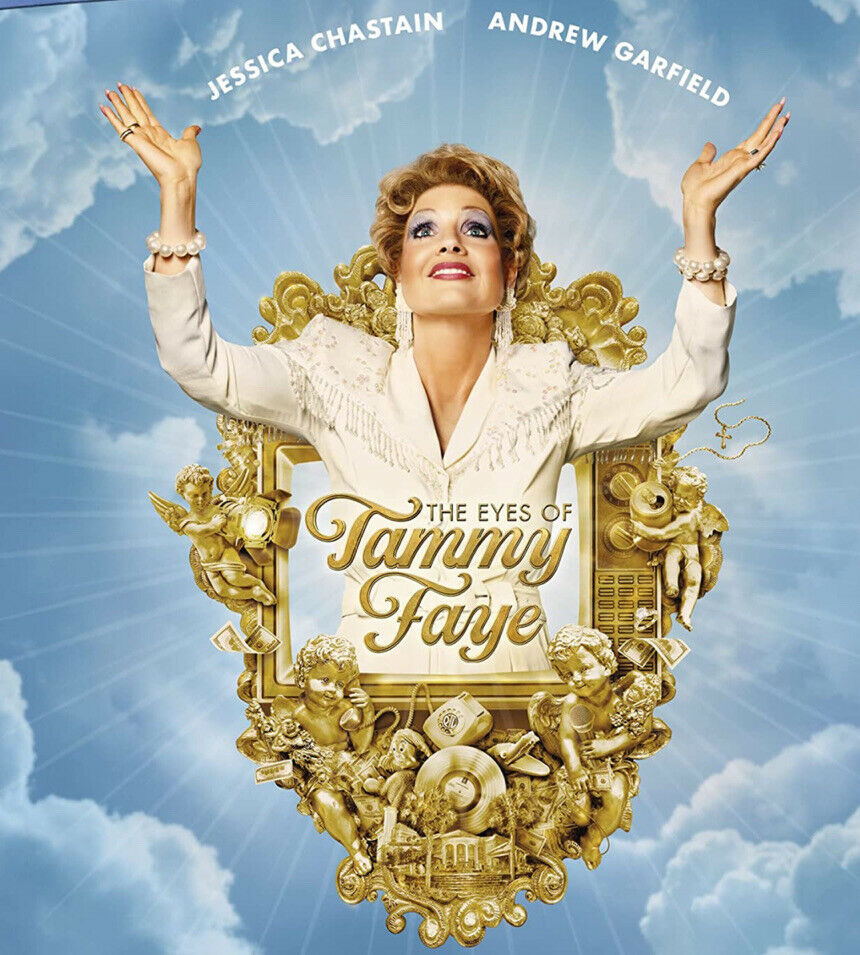
Great cast in superb form especially Oscar-winner Forest Whitaker (The Last King of Scotland, 2007) and Vincent D’Onofrio (The Eyes of Tammy Faye, 2021). Nigel Thatch is especially convincing as the soft-spoken firebrand – he had played Malcolm X before in Selma (2104) – while Giancarlo Esposito (Maxxine, 2024) has a ball as a tricksy but charming character.
Perhaps as surprising is the focus on the women who in gangster pictures are generally relegated to the roles of molls. Here, all defy the males in their lives. Ilfenesh Hadera (Highest 2 Lowest, 2025), as Bumpy’s wife Mayme, stands up to her husband with her upfront involvement in the civil rights movement while Antoinette Crowe-Legacy (Passing, 2021) as his daughter Elise not only joins the Nation of Islam but threatens to blow apart the family by revealing a major secret, and Lucy Fry (I Live Here Now, 2025) as Gigante’s daughter resorts to violence to take revenge on her father.
Hugely enjoyable – and thought-provoking.
I’m hooked. Catch it on Amazon Prime.