The Mad Room (1969) ***

Tight little thriller lifted by excellent performances from Stella Stevens and Shelley Winters focusing on murders a dozen years apart. Mandy (Barbara Sammeth) and older brother George (Michael Burns), incarcerated in a mental institution after the murder of their parents, the twist being nobody can discover which child was responsible, are released into the custody of big sister Ellen (Stella Stevens), secretary to wealthy widow Mrs Armstrong (Shelley Winters) and betrothed to her son Sam (Skip Ward).

While concealing the children’s past, Ellen persuades Mrs Armstrong to offer them lodgings, that arrangement coming unstuck when the kids demand a room where they can go “to work things out.”  Armstrong is a bit barmy, engaged on building beside her home a museum to her husband, hence contractors and construction workers on site, and a horde of “ladies who lunch” involved in fundraising. She has also appropriated masseur Armand (Lou Kane), husband of alcoholic Mrs Racine (Beverly Garland), to fulfil her sexual needs.

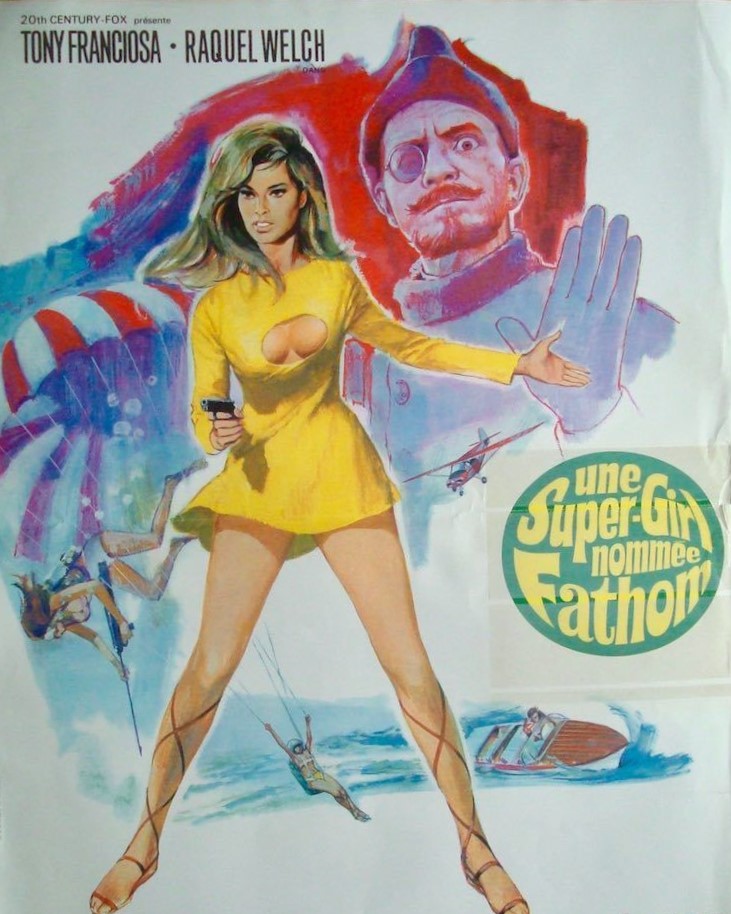
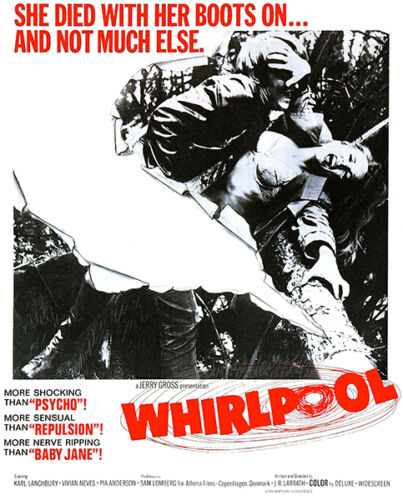
Don’t worry – the poster doesn’t give the game away.
The blood comes from Stella Stevens discovering the corpse.

When Mrs Armstrong threatens to chuck the kids out, she comes to a sticky end, and the question is raised again of whether Mandy or George are responsible. Mandy is the more highly-strung, stubborn and likely to challenge authority. George appears predatory, stalking the maid. Both are convinced the other is guilty.

Meanwhile, Ellen undertakes to remove the body and pretend Armstrong met her death by accident at a beauty spot, no mean feat given the palaver caused by the builders outside and the constant need for construction decisions and the unexpected arrival of a posse of ladies including the alcoholic Mrs Racine intent on raising merry hell.

It’s part whodunit, part nutcases-on-the-loose, part film noir, part slasher picture,  and part grand guignol. Hands are severed and blood is used to daub flowers on the walls. It’s tense enough even before Armstrong’s demise. She’s not only a loony, but untrustworthy, selfish, capricious and demanding, and it’s as much as Ellen can stand to constantly iron out all the loose ends in her employer’s life. But she sounds believable, an earnest do-gooder even while conspiring against what she sees as Ellen’s gold-digging.

Ellen, life thrown into turmoil after the death of her overbearing impoverished parents and only now building a new identity removed from the shadow of the children, faces the prospect of losing her ideal future. While it would have suited her for the children never to be released, she exhibits surprisingly a strong emotional attachment to her siblings, willing to both shelter and protect them, and conceal again their crimes.

Initial tension revolves around a chase, savage dogs, a shifty maid and Ellen dealing with the manipulative Mrs Armstrong, holding her own long enough until she is safely married, while further pressure builds with the necessity to cover up the murder, explain Mrs Armstrong’s absence, cope with the sudden influx of people and ascertain who has the murderous tendencies. There are some excellent scenes and twisty payoffs, and quite a bit of misdirection – the chase, rabid dogs, a childish song – and some inspired drama such as Mrs Racine letting rip, and Mrs Armstrong’s growing puzzlement.

Stella Stevens (Sol Madrid, 1968), normally eye candy or in a supporting role, is a revelation as Ellen, creating a grounded personality, with several changes of emotion and except for being a little pop-eyed on occasion carries off the part tremendously well and not falling prey to the temptation of grandstanding. Shelley Winters (A House Is Not a Home, 1964), who knows all about playing larger-than-life characters, tones it down here, even the obvious nuttiness reined in.

Michael Burns (That Cold Day in the Park, 1969) is the better of the two younger actors, while Barbara Sammeth’s (Foul Play, 1978) stiffness could be put down to inexperience – this was her debut. Otherwise former horror queen Beverly Garland (Stark Fear, 1962), one-time horr

Marathon Man (1976) ****

Over-complicated occasionally thoughtful thriller studded with contemporary nods to ecology and keeping fit pits history student Babe (Dustin Hoffman) against war criminal Szell (Laurence Olivier) in latter-day version of a hunt of Nazi ‘gold.’ Although obsessed with clearing the name of his dead father from charges trumped up during the Communist witch hunt, Babe is not the nerd of The Graduate, his persistence resulting in a romantic tryst with out-of-his-league Swiss blonde Elsa (Marthe Keller). The existence of a secretive government agency tilts this towards the paranoia thriller mini-genre.

It takes a while for all the pieces of the jigsaw to fall into place as we try to absorb the importance of a freak accident in New York that kills a German whose diamonds end up in the hands of Babe’s brother Doc (Roy Scheider), a rich businessman who appears to double up as a courier of some kind. Delivering the jewellery to connection LeClerc (Jacques Marin) in Paris, Babe’s suspicions that something is awry are confirmed when he realizes a bomb planted in the street was intended for him, later finds LeClerc dead and is attacked in his hotel room.

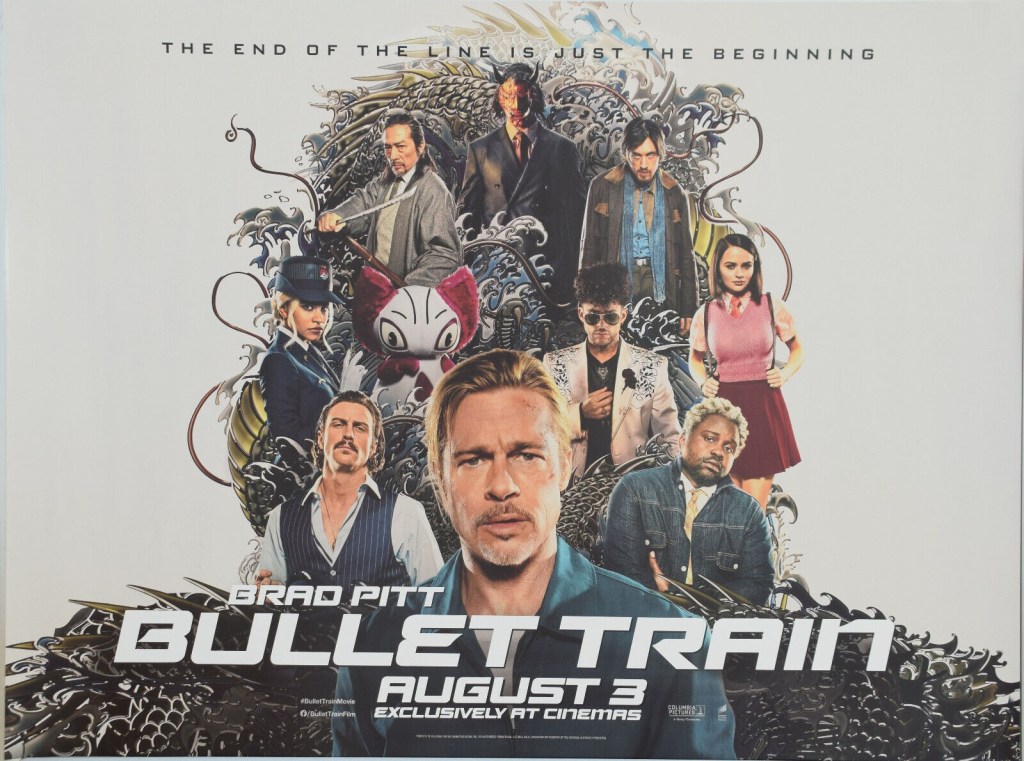
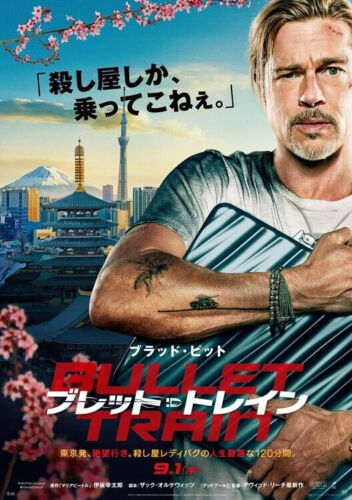
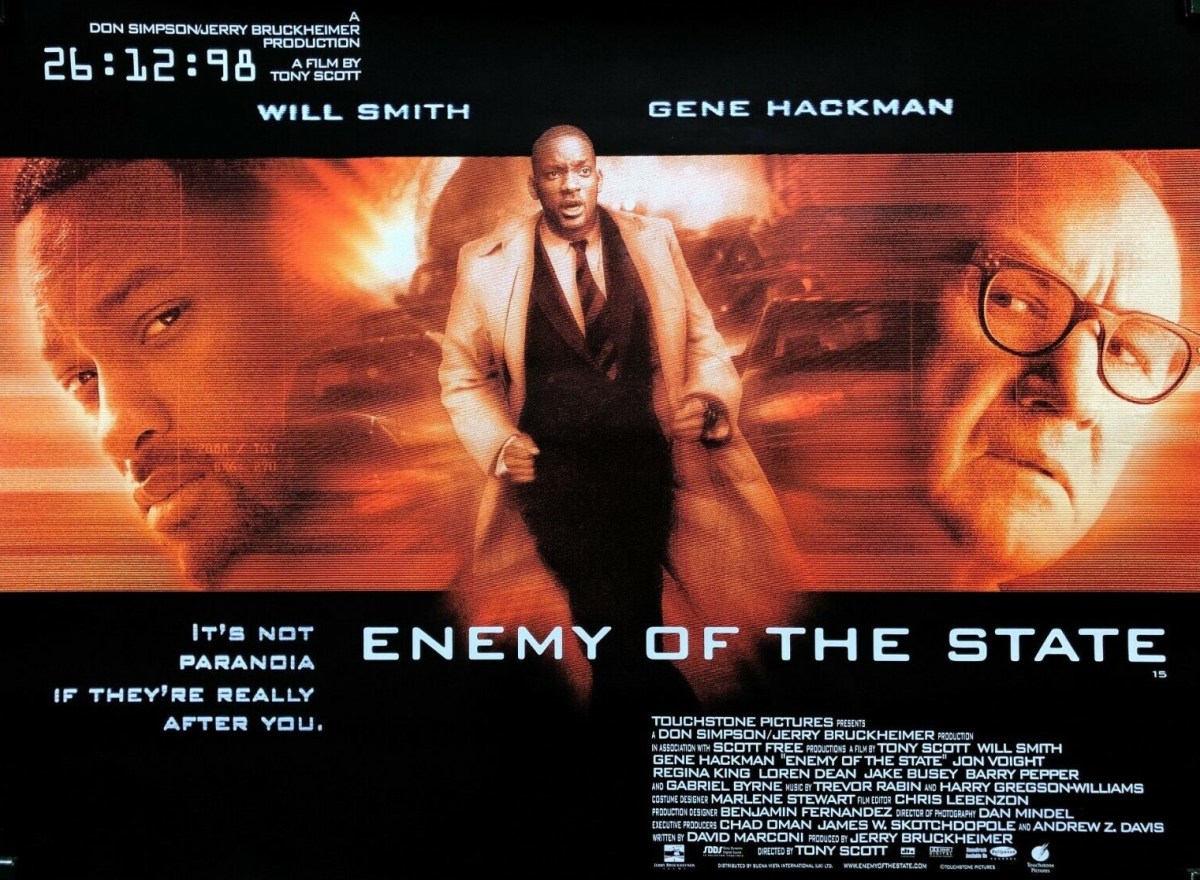
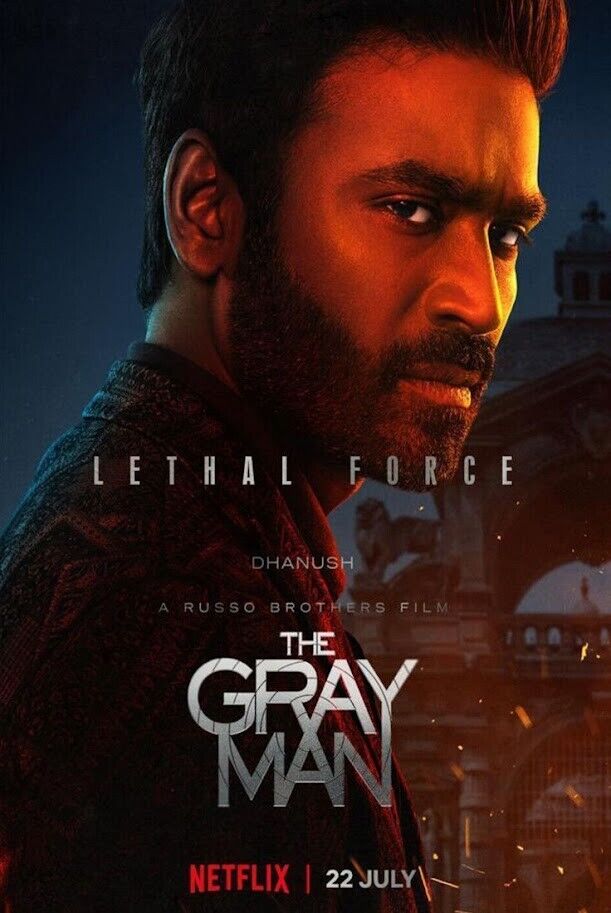
Didn’t take long for the British newspapers to cotton on to the punning possibilities of the title.

Meanwhile, the mysterious Szell emerges from his South American hideout and heads for New York. Doc blows up Babe’s romance by revealing his girlfriend is lying about her origins. Doc then keeps an appointment with Szell who proceeds to knife him although he manages to survive long enough to die in Babe’s apartment, shadowy government agent Janeway (William Devane) among others convinced Doc told Babe something important before he died.

That notion paints Babe as the target especially as Szell is of the same opinion. Soon Babe, literally on the run, is enmeshed in lethal game of double-cross but not before he makes the acquaintance of Szell who puts his dentistry skills to work in a still wince-inducing torture scene. It takes another fair while to work out not just who is who, but who Babe can trust, and what’s going on, the true nature of his brother’s employment and what exactly is the role of the government “special division that does what the F.B.I. and C.I.A. can’t handle.”  

By the time it becomes a straightforward thriller, the tension has ratcheted up to eleven and Babe is fighting for his life not just against a killing machine but a sadistic one at that. It’s not just the hint of the government black ops lurking in the background that gives this picture an extra dimension, but it presents an eerie prediction of contemporary concerns with its  acknowledgement of ecological activists, the interest in running that was just a sneered-at fad at the time, and a world that could at any time be disrupted by strike action.

There are some terrific set pieces and bold directorial choices, one murderous assault mostly seen from the point of view of an elderly invalid across the street who can scarcely see what is going on for curtains in the way. Trapped in the bathroom Babe can only watch as assailants prise the door off, especially terrifying as the bath has been previously signalled as Babe’s refuge, slumped in the water with a cloth masking his face. There’s a clever meet-cute and any number of incidentals in the passers-by caught on camera.

Dustin Hoffman (wearing the baseball cap in case you couldn’t guess) with director John Schlesinger on set. Hoffman’s ‘method’ acting riled Laurence Olivier, who, exasperated at yet another delay as the younger actor sought his motivation for a scene, beseeched him to ‘just act.’

This was as slick an A-list picture as Hollywood could muster in the 1970s with Dustin Hoffman on an Oscar- (three nominations so far) and commercial-streak – Papillon (1973) and All the President’s Men (1976) solidifying his box office marquee. Laurence Olivier (Sleuth, 1972) cemented his position as the world’s best actor heading a top-notch cast that included Roy Scheider (The French Connection, 1971) and the teeth-baring William Devane (Rolling Thunder, 1977),  directed by British Oscar-winner John Schlesinger (Midnight Cowboy, 1969) and written by the legendary William Goldman (Butch Cassidy and the Sundance Kid, 1969) from his own bestselling novel. Marthe Keller was at the start of a Hollywood roll with Black Sunday (1977), Bobby Deerfield (1977) and Billy Wilder’s Fedora (1978) to come.

Echoing Alan J. Pakula in The Parallax View (1974), Schlesinger lets many tense scenes roll minus music and the score, when it does appear, is by the king of the eerie score, Michael Small (The Parallax View).  Pick of the images, though, is the football bouncing from nowhere into a scene that triggers Doc’s panic. It’s not a paranoia thriller in quite the same vein as The Parallax View or Three Days of the Condor, but the existence of a secret government agency willing for its own reasons to do a deal with the most horrific people strikes another contemporary note.

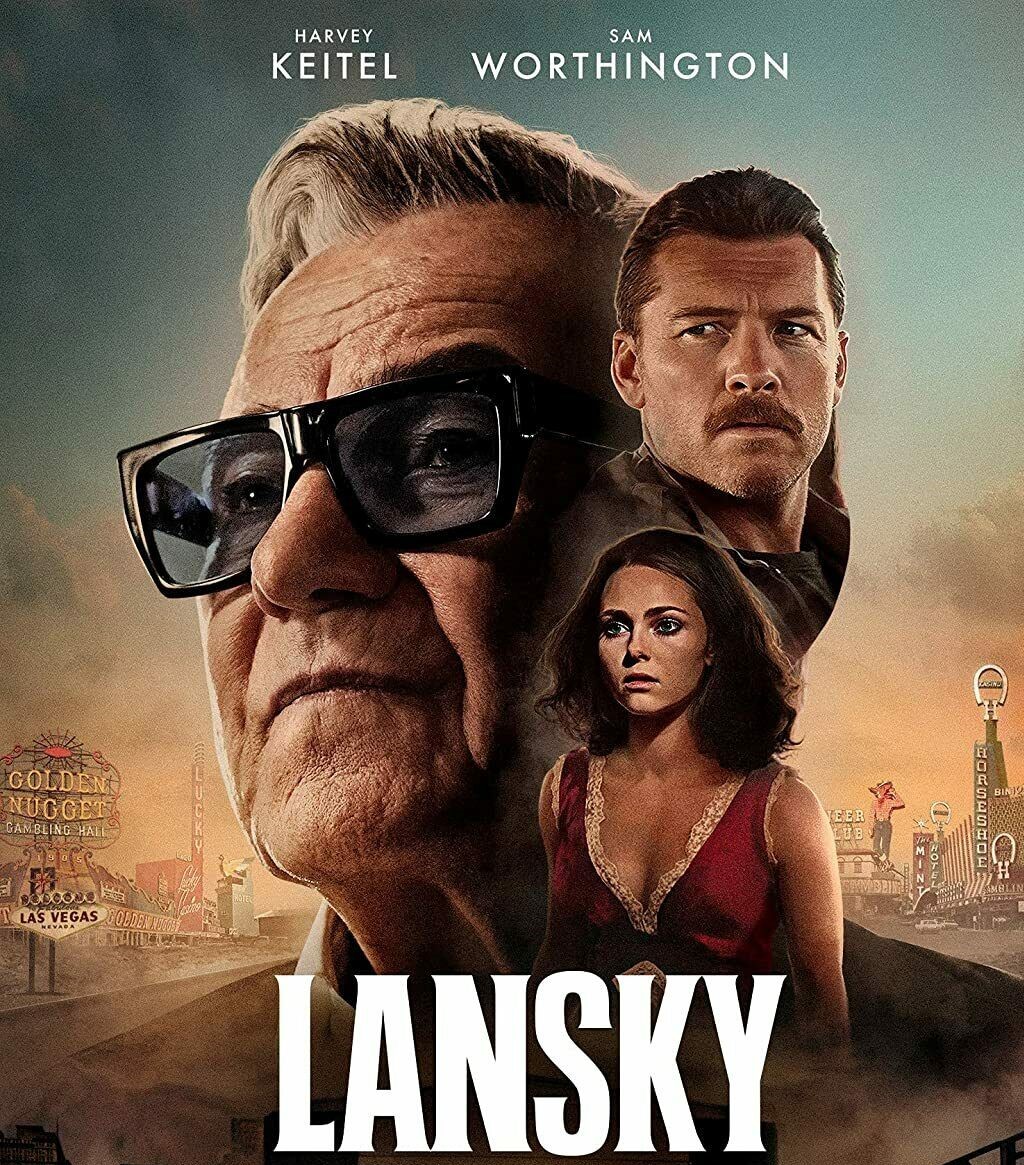
Lansky (2021) ****

Murder Inc. gangster Meyer Lansky has featured in over a dozen Hollywood movies and television series from Lee Strasberg in The Godfather (1972) to Ben Kingsley in Bugsy (1991) and Dustin Hoffman in The Lost City (2015) so you could be asking why do we need another one? And it’s a good question because this part docu-drama, while recounting the well-known aspects of the mobster’s career, also examines less obvious areas as well as bringing the story up-to-date in a duel of wits between Lansky (Harvey Keitel) and the F.B.I. still chasing him for $300 million it presumes he has hidden away.  

The movie is framed by journalist David Stone (Sam Worthington) interviewing Lansky about his life. This turns out to be far more interesting than previously portrayed. Sure, there’s plenty of executions, but Lansky was also the most financially acute of gangsters, taking the business legitimate in the fashion of Michael Corleone in The Godfather, realising that rather than killing businessmen who could not pay their debts it was more sensible to take over their businesses and improve them, and in order to keep everything above board when contracted to oversee all the casinos in Cuba refusing to rig machines in the house’s favour.

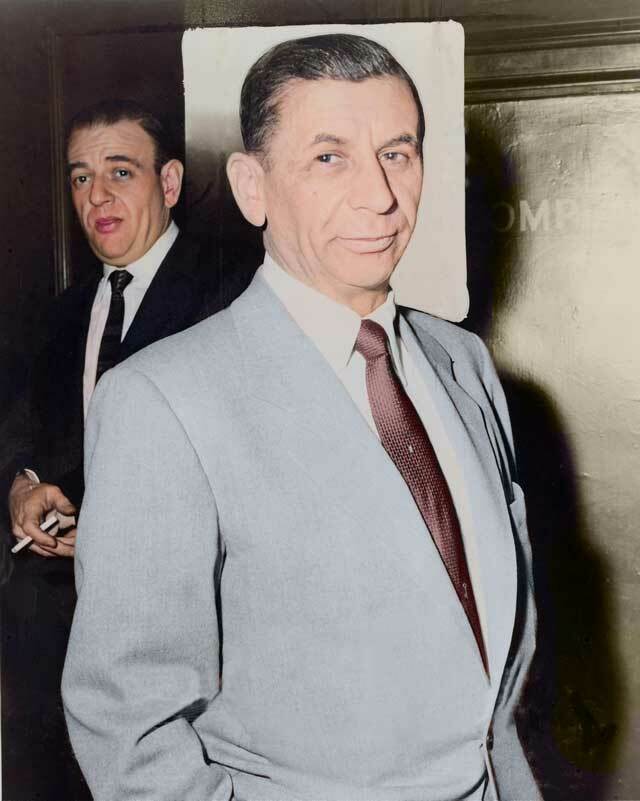
Lansky in his heyday.

He’s also got a crippled son whose illness he perceives as a mathematical equation and is convinced he can beat the odds. In the course of his interviews, Stone falls for a honey trap and is blackmailed/bribed by the F.B.I.  So tension is raised by the government agency hovering in the background, the mystery of the missing millions, and Stone’s fears that Lansky will find out he is being betrayed.

Biopics succeed or failed based on what aspects of the subjects life they choose to cover. All the big names are here – Al Capone (Robert Walker Branchaud), Lucky Luciano (Shane McRae), Salvatore Maranzano (Jay Giannone), Bugsy Siegel (David Cole) – but we also delve into territory almost foreign to the gangster genre with Lansky’s patriotism leading him to root out Nazi spies and sympathizers during world War Two, in return for which he secures the release from prison of Lucky Luciano. His return to Israel is scuppered by U.S.-Israel relations. And, no matter his courtesy and manners, he’s also a scumbag of the first order, committing wife Anne (AnnaSophia Robb) to a psychiatric hospital because she has the audacity to blame him for his crimes.

Adding some depth is the “currency” of traded favours, that the U.S. government had little compunction in utilising his services at a time when it was trying to crack down on organised crime. Even the ageing Lansky is clever enough to outwit his pursuers.

But, of course, movie length works against the film. It would have been better as a limited series, exploring the man’s entire career. Even so, it certainly provides new insight into the mind of a gangster who was a businessman, in the correct term of the word, first and foremost. In another world, he might have been acclaimed as the man who pioneered a  gambling industry now worth $250 billion annually to the U.S. economy.

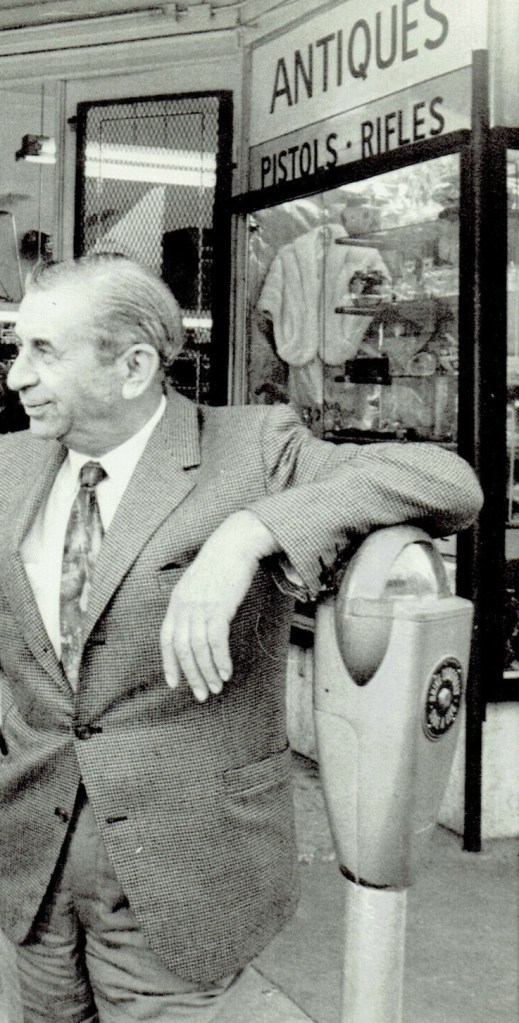
Just another elderly citizen.

Harvey Keitel (The Irishman, 2019) shows no sign of calling time on a career over half a century old and his bemused take on the gangster is solid work. Sam Worthington (Fractured, 2019) is excellent as the compromised journalist trying to keep family and finances together. Look out for David Cade (Into the Ashes, 2019) as Lansky’s lifelong buddy, Minka Kelly (She’s in Portland, 2020) as the deceitful girlfriend and AnnaSophia Robb (Words on Bathroom Walls, 2020) as the showgirl who realises marriage is not all it’s cracked up to be.

This was something of a personal project for writer-director Eytan Rockaway (The Abandoned, 2015) since his father was the journalist in the film. Rockaway’s approach is an interesting twist on the gangster film and he elicits strong performances all round. The final scene you won’t see coming.

Ambulance (2022) **** – Seen at the Cinema

High-octane non-stop adrenalin rush that crams in a heist, car chase, street shoot-outs, high-risk surgical procedures, some neat characterisations, helicopters (of course) and slam-bang technical wizardry. Director Michael Bay (The Rock, 1996) is back on form with this pulverising pedal-to-the-metal thriller through the streets – and river – of Los Angeles and even finds time for a couple of sly jokes, including a reference to one of his own pictures, a paint job and a dog that (literally) stops the astonishing action.

Bank robber Danny Sharp (Jake Gyllenhaal) organising the heist of a lifetime – $32 million – ropes in brother Will (Yahya Abdul-Mateen II) sorely in need of a mere $300,000 for a life-saving operation. Not only does lovesick cop Zack (Jackson White) jeopardise the operation but an elite cop division headed by Captain Monroe (Garret Dillahunt) is lying in wait. Cue shoot-out carnage forcing the siblings to hijack an ambulance containing paramedic Cam (Eiza Gonzalez). Her passenger, a wounded cop, ensures the pursuing flotilla of cop vehicles and fleet of helicopters remains at bay.

But only for a time because Monroe is a master of drawing his victims into a trap. But that will only work with lesser villains because Sharp has not one, but two, plans up his sleeve. To rack up the tension, FBI Agent Clark (Keir O’Donnell) joins the hunt while in the ambulance, tearing along at top speed, causing more carnage during rush hour, Cam is called upon to dig out a bullet in her patient’s spleen and Will realizes he needs to be a good bad-guy.

While the action is buckled up and buckled down, there is excellent savvy background as we learn just how top cops go about snaring their victims and for all that Monroe is pumped up with arrogance Clark is there to take him down by filling us in on just what a rapacious opponent he is dealing with. Despite the film’s pace, without slowing the picture down, Bay manages to seed the characters well. Sharp’s iconic gangster – cousin to Heat’s Neil Macauley in the ruthless stakes – still takes family seriously. Will brings his military training to bear to assist Cam, a closed-off loner who blew a promising medical career on drug addiction and is easily one of the toughest females recently seen on screen.

Characters are established in a few lines – the gay Clark in couples therapy, the tougher-than-tough Monroe still a sap unwilling to sacrifice his dog, Danny not quite as psychotic as his father. And there are some great supporting characters, sassy helicopter pilot Dzazhig (Olivia Stambouliah), a stressed-out gangster and another thug who wears the wrong shoes to a robbery.

Although it’s virtually all a set-piece, the action hardly straying from the ambulance, there are still some awesome sequences, the automated attack on the cops for a start, two surgeons whisked off the golf course to guide Cam through a tricky op. The camera races around with abandon, up and down skyscrapers like a hyperactive drone.

A remake of a Danish thriller of the same name, Bay has pumped up the action, brought believable characters to the fore, and hopefully given audiences something to whoop for outside of the comic book hero. In his movie debut Chris Fedak, best known for television work like Prodigal Son (2019-2021), sticks in the occasional zingy one-liner and treats the characters as human beings.

Only Jake Gyllenhaal’s second starring role in three years, his first action film in nearly a decade should thrust him back on top of the box office after a series of more arty pictures. He’s been creepy before, most notably in Nightcrawler (2014), but Danny is more a straight line gangster. Eiza Gonzalez (Godzilla vs. Kong, 2021) is the pick of the actors, in a difficult role confined for the most part to the ambulance. Yahya Abdul-Mateen II (Candyman, 2021) does well in what in other hands could have been a thankless role. Garret Dillahunt (Army of the Dead, 2021) and Keir O’Donnell (The Dry, 2020) are names you might hear more of in the future.

24 Hours To Kill (1965) **

When engine problems force a plane headed for Athens to land in Beirut, the past catches up with purser Norman Jones (Mickey Rooney). He manages to convince captain Jamie Faulkner (Lex Barker) and the crew that claims by ruthless gangster Malouf (Walter Szelak) claiming he has stolen his money is a mistake. But once the kidnappings begin, the doubts set in.

Producer Harry Alan Towers (Five Golden Dragons, 1967), though he remained wedded to the exotic locale, would soon learn to prioritize action over romantic entanglement and this suffers from too much romance – married Faulkner trying to resolve his relationship with stewardess girlfriend Louise (Helga Summerfeld),  co-pilot Tommy (Michael Medwin) ignoring another stewardess Franzi (France Anglade) in favour of local girl Mimi listed in his little black book of previous conquests.

After a failed attempt to kidnap Jones, the gangsters turn their attentions to female members of the crew. Slim built Tommy proves handy with his fists and soon the crew are either running from trouble or running into trouble even as they attempt to enjoy the city high life. The title has a double meaning – the crew take it to mean that they have time on their hands to pass in as pleasant manner as possible only later realizing that their accidental landing provides the gangsters with a complete day to apprehend/kill Jones before the plane’s rescheduled take-off.

Although a good sight more attractive in the 1960s than when  war destroyed the city, Beirut still had comparatively little to offer a visitor beyond a historic site claimed to the Garden of Eden, posh hotels, swimming pools and the kind of belly dancers that you could get anywhere in the Middle East. Still, the movie does its best to convince the audience they are in for an exotic treat. Unfortunately, locale and girls in bikinis do not make up for poor plotting and lack of action.

In terms of casting Towers had hit upon a decent formula in the international coproduction line, Hollywood stars who didn’t cost too much but still retained marquee value and up-and-comers who might be sold as the next best thing to their respective countries, thus bringing in global revenue.  Former MGM child star Mickey Rooney (Secret Invasion, 1964) is the requisite Hollywood star, his credentials buffed up by the hit It’s A Mad, Mad, Mad, Mad World (1963), and continually newsworthy for his love life – he was currently on marriage number five.

All-purpose action hero Lex Barker was the surprise box office package. A former Tarzan he was enjoying a new lease of life as a huge star in Germany thanks to the Old Shatterhand series of westerns. Veteran Walter Slezak (Come September, 1961) completed the small group of actors who audiences might automatically recognize.

Heading the newcomers was Englishman Michael Medwin (Crooks Anonymous, 1962) who would later turn producer of If…(1968) ably supported by a stewardess trio played by German Helga Sommerfeld (The Phantom of Soho, 1964), French starlet France Anglade  (The Oldest Profession, 1967) and Austrian Helga Lehner (Games of Desire, 1964). Likely more memorable for purveyors of the European scene would be a brief appearance by another Austrian, Maria Rohm (Five Golden Dragons), wife of the producer. You might also spot Wolfgang Lukschy (A Fistful of Dollars, 1964).

British director Peter Bezencenet (Bomb in the High Street, 1963) was better known for his editing skills but didn’t cover himself in glory in either department here. Australian Peter Yeldham (The Liquidator, 1965) wrote the screenplay along with Towers. While not a great film, you can see the Towers style in embryo, this being only the fourth of the around 100 films that would go out under his banner.

Kaleidoscope (1966) ***

Amazing the tension that can emanate from one turn of a card. Or, more correctly, waiting for one. Only problem is we’re two-thirds through the movie before high-stakes poker begins – the pot nudging £250,00 (close on a cool £5 million now). Mostly, the earlier tension derives from not knowing what the hell is going on in this enjoyable thriller made at the height of the Swinging Sixties as playboy gambler Barney (Warren Beatty), a walking Carnaby St model driving an Aston Martin DB5, tilts the odds dramatically in his favor.

Barney is a gambler but the problem with gambling is the odds. They can be against you too much. So Barney decides to turn himself into a burglar, the kind that can clamber over rooftops, abseil between buildings, and break into – a printing business called Kaleidoscope. This just happens to print the playing cards supplied to all the major European casinos. So Barney does a little doctoring of the master printing plates. Bingo, the odds are a bit more even now that he knows what cards are coming out of the shoe – he plays chemin de fer (as it is known in posh casinos; pontoon or 21 to you and me).

While cleaning up he bumps again into fashion designer Angel – their original meet-cute taking place in a traffic jam – who he dated once in London. Unbeknownst to him, she is on a scouting mission, looking to snare the kind of high-rolling gambler who can take on and completely fleece drugs kingpin Harry (Eric Porter) being pursued by her father Manny (Clive Revill), a cop who, rather than waste so much time collecting the required evidence to put the villain behind bars, decides it would easier done by making him broke. Unable to pay his debts, some other villain would put him out of business in the traditional cemented-boot fashion.

It takes a while for the movie to line up all its ducks in a row, mainly by holding back the vital information the audience requires. But the audience is privy to details of the way Manny works that Barney is not. Even for ruthless villains, Manny has a peculiar calling card, one that would make any gambler think twice about entering his lair. Of course, it doesn’t take long for Manny to rumble Barney’s game so the stakes are much higher than the charmer imagines.

Throw in as much fashion as London was capable of generating at this time, the burgeoning romance, some exotic European locations, a castle with a moat, and the usual tourist guide stuff of red buses, Big Ben, Piccadilly Circus, pubs and Tower Bridge and you have all the ingredients of an easy on the eye thriller.

A bit over-reliant on star power. That is, if you don’t need Beatty to do much more than be Beatty, all teeth and charm. At this point Beatty’s career looked as if it was fast approaching its end. The box office success of Splendor in the Grass (1961) had been followed by a string of flops, romantic dramas and comedies that should have had audiences queuing up plus an occasional wild card like Arthur Penn’s Mickey One (1965), the biggest flop of all. He does make an engaging crook, and he never loses his screen charisma here, but there ain’t quite the right number of twists that moviegoers weaned on the likes of Topkapi (1964) had come to expect.

Hollywood had been doing its best to position Susannah York as a top box office attraction and she had snagged leading female roles in The 7th Dawn (1964) opposite William Holden and Stanley Baker in Sands of the Kalahari (1965)  but she was recovering from the colossal flop of Scruggs (1965) by ‘poet of the cinema’ David Hart.  Kaleidoscope offered  the kind of role York could do with her eyes closed. So while the screen pair were not exactly sleep-walking it was not the kind of story that was going to create sparks.

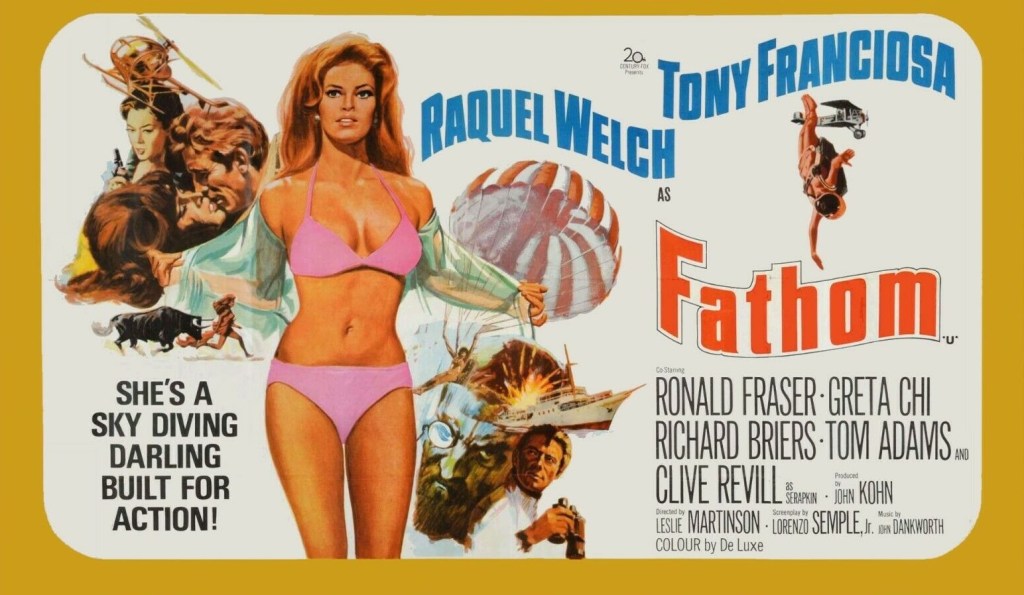
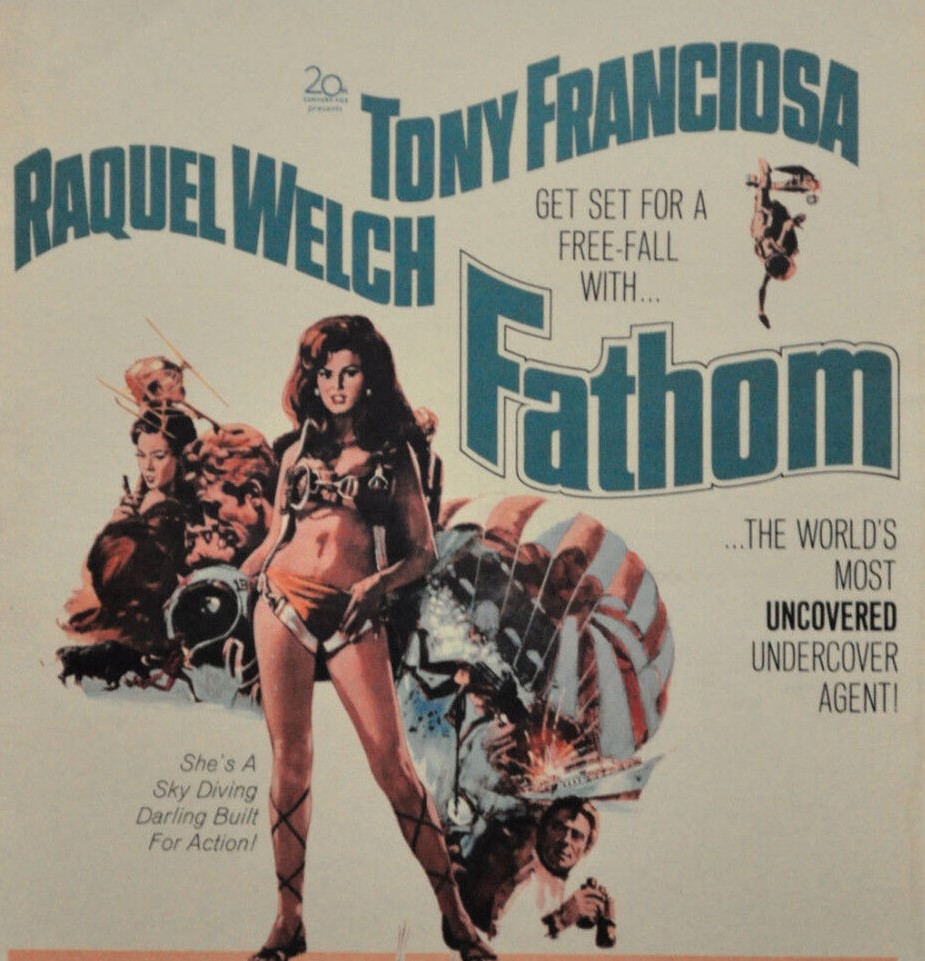
Character actor Clive Revill (Fathom, 1967) and Eric Portman (The Pumpkin Eater, 1964) take more leeway with their roles, the latter almost chewing he scenery, the former content with just chewing his lips. Look out for Jane Birkin (Blow-Up, 1966) and British television stalwarts Yootha Joyce, George Sewell and John Junkin.  

The title would have been more enigmatic, original meaning of images twisted out of shape, had it not also applied, straightforwardly, to the card-making company. Giving Harry the surname of Dominion seems overkill.

Director Jack Smight (No Way to Treat a Lady, 1969) came to this after twisty private eye picture Harper/The Moving Target (1966), a big hit starring Paul Newman, but this is too lightweight a feature to command such interest, but he does keep the story rolling along and it’s an effortless watch and it has a certain offbeat quality. The screenplay was fashioned by Robert Harrington and Jane-Howard Hammerstein, making their movie debut, who also co-wrote Wait until Dark (1967). It was also the debut for Winkast Productions, the Jerry Gershwin-Elliott Kastner production team who went on to make Where Eagles Dare (1968).

The Biggest Bundle of Them All (1968) ***

Bunch of incompetent crooks kidnap an impoverished Mafia boss who pays his ransom by setting up a major heist. By a stroke of casting alchemy this brings together Cesare (Vittorio De Sica), the epitome of old world Italian charm, knock-out gangster’s moll and scene-stealer-in-chief Juliana (Raquel Welch) replete with scanty knock-out outfits, and criminal mastermind Professor Samuels (Edward G. Robinson). In order to acquire the funds necessary to steal $5 million of platinum ingots from a train – that plan involving a tank and an WW2 bomber – the crew, initially headed by American Harry (Robert Wagner), need to carry out smaller jobs.

Problem is, none of them are any good, not even Cesare, who has lost his flair and botches an attempt to rob an old flame of her jewels. This is a twist on Topkapi (1964) which employed effective amateurs. This bunch can’t even carry out a simple theft from a restaurant. The heist itself is pretty spectacular and innovative. And the movie is quirky, with a darker edge. While there are few belly laughs, the light tone is enough to carry the gentle humor, mostly inspired by the misplaced team, amateurs for various reasons, not necessarily outright lawbreaking, on the run. These include London Cockney mechanic Davey (Davy Kaye), chef Antonio (Francesco Mule) distracted by hunger at every turn, cowardly violinist Benny (Godfrey Cambridge) and Joe (Mickey Knox) with a helluva brood to feed.

The story does a good bit of meandering, as does the camera, much of its focus on the voluptuous charms of Juliana, but the hurt pride of Cesare and the grandiose machinations of the professor keep it on course. The Italian settings, incorporating grand villas and ruins, do no harm either. The heist is terrific and there is a final twist you may or may not see coming. The interplay of characters works best when it involves Juliana, who attempts to twist Cesare around her little finger, that tactic mutual it has to be said, and who keeps the professor on his toes by dancing with him in a disco, and it soon becomes apparent that she has the upper hand over lover-boy Harry.

You could be forgiven for thinking the title refers to Raquel Welch – a cinematic infant at this stage with only One Million Years B.C (1966) in her portfolio – especially when her cleavage and looks receive such prominence, but the caper is classy and different. As well as being obvious she is both sinuous and seductive and clearly has a mind of her own, possibly the most criminally intent of the entire outfit, with weapons the others lack. By this point, she had invented the pop-out bikini, pictures of which had flooded Europe, making her the pin-up par excellence, but those who came to simply gawp quickly realized there was talent behind the body. Although of course there would be those who didn’t care.

De Sica constantly plays around with the idea of being a defunct godfather and Robinson is the antithesis of the gangster roles on which his fame relied. Robert Wagner is less effective, miscast and out of place in such august acting company and losing out to Welch in every scene.

This was a considerable change of pace for British director Ken Annakin after Those Magnificent Men in Their Flying Machines (1965) and Battle of the Bulge (1965) and he brings to this the comedy of the former coupled with the narrative complications of the latter, wrapping everything up in an easy inviting style that makes the most of his stars and the locations. Screenwriter Sy Salkowitz was a television veteran (Perry Mason, The Untouchables et al) , this marking his first venture into the big screen.     

Not in the Topkapi class – very little is – but a pleasant diversion nonetheless and for avid Raquel Welch fans, setting aside her outfits, a chance to see her develop more of a screen persona than was permitted in her debut One Million Years B.C.

Some Girls Do (1969) ****

Enjoyed this sequel to Deadlier Than the Male (1967) far more than I expected because it sits in its own little world at some point removed from the espionage shenanigans that dominated the decade. Hugh (nee Bulldog) Drummond is neither secret agent nor involved in espionage high jinks, instead employed in the more down-to-earth domain of insurance investigator, albeit where millions are at stake. Although his overall adversary is male, the smooth-talking Carl Petersen (James Villiers), adopting a series of disguises for most of this picture, the real threat comes from a pair of villainesses in the shape of Helga (Daliah Lavi) and Pandora (Beba Loncar – the latter, yes, having her own deadly Box. If anything, this pair are a shade more sadistic than Irma and Penelope from the previous outing.

The sequel doubles up – or doubles down – on the female villainy quotient, Petersen having created a race of lethal female robots who spend their time dispatching scientists working on the world’s first supersonic airliner. Global domination is only partly Petersen’s aim since he also stands to gain £8 million ($134 million today) if the plane doesn’t launch on schedule. Livening up proceedings are Flicky (Sydne Rome), a somewhat kooky Drummond fan who has her own agenda, Peregrine “Butch” Carruthers (Ronnie Stevens), a mild-mannered embassy official assigned bodyguard duties, and chef-cum-informant Miss Mary (Robert Morley).

Villiers has found a way of turning an ultrasound device intended originally to aid cheating in a boat race into something far more dangerous. But, of course, for Helga seduction is the main weapon in her armoury, and Drummond’s first sighting of her – a superb cinematic moment – is sitting on the branch of a tree wielding a shotgun. Equally inviting are the squadron of gun-toting mini-skirted lasses guarding Petersen’s rocky fortress.

The movie switches between Helga, Pandora and the robots raining down destruction and Drummond trying to prevent it. Dispensing with the boardroom activities that held up the action in Deadlier than the Male, this is a faster-moving adventure, with Drummond occasionally outwitted by Helga and calling on his own repertoire of tricks. Dialogue is often sharp with Drummond imparting swift repartee.

The action – on land, sea and air – is a vast improvement on the original. The pick is a motorboat duel, followed closely by Drummond in a glider coming up against a venomous aeroplane and saddled with a defective parachute. And there are the requisite fisticuffs. Various malfunctioning robots supply snippets of humour.

Richard Johnson (A Twist of Sand, 1968) truly found his metier in this character and it was a shame this proved to be the last of the series. Although Daliah Lavi never found a dramatic role to equal her turns in The Demon (1963) and The Whip and the Body (1963) and had graced many an indifferent spy picture as well as The Silencers (1966), she is given better opportunity here to show off her talent. Beba Loncar (Cover Girl, 1968) is her make-up obsessed bitchy buddy. Sydne Rome (What?, 1972) makes an alluring her debut. James Villiers (The Touchables, 1968) is the only weak link, lacking the inherent menace of predecessor Nigel Green.

There’s a great supporting cast. Apart from Robert Morley (Genghis Khan, 1965) look out for Maurice Denham  (Danger Route, 1967), Adrienne Posta (To Sir, with Love, 1967) and in her first movie in over a decade Florence Desmond (Three Came Home, 1950). The robotic contingent includes Yutte Stensgaard (Lust for a Vampire, 1971), Virginia North (Deadlier Than the Male), Marga Roche (Man in a Suitcase, 1968), Shakira Caine (wife of Sir Michael), Joanna Lumley (television series Absolutely Fabulous), Maria Aitken also making her debut, twins Dora and Doris Graham and Olga Linden (The Love Factor, 1969).  Peer closely and you might spot Coronation Street veteran Johnny Briggs.

The whole package is put together with some style by British veteran Ralph Thomas (Deadlier than the Male).

CATCH-UP: Chart through the Blog how  Richard Johnson’s career went from supporting player to star via The Pumpkin Eater (1964), Operation Crossbow (1965), Khartoum (1965) Deadlier than the Male (1967), Danger Route (1967) and A Twist of Sand (1968). Conversely, see how Daliah Lavi went from European star of The Demon (1963) and The Whip and the Body (1963) to Hollywood supporting player in Lord Jim (1965).

Network has this on DVD currently at a bargain price in a double bill with Deadlier Than the Male.

And you can also catch Some Girls Do on YouTube.

Topkapi (1964) *****

The mother of all heists directed by the father of all heist pictures.

Films as diverse as The Italian Job (1969), Mission Impossible (1996) and Ocean’s Eleven (2001) owe director Jules Dassin a massive debt since he pretty much invented this genre with the French-made Rififi (1955). But that involved professional criminals. Outside of masterminds Elizabeth (Melina Mercouri) and Walter (Maximilian Schell), this crew are amateurs, deliberately chosen for their lack of criminal records and with a mind to the specific tasks required. So we have acrobat Giulio (Gilles Segal), upper-class English gadget inventor Cedric (Robert Morley), strongman Hans (Jess Fisher) and driver Arthur (Peter Ustinov).

The target is the impenetrable, complete with sound-sensitive floor, Topkapi Palace in Istanbul where they plan to steal a priceless emerald-encrusted dagger. The plan is ingenious. Arthur is initially only hired to smuggle the weapons essential to the audacious heist across the border. But when he is caught and forced to cooperate with the Turkish secret police, he is enlisted as a replacement for Hans. Minus the rifles and grenades which at first appeared indispensable to the plan, the thieves come up with an even more inspired alternative involving among other things scampering across rooftops, abseiling, a parrot and slowing down the revolutions of a lighthouse.

Originally intending to betray his colleagues as soon as possible, Arthur falls under the seductive spell of Elizabeth and finds himself recruited as the replacement muscles. Elizabeth exudes such sexuality she has the entire gang in her thrall and makes the cowardly, weak, acrophobic Arthur believe he can overcome all his fears. Like current television sensation Money Heist, Walter engages in a cat-and-mouse game with the police, always one step ahead, with a bagful of red herrings at his disposal, eventually giving the pursuers the slip during a wresting competition held in a massive outdoor arena.

Interestingly, too, this doesn’t have the trope of gangsters at each other’s throats, planning to double-cross one another or bearing old grudges. Nor is this the last robbery for anyone prior to retirement. Equally, nobody challenges the leader. In fact, the entire crew could not be more docile, content to sit at the feet of Elizabeth and Walter, lapping up the former’s flirtation, wondering at the latter’s skill, as if they are all honored to have been chosen.

The climactic heist, carried out minus music, and lasting over 30 minutes is absolutely superb, setting a very high bar for future imitators, and there is a twist ending. Dassin mixes light comedy and high tension with the sultry attractions of Elizabeth to produce an at times breathtaking picture. As well as the heist itself, the wrestling sequence is stunning and the transition of Arthur forms the acting highlight (he won the Best Supporting Actor Oscar).

But all four main stars are superb. Audiences accustomed to a more uptight Maximilian Schell (The Condemned of Altona (1962) will have been surprised by his charming performance. Melina Mercouri (Oscar-nominated for Never on Sunday, 1960) is the archetypal blonde bombshell, liberal with her favours but careful not to favour just one. Although Walter devises the plan, she is actually the criminal supremo, selecting the targets, and then delegating to ensure the tasks are carried out. Robert Morley is having the time of his life. Akim Tamiroff (Lord Jim, 1965) has a cameo as a chef.

A film noir star after Brute Force (1947) and The Naked City (1948) Dassin’s Hollywood career collapsed in the wake of the anti-Communist McCarthy hearings and he was blacklisted. Rififi opened few doors but even the success of Never on Sunday (1960) brought negligible offers. Despite returning to the mainstream with such elan through the conduit of Topkapi, albeit with a European cast, he remained on the Hollywood periphery and although the American-set Uptight (1968) – previously reviewed in the Blog – involved another heist that was primarily the wrapping for social documentary.

More at home with comedies screenwriter Monja Danischewsky (The Battle of the Sexes, 1960) draws out more humour than the source material, Light of Day by noted thriller writer Eric Ambler, would ostensibly suggest.

A delight from start to finish, the crème de la crème of the heist genre, this is unmissable. Dassin can lay claim to being the John Ford of the crime picture.

Discover WordPress

A daily selection of the best content published on WordPress, collected for you by humans who love to read.

The Atavist Magazine

by Brian Hannan

WordPress.com News

The latest news on WordPress.com and the WordPress community.