Sherlock Holmes vs Sherlock Holmes was the initial tantalizing casting prospect. Basil Rathbone, the most venerated actor to don the distinctive deerstalker, and Peter Cushing, just signed up by the BBC for a new 16-episode series, the former signed to play the villain, the latter his nemesis in a film that started out with the title of The Death’s-head Vampire, the first film by a new production shingle Tigon Films.
While Tigon was new, with a distinctive logo, its driving force was well-known British producer Tony Tenser who with partner Mike Klinger had initially specialized in exploitation pictures with titles such as Naked as God Intended (1961) and London in the Raw (1964). The pair split after the artistic and commercial success of Roman Polanski’s Cul de Sac, Tenser initially setting up under his own name for Mini-Weekend/Tomcat (1966), mining the exploitation vein as before, and The Sorcerers (1967) a new venture into the horror market. Expanding the business with fresh capital and new partners, Tigon was born.
Supporting feature to “Witchfinder General” on ABC circuit release in Britain.
Explaining the new departure, Tenser said, “Films needs to be inexpensive. They need to sell, they need to appeal to an international audience, and one subject that always finds a market is horror.” Horror budgets were low, the genre did not require big stars, and the films had a surprisingly long shelf life.
First movie on the new company’s agenda was not The Death’s-head Vampire. Instead, Tenser had hooked Raquel Welch for a ghost story The Devil’s Discord to be produced by her husband Patrick Curtis, who had performed a similar task on The Sorcerers, and star Peter Cushing (The Skull, 1965). When that fell through, he held onto Cushing for a proposed Horror of Frankenstein and when that also bit the dust turned to him for The Death’s-head Vampire on a budget of just £40,000 (about $100,000). Offered the choice of playing villain Dr. Mallinger or Detective Inspector Quennell, the actor plumped for the “goodie,” Basil Rathbone lined up for the other role. The concept of older man/younger woman with action concentrated on an isolated house and the surrounding countryside was a horror trope.
Vernon Sewell (Strictly for the Birds, 1964), entering his third decade as a director, had worked with Cushing on Some May Live (1965) and was primarily known for low-budget and B-movies, and more importantly from Tenser’s perspective, sticking to a budget without any artistic pretensions or improvisation. He didn’t waste time on anything that would not be captured by the lens. He was calm on set, “nothing fazed him.” Cushing was a kindred spirit, never complaining, except famously, on this picture, when he told Sewell it was the “worst picture” he had ever made. The pair, however, had a very good working relationship to the extent that Sewell never offered Cushing any advice on the role –“he didn’t need my input.”
The Sherlock Holmes connection is promoted in this poster.
Just over two weeks before the August 1967 start date, Basil Rathbone died of a heart attack. Robert Flemyng, the last-minute replacement, was Cushing’s opposite, complaining all the time. The cast was rounded out by 32-year-old Doctor Who star Wanda Ventham (mother of actor Benedict Cumberbatch) and 18-year-old Vanessa Howard whose career highpoint thus far had been a duet with Cliff Richard for a television presentation of Aladdin (1967).
Interiors were shot at Goldhawk Studios, a converted three-story building in London’s Shepherd’s Bush, with exteriors at Grims Dyke, the former home of W.S. Gilbert, in north-west London. The 19th century manor house had lain empty since 1963.
Roger Dickens, who had cut his teeth on Thunderbirds Are Go! (1966) and worked on 2001: A Space Odyssey (1968) and would be later lionized for the mini-beast bursting out of John Hurt’s stomach in Alien (1979) was responsible for creating the monster. The model for the giant larvae was a much simpler task than creating a believable female giant insect. He took a mold of Ventham’s face, giving the features a repellant slant, using costume jewelry for the eyes, adding a furry cap and two-foot long antennae, a representation that would only really work if you scarcely saw the creature. For art designer Wilfred Woods his woods set turned into a disaster when the trees wilted and lost their leaves.
Opinions differ as to whether Tenser interfered with production. He saw his role during the film process to ensure that the project followed the script. “Sometimes you can put something in a film which will hinder the selling, sometimes you need to put something in which will help the selling.”
Comedian Roy Hudd, playing the morgue attendant, thought the script so awful he was delighted to work with Cushing on improvements.
When John Ford’s boast that he never shot an extra foot of film in order to prevent a producer turning in a different film has resulted in many a masterpiece, the same did not hold true for Sewell. Sticking so close to the script, not filming anything that was not absolutely necessary meant that the movie was too short. Editor Howard Lanning commented: “I put in everything that was available. Even with expanding the lecture scene and the amateur dramatics as long as possible, to the detriment of pace, the picture clocked in at just 81 minutes, not the length expected of a main feature.
To ensure the movie came in at the required length, Tenser added the African sequence at the beginning (an extra five minutes) and re-shot the morgue material (two more minutes), encouraging Cushing and Hudd to improvise. The final product was over-budget and a week late. The version shown to the censor was 87 minutes though the official running time was a minute longer.
Tenser now deemed the working title as insufficient, preferring “something catchy and something that told people what you were selling.” His first stab at a new title was Blood Beasts from Hell. But in the final analysis it was altered to The Blood Beast Terror. Hoping to sell it to a circuit as a main feature it was originally shown in a double bill with Castle of the Living Dead, but despite the supposedly attractive title, audiences were not interested. To cut his losses, the film was repackaged as the support to another Tigon production Witchfinder General (1967) which meant Tenser would not have to share receipts with another distributor.
The Blood Beast Terror did not prove so sellable overseas either. It was shelved in France until 1971, although, sold for a flat fee, it did well in South America. A.I.P. who had U.S. distribution rights to Witchfinder General – title altered to The Conqueror Worm – had no interest in The Blood Beast Terror but it was picked up by Pacemaker Pictures who were also in title-changing mood and released it in summer 1969 as Vampire Beast Craves Blood on a double bill with Curse of the Blood Ghouls (1964).
Tenser’s predictions of long shelf life were correct. In Britain, the movie was reissued on a late night double bill with The Secret of Blood Island (1961), and then was revived with The Devil’s Hand (1961) before being re-teamed with Witchfinder General on a Sunday’s-only screening. Although none of these would be circuit releases in the sense of a nationwide day-and-date opening, they were nonetheless likely to get reasonable bookings to fit specific engagement profiles. In the States where there was endless demand for horror triple- and quadruple bills and all-nighters, The Blood Beast Terror received ongoing bookings.
SOURCES: John Hamilton, “The Making of the The Blood Beast Terror,” Little Shoppe of Horror, Issue No 43, p67-91; John Hamilton, “Regretting Nothing: John Sewell, Little Shoppe of Horror, Issue No 43, p92-98.
Shooting might have been less stressful and cheaper if director Martin Ritt had stuck to his initial schedule but when the shoot start-date was pushed back from late fall 1964 to January 1965 he lost original star Burt Lancaster (planning to play the original Englishman as a Canadian). At relatively short notice, Richard Burton stepped in, but for an eye-watering fee of $750,000, at that time the biggest salary paid in Hollywood. (Due to Ritt’s involvement there had been rumors Paul Newman would star.) And although Burton pushed for his wife Elizabeth Taylor for the small role of Nan, he was overruled on the issue of cost, and that audience expectations would be unfairly raised.
It didn’t matter, though, if Ritt refused to cast Elizabeth Taylor. He got her anyway, and her vast entourage, generally happy to remain out of the way but occasionally arriving on location in the middle of Dublin in her white Rolls-Royce sending fans into convulsions. There were two schools of thought as to which woman caused more disruption: the jealous wife exerting 24-hour surveillance on a husband with a wandering eye or one of his previous lovers, Claire Bloom, who was playing Nan. (The name changed from Liz in the book.)
“It was not a happy picture and the central reason fort that was: Claire Bloom,” averred Burton’s biographer Melvyn Bragg. “The real problem was not from Bloom but from Elizabeth Taylor’s jealousy,” claimed Sam Kastner. That Burton incurred Bloom’s wrath was not without doubt. But it wasn’t the first time. Prior to Taylor, but while he was married to Sybil, Burton and Bloom had been lovers.
Burton was “not prepared for Bloom and found it very difficult to handle.” The pair had met on a touring production of The Lady’s Not for Burning in the 1940s but their romance remained unconsummated. A few years later in the early 1950s the affair began in earnest and continued on and off for five years. When both were cast in Look Back in Anger (1959), Bloom expected them to pick up where they had left off. But that notion was dashed when Burton appeared, still married, on the arm of Susan Strasberg (Sisters, 1969).
The other elephant in the room was, of course, Burton’s alcohol intake. A very heavy drinker, verging on the alcoholic, his hand had begun to tremor until he received liquid sustenance. If Burton had an equally boisterous co-star as in Peter O’Toole in Becket (1964) or a very indulgent director as with John Huston in The Sandpiper (1965), his drinking would not attract comment. But “Martin Ritt did not approve of Burton’s heavy drinking and Burton resented that.”
Never mind Burton’s issues with ex-lover and wife, he was having difficulty delivering the performance Ritt demanded. The director wanted a stripped-down character, minus the oratory which had made the actor famous, the acting so flattened as to “make him anonymous.” Author John le Carre would have preferred James Mason or Trevor Howard for the “embattled” personas they presented, and which would have fit more into the director’s perception of the character. “For Burton this time there would be no strong sex, no oratory, no action, no charm.” The director wanted that Burton intensity, but coiled, not sprung. As the production wore on, director and star were barely speaking. “Ritt had come to despise Burton whom he saw as a spoiled and self-indulgent actor who had dissipated his talent.”
The initial screenwriter Guy Trosper made changes that seemed out of kilter with the book, for instance sending Leamas to psychiatric hospital rather than jail for punching the grocer. When he became ill he was replaced by Paul Dehn who did not veer so far from the book. Le Carre was brought in at the last minute at Burton’s insistence to do rewrites. But that merely added to the existing aggravation. While waiting for nightfall to shoot the escape sequence, Le Carre was obliged to keep the actor company, trying to consume most the available whisky so that Burton did not go on set drunk. While little of Le Carre’s rewrites found their way into the finished product, he did provide a new scene for Fiedler (Oskar Werner).
Ritt had a revolutionary picture in mind, not just filming in black-and-white to downplay the glamor of the espionage business as evidenced by James Bond, but to employ “a point of view that’s never been found before.” He was not a believer in the end justifying the means nor of depicting the enemy as rabid. “Most of the time,” he explained, “you have actors playing Communists as if they’d just switched over from playing Nazis in World War Two pictures…the Communists in this picture are people and one of them at least …is an honest, ethical man.”
While the decision to film in black-and-white was a creative decision, intended to give the film a realistic edge, he knew it would not necessarily go down so well with the end user, the exhibitor. “The needs of creative people and the needs of exhibitors are completely different. Exhibitors want pictures and creators want to express themselves and those two factors don’t always satisfy each other.” Although the movie was Oscar-nominated and critically well-received and did well in key city first-run, it was condemned by exhibitors in small towns, one of whom discouraged others from booking it and complained that the black-and-white aspect made the film impossible to view on old projectors.
Author John le Carre was an unknown, two previous books published to no great sales. But The Spy Who Came in from the Cold proved a phenomenon. Debuting in the number spot in February 1964, the book spent 35 weeks topping the hardback bestseller chart. It ended up the hardback number one title in the U.S. during 1964, a quarter of a million copies sold, winner of the Edgar Award for Best Mystery, initial paperback order topping two million copies, five million books in print by the time the film appeared. So it seemed all the more astonishing that the movie rights had been snapped up for a mere $21,000 (with escalating clauses based on sales that took it up to $38,000). Martin Ritt claimed glory for that astute purchase, making a bid to a hard-up author when the book was in galley form. “When I bought it nobody else was running to buy it,” claimed Ritt. But it turned out the real star was Kay Selby, a Paramount story editor, who had dug it out of a pile of novels submitted. Le Carre did not make the same mistake again, movie rights for his next book The Looking GlassWar were sold for $400,000 and the paperback rights for the same
When the film had still been a relatively low-budget production, Paramount planned to film exteriors in London and interiors in Hollywood. But Ritt wanted “to capture the full brunt of the winter atmosphere for dramatic emphasis” and there was very little Hollywood could bring to the party to recreate an actual bleak British weather.
The bulk of the film was shot in Ireland at the defunct Ardmore studios in Bray – Ritt rented them from the Official Receiver, the first production there since November 1963 – and on location in Dublin, the historic Cornmarket standing in for Checkpoint Charlie while with the addition of breezeblock, barbed wire and an iron ladder, Dublin Square was transformed into the Berlin Wall, though some scenes set in East Berlin were shot in the London Docklands.
However, shooting kicked off in London, at Shepperton studios on January 9, 1965, before switching for two months to Ardmore, wrapping up there a week early, heading for location filming in Amsterdam (briefly) and 9-10 days in Garmisch (Germany) before returning to Shepperton in April. Ritt brought the picture in under budget.
Paramount launched a teaser campaign in November 1965 New York – the idea stolen by United Artists for A Fistful of Dollars the following year – with a 1,000-strong two-sheet poster campaign in the city’s subway, promoting the film but missing out the opening date and the cinemas it would play, that information supplied closer to the launch which took place over the lucrative Xmas period in 1965, coincidentally just in time to qualify for Oscar consideration.
And also in time to face a spy box office tsunami called Thunderball and the roadshow epic Doctor Zhivago among the 20-plus movies launched for the festive season. In fact, the Bond films had triggered a resurgence of spy pictures. As the Ritt picture got underway, others on the starting grid include “The Matt Helm Project,” The Ipcress File, James Garner in Welcome Mr. Beddoes (A Man Could Get Killed) and Masquerade starring Cliff Robertson. In addition the potential line-up also included female spy Christy O’Hare, Aaron Rosenberg’s Smashmaster and Strangers on a Bridge; the first two were never made, the last one taking over half a century to hit the screen as Steven Spielberg’s Bridge of Spies.
Burton was Oscar-nominated, but in the year when Thunderball (1965), Torn Curtain (1966), The Silencers (1966) and Our Man Flint (1966) all featured in the top ten films of 1966, The Spy Who Came in from the Cold did not prove a counter-programming smash, sitting at 32nd in the annual chart with $3.1 million in rentals. Although the movie was critically well-received and did well in key city first-run, it was a bust in smaller towns. Don Stott of the Calvert Drive-In in Prince Frederick, Md, complained “it was one of the lousiest pictures I’ve ever had my displeasure to exhibit and lose my shirt on…the print was so dark…it was barely visible.” Added Arthur K. Dame of the Scenic Theater in Pittsfield, N.H., “it comfirms the fact that we are not going to do well with spy films.”
SOURCES: Adam Sisman, John Le Carre, The Biography (Bloomsbury, 2013) p258, 266, 273, 277-280; The Richard Burton Diaries (Yale University Press, 2012), p79-80; Melvyn Bragg, Rich: The Life of Richard Burton, (Hodder and Stoughton, 2012) p200-203; Sam Kashner, Furious Love (Harper Perennial, 2019) p120-131; “Burt Lancaster Plans More Pix Of His Own,” Variety, January 1, 1964, p27; “Bestseller at $20,000,” Variety, March 25, 1964, p15; “Broadway,” Box Office, April 20, 1964, pE5; “Director Martin Ritt: Big Dig Is Scripts You Can Sell to Producers,” Variety, May 13, 1964, p13; “Six for Paramount in Alien Locales,” Variety, July 15, 1964, p18’“Richard Burton Receives Role in Spy by Martin Ritt,” Box Office, August 24, 1964, pW1; “Voices in the Diplomatic Pouch,” Variety, December, 9, 1964, p7; “Ritt Starts Spy Who Came in from the Cold in London,” Box Office, January 18, 1965, pE5; “Spy Success Sires Speedy Sequel, Le Carre Learning Loot Lesson,” Variety, February 17, 1965, p3; “Martin Ritt May Wind Berlin Wall Episodes on Spy This Month,” Variety, February 24, 1965, p28; “Paperbacks Up their Covers and Advance $,” Variety, March 3, 1965, p1; “Burton Winds Irish Shooting Spy Film,” Variety, April 14, 1965, p20; Maxwell Sweeney, “Harassed Irish Studio Revives,” Variety, May 12, 1965, p54; “Kay Selby’s Coup,” Variety, August 11, 1965, p3; “Subway Posters First Step in Promoting The Spy,” Box Office, November 29, 1965, pA2; “Review,” Box Office, December 20, 1965, 1965, pA11; “Three Paramount Pix To Open in N.Y. Dec 23,” Box Office, December 20, 1965, pE16; “Martin Ritt Is Promoting His Spy for Paramount,” Box Office, December 20, 1965, pE12; “Espionage Shown in Its Dirty Clothes,” Variety, December 22, 1965, p4; “The Exhibitor Has His Say,” Box Office, June 13, 1966, pA4 and October 10, 1966, pB4; Big Rentals of 1966,” Variety, January 4, 1967, p8.
The prospective casting was tantalizing. How about Clint Eastwood and Lee Marvin, a pairing for the ages, two of the toughest guys in screen history? Failing that, Eastwood and Charles Bronson, The Man With No Name vs The Monosyllabic Man? The role of Colonel Mortimer could also have gone to Henry Fonda or Robert Ryan before in one of the movie business’s oddest tales it ended up with Lee Van Cleef.
In due course Bronson and Fonda would work with Sergio Leone in the director’s best film, Once Upon a Time in the West (1969). Fonda’s agent had already dodged Leone’s entreaties once, having rejected A Fistful of Dollars (1964). Marvin was, in fact, all set, an oral agreement in place until a few days before shooting began on For a Few Dollars More he suddenly opted instead for Cat Ballou (1965), a decision that won him an Oscar and turned him into an unlikely star.
When none of his first choices proved available or interested, Leone turned to Van Cleef. Or, more correctly, a photo of the actor pulled from an old casting catalog. Although a western buff like Leone remembered Van Cleef from his debut in High Noon (1952) plus Gunfight at the O.K. Corral (1957), The Tin Star (1957) and a dozen other bit parts and supporting roles in westerns, Van Cleef had not been credited in a movie since The Man Who Shot Liberty Valance (1962).
He proved virtually impossible to track down. No small surprise there because he earned a living mostly as a painter now, a car accident having left him with a limp. He couldn’t run, much less ride anything but a docile horse. He required a stepladder to get mounted. Leone flew to Los Angeles and his first sight of Van Cleef, older than his photograph, proved his instincts correct, Van Cleef’s face “so strong, so powerful.” The salary on offer, for a down-on-his-luck actor scarcely able to pay a phone bill, was a fat purse of $10,000. (Eastwood’s salary was $50,000 plus a profit share compared to just $15,000 for the first film).
Leone put him to work right away, the day he arrived in Italy filming reaction shots. It was just as well his input that day was so simple because, as Clint Eastwood had discovered, the language barrier was a problem. Equally disconcerting was that Van Cleef had no idea why he had been chosen, and since A Fistful of Dollars had not been released in the U.S., no inkling of the kind of western the director had in mind. At Eastwood’s urging, he nipped out to a local cinema and returned with the understanding that the script was “definitely second to style.” Van Cleef was easy to work with, and although he could put away a fair amount of liquid refreshment it never interfered with his work. He came ready for direction.
Leone had not wanted to make a sequel. His original plan was a caper picture called Grand Slam or a remake of Fritz Lang’s classic M to star Klaus Kinski or an autobiographical drama – Viale Glorioso – set in the 1930s. Jolly, the producers of A Fistful of Dollars, offered him a 30 per cent profit share on that film if he made a sequel, as they felt he was legally obliged to do. Instead, furious with his treatment at their hands, the director hit upon the title of a sequel For a Few Dollars More, the actual storyline only coming to fruition when he came across a treatment called The Bounty Killer by Enzo dell’Aquilla and Fernando Di Leo, who in exchange for a large sum, surrendered their screen credits. Luciano Vincenzoni completed the screenplay in nine days, leavening it with humor, after the director and his brother-in-law Fulvio Morsella had produced a revised treatment, Leone also involved in the final screenplay.
Jolly Films, the makers of “A Fistful of Dollars” already had experience of selling its films abroad. But as with Mario Bava’s “Blood and Black Lace” they were usually sold outright with no share of the box office and in turn sold as a supporting feature for a fixed price to an exhibitor.
Leone found a new backer in Alberto Grimaldi, an Italian entertainment lawyer who worked for Columbia and Twentieth Century Fox and had produced seven Spanish westerns. He promised to triple the first film’s budget to $600,000, with the director on a salary and 50 per cent profit share.
Success bred artistic confidence. A Fistful of Dollars had broken all box office records in Italy, grossing $4.6 million, and so Leone sought to improve on his initial offering and develop an “authorial voice.”
Thematically, with two principals, initially rivals who end up as “argumentative children,” it took inspiration from westerns like The Bravados (1958) – the photo and the chiming watch – and Robert Aldrich’s Vera Cruz which pitched Burt Lancaster against Gary Cooper. While bounty hunters had cropped up in Hollywood, they were not ruthless killers, actions always justified, rather than merely professionals doing their job. So in some sense Leone was drawing upon, and upending, films like Anthony Mann’s The Naked Spur (1953) and The Tin Star, Andre De Toth’s The Bounty Hunter (1954) and Budd Boetticher’s Ride Lonesome (1959). Just as Clint Eastwood’s bounty hunter underwent change, gradually the character played by Gian Maria Volonte evolved from a straightforward outlaw called Tombstone to a stoned, sadistic bandit named El Indio.
With artistic pretension came attention to detail. Leone required historical exactitude not just relating to weapons used, but their ballistics and range. Lee Van Cleef’s arsenal included a Buntline Special with removable shoulder stock, Colt Lightning pump action shotgun, Winchester ’94 rifle, and a double-barreled Lefaucheux. Carlo Simi’s town, constructed near Almeria, contained a two-storey saloon, undertaker’s parlor, barbershop, telegraph office, jail, hotel and an adobe First City Bank. And there was nothing pretty about it. The saloon was dirty and overcrowded, machines belching so much smoke it “looked as if a man could choke in there.” Filming took place between mid-April and the end of June 1965.
Perhaps the biggest area for improvement was the music. Ennio Morricone had scored another nine films since A Fistful of Dollars. Both director and composer had ambitious ideas about how to use the music. The score was not recorded in advance, nor was Morricone given a screenplay, instead listening while Leone told him the story and asked for individual themes for characters. Morricone would play short pieces for Leone and if met with his approval compose longer themes. Each character had their own leitmotif, sometimes the same instrument at different registers, the flute brief and high-pitched for Monco (Eastwood) but in a low register for Mortimer, church bells and a guitar representing El Indio. In a very real sense, they were experimenting with form. Bernardo Bertolucci regarded Morricone’s music as “almost a visible element in the film.” Musical ideas regarding El Indio’s watch, however, were developed at the rough cut stage, its repetitive melody becoming “sound effect, musical introduction and concrete element in the story.”
As well as creating music for audiences, Leone’s films are punctured with music that holds particular meaning for characters, here the watch and in Once Upon a Time in the West the harmonica, in both films flashback used to assist understanding.
The myth of why it took so long for either film to reach the United States was based on two misconceptions, firstly that Japanese director Akira Kurosawa, whose Yojimbo (1961) A Fistful of Dollars closely resembled, had blocked its progress, secondly that it relied on screenwriter Vincenzoni to make the breakthrough via a contact working for United Artists.
In fact, there were more obvious reasons for resistance from American distributors. In the first place, you could not discount snobbery. The notion that the country that had invented the western should now be reliant on importing them from Italy seemed a shade abhorrent. Although For a Few Dollars More was sold to 26 countries in a day at the annual Sorrento trade fair in 1965 – at the same fair a year earlier there had not been a single taker for A Fistful of Dollars – the United States was not among the buyers, distributors perhaps even more daunted by the prospect of introducing so much violence to American audiences reared on the traditional western.
Foreign movies that made the successful transition to the United States arrived weighted down with critical approval and/or awards or garlanded with a sexy actress – Brigitte Bardot, Anna Magnani, Sophia Loren among the favored – and risqué scenes that Hollywood dare not include for fear of offending the all-mighty Production Code.
But sex was a far easier sell in the U.S. than violence. And an actor with no movie marquee such as Clint Eastwood did not fill exhibitors with delight and even the notion that A Fistful of Dollars was a remake of Akira Kurosawa’s Yojimbo (1961) failed to stir the critics (as with The Magnificent Seven being a remake of Seven Samurai, most viewing the notion as repellent). So both the first and second pictures in the “Dollars” trilogy were stuck in distribution limbo for three and two years, respectively, before being screened in America.
And, initially, it had appeared that Italian audiences shared the same distaste for a cultural intruder such as A Fistful of Dollars. One cinema chain owner refused to book the film on the grounds that there were not enough female characters. A Fistful of Dollars was released in Italy in August, a dead period, since the month is so hot and everyone has abandoned the city for the beach. It opened – only in Florence and with neither publicity nor advertising – on August 27th 1964, a Friday, and did poor business that day and the next. But by Monday, it was a different story, takings had doubled and over the following two days customers were being turned away. New films typically played first-run for 7-10 days in Florence, A Fistful of Dollars ran for three months, triggering a box office story of Cinderella proportions.
But my research indicated there had been ample opportunity for an American distributor to snap up the rights to A Fistful of Dollars in 1965, two years before it was finally released there. In the first place, the music rights had already been purchased by New York firm South Mountain Music in March 1965 in expectation the film would acquire release that year. In December 1965 Arrigo Colombo, partner in Jolly, flew to the United States for the specific purpose of lining up a major distributor for A Fistful of Dollars. The company had previously secured U.S. distribution for horror product like Castle of Blood (1964) and Blood and Black Lace (1964) but those were outright sales.
With the movie already sold to Spain, West Germany, France and Japan, Colombo aimed to conclude a deal for the English-speaking market, “purposely holding back” from releasing the picture in those countries as he sought an all-encompassing contract. At that point, Kurosawa no longer stood in the way, that issue “now cleared up” settled in the normal fashion by financial inducement, in an “amicable settlement” Toho snagging the Japanese and Korean rights, the deal sweetened with a minimum $100,000 against a share of global profits. But Colombo went home empty-handed, unable to secure any deal and his temerity ridiculed by trade magazine Variety
Although Sergio Leone had one other legal obstacle to surmount that would not have got in the way of a U.S. distribution deal, the worst that could happen being that a contract might be struck with a different company. Italian companies Jolly Films/Unidis, which had backed the original, took umbrage at Leone going ahead with the sequel without their financial involvement, cutting them off from the profit pipeline. So in April 1966 they took Leone to court in Rome arguing that For A Few Dollars More “represented a steal as well as unlawful competition for its own Fistful.” Four months later the judge denied the claim on the grounds that “the character played by Clint Eastwood in each film is not characterized to such a degree that a likeness exists” (even though to all intents and purposes it was the same character, cigar, poncho, gun, bounty hunting!). Ironically, Italian laxity in such matters counted against Eastwood when he failed to prevent the distribution of a film based on two segments of Rawhide stitched together.
It would also be highly unusual if United Artists was not aware of both A Fistful of Dollars and For A Few DollarsMore since, in keeping tabs on the foreign performance of both Goldfinger (1964) and Thunderball (1965) the studio could scarcely fail to notice the Italian westerns close on their box office tail, the second western outpointing Thunderball in daily averages in Rome.
But the story still, erroneously, goes that it was the intervention of writer Vincenzoni which proved decisive. He had contacts in U.S, namely Ilya Lopert of United Artists. Grimaldi was, meanwhile, trying to sell U.S. and Canada rights relating to the second picture. Vincenzoni arranged for UA’s representatives to view A Fistful of Dollars in Rome and cut himself in for a slice of the profits when the distributor surprisingly purchased the entire series.
Since A Fistful of Dollars had already been sold to most major territories, UA could only acquire the North American rights – for a reported $900,000 – but for the other two films gained a considerably larger share of global distribution
United Artists was an unusual company among the Hollywood hierarchy, and not primarily due to recurrent Oscar success, but because it had, completely unexpectedly, hit box office gold with James Bond. There was nothing particularly odd about a series, as Tarzan, Sherlock Holmes etc (still flourishing in the 1960s) testified. What was distinctive about the Bonds was that each picture – the four so far had earned close to $150 million worldwide, not counting merchandising – had done better than the last, which went against the standard rule of sequels of diminishing returns and higher costs. Given the opportunity to buy into a ready-made series (two films in the can, the third in production) UA made an “attempt to calculatedly duplicate the (Bond) phenomenon” and in so doing “create a trend.” Assuming the movies would follow the Bond formula of increased grosses with each successive picture, the studio was prepared to spend “many hundreds of thousands” of dollars to establish the first picture.
United Artists embarked on an unusual sales campaign to the trade. Instead of marketing the pictures one at a time, they started to promote the series with the tagline “A Fistful of Dollars is the first motion picture of its kind, it won’t be the last.” The advertising campaign was unusual in that it was based entirely around introducing the character rather than the story (much in the same way as James Bond had been), three separate slivers of the poster devoted to visual aspects, the cigar, gun and poncho, each carrying mention of “The Man With No Name,” such anonymity one of the talking points of the movies.
Cinema managers were briefed on release dates, A Fistful of Dollars in January 1967, the sequel for April and The Good, the Bad and the Ugly for Xmas that year. Like the Bonds, it was expected that box office would progressively, if not explosively, increase. The studio unveiled a “hard-hitting campaign” designed to “intrigue the western or action fan.”
However, the North American premiere was held not in the United States but Canada, at the Odeon-Carlton in Toronto. Having committed to a four-week engagement, a risky prospect for an unknown quantity, the cinema started advertising a teaser campaign three weeks in advance. During the first week, posters were not just focused on the “man with no name” but also “the film with no name” and the “cinema with no name,” all those elements removed from the artwork until the second week of the campaign. UA allocated $20,000 in marketing, up to four times the usual amount spent on a launch there, and was rewarded with strong results – “bullish but not Bondish” Variety’s verdict.
However, the UA gamble did not pay off, especially when taking into account the high cost of buying the rights allied to huge marketing costs. Initial commercial projections proved unrealistic. Despite apparently hitting the box office mark in first-run dates in key cities, the film was pulled up short by its New York experience. Shunted straight into a showcase (wide) release rather than a first-run launch, it brought in a pitiful $153,000 from 75 theaters – even The Quiller Memorandum (1966) in its second week did better ($150,000 from 25). As a consequence when For a Few Dollars More was released in April/May, UA held off boking it into New York until “a suitable arrangement” could be made, which translated into hand-picking a dozen houses famed for appealing to action fans plus 600-seat arthouse the Trans-Lux West.
United Artists predicted $3.5 million in rentals (the amount returned to studios after cinemas take their cut of the gross) for A Fistful of Dollars and $4.5 million with For a Few Dollars More. Neither came close, the latter the marginally better performer with $2.2 million in rentals (enough for a lowly 41st on the annual chart) with the first film earning $2.1 million in rentals (46th) way behind more traditional performers like Hombre ($6.5 million for tenth spot), El Dorado ($5.9 million in 13th) and The War Wagon ($5.5 million in 15th).
The vaunted Bond-style box office explosion never materialized and it might have helped if UA had kept closer watch on the actual revenues posted in Italy for the series. While For a Few Dollars More increased by $2 million the takings of A Fistful of Dollars, the final film in the trilogy, The Good, the Bad and the Ugly produced lower grosses than even the first.
However, it did look as if The Good, the Bad and the Ugly would come good. UA opened it in two first-run cinemas in New York where each house retained it for six weeks. But although the final tally of $4.5 million (24th spot in the annual rankings) was the best of the series, it did not herald returns that made it anywhere near comparable to the Bonds.
It’s possible the movies did better in terms of admissions than the box office figures show. Distributors pushing foreign product into arthouses were generally able to achieve a high share of the rental – 50 per cent the going rate – because they were able to set rival arthouses against each other and movies with a sexy theme/star had inbuilt box office appeal, La Dolce Vita (1960) and And God Created Women (1956) the classic examples. But that would not be possible when trying to interest ordinary cinemas with a film lacking in sex.
When I researched the early Bonds for a previous Blog, I found that United Artists had only managed to achieve bookings for Dr No (1962) by lowering its rental demand. Exhibitors paid the studio just 30 per cent of the gross. And I wondered if perhaps the same occurred with A Fistful of Dollars given the star, like Sean Connery, was completely unknown. Of course, it would not explain why the series did not grow as expected.
Of course, there was a surprising winner and an unexpected loser in the whole ‘Dollars’ saga. Clint Eastwood emerged as the natural successor to John Wayne with a solid box office – and later critical – reputation for American westerns starting off with Hang ‘Em High (1968) which beat The Good, the Bad and the Ugly at the box office, while Sergio Leone’s Once Upon a Time in the West (1969) proved a huge flop in the U.S.
Christopher Frayling, Sergio Leone, Something To Do With Death (Faber & Faber, 2000), p160-162, p165-200; “Italo’s Own Oater Leads Box Office,” Variety, December 2, 1964, p16; “South Mountain Buys Dollar Score,” Variety, March 10, 1965, p58; “Jolly’s Colombo Discovers N.Y.C. Busy at Xmas,” Variety, December 22, 1965, p3; “Tight Race for Box Office Honours in Italy Looms as Thunder Leads Dollars,” Variety, January 65, 1966, p15; “Dollars World Distribution for UA,” Variety, March 22, 1966, p22; “Clint Eastwood Italo Features Face Litigation,” Variety, April 13, 1966, p29; “UA Cautious on Links to Italo Fistful; Faces Slap from Kurosawa,” Variety, July 13, 1966, p7; “Rome Court Rejects Plea for Seizure of Few Dollars Made By Fistful Film,” Variety, August 3, 1966, p28; “Clint Eastwood vs Jolly on 2 Segs of Rawhide ‘Billed’ New Italo Pic,” Variety, September 7, 1966, p15; “Italy Making More Westerns, Spy Films Than Star Vehicles,” Box Office, October 31, 1966, p13; “Hemstitched Feature,” Variety, November 23, 1966, p22; “UA Division Holds Screenings of Westerns,” Box Office, December 12, 1966, pE2; Advertisement, Variety, December 21, 1966, p12-13; “UA Gambles Dollars As Good As Bonds,” Variety, December 28, 1966, p7; “Fred Goldberg Shows Ads on UA ‘Dollar’ Films,” Box Office, January 2, 1967, pE4; “Review,” Box Office, January 9, 1967, pA11; “Fistful of Dollars: Male (and Italo) B.O.,” Variety, January 18, 1967, p7; “Fistful of Dollars: The Glad Reaper,” Variety, February 1, 1967, p5; “This Week’s N.Y. Showcases,” Variety, February 8, 1967, p9; “Fistful’s Weaker N.Y. B.O. Clench,” Variety, February 8, 1967, p7; “Methodical Campaign Kicks Off Ideal Fistful Ballyhoo in Toronto,” Box Office, May 1, 1967, pA1; “Few DollarsMore Runs 30% Ahead of First Dubbed Italo-Made Western, So Bond Analogy Makes Out,” Variety, May 31, 1967, p4; “N.Y. Slow to Fall Into Line,” Variety, May 31, 1967, p4; “B’way Still Boffo,” Variety, July 12, 1967, p9; “Carefully Picked,” Variety, July 12, 1967, p4; “B’way Biz Still Big,” Variety, July 19, 1967, p9; “Big Rental Films of 1967,” Variety, January 3, 1968, p25; “B’way B.O. Up,” Variety, January 31, 1968, p9; “Big Rental Films of 1968,” Variety, January 8, 1969, p15.
Regular readers will know that this Blog occasionally turns its attention to stories about the “Behind the Scenes” aspects of movie-making. This has become a surprisingly popular element of the Blog, many of these stories generating as many views as straightforward reviews. So I thought you might like to know which “Behind the Scenes” articles have proved most popular in the two years I’ve been writing the Blog.
The Girl on a Motorcycle (1968). Cult classic starring Marianne Faithful and Alain Delon had a rocky road to release, especially in the U.S. where the censor was not happy.
The Guns of Navarone (1961). The “making of” could have been a film in itself, from director being fired, screenwriter rewriting the Alistair MacLean classic, audacious casting, and life-threatening injuries.
The Satan Bug (1965). Alistair MacLean again as director John Sturges hit a heap of problems adapting the pandemic classic for the big screen.
Ice Station Zebra(1968).John Sturges second venture into Alistair MacLean territory proved as sticky as the first, but with a bigger budget.
Waterloo(1970).Sergei Bondarchuk faced as many problems trying to bring this Napoleon epic to the screen as the French Emperor had fighting the British and Austrians.
The Wicker Man (1973). Now considered a classic, but not then, as a change of management at the British studio virtually sabotaged the picture.
Genghis Khan (1965). A venture into epic European filmmaking with an all-star cast led by Omar Sharif.
Hour of Gun (1967). More problems mounted for John Sturges as he embarked on an ambitious and thoughtful reinvention of the Wyatt Earp legend.
The Godfather (1972). Francis Coppola might have thought twice about making the Mafia epic had he known just how many problems he would encounter.
The Biggest Bundle of Them All(1968). British director Ken Annakin had his hands full on this Italian heist picture starring Raquel Welch.
Valley of the Dolls (1967). Translating the biggest bestseller of the decade into a movie proved calamitous.
The Spy with My Face(1965). How MGM broke the rules and managed to turn an expanded episode of The Man from U.N.C.L.E. television series into a box office smash.
The Great Escape (1963). How John Sturges created a P.O.W. classic with a little help from Steve McQueen.
Once Upon a Time in the West(1968). The story behind Sergio Leone’s masterpiece whose score by Ennio Morricone has conceivably sold more albums than the film sold tickets.
The Cincinnati Kid (1965). What happened after Sam Peckinpah was fired for adding salacious unscripted scenes and filming in black-and-white.
Cast a Giant Shadow (1965). Producer Melville Shavelson faced an uphill struggle bringing an unwieldy biopic starring Kirk Douglas, John Wayne and Frank Sinatra to the screen.
The Secret Ways (1961), Star Richard Widmark turned producer in a bid to improve his box office value but ran afoul of the director.
The Night They Raided Minskys / The Night They Invented Striptease (1968). Convoluted attempt by neophyte director William Friedkin to make a movie celebrating America’s vaudeville past.
The Way West(1965). Long-in-the-works western starring Kirk Douglas and Robert Mitchum.
The Secret Ceremony (1968). Elizabeth Taylor’s boldest role of the decade was fraught with incident.
It was Hollywood’s worst nightmare. Two major studios – Columbia and Warner Brothers – were competing to make films about the Battle of the Bulge, one of the most famous episodes of the Second World War. Rival movies on similar or the same subject – classic examples You Only Live Twice (1967) vs Casino Royale (1967) or Deep Impact (1998) vs. Armageddon (1998) – risked cannibalizing each other, each entry eating into the prospective audience of the opposition.
At first it seemed like the Columbia entry had the upper hand. Writer-producer Anthony Lazzarino had spent four years preparing The 16th of December: The Story of the Battle of the Bulge (the date referring to the start of the battle). Lazzarino’s project was endorsed by the U.S. Department of Defense which offered exclusive cooperation. Advisors were of the top rank – General Omar Bradley, General Hasso E. von Manteufel who had commanded the Panzers during the battle, British generals Sir Francis de Guingard and Robert Hasbrouck and Colonel John Eisenhower (son of Ike) plus the cooperation of the legendary Eisenhower himself and Field Marshal Montgomery.
With a budget in the $6 million – $8.4 million range, and shooting set to start in winter 1965, William Holden was lined up to play General Eisenhower and Kirk Douglas for General Hasso. Although initially intending to film in the Ardennes and Canada, ultimately the producers settled for the cheaper option of Camp Drum, one of the largest military installations in the U.S, a remote area in upper New York where the buildings could stand in for Bastogne, around which much of the real battle revolved, production there feasible because the Camp closed for winter. .
But that meant it would already be behind the eight-ball since Battle of the Bulge intended opening at Xmas 1965. Richard Fleischer (The Boston Strangler, 1968) was signed to direct. But he had become embroiled in a lawsuit with producer Samuel Bronston (El Cid, 1961, The Fall of the Roman Empire, 1964) whose production outfit had gone bust, killing off a deal for Fleischer to make The Night Runners of Bengal. The director was seeking $910,000 in compensation.
Warner Brothers had enlisted Cinerama as co-producer, the studio’s first involvement in the stunning widescreen process and the first time war was considered a subject. The process had been utilised in other Hollywood pictures most notably MGM How the West Was Won (1962), but that had been as a supplier of the equipment, and taking a small share of the profits. But now Cinerama planned to enter the production business and had contracted with WB to shoot the film in the single-lens process instead of the more complicated three-camera approach which had led to vertical lines on the giant screen.
Neither company was in great shape. Cinerama had posted a $17.9 million loss in 1964, WB $3.8 million. But whereas WB had My Fair Lady on the horizon, Cinerama was less reasons for optimism. Its income stream relied on sales of its equipment, either for filming or projection, and a levy from every cinema using the process. Expansion was seen as key to renewal. With only 67 cinemas equipped to show Cinerama in the U.S. and only 59 overseas, a major program was underway to reach 230 by 1967. Setting up a production division would ensure there were enough films to feed into Cinerama houses, and since such films were intended as roadshows, they would keep the cinemas product-secure for months on end.
Cinerama planned to spend $30 million on five films – John Sturges western The Hallelujah Trail (1965) budgeted at $5 million, Battle of the Bulge ($5.75 million) while $6.5 million had been allocated to an adaptation of James Michener bestseller Caravans, $6 million for Beyond the Stars which became 2001: A Space Odyssey (1968) and $7 million for Grand Prix (1966). Added to the list was epic William the Conqueror, due to film in England in early 1966 with Robert Shaw taking top billing.
The WB-Cinerama project, which had taken a year to negotiate, was to be filmed in Spain under the aegis of producer Philip Yordan, one time associate of Bronston who had built a mini-Hollywood there. Yordan, Bronston’s chief scriptwriter, had written the screenplay along with his co-producer Milton Sperling. Instead of seeking official support or reproduce the battle in documentary detail, Yordan and Sperling aimed for a fictional account that took in the main incidents. The cast would include “ten important stars.”
Barbara Werle seizes her moment – as a courtesan attempting to seduce Robert Shaw.
Just what constituted an “all-star cast,” one of the key ingredients of the roadshow phenomenon of the 1960s, was open to question. While The Longest Day (1962) boasted stars of the pedigree of John Wayne, Robert Mitchum, Richard Burton and Sean Connery, it was also liberally sprinkled with actors of little or no marquee value. David Lean in Lawrence of Arabia (1962) had loaded his film with the likes of Oscar winners Alec Guinness, Anthony Quinn and Jose Ferrer to offset unknowns Peter O’Toole and Omar Sharif as the leads. While The Great Race (1965) could boast Jack Lemmon, Tony Curtis and Natalie Wood, It’s A Mad, Mad, Mad, Mad World (1963) only had Spencer Tracy amid a host of television comedians.
But none of the stars of the hit Those Magnificent Men in Their Flying Machines (1964) had successfully opened a major picture. Of the Battle of the Bulge contingent only Henry Fonda could truly be called a current star, although his box office star had considerable dimmed since the days of The Grapes of Wrath (1939) and Fort Apache (1948). Former stars Robert Ryan and Dana Andrews were now supporting actors, Ty Hardin best known for television, Charles Bronson (The Great Escape, 1963) not achieved top billing and while James MacArthur had done so that was in youth-oriented movies. Initially, Italian prospect Pier Angeli (Sodom and Gomorrah, 1962) was announced as “the only principal female role” – playing a Frenchwoman – for a touching scene showing the effect of war on innocent women caught up in the conflict.
Just before filming was about to start, Fleischer pulled out, citing differences of opinion with the producers. Yordan turned to British director Ken Annakin, who had helmed the British sequences in The Longest Day and all of Those Magnificent Men in Their Flying Machines. There was soon a double whammy from the rival picture. Realizing he was losing ground, and hoping to sabotage the opposition’s progress, Larrazino sued WB for $1 million, claiming that “another film, less accurate, would be confused with his picture.” Just as filming of the Battle of the Bulge got underway in January 1965, it was hit by a temporary restraining order. While failing to shut down the production, it imposed a marketing blockade. WB was prevented from publicizing its picture, a potentially major blow given how dependent big budget roadshows were on advance bookings which could only be generated by advance publicity.
Annakin’s immediate response to the directorial opportunity was delight. He commented that he had a “lot of toys to play with.” He found inspiration for his approach from an unusual source, the Daleks (“an apparently irrevocable onslaught of metal monsters”) from the BBC television series Dr Who. He decided he would use Cinerama as “a kind of 3D, shooting in such a way that the tanks would loom up as monsters against humans whom I would make small and puny.”
Although he had no influence over the casting, Annakin was already familiar with some of the actors, James MacArthur from Swiss Family Robinson (1960) and Werner Peters and Hans Christian Blech from The Longest Day. He did not receive such a warm welcome from Robert Shaw whom he had rejected for a role in The Informers (1963).
He found Fonda “a remarkable professional…always on time, patient, eager to get to work, and always knew his lines.” Fonda confessed to being a reluctant movie actor, preferring the stage, and had not been a big office draw since his work with John Ford in the 1930s and 1940s. Even critical successes like Twelve Angry Men (1957) had lost money, some of it the actor’s own, and prestige movies like The Best Man (1964) and Fail Safe (1964) failed to attract sufficient audiences. “In the theatre,” he said, “the actor achieves fulfilment from beginning to end. But on a picture you create a minute here and a minute there over a twelve-week period. When it’s finished there’s no recollection of what you did…Films are a director’s medium.” Battle of the Bulge was his 59th picture, after completing a supporting role in Otto Preminger’s In Harm’s Way (1965) and taking second billing to Glenn Ford in modern western The Rounders (1965).
There was a stand-off with Bronson on his first day after the actor kept the crew waiting while fiddling too long with his costume. Ty Hardin (television’s Bronco, 1958-1962) was accident-prone, tumbling into a frozen river in full kit, and whacking the director’s wife in the face with his helmet. Dana Andrews had a drink problem so that in some scenes Fonda and Ryan would be surreptitiously holding him up.
Andrews was enjoying career resurgence. His movie career had been at a standstill, a long way from a peak like Laura (1944), his last significant top-billed parts over a decade past. “I was starting to get nothing for a while but offers came swarming in when I told my agent to go ahead and try for Walter Huston parts.” After only television roles in the four years since Madison Avenue (1961), Battle of the Bulge would mark his eighth role in 1965, including The Satan Bug and In Harm’s Way.
Winter in Spain was cold which meant it provided the ideal backdrop for the WB version. The chosen location, 4,500ft high in the mountains of Segovia, provided identical conditions to the actual battle. Spain had provided 80 tanks including Tigers mounted with 90mm guns and Shermans. Half of the 20-week shoot would be spent in Segovia with interiors filmed at studios in Seville and the Roma facility in Madrid.
The WB adviser was General Meinrad von Lauchert, a divisional tank commander during the battle. He hoped the picture would show the German soldier “as he was, brave and good” rather than clichéd presentation and not give the “impression that the American Army had nothing to do but walk into Germany.” He wanted the film to reflect the truth that the “Americans had to pay a high price for every yard.”
Extras were drawn from the Spanish village of El Molar, with a population of just 2,400, which specialised in that supply. Locals could earn 200 pesetas a day. A pair of tavern owners had established this lucrative side-line, demand so high at this point that “they can play Russian World War One deserters for Doctor Zhivago (1965) one day and shipped to World War Two the next for Battle of the Bulge.” Whenever Annakin found himself in trouble with the script he turned to the senior actors, Fonda, Ryan and Andrews who could improvise their way round scenes and “give me hints and lead me into changes.”
For the first scene, a week’s worth of white marble dust, representing snow, had been spread over the ground before 40 tanks emerged from a pine forest. But just as the cameras begun to turn, unexpectedly, against all weather forecasts, it began to snow. While initially a boon, when it continued to fall for five weeks the snow turned into a liability. Nobody was prepared for snow, not to the extent of snowploughs or even salt and it was a three-mile hike uphill to reach the tank location until army vehicles could be used to transport the crew. The tanks churned up so much mud that three or four cameras were required to catch the action.
“It was a director’s feast,” recalled Annakin, salivating about the prospect of a “vast panoramic” employing the entire array of tanks. To speed production, he had two units one hundred yards apart and jumped from one to the other, thus achieving 30-40 set-ups a day while the effects team exploded tubes and burned rubber tyres to create a fog of black battle smoke. A small town, already wrecked and shelled from the Spanish Civil War, added an air of realism when standing in for Bastogne.
Midway through shooting the producers realised the movie lacked a theme and from then on Annakin was faced with daily rewrites as new scenes were added to bring out the humanity implicit in war. Then Cinerama boss William Foreman arrived and demanded the insertion of the type of shot he believed his audiences were expecting, the equivalent of the runaway train and the ride through the rapids in How the West Was Won. He angled for a jeep racing downhill or a plane spinning and diving and happy to stump up any extra costs.
Such a request was more easily accommodated than his insistence that a role be found for his girlfriend Barbara Werle, a bit part actress Tickle Me (1965). While Yordan, wearing his producer’s hat, was willing to keep one of his main funders happy, the director and Robert Shaw were not. Shaw refused to do the scene until Foreman pleaded with both, explaining that in a vulnerable period of his personal life – when, in fact, he had been imprisoned – Werle had helped him out and he owed her a favour.
In Annakin’s opinion Werle was “willing but completely dumb…as though you had picked a girl straight from the cash desk of a supermarket.” Her one scene, as a courtesan offered to Robert Shaw by a grateful superior, was used to mark out the German commander as a man of honor when he rejected such temptation out of hand.
To overcome problems of matching earlier Panzer footage with the climactic battle to be shot on the rolling hills of Campo – in the earlier shots the ground was covered in snow, but now it was summer and the ground was scorched by the sun – Annakin relied on aerial shots, shooting downwards, “keeping as close as possible so as not to reveal what the terrain actually looked like” while on the ground two units shot close-ups of the action. This was augmented by 30 model shots with miniature explosions.
When shooting was completed, there was a race to get the movie ready for its scheduled launch, on December 16, 1965, the 21st anniversary of the start of the battle. There were ten weeks left to do post-production. Four editors had already been working on the material but Yordan asked Annakin, who had not been near a moviola for two decades, to personally edit the climactic battle scene. The director found the experience exhilarating: “matching my location footage with miniature shots; a four-foot helicopter (i.e. aerial) shot cut with a couple of feet of a U.S tank rounding rocks to face a Panzer; a shot of Telly Savalas at his gun site yelling ‘Fire’ intercut with a miniature tank blowing up.” But all his intricate work never made it into the final cut. Another editor fiddled around with the material and since no one had thought to make a dupe of Annakin’s original it was lost.
Although the challenge from Lazzarino had died away, the Pentagon was unhappy with the amount of time allocated to the German perspective. Yordan had the perfect riposte, pointing the finger at Annakin and saying “see what happens when you get a limey director.”
Werle had the last laugh. She was billed sixth in the credits (Angeli came fifth) but in the same typeface as Fonda, Shaw, Ryan and Andrews, and above the likes of Bronson, MacArthur and Hardin who not only all had substantially greater screen experience but had a bigger impact in the movie.
With the smallest part of all the listed stars, nonetheless she managed to turn the experience to her advantage, introduced to the press as part of the marketing campaign and attending the world premiere at the Pacific Cinerama on December 16, 1965 in Los Angeles and the New York premiere the following day, brought forward four days, at the Warner Cinerama. In Los Angeles she arrived in style at the head of a marching brigade of 100 service men.
SOURCES: Ken Annakin, So You Wanna Be A Director (Tomahawk, 2001) p167-181; “Du Pont, Bronston, Co-Defendants,” Variety, July 22, 1964, p4; “Schenck-Rhodes Roll Battle of Bulge at Camp Drum in U.S.” Variety, July 22, 1964, p42; “German Military Sensitivity,” Variety, September 23, 1964, p32; “Columbia Will Distribute Battle of Bulge Film,” Box Office, September 28, 1964, p18; “Plan Battle of Bulge As Cinerama Film,” Box Office, November 23, 1964, p4; “Tony Lazzarino To Produce The 16th of December,” Box Office, December 16, 1964, p4; “Rival Battles of Bulge; Bill Holden Up for Ike in Lazzarino Version,” Variety, December 16, 1964, p5; “Warner Reports Loss of £3,861,00,” Variety, December 23, 1964, p5; “L.A. Court Has Its Battle of Bulge Hearing, 27th,” Box Office, January 25, 1965, pW-2; “Dana Andrews Strategy: Regain Momentum,” Variety, March 10, 1965, p3; “Battle of Bulge Now Being Lensed in Spain,” Box Office, March 15, 1965, pNE2; “Winter in Spain Cold But Correct for Bulge Pic,” Variety, March 17, 1965, p10; “Cinerama Plans Five Films to Cost $30 Mil,” Box Office, April 19, 1965, p13; “For Actor, Satisfying Legit Still Beats Pix, Reports Henry Fonda,” Variety, May 3, 1965, p2; “London Report,” Box Office, May 3, 1965, p8; “One Girl in WB Bulge,” Variety, May 5, 1965, p20; “Battle of Bulge Pic May Roll Next Winter,” Variety, May 5, 1965, p29; “El Molar, Spain’s Village of Extras,” Variety, May 12, 1965, p126; “Cinerama Report Loss,” Variety, May 13, 1965, p15; Advert, Box Office, July 12, 1965, p22; “WB To Film Cinerama Epic in England,” Box Office, October 11, 1965, p11; “Introduce Barbara Werle,” Box Office, October 18, 1965, pE3; “Battle of Bulge Opens N.Y. Now Dec 21,” Box Office, October 18, 1965, p10; “Actress To Attend Bows of Bulge in L.A., N.Y.,” Box Office, December 6, 1965, pW4.
We’ve all been there. You are scrolling through a movie website and you come across a new Audrey Hepburn picture called The Loudest Whisper (1961) and you get all excited and wonder how on earth you could have missed it. You check it out. Something about the other credits sounds familiar – directed by William Wyler, co-starring Shirley Maclaine. Wait a minute, isn’t that The Children’s Hour? Yep, you got it. Welcome to the title jungle, the constant changing of the names of movies from country to country.
You could see how this was necessary, possibly even essential, as different languages and cultures struggled to make sense of Hollywood titles. There could be other reasons. What actually does To Kill a Mockingbird (1962) mean and is it translatable into Greek or Italian? What happens if the publisher of the bestseller-cum-movie has already changed the title? Or if an American bestseller sank like a stone in other countries and the whimsical title means nothing to nobody.
But The Loudest Whisper was the British title for the William Wyler picture. And Britain, it turns out, was not shy about changing titles. Elia Kazan’s America, America (1964), a straightforward title you might think, suggesting longing, was changed into the incomprehensible The Anatolian Smile, assuming the ordinary public knew where (or what) Anatolia was. Burt Kennedy western Mail Order Bride (1964), an idea too obvious for the sensitive Brits, became the meaningless West of Montana.
Glenn Ford-Stella Stevens western comedy Advance to the Rear (1964), a simple joke in any language unless your mind ran in cruder directions, turned into Company of Cowards. Glenn Ford again, Experiment in Terror (1962) was translated for British audiences as The Grip of Fear. Rene Clement French thriller Joy House, perhaps suggestive of a house of ill-repute, with Alain Delon and Jane Fonda became the no-less risqué Love Cage. And any notions that The Stripper would prove impossible to resist for any red-blooded male were scuppered by renaming it Woman of Summer.
In any case, the Italians had already co-opted the whole stripping thing, Warner Brothers musical Gypsy (1962) was translated as The Woman Who Invented Striptease, which was actually what Gypsy Rose Lee was famed for even if Hollywood did not want to admit it upfront. In fact, the people in charge of foreign titling often came up with a better choice than the original. Two Seducers was the Italian title for Bedtime Story (1964) starring Marlon Brando and David as, guess what, rival seducers.
In case you had no idea what The Prize (1963) referred to, what could be better than renaming it, as in Italy, Intrigue in Stockholm or, in accepting some knowledge of the Nobel Prize, the Greek version No Laurels for Murderers, both revamped titles a bit more persuasive above a marquee than the bland original, especially if the Irving Wallace bestseller on which it was based had not been a success in the respective countries.
Cape Fear (1962) – based on a book with the straightforward title of The Executioner – was improved upon in several countries, all taking a similar approach to the problem. In Switzerland it was known as Bait for a Beast, in West Germany Decoy for a Beast, both of which actually touched more succinctly on the main plot than the Hollywood version. And some countries believed in saying it as they saw it, Irma La Douce (1963) shown in Greece as The Streetwalker.
Clearly, some Hollywood titles provoked much head-scratching as titling experts tried to work out if they had, perhaps, a hidden meaning. Frank Sinatra comedy Come Blow YourHorn (1963) was variously called I’ll Take Care of the Women (Italy), If My Sleeping Room Could Talk (West Germany), If My Bed Could Talk (Greece) and the more straightforward Bachelor’s Apartment (Israel).
Some titles came with inbuilt bafflement. Italy had an interesting take on MGM musical The Unsinkable Molly Brown (1964), tabbing it I Want To Be Loved in a Brass Bed. Move Over Darling (1963) emerged as One Too Many in Bed (West Germany) and Her Husband Is Mine (Greece) while another Doris Day vehicle Lover Come Back (1961) became A Pajama forTwo (Switzerland), and A Pair of Pajamas for Two (West Germany). But some essential facet of the character of Hud (1962) was captured in Wildest Among a Thousand (West Germany) and Wild as a Storm (Greece).
And back to that To Kill a Mockingbird problem. Italian audiences were treated to Darkness Beyond the Hedge and Greek moviegoers to Shadows and Silence. Incidentally, in Israel The Stripper was known as Lost Rose while Advance to the Rear in West Germany appeared as Heroes without Pants.
SOURCE: “How U.S. Titles Are Retitled in Foreign Lands,” Variety, May 12, 1965, p108 and examination of movies on Imdb.
Producer Joseph E. Levine was so carried away by the sensational performance of Zulu (1964) in Britain that he earmarked a million-dollar marketing budget for its U.S. launch. Levine was already doing the rounds of U.S. exhibitors in January 1964 and it was reviewed that same month in Variety – which predicted it would be a “sturdy box office prospect” – leading observers to believe its launch was imminent. That it was held back till the summer suggested interest from the trade, not as fascinated by an obscure war in Africa as the British, was not as high as the producer would have liked. Even then Box Office magazine reckoned it “should be a box office smash” to emulate the $589,000 it had taken in nine weeks in the first run Plaza in London’s West End coupled with two weeks in 29 houses on the British ABC circuit.
But somewhere along the line Levine had lost heart and promoted it as if was Hercules all over again, 500 simultaneous bookings in a month, little time to build on the decent box office it attracted in New York in two weeks at the first run Palace. The drubbing Zulu (1964) received at the American box office – it did not even attract the $1 million in rentals needed to place it in the Variety annual box office chart – made trade journalists, while recognizing Michael Caine’s initial promise, reserve judgement on his future, observing that he “still has some ground to cover before he becomes as familiar to filmgoers as Sean Connery.”
Michael Caine is way down the cast list.
Despite Zulu’s failure, Variety predicted that Caine’s performance had “won this blond young man a swift passport to potential stardom” and even while The Ipcress File (1965) divided critics, the trade paper reported “there’s no disputing Caine’s personal impact…the sky’s the limit.”
To justify his deal with Harry Saltzman, Caine was committed to appearing in ten films in five years, although the producer was not only happy to loan him out to other studios but share the spoils. That was an unusual trait, given that stars as varied as Sandra Dee, Carroll Baker and Rock Hudson bristled at what they saw as exploitation, when their paymaster retained the entire amount gained from loaning their services to other studios, often pocketing a hefty profit in the process. Caine, on the other hand, “kept the major share of any loan-out loot.”
After The Ipcress File, Caine would have five films released in the U.S. in the space of eight months from July 1966 to February 1967, an output that could make or break him. In order of U.S. launch these were: black comedy The Wrong Box (1966), ribald sex drama Alfie (1966), caper movie Gambit (1966), a second outing for Harry Palmer in Funeral in Berlin (1966) and big-budget steamy Otto Preminger drama Hurry Sundown (1967) not to mention a reissue in 1967 of Zulu to capitalize on his growing fame.
The breadth of acting skills Caine brought to these diverse movies caught the attention, by and large, of the critics as well as the industry. The National Association of Theater Owners, proclaimed him their Future Star of the Year in September 1966 with the ringing endorsement of “never has a newcomer to films so fully and immediately captured the imagination of the world audience.”
Oddly enough, there was no better follow-up as far as America was concerned to The Ipcress File than The Wrong Box in which he was a last-minute replacement for American actor George Hamilton. The Wrong Box (1966) presented Caine as the timid romantic opposite of the lothario of Alfie and the accomplished seducer of The Ipcress File (1965) but it was the kind of role to make critics sit up and wonder what else he had in his acting box of tricks.
But the release strategies employed by the various distributors, Columbia for The Wrong Box, Universal for Gambit and Paramount for the other three, ensured that the movies did not go down the Levine saturation-release route that had done for Zulu. Limited openings in prestigious arthouse-style cinemas allowed for slow build. In fact, it was almost tantamount to creating ‘sleepers’ out of every film. A film that remained for months at a time in one or two cinemas in a major city was the best way of driving up word of mouth. And during this hectic period whenever Caine was promoting one film, he was also being asked about all the rest.
It was almost inevitable that when a new picture opened, all the others were still playing. As a measure of how well this unplanned strategy worked, at Xmas 1966 his films were playing in six first run cinemas in New York, far more than any other star, and far more than any other star in the history of Hollywood. Each new opening boosted the box office of all the rest and when Oscar consideration or Year-End Best Awards entered the equation they served notice that, through his other films, this was an actor with a wide range of skills.
What had become quickly apparent to studios was that they had no idea how to assess Caine’s box office appeal. Such reticence proved invaluable. The limitations imposed on his film launches ensured that audience demand would dictate the release pattern. Only after Universal had opened The Ipcress File to sensational business at the Coronet in New York at the start of August 1965 did it consider widening the movie out. Audience response gave the studio the confidence to book it towards the end of the following month into Grauman’s Chinese in Los Angeles for an “unprecedented booking.” The two cinemas could not have been more opposite – the New York house seating just 590, the Los Angeles venue nearly three times as much with 1,517 seats. The studio was “evidently convinced to go commercial with the picture nationwide as booking into Grauman’s indicates.”
Columbia almost copied that campaign to the letter. The Wrong Box opened in early July 1966 to an “amazing” $35,000 at the 700-seat Cinema One. What was just as astonishing was that it was pulling in $28,500 in its seventh week by which time it had begun first run engagements across the country – a “socko” $25,000 in Chicago, “wham” $25,000 in Philadelphia, “boffola” $20,000 in Boston, “boffo” $18,000 in Washington D.C.
Although distributed by a different studio, Alfie followed a similar pattern, opening in New York again at the Coronet and also at the 500-seat New Embassy, breaking all-time records at both cinemas. Alfie, however,was less of a risk. On the financial front, it had already recouped its $750,000 costs solely from its London run. On the critical front, the film had won the Special Jury Prize at Cannes.
Just as important was Paramount’s marketing backing. A 16-page A3 Pressbook began by detailing both the critical acclaim enjoyed by the picture on its New York opening and its subsequent commercial success. Every advertisement was garnished with critical quotes: “Alfie bubbles with impudent humor and ripe modern wit” (Bosley Crowther, New York Times), “delightful comedy” (Judith Crist, NBC Today Show), “you are going to enjoy Alfie very much” (Life). “There’s no question about it,” crowed the Pressbook, “Alfie has completely conquered New York…(and) is the new champ of the press.” The New York Times had run four separate articles on the film, major magazines lined up to profile the star, on publicity duties Caine had come across as charming and personable, and the movie’s theme song topped the charts.
Three pages of the Pressbook were devoted to Michael Caine, calling him “multi-talented” and setting out the proposition, “Will Alfie’s Michael Caine Become the Newest Teenage Idol?” Caine predicted, “I believe it takes at least five movies to make a star of anyone,” counting Zulu as his first, plus The Wrong Box and Alfie. Given Funeral in Berlin and Gambit were still to come, he was already well on the way to proving himself correct.
Alfie launched in New York a few weeks after The Wrong Box had already whetted appetites. The Coronet delivered a $43,000 opener and the New Embassy $33,400, both all-time non-holiday records. Second weeks were equally potent, $40,000 at the Coronet, $33,000 at the New Embassy.
So Paramount “nursed” the sleeper. It didn’t properly expand until Thanksgiving and even then was limited to 56 theaters which had to commit to 14-week runs that would see it safely past Xmas and New Year so as to be “in active exhibition” during Oscar season. Before the first Oscar nomination was in, Paramount had pulled in $3m million in U.S. rentals (the studio’s share of the box office gross) and about the same again overseas (including Britain). Winning five Oscar nominations – including Best Picture and Best Actor – boosted takings.
The Xmas 1966 unofficial “Michael Caine Season” saw a three-cinema New York opening for Funeral in Berlin (budgeted at $2.6 million) and one house for Gambit while Alfie was still playing in two houses. The Harry Palmer sequel rocked up with a “wow” $40,000 – equivalent to $356,000 today – opening week at the 813-seat Forum, an “amazing” $21,000 ($187,000 equivalent) at the 450-seat Guild (extra shows to cope with the demand) and $37,000 ($330,000 equivalent) at the 568-seat Tower East. Gambit knocked up a “smash” $20,000 at the 561-seat Sutton with Alfie bringing in a “wham” £21,000 in its 18th week at the New Embassy plus $14,000 in its first week at the 430-seat Baronet. The capacities of all these cinemas showed that, in reality, they were glorified arthouses rather than the bigger 1,000-plus-seaters where the big-budget pictures resided.
In Britain, a top box office draw, in America king of the arthouses.
How well his movies did outside that limitation depended on popularity and accessibility. Pairings with top female stars like Shirley MacLaine (Gambit) and Jane Fonda (Hurry Sundown) ensured that the actor’s transition into the Hollywood elite was painless. His career has had many ups and downs, and many fans know him only from his appearance in Christopher Nolan films, but in celebrating a career that encompasses nearly 70 years as a star, no one should forget the eight months that turned him into one.
SOURCES: “Levine Heads Zulu showmanship Meets,” Box Office, January 13, 1964, p8; “Big Zulu Whoop,” Variety, January 15, 1964, p3; Review of Zulu, Variety, January 29, 1964, p6; “Levine Sells His Theatres,” Box Office, February 10, 1964, pNE2; Advert for Zulu, Variety, April 29, p26-27; “Britain Bubbles with Talent,” Variety, April 29, 1964, p58; Review of Zulu, Box Office, June 22, 1964, pA11; Review of The Other Man, Variety, September 16, 1964, p41; Review of The Ipcress File, Variety, March 1965, p6; “Newcomer Talent in British Pix,” Variety, May 12, 1965, p57; Advertisement for Zulu, Box Office, Jun 15, 1964, p3; “Ipcress File Pre-Release in NY Aug 2,” Box Office, July 26, 1965, pE4; “Michael Caine No Bottled-In Bond,” Variety, September 15, 1965, p30; “Grauman’s Sets Extended Run of Ipcress File,” Box Office, September 20, 1965, pNC1; “Preminger Signs Caine,” Box Office, April 11, 1966, pE1; “Funeral in Berlin Budget $2,600,000,” Variety, April 27, 1966, p29; “Caine Is Able at B.O. with Five Star Roles in 33 Months since Zulu,” Variety, August 31, 1966, p2; “Michael Caine Named NATO Future Star,” Box Office, September 19, 1966, p3; “Par Nurses Its Alfie with Limited Playoff Through Holidays,” Variety, October 12, 1966, p21; “Michael Caine On Tour for Funeral in Berlin,” Box Office, November 21, 1966, pE2; “Embassy Reissues Three Caine, Belmondo Films,” Box Office, January 9, 1967, p10; “Alfie Could Be Par’s Tom Jones,” Variety, February 1, 1967, p3. Box office figures taken from the “Picture Grosses” section of Variety: July 20, 1966-September 24, 1966 and December 28, 1966.
Producer Joseph E. Levine (The Graduate, 1967) would be cancelled these days for his treatment of Michael Caine back in 1964. Levine had stumped up (along with Paramount) the $1.7 million budget for what was assumed to be the actor’s breakout picture, Zulu (1964), and signed him up to a seven-year contract. Caine would receive $75,000 – his fee for Zulu had been just $10,000 – in his first year, with increments every following year.* But before the film was released Levine rescinded the contract on the basis that Caine “looked like a queer on screen.”
While Zulu was a box office smash in Britain, in the United States it was a big flop despite the marketing dollars thrown at it by Levine. And nobody needed a younger version of the British stiff- upper-lip. And despite the buzz before the film opened, producers were not clamouring at Caine’s door, the only options on the table a small part in a television production of Hamlet at Elsinore (1964) and the leading role in The Other Man (1964), a television drama about Britain succumbing to the Nazis in 1940.
That is, until Bond producer Harry Saltzman summoned him to his table in a restaurant and in a conversation that lasted all of two minutes offered him The Ipcress File and a seven-year contract. Aged 32 at this point, Caine was mature enough to be ranked a proper rising star, the casualty rate among the twenty-somethings accorded that status alarmingly high mostly due to their screen immaturity.
However, Saltzman owed his involvement in the picture to another chance meeting. He had been in the United Artists offices in New York when hair product entrepreneur Charles D. Kasher arrived to pitch Len Deighton’s novel The Ipcress File as a potential movie. Saltzman was looking for an alternative to James Bond that would appeal to international audiences with the emphasis on low-cost. He put together the picture on a budget of only $460,000. But the project looked dead in the water when original Hollywood backers Columbia pulled out shorlty before shooting was due to star. Universal saved the day.
Hammer director Jimmy Sangster recommended Canadian director Sidney J. Furie (Wonderful Life/Swingers’ Paradise, 1964) who had just turned down A Hard Day’s Night (1964) and just signed up to do indie horror movie Devil Doll (1964) before managing to ease himself out of that contract.
Caine was far from first choice. Christopher Plummer had chosen The Sound of Music (1965) instead and Richard Harris, a bigger name in Hollywood after MGM roadshow Mutiny on the Bounty (1962) and a critical success after This Sporting Life (1963) turned it down in favour of Sam Peckinpah western Major Dundee (1965). In a bid to give the character the ordinariness he required Harry H. Corbett (Rattle of a Simple Man, 1964) was also considered. Caine had been sharing a flat with Terence Stamp (The Collector, 1963) but when Stamp decamped to America moved in with composer John Barry and was thus the first to hear the music Barry had dreamed up for Goldfinger (1964).
Aware how easily contracts could be dissolved Caine “stuck to him (Saltzman) like a drowning man to a straw.” Thus, he was present when discussions arose over naming the spy – anonymous in the book which was written in the first person. It was decided the character should have a dull name. “Harry” was chosen before everyone present realized the producer might just take offence. However, Saltzman’s real first name was Herschel, so he laughed it off.
Saltzman also came up with idea of the character wearing glasses to make him look more ordinary. Caine was short-sighted in real life and always wore glasses and Saltzman noticed how comfortable he was with them, knowing how to handle them properly, unlike clear-sighted actors given spectacles for roles without having any idea what to do with them. It was surprising how fragile the spectacles were, though, Caine getting through the allocated three pairs and new supplies having to be commandeered. Saltzman took the ordinariness too far, suggesting a duel with supermarket trolleys as one of the big fight scenes.
Even though Furie had never met Caine, he disliked him, having come across the actor and his friend Terence Stamp at the White Elephant Club in London. “I’d see Terence Stamp always there with this other blonde guy who wore glasses,” recollected Furie, “and they were rather chummy and always had these pretty girls at their table, and they were always laughing. And I sort of hated him at the time. Sometimes, I would get a bit drunk and tell whomever I was with, ‘I want to punch that guy in the face.’ I guess I was jealous.”
Joan Collins, completely out of favour in Hollywood and with no roles since The Road to Hong Kong (1962), auditioned – as did the unknown Carol White (Poor Cow, 1967) – for the part of Jean that went to Sue Lyons, in her first featured role. Otherwise, the main roles went to established British character actors including Nigel Green (Zulu), Gordon Jackson (The Great Escape, 1963) and Guy Doleman (Thunderball, 1965)
Interestingly, laughable though it is now, a character who cooked was considered to be gay, even though Palmer clearly used his cooking skills for female seduction. Unfortunately, no great cook himself, Caine was unable to crack two eggs with one hand and the movie used the hands of author Len Deighton, so excellent a cook he had written a cookbook. That explains why the hands that picked up the eggs on screen had blond hairs but the hands that cracked them had black hairs. The cooking scene remained the cause of macho concern, with one U.S. studio executive demanding the scene be re-shot with the woman cooking the meal.
Director Sidney J. Furie (Wonderful Life/Swingers’ Paradise, 1964) hated the script and demonstrated his loathing by gathering cast and crew together on the first morning of filming and burning the script on the studio floor. While sticking to the basis of the screenplay, characters were encouraged to improvise. The poor script – Kasher had called it “garbage” – was the reason for introducing this kind of style, the script being rewritten as production proceeded.
Furie recalled, “All day there were two writers writing our scenes for the next day…We knew where we had to get to because Harry Saltzman, the producer, had ordered the set for the climax built, so we were stuck with it.” If the pages didn’t turn up, Furie found ways to instigate delay, getting the cameramen spending an inordinate amount of time lighting a scene. Furie sipped whisky in his Scotch all day, not enough to be inebriated but “it would help me go with my gut.” The full complement of writers involved in the script were James Doran and W. H. Canaway plus uncredited contributions from Lukas Heller (The Dirty Dozen, 1967) , Lionel Davidson (source author for Agent 8 ¾, 1964) , Ken Hughes (The Trials of Oscar Wilde, 1960) and Johanna Harwood (Dr No, 1962).
Furie’s style on The Ipcress File was very distinctive – “scenes where you had someone’s shoulder blocking the screen and you could only see three quarters of the screen…If you try to use the screen the way a painter uses a canvas, somehow it’s not considered acceptable.”
Furie and Saltzman did not get on, the producer loathing what he saw as the director’s stylistic excesses and was convinced he required editor Peter Hunt to rescue the project once shooting was complete. For his part, Furie’s definition of producers was “the people who tried to wreck the movie.” Explained the director, “I was very depressed always when we started shooting, thinking that it was going to be really lousy and I didn’t know what to do, so I told myself I would come up with a style of shooting that is different. I put shoulders across the screen, I shot up at things, I shot down, just to make it different, to give it ambiance. It was done out of insecurity.”
At one point the director quit the set, resulting in a chase through London with the producer’s Rolls Royce in pursuit of the London bus on which the director had escaped. However, Furie conceded, “The movie would not have gotten made without him (Saltzman) and his devotion to seeing it through, considering the problems with Universal, no matter how much I fought with him during the making of it.
To Saltzman’s astonishment when Peter Hunt arrived and examined the dailies he told the producer “this is the most brilliant footage I’ve ever seen” In order to convince the producer that it was all going to work, Hunt edited together the sequence where, with a marching band in the background, Nigel Green marches in step to the tempo followed by “dialogue between Green and Guy Doleman, carefully intercut with their closed umbrellas stepping with them in motion…Once I assured him (Saltzman) it would be a good film, he started getting confident.”
While British critics lauded the picture, its reception Stateside was mixed, “though the public weighed in heavily with its money” – Variety noting not just that it was “short on thrills,” over-stylised, and could do with being a “a trifle more lively,” the overall verdict being that it was “so soft-pedalled that the audience will be screaming for more kicks” of the Bond kind.
*NOTE: In his autobiography Caine stated his $75,000 annual salary would double every year. That doesn’t sound right. A second year of $150,000 and even a third of $300,000 might be acceptable for a rising star. But if you were looking at $600,000 for his fourth year and $1.2 million for his fifth up to $4.8 million for the final year, that would make him by the end of the decade easily the highest-paid star in Hollywood. Caine would need to be working like a Trojan, four or five films a year, to come anywhere close to earning such sums and his movies would all have to be big hits. Of course, to cover his costs, Levine could farm him out to other studios, but even so, it was a disproportionate amount for any actor to earn. Even John Wayne and Steve McQueen would not pull in such a salary by 1971.
SOURCES: Daniel J. Kremer, Sidney J. Furie: Life and Films (University of Kentucky Press, 2015), p74-84; Michael Caine, What’s It All About? (Arrow Books, 1993) p189-190, 195-210; Michael Caine, The Elephant to Hollywood (Hodder and Stoughton, 2010), p85-90; Paul Rowlands, Interview with Sidney J. Furie, Money into Light website, 2017.
MGM wasn’t the first studio to hit upon the idea of re-editing episodes of a television series into a movie for cinema release. Small-screen The Lone Ranger had spawned The Legend of the Lone Ranger (1952) and Disney had stitched together episodes from its Davy Crockett franchise to create Davy Crockett, King of the Wild Frontier (1955) and Davy Crockett and the River Pirates (1955). The Challenge for Rin Tin Tin (1957) derived from The Adventures of Rin Tin Tin, Frontier Rangers (1959) born out of Northwest Passage, the Texas John Slaughter series the basis for five movies shown between 1960 and 1962, Crimebusters (1962) originated from Cain’s Hundred and Lassie’s Great Adventure (1963) from five episodes of the eponymous series.
But all these movies had one major disadvantage. Like their source material, they appeared in black-and-white. The Disney pair mined some box office gold, but primarily as matinee material. The rest were fillers, scheduled for the bottom half of a double bill and aimed at suburban and small-town cinemas and drive-ins desperate for anything to fill out a program. And all were nothing cruder than editing two or more episodes together to make a feature film.
MGM took a different approach. Instead of merging two different episodes, albeit starring the same stars, the studio decided to take one episode and expand it, filling out the story with subplots and extra characters and spicing up proceedings with levels of sex and violence that would not be tolerated on mainstream television. As important, it would be shot in color to make it stand out from the television series being shown in black-and-white.
First picture in the trial scheme was To Trap a Spy (changed form the initial To Catch a Spy), an expanded version of the television pilot known as The Vulcan Affair, and as well as series leads Robert Vaughn (The Magnificent Seven, 1960) and David McCallum (The Great Escape, 1963) toplined future Bond femme fatale Luciana Paluzzi (Thunderball, 1965). A second movie was culled from The Double Affair which had been screened on November 17, 1964, with an European star with a considerable pedigree in Senta Berger (Major Dundee, 1965).
Since MGM had no idea whether the spy series, launched in the U.S. on NBC on 22 September 1964, would catch on abroad, where in any case stations paid comparatively little to screen top American shows, its initial idea was to release films only for the foreign market.
In fact, the studio didn’t wait to see if the BBC could make a hit out of the debuting The Man from U.N.C.L.E. series and shunted out To Trap a Spy before the series even screened in Britain. And lacking momentum from television, it went out as the support on the ABC circuit in Britain to The Americanization of Emily (1965) starring Julie Andrews and James Garner.
At that time, the ABC chain was not beholden to the double bill idea. In fact, more than half the annual weekly releases went out as solo affairs. A double bill was more likely to suggest that there were doubts over the pulling power of the main film. There was no way of judging the box office appeal of any film put out in the lower half of a double bill.
The odd thing was that if MGM had held off pressing the button on the circuit release, To Trap a Spy would have demonstrated box office success. At the same time as the double bill was simultaneously released at nationwide first run theaters, To Trap a Spy opened in London’s West End in May 1965 at the 529-seat Ritz and delivered the best business MGM had enjoyed there for two years. It returned to the 556-seat Studio One, also in the West end, in October that year as the top attraction in a double bill that included Glenn Ford-Henry Ford western The Rounders (1965) and in its fifth week took in an excellent $5,600 and a few weeks later shifted back to the Ritz.
Between released the first and second Uncle pictures, MGM had launched a major marketing campaign on the back of the launch of the series on BBC. One marketing gimmick, inviting the audience to write in for The Man from U.N.C.L.E. certificates, brought in over half a million applications. MGM splashed out $85,000 marketing The Spy with My Face (1965). Again, the movie went out in an ABC circuit release – in July 1965 – as part of a double bill, with Son of a Gunfighter (1965), but this time the Uncle film topped the bill. Launched in the West End at the much larger 1,330-seat Empire it took $22,000 in its opening week. Nationally, “it was far and away above average for a top-grossing picture in the UK.”
To Trap A Spy and The Spy with My Face each grossed $2 million in the UK market. By January 1996, a third Uncle film had launched in the British market, One Spy Too Many, based on the two-episode Alexander the Great Affair which had screened in America in September 1965. This time MGM held off from ABC circuit release until mid-February until One Spy Too Many had cleaned up in January in the West End, $25,000 at the Empire, helped along by a Xmas merchandizing bonanza that saw the country flooded with memorabilia, paperbacks, three singles and an album. It broke studio records in 91 of the 125 situations it first played.
The success of the first pair pointed up the potential U.S. box office from these featurized episodes and MGM put together the double bill The Spy with My Face/To Trap a Spy on the assumption that the films at the very least would pick up business outside first run venues where bigger-budgeted pictures dominated and provide respite for showcase (wide release) theaters, drive-ins and small cinemas suffering from product shortage. The bigger a hit a movie became, whether roadshow or not, the longer it took to move down the food chain.
MGM was also inspired by the merchandizing boom generated by the television. A toy gun was well on its way to notching up sales of two million, and there were in addition, games, puzzles, trading cards, costumes and masks and chewing gum.
The MGM was entering a very crowded espionage market. Not only had Thunderball taken the top off the box office with an explosive debut in Xmas 1965, but any new entrant into the field in 1966 would come up against such spy behemoths as Columbia’s Our Man Flint (1966) and The Silencers (1966) from Twentieth Century Fox as well as more offbeat spy numbers like Paramount’s The Spy Who Came in from the Cold (1965) and other pictures aiming for a slice of the cake like Where the Spies Are (1966) with David Niven and That Man in Istanbul (1965).
Variety magazine was sniffy about the double bill’s prospects – “for the least discriminating audiences” was its take on To Trap a Spy although Box Office deemed it “far better story-wise” than The Spy with My Face.
Advert in “Variety” (May 27, 1964, p41) announcing the new series.
The Spy with My Face/To Trap a Spy gained surprising traction in first run, even though MGM was demanding a 50 per cent share of the box office. In some cities it ran smack bang into the openings of one or other of the biggies while Thunderball played for months on end. Even so, the results were surprisingly good. Leading the single cinema first run bows was $24,000 – equivalent to $214,000 now – in Chicago (and a second week of $18,000). Boston audiences delivered $16,000 (plus $11,000 second week), Detroit $18,000 (and $12,000). It ran for three weeks in Washington D.C., Philadelphia and Providence and two weeks in St Louis, Buffalo, St Louis, San Francisco and Cleveland.
There were one-week bookings at other major cities like Seattle, Pittsburgh, Minneapolis and Cincinnati. Except in Portland (“drab” first week and “dull” the second) and Seattle (“okay”) the box office verdict varied from “potent,” “virile” and “sock” to “nice,” “fine,” and “pleasant.” Box Office magazine reckoned that in Hartford the duo produced revenues over three times the average and in Memphis twice the average.
Following first run, it would go into wider breaks in these various cities. Some cities ignored first run and opted for a straight “showcase” (wide release) bow, New York leading the way with $104,000 – $928,000 equivalent today – from 25 cinemas, Kansas City bringing in $35,000 from 10 in week one and $25,000 from 10 in week two, and Baltimore good for $40,000 from 18. In new England cinemas and drive-ins united for a multiple run release hat “rang up some of the briskest business of the winter months despite the adverse weather conditions.” The only downside was the Pacific chain of drive-ins refusing to show the double bill on the grounds that previous experience of showing movies adapted from television series had “brought patron beefs” and that its own tests had not worked.
Even when The Man from U.N.C.L.E. series ended after three-and-a-half seasons, MGM continued bringing out movies, eventually totalling eight in all. The others were: One of Our Spies Is Missing (1966), The Spy in the Green Hat (1966), The Karate Killers (1967), The Helicopter Spies (1968) and How to Steal the World (1968).
Towards the end of the decade the Easy Rider (1969) phenomenon prompted a brief vogue for box office analysts to point to low-budget pictures generating the biggest profit. Nobody tended to include the first three Uncle films in this equation regardless of the fact that, costing an original $200,000 per episode plus extra for reshoots and editing, they were, on a profit-to-cost basis, extraordinarily successful, easily bringing home revenues in the region to 10-15 times their budgets.
SOURCES: Allen Eyles, ABC: The First Name in Entertainment (CTA, 1993), p123; “Another Uncle Sequel As O’Seas Theatrical,” Variety, September 23, 1964, p79; “Uncle Gets 3rd Whirl As O’seas Feature,” Variety, January 27, 1965, p26; “International Soundtrack,” Variety, May 26, 1965, p26; “Toys from Uncle,” Variety, June 30, 1965, p42; “Uncle Stunt in London Is Metro Hit,” Variety, December 8, 1965, p23; “Metro Sees Uncle TV Stanzas As B.O. Kin to James Bond in Theaters,” Variety, February 2, 1966, p1; Review, Variety, February 16, 1966, p18; Review, Box Office, February 21, 1966, pB11; “Box Office Barometer,” Box Office, March 14, 1966, p22; “One Spy Looms MGM Leader in Britain,” Variety, March 20, 1966, p29; “Drive-Ins in New England Preparing To Solve Springtime Problems,” Box Office, March 21, 1966, pNE4; “Pacific Prefers Not To Follow Video,” Variety, April 20, 1966, p24; “Box Office Barometer,” Box Office, June 20, 1966, p14; “How Uncle in Great Britain Clicked Via Tie-Ups with Tele,” Variety, June 22, 1966, p17; “Uncle TV Conversions Boffo at B.O. Theatrically O’Seas,” Variety, March 20, 1968, p4; Box Office figures taken from the weekly edition of Variety in the “Picture Grosses” section on the following dates: in 1965 on November 10 and December 8, in 1966 from February 2 until June 1; and August 18, 1966.
“Tedium in tumbleweed,” was the verdict of Time’s magazine’s critic. That was hardly the intention of Sergio Leone, Dario Argento (then just a critic) and Bernardo Bertolucci (Before the Revolution, 1964) after they met just before Xmas 1966 in a projection booth for a screening of The Good, the Bad and the Ugly and decided to try and write the quintessential western. This was a strange notion given that a) Leone had already revolutionized the western and b) on the completion of the last of the “Dollars” trilogy, had avowed to give up westerns and in consequence turned down Hang ‘Em High (1968).
When their six-month collaboration only produced 80 pages of script, Leone turned to Sergio Donati who finished it off in 25 days, adding such essential elements as the fly tormenting Jack Elam at the railway station, turning Morton into a cripple and giving him the motif of the ocean, and many others. Donati claimed, “The best thing I did was give a meaning to the story…This railroad which unites one ocean to the other is the end of the frontier, the end of adventure.” The completed screenplay drew on such influences as Johnny Guitar (1954), John Ford’s The Iron Horse (1924), The Searchers (1956) and The Man Who Shot Liberty Valance (1962), John Sturges’ The Magnificent Seven (1960), George Stevens’ Shane (1953) and a dozen pictures besides.
With a budget of $5 million, equally shared between Euro-International – flush from being the Italian distributor of German sex education film and box office smash Helga (1967) – and Paramount at the height of its European investment cycle, it would be the most expensive movie made in Italy since Dino de Laurentiis greenlit The Bible (1966). Twelve times as expensive as Leone’s debut western A Fistful of Dollars (1964) – the set of Flagstone alone cost more than that film’s entire budget – it would be shot at Cinecitta in Rome as well as on location in Almeria, Spain, and the iconic Monument Valley.
“Creative geography” had been utilized to find a connection between the famed Western landmark and the new town of Sweetwater. Prior to filming, Leone had undertaken a guided tour of Monument Valley and returned able to pinpoint exactly where Ford had made use of the location in the ten westerns he had shot there. Leone was the highest-remunerated, picking up $750,000 and 10 per cent of the profits with Claudia Cardinale on $500,000, but the others nowhere near such salaries.
It was Bertolucci who had persuaded the director to give Jill (Claudia Cardinale) the pivotal role. In Leone’s previous films, women were side-lined. But now Jill would run the gamut of all the roles typically allocated to different women in westerns from the reformed whore, submissive woman, object of lust and chattel to the spitfire and woman who took charge. More, she represented, “the promise of the West.” She was central to the plot and sole survivor at the end after Harmonica (Charles Bronson) departed with Frank (Henry Fonda), Cheyenne (Jason Robards) and Morton (Gabriele Ferzetti) all dead.
When Leone wooed her for the role, he acted out the entire film in her presence, using the music to give her an insight into her character. “While I listened,” she recalled, “I understood every moment of the film shot by shot.” During filming of her scenes, Leone replayed her theme music. “This helped me concentrate, remove myself from the world.”
Although Leone and Clint Eastwood had fallen out during the shooting of The Good, the Bad and the Ugly, the actor agreed to meet to discuss the role of Harmonica, but in the end Eastwood rejected the part, perhaps because the monosyllabic character was too close to The Man With No Name. Other names in the frame were James Coburn (The Magnificent Seven), Terence Stamp (The Collector, 1963), Rock Hudson and Warren Beatty (Kaleidoscope, 1966). The last actor Paramount was interested in was Charles Bronson who was regarded as nothing more than a steady supporting actor. Leone’s insistence was because the actor had a “face made of marble.” He would not be required to act much, just represent an immoveable object, capable of expressing the sadder side of his character through his harmonica.
Henry Fonda was Leone’s first choice for the “ignoble assassin” but the actor prove hard to recruit, the director thwarted first of all by the star’s agent, then put off by the original script and only persuaded by old friend Eli Wallach that this might represent opportunity. However, when the actor came prepared he came prepared for the wrong picture, sporting the moustache traditionally worn by the villain, and, worse, concealing the baby blue eyes which the director coveted with dark lenses.
Although accepting the exceptional stage talents of Jason Robards whose only foray into the genre at that point had been box office flop A Big Hand for the Little Lady (1966), Donati believed he had the kind of presence that did not “translate to the big screen,” especially lacking the kind of eyes the director required for close-up. Leone disagreed, believing he was tailor-made for the role of Cheyenne. The first interview was not a success, the alcoholic actor arriving drunk. Only warnings of financial consequence ensured the star remained sober during filming.
Shooting was scheduled for April-June 1968. The first scene on the agenda was the love scene between Cardinale and Robards, which accounted for two days shooting. Paramount’s eager marketing team promoted these as the first sex scenes the director had filmed, ignoring the fact that sequences showing Eastwood in bed with a woman had been shot for For a Few Dollars More and The Good, the Bad and the Ugly, although they had not made it into the final cut. It took four days to film the shoot-out at Cattle Corner, three hours alone devoted to capturing the drip of water onto Woody Strode’s head and hat. Composer Ennio Morricone had already written a theme to cover the period of the gunmen waiting, but instead opted for the exaggerated sounds such as chalk scraping on a blackboard and the insistent fly. A jar of flies were kept for this purpose but in the end only one sufficed.
Although length became an issue outside of Italy and Parisian fist-run cinemas, Paramount was already planning for a 150-minute picture. In the end the 168-minute Italian cut was shaved by 24 minutes for the U.S. release, outside of a roadshow the longest western sent into general release, and therefore a risky prospect. The idea that Paramount got cold feet over the American release does not stand up. It was part of a major promotion on a huge sign above Times Square that promoted four of the studio’s upcoming offerings – the others being Goodbye, Columbus, True Grit and Those Dangerous Young Men in their Jaunty Jalopies. It was launched in New York on Memorial Day (not as big a box office day then as now but still a major U.S. holiday) in first run cinemas two weeks ahead of the rest of the country.
In fact, its first week’s box office there ranked it the western of the year so far, beating The Stalking Moon,100 Rifles and Support Your Local Sheriff. The New York figures were actually the best results for a western for the entire year with the exception Butch Cassidy and the Sundance Kid and True Grit, outgrossing the likes of the more critically-successful The Wild Bunch and more marketing-friendly Mackenna’s Gold. However, its initial New York audience appreciation was rarely not matched elsewhere, Boston being one exception. Some cinemas found it difficult to market, the Berlin Drive-In in Hartford, for example, tying-in with country-and-western music on a local radio station. While some smaller cinemas called for another 30 minutes in cuts, others proclaimed “this is what the public wants.” Once upon a Time in the West finished tenth for the year among westerns and a disappointing 47th overall in Variety’s annual rentals chart.
While it also flopped in Britain and, given the budget, proved a disappointment in Italy, not on a par with The Good, the Bad and the Ugly, it posted 14.8 million admissions in France, making it the seventh-best performing picture of all time. By 1984 it ranked eleventh on the all-time German rental champs list, above Star Wars and The Empire Strikes Back. In Switzerland in 1987 it came eighth on the all-time chart, easily the oldest title on the list. It was a video “blockbuster” in German homevideo setting a new sales record in 1984.
However, for such a commercial and critical failure, reassessment in the U.S. was not long in coming. In 1973, the Beverly Canon in Los Angeles launched its new “Classics At Midnight” programme with Once Upon a Time in the West, Harold and Maude and Repulsion. The prospect of the first showing in the U.S. of the full-length version captured all the headlines at the 1980 New York Film Festival. There were occasional revivals: in Toronto at Easter 1973 and Washington and New York among others in 1984, and Washington in 1985.
It was named the best western ever made by British newspaper The Guardian newspaper and film magazine Empire. In the Sight and Sound once-in-a-decade Critics Poll in 2012 it placed third in the western category behind The Searchers and Howard Hawks’ Rio Bravo (1959). With the results of a new poll out this year I wonder if it will ascend to the top spot.
SOURCES: Brian Hannan, The Gunslingers of ’69: Western Movies’ Greatest Year (McFarland, 2019); Christopher Frayling, Sergio Leone: Something To Do with Death (Faber and Faber, 2000); Christopher Frayling: Once Upon a Time in Italy (Thames & Hudson, 2005); Christopher Frayling, Once upon a Time in the West: Shooting a Masterpiece (Reel Art Press, 2019); “Huge Sign on Times Square Plugs Paramount Product,” Box Office, May 5, 1969, pA2; “West Tie Up With WEXT,” Box Office, June 16, 1969, pNE2; “Box Office Barometer,” Box Office, July 14, 1969, pA4; “The Big Rental Films of 1969,” Variety, January 7, 1970, p15; “The Exhibitor Has His Say,” Box Office, July 6, 1970, pA3; “Beverly Canon To Offer Midnight Classics,” Box Office, April 13, 1973, pW1; “Scorsese Speaks on Saving Prints,” Variety, October 8, 1980, p6; “CIC Video Preps Low-Ticket Bow for Raiders,” Variety, March 21, 1984, p47; “All-Time German Rental Champs,” Variety, March 7, 1984, p336; “With Plenty of Film Buffs, NYC Is Reissue Heaven,” Variety, December 12, 1984, p74; “Box Office Barometer,” Box Office, October 1, 1985, p43-44; “All-Time Swiss Top Ten,” Variety, October 21, 1987, p498.

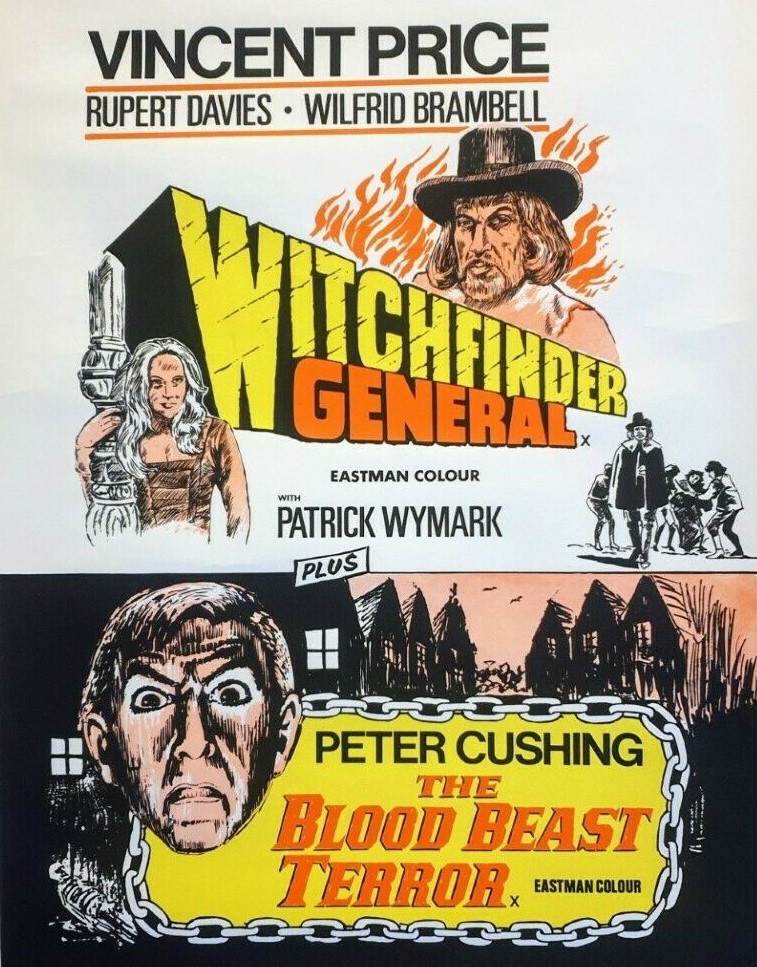

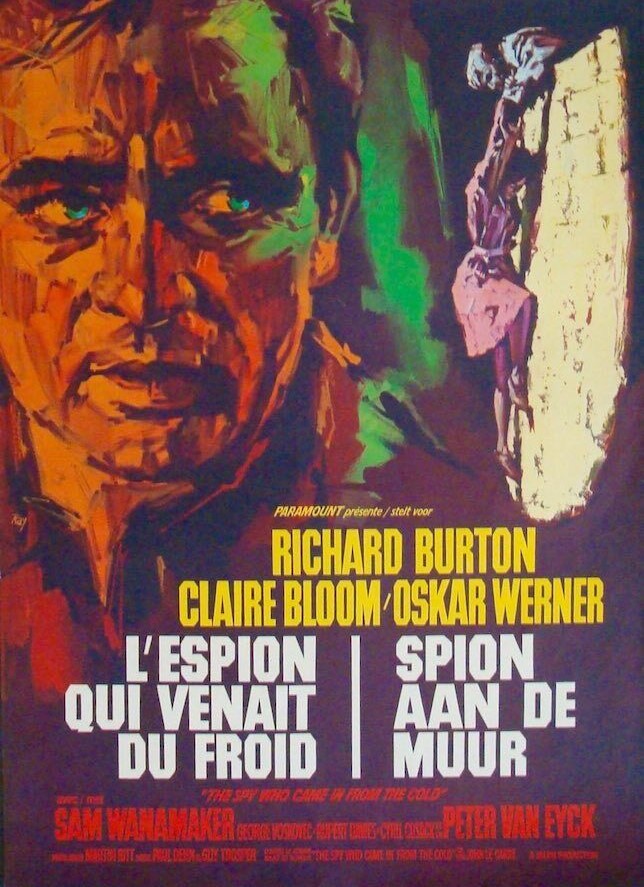
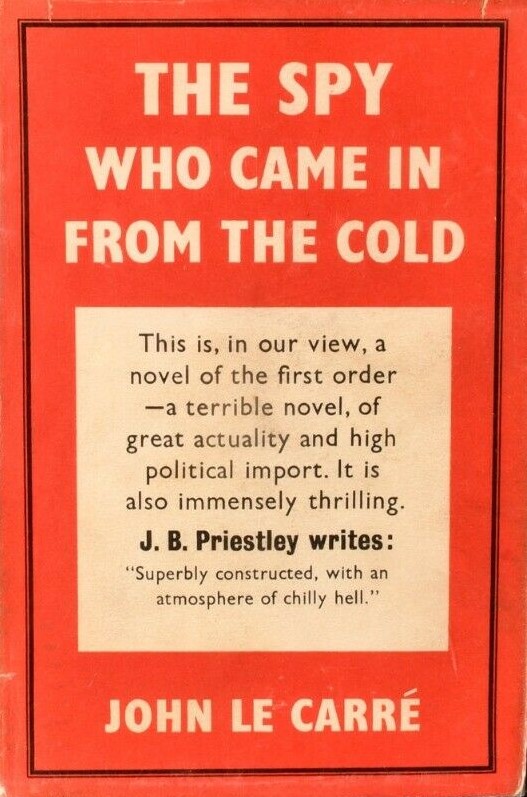
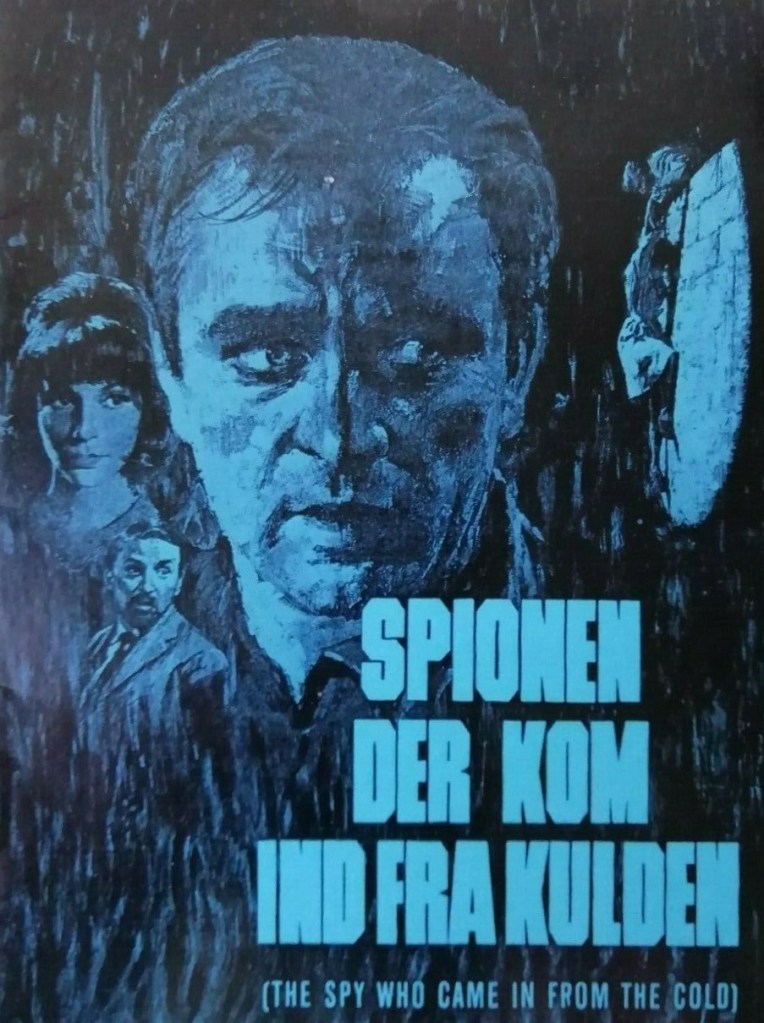

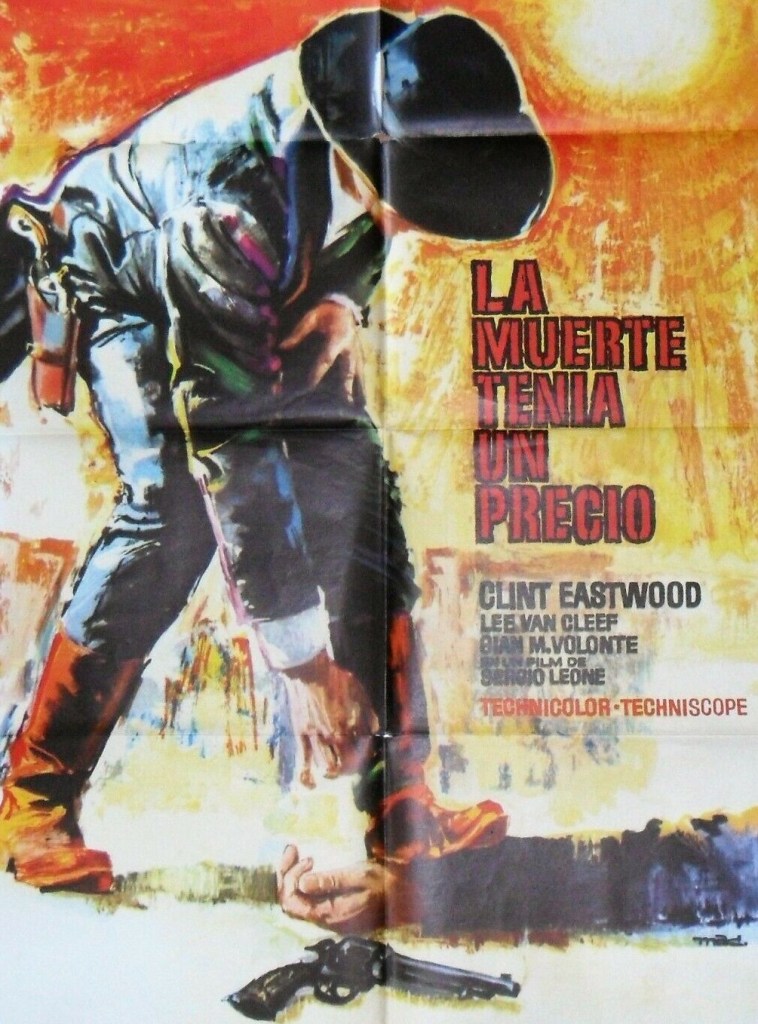
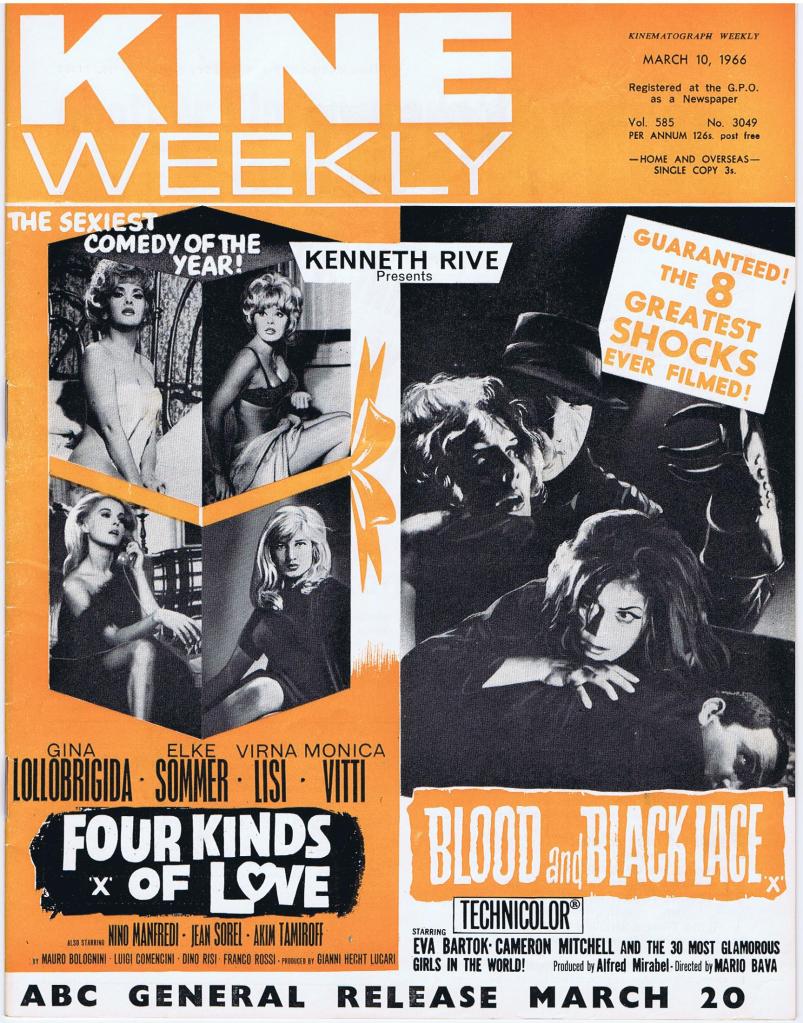
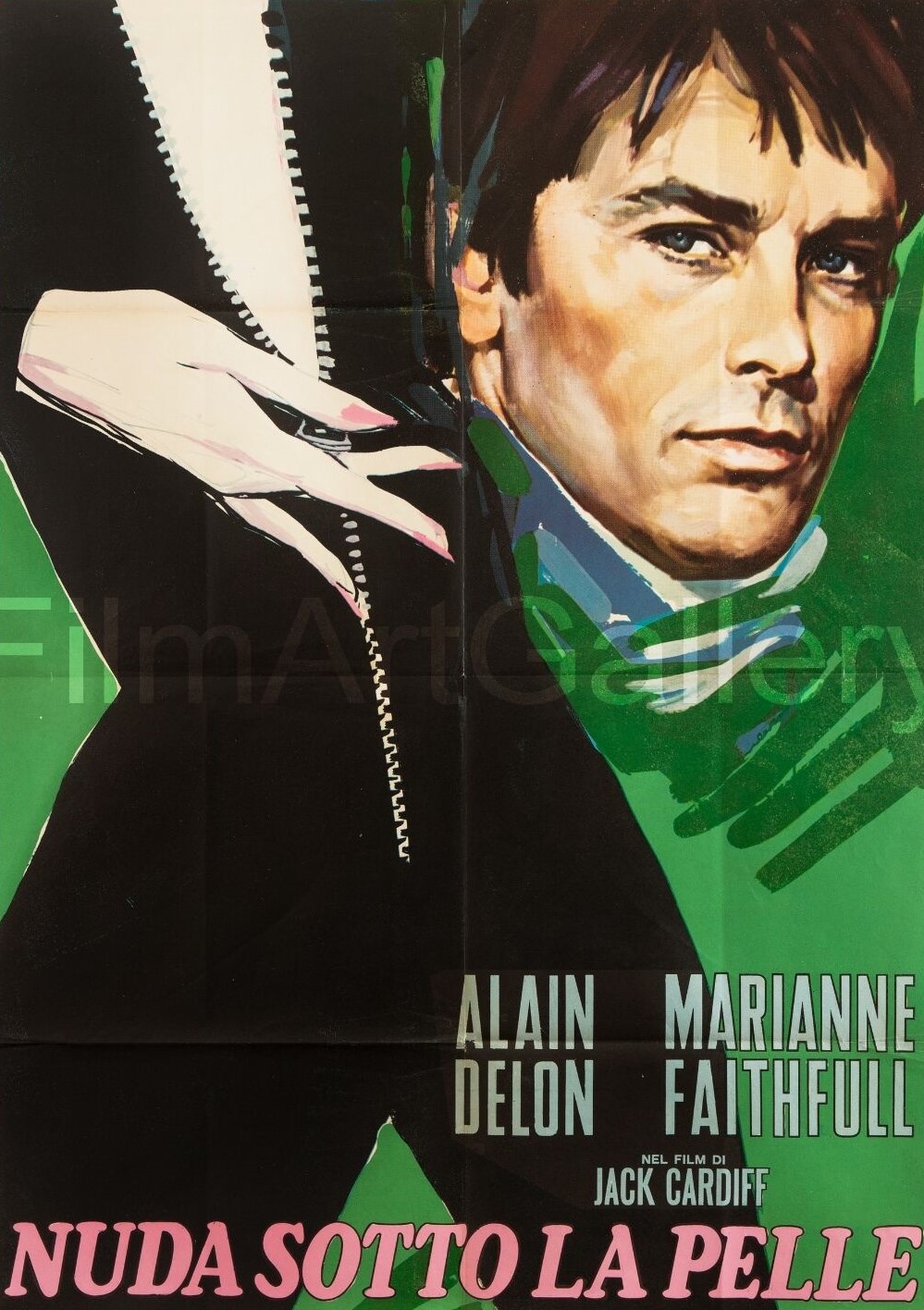
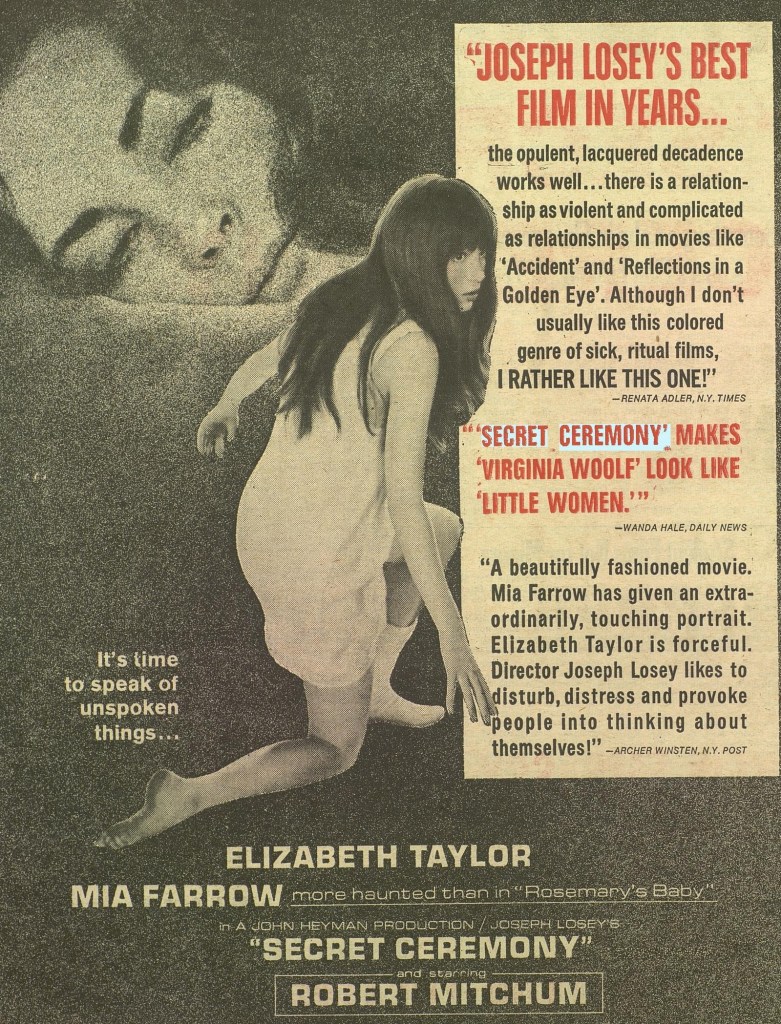
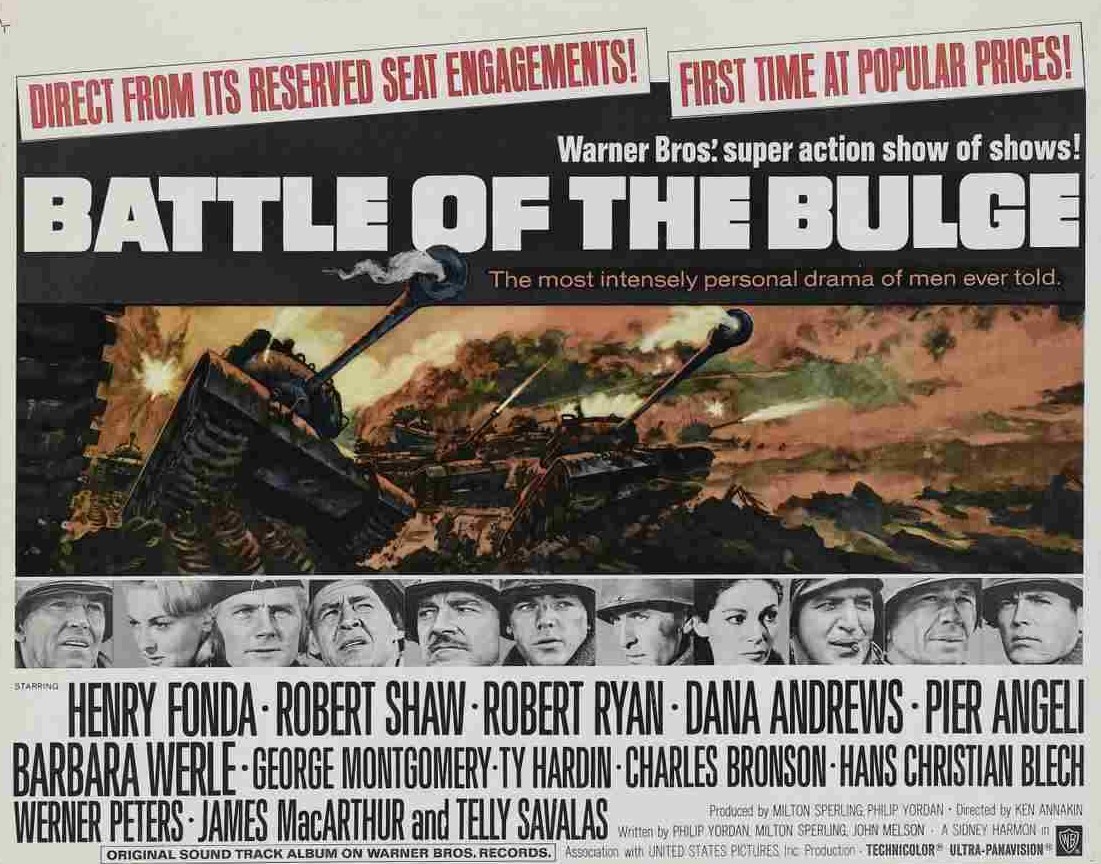

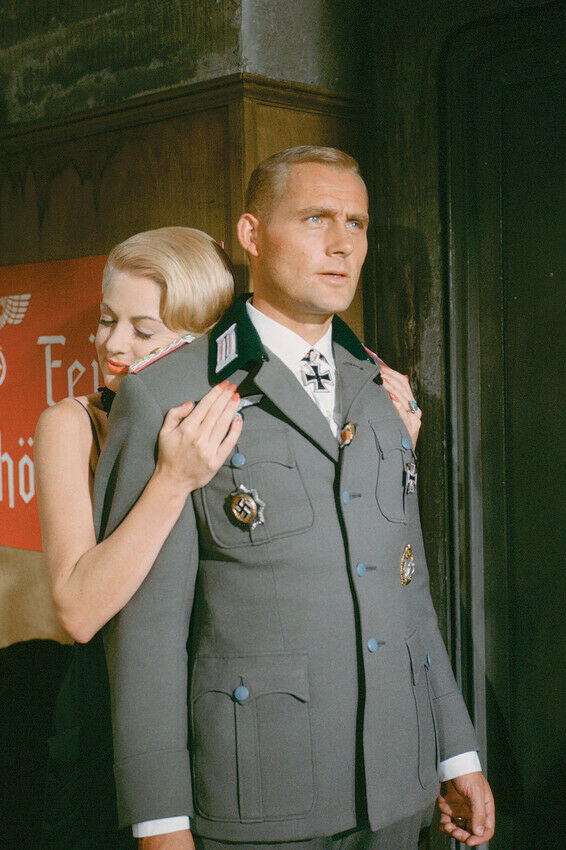
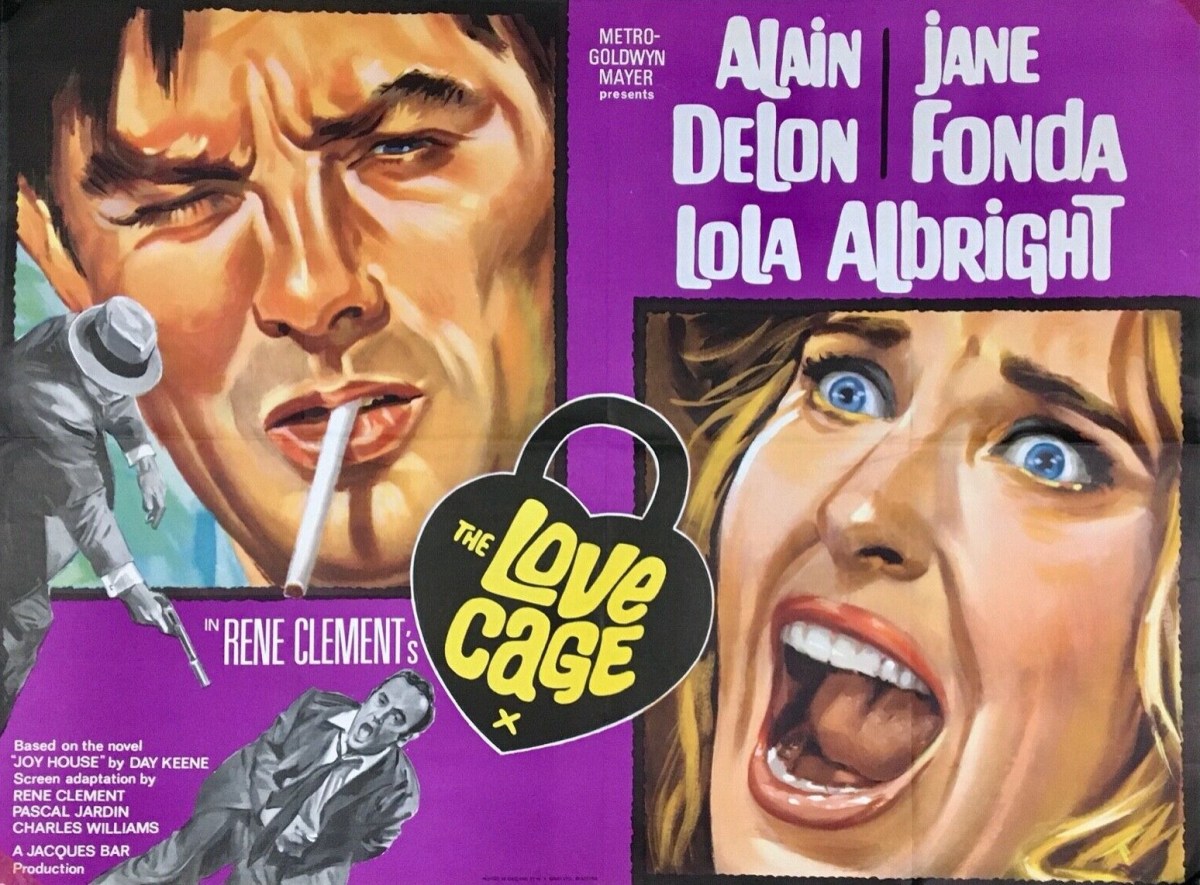

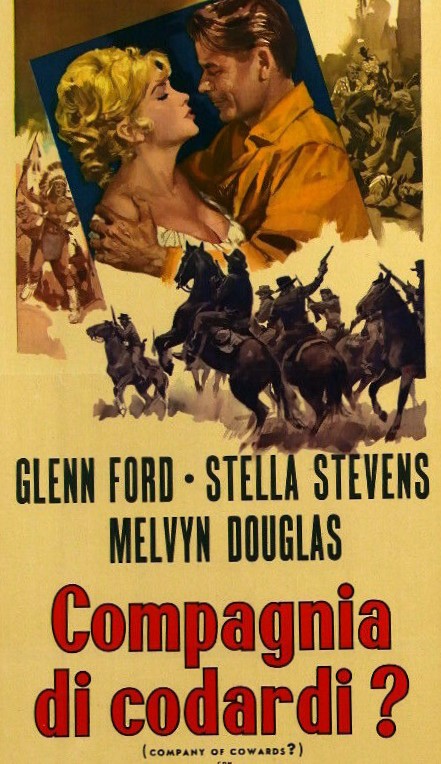
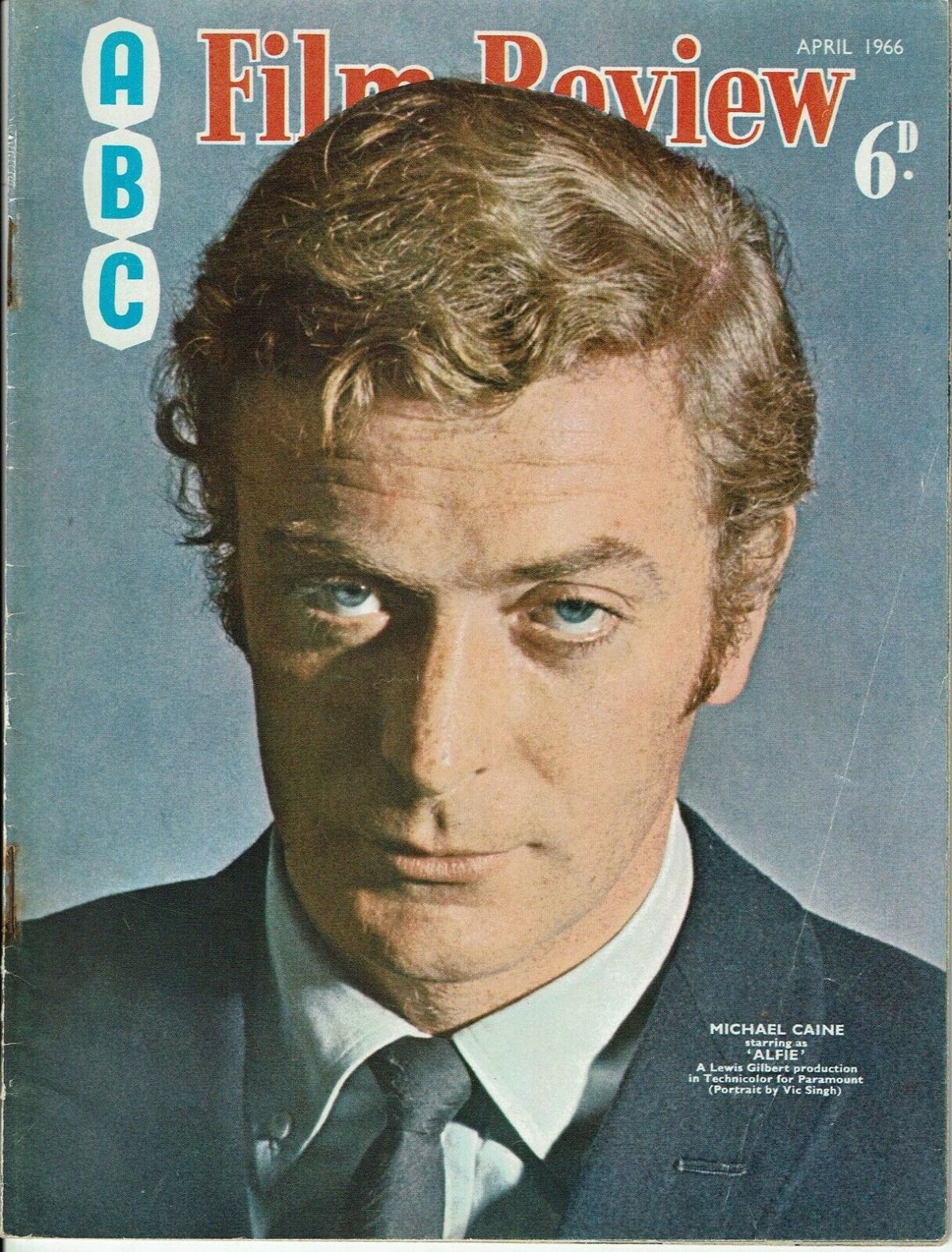
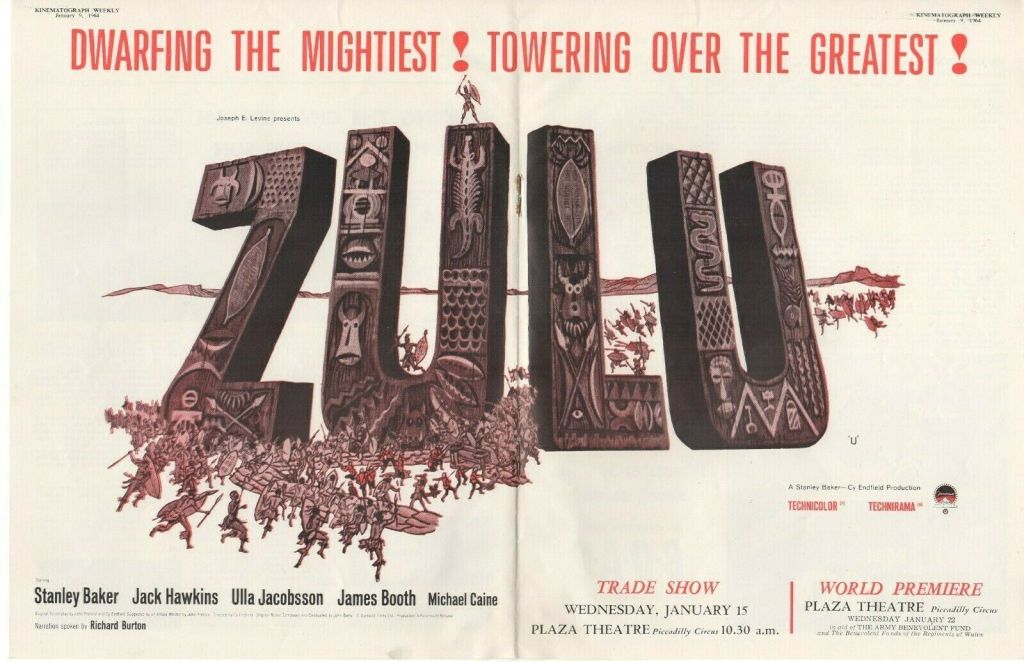
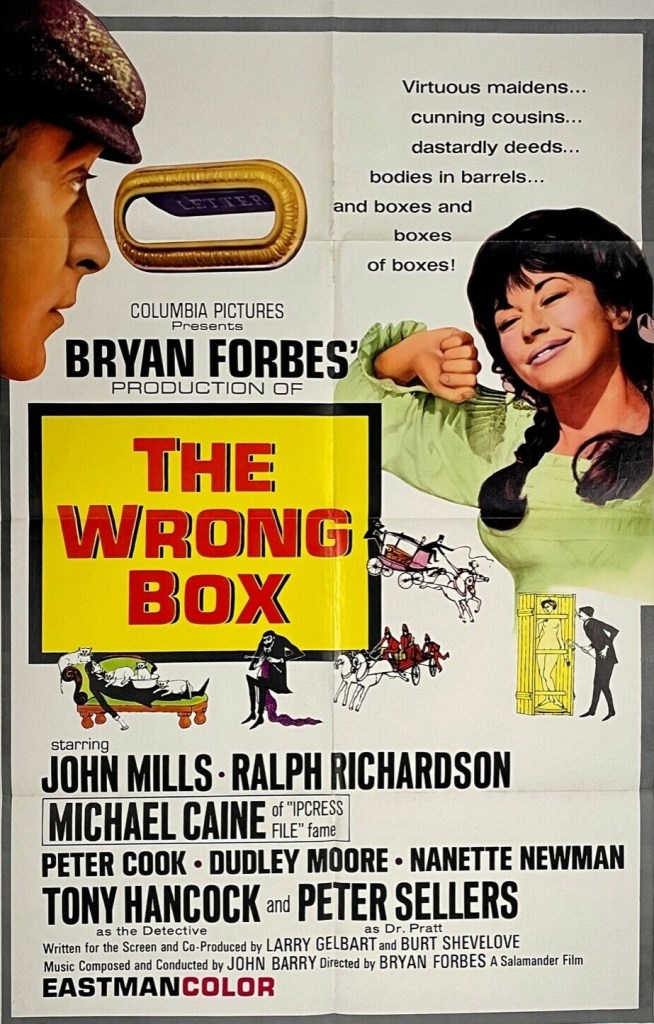
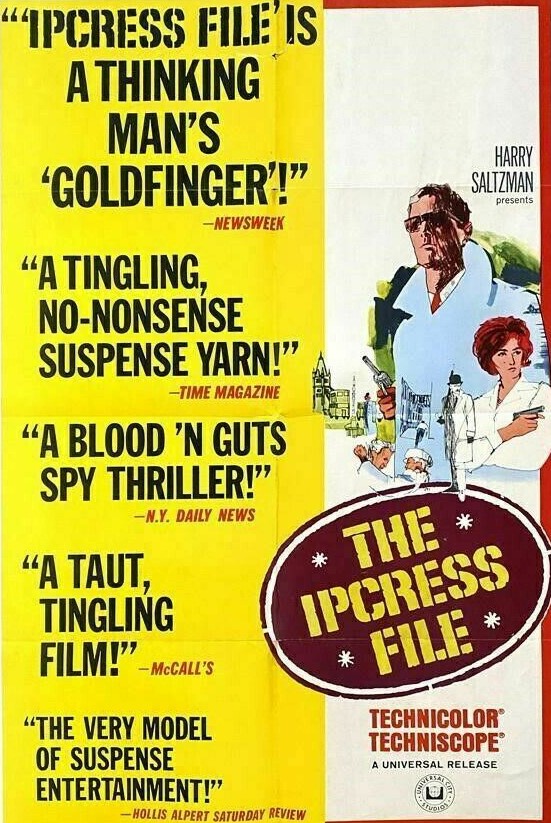
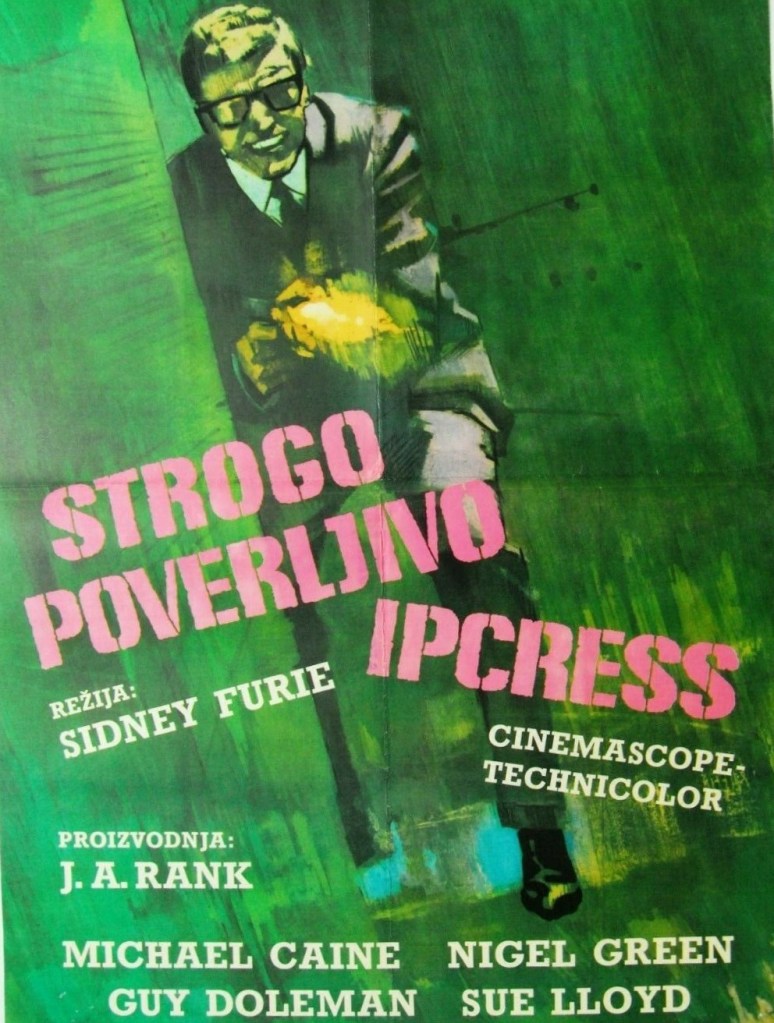
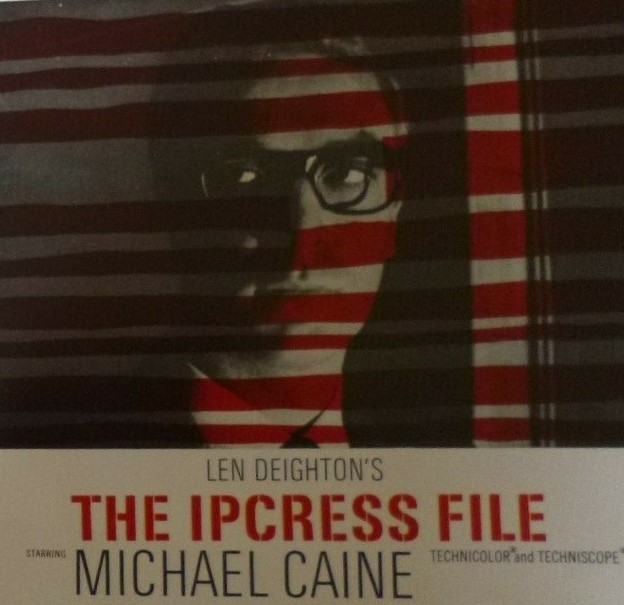

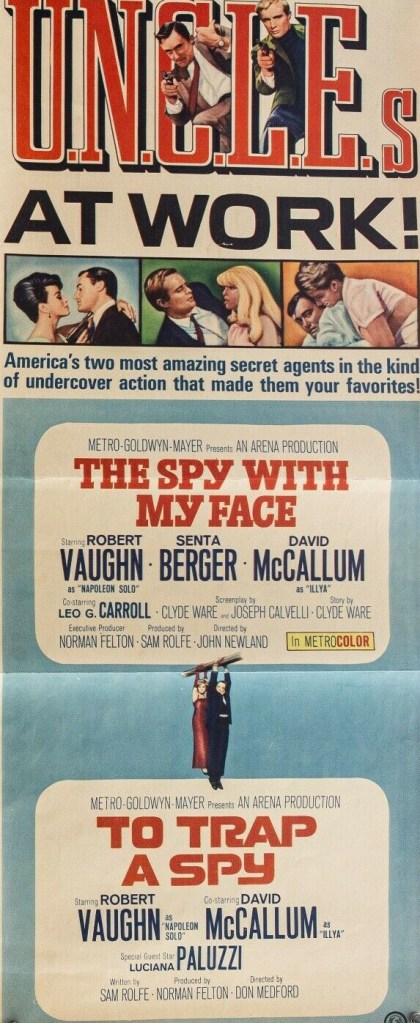

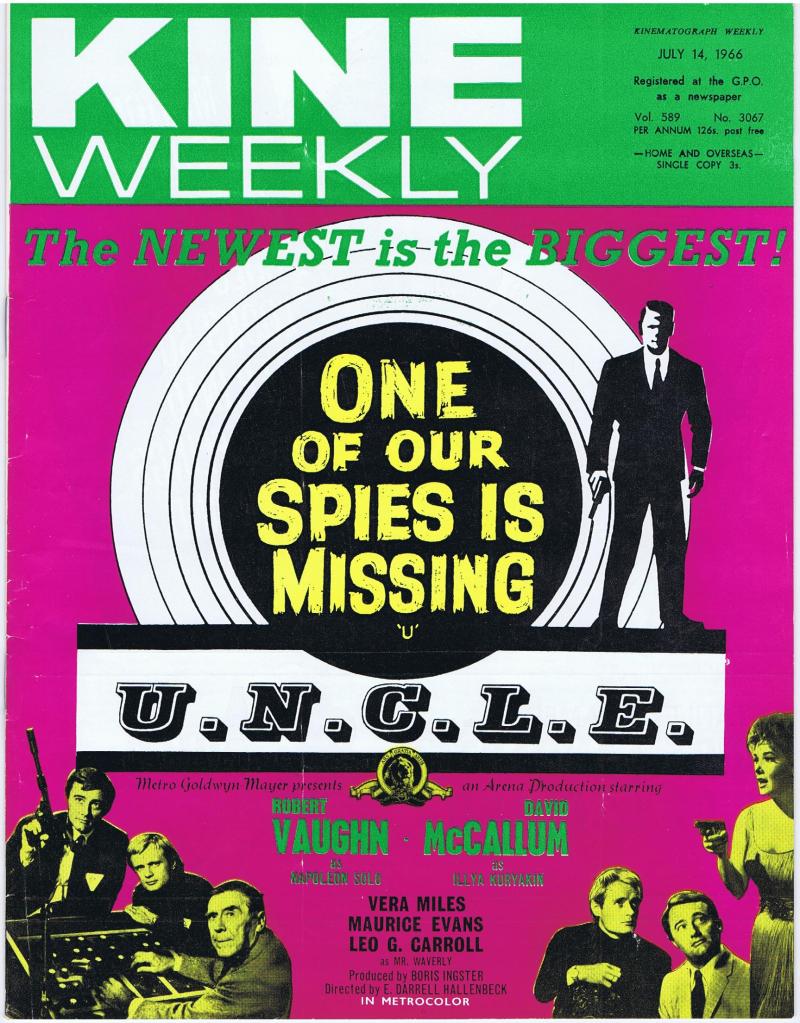


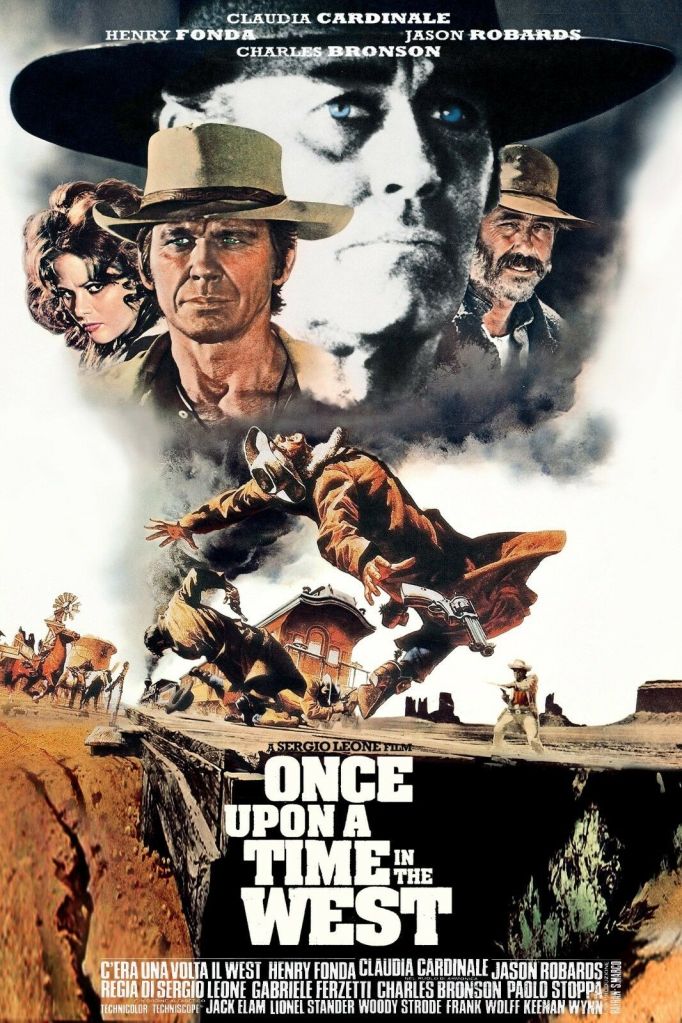

 The Magnificent 60s