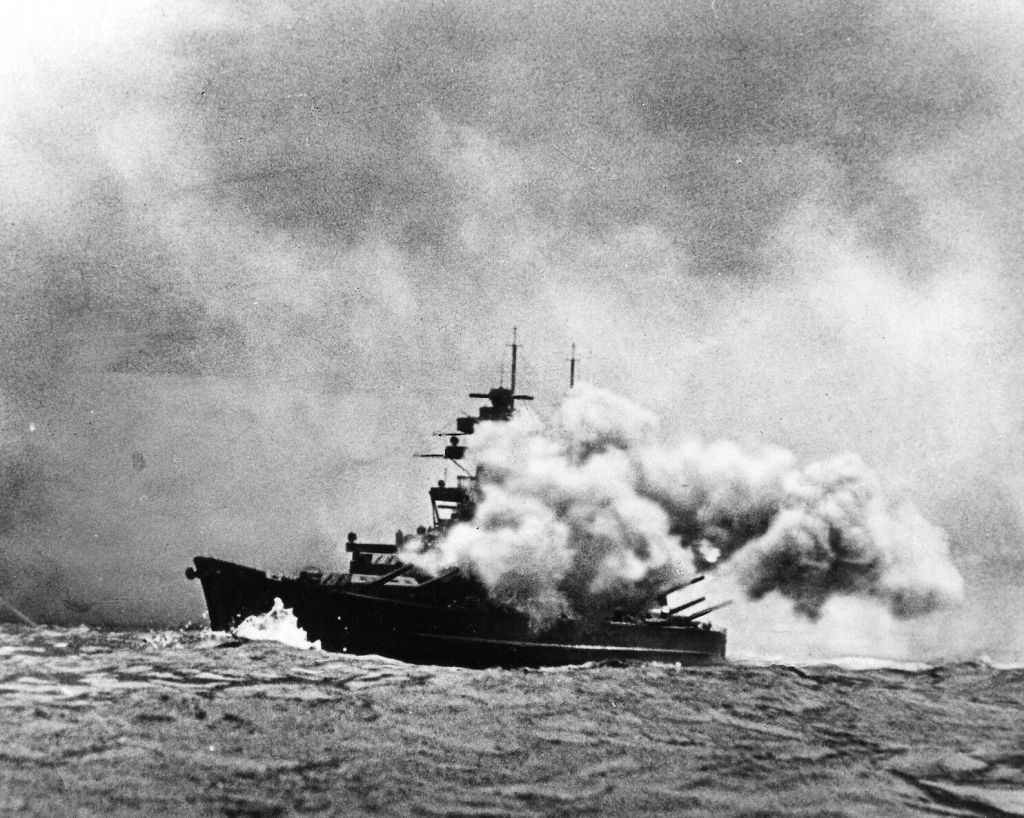
Behind the Scenes: “Sink The Bismarck!” (1960)

The unexpected U.S. box office success should have propelled star Kenneth More into the Hollywood firmament. The British box office champ of the previous decade, after comedies like Genevieve (1953) and Doctor in the House (1956), war movie Reach for the Sky (1956) and drama A Night to Remember (1958), he had been rewarded by a tie-up between British studio Rank and Twentieth Century Fox. That allowed him bigger budgets and bigger co-stars, pairing him with Jayne Mansfield in comedy western The Sheriff of Fractured Jaw (1958), and Lauren Bacall for historical adventure North West Frontier (1959).

While hits in Britain, they failed to raise his profile in America. That changed with Sink the Bismarck!, his performance highly praised, the movie a genuine and very profitable hit. It should have been the stepping-stone he needed to break into the Hollywood big time. And for a short time it looked as if he would.

He was scheduled to co-star with Gregory Peck in the big budget high adventure war picture The Guns of Navarone (1961), in the part that finally went to David Niven. He lost the role  through petulance.

At a public event, he verbally tore into his boss, John Davis, head of Rank, to whom he was contracted and on whose goodwill he relied to loan him out to Columbia for this movie which would become the number one hit in the annual U.S. box office race. In revenge, Davis blocked the loan-out and in effect stymied his career. Few companies were going to invest in a star whose movies would automatically be blocked from being booked on the Odeon chain, owned by Rank, and one of the two biggest circuits in Britain. As a result of his intemperate, drunken, action, More’s career plummeted.

Oddly enough, Sink the Bismarck! also killed off the career of the German-born Dana Wynter, a rising Hollywood star, leading lady to Rock Hudson in Something of Value (1957) Robert Wagner in In Love and War (1958) and James Cagney in Shake Hands with the Devil (1959) and denoted star of Henry Koster’s Fraulein (1958). After Sink the Bismarck!, and On the Double (1961), she lost out on big roles until the low-budget If He Hollers, Let Him Go (1968).

It seemed almost a contradiction in terms that such a big hit as Sink the Bismarck! could produce no outright winners in the career stakes. And although director Lewis Gilbert had a stab at the Hollywood big budget picture with The 7th Dawn (1964) starring William Holden, he relied on later British pictures Alfie (1965) and You Only Live Twice (1967) to give his career the fillip it surely deserved.

Lewis Gilbert was virtually a veteran by the time Sink the Bismarck! appeared, 16 previous pictures including Reach for the Sky, another More-starrer Paradise Lagoon (1957) and  Carve Her Name with Pride (1958).
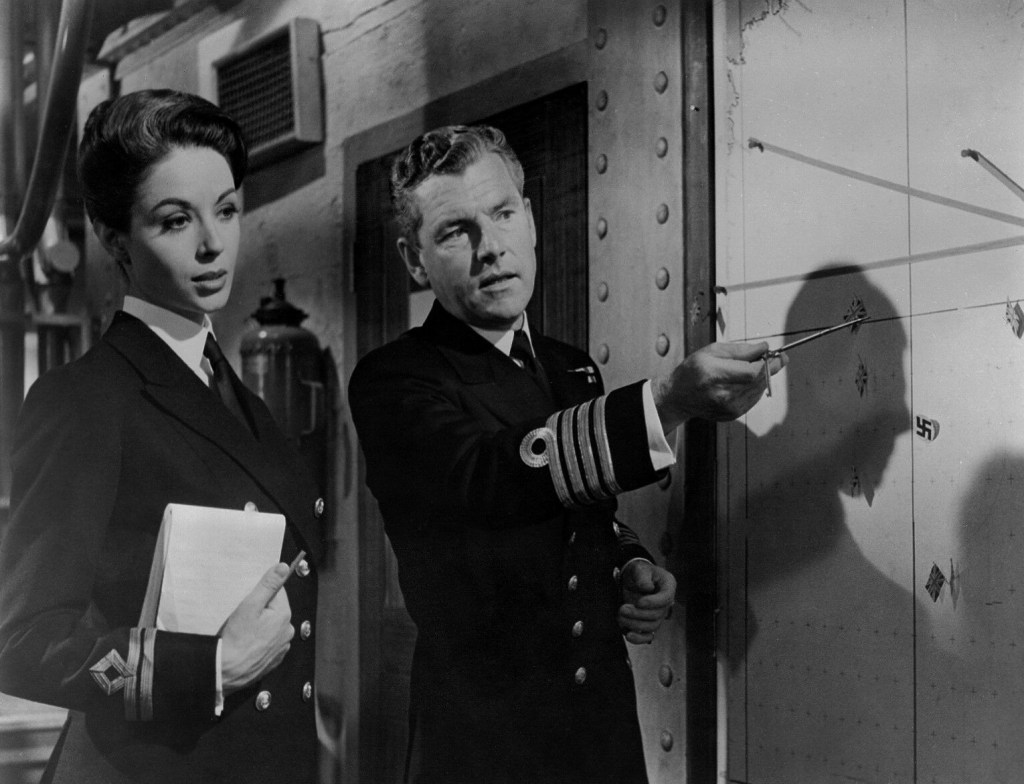
Kenneth More explaining details to Dana Wynter. In the movie they would have the most buttoned-down romance you could imagine, feelings not pronounced until the end.

Gilbert described Sink the Bismarck! as a “detective story set at sea,” and that’s the picture  he determined to make, focusing on the hunt more than the normal World War Two heroics, the usual battleground endeavours taking second place to backroom tactics that resembled a “psychological chess game” between British and Germans. It was a change of pace for star Kenneth More, his screen persona the opposite of “someone so stiff and buttoned up.” A star of More’s caliber was all the movie needed to be funded.

The bigger problem was the hardware. “If we were to film on real ships, explode old ones even,” recalled Gilbert, “we would need the cooperation of the Admiralty.” Luckily, the wife of producer John Brabourne (Romeo and Juliet, 1968) was the daughter of Earl Mountbatten, the former Governor of India, who happened to be First Sea Lord (head of the Admiralty) who could put in a good word.

“Blowing up ships, or bits of ships, turned out to be not so hard,” explained Gilbert.  Portsmouth’s naval shipyards contained many vessels whose active days were over and who were considered nothing more than scrap metal. So, prior to the commencement of shooting, Gilbert took a crew into the shipyard and began the blowing up. Because these were not models, the use of real ships “gave the film extra conviction.”

Gilbert also received permission to film on HMS Vanguard, the last British battleship of the era still on active duty although it too was due to be scrapped. That permitted filming the ship’s 15-inch guns in action. It doubled for scenes set aboard HMS Hood, Prince of Wales, King George V and the Bismarck, creating greater authenticity.  HMS Belfast stood in for the pursuing cruisers including HMS Norfolk, Suffolk, Dorsetshire and Sheffield. A Dido-class cruiser provided the set for Bismarck’s destruction.

Aircraft carrier HMS Victorious played herself as well as HMS Ark Royal but any actual flying took place aboard HMS Centaur. The destroyers participating in the night-time attacks were HMS Cavalier and HMS Hogue. The bridge of the Prince of Wales was “reproduced down to the last detail.” One of the officers wounded in that attack was Esmond Knight, an actor on the film, who had virtually lost his sight, but from memory was still able to determine that the bridge was “a perfect replica.”

Three Fairey Swordfish biplanes with torpedoes were used.  Three RAF jet pilots volunteered to the fly the biplanes in the movie for the experience of understanding the risks involved in diving at less than the top speed of 138 mph in a machine which was little more than wood and canvas to drop torpedoes on a highly-armed ship, but Gilbert had already hired specialist crews.

Top Hollywood model maker Howard Lydecker (The Underwater City, 1962) was recruited to build the 20ft model of the Bismarck, which, unfortunately, sank on launch. Raising it was not a problem. Long shots were filmed on the massive Pinewood water tank.  It helped the production that during the battle the weather had been foul, so ships could be seen emerging from fog, or rendered invisible because of it.

Gilbert used his own wartime experience to render the battle realistic. He remembered sailing past the Scharnhorst, one of Germany’s three most powerful battleships, being unable to see it because of fog but aware of its presence from the sound of its guns. “We knew it from what we heard and felt, not from what we saw.”

Post-war the sinking of the Bismarck became a cause celebre. The British were accused of a war crime for nor picking up survivors. However, the British claimed that the presence of U-boats in the area rendered this too hazardous.

SOURCES: Lewis Gilbert, All My Flashbacks (Reynolds & Hearn, 2010) p 197-203; Brian Hannan, The Making of The Guns of Navarone (Baroliant Press, 2013) p67.

Sink The Bismarck! (1960) ****

Hard to believe but outside of the Hollywood big-budget Bridge on the River Kwai (1957), this was the biggest British film at the U.S. box office in the previous decade. In fact, the British war films that did so well in the home territory, The Cruel Sea (1953) and Reach for the Sky (1956), sank like a stone when exported to in America while earnings for Ealing comedies,  limited to arthouses, hardly made a dent in the box office.

What makes this so appealing is the very lack of Britishness and the intrusion of a Yank, famed reporter Edward  R Morrow (playing himself), interrupting the action at various points to keep audiences up to speed. The fact that the sinking of the Bismarck, the biggest battleship ever built, was one of the few British actions at the start of the Second World War to be counted a success probably helped. Watching the Brits being lionized for defeat was not an attractive notion for global audiences.

But in the main it is a thrilling docu-drama, very much a departure for the genre, with every nuance of potential consequence spelled out. Dialog and models being moved across maps announce the risks inherent in the British attack: the superiority of the newly-built German battleship, the multiple options the Germans had in 1941 to escape, the difficulties in pinpointing the German vessel in the fog-bound waters of the North Sea, and the devastation the battleship could inflict on the beleaguered convoys on which Britain depended to stay afloat. In addition, even when targeted the Germans could flee to occupied France or potentially summon U-boats or air support.

So in the manner or Operation Crossbow (1965) or Day of the Jackal (1973) the audience is primed for a minute-by-minute enterprise, the battleship deemed so dangerous that the Admiralty is willing to risk its own scarce supplies of battleships, destroyers, cruisers and aircraft carriers in a bid sink the enemy. It is so much a documentary that the beyond the thrill of the hunt there is little room left for drama and certainly little of the stirring kind that had become such a byword for the British version of the genre – and such a turn-off for foreign audiences who could hardly make out what the actors were saying never mind work out why such-and-such a mission they had never heard of was so important.

In any case emotion is forbidden in the subterranean claustrophobic Admiralty War Office where new operational commander Capt Shepherd (Kenneth More) holds sway. A martinet, “cold as a witch’s heart,” on arrival he rids staff of what he sees as the rank indiscipline of addressing colleagues by forename rather than surname, eating sandwiches at a desk to which the workforce have been chained for hours  and various minor offences against the strict code of a uniform.

It was inherent in this type of picture that the land-based unit suffer the casualties of war, husbands dead or missing in action, wives and children killed by German bombs. But the tightening of the stiff-upper-lip ensures that when such revelations become known, they appeared like emotional depth-charges on this otherwise staid ocean. And Capt Shepherd, through his choices, as would be true of many high-ranking officers, might be sending his own son to is death.

This is also one of the first instances in war pictures where the Germans are not treated as stock villains, but intelligent people, like Admiral Lutyens (Karel Stepanek) with his own vanity and a hunger for redemption, and Capt Lindemann (Carl Mohner), as valiant an opponent in the cat-and-mouse duel where outwitting the British enemy could wreak untold carnage and hasten – unusually from the German point-of-view rather than from the Allies – the end of the war.

A few months after launch the Bismarck is spotted leaving its home port, destination North Atlantic to feast on convoys travelling from America with invaluable supplies. There are four possible routes open to get round the top of Britain. To prevent the Germans reaching any of them British ships must be sacrificed, including HMS Hood – three survivors out of a crew of 1400.

It’s David vs Goliath except David is a terrier capable of inflicting tiny wounds that drain the battleship of some of its power, loss of fuel and rudder problems limiting movement. It’s a different kind of war picture, as well as the big guns blasting at each other over huge distances, the British employ biplanes loaded with torpedoes, a weapon also used in some instances by its ships.

To keep audiences more heavily involved, there are snippets of dialog involving characters on board the various ships, some in distinctly un-stiff-upper-lip mode, and montages of the various vessels getting ready for action, as well as shots of devastation should a shell find its target.

But basically it’s  brilliantly-told tactic-heavy war picture that shows the shifting battleground, how the various ships are deployed, with no shortage of telling the audience how crucial success is and how crushing defeat. There’s no reliance on individual heroism, no snappy soldier defying authority, no hunch being played out, none of the usual cliches of the genre, instead, as with The Longest Day (1962) a clear explanation of what’s going on with superb battle scenes for the action-inclined.

It’s fair to say that even on the small screen, the models look a bit iffy, but this is more than compensated by other scenes on real warships, the use of newsreel footage, and fast cutting.  That action never takes place under a clear blue sky but always in murky waters also adds to the realism.

In a role that would have been custom-made for Kenneth More (The Comedy Man, 1964), king of the stiff-upper-lip, rather than simply spouting his lines, he adds considerable emotional depth. Dana Wynter (Something of Value, 1957) is excellent as his equally buttoned-up assistant.

There’s a full crew of supporting British character actors including Michael Hordern (Khartoum, 1966), Laurence Naismith (Jason and the Argonauts, 1963), Geoffrey Keen (Dr Syn, Alias The Scarecrow, 1963) and Maurice Denham (Some Girls Do, 1969) while the Czech-born Karel Stepanek (Operation Crossbow, 1965) and Carl Mohner (Assignment K, 1968) inject humanity into the Germans.

Lewis Gilbert (The 7th Dawn, 1964) does a brilliant job of bringing this all together, adding touches of emotion and humour to what could have been a too-dry concoction, drawing on a screenplay by Edmund H. North (HMS Defiant/Damn the Defiant, 1962) which was based on the book by C.S. Forester of Hornblower fame.

Gunning for “Jessica”

As some of you may be aware I am something of a secret movie statistics nerd. This usually takes the form of analysing box office figures but since I’ve started doing this Blog I’ve been transported into a completely different world – guessing which of my reviews (660-plus and counting) is going to attract the greatest number of views. To some extent, I presumed the growing success of the Blog would dictate which reviews would top the charts.

I imagined that films I reviewed when starting out more than two years ago (with scarcely more than half a dozen hits per day) would receive far fewer reader responses than movies I’m currently covering given that I am now in the regular bailiwick of 200 (and counting) views per day. But that has proved not to be the case.

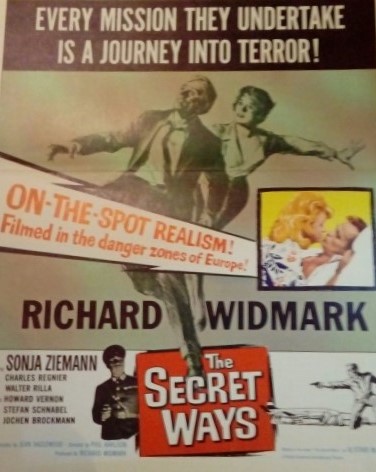
In June this year when I updated my readers on the movie that had generated the greatest all-time response the number one picture was The Secret Ways (1961) starring Richard Widmark and based on the Alistair MacLean thriller. For a start that had been reviewed in April 2021, disproving the notion that more recent films gained an unfair advantage due to the increasing numbers of people looking at this site. It had been the favourite movie of my readers for the year 2021 and every time I glanced at the all-time numbers it seemed to be putting greater distance between itself and the other films following in its wake.

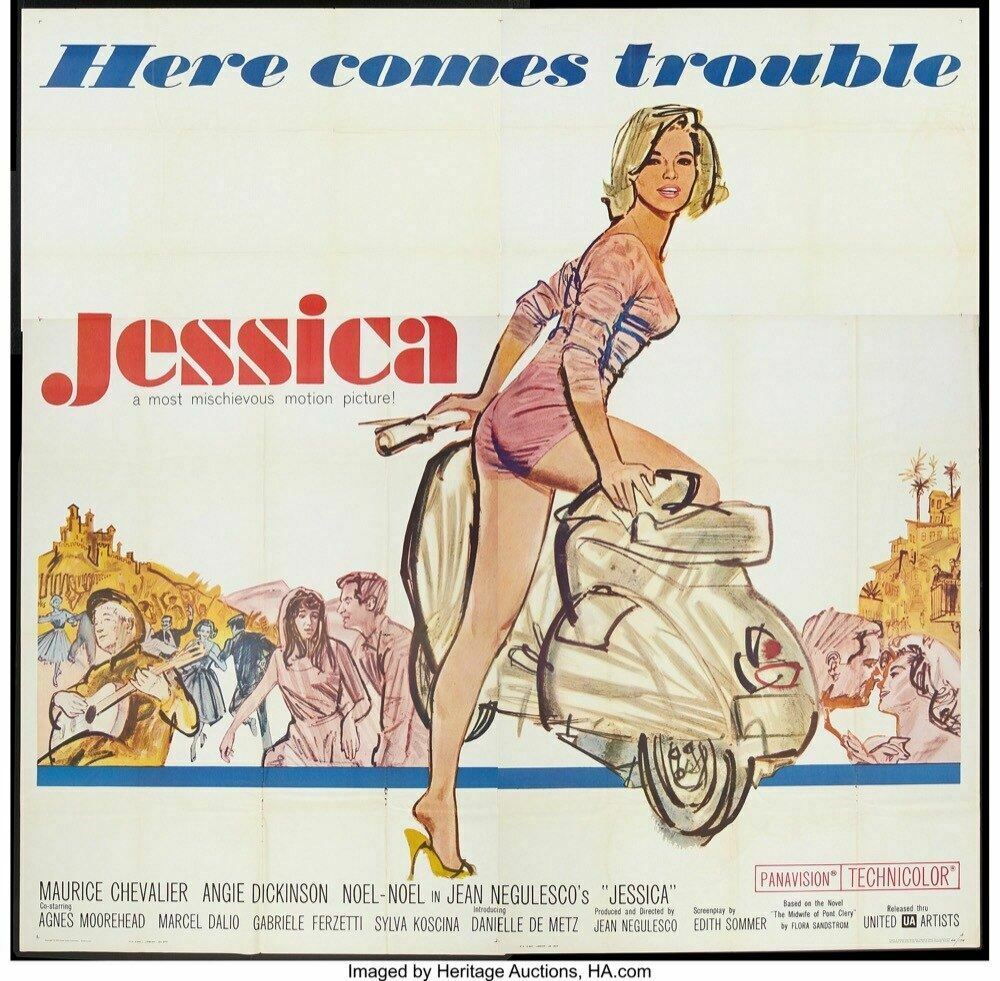
That is, until for no reason that I can discern, it was rapidly overtaken by Jessica (1962), an Italian-set romantic drama with songs starring Angie Dickinson and Maurice Chevalier. That had been originally reviewed in December 2021, but it wasn’t for another three-to-four months that it started to show substantial legs, not enough to topple The Secret Ways, but by the time of that all-time ranking table of June 2022 clearly beginning to pose a threat.

One month later and it had gathered enough further support to top the all-time table – and so far ahead of The Secret Ways that I believed it uncatchable.

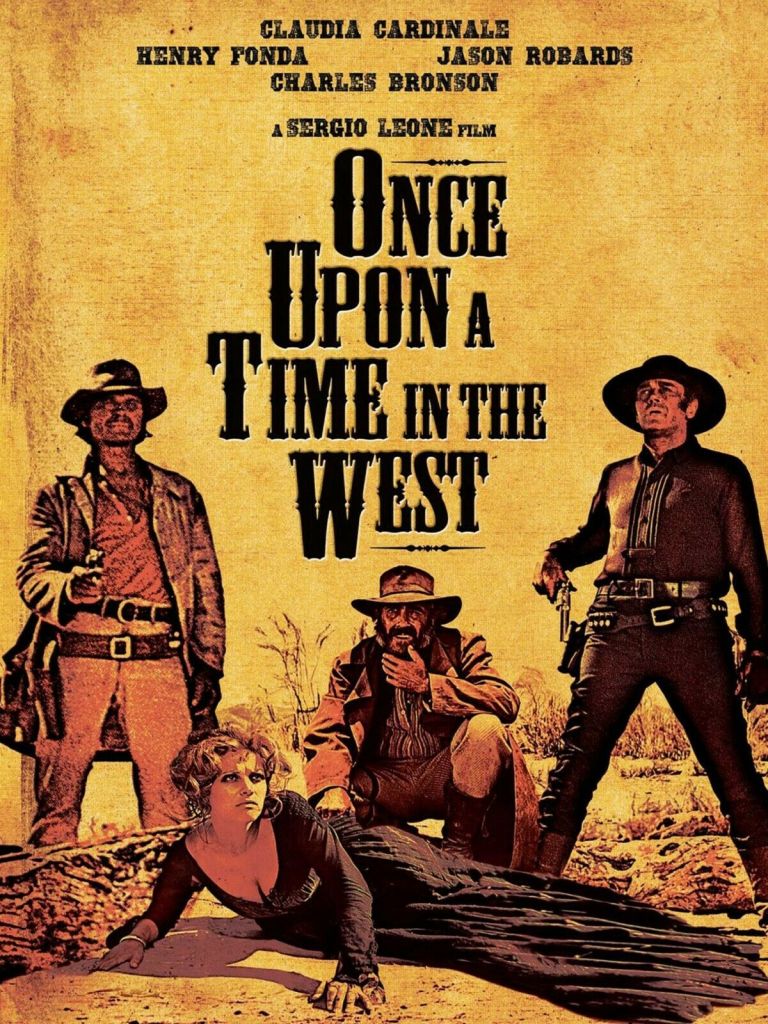
That is, until this month, when again for no reason I can detect, Once Upon a Time in the West (1969) – reviewed May 2021 – put on a spurt on such strength that had this been a sporting event you would have guessed at a betting coup. The Sergio Leone western classic with an all-star cast of Claudia Cardinale, Charles Bronson, Henry Fonda and Jason Robards has not quite overhauled Jessica but it is so hot on its heels I believe it will only be a matter of time. You might put it down to the death of composer Ennio Morricone whose score remains one of the bestselling soundtracks of all time, but that occurred in July, a good six weeks before the movie started to move at a serious clip.

The Secret Ways, in case you are wondering, has slipped to number three in the all-time chart. Obviously, the sudden appearance of Once Upon a Time in the West in the Top Ten had affected other claimants to high positions. But it was only when I looked again at the all-time chart I had published in June that I realized there had been other significant changes. Rat Pack heist movie Oceans 11 (1960) – reviewed May 2021 – dropped one spot. But Ann-Margret as The Swinger (1966) had jumped two places from its position in June.

Suzy Kendall as World War One German spy Fraulein Doktor (1969) – reviewed December 2021 – was down the expected single place but Polish Egyptian epic Pharaoh/Faraon (1966) – reviewed as far back as December 2020 – had tumbled three spots while cat burglary thriller The Golden Claws of the Cat Girl / La Louve Solitaire (1968) – reviewed even further back in September 2020 – had plunged two places.

I only occasionally review new films so I was very surprised to discover, swimming against the critical tide, that my May 2022 review of Mark Wahlberg as Father Stu (2022) was now sitting at number nine and that number ten was also a newcomer to the Top Ten – Jean Seberg in Hitchcockian thriller Moment to Moment (1966) which was reviewed over year ago in August 2021.

Of course Jessica may yet stage a comeback and some other film in my catalog could suddenly soar to the top – I’ll keep you posted again at the end of the year.

Chuka (1967) ****

I’m astonished this highly original western has disappeared into critical oblivion. As cruel as it is unusual, overturning every cliché, brimming with realism, more drama that action, some stunning scenes, and an ending only the bold would ever consider, this is desperately in need of reappraisal.

A refuge becomes a trap. The hero never wins. A spurned lover remains spurned. The cavalry are the dregs of society. Nobody listens to common sense. There’s no sending for help to relieve the beleaguered garrison. What chance does anyone have when the commanding officer is proud to die “by the book” rather than engineer a simple escape.

Gunslinger Chuka (Rod Taylor), arriving from the wintry north, shares some of his provisions with starving Arapaho Native Americans, comes upon a broken down stage containing two high-born Mexicans en route to California, Veronica (Luciana Paluzzi) and Helena (Victoria Vetri), his presence, thanks to that simple act of generosity, ensuring the marauding Arapahoes spare their lives. At the fort, a deserter is being whipped on the orders of martinet English commander Col Valois (John Mills). A patrol has failed to return so Valois won’t let the newcomers leave.

Chuka, sympathetic to the situation of the starving Arapahoes, suggests the colonel gives them food and sufficient weapons to allow them to hunt their own food. Veronica, now a widow, turns out to be Chuka’s long-lost love. Romance beckons but his unsavory occupation turns her stomach. Hired gun Chuka is not the only one to exploit need. Major Benson (Louis Hayward), the fort’s second-in-command, has a squaw (Herlinda Del Carmen), trading shelter for sex, stashed away.

Valois convenes a dinner party in honor of his guests – “I miss conversation and the elegance of dining in mixed company” – only to torpedo the occasion by revealing “what a uniform can conceal,” the sins of his officers: Benson a card cheat, Lt Daly (Gerald York) court-martialed for treason, the company doctor a coward. An arrow through the window ends dinner prematurely, Chuka demonstrating his skills in shooting the perpetrators.

Bit of artistic license here – Luciana Paluzzi is buttoned up all the way, no naked back,
and Rod Taylor is not quite so athletic.

Honor plays no part in Chuka’s life and he refuses to help out Valois unless paid $200, enough he thinks to start life afresh with Veronica, and only after a knockdown no-holds-barred fight with faithful Sgt Otto Hahnsbach (Ernest Borgnine), the only man on the post who doesn’t despise Valois – an upper-class stranger in a  strange land – prevents Chuka leaving in any case.

On a scouting mission, Chuka finds the patrol strung up and a massive Arapaho war party on the verge of attack. He returns to a mutiny, led by Benson, quelled by a single shot by Valois, the first time, it transpires, he has killed a man.  In a very moving speech, Hahnsbach reveals that Valois saved his life, but in consequence was tortured and castrated. Benson turns out to have a very soft spot for his squaw, feelings naturally unreciprocated. Valois refuses Chuka’s entreaty to abandon the fort, leaving the supplies and guns behind, but saving the lives of everyone.

This time it’s the Native Americans who exhibit the strategic martial skill. It doesn’t end well. And here’s no stirring music to comfort the audience. Defeat here is raw, none of the manufactured heroics of The Alamo (1960) or The Wild Bunch (1969).

Sure, I expected a tad more action, but in its place was a more than satisfying drama that honed to the reality of the American West, a pitiless region exploited by the pitiless. The rule of authority doesn’t just commit commanding officers to suicidal action, it also condemns civilians like Veronica, who flees her home rather than confronting her father over another forced marriage.

The ranks of the U.S. Cavalry – beatified by the likes of John Ford for whom occasional drunkenness and a fondness for fisticuffs were the only sins – must in reality, like armies the world over, have been filled with the scum of the earth, wanted men, killers, thieves and vagabonds, using new identities to escape their past. As if the best source of recruitment was characters on a par with The Dirty Dozen. While Valois and Hahnsbach believe they have whipped the men into shape, there wouldn’t be any whipping of deserters if that were true.

Valois the martinet certainly has parallels with the commanding officer of Tunes of Glory (1960), also played by John Mills, on the verge of a nervous breakdown  as a result of his war experience. And we are led to believe that Valois is as “guilty” as the rest of the outfit when, in fact, he keeps his heroism hidden. Hahnsbach begins with an impersonation of Victor McLaglen, John Ford’s high priest of rowdiness, but he also reveals hidden depths.

This is Rod Taylor reinvented, far removed from the romantic charmer of the Doris Day comedies or the tough hero of The Mercenaries/Dark of the Sun (1968). And Taylor, himself, was very much responsible for bringing this laid-back but deadly gunslinger to the screen. He was the film’s producer, had an uncredited hand in the screenplay, redefining the role as he saw fit. And it was an audacious character to put on the screen. The gunslingers of The Magnificent Seven bemoaned their lot, lack of family, wives, emotional baggage, but they didn’t bring the Revisionist Western to life.

And although Clint Eastwood would put a different spin on the hired gun, the Leone films were not released in the U.S. until after this was made so would not have influenced the production. As well as sharing his food with the starving Arapaho, Taylor ensures his character puts their case in straightforward language.

And a sense of foreboding, courtesy of the opening scenes, hangs over the whole enterprise, and part of the skill of director Gordon Douglas (Stagecoach, 1966) is to lull us into a false sense of security, that somehow the main characters will escape the foretold destiny. I have mentioned before my surprise that Douglas is treated just as a journeyman director. Sure, his western output can’t be mentioned in the same breath as Ford, Howard Hawks or Sergio Leone, but this is not far off not just for its down’n’dirty attitude to the West, but for some moments of pure cinema. Not only does the ending echo the opening but our introduction to Taylor, via an aerial shot, echoes our last image of him, in both cases eyes gazing upwards in apprehension.

The dinner party scene is quite superb, and Mills goes from hidebound martinet to sympathetic character, his wistfulness as he recalls wooing women in the past likely to stay in the memory, as does his reaction to shooting the mutineer, while Borgnine’s recollection of Mills’ heroism is beautifully done, Borgnine, too, morphing from cliché bully to proper  character. In another film, a star of Taylor’s caliber would have fought for a happy ending, but every opportunity for one, Taylor and Paluzzi scampering off into the sunset, for example, or being reconciled, is denied.

Good to see Luciana Paluzzi (Thunderball, 1965) in a more interesting role and Victoria Vetri (credited here as Angela Dorian), prior to her Playboy fame, given the chance to play a more rounded character than when she went down the Raquel Welch route in When Dinosaurs Ruled the Earth (1970). Richard Jessup (The Cincinnati Kid, 1965) wrote the taut screenplay based on his own novel.

Couple of minor quibbles – why doesn’t the window break when an arrow comes through it but shatters when Chuka jumps out, how come the Native Americans have enough guns to launch a major attack on the fort but not enough to hunt for food? But those are very minor points.

Very worth seeing.

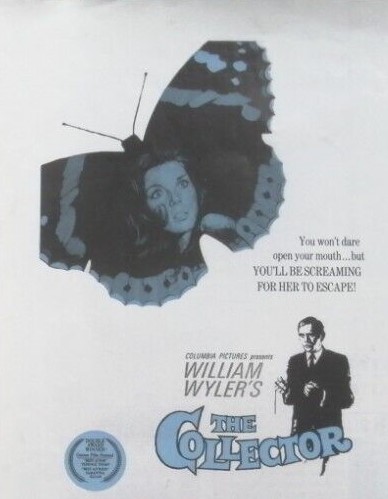
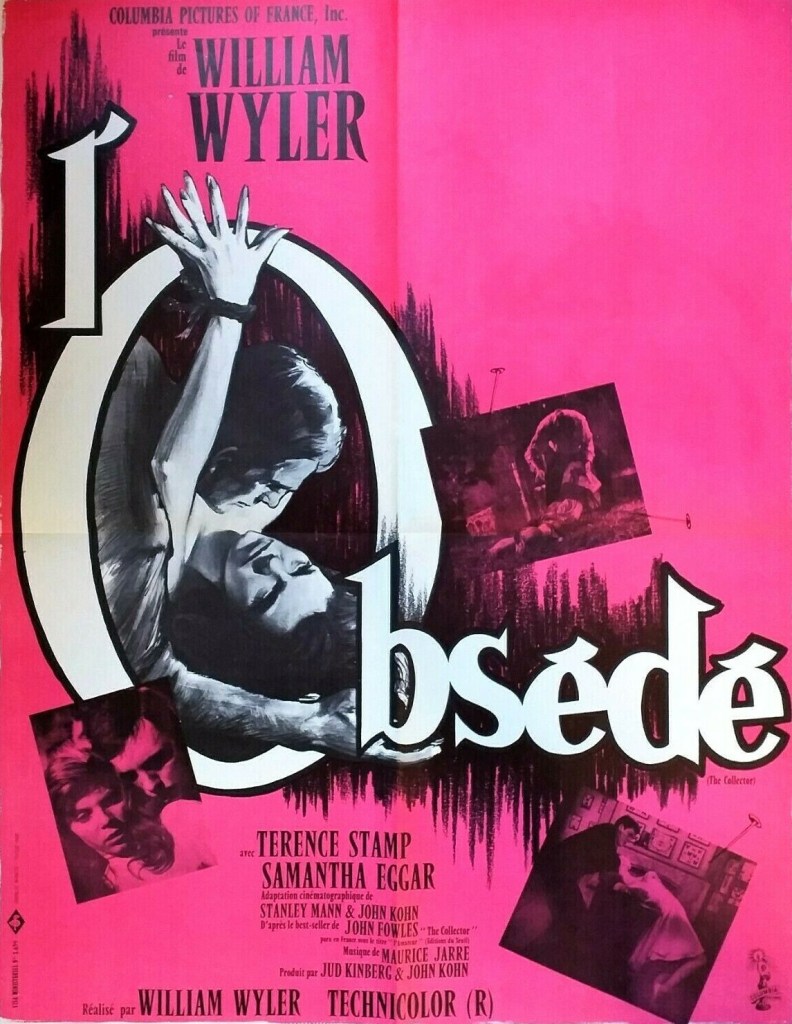
Behind the Scenes: “The Collector” (1965)

Director William Wyler was “saved,” to use the term preferred by his biographer Jan Herman, from what turned out to be the biggest picture of all time (up till then) The Sound of Music (1965) by a piece of door-stepping by two determined young producers who presented him with a pre-publication copy of John Fowles’ novel The Collector.

Wyler had been well down the pre-production route for The Sound of Music. It was he who hired Julie Andrews, having seen her performance on Broadway in My Fair Lady, and been granted access to the rushes of Mary Poppins (1964). While he was an odd choice to direct, being more of an opera buff and hard of hearing, he would later nurse Funny Girl (1967) to box office and critical acclaim.

While instinct told the German-born director that The Sound of Music “would be a success” he was troubled that it was set in Austria at a time just before World War Two when the country was mostly whole-heartedly welcoming the Nazis. “I can’t bear to make a picture about all those nice Nazis,” he said.

So when novice producers Jud Kinberg and John Kohn, television writers who had set up Blazer Films, brought him what would turn out to be a sensational bestseller, actor Terence Stamp already under contract and a deal in place with Columbia, turned up on Wyler’s doorstep with a completed screenplay they gave him a reason to pull out of The Sound of Music. He ignored the screenplay in favor of devouring the book.

“I couldn’t put the book down and I’m a man who can put down books very easily,” he said. While not so enamoured of the screenplay by Stanley Mann, he signed up, and although since the 1950s he had either officially or unofficially acted as producer on his own movies, he agreed to allow Kinberg and Kohn to do the job this time, as long as they did not interfere with direction and that he, of course, had final say.

Despite critical acclaim for Billy Budd (1962), a part he won ahead of the likes of Warren Beatty, Terence Stamp had not made a film since, and begun to doubt whether he was cut out for stardom. He wasn’t short of media attention – the various women he squired seemingly all the time made sure of that – but he was distinctly lacking in movie offers.

He took on the role of the deranged Freddie – even though he loathed the character – primarily because he had no other choice. “I hadn’t gotten any new work in roughly a year,” he explained. “I knew the camera loved me, so I had confidence in that. But I just thought this Freddie character was beyond me.” And once Wyler was signed, Stamp felt he would not come up to the director’s high standards. Told that Wyler had no objections to his casting, the still dubious actor asked to take part in the screen tests the director was holding for actresses hoping to win the role of Miranda, the female lead, partly to feel his way into the part and partly to give Wyler an opportunity to fire him if he wasn’t up to the mark.

Without the director being present, he tested with Sarah Miles, whom he had played opposite in Term of Trial (1962) and Samantha Eggar (Doctor in Distress, 1963). Once Wyler saw the footage, with Stamp clad in his own notion of the character’s clothing he expressed his confidence in the actor and told him, “I’m not going to make the book. I’m going to make a modern love story.”

Samantha Eggar was fired three weeks into rehearsals, undermined by just how good Stamp was, unable in her inexperience to cope with his “nasty attitude,” a deliberate decision by the actor, remaining in character during shooting, in part because they had attended drama school together where he had a crush on her and could not allow himself to feel inferior to her. Although his character worshipped her in one sense, his level of entitlement made him feel superior to her in another.

It turned out Stamp was following Wyler’s instructions. The director didn’t want Stamp and Eggar mixing off-set. The actor was to be as cold to her in real life as the character was in the film.

There had been enormous press coverage over Eggar being chosen, one of those Gone with the Wind-style star hunts of which Hollywood was so fond, so the press would leap at the news that she had departed the picture without shooting a scene. Wyler, in the meantime, pursued Natalie Wood (Splendor in the Grass, 1961), a far more accomplished actress and certainly not going to be dominated on screen, or in real life for that matter, by the likes of Stamp. Columbia production head honcho Mike Frankovich intervened on Eggar’s behalf, a script read-through was arranged, and Eggar was back in, on condition she agreed to an acting coach, Kathleen Freeman, of Wyler’s choosing.

But it wasn’t just the humiliation of working with a coach – although Marilyn Monroe famously employed a coach, she was scorned for relying on one – that Eggar had to put up with. Eggar wasn’t permitted to leave the set during the day, or eat with the rest of the cast, forcing her to remain in the daunting isolation of her character.  

“He wanted her in a constant state of terror and that’s really very difficult to act,” revealed  Stamp, who agreed to conspire with the director to drag out of her the performance of her life. It felt to Stamp that they were torturing the young actress even if that extended to no more on his part than giving her the cold shoulder.

Wyler went further. He wanted her to feel defenceless. During the rain sequence, she had a bucket of water thrown in her face so she was absolutely drenched. And while her travails were not much compared to what, for example, Kate Winslet endured on Titanic, it has been viewed as yet another example of a director bullying a young actress.

I’m not so sure about that, to be honest. The scene called for Eggar to be soaked to the skin and whatever way that occurred she would need to be absolutely drenched. Whether she believed a gentle shower of rain from a sprinkler would achieve the same effect is unknown and you might consider whether Wyler took the bucket approach because he believed her incapable of registering the required look of shock.

It transpired that Eggar hadn’t a clue, beyond checking his credits, who Wyler was. She hadn’t been allowed to visit the cinema until she was 18. And “had no knowledge…of the history of film.” Directors scarcely made the gossip pages and the flurry of biographies and critical appreciations were a few decades away. And minus VHS or DVD there was no way to easily lay your hands on a director’s back catalogue. “I was very ignorant,” she admitted, “of the position that he held as a Hollywood icon.” It’s entirely possible she never even saw Ben-Hur, for she has never mentioned doing so.    

During the love scene, she was kept nude while Stamp had his clothes on. “I kept wondering why I had to stand there with no clothes on when they were only shooting me from the waist up.” (And in keeping with the Production Code rules, no nudity was shown on screen). Eggar wondered if perhaps Wyler, who had a reputation as a ladies man and enjoying dalliances during shooting with some of his actresses, had taken a fancy to her. But he showed no signs of making any moves or even making the kind of remark that suggested he was in love with her, or ogling her body. It was just another device to keep her in character. (Thought it might have been better all round if she had been given some say in this approach.)  

On the other hand, Wyler clearly went out of his way to help her. He reversed his own decision to use her. To help her remain in character and develop her role, ridding her gradually of the confidence she exuded in her earlier scenes, Wyler shot the film in sequence, as unusual a method in Hollywood as the other techniques mentioned here. And when a photographer hid in the gantry to get a shot of Eggar in the nude, Wyler raced to her defence, ripping the camera from the intruder’s hand, destroying the film and throwing the man out.

A later decision in the editing room enhanced her performance without the actress having to express single emotion, speak an extra line or give another look. The script called for her character to remember her lover, using his image to see her through her ordeal. But Wyler completely cut out actor Kenneth More playing the lover, leaving in just one shot of the back of his head, so that instead of appearing to rely on that memory and those feelings to  combat the situation, she was presented instead as woman of great resilience. “It’s love keeping her alive,” Eggar would later say.

And there’s certainly no sense that Wyler was dissatisfied with her performance. However, like Stamp, she doubted her own skill. “At first I just felt I couldn’t do it. It took me five weeks to get on Wyler’s wavelength. When it’s over you realise you have done the best you could do. It’s very satisfying for an actress.”

Stamp saw a different side to Wyler. He recalls a director who didn’t even call “action.” He would “simply roll his hand” in order not to disturb an actor’s concentration. Unless, of course, an actor was not up to the mark: Maurice Dallimore, who played the nosy neighbor, felt the rough edge of the director’s tongue when he could not manage the necessary English accent.  

Originally, Wyler intended to shoot the film in black-and-white. But when the cinematographer did a black-and-white test of Eggar he also did a color one that captured the magnificence of her red hair and skin. Wyler had feared that color would act as a distraction and “could be phony, exaagerated.” Except for some establishing shots in Britain, the picture was shot in Hollywood. The scene with the bathwater running down the stairs was not in the book and of course Wyler took quite a different approach to the novelist. Even so, John Fowles appeared pleased with the result.

Stamp changed his views of Wyler. Initially, he told Roger Ebert, “I don’t go much for Wyler.” But, contacted by Jan Herman for the Wyler biography, he claimed Wyler and Fellini were the two best directors he had ever worked with. “It was one of the great experiences of my life. He was just wonderful in a way I’ve never come across before,” he told Brian Raven Ehrenpreis.

SOURCES: Jan Herman, William Wyler, A Talent for Trouble (Da Capo Press, 1997) p418-428; Roger Ebert,  “Interview with Terence Stamp,” New York Times, June 12, 1968; Brian Raven Ehrenpreis, “Get Your Sword!”, www.thequietus.com , August 25, 2018; “Collecting Life, An iIterview with Samantha Eggar, www.terrortrap.com ; Kathleen Carroll, “Redhead Mad for Pink,” New York Daily News, June 20, 1965.

The Collector (1965) *****

William Wyler’s paean to Incels strike such a contemporary note it’s hard to believe it was made over 60 years ago. An insightful study of male entitlement, female submission and    novice serial killer that showcased two emerging British stars, this is as much about the psychological make-up of the victim as the captor.

Following a lottery win (see Note), lonely bank clerk Freddie (Terence Stamp) kidnaps the woman of his dreams, flame-haired art student Miranda (Samantha Eggar) in the hope that once she gets to know him she will fall in love. He has found a large cellar beside the secluded mansion he bought with his winnings. But this is no dank dungeon with a prisoner chained to the walls, but a comfortable abode with lighting, heating, clothing, food, and art materials. However, it is locked.

In turn angry, puzzled and submissive, Miranda tries to work out what she needs to do to achieve her liberty without realising that no matter what she does she will never fulfil his dreams. Despite his shyness, it wouldn’t be hard in other circumstances to fall for a guy as good-looking as this, if only for an affair. She is sexually experienced, but has just been rejected by an older man (Kenneth More), and love on the rebound is hardly uncommon.  

Unfortunately, Freddie lives such a soulless, empty, existence, no interests beyond an obsession with butterflies, of which he has amassed a collection large enough to supply a complete museum, that the chances of finding common ground are remote and the circumstances of their meeting pretty much douse the potential for any spark.

At first, once she has expended her anger at her incarceration, she is grateful not to be murdered or raped – even pleads that if he is going to take her by force sexually not to drug her – and soon her mind turns to ways of escape, especially once he invites her into the big house, allows her to bathe, cooks her a meal and shows the world she could enjoy as his willing partner.

With every step, Freddie dares to dream more, that his insane idea will come to fruition, that a beautiful princess will love the lowly commoner. And as much as this focuses on male domination, it is also an examination of female independence, Miranda being in the foreground of that generation to espouse personal freedom, not viewing marriage as an ultimate destination, but seeking a fulfilling career with love almost a perk on the side.

Even without going to extent of kidnapping a woman, males of the period still expected a female to cater to their every whim, wife-beating hardly considered a crime, and, ironically, it would be a rare woman who would not enjoy the worship a more ordinary Freddie planned to bestow on his beloved.

It being set in the England of a particular period, Freddie blames the gulf between them on “class,” that where or to whom you are born creating an unattainable barrier between young men and young women, despite considerable evidence to the contrary. But, of course, to the thwarted, there is always someone to blame.

You will be very familiar with the cinematic tale of the imprisoned female attempting to escape by wiles and ingenuity, but even so, this will take you by surprise, in part because the idea of being forcibly detained was a rare event back then, so Miranda does not spend her time trying to chisel through loose cement using a stolen fork or other ideas along the same lines. That she has even managed to negotiate the length of her prison term makes her initial custody tolerable, especially as, in terms of material things, she wants for nothing.

Unfortunately, although Freddie is immune to normal feelings, he is alert to the slightest nuance, and would feel it an insult to his intelligence should she just play along and pretend to fall in love with as a means of engineering her escape. That the audience is probably more aware of this than Miranda makes the tension virtually unbearable.

This is a duel of the highest caliber between captor and detainee. At several moments it looks as if the tide will turn. A terrific scene with overflowing bath water fails to make a nosy neighbor suspicious. She even at one point manages to whack her assailant over the head with a shovel and attempt a genuine escape. You are left to wonder if making a sexual sacrifice, even taking the initiative with a virgin, will make the necessary difference. But one look into those implacable eyes would have told you exactly where you stood without having to wait until you were dragged by the hair across the lawn in a rainstorm.  

Audiences more familiar with the director through late-career roadshows like Ben-Hur (1959) and Funny Girl (1967) or the earlier rom-com Roman Holiday (1953) would be forgiven for forgetting how adept Wyler was at racking up the tension from his early thrillers or dealing with unattainable love (Wuthering Heights, 1939) or entitlement (Jezebel, 1938). He evokes such a claustrophobic atmosphere, ingrained with pure Englishness, and plays with ironies of character beauty – Freddie’s eyes and cheekbones, that should have attracted women by the score, instead lending him devilish menace while Miranda’s sensational looks that would have most men begging for just a minute of her company prove insufficient to enslave this particular creature.

That there is genuine sexual tension, not just whether he will end up raping her, but whether she might see his more attractive version of himself and come to give him what he wants without being repulsed, brings a surprising sexual tension. You wouldn’t say there was chemistry between the characters in the normal sense, but the situation is electrifying.

This was a career high for Terence Stamp (Term of Trial, 1962), minus many of the acting foibles and vocal tics that peppered his later work, and the same went for Samantha Eggar (Walk, Don’t Run, 1966). But the performances are of such a high quality, especially when you think she has breached his defences sufficiently, that at times it is an unbearable watch. John Kohn (Caprice, 1967) and Stanley Mann (The Naked Runner, 1967) based their screenplay on the bestselling – and highly praised – novel by John Fowles, author of later cult work The Magus.

This would have stood the test of time anyway as a pure thriller but since it digs into what has now become a counter-culture it carries even greater significance today.

NOTE: He didn’t win the lottery. That didn’t exist then. Instead he won on the “Football Pools,” but that concept – it began in 1923 –  is so hard to explain to non-British people that I took the easy way out. However, the “pools” was a gambling phenomenon of the times, the entry fee so low, at its peak played by 14 million people in the UK every week in the hope of winning a jackpot akin to lottery cash. In essence, you had to guess out of all the soccer games being played on a Saturday (all games in those days kicked off at 3pm on a Saturday) how many would end in draws.

MGM’s Reissue Wheeze: Meet Demand One Day at a Time

By the start of the 1960s the classic retrospective was nothing new –  a dozen Greta Garbo pictures split into double-bills each playing for a couple of days could fill an arthouse for a fortnight. Charlie Chaplin was in a class of his own, single bills of his own movies running for weeks in arthouses.

But these revivals of older movies had a noted common denominator. They were arthouse fodder. The ordinary picture house owners, bereft of a steady stream of movies when the industry hit the buffers at the start of the decade and when roadshows started to clog the food chain, would not find many takers among their ordinary clientele for such pictures.

Fred Schwartz of MGM came up with the solution. He was in the unusual position of knowing exactly how difficult life was for the exhibitor. He had been one in Long Island. There was nothing particularly new about his plan to launch a more popular version of the old movie revival. What was revolutionary was how he planned to do it, an idea that only an exhibitor could dream up.

Because what every ordinary exhibitor, running a small operation far away from the august city center outfits that could hold on to new pictures for weeks, sometimes months, on end, dreaded was the midweek lull. Most small theaters ran on split-week programs. A new double bill at the start of the week, another one at the end. The very fact that the first one was running when demand was at its lowest invariably meant that by the Wednesday the movies were showing to virtually empty houses.

So in 1962 Schwartz decided to revive the Jeanette MacDonald-Nelson Eddy series of operettas and play them only on a Wednesday. And they would be rationed. Exhibitors could not just arrange their own program, decide which of the six on offer to show on which date, or only take some and not others. Schwartz decided on the running order. And you had to take them all or none at all. And they were playing on percentages rather than the normal flat rate for an oldie. And these were all films that had already been shown on television.

This was a series of adverts, with the main picture switiching by the week with an arrow pointing to its position in the program.

Which was a stiff call for an exhibitor. But the innovative Schwartz promised new prints and new artwork promoting all six pictures all at once. Not just that, he had a dream of a wheeze. Audiences would pay in advance. Just as with roadshows. They would buy a season ticket to see all six movies. Since the movies would only be screened once with no guarantee they would ever return, that did not seem too onerous a commitment. And who was so busy on a Wednesday night that they couldn’t spare the time to relive the Hollywood Golden Age?

The linked series of films with new advertising campaigns and prints was promoted as “a smart playoff pattern fashioned to reintroduce older fans to best-remembered hits and attract new audiences that never saw them.” And also, unstated, was the notion it would bring back to the cinema those fans who had long given up going due to the excess of sex and violence.

Equally, unstated, the program’s overall title “The MGM Perpetual Product Plan” pandered to exhibitor fear of there being no guarantees – of when a new movie would arrive, if it would come at all, and if in the next few months the entire distribution set-up would grind to a halt. Studios were so busy taking care of the palaces in the big cinema centers that they had plain forgot about the role played by the small cinemas.

The Jukebox approach in action. A sidebar lists all the famous songs the cinemagoer will hear again.

The introductory half-dozen tabbed “The Golden Operettas” were: Rose Marie (1936), The Merry Widow (1934), The Great Waltz (1938), The Student Prince (1954), Girl of the Golden West (1938) and The Chocolate Solder (1941).  The program poster was issued well in advance allowing customers to mark the dates off in their diaries.

Schwartz hit the bulls-eye. Cinemas whose normal takings amounted to little more than $60 found themselves sitting on five times as much, often much more, receipts running in the region of $300-$500 a night. The Chocolate Soldier was the top earner, hitting highs of $2,200 a night, followed by The Student Prince on $1,900 a night. Schwartz expected 2,500 cinemas to sign up – he beat his target by over 1,000.

Schwarz followed up with an eight-week “World Heritage Film and Book Program” which included Little Women (1949) starring the now-huge-star Elizabeth Taylor, Captains Courageous (1937) with Hollywood perennial Spencer Tracy in Oscar-winning form, Errol Flynn in Kim (1950) and W,C. Fields in David Copperfield (1935). This particular mix, programmed during the school term, had the added advantage of being able to be sold to schools for matinees, winning the endorsement of national educators and helped on its marketing way by a tie-up with Scholastic publishers.

With a vast vault to be plundered, MGM created a third package entitled “World Famous Musical Hits.” This comprised Gene Kelly in Singin’ in the Rain (1952), Mario Lanza in Because You’re Mine (1952), Fred Astaire in The Bandwagon (1953) and Three Little Words (1948) plus Till the Clouds Roll By (1946) and Words and Music (1948). The latter three fell into what we would call today the “jukebox” category since they were biopics of the country’s greatest Broadway composers Jerome Kern, Rodgers & Hart and Kalmar & Ruby.

MGM branched out into other mixed seasons that might bring together Garbo and the Marx Brothers and another including more modern operettas and musicals. Once the one-day-a-week concept had run its course, the movies were repackaged as double bills in split weeks. MGM also permitted local managers to experiment with their own programs, one such, the double bill of Ivanhoe (1952) and Knights of the Round Table (1953), proving so popular the studio spun it out on its own national reissue. Eventually, exhibitors were permitted the option of running the seasons on Mondays, thus getting the week off to a flying start, instead of Wednesdays and some cinemas began offering the season tickets as Xmas gifts.

Schwartz knew ordinary cinemas would lack the instinctive knowledge of how sell this unusual program so he spent a lot of money and expended a huge amount of effort showing exactly how it should be sold. Where other studios took cinema circuit owners and key exhibitors away to shindigs to introduce them to new movies, Schwartz did the same for his old pictures. He devised a lobby campaign that would not only include all the films being shown, but their specific dates, the advertisement itself designed to highlight that week’s film while also promoting the ones still to appear.

The fact that operators could actually market a movie scheduled to be shown in four or six weeks time was in itself revolutionary because the distribution rules of the time forbade theaters from advertising movies beyond the one being shown the next week. That was to get round the possibility that a moviegoer would put off trekking into the city center to see a new big picture if he knew it would turn up in his neighborhood house a couple of months later.

The strategy of appealing to a core of older movie fans who would then bring in through word-of-mouth the younger generation was behind the marketing of later reissues featuring such iconic stars as Humphrey Bogart. And it’s also interesting to note that these days most revivals of older pictures are restricted to a one-day showing. In almost a homage to the Fred Schwartz plan, the James Bond 60th Anniversary revival, for example, is currently showing in Cineworld houses in the U.K. on a Monday for 25 consecutive weeks, beginning mid-April and due to end in October.  

If you’re interested in the whole subject of why old movies keep on popping up – Jaws 3D the latest example – you could do worse than take a look at the book I’ve written on the subject, which turned out to be the gold standard on reissues/revivals. It took me forever to write and no wonder as it clocks in at a mammoth 250,000 words (including notes which contain a mine of extra information). I’m not an academic, as you might have gathered, so had no way of plugging the book into the academic pipeline when it first appeared several years back. But now I’m pleased to say it has found its niche. 

SOURCES: Brian Hannan, Coming Back to a Theater Near You, A History of Hollywood Reissues, 1914-2014 (McFarland, 2016), p127-131;  “MGM’s Perpetual Product Plan,” Independent Exhibitor Bulletin, October 1, 1962, p11; “MGM Older Product to Regional Outlets,” Box Office, November 20, 1961, p7; “2,500 Bookings for MGM’s Operetta Predicted by Fred Schwartz,” Box Office, September 17, 1962, 5; “Operetta Series Ducats Sold as Xmas Gifts,” Box Office, January 14, 1963, 69; “MGM Offering $100 Prize for Perpetual Product,” Box Office, January 21, 1963, 5.“Heritage and Operetta Films Yield Well When Promotion Centered on School,” Box Office, February 11, 1963, 66; “MGM Reissues in Black,” Variety, February 27, 1963, 13; “MGM Policy on Reissues Is Open Ended,” Independent Film Bulletin, April 3, 1963, 10; “If Handpicked, Reissues Can Tint Mondays Golden,” Variety, September 18, 1963, 13; “Metro Rally for Reissues,” Variety, October 9, 1963, 15.

All In A Night’s Work (1961) ***

What wouldn’t Hollywood give now for a pair of personable players who could take as slight a piece of fluff as this and through sheer force of screen personality turn it into an enjoyable experience.  Based entirely around misconception, misunderstanding, characters at cross purposes and mild business satire this would have been hailed as a classic had it appeared in the golden age of the screwball comedy.  

Playboy Tony Ryder (Dean Martin) inherits a publishing empire from his uncle but discovers an unsavoury fact about his relative’s demise that could severely damage the business. A naked woman was seen running from his hotel room. When hotel house detective Lasker (Jack Weston) identifies her as Katie Robbins (Shirley MacLaine), a lowly employee in the company, the suspicious minds of big business surmise that she intends to blackmail them.

The plot, such as it is, concerns Ryder and Co’s attempts to avoid this, by bribing her to shut up and at the same discrediting her. Ryder is conflicted, in part because he fancies her rotten, in part because he doesn’t quite believe she could be so duplicitous, and in part because he can’t afford to risk believing her. For some reason, as a researcher, she is involved in union negotiations, giving him the opportunity to get to know her better, as part of a “sub-committee of two” established to examine union claims more thoroughly.

So it’s basically one set-piece after another. A flashback explains why Katie came to be in the uncle’s bedroom – to escape in the same hotel the lustful attentions of the elderly wealthy guest Kirby Hackett (Johnstone White) whom she saved from drowning. Her behaviour at the uncle’s funeral suggests she is stricken by his death. And unfortunately, she is the recipient from the grateful Hackett of a mink coat worth thousands of dollars which, on her meagre salary, she can’t explain.

Katie is dithering over her planned wedding to dull vet Warren Kingsley Jr. (Cliff Robertson) and, aiming to discredit her with him, Ryder plants the seed that actually she is a showgirl on the side, arranging for her to receive five star treatment at various nightclubs, inciting suspicion from her fiancé and his extremely conventional parents. In order to get to the bottom of everything, Ryder agrees to be bugged for a private meeting with Katie. You can imagine how that goes. But the outcome is never in doubt of course.

What the audience knows but the participants do not is that this couple is well-suited. Ryder is far from the playboy of his reputation, having started at the bottom of a rival publishing empire and worked his way up to the top, so he turns out to be a more astute businessman than the sycophants on the board anticipate – “you may not be much but you’re all we’ve got” typical of the welcome he receives. Far from being a good-time girl, Katie is a woman of principle, refusing to take the mink coat as a gift and determining to pay it off at the rate of $10 a week.

The humour derives almost entirely from the cross-purpose nature of the plot and the set-pieces work out well, especially when Ryder kidnaps a sheepdog as an excuse to visit the vet, and stumped for a reason comes up with the notion the animal is suffering from amnesia. “He gives me that ‘who are you’ look,” Ryder explains. As the tale unfolds Kingsley becomes more insufferable by the minute.    

There’s a romantic subplot involving Katie’s outgoing office chum Marge (Norma Crane) and the shy detective and some satirising of big business but that all plays out in relation to the main story.

If you remember Dean Martin from heavyweight dramas like The Young Lions (1958), Some Came Running (1958), Rio Bravo (1959) or the breezy Rat Pack comedies and the equally breezy Matt Helm spy pictures will probably not be aware he started his career in comedy, as one half of the Dean Martin-Jerry Lewis combo, a box office sensation in the early to middle 1950s. So, although he was primarily the straight man to the more obviously comedic Lewis, he was still well versed in the nuances of the genre. Nothing is ostensibly played for laughs, but he gets the laughs nonetheless.

Martin was always badly under-rated, in part because of the perma-tan, in part down to the his television show, and in part because he just wasn’t Frank Sinatra. But he was an accomplished actor, as this proves. One of the aspects of his performance I liked was that he moves with purpose. In most movies, characters cross a room or change position simply because a director calls the shots. But here, every time Martin moves it’s for a designated reason, to touch something, admire something, maneuver himself closer to someone else.

Shirley MacLaine is also refreshing, considerably less conniving or lovelorn than in her breakthrough role in The Apartment (1960), and coming to believe in her screen presence. She inhabits this character’s innocence very well, is suitably baffled on occasion, and exhibits a screen persona that simply lights up the screen. Together they are a great screen couple and in the charisma-starved Hollywood of today would be very welcome.

Cliff Robertson (The Honey Pot, 1967), almost unrecognizable without that hefty hunk of hair and the grandstanding he often effected, plays his small role to perfection. Norma Crane (Penelope, 1966) and Jack Weston (The Cincinnati Kid, 1965) – minus the screen tics he later exhibited – are quietly effective. Veteran Charles Ruggles (The Parent Trap, 1961) puts in a decent shift.    

Confident direction by Joseph Antony (The Rainmaker, 1956) in just his fourth film out of a grant total of five makes you forget this was based on a hit play by Margit Veszi and Owen Elford. The screen transition was down to Maurice Richlin (The Pink Panther, 1963), Edmund Beloin (Donovan’s Reef, 1963) and future bestselling author Sidney Sheldon (Billy Rose’s Jumbo, 1962).  

The real beauty of this piece is how effortless it all looks. The characters are grounded and believable, viewed from varying perspectives the plot remains logical, and there is enough daft invention to tickle your fancy.

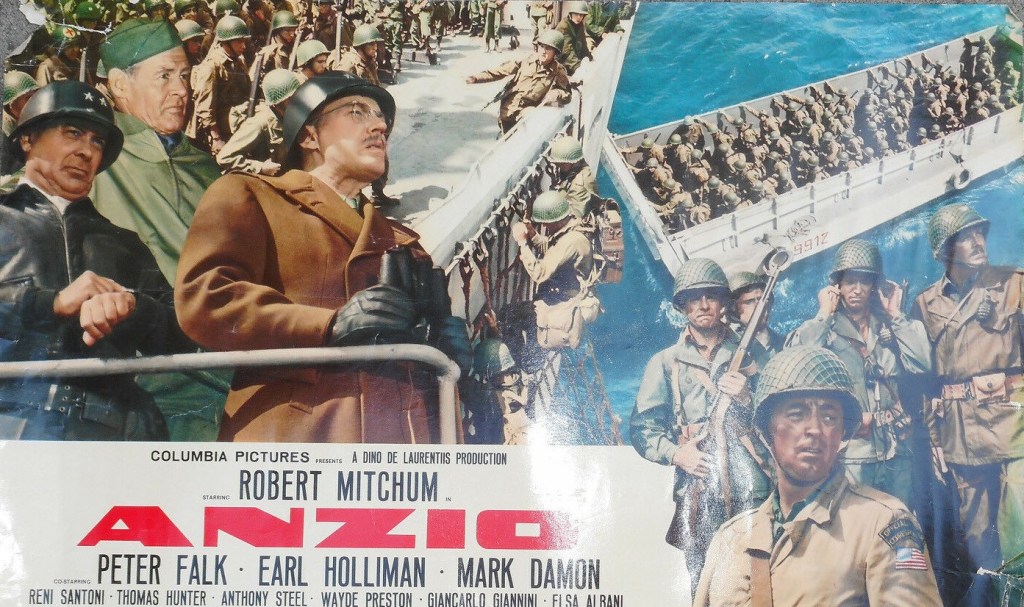
Anzio / The Battle for Anzio (1968) ***

Seems you couldn’t make a moive about defeat in the 1960s, you had to find something in the story that sounded victorious. Although the Allied landings at Anzio in January 1944 eventually led to the liberation of Rome, the whole operation was a mess. So instead of concentrating on outnumbered American and British troops being pounded to pieces on the beaches, director Edward Dmytryk (Alvarez Kelly, 1966) opts for the men-on-a-mission angle.   

Somewhat bizarre is the insertion of war correspondent Ennis (Robert Mitchum) into the story. Sure, because he’s not going to get busted for insubordination, he can challenge and/or lambast fictional commanding officers General Carson (Robert Ryan) and Major General Lasky (Arthur Kennedy) but it seems odd that he goes around spreading anti-war sentiment when the people escorting him are in serious danger of ebing killed. On the plus side are three sequences depicting the brutal reality of war in a way that no other picture of the period dared.

After landing unopposed Laskey decides not to risk moving forward, leaving his troops open to being trapped by advancing Germans even though Ennis, after commandeering a jeep, managed to reach Rome with encountering any opposition.

A Ranger battalion is sent to scout the surrounding countryside and the movie chooses to concentrate on a small platoon unit within that, headed by Sgt Stimmler (Earl Holliman) and including the fun-loving Corporal Rabinoff (Peter Falk), the kind of guy who spends the night before the landing entertaining three sex workers in the back of stolen ambulance who are of course desperate to learn the words to “Bye, Bye, Blackbird.”

After the Rangers are cut to pieces at the Battle of Cisterna, the unit escapes through a minefield, discovers a massive German construction site, holes up in house with three Italian women, is pinned down by snipers in a field of shell-holes and finally makes it back.

American tropps being slaughtered at Cisterna is a helluva note as the movie switches tack from exposing leadership folly to just getting the platoon out of this mess. Pursued by a flame-throwing Panzer, they pick their way through a minefield using the quite clever device of lobbing onto it large chunks of stone and then walking across on the stones as if crossing a dangerous river.

Wanting to find out more about the mysterious construction work results in Ennis causing the death of one of the gang. When they hide out in the Italian house, eventually killing off investigating Germans, the naïve Ennis wants to take the women with them.

Bit of marketing sleight-of-hand. Slinging a whole bunch of faces at the bottom of a poster was shorthand for all-star cast, which this picture definitely lacked.

Trapped by snipers in open country, they are being picked off one by one with only clever tricks and sacrifice offering a way out. One of the notions is to throw a fake grenade the snipers’ way. The instant reaction to any soldier to an incoming grenade is to get the hell out of the way, turning themselves into a turkey shoot. But the only other way to entice the snipers to reveal themselves is for the soldiers to take turns in presenting themselves as targets.

One of the ongoing themes of the picture is Ennis refusing to bear arms, and although the trailer shows him blasting away with a machine gun that only occurs at this climax when he seizes the weapon from a dead German. Ennis is an odd character for a war picture. None of the soldiers can believe anyone would not just volunteer to participate in a bloody war but carry nothing to defend themselves with. It’s a bit tiresome to hear him being reminded that he doesn’t have to be here, and to turn down the offer or a rifle or a grenade.

And for a non-combatant he’s not exactly uninvolved in strategic matters. A couple of times, as if he’s the most entitled grunt you ever came across, he virtually assumes command, barking orders that the others obey. Admittedly, it’s his cleverness that gets them through the minefield, but it’s his stupidity that gets others killed and to have him pontificating at the end that men go to war “because they like it” is incredibly facile, although in keeping with the anti-Vietnam sentiments of the time (1968, that is, not 1944).

Rabinoff, the only other character about whom we learn anything, is unfortunately on the preposterous side.

While the movie is far from dire, and as I said, very realistic when in portraying war actuality, it’s not the picture I guess audiences expected. While the scene-stealing of Peter Falk (Penelope, 1966) gets in the way, Robert Mitchum (5 Card Stud, 1968) proves an interesting character, although he is also laden down by having to spout a bunch of dumb lines. Arthur Kennedy (Fantastic Voyage, 1966) is the pick, especially at the end facing up to the ignominy of being relieved of command.

This kind of movie is potentially a breakout for the supporting cast. But here, with the exception of Falk, the script lets them down, nobody given the kind of distinctive characterisation that elevated The Dirty Dozen (1967), for example, above the norm. Apart from Earl Holliman (The Power, 1968) and Italian Giancarlo Giannini (The Sisters, 1969) this was not a career-making movie. You can spot Mark Damon (Dead Men Don’t Count, 1968), Patrick Magee (A Clockwork Orange, 1971), Anthony Steel (The Story of O, 1975), Rene Santoni (Guns of the Magnificent Seven, 1969), Wolfgang Preiss (Von Ryan’s Express, 1965)  and Robert Ryan (Battle of the Bulge, 1965).

Edward Dmytryk (Mirage, 1965) does a reasonable job with the materials to hand, and the minefield and sniper scenes are first class. Italian veteran Duilio Coletti (Under Ten Flags, 1960) directed the Italian version though I’ve no idea what that was, or if it differed in any way from the Dmytryk cut. Coletti also had a hand in fashioning the screenplay along with H.A.L. Craig (Fraulein Doktor, 1969), Frank De Felitta (Audrey Rose, 1977) and Giuseppe Mangione (Run, Psycho, Run, 1968).

The Pink Panther (1964) ***

You would have to be a fan of farce and slapstick to appreciate much of the debut of the celebrated Pink Panther franchise. I enjoy slapstick, though this is limited here to mishaps with items of furniture, but farce tends to pass me by (although I laughed myself silly at One Man, Two Guv’nors on stage). And you should be aware that this is really a dry run for the Clouseau character later hilariously perfected by Peter Sellers.

The premise is clever. Bumbling detective Clouseau (Peters Sellers, minus the pronounced French accent that appeared later) is on the trail of ace cat burglar The Phantom (David Niven), unaware that his wife Simone (Capucine) is not only in cahoots with the jewel thief but his lover. The trail leads to Switzerland where the robber plans to steal the titular diamond owned by The Princess (Claudia Cardinale). The Phantom, aka Sir Charles Lytton, attempts to get to know her better by stealing and then rescuing her dog.

Danny Kaye or Peter Sellers?

Meanwhile, to add to the confusion, Lytton’s conman nephew George (Robert Wagner) has arrived in town, and soon attempts to purloin his uncle’s mistress and on realising Lytton’s true identity stals his equipment with the intention of turning thief himself.

Lytton has the tendency to take a suite adjoining the Clouseau bedroom complete with linking doors to make it easier to make hay with Simone while the complaisant detective is lured elsewhere.

Cue a series of bedroom farces of the kind where Lytton attempting to make love to a drunken Princess in the lounge of his suite does not realise his nephew is in the bedroom and Simone expecting the uncle and finding the junior. And the classic of Simone, pursued by both men in her own room, having to hide them, on her husband’s return, in bed, cupboard, shower and bath.  

There’s a fancy dress party where competing gorillas target the famed jewel and Clouseau, clunking around in armour, knocks into or knocks down anything in sight. And finding one of his men, dressed as a zebra, drinking on duty, harangues him with the threat of having his stripes (best joke by far).

But the bulk of the laugh out loud comedy originates from the inspector’s tussles with inanimate objects, doors, even approached cautiously, appearing to be capable of springing surprises.

The original cast – Ava Gardner in the Capucine role and Peter Ustinov as Clouseau.

Unfortunately, the first Pink Panther outing was not designed with Sellers expressly in mind and so the plot, necessitating accommodating the other stars via romantic interlude, does not play to his strengths. You get the impression of Sellers improvising his way into stealing every scene he is in with his brilliant physical comedy as there’s only limited value in his role as the duped husband.

After the sequel A Shot in the Dark (1964) where Sellers took center stage Blake Edwards would go all-out slapstick in his next venture The Great Race (1965) but here there’s neither sufficient Keatonesque or Chaplinesque buffoonery or Laurel and Hardy antics to maintain the comedic momentum.

David Niven (Bedtime Story, 1964) is perfectly serviceable as the master criminal especially as it calls mostly for his legendary charm, though he brings his double take quickly up to speed. Claudia Cardinale (Once Upon a Time in the West, 1968) is surprisingly good in a light-hearted role while Robert Wagner (The Biggest Bundle of Them All, 1968), a rising star at this point, comes over as slippery ingenue. Capucine (The 7th Dawn, 1964) has the most difficult part since she is in effect playing two roles, faithful wife and wanton lover.

Despite priceless roles in Ealing comedies and various attempts to embrace the Hollywood dynamic, this was the picture that turned Peter Sellers (Heavens Above!, 1963) into a bona fide star. It says a lot for the director that, having found a comedy genius on his hands, he did his best to accommodate him without allowing him to over-dominate what was in effect a carefully-orchestrated piece.

In small roles you will find John Le Mesurier (The Liquidator, 1965) and Brenda de Banzie (A Matter of Innocence, 1967) and the chanteuse in the ski chalet you might be interested to know was Fran Jeffries (Sex and the Single Girl, 1964).  And of course the memorable theme tune, as celebrated as the movie itself, was composed by Henry Mancini (Hatari!, 1962).  The film also spawned the famous cartoon series. Edwards wrote the screenplay with Maurice Richlin (Pillow Talk, 1959).

You could do worse than splurge on a five-disc box set.

Discover WordPress

A daily selection of the best content published on WordPress, collected for you by humans who love to read.

The Atavist Magazine

by Brian Hannan

WordPress.com News

The latest news on WordPress.com and the WordPress community.