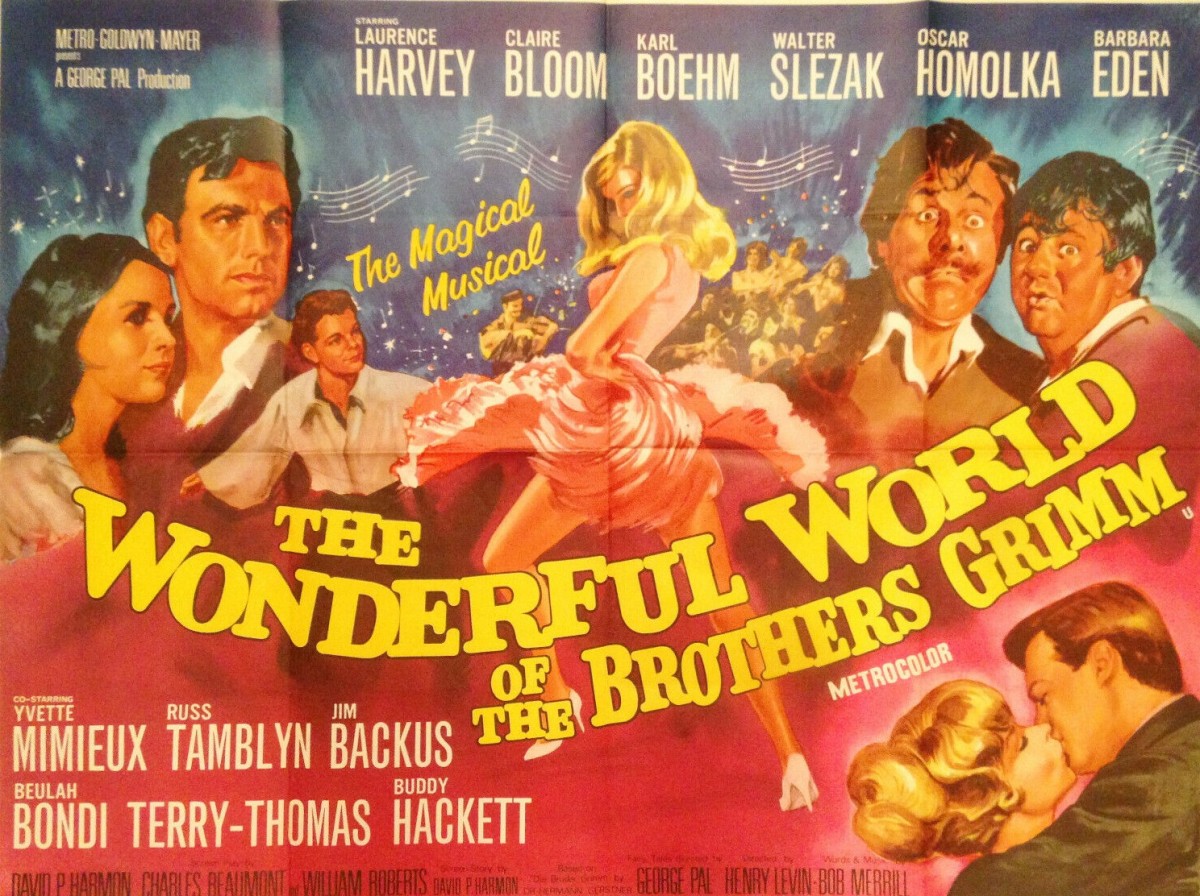
The Wonderful World of the Brothers Grimm (1963) *** – Seen at the Cinerama

With Hollywood already snagging the best characters of the Grimm inventory – Snow White, Cinderella, The Sleeping Beauty and Tom Thumb – and others like Rumpelstiltskin not deemed cute enough, George Pal (The Time Machine, 1960) had a battle on his hands to come up with a decent enough second string. Spurning for no obvious reason contenders like Hansel and Gretel and The Frog Prince, he plumped for a strange hybrid.

He incorporated three fairy stories – The Dancing Princess, The Elves and the Shoemaker and The Singing Bone – in a drama about the authors. Both sides of this tale had a common background, 19th century Germany with its rich vein of fairy castles and cobbled streets where kings ruled. The Grimms are posited as wannabe writers but with warring personalities.
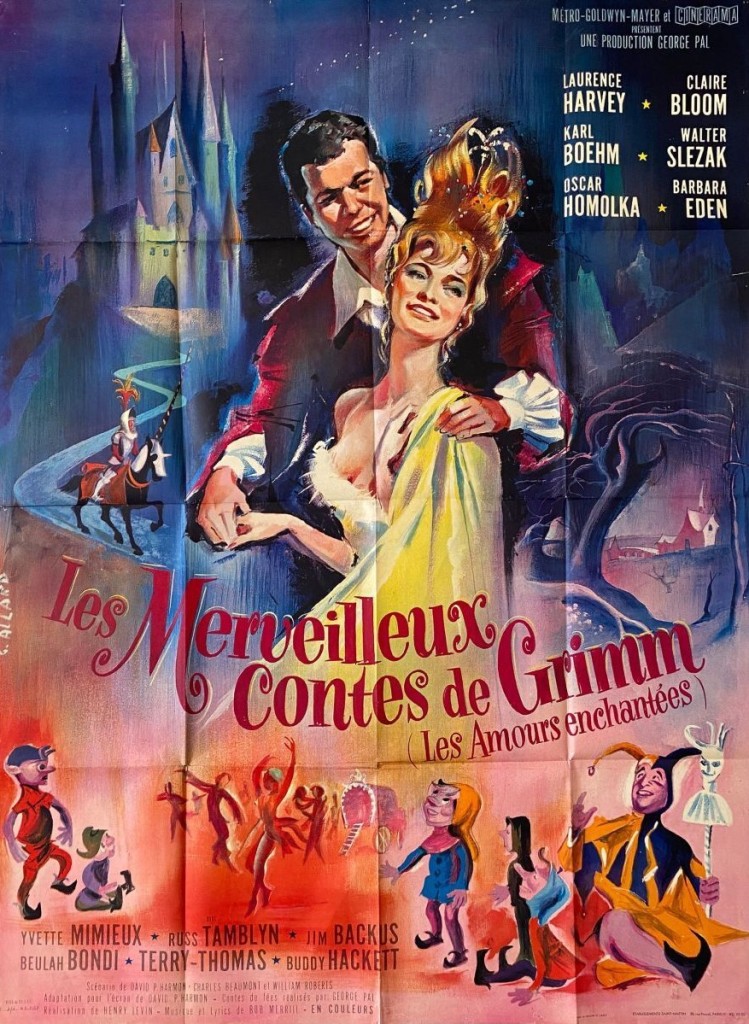
Unmarried Jacob (Karl Boehm) wants to stick to the knitting and complete the work, a biography of the Duke (Oscar Homolka), they are being paid for while married Wilhelm (Laurence Harvey) prefers to use that time instead to write down the stories he has collected from a variety of sources.

The stories Pal chooses to bring to life pop into the narrative by the simple devices of telling kids a bedtime story or overhearing the tale. Jacob is actually more interested in academic writing; books on law and grammar are what capture his imagination. The narrative switches between the brothers falling out, enduring poverty and Jacob falling in love with Greta (Barbara Eden) but lacking the romantic touch mostly making heavy weather of it.

The first tale in the triptych – The Dancing Princess – is simple enough. A King (Jim Backus) promises the hand of his daughter (Yvette Mimieux) in marriage to whoever can find out what she does at night which a humble woodsman (Russ Tamblyn) manages with the help of a cloak that makes him disappear. In the second story elves come to life to save the skin of a shoemaker more interested in helping orphans than his rich clients.  
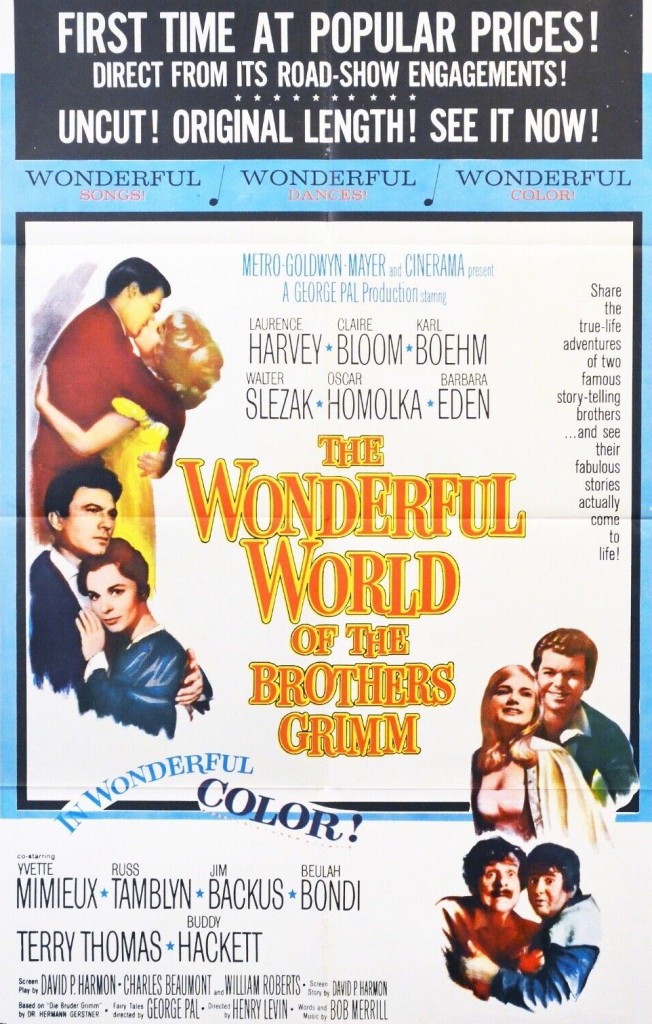
The third, demanding the biggest special effects, less successfully translates to the screen since it involves the creation of a dragon to be slaughtered. However, it is saved by humor, since the knight (Terry-Thomas) is too cowardly to do the job and relies on servant Hans (Buddy Hackett) for the actual slaying, and by the most gruesome of endings.

Plus, since it is in Cinerama, something speeding is required seen from the audience point-of-view or a hero who could fall into a canyon. And in the best fairy tale tradition the heroes are unsung and under pressure.

Laurence Harvey (A Dandy in Aspic, 1968), Karl Boehm (The Venetian Affair, 1966) , Claire Bloom (Two Into Three Won’t Go, 1969) and Barbara Eden (I Dream of Jeannie television series, 1965-1970) are just about buoyant enough to keep the main story ticking along and carve out a piece of Disney territory without so much as a decent song to help proceedings. Three unexpected twists – four if you count a miraculous recovery from serious illness – nudge this in unexpected directions.

The first is the solidity of brotherly love, with one having to choose wife over his close bond with his sibling – the kind of emotional hit that would be more common in an adult picture, though kids obviously couldn’t care less. The second is the appearance of virtually all the famous Grimm characters in what amounts to a cameo. Last is a proper fairy tale ending where it’s the kids who elevate the brothers to literary success.

Laurence Harvey hides his snide side and does his best Dirk Bogarde impression as the errant brother whose imagination brings his family to near-ruin. Despite being offered love on a plate, Karl Boehm remains steadfastly dour, while Claire Bloom as Wilhelm’s wife has little to do. Scene stealing honors go to Oscar Homolka (The Happening, 1967) while Terry-Thomas (How to Murder Your Wife, 1965) just about shades it in the comedic duel with Buddy Hackett (The Love Bug, 1968).

George Pal concentrated on the fantasy elements with Henry Levin (Genghis Khan, 1965) directing the drama so it’s a mixture of very grounded and very flighty. It’s not really long enough for a true Cinerama roadshow movie but with an overture and intermission it stretches enough.

It was filmed with the traditional three Cinerama lenses and would have been projected with three projectors but at the Bradford Widescreen Weekend  I saw a new restoration that does away with the vertical lines. For contemporary audiences who only view fairy stories through the microcosm of animation and for whom live-action means Ray Harryhausen, the special effects here will come as something of a disappointment. But on the other hand it is still George Pal, so enjoy.

William Roberts (The Magnificent Seven, 1960), Charles Beaumont (Mister Moses, 1965) and David P. Harmon (Dark Purpose, 1964) cobbled up the screenplay.

As I said I saw this in the magnificence of the big screen and in widescreen Cinerama to boot so I am bound to be a shade benevolent but this still holds up, the drama dramatic enough, as a biopic interesting, and kids who might be taken with the fairy stories are way too young to complain about the effects.
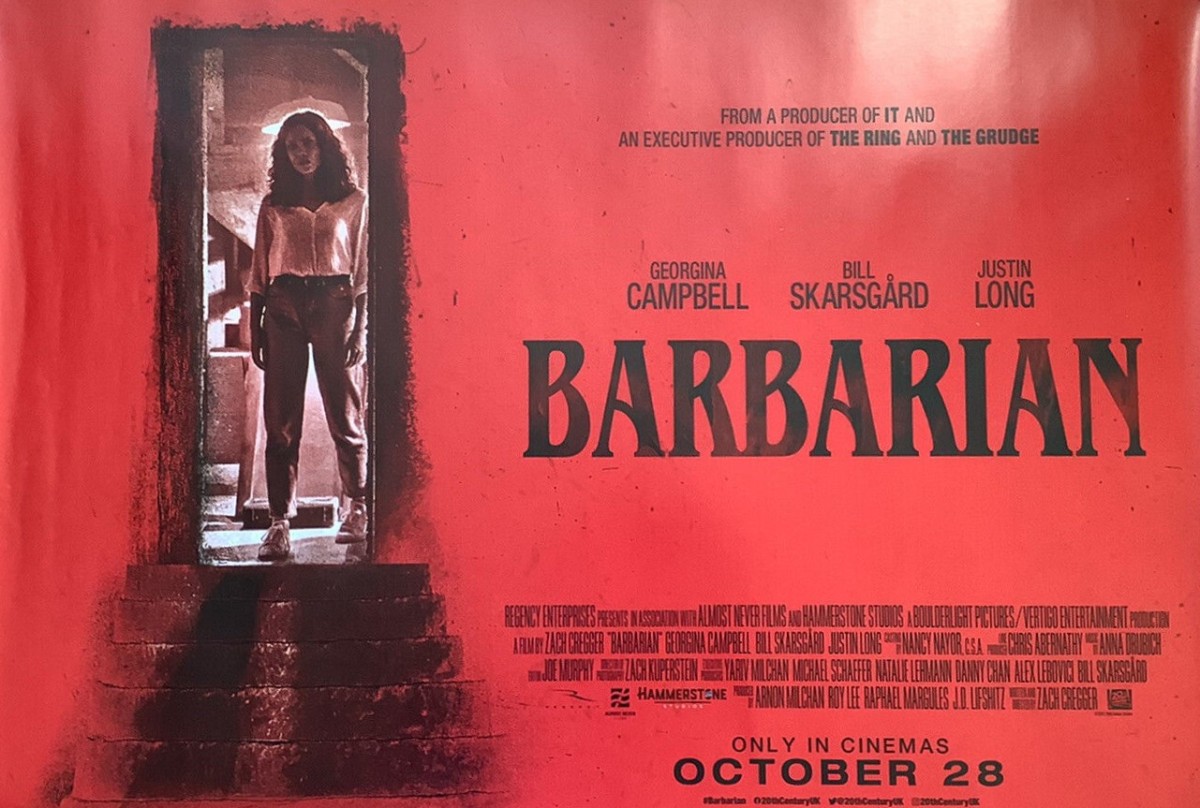
Barbarian (2022) **** – Seen at the Cinema

Slow-burn thriller geared more towards suspense than horror, turning on their heads most of the usual tropes and coming away with a fresh look at the genre.

Tess (Georgina Campbell), in Detroit for an interview as a movie researcher, turns up at  a rental only to find it already occupied by Keith (Bill Skarsgard). Cue various negotiations as she tries to find out if he’s for real and then work out a viable sharing concept – she gets the bedroom – and to some extent whether he is some skank hiding behind a handsome and charming veneer just lying in wait for a victim. This picture takes its time getting anywhere but not knowing just where it’s going only adds to the suspense. Eventually, they get to know each other enough for good vibes to kick in and there’s a moment where it could have gone all the way to sex.

Next morning she departs for her interview but not without noticing she is in one hell of an odd neighborhood. On her return, Keith is nowhere to be seen although his clothes are still there. When she investigates, down in the cellar finds a rope in a wall that reveals a tunnel and she hears him shouting. Having seen way too many horror movies she does the sensible thing  and leaves – nope, she does the next sensible thing and makes sure she can actually see where she’s going. And all this time of course you’re thinking – aha! This is what he wanted all along, he was a charming skank hiding behind a veneer, but still you don’t know where this picture is going because the director is damn good at suspense.

And once she does find out what’s going on we jump to another character, breezy actor AJ (Justin Long) belting along the highway belting out songs only to be given the bad news he is being accused of rape. Upshot is he turns up at the rental in Detroit because he’s the owner and now needs to sell it pronto so he’s absolutely delighted to discover it’s goes not just into a cellar but an extended basement that goes on and on because he’s measuring the shit out of it, just ignoring the stained mattress, camcorder and bloody handprint because, heck, the extra space could mean his property is worth a whole lot more which is ideal because he’s in for some hefty legal fees what with confessing to another dude that his accuser did in fact need some “convincing” before they had sex.

You don’t worry too much about AJ following in the footsteps of Tess because he’s mean, not in the John Wick fashion, but in the sneaky way that sneaky people have of never getting caught out. And he’s got a gun.

Naturally, there’s something a good bit meaner down there and there’s a hint that’s the reason the neighborhood is so rundown.

I’m not going to go into that aspect of the movie which in some respects is well done and in other respects not. And there’s a couple of character-driven twists that you won’t see coming and a great scene when police refuse to believe that a female running loose complaining of monsters is more likely to be a drug addict with monsters in her head rather than a genuine victim.

All in all one of the best horror films in a long while and precisely because it bends the rules without losing the shock value we come to expect from the genre. Prey for the Devil (2022) which I saw on the same day goes in more for the standard horror elements with considerably less effect and The Banshees of Inisherin, which I saw in between this pair, could have equally well been described as a horror picture, and although the bulk of the damage is self-inflicted seeing a fellow walking round with all his fingers sheared off but still with one complete hand left so he can chuck the digits at a door has all the trappings of horror.

Stick with Barbarian, a horror debut worth applauding from writer-director Zach Creggan (Miss March, 2009). He’s got the sense to let suspense build up by letting audiences do all the work, their expectation far more effective than his misdirection, and he allows his cast time to let their characters take root. Georgina Campbell (Wildcat, 2021) is an impressive lead and because the director doesn’t spend all his time putting her in situations where she can do nothing but scream she gets the chance to act. Bill Skarsgard (It, 2017) and Justin Long (House of Darkness, 2022) complete an interesting trio of performances. How rare to go to a horror picture and come away raving about the acting.

The Original Magnificent Showman – Samuel Bronston

Even by Hollywood’s notorious standards, independent producer Samuel Bronston went from boom to bust in record time – three years flat. But by the time he left he had fuelled the roadshow boom, infuriated Hollywood by raising the bar for actor salaries ($1 million for Sophia Loren) and delighted the industry by opening up Spain as a cheap production center. He wasn’t the first indie to make a big splash in the business, David O. Selznick, Edward Small and coming up fast Joseph E. Levine were all significant players. 

Whereas most indies raised finance from conventional sources, Bronston, born in what these days is known as Moldova, found investment from an unusual source. In probably the grandest Hollywood wheeze of all time, he became an oil broker. He sold DuPont oil to Spain. But since that country would not pay in American currency, he parlayed the pesetas into moviemaking. Like any industrialist convinced society had not recognized his efforts, Pierre DuPont III reckoned that dining at the Hollywood high table – guests including John Wayne, Sophia Loren and Charlton Heston – might provide sufficient recompense. Bronston used pesetas reaped from commodity broking to make movies and repaid DuPont from the revenue the movies accrued on the international market.

While their first venture John Paul Jones (1959) was a flop it opened up Spain as a potential source of low-cost production at a time when studios, most on the verge of collapse, were desperate to cut expenditure.  

Previously, Bronston had enjoyed a low-key Hollywood career, producer, credited or otherwise, on City without Men (1943), Jack London (1943) and A Walk in the Sun (1945) before disappearing off the movie map. But that short career was not without incident, and somewhat marred by the financial repercussions for which he would be later better known. He was sued by the backers of A Walk in the Sun – Hollywood outsiders Walter E. Heller & Co and Ideal Factoring Co. who had ponied up $1 million of the $1.25 million budget. And by a former partner who also claimed he had not been paid.

He resurfaced following a spectacular gambit, gaining access to the Vatican to make a documentary. Using a perceived Papal connection as some kind of approval he spun that into international distribution for his first roadshow King of Kings (1961), a good earner around the world, $24 million gross worldwide on an $8 million budget, and a reissue banker when Easter came round. Spain stood in for the Holy Land and although production began, possibly for publicity reasons, in April 1960, Bronston had begun pre-production two years earlier on developing costumes and sets.

Like Cecil B. DeMille, Bronston exhibited a mania for historical detail. He could bring in experts, make use of local craftspeople, and thousands of extras were available at a fraction of the cost of their Hollywood counterparts, not to mention the Spanish Army at his beck and call. But the set was riven with intrigue, screenwriter Philip Yordan pulling more weight with Bronston than director Nicholas Ray. Bronston soon had a production team established at his mini-studio.

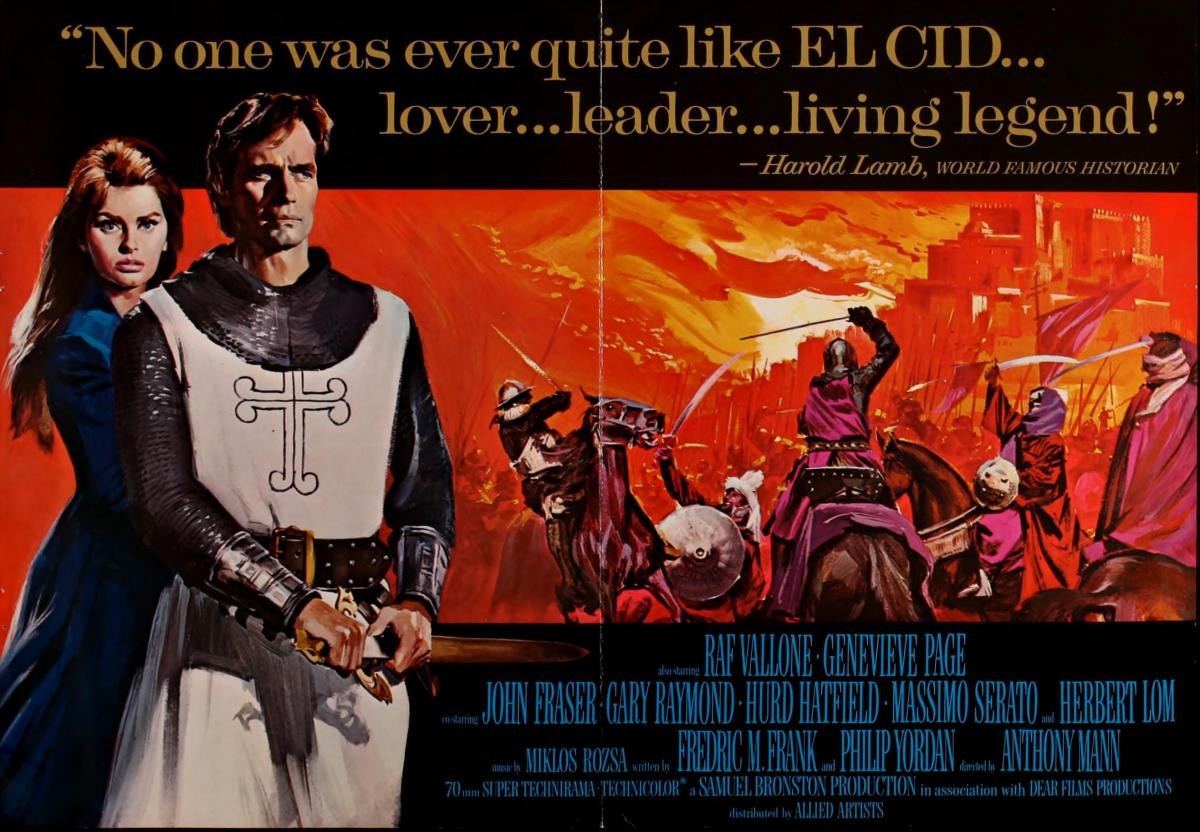
El Cid (1961) was a natural to establish cordial relationships with his national hosts, the character a legend in the country, many events depicted taking place in locations which still existed. But wooing Charlton Heston, at that time the biggest star in the world following the unbelievable success of Ben-Hur (1959), to make this his follow-up to the Biblical epic was a spectacular coup. The fact that he paid more – a reputed $1 million – to secure the services of Sophia Loren proved he could attract the biggest stars and, not as helpful, pay way over the odds.

Costing less than King of Kings and making far more, with superb direction by Anthony Mann and acting by the principals, it was both critically well-received and a massive hit at the international box office, running in roadshow for months. Perhaps more importantly, Bronston’s success attracted the attention of a major Hollywood studio, Paramount, which agreed to partner him in future endeavors and perceived him as the natural successor to Cecil B. DeMille.

Heston returned for 55 Days at Peking, one of the cycle of “siege” pictures – The Alamo (1960), Zulu (1964), Khartoum (1965) fall into the same category – popular if only among filmmakers during the decade. There was a lot more to the picture than art direction but it was not as well-received as the Bronston’s first pair of the decade, and the fact it went through three directors, Nicholas Ray retiring through ill health replaced by Guy Green (A Matter of Innocence, 1967) and finally Andrew Marton who had directed the chariot sequence in Ben-Hur, contributing to the notion of an organization in chaos.

With a $17 million budget, a $5 million U.S. gross ensured there was little profit to be had once the movie had completed the international round. However, luckily for Bronston, roadshows tended to be more popular abroad and could often play far longer in their initial bookings than would occur in the U.S.

When Heston turned down The Fall of the Roman Empire that should have proved a portent. Megalomania or extravagance or an inability to keep a budget in check fuelled the wild overspending on The Fall of the Roman Empire, a title that should have provided a roadshow par excellence, with action and drama of the kind that had driven Ben-Hur. But with a final tab of $24 million it would have required to be the biggest picture of all time just to break even.

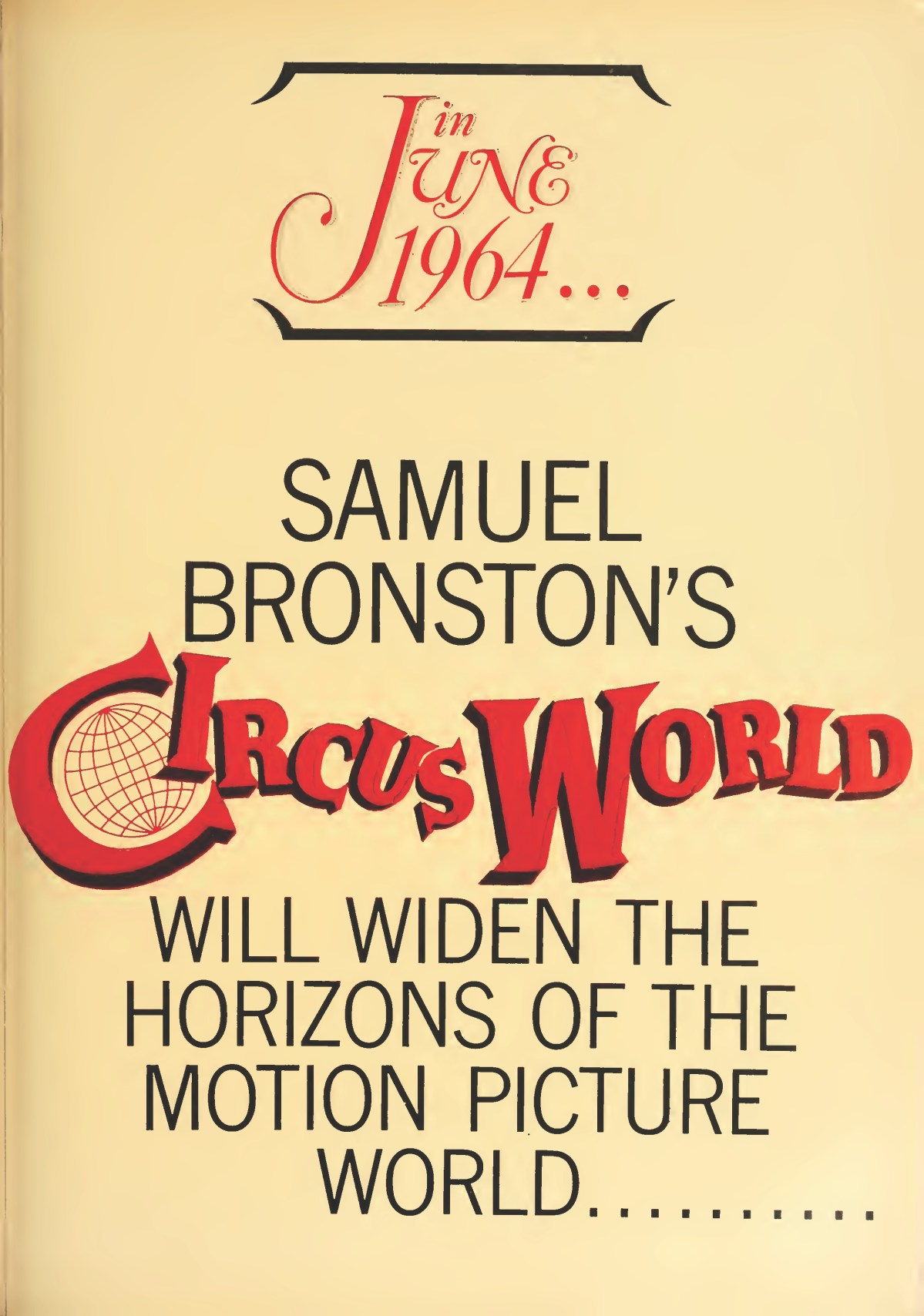
By this time, Bronston’s financial mismanagement was catching up with him. Although Paramount kept the faith, signing up for Circus World (1964) and pictures beyond, and with a new partner, Cinerama, ploughing money into the John Wayne three-ringer, Pierre DuPont III had had enough and pulled the plug. Bronston’s debts were in the region of $5 million – $8 million. Subsequent investigation into Bronston’s operation revealed unparalleled levels of waste, unscrupulous hangers-on and the inability to rein back on spending.

Perhaps as critical was that he was churning out roadshow pictures at too fast a rate for control to prove possible. Of course, the unprofitable pictures all went into considerable later profit from sale to television – U.S. networks bid $1 million for El Cid alone in 1966 –  syndication, VHS, DVD and streaming, as any star-packed big-budget pictures from that era did. And they have all been reassessed as having greater critical worth than was appreciated at the time.

Bronston consistently argued that he was on the verge of a comeback. He had other irons in the fire – The Nightrunners of Bengal to be directed by Richard Fleischer, Suez helmed by Jack Cardiff, Brave New World with David Niven, The French Revolution, Paris 1900 and Isabella of Spain later linked with Glenda Jackson and John Philip law.

Bronston did work again, credited or otherwise, on Savage Pampas (1965) starring Robert Taylor, Dr Coppelius (1966), Brigham (1977) – reuniting him with writer Yordan – The Mysterious House of Doctor C (1979) which reworked Dr Coppelius  and Fort Saganne (1984) with Gerard Depardieu.

His former studios which had gone unsold at auction with a price tag of $1.8 million were bought by the Spanish government and renamed the Luis Bunuel Studios and at one point were scheduled to come out of mothballs for the filming of Rustler’s Rhapsody (1985) starring Tom Berenger.

While Bronston certainly turned Spain into a production powerhouse, he will be perhaps better remembered for his financial finesse. He had a million-dollar guarantee from DuPont but he used it over and over again with different banks without anyone actually stopping to check whether it was already being held as collateral for another movie. In any other world apart form movie-making this would be held up as scandalous behavior, but only in Hollywood would this be applauded as a master showman at work.

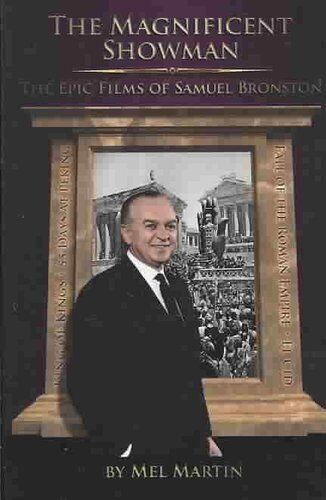
SOURCES: SOURCES:  Mel Martin, The Magnificent Showman (Bear Manor Media, 2007); “Bronston in 63G Suit,” Variety, February 12, 1947, p9; “Underwriters Reclaim Bronston’s Walk in Sun,” Variety, August 10, 1949, p7; “Sam Bronston’s Film Shot Inside Vatican,” Variety, March 22, 1950, p1; “Bronston’s Brave New World,” Variety, September 4, 1963, p4; “Bronston and Paramount in 4-Picture Deal,” Box Office, December 9, 1963, p7;  “Bronston-Cinerama Unite on 2 Films,” Box Office, February 24, 1964, p5; “Bronston’s Comeback Plan,” Variety, June 10, 1964, p3;“Du Pont-Bronston In Accord,” Variety, August 4, 1965, p3; “Bronston Readying Isabela,” Variety, April 13, 1966, p3.

Behind the Scenes: “Circus World / The Magnificent Showman” (1964)

For John Wayne it was the best of deals and the worst of deals. He had signed a six-picture seven-year contract with Paramount. On the plus side the studio paid the entire amount  upfront, wiping out the accumulated debts from the debacle of The Alamo (1960). On the debit side, he received only $500,000 per picture, well below his standard price of $750,000. In fact, Paramount could recoup some of its expense by hiring him out at his previous going rate.

Wayne was coming off hits McLintock (1963), Hatari! (1962) and How the West Was Won (1962) but other movies The Man Who Shot Liberty Valance (1962) and Donovan’s Reef (1963) – the first in the multi-picture deal – had punctured a hole in his supposed box office supremacy. But for maverick producer Samuel Bronston (El Cid, 1961), getting his hands on a star of the magnitude of Wayne was a coup. Originally entitled Those Were the Days, the title switched to the more appealing Circus World.

Bronston was a new-style producer. Apart from a $2.5 million injection by Paramount he  financed his pictures by country-by-country advances, and backed by DuPont, hardly the first big company to be seduced by the prospect of becoming a big Hollywood player. Distributors who advanced money in this fashion made hay if the film hit the bull’s eye, but if it flopped they didn’t get their money back. And a flop made it more difficult for an independent producer to raise the dough for his next picture. So Wayne’s involvement was viewed as a guarantee.

Nicholas Ray (King of Kings, 1961) was initially hired to direct followed by Frank Capra (It’s a Wonderful Life, 1946), also made a Bronston partner, who tried to sabotage the script, planning only to shoot the sections he had rewritten. Bernard Gordon (55 Days at Peking, 1963) was credited with the original idea, but when Wayne came on board he brought with him James Edward Grant (The Commancheros, 1961).

Grant was only tempted by the promise of a three-picture deal. The tussle ended with Capra evicted at a cost of $150,000 and Henry Hathaway (North to Alaska, 1960) at the helm. Hathaway instigated a week of rewrites with Ben Hecht (Spellbound, 1945) before settling down to more serious work with Grant.

Initial casting envisaged Rod Taylor (Dark of the Sun, 1968) in the role of Wayne’s partner and would-be lover of Cardinale, but he took the job without reading the script and on realizing it was little more than male romantic lead he bowed out. David Niven (55 Days at Peking, 1963) was initially signed as Wayne’s old buddy Cap but he, too, quit over the script. (Wayne and Taylor got on very well and should have teamed up for The War Wagon, 1967, until Kirk Douglas muscled his way in, later doing so for The Train Robbers, 1973. )

Their replacements John Smith (who had made his debut in Wayne picture The High and the Mighty, 1954) and the veteran Lloyd Nolan were hardly in the same box office league, but shaved cash off the budget.

A bigger concern than hiring a supporting cast was the circus. Bronston recruited famed European outfit Althoff Circus, whose 400 performers ensured the ringside element was authentic. For further realism Bronston added Bob Dover from Ringling Bros. There was no need for specialist horses, Bronston already having 125 trained from The Fall of the Roman Empire to pull circus wagons and for bareback riders.

The entire circus had to be transported by rail on 51 freight cars through the Brenner Pass to Germany and via Switzerland and France to Spain, halting at the Spanish border to unload the whole shebang onto a different train because the gauges didn’t match.

For the picture’s most spectacular scene, the capsizing of the ship transporting the circus, Bronston bought the 250ft long S.S. Cabo Huertas which was heading for the breaker’s yard. Repainted, decorated with circus posters and renamed S.S. Circus Maximus it was all set for a sinking overseen by special effects expert Alex Weldon (El Cid, 1961).

Three hundred tons of water were pumped into the half of the hold furthest away from the dock. The additional weight of 600 extras was enough to flip the ship on its side. Four 50-ton steam winches with steel cables kept the ship upright until it was time for action.

Female extras who were going to end up in the drink were fitted with corsets made of cork while the men wore cork belts hidden under their costumes. The Spanish Coast Guard cleared the harbor of debris and a local fleet of boats, just out of camera view, stood by for rescue. Seven divers patrolled the harbor bottom in case the cork failed to keep actors and extras afloat. Three sets of costumes were created for each participant so they would be kept dry as long as necessary.

Hathaway completed the scene without a single injury. He called it “the greatest job of its kind I have ever been involved in.” Bronston, who was as much a detail man as Cecil B. DeMille, ensured the band played instruments from the period

The picture went in front of the camera in September 1963 with Wayne due to end his commitment on December 18. But severe flooding in Spain knocked the movie off schedule and it went way over budget, running on until March 1964, the finishing touches added in London, the budget hitting $9 million.

Rita Hayworth, who hadn’t made a picture in two years, proved a handful, usually late on set, committing the cardinal sin of not learning her lines and, probably as worse, being rude to everyone

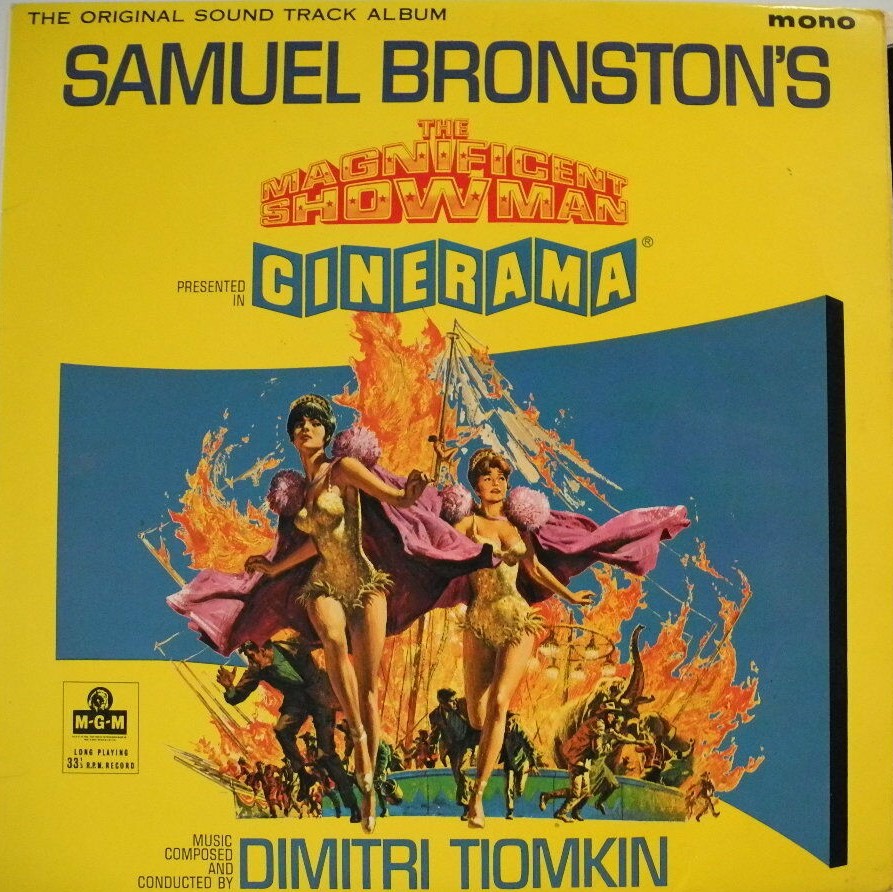
At  just 135 minutes long, Circus World  wasn’t originally envisaged as a roadshow until Cinerama put an estimated $2.5 million into the project, which defrayed the costs. By the time that partnership was announced, it was too late to shoot it in the Cinerama process. The 35mm Super Technirama footage was blown up to 70mm for showing in 60 U.S. theaters boasting the iconic Cinerama curved screens. Everything in Cinerama at that point was roadshow. And they had two more projects lined up with Bronston, Vittorio De Sica’s Paris 1900 and Jack Cardiff’s Brave New World, neither of which were made. Bronston also had another two movies in preparation with Paramount: The Nightrunners of Bengal to be directed by Richard Fleischer and Suez, neither made either.

Roadshow suited Paramount which had not used that method of premium release since The Ten Commandments (1956). In 1963 it had set up a roadshow department to handle the forthcoming Becket (1964) and The Fall of the Roman Empire, which were proper roadshow length of, respectively, nearly 150 minutes and over three hours. But, initially, Circus World did not fall into the roadshow category as far as Paramount was concerned. Only the arrival of Cinerama as an investor made it imperative.

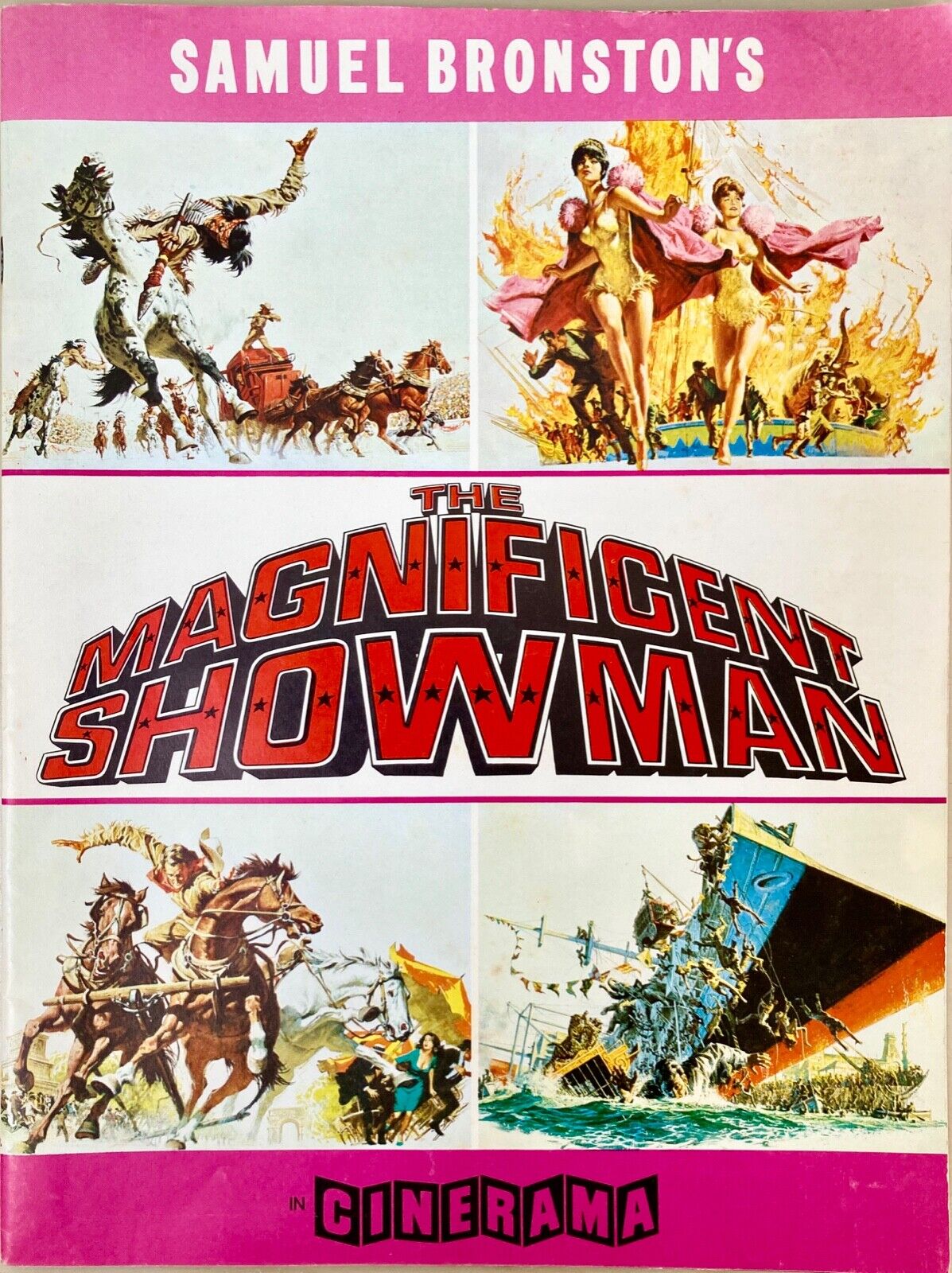
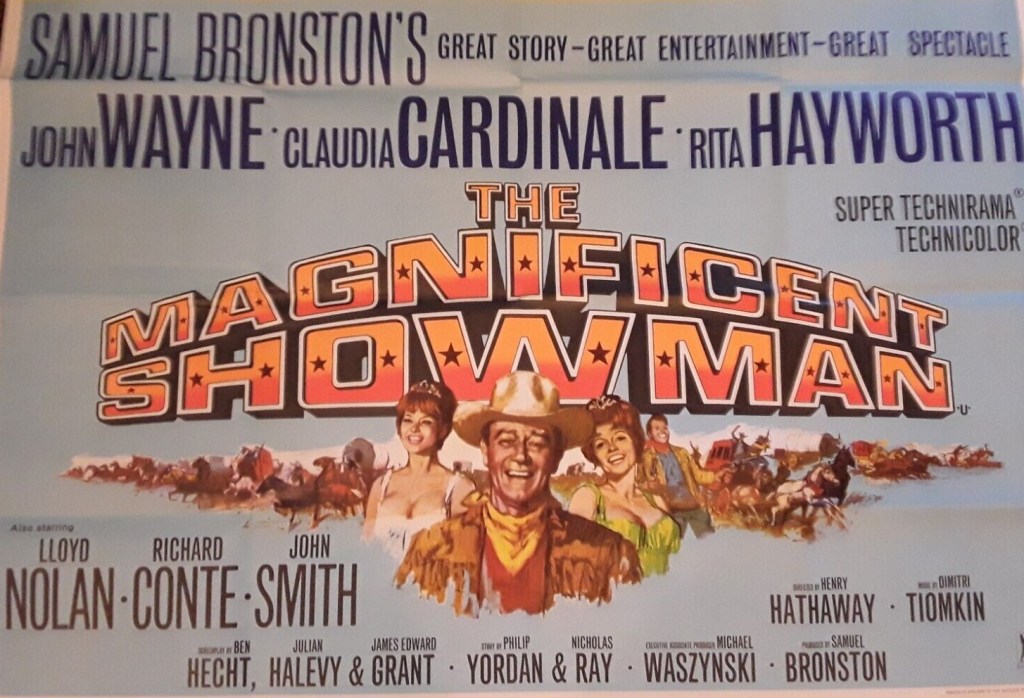
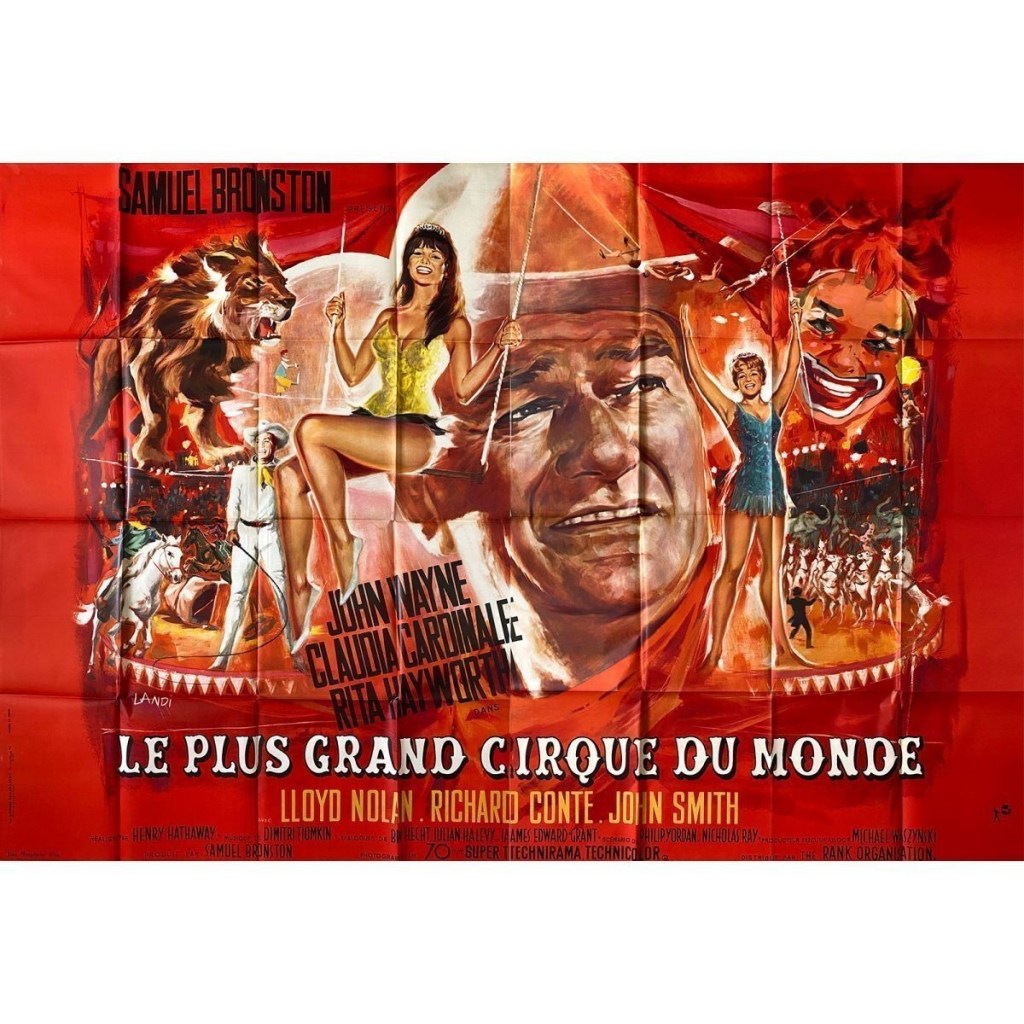
To avoid a title clash with the ultra-successful It’s A Mad, Mad, Mad, Mad World (1963), British distributor Rank changed the title to The Magnificent Showman. That alteration did little to improve its box office, opening at London’s Coliseum for a “NSG” (not-so-good in Variety parlance) $11,200, not much more than The Fall of the Roman Empire in its 17th week, How the West Was Won (90th week) and Cleopatra (51st). Nonetheless it ran there for seven months, followed by a mass general release in the U.K. with a record number of prints. In the U.S., on the eve of general release in April 1965, Paramount considered a title change to Wild Across the World and a switch of marketing emphasis to John Wayne and action.

Audiences didn’t bite, certainly not enough to recoup the budget, and far from enough to prevent Bronston’s operation sliding into liquidation.

SOURCES:  Scott Eyman, John Wayne, The Life and Legend (Simon & Schuster, 2014) p379-385; Mel Martin, The Magnificent Showman (Bear Manor Media, 2007), p153-168; Sheldon Hall, Introduction to Circus World, Bradford Widescreen Festival, 2022; “Rank To distribute New Bronston Pic,” Variety, September 26, 1962, p15; “Althoff Circus Logistics for Bronston’s Film,” Variety, September 25, 1963, p4;“New Roadshow Dept at Paramount,” Variety, November 13, 1963, p3; “Bronston and Paramount in 4-Picture Deal,” Box Office, December 9, 1963, p7; “Circus World Filming in London,” Box Office, February 17, 1964, p14; “Bronston’s Circus Goes Cinerama,” Variety, February 19, 1964, p4; “Bronston-Cinerama Unite on 2 Films,” Box Office, February 24, 1964, p5; “Special Mass Release for Showman,” Kine Weekly, May 28, 1964, p3; “Paramount Retains Circus World Title,” February 24, 1965, p3.

Circus World / The Magnificent Showman (1963) **** – Seen at the Cinema

Bookended by disaster – a ship turning turtle, fire raging in the big tent – and kept aloft by giddy circus turns this long-ignored movie in the John Wayne canon is ripe for reassessment. In more down-to-earth mold, with no villains to rein in, no gun-toting required, this calls upon something more basic from the actor, the dramatic skill required to make the audience fix on a strong character within a spectacular screen event.

Presented in stunning Super Technirama, the swansong of maverick producer Samuel Bronston (El Cid, 1961), and mistakenly viewed as little more than a travelog or a compendium of circus acts, this dwells instead on transition and loss as Matt Masters (John Wayne) struggles to allow adopted daughter Toni (Claudia Cardinale) to grow up and to come to terms with the part he played in the romantic calamity – father a high-wire suicide, acrobatic mother Lili (Rita Hayworth) fleeing to Europe – that left her parentless.  

It’s no coincidence that sending his three-ring circus cum Wild West Show on a lucrative tour of Europe in the early part of the 20th century provides an opportunity to hunt for Lili, the love of his life. But the circus ship capsizes in Barcelona, leaving Masters penniless, forced to  work for a rival European promoter until he can scrape together enough dough to start again. Masters uses the opportunity of traveling through European capitals to scout new acts, including clown Aldo (Richard Conte), a lion-tamer turned tiger-tamer Emile (Hans Dante), and ballerina Katharyna (Giovana) who performs on the high wire while Toni wants to chance her arm against Matt’s objections as an acrobat and flex her romantic muscles in romantic dalliance with Matt’s new partner Steve (John Smith).

The subplots add dramatic heft, the lion-tamer is frightened of tigers, Aldo has vengeance in mind, so in between the scintillating circus acts the storyline is compressed around the drink- and guilt-sodden Lili and conflict on several fronts with Toni while old retainer Cap (Lloyd Nolan) is on hand to pep up or challenge Matt.

You wouldn’t be allowed to make this kind of film these days so it’s worth glorying in the glory days of the circus – dancing horses, lions, tigers, elephants, acrobats and genuinely hilarious clown sequences. It being a three-ring circus there’s always something going on, plus the Wild West element which comprises a stagecoach being attacked.

John Wayne is as befuddled as ever in romance, restricting his trademark double take to astonishment at Tony’s transition to womanhood. There’s an occasional reversal but mostly  it’s a battle against the odds, potential triumph leavened by gritty loss.

A modern producer would have switched the disasters – it didn’t really matter how Matt got into a fix. But the capsizing, appearing so early the effect is stunning, is brilliantly handled, not just the rescue of people and animals but Matt in lion-taming mode and ending with a clever coda. In every photograph Lili’s face has been scratched out but in among the saturated notes of Matt’s vital cash box is a picture of her.

Some critics have suggested John Wayne (In Harm’s Way, 1965), recovering from his own financial debacle caused by over-investment in The Alamo (1960), took the role for financial expediency. But I can see the attraction, as I’m sure the actor did. This is a far more rounded character than anything since The Searchers (1956) and he can’t even find redemption from a six-shooter. He’s more protective than aggressive, paternal instinct triggering character reaction, and it’s more of a James Stewart type of role, coming back from adversity, and nothing straightforward about a man whose love affair caused marital disaster.

Critics have also taken pot-shots at Claudia Cardinale (The Pink Panther, 1963) as if she was not already an accomplished actress (a favorite of Visconti, for example) in a compelling role and competing on even terms with a star of John Wayne’s charisma without being able to fall back on the old saw of the romantic interest. Although playing a character nearly a decade younger, Cardinale  brings an earthy feistiness to a character with a bucket of decisions to make, turning on its head her relationship with Matt and going through the dramatic hoops with Lili.

Rita Hayworth (The Happy Thieves, 1961) has shucked off the glamor, a worn-down relic of her former self, turning to drink and religion in equal measure in vain hope of finding peace. Veteran Lloyd Nolan (The Double Man, 1967) and Richard Conte (Assault on a Queen, 1966) hold their own, but John Smith (Waco, 1966) does not. Look out for former British star Kay Walsh (A Study in Terror, 1965).  

Henry Hathaway (5 Card Stud, 1968) does a terrific job marshalling all the elements, containing the core family drama within the wider action-oriented structure. While there’s never a dull moment, in among all the spectacular scenes are some exhibiting a particularly sensitive directorial touch such as when Matt discovers Lili’s hotel room and reflects on his own misdemeanors.

There were almost as many writers as circus performers – James Edward Grant (The Commancheros, 1961), Ben Hecht (Spellbound, 1945), Julian Zimet (A Place for Lovers, 1968), Bernard Gordon (55 Days at Peking, 1963), Nicholas Ray (The Savage Innocents, 1960) and Philip Yordan (El Cid).

Come at it from the fun perspective and you won’t go wrong. John Wayne completists will adore it.

I was lucky enough to see this is full glorious widescreen at the cinema where it was the Closing Film at this year’s  Widescreen Weekend in Bradford. What a way to end a show!

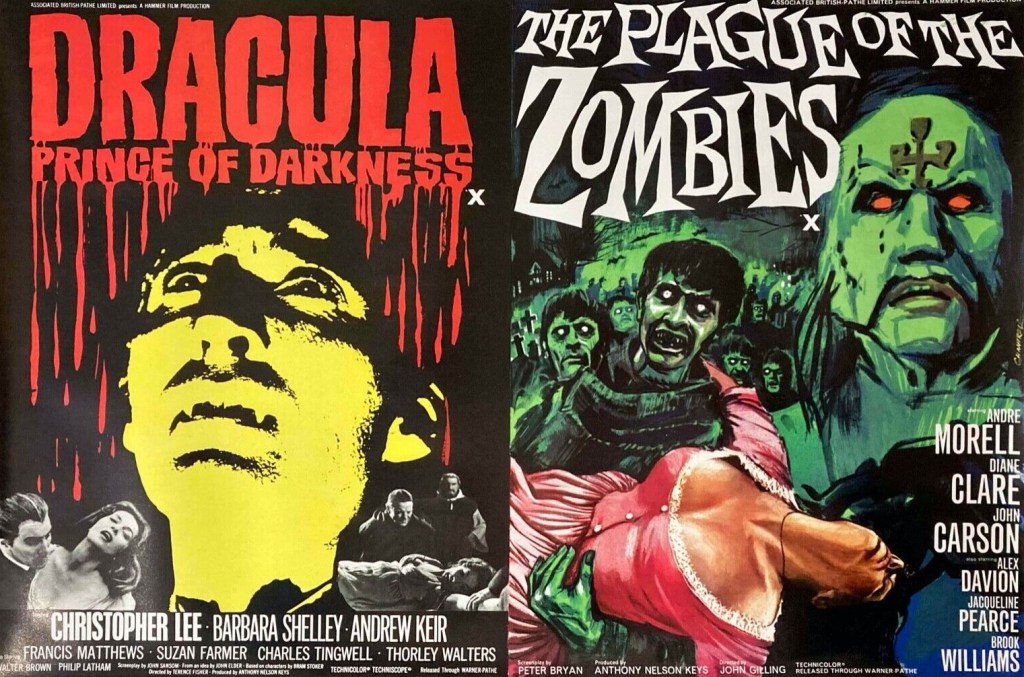
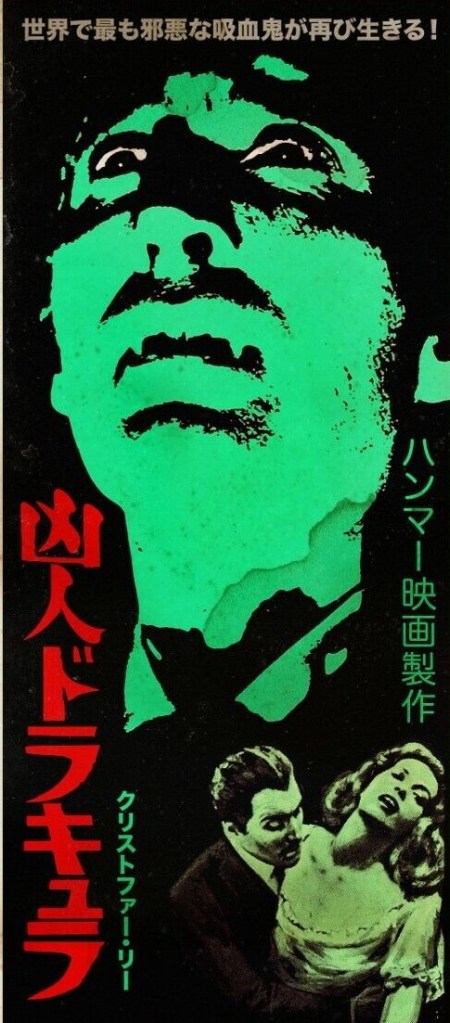
Dracula, Prince of Darkness (1966) **** – Seen at the Cinema

Almost a chamber piece rather than grand guignol. Highly atmospheric and psychologically-charged rather than plot-driven and nary a bosom in sight. Even taking account that he’s dead, Dracula (Christopher Lee) with his mesmeric bloodshot eyes takes a good while to put in an appearance and this time round regular nemesis Van Helsing (Peter Cushing) is nowhere to be seen although there is a version of fly-eating acolyte Renfield.

For much of the time it’s an intimate six-hander, Dracula almost a mute deus ex machina, given little to do until it’s time for murder, so we’re spared any self-pitying exposition, but like a modern MCU/DC villain appears to have supernatural powers, enough at least while dead to draw people against their will to his castle.

British double bill – as a marketing ploy they handed out plastic fangs to men
and plastic eyeballs to women.

Victims this time are four travellers, Charles (Francis Mathews) and wife Helen (Barbara Shelley) and his younger brother Alan (Charles Tingwell) and partner Diana (Suzan Farmer), who ignore the warnings of local priest Sandor (Andrew Keir) not to visit Karlsbad, a place now so feared it has been removed from any map. With little in the way of sense, the foursome board a driverless carriage and find themselves inside a castle with a table set for dinner and their rooms made up by malevolent servant Klove (Philip Latham).

Alan is the first to die, his blood reviving the Count. Helen is next, but isn’t killed, instead becoming his blood-sucking accomplice and handy as a lure for her unsuspecting sister-in-law. Eventually, Charles and Diana escape to the abbey where the rifle-toting stake-wielding Sandor offers protection, although not enough to deter the internal traitor Ludwig (Thorley Walters), the aforementioned insect-eater. So it’s back to the castle for an unexpected climax.

Hammer upped the budget to include color. The shades of rich red add an opulence to the proceedings, and do not detract from the atmosphere, especially effective when it comes to the blood-letting. In general, the biting is masked, Dracula using his cloak so as not to offend audience sensitivities, but particularly effective in one sequence where he draws a sharp nail down his bare chest to offer a stream of blood for Helen to lick, her enslavement more like a seduction.

Females remain largely innocent here unlike the gender-twisting vampire quartet a few years later of The Vampire Lovers (1970), Countess Dracula (1971), Lust for a Vampire (1971) and Twins of Evil (1971) which not only doubled down on the blood quotient but ramped up the nudity. Helen cannot resist the compelling force of Dracula’s eyes rather then willingly embracing evil.

But this remains a prime example of Hammer at its peak, the wordless Christopher Lee (The Brides of Fu Manchu, 1966) never more terrifying, with pounding hooves and an unusually busy action-driven score by Don Banks to heighten the dramatic effect. This was the third in the series directed by Terence Fisher (The Devil Rides Out, 1968) and together with Lee they pare down the effects and build up the suspense.

Barbara Shelley (The Gorgon, 1964) is the pick of the supporting cast, transforming from timid soul to conniving blood-thirsty bride, at times challenging her master for first dibs at the victims. Francis Mathews (Crossplot, 1969) essays the dapper suave screen character that would be put to better use in the Paul Temple television series (1969-1971). Charles Tingwell (The Secret of Blood Island, 1965) and Suzan Farmer (Rasputin: The Mad Monk, 1966) make up the numbers. But Andrew Keir (The Viking Queen, 1967) is a worthy adversary.

I was lucky enough to catch this on the big screen at the Widescreen Weekend in Bradford a couple of weeks back, slotted into the festival I guess due to timing, and was taken aback by its power, the color palette and the thundering score. But also seeing Lee at his magnificent best, towering over his victims, the close-up of the eyes, the supervillain to top all supervillains.

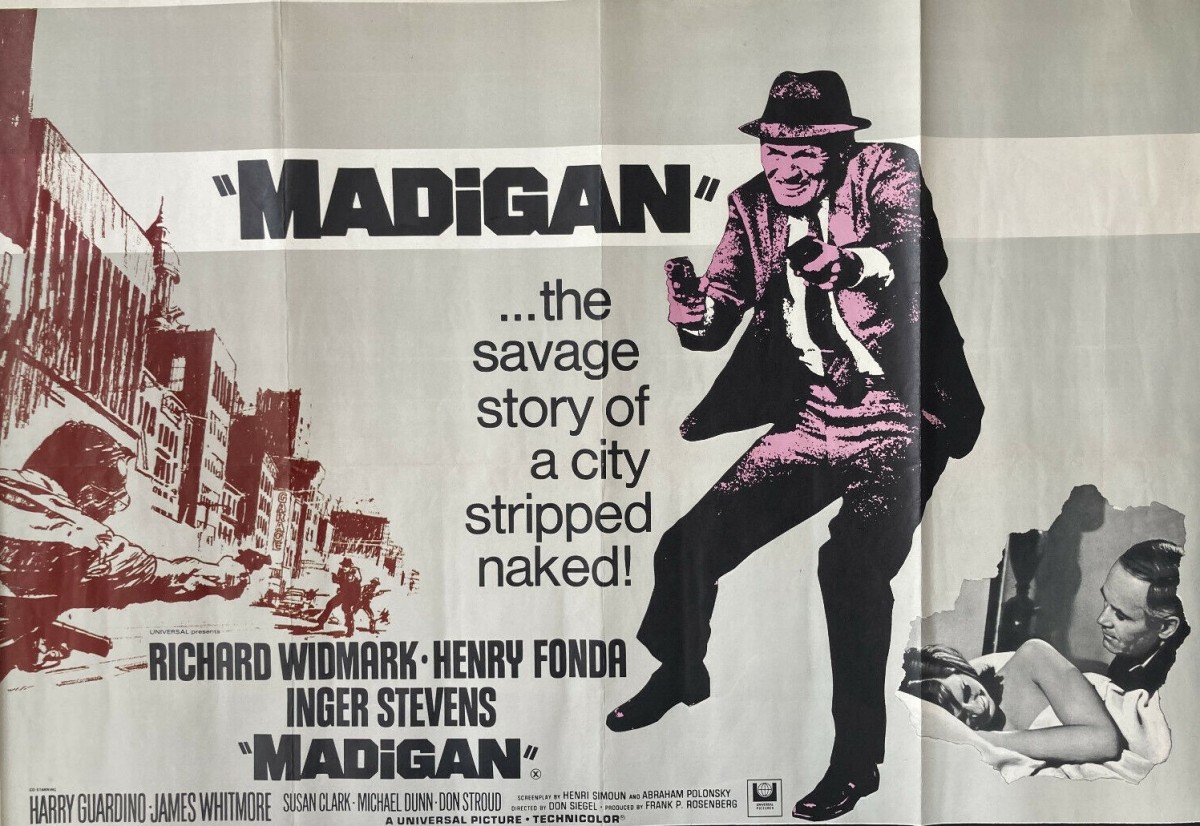
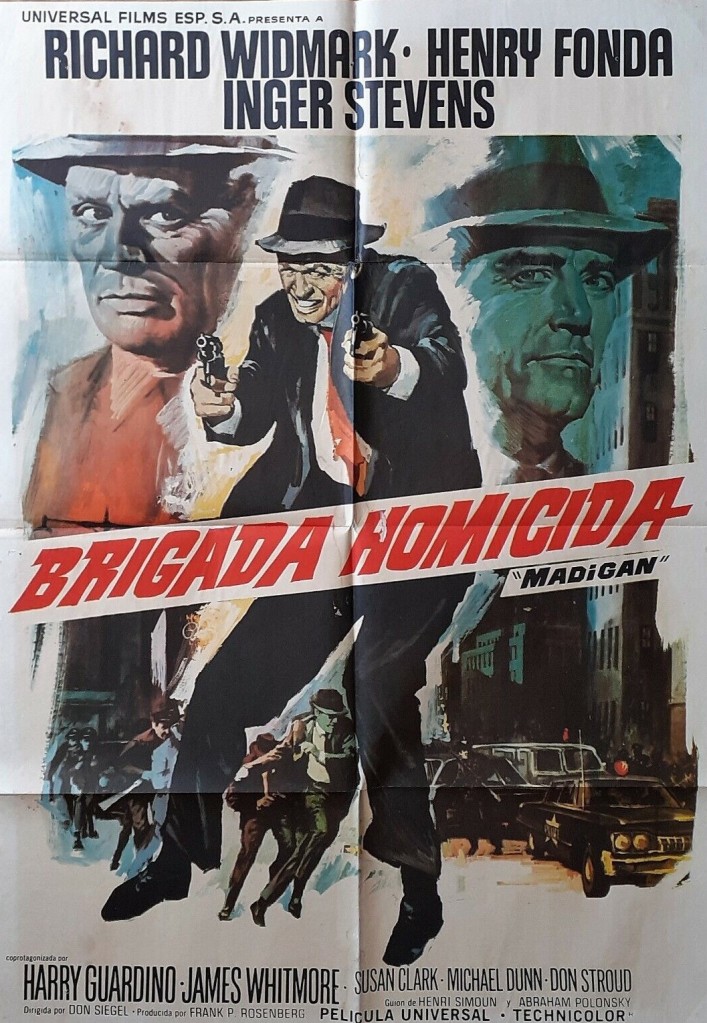
Madigan (1968) ****

Reignited the careers of director Don Siegel (no Hollywood traction since Hell Is For Heroes in 1962), Richard Widmark (reduced to supporting roles) and Henry Fonda (no longer first name on the team sheet for the biggest pictures) and reinvented the cop thriller as a gritty urban affair. The plot – chasing down a suspect – is a MacGuffin to explore tough police methods, corruption, and the harm the job does to the domestic lives of the police.

Detective Dan Madigan (Richard Widmark) and partner Rocco Bonero (Harry Guardino) come woefully and embarrassingly unstuck when hood Benesch (Steve Ihnat) evades capture and steals their guns. They have 72 hours to bring him back or be suspended. So, basically, they spend most of the time following a bunch of leads, intimidating anyone who gets in their way, including a helpless secretary. And while Bonero is happily domesticated, Madigan’s lonely wife Julia (Inger Stevens) is fed up with late nights and broken promises to the extent of considering a one-night stand when hubby stands her up once too often.  

Commissioner Russell (Henry Fonda) has his hands full dealing with the errant detectives  without the ramifications of corruption involving his best friend, long-time cop Chief Inspector Kane (James Whitmore). The widowed Russell would be a poster-boy for the principled cop except he’s having an affair with married woman Tricia (Susan Clark).

While Madigan is kicking and snarling his way through the underworld, Russell is trying to work out how to save his friendship and his affair. And while they might appear opposites, the classy top officer and the street cop, the uptight Russell envies Madigan’s way with people. Madigan is comped drinks and even a suite at the Sherry-Netherland hotel not merely because he’s a cop but because his charm goes a long way.

And while Russell dithers over helping out a friend, Madigan has no qualms about being taking for a ride by an old pal down on his luck and in need of an excuse to be bought a drink. When it comes down to it, Madigan is the better advert for humanity.

The soap opera elements don’t intrude too much on the thriller. Madigan and Bonero go in with fists blazing and work their way through a menagerie of skunks including Castiglione (Michael Dunn) and stool pigeon Hughie (Don Stroud). Benesch is a piece of work, not just clever enough to use his lover’s nudity to distract the attention of cops, but sufficiently hard-boiled to shoot a cop dead in the street and have little hesitation in opening fire on anyone who comes too close.

There’s some fascinating internal cop politics as Kane locks horns with Chief of Detectives Lynch (Bert Freed) over the latter’s insistence on suspending Madigan. And Russell has to finagle his way through the problems a well-heeled son is causing a rich doctor (Raymond Jacques).

Every time the pace slackens, the movie falls back on the old Chandler routine, have someone come through the door with a gun (a fist would suffice). Madigan is a driven cop, struggling to hold onto his marriage, Julia too often the sacrificial lamb. And for all his outward bravado, there’s a superb scene when unexpectedly encountering Russell he turns into a stammering ball of nerves, like a schoolkid anticipating a roasting from a headmaster.

Richard Widmark (The Bedford Incident, 1964) has a hell of a part, tough guy, check, but with a side helping of kindness, and pretty assured on the loving front, investing what could have been a fairly cliched character with a good deal of complexity. Henry Fonda (Firecreek, 1968) does a lot of pacing as his self-esteem implodes; how can he be a good guy if he’s running around with another man’s wife and how can he stick to his principles if he’s going to let a pal away with corruption?

Inger Stevens (Firecreek, 1968) is impressive as the disappointed wife trying to keep disappointment at bay. Harry Guardino (Hell Is For Heroes) always makes a good sidekick, but James Whitmore (The Split, 1968) digs into a sack of guilt as he attempts to avoid the oncoming storm. Don Stroud was almost auditioning for Don Siegel – he would turn up again in Coogan’s Bluff (1968) and Joe Kidd (1973); Susan Clark, too, Eastwood’s squeeze in Coogan’s Bluff. In smaller parts are Sheree North (Lawman, 1971) and Raymond St Jacques (Uptight, 1968).

But the show belongs to Don Seigel. There can be few directors so out-of-favor that they are able on their return to kick start a new cop cycle that culminated in Dirty Harry (1971). While this pulls no punches on the action front, it’s the quieter behind-the-scenes domesticity that almost as much catches the eye, the way he gives the characters time to breathe, opens them up to reveal more intricate inner workings.

It also spelled rebirth for blacklisted screenwriter Abraham Polonsky (Tell Them Willie Boy Is Here, 1969) in his first credit under his own name for 17 years. He didn’t do it all himself, though, Howard Rodman (Coogan’s Bluff) sharing the chores, the pair working from the novel The Commissioner by Richard Dougherty.

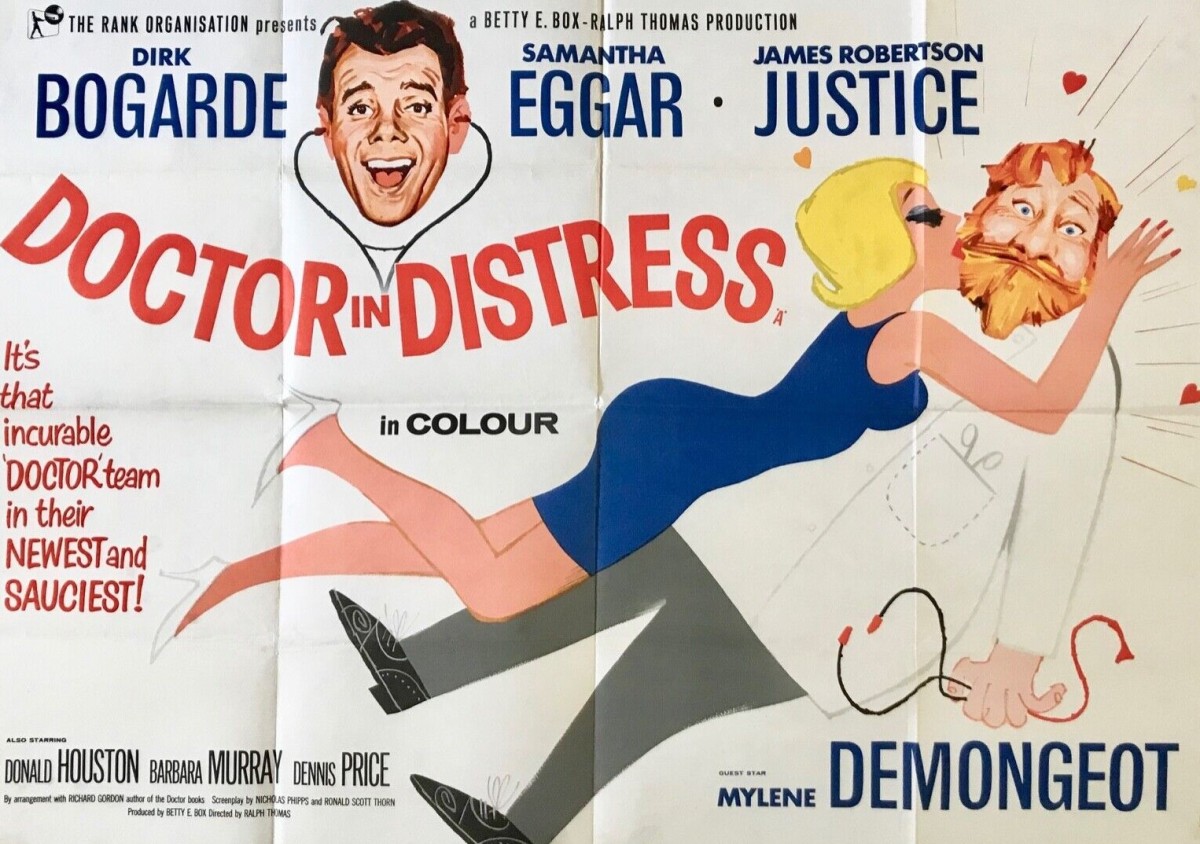
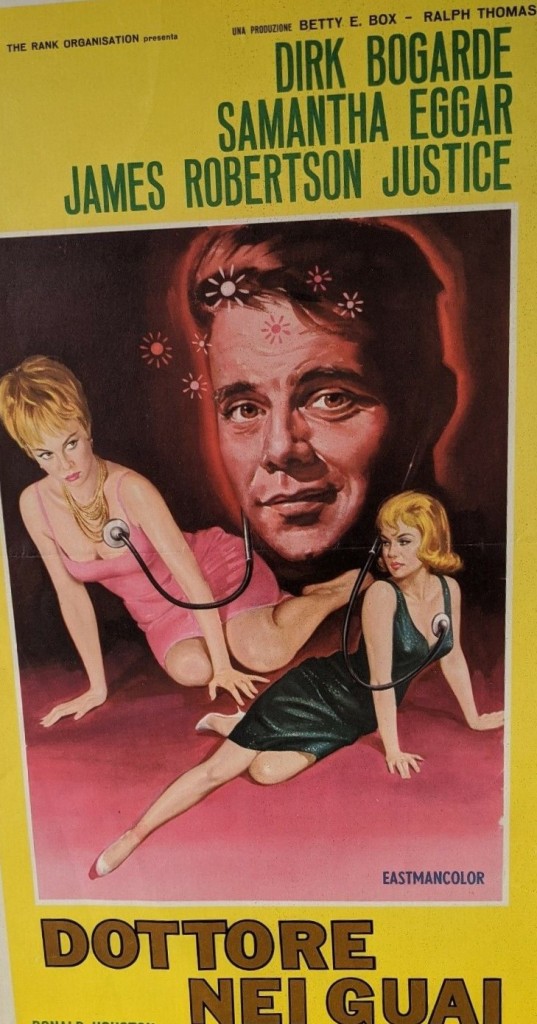
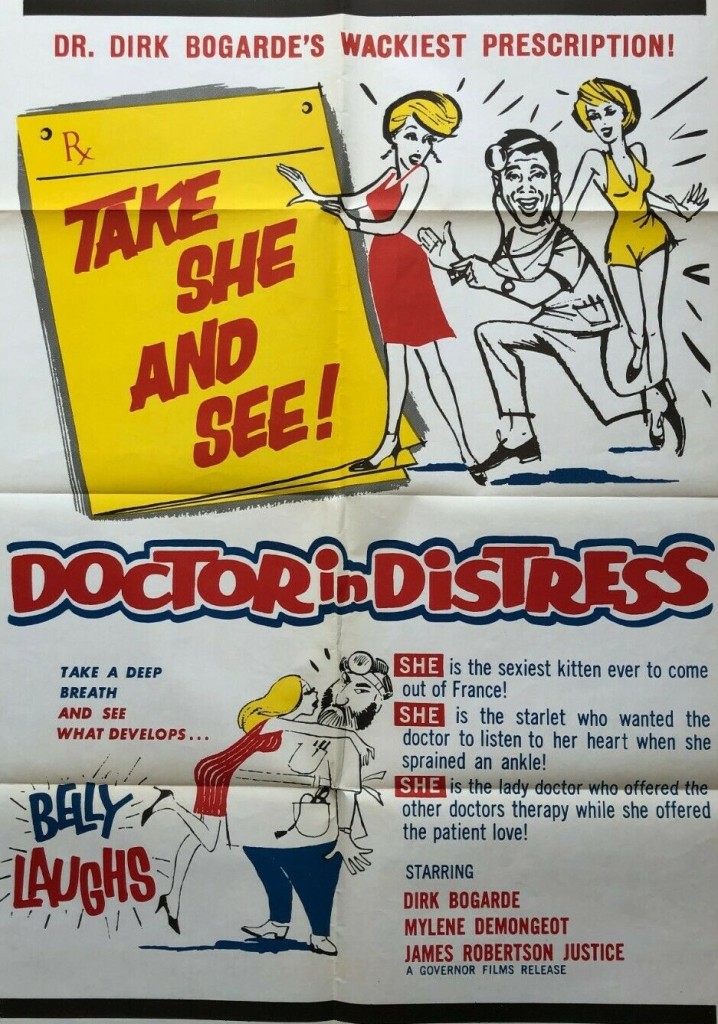
Doctor in Distress (1963) ***

Bait-and-switch as the romantic complications of the grumpy Dr Spratt (James Robertson Justice) take precedence over the by-now pretty competent Dr Sparrow (Dirk Bogarde). Just about getting by on Bogarde’s charm in his fourth and final outing in a role that had made him a British box office star and possibly more notable as his final film as an out-and-out matinee idol before he shifted into the arthouse arena.

Dr Sparrow has come a hell of a long way since being a shy junior doctor, mercilessly bullied by Spratt and a love life that was filled with tangle. Here, he not only stands up to Spratt, but is something of a lothario, happily ditching new love Delia (Samantha Eggar), a model, albeit temporarily, in favor of French masseuse Sonia (Mylene Demongeot).

There is very little of the traditional rom-com-love-on-the-rocks in Bogarde’s relationship with Delia, who arrives as a patient with a sprained ankle at the hospital and is whisked home by Sparrow for a spot of practised seduction. Spratt, on the other hand, has fallen for physiotherapist Iris (Barbara Murray) and in trying to win her hand undergoes weight loss treatment at a health clinic, endures the indignity of wearing a corset, hires a private detective to get the lowdown on her, and finally, donning a disguise of dark glasses and hiding his bulky frame behind an umbrella, proceeds to attempt to discover who is his rival for her affections.

Sparrow is left to occasionally swat out of the way the interfering Spratt and alternatively offer him advice or a shoulder to cry on while trying to prevent Delia pursuing a movie career. So it’s just a series of situations, none of which are particularly funny, apart from the idea of Spratt getting his come-uppance.

It’s worth noting that for a British sex comedy, the females are in charge. Iris knocks back her various suitors, Delia refuses to let romance interfere with her career, jetting off to Rome over Sparrow’s objections, and the diminutive and muscular Sonia is more than a match for any man and just as predatory.

What’s most surprising is that a genial comedy like this can get away with so much permissiveness. This was opposite of the in-your-face snigger-snigger Carry On series so for Sparrow to be successfully spreading his wild oats seemed somewhat out of character. But you can see most of the jokes a mile off though probably in a packed cinema these would provoke more laughter than watching it at home on the small screen.

It’s probably worth it to see Leo McKern (Hot Enough for June, 1964) as a movie producer who envisages Sparrow as his new star and Frank Finlay as a corset salesman, a completely different role to his part in Robbery (1967). Fenella Fielding (Lock Up Your Daughters, 1969) has a cameo as a neurotic passenger on a train and Dennis Price (Tunes of Glory, 1960) as a sadistic health clinic manager while Donald Houston (A Study in Terror, 1965) has a larger part as another of Iris’s suitors.  

Dirk Bogarde (Justine, 1969) can essay this kind of character in his sleep but there is no doubting his screen charisma or charm. But I doubt if James Robertson Justice (Mayerling, 1968) varied his character much from picture to picture, perhaps louder and more bumptious here but unlikely to attract audience sympathy. Samantha Eggar (The Collector, 1965) doesn’t get enough to do and has her thunder stolen by the late arrival of Mylene Demongeot (Fantomas, 1964).

Director Ralph Thomas had made more than a half-a-dozen films with Bogarde including more dramatic ventures like Campbell’s Kingdom (1957) and The Wind Cannot Read (1958) and makes the most of this undemanding feature. You would have thought this was the end of the line for the series but with Leslie Phillips (Maroc 7, 1967) as Bogarde’s replacement it soldiered on for another couple of episodes.

Proof that a true star can always help a film rise above its material.

Robbery (1967) ****

The explosive gut-wrenching high octane car chase that kicked off this thriller – and provided British director Peter Yates (Bullitt, 1968) with a Hollywood calling card – is somewhat out of place in this intriguing documentary-style fictionalised account of the British heist of the century, the Great Train Robbery of 1963. Setting aside that the chase would have been better employed as the climax, it does provide the cops with enough leads to keep tabs on some of the criminals, ensuring the authorities become aware of the gigantic theft planned.

But Yates’ unusual approach takes us away from the usual crime picture. You can say goodbye to the cliched villain for a start. Mastermind Paul Clifton (Stanley Baker) dresses like a suave businessman. Wife Kate (Joanna Pettet) rails against him for betrayal, not sexual infidelity, but for pretending he had given up the life of crime. And there is any amount of nuance. We don’t discover that Clifton lives in a huge mansion with a massive drive until the very end, we don’t know who else the police are tailing until they are picked up, we are not let in on the secret of Clifton’s escape until suddenly he is taking off in a light airplane. And there is the unexpected. A suspect is identified in a line-up by a witness slapping his face, a message sent to Kate from Paul via a dog.

Cop James Booth questions gangster’s moll Joanna Pettet.

Nor, beyond the basics, are we let in on the details of the plan, more time spent on recruitment, and not the usual suspects either, Robinson (Frank Finlay) – broken out of prison for this specific job – brought unwillingly on board because, as a former bank employee, he can check the stolen notes. I should point out, which may not be obvious to a contemporary audience, that banks shifted money over the weekend via the London-Glasgow night train that carried the mail. Given the £3 million being transported, the train is staffed not by a regiment of security guards but by postal workers sorting letters.

There’s nothing desperately clever about the plan anyway beyond its audacity. Signals are changed to make the train stop at the allotted point, the robbery takes place in military fashion, timed to the minute, some sacks left behind when time is up.

What’s cleverest is the hideout, an abandoned airfield, with underground passages. The gang doesn’t intend to run while the heat is at its hottest but some time later, the cash divvied up, Clifton’s share sent as cargo overseas. Clifton knows the consequences will involve road blocks, house searches, cars impounded, arrests but “without the money they can’t prove anything.” A junkyard owner is paid – too handsomely as it transpires – to clean the vehicles used of fingerprints and other potential giveaways (not much else in the days before DNA). And no matter Clifton ruling with a rod of iron, there is always the idiot who doesn’t quite stick to the plan.   

Most of the picture is detail, not just the meticulous planning but the equally meticulous hounding by the cops, interrogating getaway driver Jack (Clinton Greyn), identity parades, telephones tapped (or a crude version of it), with only the occasional hunch to keep the police, led by the dogged Inspector Langdon (James Booth),  on the right track. A few years before cops in movies were uniformly identified as either corrupt or useless, sometimes both, this bunch are shown to be relatively efficient, though still prone to underhand means.

Dominating proceedings is the moustached figure of Stanley Baker (Sands of the Kalahari, 1965) whose brusque no-nonsense manner sets the tone. He’s a cut above the normal criminal not just in ambition but ingenuity and while he rules the roost in the gang he’s less at home at home where Kate gives him a hard time. James Booth (Fraulein Doktor, 1969) is impressive as the pursuer, well-versed in gangland lore, inclined to look beyond the obvious. With only  a few scenes Joanna Pettet (The Best House in London, 1969) makes a mark.

In supporting parts you will spot Barry Foster (The Family Way, 1966), who seems to have the knack of catching the camera’s attention with a look or the turn of his head, and Frank Finlay (A Study in Terror, 1965), and a host of British character actors like George Sewell (The Vengeance of She, 1968) and Glynn Edwards (The Blood Beast Terror, 1968).

But the honors go to Peter Yates (Summer Holiday, 1963), not just for the stunning car chase which Hollywood would forever emulate, but the constant tension, the cutting back and forth between cops and robbers, and between the overtly dramatic and the subtle. He also had a hand in the screenplay along with George Markstein (The Odessa File, 1974) and in his only movie Edward Boyd (The View from Daniel Pike, 1971-1973).

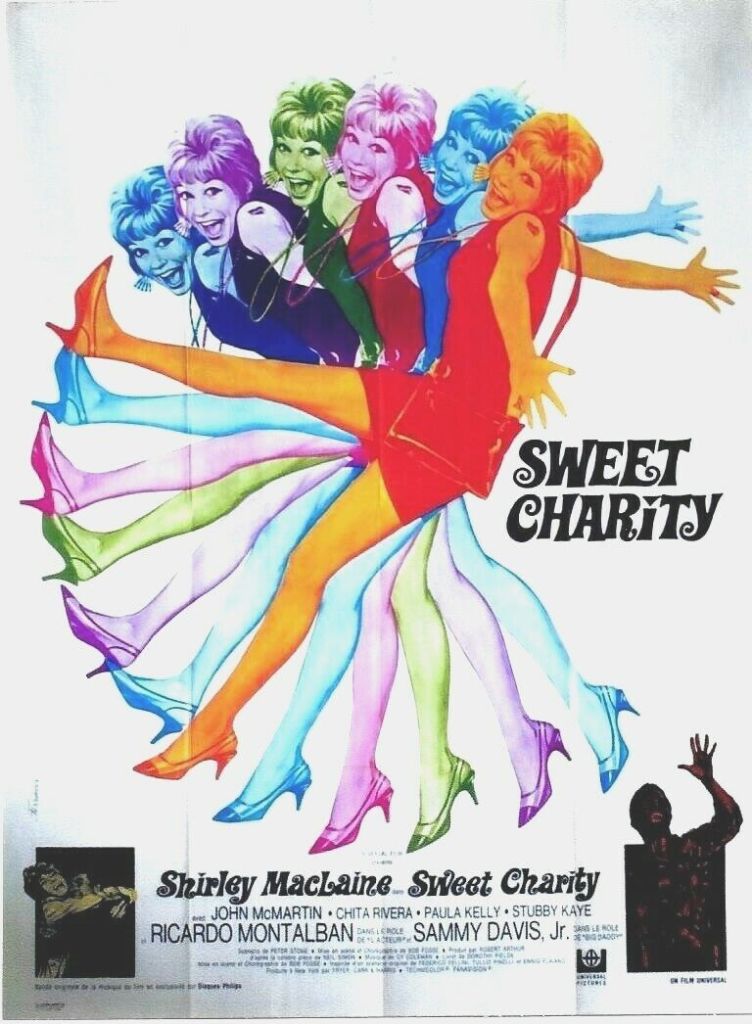
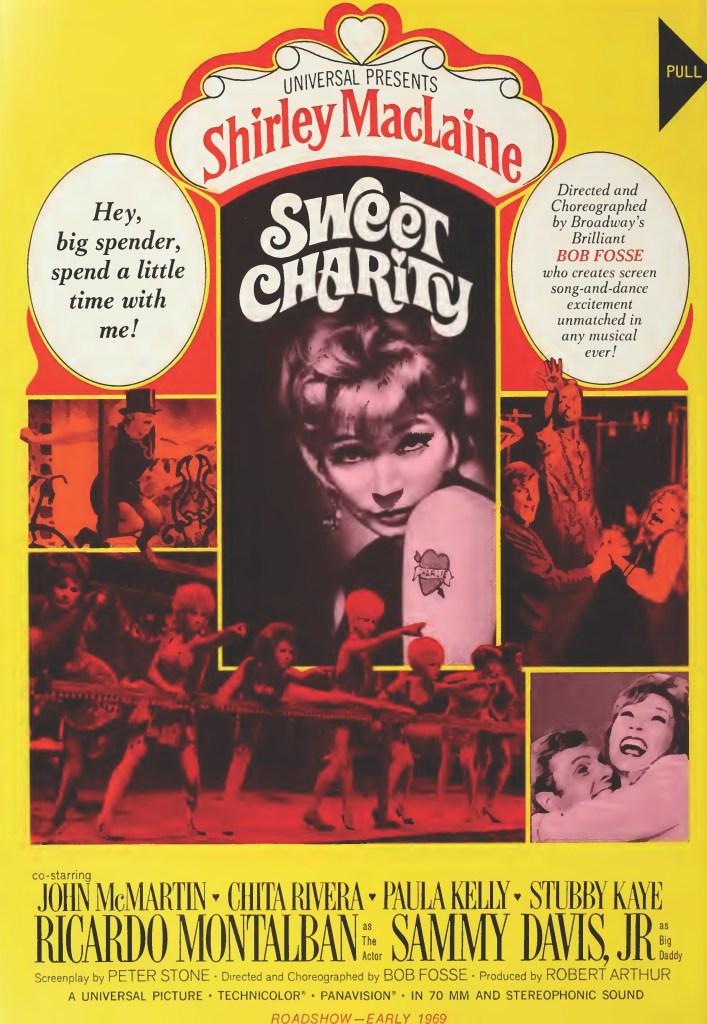
Sweet Charity (1969) **** – Seen at the Cinema

Never mind Bob Fosse’s debut, this was unusual for a number of reasons: a hilarious meet-cute, a raft of one-liners and being based on Fellini’s Nights of Cabiria (1957). So it could easily have been remembered mostly as a quiz question. But with Fosse at the helm it was a lot more than the sum of those particular parts and introduced a new-style director whose verve, choreography, stylistic flourishes and adult subject matter had wowed Broadway audiences.

Star Shirley MacLaine (Gambit, 1966) adds another layer to her trademark portfolio of losers in love. Hope Valentine Charity (MacLaine) is overly optimistic given her circumstances, robbed of her savings by her fiancé, nearly drowning in the process, the prospects of her switching from a career as a dance hall hostess severely limited by her lack of formal education and basic office skills.

So it’s just as well that she lands millionaire Vittorio (Ricardo Montalban) and might have enjoyed an indulgent romantic interlude had their evening not been interrupted by his wife Ursula (Barbara Bouchet), Charity condemned to spend a humiliating night hiding in the closet.

A chance meeting with the claustrophobic Oscar (John McMartin), doom-laden and intensely shy, appears to lead to unlikely redemption. Her presence cures him of a bunch of neuroses and marriage is on the cards until reality raises its ugly head, and the movie ends on a surprisingly negative note for a musical.

A dance hall hostess – taxi dancer in the parlance because she is hired by the half hour – is equivalent to the modern laptop dancer except that there is no nudity involved. On the other hand, there is none of the hands-off policy exercised in such contemporary operations, and  men buying her time believe that she should accommodate their straying hands. So it’s somewhat unexpected that her colleagues remain so good-tempered and backstage is presented as a bitching-free zone, some accepting their reality, others, like Charity, inclined to the fantasy that a Prince Charming will rescue them.

In terms of song quality it’s not in The Sound of Music (1965) league, boasting only two numbers – “Hey Big Spender” and “If My Friends Could See Me Now” – that you were likely leave the cinema humming. And it certainly suffers by MacLaine not having the voice of a Julie Andrews or Barbra Streisand, or the dance skills of Gwen Verdon who originated the part on Broadway, but otherwise she invests the character with enough believability and exudes charm by the bucketload. She has to be applauded for taking on such a gritty role in the first place.

Of course, the movie belongs to the director, the embryonic Fosse, who brings a new look to the movie musical, from the bored dancers draped in unexpected physical shapes during “Hey Big Spender” to the finger-snapping, angled choreography and the celebration of the seedy, the opposite of the glossier Rodgers & Hammerstein, Lerner & Loew vehicles. A few years later, further acceptance of permissiveness would allow him to explore such worlds in more realistic depth, check out Cabaret (1972) and All That Jazz (1979).

There’s a great turn from Sammy Davis Jr (Ocean’s Eleven, 1960) as a snake-hipped hippie preacher, his appearance somewhat out of place though offering contemporary comment, Oscar taking Charity to this literally underground service because he belongs to a Church-of-the-Month Club.

There’s a goodly number of laughs courtesy of the original Neil Simon book for the musical and the meet-cute of the couple trapped in an elevator is very funny.

John McMartin, in a rare movie leading role, is good as the hapless romantic, Ricardo Montalban (Sol Madrid, 1968) as his opposite, and there’s sterling support from Stubby Kaye (Cat Ballou, 1965), Barbara Bouchet (In Harm’s Way, 1965) and Chita Rivera in her debut.

It was probably too much to ask that this hit the ground running, what with Hollywood in financial meltdown in part as a result of budgetary excesses like this (it cost $10 million), a movie that never quite extended a grip on the roadshow audiences necessary to turn it into a hit, a star lacking an exceptional voice, and a storyline that appeared to alienate musical lovers. Most people who viewed it on initial general release saw a heavily truncated version.

It stands up much better today, mostly thanks to Fosse’s direction, but also due to the sleazy background, and it has to be said, setting aside any vocal deficiencies, this is one of Shirley MacLaine’s best performances.

Of course, I saw it at its best, on the big screen at the Widescreen Weekend in Bradford, so I might be slightly biased, but it does have genuine vigor and a refreshing originality.

Discover WordPress

A daily selection of the best content published on WordPress, collected for you by humans who love to read.

The Atavist Magazine

by Brian Hannan

WordPress.com News

The latest news on WordPress.com and the WordPress community.