I am a published author of books about film - over a dozen to my name, the latest being "When Women Ruled Hollywood." As the title of the blog suggests, this is a site devoted to movies of the 1960s but since I go to the movies twice a week - an old-fashioned double-bill of my own choosing - I might occasionally slip in a review of a contemporary picture.
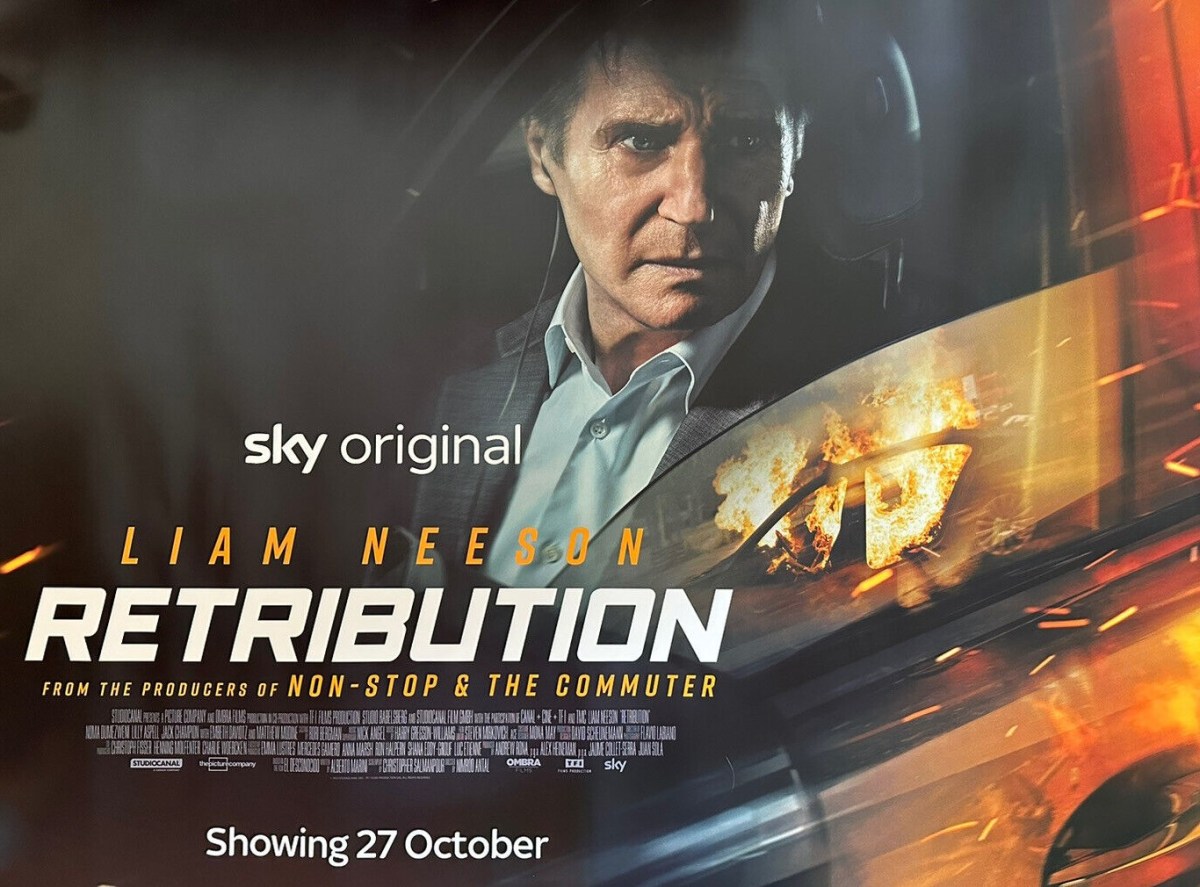
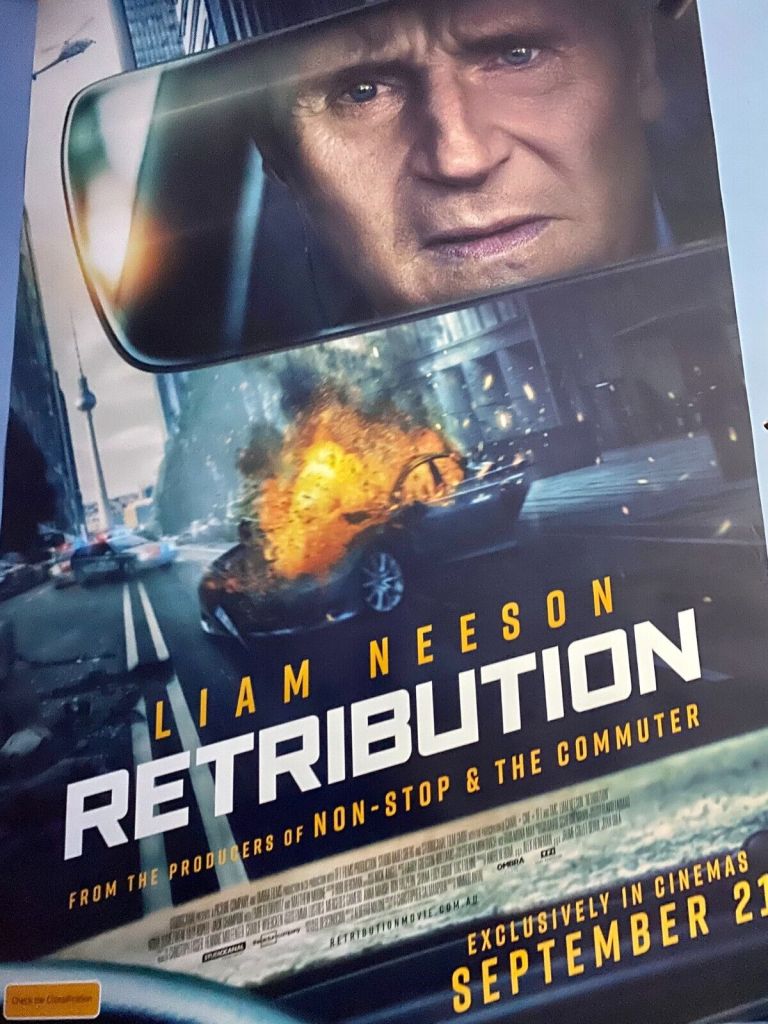
Take a renowned screen tough guy and turn him into a nervous wreck. Stick a bomb under his car seat. Hobble him further by saddling him with his kids in the back. Ensure he is so frazzled by constant explosions that he lacks the time to do the clever things that heroes in his position, no matter how dicey the situation, generally manage. And the usual running and gunplay is out of the question. Screw that lid down tight.
And play around with Liam Neeson’s Taken (2008) screen persona, show him demolishing a punch bag at the very start to convince us he still has the cojones, with a special set of skills to take down the bad guys. But that image is quickly shredded.
Once he is blamed for a series of devastating car explosions and can’t escape the electronic voice in his ear and the bad guy five steps ahead of everyone, this just ramps up the stakes and in the Neeson portfolio nestles a shade below Unknown (2011) where the actor was equally disorientated, though that time by amnesia.
Matt (Liam Neeson) is a financier having a tough time. It’s just his bad luck he needs to take the kids, rebellious Zach (Jack Champion) and precocious Emily (Lilly Aspinall), to school because, unknown to him, wife Heather (Embeth Davidz) needs time out to consult a divorce lawyer. Now he’s being held hostage in his own car by a tech whiz kidnapper.
Sure, there are shades of Speed (1994) but thank goodness fewer echoes of the likes of Phone Booth (2002) and a few plot holes and a fair bit of misdirection – wife Heather (Embeth Davidz) perhaps having a lesbian affair, financial shenanigans catching up with him, mysterious motorcyclist on his tail – but precisely because Matt has no leeway and the running time is lean (under 90 minutes once you remove the credits) it works like a dream. Just no let-up.
There’s a surprise reveal at the end and a neat get-out-of-jail that Bryan Mills in his element might have dreamed up but mostly it’s pedal-to-the-metal.
After a few direct-to-streaming losers like Marlowe (2022), this is Neeson back at his best, relying far more on his acting talent than his action chops. Even the title is against type. Mention the word retribution and you expect it will be the actor doing the seeking, not being its object.
With the exception of Schindler’s List (1993) – and that’s three decades away – most people can’t remember when Liam Neeson was being touted as a genuine Oscar contender. Producers didn’t seem to know what to do with him. Every star turn in a compelling drama was accompanied by a supporting role in some big-budget extravaganza (not least his Star Wars episodes). And, miraculously, just as it appeared his career was winding down, he reinvented himself as Bryan Mills and was forever typecast in thrillers, but the law of diminishing returns meant that he was as synonymous with Nicolas Cage in making pictures that couldn’t get a cinema release break.
Here’s a movie that depends entirely on facial expression. And no escape from that. Which means relying on whatever he can tick in the acting box. Which, luckily, Neeson still has in spades.
This is kind of movie Sky used to make, a low-budget effort with a big name down on his luck, killed off by poor production values and low-end direction. But if this is the way Sky is heading, upping its game in the face of Netflix and Apple’s clever manipulation of cinematic release, then this movie deserves a wider showing.
Remake of a 2015 Spanish picture, directed by Dani de la Tore and scripted by Alberto Marini, the new version sticks to the knitting, no complicated sub-plots involving the kids, just them sitting in the back waiting to become collateral damage.
Nimrod Antal (Predators, 2010) does an excellent job teasing out the tale, throwing in a car chase through the streets of Berlin, but keeping the camera squarely on the trapped trio. With an inferior star, this could easily have failed to grip, but Neeson pulls it off with ease.
If you can’t catch it in the cinema, where my guess it will only last a week, put it on your must-watch list elsewhere.
Lollapalooza! Trash horror is back. Step aside the relatively classy Blumhouse offerings and the torture porn of the Saw dynasty, what the world needs now is a throwback to the so-bad-it’s-good style of horror where blood flows like a burst dam and reanimated corpses trail yards of intestines.
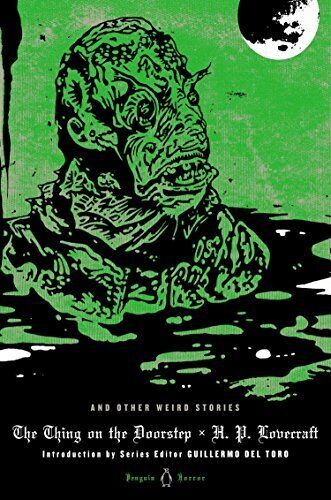
Not forgetting that the star turns are either pop-eyed or garnish every line with a smirk. H.P. Lovecraft may well be turning in his grave, or relishing every camped-up ramped-up moment of this updating of his tale of gender-bouncing possession The Thing on the Doorstep. Throw in hypnosis, bdsm, smoking treated as illicit pleasure, and the kind of sexuality that used to be the prerequisite of the DTV scene.
Dr Derby (Heather Graham) has to be the dumbest psychiatrist ever to hit the screen, breaking the golden rule of never seeing a client, especially one as deranged as Asa (Judah Lewis), in their house. But, sensing a book or at least a write-up in a journal, she discovers he’s possessed by nasty father Ephraim (Bruce Davison). Or by a creature going back centuries whose main aim in life/death is to jump like an eternal parasite from person to person, indifferent to gender.
Such transference works magic with the sex genes, the good doctor soon capable of playing the kind of sex games her husband never imagined while the snarky Asa is turned into a sex god with magnetic appeal to women. So, when everyone isn’t at it like rabbits, they get a tad worried about seizures.
In a nod to Dracula, it’s brains not hearts that have to be put out of commission, and there’s a whole bunch of demonic mumbo-jumbo served up to make this sound believable but by this point the audience is beyond caring. More, we call out, give us more – gore, sex, transgendering gone mad, references to Dunwich, bitchfights, corpses that won’t die – who the hell cares.
Mostly, it’s the kind of slam-bam horror fest that dominated the 80s/90s, with prime specimens of either sex to the fore. There’s a desultory pair of cops who do little more than add narrative confusion: who died, or did they even die, and was it all in Dr Derby’s mind? And once the sly Dr Upton (Barbara Crampton), also a dumb psychiatrist, who is either Derby’s sister or best pal, with a shady past, enters the picture the possibilities multiply.
Whoever is in charge of pushing a movie into cult territory better have a look at this especially when you consider the ropey camerawork – shaky or spinning screens dominate – not to mention that idea that was once the preserve of cartoons where the screen disappears into a dot. Cinematically, if anyone is remotely interested in that, there’s one scene of note, where the usual stunt of following action in a rearview mirror becomes seeing it from a vehicle’s reversing screen.
At times Heather Graham looks as if she’s walked in from playing the pop-eyed innocent of Austin Powers: The Spy Who Shagged Me (1999), other times she’s time traveling back to the uninhibited Killing Me Softly (2002). Whatever, she has worked out subtlety is not required. Judah Lewis pays homage to Bruce Willis and Mickey Rourke by reviving their trademark smirk. Johnathan Schaech (That Thing You Do, 1996) spends most of his time shirtless, showing off his pecs and hairy chest, and trying to get obsessive wife to drop her workload and jump into the sack. Craching additiont to the Bruce Davison (Last Summer, 1969) can, and Barbara Crampton (Alone with You, 2021) has a sackload of this kind of thing (left on a doorstep or not) in her closet.
Dennis Paoli (Re-Animator, 1985) did the updating, Joe Lynch (Point Blank, 2019) the camping up to high heaven.
Judging from size of the cinema audience when I saw it, this isn’t going to last more than a week at your local multiplex. So drop your planned schedule and get there now.
Otherwise Shudder has this for streaming in January.
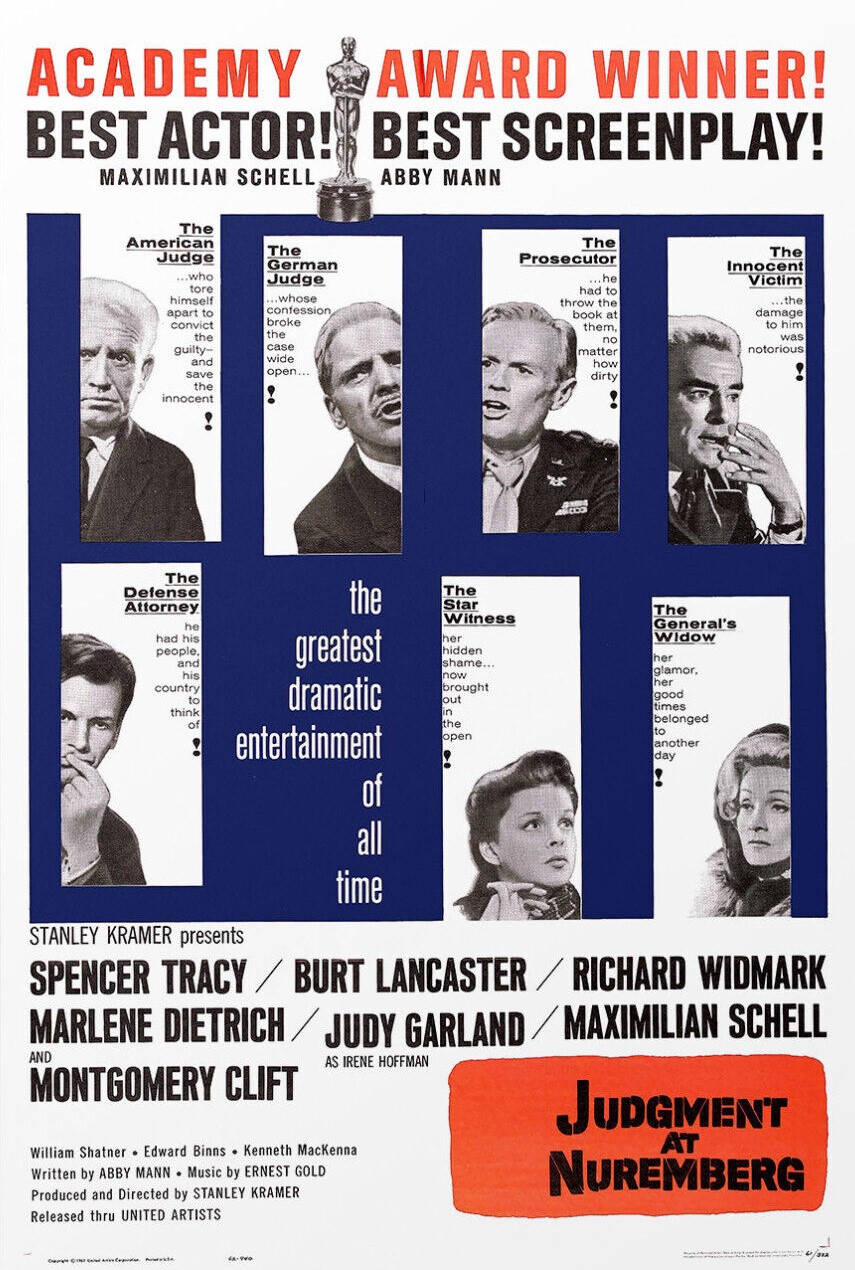
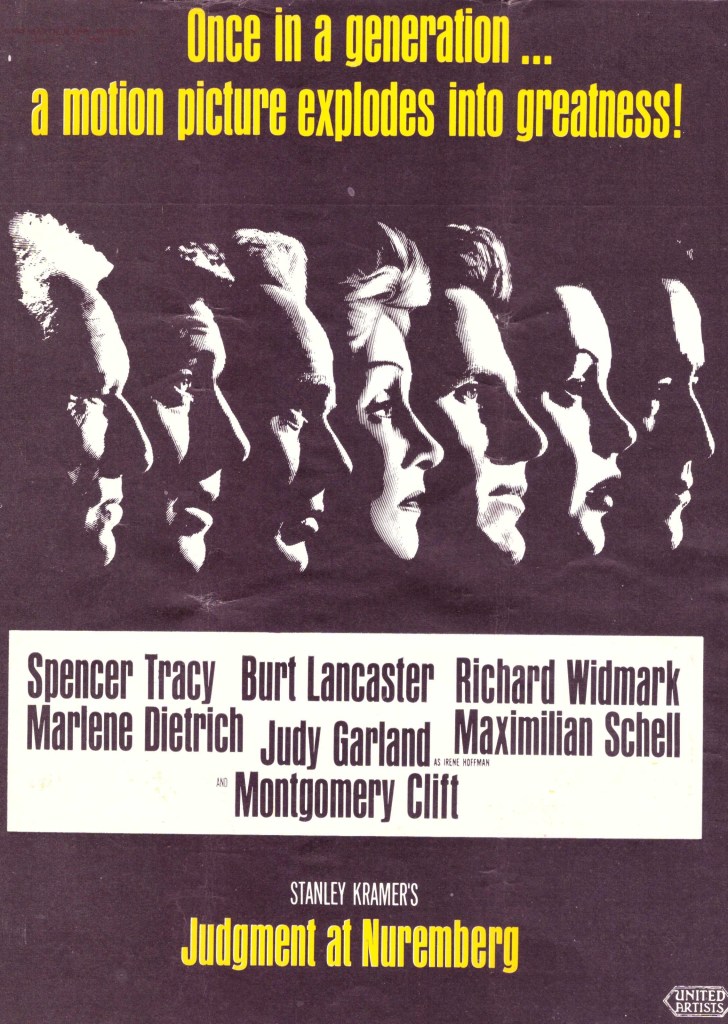
Laurence Olivier could have played a Nazi long before his celebrated villainous turn in Marathon Man (1976). He was producer-director Stanley Kramer’s first choice to play Chief Judge Dr Ernst Janning. He turned the role down in favor of getting married to actress Joan Plowright. Kramer had already decided an all-star cast was required to attract an audience for the grim picture.
The screenplay was an extended version of Abby Mann’s teleplay that had screened on the ABC in 1959. Although Marty (1955) had transitioned with box office and critical success from television to cinemas, that boom was long over.
United Artists, with whom Kramer had a multi-picture deal, were not keen. “I did what looked like a compromise to them, but what I had been planning to do anyway. I promised to fill the cast with stars of such magnitude that their presence would almost guarantee the film wouldn’t lose money.”
There were a couple of other obstacles to overcome. A stage version of the teleplay was being planned for London and Paris and Kramer had to take out an injunction against a documentary with a similar title, Verdict at Nuremberg.
Kramer was known as an issues-driven director, his debut Not As a Stranger (1955) tackling the medical profession, The Defiant Ones (1958) racism and in On the Beach (1959) nuclear war. Along with Otto Preminger, he was viewed as a director of “worthy” pictures, not always a recommendation in the eyes of the critics, but as long as the movies made money and attracted Oscar interest likely to remain attractive to studios. Kramer was just about the only producer (High Noon, 1952, and The Caine Mutiny, 1954, on his calling card) who made a successful career-long transition to direction.
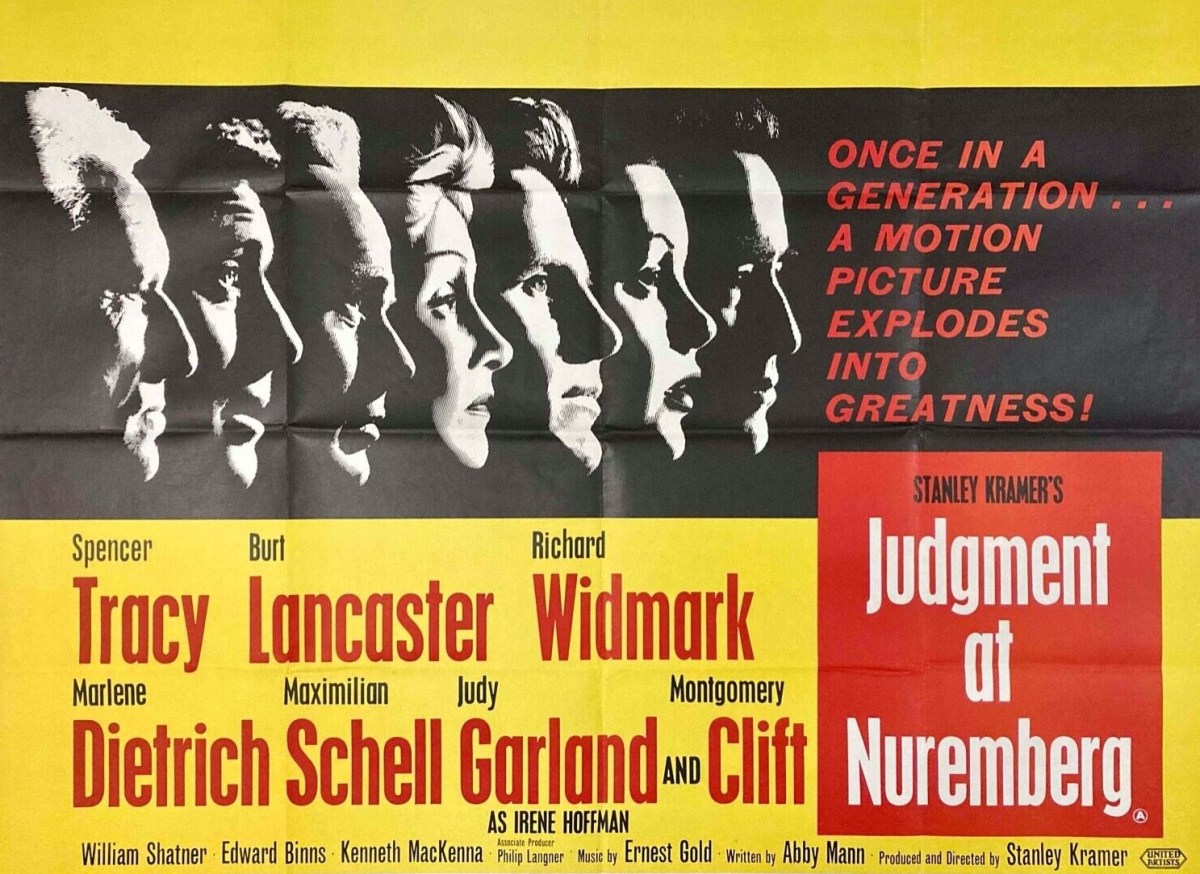
With the exception of Olivier, replaced with Oscar-winner Burt Lancaster (Elmer Gantry, 1960) – not incidentally second choice either, the director preferring to have used a German actor – Kramer hired all his first choices. Spencer Tracy, in fact, was the first recruit. After working with him on Inherit the Wind (1960), Kramer got it into his head when considering a picture to ask himself what part there might be for Tracy.
The actor provided “A depth and candor that would make people notice.” Maximilian Schell (Topkapi, 1964) reprised the role he had essayed on television, a man “living in a complicated gray zone.”
Kramer had a reputation for hiring singers and dancers – Gene Kelly, Fred Astaire, Frank Sinatra – for dramatic roles and he continued in that vein by hiring Judy Garland. It was a difficult decision. He theorized that “the very disorders that made it difficult to work with her fitted perfectly with the role.”
You could have said the same of Montgomery Clift (Freud, 1962), “reduced almost the level of the unsound person he was portraying.” Given the actor’s problems remembering lines, Kramer allowed Clift to basically ad lib, when attacked on the witness stand permitted to reach “for a word in the script” that appeared the correct emotional response to “convey the confusion in the character’s mind.” While Clift did not often adhere to the script, whatever he said worked well enough. Rarely has a director been so sympathetic to a troubled actor. “He needed someone to be terribly kind,” said Kramer, “someone who would consistently bolster his confidence and tell him he was wonderful.
Marlene Dietrich, who had firsthand experience of Nazi Germany at first hand, having fled the country, actually knew the general whose wife she was portraying, which helped to “deepen my understanding of the emotions of Hitler’s victims,” conceded Kramer. Opening up about her experiences and fears allowed Kramer to extend the scope of the character.
While the courtroom where the original trial had taken place was not available for hire – it was in current use – Kramer was permitted to measure and photograph the room to reconstruct it on a soundstage. Only 15 per cent of the movie was shot in Germany.
The experience of filming Inherit the Wind, another courtroom drama, taught Kramer the need to have fluid camerawork since talk and gesture tends to be static. “I learned to move the camera often to achieve a sense of movement for the viewer.”
Abby Mann was required to open up the teleplay, move the action outside the courtroom – scenes in the judge’s accommodation, on the derelict streets, in restaurants – and avoid cinematic claustrophobia and making it a “pious sermon.” “In my opinion,” argued Kramer, “Judgment at Nuremberg conveys a moral not always honoured, then or now, in the world of politics.”
Kramer had a particular method of pre-production. He built all his sets six weeks before filming began. As part of that process, he sat down with his cinematographer and went through the script scene by scene working out the lighting and camera positions. Then he called in the actors and took them through the sets and roughly his shooting thought-process, taking on board any queries and suggestions. Film like this “sort of demanded it be shot in sequence with a single camera,” explained cinematographer Ernest Laszlo (Fantastic Voyage, 1966).
The 360-degree turning of the camera was not as revolutionary as you might imagine – although, according to critics, Michelangelo Antonioni invented it for The Passenger (1975). Laszlo had done if before on The Hitler Gang (1944) for director John Farrow. But this was infinitely more complicated set-up with the revolving camera in constant use to allow Kramer the required fluidity.
“I used two key lights,” said Laszlo. “Shooting this I used one and then as we went round I used the other.” It wasn’t as simple as it sounds, the lights needed to be positioned with mathematical precision so the audience wasn’t aware of any change in the lighting.
“The circling camera saved us photographically,” said Kramer, preventing the picture from seeming “slow and cerebral.” As smooth as it appears on screen it was cumbersome. The entire crew involved had to carry cables and equipment round in a circle. But it permitted Kramer to pick up the judges without cutting to them.
Kramer also used the camera to achieve another transition. As the picture began, German actors spoke in German (with translators offscreen) to show the trial was mostly in German. But for the movie to work, the dialog needed to be in English. “We started the transition scene with Schell addressing the court in German. Laszlo’s camera zoomed in on him, then turned elsewhere, then turned again to Schell so that we were able to switch his speech from German to English in perfect cadence as the camera came in on him the second time. His English picked up from his German so naturally you could almost let it pass without noticing.”
Kramer conceded there might, in fact, be “too much camera movement.” But that was in part dictated by a “very authentic situation, a long courtroom, very wide, and the spacing between the original attorney’s box and the witness box was at least forty feet. That’s a long distance if your try to photograph it.” Also, it wasn’t like a normal Hollywood or American trial, where the lawyers can prowl in front of judge and jury. Here, the attorneys could not move from their box.
“Unless you want to play ping-pong in the cutting room, you have to move the camera…I felt trapped by these three positions – the judges, the attorneys and the witnesses in that big spread. So, the forty feet was compressed to twenty-eight feet. We had to put a lot of light on the far figures to hold the forms in focus,” resulting in the actors “perspiring a lot during these shots.”
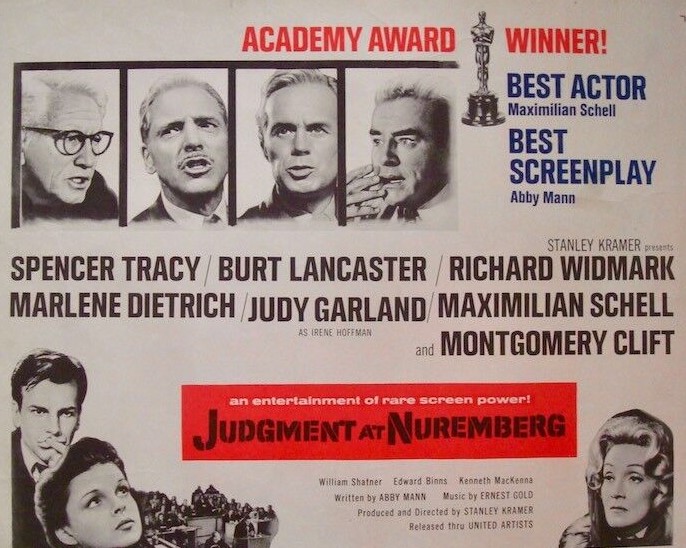
The movie, rolled out as a roadshow, did better than expected, the all-star cast proving a major draw, global box office netting a healthy profit. Schell won the Oscar as did Abby Mann, Kramer was nominated in his dual capacity as producer and director.
SOURCES: Stanley Kramer, It’s a Mad, Mad, Mad, Mad World: Life in Hollywood (Harcourt Brace & Company, 1997) p179-197; Donald Spoto, Stanley Kramer Film Maker (Samuel French, 1990)p230-233; “An AFI Seminar with Ernest Laszlo, American Cinematographer, January 1976, p52; “Judgment at Nuremberg Still Slated for Legit,” Box Office, February 3, 1960, p6; “Kramer Gets Injunction,” Box Office, December 11, 1961, p14.
Stanley Kramer never caught a decent academic/critical break. Subject matter worthy, execution poor, was the overall consensus. But Judgement at Nuremberg, with its long tracking shots, sometimes turning 360 degrees around a character, should have changed all that. But the kind of critics who would have appreciated such bravura technique weren’t around at the time and even when Antonioni’s The Passenger (1975) appeared nobody thought to reference Kramer, believing this was a new cinematic invention by the esteemed Italian maestro.
So, Judgement at Nuremberg is remembered, if at all, for the subject matter and elevated by the performances rather than the director’s input. Most people misremember what the movie’s about. The main concern here isn’t the war criminal, the men personally involved in running the ghettos. Instead, it’s about those behind the scenes who could, theoretically, have prevented the camps flourishing, or at least challenged their opening.
Those on trial were freedom fighters of a different sort. As judges, the top tier of the legal system, their job was not just to uphold law and order and individual freedoms, but to take government to task for illegal action. It’s a basic tenet of the democratic world that governments cannot act in autocratic fashion but work within public accord.
Should the legal guardians find fault with government activity, their job is to take the ruling body to task – the European Court of Human Rights was set up with exactly that principal in mind, and various British and American law agencies have over time called a halt or questioned government proposals.
Some of the judges were clearly ill-fit for the task, lick-spittle jobsworths, desperate to hold onto rank and privilege, many sharing the same anti-semitic views as Hitler. But the Allied forces, being democratic, have to proceed along proper lines, taking potential criminals to court and allowing them legal defence.
So the main target is Dr Ernst Janning (Burt Lancaster), German’s pre-eminent legal force, a quiet, dignified man, who refuses to fawn or react to the charges. On the attack is prosecutor Col Tad Lawson (Richard Widmark). Acting for the defence is the wily, emotional, Hans Rolfe (Maximilian Schell) who is not above comparing the Holocaust to the Americans dropping the atom bomb on Hiroshima, indiscriminate terror brought on innocent civilians the result of both actions. He also brings to the court’s attention the distasteful theories that once held sway in high American legal circles as promulgated by Oliver Wendell Holmes, a Supreme Court judge, whose views on eugenics aimed at withholding procreation rights from the mentally handicapped.
As referee we have Dan Heywood (Spencer Tracy), the American chief judge, who didn’t want the job and was way down the pecking order of those best qualified. And he’s a bit of a detective on the side, trying to discover how much ordinary people – such as the flirtatious Mrs Bertholdt, widow of an executed German general, as well as the housekeeper and butler looking after him in some style – knew about the atrocities as they were taking place.
In the background is an Allied command not wishing to stir up any more controversy, conscious of the rising power of the Communist bloc, seeing West Germany as a bulwark against Stalin, concerned that forcing the country’s inhabitants to wallow in the past will turn their political minds towards the east rather than the west.
In due course, a variety of witnesses are called, testifying to ill-treatment under the German government including the backward Rudolph Pedersen (Montgomery Clift) and Irene Hoffman (Judy Garland).
What makes this so different is that innocence or guilt is not what’s under scrutiny, but reason. Why did such high-minded legal experts like Dr Janning give in to Hitler. And when? And do they recognise their role in providing Hitler with credence to continue with his massacre of the Jews?
Individual conscience and, conversely, collective guilt, might have been the driving force then but they are more than relevant today when actions in war come under even greater scrutiny and politicians are held to account. Perhaps, it’s ironic how little judgement was passed in the end on those convicted in these trials. Nobody was hanged, nobody received even a life sentence. In fact, by the time the movie was released, all were free men.
Stanely Kramer, the Scorsese or Nolan of his era regarding running time (it clocks in a just shy of three hours), does a superb job with his even-handed approach. While his technical skills were perhaps under-appreciated, he certainly knows how to command an audience’s attention and draws terrific performances from his actors.
Maximilian Schell, who won the Oscar, is perceived as the standout, but for me the highpoints were Burt Lancaster (The Swimmer, 1968) and Montgomery Clift (Freud, 1962). Abby Mann’s (The Detective, 1968) screenplay was an expanded version of his teleplay of two years before.
Has more than enough humanity to keep you riveted.
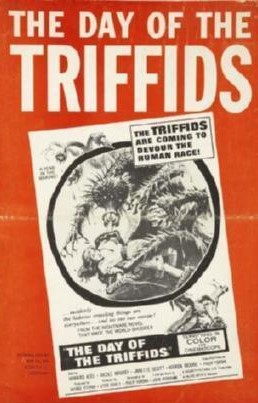
Pandemic means panic and these are by far the best scenes in the adaptation of John Wyndham’s famed sci-fi novel. Virtually everyone in the world is struck blind by the fierce brightness emitted from a bombardment of meteorites.
When passengers on a plane realize their pilot is blind, the panic is breathtaking. Ditto a train crashing into a station. While those with sight intact such as a busload of convicts can terrorize the blind, forcing them to submit to sexual overtures. On top of that are terrific scenes of deserted cities – very familiar to us all during the current pandemic – and of those unable to see trying to walk hands outstretched or attach themselves to anyone still blessed with sight.
One of the standouts is patient Bill (Howard Keel), saved from seeing the dazzling light display because his eyes were bandaged, walking through a deserted and trashed hospital. And perhaps Jurassic Park found useful the scene where the plants test an electrified fence.
And on top of that, of course, are the unstoppable monstrous man-eating plants whose growth has been triggered by the comets. Steven Spielberg over a decade later showed how to maintain tension by showing a terrifying predator in small doses and indicating its presence through musical cues and especially, when your monster ain’t quite up to scratch, keeping it hidden for as long as possible.
Interestingly, this film uses sound cues, specific noises attributable to the creatures, though the plants are shown too soon and too often but, in terms of special effects, not at all bad for their time and the low budget. And the sheer normality of the locations works very well – a caretaker having his sandwich, hard-boiled egg and flask of coffee the first victim. Some deft humor undercuts the terror. “Once you’ve tasted this coffee of mine,” remarks a character, ”you’ll know nothing worse can happen.”
Leading the fight against the monsters are sailor Bill (Howard Keel), ironically recovering from an eye operation, hotel proprietor Christine (Nicole Maurey) and in an isolated location alcoholic scientist Tom (Kieron Moore) and his wife Karen (Janette Scott). Bill and Christine are initially intent on mere escape, but in the end have to fight.
A lean 93 minutes (the same as Gravity, 2013), tension is the key. That in itself is astonishing, given cinematographer Freddie Francis was called in at the last minute to puff out what would have been a too-short-to-release feature (under one hour at that point) directed by Steve Sekely (Kenner, 1968). Philip Yordan (El Cid, 1961) and Bernard Gordon (55 Days at Peking, 1963) knocked up the screenplay.
But once again a film like this shows how much more powerful is imagination. We can imagine being blind and walking in a vacuum with the vulnerability and helplessness that fear entails. As the recent pandemic has shown, the unknown is terrifying and fear of the unknown even worse.
Information about how films performed outside the United States in the 1960s was incredibly difficult to obtain. Foreign or worldwide grosses were not reported in any consistent fashion – if at all – during that decade. Even the box office I’ve been able to report on previously, i.e. United Artists, just listed foreign as one all-encompassing entity, not breaking it down by country. So, when the opportunity does arise, it’s fascinating to observe how audiences in different countries react to what comes down the line.
Probably it will come as no surprise to discover that the top film of the 1960s in Australia was The Sound of Music. The musical brought in $4.4 million in rentals (the amount returned to studios once cinemas have taken their cut of the gross). It was the number one film, by a considerable margin, in the United States as well. Astonishingly, given the population differential (12.5 million Aussie inhabitants by 1970 vs 203 million in the US) the rentals were, proportionately, on a par, the movie hauling in $72 million in rentals on home territory.
Second place in Australia went to David Lean blockbuster DoctorZhivago (#3 in the U.S.) with $2.6 million followed by My Fair Lady (#7 Stateside) on $2 million, in both instances, pro rata, bettering their U.S. box office.
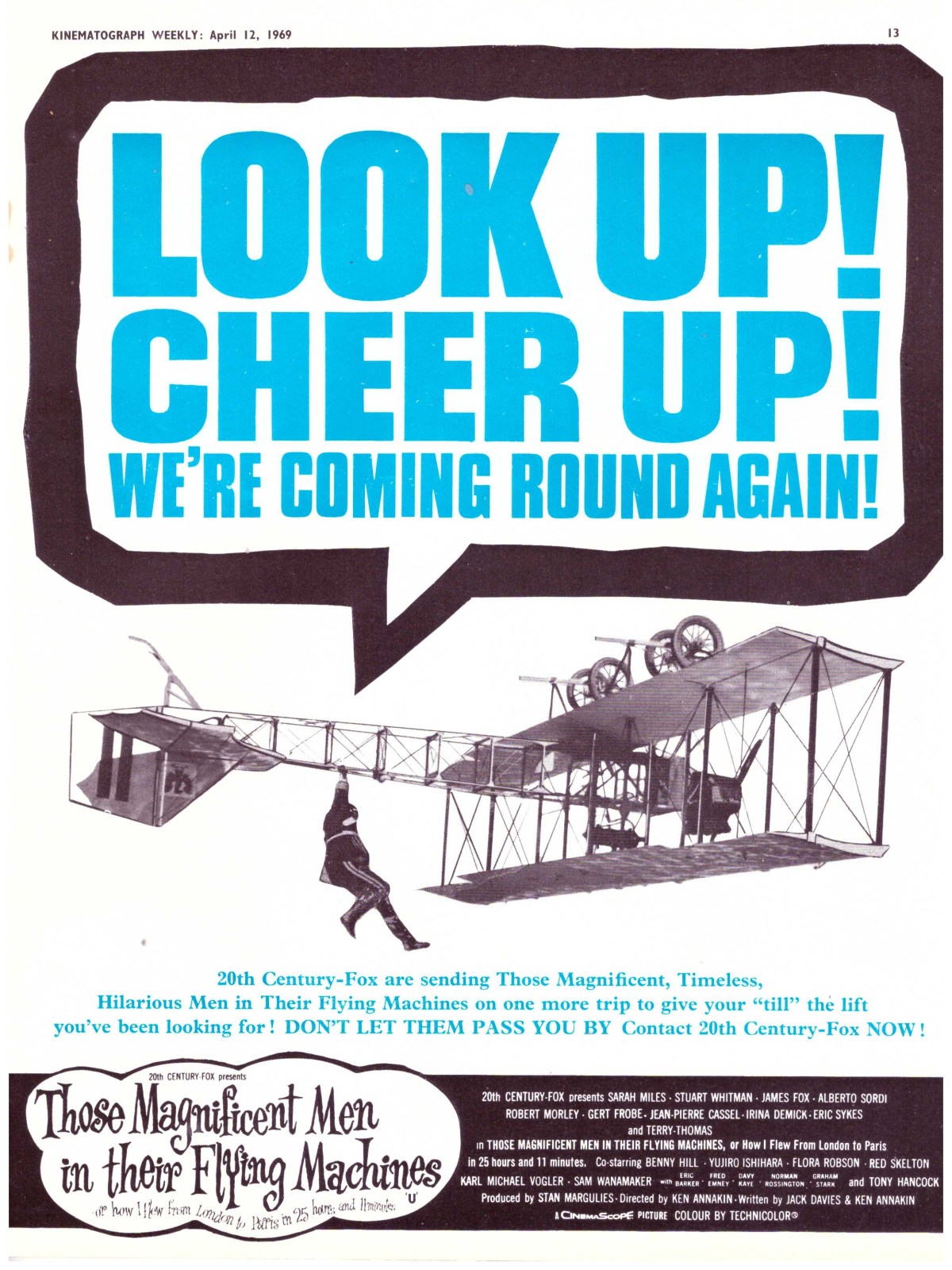
The biggest surprise of the decade was the performance of Those Magnificent Men in Their Flying Machines (#39 Stateside) which rocked up in fourth place with $1.7 million. You could probably say the same for the next picture on the list, Lee Marvin-Clint-Eastwood-Jean Seberg musical Paint Your Wagon, which struggled at the US box office. Australia rentals hooked $1.44 million.
Australians proved largely impervious to the flood of westerns that had struck pay dirt at the U.S box office. Big Stateside hitters like How the West Was Won (#12), True Grit (#47), Cat Ballou (#62), The Professionals (#69), The Alamo (#73) and Shenandoah (#77) don’t feature on this list. The exception was Butch Cassidy and the Sundance Kid (#28) which raced to $1.31 million and placed seventh Down Under.
Whether humor would travel was difficult to predict. As well as Those Magnificent Men, comedies ranking better in Australia than in the U.S. were: It’s A Mad, Mad, Mad, Mad World (#18 Stateside) which took sixth spot here on $1.3 million; Tom Jones (#23) 10th here with $1.06 million; The Great Race (#54) 16th here on $884,000; and Irma La Douce (#43) 20th here with $832,000.
But The Graduate, the second-best performing movie in the U.S., failed to emulate that success, coming in 12th here with $1.02 million. Likewise, comedies that were massive in the U.S. made less of an impact, neither The Odd Couple (#14 Stateside) nor The Love Bug (#22nd) making this list.
Aussies were as appreciative as U.S. audiences of Sidney Poitier’s breakthrough duo Guess Who’s Coming to Dinner (#10) whose $1.08 million secured ninth position here and To Sir, With Love (#19) which took 11th spot on $1.05 million.
There was comparatively less interest in the spy genre that swamped American cinemas during the decade. James Bond was not the bonanza it was Stateside. Thunderball, ranked 8th in the U.S., Goldfinger ranked 11th, and You Only Live Twice ranked 20th were, 21st , 22nd and 30th, respectively here, and not commanding, proportionately, anything like similar rentals.
With $1 million in the kitty, Oliver! outranked both West Side Story ($902,000) and Camelot ($833,000) whereas in the U.S. the situation had been reversed. Here, respectively, they snapped up 13th, 15th and 19th spots whereas in America it had gone 55th, 17th and 45th.
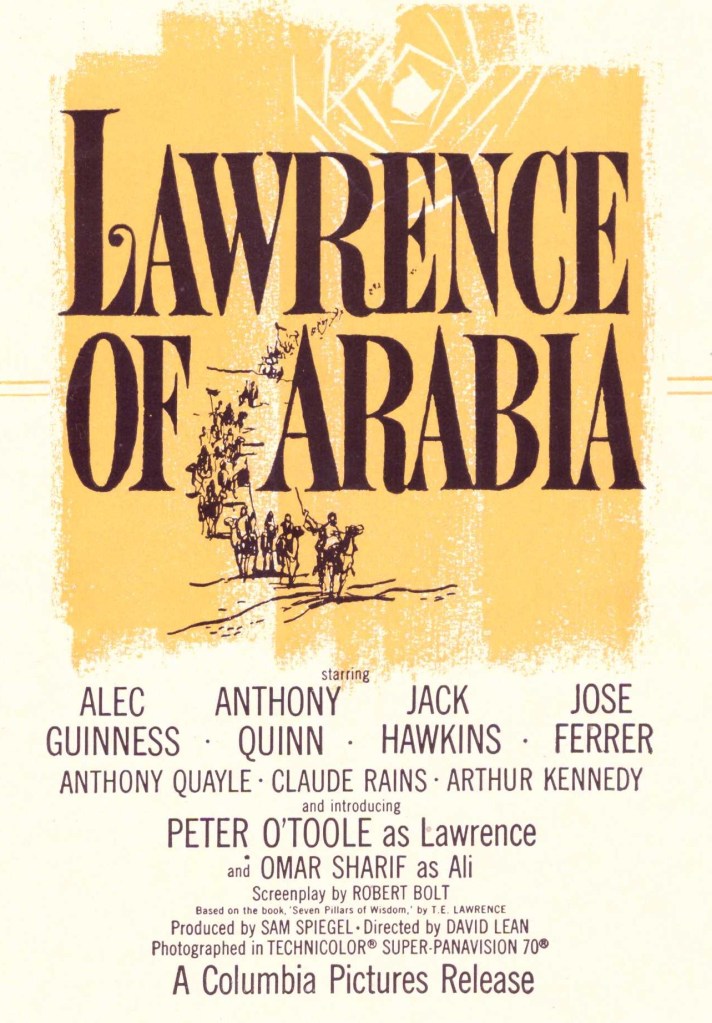
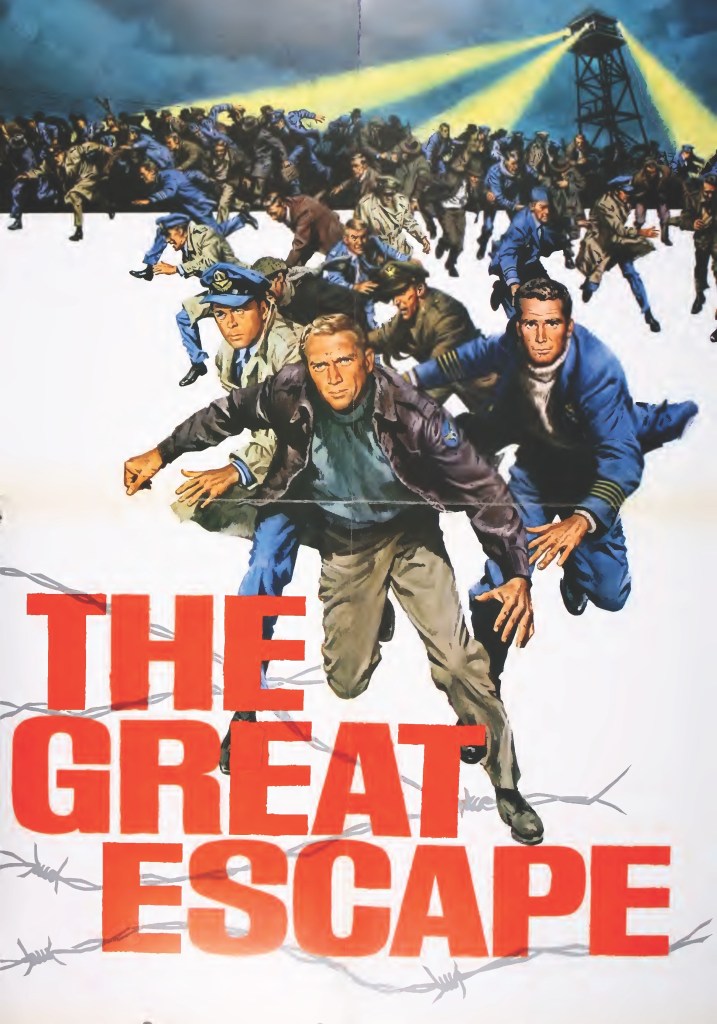
Three outliers which had not made the U.S. Top 100 performed far better in Australia: Battle of Britain with $776,000 tallied up 23rd spot, Born Free with $721,000 homed in on 26th spot and The Great Escape shot up $543,000 for 32nd. Some other movies in the American Top 100 did considerably better in Australia. Lawrence of Arabia (#28) tracked to 8th spot in Australia with $1.1 million. Chitty Chitty Bang Bang and Hatari!, joint 92nd in the U.S rankings, topped out at 29th and 33rd, respectively, in the Aussie version.
Controversy didn’t fly so well. Of pictures that fell into that category, the best results came from Midnight Cowboy. It was ranked 52nd in the U.S. rentals race but clocked up $846,000 in Australia to land 18th place. Conversely, The Dirty Dozen, 16th in the U.S., only managed 28th. But other movies laden with sex, drugs, profanity or violence proved to have less appeal. Bonnie and Clyde (#13 Stateside), Valley of the Dolls (#14), The Carpetbaggers (#26), Rosemary’s Baby (#28), Planet of the Apes (#28) and Who’s Afraid of Virginia Woolf (#37) failed to make the cut.
SOURCES: “All-Time Aussie Rental Champs,” Variety, May 5, 1982, p54; Brian Hannan, The Magnificent 60s, The 100 Most Popular Films of a Revolutionary Decade (McFarland, 2022).
Let me stop you right there. This isn’t a review of this particular movie, you’re probably sick to death of those already, and it’s not some kind of Scorsese retrospective, but an expression of what it’s like to live through the transformation of one of the greatest directors Hollywood has ever produced. That zipping excitement when you first encounter a new Hollywood animal and when he charges down a different track or seems to lose control.
Catching up on a director’s life work via a carefully-curated retrospective hasn’t got an ounce of the flavor of living through it, from the days when film festival break-outs were not the carefully-orchestrated distribution and publicity machines they are now.
I first encountered Scorsese before a clever journalist had coined the rather derisory notion of a Brat Pack, when the director was just another new voice clamoring for attention in a world of considerably more cinematic noise than exists today, when MCU and streaming didn’t exist, and audiences could find massive variety every time they attended the cinema.
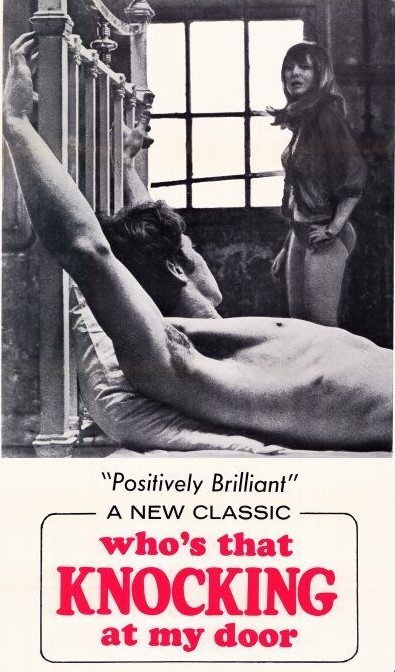
Who’s That Knocking at My Door slipped through the arthouse cracks in 1967 – the year of The Graduate, Guess Who’s Coming to Dinner, In the Heat of the Night, The Dirty Dozen and El Dorado. I didn’t see it then. I would be surprised if anyone did. Nobody was ready for that brash style with its insistent use of pop/rock music. I caught up with a few years later when the Scorsese we know now was still in embryo form.
Sure, Mean Streets (1973) gave strong indication of the gangster path towards which Scorsese was inclined, but it wasn’t so obvious then that he would make that genre his own, not when he interspersed that with a tale of Depression-era hobos, Boxcar Bertha (1972), and Alice Doesn’t Live Here (1974), a proto-feminist narrative whose stunning tracking opening set out his technical directorial credentials. And it was anybody’s guess which way he’d go from here.
And I doubt if anyone expected Taxi Driver (1976), the moody glimpse of the New York underbelly with a psychopath hero, and certainly after that exploded at the box office and had critics purring, nobody would guess his career would take a musical turn, New York, New York and The Last Waltz in consecutive years. You might consider Raging Bull (1980), prototypical Scorsese. But the truth is, he was never typical. He jumped from project to project in a manner that only appeared to make sense to himself.
Some choices were so atypical you wondered if there had been any through-thread – what possibly connected King of Comedy (1982) to The Age of Innocence (1993) and Hugo two decades later. Certainly, when he imbibed a deep spiritual draft, you could make a thematic connection between The Last Temptation of Christ (1988), Kundun (1997), and Silence (2016).
But by this point he had achieved Hollywood nirvana, the mixture of critical adulation that put him top of the hitlist of those studios with one eye on the Oscars and bouts of box office glory that kept the same studios sweet. If he ever felt the need to revive a fading career he could churn out the likes of apparently mainstream but dark-tinged Cape Fear (1991), The Aviator (2004), Shutter Island (2010) and The Wolf of Wall Street (2103). And at the back of your mind, as a fan, was the question of how long would it take him to return to the gangsters. If you had Goodfellas (1990) forever etched on your mind, Casino (1995), Gangs of New York (2002), The Departed (2006) and The Irishman (2019) seemed almost always within reach.
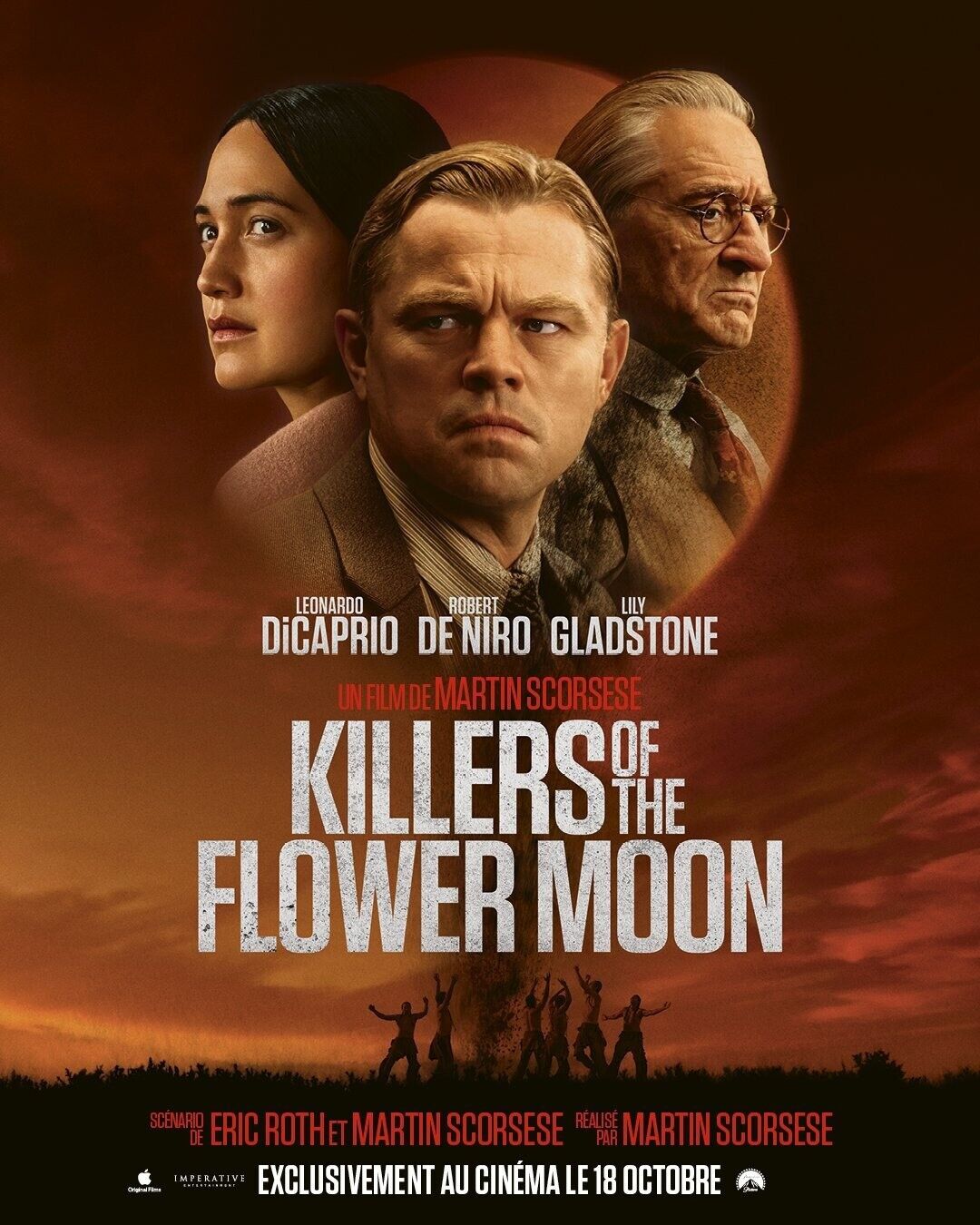
Of course, he can hardly be separated from Robert DeNiro, his go-to star, ten teamings in all including the current number. And for a DeNiro substitute, Scorsese didn’t go far wrong with Leonardo DiCaprio, six including the new one. Stars with an edgy side were attracted to Scorsese and vice-versa.
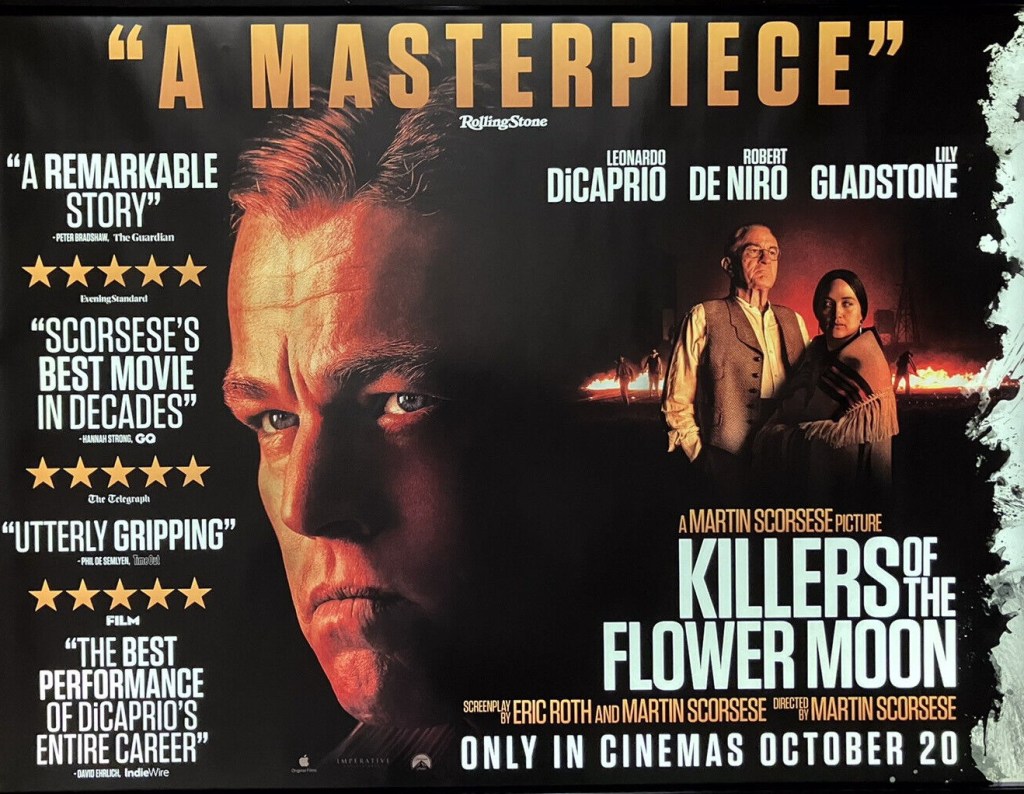
It’s perhaps no coincidence that DeNiro and DiCaprio play murderous relatives in Killer of the Flower Moon, but the performances both deliver are so subtle, so far removed from what Scorsese’s asked of them before, as to point them both in the direction of the Oscar.
You think you kind-of know what you’re going to get with Scorsese, but, more than any other director, he whips the ground out from under you. Killers of the Flower Moon is bereft of the Scorsese trademarks, voice-over, exuberant violence, thumping soundtrack.
So when you’ve been watching his movies for over half a century, you look on him as you might a favored son, delighted in his achievement. But you don’t want him to stop, you want him to keep going. There must be one more film in him. Like Ridley Scott, he’s more bankable than ever, especially if the streamers are looking for a short-cut to hooking up with the best talent available.
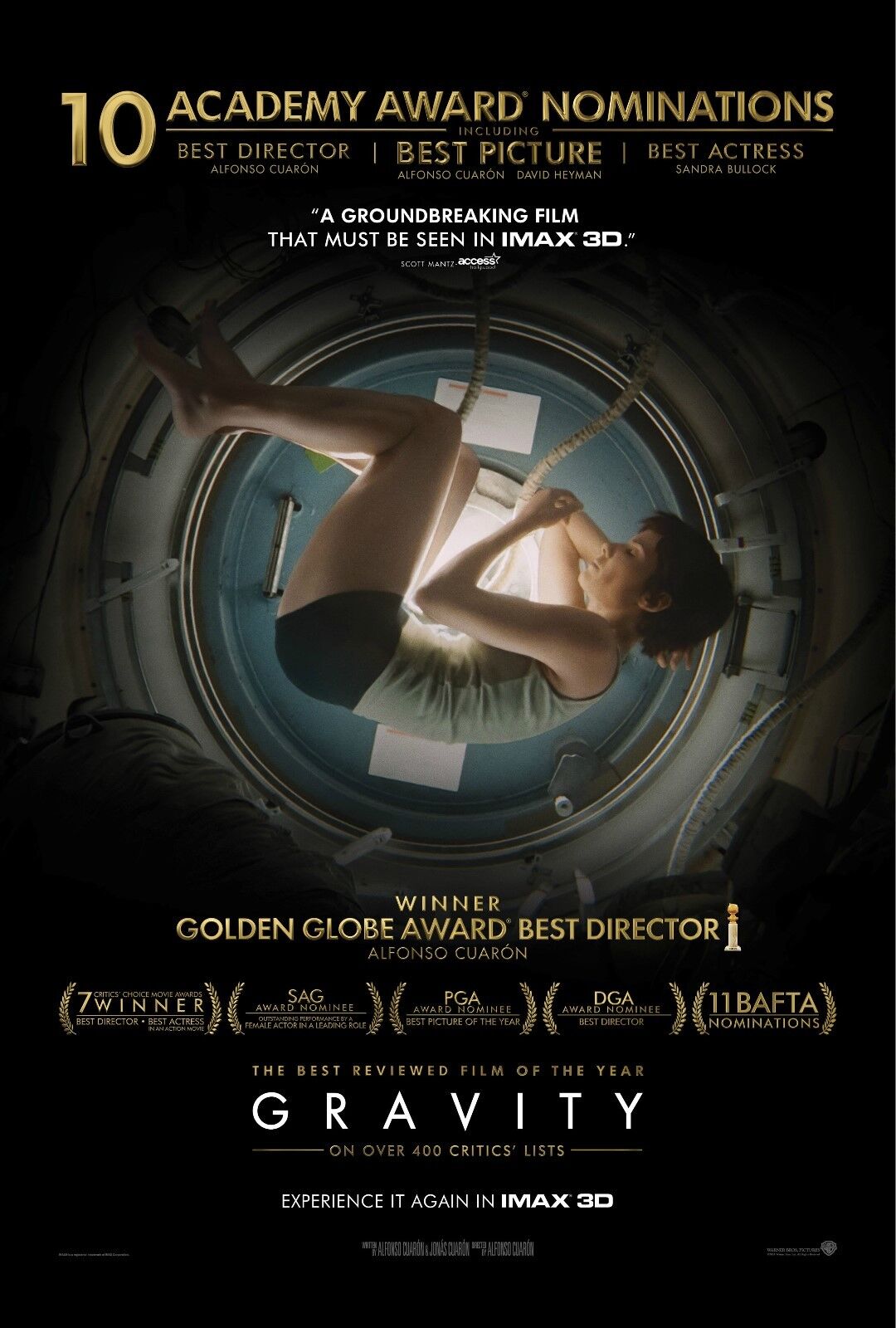
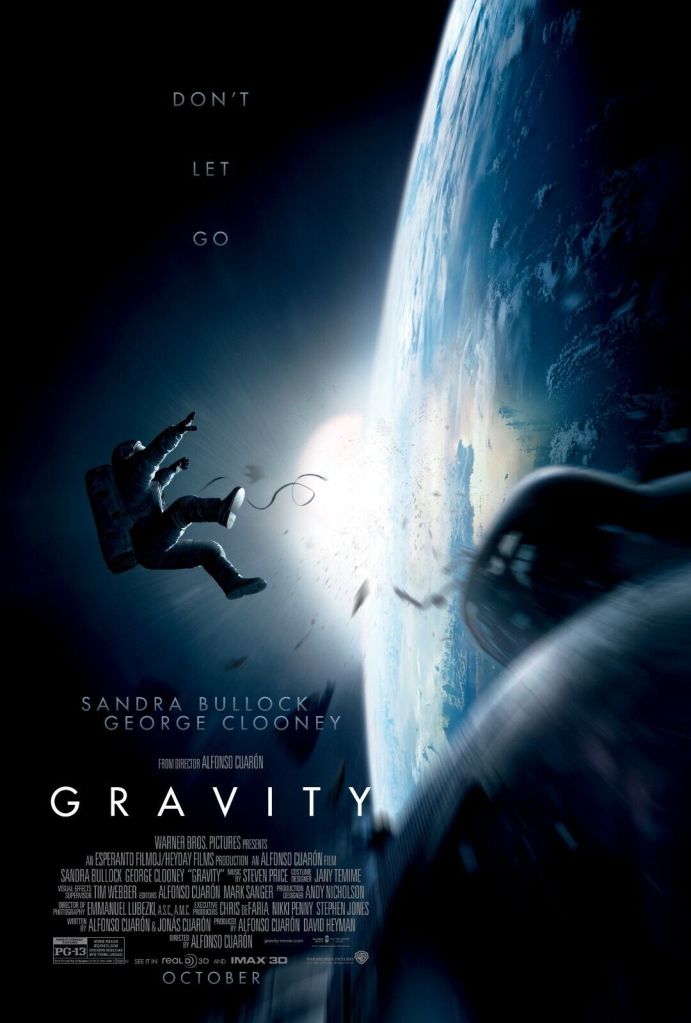
Superb piece of counter-programming saw this sleek sci-fi disaster picture pitted against the uber-lengthy Killers of the Flower Moon. Clocking in at under half the running time of the Scorsese feature (but with the bonus of 3D), almost B-movie style in a mean 93 minutes, it still stands as an awesome achievement by Oscar-winning director Alfonso Cuaron (Harry Potter and the Prisoner of Azkaban, 2004).
Stripping away the tedious back story that generally afflicts sci fi, and bold enough Psycho-style to dispense with a major box office figure halfway through, like John Wick it’s action from the get-go. No aliens here, just a couple of almost nerdy astronauts, sewn-up grieving mother Ryan (Sandra Bullock) and jabber mouth Matt (George Clooney), doing boring maintenance on a pretty mediocre-looking space vehicle, not the kind that’s going to blast off into deep space mapping unknown territories.
Russian space trouble causes a chain reaction that sends hundreds of miniature missiles in diabolic orbit around Earth, hitting the beleaguered Yanks time and again until their entire crew, and that of Russian and Chinese space units, is wiped out. Fits into the survival-in-space mini genre that accommodates Apollo 13 (1995) as easily as The Martian (2105) and the sub-sub-genre of women-surviving- in-space that Sigourney Weaver kicked off in Alien (1979).
So, you know from the off that you’re not going to get a woman bleating about the situation and unable to cope. It’s all about hanging on and using whatever skills got humanity into space in the first to get them back out. As usual, the answer is a pretty straightforward piece of reverse engineering.
But mostly this is sheer spectacle held together by one of the greatest actors of modern times in Sandra Bullock (The Lost City, 2022). When you need someone to emote for the most part from under a space suit, she’s the one. Takes the feet from under you though in the human twist. Why not just let nature take its course, instead of fighting for your life? Might have made a bigger psychological impact if Ryan had just let go, but that’s not, I would imagine, as big box office as the battle for individual survival, especially from someone who has zilch to live for.
I’ve no idea how they achieved the effects and don’t want to know, but a lot of it looks as if shot in-camera, with Ryan floating around in the spaceship. Quite how Cuaron, on triple-hyphenate duties here, writer-producer-director, captured her helplessly turning cartwheels across empty space is anybody’s guess.
If it had been the usual muscled-up candidates hurtling towards their doom, I doubt if audiences would have cared so much, but the everywoman aspects of Ryan nailed it. No point trying to explain the narrative of destruction, suffice to say that whatever deadly comes her way is just as mundane as whatever is helpful.
Pure raw cinematic ride with no let-up in the action. Not sure it will hold up so well on a small screen (though the Blu Ray should provide a hefty impact) so I’m grateful for Warner Brothers for bringing this back for a reissue one-night stand to celebrate its tenth anniversary. Not sure either that it found much of an appreciative audience though. There was just me and one other person in the cinema audience last night.
Your leading man is an alcoholic drug-addled star with substantially impaired sight. Your leading lady, in her first major role, decides she knows more about acting than the very experienced director. But in the world of victimhood, who gets the blame? Not of course Montgomery Clift (The Defector, 1964) or Susannah York (Sands of the Kalahari, 1965), but director John Huston (The Night of the Iguana, 1964).
Huston had been trying to put together a movie about the flawed god of psychiatry, Sigmund Freud, for 13 years. In 1949, with a screenplay by Charles Kaufman and backed by Twentieth Century Fox, it was going to be called Dr Freud. That version was still on the stocks a couple of years later. It wasn’t the first attempt to put the Viennese genius’s life on film, in 1940 Warner Brothers announced Edward G. Robinson in The Life of Freud with a script by Gary Endore.
Huston began serious work on the movie in 1956, but it was only greenlit two years later, after he signed a five-picture $20 million deal with new production unit Seven Arts, set up by Ray Stark and Eliot Hyman, future kingpins at Columbia and Warner Bros, respectively. It was to follow The Man Who Would Be King (not finally made until 1975), for which Huston was scouting locations in Afghanistan. At that point Freud was scheduled for 1959. Then it was Unforgiven (1960) and The Misfits (1961) that came first.
Mostly, the delay was caused by the screenplay. Huston had handed the task to celebrated French philosopher and playwright, who with what amounts to contempt for Hollywood, had written a 300-page script. His next attempt was 780-pages. Read that and weep, Christoper Nolan and Martin Scorsese, this was a 10-hour movie. When questioned, Sartre retorted “so make a 10-hour film.” Huston contemplated turning the script into two unrelated movies, perhaps in the vein of Young Tom Edison and Edison, the Man (both 1940).
Sartre spent two weeks at Huston’s home in Ireland, with Reinhardt on hand as well, trying to condense the material. But he spoke so rapidly that Huston confessed “I could barely follow even his basic thought processes….sometimes I’d leave the room in desperation, on the verge of exhaustion from trying to follow what he was saying.” Huston could not fault Sartre’s diligence. The playwright rose at 5am and would have 20-25 pages ready for discussion five hours later.
Sartre was paid $40,000 for his screenplay. Kaufman was brought back on board but his work didn’t gel with Huston’s vision. Wolfgang Reinhardt, whose name also appeared as producer, was more involved on the script. His relationship with Huston went back to Juarez (1939) on which they were co-writers and Dr Ehrlich’s MagicBullet (1940), for which Huston was credited with one-third of the script and Reinhardt was producer. But Reinhardt hadn’t received a screenplay credit since Juarez and his last Hollywood picture as a producer was Caught (1953). More recently, he had found work in Germany on The Trapp Family (1956). According to Huston, he was “misunderstood, distrusted and ill-used in Hollywood.”
Eliot Hyman questioned Reinhardt’s contribution. In addition to snagging $30,000-$35,000 and a 7.5 per cent profit share for his producer duties, Reinhardt was being paid $300 a week plus expenses for screenwriting, fees Hyman considered “out of line.”
Huston was determined that “Freud’s descent into the unconscious should be as terrifying as Dante’s descent into Hell.” Sartre was viewed as having not just objectivity but as someone who knew Freud’s work intimately. But clearly major work was required to trim the Sartre script. It took six months to reduce the material into a workable script. Naturally, Sartre objected to the reworking and wanted his name removed.
Eventually, with the project at an impasse, Huston turned to leading British psychiatrist Dr David Stafford-Clark to provide clarification. Clift, who as a patient had considerable experience of psychiatrists, insisted on joining their discussions, but “his presence served only to delay and confuse.” When asked to leave, he stood outside the door and cried, then “drank himself unconscious.”
That should have been warning enough. Having worked with an equally addled Montgomery Clift on The Misfits (1961), Huston might have thought twice about going back into the lion’s den. But, while not covered in box office glory, The Misfits was superlative, with all three principles turning in excellent performances. And in any case, Clift was the go-to actor for the tortured character.
Eva Marie Saint (The Stalking Moon, 1969) was first choice for the role of troubled teenager Cecily and after she turned it down Huston approached Marilyn Monroe whose psychiatrist advised against it. So, it went to 22-year-old English actress Susannah York, who had attracted Hollywood’s attention after two British films – Tunes of Glory (1960) and Loss of Innocence / The Greengage Summer. Unusually, this was not a romantic part, treatment of this patient critical to Freud’s analytical breakthrough. Karl Malden (Pollyanna, 1960) was offered the second male lead, but due to his unavailability it provided a comeback for Larry Parks (The Jolson Story, 1946) who hadn’t worked in Hollywood since 1954.
Huston recalled, “He had deteriorated to a shocking degree… I should have dropped Monty…but I didn’t. I thought that when we got on the set and he had lines he would be all right.”
Clift continually tried to rewrite the movie. He had got hold of previous copies of the script and produced his own indecipherable version and spoke the lines in an infantile manner. “Finally, I realized this was primarily a stall for time,” said Huston. “Monty was having difficulty memorizing the lines. I was surprized at this because he had done so well during The Misfits.” But those lines were simple compared to the long, complicated speeches of Freud.
“I’m sure Monty had almost no conception of what he said in the picture – yet he had the ability to make you believe what he did.” Eventually, his lines were written on boards, on the labels of bottles, door frames and other places on the set. Added Huston, “There was a mist between him and the rest of the world that you simply couldn’t penetrate.”
Huston also encountered problems with York. “Susannah was the personification of the uninformed arrogance of youth. Shortly, under Monty’s influence, she became convinced she was entitled to scientific opinions regarding a subject of which she was woefully ignorant.”
She and Monty would collaborate to rewrite their scenes. York refused to do a scene as originally written until a call to her agent changed her tune.
It took all Huston’s experience to hold onto his temper but a confrontation with Clift in his dressing-room resulted in a door slammed so hard it shattered a mirror. That was later conflated into Huston smashing furniture and tearing the couch apart. Huston was also blamed for Clift receiving rope burns during the climbing sequence. In fact, the shots were arranged so that after just holding on to the rope for the short period required, the actor could let go and land a few feet down on a pile of mattresses. Instead, he slid down the rope, holding on with his hands.
“My reputation for cruelty appears to stem directly from this one scene,” complained Huston, convinced the rope burns were Clift “for his own reasons beating himself up.”
Cinematographer Douglas Slocombe developed a technique of three-plane camerawork to help audiences distinguish between reality, dreams and memory. Scenes where characters recalled memories were shot through a small clear-glass plate mounted on the lens matte box. Dreams acquired an extreme black-and-white effect with chalky faces and other details standing out as luminous in tunnels of darkness. This was achieved through a combination of dramatic contrast in photography, stock and lab work.
The production spent five weeks at the Bavaria Studios in Munich before shifting to Vienna, which included 10 days of night shooting.
Universal underwrote the movie, and with To Kill a Mockingbird (1962) also on its roster, intended to celebrate its golden anniversary in fine style with “record rentals” from a raft of movies appealing to the public and the critics.
Freud’s daughter Anna and son Ernest didn’t take kindly to Hollywood’s interpretation of their father’s life and disassociated themselves from the movie and the Viennese hierarchy objected to the film’s louche elements.
Filming began in August 21, 1961, including three weeks on location in Vienna, and was due to wrap on December 5. That it took another two months to complete, (final shooting date was February 10, 1962) inflating the budget, was laid at the foot of Clift. Never mind the drink and drugs he was consuming in mighty proportions, he had cataract problems and could hardly see.
Universal sued Clift for $686,000 for not acknowledging his cataract problems prior to filming, an issue that prevented him memorizing his lines. Clift counter-sued for the remaining $150,000 owed from his $200,000 fee, claiming the problems had developed during filming. “I refuse to accede to the defendant’s demand that this condition…was responsible for delays to the picture.” Firemen’s Fund Insurance, whose policy covered the actor for a year from April 1, 1961, with the proviso the movie finished by December 5, 961, denied liability.
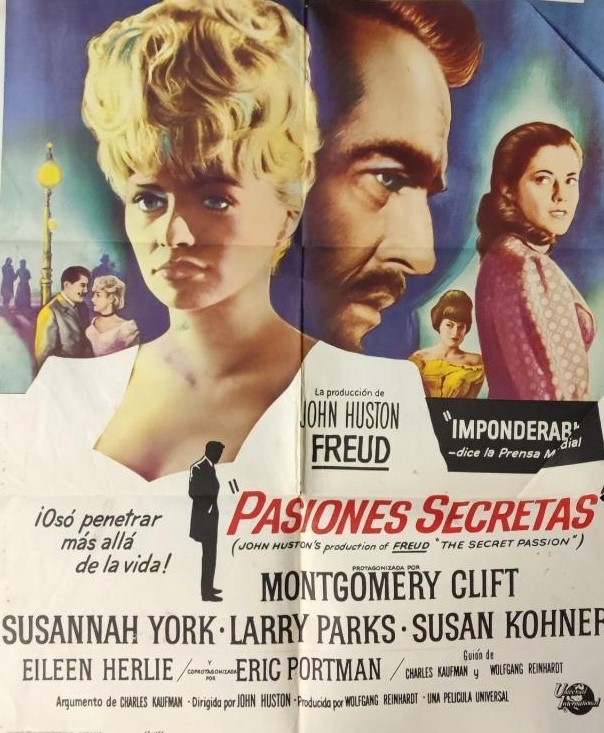
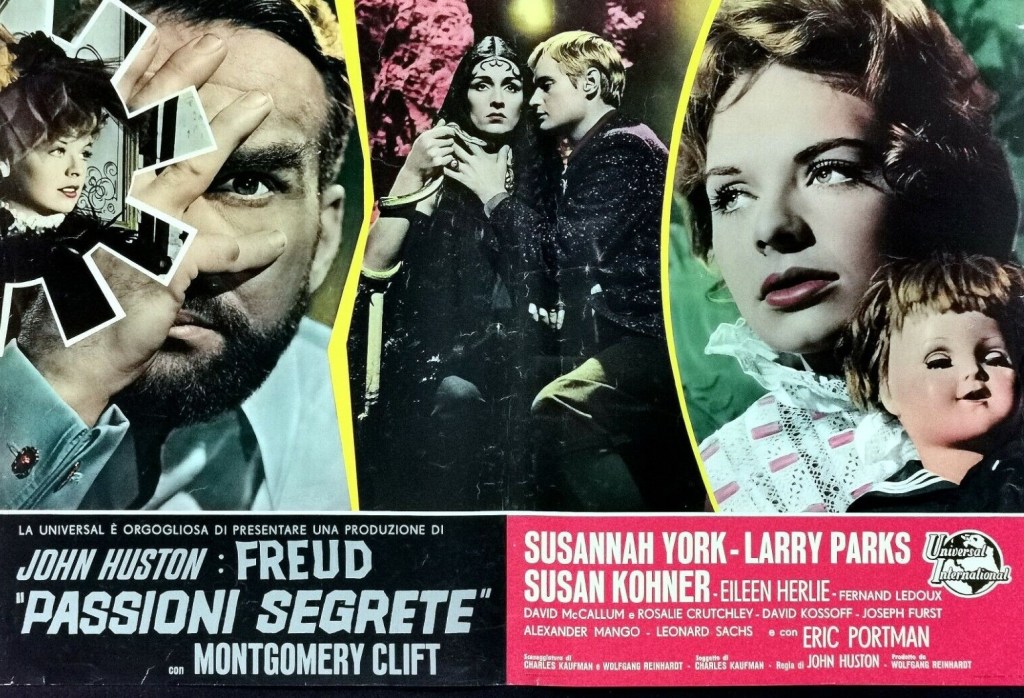
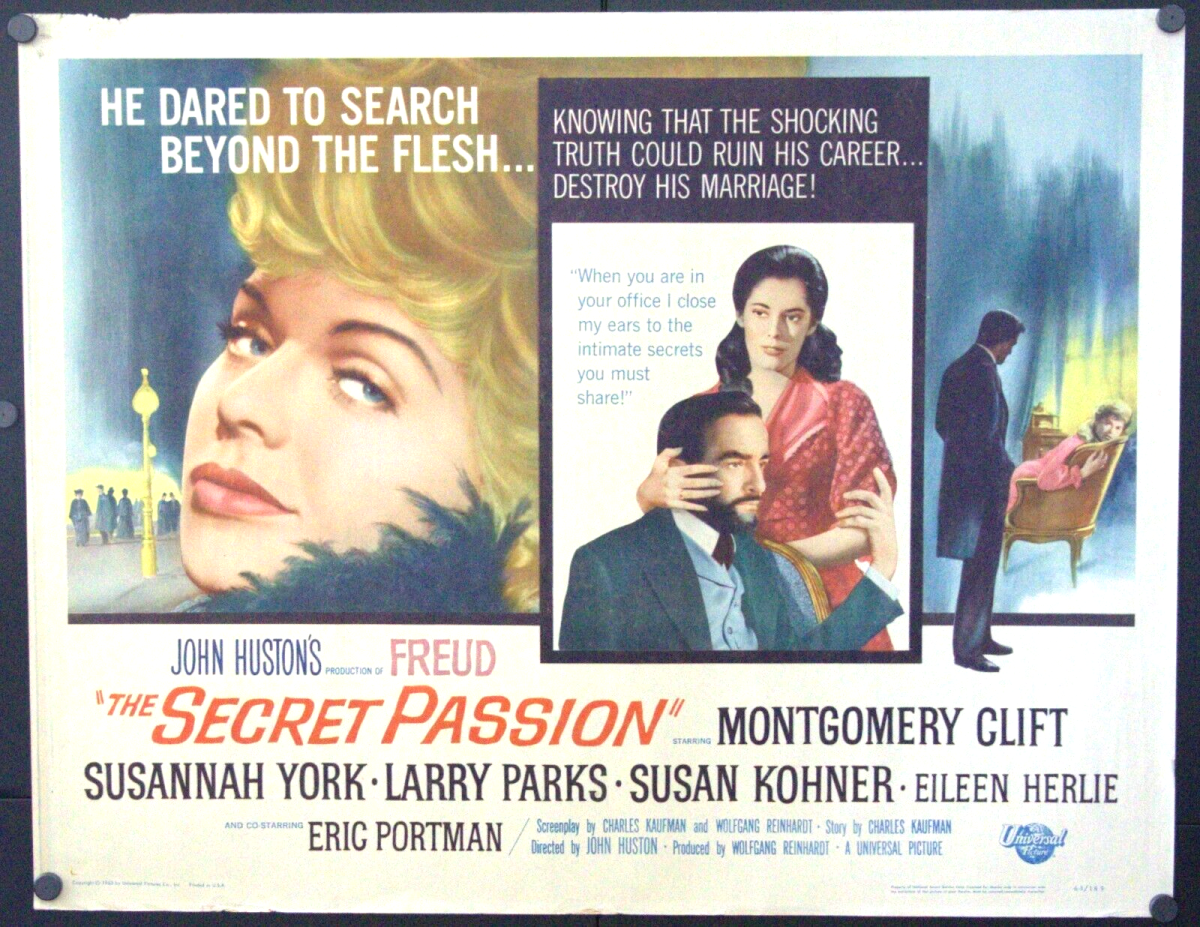
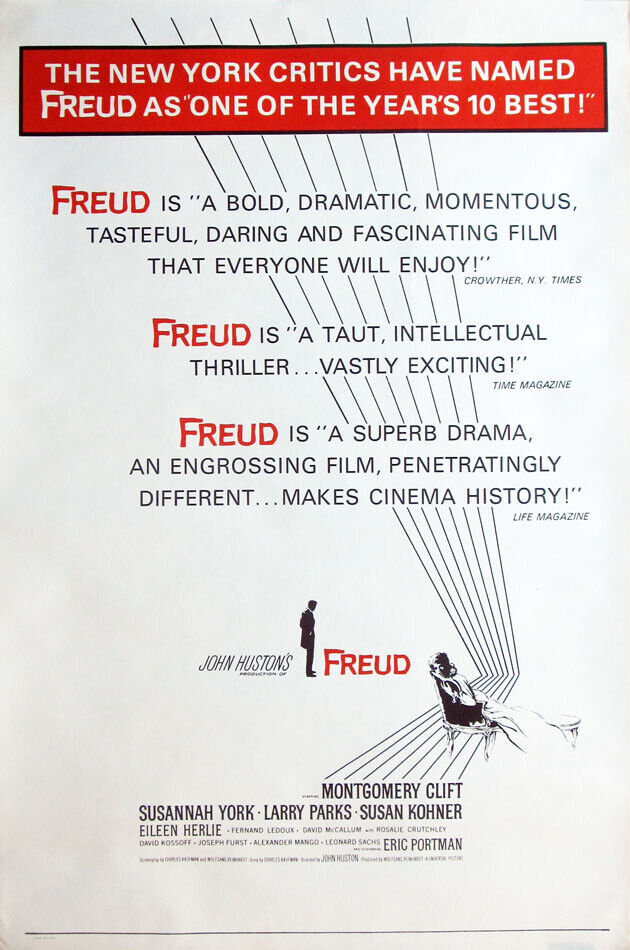
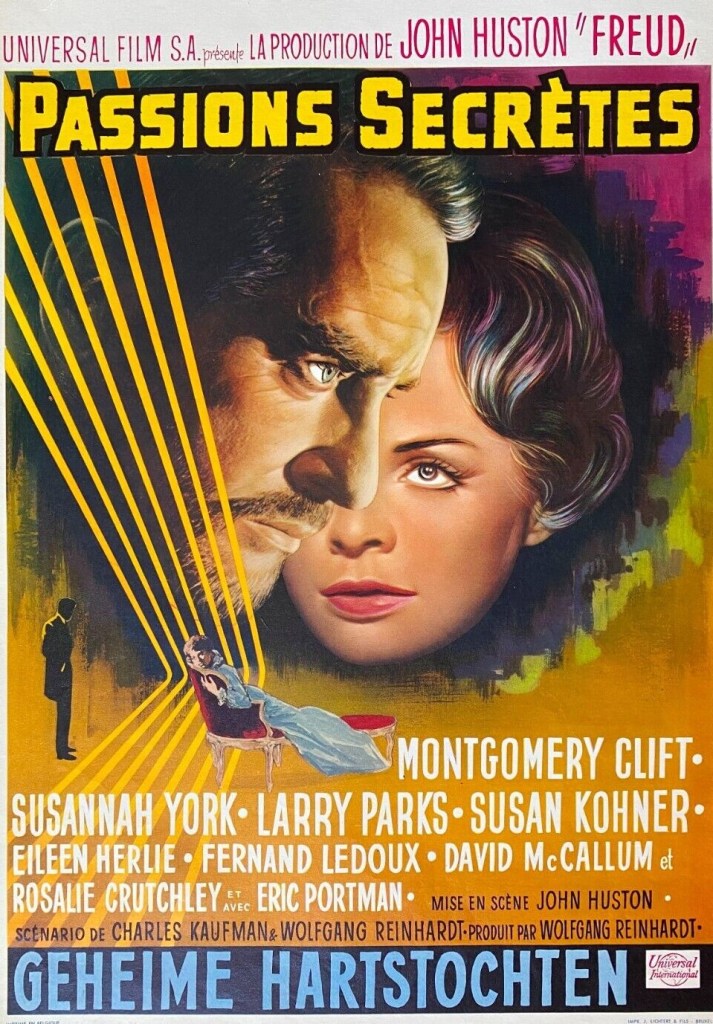
Universal was concerned that the title would mean little to the general public and pre-release toyed with changing the title to Freud: The Dark Passion but agreed, in the end, not to “tamper” with it. However, exhibitors disagreed. And once Minneapolis second-run and neighborhood cinema owners refused to book it under the existing title, it was changed to The Secret Passion, which at least got it through the door with bookers even if the public remained wary. On posters, The Secret Passion part of the title grew bigger and bigger until the Freud element almost disappeared. The film was cut after initial release but the DVD shows the full version.
Despite critical approval and a 12-week run in New York and some decent runs in smaller houses in the country’s bigger cities, it was a flop, not managing the $1 million in rentals required to earn a spot on Variety’s annual box office chart.
SOURCES: John Huston, An Open Book (Columbus books, 1988) p294-305; “Memo from Eliot Hyman,” July 15, 1959, United Artists Archive, University of Wisconsin, Box 7, Folder 7; “Endore for Freud,” Hollywood Reporter, February 24, 1940, p2; “Robinson As Freud,” Box Office, March 2, 1940, p2”; “Dr Freud Bio On Fox Docket,” Box Office, September 17, 1949, p19; “20th Lead with Five in Biopic Sweepstakes,” Variety, January 24, 1951, p5; “Freud Biopic 1st Hyman 7-Arter,” Variety, July 30, 1958, p3; “John Huston’s Next Spot – Afghanistan,” Variety, October 15, 1958, p19; “Huston Seeks Saint,” Hollywood Reporter, November 10, 1958, p2; “Universal Unchained,” Variety, August 19, 1959, p5; “Huston in on Freud Biography,” Variety, October 28, 1959, p11; “Sartre Script on Freud: 780 Pages,” Variety, June 29, p3; “Freud Rolls August 21,” Variety, July 26, 1961, p5; “Freud Moves Location,” Hollywood Reporter, October 12, 1961, p6; “Freud on Night Shift,” Hollywood Reporter, October 24, 1961, p3; “Freud Film Not To Liking of Kin,” Variety, November 1, 1961, p2; “Three-Plane Photography Developed for Freud,” Hollywood Reporter, December 19, 1961, p11; “Huston’s Freud Ends Photo Phase,” February 14, 1962, p4; “Universal Sues for $600,000,” Hollywood Reporter, April 30, 1962, p3 “Montgomery Clift’s Eye Trouble,” Variety, June 5, 1963, p5; “U’s Insurance Claim on Monty Clift,” Variety, June 27, 1962, p7; “It’s Plain Freud, U Won’t Tamper,” Variety, October 3, 1962, p3; “Never Heard of Freud,” Variety, October 9, 1963, p5; ’“Top Rental Films of 1963,” Variety, January 8, 1964, p37.
The Oppenheimer of its day. Instead of splitting the atom, seizing on inexplicable division within the brain. Rather than untapping raw energy concealed inside a previous passive element, delving into the raging unknown of the human psyche. While lacking Christopher Nolan’s cinematic bravura and his post-discovery crucifixion of the main character, nonetheless an intense, under-rated piece. Without doubt one of the few genuine examples of ideal casting – tortured actor playing tortured character.
In the main it’s a tale of three case studies: Oedipal complex exhibited by suicidal Carl (David McCallum), the paternal fixation of Cecily (Susannah York), and Freud’s own sexuality, his strong feelings for his mother. Along the way there’s a potted history of psychiatry. Freud eventually discards the traditional route of hypnotism for getting to grips with a character’s malfunctioning brain and invents the new technique of simply talking to the person. Bit by bit like a forensic analyst going deeper and deeper into character-forming events in early childhood that trigger shame, revulsion and guilt in emotional maturity.
In the case of Cecily, her inability to face the consequences of early circumstances – she was abused by a father she had convinced herself she adored – forces her either to reinvent key moments of her life (believing her father died in a hospital rather than a brothel) or to become afflicted by blindness, phantom pregnancy and paralysis.
It doesn’t shy away from the intimacy of the psychiatrist-patient relationship that can lead to a vulnerable client falling in love with her doctor or, conversely, the physician taking advantage. Freud often felt bound up with his patients’ dilemma, some potent imagery shows him physically unable to free himself from a client.
It unwinds like a detective story, almost a film noir where the investigator goes down the wrong path and finds clues buried within himself, becoming aware of how complicit the mind can become in concealing from the conscious part of the brain what the unconscious cannot deal with.
Theoretically, with mental health issues more to the fore these days, we are all familiar with the causes of emotional disturbance but, in fact, far from this being old hat, in the same way as Oppenheimer shed new light on a significant event with which we are all familiar, I found it quite fresh, especially as, in his intensity, Freud could have been blood brother to the renowned physicist.
As you might expect, Montgomery Clift (The Misfits, 1961) is quite superb. You might think there’s not much acting involved here, Clift just being himself. But compare this performance with The Misfits or the later The Defector (1964) and you can see both similarities and considerable differences. No actor was more adept at revealing soul through the eyes.
The less experienced Susannah York (They Shoot Horses, Don’t They, 1969) and David McCallum (Sol Madrid / The Heroin Gang, 1968) overplay their hand, depending too often on physical expression to show torment. Larry Parks (The Jolson Story, 1946), in his final movie, is more discreet as the shrink falling dangerously in love with his patient without stopping to examine what forces led her to harbor romantic inclination towards him.
As with Oppenheimer, information dumps are made credibly dramatic, and Freud’s lecture on infant emotion to a shocked audience is a stand-out.
John Huston (The Night of the Iguana, 1964) wisely uses the Viennese backdrop as window dressing rather than the camera over-indulging in scenery, although there is a hint of the Sherlock Holmes in scenes of illicit night life.
French philosopher and playwright Jean-Paul Sartre (The Condemned of Altona, 1962) worked on the screenplay along with Charles Kaufman (Bridge to the Sun, 1961) and Wolfgang Reinhardt (Hitler – The Last Ten Days, 1973).