How the Box Office Was Won – 1963

Although the weekly computerized box office system covering the Top 50 pictures and drawing on information supplied by nearly 1,000 cinemas in the United States did not appear, courtesy of Variety magazine, until 1969, there still existed a weekly tabulation, based on receipts from a smaller base from which the magazine produced a weekly Top Ten. And although box office watching was not yet a recognized leisure activity, what movies made and their rankings on the weekly box office chart were compulsive reading for the thousands of cinema owners hoping to snap up the next big one and the Hollywood studios gambling they had released the next big one.

So I thought it might be fun to track box office throughout the year, based on that weekly chart.

By 1963 Hollywood had turned into a casino. To beat the growing threat of television, the movie industry was committed to bigger pictures with, unfortunately, bigger budgets, heralding in the roadshow era, the 1960s equivalent of 3D or Imax with premium prices and reserved seats and two shows a day. Despite John Wayne’s 1960 epic The Alamo proving  such gambles could spectacularly backfire, studios had a slate of movies that, if failures, could clean them out. Already fears were mounting that Brando’s Mutiny On The Bounty, opened in October 1962, would never recover its $19m cost.

Cinerama staked a fortune on its first story-led movie How The West Was Won and Columbia Pictures had bet the house on a 3-hour 20-minute opus Lawrence of Arabia that starred a complete unknown. The latter had opened at Xmas 1962 and if it was to make its money back had to play well night through most of 1963 on the roadshow circuit. If that wasn’t enough, blizzards mashed up the country and a three-month newspaper strike in New York meant – in the days before television marketing – there was nowhere to promote big new movies, delaying the U.S. opening of How the West Was Won.  .

But Lawrence was monumental, playing to capacity crowds for a dozen weeks at the Criterion in New York, clearing $43,000 – equivalent to over $400,000 now – every week. In in the fifth week, by dint of adding an extra show, it broke its own record.

Roadshows opened in a handful of cinemas – knocking up revenues today’s exhibitors would envy – and playing seemingly forever (in the UK, for example South Pacific was being readied for general release four years after its premiere).

So big movies were slow-burners and Lawrence didn’t top the charts till week six of the 1963 box office calendar . Its reign lasted only two weeks, replaced by Gregory Peck’s To Kill A Mockingbird which in one cinema alone, New York’s legendary 6,000-seater Radio City Music Hall, had taken $160,000 (about $1.5 million now). That was knocked aside by the season’s first surprise hit, Disney’s Son of Flubber which went on to become the year’s seventh top grosser – ahead of Mockingbird. It wasn’t the only surprise. Biblical tango Sodom and Gomorrah went to number one in its first week, a rarity, although it quickly faded. The third surprise chart topper, in March, gave comic mainstay Jack Lemmon his first serious role in Days of Wine and Roses. Hitchcock’s The Birds took over the perch in mid-April before How The West Was Won which reigned for weeks.
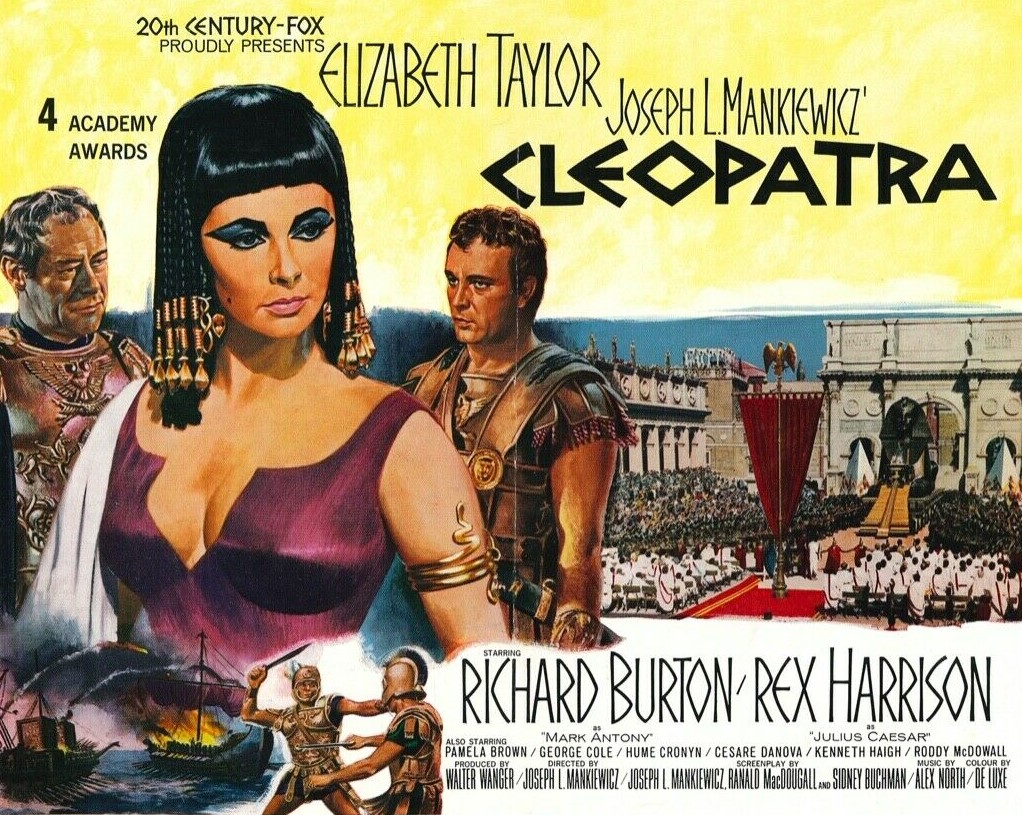
Over the January-April period, other hits, that is enjoying some weeks in the Top 12 chart,  in their opening stanzas were Charlton Heston’s Hawaiian movie Diamond Head, Yul Brynner and Tony Curtis squaring up in Taras Bulba, Laurence Olivier drama Term of Trial, Anthony Quinn in Barabbas, Dean Martin comedy Who’s Got The Action, small-budget  David and Lisa and the pairing of Robert Mitchum and Shirley Maclaine (sparking their affair) in the adaptation of Broadway hit Two For the Seesaw. Bear in mind, however, that initial success was no guarantee – what played to packed houses in New York or Los Angeles might empty theatres in Arkansas.

But the year’s biggest gamble appeared to be already paying off. Cleopatra had sold out its first 19 nights six months ahead of its June premiere and taken $8m in cash advances from cinemas in 20 cities. And there was also the little matter of the forthcoming release of the British box office sensation Dr No.  

The summer period – May through to the end of August – was marked by three enormous gambles  as How The West Was Won, Cleopatra and 55 Days At Peking took center stage. The western boasted  John Wayne, James Stewart and Debbie Reynolds. Cleopatra was the most expensive film ever, at four hours nearly the longest and, thanks to Burton-Taylor’s shenanigans the most scandal-ridden.

Summer as we know it – with Memorial Day and Independence Day massively important – did not exist in the 1960s.  Until the roadshow, opening dates were not juggled, movies simply released as soon as made. The importance of advance bookings for roadshows altered the pattern. Unlike now when saturation screening means nobody is turned away on opening weekend, the definition of a hit was being made to wait . Epics like El Cid,  Lawrence of Arabia, and How The West Was Won were publicized months ahead and Cleopatra set the marketing bar at insane levels.
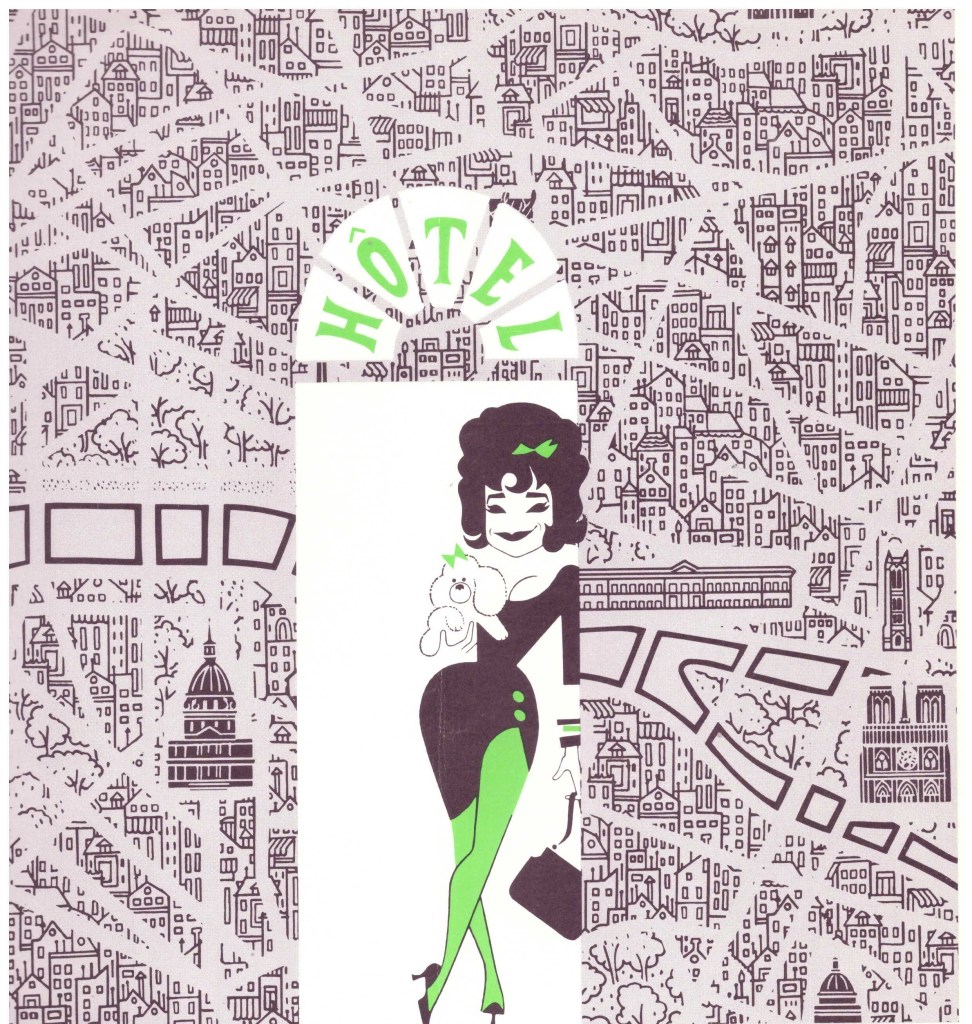
That’s Irma, by the way, of “Douce” fame.

How the West Was Won was No 1 in the Variety chart for eight weeks, notching up fabulous returns, but nothing to match Cleopatra which peaked for nine weeks and grossed $3.1 million in 33 days – faster than any roadshow  before. 55 Days at Peking, Samuel Bronston’s follow-up to El Cid, surprisingly not roadshown, grabbed No 1 in its opening week but tumbled fast.  Dr No, pulverizing  the UK box office the previous year, suffered by going on release too fast. Unable, like roadshows, to groom an audience, it didn’t hit number one and lasted only four weeks in the Top Ten. In his last hit for a decade, Brando did better – The Ugly American managing eight weeks, again not a chart-topper..

Others featuring in various slots in the Top Ten were a mean Paul Newman in Hud,  Frank Sinatra in Come Blow Your Horn, the Jack Lemmon-Shirley Maclaine non-musical adaptation of the Broadway musical Irma La Douce, The Great Escape (charting for 13 weeks), and Doris Day in The Thrill of It All. Surprise appearances included Ray Harryhausen’s Jason and the Argonauts, Peter Sellers’ The Wrong Arm of the Law,  Hayley Mills in Summer Magic, Sandra Dee in Tammy and the Doctor and teen dreams Frankie Avalon and Annette Funicello in Beach Party. Biggest disappointment was John Wayne’s Donovan’s Reef  which only lasted one week at in the chart and then on its lowest rung – No 10.

But taboos were broken that summer, changing cinema forever. Sneaking into the Top Ten were the original ‘shockumentary’ Mondo Cane, adult fare like Lillian Hellman’s Toys in the Attic, the first of the British kitchen-sink dramas The L-Shaped Room (“Sex Is Not A Forbidden Word!” the catchy catchline) starring Leslie Caron as an unmarried mother, Joanne Woodward in The Stripper and most, astonishingly of all, Fellini’s 8½.

How studios must have loved the release system in those days. Instead of movies being whipped off screens after three or four weeks or to fit into a preconceived streaming showing, big hits, especially roadshows, could hold onto their screens for months and months.

For the September-to-December period of  1963, the biggest stars were Elizabeth Taylor and Richard Burton. Cleopatra spent another seven weeks at No 1 in the Top Ten, The VIPs three weeks. But Jack Lemmon ran them close as star of the year. Just after Irma La Douce ended a 21-week Top Ten run, Under The Yum Yum Tree snapped top spot in  December. Cleopatra was hardly innocuous, and Irma was a prostitute, but Yum Yum went much further with Lemmon playing a lascivious landlord renting rooms to nubile girls.

Bubbling under the American psyche was a desire for the illicit.  What else explained the appearance in the Top Ten of films about mental illness – Sam Fuller’s Shock Corridor and The Caretakers starring Robert Stack. Even Paul Newman’s latest hit A New Kind of Love pivoted on Joanne Woodward being mistaken for a call-girl. The Top Ten seethed with ‘Adult’ or ‘Continental’ themes  – ‘shockumentary’ Women of the World,  children as feral monsters in Lord of the Flies, the title of the Italian Cannes-winner The Conjugal Bed said it all while In The French Style with Jean Seberg only hinted at it. Fellini’s 8½  paved the way for arthouse break-out  Visconti’s The Leopard starring Burt Lancaster which, incredibly, peaked at No 5.  Sophia Loren led a star-studded European cast in The Condemned of Altona based on the Jean-Paul Sartre book. Robert Wise’s seminal horror film The Haunting spent a week in Top Ten. More significantly, Sidney Poitier broke through the glass ceiling to become the first African American actor to have a significant hit with Lilies of the Field.   

Back in the mainstream, Debbie Reynolds’ Mary Mary, based on the Broadway hit, spent two weeks at No 1. Hollywood stalwarts charting successfully included Kirk Douglas in For Love Or Money, James Stewart (with Sandra Dee) in Take Her She’s Mine, Robert Mitchum (plus sexpot Elsa Martinelli) in African adventure Rampage, John Wayne in spanking good form with Maureen O’Hara in McLintock and  Elvis in Fun in Acapulco. . Surprise successes were The Incredible Journey and television’s Dr Kildare Richard Chamberlain in courtroom drama Twilight of Honor plus two Disney reissues – Fantasia and Kirk Douglas in 20,000 Leagues Under The Sea.

The year’s blockbusters showed astonishing legs – How The West Was Won playing 52 weeks in the Top Ten, Lawrence of Arabia 41.

The Top Ten grossing films of the year were (in order) – Cleopatra, The Longest Day, Irma La Douce, Lawrence of Arabia, How The West Was Won, Mutiny On The Bounty, Son of Flubber, To Kill A Mockingbird, Bye Bye Birdie and Come Blow Your Horn.  

Behind the Scenes: “The Grass Is Greener” (1960)

Cary Grant was coming off a commercial career peak, comedy Houseboat (1958) with Sophia  Loren, Hitchcock thriller North by Northwest (1959) and war comedy Operation Petticoat (1959) all among the top box office hits of their years. He was in enormous demand. In 1960 Jerry Wald wooed him for Tender Is the Night, eventually made in 1962 with Jason Robards.  He went so far along considering Can-Can (1960) that he began working with a voice coach and passed on Let’s Make Love (1960).

The prospect of Lawrence of Arabia – he had been lined up to play the lead over two decades before – reared his head with producer Sam Spiegel eyeing him up for Allenby (played in the 1962 picture by Jack Hawkins). He turned down Lolita and a remake of The Letter. The biggest letdown was John Huston’s The Man Who Would Be King which would have teamed him with Clark Gable. Of the screenplay, Grant commented: “I’ve read it twice and am still uncertain whether it’s fair, good, or perhaps, even excellent.” (It would not be filmed until 1975.)

Also in the pipeline was an intriguing original screenplay in which he and Ingrid Bergman would essay dual roles and his alternative company, Granart, also purchased The Day They Robbed the Bank. (Neither project was made.)

In the face of such indecision it’s not surprising he decided to play safe. The Grass Is Greener would be made by his own company, Grandon, a production outfit set up with director Stanley Donen – they had previously made Indiscreet (1957) – at that point still best known for musicals including Singin’ in the Rain (1951), though he had also directed Grant in the comedy Kiss Them for Me (1957).

Initially Grant cast himself as the American, with Rex Harrison (The Honey Pot, 1967) and his real-life wife Kay Kendall (Once More with Feeling, 1960, also directed by Donen) the titled British couple. Harrison would certainly have brought more natural acidity to the part but he pulled out after his wife died prematurely. Deborah Kerr, the most English of actresses, was ideal for the Earl’s wife.

Robert Mitchum, with whom Kerr had just appeared in The Sundowners (1960), was a late addition as the Yank even though it meant him dropping to third billing for the first time in over a decade. For The Sundowners he had ceded top billing to Kerr on the basis it would be better for the poster, not realizing he would be viewed as the male lead rather than the acknowledged star (not quite as subtle a difference as you might imagine in the cut-throat credits business). Kerr was at an artistic peak, winning her sixth Oscar nomination for The Sundowners. Mitchum, by contrast, nominated in a supporting role for The Story of G.I. Joe (1945) had nary a sniff of peer recognition since.

Jean Simmons (Spartacus, 1960) was a surprise choice for Grant’s character’s ex-lover but was willing to accept lower billing because she was desperate to extend her range by doing comedy. The foursome already had considerable experience working with each other, Mitchum paired with Simmons for Angel Face (1952) and She Couldn’t Say No (1953) while Kerr and Grant had dallied in Dream Wife (1953) and An Affair to Remember (1957). To round things off Kerr had played opposite Mitchum in Heaven Knows, Mr. Allison (1957) and, as mentioned, The Sundowners.

Although the picture was financed by Universal, director Donen was more of a Columbia favorite. On top of Once More with Feeling and Surprise Package for the latter studio, he was contracted to make another four, all to be filmed abroad, the director having set up home in London. Deborah Kerr was involved in Cakes and Ale, based on the Somerset Maugham novel, with George Cukor and was announced as starring in Behind the Mirror (neither film made). Mitchum was also diversifying, the first of a three-picture deal between United Artists and his company being North from Rome (never made), based on the Helen MacInnes thriller.

Shooting began at Shepperton in London on April 4, 1860, but this time round, the personalities did not quite gel. Simmons complained that Grant was “a fuss-budget, everything must be just so.” Although she did admit that his preparation worked wonders. “He’d come forth with the most amusing, polished take, everything so effortless.” Mitchum complained Grant lacked a sense of humor. “He’s very light and pleasant but his humor is sort of old music-hall jokes.”

Despite the high-class cast, Grant had very definite ideas about his star status. In one scene that called for both actresses to be bedecked in expensive jewelry, he instructed the jewels be removed in case the audience was distracted from him.

Grant and Mitchum had one thing in common, a liking for experimenting with drugs. Mitchum’s preference for marijuana was well-known. Although he had been previously jailed for his “addiction,” Mitchum still grew his own. Grant’s drug of choice, on the other hand, was LSD. He had been on a course of LSD treatment since 1958 and was in the middle of coming off the drug. “He was a little weird,” noted Mitchum.

Fittingly, their personality clash was very English, “a mild, undeclared, rivalry.” The battleground was costume, Grant perturbed that Mitchum’s laid-back style was making him look over-dressed while Mitchum complained that he was a glorified feed, employed simply to make non-committal comments in the middle of a Grant monologue.

Grant’s parsimony was also a bit extreme. As part of his invoice for doing publicity on the picture, “not only did he turn in his hotel bills and meal receipts for those four extra days but also the costs of the suits” he had had made in Hong Kong. In other words, he billed his own company. Money paid for these expenses would be deducted from any potential profit he would receive.

Kerr, however, had no complaints. “Between Cary’s superb timing and Bob’s instinctive awareness of what you’re trying to do, this was a very happy film.” But there was one other source of contention. The British media were barred from the set on by Stanley Donen on the grounds that journalists of the more sensation-seeking newspaper were apt to needle actors. Grant softened the blow by arranging to be interviewed once filming was complete.   

However, Variety was able to give the picture a publicity boost by hailing stately home tourism as “a new type of British show business,” reckoning the 400 operations raked in $4 million a year. Average admission prices of 35 cents meant over 10 million visitors a year.

Ironically, the infidelity theme cost The Grass Is Greener a lucrative Xmas launch at the prestigious Radio City Music Hall in New York. The cinema felt the content was not in keeping with Yuletide and opted for The Sundowners instead, the Donen picture shifting to the much smaller and semi-arthouse Astor. Just how important the Hall was to a movie’s public reception could be judged by the takings the previous year for Operation Petticoat (a Granart release), a whopping $175,000 opener. The point was made when The Sundowners grossed $200,000 in its first week, three times as much as The Grass Is Greener.

SOURCES: Scott Eyman, Cary Grant, A Brilliant Disguise (Simon & Schuster, 2020) p339-343,363-368; Lee Server, Robert Mitchum, Baby I Don’t Care (Faber and Faber, 2002) p204-207, 429; Eric Braun, Deborah Kerr (WH Allen, 1977) p176-177; “Deborah’s Cakes & Ale,” Variety, July 15, 1959, p3; “Grant in Original, with Himself and Bergman in Dual Roles,” Variety, September 30, 1959, p10; “Nativity and Grant Combo at Hall,” Variety, December 9, 1959, p9; “Maugham-Hurst Film Location in Tangier,” Variety, January 6, 1960, p167; “Col Extending Donen,” Variety, May 25, 1960, p20; “400 Stately Homes of England,” Variety, June 1, 1960, p2; “Needling and Smartalec British Interviewers Not Allowed In By Donen,” Variety, June 22, 1960, p2; “Infidelity Theme Cancels Grant’s Comedy at Hall,” Variety, September 21, 1960, p7; “Cary Grant’s,” Variety, November 9, 1960, p20; “B’Way soars,” Variety, December 28, 1960, p9.

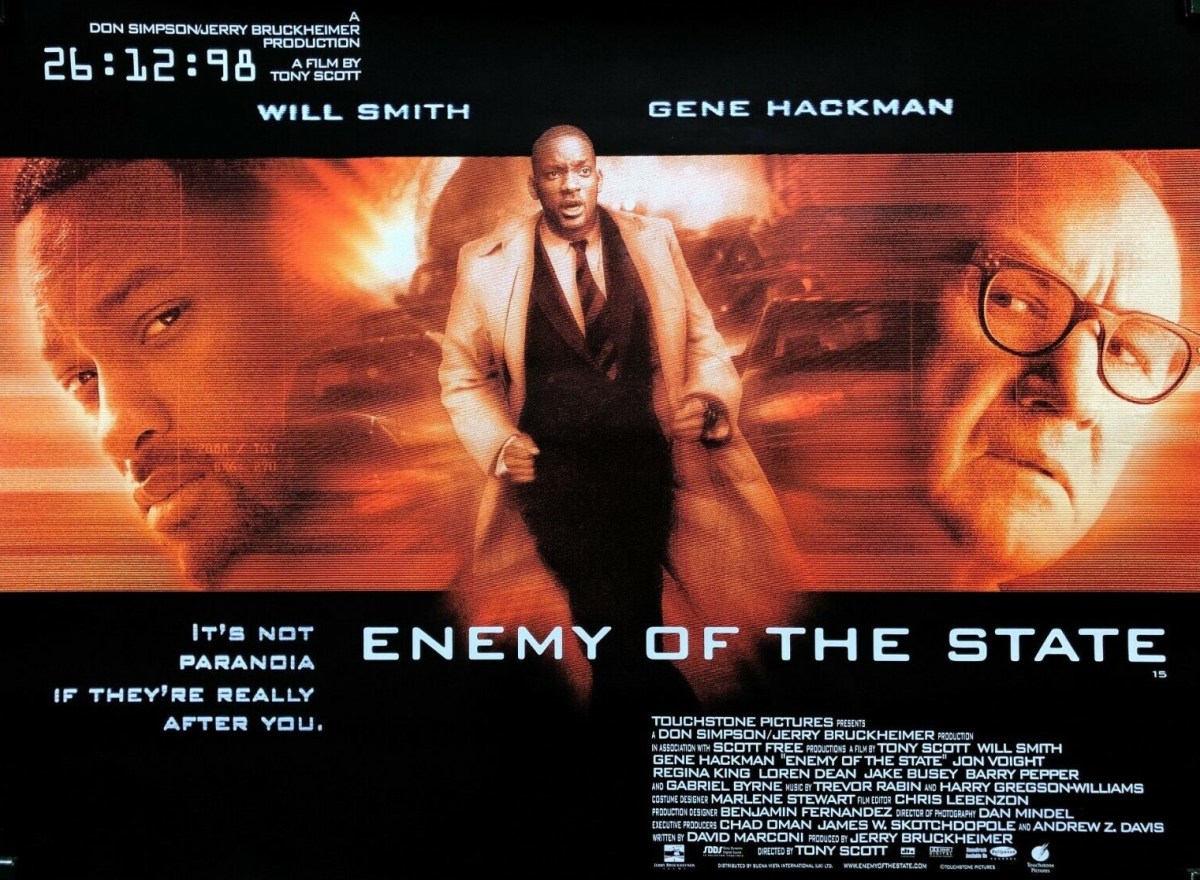
Enemy of the State (1998) ****

You are the star of the show so the last thing you want is to team up with a scene-stealer, but if you want to work with such an renowned talent, what can you do but let him steal.

It says a lot for Gene Hackman’s legendary status that, long past his box office peak in this fast-paced surprisingly contemporary paranoia thriller, his appearance late in the day turns up the heat on Will Smith at an early career pinnacle and at his charming best. You need someone as easy on the eye as Smith to lead the audience through a tortuous plot, centering on the collusion of big business and government to push through a commercially-motivated U.S. Government Act promoting greater surveillance, and someone as inherently gutsy as Hackman to carry the film over the line.

Ironically, the McGuffin is surveillance of the most benign kind, a camera trained on ducks at a river inadvertently picking up evidence of corrupt politician Reynolds (Jon Vogt) overseeing the murder of Representative Hammersley (Jason Robards) who stands in his way. The tape finds its way to an investigative reporter who, pursued by Hammersley’s goons, drops it into the shopping bag of labor lawyer Robert (Will Smith).

Unaware of the reasons why, Robert’s life unravels, Hammersley’s guys fabricating evidence that he has revived an affair with former lover Rachel (Lisa Bonet) and  is involved in Mafia money-laundering, resulting in wife  Carla (Regina King) throwing him out and being fired from his job. Bank accounts frozen (natch!), Robert turns to Rachel for help and she puts him in touch with her source Brill a.k.a Edward Lyle (Gene Hackman), an undercover communications expert who has been feeding Rachel information. When Rachel is eliminated, Lyle teams up with Robert and together they come up with a daring plan to incriminate Reynolds and absolve Robert.

Although brim-full of twists and turns, and a relentless government hit squad, the real joy of the picture is Tony Scott’s direction. Using his trademark speedy cuts, and scaring the life out of the audience regarding the depth of available surveillance, this is a thriller tour de force. The Top Gun (1986) director is at the top of his game, seamlessly shifting keys, racketing up the tension, the NSA’s encroachment on civil liberty so extensive it appears nobody can escape a web that is inexorably drawn tighter.

And it’s a fabulous double act, the innocent but slick Robert coupled with the world-weary but clever Lyle, the non-stop-talker versus the virtually silent. It’s the cat and mouse game where the mice turn out to hold the aces. Just brilliantly done and at such a speed. A plot that could easily become convoluted is superbly handled.

Will Smith (Independence Day, 1996) is given free rein and he’s good value for money, holding audience attention seamlessly, and until Gene Hackman (Crimson Tide, 1995) enters the frame he is running away with the picture. Their acting styles are completely different and you shouldn’t really be comparing them but when it comes to the crunch Hackman nails it every time and with hardly doing anything. Lisa Bonet (Angel Heart, 1987) makes a welcome return to the big-budget Hollywood scene. Jon Voigt (Midnight Cowboy, 1969) enjoys one of his better supporting roles.

The screenplay by David Marconi (The Dark Side of the Moon, 2015) is quite superb, not just with a whole series of riveting set-pieces and some terrific dialogue, but also with more humane touches, such as Robert’s encounter with his kids or his embarrassment shopping for lingerie in Victoria’s Secret.

And if there were not bonuses enough, there’s a virtual smorgasbord of talent in the supporting cast starting with 26-year-old Regina King (Boyz in the Hood, 1991) through Barry Pepper (Saving Private Ryan, 1998), Scott Caan (Ocean’s Eleven, 2001), Jake Busey (Starship Troopers, 1997), Jason Lee (Vanilla Sky, 2001) and Jamie Kennedy (Scream, 1996)  all the way to Gabriel Byrne (The Usual Suspects, 1995), Ian Hart (Backbeat, 1994) and Jack Black (School of Rock, 2003).

Stone cold classic not to be missed and worth another watch if you have viewed it already.

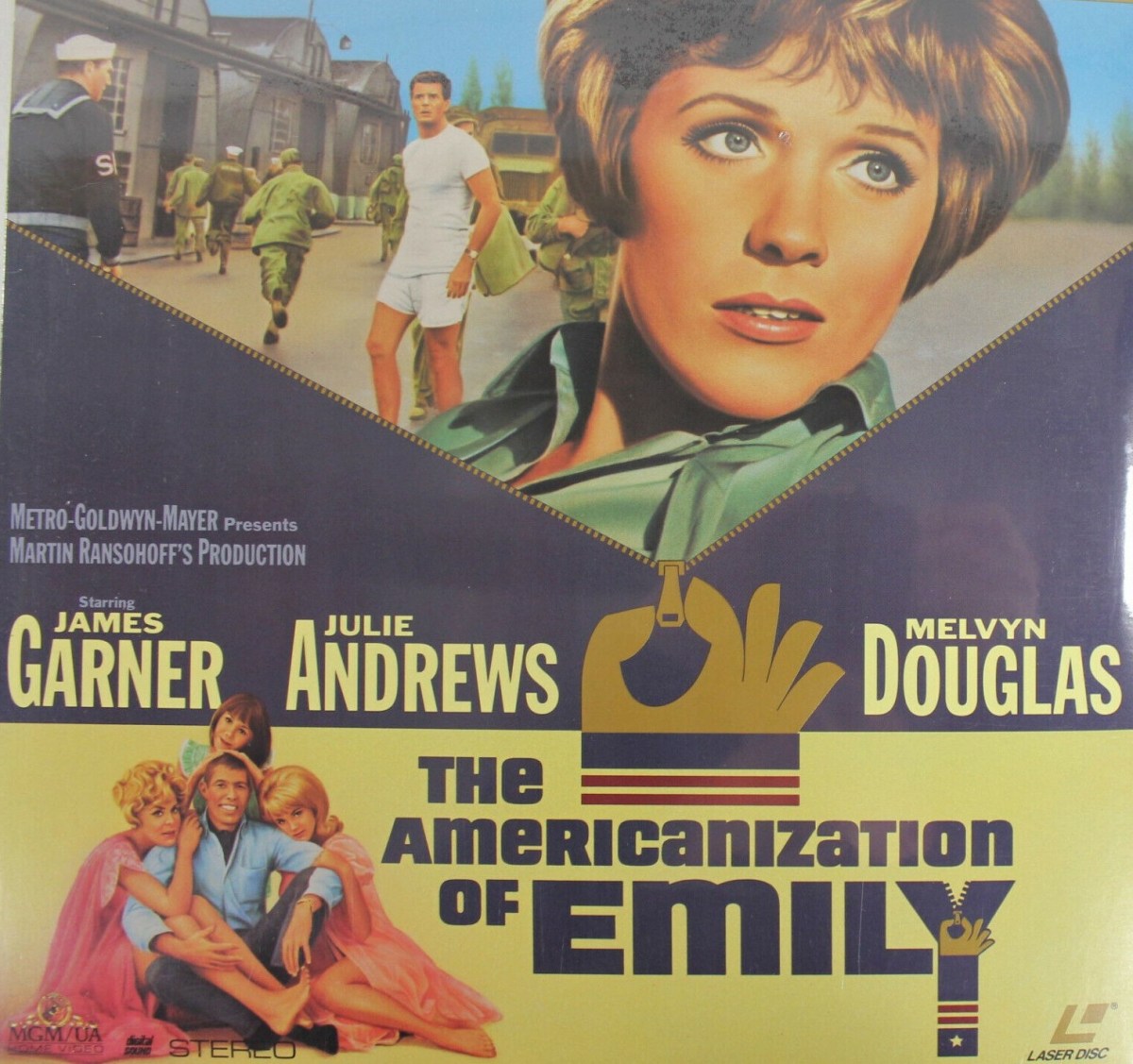
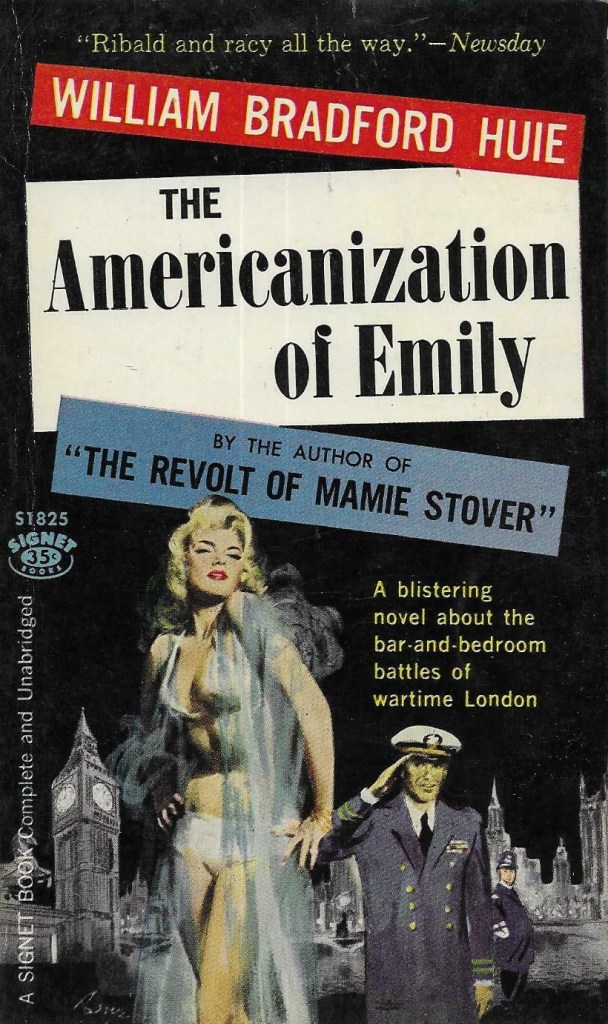
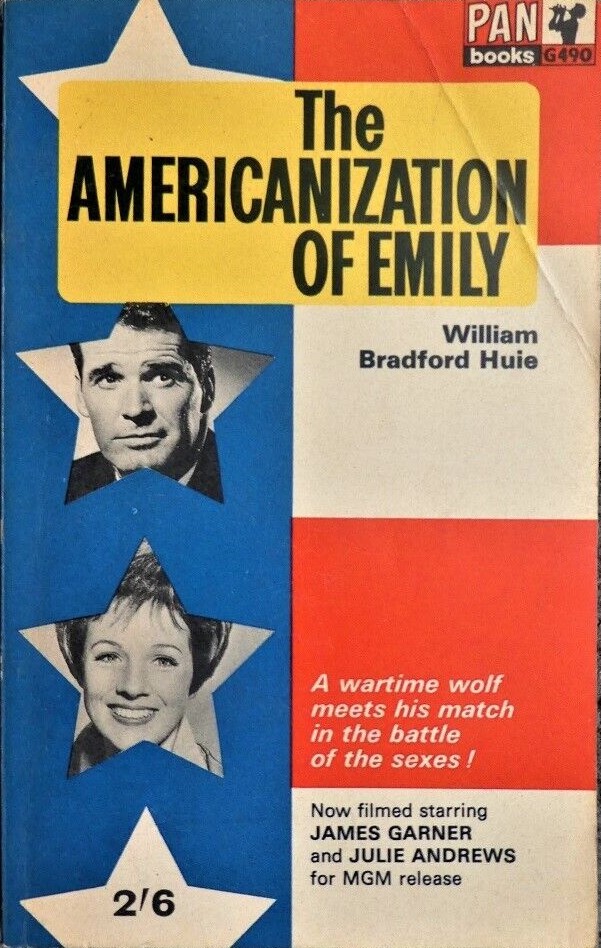
Book into Film – “The Americanization of Emily” (1964)

You did what?

Author William Bradford Huie’s cry of outrage could be heard from one side of Hollywood to the other.

Not that anyone would commiserate. A bestselling writer dealt with the movie industry at his or her peril. If you succumbed to the lure of Hollywood gold you might as well kiss goodbye to any expectation they were actually going to film the book you had written.

In this case, screenwriter Paddy Chayefsky stuck to the plainest of knitting, the romance between oversexed Yank Lt Col Edison (James Garner) and English rose Emily (Julie Andrews). He kept in the “dog-robbing,”* Edison stashing away crates of steaks, whisky, nylons, chocolates, whatever will keep the admiral happy and at the same time smooth the path for whatever officer or politician he was trying to schmooze.

But Huie’s tale went down a different route that Chayefsky chose to ignore. Yes, D-Day played a part, forming  the climax, and the author did intend to score a political point. In Huie’s version, Edison’s role in D-Day was merely to film some of the proceedings. Keen to highlight the risk to the common soldier, the hero was prone to film the sordid aspect of war, focusing as much on death and injury as heroism. He even opened with a prologue, a dedication to the three men who died in the making of the film.

But his film never saw the light of day. Or at least not his director’s cut. He was forced to eliminate all scenes of dead Americans. Dead Germans were okay, just not dead Americans. Especially irksome was a sequence showing bulldozers covering American corpses with sand. He only won one battle with his superiors, refusing to stick in the cliché of a chaplain praying over sailors before they embarked on the D-Day vessels, but only because there was no chaplain present and he refused to shoot such a scene.

Of course, since he didn’t die in Huie’s book, there was no reason to come back from the dead. In fact, post D-Day, he and Emily spend a good chunk of time together before he is despatched elsewhere on another task with the admiral and there is a happy ending, fourteen months later, a reunion as Emily turns up where he is now stationed.

So where did all the cowardice malarkey come from? The mind of Paddy Chayefsky is the simple answer. In the book, the hero, as much as the next man, does not want to die in the war, but his fears are the normal ones, he doesn’t go out of his way to avoid action, profess his cowardice and stand up for the rights of cowards everywhere. So the book isn’t larded with long speeches about the horrors of war.

What attracted a producer like Ransohoff to the picture was the film the hero wanted to make. Not one that glorified war. A film that refused to see heroism as a great and noble thing was, of course, the same as sticking up two fingers to all those who could only justify war if it provided the opportunity for heroism as a sop to the wives and children the dead left behind. It was a strong point to make. And, prior to filming, there was plenty Edison had to say on the subject. While the admiral saw the landing as a great success because the casualties were much lower than expected, Edison felt for every man killed.

There’s no need in the book for the admiral to be a loony because it would be quite plausible to film for documentary or PR purposes action on World War Two beaches – what were John Ford and other famous directors doing if not that? Lt Cummings (James Coburn) who comes up with the dastardly idea of killing off Edison does not come up with such a dastardly idea in the book. In fact, in the original novel he’s a relatively minor character. And the much-vaunted nudity, revolving in the main around Cummings, is not particularly obvious in the novel, though Huie is perfectly blunt about the role of the bulk of the women. The novel opens with the classic line: “Twelve Englishwomen, known as Sloane’s Sluts, served America during the Second World War.”

However, the said Sloane is eliminated from the film, in order to provide the immoral Edison with something of a moral tinge. In the movie, with so many women easily available, he doesn’t indulge beyond a bit of bottom slapping. But in the book, he has sex with said Sloane while romancing Emily and again at the end while separated from her.

The Chayefsky version is peppered with dialogue about war that is primarily, even though Edison’s life is at stake, in the aesthetic vein. Huie, on the other hand, provides a salutary commentary on the war, filling the reader in on aspects rarely covered, the kind of unfamiliar material that would later be the bedrock of the airport bestseller like, well, Arthur Hailey’s Airport.

* “A dog-robber is a personal attendant of a general or an admiral. To ensure his superior has the best food and lodging, a dog-robber is willing to rob not only troops, widows and orphans but even the goddam dog.” So runs Huie’s description, a little note at the bottom of a page just in case the reader did not quite work out to what depths this ultra-scrounger would go to satisfy his boss.

Behind the Scenes – “The Americanization of Emily” (1964)

Julie Andrews could not have made a more controversial choice in her bid to prove she was more than a Hollywood goody two-shoes as introduced in her debut Mary Poppins (1964). In the months leading up to release, The Americanization of Emily movie made all the wrong sort of headlines, aligning the innocent Andrews with the unsavory matter of producer Martin Ransohoff (The Cincinnati Kid, 1965) challenging the all-powerful Production Code, the self-censorship system in operation in the United States until the late 1960s.

Ransohoff demanded the right to include four scenes of substantial nudity in the film, at a time when any flashes of skin in mainstream pictures were taboo. He argued that the scenes were “necessary for the farcical overtones of the picture.” But more to the point, he was annoyed that foreign filmmakers, who did not have to abide by the stringent rulings of the Code, could show nudity, sometimes even condoned by censor Geoffrey Shurlock who accepted their artistic validity.  Ransohoff railed: “We are losing our market because we allow pictures that are full of nudity done in an artistic manner to play our top houses but we can’t get into them because the Code robs us of our artistic creativity.”

I’m not sure exactly when MGM dropped the “Americanization” element from the title and made Julie Andrews the star by promoting her image more than that of top-billed James Garner.

Faced with a lawsuit from studio MGM for delivering a movie not fit for the Code, Ransohoff conceded he had gone “overboard” with the nudity and that Judy Carne – who later sprang to fame in Rowan and Martin’s Laugh In (1969-1973) –  in particular, was “over exposed.” Other actresses named as revealing too much were Janine Gray (The Pumpkin Eater, 1964) and Kathy Kersh in her movie debut. The women were identified in the movie credits as, disgracefully, “Nameless Broad.”

At the outset, such agitation would not have preyed so much on Andrews’ mind as a possibly limitation in her future career, Mary Poppins not due to be unveiled until the summer and few members of the public aware of what a game-changer that would prove for studio and star alike. But once Mary Poppins hit the box office heights, there was every chance the star would quickly lose the adoration of the public if seen to play the female lead in a steamy picture. Ransohoff complicated matters by failing to come out and say whether Andrews was involved in the nude scenes, no matter they were considerably toned down by the time the movie hit cinemas in October 1964. (Had he delayed the picture’s release six months, his approach might have been deemed more acceptable, as, by that time, a flash of breasts had been passed by Shurlock for The Pawnbroker.)

It had been a troubled picture from the start. As early as 1962, Oscar-winner William Holden (The World of Suzie Wong, 1960) had been signed up to star and the movie was due to go before the cameras in London in July 1963 and, following a slight delay, re-scheduled for the next month under the direction of Oscar-winner William Wyler (Ben-Hur, 1959). Production was not quite settled because Andrews was only hired in September 1963. But when Wyler pulled out a month later he was quickly followed by Holden. Andrews was such an unknown quantity that when she signed up, the news did not even receive a headline in Variety, just a few lines at the bottom of a page.

And there were screenplay issues. Norman Rosten had begun work on the adaptation of the William Bradford Huie bestseller in April 1962 only for, 10 months later, the author to be drafted in. But scripting problems would continue until after shooting was complete (see below) with the filmmakers unable to make up their mind about the tone of the picture.

Despite Rosten being assigned, a story later emerged that the book had struggled to reach Hollywood. Huie contended that it had, after all, not been sold to Ransohoff in 1962 and that the sale only occurred later after the author had written the screenplay on spec and sold it to the producer. He tied this up with another contention, little borne out by fact, that producers had turned against buying blockbuster novels in favour of original screenplays.

At that point Ransohoff was on a roll as one of the biggest independent producers in Hollywood, on his slate The Sandpiper, which would appear in 1965, Topkapi (1964), The Loved One (1965), The Wheeler Dealers (1963) and The Americanization of Emily, a fantastic batting average for a neophyte producer.  Emily would be his third production, The Sandpiper, with two of the biggest stars in the world, Elizabeth Taylor and Richard Burton, his fourth.

James Garner, who had blown his entire fee of $100,000 from three years’ work on television series Maverick on getting out of his contract with Warner Brothers, had been given a helping hand by Ransohoff, winning second billing behind Kim Novak in Boys Night Out (1962) and Lee Remick in The Wheeler Dealers. Ransohoff gambled Garner was ready to make the jump up to top billing in The Americanization of Emily. 

In fact, it would take several years before Garner was considered a proper star, thanks to Support Your Local Sheriff (1969), with the kind of marquee appeal that produced box office commensurate with his fees. In fact, James Coburn was considered a better prospect with a seven-picture deal with Twentieth Century Fox – for whom he would make his breakthrough movie Our Man Flint (1966) – a five-film deal with Ransohoff and Major Dundee (1965) on the starting grid with Columbia.

The three-minute sequence of the D-Day beach landing cost $250,000. It was shot in California, sixty miles north of Hollywood, on a public beach though anyone happening upon the site would possibly be put off by signs proclaiming “Explosives next ½ mile.” The shoot involved 5,000lb of explosives, mostly dynamite and black powder, planted in iron tubs buried in the sand and connected by wires to a central control board. The complicated set-up involved four cameras rolling simultaneously with a 250ft high crane lifting a camera platform into the sky for aerial shots. Another platform was sited in the surf. Special effects expert Paul Byrd was on hand to point out to participants where explosions would occur. Eighty smoke pots were lit, each in an assigned position. Rehearsals soaked James Garner and while he waited for the scene to be set up again he lay down on the beach, still in n his wet clothes, but covered in a towel.

Preparing the segment had taken four months with bulldozers clearing the area. Ransohoff himself climbed into a camera platform to test the rig. Camera positions were selected to capture close-ups of the actors going ashore. To maximize daylight the lunch break was limited to 30 minutes.

Ransohoff, as much a maverick in marketing as in production, took out a double-page advertisement in Variety in July 1964 – nearly four months before the movie opened – to promote the response of the preview audiences. And although the comment cards returned easily promotable lines like “you have a blockbuster on your hand” and “one of those rare films that combine tragedy, comedy and drama properly,” Ransohoff was clearly intending to continue to court controversy by including quotes along the lines of “I’m broadminded but this time you’ve gone too far” and “a disturbing and terrible thing.”

But you couldn’t argue with Ransohoff seeking an alternative marketing strategy with such a recalcitrant publicist as Garner. The actor had a marked aversion to talking about his private life, which, of course, meant the focus would have to shift to his dubious star quality or the controversial scenes. Nothing infuriated journalists more, especially in those days when the media was not so tightly controlled, than to turn up for an interview with an actor who had nothing to say. “My private life is just that and I’ll keep it that way,” he averred.

Quite why the movie took so long to open is not really a mystery. Sneak previews might be followed by a little tweaking but the film would expect to be in cinemas within a month or so, the previews intended to build public awareness and word-of-mouth buzz rather than tell the director where he had gone wrong. But clearly Ransohoff held back in order to capitalize on the box office of Mary Poppins. Despite the wrangling with the Code being over and done with by March 1964 and the preview taking place three months later, the film did not open until October, going wide at Xmas, with the additional purpose of aiming for Oscar voters.

Even as Ransohoff was adding the finishing touches to the advertising campaign, there were doubts about what kind of picture the public would be shown. Four endings were considered, two filmed with Edison (James Garner) dead which turned the movie into a straightforward black comedy, but the other two retained the  romantic ending.

The black comedy approach dictated that the unsuspecting Edison (James Garner) was lured to his death on Omaha Beach by the glory-hunting Cummings (James Coburn). With no return from the dead, this left Emily (Julie Andrews) in one version to carry the movie to a dutiful conclusion, commiserating with Admiral Jessup, who had been committed to a mental asylum, while a parade commemorating Edison’s sacrifice and led by the treacherous Cummings took place in the background. This was junked when the parade prove too expensive an addition.

All the other endings kept Edison alive, but in one, partly filmed, Cummings was banished to the North Pole, the producers going as far as to film Coburn with penguins.

The major adjustment in all versions was to present Jessup as off his head when he conceived the plan. That meant the Navy could not be blamed for outrageous publicity-seeking, with the finger instead pointed at a maverick officer, whose decisions could be tempered by his temporary instability.

SOURCES: “Holden’s Americanization,” Variety, May 23, 1962, p11; “Screenplay (Ready to Shoot) Cost-Conscious Producers Goal in Retreat from Pre-Sold,” Variety, January 30, `1963, p3; “Emily Screenplay to Be Done by William Bradford Huie,” Box Office, February 11, 1963, pW1; “Ransohoff’s Big Spurt of Features,” Variety, February 17, 1963, p3; “Ransohoff To Start Five Films in 6 Month Period,” Box Office, June 17, 1963, p27; “Julie Andrews,” Variety, September 11, 1963, p16; “Bill Holden Follows Wyler in Leaving Emily,” Box Office, October 7, 1963, pW2; “Garner Gets Emily Lead,” Box Office, October 14, 1963, p9; Michael Fessier Jr., “Can’t Be Americanized With Duds On,” Variety, November 20, 1963, p5; “Martin Ransohoff To Seek Production Code Seal,” Box Office, November 26, 1963, p6; “Emily and Her Attire Settled,” Variety, March 25, 1964, p5;“Nudies In Emily Are Cut to Get MPAA’s Seal,” Box Office, March 30, 1964, pW4; “Advertisement,”  Variety, July , 1964, p14; “Admiral’s Glory Seeking Is Final Ending of Metro’s Emily,” Variety, November 4, 1964, p5; “Mad Film Promotion,” Variety, November 4, 1964, p15; “Promo Credo of Hollywood Actor,” Variety, November 4, 1964, p15; Action on the Beach (1964) MGM promotional featurette.

Discover WordPress

A daily selection of the best content published on WordPress, collected for you by humans who love to read.

The Atavist Magazine

by Brian Hannan

WordPress.com Blog

News, Tips & Website Tutorials