Castle Keep (1969) ****

A bit more directorial bombast and this could have matched Apocalypse Now (1979) in the surrealist war stakes. Never mind the odd incidents surrounding a small unit of G.I.s  taking over a magnificent Belgian castle towards the end of World War II prior to what turned out to be the Battle of the Bulge, this has on occasion such a dreamlike quality you wonder if it is all a figment of the imagination of one of the characters, wannabe writer Private Benjamin (Al Freeman Jr.). Throw in a stunning image, for the beleaguered soldiers at the start, of a horsewoman charging by in a yellow cloak, so out of place that it carries as much visual impact as the unicorn in Blade Runner (1982), and we are in definite cult territory.

One of the unusual elements is that, in this unexpected respite from battle, the soldiers are defined by character traits rather than dialogue or bravery as would be the norm. This ranges from baker Sergeant Rossi (Peter Falk) taking over the boulangerie and bedding the baker’s wife (Olga Bisera), mechanic Corporal Clearboy (Scott Wilson) diving into a lake to rescue a Volkswagen and the troops receiving a lecture on art history from Captain Beckman (Patrick O’Neal).

Commander Major Falconer (Burt Lancaster) is not only brilliant in the art of war, but calmly  mentors Beckman through a firefight with an enemy airplane, teaches local sex workers how to make Molotov cocktails and, evoking ancient aristocratic tradition, enjoys conjugal relations with the conquered countess (Astrid Heeren), whose impotent husband (Jean-Pierre Aumont) encourages the relationship since the castle needs an heir.  

There is wistful revelation, Beckman clearly hankering after his turn with the countess, a minister who wishes he had the courage to join the boys in the brothel, the young soldiers there being treated as children rather than customers. And there are juvenile pranks – moustaches are painted on statues, wine bottles used for ten-pin bowling practice.

But the surreal moments keep mounting up. The Volkwagen, though riddled with bullets, refuses to sink in the lake, a hidden German reveals himself by playing the same tune on a flute as one of the soldiers. The countess often appears as an ethereal vision.

Through it all is rank realism. Falconer knows a German previously shared the countess’s bed. The count will do anything to safeguard his castle and maintain the family line, even to the extent of incest, since his wife is actually his niece. But above all, while his troops believe the war is at an end and enjoy the pleasures at hand, Major Falconer prepares for rearguard action by the Germans, filling the moat with gasoline, planning to pull up the drawbridge and control the high ground.

The battle, when it comes, is vivid and brutal, the initial skirmish a hand-to-hand battle in the village before the Germans begin their siege of the castle.

Burt Lancaster (The Swimmer, 1968) is superb, far removed from his normal aggressive or athletic persona, slipping with pragmatic ease from the countess’s bed to battle stations. War films in the 1960s were full of great individual conflicts often won on a twist of ingenious strategy but seldom have we encountered a soldier like Falconer who knows every detail of war, from where and how the enemy will approach, to the details of the range of weaponry, and knows that shooting dead four soldiers from a German scouting mission still leaves one man unaccounted for.

Patrick O’Neal (Alvarez Kelly, 1966) also leaves behind his usual steely-eyed screen persona, here essaying a somewhat timid and thoughtful character. Peter Falk’s (Machine Gun McCain, 1969) baker is a beauty, a man who abandons war, if only temporarily, for a second “home,” baking bread, adopting a wife and child. In a rare major Hollywood outing French actor Jean-Pierre Aumont (Five Miles to Midnight, 1962) carries off a difficult role as a count willing to accept the humiliation of being cuckolded if it improves his chances of an heir. In one of only four screen appearances German actress Astrid Heeren (The Thomas Crown Affair, 1968) makes the transition from a woman going to bed with whoever offers the greatest chance of saving the beloved castle to one gently falling in love.

There is an excellent supporting cast. Bruce Dern (Support Your Local Sheriff, 1969) makes the most of a standout role as a conscientious objector.  You will also find Scott Wilson (In Cold Blood, 1967), Al Freeman Jr. (The Detective, 1968), future director Tony Bill (Ice Station Zebra, 1968) and Michael Conrad (Sol Madrid / The Heroin Gang, 1968).

Two top-name writers converted William Eastlake’s novel into a screenplay – Oscar-winning Daniel Taradash (Hawaii, 1966) and newcomer David Rayfiel who would work with Lancaster again on Valdez Is Coming (1971) and with Pollack on Three Days of the Condor (1973) and Havana (1990)

Sydney Pollack (This Property Is Condemned, 1966), who had teamed up with Lancaster on western The Scalphunters, 1968), does a terrific job of marshalling the material, casting an hypnotic spell in pulling this tantalising picture together, giving characters space and producing some wonderful images, but more especially for having the courage to leave it all hanging between fantasy and reality.

Expressions like  “we have been here before,” “once upon a time,” “the supernatural” and “a thousand years old” take solid root as the narrative develops and will likely keep spinning in your mind as you try to work out what it’s all about.

Tobruk (1967) ****

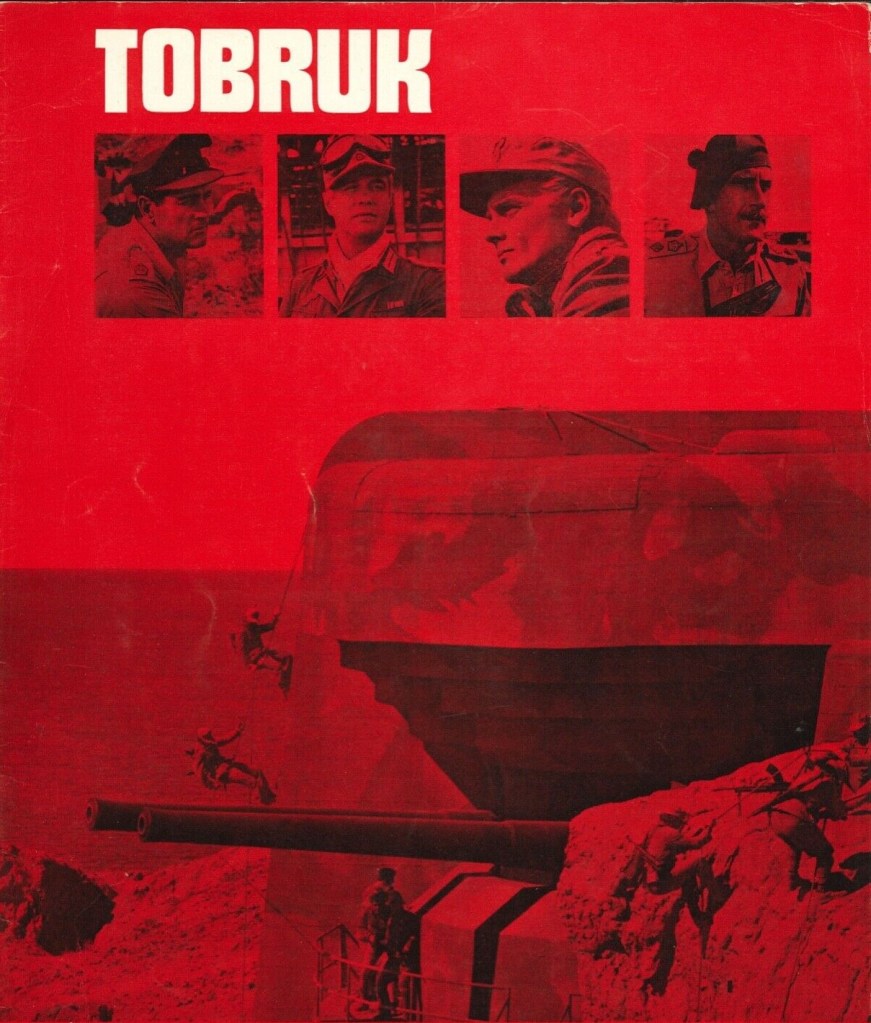
Occasionally ingenious action-packed men-on-a-mission picture that teams reluctant hero Major Craig (Rock Hudson) with Captain Bergman (George Peppard) who heads up a team of Jewish German commandos (i.e good guys). Arthur Hiller (Promise Her Anything, 1966) directs with some skill and to increase tension often utilizes silence in Hitchcockian fashion. He meshes innate antagonism between the two principals and stiff-upper-lip British Col Harker (Nigel Green), two subplots that have a bearing on the final outcome, and explosive battle scenes. In addition, in supporting roles is a Sgt Major (Jack Watson) unusually solicitous of his troops and a grunt (Norman Rossington) with a fund of one-liners.

Craig is liberated by frogmen from a prisoner ship and flown into the Sahara on the eve of the Battle of El Alamein to guide a strike force 800 miles across the desert to blow up Rommel’s underground fuel tanks in Tobruk, Bergman’s outfit providing the perfect cover as Germans escorting British prisoners. “It’s suicide,” protests Craig. “It’s orders,” retorts Harker.

Most action pictures get by on action and personality clashes against authority, but this is distinguished as well by clever ruses. First off, hemmed in by an Italian tank squadron on one side and the Germans on the other, they fire mortars into each, convincing the enemy units to open fire on one another. Craig, on whose topographical skills the unit depends, goes the desert version of off-piste, leading the group through a minefield, personally acting as sweeper with a bayonet as his rudimentary tool, his understanding of how the enemy lays its mines allowing him to virtually explode them all at one. But, ironically, their cover is so complete that they are strafed by a British plane, and equally ironically, have to shoot down one of their own.

Along the way they pick up a stranded father-and-daughter Henry (Liam Redmond) and Heidy Hunt (Cheryl Portman) who are on another mission entirely, to help create a Moslem uprising against the British in Egypt. Their arrival reveals the presence of a traitor in the camp. Naturally, this isn’t the only complication and problems mount as they approach Tobruk and, finding it vastly more populated with German troops than expected, they now, in addition to tackling the virtually impenetrable fuel dumps, have to knock out the city’s radio mast and neutralize the German big guns protecting the beaches.

So it’s basically one dicey situation after another, ingenuity solving problems where sheer force is not enough, and twists all the way to the end.

All the battles are particularly well done, pretty ferocious stuff, flamethrowers especially prominent, but they are also adept at hijacking tanks, and in another brilliant ruse capturing one without blowing it up. The screenplay by Leo Gordon (The Tower of London, 1962) supplies all the main characters with considerable depth. While Craig isn’t exactly a coward, he is not interested in laying down his life for a cause. Although Harker seems a typical officious British officer, he, too, has surprising depths. But it is Bergman who is given the weightiest part, not just a German seeking revenge against his own countrymen for the treatment of Jews but a man looking to a future when Jews will fight for their own homeland in Israel.  

Hudson had begun his career in action films, mostly of the western variety, before being seduced by the likes of Doris Day and Gina Lollobrigida in romantic comedies and this is a welcome return to tough guy form. George Peppard made it two Germans in a row after The Blue Max (1966) but this is far more nuanced performance. There are star turns from Nigel Green, Guy Stockwell (Beau Geste, 1966) as Peppard’s sidekick and the aforementioned Jack Watson (The Hill, 1965) and Norman Rossington.

This was pretty much dismissed on initial release as a straightforward gung-ho actioner and one that tipped Rock Hudson’s career in a downward spiral, but I found it both thoughtful and inventive and had much more of an on-the-ground feeling to it, with nothing going according to plan and alternatives quickly need to be found.

Under-rated and well worth a look.

Behind the Scenes: The All-Time Top 20

The “Behind the Scenes” articles have become increasingly popular in the Blog. As regular readers will  know I am fascinated about the problems incurred in making certain movies. Perhaps one of the more interesting aspects of this category is that every now and there is out of nowhere massive interest in the making of a particular movie and it shoots up the all-time tree. Most of the material has come from my own digging, and sources are always quoted at the end of each article, but occasionally I have turned to books written on the subject of the making of a specific film. 

As with the All-Time Top Movies section, the top 20 comprises the choices of my readers. Alistair MacLean still exerts an influence, which is reassuring because my next book is about the films made from his books.

While Waterloo remains firmly out in front there are some interesting new entries such as The Cincinnati Kid, The Appointment, Mackenna’s Gold, The Train, The Sons of Katie Elder and The Trouble with Angels while Man’s Favorite Sport has made a steady climb upwards.

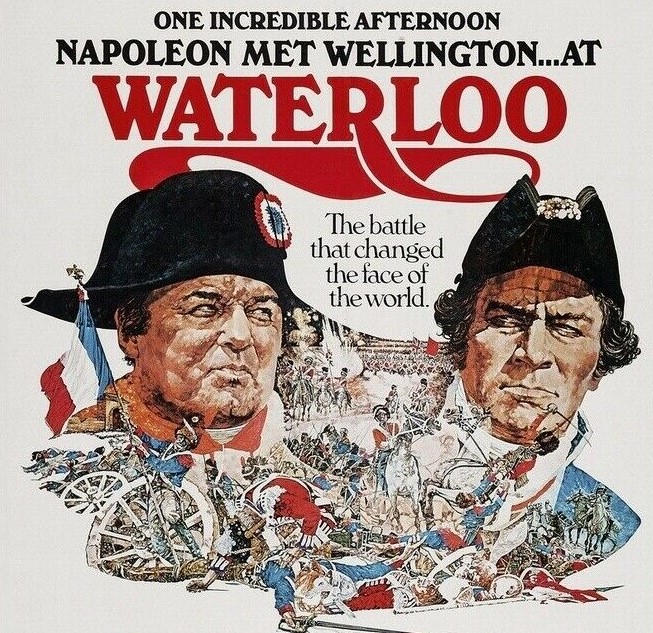
  1. (1) Waterloo (1970). No doubting the effect of Ridley Scott’s Napoleon in racketing up interest in this famous flop.
  2. (2) Ice Station Zebra (1968). A complete cast overhaul and ground-breaking  special effects are at the core of this filming of an Alistair MacLean tale.
  3. (3) In Harm’s Way (1965). Otto Preminger black-and-white epic about Pearl Harbor and after.
  4. (7) The Guns of Navarone (1961). Alistair MacLean again, setting up the template for the men-on-a-mission war picture with an all-star cast and enough production jeopardy to qualify for a movie of its own.
  5. (6) The Satan Bug (1965). The problems facing director John Sturges in adapting the Alistair MacLean pandemic classic for the big screen.
  6. (9) Man’s Favorite Sport (1964). Howard Hawks back in the gender wars with Rock Hudson and Paul Prentiss squaring off.
  7. (4) Battle of the Bulge (1965). There were going to be two versions, so the race was on to get this one to the public first.
  8. (5) Cast a Giant Shadow (1965). Producer Melville Shavelson wrote a book about his experiences and this and other material relating the arduous task of bringing the Kirk Douglas-starrer to the screen are told here.
  9. (10) The Girl on a Motorcycle (1968). Cult classic starring Marianne Faithful and Alain Delon had a rocky road to release, especially in the U.S. where the censor was not happy.
  10. (8) Sink the Bismarck! (1962). Documentary-style British WW2 classic with Kenneth More with the stiffest of stiff-upper-lips.
  11. (11). Tora! Tora! Tora! (1970). Richard Fleischer dispenses with the all-star cast in favor of even-handed verisimilitude.
  12. (New Entry) The Cincinnati Kid (1965). Once Sam Peckinpah was fired from the poker epic, Norman Jewison took over. Steve McQueen, Ann-Margret and Edward G. Robinson are top-billed.
  13. (New Entry) The Trouble with Angels (1966). Hayley Mills causes trouble at a convent school where Rosalind Russell tries to rein her in.
  14. (13). The Bridge at Remagen (1969). John Guillerman WW2 classic with George Segal and Robert Vaughn
  15. (17). The Collector (1963). William Wyler’s creepy adaptation of John Fowles’ creepy bestseller with Terence Stamp and Samatha Eggar.
  16. (New Entry) The Train (1964). Another director fired, this time Arthur Penn, with John Frankenheimer taking over in this cat-and-mouse WW2 struggle between Burt Lancaster and Paul Schofield.
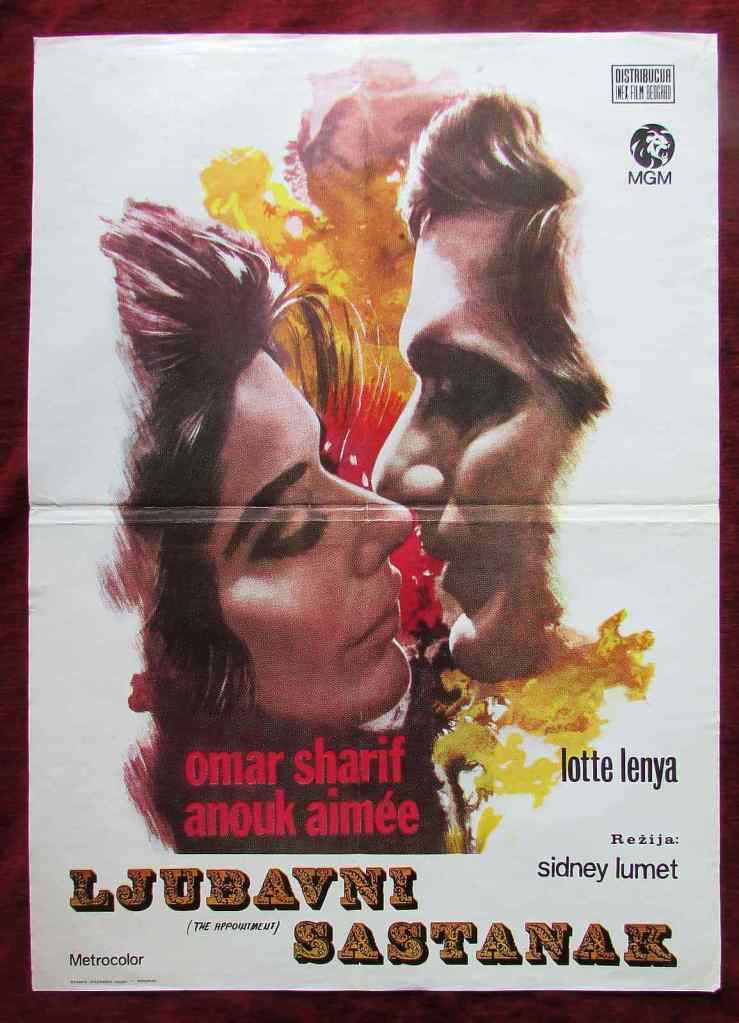
  17. (New Entry) The Appointment (1969). Sidney Lumet has his hands tied in Italian drama with Omar Sharif and Anouk Aimee.
  18. (20) The Way West (1967). Kirk Douglas and Robert Mitchum face off in pioneer western.
  19. (New entry) Mackenna’s Gold (1969). Producer Carl Foreman has his work cut out bringing home western Cinerama epic starring Gregory Peck and Omar Sharif.
  20. (New entry) The Sons of Katie Elder (1965). Long-gestating Henry Hathaway western with John Wayne and Dean Martin as brawling brothers.

The Pigeon That Took Rome (1962) ***

Netflix would know how to sell this. Append the “based on a true story” credit and you’ll attract a global audience. I’ve no idea how true this tale is though I assume that at certain points in war using a pigeon may have been the most efficient method of communication. If this had been under the Netflix aegis there would surely have been a scene to explain that you can’t just point the bird in any old direction but that it automatically returns to its home, that aspect being pivotal to the movie, the reason it was made in the first place.

That is, if you believe in the rather fanciful notion, as shown in what appears to be an official newsreel, of said pigeon being presented with a medal for its part in the Allied invasion of Rome in World War Two. Luckily, there’s more to this picture than the intricacies of homing pigeons.

Not much more, I hasten to add, because the other significant plot point, which I suspect has a more substantial basis in truth, is that passing American soldiers had a tendency to  impregnate (and abandon) Italian women. If you were to argue that Elsa Martinelli (who had just put John Wayne in his place in Hatari!, 1962) is what saves the picture you wouldn’t be far wrong. But you can’t complain about Hollywood churning out lightweight movies in the 1960s since a chunk of the current output falls into that category.

For no apparent reason, no espionage experience for example, Yank soldiers Capt MacDougall (Charlton Heston) and Sgt Angelico (Harry Guardino) are delegated to sneak into Rome, disguised as priests, and spy on the Germans. They are put up in the household of Massimo (Salvatore Baccaloni), an underground figure, but his daughter Antonella (Elsa Martinelli) takes against the pair since they are extra mouths to feed and if only the Americans would hurry up and enter the city the populace wouldn’t be starving. However, she makes nice when her sister Rosalba (Gabriella Pallotta) reveals she is pregnant by a previous Yank (whether he was the espionage business, too, is never revealed) and is desperate need of a husband.

The sergeant is quite happy to romance the girl since a couple smooching in the park makes good cover for him transmitting messages by radio. And when that form of transmission becomes too dangerous, the Americans rely on pigeons. Soon Angelico realises his feelings for Rosalba are real and proposes to her, even after she reveals her condition. But that means celebration to announce their forthcoming nuptials.

Short of any food, Antonella slaughters the pigeons, convincing MacDougall that the meal consists of squab. To cover up, the Italians steal a bunch of pigeons from the Germans. Of course, as you’ll have guessed, that means the pigeons will return to the enemy. But once MacDougall works this out, he starts sending the Germans false messages that prove (apparently) pivotal to the Germans hightailing it out of the city (hence the medal awarding).

Pretty daft and inconsequential sauce to be sure, but Antonella keeps matters lively, knocking back MacDougall at every turn, taking every opportunity to condemn men for starting wars, and presenting herself as something of a conniver, possibly willing to lead on the Germans in return for food (MacDougall when burglarizing a German villa comes across her naked in the shower). Her occasional swipes give the picture a harder edge than you’d expect, but, her fiance killed in the war, she leads MacDougall a merry dance in the manner of the romantic comedies of the day. Otherwise, the comedy is for the most part lame, the old hitting your thumb with a hammer one such moment.

Despite co-starring with Wayne and here Heston and later Robert Mitchum (Rampage, 1963), Martinelli didn’t fit into the Hollywood pattern of taking European stars and slotting them into the female lead opposite a succession of top male stars. Think Sophia Loren with Heston in El Cid (1961), with Gregory Peck in Arabesque (1966) and with Marlon Brando in The Countess from Hong Kong (1967) and headlining a few pictures on her own. Gina Lollobrigida led Rock Hudson by the nose in Come September (1961) and Strange Bedfellows (1965) and Sean Connery a merry dance in Woman of Straw (1964).

Martinelli seemed to fade too quickly from the Hollywood mainstream which was a pity because she’s the glue here. Charlton Heston (Number One, 1969) spends most of the time looking as if he wondered how he managed to allow himself to be talked into this. You want to point the finger, then Melville Shavelson’s (Cast a Giant Shadow, 1966) your man – he wrote, produced and directed it.

Worth it for Martinelli.

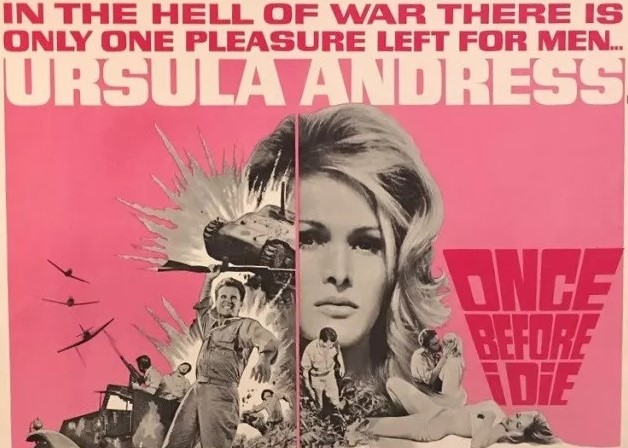
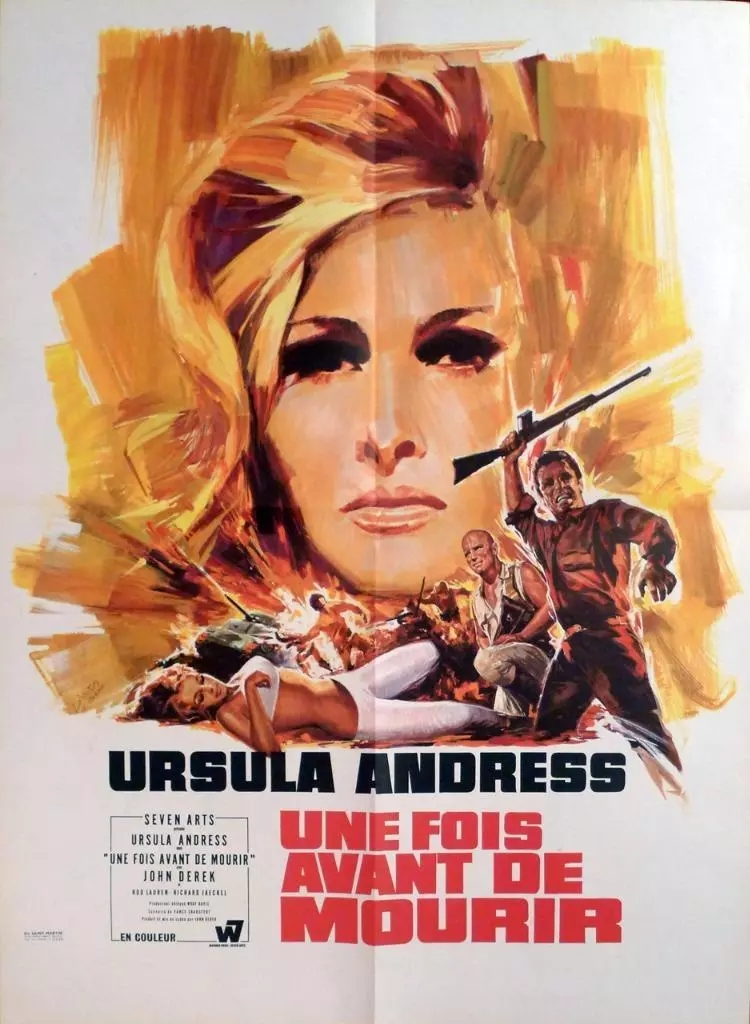
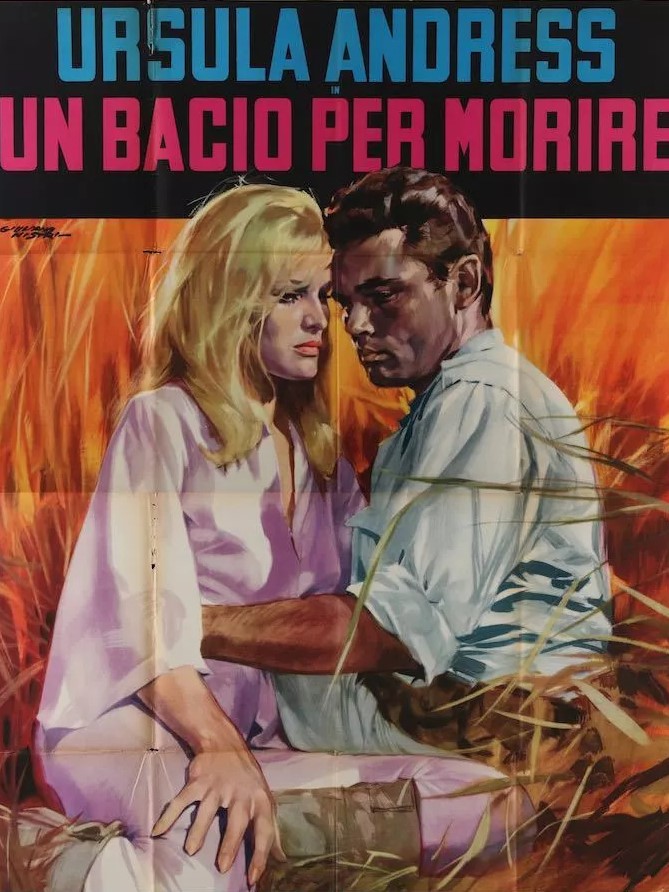
Once Before I Die (1966) ****

Nobody ever took Ursula Andress seriously as an actress. Ditto the directorial skills of her one-time husband John Derek (Bolero, 1984). Their combination was viewed as a cosmic joke. And it doesn’t start well here, the credits little more than a paean to her beauty, hair rippling in the wind etc, so much so you wouldn’t be surprised to find her later on running in slo-mo through a cornfield. The opening sequence couldn’t be more Raquel Welch, Andress sporting a white bikini as she shoots the rapids. And the premise looks like little more than a wartime western.

Instead…

Technically, this is surprising, ocasionally astounding, as the director makes use of the kind of image layering that attracted kudos for Francis Coppola in Apocalypse Now (1979) and with one stunning sequence shown entirely, in close-up, through the eyes of the actress. Andress is far from eye candy. Opportunities to show her naked or at least soaked to the skin, obligatory scenes set in water, are passed over. Instead, she is the camera’s conduit. The innocent bystander responding to war, and sharing in the shock of the youngsters, mostly virgins, who will never see a naked woman before they die.

Having to literally deal with the title should be the only false note and yet strangely enough there’s a haunting lyrical quality in the contrast between her, in the midst of battle,  acquiescing to the shameful desire of a 22-year-old soldier to be kissed and his colleagues’ glee at burning to death the occupants of an enemy tank. An act of humanity set off against raw brutality.

The set-up is simple enough. Just after Pearl Harbor, a group of polo playing soldiers in the Phillippines are strafed by Japanese planes. Cavalry leader Bailey (John Derek) and his troop set off by horseback cross country for Manila. He sends his girlfriend Alex (Ursula Andress) off in the same direction in her ritzy car. Against instructions, she loads up her car with puppies and refugees, an old lady and a child, and when she gets stuck, Bailey allows the trio to accompany the soldiers to safety. When they reach a village, her linguistic skills come in handy, pinpointing a Frenchman and his native girl, purportedly translating, as lying about food supplies.

In rooting out a bloodied teddy bear, Bailey is accidentally killed and for the rest of the picture Alex is in something of a catatonic state, but doing her best to keep up soldier morale, as attendant to the worries of the young, fearing death, as to the more experienced  gung-ho shaven-headed Custer (Richard Jaeckel) who welcomes a hero’s demise. By the end, she is a combatant, shooting an enemy soldier.

By taking Alex as the cinematic focus, the director can dispense with the usual tropes of a battle-weary squad in wartime. So, beyond the youngster’s confession, we learn nothing of the soldiers’ lives, and that, too, is somehow refreshing, as going down that route at best seems like a vain attempt to make audiences sympathize with unsympathetic characters, and at worst, is a delaying device.

All you need to know is that guys who would otherwise be larking about, drinking beer, telling tall stories or playing polo, are vicious in war, gunning down as if a communal firing squad a captured grunt, so trigger happy they shoot one of their own in the middle of the night, so careless they are liable to drop a grenade at their own feet.

And, much to my astonishment, there’s dialog and scenes Tarantino would be proud of. Custer explaining that he shaves his head “to get rid of every hair” is the kind of line that in a more acclaimed picture would be noted. Custer again, accused of making up a story that he has killed a bundle of Japs, looks initially as if he believes himself guilty of too fertile an imagination until he interrupts a chat between two disbelieving officers by chucking an enemy corpse onto their laps.

And there’s genuine screen charisma between Alex and Bailey, a wonderful scene where she takes gentle umbrage at being scolded for refusing to obey orders, but nothing played out to the brim, everything understated, the actions of a couple who don’t need to display their love to the world because they are already committed.

The Virgin Soldiers (1969) played the central theme for laffs but didn’t achieve an ounce of the truth expressed by the raw youngster, who’s ashamed to be revealing such fears to a woman, and to be even asking her to relieve them, and of the dumbness to be muddying his thoughts in a life-and-death situation with fantasies about sex. You can certainly argue with the notion that women in wartime are obliged to have sex with any passing soldier (who sometimes take without asking) who could die a virgin, and taking that into consideration, this shouldn’t work at all. It’s only a kiss and hand-holding after all, and she’s not maternal about it, or even pitying, and after all, deprived of a future husband, she also needs solace.

I mentioned before about finding suprises in my trawl through this decade’s movies and there couldn’t be a bigger surprise than this which must have lain unseen on my shelves for years as I dreaded inflicting upon myself another movie by the director of Tarzan the Ape Man (1981).

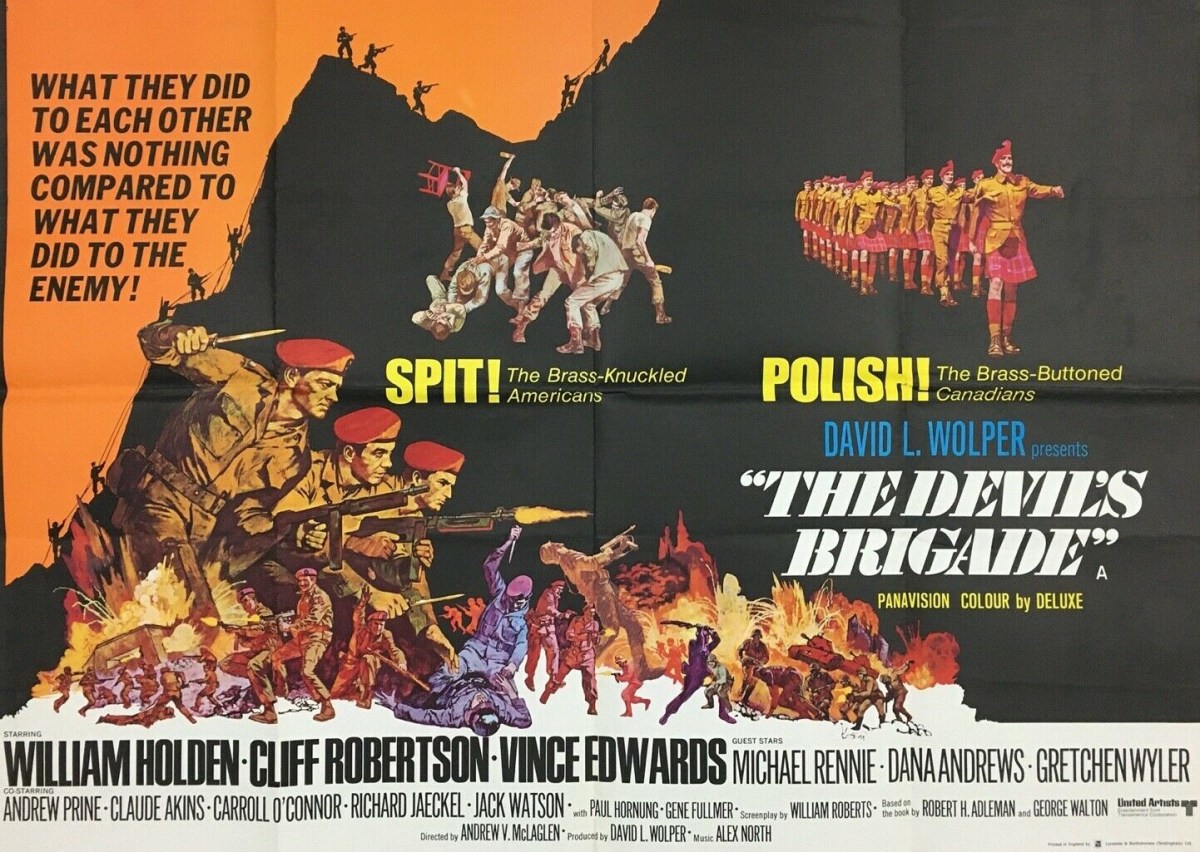
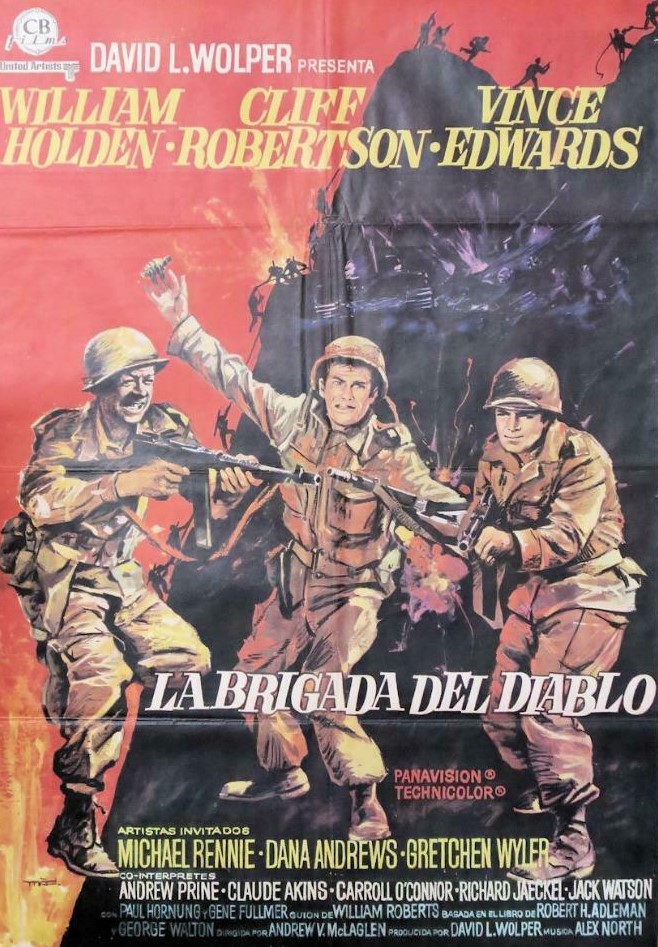
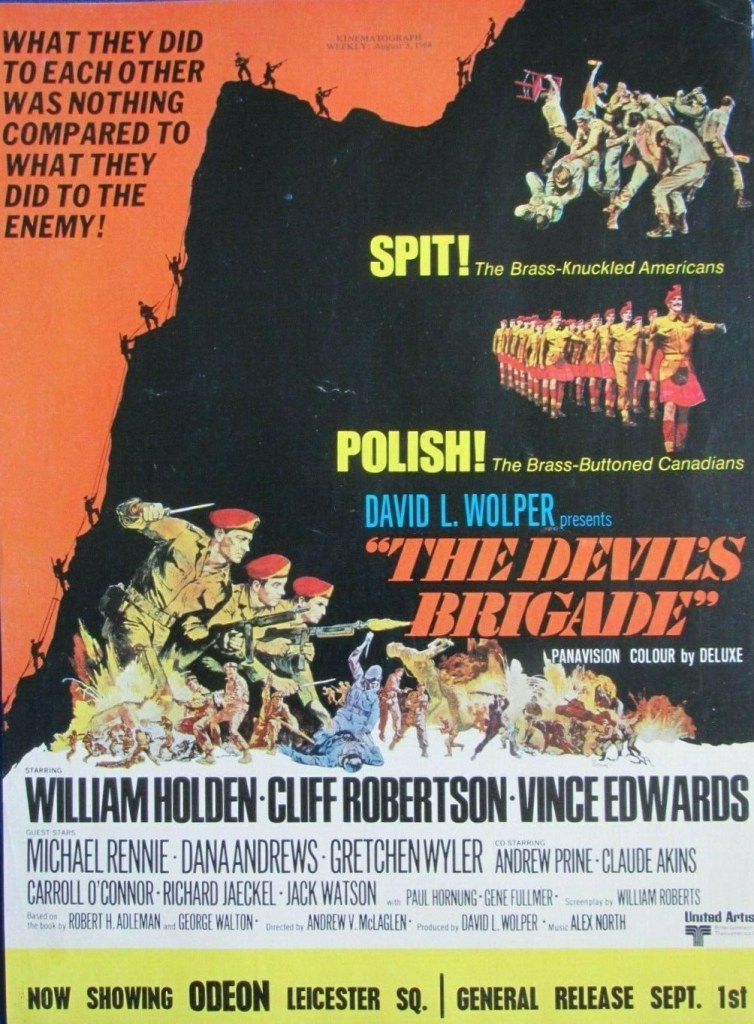
But astute direction and the determination to allow Andress to act, to show scenes through her eyes, the sign of any great actress, pay off. Career-best performance from Richard Jaeckel (The Devils’ Brigade, 1968), no show-boating here either.  The budget restricts the action, but, oddly enough, that’s to the film’s benefit as it allows it to play off Andress more.

Well worth a watch.

Hornets Nest (1970) ****

Given exceedingly short shrift in its day. Viewed as in exceptionally poor taste. Marketed in some respects as Lord of the Flies Meets The Dirty Dozen. Audiences accepting of kids putting on a show or, the modern equivalent, making a movie, not so keen on youngsters going to war. In any case there’s an inbuilt repugnance as you get the distinct impression some of these kids would have been ideal recruits for Hitler Youth or the Mussolini version.  And Italy, one-time ally of Hitler, becoming suddenly heroic seemed to jibe. Not to mention Rock Hudson’s marquee value fading fast after a gigantic turkey called Darling Lili (1969). Despite some distinctly unsavory aspects, bordering on exploitation, this seems enormously underrated, not just as an actioner, but for a raw depiction of war, far more realistic than many in the genre that toplined on violence.

Sure, it’s an odd concept, Italian kids, in the absence of adults, turned into a fighting force by dint of letting loose their innate venality and savagery. But they’ve not been washed up, adult-free, on a desert island. This small bunch have been orphaned and bloodily. Germans on the hunt for local partisans execute an entire village and then, finding a quisling, proceed to massacre the local resistance and for good measure destroy a team of American parachutists dropped into the area to facilitate the Allied advance.

The kids come across the one survivor, Turner (Rock Hudson), hide him from the enemy and dupe German doctor Bianca (Sylva Koscina), sympathetic to the plight of the innocent, into caring for the wounded soldier. Rather than hang around and accept the ministrations of such a beauty and see out the war with a view to possible romance, Turner is intent on single-handedly completing his mission of blowing up a dam.

Given the kids have amassed a secret armory and are trigger-happy, desperate to avenge their parents, and getting down to the gung-ho aspects of war, Turner, with appalling disregard for their safety, decides to commandeer them for his own unit. Bianca objects and watches with horror and for most of the rest of the picture confines herself to the pair too young to be considered combatants and who reek of desolation or to find ways of killing Turner or betraying him to the Germans.

Meanwhile, the kids have their own ruthless leader, Aldo (Mark Colleano), one part John Wayne, one part the creepy Maggott (Telly Savalas in case you’ve forgotten) from The Dirty Dozen, who objects to taking orders. Training consists of little more than a bit of marching in file and learning how to quickly reload a machine gun. Turner’s clever plan is to use their perceived innocence to distract the Germans guarding the dam. The distraught Bianca, stepping out of line once too often, is raped for her trouble.

Oddly enough, Koscina does take a machine gun to the Germans, which you would have thought would be catnip to the marketeers, but that image is excluded from the poster.

Setting aside all audience misgivings about the premise and the sexual undertones, the mission is very well done, plenty tension, a workable plan, and the eventual dam-burst impressive on the budget.

But the misgivings are not glossed over. There’s a dicey moment when it looks as if the kids, crawling all over the nurse, tearing off her clothes, are about to embark on mass juvenile rape. And the bloodlust will only be slaked when, by dint of secreting the detonators essential to the plan, they force Turner to lead them on a raid on the Germans, tossing hand grenades into houses and opening fire from the back of a truck on the unsuspecting enemy.

Aldo, in particular, gets a taste for killing and in a later battle doesn’t hold back when one of his comrades inadvertently gets in his way.

Sold as a junior edition of a mission picture, the trailer would have probably been enough to put off large sections of the audience, uncomfortable with kids being employed in such mercenary fashion. Kids grow up in war but not that fast seemed to be the general reaction. Okay if they’re portrayed as victims, less acceptable as gun-happy butchers.

So, the best elements of the movie is in not avoiding such misgivings. It was soon clear from the American experience – though this is not specifically alluded to – that hordes of kids in Vietnam were going down this route. The point at which kids cross over into bloody adulthood and lose the essence of childhood is dealt with too. That scene on the face of it and in isolation appears maudlin but in the context of the picture works very well. But the violence or its aftermath are not the most striking images. Again and again, the camera returns to the dirty, clothes-tattered, Bianca clutching the two infants, the detritus of conflict.

Setting aside his moustachioed muscle, Rock Hudson (Seconds, 1966) gives a well-judged performance and Sylva Koscina (A Lovely Way To Die, 1968), shorn of glamor, holds the emotional center. Mark Colleano (The Boys of Paul St, 1968) gives a vicious impression of a young hood on the rise. Directed by sometime cult director Phil Karlson (A Time for Killing, 1967) from a script by S.S. Schweitzer (Change of Habit, 1969) and producer Stanley Colbert. Great score from Ennio Morricone.

It’s worth pointing out that the idea of kids taking up arms received positive critical approval when it was applied to such an arthouse darling as If… (1969) but of course they were public schoolboys forced into action by bad teachers and in reaction to “the establishment” and not after seeing their families slaughtered. Double standards, methinks.

Worth reassessment.

The Wackiest Ship in the Army (1960) ***

A more misleading title would be hard to find – and that goes for the posters too. This is a misfit movie – a bunch of raw recruits knocked into shape by an unwilling captain tasked with sailing a ship into a South Pacific war zone in WWII. Admittedly, Jack Lemmon is in exasperated double-take default in the opening section, but it quickly shifts from comedy to drama as Lemmon shepherds his inexperienced crew into a more compact team.

Screenwriter Frank Murphy has an exceptionally good portfolio – Panic in the Streets (1950), The Desert Rats (1953), Broken Lance (1954) and Compulsion (1959) – but brings less to the table as a director, this only his second – and final – outing in that capacity. But given he is directing from his own screenplay, he must take the blame for the incongruous hybrid. Add in an unnecessary tune from Ricky Nelson and the briefest of brief romances and no wonder it’s hard to make head or tail of the movie until it does eventually head out to sea.

Once Lemmon is given more to do than shake or scratch his head the picture moves into more satisfactory territory. Instead of dismissing the crew as idiots, he takes command and shows dramatic chops that are a hint of things to come (Days of Wine and Roses just two pictures away) when he sloughed off comedy for more serious undertakings.

Reason for Lemmon being assigned this motorized sailing ship rather than something more obviously U.S. Navy is that he is in the last chance saloon. Once under sail, setting aside some dodgy process work, and it becomes clear they are heading into harm’s way rather than simply delivering the boat to General MacArthur in more harmless waters, the story switches into perilous wartime perilous adventure with decent battle, a couple of twists and some dramatic confrontation.

Lemmon is always watchable, and I always thought he could have done with more self-belief when it came to tackling more dramatic parts. When he goes ramrod-stiff and starts barking out orders and has to out-maneuver superiors and enemy, he is entirely convincing, as, too, safeguarding his charges or rescuing them and leading them in battle. Setting aside the need for Nelson to register his credentials as a singer, he is not bad either, as an ensign making his way, an ingenue role that suits this ingenue.

Veteran John Lund (My Friend Irma) appears as a crusty, wide admiral and Chips Rafferty, the only Australian actor anybody had ever heard of at that point outside of Rod Taylor, has a cameo. Irishwoman Patricia O’Driscoll manages a passable Aussie accent as the brief romancer, her role mostly confined to looks of longing while Lemmon is at sea. Raspy-voiced Mike Kellin as an out-of-his-depth chief mate turned up in the television series based on the picture. If ever there was a film of two halves (well, one-third and two-thirds) it’s this, but the second section passes muster.

Not quite shipshape but getting there.

The Gallant Hours (1960) ***

A curiosity. Something of vanity project for star James Cagney (One, Two, Three, 1961) – in his penultimate leading role – who doubled up as producer. But more of a documentary than a war picture. Witness, no scenes of actual World War II combat for a start. And going down the same annoying route as The St Valentine’s Day Massacre (1967) where the voice-over pretty much tells you what everyone had for breakfast and in that vein goes on to tell you whether or not they survived the conflict and maybe became a relatively famous politician thereafter.

Basically recounts the turnaround in U.S. fortunes at the Battle of Guadalcanal in the South Pacific in 1942-1943. The Americans had invaded the island but were coming under increasing pressure from the Japanese. In case you don’t know your Second World War history, this was the first major American land offensive following Pearl Harbor. Though the Americans had thwarted the Japanese at The Battle of the Coral Sea and the Battle of Midway, these were nautical triumphs. Guadalcanal was the first objective in the American island-hopping strategy.

Here, I’m getting all information-overload myself, because all you really need to know is that the Americans parachuted in (actually, he landed by flying boat) Admiral “Bull” Halsey (James Cagney) at a critical moment to revitalize their operation and prevent the expected Japanese attack.  The Japanese were so convinced that victory was imminent that they had drawn up operational details of the surrender ceremony they planned to impose on the vanquished Americans.

The Yanks managed to intercept and decode Japanese radio transmissions and in the only real dramatic moment, after capturing the surrender document, Halsey pins it to a tree so his troops can read it and stiffen their resolve.

But mostly this is a bunch of guys in a bunch of rooms talking about what they were going to do and how difficult, what with lack of support and casualties and low morale, their challenge was going to be. There’s no shortage of detail but every time a scene starts to become dramatically interesting up pops our resident voiceover (director and co-star Robert Montgomery if you want to know) to provide us with some unnecessary detail about some character in the room.

On the debit side, this is pretty irritating. On the plus side, it’s fascinating, a potted history of various personnel without having to resort to the usual sub-plots, often inane in themselves, often of the romantic persuasion, that crop up in an otherwise intriguing war picture so as to provide the audience with people to root for. If you were American, you would recognise some of the characters depicted, some true-life heroes (ace pilots, courageous soldiers) who made their name on the field of battle or contributed to the victory off it.

Of course, if you’re from anywhere else you won’t have a clue who anybody is – and not that much interested either, preferring the old-fashioned approach of sub-plot and romance – but stick with it because, once you realize this is a determinedly novel approach for the genre, it does become pretty interesting especially as Cagney, despite his character being nicknamed “Bull,” dispenses with his usual acting tricks, the strangulated voice and the aggressive demeanor, in favor of a more rounded personality.

Nobody tends to hold up a critical mirror to battles that end in victory, unlike Pearl Harbor, so it’s never going to degenerate into verbal fisticuffs, and much of the pressure the audience might detect comes from the other side, the cocky Japanese, who are presented in a very even-handed manner, despite, or perhaps because, their leader Admiral Yamamoto (James T. Goto), who led the attack on Pearl Harbor, was highly respected by the Americans. This is where maybe Violent City (1970) got the idea of ignoring subtitles, but at least here we can rely on Mr Voiceover to keep us posted on what the Japanese were actual up to.

Cagney holds it all together and you might spot Dennis Weaver (Duel, 1971)  and Richard Jaeckal (The Dirty Dozen, 1967) among the supporting cast. Sixth and final directorial outing for star Robert Montgomery (though he limits his onscreen involvement here to just the narration) who had experimented with voiceover in Lady in the Lake (1945). Whether you fall in with his take on this one, he pretty much delivers what he intended, a semi-documentary account of leaders in battle. Screenplay by Beirne Lay Jr (The Young and the Brave, 1963) and Frank D. Gilroy (The Subject Was Roses, 1968).

Not compelling, but interesting enough.

633 Squadron (1964) ***

You can keep your current and future Oscar winners, George Chakiris (for West Side Story, 1961) and Cliff Robertson (for Charly, 1968). The stars here are the mechanical birds, the Mosquito bombers, and the Ron Goodwin score, a thundering rehearsal for Where Eagles Dare (1968).

The aerial photography was pretty amazing for the day, though there were no Top Gun: Maverick shenanigans with actors supposedly actually flying the planes, just sitting there with an occasional turn or yank of the controls.  Even so, watching the planes take off, land, propellers describing perfect arcs, being attacked on ground or in the air, firing back, and the (apologies) bird’s eye view of dashes along precipitous cliffs takes up a huge amount of the running time.

You’ll know by now there was no actual 633 Squadron – but there was an international squadron (see the current Masters of the Air) to accommodate the various accents on show – and that the mission is also fictional, though the idea that the Germans had chosen the Norwegian fjords to hide a factory making rocket fuel for the V1s currently in production elsewhere wasn’t too far off the mark given (see The Heroes of Telemark, 1965) they were using that country for atomic bomb experiments.

The British know the rockets are inevitable, impossible to completely destroy them, but as long as they don’t interfere with D-Day that will be good enough. Wing Commander Grant (Cliff Robertson), although his squadron is exhausted from flying too many daily missions, has his leave curtailed, and told he’s on a strict deadline to destroy the factory.

Like the factory in The Heroes of Telemark, it’s virtually impossible to hit, buried beneath too much rock, but the Germans ain’t that clever, and it’s the rock that is the weakness. The theory is hit the overhang with sufficient bombs and the mountain will come tumbling down and destroy the factory.

Norwegian Resistance fighter Lt Bergman (George Chakiris) is on hand to explain just how difficult the task is, flying at extremely low altitude along fjords guarded by anti-aricraft guns. To add more tension, or just for the hell of it, Air Vice Marshal Davis (Harry Andrews) keeps on truncating the already tight deadline. The pilots have barely got time for a few practice runs along Scottish glens before it’s M-Day (no idea where that daft moniker came from, presumably a D-Day discard).

But there is just enough time for Grant to make pretty with Bergman’s refugee sister Hilde (Maria Perschy). Although after Bergman returns to help out his mates and is unhelpfully captured by the Nazis, Grant has to bomb the Gestapo building to kill him before he can be tortured and give out vital information.

In another film, Hilde would have been a spy or cut off the burgeoning romance after discovering Grant’s mission, but instead she’s not in the espionage line and she thanks the wing commander for sparing her brother torture. In the only major twist in the picture, it turns out Grant was too late, for there’s a nasty welcome committee awaiting the bombers.

Not quite the Boy’s Own derring-do adventure tale I remember, what with the torture and the climax, but it was still in my day one of the few films that appealed heart-and-soul to the pre-teen and teenage boy, along with The Magnificent Seven and The Great Escape, in part, I guess, because it was so thrifty in terms of character development.

No time is wasted giving everyone a character arc, beyond the usual daredevil and someone getting married, the characters are sketchy beyond belief, but who the hell cares, let’s get on with the action. So, it certainly delivers on that score. But watching as an adult, and I’ve probably not seen this in four decades, it’s a good bit tougher than the surface might suggest, eating away at the idealism of war, of the noble sacrifice, and tuning in better than most World War Two pictures to raw finality.

Perhaps it’s emblematic that the best cinematic introduction is given to the arrival of the new-style bombs, although Hilde turning up to a torrent of wolf whistles in the bar runs it close, and she does have a habit of leaning out a window to give the audience a glimpse of cleavage every now and then.

No wonder we all came out humming the Goodwin theme. You can’t escape it. It’s in virtually every scene. Memorable final line uttering by the air vice marshal, “You can’t kill a squadron.”

It would have set the bar high for aerial photography, except that by showing how it could be done, triggered a small flurry of similar pictures, most notably The Blue Max (1966) and The Battle of Britain (1969).

Walter Grauman (A Rage to Live, 1965) clearly adores the machines more than the humans, but the script by James Clavell (The Great Escape, 1963) and Howard Koch (The Fox, 1967) based on the novel by Frederick E. Smith doesn’t give him much option.

Still worth a watch.

Counterpoint (1968) ****

Absorbing duel of minds between two autocrats obsessed with their own glory and needs and dealing with dissension in the ranks. That it takes place during the Battle of the Bulge turns out to be less of a dramatic hindrance though you maybe have to suspend disbelief in the notion that any resistance fighters might take time out from trying to sabotage Germans to help rescue a bunch of whining, pampered non-combatants with no strategic value whatsoever.

Once you accept that the U.S.O. would deem a classical orchestra the best way to entertain the troops rather than Betty Grable or Bob Hope then you’re halfway there.

Poster that misleadingly apes “The Great Escape” and “The Dirty Dozen”. Naturally, no woman would attempt such an escape without giving everyone a glimpse of cleavage.

Anyway, the Germans launching an offensive in December 1944 by accident capture the classical orchestra led by world-famous conductor Lionel Evans (Charlton Heston). The Germans are under orders to take no prisoners so as not to divert vital troops during this last-stage effort to extend the war, so under the direction of Colonel Arndt (Anton Diffring) the musicians face a firing squad until General Schiller (Maximilian Schell) happens to pop his head out of his window and recognize his hero, Evans.

Death is temporarily averted while Schiller purrs over his captive. But Evans, still high on principle and arrogance, refuses to comply with Schiller’s request to play a concert for him during a delay in the battle as, the Germans, hit by fuel shortage, are unable to continue their campaign and therefore have time on their hands. There ensues the aforesaid duel of minds plus various demonstrations of disloyalty and ruthlessness.

The joy here is the dialog because there’s not much else going on, beyond a half-hearted attempt to escape, and the tension doesn’t rachet up until Evans realizes Schiller is only keeping them alive until the concert, after which they will be turned over to the trigger-happy Arndt, who lacking any subtlety, has already begun to dig a mass grave in full view of the trapped self-proclaimed neutrals.

Teamed up in Britain with the long-lost “The Pink Jungle”, which, as it happens, I’m reviewing shortly.

It’s almost a parade of bon mots as each of the leaders tries to top the other’s sentences, and not in merely a clever manner, but with full-blown fascinating argument, in part about the different outlooks of each country, but also about their contradictions, and it’s a rare movie that can hold your attention just through dialog unless it’s set in a courtroom. But, here, Evans isn’t so much arguing for the suspension of a death penalty, for example, but in a remote high-mindedness complaining that, well, there’s no other word for it, that it’s just “unfair” as if the Geneva Convention has a special clause regarding classical musicians.

Maybe it does, given these are Americans, though not in uniform, which might be a point in their favor. But any commander would be correct in assuming they could, through courageous action, perform an act of sabotage or at the very least, as I mentioned, tie up vital resources.

Matters are complicated because Arndt, less self-indulgent than his superior, goes behind Schiller’s back to rat him out to HQ in Berlin while nameless persons within the orchestra are clearly in cahoots with the Germans. And you can’t blame them either. Arndt believes Schiller’s actions could compromise the attack, the orchestra traitors that Evans’ defiance will get them all killed. Evans is quite happy to sacrifice former lover Annabelle (Kathryn Hays) to keep the German commander, who has taken a fancy to her, happy.

Matters are complicated by the presence in the orchestra ranks of two U.S. soldiers in uniform, who feel duty bound to find a way out, so there’s a bit of the kind of action you’d get in a heist movie where an audience listens to classical music while above them a cat burglar is divesting them of their jewels. Here, the two soldiers are clambering up the innards of a church to the roof to scope out the territory and then attempt escape using a home-made rope made up of scarves and nylons etc.

As it becomes obvious that there is no point in Evans playing for time, the tension and turmoil does increase as that unfilled mass grave beckons. Doesn’t play out the way you’d expect, a couple of neat twists keeping cliché at bay.

But, as I said, the primary interest is the verbal battle between two refined minds convinced they are the most important people on the planet. The only standout scenes not involving Evans concern Schiller’s “seduction” of Annabelle and the playing of the American national anthem by one of the soldiers, planted in the orchestra, who Arndt suspects, from his age (too young to be in such august company unless a musical prodigy), doesn’t fit in.

Charlton Heston (Number One, 1969) and Maximilian Schell (Topkapi, 1964) are both superb as flawed characters. There’s a rare movie appearance for Kathryn Hays (Ride Beyond Vengeance, 1966) and another chance to see Leslie Nielsen (Beau Geste, 1966) before he became comedy catnip.

But it’s the script by James Lee (Banning, 1967) and Joel Oliansky (The Todd Killings, 1971), that really delivers, although I’m guessing that the best lines came directly from the source novel, The General by Alan Sillitoe (Saturday Night and Sunday Morning). Directed by Ralph Nelson (Once a Thief, 1965).

Rare to get a movie that relies so much on script and actors on such top form.

Underrated gem.

PREVIOUSLY REVIEWED IN THE BLOG: Charlton Heston in Diamond Head (1962), 55 Days at Peking (1963), Major Dundee (1965), The War Lord (1965), Khartoum (1966), Planet of the Apes (1968), Number One (1969); Maximilian Schell in Judgement at Nuremberg (1961), Topkapi (1964), Fate is the Hunter (1964), Father Goose (1964), Return from the Ashes (1965), The Deadly Affair (1967), Krakatoa -East of Java (1968); Ralph Nelson directed Soldier in the Rain (1963), Once a Thief (1965), Duel at Diablo (1966) and Soldier Blue (1970).

Discover WordPress

A daily selection of the best content published on WordPress, collected for you by humans who love to read.

The Atavist Magazine

by Brian Hannan

WordPress.com News

The latest news on WordPress.com and the WordPress community.