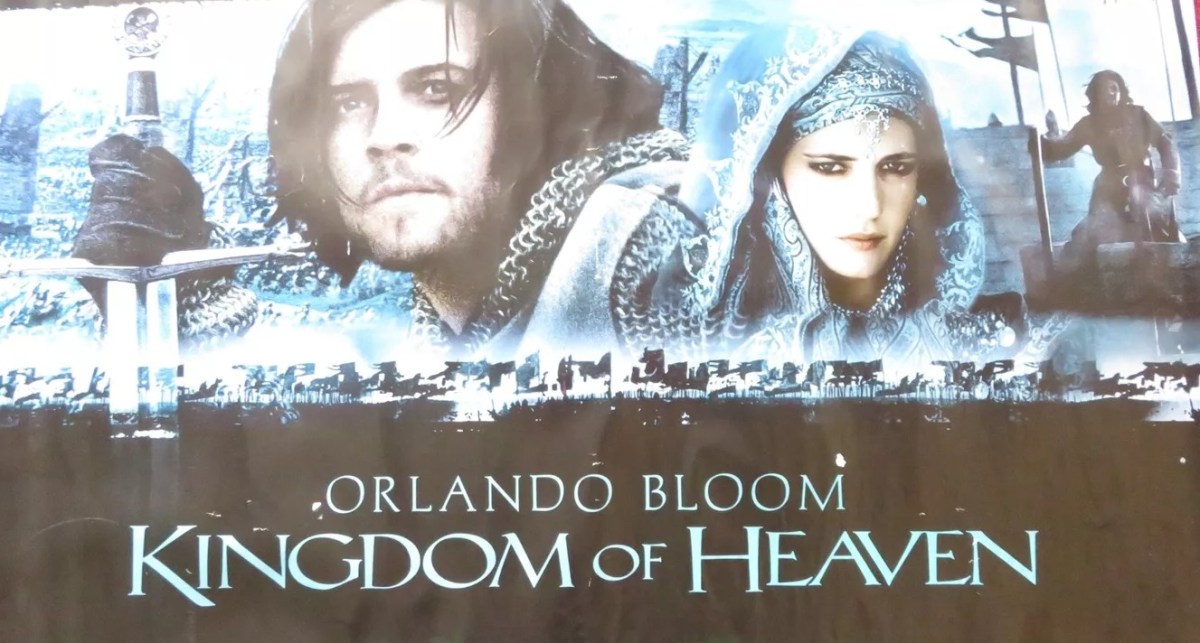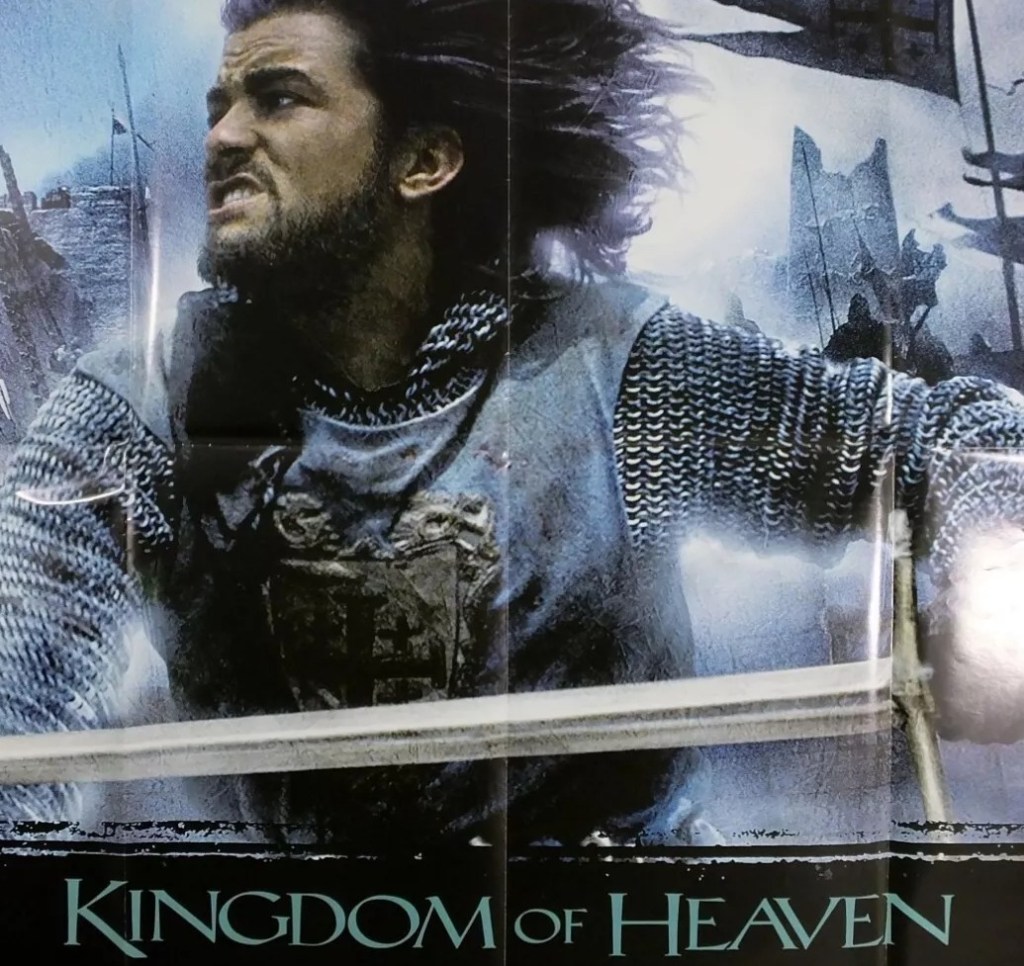
Kingdom of Heaven (2005) ***

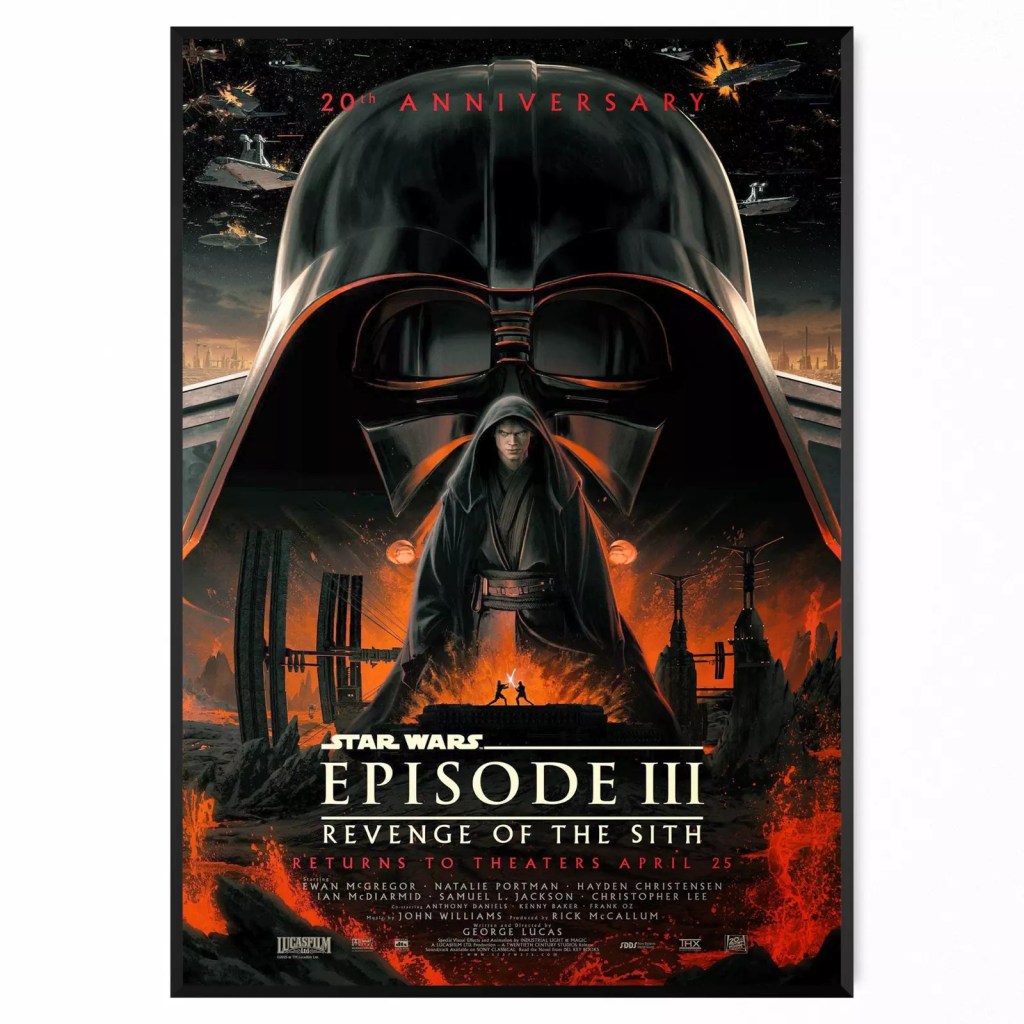
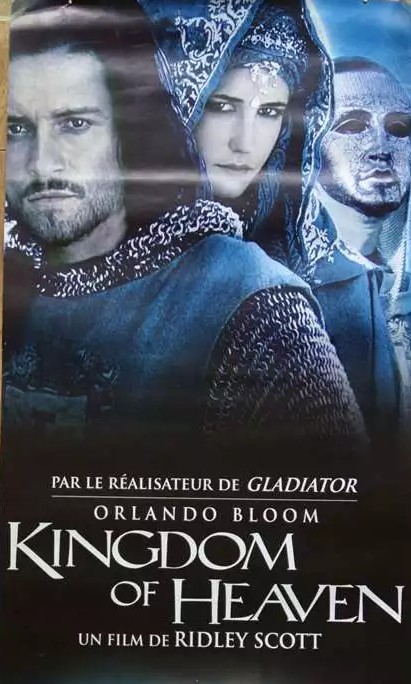
I’m conscious of entering contentious waters especially as a new 4K DVD edition of the 195-minute Director’s Cut – expanded from the original 144-minute version – is being released by Twentieth Century Fox to coincide with today’s theatrical 20th anniversary theatrical release. Normally, that would have filled me with joy because I was a huge fan of the original Director’s Cut, which, it is true, added considerable depth to the film as initially screened.

But in watching the Director’s Cut as the first part of a proposed All-Time Top Ten double bill with Any Given Sunday (1999) I discovered to my horror it was not the film I remembered and had for many years championed. The flaws were all too obvious, it was extremely wordy, rammed full of characters and a narrative that ran all over the place trying to keep up with itself.

We should begin with the major flaw and that’s the casting of Orlando Bloom, fresh from his breakthrough role in Pirates of the Caribbean: Curse of the Black Pearl (2003), as Balian the blacksmith. The role was written for Russell Crowe but schedule clash prevented his involvement. Director Ridley Scott went ahead anyway and Bloom doesn’t remotely convince as a leader.

Though most of the picture is based on historical fact, the initial MacGuffin doesn’t make sense. For the purposes of the narrative we need to get blacksmith Balian to the Crusades. Balian’s wife (Nathalie Cox), seen briefly (and happily) in flashback, has committed suicide because of a miscarriage which seems a mighty odd reason, and we are never made privy to whatever other  mental problems afflicted her. In those days, if you committed suicide you could not be buried in sacred ground and furthermore your head was chopped off. Now, admittedly, the local priest (Michael Sheen), Balian’s half-brother, is a creepy character, but it hardly seems to justify Balian thrusting a sword through his heart and setting him on fire.

But, don’t you know it, if you run off to the Crusades you win a get-out-of-jail-free card rather than being hung for your crime. So Balian joins up with his dad Godfrey (Liam Neeson) who has returned briefly from the Crusades and initially been rejected by his son. They’re attacked by soldiers seeking to arrest Balian but, wouldn’t you know it, after a few lessons from his old man, Balian turns out to be an ace swordsman.

Eventually, after a few adventures and shipwreck and fortuitous encounter with Muslim Imad a-Din – remember the name because he later plays a critical role – he reaches Jerusalem and is confronted with a wordfest, a heavy distillation of philosophy, a narrative that flits around fragile peace between Christian and Muslim, and woman of intrigue Sibylla (Eva Green) whose husband Guy happens to be the leader of the anti-Muslim forces.

It might have helped if Godfrey hadn’t inconveniently died, of wounds while protecting his son, because Liam Neeson strikes you immediately as a leader and not the kind of actor like Bloom who is only a leader because the script says so. Anyways, before we can get down to any of the stirring and visually commanding action for which Ridley Scott is rightly acclaimed, Balian, who remember is a blacksmith, turns before our eyes into a wizard of an engineer and before you know it a parched piece of land is fully irrigated. It’s a lovely sequence, to be sure, and accompanied by my favorite piece of music (score by Harry Gregson-Smith) in the film, but not particularly believable.

Nor is the romance, Sibylla now deciding on adultery with her husband’s enemy. And, again, to be sure, much of the extra footage does fill out her character, but that still leaves a jumble of other characters fighting for political power – the dying masked King of Jerusalem, Baldwin IV (Edward Norton), a leper; City Marshal Tiberias (Jeremy Irons); the aforementioned Guy and his sidekick Raynald (Brendan Gleeson); assorted Knight Templars who are ferociously anti-Muslim; and parked outside the city gates Muslin chief Saladin (Ghassan Massoud).

The story, if you can still keep sight of it amongst all this intrigue, is that Guy and Raynald and the Knights Templar want to spark a Holy War, ending years of peace, restoring Jerusalem to sole ownership of the Christians, rather than being equally shared (though, noticeably, no Muslims on any of the ruling factions).

Anyway, eventually, after we’re done with philosophizing and Balian making hay with Sibylla, we get to the action and at last the movie takes flight, and though you no longer particularly believe in Balian as a leader of men he does show some tactical awareness. There’s a superb pitched battle against superior forces and a magnificent siege. Written by William Monahan (The Departed, 2006).

But watching the Director’s Cut again I came away wishing for the shorter version, though very little could compensate for the casting of Orlando Bloom.

I might change my mind if I get to see it in the cinema again but for the moment it’s lost its coveted place in my All-Time Top Ten.

Napoleon (2023) ***

I come at this with a disadvantage since I’m all Napoleoned-out what the various Abel Gance projects and that of Stanley Kubrick. So I suffer from over-familiary with the subject matter. Most of the audience won;t have viewed a Napoleon movie in their lifetime, but I’ve already sat through six-seven hours of this material.

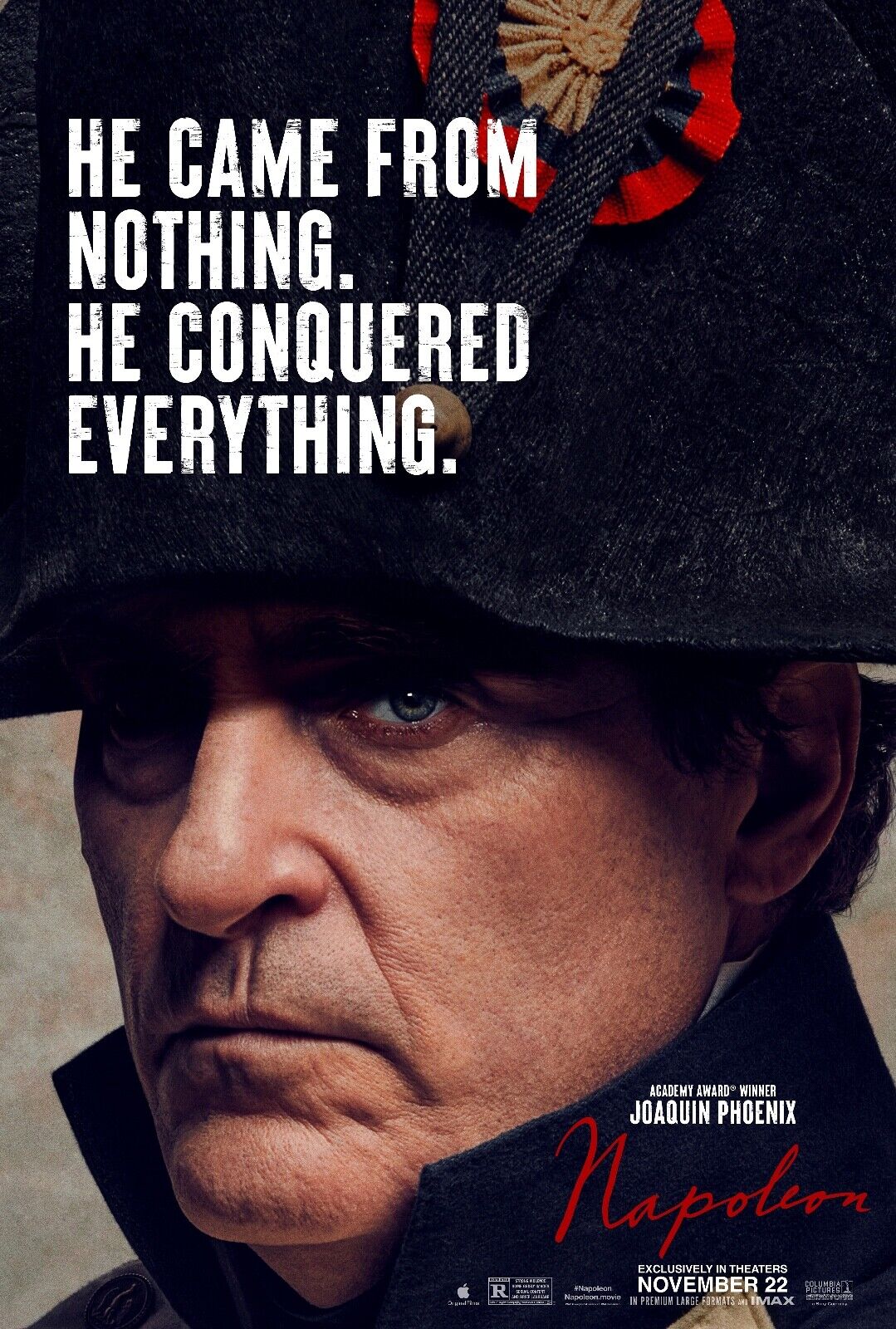
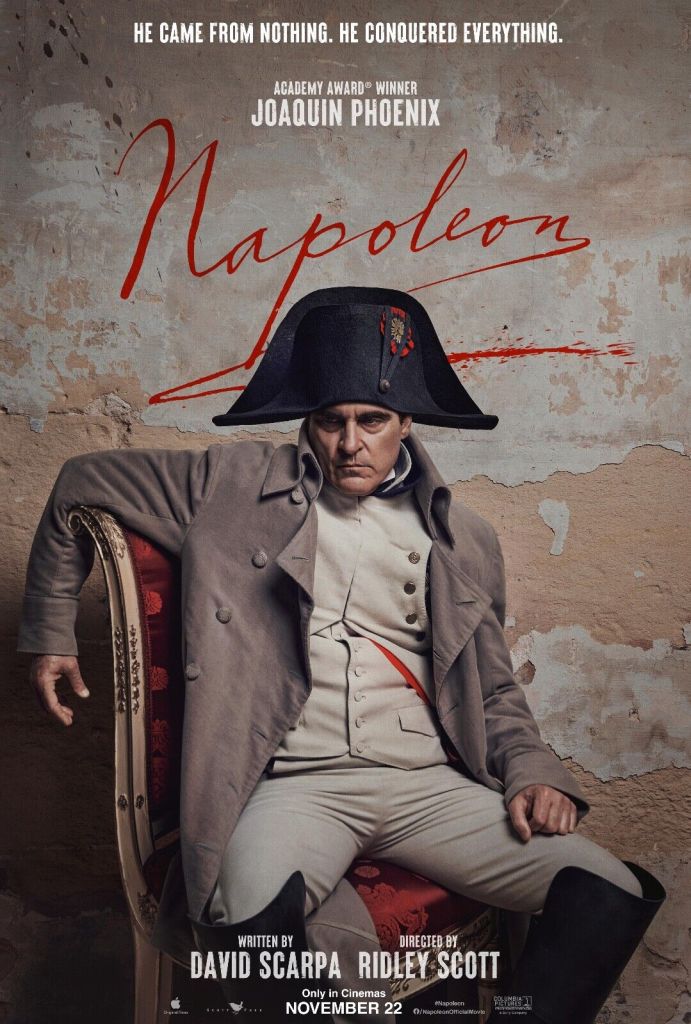
In the end length defeats them all, the magnitude of the task of encapsulating an extraordinary career ends up as a mad dash through history. Setting any deliberate distortions aside, those scenes fictionalized for dramatic effect providing directors with a free pass, it’s just too much to find a central thread on which to encompass the man. Here, Ridley Scott makes a good stab at using romance as that glue, but it’s hampered by the great emperor (Joaquin Phoenix) being such an oaf in terms of seduction. Although he is as ruthless as any dictator whose risen from poverty to the absolute heights.

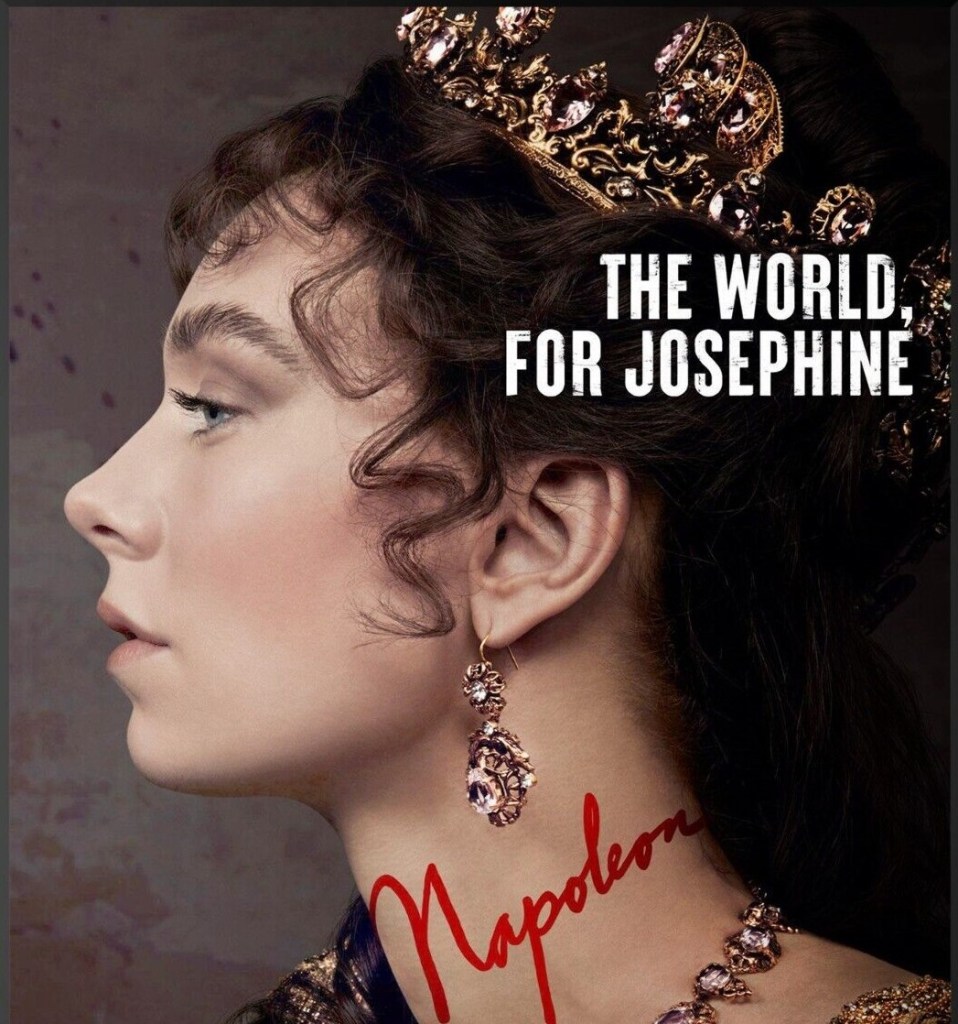
On the other hand, Josephine (Vanessa Kirby) is shown as a more complex character in more complex times, effectively taking up with this oaf for mercenary reasons, her clever plan only coming adrift because she cannot provide him with an heir. I doubt if that many among the audience are looking for an actual history lesson, which is just as well, because it feels, in part because of length restrictions, that this is inevitably going to come up short.

Little is made of the political situation in a world terrified of the revolution that changed France seeping into the countries of Europe. Theoretically, Britain was a democracy, but in reality it was ruled by an elite land-owning cabal, with poverty as rife as in France. Every other country in Europe had an unelected monarch. So Napoleon didn’t so much intend to conquer Europe from power lust but prevent his country being attacked by those who feared an end to the status quo.

Of course, if you had included more history you would have to accommodate an endless stream on one-line characters trying to explain the situation. Scott makes more use of subtitles to provide the audience with its historical bearings but still isn’t afraid to simply fall back on the Austerlitz trick of using protocol to announce a new one-line character.

In terms of actors, this has more the feel of a mini-series than a movie. Hardly anyone of box office significance and being weighed down with British character actors, virtually nobody is on screen long enough to make a mark. Certainly, none command the screen the way the veterans of the old-style all-star cast like Ralph Richardson (Khartoum 1966) or John Gielgud (Becket, 1964), and I’m sorry but Rupert Everett as the Duke of Wellington is sorely miscast.

Anyway, you could go through this entire picture pulling it to pieces, instead of concentrating of what does work. Napoleon’s insecurities contrast nicely with his rampant ambition and arrogance and every now and then someone delivers a historical bon mot. As annoying as it is, I doubt if many males of the period gave any thought to female pleasure during sex, so Napoleon’s amateur love-making can be ignored.

Except for the verbal sparring with Josephine, it’s the military duels that bring this up to scratch at least within the Ridley Scott canon. The taking of Toulon, the bloody putting down of the royalist revolt and Austerlitz are the outstanding scenes, though anybody who has dared to sit through Abel Gance’s Austerlitz might not come out thinking the frozen ice splintering is quite as novel as it might appear.

I’m guessing that the four-hour version planned for streaming might fill in some of the holes, but I’m worried that, like Austerlitz, it will be more of the boring stuff, a potted history filled out with more balls and costume-heavy scenes. If this is all the insight into the life of Napoleon that $200 million buys, then it will take another streamer with even deeper pockets to make a serious dent at tackling the full story of Napoleon.

I usually go back to see a Ridley Scott film at least once – I saw The Martian (2015), Gladiator (2000) and American Gangster (2007) four times each in the cinema – but I’m not sure this holds the same attraction. The director’s cut of Kingdom of Heaven (2005) even with a miscast Orlando Bloom totally transformed that movie so I’m hoping the longer version here might achieve the same. But the latter had a marvellous score, which I had bought as a CD and was a virtual earworm for me, whereas the music here is an uneven as the picture.

I’d love to give this a better score, especially as it may be the director’s last cinematic outing, but it’s too disappointing.

Time – or lack of it – does not sit well here.

Stanley Kubrick’s “Napoleon”: The Greatest Movie Never Made

At the height of his power after the tremendous critical and commercial success of 2001: A Space Odyssey (1968) you wouldn’t have wagered on Stanley Kubrick being outfoxed by Italian uber-producer Dino De Laurentiis. But the latter’s Waterloo (1970) was the prime reason why MGM shuttered Kubrick’s ambitious project. It’s not the reason it was never eventually made – money was.

At one point, it looked as if the movie would shift over to Columbia, which had funded the director’s previous hit, Dr Strangelove (1964), and thence to United Artists – production scheduled to start in September 1970 – before ending up in the lap of Warner Brothers, which would prove Kubrick’s home for the next few decades.

One of the reasons WB was so keen was that it had greenlit a movie by British director Bryan Forbes called Napoleon and Josephine. This was to follow The Madwoman of Chaillot (1970), a project he had taken over at the last minute after John Huston bailed. But it never went ahead because Forbes instead took over as head of production at British studio EMI. To have considered the project in the first place, despite facing competition from Waterloo, would have meant WB viewed the idea as a financailly sound.

The bigger problem, commercially, was that two events coalesced. By the end of the 1960s, the 70mm roadshow was on its last legs. It still continued in haphazard fashion into the early 1970s, but scarcely with the vigor and elan that had produced such different movies as Lawrence of Arabia (1962), It’s A Mad, Mad, Mad, Mad World (1963), Doctor Zhivago (1965) and The Sound of Music (1965) that set fire to the global box office.

As important, studios hit a financial wall at the end of the 1960s as over-investment in all sorts of unlikely roadshow vehicles, often musicals, came back to bite Hollywood. And with Easy Rider (1969) cleaning up, the message to Hollywood was mean and lean.

So a project that could top out at $30 million – even with Jack Nicholson, Audrey Hepburn and David Hemmings involved – and inevitably run over budget, take well over a year to complete and appear when who knew how the movie landscape would have changed, and working with the only director from whom no studio executive in their right mind would dare seize control, this version of Napoleon was put on the back burner, resurrected every time Kubrick had a hit.

As well as the massive book, there were coveted extras, accessed via this card fixed to the inside front cover of the Taschen publication.

When MGM pulled out it was deemed “one too many…ultra-high budget commitments for the studio,” one of the hardest hit by financial turmoil. Columbia, it transpired, had only toyed with the idea. Warner Brothers built up the notion of coming to Kubrick’s rescue with Variety headlines such as  “Costume Epic Due Anew? WB Hunch,” that appeared in Variety in 1972. It was the kind of movie that you almost expected an operation looking to grab Hollywood attention, say new ventures like Cannon or Orion, to pick up.

While Waterloo (1970) was seen as the main obstacle, coupled with the fact that one of the reasons Abel Gance’s Napoleon had stiffed way back in the silent era was American audience indifference to the French Emperor, it has to be said Hollywood would have noticed that Kubrick faced more competition than just De Laurentiis. Wider awareness of subject matter might have come from an unusual source, since Barbra Streisand was contemplating starring in a new Broadway musical about Napoleon and Josephine,

That there was continued interest in Napoleon was proved with the release of Fielder Cook’s Eagle in a Cage (1972), starring Kenneth Haigh (The Deadly Affair, 1965) and Billie Whitelaw (Leo the Last, 1970) and British acting royalty like John Gielgud (Khartoum, 1966) and Ralph Richardson (The 300 Spartans, 1962). This was limited to Napoleon’s exile, and was funded by a newcomer, Group W, its biggest-ever production gamble, albeit with a budget of only $1.25 million. The Brits proved pretty keen on the subject matter, a television mini-series Napoleon and Love (1974) up next starring Ian Holm (Chariots of Fire, 1981).

Interest never dwindled. There was a French musical in 1985 and a French mini-series at the turn of this century with an all-star cast including Christian Clavier (Asterix and Obelisk: Mission Cleopatra, 2002), Gerard Depardieu (Green Card, 1990) Anouk Aimee (A Man and a Woman, 1966) and Isabella Rossellini (Blue Velvet, 1986).

The larger obstacle had always been the budget which the new Ridley Scott picture has overcome thanks to the deep pockets of Apple.

Just how far the ever-obsessive Kubrick got with his project can be seen from the gigantic tome –  Stanley Kubrick’s Napoleon: The Greatest Movie Never Made – running to 1100 pages, published by Taschen and now a collector’s item, copies changing hands for up to $2,000, containing not just the entire script, but all the details he had already filled in of costumes, locations, budget, and even his own thinking, as revealed in a series of interviews with collaborators. The book is crammed full of photographs and it’s a good a testament to a film that never was as you’re likely to find. I have a copy and can attest to that.

Surprisingly, there’s a happy ending. Apparently, Steven Spielberg is taking up the Kubrick mantle. HBO, not shy of spending gazillions as proven by Game of Thrones, has enlisted the director to make an eight-part mini-series based on the Kubrick screenplay. And although officially in retirement, Jack Nicholson is the first big name signed up.

Old legends never die.

SOURCES: Alison Castle, Stanley Kubrick’s Napoleon (Taschen, 2009) ; “Kubrick To Make Napoleon for MGM Next Year, Box Office, July 22, 1968, pE7; “Kubrick’s Napoleon not for MGM May Go Via Columbia,” Variety, January 1, 1969, p5; “Forbes Has Full Reign on Napoleon and Josephine,” Box Office, January 6, 1969, pW3; “Kubrick’s Napoleon to UA,” Variety, January 15, 1969, p21; “Newley-Steisand for Broadway Tuner on Nappy-Josie,” Variety, July 2, 1969, p1; “Group W Biggest Theatrical Feature,” Variety, September 10, 1969, p7; “Gaffney as Kubrick Assisant on Napoleon,” Variety, October 19, 1969, p25; “Costume Epics Due Anew? WB Hunch,” Variety, January 12, 1972, p6; Advert, Napoleon musical,” Variety March 13, 1985, p120; Peter White, “Steven Spielberg Says Stanley Kubrick’s Napoleon 7-Part,” Deadline, Feb 21, 2023.

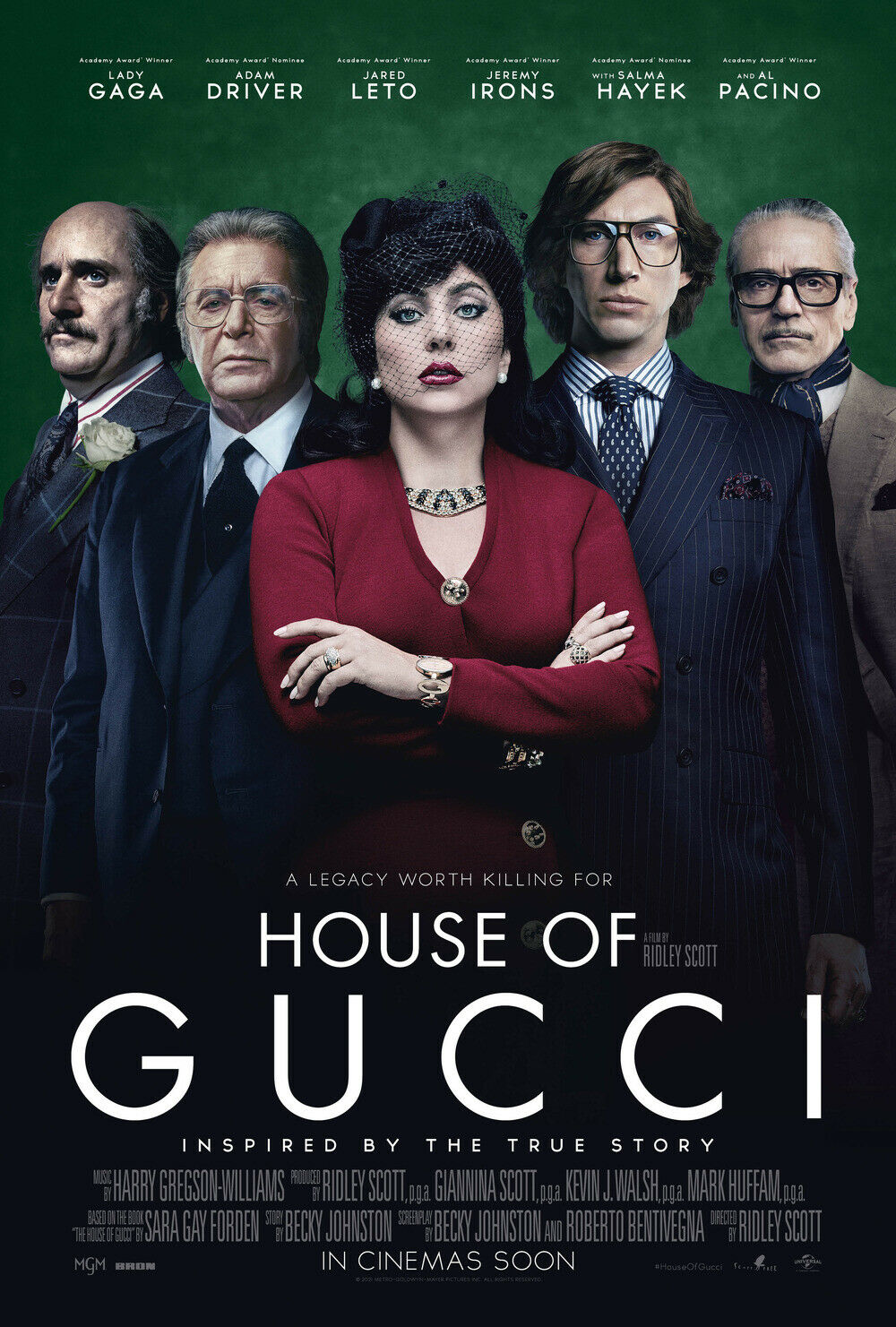
House of Gucci (2021) ***** – Seen at the Cinema

Beautifully constructed, stylish, compelling narrative about passion, betrayal and the death of a dynasty. Just as The Godfather is not just about the Mafia, this is not just about fashion; rather, both fit into the niche of movies about family. In each, there are principled fathers and both weak and strong sons. While decisions are driven by character, ambition clogs the mind and ultimately it is the clear-sighted who win.

In a beautifully-played love story outsider Patrizia (Lady Gaga) manages to snag Gucci heir Maurizio (Adam Driver), her lowly status driving a wedge between him and ill patriarch Rodolfo (Jeremy Irons), who shares control of the company with his brother Aldo (Al Pacino). Almost a geek poster-boy, Maurizio nonetheless fits easily into her world. But when Aldo draws Maurizio into the family business, it triggers conspiracy and betrayal.

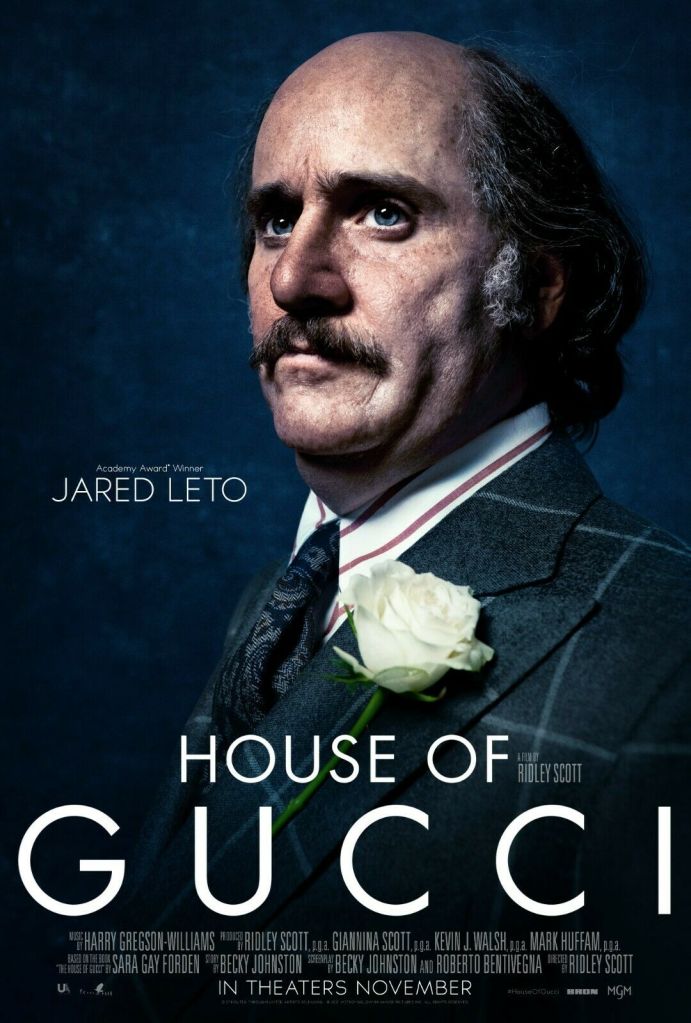
Aldo and Rodolfo are polar opposites, the former willing to dilute the brand in the race for profit, the latter seeing himself as the curator of a more sedate way of doing business. While Rodolfo pines for his dead wife in his palatial Italian sanctuary, Aldo has an eye for the ladies in New York. The weak link in the family chain is Aldo’s “idiot” son Paolo (Jared Leto) who considers himself a fashion genius. But, in reality, they are all weak, seduced by wealth and power, believing themselves untouchable despite wholesale fraud, business folly and self-delusion on a colossal scale.

The quest for power is ostensibly driven by Patrizia, but she proves no match for a flinty-eyed Maurizio. And for his all self-aggrandisement, Maurizio proves no match for the circling predators, his rampant self-indulgence a death wish in a boardroom.

Over-acting could have sent this picture off the rails but everyone is terrific and the soap-opera tag is unfair. In the best Shakespearian style, hubris accounts for tragedy.  Few characters escape humiliation. Paulo may be a figure of fun, but his mortification at the hands of Rodolfo renders him extremely human. Aldo may exalt in his business skill but in the face of betrayal is destroyed. Patrizia receives a massive put-down by Maurizio in front of his high-class friends.

Lady Gaga, who demonstrates the onscreen radiance and incandescence of a latter-day Elizabeth Taylor, is superb as the woman whose prize is snatched away. Adam Driver puts in his best performance yet, so natural, and his scenes with Gaga are electrifying. Al Pacino encompasses a massive range, man in his pomp, loving father, and in the depth of agony at betrayal. Jared Leto is a revelation, and an early Oscar favourite, as the ridiculous and ridiculed son. Jeremy Irons and Jack Huston as the conniving lawyer are excellent

There are so many brilliantly-wrought scenes – seduction on a rowing boat, a rugby match that gets out of hand, a snake-pit of a boardroom, Aldo lavishing attention on his cows, Patrizia indulging a psychic (Salma Hayek), Maurizio leaping around a room for a Vogue photo shoot. A weighty look at the corruption of power but also a fabulously entertaining picture. Better known for visual tropes, here Scott displays his mastery of narrative as we sweep in and out of unbridled egos hell bent on triumph at any cost. And it is the best film about business since Wall St (1987).

When I first watched this, I was inclined to give it a four-star rating but after seeing it a second time on the big screen that appeared niggardly for a work of such awesome majesty. (Now that I’ve seen it a third time, the five-star ranking still stands). Just like American Gangster (2005) and Thelma and Louise (1992), when Scott moves outside his self-appointed sci-fi and historical treasure trove, he does so with effortless style. This just zipped along. I hardly noticed the time at all. Second time around, I just did not want it to finish, I was so immersed. I even found myself laughing at the same jokes and situations.

What a banner year for the 83-year-old British director. The Last Duel could have bookended this piece – wronged woman proved innocent compared to wronged woman found guilty. Given Scott is synonymous more with the historic than anything approaching the contemporary, I thought I would have preferred The Last Duel, but I now consider House of Gucci the greater film.

The Last Duel (2021) **** – Seen at the Cinema

A surprisingly contemporary core, bolstered by a quartet of excellent performances, drives Ridley Scott’s bold Rashomon-style historical tale. Despite its length it’s less of a historical epic in the style of Gladiator (1999) and more of an intimate and intricate exploration of power – and its lack. Each of the main characters, including and especially the women, while exerting some kind of power nonetheless are in thrall to a superior being whose word is absolute law. Challenging that authority could result in instant death. It’s a slow-burn for sure but exerts a tenacious grip as the story unfolds from three points-of-view to a double climax, both riveting for different reasons.   

And it’s far from typical Ridley Scott except in attention to historical detail. The battle scenes are almost perfunctory – in fact few end in victory – and except to demonstrate bravery do not follow the usual heroic template. There’s none of the trademark Scott cinematic sweep although the duel itself is exceptional.

Scarred to the point of facial disfigurement Damon has never played a character like this before.

In 14th century France Marguerite (Jodie Comer), wife of Sir Jean de Carrouges (Matt Damon), accuses Jacques Le Gris (Adam Driver) of rape, the accusation finally settled by duel to the death. All three characters are given the chance to give their version of the story and this is where it becomes fascinating as shades of personality are filled in.

At the outset Jean comes across as brave, impulsive, marrying Marguerite to save her honour (her father is a traitor), and when wronged willing to challenge authority. But as other perspectives unfold he is revealed as blustering, ambitious, more interested in his wife’s sizeable dowry than her honour, over-proud, and a poor manager of his estate. While brave, educated and charming Le Gris turns out to be a greedy, conniving bed-hopper. Initially presented as a grateful wife and little more than an adornment Marguerite is revealed as the most courageous of all, an able estate manager, challenging the King, accepting the prospect of death rather than, as was apparently the custom of the times, allowing the rape to go unremarked.

Comer is a revelation and you could argue she steals the picture from her more experienced colleagues. There is an astonishing scene where she realises that, her husband’s bravery notwithstanding, he has condemned her to a terrible death should he lose the duel.

The sexual mores of the era are examined in depth, the worst examples of male prerogative sometimes just touched upon in passing, for example, since a wife is her husband’s property, in law he is the one besmirched not her. In taking sexual power as his central theme rather than the triumphs and woes of the men, Scott takes a huge risk in alienating a following expecting more action and cinematic bravura, but the bold story-telling pays off and although starting with Alien (1979) the director has a record of strong female characters this has more in common with Thelma and Louise (1991) where wronged women are backed up into a cul de sac.

Rejecting the heroism route allows Scott to present far more rounded characters. None of the four principals conforms to type. Damon is neither the common man nor the action hero, but a boor. Driver is neither charming seducer nor outright villain but somewhere in between, living on his wits. Comer cannot rely on female machismo or cleverness but must remain stout in the face of an onslaught of humiliation. And mention must be made of Ben Affleck as Pierre d’Alencon, employer of Le Gris and master of Carrouges, who is cocky, immoral, amoral, greedy, shifty and cunning. Other standout performances feature Alex Lawther (The Imitation Game, 2014) as a gleeful king and Harriet Walter (Atonement, 2007) as a loathsome and cruel mother-in-law. I just hope Oscar voters recognise at least some of these perfomances.

A blond and goateed Affleck as you have never seen him before, cockiness running riot, with a mean streak a mile wide, the epitome of Middle Ages entitlement.

It’s worth paying attention to the screenplay by Nicole Holofcener (Oscar-nominated for Can You Ever Forgive Me, 2018) and Damon and Affleck (their first joint effort since Good Will Hunting, 1997) and note how the language the characters employ changes according to the perspective. Words that we imagine in one section that appear to be spoken by one character in another section are delivered by someone else entirely.

I am a huge fan of Ridley Scott and while I came looking for adventure in the style of Gladiator (2000) or his other historical masterpiece Kingdom of Heaven (2005) I came away more than satisfied in the way he altered his style to suit the story almost in the same manner as he had done with American Gangster (2007), another picture about power.

You will probably be aware by now that this has been a colossal box office bomb and although the film has enormous merit you can see why audiences looked the other way. Oddly enough, I think it will acquire a bigger audience through small-screen streaming since it is really a drama.  I would still recommend catching it at the cinema but there’s fair chance it will not last for its full 45-day window.

I tend to judge directors not by critical acclaim but by a more rudimentary measure – how often I watch their pictures. I have seen Alien, Blade Runner (1982), Thelma and Louise, Gladiator, Kingdom of Heaven, American Gangster, the Martian (2015)  and even the flawed Prometheus (2012) and Black Hawk Down (2001) more than half a dozen times each – often three or four times at the cinema – and I have a notion that The Last Duel will comfortably fit into this elite.

My Five-Star Picks for the First Year of the Blog

It’s a been a fabulous year for watching the movies and my pictures of the year (the first full year of the Blog running from July to June, I hasten to add) make up an eclectic collection ranging from historical epics, dramas and westerns to horror, thrillers and comedy. Although this is my chosen decade, many of the films I was seeing for the first time so it was interesting to sometimes come at a film that had not necessarily received kind reviews and discover for one reason or another cinematic gems. There was no single reason why these pictures were chosen. Sometimes it was the performance, sometimes the direction, sometimes a combination of both.

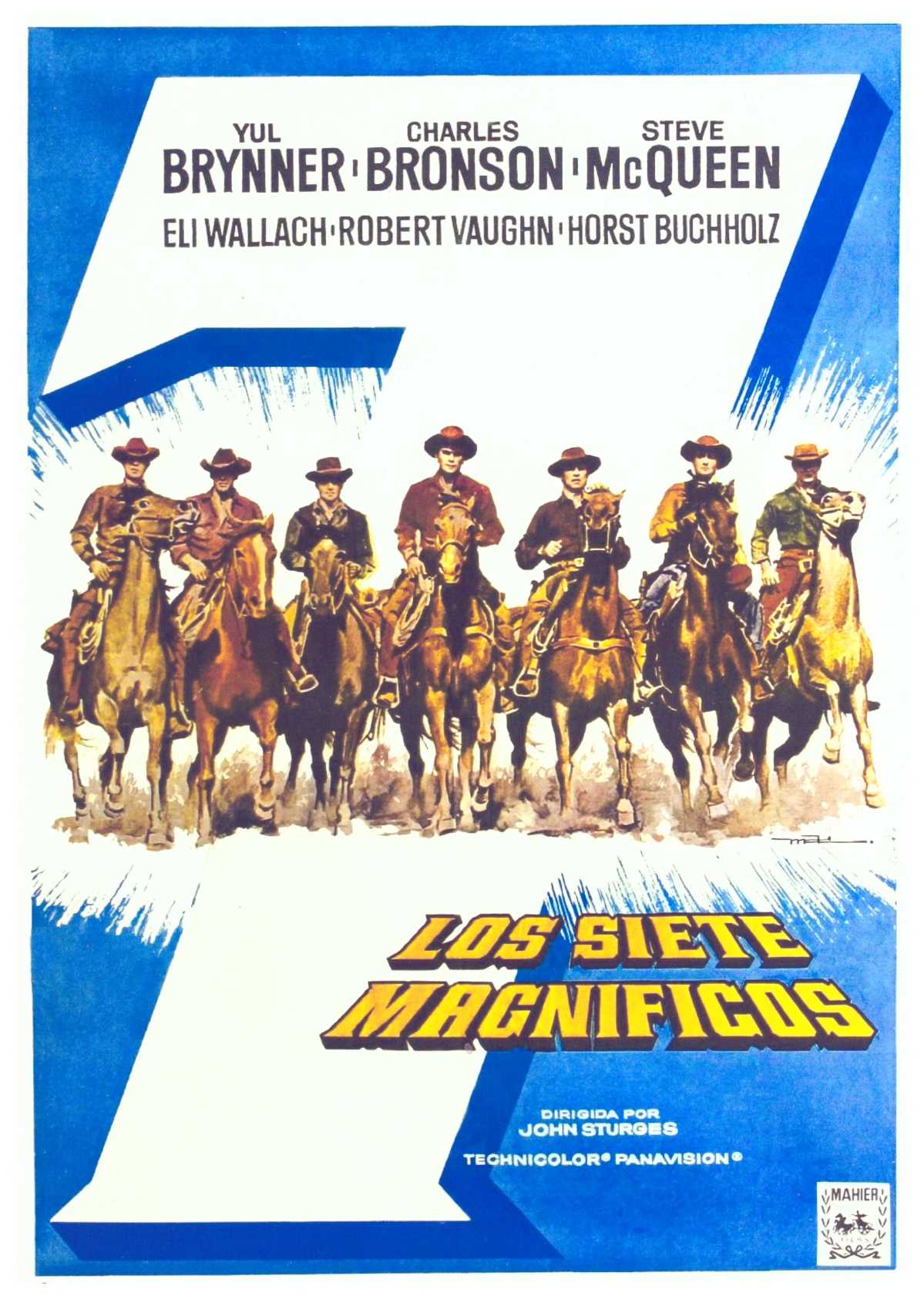
The westerns I most enjoyed came from either ends of the decade – John Wayne and Rock Hudson in magnificent widescreen spectacle The Undefeated (1969) and Yul Brynner, Steve McQueen, Charles Bronson, James Coburn and the team in The Magnificent Seven (1960).

There was another ensemble all-star cast in J. Lee Thompson war film The Guns of Navarone (1961) one of the biggest hits of the decade with Gregory Peck, Anthony Quinn, David Niven, Stanley Baker et al.

Horror brought a couple of surprises in the shape of Daliah Lavi as the Italian peasant succumbing to The Demon (1963) and Peter Cushing menaced by The Skull (1965).

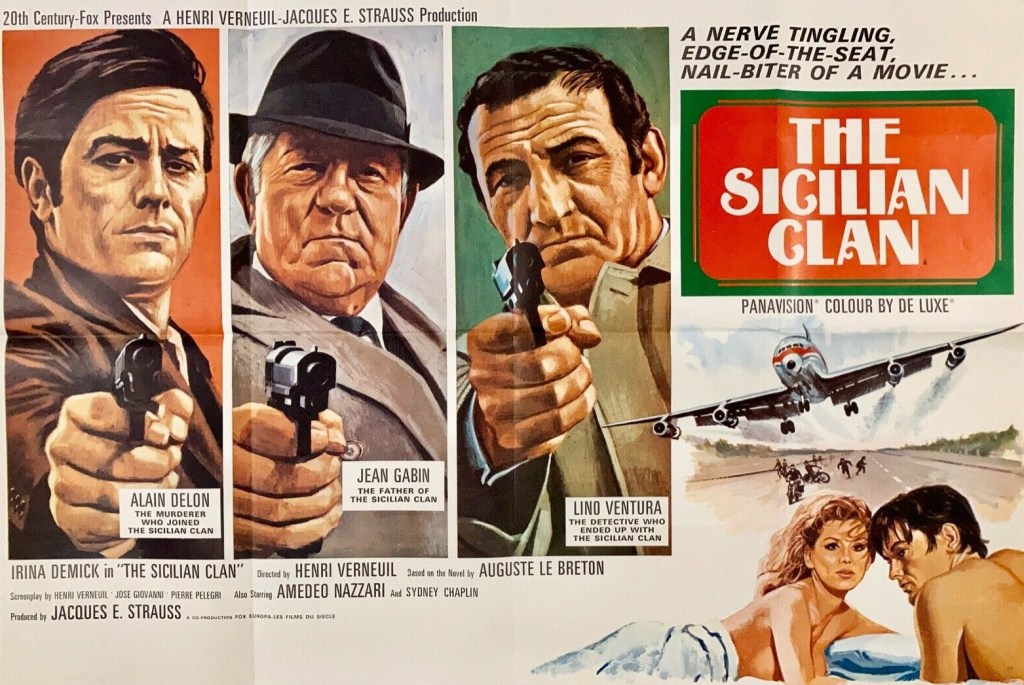
Not surprisingly perhaps Alfred Hitchcock headed the ranks of the five-star thrillers, but surprisingly to some, this was in the shape of Marnie (1964) with Sean Connery and Tippi Hedren rather than some of his decade’s more famous / infamous productions.  Heading the romantic thrillers was the terrifically twisty Blindfold (1965) with Rock Hudson and Claudia Cardinale teaming up to find a missing scientist. The Sicilian Clan (1969) proved to be a fine heist picture in its own right as well as a precursor to The Godfather with a topline French cast in Alain Delon, Lino Ventura and Jean Gabin.

Only one comedy made the five-star grade and what else would you expect from Billy Wilder’s Some Like It Hot (1959), slightly outside my chosen remit of films from the 1960s, but impossible to ignore the chance to see Marilyn Monroe, Tony Curtis and Jack Lemmon strutting their stuff on the big screen. For the same reason I had the opportunity to re-evaluate Ridley Scott’s Oscar-winning historical epic The Gladiator (2000) that gave Hollywood a new action hero in Russell Crowe. Stylish contemporary sci-fi chiller Possessor (2000), from Brandon Cronenberg,  was another one seen on the big screen, one of the few in this year of the pandemic.

Most people would certainly put Paul Newman as prisoner Cool Hand Luke (1967) in this elevated category but, to my surprise, I found several other dramas fitted the bill. The clever sexy love triangle Les Biches (1968) from French director Claude Chabrol made his name. Burt Lancaster turned in a superlative and under-rated performance in the heart-breaking The Swimmer (1968) about the loss of the American Dream. Rod Steiger, on the other hand, was a hair’s-breadth away from picking up an Oscar for his repressed turn as The Pawnbroker (1964).

Two films set in the Deep South also made the list – Marlon Brando in Arthur Penn’s depiction of racism in small-town America in The Chase (1966) with an amazing cast also featuring Jane Fonda and Robert Redford, and Michael Caine as a more than passable arrogant southerner in Otto Preminger’s Hurry Sundown (1967) opposite rising star Faye Dunaway. Dennis Hopper and Peter Fonda’s hymn to the freedom of the motorbike in Easy Rider (1969) turned into a tragic study of attitudes to non-conformity.

For only eighteen films out of a possible two hundred to make the cut indicates the high standards set, and I am looking forward to as many, if not more, brilliant films in the year to come.

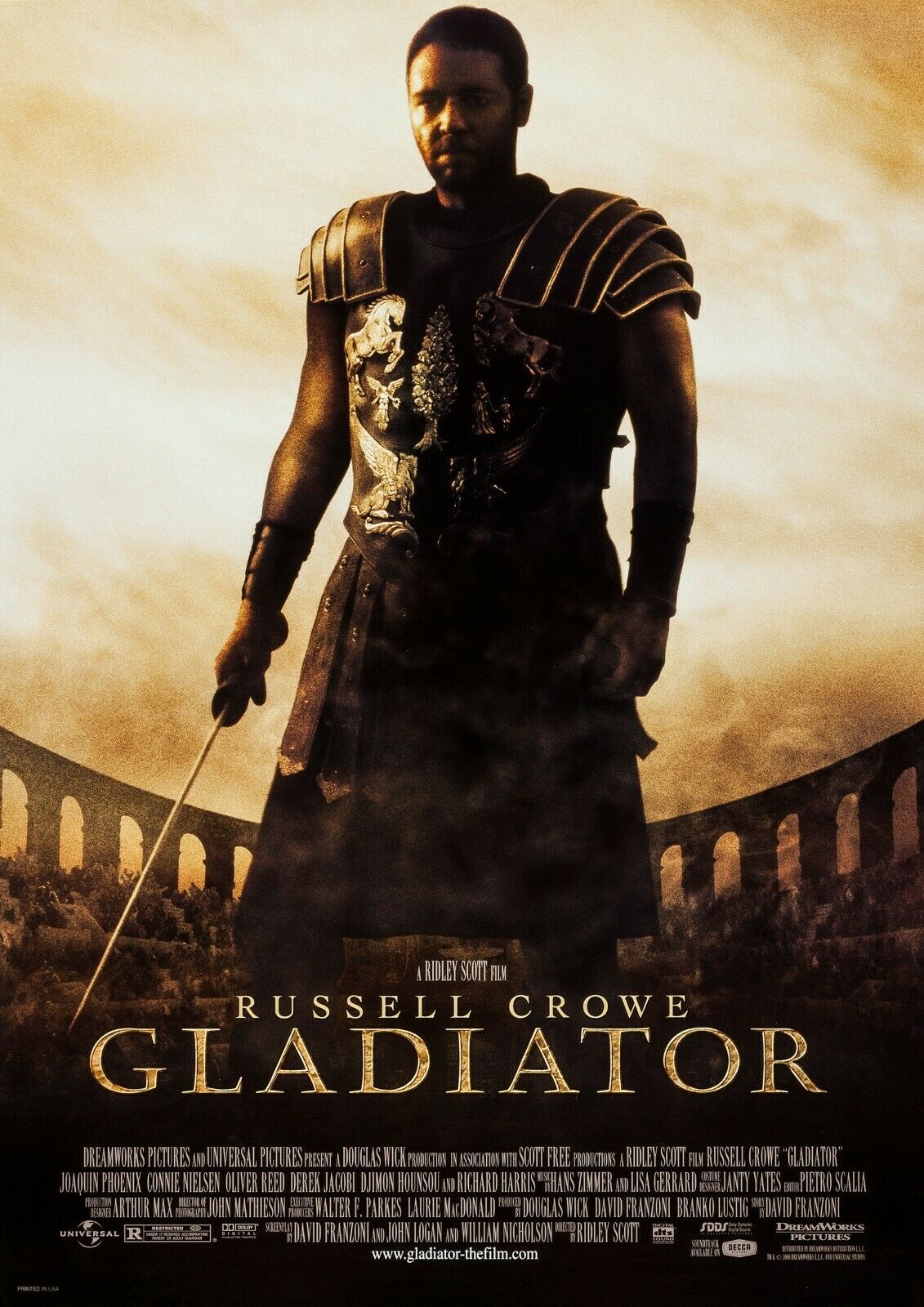
Gladiator (2000) *****

As well as being first in the queue to see The Gladiator on original release over two decades ago and enjoying countless viewings since on DVD and television, the chance to see a big-screen revival (as part of this week’s cinematic triple bill) was not to be missed. There’s always some worry in going back to see a movie you adored that time will have caught up with it or that the big screen will magnify flaws. Instead, this was a pure blast, one of the greatest epics of all time and definitely one of the most brilliant scores.

I always feel kind of sorry for people who’ve only see this kind of picture on a small screen – no matter how big your television it comes nowhere near the cinematic experience. I’m not even sure why it was showing on the big screen – the 20th anniversary has passed so maybe the draw was the upcoming British Father’s Day.

If you’re quick, you will be able to see it until June 17 at the Showcase cinema chain in the U.K. This is a new 4K print. It may run longer if it picks up sufficient demand.

Director Ridley Scott was in something of a career lull after the highs of Blade Runner (1982) and Thelma and Louise (1991) and his previous historical adventures – The Duellists (1977) and 1492: Conquest of Paradise (1992) – had been box office duds, so this was a considerable big-budget gamble for Dreamworks and Universal.

Few historical epics begin with action. Directors tended to want to build up the various characters before any battle got under way. But apart from a few seconds of an idyllic pastoral setting establishing how much Roman General Maximus (Russell Crowe) wants to get back to his Spanish farm, we are immediately, with foot-tapping music by Hans Zimmer, into one of the best battles ever filmed, not just for the tactical detail, and the sense of danger – an emissary is returned missing his head – but the ferocity of the action.

Backgrounding this is politics. Dying Emperor Marcus Aurelius (Richard Harris) distrusts his son Commodus (Joaquin Phoenix) and want to make Maximus the power in Rome. The reaction of Commodus is to smother his father and murder his rival. Maximus escapes but ends up a slave in a gladiator camp in North Africa and eventually returns to Rome plotting revenge.

Into the mix comes Commodus’s sister Lucilla (Connie Nielsen) who had romantic yearnings for Maximus in the distant past and various senators plotting to remove Commodus from office. The story basically shifts from dramatic action in the arena to outside intrigue with Maximus being seen as a man who could potentially unseat the emperor.

But Ridley Scott has such a fine eye for everything, genuine locations mix in brilliantly with CGI, the action sequences are astonishing, and emotions are kept at a peak. Even when the main narrative pauses here and there to allow philosophic and patriotic speeches they are so deftly written they often amount to the best pieces of dialogue in the picture.

Few movies have as many memorable lines. Sample: “what we do in life echoes in eternity;” “death smiles at us all, all we can do is smile back;” “people should know when they are conquered;” “father to a murdered son, husband to a murdered wife, I will have my vengeance in this life or the next;” the “little bee” sequence;  and the lines that ended up as taglines on the advertising posters” a general who became a slave, a slave who became a gladiator, a gladiator who defied an emperor.”

While he could easily have let the action speak for itself and who would not have welcomed more battles with Roman foes or more combat in the arena – and many other movies with a character in a similar predicament have succumbed to that temptation – Scott ensures that the tensions between the characters are never lost. So Commodus is driven both by wishing to please his father and desiring an incestuous relationship with his sister. Lucilla is torn between protecting her son (Spencer Treat Clark), her growing attraction to Maximus and trying to keep her brother at bay while plotting against him. Maximus, who has no head for politics, finds himself involved in intrigue as a way of gaining revenge on Commodus.   

Nor does Scott get bogged down with too much exposition or the intricacies of character as has often been the downfall of epics. The story has been whittled down to essential conflict.

It’s hard to pick a winner from the various action scenes – the opening clash in the forests of Germania with snow beginning to fall; the first gladiatorial combat where Maximus takes control; a small band of gladiators fighting what seems a losing battle against chariots; Maximus being unexpectedly attacked by tigers in the arena; or his climactic fight with Commodus.

And there are substantial cameos for British stars – Richard Harris, Oliver Reed, David Hemmings – who have lost their box office luster but not their acting ability. Connie Nielsen was a revelation.

Russell Crowe became instant superstar with his majestic portrayal. His name had already been on the lips of Oscar voters, having been nominated the previous year for The Insider (1999), but he took the Best Actor Oscar here. Although the film was named Best Picture Ridley Scott lost out – unfairly I felt – in the Best Director category to Steven Soderbergh for Traffic. (How do the two films compare now, I wonder). Joaquin Phoenix and Hans Zimmer were also nominated and the movie also picked up nominations for cinematography and screenplay (David Franzoni, William Nicolson and John Logan.) All told it won five Oscars and seven nominations.

This was the climax to my cinematic triple bill this week and since it also included Nobody and The Father, it could well turn out to be one of the best days I have ever spent at the cinema.

CATCH-UP: I reviewed The Fall of the Roman Empire (1964) a while back and if you compare both pictures you can clearly see how much Ridley Scott owes a debt to the previous film.  

There’s a company called Park Circus – http://www.parkcircus.com – which has the rights to show on the big screen virtually all the old movies made by Hollywood studios and it’s worth checking out whether this might be coming your way soon.

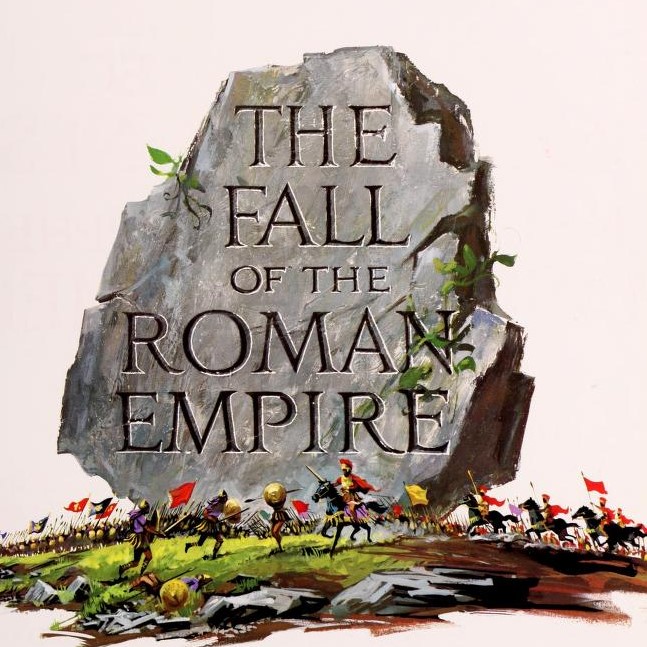
Fall of the Roman Empire (1964) ****

There could not be a more contemporary picture. As an examination of the problems of assimilating different cultures it is hard to beat. As an assessment of the difficulties of the transition of power it is faultless.

In Gladiator Ridley Scott, taking a few liberties with the known facts, re-imagined the circumstances discussed here of the death of Emperor Marcus Aurelius and the ascension to power of his son Commodus. Along the way, Scott stole a few of Anthony Mann’s visual ideas, snow falling on the battlefield, for example, and at the end the phalanx of guards, shields up, blocking in Commodus and the dethroned military chieftain (Stephen Boyd here, Russell Crowe in Gladiator) for their gladiatorial climax.

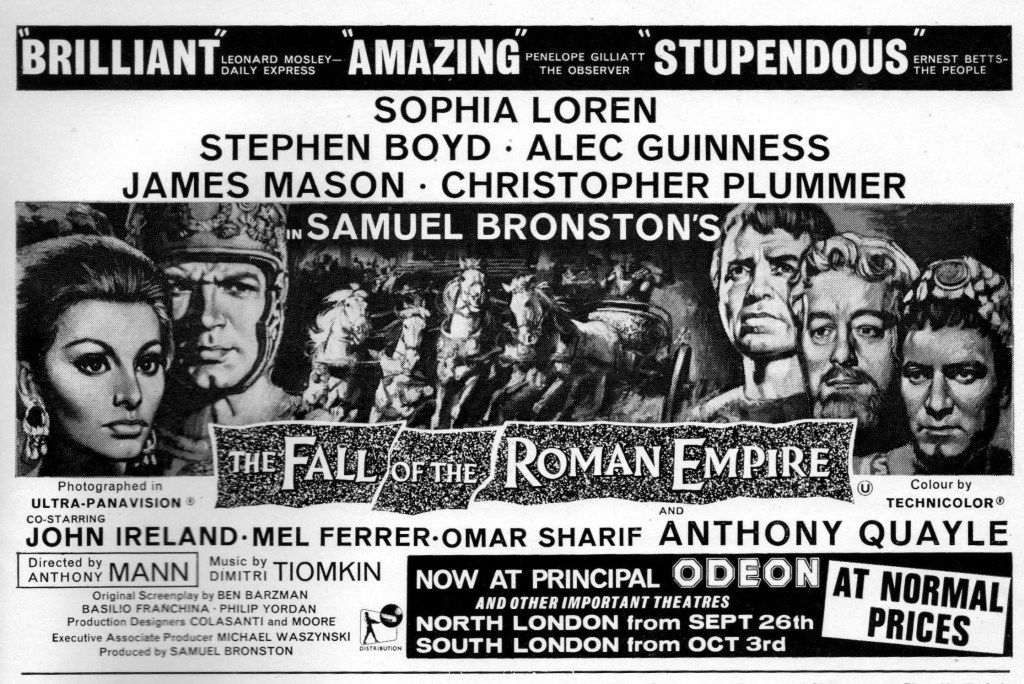
British advertisement for the film about to go on general release after a spell in the more expensive West End. The “normal prices” slogan was very commonly found on movies as they headed towards the more normal kind of cinema. in addition, by the time it was rest go into wider release the critics had delivered their verdicts and these could be tagged onto any advertising.

The title does not refer to an invasion of Rome by vast armies of barbarians but the internal corruption which signals the end of the empire. Audiences, taught Latin and Roman history as a matter of course at school around the time the film was released, would be more familiar with the subject matter, but hardly prepared for the spectacle.

Every extra in the known world must have been employed for several scenes, cities bursting with inhabitants, armies sprawling over vast tracts of land. One standout is the extraordinary chariot clash between the two protagonists, not in the confines of an amphitheatre a la Ben Hur, but on wild terrain, along narrow cliff roads, wheels tipping over the edge, down ravines and forest. The other is the soundless gladiatorial fight, not a whisper of music until there is a victor.

And there should be mention of the torture of James Mason, very well done. There is political intrigue, quite a clever way of poisoning an enemy, and plenty argument over the issue of accommodating different cultures, traditional punishment versus the novel notion of extending the hand of friendship and granting automatic citizenship.

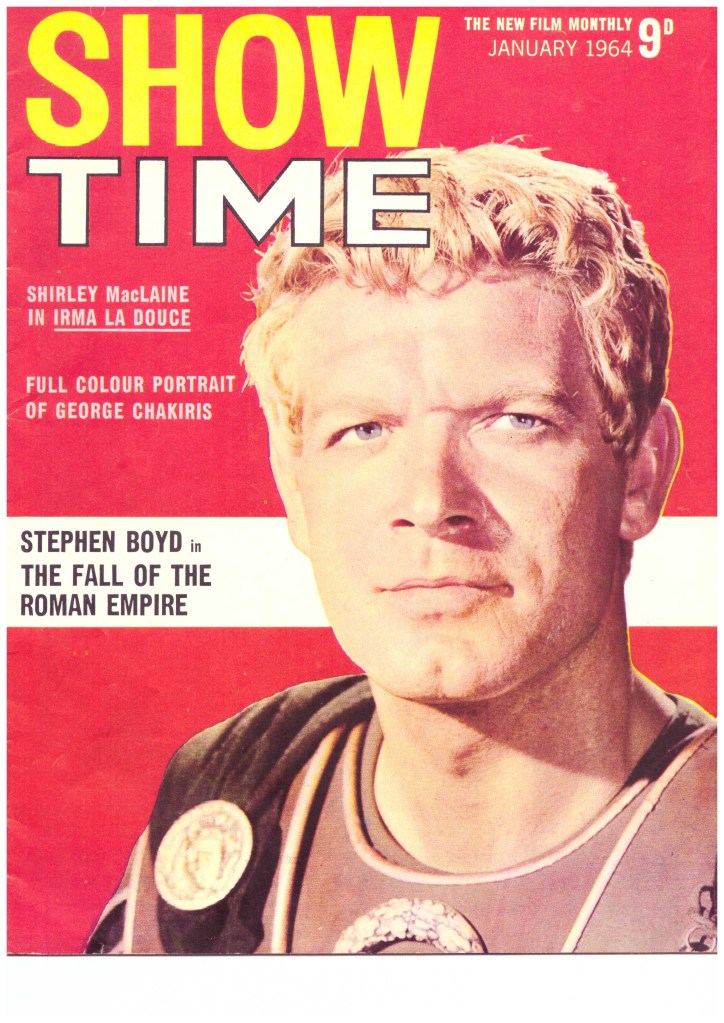
The relatively short-lived “Show Time” fan magazine was launched in Britain as Odeon’s answer to the highly successful “ABC Film Review.” Both magazines were only sold inside cinemas but it was common for cinemagoers to purchase copies without necessarily going into to see a picture. This magazine ceased publication by the end of the decade. This was the launch issue in Janaury 1964.

Loyalty is also tested – is treason a form of loyalty? And how much does loyalty depend solely on payment? Proof is given of how integrating cultures can work, an idea that seems alien to Romans accustomed to beating subjects into submission. In some respects the drama takes second place to the discussion.

Christopher Plummer is the deranged Commodus who embraces and disdains in turn his friend Livius (Stephen Boyd). Sophia Loren, as Commodus’ sister (no incestuous suggestions here), is in love with Boyd and though married off to Armenian king Omar Sharif she manages to spend little time with her husband.

If approached as a political film rather than a traditional epic it has a lot to offer. If you want just battles and thwarted romance then a lot less. The mixture of both strikes a good balance. While there are arguments that it is too long, it could actually do with another twenty minutes or so to iron out narrative inconsistencies.  

Discover WordPress

A daily selection of the best content published on WordPress, collected for you by humans who love to read.

The Atavist Magazine

by Brian Hannan

WordPress.com News

The latest news on WordPress.com and the WordPress community.