
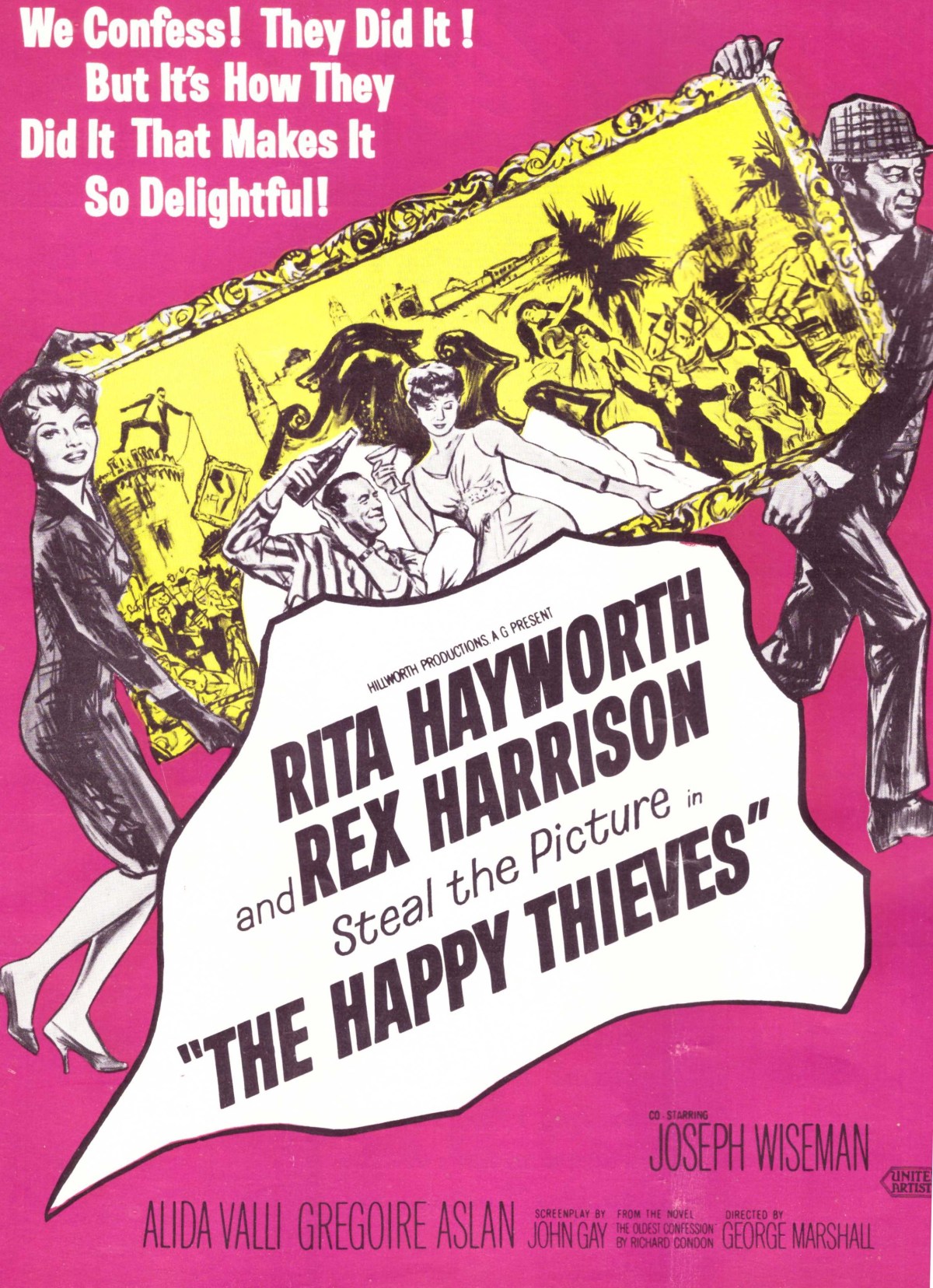
A huge flop at the time given both Richard Burton and Rex Harrison trousered $1 million. Now, primarily of historical interest, hailing from a time when homosexuals could be jailed. A man dressing up in woman’s clothing, as here, could be summoned in front of the magistrates. It’s the kind of movie that would work better if, as with the American idiom, the dialog of two people of any sex engaged in a long-term relationship was spattered with brilliant one-liners rather than a series of sarcastic putdowns.
Even so, there’s more here than originally met the eye. The fact that the hairdressers Charlie (Rex Harrison) and Harry (Richard Burton) have remained, like a married couple, together for twenty years says a lot about their enduring, if fractious, relationship. While Charlie has a daughter he never sees – and never wants to – Harry pines after a child. And there is some gentle complaint about why, in the eyes of the law, Harry would neither be permitted to adopt a child not to love a man, but those aspects are never in your face except that Charlie is awaiting his summons for the crime outlined above.

There’s not as much mincing and preening as you’d expect. Charlie is the better looking and has retained his good looks with the help of considerable pampering but Harry has lost his hair thanks to alopecia and rather than wearing a wig opts for a bandage.
It’s one of those movies where nothing happens based on a play (by Charles Dyer) where nothing happens, what little tension there is reliant on waiting (for the summons and the threat of an appearance by Charlie’s daughter). But while the stage can get away with two actors at the top of their game (Paul Scofield and Patrick Magee in London’s West End, Eli Wallach and Milo O’Shea on Broadway), that’s a far harder trick to pull off on screen.
So it’s to the credit of both actors than they make it work and we empathize with their immediate and ongoing circumstances. While Charlie sees his role as being the scathing dismissive one, leaving Harry to be supportive and apparently still in love, nonetheless his true feelings come out when he thinks his partner has had a heart attack.
In male-female terms, this would come across as just another middle-aged couple stuck in a humdrum marriage, and indeed there’s nothing elevated about the relationship between Charlie and Harry who live a very working class life in London’s East End, the former’s ambitions to become an actor long since dashed.
There’s not much director Stanley Donen (Surprise Package, 1960) can do to open up the play beyond sticking a few of the scenes outdoors and there’s one sequence that would raise eyebrows these days when Charlie ogles half-naked male teenagers playing in the sun. The worst reason for adapting a play for Hollywood is that, unless farce raises its head or there’s a string of one-liners or hilarious circumstance, the verbosity plays against the possibility of there being outstanding cinematic sequences. Luckily, it ends with one, when Harry takes a frightened Charlie by the arm.
I’m not sure I’d actually recommend it because there’s not much going on and the performances are not in the Oscar league, but it is much better than I thought. Rex Harrison (The Honey Pot, 1967) has the showier role, Richard Burton (Anne of the Thousand Days, 1969) reining himself in.
Commercially, nobody came out of this well. Rex Harrison didn’t make another film for eight years, Burton finding it more difficult to extract a million bucks from producers, and Stanley Donen continuing his run of poor box office. And harder for any British audience to take this seriously once comic pair Morecambe and Wise started sharing a bed in their sketches.





 The Magnificent 60s