Deadpool and Wolverine (2024) **** – Seen at the Cinema

Count me in. The buddy movie reinvented, the MCU legend trashed, all set in the ideal MCU location, The Void (worthy of two capital letters, I guess), the place where long-forgetten Marvel characters from the pre-Disney multiverse hang out, and it’s a fun ride. Whether of course this proves the death knell for the MCU after so much fan backlash and poor reviews remains to be seen. Next weekend’s box office will decide its fate one way or another.

But who the hell cares? If this is the extinction of the MCU, as some predict, then it is going out with a bang, a crazy superhero mash-up where you need to keep an MCU dictionary to hand so you can work who’s going to turn up next. Wesley Snipes, not seen in that Blade badass rig since 2004, and it’s not Capt America but Chris Evans’ earlier incarnation of Johnny Storm not seen since 2007, and there’s Channing Tatum as a character Gambit whose stand-alone picture never materialized, despite scoring highly in animated form.  
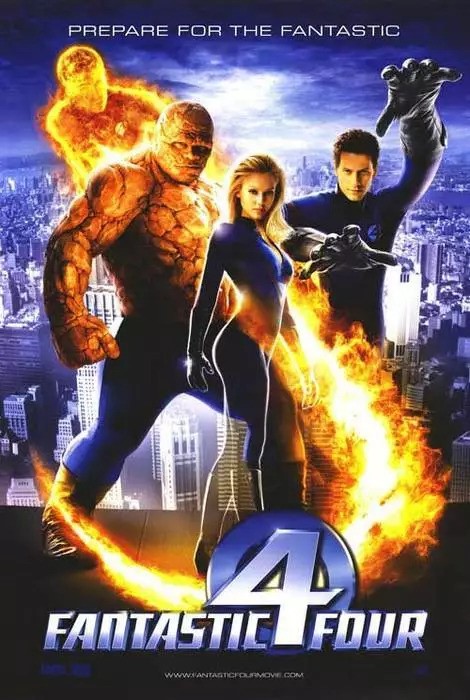
Well hello again.

Anything that MCU got wrong or was criticized for – the multiverse and the varying timelines – turn up here as plot. The “sacred time lime” is almost a character in itself and if you ever wanted to invent the most ideal/ironic MCU character, who else would that be but Mr Paradox (Matthew Macfadyen)?

The entire storyline is so off-the-wall that you’d think it’s never going to work but then when Deadpool’s around walls are toys, especially the fourth wall, that magical trick of speaking direct to the camera. And it’s Deadpool and his continual wisecrack commentary on proceedings that turns what could be a s**tshow into a hoot.

But some of the twists transform what could be another deathly routine of superheroes saving the universe (yawn, what again?) into something more human. Deadpool (Ryan Reynolds) only wants to save his own tiny universe of half a dozen people, everyone who matters to him, and not a gazillion others. Somehow he teams up with the previously deceased Logan a.k.a. (in case you don’t have your MCU Dictionary handy) Wolverine to revive the moribund buddy movie, the best kickass bickering pair since Mel Gibson and Danny Glover in Lethal Weapon.

Or whatever. Anyway, they find themselves in The Void doing battle with that sweet Charles Xavier guy’s nasty twin sister Cassandra Nova (Emma Corrin). And, yes, there’s still so much jiggering about with time that you’d think the Time Bandits or Doctor Who would be claiming copyright infringement. And sometimes you can almost hear the clack of the typewriter as the screenwriter tries to fix that last loose end.

But, as I said, whenever the going gets tough – especially when the going gets tough – you can depend on Deadpool’s motormouth to see the narrative through. Deadpool and Wolverine do make a great screen team, ideal opposites, growl vs grit, class vs. sass, and really you could just junk the narrative – or come up with an entirely different one – and still this picture would work because the two principles set the screen alight.

This is akin to when Guardians of the Galaxy ripped up the MCU playbook a decade ago and influenced every movie thereafter. The guess now is whether Deadpool and Wolverine will take MCU down a new stylistic avenue or whether this is a deliberate cul de sac. I’d guess not, since it’s going to be such a money-spinner, and I could see this pair worming their way into the new Avengers team to brighten up whatever doom-laden occasion is heading our way.

Maybe the MCU is giving the finger to the fanboys, hoping to attract a wider audience rather than pandering to an audience that seemed to have made up its mind about everything way in advance and wasn’t inclined to go along with any MCU experiment, feint or development. The audience I saw it with were clearly of mixed opinion, some feeling betrayed or at the very least insulted.

But I have a good bit less invested in the MCU. It takes me all my time to keep up with who’s who in this expanding universe. So treating this picture on its own merits, I thought it generated more than its fair share of laughs, and not always rude ones, although anyone with a woke inclination would be advised to steer clear.

Shawn Levy (Free Guy, 2021) directed.

Make up your own mind.

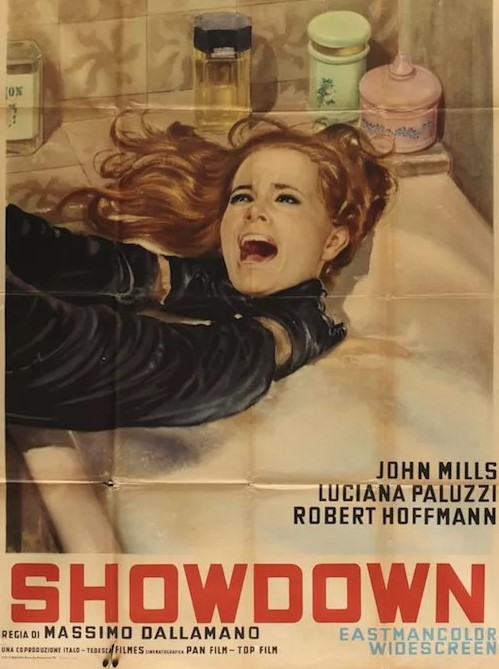
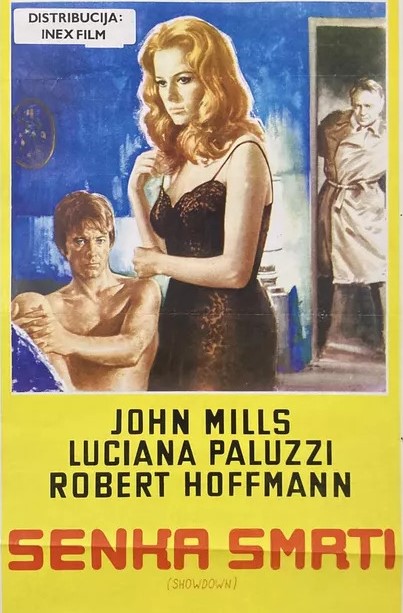
A Black Veil for Lisa (1968) ***

John Mills ventures back into Tunes of Glory (1960) territory as a top official coming apart at the seams. This time it’s not the British Army but the Italian Police where, as Franz Buloff, he heads up the narcotics squad. And this time he’s not the complacent victim but decides to take action against his tormentor.

Closing in on drugs kingpin Scheurermann, he finds that one witness after another is being silenced by an assassin with a deadly knife. He suspects a leak in his department, unaware the traitor is much closer to home. And despite the usual dissatisfied boss Ostermeyer (Tillio Altamura) breathing down his neck, he would be making more headway if it wasn’t for the fact that his head is constantly filled with images of his wife Lisa making love to another man.

For her part, Lisa seems determined to unhinge her husband, eliciting jealousy at every turn, by never answering the phone at night and always an excuse, when he tracks her down, for not being where was supposed to be. Rather than calming him down, her occasional seduction of her husband only serves to ramp up his fury.

In any case, it’s an odd set-up, he’s much older and the security he offers is not just financial. She was once a suspect herself and being married to a top cop has put a force field between her and suspicion. There’s clearly an unspoken assertion that somehow she has duped the cop, making him fall in love with an apparently innocent woman. They couldn’t be more opposite. “I like danger,” is her mantra.

He breaks open the case after following up a clue dropped at the scene of the crime. After arresting Max (Robert Hoffman), he strikes a deal with the killer. In return for his freedom, the murderer has to take out Lisa. But, of course, it’s not as simple as that. When Buloff realizes the deep water he is treading, he calls off the assassination. But then when he discovers that Max has helped himself to a bonus – beginning an affair with Lisa – he recants and puts the man back on the spot.

So, now, it’s Max who faces the quandary of having to kill his lover. And that puts up square in cat-and-mouse territory.

This isn’t quite giallo, the genre was still in the process of being born, in part because there’s no mystery about the killer, in part because the murders aren’t bloody enough, and in part because the dead aren’t sexy young women. So it’s more a series of character studies, each driven to an edge by an action that otherwise would be out of character.

A top cop like Buloff should have been a better judge of character than to fall for Lisa’s wiles in the first place. Lisa, too, should have recognized her penchant for the seedier side of life rather than being as she puts it “too young to be buried alive” in a stifling marriage to a jealous husband. But, she, too, is a poor judge of character, expecting to win back the favor of the drug overlord after she had so openly crossed the tracks to the other side of the law.

And Max, one of the first of a series of killers in movies who wanted out (see The Brotherhood, 1968, and Stiletto, 1969), is trapped into more killing because nowhere is safe. Getting rid of Buloff was never in his plans, as that would draw even more unwelcome attention. But then neither was falling in love with the cop’s wife. There’s still a few twists to go not least when Lisa discovers that the husband she felt she had under control had broken free and was intending to have her killed.

John Mills, a surprising addition to the Brits heading for Italy, is excellent especially as the big flaw in Tunes of Glory was his inability to find the cunning to strike back at his chief tormentor. Here, he might have second thoughts about dispatching his wife, but revenge is always the best weapon.

Luciana Paluzzi (Chuka, 1967, which, incidentally, also featured Mills) gets her teeth into a decent role rather than been saddled in lightweight fare since swanning around in swimwear in Thunderball (1965). Austrian Robert Hoffman (Assignment K, 1968) is given a surprising range of emotions to deal with.

Massimo Dallamano (Venus in Furs, 1969) handles the material well and gets the best out of his cast without taking the bloodier route of the later giallo. He was one of four writers contributing to the screenplay. This was one of the feature films made by new American mini-major Commonwealth United, one of the stack of “instant majors” popping up around this time.

John Mills is always watchable and the twists make this one play.

The Condemned of Altona (1962) ****

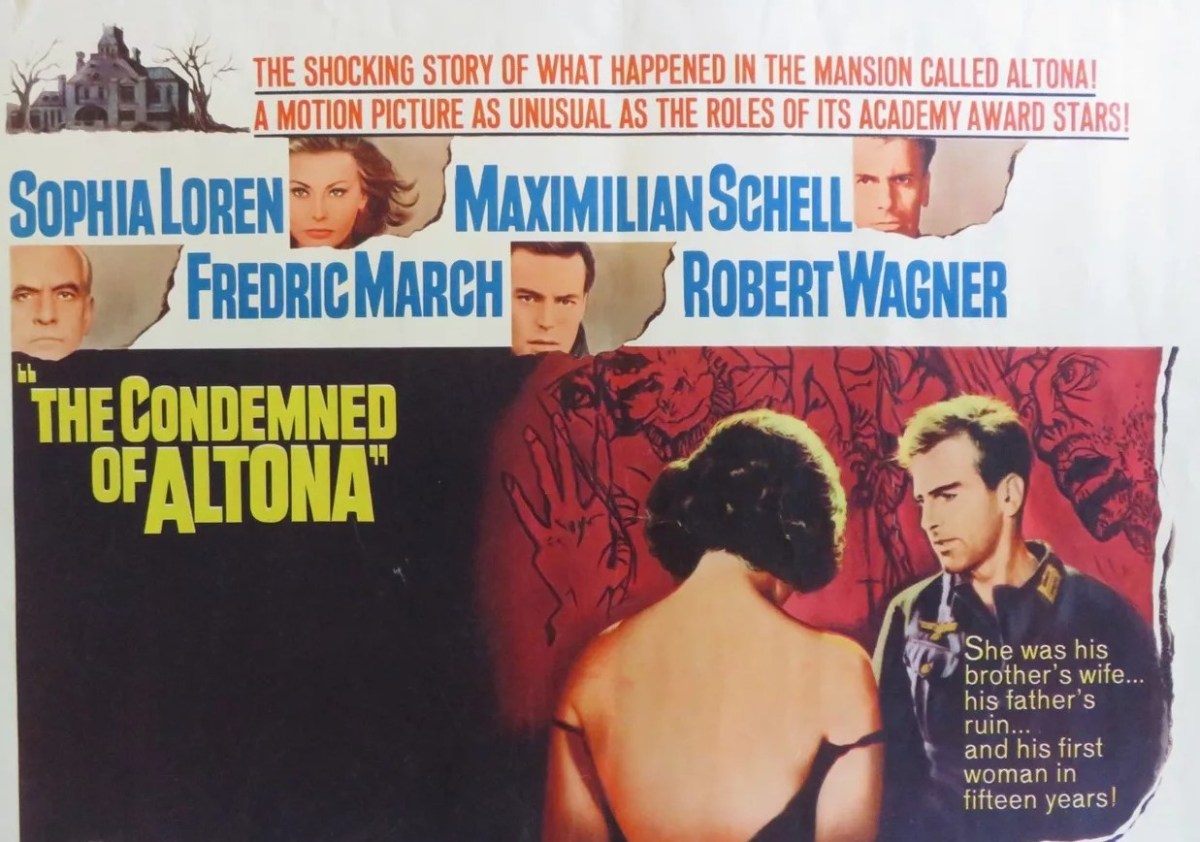
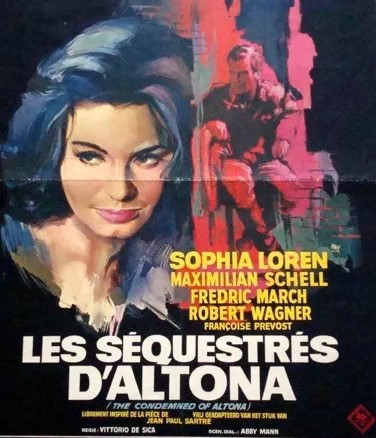
Shades of last year’s Oscar-winning Zone of Interest but with more guilt, some characters dodging it, others driven mad by remembrance of what they did or didn’t do during the Holocaust of World War Two. But mostly, an object lesson in how to expland a play (written by French philosopher Jean-Paul Sartre). Despite top class performances from Sophia Loren (Arabesque, 1966), Maximilian Schell (Counterpoint, 1967), Fredric March (Seven Days in May, 1964) and even, astonishingly, from Robert Wagner (Banning, 1967) it’s director Vitttorio De Sica (A Place for Lovers, 1968), with stunning images and clever camerawork, who steals the show.

You won’t forget in a hurry the outstretched hand of a prisoner in a blizzard condemned to die, nor the skeletal jaw seen through an x-ray machine. The backward crab crawl will remind you of a later movie. De Sica moves the camera every whichway. Aerial and overhead shots are mixed in with the camera swivelling from character to character or suddenly pulling back from a scene and then suddenly he stops you his restraint. But that doesn’t prevent him getting to the heart of the narrative matter and adding in some frisson of accuser attracted to accused.  

Set at the end of the 1950s, we begin on a Succession note, but without the contemporary angst and back-stapping. German shipping entrepreneur Albrecht (Fredrich March), a war profiteer turned post-war profiteer having taken advantage of demand in the Germany industrial boom, and now with only months to live, wants to pass on his business to son Werner (Robert Wagner). But Werner shies away, disgusted by his father’s unspoken collaboration with the Nazis during the war, ignoring the argument that the businessman was simply dealing with whatever party was in power. And this would be the narrative, father explaining actions, hoping for expiation, planning for the business to pass down the family line rather than be sold off.

Except that Werner’s left-winger actress wife Johanna (Sophia Loren) discovers there is another contender, the supposedly dead older son Franz (Maximilian Schell) who, instead of being sentenced to death for war crimes and fleeing to Argentina, where he purportedly died, as was the story given out, is actually hiding in the family mansion. He’s pretty much been driven mad, the walls of his substantial hidey-hole daubed with disconcerting images. Windows blocked-up and no knowledge of the outside, wearing his Nazi uniform he envisages a Germany languishing in decay, poverty and hunger. He lives on champagne, oysters and chocolate (so not quite the tough prison regime), and, as discreetly portrayed as was possible at the time, has an incestuous relationship with doting sister Leni (Francoise Prevost), the only human being with whom he is in contact. The inmate, knocking back handfuls of Benzedrine, occupies his time by recording messages to be delivered, he hopes, to Germans many centuries ahead.

Johanna wonders how this mentally-ill man came to be obsessed with guilt and we discover that when he was growing up his father rented out spare land around the mansion to the Nazis for a concentration camp where 30,000 people died. But Franz hid a Jew in the house, was reported to the S.S. by his father, and witnessed the man’s execution, then was punished by being forced to join the Army where he was known as a torturer. Finally, he emerges from isolation and sees a different Germany and confronts his father in a shock ending.

Both Loren and Schell had just won Oscars, for Two Women (1960) – incidentally directed by De Sica – and Judgement at Nuremberg (1961), respectively, so their confrontation, where his initial male dominance (the poster image reflects this scene) settles into a more equal power dynamic. Frederic March is good as the father convinced he has done no wrong and I had to check that this was the same Robert Wagner who had often been indifferent in pictures. De Sica draws great performances from all and layers the whole movie in a doom-laden atmosphere. Written by Abby Mann (Judgement at Nuremberg) and Cesare Zavattini (Woman Times Seven, 1967)

Remains surprisingly potent.

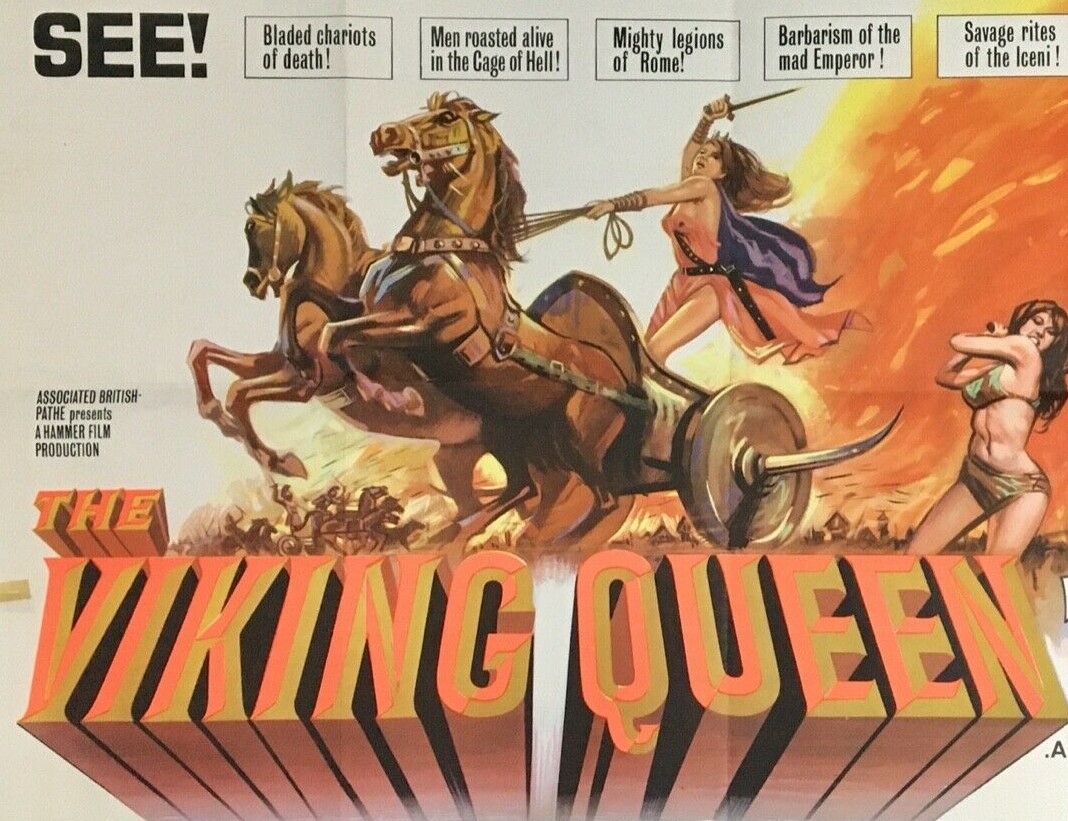
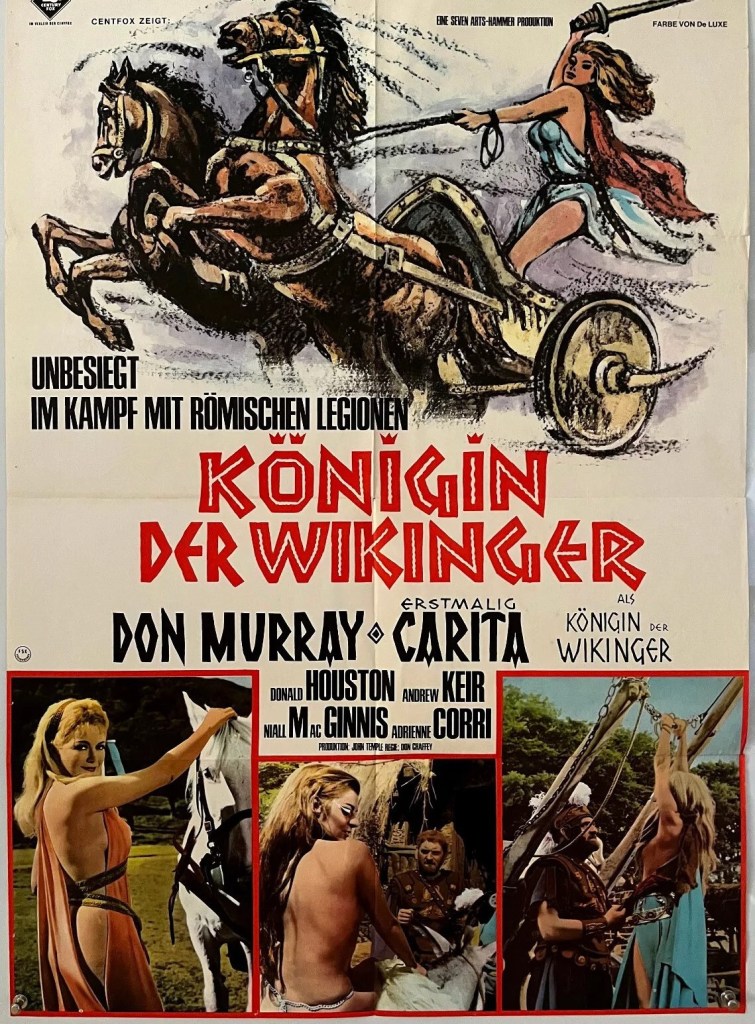
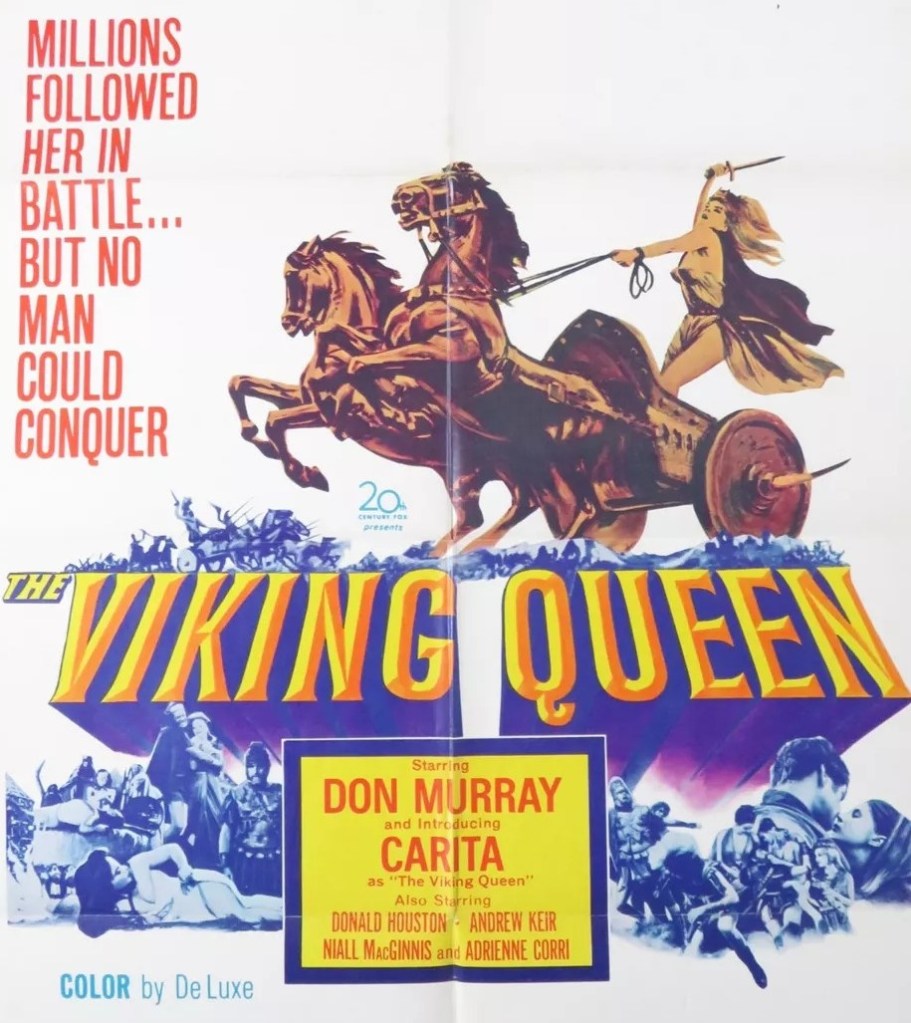
The Viking Queen (1967) ***

Politics, conspiracy, thwarted romance and historical inaccuracy take center stage in this Hammer romp that attempted to create another sex symbol to follow in the footsteps of Ursula Andress (She, 1965) and Raquel Welch (One Million Years B.C., 1966) in the shape of Finnish model Carita. Let’s put the dodgy historical elements to one side given Hollywood trampled over history all the time, but the title is a misnomer, the story owing more to folk heroine Boadicea than anyone who came from longship land.

On his deathbed British tribal king (Wilfred Lawson), against the wishes of powerful Druid chieftain Maelgan (Donald Houston), signs a peace treaty with Roman governor general Justinius (Donald Murray) against the wishes of his lieutenant Octavian (Andrew Keir). In different ways, the Druid and Octavian conspire to end the peace. Had new queen Salina (Carita), after falling in love with Justinius, been permitted to marry him that would have created a peaceful bond, but that is also prevented.

There’s a lot more sex and violence than you would have expected for the period, plenty scantily-clad slaves administering to the rich and the Romans, an extended brutal flogging sequence involving Salina, an offscreen rape, a cageful of Roman prisoners dropped into a burning pit, and when the British strap scythes onto the wheels of their chariots it’s a bloodbath. (Quite why the Romans never thought of importing their own chariots, given their popularity in the Colosseum, is never explained.) The chariots, whether in a race or battle, are the best thing about the picture, adding tremendous energy.

It takes quite a while for Salina to take up arms but when she does the film catches fire. She leads from the front, tearing through the Roman legions, and handy too with a sword. Ambushes appear the order of the day so any marching column or peaceful village soon ends up in a spot of bother.

There’s some of “what did the Romans ever do for us” with a snatch of Robin Hood thrown in – Justinius takes from the rich to give to the poor – plus religious fanaticism to stir the pot into a heady brew.  But mostly it’s hokum, if rather plot-heavy. Quite how the Oscar-nominated Don Murray (Advise and Consent, 1962) was talked into this is anybody’s guess. Carita, of course, would have believed she was on a surefire route to stardom but in fact this was her last picture. The two stars don’t really have that much to do and do it well enough. In supporting roles you will spot Patrick Troughton (a BBC Dr Who), Nicola Pagett making her movie debut and Adrienne Corri (Africa – Texas Style, 1967). Director Don Caffey (One Million Years B.C., 1966) is better at action than drama.

Directed by Don Chaffey (Jason and the Argonauts, 1963) from a screenplay by Clarke Reynolds (Genghis Khan, 1965) and the movie’s producer John Temple-Smith.

More Olinka Berova than Ursula Andress.

Twisters (2024) **** – Seen at the Cinema

Now we’re talking. The summer blockbuster has arrived. The high octane movie bringing more carnage and destruction than two teams of superheroes duking it out thanks to stunning special effects that will have you gasping at the awesome power of a tornado. Forget the flying cow in the 1996 original. When you see how easily a tornado sucks out people hidden in the tightest spot then you’ll know how foolish it is to tangle with twisters, either for the hell of it or for purported scientific reasons.

On top of this and if it hadn’t been for those tornadoes racing around all over the place, we’d be watching the cutest romance this side of Anyone But You (2023) and blow me down if this doesn’t feature the fella from that, Glen Powell, in full-on cocky arrogant mode and the kind of shit-eating smile we haven’t seen since Josh Lucas in his prime.

But here’s the kicker: no matter how much Powell’s character nearly steals the show, it’s not his picture.

Daisy Edgar-Jones (When the Crawdads Sing, 2022) is not only billed ahead of him, and therefore the denoted star, but the movie follows her narrative arc. She’s in the stunning opening sequence and she’s the one – on her own – to tackle the killer twister at the end. She’s the one with the guilt – friends died following one of her plans – she can’t shift, not him. He merely tucks in alongside as she leads the way, gently, and initially rebuffed at every turn, trying to woo her.

And here’s another kicker. It’s sodden with science. The kind of information that has audiences looking for the exit. But the scientific psychobabble is delivered so well that you hardly have a moment to object and I’m sure if you held a pop quiz for moviegoers coming out I’m sure they’d be able to tell you exactly how twisters formed and what they needed to not only survive but grow.

The save-the-planet element is miniscule, hardly gets a breath, the idea that climate change is causing more twisters. And instead, we get a more cunning subplot, entrepreneur financing tornado research because he can move in on survivors and snap up land on the cheap. And if that’s not a poke at the greedy big business coming under fire for unwelcome philanthropy, I don’t know what is.

So Kate (Daisy Edgar-Jones) is out of the game after causing the death of friends and lover until former buddy Javi (Anthony Ramos) winkles her out of her safe New York job to help him better test her pet theory – that there’s a way to tame twisters. Sure, that’s malarkey but it’s interesting malarkey. So she gives him a week and pitches in with his team, financed to the hilt by a businessmen to whom they feed tips about where the next twister will land.

She’s immediately put in charge of twister detection, demonstrating her instinctive knowledge of where a tornado might head or which cloud formation is most likely to turn nasty. These are the PhD po-faced professionals, all working, apparently, for the benefit of mankind.

Into their world charges Tyler (Glen Powell), YouTube broadcaster with a million subscribers, dressed like a cowboy who has his own line in merchandise and chases after twisters like Lt Killgore (Robert Duvall) in Apocalypse Now (1979), music blasting, though rock rather than classical. For entertainment value, he’s got on board weedy English journalist Ben (Harry Haden-Paton) whose job is to look terrified when the seasoned pros head into harm’s way with little concern. As I mentioned, mostly Tyler gets rebuffed when he tries his equally seasoned moves on Kate until her mum (Maura Tierney) comes to the rescue in a sequence that allows him to become better acquainted with her revolutionary tornado-taming theory.  

There’s a heck of a lot of the will-she-won’t-she palaver that you could get in a genuine rom-com but it’s very gently done and it’s more old-fashioned than Anyone but You, more like Sleepless in Seattle (1993) where kindred spirits take a heck of a long time to decide they might be suited. Mostly the business of chasing after those darned tornadoes keeps them apart, beyond the initial dislike that’s par for the course, and luckily the screenwriters haven’t tried to shoehorn in a scene of them having to snuggle up together in the middle of nowhere after a tornado’s blown the world apart.

The stars exude screen chemistry and if the question after Anyone but You was when were the two principals there going to make another film together the question here will be just the same. Daisy Edgar Jones is a dead ringer for a young Helen Mirren, the same innoent intensity, and brings the kind of acting skills to a blockbuster that sets it apart while Powell shines once again with studios already acclaiming him the next new big male star.

Shout-out for Anthony Ramos (In the Heights, 2021) and Downton Abbey find Harry Hadden-Paton who looks like he’s set for a career’s worth of interesting character acting.

Director Lee Isaac Chung (Minari, 2020) takes the leap from arthouse to blockbuster in his stride, that previous background helping flesh out characters, and he lands this behemoth in style. Screenplay by Mark L. Smith (The Boys in the Boat, 2023).  

My only disappointment is that I didn’t catch this in Imax. But that will be rectified soon.

Go see.

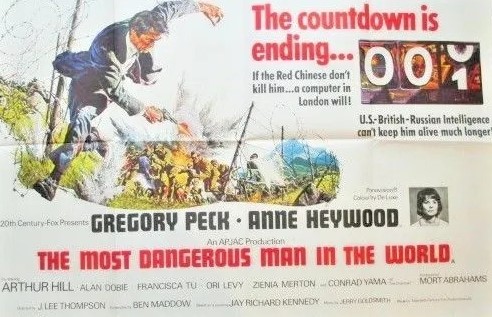
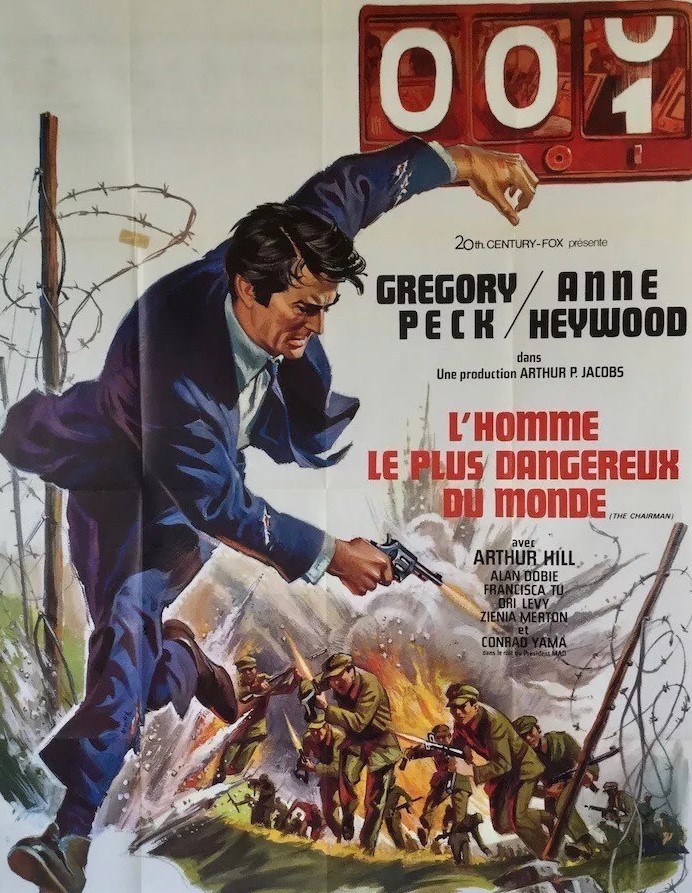
The Chairman / The Most Dangerous Man in the World (1969) ****

The sci-fi elements in this tidy paranoia thriller set in Communist China are not the only issues overlooked at the time and worthy of reconsideration now. Anyone who blasted it for supposedly political jingoism conspicuously failed to read a subtext that chimed with young left-wingers for whom Chairman Mao was not, as now, perceived as a tyrant du jour but as a political god. There’s a distinct whiff of Philip K. Dick in the implanting in a spy’s head of not just a tracking/listening device but one laced with explosive that can be remotely triggered for suicidal or murderous gain. Needless to say, the spy, ignorant of this fact, was a de facto sacrificial lamb. And a key plot thread about genetically modified crops as a means of solving world hunger came about four decades too early.  

Widowed Nobel prize winning scientist Dr Hathaway (Gregory Peck) is despatched into China via Hong Kong to contact a missing scientist with a revolutionary formula for an enzyme. A series of crisp flashbacks set up the scenario of the tracking device and a reverse echo of Marooned (1969) where Army chiefs back at base, led by one-eyed Shelby (Arthur Hill,) can listen in but are helpless to intervene – except in sinister manner. Shelby considers Hathaway “the wrong brilliant man” for the task and that they have sent in “a civilian to do a soldier’s job.”

Not able to trust the Brits to know who the title referred to, they came up with a lame alternative. The taglines reveal way too much of the plot.

The hidden transmitter allows Hathaway to keep his superiors posted but the listening device also picks up a creaking bed as Hathaway almost falls into a honey trap in Hong Kong. Amazingly, he doesn’t have to sneak into China but is welcomed with open arms and hustled along to a meeting, and a game of ping-pong (the real thing and the verbal equivalent) with Chairman Mao (Conrad Yama). While spouting some propaganda, Mao is surprisingly open about sharing the secret of the enzyme rather than blackmailing a starving world. Meanwhile, it’s the Americans who are more interested in the double cross, Shelby itching to blow up Hathaway’s head in the assumption the explosion would dispose of the Chinese leader.

Emissions from the transmitter are tangling up the airwaves, making the Chinese secret police highly suspicious of Hathaway as he heads for the secret scientific compound housing Professor Soong Li (Keye Luke), creator of the enzyme, and his daughter Chu (Francesca Tu).

Turns out Hathaway has been summoned by the professor to help find a missing link in molecular chains. Hathaway has to burgle his way to steal the formula, but fails to find it, but when the professor commits suicide and is denounced by his daughter and the Chinese secret police close in, Hathaway has to scarper and head for the Russian border, that country, oddly enough for a spy movie, being on the same side as the Yanks. Meanwhile, Shelby’s trigger finger it itching to blow his man sky high for fear he might give away details of his mission.  

The French, too, had trouble with the original title.

Turns on its head many of the spy film’s truisms: firstly that Hathaway effectively fails in his mission; secondly that patriotism doesn’t blind him to his country’s greed or folly; thirdly that’s he not in constant seduction mode.

Political argument that one point seemed to excessively delay the narrative thrust, now, at half a century’s move, seems more considered and providing an interesting balance between opposing views.

Gregory Peck (Marooned, 1969) is at his quizzical best, deeply-rooted scepticism helping to anchor his character. But if you were attracted by seeing Anne Heywood (The Fox, 1967) second-billed you’re in for a disappointment as she just tops and tails the picture. Arthur Hill (Moment to Moment, 1966) is good value as always.

But it’s testament to J. Lee Thompson (Mackenna’s Gold, 1969, also starring Peck) that his direction brings together diverse political/sci fi/spy/thriller elements in a winning formula, ignoring the obvious. Some interesting detail: someone handing out coffee on a tray to the inmates of the command station; Hathaway’s guilt at his role in the death of his wife barely touched upon, but it explains a lot; Mao’s famous Little Red Book provides a twist.

Occasional flaw: surely the Chinese would have bugged Hathaway’s room and catching him, however soft voiced, filling in his superiors. The idea that the Chinese could be technologically more advanced than the U.S. would have had John Sturges in a fit of fury, but Thompson takes it in his stride. Screenplay by Ben Maddow (The Way West, 1967) and Jay Richard Kennedy (I’ll Cry Tomorrow, 1955).

Reassessment overdue.

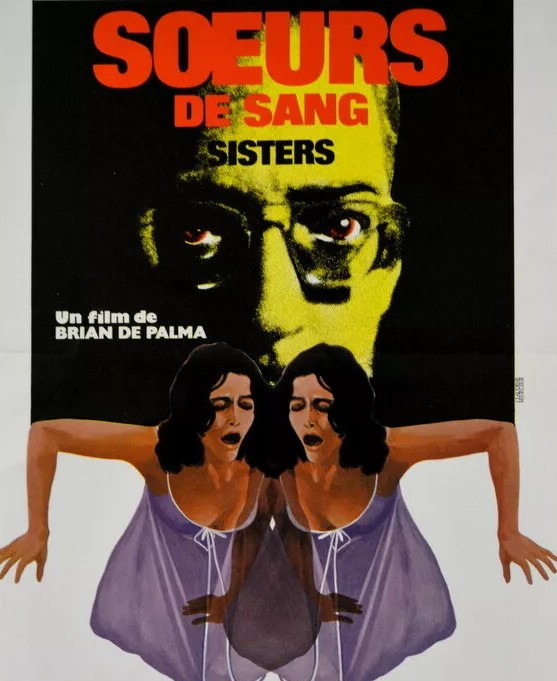
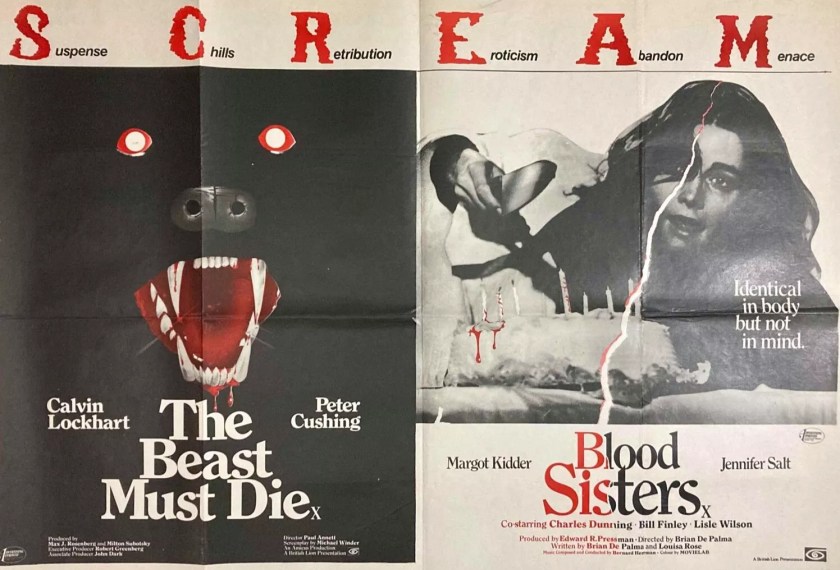
Sisters / Blood Sisters (1973) ****

Trust Brian De Palma to invent a gameshow called “Peeping Toms.” And give Hollywood an insight into the delicious malevolence to come later in his career. Often compared to Hitchcock, this is Hitchcock diced and sliced, awash with style. Not simply inspired use of split screen but an ending Edgar Allan Poe would have been proud of. De Palma plays with and confounds audience expectation and has mastered enough of the Hitchcock approach to make the villainess more attractive than the heroine. If you’re in the mood for Hitchcock homage, this is a good place to start.

Both main characters are strictly low end, sometime model Danielle (Margot Kidder) gameshow fodder, journalist Grace (Jennifer Salt) handed run-of-the-mill reporting jobs instead of, as she would prefer, investigating police corruption. Grace also has to contend with a mother (Mary Davenport), in typical non-feminist fashion, determined to marry her off.  

While the Siamese twin notion is straight out of the B-movie playbook and right up the street of exploitation maestros AIP, De Palma takes this idea and hits a home run. But you’ll have to be very nimble to keep up with the narrative.

Danielle meets Philip (Lisle Wilson) at the gameshow and after dinner she invites him to her apartment for sex. In the morning, he buys a surprise birthday cake for Danielle and her twin Dominique. On his return, he is murdered, an act witnessed by Grace, a neighbor across the street. She calls the police but before they can arrive Danielle’s ex-husband Emil (William Finley) – introduced to the audience, incidentally, as a creepy stalker – cleans up the mess and hides the corpse in the fold-up bed-couch.

Fans of the forensic may have trouble with this section as these days blood is more difficult to hide, but that’s evened up by the notion that a pushy journo would be allowed to sit in on the investigation. But heigh-ho, this was back in the day, so anything goes, and in any case, a la Hitchcock, it’s the woman who enters harm’s way. The cops, annoyed to hell by Grace, give up on the case and the reporter, having found the cake carrying the names of both twins,  manages to destroy the evidence.

Great set of reviews that only served to confuse the public.
An audience searching for schlock doesn’t want art.

Grace isn’t the kind of reporter easily thwarted so she hires private eye Larch (Charles Durning) who burgles the apartment and finds proof Danielle has been separated from her Siamese twin, who died during the operation. Grace follows Emil and Danielle to a mental hospital where, in a brilliant twist, mistaken for a patient, she is sedated and becomes an inmate. Later, hypnotised by Emil, she is convinced there has been no murder.

You’re going to struggle with the sharp turn exposition takes, but, heigh-ho, how else are we going to uncover the truth. Effectively, we learn that sex releases murderous thoughts in Danielle. The detail is a good bit creepier than that, but I wouldn’t want to spoil too much.

In many places it was seen as the lower part of a schlock double bill. A reviewer in the trades was correct when he predicted it was “certain to be an underground fave for some time” (i.e.limited to cult appeal) since well-reviewed horror pictures didn’t attract an initial audience.

But the ending is a corker. Grace is a prisoner. There’s another twist after that, but the notion of the investigator driven mad and ending up a prisoner of their own delusions, true Hitchcock territory, is honed to perfection here.

De Palma uses the split screen in the same way as Hitchcock employed the cutaway shot to increase the tension of potential discovery. Several sequences are rendered very effectively through this device.  Oddly enough, Grace doesn’t fit the Hitchcock mold of classy heroines. She’s way too feisty and independent and there’s almost a feeling that she gets what she deserved for tramping uninvited around a vulnerable person’s life. Here, Danielle is the victim, taken advantage of by the medical profession and her creepy husband, separation from twin ravaging her intellect.

Margot Kidder (Gaily, Gaily, 1969) and Jennifer Salt (Midnight Cowboy, 1969) are both excellent in difficult roles. Charles Durning (Stiletto, 1969) makes a splash in the kind of role that made his name. As a bonus, there’s a great score from Bernard Herrmann (Psycho, 1960).

But this is De Palma’s picture, serving notice to Hollywood that here was a talent of Hitchcockian proportions.  

A Fever in the Blood (1961) ****

Blistering B-film from writer Roy Huggins (TV’s The Fugitive) that marries political chicanery to legal jiggery-pokery in a movie that races from one twist to another. In his role as producer Huggins calls upon actors he made stars from the television series he created – Efrem Zimbalist Jr. (77 Sunset Strip), Jack Kelly (Maverick) – and gives Angie Dickinson (Oceans 11) the female lead.

Huggins’ brilliant premise is to ignore the dilemma of the man, Walter Thornwall (Rhoses Reason), nephew of a former Governor, wrongly accused of the murder of his wife, and instead to concentrate on accuser District Attorney Dan Callahan (Jack Kelly) and Judge Lee Hoffman (Efrem Zimbalist Jr), both of whom, running for the vacant Governor post, stand to make massive political capital from the publicity surrounding a sensational trial.

Former buddies Callahan and Hoffman are now bitter rivals after the former had reneged on a promise to support the latter’s bid for the political post. Also throwing his hat into the ring is Senator Alex Simon (Don Ameche) whose wife Cathy (Angie Dickinson) once had romantic yearnings for Hoffman. The only one of the trio who has anything approaching a conscience is Hoffman and that is immediately tested when the Senator offers him a bribe to stand down from the race, which the Judge, after an appeal from Cathy, does not report to the authorities. There is another ploy open to Hoffman. Should he find reason to declare a mistrial that would sabotage Callahan’s bid since he would not be riding high in the media after convicting a celebrity killer.

The picture jumps from intense politics, the wheeling-dealing and wrapping up votes, to a  trial in a packed courtroom very much in the Perry Mason vein with surprise witnesses, shocks, objections sustained or overruled, clever arguments, dueling attorneys, and last-minute evidence.

A witness has Thornwall running away from the scene of the crime and when his wife is painted as a nymphomaniac that provides ample motive.  Further evidence pushes the defendant into a worse corner. But all the while over the trial hangs the stink of political machination.

There are another half-dozen brilliant twists, not least of which is Judge Hoffman letting conscience go hang and embarking on a couple of dodgy endeavors himself including what amounts to sheer blackmail. The District Attorney, one of the sharpest tools in the box, reacts to every setback with a cunning that would have been criminal had it not been legal. Also hanging there is potential adultery between Cathy and the widowed Hoffman.

The writer in Huggins is a past master at shifting the cards in the deck and this has so many twists and turns it feels like a whole series of The Fugitive crammed into one episode. There is as much self-awareness of the underbelly of politics as in Advise and Consent (1962), as much deceit and corruption, as much principle disguised as honor.

But the plot here is so tight, the characters dealing with twists and turns that the movie has no requirement for the depth of characterization that would have been brought to the picture by a Henry Fonda or Charles Laughton. Huggins proves you can have just as much fun without the big boys. None of the stars with the exception of Angie Dickinson made a dent on the Hollywood A-list but they are all perfectly acceptable, and once Huggins tightens the screws plot-wise the last thing on your mind is wishing for a better cast.   

A cracker.

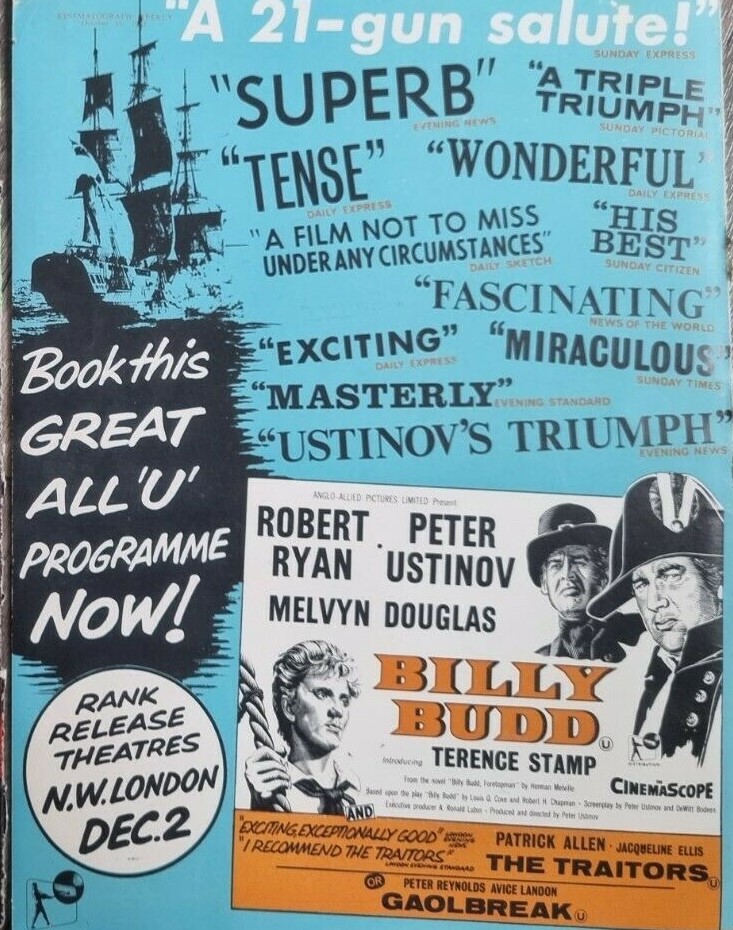
Billy Budd (1962) ***

Unfairly muscled out by lavish roadshow Mutiny on the Bounty (1962) but covering similar territory minus sailors going off-piste on a South Pacific island. Peter Ustinov outranked fellow triple hyphenates Billy Wilder (writer, producer, director) and John Wayne (actor, producer, director) in that he could add acting to his other skills (writer, producer, director) and in some respects he was actually better remembered as a noted raconteur on late night television shows. I was surprised to discover he was actually well versed in the directing malarkey by the time he came to helm Billy Budd, four previous excursions dating from the late 1940s and most recently Romanoff and Juliet (1961). He was better known at this point as an Oscar-winner for Spartacus (1960). He would win another for Topkapi (1964) and go on to direct another three pictures.

Billy Budd is a claustrophic affair that you’ll need a bit of a history lesson to understand. The British Navy had two methods of recruiting sailors. The first was the more honest, awaiting a supply of volunteers. The second, the most dodgy legal proces ever invented, involved grabbing any likely candidate and forcing – “pressing”- them into service. Normally, this caper took place on land and gangs of recruitment officers did the business, hence the term “press gang.”

However, I was unaware that in times of war – this is set during the Napoleonic War – the British Navy could board any passing merchant vessel and commandeer any of its crew. In this case,  Captain (actually Post Captain if you’re being technical about it) Vere (Peter Ustinov) hijacks only one sailor, Billy Budd (Terence Stamp).

Quite why it’s only this singleton is never explained. There are a couple of other irregularities that run against making this a tight ship in terms of narrative construction. The first is, that in the first of two critical incidents, our otherwise charming and chatty Budd is suddenly struck dumb with a stammer, the first time such an affliction has put in an appearance. The second is that, in consequence, Budd strikes an officer, the bullying Master-at-Arms Claggart (Robert Ryan) who hits his head while falling and dies.

Now even I know, and I’m hardly a naval scholar, that striking an officer is punishable by death. The fact that Claggart has a Capt Bligh disposition, inclined to find any opportunity to bring out the lash, makes no difference to the outcome. So while it seems that court martial provides dramatic scope, here the outcome is never in doubt. This isn’t Queeg on The Caine Mutiny, which is a more complicated affair, where the captain’s sanity is questioned.

So where the narrative should have built up in intensity, it largely flounders and depends (successfully as it happens) on audience appreciation of Budd as an innocent abroad.

That said, like Mutiny on the Bounty, it reveals the remarkable lack of recourse to any higher authority on ship should the highest authority either carry out or endorse cruelty. The minute he’s on the ship Budd is exposed to the sadistic will of Claggart who has condemned a sailor to a pitiless flogging for reasons that cannot be explained. Budd soon learns that Claggart has accomplices who will sabotage a crew member’s gear so that he will be put on a report, accumulation of sufficient black marks resulting in automatic flogging without interference from the captain.

While Vere is hardly in the Capt Bligh category and most of the time comes across as relatively amiable, our introduction to him is firing a shot across the bows of a merchant ship that doesn’t want to stop in case its crew is press ganged. He is quite ready to invoke the rules to get what he wants and is enough of a disciplinarian that the crew kowtow to him. He might feel a touch of remorse that Budd is the sacrificial lamb  to the Royal Navy’s rule of law, but he’s hardly going to go against procedure.

So mostly what we’ve got is the acting. Terence Stamp (The Collector, 1965), in his debut, was Oscar-nominated and you can see why and in some senses this is the career-defining role before acting affectations and mannerisms took over. Robert Ryan (The Wild Bunch, 1969) is very effective as the sinister Claggart. And there are a host of other British names to look out for – David McCallum (Sol Madrid/The Heroin Gang 1968), Ray McAnally (Fear Is the Key, 1972), Paul Rogers (Three into Two Won’t Go, 1969) and Niall McGinnis (The Viking Queen, 1967)  among the foremost.

Ably directed by Ustinov who wrote the screenplay with Dewitt Bodeen (Cat People, 1942) based on the original Herman Melville novel and a stage adaptation by Louis O. Coxe and Robert H. Chapman.

Worth seeing for Stamp’s performance.

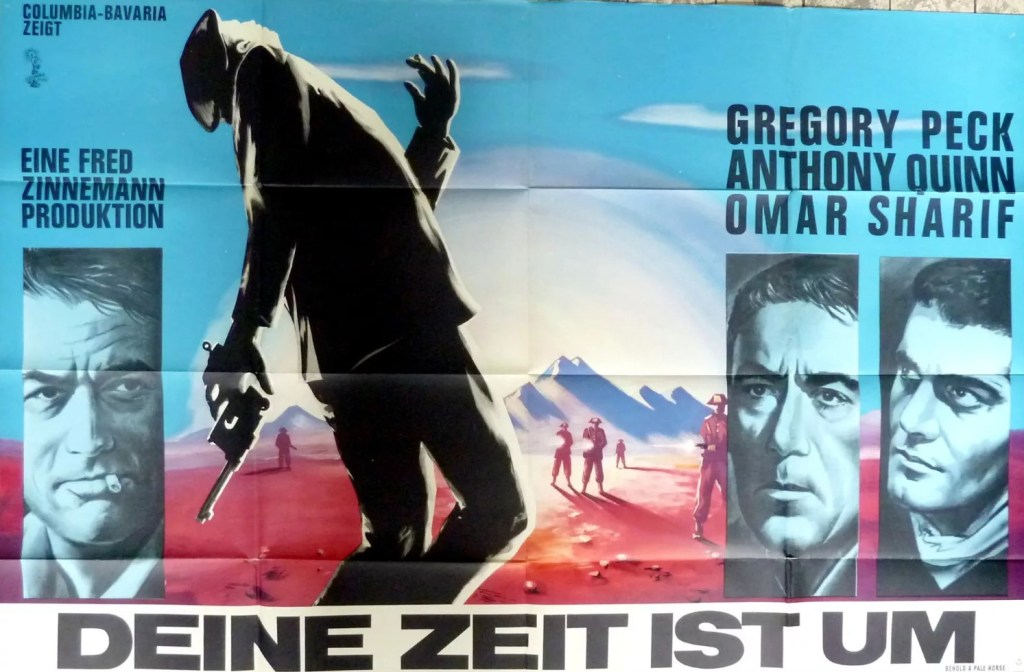
Behold a Pale Horse (1964) ***

Old causes never die but they do go out of fashion and interest from movie audiences in the issues surrounding the Spanish Civil War had fallen from the peak when they attracted artists of the caliber of Ernest Hemingway and Pablo Picasso. But passions surrounding the conflict remained high even 20 years after its conclusion as indicated in this Fred Zinnemann (The Sundowners, 1960) drama.

Manuel Artiquez (Gregory Peck) plays a disillusioned guerilla living in exile in France, who has ceased raiding the Spanish border town under the thrall of corrupt Captain Vinolas (Anthony Quinn). Artiguez has two compelling reasons to return home – a young boy Paco asks him to revenge the death of his father at the hands of Vinolas and his mother is dying. But Artiquez is disinclined to do either. Heroism has lost its luster. He has grown more fearful and prefers to live out his life drinking wine and casting lustful glances at young women.

In France he enjoys a freedom he would be denied in Spain. He is not hidden. Ask anybody in the street where he lives and they will tell you. This is a crusty old soldier, unshaven, long past finding refuge in memories, but not destroyed either by regret. There is a fair bit of plot, some of it stretching incredulity. The action sequence at the end, conducted in complete silence, is very well done, but mostly this is a character piece.

This is not the upstanding Gregory Peck of his Oscar-winning To Kill a Mockingbird. He is a considerably less attractive character, burnt-out, shabby, grizzled, lazy, easily duped, unwilling to risk his life to see his mother. We have seen aspects of the Anthony Quinn character before but he brings a certain humanity to his villain, bombastic to hide his own failings, coarse but occasionally charming, suitably embarrassed when caught by his wife visiting his mistress and praying earnestly to God to deliver Artiquez into his hands. Omar Sharif has the most conflicted character, forced by conscience to help an enemy of the Church.

However, two elements in the picture don’t make much sense. Paco tears up a letter (critical to the plot) to Artiquez which I just cannot see a young boy doing, not in an era when children respected and feared their elders. And I am also wondering what was it about Spain that stopped directors filming it in color. This is the third Spain-set picture I have reviewed in this blog after The Happy Thieves and The Angel Wore Red. For the first two I can see perhaps budget restrictions being the cause, but given the stars involved – Rex Harrison and Rita Hayworth in the first and Ava Gardner and Dirk Bogarde in the second – hardly facing the production dilemmas of a genuine B-picture.

But Behold a Pale Horse was a big-budget effort from Columbia and while black-and-white camerawork may achieve an artistic  darkness of tone it feels artificial. This was never going to be the colorful Spain of fiestas and tourist vistas but it would have perhaps been more inviting to audiences had it taken more advantage of ordinary scenery.

J.P. Miller (Days of Wine and Roses, 1962) adapted the film from the novel Killing a Mouse on Sunday by Emeric Pressburger who in tandem with Michael Powell had made films like Black Narcissus (1947) and The Red Shoes (1948). The film caused calamity for Columbia in Spain, the depiction of Vinolas with a mistress and taking bribes so upset the authorities that all the studio’s movies were banned.   

Discover WordPress

A daily selection of the best content published on WordPress, collected for you by humans who love to read.

The Atavist Magazine

by Brian Hannan

WordPress.com News

The latest news on WordPress.com and the WordPress community.