Director Gareth Edwards (The Creator, 2023) and screenwriter David Koepp (Jurassic Park, 1993) have gone so far back to basics that they’ve skipped some fundamentals. It doesn’t matter how big your monsters are or how fearsome, the audience needs to care about those put in jeopardy and that has to amount to a lot more than a licorice-munching cute kid with a penchant for collecting cute baby dinosaurs.
Audiences are not likely to have forgotten the wealth of characterizations served up as the series kicked off – jovial misguided philanthropist Richard Attenborough, child-hating scientist Sam Neill who grows to like kids, annoying scientist Jeff Goldblum who chats up Sam Neill’s squeeze, annoying smartass child Joseph Mazzello, even cheapskate thief Wayne Knight.
Come the reboot we had a latter-day Indiana Jones bad boy in Chris Pratt trying to get on the good side of careerist Bryce Dallas Howard who was stumbling around on high heels and a kicker of a final line where they decide to stick together “for survival.”
The most interesting person in the latest reboot is way down the billing, the pot-smoking laid-back Xavier (David Iacono). Setting Scarlett Johansson up as a rooting-tooting mercenary with a soft heart (boohoo she didn’t make it to her mother’s funeral because presumably she was rooting-tooting for cold hard cash) who decides to set aside her $20 million payday comes across like one of the old-school Miss World contenders determined to help achieve “world peace.” Everyone else has been rounded up from Dullsville and apart from a few pontificating woke speeches nobody else has much to do except duck and dive to escape monsters.
For narrative purposes various rooting-tooting guns-for-hire have to locate a waterosauraus, a flyingosaurus and a walkingosaurus at the same time as trying to avoid a new version of the hybrid beastie that turned up in Jurassic World (2015).
Not only are there no characters to root for, but the movie is mighty low on tension, no attempt to create the Spielbergian trembling water cup or the cracking glass or the motorbike chase and runaway pterodactyls from Jurassic World though there is the standard hiding under a car routine.
There are some groundbreaking effects but they’re not what you think. They’re aural rather than visual. We’ve got a scene when Dr Loomis crunches very loudly on some kind of mint. That’s the soundtrack – Dr Loomis crunching excessively loudly on a mint. Good job they didn’t utilize Imax for this one or it would have blown your eardrums off. Candies/sweets hog a good part of the center stage. Apart from the ear-blasting mints and the cute kid feeding strips of licorice to the cute dinosaur, the Maguffin comes in the unlikely shape of a wrapper from a bar of Snickers which somehow manages to fuse an entire laboratory and cause it to be completely abandoned (17 years before the present time I should add).
Given the build-up which I accept as an essential part of promoting the reboot, this lands with a thud and the title, unfortunately, lends itself to all sorts of puns. As you know I’m a sucker for monster movies, but this just seems to be a very careless endeavor, like they are trying to squeeze the last juices. Regardless of how dumb the ideas the first Jurassic World trilogy ultimately became, the narrative was underpinned by unlikely romance and likeable characters. Unless, as I suspect, Scarlett Johanssen and Dr Loomis (Jonathan Bailey), the best of the bad guys, are going to embark on a more interesting sequel and develop some personality this could as aptly be called Jurassic World RIP.
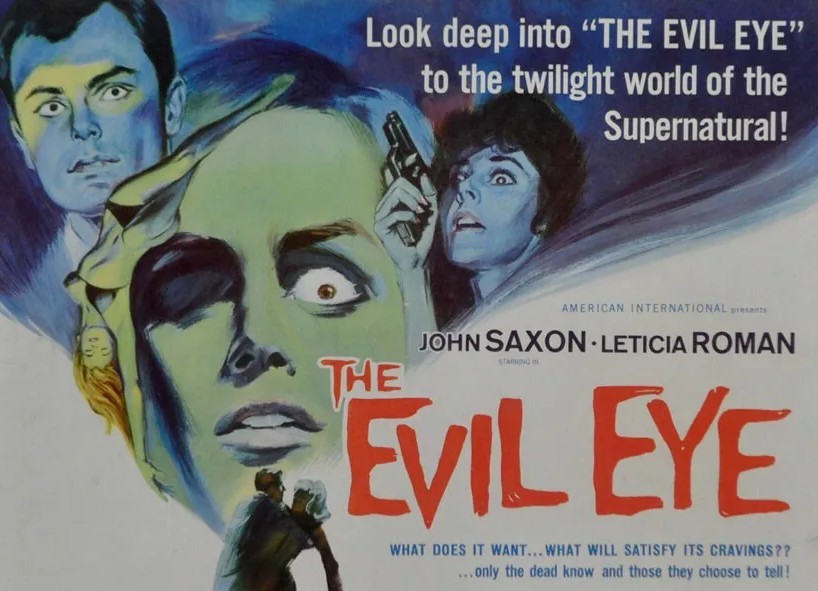
Don’t be taken in by claims that, since it was directed by Mario Bava, it kicked off the giallo sub-genre. More of the tropes come from mainstream horror – windows banging shut, locked doors, disembodied voices, stalkers, gaslighting, mysterious phone calls, premonition, retrocognition. And just for good measure, striking compositions that wouldn’t be out of place in an arthouse picture. But essentially it’s neo-noir – a woman can’t prove she’s witnessed a murder.
TheEvil Eye was the American title, which makes little sense, although eye-popping eyes were in fashion from movies like Village of the Damned (1960), but in fact the original title of The Girl Who Knew Too Much is much more appropriate. This film is about a female character and what she discovers that threatens her life. The American version was chopped about by the distributor but, apparently, copies of that have gone astray so if locate a copy of the picture what you are likely to see if the Italian original.
American tourist Nora (Leticia Roman) is knocked out by a robber in Rome. On waking up she sees a murderer sticking a knife into a woman’s back. Only problem is – there’s no corpse to be found. But, strangely, a murder was committed on that spot a decade ago. So she might be having a vision of the past. But the murderer Straccianeve was caught.
The victim was the sister of Laura (Valentina Cortese), a new friend, whose apartment Nora temporarily occupies. There, Laura discovers newspaper clippings relating to the “alphabet killer”, a serial murderer whose victims’ surnames began with A, B, and C. Once Nora begins her investigations, it looks like she’ll be next on the list since her surname begins with “D”. Meanwhile, she has struck a romantic vibe with Dr Marcello Bassi (John Saxon). But, of course, he might be not what he seems, sneaking off for assignations with strange women, following her.
Much of this is played out on deserted streets where the tourist sites acquire a dangerous veneer.
The finger points at journalist Landini (Dante DiPaulo), who has been following her. But he is as much a basket case as a potential murderer. He was instrumental in collecting the evidence that trapped the murderer but now believes Straccianeve was innocent.
In due course, after some more deaths, Nora traps the murderer, who comes out of left field, one of those where you think the writer has decided to pin the blame on the least likely suspect and come up with a spurious reason for the murders, so the twists pile up in helter skelter fashion at the end, including one which suggests Nora might well have the gift of seeing into the future.
Leticia Roman, in her debut, is mostly called upon to look baffled or frightened, there’s rather too much of the pop-eyes, and John Saxon (The Appaloosa, 1966) has the rare opportunity to play a hero. Valentina Cortese (Barabbas, 1961) drifts in and out of the tale. Written by future director Sergio Corbucci (Django, 1966), Oscar-winner Ennio De Concini (Divorce, Italian Style, 1963) and Eliana De Sabato (Marco Polo, 1962).
If it hadn’t been directed – and occasionally so stylishly – by Mario Bava (The Whip and the Body, 1963), it would have attracted considerably less contemporary attention. One of this main themes – the conflict between illusion and reality – is given a good airing. You can well believe that Nora is going mad. But it’s atmospheric enough and the director makes unusual use of the standard Rome tourist traps and this picture gives notice that he will move onto greater movies.
Back to those ingénues – or whatever-happened-to-Tippi Hedren. Christopher George’s villainous turn in El Dorado (1967) brought him as much immediate attention as James Caan and though he quickly achieved leading man status he never parlayed it beyond the likes of low-budget numbers such as The Thousand Plane Raid (1969).
But there was a more interesting ingénue on show here. Tippi Hedren had made the instant stardom type splash as Alfred Hitchcock’s go-to leading lady in The Birds (1963) and Marnie (1964). She reckoned she could do better without Hitchcock’s patronage, the director reckoned she was more trouble than she was worth, so there was a relatively amicable parting of the way.
Hedren didn’t find other directors queuing up for her services. Two small screen appearances and a supporting role in A Countess from Hong Kong (1967) were all she had to show for her stand of independence or hubris. Whereas in other circumstances signing up for this picture would have been seen as slumming it, this turned into more of an audition for a steady place in the B-movie division.
In the end she isn’t the stand-out any more than Christopher George is. The movie is too humdrum for that. But it’s the kind of narrative with murder, revenge, robbery, double-dealing and a sadistic villain that in the hands of bigger names with established screen charisma – say George Peppard and Jill St John – might have sparked more substantial interest.
There are three villainous schemes afoot. Vietnam war hero Steve (Christopher George) returns to his home town where his brother runs a race track. No sooner has Steve checked in than the brother is murdered during a million-dollar robbery. The murderers are then bumped off in an airplane explosion by heist mastermind Polk (Dean Jagger), the inside man.
Following on from that, the other four stockholders of the race course plan to ease out Steve, who’s inherited the majority stake from his brother, and buy the racetrack on the cheap, circumstances and the company’s own rules tilting the odds heavily in their favor. Sheriff Jones (John Dehner) also figures Steve for the murder of his brother, so he’s first of all got to prove his own innocence before going after the guilty.
He does a fair bit of running around, aided by barmaid-cum-singer Carlita (Charo) trying to put the jigsaw in place. He’s got some cute ideas how to winkle out the potential bad guys, one of which fingers stockholder Ware (Lloyd Bochner) who gets taken out before he can spill the beans.
Former girlfriend Rita (Tippi Hedren), one of the stockholders, runs hot and cold. Initially discouraging, she eventually warms to her old flame, then turns down the heat when she realizes he considers her a suspect in the robbery. Steve takes a good thrashing every now and then, but proves assiduous and occasionally spot-on in his deductions, though most of his investigation relies on fishing expeditions. Some of the finger-pointing is obvious but the denouement is not.
There was another ingénue here. Commonwealth United intended going down the “mini-major” or “instant major” route as exemplified by United Artists and Avco Embassy, where a new production outfit set up a hefty portfolio of movies, aiming for a release strategy of 6-12 a year, sufficient to be recognized by cinema owners desperate for product as a potential player. Established by real estate supremo Milton T. Raynor, it kicked off in 1968 with Tiger by the Tail and A Black Veil for Lisa starring John Mills and Luciana Paluzzi, followed by a heftier slate of seven pictures the following year.
Big-budget items packed with marquee names such as Battle of Neretva with Yul Brynner and Sylva Koscina, The Magic Christian headlined by Peter Sellers and Raquel Welch, and Oscar-winner Sandy Dennis in Robert Altman’s That Cold Day in the Park were mixed in with low-budget thrillers Paranoia starring Carroll Baker, Tippi Hedren comeback The Girl Who Knew Too Much and It Takes All Kinds with Vera Miles plus a pair of Jess Franco exploitationers, 99 Women and Venus in Furs. The project foundered almost immediately and by 1971 was $80 million in debt.
Whether Tippi Hedren ever acknowledged her debt to Hitchcock, it’s pretty clear here that she owed a ton to the way he presented her, not just the glossy façade, but bringing out the best of her acting. Her trademark fragility is little in evidence here without anything notable taking its place. Away from center stage, she doesn’t light up the movie.
Final picture of R.G. Springsteen (Operation Eichmann, 1961) from a screenplay by Charles A. Wallace (The Money Jungle, 1965).
Run-of-the-mill crime picture or whatever-happened-to Tippi Hedren.
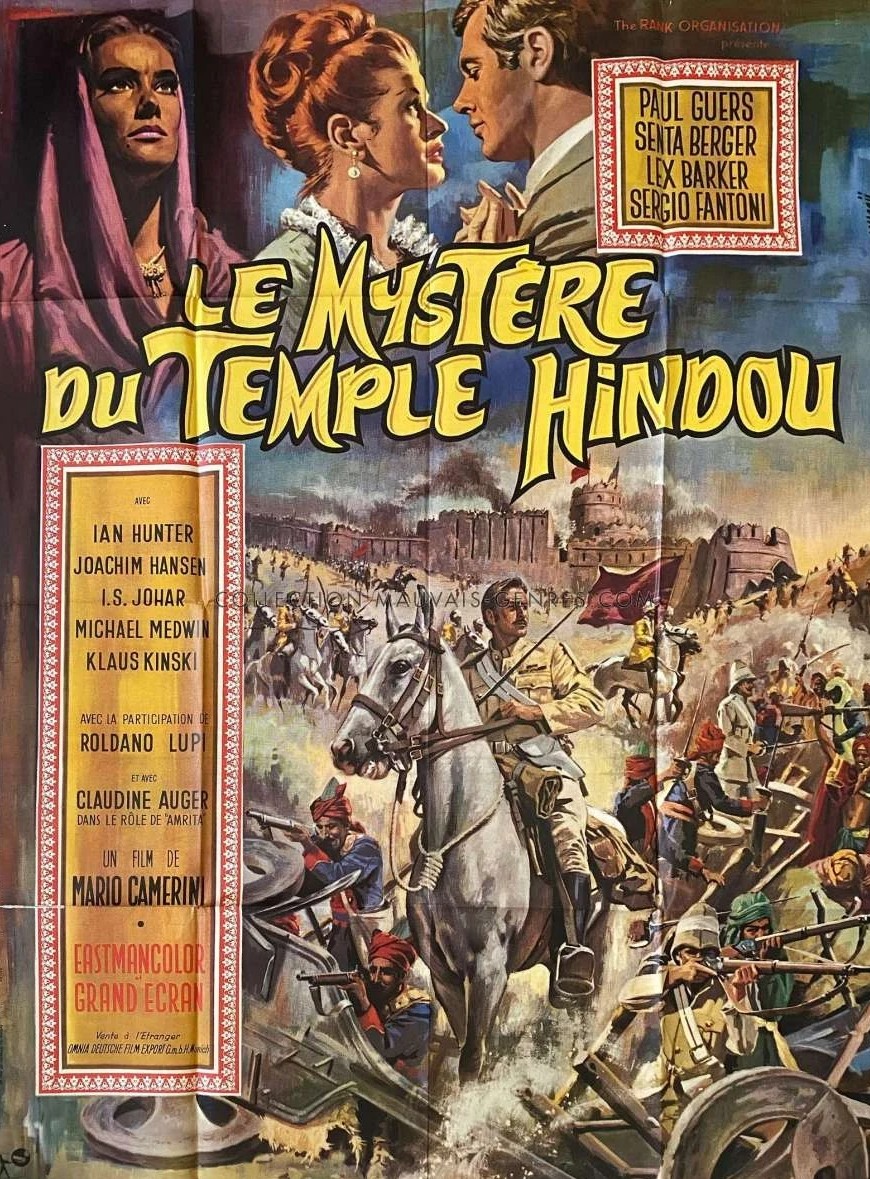
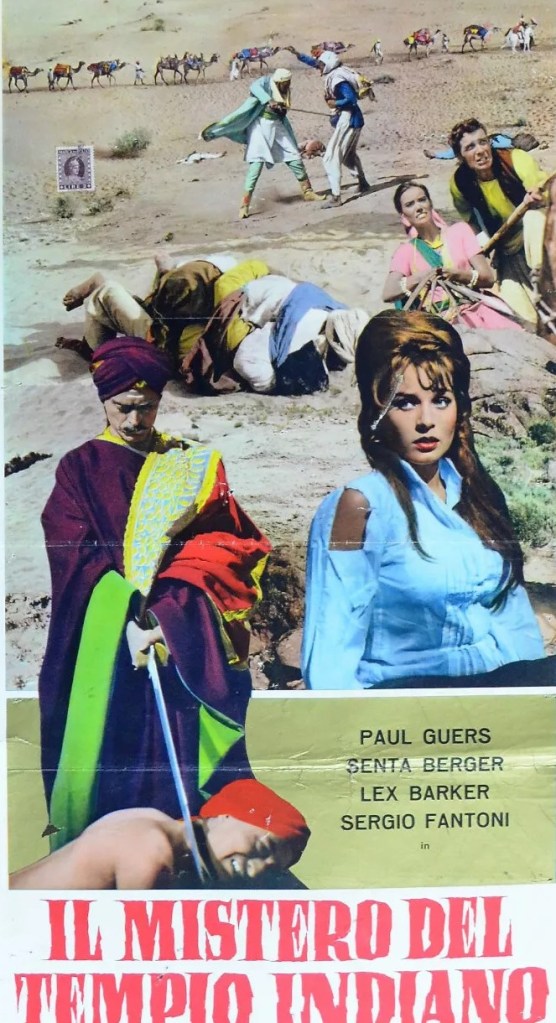
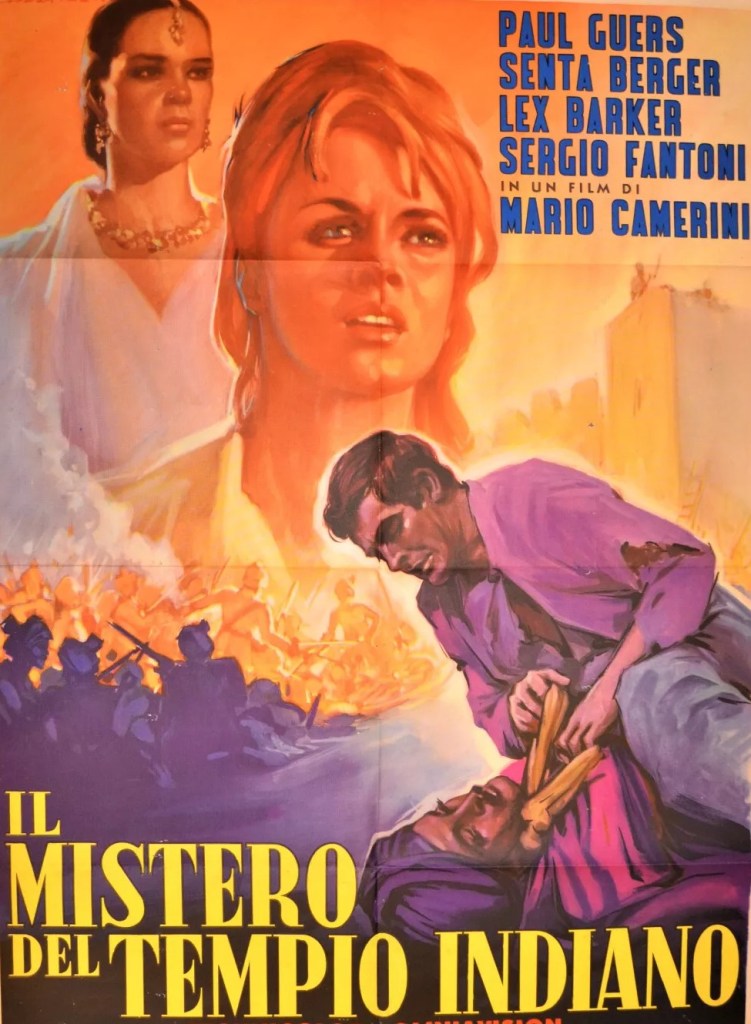
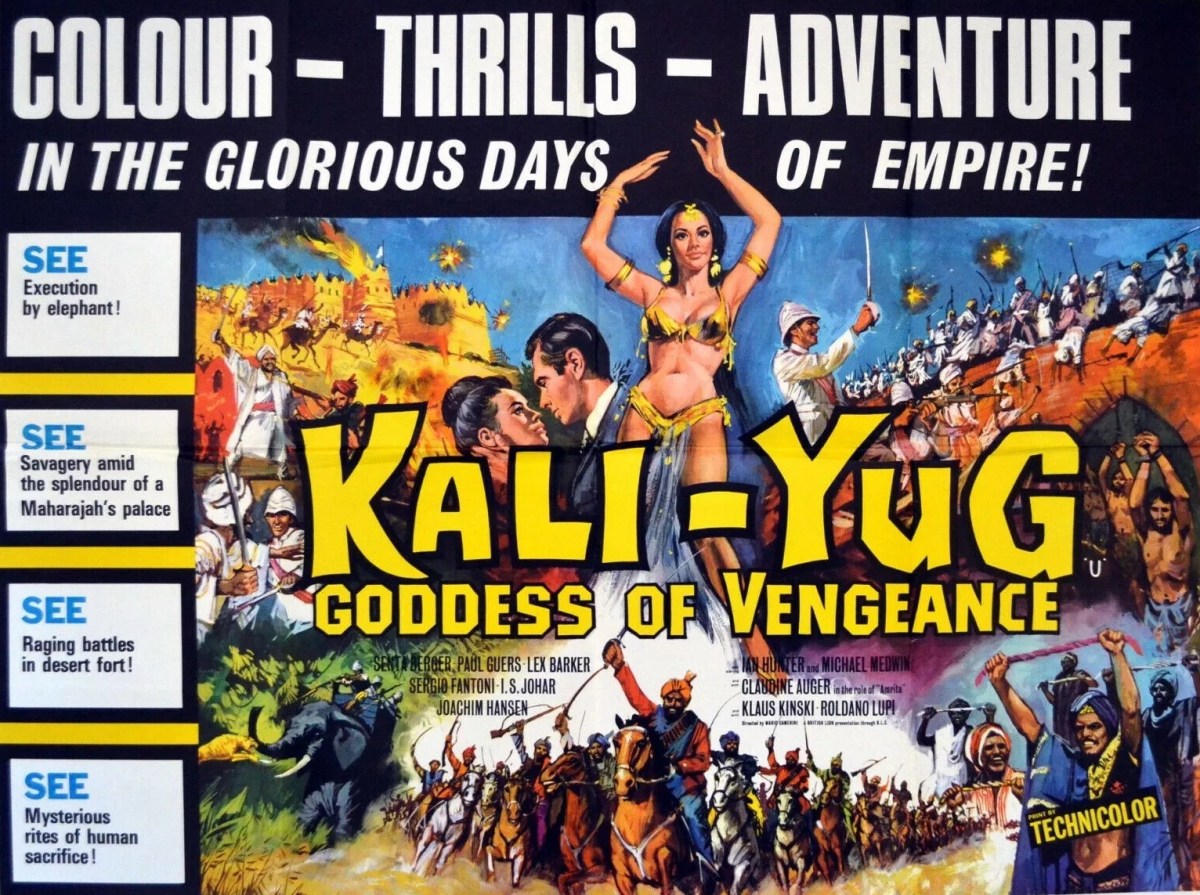
Earnest students of the Senta Berger Syllabus may be somewhat disappointed, I’m afraid. This turns out to be an epic movie – in two parts – but even with a three-hour running time there’s hardly any space for the second-billed Ms Berger. Instead it’s the second female lead Claudine Auger who leads the way.
And as if it’s forerunner of the contemporary serial there’s a (longish) recap of part one, though this time recounted as if it’s nightmare into which our hero Englishman Dr Simon Palmer (Paul Guers) has unwittingly tumbled. He’s not, as I had imagined from the end of episode one, free. He’s still imprisoned by the Maharajah (Roldano Lupi) along with servant Gopal (I.S. Johar) although he has begun to deduce that all is not what it seems and that an insurrection may be on the cards under the guise of a revival of the cult devoted to the Goddess Kali.
And when exotic dancer (in the old sense, not the contemporary) Amrita (Claudine Auger) fails to convince the Maharajah of Palmer’s innocence she organizes his escape via the old snake in the basket trick. But this is not altogether from altruism. The good doctor is whisked away to treat three children who have caught diphtheria, unaware one of them is the Maharajah’s grandson, kidnapped (in Part One) by the Kali cult of which she is a key participant. However, she is beginning to thaw in her attitude to the Englishman and wonder why the goddess Kali, to whom she is bound by oath, is so determined to kill such a good man.
They end up in the caravanserai of cult leader Siddhu (Klaus Kinski), but Amrita, who’s undergoing a crisis of faith, organizes their escape, along with the boy. She has betrayed her calling – her father was a priest of Kali – in order to save Palmer. They manage to evade the pursuing pack of thugs. When the road back to Hasnabad is blocked, they decide to make for the enemy lair, an abandoned fort in the desert turned into the rebel stronghold, on the basis of hiding in plain sight, nobody expecting them to head in that direction.
Meanwhile, on his way to the fort, the Prince (Sergio Fantoni), now showing his true colors, has kidnapped Catherine Talbot (Senta Berger), planning to trade her for the Maharajah’s grandson who is “absolutely essential” to his plans. Theoretically, there’s nothing her husband can do to save her. According to the Treaty of Delhi, British forces cannot cross state lines. However, Talbot (Ian Hunter) reckons that, as he’s technically a civilian, that rule doesn’t apply to him and Major Ford (Lex Barker) comes up with a similar ploy, explaining that he’s given his soldiers ten days’ leave leave and to his “great surprise” they all decided to spend it in the fort.
Meanwhile, to complicate matters, Amrita decides Palmer is so far from being a bad guy that he’s worth kissing. But that romance is nipped in the bud when Palmer spots Catherine being dragged along in the Prince’s caravanserai and decides to rescue her. Furious at discovering that Catherine takes precedence in Talbot’s romantic scheme, and correctly assuming she’s going to be dumped, she knocks him out and turns him and the boy over to the Prince. While the child is acclaimed as the “sacred prince” and figurehead of the revolution, Palmer is to be sacrificed to the goddess. While waiting for that, he’s chained up next to Catherine.
So now you know we’re going to be perming two from four. This doesn’t feel like it’s heading in the bold direction of everyone coming out of it bitterly disappointed on the romance front.
And so it transpires. Talbot the Resident, more courageous than you might expect, dies in the attack on the fort while Amrita is killed trying to protect Palmer. Although for a time it’s a close run thing, what with the attackers outnumbered and running out of ammunition, luckily they are saved by the arrival of the Maharajah’s army. And with Amrita and the Resident out of the way, the path is clear for the old flames to renew their romance though that’s implied rather than shown.
No tigers or elephants this time round, wildlife limited to a dancing bear and a performing monkey.
Hardly a story that requires such an epic scale and I’m wondering if it was so long they had to edit it into two parts or whether it was filmed in the fashion of The Three Musketeers (1973)/The Four Musketeers (1974) with both sections shot at the same time. I’m not sure how audiences reacted. From what I can gather moviegoers in some parts of the world only saw part one while others were limited to part two, that recap helping make the narrative comprehensible.
Senta Berger (Cast a Giant Shadow, 1966) completists will come away disappointed given how restricted her role is. But she does bring the necessary emotions of remorse and humiliation to the part. Claudine Auger (Thunderball, 1965) has the better role, femme fatale, conspirator, lovestruck, spurned, and at various points leaping into action. Lex Barker (24 Hours to Kill, 1965) looks as though he’s signed up for a role requiring a hero only to be not called upon to act as one. Fans of Klaus Kinski (Five Golden Dragons, 1967) will be similarly disappointed.
Paul Guers (The Magnificent Cuckold, 1964) looks thoroughly puzzled throughout although he gives plenty lectures on general fairness while Sergio Fantoni (Esther and the King, 1960) concentrates on how unfair the British – considered the exponents of fair play – actually are.
Given it was made outside the British studio system, the producers are free to be quite critical of the British in India and there are pointed remarks about “dirty little Hindus” and about how the British treat even the Indian elite with obvious contempt. In order to retain autonomy, the Maharajah has been forced into becoming a merchant to save his people from starvation thanks to the amount he is taxed. And the story pivots on the lack of medication supplied by the British to natives. The Resident hasn’t even bothered to reply to Palmer’s letters begging for medicine.
The picture is even-handed in its depiction of British rule. Film makers were always in a dichotomy about rebels. Sometimes they were the good guys rising up against despicable authority, sometimes they were the bad guys disrupting a just system. Here, since the rebels belong to a vicious cult that would kill regardless of cause, they come off as the villains of the piece.
Mario Camerini (Ulysses, 1954) directs without the budget to make the most of the story, the battles or the location. Along with writing partners Leonardo Benvenuti and Piero De Bernardi (Marriage Italian Style, 1964) and Guy Elmes (Submarine X-1, 1968), he had a hand in the script adapted from the Robert Westerby novel.
Not complex enough to be an epic, and not enough of Senta Berger to satisfy your reviewer, still interesting enough if you are thinking of seeking it out. Good prints of both parts are on YouTube.
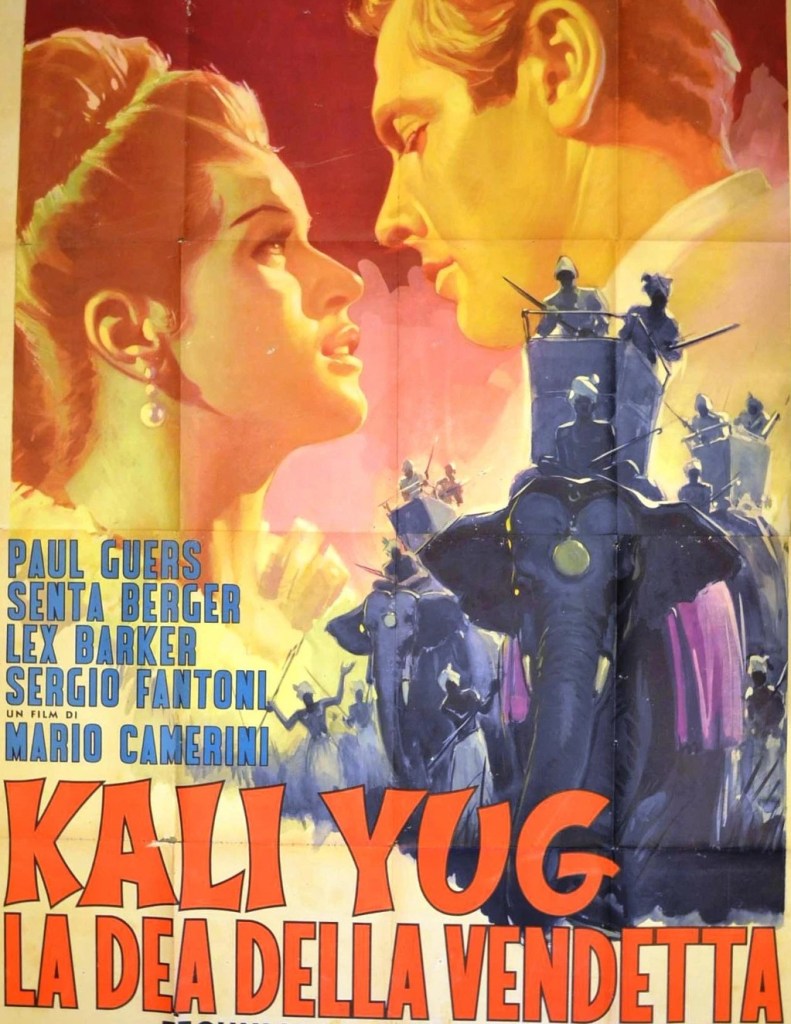
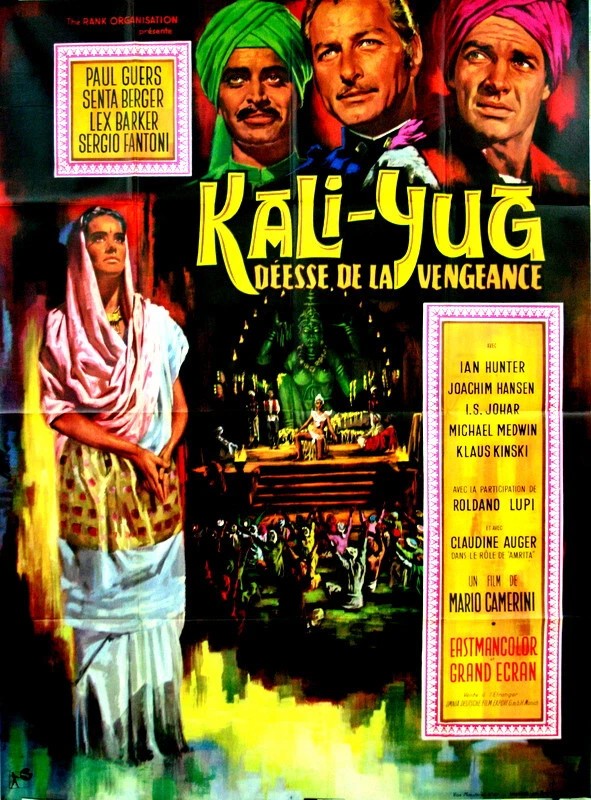
You can’t aspire to being Emeritus Professor of Senta Berger Studies unless you are willing to track down this early effort. Your curiosity can now be sated without much effort since it’s currently playing on YouTube. You’ll notice a preponderance of brownface (Klaus Kinski, Sergio Fantoni, Claudine Auger and eventually, though in legitimate disguise, Paul Guers) among a multicultural cast comprising actors from Germany, Poland, Switzerland, France, Italy, Austria, South Africa, the USA and Britain.
To avoid confusion, the title of this German-made Indian adventure requires some explanation and once again I have undertaken the necessary research. As long as you make the distinction between “Kali-Yug” and “Kali Yuga” you will be on safe ground. The former refers to a cult while the latter refers to Hindu cosmology and the final age of the yuga cycle – the one predominant at the time – defined as an age of darkness, of moral and spiritual decline.
Even with that out of the way it takes quite a while to get your bearings here. This is India in the 1880s, four years after Queen Victoria has been declared Empress of India, at the height of British rule.
We begin in rather traditional style with the kind of tale that would provide an Englishman with good reason to be in an impoverished Indian village. Dr Simon Palmer (Paul Guers) is fighting an epidemic of smallpox. Running out of medicine, he despatches a servant with a small convoy to the capital of Madanpur to secure further supplies to combat the disease. On its return this group is ambushed, so Palmer takes it upon himself to personally plead with local Governor (known here as The Resident) Talbot (Ian Hunter) of Madanpur..
It’s worth pointing out that, as this is relevant to the later narrative, a Resident has been appointed in those states such as Madanpur which the British took by force. Other states, which gave in to the British without a fight, such as the neighboring state of Hasnabad continue to enjoy autonomous rule by a Maharajah or Prince, but only in return for paying massive tributes to their conquerors.
After a satisfactory meeting with the Resident, Palmer encounters drunken British officer Capt Walsh (Michael Medwin) and retaliates when insulted. He also meets old flame Catherine Talbot (Senta Berger) who married the Resident. She’s not a gold-digger in the standard sense. Palmer had met her in Calcutta but when he went off to London to complete his medical studies her father died, leaving her impoverished, so in his continued absence she married the older man for security.
Capt Walsh is murdered and after their previous altercation blame falls on Palmer. He should get off scot-free. He has an alibi. At the time of the murder he was dallying with Mrs Talbot. But that wouldn’t go down well in British society. There would be a scandal. A good deal would be read into a moonlit assignation with a man other than her husband. And Palmer, in traditional stiff upper lip fashion, wouldn’t like to get her into trouble.
So Palmer contacts elite dancer Amrita (Claudine Auger) because he thinks she knows who killed Walsh. Although promising to help, Amrita, it turns out, apart from charming the pants off (possibly quite literally) everyone in sight, is secretly in league with the characters, led by Siddhu (Klaus Kinski), responsible for the robbery and murder. So while Palmer is ambushed yet again, she is sent to Hasnabad where she will undertake her “next mission.”
Which appears to be to dance for the Maharajah (Roldano Lupi) as entertainment for visiting merchants. Helped by servant Gopal (I.S. Johar), Palmer goes on the run and manages to fake his own death. In this regard, an entire corpse is not required as proof, just a torn limb, stolen from the local vultures, and a torn jacket. (Thus far the highlight of the show with white hunters and Mrs Talbot swaying in baskets atop elephants). To keep him safe, Gopal provides Palmer with brownface disguise. They witness a Kali ritual and follow Siddhu’s gang as they break into the palace to prevent the kidnap of his Maharajah’s grandson.
But Palmer is blamed for that too and condemned to death. That involves being buried up to your neck in the sand while an elephant stomps on your head. But he is released because the Maharajah doesn’t want trouble with the English. Meanwhile Catherine has fessed up to her husband which, as expected, does not go down at all well.
The End.
So you can imagine my puzzlement. YouTube promotes Klaus Kinski (Grand Slam, 1967) as the reason to watch this, but so far, he’s only appeared briefly, though clearly wielding significant power as chief thug. But we’ve seen as little of third-billed Lex Barker (Old Shatterhand, 1964) as Major Ford. His contribution is to prevent Capt Walsh get even drunker and, as a member of the shooting party, pick up Mrs Talbot when she faints at the thought of Palmer being dead. Sightings of fourth-billed Sergio Fantoni (Hornets’ Nest, 1970) have been as fleeting, his main role as Prince Ram Chand to try and score points off The Resident by arguing about the unfairness of British rule and to partner Catherine briefly on the dance floor.
So this is beginning to look as though it’s a small-scale version of those big-budget pictures featuring an “all-star cast” which consists either of marquee names long past their best or various foreign stars recruited to cover all the bases for the international release rollout.
The ending is so sudden and with so much unresolved, I also began to think it was one of those elaborate foreign jobs with stars who meant so little to British and American moviegoers that it was drastically edited to fit domestic distribution patterns.
On further research (the bane of any Emeritus Professor’s life) I got to the bottom of the problem.
This was only Part One. It wasn’t the end after all.
Luckily, I’ve found Part Two and will review that (as no doubt you’re delighted to hear) tomorrow.
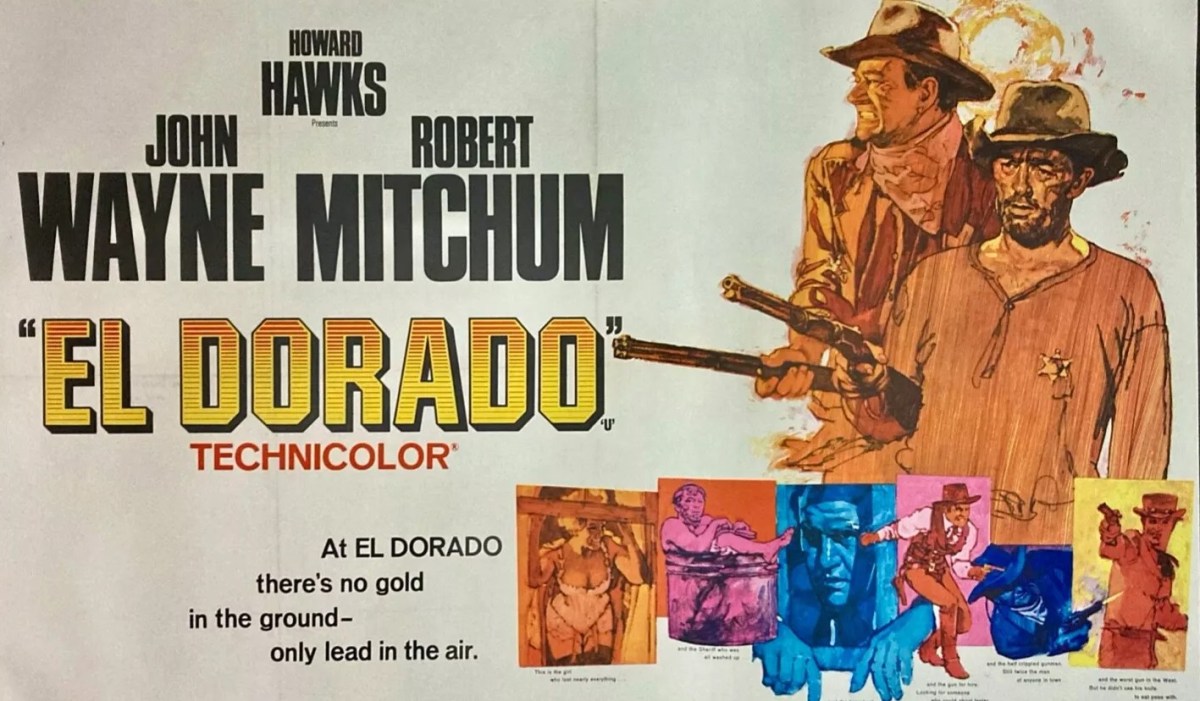
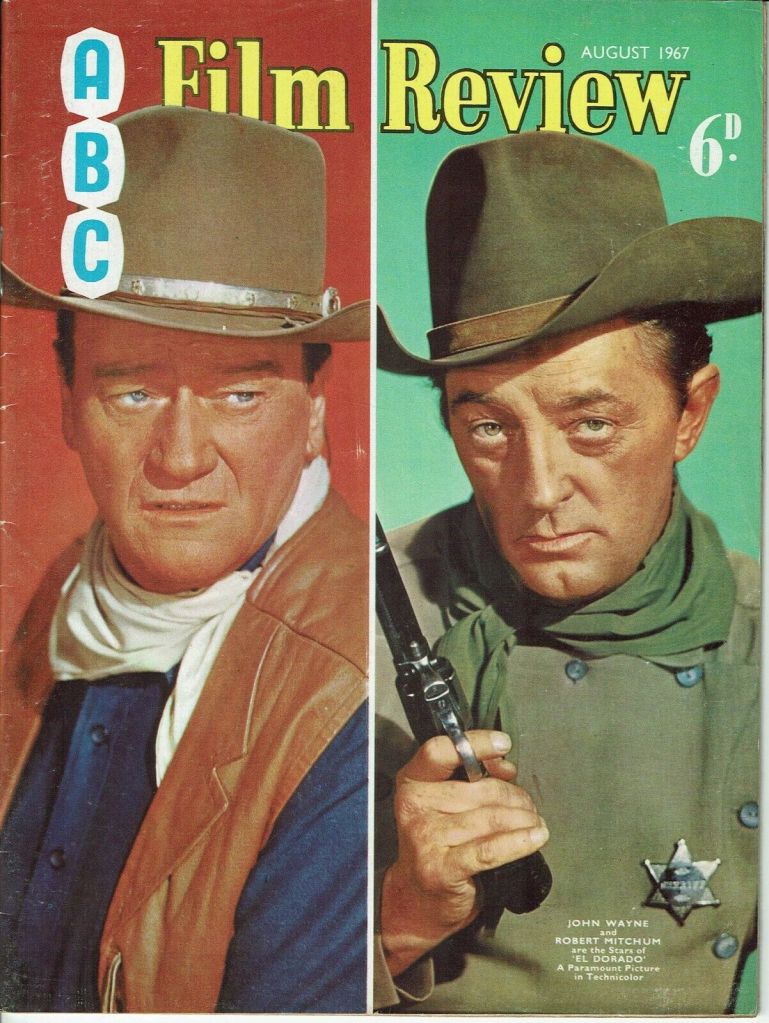
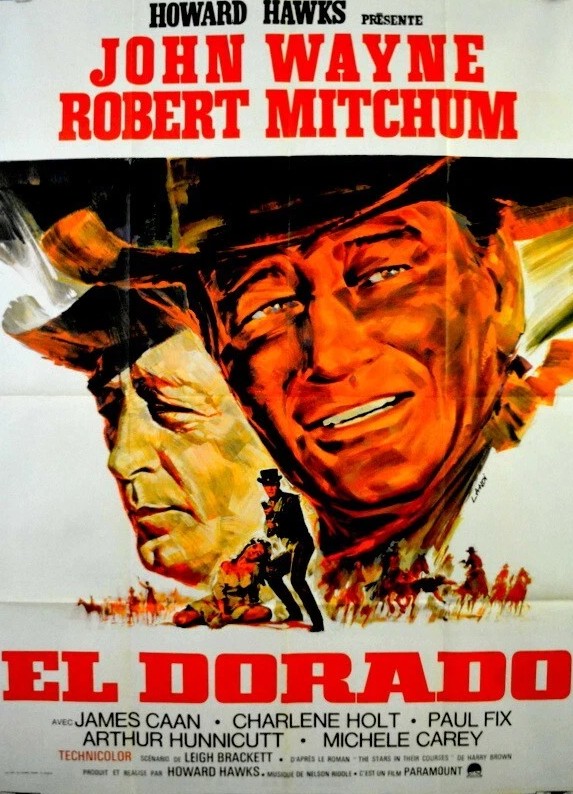
John Wayne incapacitated? Robert Mitchum a liability? The hell you say! You bring together two of the greatest male action figures only to turn the genre upside down and inside out. And I know it’s tradition for heroes to be unable to listen to their hearts, never mind deal with emotion, but it’s a heck of a stretch for them to just completely fall apart when spurned. And I know also that Duke is not invulnerable, this isn’t the MCU for heaven’s sake, and he’s been known in his long career to take a bullet, but to be shot by a woman! That’s very close to taking the proverbial.
Also, westerns usually operate on fairly tight timeframes. If the situation takes place over a longer period that’s usually because it involves a journey. Here, there’s a split of six months between the opening section and the main action, and it does kinda defy belief that the bad guys don’t make the necessary hay while the sheriff is drunk and his main assistant has scarpered.
There’s hardly a word spoken here – between the good guys again for heaven’s sake – that isn’t an insult. Never mind The Magnificent Seven (1960) this is teed up as The Bickering Quartet. And I do have to point out a couple of elements that won’t go down so well with a contemporary audience, one character imitating a Chinese, and a scene where one of our heroes is constantly interrupted in the bath by females, a twist to be sure on the usual scenario of the female lead skinny dipping in a handy pool or river, but it’s like a lame comedy sketch.
This won’t have been influenced by the spaghetti western, the first Sergio Leone game-changer wasn’t screened in the U.S. until the following year, so it’s also worth pointing out that some of the action is pretty savage, both John Wayne and Robert Mitchum indulging in the kind of mean behavior that was usually the prerogative of the villains. Wayne even cheats when it comes to the traditional shoot-out. And while there’s none of the blood-letting that later became synonymous with the genre, director Howard Hawks does something else that is far more realistic than anything that has gone before and would count as a genuine shock to our senses. The gunfire is incredibly loud. Imagine that on Imax and you’d be jumping out of your seat every few minutes.
And just in case you think this is nothing more than a remake of Rio Bravo (1959) where a gunslinger and a drunken sheriff are holed up in jail, here the jail is mostly used as a base, the good guys racing out every now and then to pick someone off. That running, too, by older guys certainly prefigures later action pictures like Taken (2008).
We need the time gap to allow Sheriff J.P. Harrah (Robert Mitchum), one of the three best gunslingers alive, to disintegrate. He goes from tough lawman keeping an unruly town in order and holding back the worst instincts of land-owner Bart Jason (Ed Asner) planning to go in mobhanded against rival rancher Kevin MacDonald (R.G. Armstrong) in an argument over water rights.
Hired gun Cole Thornton (John Wayne), one of the three best gunslingers alive, turns up for a job with said Jason but is turned off the idea when J.P. gives him the lowdown on the situation. He dallies long enough to set up the notion that he’ll try to win back saloon-owning old flame Maudie (Charlene Holt) from J.P.
Thornton moseys off to the Mason spread to give the owner the bad news. On the way back, Luke Macdonald (Johnny Crawford), Kevin’s youngest son, on guard duty, mistakes Thornton for the enemy and shoots at him. Which results in his death. So Thornton does not get a good welcome when he arrives at the Macdonald farm toting a corpse.
Turns out the young whelp, although taking bullet in the gut, committed suicide because the pain was too much and Luke had been told by his dad that he wouldn’t recover anyway and just suffer a hideous death. While the father accepts this, his daughter Joey (Michele Carey) does not and ambushes Thornton, putting a bullet in his back. Said bullet is mighty inconveniently lodged close to his spine and needs more than the town quack to remove it. Despite sparking up old feelings for said old flame and the prospect of stealing her back from old buddy J.P., Thornton doesn’t dally longer than it takes to get temporarily fixed up, bullet still in place to cause later problems.
Now the tale takes a detour. Not only has six months passed and Thornton miles away from El Dorado, but we’ve got to hold up proceedings to introduce naïve youngster Mississippi (James Caan). Howard Hawks certainly hasn’t learned the knack of the compact introduction from John Sturges a la The Magnificent Seven (1960) so we learn that this young whelp is best with the knife and has spent two years tracking down the four killers of his foster father. The last man to die happens to be an employee of Nelse McLeod (Christopher George), one of the three best gunslingers alive, on his way to take up the job Thornton turned down, a task made a helluva lot easier because J.P is now the town drunk, having hit the bottle when spurned by a woman, not Maudie I hasten to add.
Thornton heads for El Dorado with Mississippi tagging along, armed with of a sawn-off shotgun. First task is to sober up the sheriff – by fistfight and awful concoction – and stop him becoming a worse figure of fun. On the evidence here Deputy Bull (Arthur Hunnicutt) was probably one of the three best riflemen – not to mention archers – alive. He also totes a bugle.
The sober J.P. strolls into the saloon and arrests Bart Jason and sticks him in jail, and to avoid being in a complete siege situation, the quartet, sometimes as a group, sometimes a pair, sometimes alone, venture out, as I mentioned, to pick off the enemy. This allows Mississippi a meet-cute with Joey who’s planning a short-cut to justice by shooting Jason. Maudie re-enters the frame.
The bullet in the back sporadically paralyzes Thornton and J.P. is wounded in the leg so eventually the pair are hobbling around on crutches. Maudie also turns out to be a liability, taken hostage, ensuring Thornton goes to the rescue. But the bullet in the back plays up at exactly the wrong time and Thornton’s also captured, trussed up like a hog (what, John Wayne?) then traded in for the prisoner.
Having by now reduced the odds and not wanting to be caught in a siege, the quartet take the battle to the enemy, ambushing them front and back in the saloon, Thornton ridding Nelse of the notion that he and Thornton will enjoy a winner-takes-all shootout by killing him with a rifle while lying on the ground.
While it could be trimmed – television screenings generally eliminate the racist Chinese impersonation – the action when it comes is blistering. There’s a terrific scene in a tower when Bull targets the bells to disorientate the enemy with their horrendous ear-jarring clanging. And the final shoot-out is exceptionally well done.
In ways not usually gone into, the quartet are experts in their fields. Thornton backs up his horse to get out of a difficult situation, J.P. detects a man hidden behind a piano in the saloon, Mississippi stalks a potential lone assassin, Bull uses bow-and-arrow when silence is required.
Theoretically, Robert Mitchum (Five Card Stud, 1968) steals the show as the drunken sheriff, but that’s only if you are taken in by the surface. The sight of John Wayne with his useless twisted right hand harks back to the arm in The Searchers (1956) and his one-armed rifle action predates True Grit (1969). James Caan (The Rain People, 1969) tries to steal scenes but what chance does he have with these two stars at the top of their game and past master at the scene-stealing malarkey Arthur Hunnicutt (The Cardinal, 1963). Charlene Holt (Red Line 7000, 1965) and Michele Carey (The Sweet Ride, 1968) come out honors even as do Edward Asner (The Venetian Affair, 1966) and Christopher George (The Thousand Plane Raid, 1969).
I don’t put this in the same bracket as Howard Hawks’ Red River (1948) and Rio Bravo, but it’s certainly one of the best westerns of the decade. Written by Leigh Brackett (Hatari!, 1962) from a novel by Harry Brown.
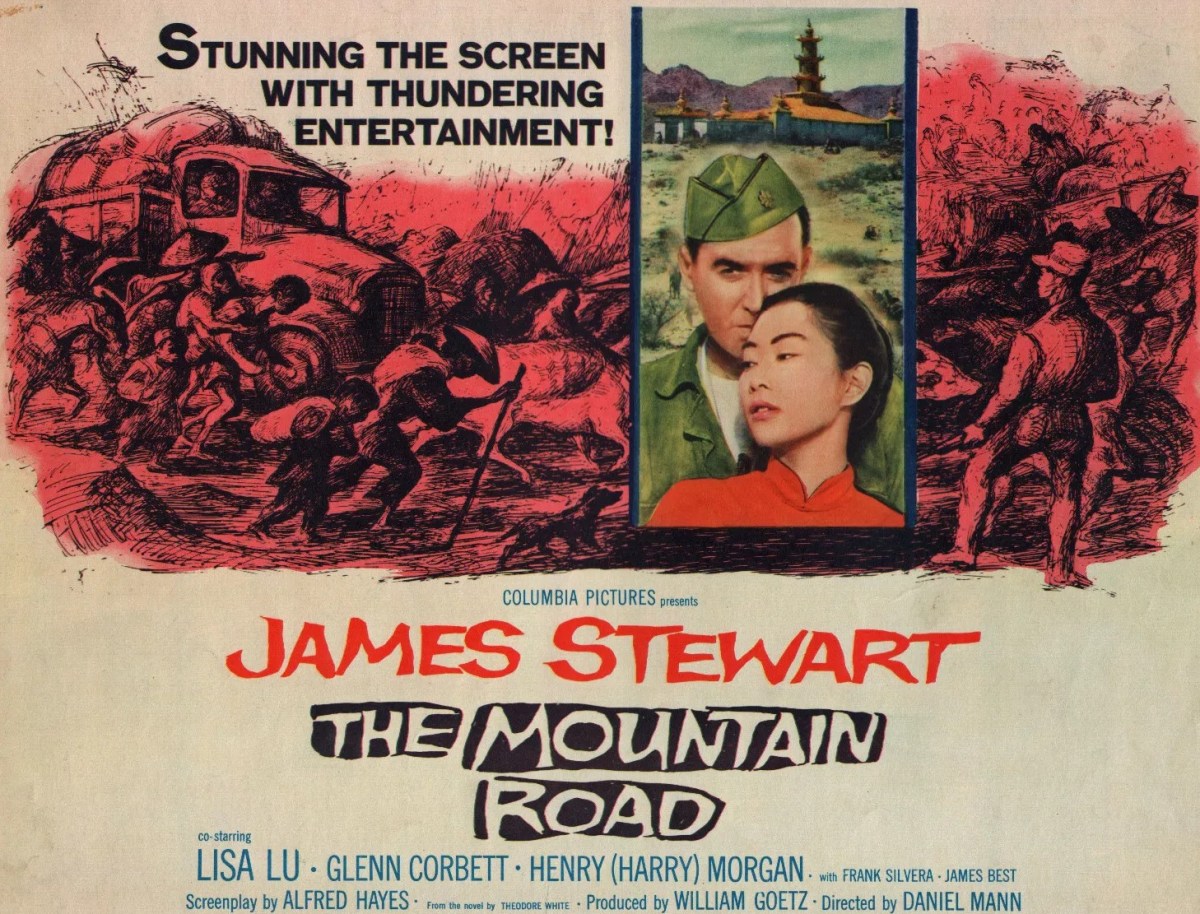
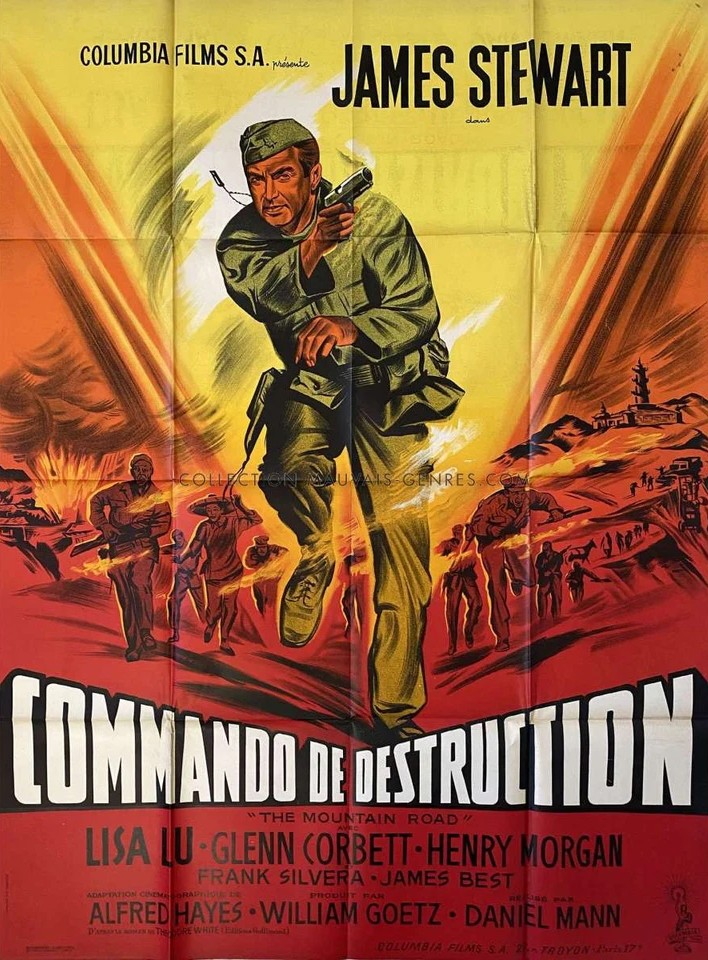
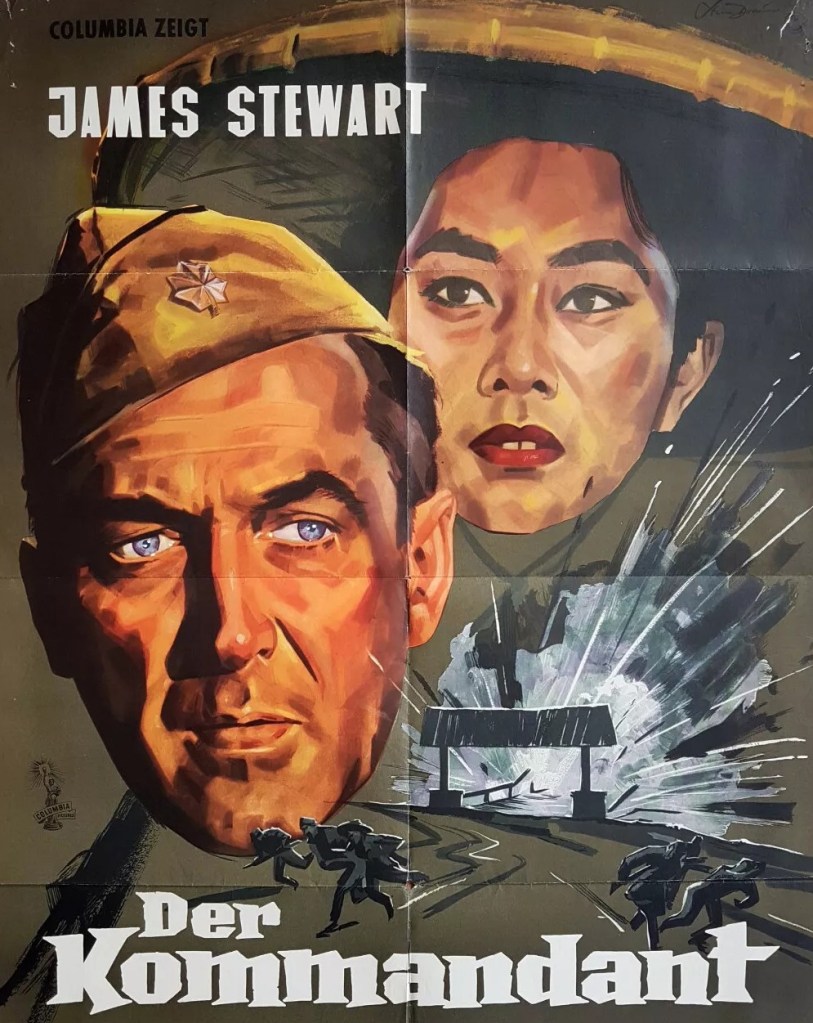
First film to deal with U.S. Army war crimes. Though here’s it’s tabbed as abuse of power but amounts to the same thing when it relates to the wanton killing of innocents. Not the first film to examine a commander totally unsuited to command – The Caine Mutiny (1953) would be your first port of call for that, although that was a career officer rather than a conscript. But the blistering under-rated Oscar-ignored performance by James Stewart (The Rare Breed, 1966) is easily comparable to the Oscar-nominated Humphrey Bogart.
And director Daniel Mann (A Dream of Kings, 1969) is helluva sly. He dupes the audience into thinking this is a mission picture, blowing up a massive ammunition dump to prevent it falling into enemy hands. And if you’re one for the easy action of explosions, this is for you, the kind of fireworks not seen till MCU entered the equation.
And here’s a line that’s going to knock you for six. “China and America are friends.” Say again? You what? As far as I can remember in all my decades of moviegoing, China has always been the enemy, either providing a succession of nefarious villains, or on the brink of starting a nuclear war, or just totally ungrateful for all the efforts the West has made bringing to the country Christianity and the western idea of civilization.
But it’s true. Before Communist China reared its ugly head, the U.S. and China were allies against the Japanese in the Second World War. But towards the end of that conflict, the Japanese had invaded and the Yanks were pulling out. Not wanting to leave anything behind for the enemy – like a huge arsenal or thousands of gallons of diesel – is the trigger for the story.
Except it’s not. Major Baldwin (James Baldwin) doesn’t have to go on any mission. His job is just to blow up a much smaller ammunition dump that’s easily accessible without the need to go on a long trek through the mountains. It’s his choice to take on the bigger job. There’s not even any pressure to do so. It’s entirely at his “discretion.” And you can see in the tone of his superior’s voice that it’s not such a good idea. He can just complete the small job and high-tail it out of there.
But Major Baldwin wants to experience command in action. He’s not a glory hunter in the normal sense but there’s definitely something off in a backroom soldier who’s got that on his wish list. It never occurs to him that there’s more to command than ordering about grunts, many of whom he considers “slobs,” and that the position comes with the task of making difficult decisions.
He’s got a very small team, chief among whom is Sgt Michaelson (Harry Morgan) and translator Collins (Glenn Corbett). Chinese officer Col Kwan (Frank Silvera) is meant to smooth his path and the widow of a Chinese general, Sue Mei (Lisa Lu), is thrown his way, initially you would guess to sweeten the load by becoming a love interest, but actually to become his conscience.
Just to fill you in on the background. China and Japan had been at war since 1937. After Pearl Harbor China became critical to US operations in the Pacific by tying down Japanese forces and after the fall of Burma the US airlifted supplies over the Himalayas.
Baldwin soon discovers that leadership equates to callousness. He has little sympathy for the refugees swarming over the mountain roads seeking sanctuary from the invading Japanese. He blows up a bridge and creates an impasse on the road to delay the Japanese without giving any thought to how that will endanger the natives.
He’s pretty inhuman in his treatment of one of his men, suffering, it later transpires, from pneumonia and might be taking all his cues from General Patton who hated all wounded soldiers. While he’s trying to convince the soldier to get back on his feet all the grunt can do is whimper, “Milk! Milk” like a child. Baldwin even sees little problem in stacking the ill man beside a corpse on the back of a lorry.
It would help if Baldwin had been trained in command, in making decisions, rather than picking faults everywhere and letting the pedantic side of his nature run wild. Sei Lei to some extent tries to rein him in, accusing him of blatant racism, treating the Chinese as if they were a lower form of humanity.
When he does relent and orders surplus food to be handed out one of his men is killed in the stampede. The last straw is Chinese bandits who kill and strip three of his men. So he leads a raid on a Chinese village, rolling a barrel of fuel stacked with dynamite down a hill to destroy the village and innocent villagers.
Up till then things were going along nicely on the romantic front, Sei Lei clinging to him when the massive ammunition dump goes up, and kissing on the cards. She’s westernized after all, spent a lot of time in America, well educated, and so easily a contender for marriage. But she tries to stop the barrel-rolling, telling him this action is unjustified, pure revenge.
He thinks she’ll accept an apology, that some madness came over him, he was consumed by power. But she’s having none of it.
Mission accomplished but human flaws exposed.
This isn’t the James Stewart you’ve come to expect, far from it. There’s certainly times in his career when he’s been mean or ornery and in his Hitchcock excursions a bit creepy, but he’s never been so awful as here, the guy desperate for power without knowing how to use it or draw the line. Purely in a technical capacity, working out where to plant explosives and plan a demolition, he’s in his element, but let him loose on human beings and he’s a loose cannon trying to rein himself in, stuck in a mess of his own making, unable to understand consequence. But sometimes even guilt isn’t enough.
This was an unlikely role for Stewart because, after his own experience in World War Two, a pilot in Bomber Command flying missions over Europe, he had turned down every war picture. Perhaps this movie reflected the guilt he felt of dropping bombs and knowing there would be civilian collateral damage, that sense of power over the powerless might equate to the feelings Baldwin has over the Chinese.
This is by far the most human character Stewart ever played, doing away with both the aw shucks everyman and the commanding often truculent cowboy, and instead portraying someone who’s way out of his comfort zone.
Ace scene-stealer Harry Morgan (Support Your Local Sheriff, 1969) is the pick of the support though Lucy Lu (One Eyed Jacks, 1961), being the conscience of the piece, has all the best lines.
Just as with A Dream of Kings, Daniel Mann takes a flawed individual and doesn’t hang him out to dry. But in retrospect, the war crime, of blowing up the innocent civilians, would not have received such a free pass, which puts a different slant on Baldwin. Alfred Hayes (Joy in the Morning,1965) wrote the script from the Theodore H. White bestseller.
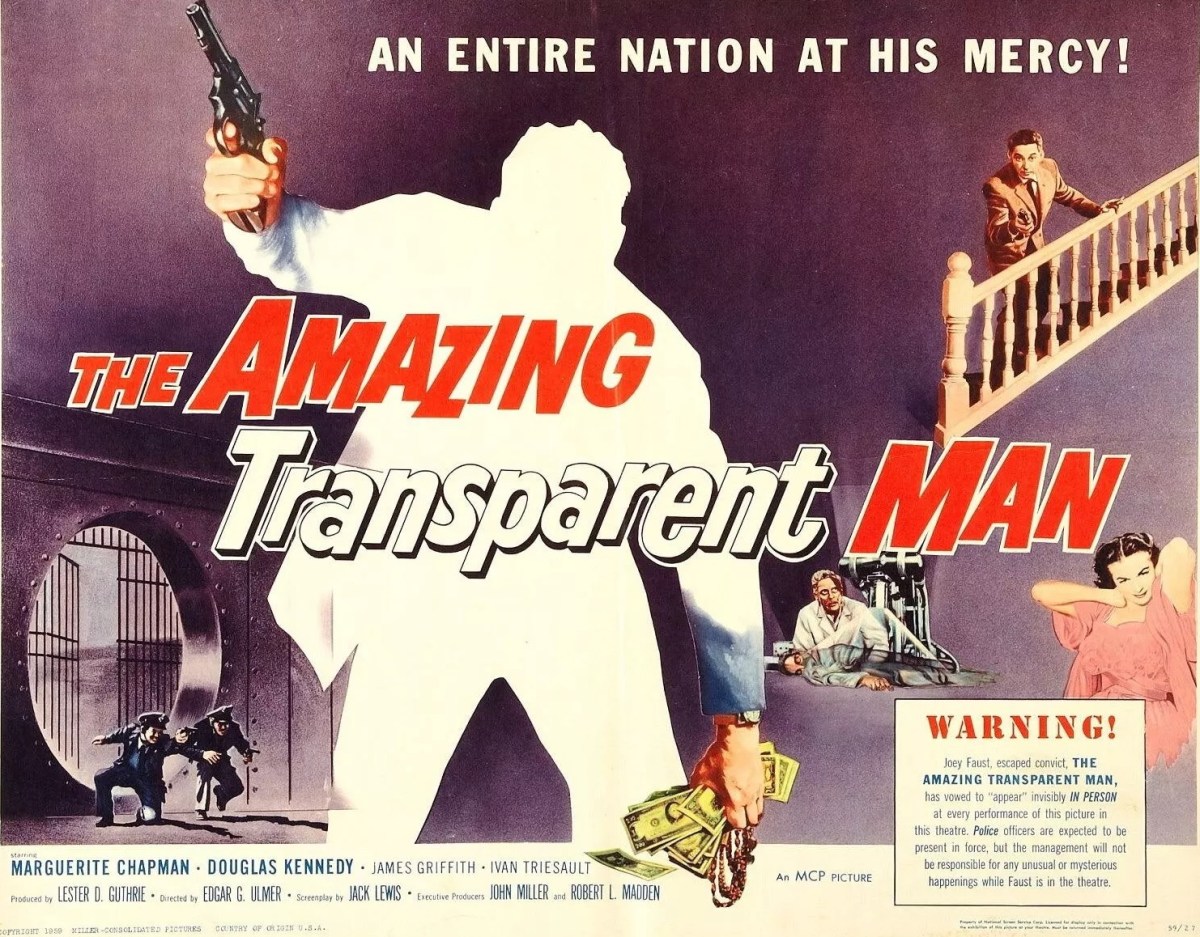
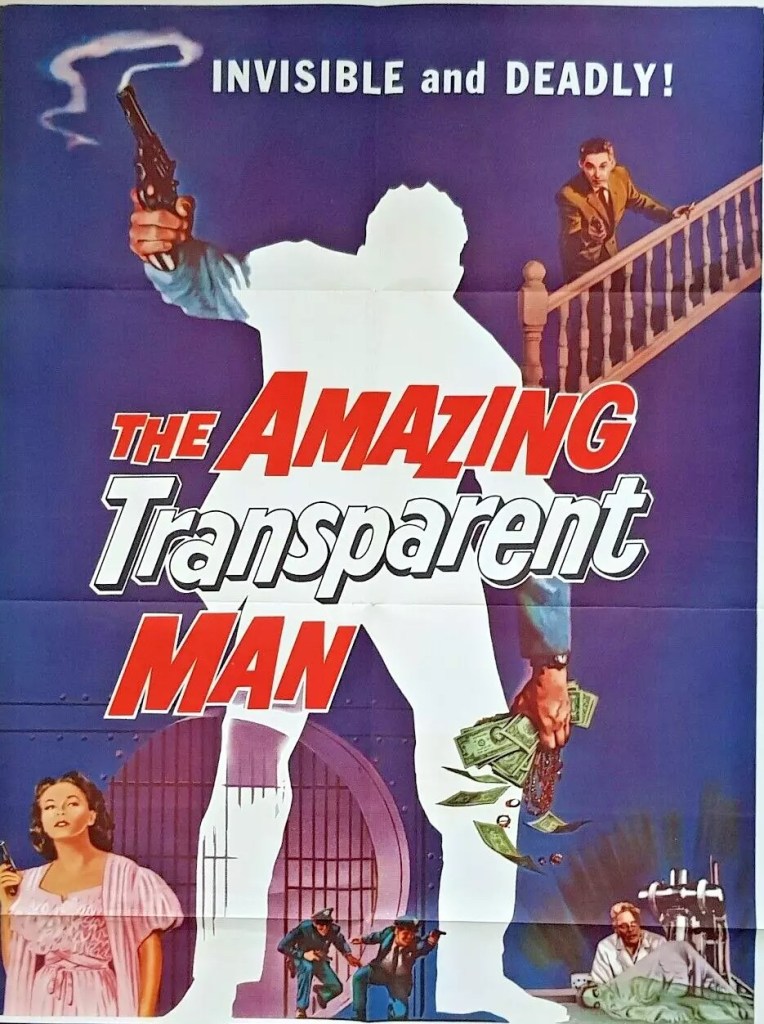
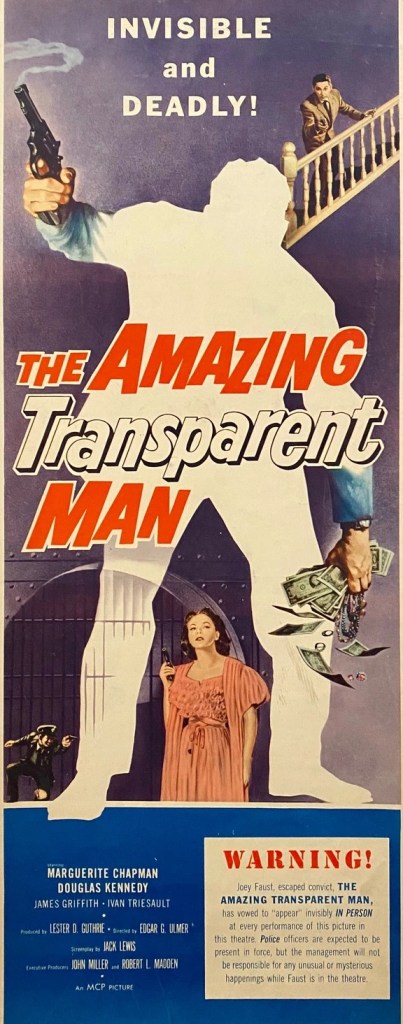
Sci fi film noir. Anything that involves cult director Edgar G. Ulmer (Hannibal, 1960) tends to put an unusual twist on a tale and here he takes the kind of mad scientist who would be perfectly at home in the MCU and turns him inside out. In fact, Major Krenner (James Griffith) is pretty close in intent to Valentina Allegra de Fontaine (Julia Louis-Dreyfuss) in the asterisk version of Thunderbolts (2025) in wanting to build an indestructible army.
His is going to be invisible. (Presumably, this would have been called The Invisible Man had Universal been more obliging.)
It was quite the thing as we have seen from I Aim at the Stars out the same year for the U.S. after World War Two to purloin German scientists, and here Krenner is one step ahead of the Government by snaffling Dr Ulof (Ivan Triesault).
The good doctor is given something of a free pass here because he’s been coerced into working for the major on account of his daughter being held hostage. And because he accidentally killed his wife during one of his experiments. But given he was working for the Germans in a concentration camp and his experiments, had they been successful, would have resulted in the creation of an invisible army for the enemy, maybe we shouldn’t be so lenient.
Ulmer isn’t so lenient with the rest of the bunch and there’s double cross all the way. Safecracker Joey (Douglas Kennedy) doesn’t show the gratitude you’d expect after being sprung from jail by Krenner and his moll Laura (Marguerite Chapman). Being amply rewarded for being a guinea pig isn’t enough and he reckons that if he can walk unnoticed into a government facility and steal nuclear materials, then he could just as well walk into a bank unnoticed and make off with the kind of cash that would fund retirement.
Laura begins to warm to the notion of sharing her bed with a hunky action man rather than a weedy pedant and even more to the idea of sharing the loot and the retirement. There’s also a resident thug Julian (Boyd Morgan) who’s been duped by the major into adding muscle to the operation.
Clever publicity stunt. Joey is going to appear invisibly in person at every performance.
So instead of the usual set-up of good guy, and a girl he met on the way (or vice-versa), intent on stopping the mad scientist, you’ve got the complete opposite, bad guy and hook-up planning to keep on being bad.
There’s a heap of good old-fashioned fun with the invisibility. Some trick photography to make Joey disappear but it’s more fun to watch the other actors throw themselves around to simulate being punched in the face or stroke an empty space and pretend they are touching a real human being, and to see vault doors miraculously open, or onlookers agape at watching a bag of loot hovering in midair. Or even better to see parts of Joey’s body unexpectedly materialize in the middle of a robbery.
You can’t build tension in normal heist fashion. You don’t need to endlessly go over an elaborate plan or hold your breath to see if a guard or some such is going to appear at an awkward moment or another obstacle get in the way, not when you can just walk in and walk out and nobody even know you’re there. So Ulmer doesn’t bother with that aspect, concentrating more on the personalities involved, each as mean and calculating as the others.
Even free pass Ulof, who could sabotage the project at any opportunity, decides it would be better if a hunky action man rather than another weedy individual took on that task. So he lets on to Joey that just as invisibility wears off so does his lifespan courtesy of the radiation which is slowly poisoning him. So it’s Joey who does the needful, not out of a hero’s ambition to save mankind, but out of pure revenge.
Thanks to the characters involved this is never corny. Old-fashioned maybe in an enjoyable old-fashioned way before it cost the world to create special effects.
It says a lot about the marquee quality of the stars that Marguerite Chapman (The Seven Year Itch, 1955) as the femme fatale is top-billed when she hadn’t been in a movie in half a decade and wouldn’t be in another one ever again. Douglas Kennedy (The Destructors, 1968) was a bit-part player and this was as close as he’d get to playing a leading man. Ditto James Griffith (Heaven with a Gun, 1969). But since mostly what they’ve got to show is malevolence nobody is being asked to step outside their comfort zone.
Ulmer filmed this back-to-back with Beyond the Time Barrier, with the two films forming a double bill.
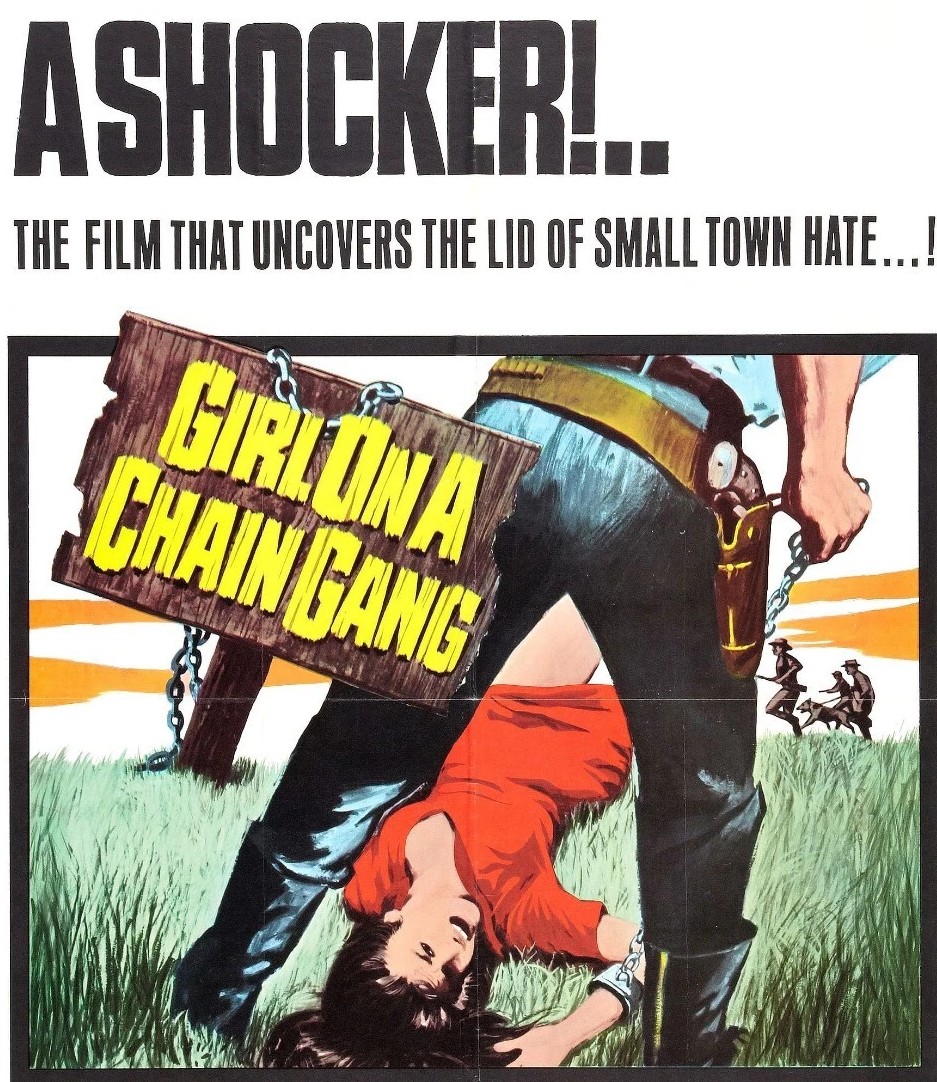
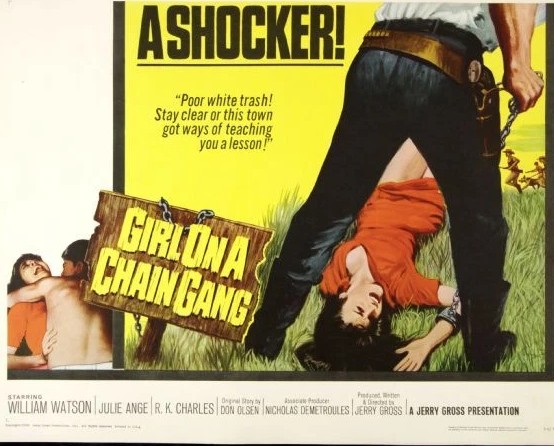
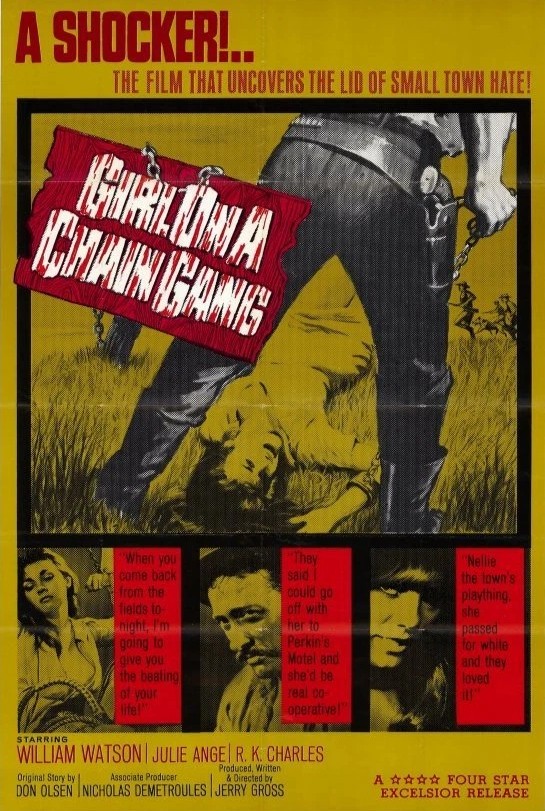
Trash and intentionally so, but with some unexpected merit. In the first place it was the forerunner of films set in the Deep South such as In the Heat of the Night (1967) and Mississippi Burning (1988) and where the former deals primarily in racism the latter adds Civil Rights to the equation. More pertinently, and to save us according this more acclaim than it deserves, it was the beginning of the Women in Prison genre. Writers, generally, date Jess Franco’s 99 Women (1969) as the beginning of that genre, but that’s mostly because it clicked at the box office, thanks to liberated censorship permitting more exploitation license.
To put it crudely, this is straight exploitation but given more credence because it’s not as vivid sexually in its exploitation. There’s rape and by later standards that’s discreetly done but there’s a complete absence of nudity.
Jean (Julie Ange), Ted (Ron Segal) and African American Claude (James Harvey) are stopped for speeding in Carson Landing, and subsequently arrested. Sheriff Wymer (William Watson) beats up the men in turn, fines them $150, which, luckily they can pay. They are let go but shortly afterwards arrested again on the trumped up charge of prostitution (her) and violation of the Mann Act (the men) for transporting a sex worker across state lines.
Claude turns down the chance of freedom that would be granted should he agree to sign a confession put to him in seductive fashion by the Sheriff’s squeeze Nellie (Arlene Faber). The cops lure the guys into attempted escape by leaving a door open, which, as you might expect, results in their demise. Jean, who has the sense to not take the bait, is raped.
Jean is convicted nonetheless of prostitution and at her trial vents her feelings. “You’re nothing but a bunch of pigs and murderers…It takes a whole town plus a phony judge and jury to convict me,” she spouts.
There’s not much time for her to spend on the eponymous chain gang because she seems to spend most of her time chained up. But because she lacks a “way of showing her appreciation” and thus being rewarded with a softer job of cleaning or cooking, she’s eventually added to the chain gang. Luckily, on her first day out, another prisoner Henry (Tom Baker) helps her escape and they head for the swamps. He sacrifices himself to save her but not before showering the Sheriff with snakes. When Jean is found, she becomes a witness against the corrupt cops.
I doubt if writer-director Jess Gross (Teenage Mother, 1967) had anything more on his mind than making a quick buck in the grindhouse/drive-in exploitation market, and that anything prophetic was purely happenstance. Most movies around this time in that genre sold more on promise than what they could deliver, and he had made his marketing bones through the U.S. distribution of the first two Mondo Cane (1962/1963) films as a double bill. He only directed three pictures and was better known as a producer including the lurid Whirlpool (1969) and the more legitimate Blaxploitation Sweet Sweetback’s Baaadass Song (1971).
In part because of censorship prohibition, this carries some weight because more is imagined than shown, sexuality repressed rather than expressed, but that was not the case with violence and while it’s not marked by the bloodletting that would later be de rigeur the cops hand out some stiff beatings, exemplifying not just their racist credentials but their antipathy to liberals from the big city.
This didn’t prove a breakout movie for the stars although William Watson had a reasonable career as a tough guy – Lawman (1971), Chato’s Land (1972). Julie Ange and Ron Segal only made one more film, Teenage Mother. James Harvey didn’t make another. Arlene Faber was the star of Gross’s other two movies, the last being Female Animal (1970), and she had a small part in The French Connection (1971).
Buckle up – the summer blockbuster is here. And if you’ve got the sense to see it in Imax double buckle up because you’ve just never seen the like. As regular readers will know I’m a sucker for race pictures – Grand Prix (1966) that invented the genre, Rush (2013) and Ford v Ferrari/Le Mans ’66 (2019) the top trio in my book. And all driven by interesting narrative, a shade too much soap opera in the first, a real-life on-track duel in the second, and the machinations of big business in the third. And the last two with scenes that took place outside the racetrack that have stuck in my mind since – in Rush Niki Lauda (Daniel Bruhl) kicking into high gear in an ordinary motor to impress his soon-to-be wife, Carroll Shelby (Matt Damon) taking Henry Ford II (Tracy Letts) for a terrifying spin.
This one has jettisoned narrative complexity for thrills on the track and the sheer screen charisma of star Brad Pitt (Bullet Train, 2022) off it. For all my love of movies about motor racing I’ve never been compelled to watch any of the current F1 action or a single episode of the seven-season (and counting) Netflix series Drive to Survive, so my understanding of the rules is rather vague.
Here, you might come away with the notion that tires/tyres are more important than speed and that if you are mighty clever you can fry those rules within an inch of their lives and get away with it. And I’m not sure if the climactic set-up where the race is reduced to the equivalent of a golf play-off between four cars over three circuits of the track is actually a genuine element of the business.
So, ex-gambler thrice-divorced itinerant Sonny Hayes (Brad Pitt) who 30 years before was an up-and-coming Formula One Driver before an accident wrecked his career is tempted to return to the greatest arena of all by old buddy Ruben (Javier Bardem) whose racing team is on the point of collapse. He’s recruited as wing man to cocky up-and-coming talent Joshua (Damson Idris) who is repulsed by the idea of giving a second chance to an elderly citizen. The idea that Sonny will mentor the young guy is torpedoed when the younger ace nixes that notion.
But Sonny has got street smarts and knows how to win dirty. There are the usual reversals and obstacles, mostly self-imposed, before the team learn to back Sonny’s combat instinct.
And while the racing footage will take your breath away – even not seen in Imax it’s going to be a thundering visceral involving experience – it’s Brad Pitt who brings this one home. He’s one of only three surviving Hollywood stars, Leonard DiCaprio and Tom Cruise would be the others (though you could maybe make a case for Matt Damon), whose attachment can greenlight a picture and put the bucks into the box office.
One of a posse of producers and one of the many real-life participants to make an appearance.
Ever since a glorious entrance in Thelma and Louise (1991) he’s strode the Hollywood firmament like, as they say, a colossus, never taking the easy role, backing his own judgement, and often putting his own dough into projects (his Plan B shingle is one of the many production outfits credited here) and lighting up the screen with an easy charm.
Luckily, the screenplay by Ehren Kruger (Top Gun: Maverick, 2022) crackles and Pitt’s realism cuts through the social media engagement world inhabited by Joshua and the jargon-ridden world of the back-office team. “Hope isn’t a strategy,” he snaps. And there’s a lively verbal duel with designer Kate (Kerry Condon) and a couple of scenes where he takes what’s coming, especially from Joshua’s irate mum Bernadette (Sarah Nile), and one of those classic scenes where he dupes the youngster into thinking he’s won.
Usually enigmas aren’t this captivating, even Sonny can’t explain what drives him, but beyond a skeletal backstory, we don’t need to learn much about him because his whip smart delivery and scathing lines keep the audiences on their toes.
So Brad Pitt at the top of his game, excellent support from Javier Bardem (Dune: Part Two, 2024) and Kerry Condon (The Banshees of Inisherin, 2022). While Damson Idris (Snowfall, 2017-2023) isn’t in the breakout league of Glen Powell in Top Gun: Maverick, he still looks a talent to watch. Tobias Menzies (Outlander, 2014-2018) as a sneaky financier has a stand out supporting role.
Joseph Kosinksi (Top Gun: Maverick) does for earthbound speed what he did for supersonic speed in the Tom Cruise sequel.








 The Magnificent 60s