Bring Her Back (2025) ****

Reincarnation gets a bad rep. You could say the same for belief in angels. And of all the weird things to repurpose is the word “grapefruit.”

It used to be easy to define entries to the horror genre as old school (legacy creatures like vampires and werewolves and legacy situations like the old dark house and its modern equivalent). But now in addition we’ve had decades of torture porn, sexuality equating to grisly murder, and more recently high concept and arthouse. The latter two occasionally intertwine, which generally means slow-burn rather than shock jump.

Given Hollywood’s dependency on superheroes and their ever-increasing budgets, no surprise enterprising directors have been turning to the low-budget attractions of horror, where reduced cost equates to limited financial exposure, and creatives are given their head often to devastating effect – witness The Black Phone (2021), Smile (2022) and M3gan (2022).

But we’ve also been introduced to a new generation of sadistic villains, some who wreak havoc through the best of intentions, others, such as Heretic (2024) charmingly demented.

There’s been nobody quite as psychotic as award-winning counsellor Laura (Sally Hawkins) who’s in the kidnapping and fostering business for nefarious purpose. There’s no point trying to work out what’s going on in her head, though we are provided with enough tantalizing clues, because the only person it makes any sense to is Laura.

The title, unfortunately, gives too much away and you can guess from the outset that Laura is in the revival game. Her daughter has drowned and she seeks a replacement. Into her lap fall orphan brother-and-sister Andy (Billy Barratt) and Piper (Sora Wong) struggling to get over the gruesome death of their father.

While ostensibly bonding with the pair through a night of partying, in reality she’s setting up Andy for humiliation (she pours her own urine on him while he sleeps so she can accuse him of wetting the bed), disorientation (playing upon his fears) and ultimately turning his sister against him (Piper believes her brother whacked her in the eye while asleep) and if none of that works then just plain doing away with him. Piper is only partially sighted so her idea of what’s going on is restricted.

But while Andy wrestles with all this and visitations from his dead father, in the background is mute kid Oliver (Jonah Wren Philips) and with his every appearance he steals the show, and that’s despite a convincing performance by double Oscar-nominee Sally Hawkings (The Shape of Water, 2017).

Shaven-headed, mute and locked in his room he resembles an angelic lost boy. But he’s starving and is apt at a moment’s notice to start chomping through wood or his own arm. He’s been fed some demonic nonsense and will not cross over the white painted circle surrounding the remote house. And when he can’t escape he turns turtle and has convulsions.

I’m not sure what rules surround kids in horror films and Jonah is way too young to be able to see the result but standing and crawling around drenched in blood with open scars and teeth missing I’m wondering just how he would be able to go to sleep at night (though, I guess he’s aware it’s prosthetic blood and obviously make-up completing the illusion). So the most demonic child since The Exorcist (1973) and it’s his image that will stick in your mind long after you’ve escaped the cinema.

There are plenty neat touches, the best being that Piper escapes a drowning by calling out “mom”, the title Laura has wanted to hear ever since her daughter passed away.

But slow-burn and certain arthouse aspects might put off the general horror fan.

Sally Hawkins and Jonah duke it out for most memorable turn and if you were going purely on the acting Sally would win, but movies are as much about the image as the word and on that score the boy wins hands down.

The Philippou twins, Danny and   Michael, (Talk to Me, 2022) direct with the former responsible for the screenplay along with Bill Hinzman, his regular collaborator.

Impact (1963) ***

I enjoy a demanding supremely-acted fluently-directed movie with possibly a hint of Oscar reward as much as the next person. But last thing at night, I often prefer something that makes no demands at all except paying attention to a twisty narrative. And that’s where Talking Pictures TV comes in, with its string of low-budget crime pictures made by British indie outfit Renown.

The twist here is an unusual one. Gangster Mr Big, Sebastian “The Duke” Dukelow (George Pastell), alerted by girlfriend Melanie (Anita West), a cabaret singer in his nightclub, to the work of journalist Jack (Conrad Philips), determined to expose the crook, decides to put him out of the action. But not in the normal way of fitting him with a cement boot and dropping him in the Thames. Instead he frames him or a robbery and Jack ends up doing two years in jail, losing his job, but not girlfriend Diana (Linda Marlowe), in the process.

In prison he bonds with cellmate Charlie (John Rees), who holds a grievance against The Duke. When he hatches his own revenge plan, it appears Charlie is all in.

Or is he? Out of jail, Charlie has gone straight with a job in a refrigeration depot. Jack, meanwhile, has no job and festers away. Any chance Jack has of getting the best in a one-to-one confrontation with The Duke is knocked on the head when he realizes how closely guarded the crook is. So Jack makes do, in the meantime, with making The Duke jealous by dancing with Melanie.

And who’s side is Charlie on? Charlie approaches The Duke with a deal. In return for some cash, he will reveal Jack’s revenge plan.

So now the twist is in. Jack is lured by Charlie into the refrigeration plant where The Duke proceeds to lock him inside one of the units where he will conveniently freeze to death.

But will he? Not when Charlie, secretly pressing an array of control buttons, sets him free and they turn the tables on The Duke, sticking him inside the freezing compartments until he signs a confession releasing Jack of any involvement in the robbery. Meanwhile, as it happens, Jack and Charlie find a way to stitch up The Duke and his gang, ensuring they will be arrested for diamond smuggling, a crime of which they are entirely innocent.

Pretty much all narrative, but with well-drawn characters. You wouldn’t expect a well-heeled highly moral reporter like Jack, even if wrongfully convicted, to turn to crime himself. Nor, now unemployable, to make a living by placing stories sympathetic to The Duke in the newspapers.

And The Duke proves exceptionally savvy. To muddy the waters, he donates £1,000 to cover Jack’s legal fees and has all manner of highly sophisticated surveillance and protection devices to keep tabs on his empire.

The women, too, are well drawn. Melanie constantly pokes fun at her scary lover, and is not above making him jealous by coming close to smooching with Jack. And Hilda (Jean Trend), the editor’s ineffectual secretary, working her romantic way through the ranks of the reporters, knows that her legs ensure she will never be out of work. On the other hand Diana has relatively little to do dramatically.

Conrad Phillips (The Switch, 1963) and George Pastell (The Long Duel, 1967) enjoy an interesting duel. Anita West (Shadow of Treason, 1964) steals the acting honors ahead of Linda Marlow (The Big Zapper, 1973).

Directed by Peter Maxwell (Serena, 1962) from a screenplay concocted by himself and the star.

An easy late-night watch.

Prime Cut (1972) ****

Unusually nuanced thriller. Unusually lean, too, barely passing the 90-minute mark. There’s a Hitchcockian appreciation of the danger lurking in wide open spaces. And the background is the Middle America of annual fairs, marching bands, pie-eating competitions, rural pride in farming and marksmanship.

But there’s an undercurrent that will strike a contemporary audience. The contempt of big business for its customers. The sex trafficking, too, will sound an all-too-common note especially as the young women come from an orphanage set in the heart of homespun America in what appears to be a streamlined service.

In the actual screen credits, Hackman was not above the title.

We shouldn’t at all take to hitman Nick (Lee Marvin) except that he’s got a code of honor and sparing with words. He’s been sent from Chicago to Kansas to sort out with what would later be termed “extreme prejudice” Mafia boss and meat-packer Mary Ann (Gene Hackman) who’s been skimming off the top. As back-up Nick is handed a trio of young gunslingers anxious to prove themselves while his faithful chauffeur owes Nick his life.

Mary Ann doesn’t just have a factory, he has a fort, a posse of shotgun-wielding henchman standing guard. So Nick has to plunge right in and confront the miscreant. As well as dealing with animal flesh, Mary Ann has a side hustle in sex trafficking, displaying naked women in the same straw-covered pens as his beef.

Responding to a whispered “help me” by Poppy (Sissy Spacek) Nick buys her freedom, but Mary Ann isn’t for knuckling down to the high-ups in Chicago and since he’s already despatched a handful of other hoods sent on a similar mission as Nick he’s intent on turning the tables.

The action, when it comes, is remarkably low-key and all the more effective for it. Swap a crop duster for a combine harvester and the head-high prairie corn for the usual city back streets and you realize someone has dreamed up a quite original twist on the standard thriller. No need for a car chase here to elevate tension, it’s already a quite efficient slow burn.

By the time this came out Hackman had won an Oscar for “The French Connection” (1971), Marvin already in that exalted league thanks to “Cat Ballou” (1965)

This could be an ode to machinery. The entire credit sequence is devoted to the way machines chew up cow flesh and turn it into strings of sausages and the like. The combine harvester chews up and spits out an entire automobile, grinding the metal through its maw. And then there’s the machinery of business, the ability, at whatever cost, to give the public what it wants, in whatever kind of flesh takes its fancy.

You’ll remember the combine harvester sequence and the shootout in the cornfields, but you will come away with much more than that. Remember I mentioned nuance. Sure Mary Ann is an arrogant gangster and you’d think with hardly an ounce of humanity, but that’s until you witness his relationship with his simple-minded brother Weenie (Gregory Walcott). That could as easily have fallen into the trap of cliché sentimentality. Instead, there’s roughhouse play between the pair and it’s all the more touching for being realistic.

There’s a tiny scene where one of the young hoods asks Nick to meet his mother, in the way of a young employee wanting to show off that he was working for a top man. And Nick also goes out of his way to praise what’s on offer at the fair from a couple of women anxious for praise.

One of the tests of a good actor is what they do when they enter an unfamiliar room. Your instinct and mine, like ordinary people, would be to look around not just lock eyes on the person you’ve come to meet. So when Poppy wakes up in a luxurious hotel room she doesn’t go into all that eye-rubbing nonsense, but instead marvels at her surroundings. And although she hangs on his every word – and his arm – Nick isn’t in the seduction business, instead spoiling the young woman with expensive clothes.

There are several other scenes elevated just by touches. The credit sequence ends with a shoe appearing among the meat being processed – Mary Ann’s victims don’t sleep with the fishes but with the sausages. Poppy recalls a childhood spent in a rural wonderland, squirrels, rabbits, the splendors of nature, and reveals a lesbian relationship with another orphan Violet that is the most innocent description of love and sexual exploration you’ll ever hear.

Violet is the victim of multiple rapists. Weenie has passed her onto a bunch of down-and-outs for the price of a nickel. When Nick unclenches her clenched fist you’ll be horrified to see how many nickels tumble out.

Lee Marvin (Point Blank, 1967) is at his laconic best and Sissy Spacek (Carrie, 1976) makes a notable debut but Gene Hackman (Downhill Racer, 1969) overplays his hand.

Director Michael Ritchie (Downhill Racer) was on a roll, following this with The Candidate (1972), Smile (1975), The Bad News Bears (1976) and Semi-Tough (1977) before the execrable The Island (1980) badly damaged his career.

Written by Robert Dillon (The French Connection II, 1975).

Well worth a look.

The Swimming Pool / La Piscine (1969) ****

A drunk falls into a swimming pool in the middle of the night and drowns. He has already crashed his car into the gate post of the villa. There’s no sign of foul play. No sign of the fact that his attempts to clamber out are hindered by someone holding his head down under the water until he loses consciousness.

The perfect murder? Well, no, actually, because in the aftermath of the murder, recovering alcoholic killer Jean-Paul (Alain Delon) does about the dumbest thing you’ve ever seen. And that significantly detracts from what otherwise is a superb examination of sexual tension and hidden secrets.

So instead of leaving the corpse of best friend Harry (Maurice Ronet) floating fully clothed in the titular pool, Jean-Paul decides it would look better if it appeared that Harry had foolishly gone for a late night swim. So he pulls the dead guy out, strips off his clothes and decks him out in swimming trunks and slides him back into the watery grave.

He hides the sodden clothes somewhere and at the side of the pool puts a small stack of fresh clothes stolen from Harry’s wardrobe – he was a guest at the villa. But for some reason in pulling off Harry’s shirt he omits to remove his expensive watch which isn’t waterproof. Inspector Leveque’s (Paul Crauchet) suspicions are aroused by that simple fact. Although, theoretically, Harry might have been too drunk to notice, even though, obviously, the watch strap and the bulky watch would have caught on his shirt sleeve as he was taking off the item of clothing.

So the cop, in examining the clothes, is mightily surprised to discover they are fresh, unworn, not a sign of sweat or crumpled-ness, which is odd given Harry had been out dancing and enjoying himself for hours.

Psychologically, most of the aftermath is not just whether the cold-blooded killer – the otherwise very handsome, relatively charming writer Jean-Paul – will get away with it  but whether his girlfriend Marianne (Romy Scheider), who has her own suspicions, will stand by him.

They have enjoyed a very intense sexual relationship and she clearly adores him. But she’s also the ex-lover of Harry and when Jean-Paul’s old pal, who is decidedly smooth with the ladies, turns up, the old sexual jealousy is rekindled. Either to get revenge or because he’s in any case that way inclined Jean-Paul has been making discreet moves on Harry’s eighteen-year-old daughter Penelope (Jane Birkin) who clearly despises her father.

We discover that Jean-Paul owes a great deal of his success to Harry who nurtured him through a severe depression that ended in attempted suicide. Rather than making Jean-Paul eternally grateful, it’s turned him into a spoiled brat, focused primarily on his own needs and without a loyal bone in his body when it comes to women.

For quite a while it looks like record producer Harry is going to steal away Marianne, if only for a brief affair, as Jean-Paul gives in to the sulks. But since Jean-Paul is already eyeing up Penelope, you would have thought any slip by Marianne would provide him with justification.

The murder is spur-of-the-moment. Jean-Paul has been drinking again and when Harry turns up drunk and launches into an attack on Jean-Paul’s character and hidden past, that’s when he ends up in the pool. Every time he tries to get out, Jean-Paul pushes him back in and eventually holds his head down underwater.

And he might have got away with the perfect murder except for stripping the body and forgetting about the watch, but when he decides to end his relationship with Marianne, the focus switches to whether she will betray him or not. There are a couple of twists on that score at the end.

So severely flawed psychological thriller. I’m guessing you could argue that anyone who kills someone out of the blue could easily be suffering from the kind of brain overload that prevents him thinking straight, but I didn’t fall for it. It would have been as easy to continue with the psychological stuff enough with Marianne maybe finding the wet clothes and facing the same choices that she eventually does.

What does elevate it are the performances. Austrian actress Romy Scheider (Otley, 1969), who had previously had an affair with Delon, is superb as a woman not sure if she has any principles given she is so easily in the thrall of attractive men. Although Alain Delon (Le Samourai, 1967) had played bad guys and immoral sorts before, this still feels like a fresh approach, the watchful, withdrawn calculating killer masquerading as something else.

Maurice Ronet (Lost Command, 1966) and Jane Birkin (Blow-Up, 1966) make significant contributions.

And director Jacques Deray (Borsalino, 1970) would have turned out another masterpiece had the movie not stumbled over the oddness of the murder. Written by the director, Alain Page (in his debut) and Jean-Claude Carriere  (Viva Maria!, 1965).

Excepting the murder mishmash, superb.

The Organization (1971) ***

Just Stop Drugs would have been the title had the movie come out today. A bunch of urban guerillas, each scarred by personal or family-related experience with drugs, on the basis that the authorities are doing too little and cops in any case too open to corruption, decide to take the battle to “the man.”  

Starts with an excellent heist opening, conducted for the most part in silence, and pretty inventive at that. One guy pole-vaults over the gate of a factory. The rest of the gang turn up with what these days is called an aerial work platform but is most recognizable to the rest of us as a version of a fireman’s turntable ladder. So they hoof it up the ladder to the fourth or fifth floor, bringing with them a captive who’s got the keys to a safe. When he refuses to cooperate, they dangle him out the window.

Every now and then we cut to a woman in the street. At first she looks like a witness, but when she doesn’t go racing to call the police, it’s clear she’s either a fascinated observer or a lookout. From what’s otherwise a very ordinary factory, the gang remove millions of dollars worth of heroin and blow up the gates.

When eventually Det Lt Virgil Tibbs (Sidney Poitier) appears on the scene, it’s not to investigate a robbery but a homicide. The captive is dead. It looks like suicide until they discover he’s been shot by two different guns. Tibbs is also puzzled by the timescale. There were also 20 minutes between the gates being blasted open and the cops arriving. It takes longer to run up and down the stairs.

But then Tibbs gets a break. The gang calls him in, want him to work with them to bring down “the organization.” Which puts the detective in a tricky spot. He’d be conniving with known thieves, possibly murderers.

After this excellent and intriguing start, the movie doesn’t so much go downhill but tie itself up in knots. In the first place Tibbs doesn’t do much actual detection. Pretty much all the legwork is done by the gang who put themselves out there as bait to try and snag the Mr Bigs of the drug world.

The gang are a do-gooder version of The Magnificent Seven. Tibbs ends up doing little more than following their leads. Most of the time the movie focuses on the various members of the gang, who are variously beaten up, tortured or killed. Just to keep us on edge and promote the notion that the force is riddled with corruption a police captain commits suicide.

Tibbs is more interesting when he’s being outsmarted by his son who’s on the verge of learning the facts of life. The child’s got the best line in the picture. We are introduced to him coming out of a lecture at school on sex in which he declares no interest. Dad and Mum (Barbara McNair) get into a minor tizz over who’s best suited to fill him in on the realities of life. Later, Tibbs discovers an erotic magazine in the boy’s belongings. When confronted, the boy explains he isn’t bored by sex just by a lecture on it.

Anyways, the gang proves more successful in luring out the mobsters, Juan (Raul Julia) especially adept at coming up with the game plan. Naturally, the bad guys don’t play by the rules he’s set down and Annie (Lani Miyazaki), the only female member of the gang, ends up in the drink. The nightwatchman (Charles H. Gray) is the victim of a drive-by shooting.

When Tibbs does get down to working things out on his own, his investigation leads him to the alcoholic wife (Sheree North) of the nightwatchman who is independently wealthy of her husband.

When, finally, Tibbs gets his hands on two of the Mr Bigs this being the Cynical 1970s there’s no happy ending, the pair when arrested rubbed out by a sniper.

So interesting stuff, but, unfortunately, most of the interest doesn’t lie with Tibbs. He’s pretty much an onlooker. As a story, the movie would have done better to leave him out altogether and set up the narrative as the urban revolutionaries trying to take down the drug dealers.

But you’ll enjoy some talent spotting. Raul Julia (Kiss of the Spider Woman, 1985) and Ron O’Neal (Super Fly, 1972) lead the pack ahead of Daniel J. Travanti (Hill St Blues, 1981-1987) and Bernie Hamilton (Starsky and Hutch, 1975-1979).

Sidney Poitier, in his final outing as Tibbs, is fine with not much to do and Barbara McNair, (Stiletto, 1969) as usual is underused.

Directed by Don Medford (The Hunting Party, 1971) from a screenplay by James R Webb (Alfred the Great, 1969) based on the John Ball bestseller.

An oddity in the genre and more enjoyable if you ignore the central character.

They Call Me Mister Tibbs (1970) ***

United Artists had reinvented the sequel business, shifting it away from the low-burn low-budget Tarzan adventure or Gene Autry western or any inexpensive picture movie capable of maintaining a series character, to bigger-budgeted numbers like James Bond (four sequels so far), The Magnificent Seven (two), The Beatles (four) and The Pink Panther (two). Even Hawaii (1966) spawned The Hawaiians (1970). So when the company hit commercial and critical gold – five Oscars including Best Picture and Best Actor – with In the Heat of the Night (1967) it seemed too good an opportunity to miss not to try for a repeat.

You might have expected UA to continue with the pairing of Sidney Poitier and Oscar-winner Rod Steiger and locate a sequel again in the Deep South. Instead, Steiger was junked and the Poitier character Virgil Tibbs relocated from his Philadelphia hometown to the more snazzy environs of San Francisco, recently popularized by such items as Bullitt (1968).

But minus the racism element what you’re left with is pretty much a standard detective tale with domestic issues thrown in. Tibbs isn’t the kind of cop we’ve come to expect, sinking into alcoholic oblivion or having thrown away a marriage. Instead, and this would strike a contemporary chord, he’s struggling with fatherhood. His son comes off best in arguments and at one point Tibbs resorts to giving the child a few slaps. That looks initially as if emotions will quickly heal and the repentant dad quickly administers a comforting hug, but any bonding is blown apart when the resentful boy complains, as if this represents betrayal, that his father made him cry.

Tibbs is also the old-fashioned kind of male who believes the only way to teach his son not to fall into bad ways like smoking and drinking is to force him to puff on a big cigar and knock back a stiff one until the child throws up.

But Tibbs does do a diligent enough job of detection, evidence relating to the murder of a high-priced sex worker hinging upon whether the killer had long fingernails. The most obvious suspect is street preacher Rev Logan Sharpe (Martin Landau), who visited the prostitute in his capacity as spiritual adviser and who’s heading up a campaign to clean up the streets. But his alibi holds up.

Next in line is building owner Woody Garfield (Ed Asner), exposed, to the shame of wife Marge (Norma Crane) as being a client of the prostitute, and then a janitor of low intelligence called Mealie (Juano Hernandez) and pimp Weedon (Anthony Zerbe), the kind of hood who enjoys taunting cops.

While Tibbs doesn’t indulge in the blatant maverick approach to the job of the earlier Madigan (1968) or the later Dirty Harry (1971) he’s not above putting the squeeze on witnesses.  

Rather foolishly, but perhaps feeling this has now become de rigeur, there’s a car chase which hardly compares to Bullitt. In fact, we’re stuck in an automobile rather too often but these only result in desultory conversations between Tibbs and his sidekick. While in some respects it’s refreshing that Tibbs isn’t subject to any racism, and the picture doesn’t head down the blaxploitation route, the result lacks edge.

Tibbs’ reactions to his child bring him down sharply from the ivory tower of sainthood from the previous picture, and the family stuff, while building up his character, doesn’t make up for what the story lacks.

Gordon Douglas, who had previously excelled in this genre via Tony Rome (1967), The Detective (1968) and Lady in Cement (1968), found out the hard way that Frank Sinatra was more appealing as an investigator and cop than Sidney Poitier and, without steaminess or wise-cracking to fall back on, the sequel quietly runs out of steam.

Screenplay by Alan Trustman (The Thomas Crown Affair, 1968) and James Webb (Alfred the Great, 1969) from the bestseller by John Ball. Not a patch on the original

The Glory Guys (1965) ****

The dismissive verdict of Sam Peckinpah (he wrote the script) is the main reason this remains unfairly underrated. This came out the same year as that director’s over-rated Major Dundee and covers some of the same themes – the training of raw recruits and the woman requiring a protector.  

But this is the first cavalry picture I’ve seen where training covers more than recruits falling off their horses, picking fights with each other and getting drunk and into scrapes. The main task of Capt Harrod (Tom Tryon), apart from teaching them to shoot, is to ensure they ride in formation and are ready to take part in action. There’s a brilliant scene where Harrod fakes an Indian attack where they are all in a flash knocked off their horses. And another superb scene where, having achieved an almost impossible goal in double-quick time, Harrod leads them in a ride-past in front of General McCabe (Andrew Duggan) and they ride in about ten rows six abreast, keeping time and distance. When the soldiers dismount during combat, how they arrange for the horses to get out of the way but not run off is also revealed. The scene of the whole detachment leaving the fort is also breathtaking. They are lined up in columns, five or six abreast, and you begin to see, for really the first time, how the U.S. Army operates as a trained unit.

But that’s just the cream of a very finely worked crop. Harrod and McCabe are at odds because the captain’s previous company of raw recruits was virtually wiped out in a previous engagement when the general used them as bait. McCabe is the “glory guy” of the title, everyone else is just trying to keep alive. The only certainty of going into battle, Harrod reminds his men, is that they have a fair chance of not returning home.

Widow Lou Woddard (Senta Berger) pops up to wreak romantic havoc. She owns a gunsmith business, and responsible for driving up sales, so not quite the vulnerable woman. What’s most at stake is her standing in town, her honor if you like, and she can’t be seen to be playing the field. While hardly promiscuous, she has two men on the go, Harrod, who seems disinclined to take the romance beyond a fling, and Army scout Sol Rogers (Harve Pressnell) who is off earning the chunk of money it will take for them to settle down elsewhere.

She doesn’t let on they are rivals and when they discover this it triggers an all-out slugging match – you almost wince with the power of the blows. This ain’t a brawl but a last man standing punch-up where literally they trade blows, one at a time. And she keeps dithering between the two. She reckons Sol isn’t the settling down kind while Harrod’s not keen on commitment. So any time she’s spurned by Harrod she flaunts Rogers.

If she gets her come-uppance, it’s not from either of the men. Attempting to trade barbs with McCabe’s snippy wife Rachael (Jeanne Cooper) she is publicly humiliated. And there’s a terrific scene as the calvary is set to leave the fort and the physical distance between Lou standing on the sidelines with the wives waving husbands goodbye and Harrod on horseback stretches into an emotional chasm simply from the way director Arnold Laven lines up his camera.

The action is clearly based on the Battle of the Little Big Horn. McCabe, instructed to form one half of a pincer movement, races his men ahead to beat his rival general into battle. True to form, he uses Harrod’s men as decoys, theoretically sent out to protect his flank, in reality to draw out the enemy, permitting the general to attack their unguarded rear.

The battle scene is just superb, hordes of cavalry charging towards the enemy, then turning tail when facing superior forces, dismounting to take up positions, then retreating again to the rocks, pursued but managing, mostly, to survive. The scene where Harrod comes across McCabe’s wiped-out army is like the beginning of Zulu (1964). (In fact, it’s worth bearing in mind that Little Big Horn and Isandlwana took place just three years apart and had there been instant global communication in those days the combined events would have sent shockwaves throughout the world.)

It is an excellent script regardless of how Peckinpah felt about the outcome. But it is also a very good western with sufficient changes rendered to the genre’s standard tropes. The compulsory saloon brawl is elevated by an ongoing comic element of Trooper Dugan (James Caan) being constantly defeated in his determination to smash a bottle over someone’s head.

Senta Berger completists should enjoy this far more than her performance in Major Dundee. She essays a more complete realistic character, not quite grasping, but not far short, and in chasing a dream coming close to heartbreak. Tom Tryon (The Cardinal, 1963) is better than I expected and hoofer Harve Pressnell (Paint Your Wagon, 1969) is a revelation. James Caan (El Dorado, 1967), playing a “miserable whining sugar”,  is awful, a terrible Irish accent sinking all his attempts at scene stealing  

Arnold Laven might have felt hard-done-by in regard to Peckinpah, given the director, in his capacity as producer, had dreamed up The Rifleman television series on which Peckinpah made his name.  While this isn’t quite in the same league as Rough Night in Jericho (1967) but better than Sam Whiskey (1969) it deserves reappraisal. Had it featured bigger stars in the two male principal roles it would have attracted more attention at the outset instead of demanding it now.

Well worth a look.

The Doomsday Flight (1966) ***

Early entry to the hijack subgenre – this one pivoting on the bomb-on-a-plane. Could almost deem it a template for what to do and not do in this particular field. Airport (1970) was the most obvious beneficiary although Speed (1994) could be reckoned to be something of a homage. And though “what if” was largely the preserve of sci fi, this posed very scary questions for audiences only beginning to enjoy the benefits of cheaper international travel. A quartet of excellent twists and three examples of men under pressure heat up the concept.

Unusually, the writer was the main selling point, Rod Serling (Seven Days in May, 1964) being more famous than most screenwriters thanks to The Twilight Zone (1959-1964) scaring the pants off viewers in ways that nobody thought television would dare to do.

Propped up by an interesting cast – Jack Lord (The Name of the Game Is Kill!, 1968), former major league movie star Van Johnson (Wives and Lovers, 1963), Edmond O’Brien (Rio Conchos, 1964), John Saxon (The Appaloosa, 1966), Ed Asner (The Satan Bug, 1965) and Michael Sarrazin (They Shoot Horses, Don’t They, 1969).

Unusual in that the two main characters lose it and the movie is probably the first to touch upon PTSD in Vietnam. While Special Agent Frank Thompson (Jack Lord), leading the task force on the ground, appears to be in complete control, in fact he’s hidden the fact that his wife is on the hijacked plane. That’s only revealed in the final climactic twist, so you have to cast your mind back over the movie and reassess Jack Lord’s apparently unflappable performance.

The anonymous hijacker (Edmond O’Brien) is a pretty cunning individual. He’s set a bomb to explode on the plane’s descent and removed the easy option of making a speedy landing by forcing the jet to remain above a certain height otherwise an altitude-sensitive trigger will blow the passengers to kingdom come. He demands a $100,000 ransom which the airline is only too willing to pay.

Meanwhile, Capt Anderson (Van Johnson), who had appeared the insouciant handsome epitome of the airline pilot of the kind you saw in advertisements, is sweating profusely under the pressure as the cabin crew begin to search for the bomb. The passengers are not quite as terrified as you’d expect, most sitting in their seats, and i’ts left to celebrity George Ducette (John Saxon) to kick up a ruckus until put in his place by an anonymous army corporal (Michael Sarrazin) who has a distinct aversion to bombs and so far has sat rigid in his seat.

The hijacker keeps everyone on their toes by constantly moving from phone to phone. There’s a hiccup when the delivery van carrying the ransom has an accident and the cash is obliterated. By this point the hijacker, in a bar, is getting drunk and his iron control is tested by the news. The plane, meanwhile, is running out of fuel and Capt Anderson has long run out of patience.

Turns out the bomber isn’t the evil genius you expect. He’s been cast aside by the American dream, his considerable talents overlooked, and he wants everyone to know that he’s worth more. Unfortunately, he doesn’t get his moment in the sun, either literally having made off with the money, or by having his face splashed over the front pages of newspapers.

When he dies of a heart attack, the plane still circling and fuel levels dangerously low and now unable to locate the bomb, that’s a heck of a fabulous twist. But what Rod Serling takes away with one hand, he gives with the other, and the pilot soon works out that if he lands at a high altitude airfield he’ll prevent the bomb exploding.

Safely on the ground, we come to the third twist. The hijacker had deposited the bomb in Capt Anderson’s flight bag, carelessly left lying around at the airport. The final twist is the revelation that Thompson’s wife was on board.

What had every opportunity of becoming a run-of-the-mill thriller, especially since we are light on passenger drama (no pregnant women about to give birth, no kids or nuns to claw at our sentiments), segues into something more interesting as it delves into the cracking up of the hijacker and intimation that soldiers returning from Vietnam do not feel like heroes.

Edmond O’Brien is the pick, but Van Johnson possibly the most courageous in filleting his screen persona. You wouldn’t have predicted Michael Sarrazin’s later success from this performance, nor that Jack Lord would hit a home run in television’s Hawaii Five-O (1968-1980).

Ably directed by William Graham (Waterhole #3, 1967) and although, technically, all he has to do is point the picture in the direction of the twists, he brings more by allowing Edmond O’Brien to humanize his character.   

I saw this as the supporting feature to Carry On Doctor and as a youngster never came out of a cinema more scared. Originally it was a made-for-television number though yanked after only one screening after airlines, not surprisingly, objected, so, as with many hard-to-find pictures it entered the cult zone in the USA.

As YouTube is often the curator of cult you can find it there.

An Angel for Satan / The Devil’s Angel (1966) ***

Scream Queen Barbara Steele (The Crimson Cult / Cult of the Crimson Altar, 1968) is the big attraction in this heady brew of witchcraft, ancient curse, hypnotism and plain ordinary seduction, with an ingenious double twist. And elegantly mounted, crisply photographed as if a Hollywood picture of the 1940s.

After a drought lowers the water level, a 200-year-old statue of the beautiful Countess Melena is recovered from the seabed. The locals fear it carries a curse. Artist Roberto (Anthony Steffen),  hired to restore the artwork, arrives only days before the young countess Harriet (Barbara Steele) returns to claim her inheritance. With some clever sleight-of-hand, veteran Italian director Camillo Mastrocinque (Crypt of the Vampire, 1964) misleads the audience into thinking this is all about secret love affairs, Harriet’s uncle the Count (Claudio Gora) in an illicit relationship with housekeeper Ilda (Marina Berti), maid Rita (Ursula Davis) tempting timid schoolteacher Dario (Vassilli Karis), nascent love between Harriet and Roberto hitting a stumbling block and various shades of unshackled lust from woodcutter Vittorio (Aldo Berti) and village strong man Carlo (Mario Brega).

But pretty quickly, the picture takes a different turn. Turns out it’s not Melena who’s the problem – but her jealous ugly cousin Belinda who threw the statue into the water in the first place. Whatever the cause, there’s an outbreak of malevolence, mostly emanating from Harriet.

She strips naked for Carlo then savagely beats him for daring to stare at the nude body. She seduces Dario, looks like she’s making a play for Rita, goads Roberto and tells him she likes violence and has Carlo in her thrall.

In short order a female villager is raped and murdered, another barely escaping a similar fate, the schoolteacher commits suicide, several villagers are axed to death,  the strong man sets fire to his cottage, killing wife and seven children, and the woodcutter is speared by pitchforks.

You can tell this is a classier number because the violence is minus any gore and there’s little attempt at deliberate shock, more of a slow burn as Harriet torments those around her. Roberto is permitted small touches of investigation, and there’s a clever special effect of a painting appearing to talk.

The traditional horror elements – lightning, slamming windows, storms – are primarily employed to nudge Harriet and Roberto together;  it just so happens that she is scared of lightning and he’s the person most conveniently placed to comfort her. There’s a hint of the narcissism found in Hammer’s later lesbian horror pictures, and only the censor or the director’s discretion prevents more full-blown nudity as a prelude to seduction of both male and female. Harriet’s a dab hand at inveigling males to be in the wrong place at the wrong time invariably with her clothes in disarray to lend substance to her claims of being attacked.

While, as regular readers will know, I’m generally in favour of the climactic twist – the more the merrier – here I’m not so sure this was the road to go down. As Roberto already knows that the curse applies to wicked cousin Belinda rather than Melena, it would have been enough for him to declare this and find a way of removing it, most likely adopting the simple solution of chucking the statue back in the sea, which is what the villagers have been demanding all along.

It’s quite clear that much of the rape and killing is down to hypnotism by Harriet, but once we discover she’s being hypnotized by the Count, in one fell swoop what had been an intriguing horror story transforms into a more run-of-the-mill crime tale since if Harriett is committed to an asylum then he can continue to rule the roost.

But he’s in the thrall of Ilda who turns out to be the ancestor of Belinda. So not quite the satisfactory ending unless the criminal element had been introduced earlier on.

I doubt if Barbara Steele fans will care as the actress is very much in her element and, although in the end a victim, for the bulk of the picture she is in total – and seductive – command. Nobody’s going to compete with her and sensibly nobody tries. Anthony Steffen didn’t need any help with his career because had had already headed down the spaghetti western route.

Classically directed – excellent composition and camera movement – from a script by Mastrocinque and Giuseppe Mangione (Anzio / Battle for Anzio, 1968) from a novel by Antonio Fogazarro.

Superior stuff in which Barbara Steele shines.

The Ambushers (1967) ***

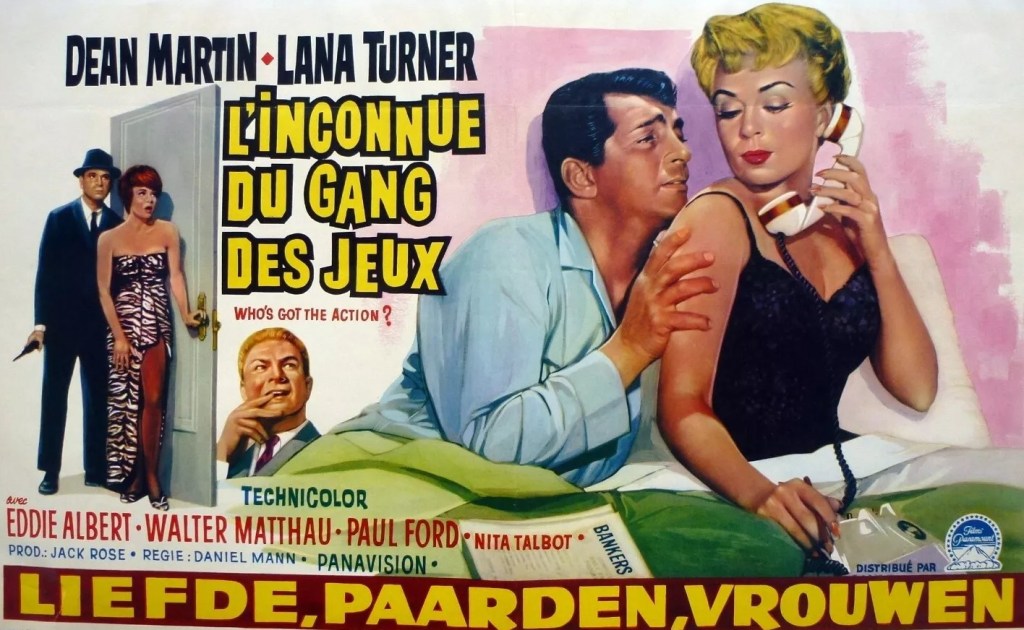
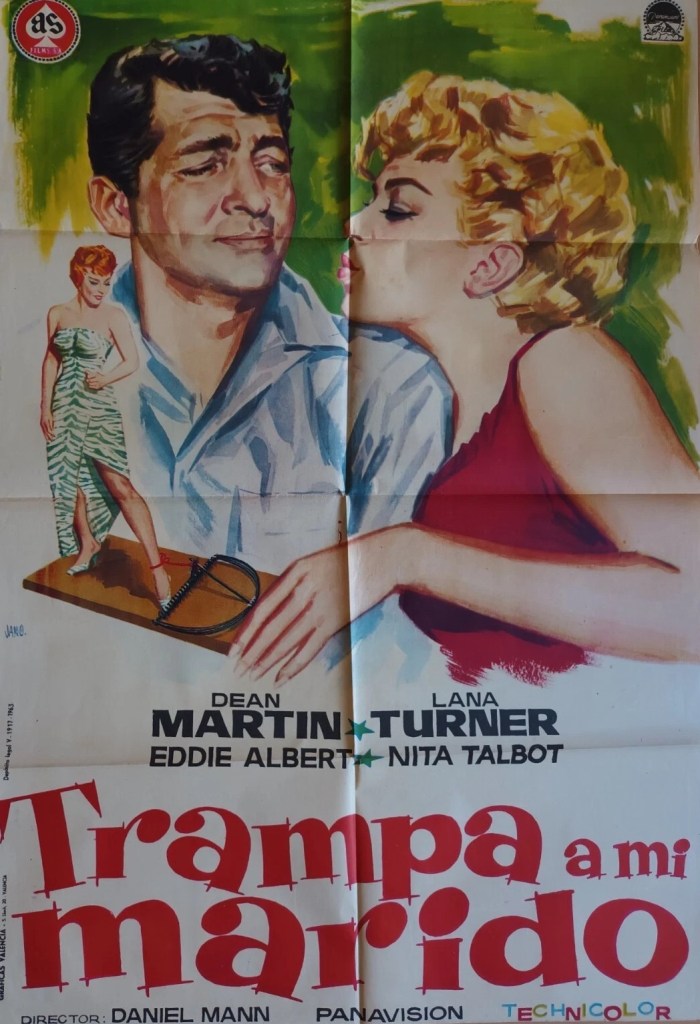
Don’t get too hung up on the supposed rampant sexism in this third iteration the Matt Helm series. These women – bikini-clad or not – are weaponized to the hilt rather than our hero Matt Helm (Dean Martin) who has to make do with a gun disguised as a camera. In fact, he makes pretty good use of the gadget created for the females – the one that melts metal, designed to get rid of the clasp on men’s belts, forcing their trousers to fall down, which, as any student of farce knows, is the easiest way to disable the male.

There’s also a weapon triggered from a bra and a sedative concealed inside lipstick so that males seduced into intimacy will soon be snookered. And it’s also a woman, secret agent Sheila (Janice Rule), who’s impervious to the electromagnetic waves which kill off the opposite gender. Of course, to be fair, it’s not Matt Helm we see sinuously dancing around a playboy mansion in Acapulco the way the women do, although for Francesca (Senta Berger) that appears a clever method of entering the enemy’s lair. Who’s going to question another sexy dancing queen? And the bad guy has one of those devices that make the zips on female attire unzip. (James Bond purloined that one.) But it’s Matt who has the ideal rescue weapon, the levitation gun.

If you’re looking for a more male-oriented theme, how about beer? At various points Matt Helm is literally swimming in the stuff. I wouldn’t have been at all surprised had the plot concerned beer manufacturer Ortega (Albert Salmi) planning world domination through poisoning the global supply of beer or arming his beer gals with bullet-spraying bras. Even though this is largely a spoof, more so than the first in the series, it’s not that much of a spoof and Ortega has more serious intent. Using lasers, he’s hijacked the U.S. Government’s secret flying saucer and plans to sell it to the highest bidder.

Sheila, the pilot, also hijacked, has gone off piste after her experience, and is thrown together with Matt Helm as husband-and-wife, a role they previously played on another mission, to hunt down the villain and recover the missing spaceship. Francesca is also after same, and happy to seduce, trick or sedate Matt in order to achieve that end. Despite believing (from the previous encounter) that she is still Matt’s wife, Stella, despite an instant blow-up tent being laid on, takes a while to understand her duties include getting hot’n’heavy even if she’s less comfortable in the bikini department. Eventually, Matt and Sheila team up with Francesca. Turns out she works for supervillain Big O but is first to find the flying saucer.

More than the earlier entries in the series, this one relies on a series of unlikely events. The switcheroos when the lights in the train go out. But the firing squad sequence is hilarious. The in-jokes about Dean Martin’s recording rivals continue, but the bevy of bikini girls disappear from view pretty much after the opening section.

Janice Rule (Alvarez Kelly, 1966) is generally seen as a class above the previous female leads in the series but that would only be if you ignored Ann-Margret’s performance in Once a Thief (1965), the Stella Stevens of Rage (1966), the Senta Berger of The Quiller Memorandum (1966) and especially the stunning playing of Daliah Lavi in The Demon (1964). Dean Martin was on the cusp of much finer work in Rough Night in Jericho (1967) and Firecreek (1968) so this might just have been a warm-up.

Directed by Henry Levin (Genghis Khan) from a screenplay by Herbert Baker based on the Donald Hamilton novel.

Doesn’t take it itself seriously, which is just as well.

Discover WordPress

A daily selection of the best content published on WordPress, collected for you by humans who love to read.

The Atavist Magazine

by Brian Hannan

WordPress.com News

The latest news on WordPress.com and the WordPress community.