Despite a heady concept and some excellent acting, Martin Ritt’s Five Branded Women (1960) – reviewed yesterday – was a flop on initial release. So television studios were not exactly lining up to provide it with its small screen premiere. In fact, the length between big screen release and small screen showing had been so truncated by that point (The Magnificent Seven, for example, out the same year was seen on television within two years of release) that it could have been shown on television any time from 1962 to 1966, and probably would have been had initial performance suggested there was a big audience awaiting its small screen premiere.
The other possibility for a flop was that between cinema release and television screening, the stars had gone on to better things so a small screen showing could be promoted off the back of a current big screen success or, better still, series of successes. But that wasn’t the case with Five Branded Women. Star Silvana Mangano had meant little to US moviegoers since Bitter Rice (1949). Jeanne Moreau’s sizzle at the arthouse box office had diminished and the limited success of Viva Maria (1965) was put down to the presence of her compatriot Brigitte Bardot. Vera Miles hadn’t appeared in a movie since The Man Who Shot Liberty Valance (1962). Barbara Bel Geddes was a long way from career revival in Dallas and all she had to show for the intervening years was a small part in By Love Possessed (1961) and a single episode in television. Italian Carla Gravina had no U.S. imprint at all. As a leading actor, Van Heflin was a busted flush.
So there was some consternation when Five Branded Women took ninth place in the television rankings for movies receiving their television premiere between 1966 and 1968. There was just no accounting for it. The same could be said for Your Cheatin’ Heart (1964) which was one place ahead of Five Branded Women. Star George Hamilton had not made it big, the film was an indifferent performer at the box office and its subject, Hank Williams, was long dead.
But television had a knack of providing unlikely redemption for movies that generally ended up on the wrong side of the box office. Cliff Robertson who headed the cast of PT 109 (1963) was still in the category of rising star with no breakout hits to suggest he was capable of rising to greater things. While 633 Squadron (1964) had done reasonable business, thriller Masquerade (1965) and war picture Up from the Beach (1965) had done so badly he was demoted to second billing in The Honey Pot (1967), incidentally another flop. He did achieve a breakthrough with Charly in 1968 but PT 109 was shown on television the year before. So how did that happen? You could maybe point to the continuing popularity of dead President John F. Kennedy, whose wartime heroism this movie recalled, but he had been dead when the movie first came out and that didn’t send it shooting to the top of the box office charts. On the television charts this came in one place behind Five Branded Women, although 633 Squadron could only manage a distant 92nd.
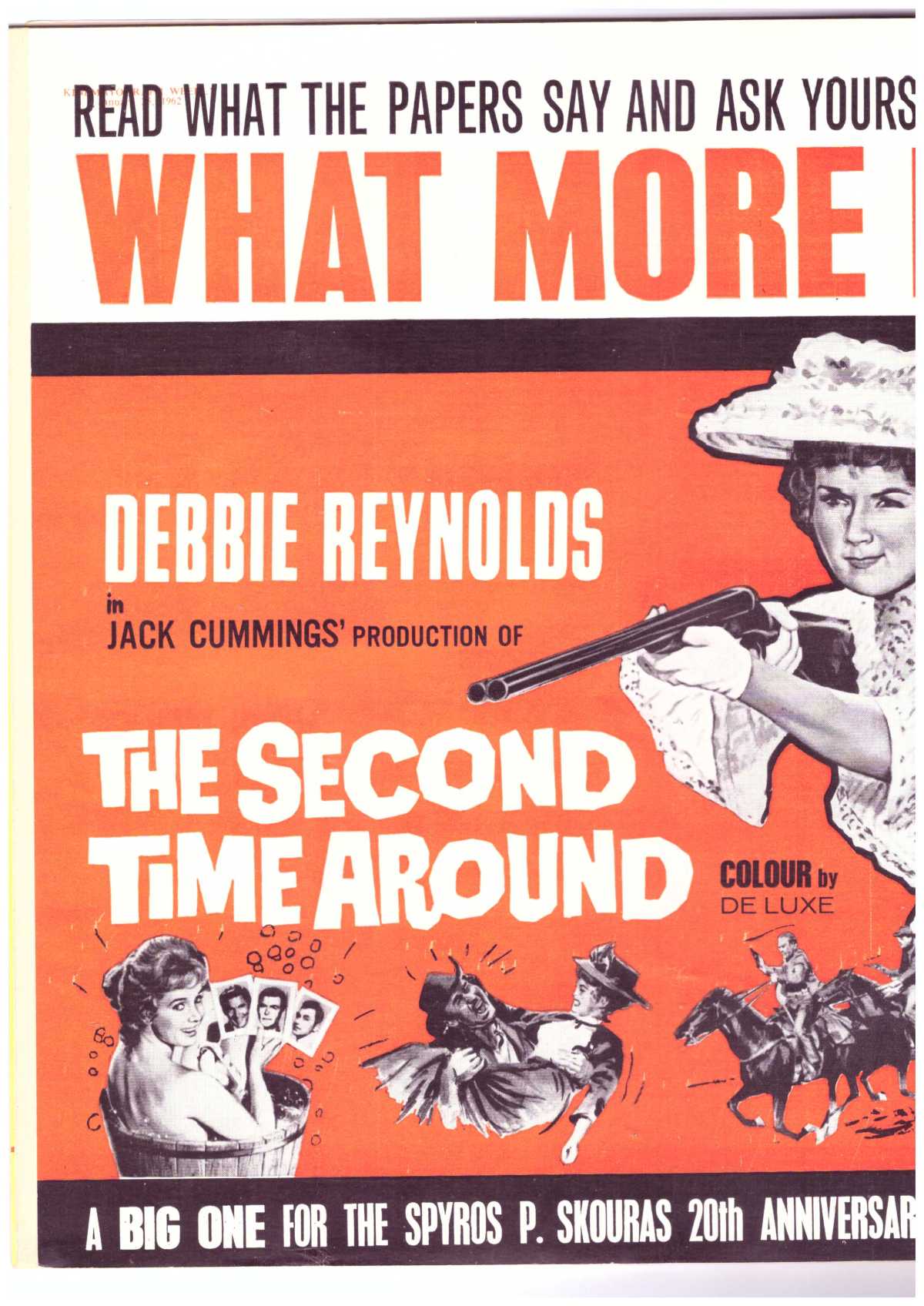
There were other surprises. Second Time Around (1961) placed 15th. But star Debbie Reynolds was still a genuine box office attraction after The Unsinkable Molly Brown (1964) and the unexpected success of The Singing Nun (1966).
Otherwise, the biggest hitters on television were Alfred Hitchcock, Elvis Presley and Doris Day. Hitchcock topped this particular chart with The Birds (1963), though presumably somewhat censored. His North by Northwest (1959) took 14th spot, Marnie (1964) placed 26th and Rear Window (1958) 39th.
Elvis Presley placed 11th with Roustabout (1964), 21st with Blue Hawaii (1961), 25th with Tickle Me (1965) and 41st with Fun in Acapulco (1963). Doris Day clocked in at 12th with That Touch of Mink (1962), 19th with Send Me No Flowers (1964), 23rd with The Thrill of It All (1963) and 35th with Move Over, Darling (1963).
Television had paid record sums to acquire the likes of Bridge on the River Kwai (1957) and The Robe (1963), taking second and sixth positions, respectively, and undoubtedly helped by the ongoing success of director David Lean (Doctor Zhivago, 1965) and Richard Burton (Who’s Afraid of Virginia Woolf, 1966).
Others in the top then were Cat on a Hot Tin Roof (1958), which had been successfully reissued in cinemas in a double bill with Butterfield 8 (1960), both headlining Elizabeth Taylor, to capitalize on her Oscar-winning turn in Who’s Afraid of Virginia Woolf. This came in third followed by The Great Escape (1964) and John Wayne as McLintock (1963) with Maureen O’Hara. Lilies of the Field (1963) was seventh.
The Made-for-TV films were beginning to make an impact. The Doomsday Flight (1966), released theatrically overseas, was 17th, one spot ahead of The Longest Hundred Miles (1967) with rising stars Doug McClure and Katharine Ross and seven ahead of Fame Is the Name of the Game (1967) with Tony Franciosa (Fathom, 1967) and Jill St John (Tony Rome, 1967).
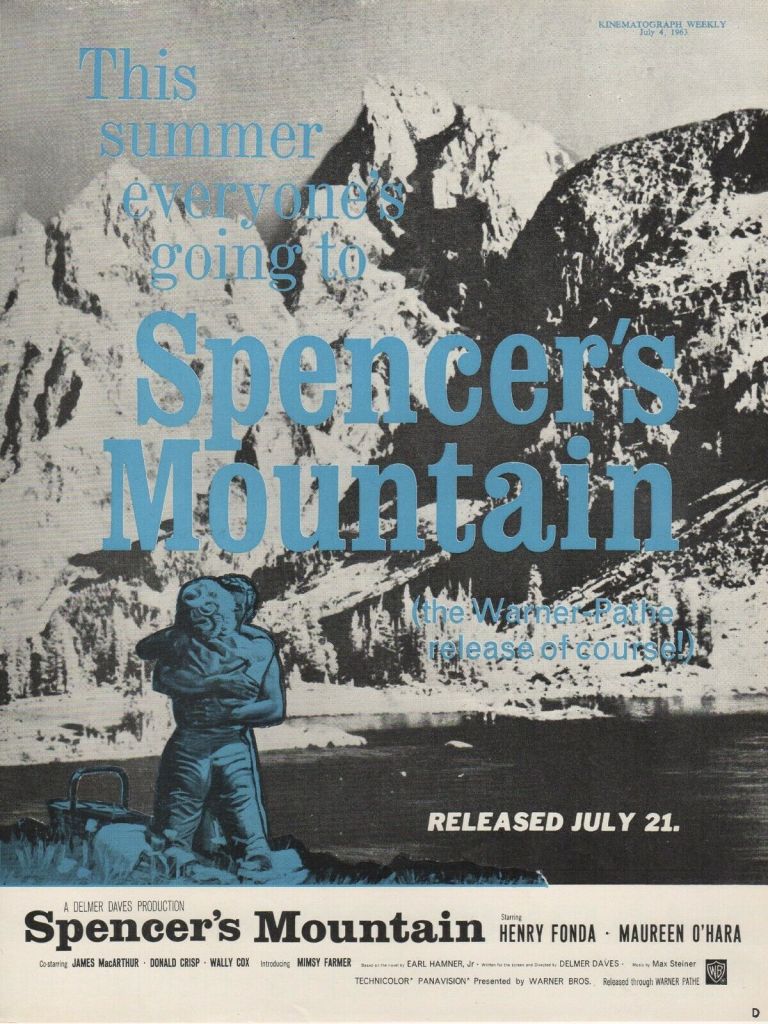
Other notable small screen results were registered by Natalie Wood-Warren Beatty starrer Splendor in the Grass (1961) which took 12th spot, Shirley MacLaine and an all-star cast in What A Way To Go (1964) in 16th, Susan Hayward Oscar-winning weepie I Want To Live (1958) in 21st, and Henry Fonda and Maureen O’Hara in Spencer’s Mountain (1963) in 23rd.
SOURCE: “All Network Prime Time Features” (Seasons 1966-1967 and 1967-1968),” Variety, September 11, 1968, p47.
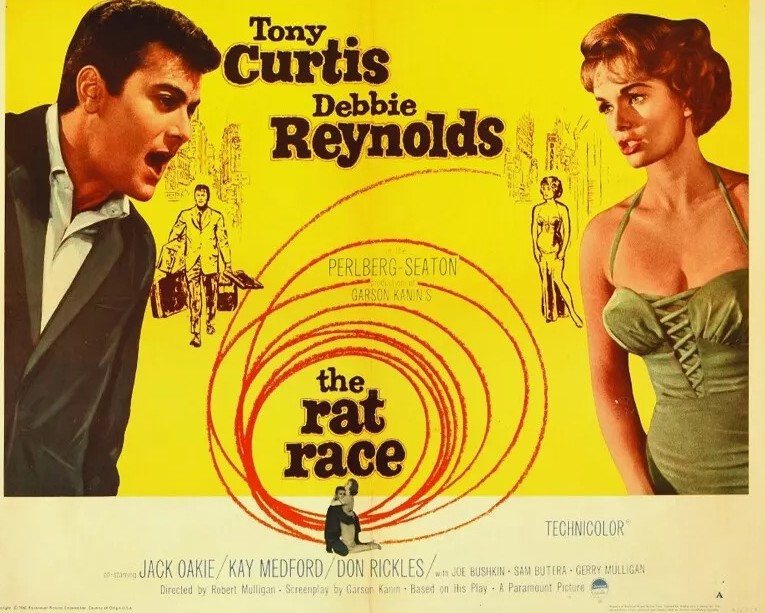
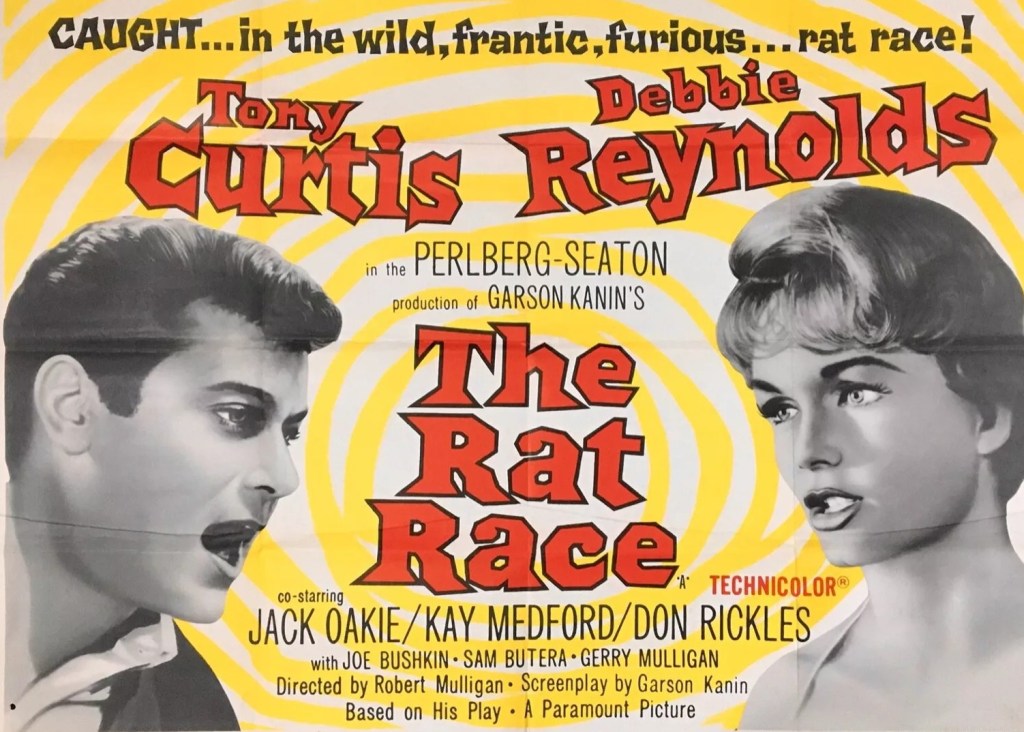
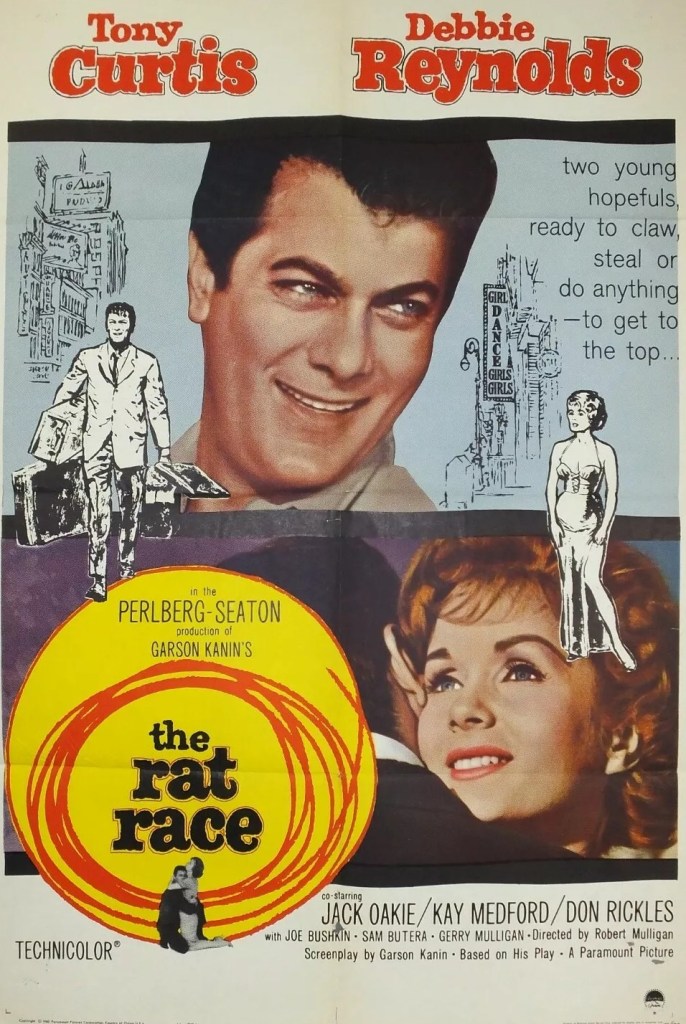
Surprisingly hard-edged tale with Debbie Reynolds giving the performance of her career and with a steely contemporary relevance. Snookers the audience into thinking it’s a standard romance, mismatched characters thrown together by circumstance, various rows and incidents to keep them apart before the expected happy ending. If screenwriter Garson Kanin had held his nerve, there wouldn’t be the get-out of a happy ending. As it is though, a formidable drama that doesn’t pull its punches.
From the title I expected a movie set in the world of big business, but instead we’re looking down on the lowest tiers of the entertainment business and, effectively, it’s a piece about the price paid for dreams. There are laffs, some good one-liners, but even these have a sourness to them.
Pete (Tony Curtis) leaves Milwaukee for New York seeking fame and fortune as a saxophonist, not realizing he’s more likely to join the thousands of out-of-work musicians already resident, dreams dashed but determined to avoid the ignominy of going home with their tails between their legs, not just to face the mundane life that awaits but seared through with the guilt of failure. Through circumstance he ends up sharing an apartment with model-cum-dancer Peggy (Debbie Reynolds), who’s already given up on her dream once, but couldn’t stand more than a few minutes of the home she’d clearly been desperate to leave.
Peggy is clean out of modelling assignments and hasn’t made it to Broadway, either, not even to a chorus line. Instead, she earns not much of a living as a taxi dancer, more innocent than it would be now in the era of the lap-dancer but still seedy enough with roving male hands. She’s paid to dance with complete strangers, the kind of deadbeats unlikely to ever get on the dance floor with a beautiful woman in the normal course of events.
She’s about to lose her phone, but not above leading on the creepy repairman (Norman Fell) to believe he’s onto a promise should he give her a break. Only pride prevents her solving her financial problems – as well as not making her rent she owes cash to her sleazebag boss Nellie (Don Rickles) – by going down the sex worker route.
Pete thinks he’s got the smarts but in fact he’s afflicted with dumbness and gets ripped off for a mink coat made of cat fur and then loses a complete set of brand-new musical instruments to another scam. When he’s thrown the lifeline of a gig on a cruise ship, Peggy stumps up to buy him a new sax and the requisite tux. She’s paying for this with a promise to Nellie to enter the prostitution game, not quite spelled out as that but as close to the knuckle as you’re going to get in this era, the kind of soft-soap approach that worked for Butterfield 8 (1960).
When Peggy fails to deliver, Nellie humiliates her in the worst possible way. Beginning with her jewellery he strips her down to undergarments to show how much he owns her and just how good he is at playing hardball. It’s a gut-clenching scene. Sure, you know there’s not going to be any nudity, not in this period before the Production Code got flattened, but even so, it works extraordinarily well, especially as clearly Peggy doesn’t know just how far he will go and that he might not, in his quiet fury, be above turning her out into his club starkers.
Meanwhile, to ensure we get to the ending that audiences expected, Pete, on board the ship, has been ignoring any other romantic opportunities, and sending her a heartfelt letter a day, which she appears determined to ignore, knowing that the “rat race” isn’t the kind of world that accommodates long-term romance.
Suffice to say, when Pete manages to bail her out, that changes her mind, though the genuine Peggy would still have balked, knowing that, with their levels of talent, they were only going to become more wasted by lack of fulfilment.
So, yeah, happy ending, but you feel that’s been grafted on to allow audiences to take the rest of the tougher storyline. The MeToo campaign has exposed the pitfalls of the entertainment business, so what happens to Peggy wouldn’t come as a surprise to a contemporary audience.
By this point Debbie Reynolds (Goodbye Charlie, 1964) wasn’t known for drama, more for a spunky or sparky screen persona in a series of lightweight comedies or romances, this showed Hollywood what it was missing. Tony Curtis (Goodbye Charlie) had proven he could do comedy or drama and here he mostly plays it straight.
Director Robert Mulligan (The Stalking Moon, 1968) is probably responsible for maintaining the harder edge. This was originally a Broadway number, so I doubt if the sharpness would have worked so well in that medium. Garson Kanin (Where It’s At, 1969) and an uncredited John Michael Hayes (Nevada Smith, 1966) knocked out the screenplay based on the former’s play.
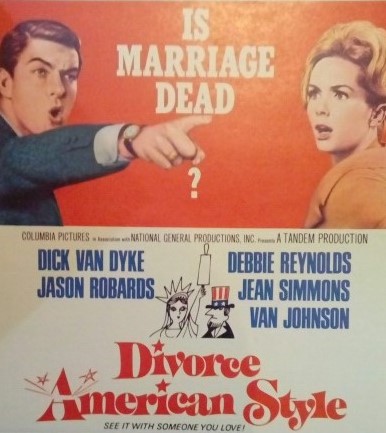
Not so much a comedy about a failing marriage as a guide to the American divorce laws, taking place in a world where the everyman is represented not by the likes of James Stewart or at a stretch Glenn Ford but Dick Van Dyke. It’s possibly only the fact that Van Dyke lacks dramatic chops without the innate vitriol of a Rod Steiger or Lee Marvin that keeps the movie from drifting into black comedy. That, or the filmmakers’ determination to find a happy ending.
When the ever-squabbling Harmons, Richard (Dick Van Dyke) and Barbara (Debbie Reynolds), break up after 17 years and two kids, the chips seem to fall heavily against the husband, the wife walking off with all assets, the husband landed with all the bills and little more than 80 bucks a week to get by on. Such is the supposed injustice of the American divorce laws at a time when most wives did not go out to work and so relied on their husband, married or otherwise, for support.
The only way out of this unhappy financial state for Richard is for his wife to get married again, so a second husband can pick up the tab for her upkeep. Another divorced couple, the Downes, Nelson (Jason Robards) and Nancy (Jean Simmons), is in the same pickle so Nelson spends his time acting as some kind of pimp for his ex-wife, serving up potential suitors, such as Richard, on a platter. But since Richard is impoverished, a helping hand is needed to even things up, so Nelson arranges for Barbara to fall into the arms of rich and single car dealer Al Yearling (Van Johnson).
There is a big male-female divide, for the most part the guys concentrating on material things like money and what money can buy, the gals leaning more towards emotion, conversation, genuine intimacy. Richard has given his wife everything she wants, so why can’t he have a few things his own way? Or as Barbara succinctly puts it, it’s a case of supply and demand, the women are in good supply while the men demand. Even after separation, while from the Richard and Nelson perspective the wives are living in the lap of luxury and the men understanding the meaning of penury, female thoughts turn to questions of loneliness, commitment and (not again!) emotion.
While there are moments of observational comedy – an excellent montage of Richard and Barbara opening and closing all sorts of doors while preparing for bed, cleaning out bank accounts before the other can get to them, the problems of accommodating the blended/hybrid family that divorce or multiple divorce can entail – there are not many laugh-out-loud moments.
And probably just as well because without the drama-lite presences of Van Dyke (who still can’t shake off those double takes and involuntary limb functions) and Reynolds, it would have been a much tougher watch. Reynolds is capable of expressing her feelings verbally because, as a female, she is used to expressing feelings verbally, so we know that Al Yearling does not quite hit the spot. But Van Dyke, without resort to the verbal, has his best scenes of emotional loss when he takes his kids to the ball game only to discover that his wife’s new suitor has more treats to offer.
Van Dyke (Lt. Robin Crusoe, U.S.N.) and Reynolds (The Singing Nun, 1966) do a decent job without plumbing any dramatic depths, but Robards (Any Wednesday, 1966) and Simmons (Spartacus, 1960) have more to offer as the conspiring couple, while one-time MGM golden boy Van Johnson (Battleground, 1949) proves that his four-year absence from pictures was premature Hollywood retirement.
More a cautionary tale than an outright laffer, this Norman Lear (Come Blow Your Horn, 1963) screenplay without missing many targets provides a more palatable dissection of modern marriage than something as full-blooded and expletive-ridden as the previous year’s Who’s Afraid of Virginia Woolf. Director Bud Yorkin (Come Blow Your Horn, also) shows a nice grasp of building up situations until they go out of control.
While, certainly, many of the attitudes, are out of date, you can be sure that male self-pity is not one of them.
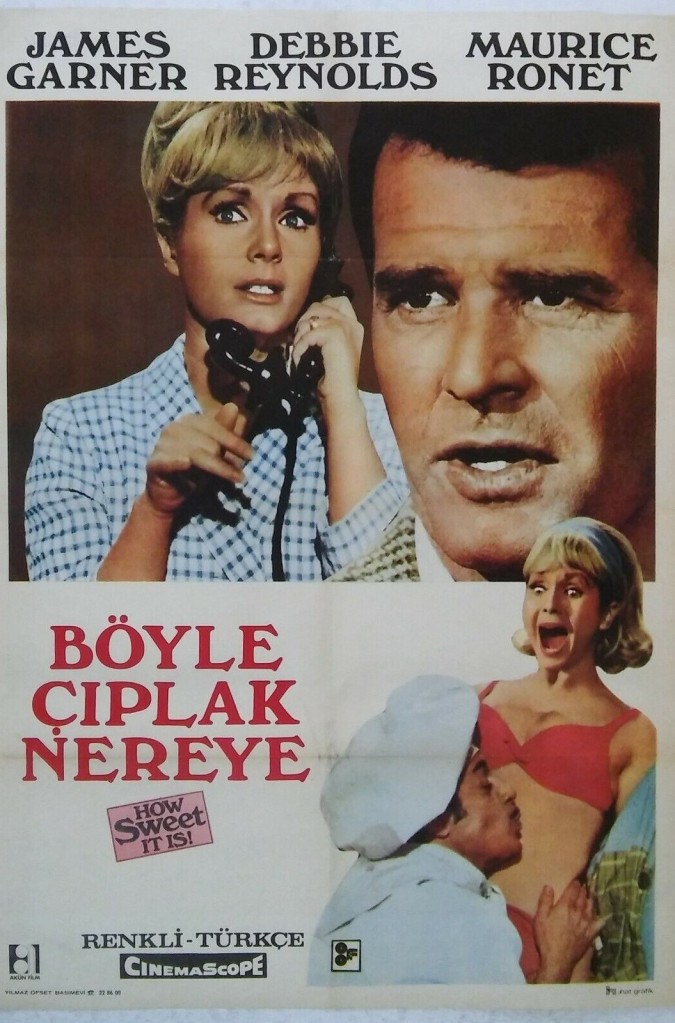
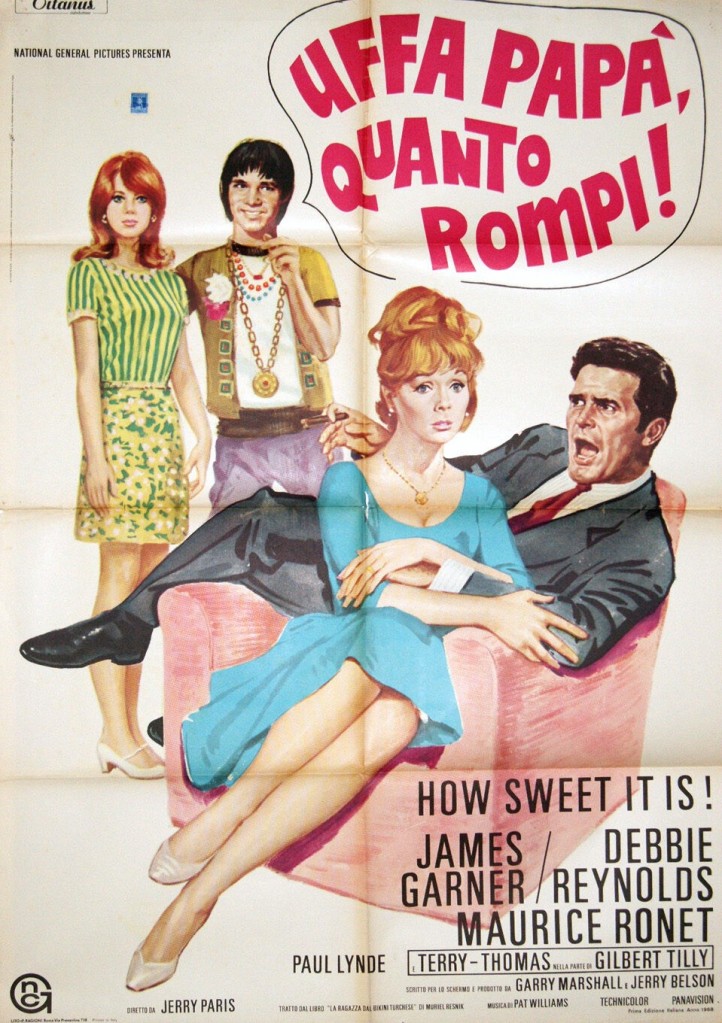
You’d have thought by now leading men would be running shy of Debbie Reynolds, aware just how easily she would steal the picture out from under the top-billed star (witness Goodbye Charlie, 1964). But she had producers clamouring for the fizz she brought. Her comic skills, and willingness to entertain slapstick, were matched only by Doris Day. Especially helpful when she’s saddled with a convoluted plot that’s one-third generation gap comedy, one-third If It’s Tuesday It Must Be Belgium and one-third the kind of creative thinking that determines that somehow or other the female star must end up in a brothel. Throw in some flower power, split-screen, stills montage and slow-mo and you’ve covered all the bases.
In this hit-and-miss line-up, by far the most amusing element is that it’s the adults – photographer Grif (James Garner) and wife Jenny (Debbie Reynolds) – who are sex-obsessed, sneaking away at every opportunity for a bit of hanky-panky, trying to avoid the disapproving eyes of their virginal teenage son Davey (Donald Losby).
An odd example of creative license here. Poster designers had decided that red was the color no matter what. In the last section of the movie Debbie Reynolds parades in a blue – not red – bikini and the book on which it is based is called “The Girl in the Turqoise Bikini.” I’m not sure the color of the bikini is that much of a plot point unless it’s to hook readers of the original novel, but it’s mighty strange for the poster people just to change the color.
The narrative determines that Davey joins girlfriend Bootsie (Hilarie Thomson) and her lithe gal pals on a tour of Europe accompanied by Grif who has been commissioned to photograph the trip. Much to Grif’s horror, Jenny decides she’s going to follow them and hires out a swanky pad where the grown-up lovebirds can make a nest at some undetermined point.
The picture quickly loses interest in Grif and the girls, beyond an attractive tour guide making a pass at Grif and of course their bus getting stuck in the mud. Not only is the Jenny segment more intriguing – turns out she’s been conned by Gilbert Tilly (Terry-Thomas) into handing over a thousand bucks for a chalet he’s not entitled to hire out – because she gets romanced in high French style (champagne and flowers in case you’re bursting to know) by legal lothario Philippe (Maurice Ronet) and every now and then finds herself wearing little more than a bikini and sometimes nothing at all.
Takes a heck of a long time for the two stories to dovetail so that Grif can flounce off in a huff, punch the living daylights out of the Frenchman, and give the screenwriter the excuse to plonk Jenny down in a brothel (that part, I have to admit, is neatly done). There’s also some unusual class comedy at the chateau, Philippe initially being mistaken for a butler, then having to bunk down with his servant because (guess what) this mansion has only one main bedroom.
For no apparent reason there’s an odd section at the start. Instead of flying to Europe, they take the ship and for no apparent reason they’re stuck on C-deck with a lip-pursing purser (Paul Lynde) who insists males and females must sleep apart and share cabins with strangers. Slot into the miss department the opening with the old trope of the husband coming home to find his wife in bed with another man, except it’s Davey and the parental lovers are enjoying some afternoon delight, though quite how you can stretch that to Davey taking a carving knife up the stairs beats me.
James Garner is no more convincing a photographer than he was in The Pink Jungle (1968) and he hardly gives Debbie Reynolds a run for her money, as if he doesn’t know how to bring this character to life. Except for excelling at the risqué, and she a willing accomplice, he’s coming over like the straight man to her comedienne. Debbie Reynolds is superb, reactions honed to the bone, throwing herself into the part, undergoing whatever humiliation will snare a laugh.
Garner briefly resurrected his career with Support Your Local Sheriff (1969) before he hit the slide (see the previous Behind the Scenes article) and to my astonishment this signalled pretty much the end of Reynolds’ screen career, nothing for the next decades except What’s the Matter with Helen (1971) and a bit part (as herself) in The Bodyguard (1992). You can hardly blame her for screenwriters not coming up with the right material to take advantage of her supreme comedic gifts. Alexandra Hay (The Model Shop, 1969) is wasted, you might just as well have dabbed her role “the sexy blonde.”
Director Jerry Paris (Never a Dull Moment, 1968) throws everything he can at the screen without much success. Future director Garry Marshall (Pretty Woman, 1990) and producer Jerry Belson (Fun with Dick and Jane, 1977) in his movie debut formulated the screenplay from the bestseller by Muriel Resnik.
Far from the last comedy hurrah you would have wished for the actress, but all you’re going to get.
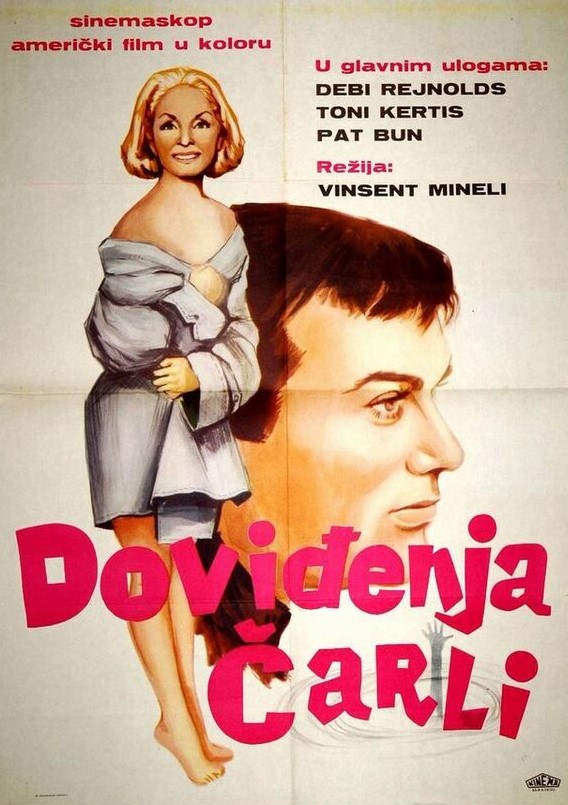
Gender switch comedies were a rarity in Hollywood at this point though of course Billy Wilder had scored big with Some Like it Hot (1959) and I’m guessing the possibility of Tony Curtis repeating his drag act was an audience lure for this one. Alas, that wasn’t to be. This goes the other way. Or several other ways. A woman playing a man who is a woman. That would be catnip these days were it a transgender thing, but it ain’t.
Confused? So sex predator Charlie (a male) drowns while escaping enraged husband Sir Leopold (Walter Matthau) only to reappear, re-born or reincarnated (as the producers decide after googling it, sorry, after they look it up in a book) as a naked woman walking along the highway, rescued by the wealthy Bruce (Pat Boone) and delivered to the nearest house, Charlie’s own pad, now occupied by old buddy George (Tony Curtis).
There’s some light comedy as George tries to safely manhandle the unknown woman, clad only in Bruce’s coat (necessitating his later return of course) and gradually the surroundings seem over-familiar to the woman and then, shazam, George works out from what she knows about him that actually she must have returned as a man, also called Charlie (Debbie Reynolds).
A cosmic joke, in other words. The man who preyed upon women returning as a woman. See how he likes it to be on the receiving end of misogyny. But, mostly, he/she lolls around with legs spread like a man, gulps down whisky and is a dab hand at cards. But that’s not where the humor lies, apparently, because the movie moves on quickly from the woman acting the man and into the man-woman discovering all the female tricks of the trade, visiting a beauty parlor and the hairdresser. Charlie discovers it’s not the same fun slapping a woman’s backside – what a revelation – if you’re a woman.
But, basically, the female Charlie decides to become a female version of the male Charlie, the predator, ripping off friends, chasing the big money, trying to seduce Bruce. So, mostly, it’s one odd plot device after another.
But the sizzle is Debbie Reynolds, not so much the man-woman stuff, but turning into a mean Bette Davis character before your eyes, all hard-edge and shifty moves. There’s sexual tension as well, George initially resisting the woman he knows is or was a man, before finding the attraction too much, and the same going for Bruce. There’s a fair whack of sexual confusion, as the newborn Charlie still finds herself ogling women.
In those far more innocent times, it doesn’t know what it wants to say and lacks the narrative to say it. Audiences had terrific fun with Jack Lemmon and Tony Curtis in Some Like it Hot, but that narrative ploy was bang on, and Lemmon enjoying dressing up as a woman and Curtis having to keep his male instincts at bay while ogling Marilyn Monroe was pure catnip.
Here, Curtis is mostly the foil for Debbie Reynolds and by the time it looks as though they might get it together she is way past behaving like a man and is most definitely a desirable woman so it’s kind of difficult to make this work romantically or humorously.
Perhaps the oddest element is that the signs were already there that it wouldn’t work that well. It started as a Broadway play written by George Axelrod (The Seven Year Itch, which was a Broadway smash) but it barely lasted a dozen weeks on stage. By that time, though, Twentieth Century Fox had splashed out $150,000 for the rights. Still, bigger sums have been buried in the annual accounts.
And I guess when Vincente Minelli (Two Weeks in Another Town, 1962) came on board with a pretty decent cast it seemed at least doable. Like many a lightweight comedy from the decade – Dear Brigitte (1965) for example – it’s keep afloat by a terrific performance by the principal star, in this case Debbie Reynolds (Divorce American Style, 1967). You might spot Ellen Burstyn (The Exorcist, 1973) in an early role.
Take away Debbie Reynolds and it would limp along.
These days fact-based magazine articles commonly spark movies – The Fast and the Furious (2001) was inspired by a piece in Vibe, A Beautiful Day in the Neighborhood (2019) started life in Esquire – but it was rare in the 1960s (see Note below).
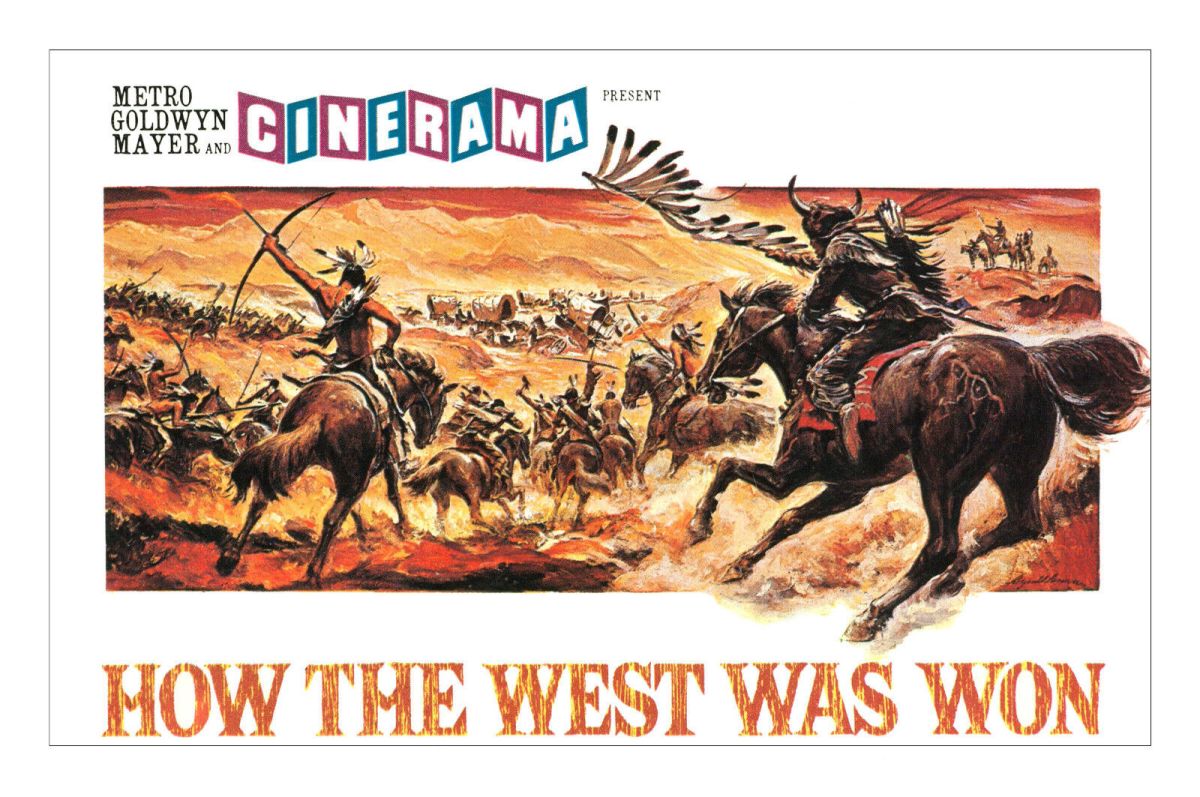
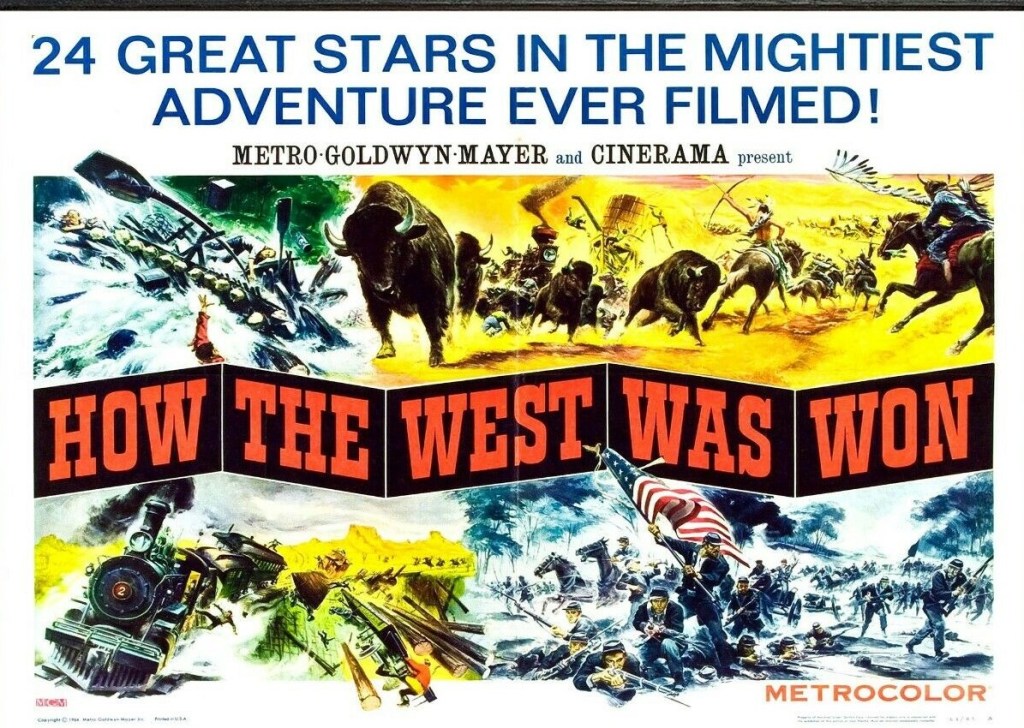
However, a series of seven lengthy historical articles in the multi-million-selling Life magazine in 1959 about the Wild West, extensively illustrated with material from the time, captured the attention of the nation. Bing Crosby acquired the rights, not as a potential movie, but for a double album recorded in July 1959 on a new label Project Records set up specifically for the purpose – two months after the series ended – and a proposed television special.
When the latter proved too expensive, the rights were sold to MGM which then linked up in a four-film pact with Cinerama to create the first dramatic picture in that format, the three-screen concept that had taken the public by storm in 1952 with This Is Cinerama. Since then, Cinerama had focused exclusively on travelogs and coined $115 million in grosses from just 47 theaters, including $9 million in seven years at the Hollywood theater in Los Angeles. Eight years in its sole London location had yielded $9.4 million gross from a quartet of pictures, Cinerama Holiday (1955) leading the way with (including reissue) a 120-week run, followed by 101 weeks of Seven Wonders of the World (1956), 86 for This Is Cinerama and 80 weeks for South Seas Adventure (1958).
Box office was supplemented with rentals of the projection equipment. But the novelty had worn off, lack of product denting consumer and industry interest, many of the theaters set up for the project returning the equipment, so that by the time of this venture there were only 15 U.S. theaters still showing Cinerama. The company went from surviving primarily on equipment royalties to becoming a producer-distributor-exhibitor. Ambitiously, the company believed it could generate $5,000 a week profit for each theater, and, assuming growth to 60 houses, that could bring in $15 million a year.
Crosby initially remained involved – crooning songs to connect various episodes – but that idea was soon abandoned. Director Henry Hathaway (North to Alaska, 1960), claimed he came up with the movie’s structure. “The original concept was mine,” he said, “The first step in the winning of the West was the opening of the canal, then came the covered wagon, next the Civil War which opened up Missouri and the mid-West then the railroads, and finally the West was won when the Law conquered it instead of the outlaw gangs; which was the theme I worked out for the picture.
“So I conceived the whole idea and then got writers to work on the five episodes. Each episode was about a song originally. Then I travelled all over the country to find locations.”
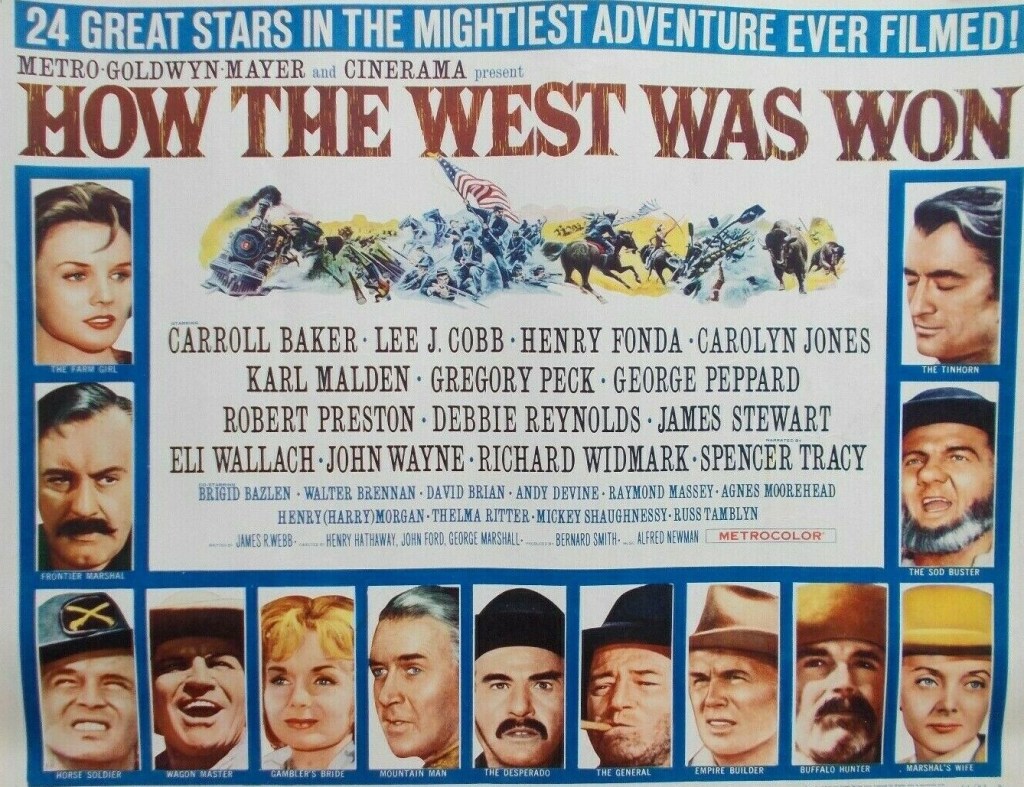
For once this was a genuine all-star cast headed up by actors with more than a passing acquaintance with the western: John Wayne (The Man Who Shot Liberty Valance, 1962), Oscar-winner Gregory Peck (The Big Country, 1958), James Stewart (Winchester ’73, 1950), Richard Widmark (The Alamo, 1960) and Henry Fonda (Fort Apache, 1948) with Spencer Tracy (Broken Lance, 1954) as narrator plus George Peppard (Breakfast at Tiffany’s, 1961) in his first western.
The two strongest female roles were given to actresses playing against type, Carroll Baker (Baby Doll, 1956), who normally essayed sexpots, as a homely pioneer and Debbie Reynolds (The Tender Trap, 1955), more at home in musicals and comedies, as her tough sister. The impressive supporting cast included Lee J. Cobb, Eli Wallach, Walter Brennan, Robert Preston, Carolyn Jones and Karl Malden.
Glenn Ford and Burt Lancaster were unavailable. Frank Sinatra entered initial negotiations but ultimately turned it down. Gary Cooper, also initially considered, died before the film got underway.
Initially under the title of The Winning of the West screenwriter James R. Webb (The Big Country, 1958) was entrusted with knocking the unwieldy non-fiction story into a coherent fictional narrative. In effect, it was an original screenplay at a time when Hollywood was turning its back on bestsellers, “the pre-sold theory less compelling.” His first draft accommodated various montages covering the journey from the Pilgrim Fathers to the building of the Erie Canal and the Civil War and it was only in subsequent drafts that the tale of Linus Rawlings (James Stewart) emerged with surprising focus on female pioneers.
Webb’s initial ending had involved a father-son conflict, presumably a fall-out between the Rawlings played by James Stewart and George Peppard, but that was rejected in order not to finish on a “note of bitterness” out of keeping with the spirit of the movie. Although he did not receive a credit, John Gay (The Happy Thieves, 1961) also contributed to the screenplay.
Given the film’s episodic structure it is amazing how well the various sequences fit together and the narrative thrust maintained. The story covers a 50-year stretch beginning in 1839 with the river sequence bringing together James Stewart and Carroll Baker. After Stewart is bushwhacked by river pirates, he marries Baker and they set up a homestead. The next section pairs singer Debbie Reynolds with gambler Gregory Peck whose wagon train is attacked by Indians on the way to San Francisco. Later, Stewart and son George Peppard enlist in the Civil War (featuring John Wayne as an unkempt General Sherman).
Stewart dies at the Battle of Shiloh. Peppard joins the cavalry and later as a marshal in Arizona meets Reynolds and prevents a robbery that results in a spectacular train wreck. It took a superb piece of screenwriting to pull the elements together, ensure the characters had just cause to meet and to create solid pace with a high drama and action quotient.
The undertaking was too much for one director. Initially, it was expected five would be required but this was truncated to three – John Ford (The Searchers, 1956), Henry Hathaway and George Marshall (The Sheepman, 1958) although Hathaway carried the biggest share of the burden and Richard Thorpe (Ivanhoe, 1952) handled some transitional historical sequences.
The directors broke new ground, technically. The Cinerama camera was actually three cameras in one, each set at a 48 degree to the next and when projected provided a 146-degree angle view. Each panel had its own vanishing point so the camera could, uniquely, see down both sides of a building.
But there were drawbacks. The cumbersome cameras required peculiar skills to achieve common shots. Directors lay on top of the camera to judge what a close-up looked like. Sets were built to take account of the way dimensions appeared through the lens, camera remaining static to prevent distortion. When projected, the picture was twice the size of 65mm and before the invention of the single-camera lens led to vertical lines running down the screen. Trees were built into compositions to hide these lines.
“You couldn’t move the camera much,” recalled Hathaway, “or the picture would distort. You have to shove everything right up to the camera. Actors worked two- and three-feet away from the camera. The opening dolly down the street to the wharf was the first time it had ever been done.
He added, “Over 50 per cent of the stuff on the train was made on the stage (i.e. a studio set) and 60 per cent of the stuff coming down the rapids. I never took a principal up north to the river, the principals never worked off the stage. We never photographed the scenes with transparencies in three cameras with Cinerama – we photographed them with one camera in 70mm and then split the negative.
“I wouldn’t shoot close-ups in Cinerama – I shot the close-ups in 70(mm) and then separated the negative because in Cinerama it distorted their arms. When (George) Stevens shot The Greatest Story Ever Told he used only 70mm and split it all. So from then on they never used the three cameras again. Now they’re actually shooting it in 35(mm).”
Rui Nogueira, “Henry Hathaway Interview,” Focus on Film, No 7, 1971, p19.
After a year spent in pre-production, an eight-month schedule due to start on May 28, 1961, and a completion date of Xmas 1961, MGM anticipated a 1962 launch, Independence Day pencilled in for the world premiere. The original $7 million budget mushroomed to $12 million and then to £14.4 million, $1 million of that ascribed to adverse weather conditions, hardly surprising given the extent of the location work. A total of $2.2 million went on the 10 stars and 13 co-stars, virtually talent on the cheap given the salaries many could command, transport cost $1 million and the same again in props including an 1840 vintage Erie canal boat.
Rain and overcast skies added $145,000 to the cost of shooting the rapids sequence in Oregon and another $218,000 was required when early snowfall scuppered one location and required traveling 1,000 miles distant. Nearly 13,000 extras were involved as well as 875 horses, 1,200 buffalo, 50 oxen and 160 mules. Thousands of period props were dispersed among the 77 sets. Over 2,000 pairs of period shoes and 1500 pairs of moccasins were fashioned as well as 107 wagons, many designed to break on cue.
Virtually 90 per cent of the picture was shot on location to satisfy Cinerama customers accustomed to seeing new vistas and to bring alive the illustrations from the original Life magazine articles. Backdrops included Ohio River Valley, Monument Valley, Cave-in-Rock State Park, Colorado Rockies, Black Hills of Dakota, Custer State Park and Mackenzie River in Oregon.
The picture, including narration, took over a year to make. Cinerama sensation was achieved by shooting the rapids, runaway locomotive, buffalo stampede, Indian attack, Civil War battle and cattle drive. Motion was central to Cinerama so journeys were undertaken by raft, wagon, pony express, railroad and boat, anything that could get up a head of steam.
Initially, too, the production team had been adamant – “rigid plans for running time will be met” – that the movie would clock in at 150-155 minutes (final running time was 165 minutes) and there was some doubt, at least initially, on the value of going down the roadshow route in the United States. Roadshow was definitely set for Europe, a 15-minute intermission being included in those prints, for a continent where both roadshow and westerns were more popular than in the States.
Big screen westerns in particular in Europe had not been affected by the advent of the small-screen variety. Some films received substantial boosts abroad. “The Magnificent Seven and Cimarron (both 1960) took giants steps forward once they made the transatlantic crossing.” British distributors also reported “striking” success with The Last Sunset (1961) and One-Eyed Jacks (1962) which had toiled to make a similar impression in the U.S.
In the end the decision was made to hold back the release in the U.S. in favor of another Cinerama project The Wonderful World of the Brothers Grimm, which had begun shooting later and ultimately cost $6 million, double its original budget. Rather than bunch up the release of both pictures, MGM opted to kick off its Cinerama U.S. launch with Grimm in 1962 and shifted How the West Was Won to the following year. MGM adopted the anticipation approach, holding the world premiere in London on November 1, 1962, and unleashing the picture in roadshow in Europe.
A record advance of $500,000 was banked for the London showing at the 1,155-seat Casino Cinerama (prices $1.20-$2.15) on roadshow separate performance release. Before the advertising campaign even began in October, a full month prior to the world premiere, over 62,000 reservations had been made via group bookings. Critics were enamored and audiences riveted. The cinema made “unusually large profits” and after two years had grossed $2.25 million from 1722 showings.
Dmitri Tiomkin (The Alamo, 1960) was hired to compose the music, but an eye condition prevented his participation though he later sued for $2.63 million after claiming he was fired before the assignment began. Alfred Newman (Nevada Smith, 1966) wrote the thundering score but uniquely for the time MGM shared the publishing rights with Bing Crosby. In the U.S. Bantam printed half a million copies of a paperback tie-in, sales of the soundtrack were huge and there was a massive rush to become involved by retailers and museums with educational establishments an easy target.
Audience response was overwhelming, a million customers in the first month, two million by the first 10 weeks at just 36 houses, some of which had only been showing it for half that time. But it failed to hit ambitious targets – predictions that it would regularly run for three years in some situations “based on the star roster and the fact the pic offers more natural U.S. vistas than anything yet done on the screen” proving wildly over-optimistic. Still, it had enjoyed 80 roadshow engagements including eight months at the Cinerama in New York and grossed $2.3 million in 92 weeks in L.A, $1.14 million after 88 weeks in Minneapolis and $1.5 million after one week fewer in Denver.
By 1965, as it began a general release 35mm roll-out with 3,000 bookings already taken, it had already passed the $9 million mark in rentals including a limited number of showcase breaks the previous year.
Nominated for a Best Picture Oscar, it won for screenplay, sound and editing. The movie became MGM’s biggest hit after Gone with the Wind and Ben-Hur. In my recent book The Magnificent ‘60s, The 100 Most Popular Films of a Revolutionary Decade I placed it twelfth on the chart of the decade’s top box office films.
It provided a popularity fillip for most of the big stars involved, none more so than James Stewart who, prior to shooting, had been on the verge of retirement. Box office appeal diminishing, work on his next picture Take Her, She’sMine postponed by the Actor’s Strike, after the death of his father he had “quietly begun to make plans to get out of his Fox contract, retire, and move his family out of Beverly Hills.” He had spent $500,000 on a 1,100-acre ranch and was already well set to quit acting having accumulated a large real estate portfolio in addition to oil well investments.
NOTE: Robert J. Landry (“Magazines a Prime Screen Source,” Variety, May 30, 1962, 11) pointed to Cosmopolitan as the original publication vehicle for To Catch a Thief (1955) by David Dodge in 1951 and Fannie Hurst’s Back Street (1932), serialized over six months from September 1930. Frank Rooney’s The Cyclist’s Raid – later filmed as The Wild One (1953) – first appeared in Harpers magazine. Movies as varied as Edna Ferber’s Ice Palace (1960) and The Executioners by John D. MacDonald, later filmed as Cape Fear (1962), were initially published in Ladies Home Journal. The Saturday EveningPost published Alan Le May’s The Avenging Texan, renamed The Searchers (1956), and Donald Hamilton’s Ambush at Blanco Canyon, renamed The Big Country (1958) as well as Christopher Landon’s Escape in the Desert which was picturized under the more imaginative Ice Cold in Alex (1958).
SOURCES: Brian Hannan, The Magnificent ‘60s, The 100 Most Popular Films of a Revolutionary Decade (McFarland, 2022) p168-170; Marc Eliot, James Stewart A Biography (Aurum Press, paperback, 2007) p350-351; Rui Nogueira, “Henry Hathaway Interview,” Focus on Film, No 7, 1971, p19; Sir Christopher Frayling, How the West Was Won, Cinema Retro, Vol 8, Issue 22, p25-29; Greg Kimble, “How the West Was Won – in Cinerama,” in70mm.com, October 1983; “Reisini Envisions Cinerama Leaving Travelog for Fiction Pix,” Variety, December 14, 1960, p17; “Metro in 4-Film Deal with Cinerama,” Variety, March 1, 1961, p22; “Cinerama Action Awaits Plot Tales,” Variety, March 8, 1961, p10; “Fat Bankroll for How West Was Won,” Variety, May 24, 1961, p3; “Return to Original Scripts,” Variety, June 28, 1961, p5;“MGM-Cinerama Set 3-Hour Limit For West Was Won,” Variety, August 23, 1961, p7; “Hoss Operas in O’Seas Gallop,” Variety, August 23, 1961, p7; “Coin Potential As To Cinerama,” Variety, September 20, 1961, p15; “Changing Economics on Cinerama,” Variety, October 11, 1961, p13; “Bantam’s 22 Paperback Tie-Ups in Hollywood,” Variety, October 25, 1961, p22; “How West Was Won for July 4 Premiere,” Box Office, December 11, 1961, p14; “Crosby Enterprises Holds West Cinerama Songs,” Variety, January 24, 1962, p1; “Grimm First in U.S. for Cinerama but Abroad West Gets Priority,” Variety, April 4, 1962, p13; “Cinerama Fiscalities,” Variety, April 11, 1962, p3; “Cinerama Story Pair Burst Budgets,” Variety, May 16, 1962, p3; “Tiomkin’s $2,630,000 Suit Vs MGM et al,” Variety, June 27, 1962, p39; “Hathaway a Pioneer,” Variety, July 25, 1962, p12; “Bernard Smith Clarifies Fiscal Facts,” Variety, August 8, 1962, p3; Review, Variety, November 7, 1962, p6; “London Critics Rave Over West,” Variety, November 7, 1962, p19; “Brilliant World Premiere in London for West,” Box Office, November 12, 1962, p12; “West in Cinerama the Big Ace,” Variety, November 14, 1962, p16; Feature Reviews, Box Office, November 26, 1962; Bosley Crowther, “Western Cliches; How West Was Won Opens in New York,” New York Times, March 28, 1963; “Big Book Aid for West,” Box Office, April 1, 1963, pA3; “West Was Won Seen By 2,000,000 in 10 Weeks,” Box Office, June 3, 1963, p15; “How West Was Won for 19 Showcase Theaters,” Box Office, June 15, 1964, pE1; “West End,” Variety, November 11, 1964, p27; “How West Was Won Ends Roadshowing,” December 9, 1964, p16; “3,000 Bookings Expected for How the West Was Won,” Box Office, May 3, 1965.
I’ve got Alfred Newman’s toe-tapping theme music in my head. In fact, every time I think of this music I get an earworm full of it. Not that I’m complaining. The score – almost a greatest hits of spiritual and traditional songs – is one of the best things about it. But then you’re struggling to find anything that isn’t good about it. But, for some reason, this western never seems to be given its due among the very best westerns.
Not only is it a rip-roaring picture featuring the all-star cast to end all-star casts it’s a very satisfying drama to boot and it follows an arc that goes from enterprise to consequence, pretty much the definition of all exploration.
Given it covers virtually a half-century – from 1839 to 1889 – and could easily have been a sprawling mess dotted by cameos, it is astonishingly clever in knowing when to drop characters and when to take them up again, and there’s very little of the maudlin. For every pioneer there’s a predator or hustler whether river pirates, gamblers or outlaws and even a country as big as the United States can’t get any peace with itself, the Civil War coming plumb in the middle of the narrative.
Some enterprising character has built the Erie Canal, making it much easier for families to head west by river. Mountain man fur trader Linus Rawlings (James Stewart) on meeting prospective pioneers the Prescotts has a hankering after the young Eve (Carroll Baker) but as a self-confessed sinner and valuing his freedom has no intention of settling down. But he is bushwhacked by river pirates headed by Jeb Hawkins (Walter Brennan) and left for dead, but after saving the Prescotts from the gang changes his mind about settling down and sets up a homesteading with Eve.
We have already been introduced to Eve’s sister Lilith (Debbie Reynolds) who has attracted the attention of huckster Cleve Van Valen (Gregory Peck) and they meet again in St Louis where she is a music hall turn and widow. Her physical attraction pales in comparison with the fact she has inherited a gold mine. He follows her, unwelcome, in a wagon train which survives attack by Cheyenne, but still she resists him, not falling for him until a third meeting on a riverboat.
Zeb Rawlings (George Peppard) wants to follow his father to fight in the Civil War. Linus dies there, but there’s no great drama about it, he’s just another casualty, and the death is in the passing. In probably the only section that feels squeezed in, following the Battle of Shiloh a disillusioned Zeb saves General Sherman (John Wayne) and Ulysses S. Grant (Harry Morgan) from an assassin.
Returning home to find Eve dead, Zeb hands over his share of the farm to his brother and heads west to join the U.S. Cavalry at a time when the Army is required to keep the peace with Native Americans enraged by railroad expansion. Zeb links up with buffalo hunter Jethro Stuart (Henry Fonda), who appeared at the beginning as a friend of his father.
Eve, a widow again, meets up in Arizona with family man and lawman Zeb who uncovers a plot by outlaw Charlie Gant (Eli Wallach) to hijack a train. Zeb turns rancher once again, looking after her farm.
But the drama is peppered throughout by the kind of vivid action required of the Cinerama format, all such sections filmed from the audience point-of-view. So the Prescotts are caught in thundering rapids, there’s a wagon train attack and buffalo stampede, and a speeding train heading to spectacular wreck. There’s plenty other conflict and not so many winsome moments.
Interestingly, in the first half it’s the women who drive the narrative, Eve taming Linus, Lilith constantly fending off Cleve. And there’s no shortage of exposing the weaknesses and greed of the explorers, the railroad barons and buffalo hunters and outlaws, and few of the characters are aloof from some version of that greed, whether it be to own land or a gold mine or even in an incipient version of the rampaging buffalo hunters to pick off enough to make a healthy living.
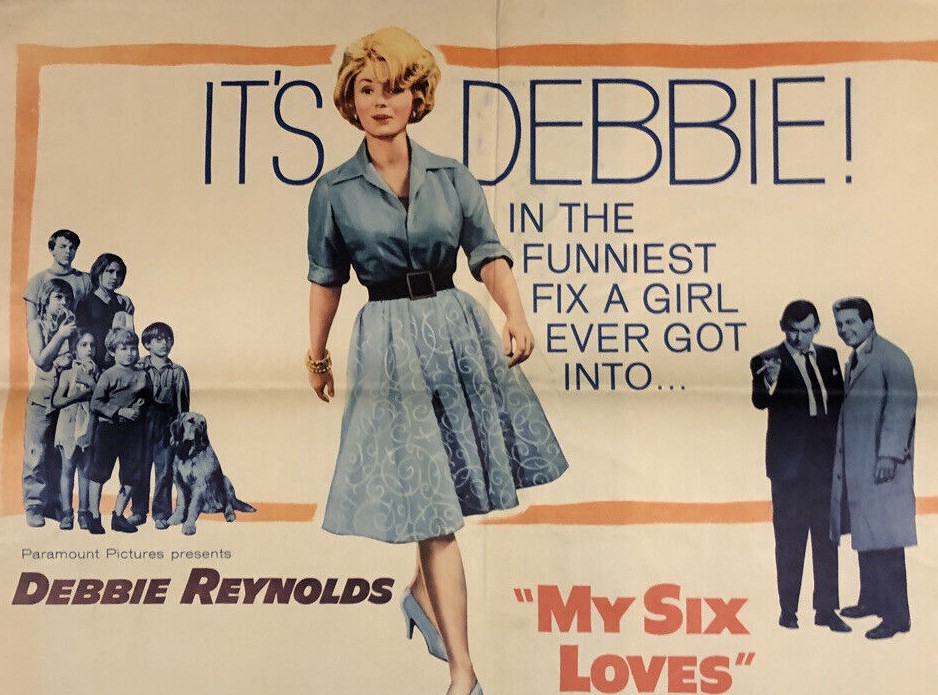
And here’s the kicker. Virtually all the all-star cast play against type. John Wayne (Circus World, 1964) reveals tremendous insecurity, Gregory Peck (Mirage, 1965) is an unscrupulous though charming renegade, the otherwise sassy Debbie Reynolds (My Six Loves, 1963) is as dumb as they come to fall for him, and for all the glimpses of the aw-shucks persona James Stewart (Shenandoah, 1965) plays a much meaner hard-drinking hard-whoring version of his mean cowboy. Carroll Baker (Station Six Sahara, 1963) is an innocent not her usual temptress while George Peppard (The Blue Max, 1966) who usually depends on charm gets no opportunity to use it. .
Also worth mentioning: Henry Fonda (Madigan, 1968), Lee J. Cobb (Coogan’s Bluff, 1968), Carolyn Jones (Morticia in The Addams Family, 1964-1966), Eli Wallach (The Moon-Spinners, 1964), Richard Widmark (Madigan), Karl Malden (Nevada Smith, 1966) and Robert Preston (The Music Man, 1962).
Though John Ford (The Man Who Shot Liberty Valance, 1962) had a hand in directing the picture, it was a small one (the short Civil War episode), and virtually all the credit belongs to Henry Hathaway (Circus World) who helmed three of the five sections with George Marshall (The Sheepman, 1958) taking up the slack for the railroad section.
And though you might balk at the idea of trying to cover such a lengthy period, there’s no doubting the skill of screenwriter James R. Webb (Alfred the Great, 1969) to mesh together so many strands, bring so many characters alive and write such good dialog. Bear in mind this was based on a series of non-fiction articles in Life magazine, not a novel, so events not characters had been to the forefront. Webb populated this with interesting people and built an excellent structure.
I’m still tapping my toe as I write this and I was tapping my toe big-style to be able to see this courtesy of the Bradford Widescreen Weekend on the giant Cinerama screen with an old print where the vertical lines occasionally showed up. Superlatives are superfluous.
It was a rite of passage for rising male stars to take second- or third-billing to an established top-billed female. And, more importantly, rein in all attempts at scene-stealing. This is a Cliff Robertson minus the distinctive hunk of hair and lip-chewing of later performances and a David Janssen only beginning to learn the knack of talking out of the side of his mouth. They were probably kicking themselves for the indignity of ending up in such as harmless concoction, but the idea was, if it was a hit, it’d be a leg up the career ladder.
This frivolity, by the way, is probably offensive to a contemporary audience since the thrust of the story is an actress abandoning a successful Broadway career in favor of motherhood. On the other hand it is the very definition of comfort movie.
Janice (Debbie Reynolds), in love with her aggressive and somewhat conniving producer Marty Bliss (David Janssen), collapses at a publicity junket and convalesces at her second home in Connecticut, so far removed from the center of theatrical civilization that she never visits and in consequence the property has been taken over, for their own enjoyment, by her housekeeper and her daughter, who now object to spending a moment catering for their employers. In the grounds lurk a brood, half a dozen orphans taking refuge from their exploitative foster parents.
It doesn’t take long for Janice to sucker herself into taking them into her house, assistant Ethel (Eileen Eckhart) as clueless. On hand offering advice is local minister Jim (Cliff Robertson). If the kids are a handful, refusing to be separated which entails them all sleeping in the same room, they’ve got nothing on their boisterous hound Butch.
We’re past the halfway mark before it occurs to Janice that she is treading dangerous emotional waters and she jumps at the chance to star in a heavyweight drama by current Broadway playwright kingpin. Meanwhile, smelling a hefty payoff, drunken foster parents Doreen (Mary McCarty) and BJ Smith (Max Showalter) turns up, Jim takes an unrequited romantic interest in his neighbor, Janice discovers her community spirit by helping raise money for charity, one of the kids runs away from hospital, and another has trust issues, leaving the other four with little to do but look cute.
Somehow within all this there’s a cue for a song, “It’s a Darn Good Thing” before Janice has to take the decision to sink or swim with the kids or hi-tail it back to Broadway where the prospect of a Tony beckons.
You’ve probably seen this all before, but somehow – taking the career issue out of the equation – it all works, an overactive ice machine, racing in and out of the school bus, meal-time complications, and wouldn’t you believe it a slice of love. No prizes for guessing the ending.
But it’s testament to Debbie Reynolds (How the West Was Won, 1962) that the movie has an appealing center. Cute kids are ten a penny in Hollywood but an actress able to make believable such an old-fashioned family-friendly tale is hard to come by. Sure, by today’s standards it’s outdated, but if we can just slip on a retrospective hat, she would not be the first career-minded woman of that decade to find she had ignored her maternal instinct. It might have been better all round if she had found a way to have both career and motherhood but the planet and certainly not Planet Hollywood was not yet on that wavelength.
Of course, it being lightweight ensures none of the other characters have any depth and to their credit neither Cliff Robertson (Masquerade, 1965) nor David Janssen ((Warning Shot, 1967) resorts to showboating, a smart decision because with the charismatic Reynolds taking center stage they could hardly compete. And I have to confess I quite like this early version of Robertson before he was overtaken by a need for weightier roles. He showed a neat comedic touch, had some of the best lines, and proved no slouch in the verbal sparring department. Janssen, too, showed a lot of promise.
Max Showalter (How to Murder Your Wife, 1965) had such a convincing drawl that I was convinced I was watching Strother Martin (Cool Hand Luke, 1967). A good opportunity also to check out distinctive character actors Eileen Eckhart (No Way To Treat a Lady, 1968) and John McGivern (Midnight Cowboy, 1969)
You can hardly blame famed Broadway director Gower Champion (The Bank Shot, 1974), only too aware of the pressures of maintaining a stage career, for thinking that a life in Connecticut with a bunch of eventually pliant and cute kids would be a welcome alternative. It took three screenwriters to spin this tale – John Fante (Maya, 1966), William Wood (The Lively Set, 1964) and Joseph Calvelli (Death of a Gunfighter, 1969).
Bearing in the mind the aforementioned provisos, not a bad Sunday matinee. Alternatively, come at it from today’s perspective and you will be inclined to rip it to shreds before you give it a chance to be entertaining. You might even consider it a tad more adventurous in its more realistic approach than other multiple-kid pictures like Cheaper than the Dozen (1950) and Yours, Mine and Ours (1968).
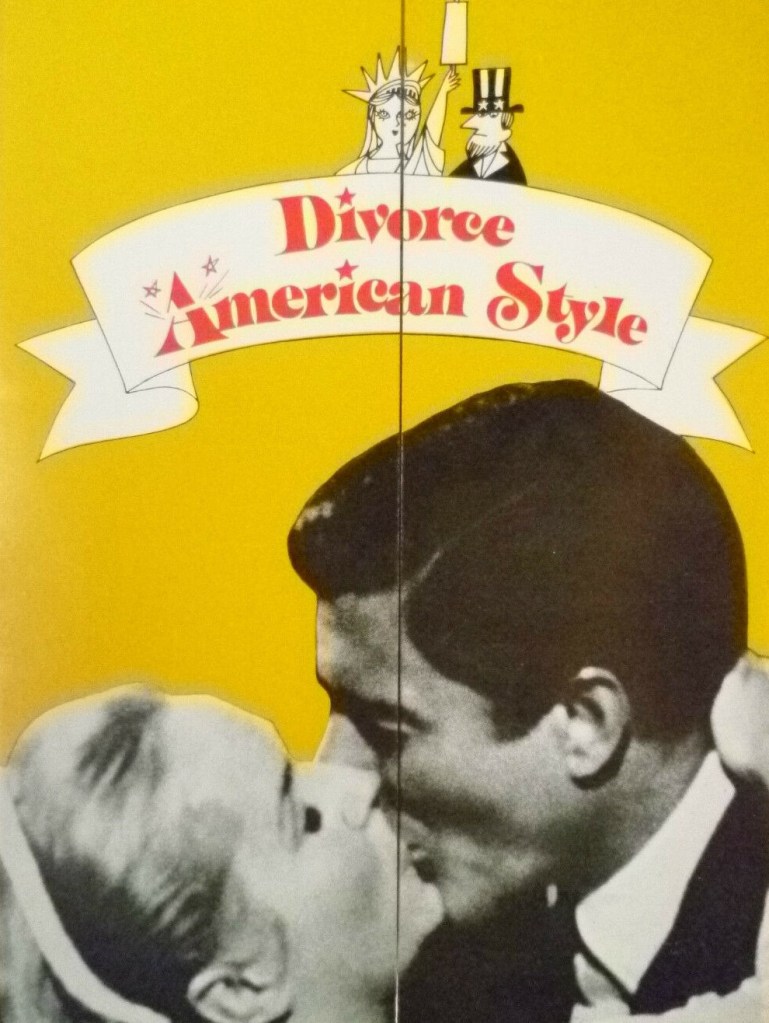
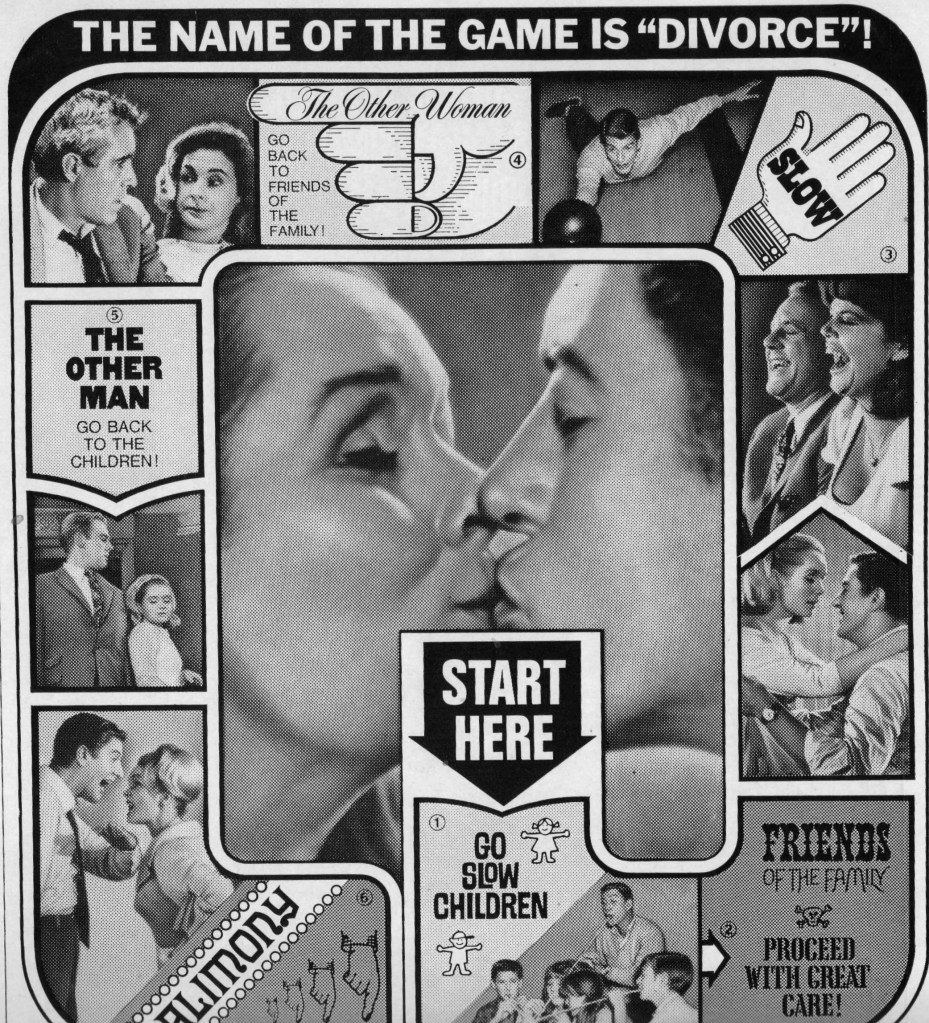
There was a curious dichotomy at the heart of promotional efforts for this picture. On the one hand, theater managers were encouraged to make contact with those affected by divorce, on the other to make a great play of weddings and marriage.
So theater managers were told to contact groups such as Parents without Partners, Children of Divorce, Divorce Reform Groups, Alimony Payers and Family Counsellors. Divorce Parties and Divorce Breakfasts were suggested as other sources of publicity. Free screenings were aimed at couples who could prove they were divorced – presumably, that is, if they could still stand the sight of each other.
“Wedding rings can make a very positive contribution” to a promotional campaign was the other side of efforts to sell the movie. That meant possibly offering a wedding ring as a prize in a competition for divorced couples planning to re-marry…”re-marriage might take place at your theater…but it is not mandatory.” Free tickets could be given to jewelers to hand out to anyone buying an engagement or wedding ring. Another idea was a newspaper article on what divorced women did with their wedding rings after they had split from their partner.
Dick Van Dyke had been named “Screen Father of the Year” by the National Father’s Day committee and he had made a national tour in support of the picture meeting the media in New York, Chicago, Miami, Atlanta, New Orleans. Oklahoma City, Rochester, Washington, Syracuse, Boston and Philadelphia so journalists in those localities were already primed to support the efforts of cinemas. In Dallas, he was met by 1,000 people and later presented with a plaque from the Domestic Relations Court because “the ideals of the film serve as a deterrent to divorce.”
Unusually, the fashion boost this time focused on the male. Jason Robards had turned himself into a male model for Ratner California Clothes with advertisements appearing in Gentlemen’s Quarterly. Equally unusual was a suggestion to tie up with a local hypnotist – a scene in the picture involves Pat Collins’ nightclub act.
Van Johnson played a used car dealer in the film so they were also targeted for joint promotions or car parades. Bowling alleys, too, since that form of leisure activity featured in the film. On a more straightforward note Popular Library had produced a novelization and United Artists the original soundtrack album by Dave Grusin.
Not so much a comedy about a failing marriage as a guide to the American divorce laws, a cynical hard-boiled and frightening shape of things to come in a world where the everyman is represented not by the likes of James Stewart or at a stretch Glenn Ford but Dick Van Dyke. It’s possibly only the fact that Van Dyke lacks dramatic chops without the innate vitriol of a Rod Steiger or Lee Marvin that keeps the movie from drifting into devastating black comedy. That, or the filmmakers’ determination to find a happy ending.
When the ever-squabbling Harmons, Richard (Dick Van Dyke) and Barbara (Debbie Reynolds), break up after 17 years and two kids, the chips seem to fall heavily against the husband, the wife walking off with all assets, the husband landed with all the bills and little more than 80 bucks a week to get by on. Such is the supposed injustice of the American divorce laws at a time when most wives did not go out to work and so relied on their husband, married or otherwise, for support.
The only way out of this unhappy financial state for Richard is for his wife to get married again, so a second husband can pick up the tab for her upkeep. Another divorced couple, the Downes, Nelson (Jason Robards) and Nancy (Jean Simmons), are in the same pickle so Nelson spends his time acting as some kind of pimp for his ex-wife, serving up potential suitors, such as Richard, on a platter. But since Richard is impoverished a helping hand is needed to even things up, so Nelson arranges for Barbara to fall into the arms of rich and single used car dealer Al Yearling (Van Johnson).
There is a big male-female divide, for the most part the guys concentrating on material things like money and what money can buy, the gals leaning more towards emotion, conversation, genuine intimacy. Richard has given his wife everything she wants, so why can’t he have a few things his own way. Or as Barbara succinctly puts it, it’s a case of supply and demand, the women are in good supply while the men demand. Even after separation, while from the Richard and Nelson perspective the wives are living in the lap of luxury and the men understanding the meaning of penury, female thoughts turn to questions of loneliness, commitment and (not again!) emotion.
While there are moments of observational comedy – an excellent montage of Richard and Barbara opening and closing all sorts of doors while preparing for bed, cleaning out bank accounts before the other can get to them, the problems of accommodating the blended/hybrid family that divorce or multiple divorce can entail – there are not many laugh-out-loud moments.
And probably just as well because without the drama-lite presences of Van Dyke (who still can’t shake off those double takes and involuntary limb functions) and Reynolds, it would have been a much tougher watch. Reynolds is capable of expressing her feelings verbally because, as a female, she is used to expressing feelings verbally, so we know that Al Yearling does not quite hit the spot. But Van Dyke, without resort to the verbal, has his best scenes of emotional loss when he takes his kids to the ball game only to discover that his wife’s new suitor has more treats to offer.
Van Dyke (Lt. Robin Crusoe, U.S.N.) and Reynolds (The Singing Nun, 1966) do a decent job without plumbing any dramatic depths, but Robards (Any Wednesday, 1966) and Simmons (Spartacus, 1960) have more to offer as the conspiring couple, while one-time MGM golden boy Van Johnson (Battleground, 1949) proves that his four-year absence from pictures was premature Hollywood retirement. More a cautionary tale than an outright laffer, this Norman Lear (Come Blow Your Horn, 1963) screenplay without missing many targets provides a more palatable dissection of modern marriage than something as full-blooded and expletive-ridden as the previous year’s Who’s Afraid of Virginia Woolf. Director Bud Yorkin (Come Blow Your Horn, also) shows a nice grasp of building up situations until they go out of control.
While, certainly, many of the attitudes are out of date you can be sure that male self-pity is not one of them.








 The Magnificent 60s