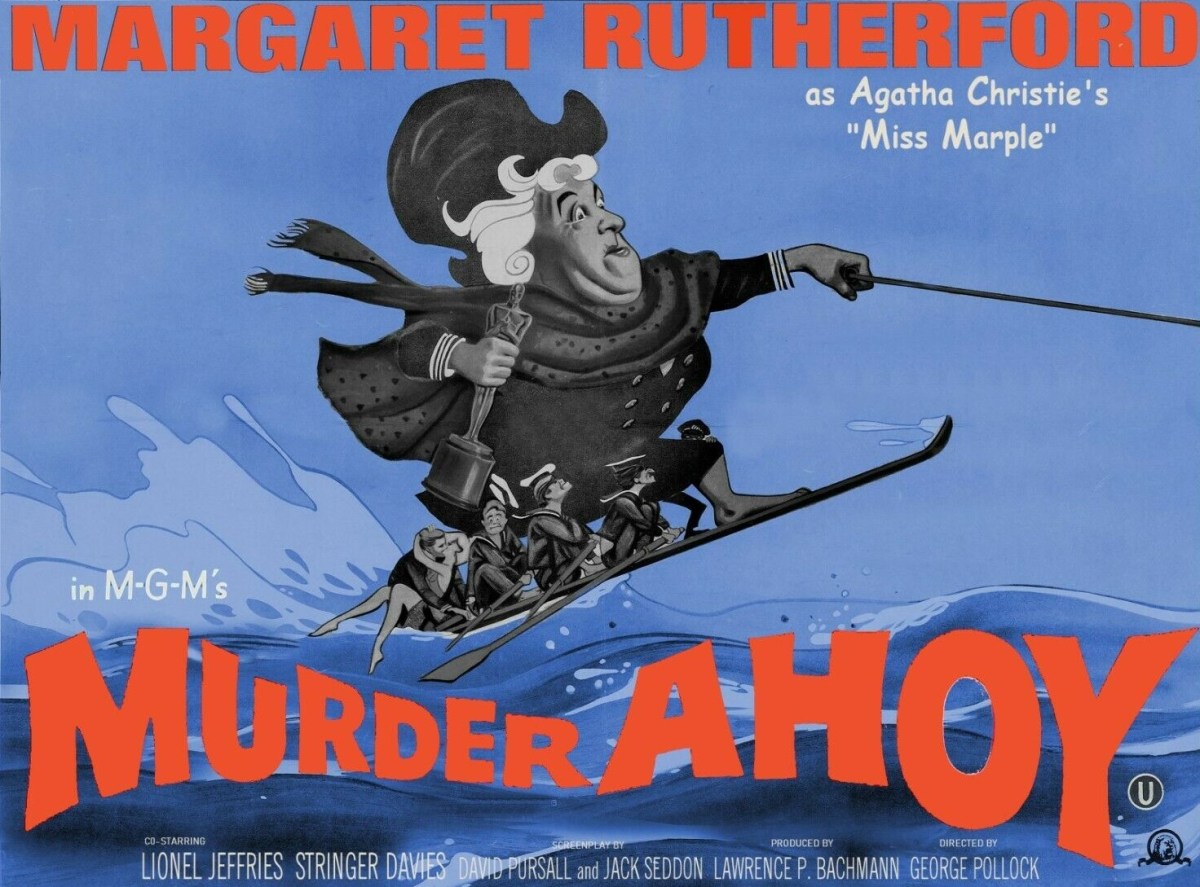
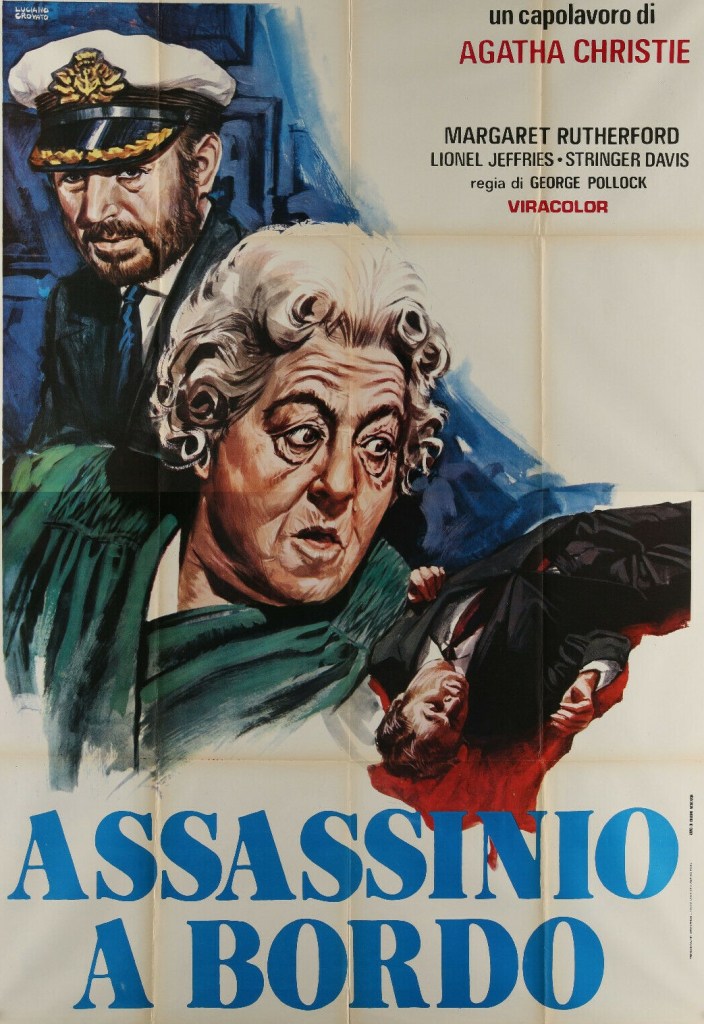
Agatha Christie tales were in a mostly B-movie limbo in the 1960s, despite Billy Wilder’s Witness for the Prosecution (1957) and would have to wait another decade before glorious all-star resurrection in Sidney Lumet’s Murder on the Orient Express (1974). In the meantime, audiences made do with Margaret Rutherford’s Miss Marple in an MGM quartet – all directed by George Pollock – that ended with Murder Ahoy!
Rutherford did not enjoy the national treasure status of the likes of Maggie Smith and Judi Dench these days, but she had been elevated to late-career fame by winning the Best Supporting Actress Oscar for The VIPs (1963). But she never quite made the cinematic impact anticipated after Blithe Spirit (1945) and was mostly seen in roles that called for eccentricity or determination, characteristics associated cinematically with Christie’s second most famous sleuth (although, in reality, the author was furious with her impersonation). And this had nothing to do with any published Christie work, just borrowed the character.
The title had led me to expect a picture set on a liner or a cruise ship. Instead, this being a cheaply-made British black-and-white feature, we are limited to sojourn on a sail training ship which remains moored at all times. Nonetheless, Miss Marple (Margaret Rutherford) is resplendent in naval attire and disports herself as if she were the captain.
Her excuse to get on board is the sudden death of a member of the committee overseeing said ship just before he makes an announcement. Miss Marple relies on a good deal more than Hercule Poirot’s little grey cells and through laboratory experiment determines the man died from strychnine poisoning. Among her other hidden talents are signaling mastery and dexterity with a sword and she drops popcorn on corridor floors to warn of imminent arrivals when she invades cabins.
The suspects include Capt Rhumstone (Lionel Jeffries), Sub-Lt Eric Humbert (Derek Nimmo), Lt. Compton (Francis Mathews) and Commander Breeze-Connington (William Mervyn) while Dr Crump (Nicholas Parsons) is described in double entendre fashion as “brisk.”
Naturally, there is more murder, and the subplots include burglary, secret romance involving Matron Fanbraid (Joan Benham) and thwarted romance with Shirley (Norma Foster). However, nothing can deter Miss Marple and she soon puts the world to rights.
The first in the series.
It’s an engrossing enough little film, the resolution a surprise, and Rutherford has skill and charm enough to almost trademark the role. At one time in the 1960s in the USA the Marple pictures were revived as double bills but generally in Britain treated with less regard.
Although you could argue that MGM could have bolstered the standards of production, much of the merit derives from the quaintness and the quintessential English lives portrayed. Of course, Margaret Rutherford steals the show but he is ably supported by Lionel Jeffries (First Men in the Moon, 1964), Derek Nimmo, strangulated mannerisms from later BBC’s Oh, Brother not in evidence, William Mervyn (Hammerhead, 1968) and Nicholas Parsons (ITV game show Sale of the Century.)
As a bonus there are moments of well-observed comedy and a very inventive score from Ron Goodwin (633 Squadron appeared the same year). Directed by George Pollock (Kill or Cure, 1962) from a screenplay by the team of David Pursall and Jack Seddon (The Secret Partner, 1961).
Taken in the spirit it was intended and acknowledging the low budget, not bad.
Ode to the male gaze. Once a cult vehicle, this will struggle to find favor these days what with its backward attitudes. Virtually impossible to excuse the rampant self-undulgence. The sexually exploited naïve Ewa Aulin in the title role didn’t even have the benefit of being turned into a star. The satire is executed with all the finesse of a blunderbuss. And while, theoretically, picking off a wild range of targets, if this movie has anything to say it’s to point out how easy it is for men to deify themselves at the slightest opportunity.
Not much of a narrative more a series of sketches slung together with the slightest connecting thread. Most its appeal lies in watching huge marquee names make fools of themselves. Or, if you’re that way inclined, seeing how much nudity will be imposed on the star, intimacy rarely consensual, clothes usually whipped off her.
Teenager Candy (Ewa Aulin) has father issues, daddy (Jack Austin) being a dumb angst-ridden teacher. Randy poet McPhisto (Richard Burton) drives a class of schoolgirls into a frenzy with his lusty reading, inveigles Candy into his chauffeur-driven car, ends up in her basement drunkenly humping a mannequin while Mexican gardener (Ringo Starr) with an accent as coruscating as that of Manuel from Fawlty Towers assaults her on pool table. Scandalized father packs her off to his twin brother in New York, that notoriously safe haven for nymphettes, while on the way to the airport they are almost driven off the road by the gardener’s vengeful biker sisters (Florinda Balkan et al).
For no apparent reason she is hitching a lift on a military plane commanded by randy Brigadier Smight (Walter Matthau) who, on the grounds that he hasn’t had sex for six years, commands her to remove her clothes for the good of the nation. In the Big Apple, rock star surgeon Dr Krankheir (James Coburn), entering the operating theater to the same kind of waves of acclaim as McPhisto, finds an excuse to have her undress and submit to him, this just after she’s managed to avoid the attentions of her randy uncle. It should come as no surprise that Krankheit treats women as his personal property to the extent of branding them like cattle.
In due course, she encounters a gang of mobsters, an underground movie director and a hunchback (Charles Aznavour) who, in return for her showing pity for his condition, proceeds to rape her. She is arrested. Guess who wants to frisk her. Naturally, when she escapes she runs into a bunch of drag queens.
Then she finds sanctuary in a semi-trailer truck, home to guru Grindl (Marlon Brando). He’d be convincing enough as a mystic except he, too, finds an excuse to rip her clothes off. There are more cops to contend with and another guru, facial features obscured by white clay. If they’re going to have sex then naturally it must be in a Hindu temple. Turns out the latest person to take advantage of her is her father but he’s been handed a get-out-of-jail-free card because by now he’s brain damaged.
This might all be a dream/nightmare. Candy might even be an alien. It’s dressed up in enough psychedelia to sink a battleship and its highly likely that any lass as gullible as Candy will find herself at the mercy of any man, so in that context it carries a powerful message. I’m sure many beautiful young girls will attest to the truth that men feel they have the right to paw anyone who comes their way without asking permission. And the other message is just as powerful – how many young actresses have been seduced by thoughts of fame to disport themselves in this fashion only to find that all the industry wants is their nudity not their acting talent.
You might say that the target is so obvious it hardly needs pointing out but the MeToo campaign will beg to differ and you would hope that Hollywood has wised up. It’s just a shame that the satire is so heavy-handed. The military and the medical profession are sorely in need to answering tough questions. Unfortunately, this picture doesn’t ask any. It’s like an endless casting couch.
Directed by Christian Marquand (Of Flesh and Blood, 1963) in, thankfully, his final picture, from a screenplay by Buck Henry (The Graduate, 1967) and Terry Southern (Dr Strangelove, 1962) based on the novel by Southern and Mason Hoffenberg. Nobody comes out of this well and it’s rammed full of cameos from the likes of Elsa Martinelli (The Belle Starr Story, 1968), John Huston (Myra Breckenridge, 1970), Anita Pallenberg (Performance, 1970), Marilu Tolo (Bluebeard, 1972) and boxer Sugar Ray Robinson.
Ewa Aulin (Start the Revolution Without Me, 1971) isn’t given much of chance, her character whimsical, pallid and submissive and she didn’t become a major marquee name.
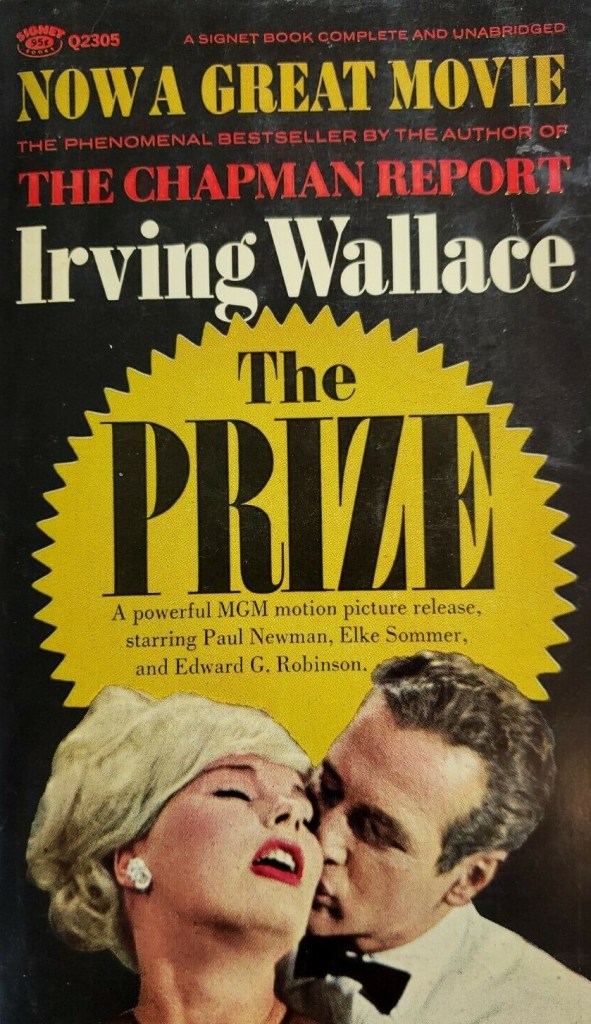
Thoroughly involving potboiler with alcoholic novelist Andrew Craig (Paul Newman) turning unlikely detective to uncover murky double-dealings at the annual Nobel Prize ceremony. Based on the Irving Wallace bestseller set in Stockholm, director Mark Robson (Von Ryan’s Express,1965) strings together a number of different stories that coalesce in a gripping climax. Screenwriter Ernest Lehman (North by Northwest,1959) brings alive what could have been a very soggy adaptation of a beefy bestseller with witty and literate dialog and a plot that hovers just the right side of hokum.
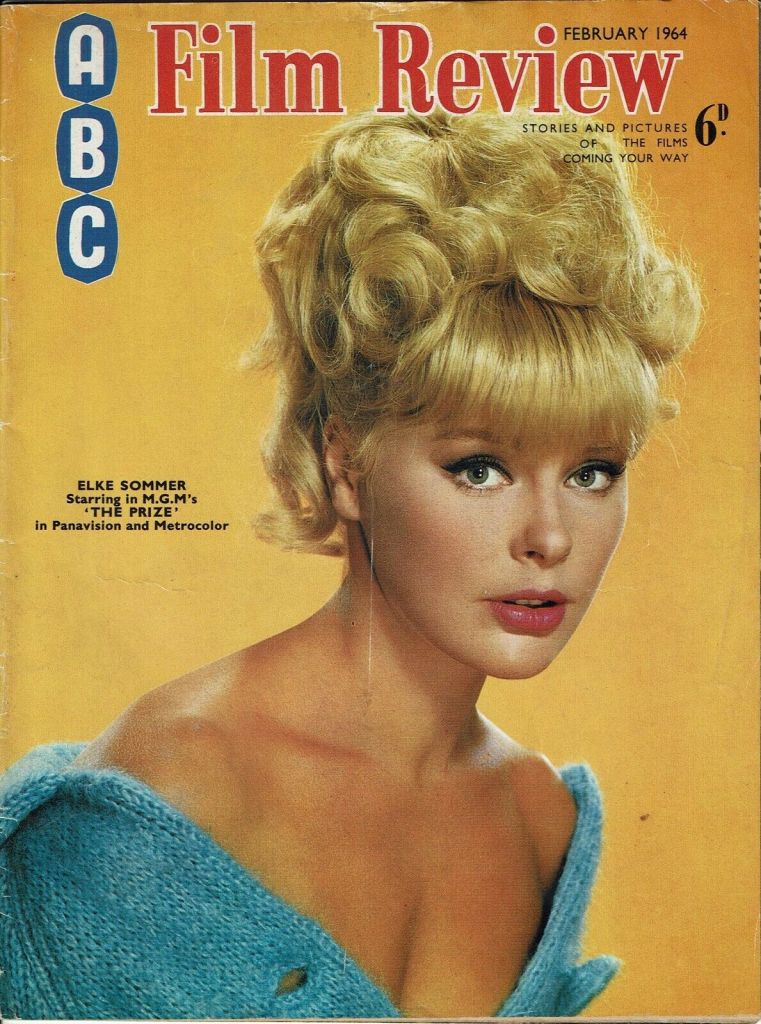
Inger (Elke Sommer), delegated to look after the author, starts out as a stuffed shirt not a sexpot, allowing Newman’s attention to drift towards Emily Stratman (Diane Baker) – daughter of another winner Dr. Max Stratman (Edward G. Robinson) – while he is dragged into romantic entanglement with neglected wife Dr Denise Marceau (Micheline Presle). Mostly, Newman just wants his next drink, and his almost continual inebriation sparks some good comedy and he is gifted good lines to extricate himself from embarrassment. Simmering in the background are warring winners – the Marceau husband-and-wife team and Dr John Garrett (Kevin McCarthy) convinced that Dr Carlo Farelli (Gerard Oury), with whom he is sharing a prize, has stolen his research.
There are sufficient character clashes and plots to be getting along with if you were just intent on taking a Valley of the Dolls approach to the material, that is, cutting between various dramatic story arcs, but, without invalidating the other subsidiary tales, the movie takes quite a different turn, providing the potboiler with considerable edge.
Turns out that Andrew is so impoverished that he has been writing detective novels under a pseudonym and suspecting that Dr Stratman is an imposter he starts investigating. So in some respects it’s a private eye procedural played out against the glamorous backdrop of the awards. But the clues are inventive enough and there is a femme fatale and once Inger comes along for the ride and with Andrew a target the picture picks up an invigorating pace. Echoing the humorous auction scene in North by Northwest is a sequence set in a nudist colony where Andrew seeks refuge to avoid villains while another terrific scene plays out in the docks.
Paul Newman looks as if he is having a ball. In most of his pictures he was saddled with seriousness as if every part was chosen with an eye on the Oscars. Here, he lets rip with a lighter persona, and even if he mugs to the camera once too often, the result is a screen departure that lifts the picture. Inebriation has clearly never been so enjoyable. Sommer is a delight, showing great dramatic promise. Edward G. Robinson (Seven Thieves,1960), more renowned for his gangster roles, convinces as a scientist. Diane Baker (The 300 Spartans, 1962), Kevin McCarthy (Invasion of the Body Snatchers,1956) and Leo G. Carroll (North by Northwest) provide sterling support.
Robson directs with dexterity, mostly with an eye on pace, but it is Lehman’s script with occasional nods to Hitchcock that steals the show.
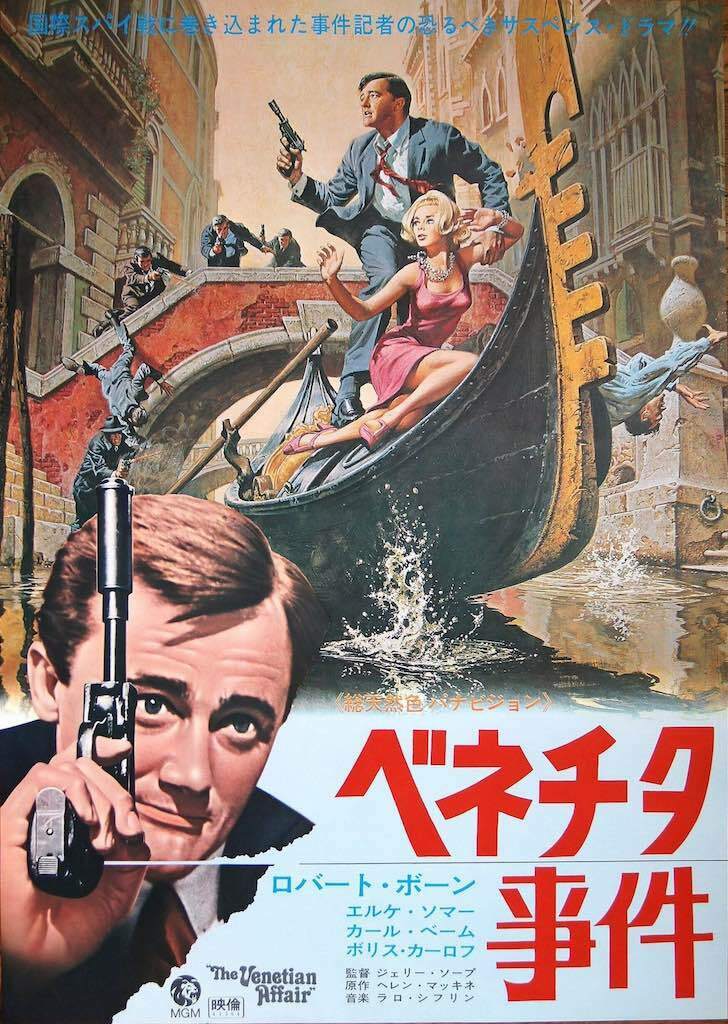
Robert Vaughn gives a terrific performance as a numbed alcoholic ex-C.I.A. journalist Bill Fenner drafted into Venice to investigate a plot involving ex-wife and Communist defector Sandra Fane (Elke Sommer). He’s the spy who lost it rather than a flashy contemporary of James Bond. This occasionally very stylish number kicks off with a terrific credit sequence that concludes with a suicide bomber blowing up a nuclear disarmament conference. Unshaven and with a Columbo cast-off overcoat, Fenner discovers Fane was key to the bombing, the bomber an otherwise distinguished diplomat with no known proclivities in the area of mass murder.
Although sold as an action picture, nobody is ripping through the canals as in a Bond film, and it is altogether a more somber, reflective, intelligent movie. Fenner’s feelings for his ex-wife are palpable when, in her apartment, he tenderly touches her clothes and smells her perfume. Far from being party to the plot, it appears Sandra has had a change of heart and wants to defect back, leaving Fenner in a perilous dilemma. Does he believe her or is she just using him? It is beginning to sound like a modern-day film noir, except he is already being used by the C.I.A., his presence in Venice a device to draw Sandra out, C.I.A chief Rosenfeld (Edward Asner) every bit as ruthless as the villains.
His investigations lead him to Dr Pierre Vaugiraud (Boris Karloff) and power broker Robert Wahl (Karl Boehm) who has a mind-altering drug that can make a man terrified of a mouse, send him into a trance and on his way to deliver savage retribution. There is death aplenty, fisticuffs and chases and Sandra, in hiding disguised as a nun, is worth waiting for.
Based on the bestseller by Scottish novelist Helen MacInnes, who challenged Alistair MacLean in her day, the project was at one point to be directed by Guy Hamilton. Coincidentally, David McCallum, Vaughn’s co-star in The Man from U.N.C.L.E. television series, was in Venice at the same time shooting Three Bites of the Apple.
Television stalwart Jerry Thorpe making his debut contributes some interesting moments. Interpreters listening in to the conference hear the magnified ticking of the bomb moments before explosion. The sequence on a train is well done and the activity surrounding the mouse is first class. Vaughn is superb in a downbeat role – shaking off his Napoleon Solo television persona- never sure if he is being duped, on the rack from falling back in love, and emerging from an alcoholic haze with a few decent ruses up his sleeve.
There’s a solid cast, Asner menacing even as a good guy, Karl Boehm a charismatic villain, Karloff memorable in his last performance in a non-horror picture, and interesting appearances by Felicia Farr as a C.I.A agent masquerading as the murderous diplomat’s unsuspecting mistress and Luciana Paluzzi as the girlfriend of an agent. Lalo Schifrin produces an outstanding score.
It was a flop first time round because audiences, partly duped by the title (all Uncle episodes incorporated the word “Affair” although the book, in fairness, was written long before the television series was envisioned) expected to pay to see Napoleon Solo, or something quite like him, on the big screen, with all the pizzazz and gimmickry of the small-screen show. Unfairly under-rated, this is a really satisfying thriller set against a murky Cold War background with Vaughn, trapped between love and redemption, the only character with a streak of morality.
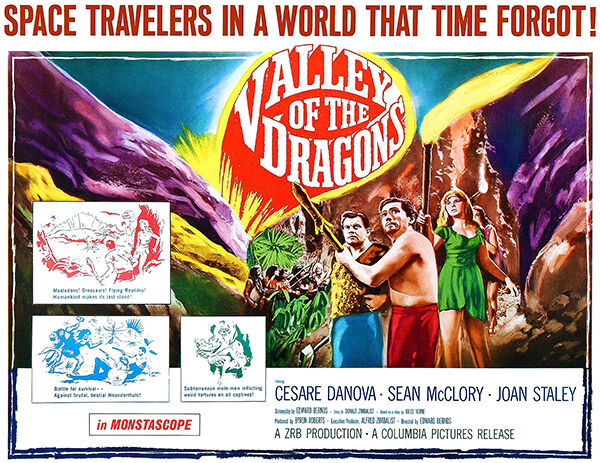
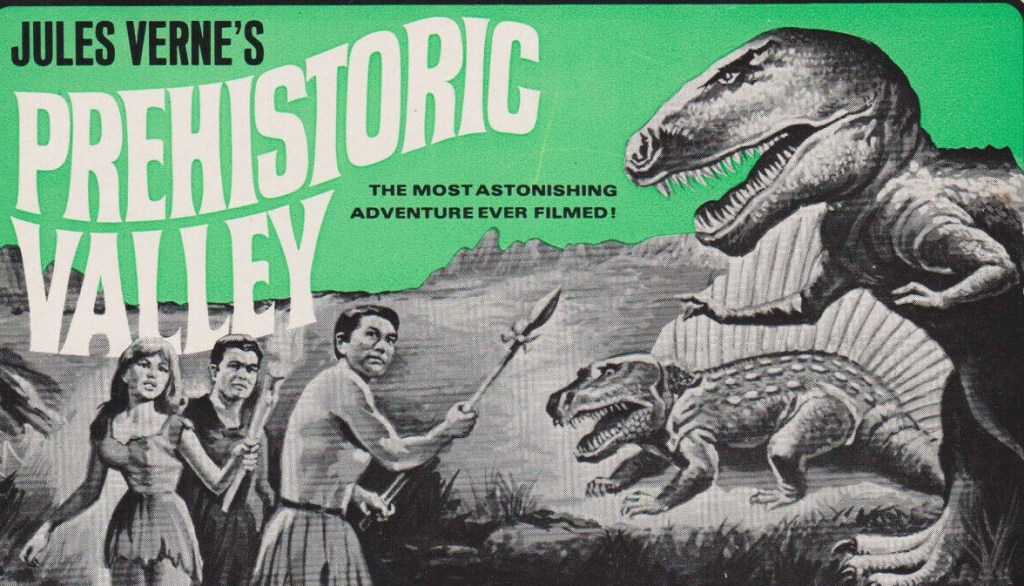
“Producers must become real businessmen,” said Al Zimbalist, “and settle down to cutting corners.” [1] And he set about giving an object lesson in the art of cutting corners in producing Valley of the Dragons.[2] First of all the source novel by Jules Verne, Hector Servadac or The Career of a Comet, was out of copyright, in the public domain, so nothing was spent on that. Secondly, it just so happened that Columbia had a “magnificent” jungle set standing by, built at the cost of half a million bucks for The Devil at 4 O’Clock (1961), but now, that Spencer Tracy-Frank Sinatra effort complete, standing empty and to a producer with a persuasive tongue available at no cost.[3]
Thirdly, such a persuasive producer could convince Columbia to put a ceiling on the overhead they attached to any picture to cover their general office costs. Fourthly, he had acquired the rights to One Million B.C. (1940) and could plunder that picture for stock shots of prehistoric monsters. And fifthly, with budget limited in any case to $125,000,[4] he couldn’t afford to pay anybody much anyway and so was inclined to offer no more than $6,000 for the script.
Director Bernds was under the misapprehension (see below) that the source book hadn’t been published in the U.S. Well, here’s proof that it was, and pretty much as soon as it appeared in 1877.
As it happened, Zimbalist could possibly afford to spend more given he was sitting on a $3 million worldwide haul from Baby Face Nelson (1957).[5] With partner Byron Roberts, he had just inked a multi-picture deal with Columbia, Valley of the Dragons the first product. Also on his slate: The Well of Loneliness based on the controversial novel by Radclyffe Hall, The Willie Sutton Story to star Tony Randall, a biopic of Bugsy Siegel and four television projects.[6] Zimbalist didn’t hang about. Valley of the Dragons went in front of the cameras on January 30, 1961, and was scheduled to hit U.S. cinemas in May[7] though ultimately it was delayed till the fall. Unfortunately, there was a surfeit of “dragon” pictures on the market what with Goliath and the Dragon and The Sword and the Dragon.
Zimbalist specialized in B-movies like Cat-Women of the Moon (1953), King Dinosaur (1955) and Tarzan the Ape Man (1959) in which Cesare Danova was second-billed. Baby Face Nelson, helmed by Don Siegel, was his best-made and most successful picture. Director Edward Bernds was cut from the same B-picture cloth with titles like Space Master X-7 (1958), Queen of Outer Space (1958) with Zsa Zsa Gabor and Return of the Fly (1959).
“Science takes a beating,” commented the director of the movie’s premise, explaining that it was not only unscientific but “utterly ridiculous.” The book, he claimed, had never been published in the U.S. because it was “viciously anti-Semitic” and it was brought to the producer’s attention by his son Donald, on vacation in London, who happened upon a second-hand copy in a bookstall. Although given a story credit – and thus some residuals – that was the only part Donald played in the making of the movie. The basic story was “shaped” by the stock footage. Bernds knocked out a 10-page treatment that Zimbalist shopped to Columbia. Although the budget was tiny, the producers would be due to pay for any overages.[8]
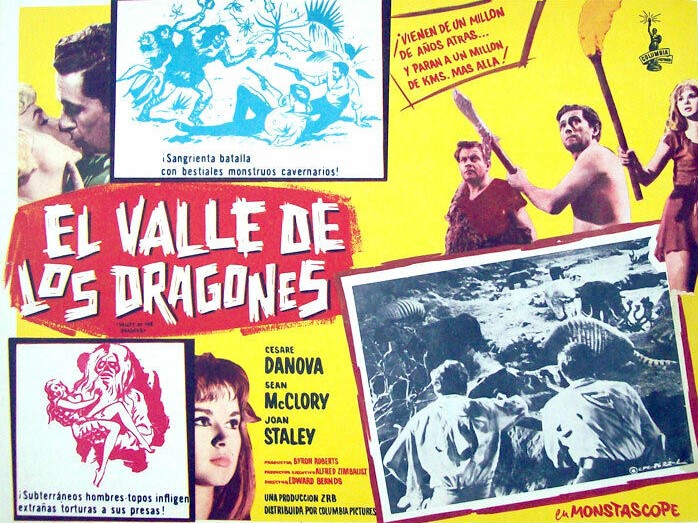
“The Jules Verne name meant box office at the time,” recalled Bernds.[9] Added Zimbalist, “Jules Verne was as big a name as Marlon Brando” with the advantage that “Verne never had a flop…with Verne you don’t need Marilyn Monroe.”[10] To help promote the movie, Zimbalist sent out on tour 50ft replica monsters and advertised it as being made in “Living Monstascope.”[11]
The special effects didn’t always go according to plan. While the giant spider’s jaws were spring-loaded and snapped shut thanks to magnets, the legs, operated by motors, did not always work and it was largely down to the actors to give the impression of an intense fight.[12] The rest of the special effects were simpler to achieve. An alligator given an extra dimension did duty as the dimetrodon, the T Rex was a giant blue iguana, a white nosed coati was passed off as the megistotherium, an Asian elephant covered in wool for the mastodon, while the pterodactyl came from the stock footage. “The cast was good, we had a reasonably fast cameraman…we didn’t have to spend a single day on location…and we did the impossible – brought the picture in on budget,” said Bernds.[13]
While the picture proved to be first run material, it didn’t top the bill, except in cinemas that gobbled up product, so initially it went out as support in 1961 to William Castle’s Mr Sardonicus (1961) but also played second fiddle to Mysterious Island, Weekend with Lulu and The Mask. [14] Results were mixed: a “fair “ $11,000 in Boston, “bright” $20,000 from five houses in Kansas City, “sluggish” $5,000 in Portland and “good” $13,000 in San Francisco.[15] It must have done well enough for it was revived the following year and topping a bill in Chicago that included Eegah (1962)[16] while an exhibitor in Texas deemed it a “nice surprise…will do good business for a Saturday playdate.[17]
Zimbalist didn’t realize his ambitions with Columbia. None of those projected movies materialized, nor did an anthology television series based around the works of Jules Verne.[18] He was quick off the mark to register the title Lucky Luciano after the gangster’s death in 1962,[19] but that didn’t translate into a movie. In 1964 he lined up a $2 million slate with Allied Artists including King Solomon’s Mines, Planet of the Damned, Jules Verne’s Sea Creature and Young Belle Starr.[20] But none of that quartet reached the screen either and his final pictures were Drums of Africa (1963) with MGM and the indie Young Dillinger (1965) which prompted an outcry over the violence.
Byron Roberts enjoyed a longer career, with credits for The Hard Ride (1971), Soul Hustler (1973) and The Gong Show Movie (1980). For good or bad, Bernds was rewarded for his efforts on Valley of the Dragons by becoming the go-to director for The Three Stooges, helming The Three Stooges Meet Hercules (1962) and TheThree Stooges in Orbit (1962) before sidling off for the animated version of their antics.
[1] “Varied Guesses on IA’S New Wages & Small Pix,” Variety, February 8, 1961, p3.
[2] “Another Jules Verne Yarn To Be Made Into Pic,” Box Office, May 1, 1961, pW!.
[3] Tom Weaver, Interviews with B Science Fiction and Horror Movie Makers (McFarland), p62-64.
[14] “Back St Holds Pace in 2nd Detroit Week,” Box Office, November 20, 1961, pME4; “Hawaii and Commancheros Neck-and-Neck in Seattle,” Box Office, December 4, 1961, pW3; “Hawaii Is Hartford Favorite a 2nd Timer,” Box Office, December 11, 1961, pNE1; “Mysterious Island Tops,” Box Office, January 8, 1962, pSE8.
[15] “Picture Grosses,” Variety: November 1, 1961, p8; November 8, 1961, p10; November 29, 1961, p15; December 6, 1961, p9.
[16] “Picture Grosses,” Variety, June 6, 1962, p9.
[17] “The Exhibitor Has His Say,” Box Office, July 2, 1962, pB6. This was at the Galena Theater.
[18] “Zimbalist-Roberts 3 Vidfilm Skeins,” Variety, April 5, 1961, p30.
[19] “Dead, Lucky Luciano Looks Sure for Filming,” Variety, January 31, 1962, p1.
[20] “Zimbalist Finances, 12 Go Allied Artists,” Variety, June 10, 1964, p4.
Jules Verne was the marquee attraction here after the box office success of 20,000 Leagues under the Sea (1954), the Oscar-winning Around the World in 80 Days (1956) and Journey to the Center of the Earth (1959), and to a lesser extent Master of the World (1961) and Mysterious Island (1961) with just around the corner another megahit In Search of the Castaways (1962) and minor hit Five Weeks in Balloon (1962). His works, I don’t need to tell you, are still being plundered.
Let’s get the hokey science out of the way first. In 1881 a passing comet scoops a wee bit of Earth including, crucially, some atmosphere, and two dudes Hector (Cesare Danova) and Michael (Sean McClory) who are just about to fire their weapons in a duel. Sensibly, “in the circumstances,” they decide to put their argument on hold, and later, like the true gentlemen they are, give up on the idea after they have saved each others’ lives.
I should point out, for the easily duped, that there ain’t no dragons, certainly nothing of the Games of Thrones variety, though there are prehistoric creatures, including neanderthals, aplenty. And Verne probably set the tone for modern cod sci-fi exposition with this cracker, explaining the existence of these monsters as because said comet had done a previous turn around the Earth a million years ago and snipped off a piece of the world containing such beasties.
Anyway, as you might expect, they are mostly on the run for their lives, until, separated, they end up with two separate tribes, the shell tribe and another with no distinctive fashion accessories, and, as luck would have it, each with a lady. Blonde Deena (Joan Staley) proves particularly feisty, and possessive, beating back other women who take a notion to her prize. On the other hand Michael has to thump the boyfriend of Nateeta (Danielle de Metz) until he gets the message.
As you might expect there’s a dalliance in the river – though nobody thought then to play up the fur bikini element that brought Raquel Welch instant fame in One Million Years BC (1966) – and an erupting volcano and when not battling each other the beasties, including a giant spider, are terrorizing the populace. The tribes, naturally at war, are brought together by the former rivals.
Oddly enough, given later reiterations on this theme, our heroes are scarcely muscle men and Hector, in particular, has a knack for repartee. Observing his own cooking, he remarks, “Even the chefs at Fontainebleu could not have burn it with such finesse.”
Given that these films are generally judged on the quality of the special effects, this isn’t bad, the spider is certainly duff, but the rest, woolly mammoths and (consults his beloved tattered childhood dinosaur encyclopaedia) T Rex and a goodly number of prehistoric monsters, sometimes just lizards or elephants with bits attached, sometimes just lizards in a close-up fight to the death. Lizards are used to clever effect by dropping them into the cracks in the ground that constitute the earthquake.
Director Edward Bernds (Return of the Fly, 1959) knows what to judiciously use and doesn’t waste any time getting on with the tale written by himself and Donald Zimbalist (Young Dillinger, 1965) from the Verne book Career of a Comet. One of the downsides of appearing in such B-movie pictures is the stars tend to get stuck in that level of picture. But some of these escaped such a fate. Sean McClory turned up in The King’s Pirate (1967) and Bandolero! (1968) and Cesare Danova had parts in Viva Las Vegas! (1964) and Mean Streets (1973). The female stars were less fortunate, Joan Staley’s biggest picture being Roustabout (1964) in a small role though Danielle de Metz appeared in Jessica (1962) and The Magic Sword (1962).
Minus the gazillions spent on the latest Godzilla/Kong monsterfest, you have to cut this kind of picture a bit of slack.
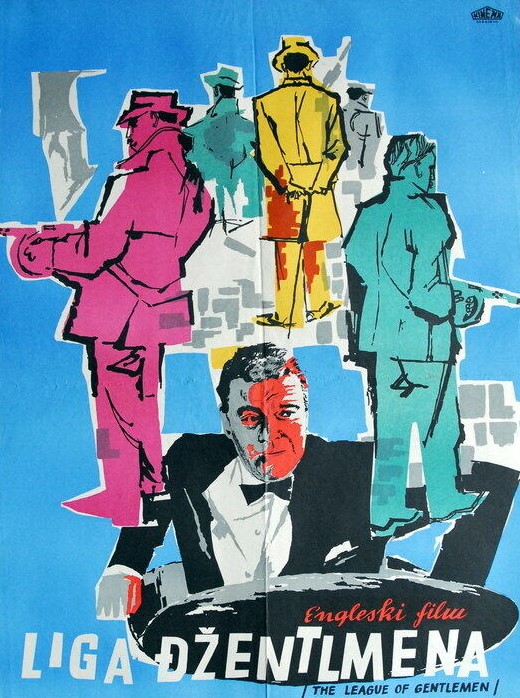
Cracking British heist film prefiguring titles as disparate as The Dirty Dozen (1967) and Heat (1995). Superb opening scene shows the lid coming off a manhole cover and after a short pause to avoid being drenched by a municipal street cleaner a man in a dinner suit emerges and makes his way to his Rolls Royce. Say hello to Lt-Col Hyde (Jack Hawkins).
Don’t be fooled by early reviews that tabbed this this an “action-comedy,” the humor is only incidental, while serving the important purpose of cutting the grandiose down to size, and not in the vein of, for example, Beverly Hills Cop (1984).
A group of ex-WW2 officers receive a mysterious parcel containing a pulp novel and £50 in notes torn in two, the other halves redeemed if they turn up for a meeting at the Café Royal in London. The opening section is almost a riposte to the recruitment sequence of The Magnificent Seven, out the same year, which strived for effect, and zipped along with one-liners.
This gang are all down-on-their-luck, any courage or leadership displayed during the conflict counting for nothing in peacetime. The sequence is surprisingly risqué for the period, virtually all the characters engaged with disreputable women. So, we have Major Race (Nigel Patrick) running some gambling scam with easy-come-easy-go confederate Peggy (Melissa Stribling), Lt Lexy (Richard Attenborough) a garage mechanic with a sideline in fixing the odds on one-arm bandits and inclined to steal other men’s girlfriends, and Captain Porthill (Bryan Forbes) a pianist playing in seedy dives and living off a middle-aged woman whom he cheats on.
Barely getting by emotionally or financially are Major Rutland-Smith (Terence Alexander) whose glamorous wife (Nanette Newman) takes a string of lovers while ritually humiliating him and Captain Mycroft (Roger Livesey) running a chaplain racket and selling erotic magazines. Hyde lives on his own in a mansion, his absent wife described as “the bitch.”
There’s an undercurrent here that’s barely explored of soldiers who have lost their way, but at the time it could remain underutilized because audiences would be filled with men whose post-war experiences chimed with these characters. Hyde has come up with a stunning plan to relieve a bank of close on a million pounds, the cash split equally, using the various skills his team had acquired through war service.
It’s a bold and, even if carried out with military precision, frankly terrifying exercise that intends to use machine guns and smoke bombs to scare the living daylights out of anyone who dares intervene, bringing New York-style gangsters to the streets of peaceful London. First stop is an army training where, in a ruse similar to that of the later The Dirty Dozen, Mycroft impersonates a commanding officer, inspects troops and deals out humiliation at the drop of a hat. Without doubt, this is an amusing sequence, especially when his superiors in the enterprise, Hyde and Race, are forced to eat disgusting Army slop, but it fulfils the same role as in the Robert Aldrich picture, the least likely soldier allowed to strut his stuff, tension undercut.
The heist itself follows the normal template of planning and execution and it’s brilliantly done, although the crooks are undone by a minor flaw in the procedure. Except for the opening section, and when Hyde exposes, as perhaps community therapy, the criminality of his gang, we learn little more about them, except, as if revisiting the past, how they respond (or not) to the discipline and hierarchy of the Army model on which the group operates. Scoring points off each other, or rebelling, or meting out punishment for misdemeanors, it’s like being back in the Army.
Nobody’s seeking redemption as in The Magnificent Seven or The Dirty Dozen, but it’s still easy to sympathize with an odd bunch whose expectations have been dashed. The scene where Race witnesses Hyde’s stark living conditions, and then offers to wash up the plates piled up in the sink, tells you a lot about how lost some of these men are.
Excellent acting all round from, by British standards, an all-star cast. At one time the number one British star, Jack Hawkins was an occasional Hollywood pick, leading role in Howard Hawks’ Land of the Pharaohs (1955), major supporting roles in Bridge on the River Kwai (1957) and Ben-Hur (1959). Richard Attenborough (The Angry Silence, 1960) had been a top name for over a decade, Nigel Patrick top-billed in director Basil Dearden’s previous outing Sapphire (1959). Kieron Moore (Day of the Triffids, 1963), Bryan Forbes (better known as a writer and director) and Nanette Newman (The Wrong Box, 1966) were rising stars, and you might want to include Oliver Reed (Hannibal Brooks, 1969) in that roster as he makes a camp entrance in a bit part.
Basil Dearden (Khartoum, 1966) is in top form with a script by Forbes from the John Boland bestseller.
I’m not sure I can take eight episodes of this especially in this trendy audience-alienating black-and-white version. Going all monochrome is like a bit like a novelist never deigning to describe the weather or what clothes their characters are wearing and I don’t go for the argument that the B/W is to prevent audiences being distracted by glorious Italian scenery when that’s the exact reason Dickie Greenleaf (Johnny Flynn), spoiled son of shipping mogul, went there.
I don’t know what time of year the tale was set because even the Italian seaside, warm enough presumably for Greenleaf and girlfriend Marge (Dakota Fanning) to go for a swim (Ripley remaining on the beach because his parents drowned, maybe), just looks gloomy. Anyone who can render Italy gloomy needs their head examined.
This isn’t Schindler’s List (1993) – which director Steve Zaillian wrote – that used B/W to sensible artistic effect or even Belfast (2021) where it was employed to depict the grimness of life.
I’m not even convinced by Ripley (Andrew Scott). Sure, the grifter was much more charming and personable, if occasionally awkward, as portrayed by Matt Damon (The Talented Mr Ripley, 1999) or John Malkovich (Ripley’s Game, 2002). This Ripley is just glum. Sure, his little cons don’t always work, but he can’t be as doom-struck as this.
Anyway, the story (eventually) starts when Greenleaf’s father pays Ripley, whom he believes to be a university chum of his son, to bring the errant boy, wasting his time on painting, writing and general idling, back from Italy, presumably to take on the role of inheriting the family business instead of living off his trust fund.
Like Sydney Sweeney’s character in Immaculate (2024) it hasn’t occurred to him that not everyone in Italy can speak English and so is thwarted trying to find directions to his prey’s pad. There’s a seemingly endless scene of Ripley climbing endless flights of stairs (how unfit can he be, Denzel Washington in The Equalizer 3 at least had a decent excuse) and this Ripley seems incapable of worming his way in (at least in Episode One) to his prey’s affections.
Yes, there are a couple of interesting scenes, Ripley changing seats on the subway because he sees a man staring at him on a different train. But most of the directorial art is devoted to snippets of images that have no relevance to the story or even the mood. There’s quite a barmy opening scene, too, of Ripley bumping a corpse down a flight of stairs in a tenement, not, to minimize noise, wrapping it up in a carpet or hoisting it on his shoulders. But that is clearly a denouement and it could be an awfully dull time away.
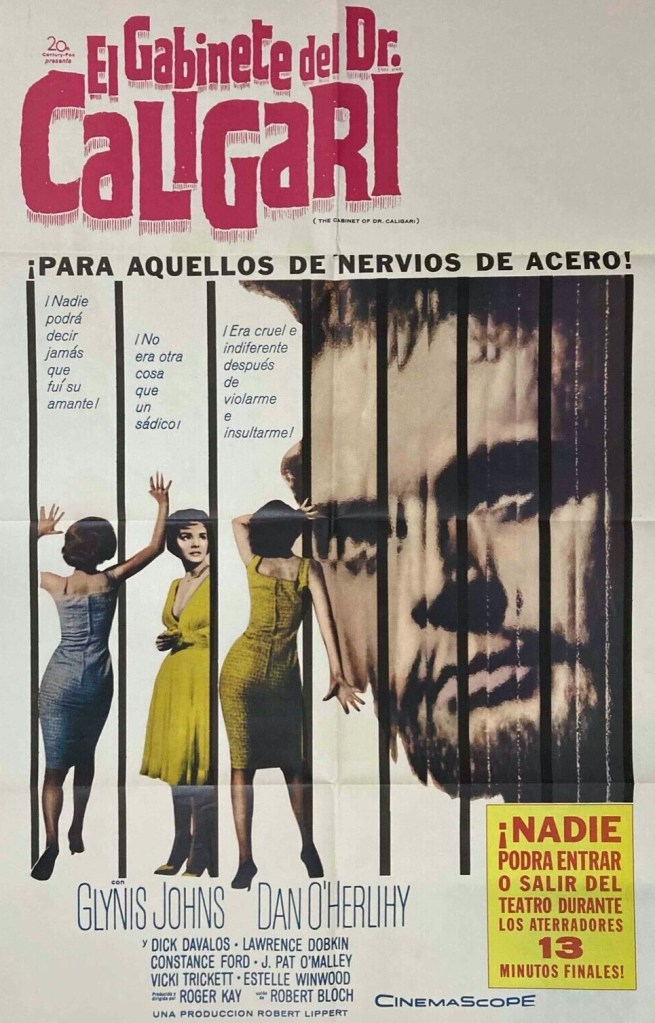
If you’re going to put an English rose through the mill who better than husky-voiced Glynis Johns and except for the giveaway title you might expect from her previous screen ventures that when her car breaks down in a foreign country we’re all set for romance. But you’re probably on the alert anyway after realizing Robert Bloch (Psycho, 1960) wrote the script. The narrative engine runs on twists and the chances would be poor of audiences comprehending the psychiatric devices involved so it’s pretty much a contemporary haunted house mystery with our heroine trapped in an ever-worsening situation and most of the terror emanating from her own mind.
After her tire blowout, and exhausted from trudging along country roads, Jane (Glynis Johns) seeks help from Swede Caligari (Dan O’Herlihy) who owns a large estate in the country. But when she wakes up in the morning, she is unable to leave or telephone for help. There follows a series of disturbing events including (a la Psycho) a peeping tom (bath not shower), being presented with pornographic photographs, interrogated, witnessing torture and being chased by revolving glass. Other images are terrifying, babies baked in ovens, people buried up to their necks, a torture rack. Nothing and nobody are what they seem.
The twist is that she’s in a mental asylum, the car breakdown a fiction to make acceptable to herself her presence there, the other incidents all explained as various versions of psychiatric treatment including electric shock. The central conceit, that she’s trapped, is well-maintained what with other guests dressing in glamorous fashion for dinner and none behaving like inmates. But when Jane tries to make friends with them in order to organize a breakout or escape, she doesn’t know who to trust, and even attempts seduction.
It kind of works and kind of doesn’t. When the camera explains seconds later the reality behind her crazy visions, it ruins the effect. The expressionistic approach helps in presenting the visuals but can’t provide proper insight into her state of mind. The images are odd rather than helping the story. There’s a disjointed feel to the whole thing, as if director and star were on different planets. And there’s a major plot flaw suggesting Jane must be truly out of her mind if she can’t recognize that Caligari and inmate Paul are the same person, give or take a false beard.
It was a bold career choice for Glynis Johns (Dear Brigitte, 1965), generally the sassiest of heroines, to be so out of control. In his only movie, television director Roger Kay makes a bid for the big time with his visuals but too often loses sight of the characters. Of course, it was always going to be a tough ask to match the original German The Cabinet of Dr Caligari (1920) though I doubt many who saw the loose remake would be aware of its existence.
Interesting for the visuals and Glynis Johns losing the rag.
If you like your characters to sport monikers like Donut (“don’t call me Donut”) or Blade (not that Blade, obviously) or The Freak (“get me The Freak”) and like to see death dealt out in novel fashion – taxidermized bird beak through the eye, beer bottle through the mouth, and an update on the Magnum .357 “blow your head clean off” trope – then this one is for you. Not to mention the riffs on Quentin Tarantino and John Wick. And, here’s the kicker, a delicate meditation on old age and father-son relationships.
Your first port of marquee call, of course, should be star Pierce Brosnan. Not the Abba-magnet of Mamma Mia (2008), and far removed from James Bond, but with a hint of the clever machination of The Thomas Crown Affair remake (1999). You might regard his character as a common-or-garden retired hitman now doing business as a chauffeur to a younger generation of hitmen (step up Donut) but he tends to see himself as a “problem-solver” or even “concierge” (as though we might be talking The Continental Hotel). I suspect Brosnan was drawn to the script for the “cowboy draw” soliloquy that has echoes of the gold watch in Pulp Fiction (1994).
Add in director Philip Noyce, director of Patriot Games (1992) and Clear and Present Danger (1994), the titles heavily promoted on the poster, and also, more importantly from this picture’s perspective, Dead Calm (1989). The poster says nothing about screenwriter Richard Wenk but since he gave us The Equalizer trilogy – three of my favorite pictures – then suddenly this little movie, shoved out into streamer with none of the publicity accorded lesser movies, has got my attention.
I started out not liking this at all but gradually warmed to it and at the end considered it a pretty good addition to the sub-genre of new-gangster-takes-over-old-gangster’s-territory-but-with-a-twist. So Charlie (Pierce Brosnan) is driving hitman Donut (Brennan Keel Cook) to knock off low-end crim Kramer. Donut’s M.O. is the knife, but this being the kind of picture where characters swerve from the norm, he decides instead he’ll stick some explosive device in a box of donuts. That works, for sure, but it has the unfortunate by-product of blowing the guy’s head clean off – clean off as in no longer attached to the shoulders and, even if you could scrape up the bits and pieces, unrecognizable.
Therein lies the problem. To pick up his dough, Charlie needs to show an identifiable corpse. Donut is soon out of the picture, the dumb sonofa, pistol in hand while driving over bumpy road, shoots himself in the head, brings down a telegraph pole and sets the car on fire. Still Charlie isn’t known as fast for nothing (in fact, the title had no relevance whatsoever, so if you’re expecting a car chase buckle up and get frustrated) and he decides the dead man’s wife should somehow be able to identify him.
Sure enough, Marcie (Morena Baccarin), now an ex-wife but still harboring sentimental thoughts about her deadbeat now dead husband, explains he has a tattoo on his ass that she is willing to verify as belonging to the ass of said deceased. That should be that, another problem solved by our problem-solver or concierge, if you prefer.
Except, suddenly, all hell breaks loose. It’s gang war time. Charlie’s ageing boss Stan (James Caan) is the object of the hit and, unfortunately, for the hitters, Charlie treats this old man very much like a father (hence the “cowboy draw” soliloquy) and takes agin anyone who could have been responsible for the hit, which is pretty much anyone who has crossed the screen in the early part of the picture.
These dudes will have names, for sure, but heck, they hardly appear before Charlie starts to knock ‘em off so don’t expect me to remember them all. In any case, the movie, I warned you to expect a narrative swerve, moves in a different direction. One route is that subtle kind of May-December romance Wenk gave us in The Equalizer 3 (2023), Charlie, while trying his hand with Marcie, aware that he’s got very little chance of success, given the age gap (acknowledged at least rather than expecting younger women to jump into bed with any old guy just because they’re an ageing movie star and that’s what the audience expects), even though he’s a cultured hitman, pretty ace in the kitchen and old-style in attitude to women. Whether it’s her particular set of skills – see what she can do with a bird beak – or her lost soul that’s the attraction.
But that element is left kind of floating in the background as the story shifts up a gear as we discover why the hit was out on Kramer in the first place and why everybody else was getting rubbed out. It wouldn’t be this kind of picture without a couple of twists at the end.
Charlie is a laid-back hardman with a nice line in quips, self-possessed and self-effacing, but a regular guy when it comes to the regular things in life. His relationship to Stan is very touching and the romantic element is underdone.
So if you’re going to buckle up for his one, ignore the opening sequence, set the Tarantino vibe aside and wait until it gets into the meat-and-potatoes of relationships and of course, for the thrill-seekers out there, Charlie taking revenge.
Shows there’s more to Brosnan than a raised eyebrow, a last hurrah for James Caan (no introduction needed), and Brazilian actress Morena Baccarin (Deadpool, 2016) reveals unusual reserve in what could easily have been, in other hands, a more showy part.