The Boys in the Boat (2023) ***** – Seen at the Cinema

Remarkable. I never thought George Clooney (Good Night and Good Luck, 2005) had it in him. His previous offerings had all been worthy but dry. Here, he conjures up a gripping drama of underdogs pitted against the rich and powerful of the USA and then the  might of Nazi Germany at the 1936 Olympics.

Rowing is generally considered an elite sport, contestants plucked from elite universities – in Britain it was always associated with the annual Oxford vs Cambridge Boat Race though from 1984 the country has won at least one gold at the Olympics and Sir Steve Redgrave, who lacked an alma mater, won five on the trot.

Except for athletics and golf, most popular sports are team games – football/soccer, American football, baseball – but the media and Hollywood tends to treat them as opportunities for individual excellence, the striker scoring the winning goal, the quarterback the winning touchdown, the baseball player the winning home run. The team aspects of these sports are rarely touched upon, even though you need a specific quantity of personnel working in tandem in order to compete.

What makes rowing so unusual is that, as one of the characters comments, you don’t have eight men in an eight-man crew you have one – in other words the guys have to be so in synch that they act as one. I probably learned more about the technicalities of sport from this one picture than any other sports-related movie I’ve ever seen and yet that information is passed out in dramatic form.

In terms of the feel-good factor, this comes closest to Chariots of Fire (1981), but in some regard exceeds that because it’s not about individuals coming good or coming from behind to win a medal, but about group dynamics. And it’s quite astonishing that with the narrative covering three key races, none much different from the other, just boats on water, that director Clooney manages to rack up so much tension.

And like Oppenheimer (2023) it’s a throwback, to those old days of men with hats. Unusual, too, that, like Moneyball (2011) or Any Given Sunday (1999) as much concerned with management as playing.

So, in the middle of the Great Depression, the young men who queue up to battle for a place on the eight-man rowing squad at the University of Washington (in Seattle not the national capital) are kids desperate to feed themselves, not those born with a silver spoon in their mouths, because making the team comes with a scholarship, a bed and meals. But qualifying is a massive attack on the human physique, not to mention psyche, as the combatants need to learn to breathe different and wear out muscles in a way no human being should.

There’s not room to showcase all the athletes so the narrative weight drops on Joe Rantz (Callum Turner), the hobo, abandoned by parents when young, living in a car wreck, skimping on food. He’s got a crush on well-to-do Joyce (Hadley Robinson) who has to do most of the running to get their romance over the line. Next in line is Don (Jack Mulhern), with a Charles Bronson haircut and taciturnity, no social skills but a handy piano player, his respiratory illness threatening to torpedo the team’s chances. In any other picture the cox Chuck (Thomas Elms) would hog the limelight because he’s the one who disobeys the coach’s commands and beats verbal hell out of the team.

Al Ulbrickson (Joel Egerton) is the coach fighting for his career, taking on the shady politics and rules-rigging and a system that wants to only reward the rich. Sidekick boatbuilder George (Peter Guinness) is the kind of backroom character who is mostly silent unless he has a pithy word of wisdom. Al manages two teams, the veterans if you like, who’ve been training together for three years and the juniors, comprising the Depression kids, but it’s the driven newcomers who impress the most and against all odds are selected to represent the university.

I had always assumed there was nothing to do in Poughkeepsie except “pick your feet.” Turns out its river is the locale for the annual rowing championships and so popular it’s not just a huge gala event but there’s even some kind of railway cars packed with passengers that runs along the side of the water so the elect can keep up with the rowers.

Most reviews of this picture have been on the niggardly side but I found it not only deftly done, but very moving, a couple of heart-tugging tear-snagging moments as it pounds its way to feel-good conclusion. The women, who are relegated to bit parts, are exceptionally good, Hadley Robinson (who I had just seen in a completely different role in Anyone But You, 2023) dances across the screen while Courtney Henngeler, as the coach’s wife, has a couple of the best lines in the entire picture. But probably the absolute zinger has to go to a blink-and-you-miss-it moment featuring Jesse Owens (Jyuddah James) when asked if he was going to “show” the Germans what he could do, replies that, no, he was going to show his countrymen back home, indicating the racial prejudice he had to overcome to win selection.  

Terrific turn from Joel Edgerton (Red Sparrow, 2018) who has been hovering around for donkeys without delivering a career-defining performance. Breakthrough, too, for Callum Turner (Divine, 2020) and Jack Mulhern (Pet Sematary: Bloodlines, 2023) though I have a sneaky feeling you’ll go away thinking British character actor Peter Guinness has stolen the picture. Top notch script by Mark L. Smith (The Revenant, 2015) from the bestseller by Daniel James Brown.

All the elements that appear essential to a contemporary sports picture, namely sex, drugs and violence, are missing and what a difference that makes, allowing the picture to streamline forward without getting bogged down. And critics, believing something critical is missing, are missing the point. At the opposite end of the pizzazz scale from Oppenheimer but with as interesting and adult-oriented tale to tell. And for once allows audiences the chance to let their hearts rule their head. And at just over two hours, doesn’t overstay its welcome. This ain’t made by a streamer so catch it in the cinema where it belongs.

Instant classic.

The Mark (1961) ****

Despite an exceptional and Oscar-nominated performance by Stuart Whitman (Rio Conchos, 1964) , I suspect modern audiences will take less kindly to this tale of convicted child molester trying to come to terms with his feelings. At least it’s considerably more honest than the creepier May December (2023) where the criminal steadfastly contended her innocence.

And I suspect, too, that Whitman’s square jaw and muscular physique got in the way of his attracting the parts for which the depths of vulnerability he was able to exhibit were most suited. He came to this straight after an action role, as the charming bad-good-guy of The Commancheros (1961) where, as far as audiences were concerned, what he did with his fists was more important that what he expressed through his eyes.

There’s a bit of a grey area that lends the convicted Jim Fuller (Stuart Whitman) the benefit of the doubt. He was found guilty of intent not of actual molestation and a goodly part of the picture is spend on examining why he went down that route, either in a group exercise in prison or one-on-one with a psychiatrist, chain-smoking Irishman Dr McNally (Rod Steiger) in both instances.

I’m not sure how the psychiatric evidence adds up, but basically, with a dominant mother who bullied his father, he grew up frightened of women, despite being attracted and attractive to them, and sought out someone with whom he felt more comfortable, less challenging, leading him to spend too much time watching children at play and eventually buying a young girl an ice cream and going out on walks with her.

It would have been too much for audiences of the time – as it even was with May December – to go into the technicalities of what he intended to do so we are left to trust his own word that he never intended to instigate anything sexual, though why kidnap a child in the first place. The second element that would fill modern audiences with alarm is that though he manages to begin a sexual relationship with a woman of his own age, secretary Ruth Leighton (Maria Schell), she is a widow with a young daughter. Most people would instantly come to the conclusion he was using mother to groom daughter.

However, the film takes the tack that he’s using the daughter to explore a normal relationship with a child, the joy of having a daughter, and the delight and happiness that a young person can bring into a dour repressed life. Dr McNally keeps on banging on that Fuller is “cured” but it’s a very uneasy watch trying to work out if he is or not.

In the event, the first time he’s alone with the girl he is photographed by a local journalist who sticks the photo on the front page, destroying the life Fuller has carefully rebuilt. He has found employment as an accountant with a sympathetic business owner Andrew Clive (Donald Wolfit), fitting in so well he is promoted, though at odds with another senior employee Roy Milne (Paul Rogers). He is chucked out of his accommodation, loses his job and although Ruth initially stands by him the minute she sees Fuller with her daughter her instincts are hostile.

There would be no point in an actor trying to gain sympathy for such an unsympathetic character by playing to the gallery with bouts of temper or floods of self-pitying tears, but even so, the vulnerable husk Whitman presents, his struggles with his self-contempt, his understanding of the feelings he must invoke, his determination to live as quietly as possible, almost in that determined English manner of never being heard nor seen, is what makes this film. Interestingly, he replaced Richard Burton, who pulled out at the last minute (as did Jean Simmons) and you could easily imagine with those trademark quick intakes of breath and deep growls how that actor would have played the part.

Whitman doesn’t go near any grandstanding. It’s just a heartfelt performance of a man who’s lost his way and knows he might never find his way back, haunted by his past, unable to trust himself, unable to believe that he is, in fact, cured. Probably, the biggest issue is that the movie comes down on his side, especially when he becomes one of the usual suspects in another crime involving children, though he did not commit that, and tries to suggest that a child molester will find salvation through living with a mother and child in the normal fashion. As I said, this is not my subject of expertise, thankfully, and that may be well what’s advocated rather than staying away from children altogether.

While the approach might be considered a shade naïve at the same time it does examine issues surrounding reintegration and avoids the obvious trap of attempting some kind of character redemption.

Apart from Whitman, there are good performances all round. Maria Schell, whose career within a decade would go from roadshow blockbuster Cimarron (1960) to WIP epic 99 Women (1969), subsumes her normal more glamorous persona to play a believable working mother. With his chain-smoking, Rod Steiger (The Pawnbroker, 1964) is allowed to fidget to his heart’s content but even such obvious scene-stealing only places more emphasis on the quieter Whitman. Donald Wolfit (Life at the Top, 1965), too, reins in his usual bluster.

Guy Green (The Magus, 1968) directed from a screenplay by Sidney Buchman (The Group, 1966) and Stanley Mann (The Collector, 1965) from the bestseller by Charles E. Israel.

In this instance, given the Oscar nom, Stuart Whitman could hardly be considered under-rated but over the years seems to have disappeared from sight.

Worth a look to see what he could do with the right material.

Dear Brigitte (1965) ***

In the same year as his momentous turn in Shenandoah, James Stewart at his exasperating best has the time of his life in this throwback comedy that takes its time getting all its ducks in a row while taking a tilt at nuclear energy, computers and the eternal battle between the arts and science with a fair chunk of whimsy thrown in.

Surprisingly contemporary nod to this whole business of actors speaking directly to the camera, with the ramblings by the Captain (Ed Wynn) in this capacity constantly being interrupted by passersby in the vein of “you talking to me?” or “stop talking to yourself.” Professor Leaf (James Stewart), a distinguished poet constantly at odds with Dean Sawyer (Howard Freeman) at the local college where he teaches – on the few times when he’s not handing in his resignation – and which has a nuclear power station next door, tries to espouse the arts at every opportunity, including a family four-piece outfit playing classical music, only to discover son Erasmus (Bill Mummy) doesn’t have an artistic bone in his body.

Surprisingy, in the UK down-graded to supporting feature in this kid-centric double bill. The marketing men pulled another fast one in the poster, leading audiences to believe that was BB in the bikini when it was only the usually-nude model of an artist neighbour attempting to be decent.

What Erasmus has, for some reason only now coming to the fore although he must be about ten or so, is that he’s a mathematical prodigy, able to work out complicated sums faster than a computer and pointing out errors in the calculations of the local bank. Leaf’s wife Vina (Glynis johns) doesn’t have a great deal to do except rein in the professor but she has a wonderful scene where she brings the local bank manager to book.

Anyway, eventually, Erasmus gets hooked into helping the boyfriend Kenneth (pop singer Fabian) of Leaf’s daughter Pandora (Cindy Carol) guess the winners of horse races as a way of assisting the couple in raising enough money to get married. By this time, Leaf has finally resigned and worked out he won’t pick up easy cash from the Government – another terrific scene – and is hoodwinked by con artist Peregrine Upjohn (John Williams) into setting up a charity to help disadvantaged students by employing his son’s skills.

Anyone familiar with horse racing will be aware how preposterous the conceit that anyone, no matter how scientifically skilled at working out the odds, can consistently pick winners. But this all flies by since it’s that kind of movie, one that not only defies belief, but basically sucks you into believing the whole thing, the way the untalented youngsters always managed in Hollywood times gone by to muster a great stage show or turned any kind of loser into a winner.

Still, all this goes on before we get close to the nub of the title. Erasmus has fallen in love with Brigitte Bardot and because he’s basically the family’s sole breadwinner eventually dad takes son to France to meet the real-life superstar who is far more charming than you would expect, the sexpot on hold for the occasion.

So, mostly, as I said, it’s an old-fashioned confection, the kind you could still get away with in the mid-1960s before the changing times demanded that comedies take on a harder edge. And with James Stewart in top form and husky-voiced English star Glynis Johns (who had her own television series in the U.S.) jumping in now and then to prevent him from making things worse it works a treat. Stewart exaggerates all those mannerism you might have thought mildly irritating before – he’s all limbs and sentences cut off in their prime and telling people to leave their own houses. But if he had toned any of that down, the air would have quickly escaped the balloon, for really he’s the only thing keeping it afloat.

But that’s stardom for you. A vehicle comes along that in total isn’t really worthy of the involvement of a marquee attraction like Stewart, who could be lending his talents to more solid fare like Shenandoah and The Flight of the Phoenix (also released the same year). While he’s crucial to both those other pictures, giving one of his best performances in the former, perhaps surprisingly, U.S. audiences, voting with their dollars, felt his performance here trumped that of the Aldrich picture.

Ir’s usually believable roles that attract the greatest critical plaudits for stars, but actually their most notable contribution is in making fly movies that should never work on paper but somehow with their magical injection not necessarily makes the screen sizzle but turns doughy material into something lighter and more easily digestible.

Henry Koster (Mr Hobbs Takes a Vacation, 1962) directs with occasional flair from a screenplay by Hal Kanter (Move Over, Darling , 1963) and Nunnally Johnson (The Dirty Dozen, 1967) based on the bestseller by John Haase.

As under-rated as The Trouble with Angels (1966) as lightweight comedies of the decade generally were, this is worth a look for Stewart alone.  

https://amzn.to/3RiMcjX

Mysterious Island (1961) ****

It’s the Ray Harryhausen Show. You’re not here for the story, surely, or the characters. You’re just waiting patiently for the monsters to appear. The only element that’s ever wrong with this kind of picture is that in-built delay. The need to set up the story and establish the oddities of the world before the behemoths trundle into view.

Doesn’t matter whether the creatures already live in an accommodating  global ecosystem like Jason and the Argonauts (1963) or One Million Years B.C. (1966). Or whether you are  going to come across them by the simple device, most famously, of dropping through a rabbit hole (Alice in Wonderland) or via a cupboard door (The Lion, the Witch and the Wardrobe) or a  rockface cracking open (Prehistoric Women / Slave Girls, 1967) or a time warp (Wonder Woman, 2017).

Here, it’s a bunch U.S. Civil War soldiers who need to break out of their prison and commandeer a handy hot-air balloon that can fly thousands of miles to the uninhabited volcanic island occupied by giant beasts. So we’ve got a monstrous crab, giant bees, chicken, gigantic octopus. And the success or failure of the picture relies not so much on whether our heroes can overcome these than that they look realistic.

And, boy, they are just brilliant. This is fairly early on the Harryhausen catalogue but if his stop-motion animation was still going through an experimental stage it’s hardly noticeable. Enhanced claws and beaks are just dandy for trapping humans, having them wriggling madly to avoid being split open with one snap. And the bee is pretty cunning, filling in the hole the invading humans have created in the massive honeycomb.

And should, perchance, your mind be wandering director Cy Endfield (Zulu, 1964) has a bout of sequel-itis, throwing in Captain Nemo from author Jules Verne’s 20,000 Leagues under the Sea (1954), and prequel-itis – the pirates from his In Search of the Castaways (1962) – plus, to add the romantic touch, a couple of shipwrecked damsels and, for the climax, volcanic eruption.

No doubt you’re dying to know about the characters you couldn’t really care less about who are encountering this legion of beings. So, we’ve got the grizzled Capt. Harding (Michael Craig), young Herbert (Michael Callan) who will express his romantic side, Sgt. Pencroft (Percy Herbert), Corporal Nugent (Dan Jackson) and Gideon (Gary Merrill). There are joined by posh English lady Mary Fairchild (Joan Greenwood), who happily buckles to and is handy with a rifle, and her niece Elena (Beth Rogan) who decides laziness is the better option when she’s not canoodling with Herbert.

Their job is to squabble, beat off the monsters, adapt a local geyser for cooking purposes, set to building a boat to escape, and await the next monster/person who’s going to upset their plans.

Captain Nemo certainly makes an impression, his ship, the Nautilus, stranded under the volcano and the man himself taking a break from the world since he doesn’t believe he is such a good fit. Turning up out of the waves in an improvised aqualung isn’t quite an entrance on a par with Ursula Andress in Dr No (1962), but it runs it close, though bikini tops rubber-suit all the time.

The pirates are just a menace and I wouldn’t be surprised if you came away with the notion that they are rammed into the tale just so their sunken ship, scuttled by Nemo, can miraculously rise from the waves thanks to the sailor’s ingenuity.

Time has been kind to Harryhausen. What was once viewed as appealing only to children and the childish wondrous aspects of adults has now become cult viewing. And no wonder. In the age of CGI, it’s quite astonishing what he has managed to achieve with what appears the most rudimentary of techniques.

Of the actors, British star Michael Craig (Doctor in Love, 1960) has his hands full to stop the picture being stolen by rising American actor Michael Callan (The Interns, 1962), a grumpy Gary Merrill (A Girl Named Tamiko, 1962), an almost avuncular Herbert Lom (The Frightened City, 1961) and a delightful turn by plummy-voiced Joan Greenwood (The Moon-Spinners, 1964).

You wouldn’t think this was the ideal movie to set you up for Zulu, but Cy Endfield does a good job of keeping the story moving and keeping out of the way during the Harryhausen sections. Screenplay by John Prebble (Zulu), Daniel B. Ullman (the television writer’s only movie of the decade) and veteran Crane Wilbur (The George Raft Story, 1962).

Huge fun. All hail King Ray.

https://amzn.to/3Rmb76d

Riot (1969) ***

Stand-Off might be a more apt title but that’s not going to sell many tickets. After taking over the wing of a prison, not a great deal happens except for character development. As it turns out the threat of a riot is intended merely as a ruse to cover an attempted break-out.

Inmate Cully (Jim Brown) is the first to point out to escape mastermind Red (Gene Hackman) the deficiencies of his plan. For a start, they are in the middle of the desert and without transportation and food, neither of which is handy or arranged, they are likely to find the wilderness a worse prison. Secondly, there’s a hell of a lot of digging to do, a tunnel long enough to allow them to emerge on the other side of the walls.

And thirdly, and most presciently, most of the prisoners don’t give a fig about organizing a break-out. They are simpler souls, wanting to enjoy a brief moment, even if still incarcerated, of freedom, happy to glug down gallons of home-made brew, watch drag acts for entertainment and slit the throats of the guards taken hostage.

It’s ironic that Cully and Red begin acting like prison warders, defending the hostages against the most vicious of the inmates, guarding them as they take a walk of shame to a hideout, and chucking into solitary the most depraved of the prisoners. The prison break, when it finally comes, is exceptionally well done by director Buzz Kulik (Villa Rides, 1968) .

A small hole in the sun-parched earth becomes bigger until a furry head like a groundhog appears and the outside of the prison walls is viewed from the perspective of a potential escapee.

The ultimate sex’n’violence double bill.

But, mostly, it’s a long haul of tension. Red holds the officials at bay with not just the hostages but a set of demands for better treatment, triggering a bout of negotiation and talking to the media. As in female-starved male-dominated pictures like The Flight of the Phoenix (1965) and The Dirty Dozen (1967), women are shunted in by devious means, in the former via a mirage, in the latter through the sex workers smuggled in prior to the mission. Here, Cully dreams of landing by helicopter beside a pool of beautiful bikini-clad women who rush to worship him.

Although Cully and Red don’t exactly see eye-to-eye and for the picture to work of course must bury their differences and work together, the pair don’t rack up the confrontation required for this movie to zing. Cully is somewhat laid-back and Red uses his fingers rather than his fists or loud voice to make points. You kind of wished there was more sign of imminent explosion.

Sure, there are setbacks, and having to change plan and improvise on the spot. The stakes are only really raised when the vacationing prison governor returns and dumps the softly-softly approach of his stand-in, telling the prisoners in no uncertain terms that he will happily murder ten prisoners for each hostage killed, storm the wing and gas them all. The end shows exactly what level of brutality he is capable of.

But, meanwhile, we are left dancing around a bunch of fairly cliché characters, the prisoners in for short terms who don’t want to participate, the lifers wanting brief respite, the killers denied the opportunity to kill, the men who hide their sexual desires under the more acceptable cross-dressing.

Rioting is actually thin on the ground. In fact, Red has to do the opposite. Prevent everyone getting out of line because that will precipitate assault by the prison guards. Keeping everyone happily penned up for the time it takes to complete the tunnel is more Red’s plan than letting the prisoners loose to run riot.

That said, both Jim Brown (100 Rifles, 1969) and Gene Hackman (The Gypsy Moths. 1969) are impressive. Brown reins in the tough-guy act, holding sway in soft-spoken manner, while Hackman brings out more elements of the screen persona that would win him an Oscar a couple of years later for The French Connection.  Naturally, Hackman, in retrospect, attracts the kudos but in reality I think this is a step-up for Brown and he is not acted off the screen. (The pair had appeared together in The Split, 1968).

One of the flaws, I would hazard, is that this kind of picture should have been the break-out vehicle for rising stars – as with The Magnificent Seven (1960), The Great Escape (1963), and The Dirty Dozen – but in that department it’s sorely lacking and I think the picture overall suffers as a result.

Given he knows more than the audience where the story is headed Buzz Kulik (The Warning Shot, 1967) does well to concentrate on the friction between Brown and Hackman. James Poe  (The Bedford Incident, 1965) wrote the screenplay from the Frank Elli book.

Men under pressure are not under enough pressure to make it zing.

https://amzn.to/3tjAHAG

Madison Avenue (1961) ***

Surprisingly effective feminist angle. Unusual for the suave salesman to get his come-uppance from two vulnerable women, but that’s the case here, in an expose of the “build-up” (what we’d call “hype” these days) techniques of the public relations business, an area of advertising generally considered one step below the Mad Men of popular television. Fancy bars and cocktail dresses put in an appearance but, mostly, this deals with the grittier end.

This was pretty much the end of the mainstream Hollywood career for Dana Andrews. Still best-known for Laura (1944) and The Best Years of Our Lives (1946) and for some key film noir titles, this was his last major top-billed role. He wouldn’t make another movie for four years and anyone coming to him in this decade would associate him with supporting roles in the likes of The Satan Bug (1965) and Battle of the Bulge (1965).

So this is, possibly unexpectedly, a performance to savor, for he is hardly the hero, more the kind of character who might turn up in a contemporary movie, with questionable motives to go along with his decided charm (look no further than Leonardo DiCaprio in Killers of the Flower Moon). Though hardly murderous, he is ruthless and doesn’t care who he brings down in achieving his objectives.

After losing his job for purportedly (an accusation unproven but going with the territory) trying to steal the major client, Associated Dairies, of his boss, J.D. (Howard St John), top executive Clint (Dana Andrews) plans to get his revenge in rather sneaky fashion, by turning round its poorly-performing subsidiary Cloverleaf. He targets the dowdy owner, Anne Tremain (Eleanor Parker), of its failing advertising firm, promising her client a big editorial splash in a big newspaper courtesy of journalist girlfriend Peggy (Jeanne Crain).

Anne’s the first beneficiary of his PR skills, reinventing her as a glamorous, power-dressing, more confident advocate of the persuasion industry. He inveigles himself into her arms, at the expense of Peggy. He aids the idiotic owner of Cloverleaf, Harvey (Eddie Albert), who spends all his time in the office playing with model airplanes. (From today’s perspective, he’s something of a savant, predicting these machines – think drones – could one day form part of the delivery contingent.)  

To show just how damn clever he is, Clint “builds up” Harvey into the kind of self-made-man that has politicians purring, and brings Clint back into the winners circle. Unfortunately, the only way to get right in is through deviousness, a bit of back-stabbing here and there, dropping anyone who’s outlived their usefulness. But he’s not as clever as he thinks, lacks the business acumen of Anne, who’s denied him a share of her growing business, and therefore any real power base.

The women take unkindly to being used, Anne now the one doing the tossing-aside. For her revenge, Peggy writes an article that digs the dirt on him. Neither of these women would fall into the femme fatale category, though once all glammed-up Anne could pass for one had she required violence rather than business dexterity to exact her revenge.

Though both, unusually for the times, hold top positions in their businesses – Peggy’s a high-flying journalist working the Washington beat – they are presented initially as easy meat for a man capable of exploiting their vulnerabilities. Clint keeps Peggy on the back foot by failing to turn up for dates or presenting Anne as a rival for his affections.

This is an era where, purportedly, all women wanted was a ring on their finger, and to hang with being landed with an unsuitable man. But both Anne and Peggy upend that stereotype, seeing through the creature who’s come calling. In a western, audiences would have the satisfaction of seeing this kind of despicable character being shot. Here, they get to see him cringe, and be humiliated by women who have come to their senses. Albeit there’s a “happy” ending, that only occurs after some begging by the predator.

It suffers from too many long sequences, and by its determination to go down the satire route in exposing the seamier side of the public relations business. But there are some classic moments, such as when Harvey, tumbling through a prepared speech, has to suddenly wing it and finds his real voice.

But watching Anne get the measure of Clint and seeing him brought to heel by both women suggests the kind of ahead-of-its-time come-uppance that sets this up as an early feminist venture.

Eleanor Parker (The Sound of Music, 1965) and Jeanne Craine (Queen of the Nile, 1961) are both superb as women coming to their senses and this is a quite superb last top-billed hurrah from Dana Andrews. This was also the final outing for director H. Bruce Humberstone (Desert Song, 1953). Former newspaperman Norman Corwin (The Story of Ruth, 1960) and Richard P. Powell (Follow That Dream, 1962) based the screenplay on the best seller by Jeremy Kirk.

Resonates on the feminist front.

Behind the Scenes: Coming Soon(er) or Later or Not At All

My discovery that Hayley Mills’ career could have taken an entirely different turn had either Deep Freeze Girls or When I Grow Rich entered production in 1965/1966 and therefore prevented the star returning to Britain for The Family Way (1966) – and, as it transpired, love and marriage – made me look again at the huge volume of movies that were either never made at the time initially announced or never made at all.

I’d covered a couple of classic examples previously, 40 Days of Musa Dagh for example taking nearly half a century from initial proposal to some kind of fruition. And, of course, the financial collapse of studios at the end of the 1960s put an end to the prospects of such big budget movies as Man’s Fate, to be directed by Fred Zinnemann.

But sometimes as many as half the movies announced by a studio or independent for their forthcoming schedule never made it to the big screen. Others such as This Property Is Condemned (1966), initially to star Elizabeth Taylor and directed by John Huston, still got over the line but with new players, Natalie Wood as star and Robert Mulligan in the hot seat. On the other hand, of the quartet of movies – Lie Down in Darkness, Guardians, Grass Lovers, and Linda – that producer William Frye (The Trouble with Angels) thought would make his name, none were made.

Everyone knows moviemaking is a dicey business, but you don’t realize just how tricky it is unless you count up just how many pictures, often trumpeted with big stars signed up, just don’t make it to the cinema screen. Not that Hollywood was unwilling to gamble. Studios snapped up anything – novel, Broadway play – that appeared a decent prospect.

In the early 1960s talent agency Famous Artists earned for its clients a grand total of $850,000 (equivalent to $8.5 million now) for a disparate bunch of properties. King Rat by James Clavell went for $160,000 plus a percentage and was made in double quick time. As was Lilith by J.R. Salamaca, costing $100,000, and Sylvia ($20,000 purchase price) by E.V. Cunningham (aka Howard Fast). Ken Kesey’s One Flew Over the Cuckoo’s Nest went for $85,000 to Kirk Douglas’s Bryna outfit, which explained why, a decade later, it ended up being produced by his son, Michael.

But Broadway play The Perfect Set-Up by Jack Sher, sold to Hollywood for $400,000 and with Angie Dickinson signed up for the lead, was never made. You might recall George Peppard in a TV movie Guilty or Innocent: The Sam Sheppard Murder Case (1975) but that wasn’t based on The Sheppard Murder Case by Paul Holmes that someone shelled out $25,000 for in 1962.

Director Paul Wendkos had planned to follow up Gidget Goes to Rome (1963) with Native Stone, an architectural drama in the vein of The Fountainhead based on the Edwin Gilbert book that cost him $10,000 but that hit the buffers. Two novels by thriller writer John D. MacDonald, hot after Cape Fear (1962) – the aforementioned Linda costing $15,000 and A Child Is Crying $5,000 – were not made either. Nor, out of this batch, were Indian Paint by Glenn Balch or Fish Story by Robert Carson.

Even as powerful a producer as Ross Hunter (Midnight Lace, 1960), couldn’t get onto the starting grid The Public Eye as a vehicle for Julie Andrews, Laurence Olivier and director Mike Nichols (it would have been his movie debut) – when made in 1972 starring Mia Farrow and Topol it was under the aegis of Hal Wallis. Hunter also spent $350,000 on Dark Angel to star Rock Hudson but that fell at the first hurdle as did Broadway play A Very Rich Woman to star Katharine Hepburn.

Tony Curtis was down for a remake of Casablanca (1942) called The Fifth Coin and relocated in Hong Kong and to co-star Nancy Kwan. Shooting on the Seven Arts production had a start date: November 15, 1965. But never went in front of the cameras. Kwan was particularly unlucky. The aforementioned Deep Freeze Girls also had a budget ($1.5 million) and a start date (October 1965) but it didn’t get off the ground either.

And of course Seven Arts had become enmeshed in the long-running John Huston saga of The Man Who Would Be King. This version, to star Richard Burton, had been set a $4 million budget and was due to start in April 1966. No go. At least The Owl and the Pussycat, budgeted then at $1.6 million and due to start on Dec 1965, was worth waiting five years for – when it was eventually filmed, though by Rastar not Seven Arts, it starred Barbra Streisand and George Segal.

In 1964 Columbia had 77 movies on the stocks. Richard Brooks was setting up Catch 22, Peter Sellers was being lined up for the musical Oliver!, and Carl Foreman was prepping Young Churchill. All these projects dropped off the roster, only to pop back up several years later with different stars (Ron Moody in Oliver!) or directors (Mike Nichols for Catch 22) or even studios (Paramount for Catch 22).

But others were simply shunted aside. Whatever happened to The Gay Place to team James Garner and Jean Seberg? Or The Fabulous Showman to be directed by Blake Edwards? Or another long-running saga, Andersonville with Stanley Kramer at the helm? Or Stephen Boyd as Richard the Lionheart? Even though The Ipcress File (1965) proved a big hit the same author’s Horse Under Water stalled at the starting gate, as did Robert Rossen’s Cocoa Beach and Ann-Margret in Strange Story.

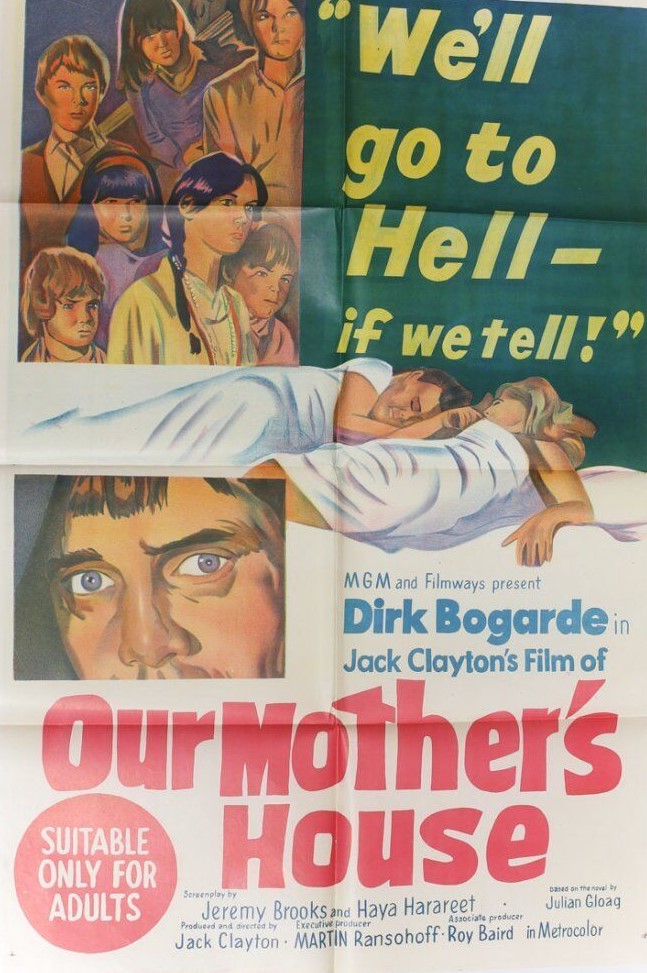
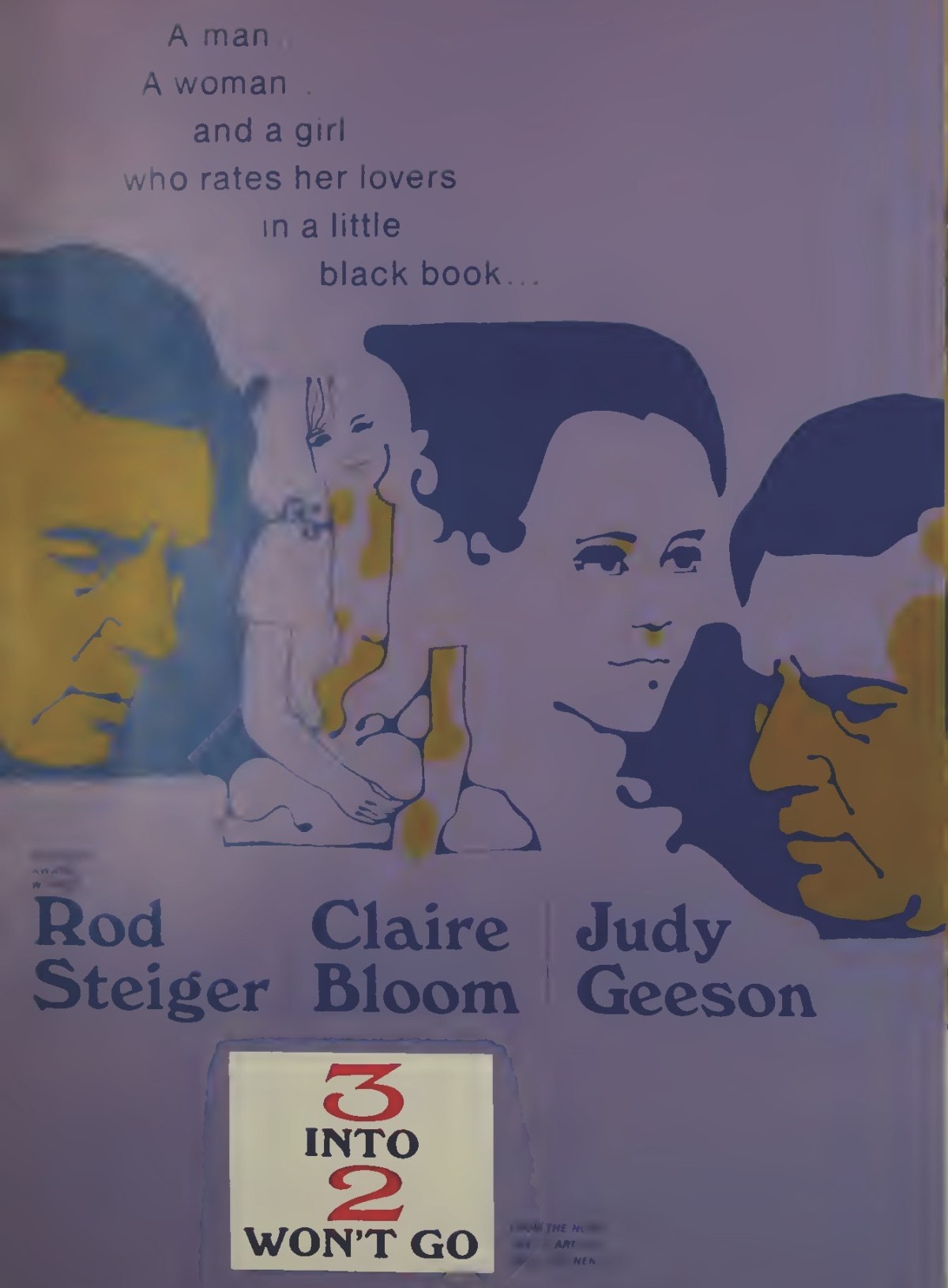
When Robert Evans ushered in a new era at Paramount he placed his faith in writers. He doubled production and had over 40 writers working on projects. Some had little or no experience of movies but were big literary names. John Fowles, the adaptation of whose The Magus (1968) was an expensive flop, was hired to write Dr Cook’s Garden, but it was never made. Edna O’Brien had Three into Two Won’t Go on the stocks at Universal so she was set to write Homo Faber. Another casualty.

Oscar-winning screenwriter Edward Anhalt (Becket, 1964) was to make his directorial debut with We Only Kill Each Other. It didn’t happen. Nobody had ever managed to film Thomas Wolfe’s epic novel Look, Homeward Angel, so Paramount took a tilt at that without success. Escape from Colditz went into cold storage and an adaptation of Harold Robbins bestseller 79 Park Avenue ended up as a television mini series in 1977 and at a rival company, Universal.

It’s still standard operating procedure for Hollywood to snap up any big bestseller or Broadway hit without ever knowing whether it will ever see the light of day but willing to take the risk.

SOURCES: “Famous Artists,” Variety, August 8, 1962, p5; “Sanford and Frye of TV To Make Theatrical Films,” Box Office, January 7, 1963, p10; “Col-Frye TV Pact,” Box Office, August 19, 1963, p10; “Columbia Policy,” Variety, May 6, 1964, p13; “Seven Arts Pix Multiply,” Variety, March 31, 1965, p4;  “Ross Hunter’s Crowded Future,” Variety, May 12, 1965, p7; “Bob Evans Pays Chip Service To Writer As Star,” Variety, May 1, 1968, p19.

Behind the Scenes: “The Trouble with Angels” (1966)

Miracle this was made at all with so many neophyte producers involved. First up were Kenn Donellen and Jacqueline Babbin. No Hollywood experience. He was the television rep for Ford Motors, she worked for David Susskind’s talent agency. But like everyone else in the business in the early 1960s, when major studios were on the point of collapse, they thought they could do better. Especially after they nabbed the property, Life with Mother Superior by Jane Trahey, from under the noses of Disney and Universal.

The pair picked it up pre-publication, three months before it was launched by Farrar Strauss in September 1962 after serialization in McCall’s magazine and turned into a speedy bestseller. They got preference because they struck the kind of deal with the author that only newcomers desperate to get into the business would make. As well as paying a hefty fee upfront they guaranteed the author a percentage, plus, unheard-of for a first-time writer, a “say-so on production.” That clause alone would have alarmed any other studio.

Donellen and Babbin were prepared to put up half the $750,000 budget if the remainder was met by a major studio or independent. Production was scheduled for Spring 1963.

Not surprisingly, it suffered from lack of partners. Briefly, it shifted to the bulging portfolio of Ross Hunter. He envisaged an all-star cast older cast in the style of Disney’s Pollyanna (1960): Barbara Stanwyck (The Night Walker, 1964), Loretta Young (whose last movie It Happens Every Thursday was in 1953) and Jane Wyman (Pollyanna) as nuns, which removed the onus from youngsters Patty Duke (The Miracle Worker, 1962) and Mary Badham (To Kill a Mockingbird, 1962). Interestingly, his production of The Chalk Garden (1964) with Hayley Mills was so successful in its New York run it earned back its negative cost.

But that didn’t float Universal’s boat and Columbia stepped in in 1964, handing the production to another neophyte, William Frye. He belonged to a new breed of producers who had cut their teeth in television as writers before moving into overseeing small-screen programs, and attempting the jump to features. Frye had been more successful than most. He had a production deal with Columbia.

But initial attempts to film Guardians from the novel by Helen Tucker, Grass Lovers, thriller Linda by John D. MacDonald and Lie Down in Darkness by William Styron to be directed by John Frankenheimer came to nothing. In the end, Columbia handed him Mother Superior, as the movie was now known.

But this was his first production and either through naiveté, ambition or publicity-seeking genius, Frye had the sensational idea of fielding a million-dollar offer to Greta Garbo to play Mother Superior, in what would have been the comeback to end all comebacks, given she had not made a movie in three decades. That would have made a heck of a dent in a movie budgeted at $2 million. Needless to say, the offer was declined. Eventually, he settled on four-time Oscar nominee Rosalind Russell, for whom this was also something of a comeback, her first picture since Gypsy (1962).

Hayley Mills had parted company with Walt Disney after a run of six films that had turned her into the biggest child star (admittedly, a small pool) in the world. But she was trying to break out from that persona. She was 19 and couldn’t keep playing kids forever. In an attempt to spread her wings, she and her father, actor John Mills (Tunes of Glory, 1960) set up production outfit The Company of Six along with fellow actors Richard Attenborough, Herbert Lom and Curt Jurgens and writer-director Bryan Forbes.

And she faced another dilemma. Her Disney pictures were big box office, but other movies made out-with that brand were less successful. In some respects, this was an ideal halfway house. In this picture she wasn’t saddled with being a tomboy and there was no romance and she was able to infuse the role with more emotional maturity while still developing her comedy chops.

It wasn’t her only choice. She was set for Deep Freeze Girls along with Nancy Kwan and Sue Lyon for Seven Arts. Production was scheduled to begin in October 1965, following on from The Trouble with Angels, but it never got off the ground.

As importantly, Mills fitted the new Columbia talent development strategy. The studio had signed up seven young stars but aimed to have 40-50 on board within a year, partly as a way to reduce costs and partly as a method of courting the younger audience. So, you couldn’t have a better poster girl for that particular scheme than Hayley Mills.

By this point, Ida Lupino, once a big movie star (High Sierra, 1940) and an accomplished director after a string of B-film thrillers in the early 1950s such as Outrage (1950) – one of the first X-certificate films in Britain – and The Bigamist (1953), was now a television gun for hire, reduced to directing episodes of Bewitched, The Twilight Zone, Dr Kildare and The Fugitive. But she had worked for Frye in television when he was in charge of the General Electric Theater and Thriller series Still, it was a brave move to hire a director, never mind a female director, who had been out of the movies for 13 years.

In Hollywood, Lupino was now in a majority of one, the only female director working in the mainstream. Up till then, in the whole of the decade, only two other women had found a directing gig and that was in the independent sector, Shirley Clarke with The Connection (1961) and Joleen Compton with Stranded (1965), though that had been shot in Greece. Although Variety ran a front-page splash in 1964 entitled “Women Directors Multiply,” the situation overseas was little better. Belgian Agnes Varda (Cleo from 5 to 7, 1962), Swede Mai Zetterling (Loving Couples, 1964) and Lina Wertmuller (Lizards, 1963) were the only examples the trade magazine could find.

It was Lupino’s decision to limit the use of color, mainlining on “stark black and white and charcoal grey.” When color did appear it was in a “sudden splash” such as a swimming pool or a green meadow or the red of the marching band outfits. “The possibilities of color are fantastic,” opined Lupino.

Columbia was on such a production spree, 77 pictures on its slate, space so tight on its sound stages, that some scenes on The Trouble with Angels were farmed out to Goldwyn Studios. Most of the train scenes were shot at the Santa Fe depot, though the opening train sequence took place at Merion train station in Pennsylvania.

The movie title was changed to The Trouble with Angels due to a surfeit of movies about nuns. Of course, nuns had periodically hit pay dirt at the box office. Look to Heaven Knows Mr Allison (1958) and The Nun’s Story (1959). But their box office had hardly prepared anyone for The Sound of Music (1965). And coming up on the outside was The Singing Nun (1966) starring Debbie Reynolds, though a foreign effort La Religieuse (1965) had been banned in France.

Lupino’s picture and The Singing Nun were soon on collision course, vying to become the Easter 1966 attraction at the prestigious Radio City Music Hall in New York (the largest auditorium in the country with over 6,000 seats). The Trouble with Angels lost out and settled for the first run Victoria and the arthouse Beekman (not such an unusual mix as, due to a dearth of screens thanks to roadshow long-runners, arthouses were often drafted in to make up the numbers).

William Frye planned to team up again with Mills and The Trouble with Angels screenwriter Blanche Hanalis for When I Grow Rich, a $3 million romantic drama to be filmed in Turkey for Columbia, but that fell through and after falling in love with her director Roy Boulting on The Family Way (1966), Mills career headed in another direction.  

The Trouble with Angels was so successful it spawned a sequel, Where Angels Go Trouble Follows! (1968). Mills spurned an offer to reprise her role. Rosalind Russell returned, her young nemesis played by Stella Stevens (Sol Madrid/The Heroin Gang, 1968).

SOURCES: “Young Producers Not Arty At All,” Variety, June 20, 1962, p4; “Frye Buys Grass Lovers,” Variety, September 12, 1962, p11; “Sanford and Frye of TV To Make Theatrical Films,” Box Office, January 7, 1963, p10; “Col-Frye TV Pact,” Box Office, August 19, 1963, p10; “Women Directors Multiply,” Variety, March 11, 1964, p1; “Columbia Policy,” Variety, May 6, 1964, p13; “Ida Lupino To Direct Col’s Mother Superior,” Variety, February 10, 1965, p15; “Seven Arts Pix Multiply,” Variety, March 31, 1965, p4;  “Form Company of Six,” Variety, April 21, 1965, p28; “Ross Hunter’s Crowded Future,” Variety, May 12, 1965, p7; “Production Spills Over,” Variety, September 15, 1965, p22; “One Nun or Another for Music Hall,” Variety, January 12, 1966, p17; Robert B. Frederick, “Sister Act,” Variety, April 20, 1966, p22; “Istanbul Rides Location Boom,” Variety, May 4, 1966, p150.

The Trouble with Angels (1966) ****

Shocking Fact No 1: director Ida Lupino was the only female director working in Hollywood at this time. And she hadn’t worked in features for over a decade. Her previous picture, The Bigamist (1953), was her fifth. And while she had continued to find work in television, the movie business shunned her. What was perhaps more shocking, as I pointed out in my book When Women Ruled Hollywood, was that in the period 1910-1919 more women worked as directors in Hollywood than at any time since and that it was a woman, Alice Guy, rather than Melies, who actually made the first narrative movie. Worst of all, despite being a major box office hit, this was Lupino’s last picture.

Shocking Fact No 2: this didn’t turn Hayley Mills into a major adult star. Oh yes, she made the transition – and how – in The Family Way later that year, a British romantic drama that saw her shed her clothes. Big hit in Britain, not so well-received in the USA. Her career then took an odd turn, into thrillers like Twisted Nerve (1968) and Endless Night (1972).

Not exactly demure. Marching band outfit takes the grey out of the convent uniform.

I say an odd turn because if there was any better demonstration that the actress had properly developed her comedy chops I’d yet to see it. Sure, Disney had used her in comedy, but that was mostly routine stuff. Here, she revealed an emotional maturity lacking in her previous work and, to some extent, in her future movies.

And, in part, because Lupino keeps her away from big dramatic moments, relying entirely on her facial expression to reveal character development. I am surprised that, at this point, with Doris Day’s box office allure dimming, that nobody saw Mills as her natural successor. She had the same puckish demeanor and she deftly handled comedy. Give her a few years and she would have been a natural for such polished items as Barefoot in the Park. You get the feeling there was more natural ability that was left untapped.

Anyway, on with the show.

This is just a delight. It shouldn’t work at all, certainly not for a modern audience accustomed to sharply-honed laugh lines. But it’s so cleverly constructed, in covering a three-year period, it could easily have been a string of loosely-connected episodes rather than a picture with an underlying narrative that mostly takes place beneath the surface.

Orphan Mary (Hayley Mills) has been dumped by rich playboy uncle (Kent George) in a  convent boarding school that looks more like a medieval fortress than anything else. She teams up with the equally unhappy Rachel (June Harding), whose parents are at least indulgent, and together they torment the life out of the nuns and other kids, pouring detergent into tea-pots, setting off fire alarms, charging their schoolmates for an illicit guided tour of the convent, developing their smoking habits, breaking everything in sight. One scheme goes so badly awry the nuns have to take shears to a face mask.

Throughout all of this, she comes up against a tough Mother Superior (Rosalind Russell) who comes across like Miss Jean Brodie, minus her dangerously progressive side, but ever ready with a quip, able to tackle any emergency, though Mary drives her to distraction. While set in her ways, the nun does sail close to the wind, kitting out the girls in red cheerleader outfits in order to give them an unfair advantage in a marching band competition.

Any other director would have made the marching band competition the climax of the movie. I was fully expecting it to take up the final third, as pupils with little musical ability work hard and discover they can improve enough to win the competition and in so doing find out some platitudes about themselves. Instead, every episode is kept short and sweet, often the pay-off delivered in unexpected manner, for example, that we discover the girls have won when Mother Superior takes the opportunity to gloat over her rival headmaster (Jim Hutton). Or a section where teenage girls sent to buy their first bra go wild trying on all sorts of outrageous outfits that in other hands could easily have been expanded is ended sharply by Mother Superior holding up the plainest item and ordering two dozen of them.

It fairly skates along. But every now and then it dramatically slows down. And for what? Pretty much nothing at all. Just Mother Superior taking a quiet moment to herself amid all the hurly burly of running a school and dealing with mischief. But gradually, in those quiet moments, she is joined, at a distance, by a staring Mary, wondering about the nun’s inner  calm.

Ida Lupino’s color palette is extraordinary. Sure, it’s nuns, so we can expect a lot of black and white. But Lupino avoids the temptation to compensate with huge swathes of color. Instead, for most of the film, the girls are decked out in grey. So when splashes of yellow or pink or red appear they are distinctive. Only as the girls grow older does more color emerge.

The wry Rosalind Russell (Gypsy, 1962) is on top form. Instead of attempting to dominate, she nips in and steals scenes with her dry delivery. She shifts from indominable to maternal and eventually engages the psychological attention of Mary in a superb scene about her own life.

In that sense Hayley Mills has her work cut out to hold her own against such an accomplished professional, which she achieves through her own delivery, but much more through facial expression. This was June Harding’s only movie. But look out for Camilla Sparv (Assignment K, 1968) in her movie debut and a cameo from Gypsy Rose Lee.   

Terrific direction for Ida Lupino – watch for example how the camera closes in on characters – from screenplay by Blanche Hanalis (Where Angels Go Trouble Follows! 1968) from the bestseller by Jane Trahey.

As old-fashioned as they come and a joy to watch.

Catch it on YouTube – the first link is rent or buy, the second one is free but punctuated by adverts.

https://www.youtube.com/watch?v=37FnvNp2EYc

Escape from Zahrain (1962) ***

After being attacked by armored cars and strafed by airplanes, stranded in the desert, and overcome various tensions within the small group of escapees, there is still considerable life left in this picture at the end as Jack Warden, making his departure, comes up with a classic last line: “We must do this again sometime.”

In truth, the picture has far more going for it than a mere outline would suggest. In rescuing rebel leader Sharif (Yul Brynner) from a lorry bound for jail, the escapees led by Ahmed (Sal Mineo (Exodus, 1960) in a stolen ambulance also scoop up three convicts including American fraudster and loudmouth Huston (Jack Warden) and all-purpose thug Tahar (Anthony Caruso) plus nurse Laila (Madhlyn Rhue) as a hostage. Like most stranded-in-the-desert films, the storyline is on who will survive and how.

Action is one constant. The threat of failure is another. Supplies are rationed and, of course, someone steals more than their fair share. The members regularly switch allegiance. At various points someone is about to give up Sharif. Their gas tank is punctured so, thanks to Huston’s engineering skills, they just make it to a remote pumping station where they encounter maintenance man (James Mason in an uncredited cameo). Their numbers diminish and despite his recalcitrance Huston’s engineering skills save them again when they reach an oasis.

What makes the film different is that the characters all change. In a country where “half the wealth is stolen by Europeans and half by corruption,” Sharif is the altruistic leader whose ideals are shattered. Laila,  a Muslim, drinks alcohol and questions the number of deaths necessary for a revolution but declines to leave when the opportunity arises. Ahmed who thinks “women should be as free as men” reacts badly when Laila enjoys such freedom. Huston, who has embezzled $200,000, and has loyalty to no one stands by the shambolic crew.

I had always believed Brynner had enjoyed a rare case of beginner’s luck when he won the Oscar for his debut in The King and I (1956) and that once Hollywood became wise to his acting schtick he would never be nominated again – as proved the case. But after watching Brynner in The Magnificent Seven (1960) and its sequel and Invitation to a Gunfighter (1964) and Flight to Ashiya (1964) I have become convinced he is under-rated as an actor. He acts with his eyes and his delivery is far more varied than I had supposed. Here, clothed in Arab costume, there is no bald pate to distract. 

Sal Mineo (Exodus, 1960) can’t compete in the acting stakes with the canny Jack Warden (Blindfold, 1966). Anthony Caruso (a television regular) is lost in the mix but Madhlyn Rhue (A Majority of One, 1961) certainly looked a good prospect.

British director Ronald Neame (Tunes of Glory, 1960) holds the enterprise together, keeping to a tidy pace but allowing tension and character to emerge. Screenplay was courtesy of Robin Estridge (Eye of the Devil, 1966) based on the Michael Barrat novel and with an injection somewhere along the line by Dudley Nichols (Heller in Pink Tights, 1960).

Tight script, taut direction.

https://amzn.to/3Td6m1d

Discover WordPress

A daily selection of the best content published on WordPress, collected for you by humans who love to read.

The Atavist Magazine

by Brian Hannan

WordPress.com News

The latest news on WordPress.com and the WordPress community.