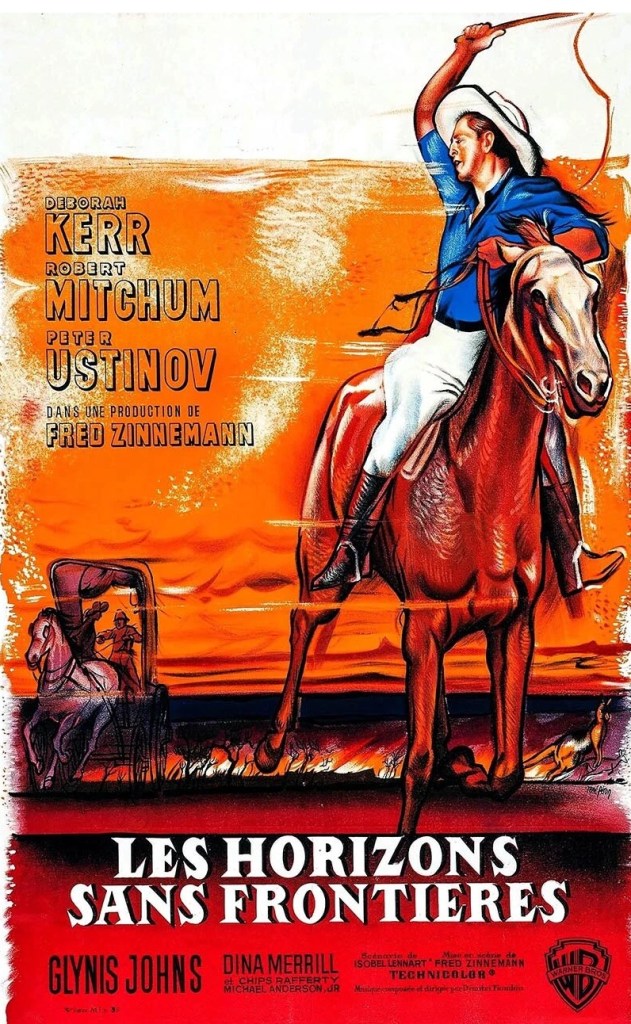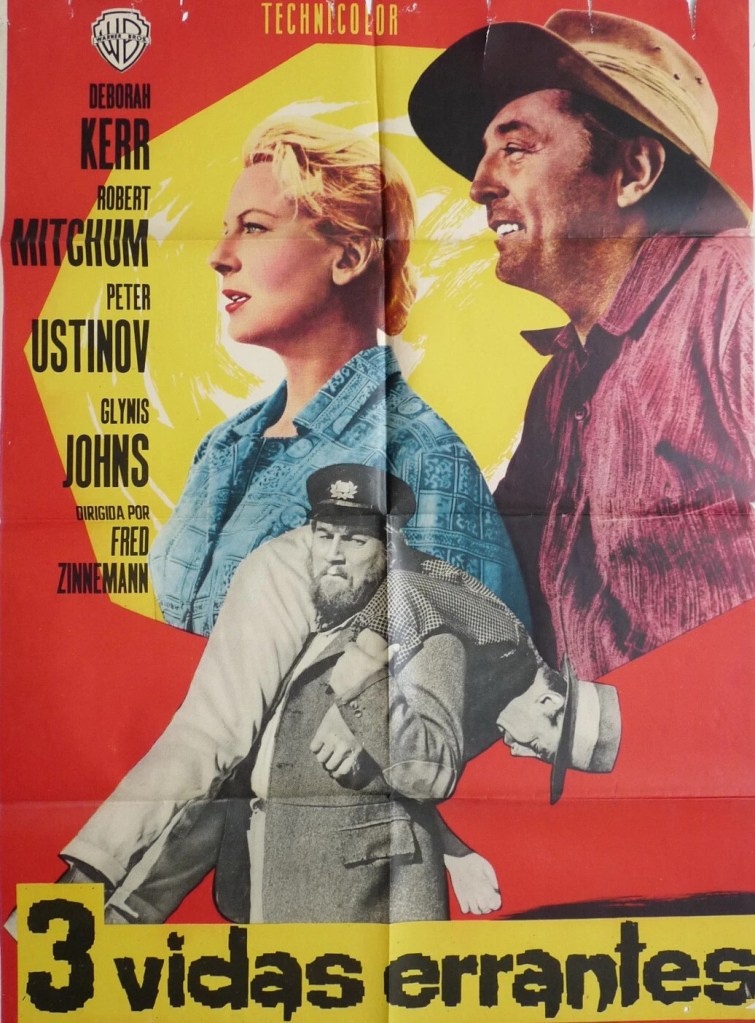
One-Eyed Jacks (1961) ****

Sets the tone for the later Sergio Leone, Sam Peckinpah and Clint Eastwood westerns in which the bad guys are the good guys and we find ourselves rooting for bounty hunters, gunslingers and bank robbers. Except this is more of a drama than a western. Shooting is kept to a minimum and instead it’s a character-driven drama about outlaws. Ostensibly, it’s a simple revenge tale and also totes around that later cliché of the honor code and principles that The Wild Bunch (1969) in particular put so much faith in.

But, in reality, it’s an in-depth look at two fascinating characters, both very human, both sly, self-indulgent, constantly attempting to reinvent themselves, cheat their way to a better life or to get what they want. There’s no sense of redemption, just obsession.

Rio (Marlon Brando) and Ben (Karl Malden) are bank robbers, the former a notorious gunslinger to boot and also partial to stealing pieces of jewellery to assist his practiced seduction routine whereby he claims a ring or necklace was a family heirloom, and he’s a good reader of the reluctant female because that tends to open the bedroom doors. Pursued after pulling off a job in Mexico, down to one exhausted horse and trapped by a posse, Ben is sent to get fresh horses but instead of coming back heads off with the loot. The captured Rio does a five-year prison stretch before escaping and seeking revenge.

Ben, meanwhile, has gone straight. He’s picked up a peach of a job as a lawman, a marshal no less, in Monterey on the California coast, where he’s made no secret of his past so he’s not prey to blackmail. He thinks Rio believes his story that he did all he could to return to aid his friend. We know different.

Rio has alighted on this town by pure accident, hooking up with a band of thieves led by Bob (Ben Johnson) who are set on robbing the bank here. Their plans are put in disarray when Ben takes revenge on Rio seducing his stepdaughter Louisa (Pina Pellicer) by subjecting him to a savage whipping and breaking his gun hand. It takes ages for the hand to heal and for Rio to even manage to whip out the gun let alone fire it with any speed or accuracy. He fesses up to Louisa that he’s not a secret Government agent, his usual cover story, but a bank robber and that the heirloom he gave her did not belong to his mother.

Bob gets fed up waiting, tries to pull off the bank job with one other accomplice, but the robbery goes wrong and a girl is killed. Ben pins the blame on Rio, arrests him and prepares to hang him. Louisa, who has initially rejected Rio after his confession and aware of his revenge plan, helps him escape.

The final shoot-out isn’t built up with the intensity of High Noon (1962) or Once Upon a Time in the West (1968) but with a resigned inevitability. Rio could have skipped out with Louisa and made a new life in Oregon. That would, in some senses, be revenge enough, stealing away the stepdaughter, one of the two main planks of Ben’s newfound respectability.

Don’t come here looking for honesty or upstanding individuals. Respectability is feigned – even Ben’s wife Maria (Katy Jurado) had a child out of wedlock. Everyone lies, even Maria – to protect Louisa from the stepdad’s wrath at losing her virginity.

In other words, a totally human cast of characters, shuffling the truth like it was a deck of cards. You wouldn’t trust any of them an inch. It doesn’t take much for cruelty to creep through the cracks, the cruel whipping, deputy Dedrick (Slim Pickens) handing out a beating to Rio in retaliation for being rejected by Louisa, Bob taking great delight in shooting dead an unarmed accomplice.  

Ben isn’t alone about lying about the impossibility of coming to Rio’s aid, Bob does it too. Wife and stepdaughter lie to Ben. Ben lies to Rio. Rio lies to Louisa. Where this fits into one of Dante’s circles of Hell is anyone’s guess.

Cinematically, there’s only really one standout scene, when Ben calls out of hiding all the men who are going to surround Rio. But there are bold visuals. I thought I was watching a dud DVD because the image was so washed out for the opening sequences then I realized it was just the glare of the white desert sand and deliberate. And the backdrop of crashing waves suggests a different sensibility.

You can see the impact of Brando’s direction – he was making his directing debut – more with the leeway he allows actors to carry out little bits of business that only another actor would appreciate. A shoeless Ben dances over the hot sands, when he picks up the coins he has dropped he remains on the ground longer sifting through the sand in case he has missed one, Rio reacts to Dederick sweeping ash in his direction.

This is Marlon Brando (The Nightcomers, 1971) still in his pomp.

Written by Calder Willingham (The Graduate, 1967) and Guy Trosper (The Spy Who Came in from the Cold, 1965) from the book by Charles Neider.

An exemplary work from a novice director.

Satan Never Sleeps (1962) **

Of all the misguided sentimental anti-Communist drivel, this is a very poor swansong for triple Oscar-winning director Leo McCarey (Going My Way, 1944). A tone that’s awkward enough all the way through goes straight through the wringer when we are asked to accept without question the actions of a rapist. Such genocidal rape as the conqueror visits on the conquered would sit less comfortably with a contemporary audience.

Most of the problem is the set-up. Apart from those pesky Communists invading a Christian Mission, in other circumstances this would have settled into a verbal sparring match between about-to-retire old priest Fr Bovard (Clifton Webb minus trademark moustache), full of tetchy quips, and his younger replacement Fr O’Banion (William Holden) trying to shake off the unwelcome advances of even younger native Siu Lan (France Nuyen). There would be a servant or maybe a more high-flown doctor whom O’Banion could push Siu Lan onto.

There’s laffs  aplenty if you’re easily satisfied with the likes of a servant (Burt Kwouk in an early role) who believes thieving is compatible with Christianity, O’Banion’s woeful attempts at cooking and his inability to shoo away the ardent Siu Lan, and the priests risking breaking a golden rule of their religion to enjoy a glass of wine before the clock strikes midnight.

The arrival of the Communists is not initially too tiresome, Bovard doing his best headmaster impression keeps them in line, Communist leader Chung Ren (Robert Lee), an ex-Christian, sweet on Siu Lan. Things get tricky when Chung Ren’s attempts to forcefully claim the woman are deterred by O’Banion who is tested several times on the old Christian principle of turning the other cheek before resorting to unchristian violence.

Chung Ren then rapes Siu Lan anyway. But when she stabs him in the back and the rapist is forced to ask O’Banion to go to another mission to fetch the necessary penicillin to prevent infection spreading, the older priest is inclined to ignore the request and let him die. O’Banion thinks he has struck a deal to free the old priest in exchange for fetching the medicine, but Chung Ren reneges on the agreement and the priests are tortured and stand trial.

Meanwhile, Chung Ren has a change of heart, or so it seems, after Siu Lan gives birth to his son. But, actually, this might be more to do with the fact that he has been demoted for not being a good Communist, inclined to enjoy the finer things in life rather than share them out with his comrades. And it’s only when he’s told he’s going to be sent away to some kind of Chinese Gulag that his principles make an appearance and he helps the two priests and Siu Lan and her baby to escape.

I could see maybe Siu Lan being forced into marriage by Chung Ren in the Communist state while he was in a position of importance; she would have no choice in the matter. But for her to show the same acceptance in a democracy outside China smacks of the worst kind of wishful thinking. Sure, the Christian God is all-forgiving and, technically, all Chung Ren would have to do was confess the sin of rape and equally technically he would receive absolution and therefore in the Church’s eyes be free to marry.

But O’Banion overheard the rape. He’s a witness. That’s no use in the Communist society, but in a democracy you would have thought he would have been seeking prosecution. As he was a witness and this was not something protected by the sanctuary of the confession, he would not just be perfectly within his rights but would have to seek out rule of law.

I have never heard of a rapist and the woman he raped living happily ever after and I doubt if it would ever have been considered conceivable even in the early 1960s.

That aside, William Holden (The Devil’s Brigade, 1968) and Clifford Webb, in his last picture, are good value as the squabbling priests, less so when they venture into dubious morality. France Nuyen (A Girl Named Tamiko, 1962) doesn’t get a fair shake, required to be the cliché happy grinning native and then provided with no opportunity to state her case against her rapist before she’s pushed, for the sake of a fairy tale ending, into marriage.

Written by the director and Claude Binyon (North to Alaska, 1960) from the bestseller by Pearl S. Buck.

A Dream of Kings (1969) *****

Sometimes great movies just disappear. Even if they pick up some critical traction on initial release, as here, they flop at the box office. And they are not revived because the production company goes bust or the rights are complicated. Or, more likely, they don’t fit into audience expectation. All three stars here completely play against type, outliers in career portfolios. We have become so accustomed to the attraction of stars according to their screen personas that unless they are known to completely change their screen characters with every outing anything that’s different to the norm becomes unacceptable.

Director Daniel Mann (Ada, 1961) was best known for producing Oscar-winning or Oscar-nominated performances from female stars. He was immensely skilled at making audiences sympathize with the most flawed women. Here, he does the same for Anthony Quinn, in a performance that should have had Oscar voters lining up but was dismissed for all the wrong reasons. Theoretically, one of the film’s problems is the dialog. We are so used to a script full of cut-and-thrust or witty putdowns that we fail to recognize a screenplay, that in much the same way as a stage play – but without that form’s inherent artificiality – lets characters live and breathe, explore depths that are just not possible except in fleeting moments in the normal construction of a movie.

Most scenes here begin one way and then move in all sorts of directions, sometimes ending up back where they started, but most often going somewhere unexpected, not in the sense of a sudden twist, but in digging deeper into relationships and understanding that marriages are built on shifting sands, and not all of them perilous. There’s a lot of dialog and when you get a lot of long speeches it can make the actors look as though they’re hamming it up when in fact what they’re doing is opening up the character.

We shouldn’t like Matsoukas (Anthony Quinn) at all. He’s a gambler, a womanizer, drinks, comes home at sunrise, has nothing you’d call a real job.

And yet.

In his company you enter a world of possibility. By sheer force of personality he lifts gloom, even when it’s his actions that have caused it. He can convince the most downtrodden weaklings that they have something of worth.

When nobody has anything good to say about old drunk Cicero (Sam Levene), Matsoukas tells him he has a poker dealer’s graceful hands and provides solace just by befriending him. He convinces a 72-year-old man that the loss of his libido is not down to the old guy’s age but because in four years of marriage he has lost interest in his 31-year-old wife because she’s the one who has aged, physically less appealing, and then he teaches the desperate soul the gentle art of seduction, how to win a woman’s heart by putting her on a pedestal, treating her like a goddess, kissing her softly on eyes and ears rather than pawing her in frantic passion.

Just what Matsoukas’s job is – on the door it says “counsellor” which would suggest something  legal  – but in fact he’s a male version of an old wife and provides solutions to odd problems, a mother worried that her teenage son masturbates, for example.

He is the sort of guy who can wring triumph from disaster. He has just lost a bundle of dough at poker but the way he tells it you’d think he’d won. Instead, he appreciates the drama of it all, the way it makes a great tale even if he’s the loser. Naturally, wife Caliope (Irene Papas) doesn’t see it his way. She’s on her knees with trying to feed her three children from the scraps that fall from his gambling. Though when he wins big, they live like kings.

Although he still has a lusty sex life with Calope, and can mostly coax her round, he has fallen for widowed baker Anna (Inger Stevens), attracted to her in part to alleviate her grief, pull her out of the darkness.

And he cannot face up to the potential loss of his young son who has three months to live and has it fixed in his own mind that the boy will be cured if Matsoukas can expose him to the sunshine and the ancient gods of his Greek homeland, though he lacks the $700 required for the air fare.

Each sequence is long, carefully calibrated, giving time for the exploration of a wealth of emotions. Outside of the three main narratives are two other stand-out scenes. In his sermon a priest rails against the evils of life insurance that makes people welcome death yet argues, ironically, that death is a great joy and should not be feared. And there’s a party where Matsoukas on the dance floor is a magnet for every woman in the room.

This is an Anthony Quinn (The Shoes of the Fisherman, 1968) devoid of all trademark abrasiveness, the loud voice gone, trying to gouge every ounce of joy from a forbidding world. He has a very tender relationship with his dying son, inventing a game with fake telephones to deal with the boy’s fears, and is very playful with his two daughters. He is constantly wooing his wife, in part to ease the pain he causes her, but mostly because he wants them to get the most out of life.

This is a different Irene Papas (The Brotherhood, 1968) too, not the fiery woman or dutiful wife of her screen persona. Whatever anger she feels is subsumed by sorrow and she is always willing to let her husband fire up her heart as in the old days. Actresses don’t get such complex roles these days.

And all the pent-up fragility of Inger Stevens (Five Card Stud, 1968) is suddenly let loose as she twists her entire screen persona of tough woman in a man’s world – usually a western – on its head. Her scenes with Quinn are breathtaking. Unfortunately, this was her final film – she committed suicide shortly after. But she could not have found a better swansong, one that extended her range.

As he always does, Daniel Mann doesn’t take his main character’s side, but while extracting sympathy for character predicament and perspective, still lets the audience make up his mind. This could easily have gone all maudlin, the child miraculously recovering, the flight to Greece to find a rare cure, all Matsoukas’s delusion revealed as nothing more than true faith, but it’s more hard-edged than that. At the end Matsoukas has his exterior carapace ripped apart, beaten up, ostracized for committing the worst crime of a gambler – cheating – in dire straits.

And yet.

Written by Ian McLellan Hunter (Roman Holiday, 1953) from the bestseller by Harry Mark Petrakis.

I just adored this.

The New Interns (1964) ***

Columbia had turned this series into a glorified New Talent Contest. It didn’t spend much cash buffing up the sequel in terms of narrative or characters, so it’s mostly enjoyable to see just how well the studio was at spotting talent. In that regard this outing was as profitable as the original. This marked the debut of George Segal (The Quiller Memorandum, 1966) who quickly became a major marquee name. Also brought into the mainstream was Inger Stevens (Five Card Stud, 1968). Receiving a welcome career boost was rising star Dean Jones, though Disney (The Love Bug, 1967) rather than Columbia took better advantage of his skills, and in the comedic rather than the dramatic vein.

Various stars reprised their roles including top-billed Michael Callan (You Must Be Joking, 1965), signed up to a long-term deal. But most of the others in this category made their names through television. Telly Savalas (The Assassination Bureau, 1969) was the cop Kojak (1973-1978); Stefanie Powers (Warning Shot, 1967) flourished as The Girl from U.N.C.L.E. (1966-1967) and in Hart to Hart (1979-1984); and Barbara Eden went quickly into I Dream of Jeannie (1965-1970).

The upshot is that, depending on your taste, you might end up talent spotting yourself, shrieking with glee at spotting an old favorite, or perhaps so many of them, in what was, effectively, an all-star (of the minor kind) cast and paying less attention to the various storylines.

Most of the narrative energy revolves around various characters coming together in romantic entanglement – Dr Alec Considine (Michael Callan), while more inclined to play the field, ends up with Nurse Laura Rogers (Barbara Eden); despite initially being at odds Dr Tony Pirelli (George Segal) and social worker Nancy Terman (Inger Stevens) hook up; and various other romances are short-lived.

Outside of this, newlyweds Dr Lew Worship (Dean Jones) and wife Gloria (Stefanie Powers) discover he is sterile. The more powerful sequence relates to Nancy being sexually assaulted by juvenile delinquents who grew up in the same tough neighbourhood as Tony. As you might expect, the thugs end up in hospital and cause a fracas in which Alec is injured.

Tony has all the best lines. Invited to chance his arm with the nurses, he snaps that he didn’t come to the hospital to “learn to kiss.” Pushed out of the way by resident Dr Riccio (Telly Savalas) he retorts that he didn’t come to deliver messages. And so on, the most driven of the new intake, and the most surly, his initial encounter with Nancy has him upbraiding her for crying in front of a patient.

Decent soap opera as soap operas go, but without the more challenging aspects of the original. In an era when the series movie was beginning to take shape – primarily in the espionage arena – you can see why Columbia thought this might run and run and eventually the studio had another go at the concept, but this time as a television series.

Directed by John Rich (Boeing, Boeing, 1965) and written by big screen debutant Wilton Schiller from the bestseller by Richard Frede.

George Segal and Inger Stevens are the standouts.

I Thank a Fool (1962) ***

One of those bonkers pictures whose nuttiness is initially irritating but ends up being thoroughly enjoyable once you give in to the barmy plot and overheated melodrama. Murder, suicide, madness, illicit sex, blackmail – and that’s just the start of this farrago of nonsense. And set in Liverpool before The Beatles made it famous.

Christine (Susan Hayward), a doctor, is jailed when she kills her married seriously ill lover in a mercy killing. She’s not convicted of the murder but of the lesser crime of medical malpractice, but after serving an 18-month sentence finds she is unemployable, even in more lowly professions where her prison stretch counts against her.

When she is hired by the attorney Stephen (Peter Finch) who prosecuted her to look after his mentally ill wife Liane (Diane Cilento), the audience will already smell a rat given that Christine has changed her name and therefore the lawyer must have made considerable effort to track her down. His argument is that since she is no longer a qualified practitioner, she cannot advocate to have his wife committed to a mental institute, as a proper doctor would be required to, since Liane is clearly a danger to herself and other people. Your immediate suspicion is that Christine has been hired to take the rap once Liane is bumped off.

And it doesn’t take long for Christine to work out that not everything adds up. Liane is given enough rope to hang herself, access to a car to cause an accident, access to a horse which could easily bolt or fall.

Liane has been told her Irish father died in an accident where she was driving, the incident that triggered her madness. But when we discover the father, Captain Ferris (Cyril Cusack), is very much alive that’s the cue for a slew of unlikely events. When Liane finds her father, he’s not in the least a candidate for canonization, but an alcoholic. That triggers further mental trauma. And another accident, self-inflicted. After Christine administers pills, the young woman is found dead.

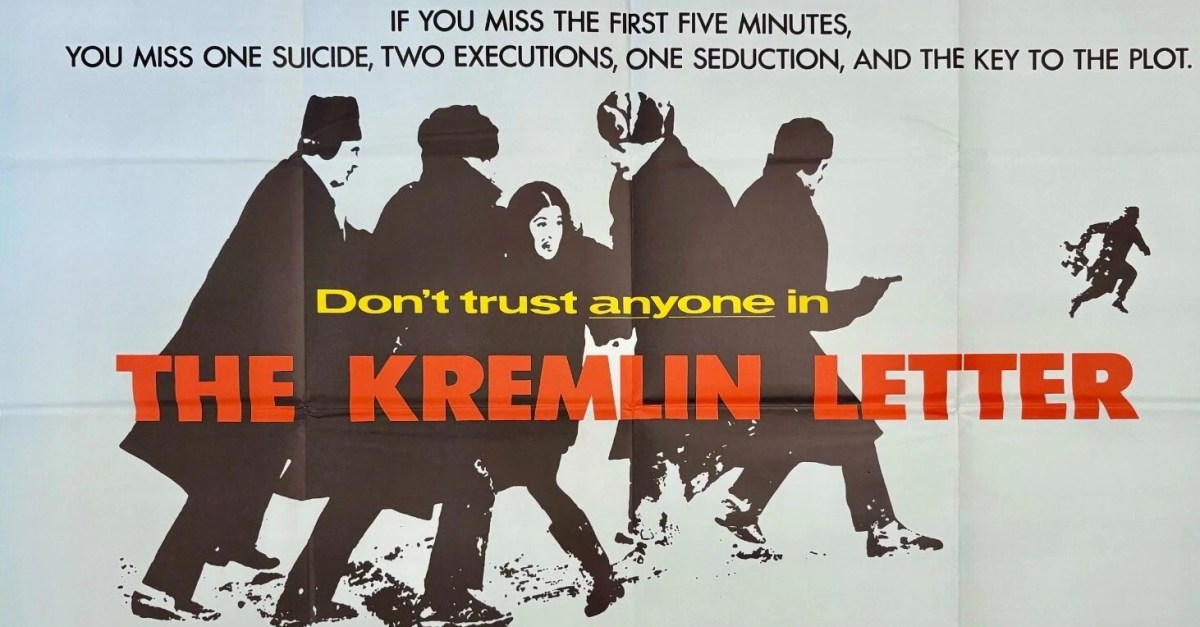
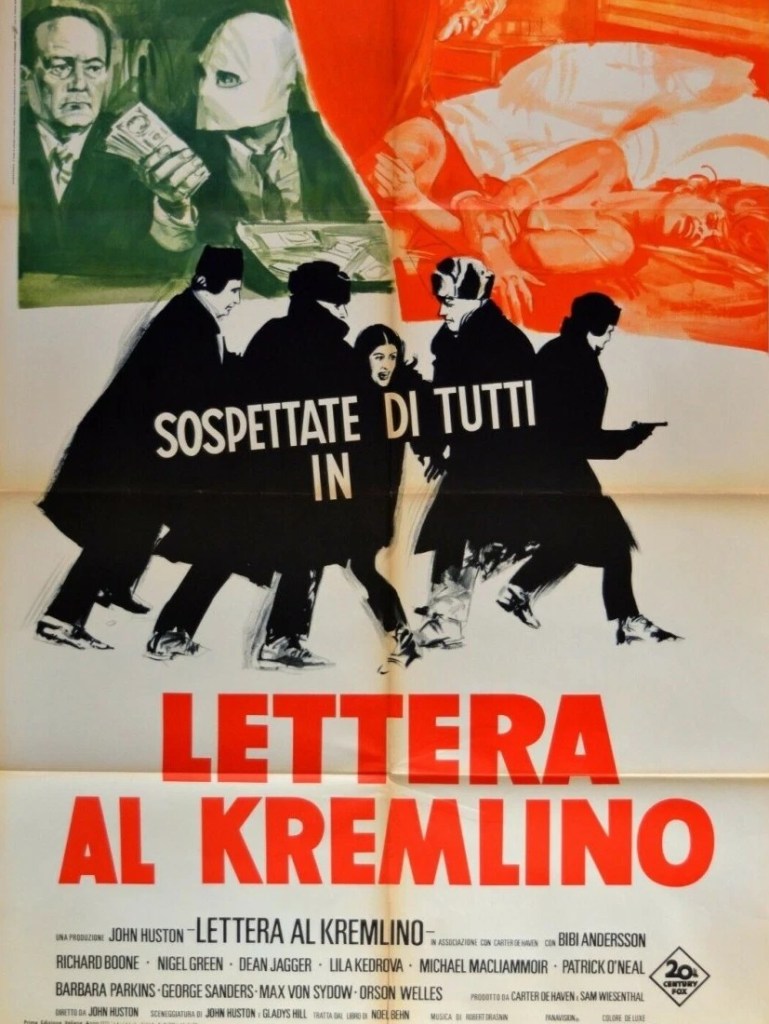
Bit of a stretch to compare it to the movies
mentioned in this poster.

Naturally, an inquest brings up Christine’s past and suspicion falls on her. And that would be par for the course, and it would be up to the condemned woman to find a way to prove her innocence. But that takes us into even murkier depths.

There’s bad blood between Capt Ferris and Stephen and the inference that this was only resolved by the father offering his underage daughter to the lawyer to be followed by the unscrupulous father blackmailing Stephen. Then it turns out there’s no case to answer and that Christine is innocent because, blow me down, Liane committed suicide.

But what should have been a straightforward, if unlikely, murder plot comes unstuck because it can’t make up its mind what it wants to be. Too many ingredients are thrown into the pot and the result is a mess.

Even the queen of melodrama Susan Hayward (Stolen Hours, 1963) can’t rescue this. And the pairing with Peter Finch (Accident, 1966) doesn’t produce the necessary sparks. Despite a variable Irish accent, Diane Cilento (Hombre, 1967) comes off best as the wayward deluded young woman.

Robert Stevens (In the Cool of the Day, 1963) directs from a screenplay by Oscar-nominated  Karl Tunberg (The 7th Dawn, 1964) adapting the bestseller by Audrey Erskine-Lindop.

Had every opportunity to be a star attraction in the So Bad It’s Good sub-genre but fails miserably. Still, if you enter into the swing of things, remarkably tolerable.

The Thousand Plane Raid (1969) ***

Let’s be honest. Like 633 Squadron (1964) and perhaps even, despite its all-star cast, Battle of Britain (1969), many in the audience will only be there for the hardware, the chance to see the flying battle buses that took the Allies to victory in World War Two. There’s not going to be much of a story anyway – rivalry between commanders, tension on the ground, a romance beginning or breaking apart, a stash of info dumps. That can hardly compare to the grace of the big birds in the air, usually a mixture of stock footage and new work with refurbished old planes.

This one has even re-purposed – perhaps stolen would be a better word – a mission from earlier in the war which was planned and carried out by the RAF so that it could be planned and in part carried out by the Yanks. Still, it was the Yanks putting up the money so I guess they can change history whenever they like.

U.S. Air Force Col Brandon (Christopher George), leading an American bomber group stationed in England, has worked out that while night-time missions result in fewer casualties they are increasingly failing to get the job done, only one on five bombs hitting the designated target. He reckons a gigantic air attack in daylight is the only way to succeed. His boss General Palmer (J.D. Cannon) grants him the chance to pitch his idea to the assembled RAF high command. Despite the risks, they agree and then need to come up with about million gallons of fuel and about a million-and-half tons of bombs, and requisition 30 airfields for the bombers and the same number for the fighter support.

Various elements make life tougher for Brandon. The mission chosen is much further afield than he originally imagined, the deadline is brought forward, his crew is unprepared and needs toughened up, plus his romance with WAC Lt Gabby Ames (Laraine Stephens) has hit a sticky patch and he’s having to deal with a cocky RAF fighter pilot Wing Commander Howard (Gary Marshal) who’s been seconded to the operation. To annoy Brandon further Howard befriends disgraced American pilot Lt Archer (Ben Murphy) who’s been accused of cowardice.

Before we can get to the big event, Brandon also undergoes a crisis of confidence and it’s as much as he can do to pull himself together in time. The screenwriter has arranged for the three main characters to end up in the one plane, allowing Archer to prove himself in battle and Howard to manage some heroics.

The sight of a huge array of WW2 planes in the air without the help of CGI still takes the breath away. Even though the final action pales in comparison with 633 Squadron or Battle of Britain it’s visually powerful enough to see us through.

By the end of the 1960s, B-pictures cost a lot more, but that didn’t necessarily result in better performances. Christopher George (El Dorado, 1966), signed up to a five-picture deal by United Artists, isn’t the breakout star. In fact there isn’t one, neither Laraine Stephens (40 Guns to Apache Pass, 1967) nor Gary Marshal (Camelot, 1967), in his second and final movie, making much of an impression. However, the picture was more notable for members of the supporting cast including J.D. Cannon (Krakatoa: East of Java, 1968), Ben Murphy (Alias Smith and Jones TV series, 1971-193), Bo Hopkins (The Wild Bunch, 1969), future director Henry Jaglom (A Safe Place, 1971) and Tim McIntyre (The Sterile Cuckoo, 1969).

One who certainly made the step up was director Boris Sagal (Made in Paris, 1966); in a couple of years he would be helming cult number The Omega Man (1971). Written by Donald S. Sanford (Midway, 1976).

The Young Savages (1961) ****

You have to put out of your mind any thoughts about West Side Story, released the same year and also dealing with teenage gangs in New York. But whereas the musical tapped into Shakespeare and tugged at audience heartstrings with a tragic love story, The Young Savages is what used to be called an “issue picture,” a realistic portrayal of a growing problem in society.

Rather than the sullen relatively harmless rebels of Rebel without a Cause (1955) or this decade’s Easy Rider (1969), the question of youth disenfranchisement and the growth of a culture, here majoring in violence, at an opposite extreme to social norms, was beginning to take hold. Where earlier immigrants emerging from New York housing hellholes had tended to graduate to straightforward crime, which occasionally spilled over into the main street, now youths were engaging in turf wars, knives rather than machine guns the weapon of choice, which took place in full view of a terrified population.

Oddly enough the movie opens with the same motif as West Side Story, the feet of a gang, but rather than expressing their frustration through dancing, these feet, belonging to three members of the Italian-American Thunderbirds mob, are marching through the streets of New York, brushing aside passersby, knocking over toy prams, on their way to kill a member of the rival Puerto Rican Horseman gang.

When arrested, they claim self-defense. The only flaw in that argument is the victim Roberto Escalante (Jose Perez) is blind.  Naturally, there is a public outcry and calls for the death penalty. Prosecutor Hank Bell (Burt Lancaster), who had grown up in the same streets as the gangs but managed to make a life for himself outside its confines, is hellbent on extracting the maximum punishment. Bell was born Bellini but changed his name to hide his background, make it easier for him to serenade Vassar graduates and advance his career.

That leads to complications, and it’s hard to say which is the more compelling. His more liberal wife Karin (Dina Merrill), the Vassar item, is appalled. District attorney Dan Cole (Edward Andrews), who fancies his chances as a politician, faces public backlash if he doesn’t take tough action. And Hank had a romantic fling in the past with the mother Mary DiPace (Shelley Winters) of one of the accused.   

But Hank hasn’t quite thrown off the shackles of his upbringing, and though currently an upstanding member of society, he finds his principles taking a battering when he is himself attacked and discovers just how easy it is to resort to violence. Karin, too, finds her liberal attitude shot to pieces when she is also attacked.

Even without personal involvement of the husband and wife in being forced to face up individually to the violence pervading the city, the focus is on the exploration of how such violence becomes endemic in those parts of society left behind in the pursuit of the Great American Dream.

There’s plenty issues to deal with: poverty for a start, lack of ethnic tolerance, hatred of one immigrant group to another, politicians making capital out of the situation, parents powerless to prevent their children growing up as hoodlums, youngsters seeking identity and respect from joining a gang, and the growth of the gangs themselves as a social dynamic.

As you might expect, there are no easy answers. In fact, there are no answers at all. A movie like this can only lift the stone without being able to effect what’s happening underneath. But in some respects, that’s the aim of the issue picture, an early type of virtue-signaling. None of the issues raised have gone away, more likely they’ve just got worse.

But that’s not to downplay the film’s impact. There’s an inherent honesty here in the decision of debutant director John Frankenheimer (The Manchurian Candidate, 1962) not to take sides.    

Burt Lancaster (The Swimmer, 1969) delivers another excellent performance. Dina Merill (Butterfield 8, 1960) thrives in a solid role and Shelley Winters (A House Is Not a Home, 1964) is effective. Watch out for the debut also of Telly Savalas (The Assassination Bureau, 1969).  Written by Edward Anhalt (Becket, 1964) and J.P. Miller (Days of Wine and Roses, 1962) from the bestseller by Evan Hunter, who had explored similar youth issues in The Blackboard Jungle filmed in 1955.

Still powerful stuff.

Alice’s Restaurant (1969) **

It might have been better if I’d come to this in a hazy glow of nostalgia. But I’d skipped this back in the day and although I’m a big fan of Arthur Penn I was never sparked to seek this out on VHS/DVD. So I’m coming to it for the first time. And I’m sorry to say it just feels like an indulgent mess.

It’s hard enough getting novelists to hack about their sacred texts sufficiently to turn them into workable screenplays, never mind putting the author center stage and not only have him narrate his tale but act it out. And when you discover that he’s not much of an actor, you’re not left with much but almost a documentary with drama coming from outside, from the forces of authority trying to shape the rebellious young to fit the pre-existing mold.

Album cover.

I have to confess I was never a big fan of folk music, excepting Bob Dylan I guess and you can argue he was only a folkie at the outset of his career. I was only vaguely aware of Woody Guthrie and don’t remember in the late 1960s his son ever touching the public consciousness overseas. So this might simply be one of those American movies that didn’t travel, like comedy or most musicals which had trouble matching up with foreign appreciation of those genres which tended to be nationalistic.

The narrative drive is Arlo Guthrie (Arlo Guthrie) dodging the draft. This was a right-of-passage especially for all young creatives, who would tend to be the most openly rebellious, but equally for a whole generation of young men who didn’t want to get themselves killed in a war they saw as senseless and who had gone off the idea of war altogether.

In Britain national conscription had ended in the late 1950s but there were no tales of people trying to dodge the draft. Elvis Presley had done his duty in America but Cassius Clay (later Muhammed Ali) did not – and was stripped of his World Championship. But away from all these high-profile cases, youngsters could avoid the draft by enrolling in colleges or universities, or pretending to have homosexual tendences, or shooting themselves (literally) in the foot, or claiming, as Guthrie did, that he had inherited a genetic illness – his father was dying of Hodgkins Disease – and when that doesn’t work acting mad, which doesn’t either.

What does get Arlo off national service is his involvement in a bizarre incident which made headlines at the time when he was arrested for littering and fined. When he reiterates his lack of objection to littering to the draft board, he is deemed unfit and is let off, as satirical a comment on the war between youth and authority as much as on the Vietnam conflict.

There was a real Alice and there was a real restaurant and there was an unusual tie-in.

There’s a story in here somewhere but it’s so ramshackle that, at the remove of over half a century, it doesn’t even appeal to those who worship the alternative lifestyle. After being chucked out of college, he heads off to join friends Alice (Pat Quinn) and Ray Brock (James Broderick) who have taken over a deconsecrated church in Massachusetts with Alice planning to set up nearby her eponymous restaurant, and not entirely for philanthropic reasons, Arlo composing a jingle to pull in customers.

Alice, disgruntled with lack of attention from Ray, begins an affair with Shelly (Michael McClanathan), an artist and ex-heroin addict, and every now and then Arlo returns to New York to visit his father Woody in hospital (Arlo is nowhere to be seen in A Complete Unknown). There’s a motocross race, and Shelly later dies in a motorbike crash. Woody dies too and Alice and Ray get married in a hippie-style wedding.

But most of this seems viewed even then through a time capsule as if Penn is assiduously recording a counter culture. The commercial success of this film and Easy Rider the same year triggered a cycle of youth-oriented movies that put Hollywood into an even deeper financial hole  

Sorry, folks, this just didn’t click. Maybe I was expecting too much. But the desultory narrative and the lack of any real acting made me switch off. While it has some of the offbeat vibe of Arthur Penn’s Mickey One (1965), it lacked that film’s compelling drive. Written by the director and Venable Herndon in his debut based on the Arlo Guthrie book.

Major disappointment

Alice in Wonderland (1966) **

Young bucks wanting to make a bigger splash are apt to rampage through sacred texts and treat unwary audiences to avant-garde notions. Thus, Jonathan Miller (Take a Girl Like You, 1970), in his debut, set aside all expectations and in fairness purists had decried Walt Disney’s 1951 telling of the Lewis Carroll classic. In truth audiences weren’t so in love with the Disney version either, an unusually low hitter for the company, and one that only really found its niche when reissued to catch a whiff of the stoned hippies who had drooled over 2001: A Space Odyssey (1968).

This 1966 reimagining might have been buried in the vaults after its initial showing except that Jonathan Miller went on to become something of a British institution, renowned directed of opera and stage plays, writer and presenter of a number of highly-regarded television projects and a regular on the talk show circuit. That his career had begun in sensational fashion, one of the hands on the tiller of the satirical Beyond the Fringe stage show (a hit in the West End and Broadway) and television program, meant that when he decided to spread his wings into the movies, no expense was spared.

Big stars flocked. What other neophyte could attract stars of the caliber of Peter Sellers (The Pink Panther, 1964), John Gielgud (Khartoum, 1966), Michael Redgrave (Goodbye, Mr. Chips, 1969), Leo McKern (Bunny Lake Is Missing, 1965), Peter Cook (The Wrong Box, 1966) and playwright Alan Bennett (The Madness of King George, 1994)? All admittedly in small parts but that was the nature of the all-star enterprise.

And that would have been fine if they had all been employed to supply the voices. Or if audiences had the fun of trying to determine who was who when hidden under the ton of make-up required to turn them into White Rabbits or Mock Turtles or Caterpillars or Lobsters cutting a quadrille.

But Miller had determined that not only was the Disney version short of the mark but for too long readers had missed the entire point of the Lewis Carroll book. He decided the point of the story wasn’t humor at all, nor a succinct exploration of the pitfalls of language, but about a young girl adrift in a adult world of confusion. So that was bye-bye to the cuteness.

He even broke a cardinal role. Alice doesn’t fall down a rabbit hole. The whole thing is a dream.

They’ve been adapting the book since the early days of cinema. This poster dates from 1915.

So you need to listen carefully to find out, with the lack of make-up, which actor is playing which fantasy character. And this isn’t set in any fantasy world either, certainly far removed from the famous illustrations that accompanied the book. It takes place in Victorian times which, yes, reflects the era in which the book was written, but, no, seems an extremely odd decision to give what is still fantasy some kind of realism.

It’s as if the director didn’t really have the courage of his convictions. That said, if he was catering to the arthouse mob, it’s got that kind of cinematic sensibility, with voice-over and unusual compositions.

Just to help you out, let me tell you that Peter Sellers plays the King of Hearts, John Gielgud the Mock Turtle, Michael Redgrave the Caterpillar, Alan Bennett the Mouse, Finlay Currie the Dodo, Leo McKern the Duchess and Peter Cook the Mad Hatter. The part of Alice went to 13-year-old Anne-Marie Mallik who never made another movie.

While it retains enough of the original to be recognizably based on the book – with all the catchphrases, “off with their heads” etc – the locale is just totally at odds with the story. And while it’s a tonic to hear the mellifluous tones of John Gielgud uttering the author’s immortal words, it would have been better just to hear his voice.

My guess is this is only still available because Miller made such a name for himself. You can catch it on Talking Pictures.

Curiosity or mess, it’s hard to decide.

https://www.facebook.com/TalkingPicturesTV/videos/easter-on-tptv/654499693946106

Jigsaw (1962) ***

Unusual crime picture even for the period. Most of these British pictures focused on the crime or an innocent caught up in nefarious activity, not just a straightforward police procedural before the term was even invented. In fact, the plodder was more likely to be a private eye or gifted amateur like Hercule Poirot or Miss Marple.

The title doesn’t refer to mystery but the painstaking element of putting all the pieces together and most likely still not being able to complete the puzzle – as occurs here until the very last scene and even then by pure accident. There are no sudden sparks of insight and the detectives don’t have the luxury of gathering all the suspects in a room Agatha Christie style. In fact for most of the movie not only can they not settle on a suspect they’re struggling to identify the victim. And this being when forensics didn’t exist except for fingerprints, there’s nothing even from that area to help.

At first Detective Inspector Fred Fellowes (Jack Warner) and Det Sgt Jim Wilks (Ronald Lewis) are investigating a break-in at a real estate office. Nothing’s been taken except leases, which suggests someone who either wants to get out of a lease or who doesn’t want their handwriting identified. After an exceptionally long haul it proves to be the latter. A lead takes them to a house in Brighton where they find the corpse of a woman with the initials JS.

I doubt if any police pictures of the period went into as much detail in following clues as this. Hunting for the killer the police interview taxi drivers, delivery men, garage mechanics, grocery clerks, truck drivers working construction, hardware and vacuum cleaner salesmen. Searching for the victim they check out beauty parlors, factories, pawnbrokers, airlines and hairdressers. The only clues are a gray car with a bent wing mirror – but even when they can identify the make it turns out there are thousands in the country – the contents of a vacuum, perfume smells on a pillow, particles of bone found in a furnace. Finally, with an old-fashioned trick Fellowes finds a name – Jean Sherman (Yolande Donlan) – and an address.

But Jean Sherman isn’t dead, though it transpires that she had a one-night stand in the murder house with a man she identifies as Campbell. But they can’t find Campbell either. They do alight on dodgy vacuum cleaner salesman Clyde Burchard (Michael Goodliffe), who has a previous conviction for indecency. Despite being identified by the delivery driver, it turns out he just had sex with the dead woman and nothing else.

Eventually, Fellowes finds Ray Tenby (John Barron) who is identified by Jean. He had picked her up after killing the other woman, Joan (Moira Redmond), and had sex with her in the next room to the corpse. But they can’t prove Tenby didn’t act in self-defense, and it’s only by that piece of unexpected luck that they can pin it on him.

Although most of the dialog focuses on the investigation there are some clever remarks. A journalist pressing a beat cop for information is told that leaving his car running unattended is an offence. Jean’s hardline father (John Le Mesurier) initially decries his daughter’s behaviour as immoral to the point of almost disowning her until, discovering she is dead, he bursts into tears.

With the amount of mileage the investigation covers, this could be done within the usual hour-and-a-bit of the standard British B-movie so it stretches a proper feature length. As written and directed by Val Guest (Assignment K, 1968), it’s not particularly stylistic, nor does it stretch tension too far, but it is still engrossing in the accumulation of detail.

Discover WordPress

A daily selection of the best content published on WordPress, collected for you by humans who love to read.

The Atavist Magazine

by Brian Hannan

WordPress.com News

The latest news on WordPress.com and the WordPress community.