The Ugly American (1963) ***

Terrific performance from Marlon Brando saves this prescient but preachy meditation on Vietnam. Harrison MacWhite (Marlon Brando) is the new ambassador, whose political credentials are questioned by many,  parachuted into the fictional South-East Asia country of Sarkhan, knee-deep in civil war, communist north versus westernized south. The battleground is the American construction of a “Freedom Road” north to China which dissenters fear will be a conduit for the military. MacWhite owes his appointment to his friendship with Deong (Eeji Okada), a charismatic leader.

On arrival, the ambassadorial car is engulfed in a riot, car rocked, windscreens smashed. MacWhite shakes up a complacent embassy and though articulate and scholarly believes he holds the solution to the tricky situation while unwilling to accept that national self-determination does not necessarily mean complete hatred of the Americans. There is duplicity on both sides, rebels blaming U.S. truck drivers for deaths they caused, the Americans so used to getting their way they don’t stop to think if it is the right way.
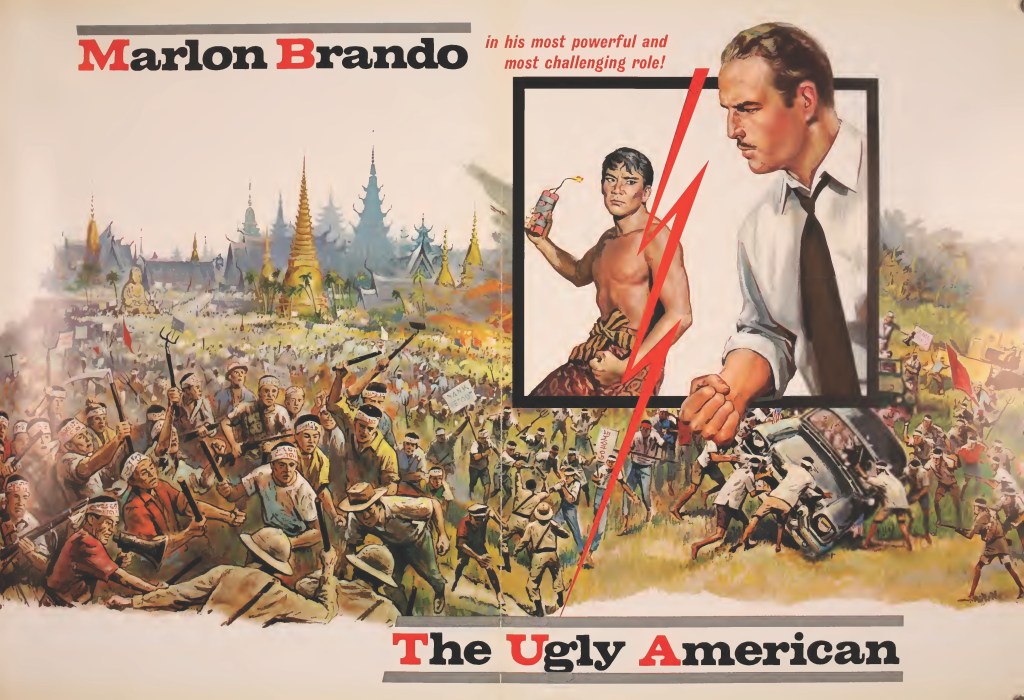
Anxious not to be seen as a lapdog for Communism, MacWhite’s actions inflame the situation, while Deong falls victim to internal forces. Construction boss Homer Atkins (Pat Hingle) promotes the clever use of building hospitals along the road, thus encouraging locals to back it, but nobody falls for such honest skull-duggery masquerading as well-meaning intent.

Friends turning into enemies is a decent premise for any movie but this is over-burdened with debate that while interesting and providing a reflection of the times is basically a mixture of virtue-signalling and apportioning blame and, most heinous of failings, doesn’t really advance the story.

First-time director George Englund handles the action sequences well and captures the essence of a country about to explode against a background of growing tension and political machination. Use of Thailand as a location added authenticity.

The movie was based on a controversial novel by political scientist Eugene Burdick (who also wrote a more straightforward cold War thriller Fail Safe) and William Lederer, navy veteran and CIA officer, so it carried the stamp of authority in terms of putting forth the arguments for both sides. However, while the film bore only a “passing resemblance” to the book, according to co-author Burdick, he deemed it a superior achievement on the basis of its more dramatic treatment. Stewart Stern (Rebel Without a Cause, 1955) was the screenwriter who received blame and praise in equal measure.

Marlon Brando (Bedtime Story, 1964) exudes authority, broad shoulders packed into a suit, and brilliantly captures the anguish of a man led into disaster by arrogance. Coming off back-to-back flops One-Eyed Jacks (1961) and Mutiny on the Bounty (1962), this was a considerable change of pace for the actor, the first of several excursions into political territory. Eeji Okada (Hiroshima, Mon Amour, 1958) proves a worth opponent. Pat Hingle (Sol Madrid, 1968), Arthur Hill (Moment to Moment, 1965) and Jocelyn Brando (The Chase, 1966) provide sterling support.

The movie did not just predict what would happen if the U.S. lost the battle for hearts and minds but a similar situation confronting the U.S. Ambassador to Indonesia in 1965 whose appointment was unwelcome in that country.

You can catch this on Amazon Prime.

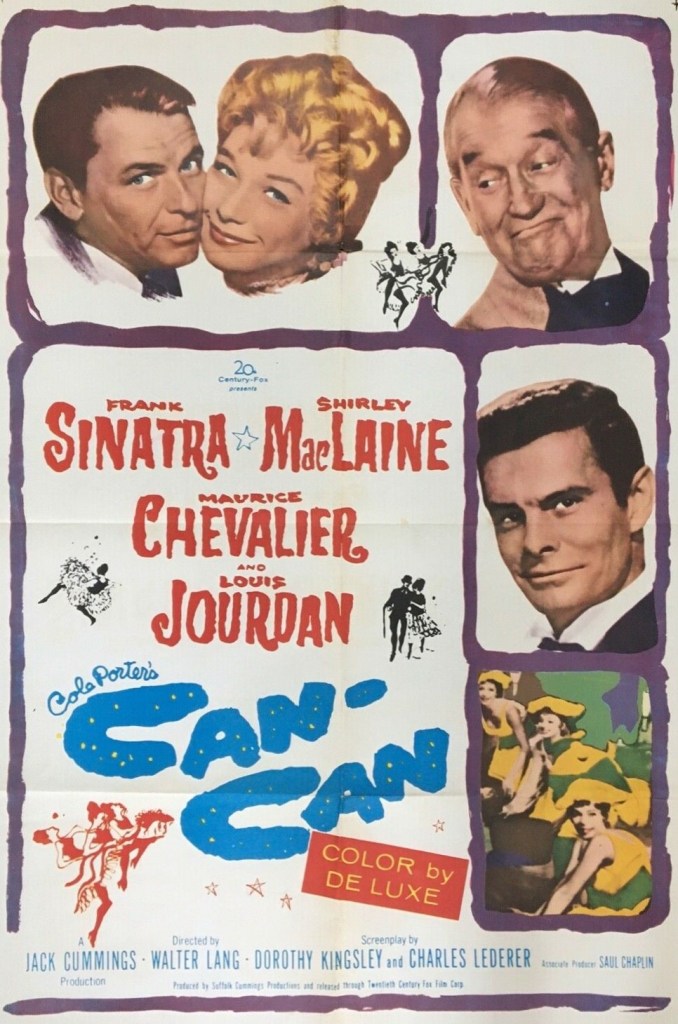
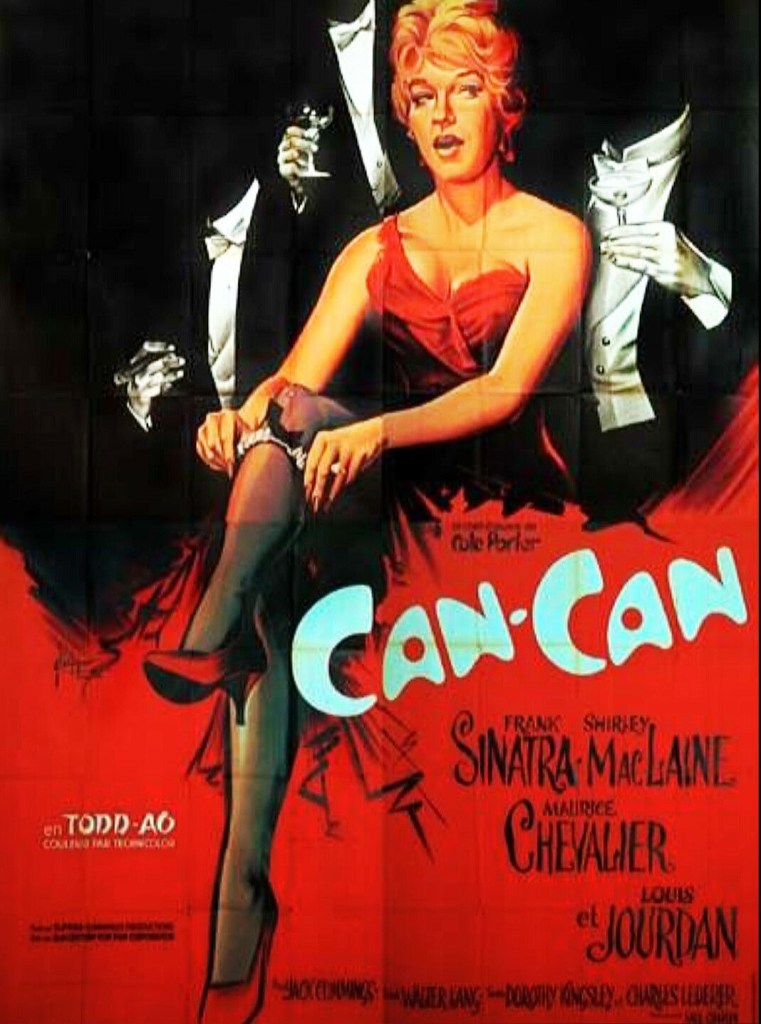
Can-Can (1960) ****

A sterling cast does justice to some great Cole Porter songs in an entertaining musical typical of the period. Apart from appropriating some stock footage, nobody was going to bother to head out on location when a Hollywood-ized version of Paris could be recreated on the set. While the film is ahead of its time in several ways – Simone (Shirley Maclaine) owns the nightclub and the women in the title dance are meant to be minus their panties, hence attempts by authorities to shut it down – the plot features an old-fashioned love triangle.

While the chief magistrate (Maurice Chevalier) turns a blind eye to the lewd dance, his younger colleague Phillippe (Louis Jourdan) does not and ensures Simone is arrested. Complications arise when Philippe falls in love with Simone who already has a lover, the lawyer Francois (Frank Sinatra) who is averse to committing to marriage. The four stars are all very charming and there is gentle comedy and effortless acting as the romantic knots are tightened and then unpicked. Hypocrisy is tested and found wanting. The courtroom scenes are amusing and most of the story focus is on how Phillippe can get round his principles and legal obligations to successfully woo Simone.

But in reality, the audience is here for the music, and to hear classic Porter songs interpreted by Sinatra and Chevalier. While the songs are top-drawer, what captured my imagination most was the “Garden of Eden” ballet with a stunning design and superb dancing by Simone and Claudine (Juliet Prowse).  The “Apache Dance” also boasts some singular choreography but otherwise while the “Can-Can” itself is rousing and well-done this is for obvious reasons a censored version.

The Cole Porter contribution includes: “I Love Paris,” “C’Est Magnifique,” “It’s Allright With Me,” “Let’s Do It,” and “Just One of Those Things.”

Walter Lang was a safe pair of hands in this genre having helmed Call Me Madam (1953), There’s No Business Like Show Business (1954) and Oscar-nominated for The King and I (1956). The screenplay was a harder slog. The original Broadway musical was a romance between the judge and the nightclub owner. Adding the lawyer Francois to the mix necessitated major changes to the story. But Dorothy Kingsley also had form, having been responsible for the screenplays of  Kiss Me, Kate (1953), Seven Brides for Seven Brothers (1954) and Pal Joey (1957). Co-writer Charles Lederer, although involved in Kismet (1955), had a better grasp of comedy, as seen in Gentlemen Prefer Blondes (1953) and It Started with a Kiss (1960).

Although not universally admired by the critics, it won two Oscars – color costume design for  Irene Sharaff and best music for Nelson Riddle. It didn’t hit a home run at the box office either and the finger was pointed at Twentieth Century Fox for committing the mortal sin of inflating revenue figures on its initial launch.

While not one of the all-time great musicals and put in the shade when compared to West Side Story (1961) and The Sound of Music (1965), it’s an enjoyable confection, the easy screen charisma of Sinatra, Chevalier, Jourdan and MacLaine holding it all together.

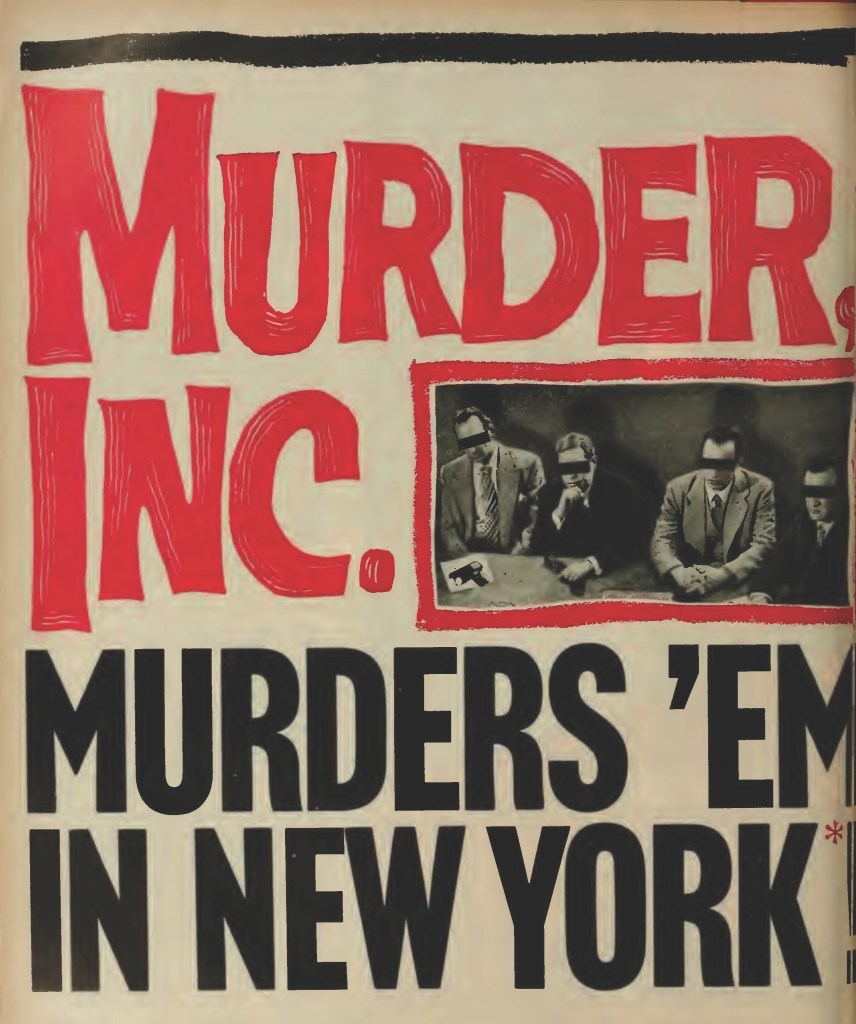
Murder, Inc. (1960) ***

A gangster trend hit the mean streets of Hollywood at the start of the 1960s. But in the absence of big box office hitters like James Cagney, Humphrey Bogart and Edward G. Robinson, these were all B films with unknowns or low-ranked stars in the leading roles. Whereas Little Caesar (1931), Public Enemy (1931), The Roaring Twenties (1939) and White Heat (1949) were fictionalized accounts of hoodlums, the gun-toting movie spree kicked off by Machine Gun Kelly (1958) and Al Capone (1959) was based on the real-life gangsters who had terrorized America’s big cities in the 1920s and 1930s.

By the end of 1960, moviegoers had been served up an informal history of the country’s best-known mobsters from Ma Barker’s Killer Band (1960) and Pretty Boy Floyd (1960) to The Rise and Fall of Legs Diamond (1960) and Murder Inc (1960). The infamy of the criminals was so comparatively recent that moviemakers assumed audiences had a wider knowledge of their exploits and the context of their crimes.

Murder Inc tells how underworld kingpin Lepke Buchalter – Tony Curtis played him in the more straightforward biopic Lepke (1975) – set up a system of killing dissenters in the ranks for the entire American Cosa Nostra (aka The Syndicate) in a way that prevented those ordering the murders being connected to those committing them, the same kind of protective cell operation used by terrorists. He created a separate organisation of hitmen.

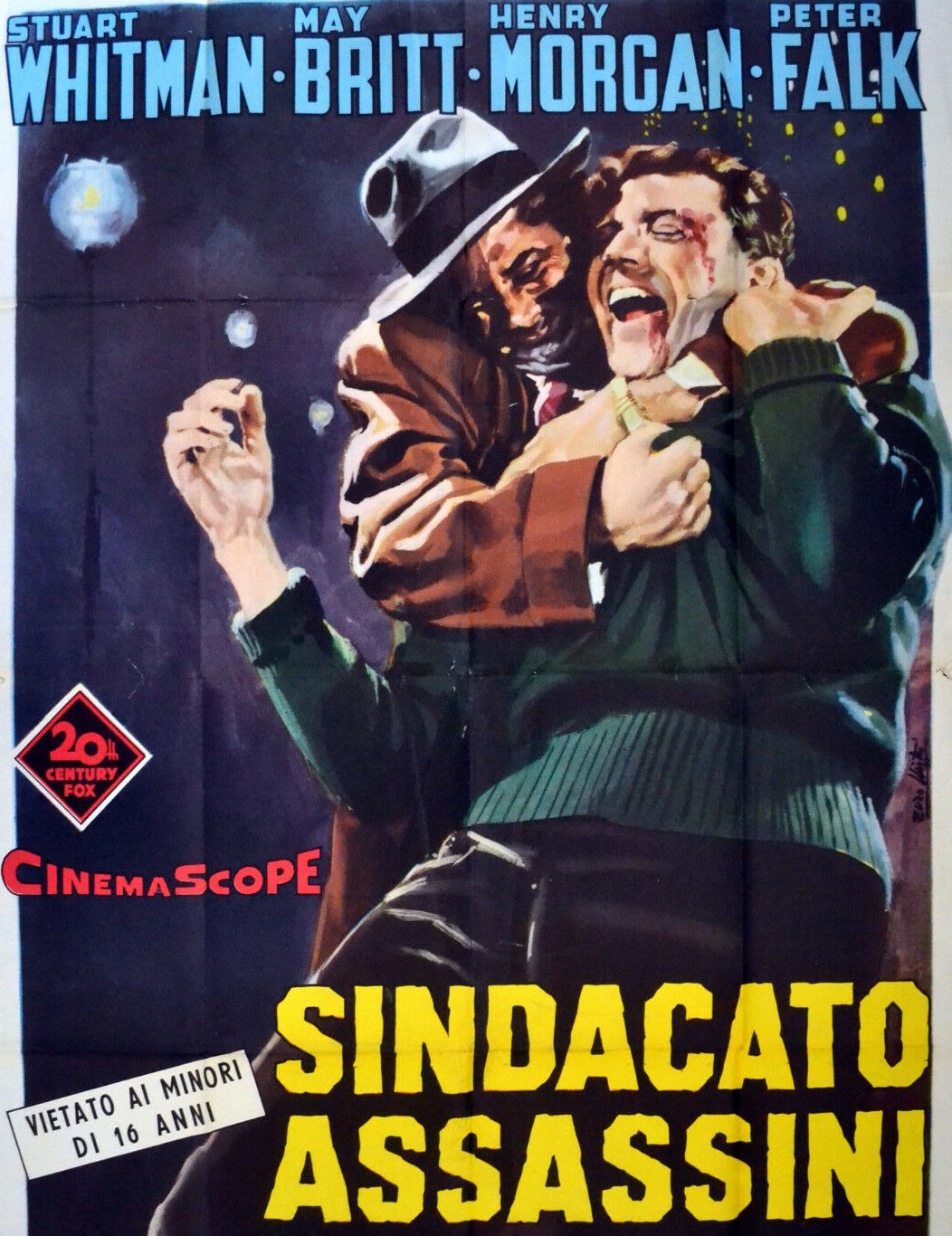
This quasi-documentary, with occasional voice-over narrative, focuses on three characters – the quiet-spoken Lepke (David J. Stewart), hitman Abe Reles (Peter Falk) and singer Joey Collins (Stuart Whitman) who becomes involved to pay off a gambling debt. Later on, the focus switches to Brooklyn assistant district attorney Burton Turkus (Henry Morgan), against a backdrop of massive police corruption, investigating the murder epidemic this deadly enterprise has created. The films jumps around too much to be totally engrossing but it is certainly an interesting watch.

The two main villains could not be more different, Lepke representing the new school, a businessman, ordering killings but never participating, and for such a tough character tormented by a delicate stomach. Reles is old school, relishing opportunities to murder, and raping Collins’ honest wife Eadie (May Britt) in part because she treats him as scum. It’s hard to muster much sympathy for Joey especially as his wife takes the brunt of the violence.

In an Oscar-nominated performance Peter Falk (Castle Keep, 1969) steals the show as the chilling, venomous killer, the kind of nonentity who rises to prominence only through his penchant for homicide. Swedish star May Britt (The Blue Angel, 1959) isn’t far behind with a portrayal of a strong woman saddled with a weak husband. As the milk-drinking hood, David J. Stewart (The Young Savages, 1961) was as scary in his pitilessness as his more overtly violent underling.

Stuart Whitman (The Commancheros, 1961) is almost acting against type for he was later known for rugged roles. Henry Morgan (It Happened to Jane, 1959) gave his portrayal of Turkus similar characteristics to Lepke, appearing as a quiet individual, concerned with details,  except that he was incorruptible.

You might spot some interesting names in the cast. Simon Oakland (Bullitt, 1968) is an honest cop, Vincent Gardenia (Mad Dog Coll, 1961) is a lawyer, comedian Morey Amsterdam (The Dick Van Dyke Show, 1961-1964) plays a hotel manager, Sylvia Miles (Oscar-nominated for Midnight Cowboy, 1969) has a bit part and singer Sarah Vaughan is a singer.

For some reason, this movie starred a number of actors in leading roles who made few screen appearances. This was the only movie of the decade for May Britt, David J. Stewart made only three movies during the same period, and Henry Morgan only made three pictures in his entire career, this being the last.

The movie boasted two directors. Stuart Rosenberg (Cool Hand Luke, 1967) was replaced  by Burt Balaban (Mad Dog Coll, 1961) when the threat of strike action by actors and writers in 1960 forced the 18-day shoot to be cut by 10 days so it’s hard to say who was responsible for which scenes, although the film does boast some unusual aerial shots.

You can catch this on Amazon Prime.
Year-End Round-Up Part Two: “Other Stuff” Top 20

Regular readers will know that this blog occasionally turns its attention to what comes under the generic title of “Other Stuff.” In the main and still covering movies I’ve reviewed this comprises behind the scenes looks at movies, examines pressbooks or marketing materials and analyses how books were shaped into films. I also focus from time to time on important issues that shaped Hollywood in the 1960s and write book reviews.

  1. Behind the ScenesThe Guns of Navarone (1961). The ultimate template for the men-on-a-mission war picture with an all-star cast and enough jeopardy to qualify for a movie of its own.
  2. Book ReviewThe Gladiators vs Spartacus Vol 1. Stupendous research by Henry MacAdam and Duncan Cooper explains how close Yul Brynner’s version of the Spartacus legend came to beating the Kirk Douglas movie into production.  
  3. Behind the ScenesThe Satan Bug (1965). The problems facing director John Sturges in adapting the Alistair MacLean pandemic classic for the big screen.
  4. Box Office Poison – 1960s Style. Actors and actresses who had been big box office draws at the start of the decade were floundering by its end. This examines which stars while pulling down big salaries were not pulling their weight.
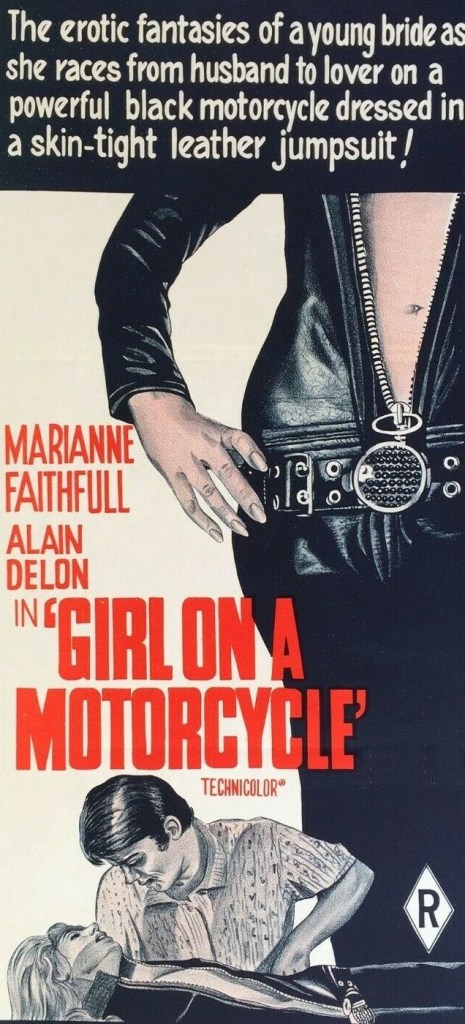
  5. Behind the ScenesThe Girl on a Motorcycle (1968). Cult classic starring Marianne Faithful and Alain Delon had a rocky road to release, especially in the U.S. where the censor was not happy.
  6. The Bond They Couldn’t SellDr No (1962). Despite the movie’s later success and the colossal global box office of the series, American cinema owners were very reluctant to spend money renting what was perceived as just another British film.
  7. When Alistair MacLean Quit: Part One. Rankled by his treatment by his publishers, the bestselling author gave up his bestselling career. And not once, but twice (see When Alistair Quit: Part Two).
  8. Book ReviewDreams of Flight: The Great Escape (1963) in American Film and Culture. Dana Polan’s definitive book on the making of the POW classic starring Steve McQueen.
  9. Behind the ScenesGenghis Khan (1965). A venture into epic European filmmaking with an all-star cast led by Omar Sharif.
  10. Bronson Unwanted. By the end of the 1970s Charles Bronson was one of the biggest stars in the world, but at the end of the 1960s, although highly appreciated in France, his movies could not get a box office break elsewhere.
  11. PressbookDark of the Sun (1968). How MGM sold the action picture starring Rod Taylor and Jim Brown. Fashion anyone?
  12. Selling Doctor Zhivago (1965). MGM’s efforts to create huge audience awareness of the David Lean epic prior to its British launch.
  13. Behind the ScenesThe Night They Raided Minskys / The Night They Invented Striptease (1968). The convoluted background to the attempts by neophyte director William Friedkin to make a movie celebrating America’s vaudeville past.
  14. Advance Buzz. How Hollywood began to take on board the need for publicity long before the opening of a picture.
  15. Behind the ScenesTopaz (1969). Detailing the problems facing Alfred Hitchcock in turning the Leon Uris bestseller into an espionage classic featuring a non-star cast.
  16. Book ReviewThe Gladiators vs Spartacus Vol 2.  Abraham Polonsky’s longlost screenplay about Spartacus is brought to light.
  17. The Miracle of Mirisch. The Mirisch Bros were the top independent producers in the 1960s – the first of the mini-majors – and while releasing classics like The Magnificent Seven and The Great Escape were also responsible for a pile of turkeys.
  18. Book into FilmDr No (1962). How the filmmakers adapted the Ian Fleming original to create the James Bond template.
  19. Behind the ScenesCast a Giant Shadow (1965). Producer Melville Shavelson wrote a book about his experiences and this and other material relating the arduous task of bringing the Kirk Douglas-starrer to the screen are related here.
  20. Book into FilmA Cold Wind in August (1961). The novel was a lot sexier than the film, since publishing did not face the same restrictions as Hollywood, and this examines how far the movie went to retain the spirit of the book.

Year-End Round-Up: Top 30 Films Chosen by You

Top 30

This isn’t my choice of the top films of the year, but yours, my loyal readers. This is a chart of the films viewed the most times over the full calendar year of January 2021 – December 2021.

  1. The Secret Ways (1961). Richard Widmark in spy thriller set in Hungary during the Cold War and adapted from the Alistair MacLean novel. Senta Berger has a small role.
  2. Ocean’s 11 (1960). Frank Sinatra, Dean Martin and the Rat Pack embark on an audacious Las Vegas robbery.  
  3. Pharoah (1966). Epic Polish picture about political shenanigans in ancient Egypt.
  4. Age of Consent (1969). Helen Mirren stars as the nubile muse of jaded painter James Mason returning to his Australian roots.
  5. The Venetian Affair (1966). Robert Vaughn hits his acting stride as a former CIA operative turned journalist investigating suicide bombings in Venice. Great supporting cast includes Elke Sommer and Boris Karloff.
  6. The Golden Claws of the Cat Girl (1968). Cult French movie  starring Daniele Gaubert as a sexy cat burglar.
  7. Moment to Moment (1966). Jean Seberg is caught up in a Hitchcockian murder plot in the French Riviera. Also features Honor Blackman.
  8. It’s Not All Rock’n’Roll (2020).  Ageing rocker Dave Doughman aims to mix a career with being a father in this fascinating documentary.
  9. 4 for Texas (1963). Frank Sinatra and Dean Martin face off in a Robert Aldrich western featuring Ursula Andress and Anita Ekberg with Charles Bronson in a smaller part.
  10. Once a Thief (1965). Trying to go straight ex-con Alain Delon is coerced into a robbery. Ann-Margret is a revelation as his wife. Jack Palance, Van Heflin and Jeff Corey add up to a great supporting cast.  
  11. Stiletto (1969). Alex Cord as a Mafia hitman wanting to retire is pursued by tough cop Patrick O’Neal. Britt Ekland heads a supporting cast which includes Roy Scheider, Barbara McNair and Joseph Wiseman.
  12. Subterfuge (1968). C.I.A. operative Gene Barry is called to London to uncover a mole in M.I.5. Joan Collins provides the romance. Richard Todd, Tom Adams, Suzanna Leigh and Michael Rennie lend a touch of class.
  13. The Swimmer (1968). Burt Lancaster delivers a superlative performance as a man whose life is falling apart.
  14. The Rock (1996). Blistering thriller starring Sean Connery as an ex-inmate of Alcatraz helping Nicolas Cage infiltrate the island to prevent mad general Ed Harris destroying San Francisco. Michael Bay directs.
  15. The Sicilian Clan (1969). Alain Delon joins forces with Jean Gabin to pull off an daring jewel heist with tenacious cop Lino Ventura on their trail. French thriller directed by Henri Verneuil.
  16. The Naked Runner (1967). With his son held hostage, Frank Sinatra is forced to carry out an assassination in East Germany.
  17. A House Is Not a Home (1965). Biopic of notorious madam Polly Adler (played by Shelley Winters) who rubbed shoulders with the cream of Prohibition gangsters.
  18. Pressure Point (1962). Prison psychiatrist Sidney Poitier must help racist Nazi Bobby Darin.
  19. Genghis Khan (1965). Omar Sharif plays the legendary warlord who unites warring Mongol tribes. Stellar cast includes Stephen Boyd, James Mason, Francoise Dorleac, Eli Wallach, Telly Savalas and Robert Morley.
  20. A Twist of Sand (1968). Beleaguered smuggler Richard Johnson spars with Jeremy Kemp in thriller about hidden diamonds in Africa. Honor Blackman is along for the voyage.
  21. Jason and the Argonauts (1963). Ray Harryhausen special effects dominate this legendary tale of the hunt for the Golden Fleece.  
  22. Dr Syn Alias the Scarecrow (1963). Disney movie that was turned into a mini-series in the U.S. starring Patrick McGoohan as the eponymous Robin Hood-type character who assists smugglers.
  23. The Hitman’s Wife’s Bodyguard (2021). Ryan Reynolds and Samuel L. Jackson reunite for wild sequel also featuring Salma Hayek and Antonio Banderas.
  24. Dark of the Sun / The Mercenaries (1968). Rod Taylor leads a private army into the war-torn Congo to rescue a cache of uncut diamonds. Jim Brown, Yvette Mimieux and Kenneth More co-star. Based on the Wilbur Smith bestseller.
  25. The Guns of Navarone (1961). Classic war mission picture with an all-star cast of Gregory Peck, David Niven, Anthony Quinn, Stanley Baker, Irene Papas and Gia Scala. Adapted from the Alistair McLean bestseller.
  26. Maroc 7 (1967). Gene Barry infiltrates a gang of jewel thieves in Morocco operating under the cover of a fashion shoot. Dazzling female cast includes Elsa Martinelli, Cyd Charisse, Tracy Reed and Alexandra Stewart.
  27. The Satan Bug (1965). John Sturges adaptation of Alistair MacLean pandemic thriller stars George Maharis, Richard Basehart and Dana Andrews.
  28. Five Golden Dragons (1967). Cult thriller with Robert Cummings as the playboy caught up in an international crime syndicate. Klaus Kinski and Christopher Lee head an exceptional supporting cast that also includes Margaret Lee, Brian Donlevy, George Raft, Dan Duryea and Maria Rohm.
  29. Claudelle Inglish (1961). Diane McBain as the poor farmer’s daughter who wants to get rich quick.
  30. Jessica (1962). Angie Dickinson plays a young widow who turns so many heads in a small Italian town that their wives seek revenge.

Gimme Slapstick

The spate of slapstick-led comedies like It’s A Mad, Mad, Mad, Mad World (1963) and The Great Race (1965) and British featurettes such as The Plank (1967) did not suddenly appear out of nowhere as was often the case with a moribund genre. The slapstick revival came by way of television. In the 1950s U.S. networks were screening silent shorts featuring Laurel and Hardy, Charlie Chaplin, and some of the Hal Roach and Mack Sennett output.

The driving force behind the big screen resurgence of interest in silent comedy was Robert Youngson who spent $100,000 in 1957 on what purported to be a new documentary The Golden Age of Comedy. In fact it was a good excuse for a compilation of old movie clips featuring Laurel and Hardy, Harry Langdon and actresses known for their comic ability such as Jean Harlow and Carole Lombard. But while the television audience was weighted towards the young, Youngson’s picture reached a more appreciative adult audience in the arthouses, which would prove to be the bedrock for the ambitious revitalizing of the careers of other greats from the Hollywood peak years.

The Golden Age of Comedy was hugely successful, taking $500,000 in rentals. Since arthouses notoriously shared of lot less of their box office with studios there was a fair chance that the gross was in the region of $1.5 million, a tremendous return on investment, and opening the door for further sequels.

Silent comedy also crossed national boundaries. Modern dialogue-driven Hollywood comedies often found it hard to gain a foothold overseas. But The Golden Age of Comedy film was Twentieth Century Fox’s top grosser in India and huge in Italy.

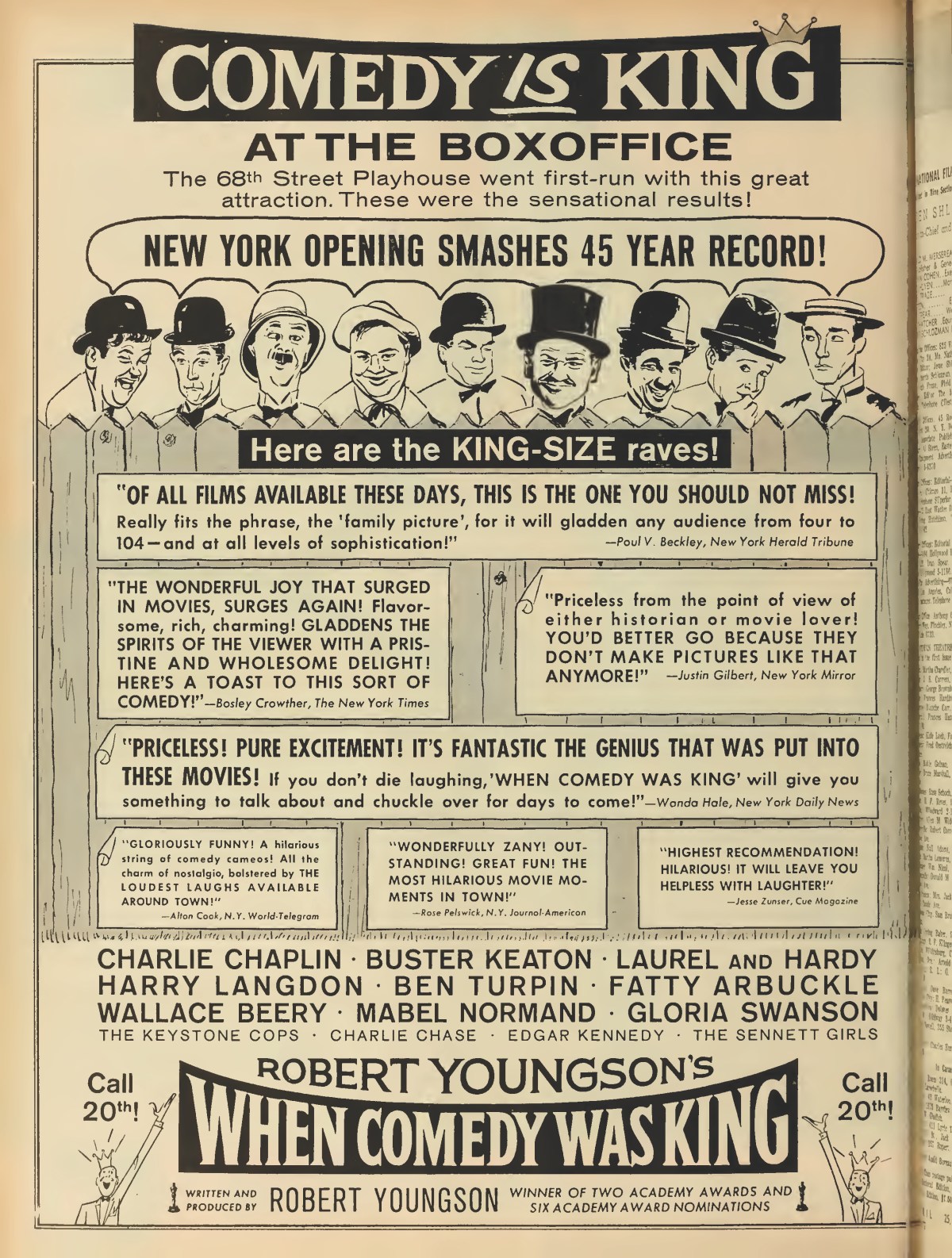
Follow-up When Comedy Was King (1960) smashed box office records in New York at the 370-seat arthouse the 68th St Playhouse and at prices ranging from 90c to $1.65 playing to an estimated 10,000 moviegoers and running for another eight weeks. That gave Fox the greenlight to stick it out on the more commercial circuits as a supporting feature. But that was just the tip of the compilation iceberg, especially when other studios got into the act.

Hardly a year went by without another compilation – from the Youngson camp emerged Days of Thrills and Laughter (1961) and 30 Years of Fun (1963). MGM put marketing muscle behind the producer’s The Big Parade of Comedy (1964) to the extent that it collected rave reviews from Newsweek and the New York Times and the studio held seminars for exhibitors on “sight comedy.” The inevitable double bill When Comedy Was King/Days of Thrills and Laughter appeared in 1965.

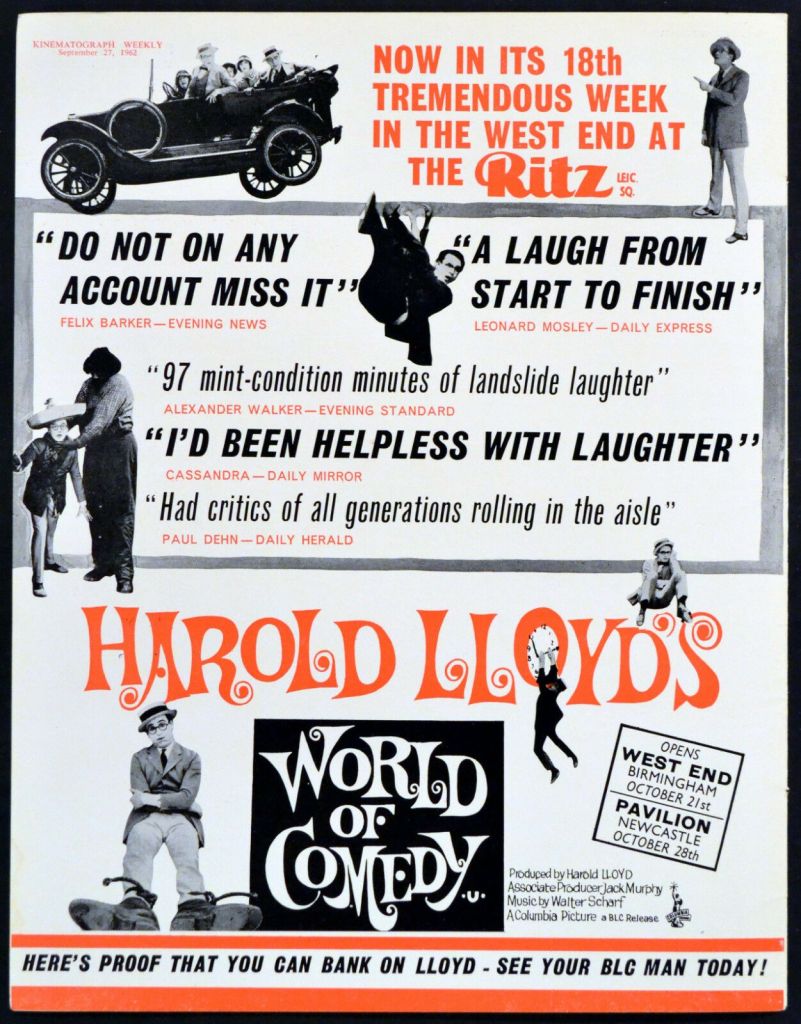
Harold Lloyd owned the copyright to all his films so his work was not chopped up piecemeal to satisfy the demands of a compilation. Harold Lloyd’s World of Comedy (1962) showed the comedian at the peak of his game. It combined eight scenes from silent and sound films Safety Last (1923), Why Worry (1923), Girl Shy (1924), Hot Water (1924), The Freshman (1925), Feet First (1930), Movie Crazy (1932) and Professor Beware (1938). His trademark spectacles were incorporated into the advertising. Follow-up Funny Side of Life (1963) included a complete version of The Freshman.

Mining a different silent tradition and with less emphasis on comedy was The Great Chase (1962) – including a shortened version of The General (1926) – which featured stunts by Douglas Fairbanks, Buster Keaton, William S. Hart and Pearl White.

The Buster Keaton revival had been initiated in less commercial fashion by Raymond Rohauer who had begun staging festival sof his films in arthouses. He tracked down prints of long-lost films in France, Denmark and Czechoslovakia but his compilations Buster Keaton Rides Again (1965) and The Great Stone Face (1966) were more successful abroad than at home.

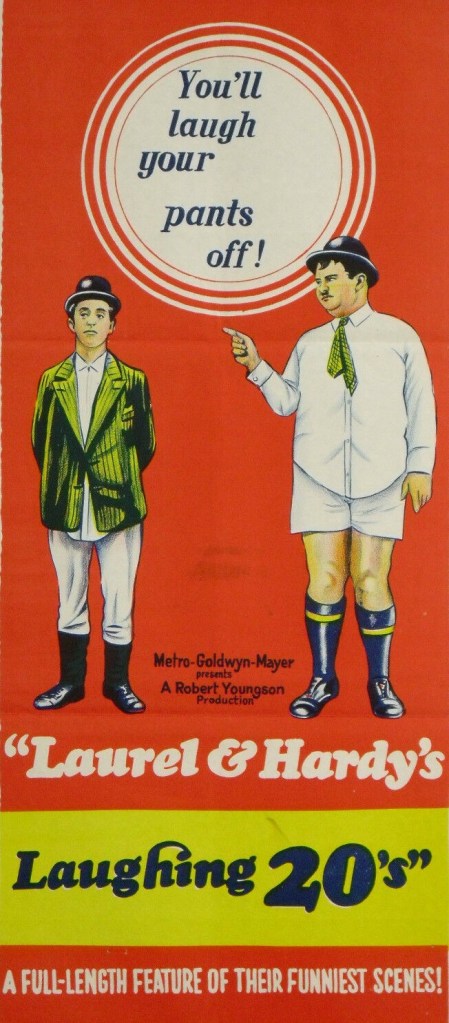
Blake Edwards’ The Great Race was dedicated to Laurel and Hardy who had become more prominent on both small-screen and big-screen thanks in part to the initial Youngson compilations. MGM were first out the traps with Laurel and Hardy’s Laughing 20s (1965). Then came producer Jay Ward’s The Crazy World of Laurel and Hardy (1966) and The Further Perils of Laurel and Hardy (1967) followed by a collection of colorized shorts The Best of Laurel and Hardy while Hanna-Barbera launched a cartoon series on television in 1966 and Pillsbury sold Laurel and Hardy donuts.

SOURCES: Brian Hannan, Coming Back to a Theater Near You: A History of the Hollywood Reissue 1914-2014 (McFarland, 2016), pages 200-205; “Youngson Anthologies of Silents Continue Showing Coin Potential,” Variety, October 19, 1960, p13; “Picture Grosses,” Variety, March 9, 1960, p8; Advertisement, “Sleeper of the Year,” Box Office, October 5, 1964, p7; “MGM Sets Fun Campaign for Laurel and Hardy,” Box Office, September 20, 1965, p112;  “Comedy Seminar Helps MGM Film Promotion,” Box Office, December 13, 1965, p94; “Pillsbury Acquires Rights for Laurel and Hardy Donuts,” Box Office, October 23, 1966, p27; “Archivist Raymond Rohauer,” Los Angeles Times, November 20, 1987.

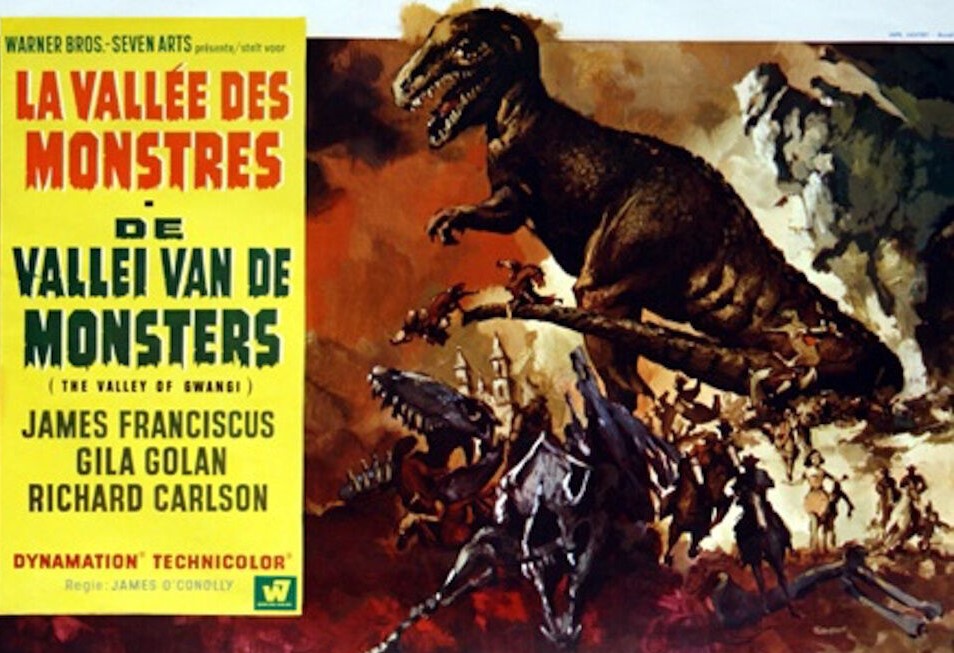
The Valley of Gwangi (1969) ****

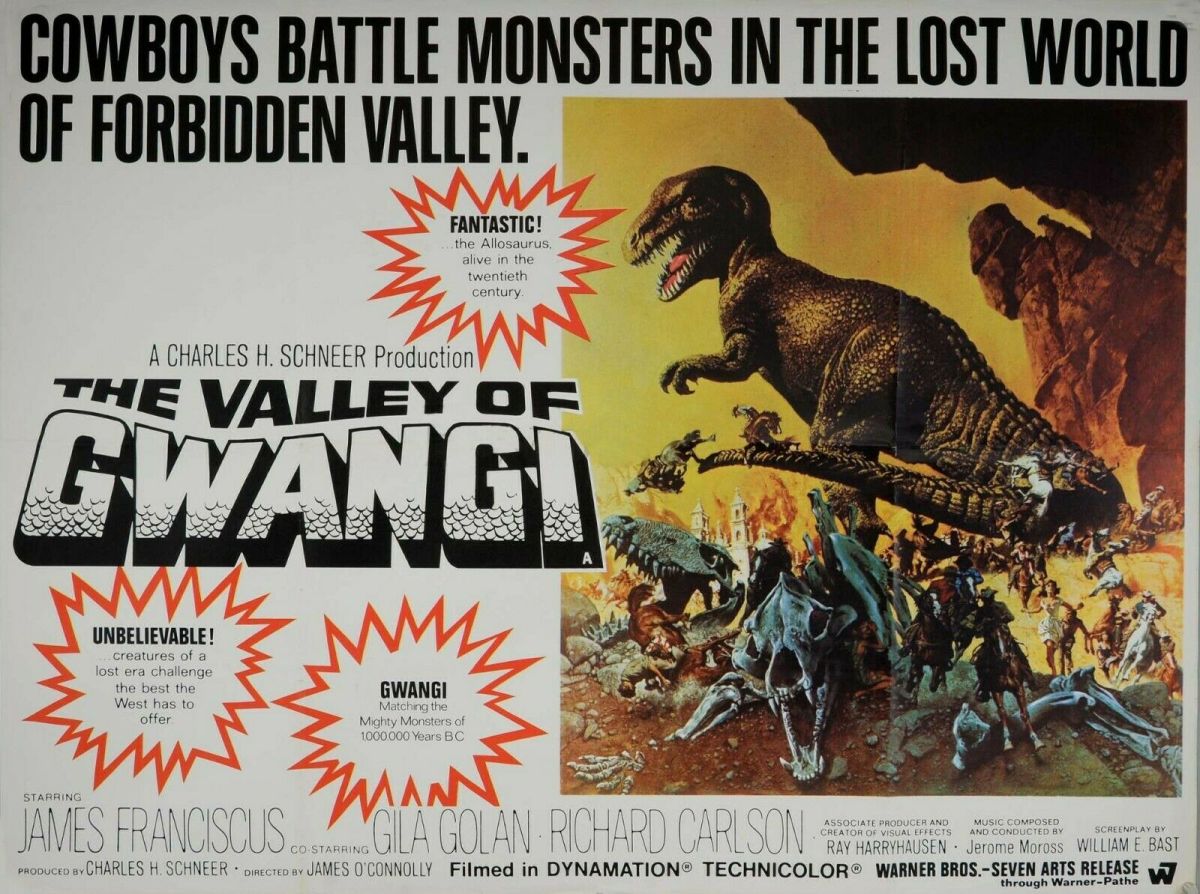
The special effects are in the five-star range while the movie into which they fit is really worth no more than three stars so I’ve compromised, hence the four-star rating. Actually, the story and characters are interesting enough, and there are some stunning cowboy stunts,  though where is a fur-lined bikini when you need one. Although we are treated to prehistoric monsters, humans fail to have managed the transition to the hidden valley where the creatures have kept out of sight for millions of years. Instead, we are in turn-of-the-twentieth-century Mexico.

However, one specimen, a miniature horse, known as El Diablo, has been found and now resides in a rodeo, property of T. J. Breckenridge (Gila Golan) whose showstopping turn involves leaping on horseback from a high platform through a ring of fire into a pool of water.  Ex-flame and sleek salesman Tuck (James Franciscus) and archaeologist Professor Bromley (Laurence Naismith) follow gypsies who aim to return the horse to the Forbidden Valley. T.J. and a band of cowboys are in pursuit.

I saw this double bill in 1969 when it was shown on the ABC circuit in Britain.

Widening a tiny gap into the unknown world also of course means it’s not big enough for the monsters to escape. The valley is ruled by Gwangi, an Allosaurus, which to most of the audience looks remarkably like a T. Rex. Various battles ensure. A Pteranadon swoops down from the sky and captures one of the cowboys but is killed by Carlos (Gustavo Rojo). Gwangi fights an Ornithomimus and a Styracosaurus. Even if your knowledge of prehistoric monsters  isn’t up to identifying each creature, no matter, the fights are very well done, and a step up in terms of special effects from similar tussles in Harryhausen’s previous venture in One Million Years B.C. (1966) especially as we are less distracted by females attired in fur bikinis.

Naturally, the intent is to capture Gwangi and put him on show a la King Kong (1933) and it’s equally obvious how this particular maneuver is going to work out. That the story follows this particular angle is down to the fact that the movie was the original idea of Willis O’Brien, the special effects genius to created King Kong. After considerable development, RKO shelved the project on the assumption the public was not interested in dinosaurs.

Meanwhile, back in the human tale, the previously principled T.J. lets greed get the better of her and begins resisting Tuck’s overtures. Even if you can guess the finale, it is pretty well done.

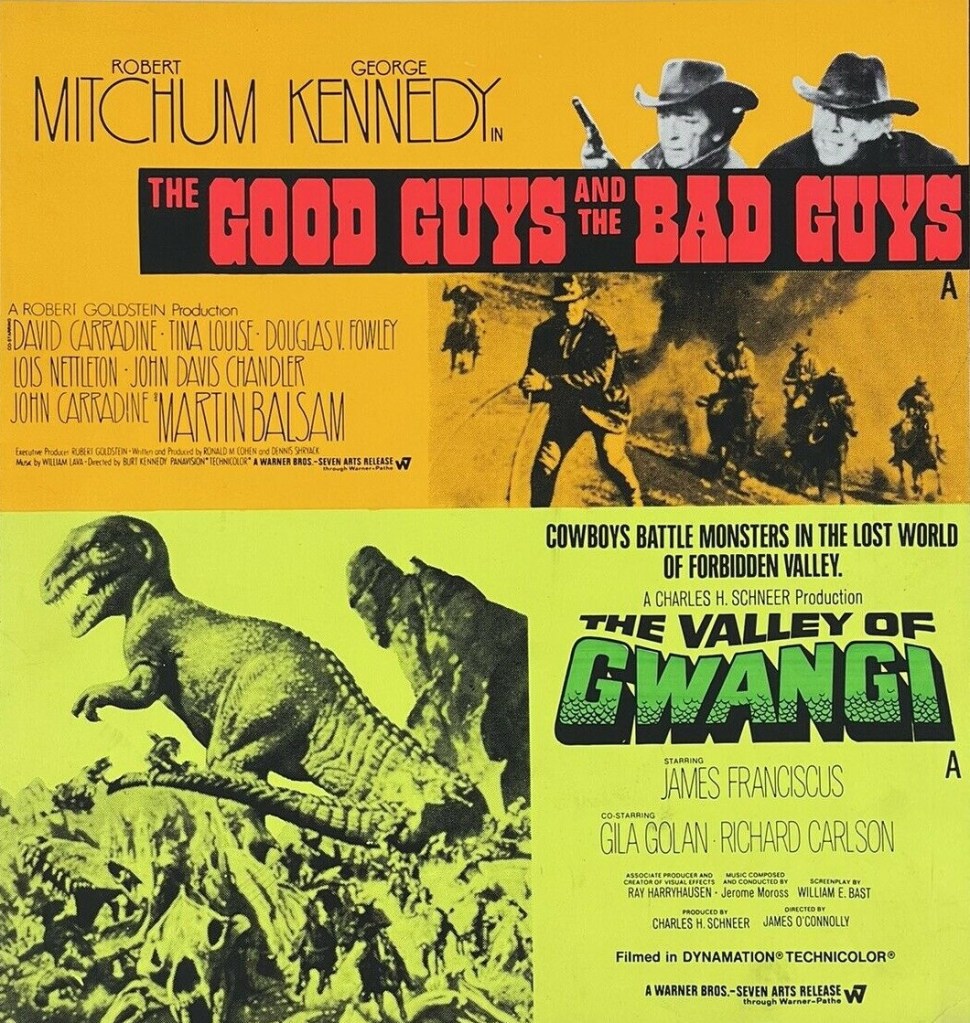
Ray Harryhausen only had a limited fanbase in the 1960s, otherwise this picture would not have done the rounds as the supporting feature to Robert Mitchum western The Good Guys and the Bad Guys (1969). You can tell it lacked the budget of One Million Years B.C. because the creatures fail to remain a consistent color. Even so, this ranks as one of the top special effects achievements and these days Harryhausen’s work is much more appreciated.

Unless you are Raquel Welch, it’s difficult for an actor to compete with prehistoric monsters. At least here, the stars had decent dialogue and the tangled romance provides entertainment as do the host of stunning stunts in the rodeo and a bull running amok. Charlton Heston look-alike James Franciscus (Youngblood Hawke, 1964) is a plausible love interest who doesn’t let romance get in the way of a fast buck. The role of Gila Golan (Our Man Flint, 1966) extends to more than eye candy and there’s not a bikini in sight or disrobing of any sort. Richard Carlson (Creature from the Black Lagoon, 1954) was a sci-fi veteran and Laurence Naismith had appeared in Jason and the Argonauts (1963). British actress Freda Jackson (The Third Secret, 1964) plays a witch.

Director Jim O’Connolly (Vendetta for the Saint, 1969) keeps the human elements rolling along and once monsters join in the fun there’s scarcely time to draw breath. William Bast (Hammerhead, 1968) pulled together the human and monster elements for the screenplay.

Harryhausen fans will have a ball.

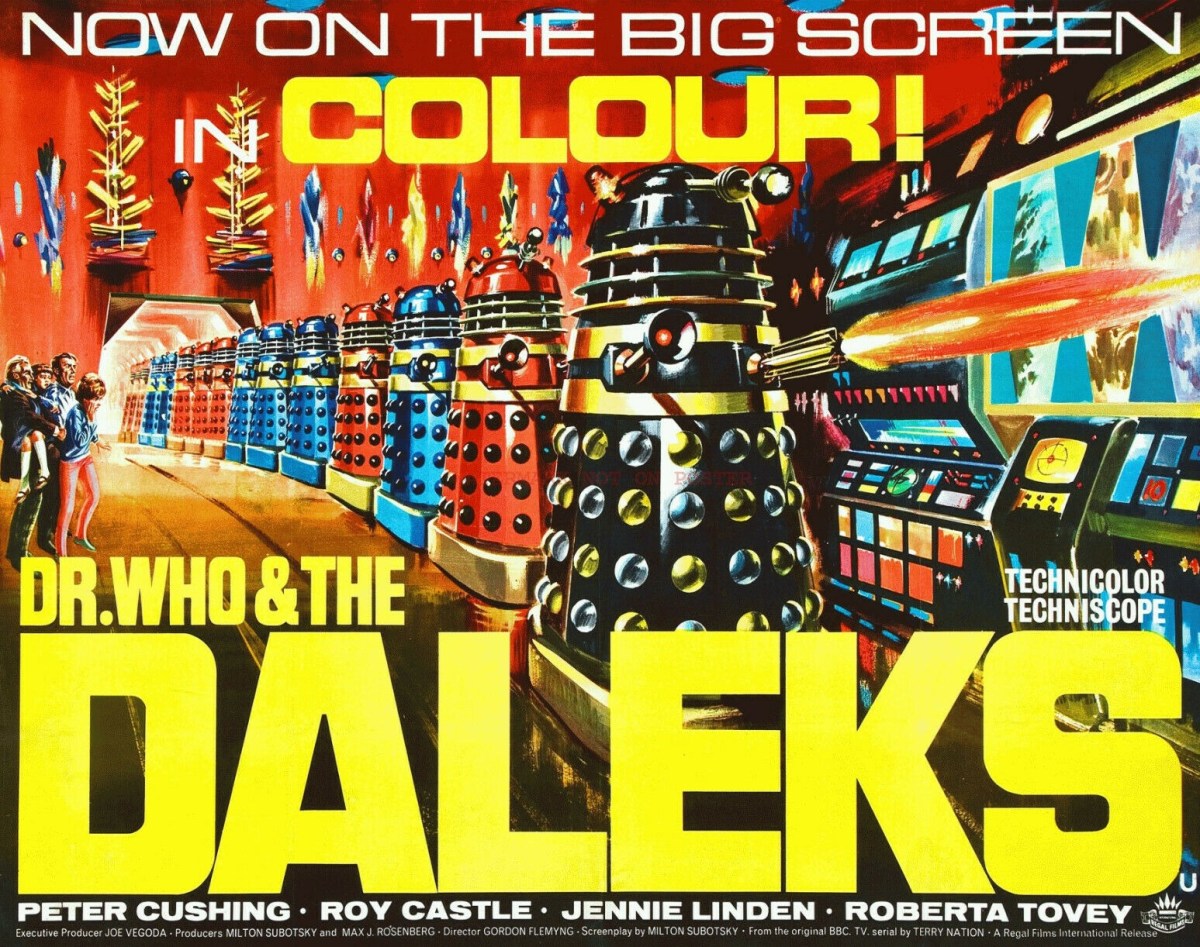
Dr Who and The Daleks (1965) ***

The maiden voyage of the time-travelling Tardis is triggered by some unexpected pratfall comedy. On board are the venerable doctor (Peter Cushing), his intrepid great-granddaughter Susan (Roberta Tovey) and a fearful pair, granddaughter Barbara (Jennie Linden) and accident-prone Ian (Roy Castle). They land on a petrified planet ruled by robotic Daleks with menacing electronic voices.

The malfunctioning Tardis forces them to investigate an abandoned city but they are quickly imprisoned, the steel robots determined to discover why the earthlings should be immune to the radiation that has consumed the planet after nuclear war. Meanwhile, the planet’s remaining inhabitants, the Thals, are planning an uprising.

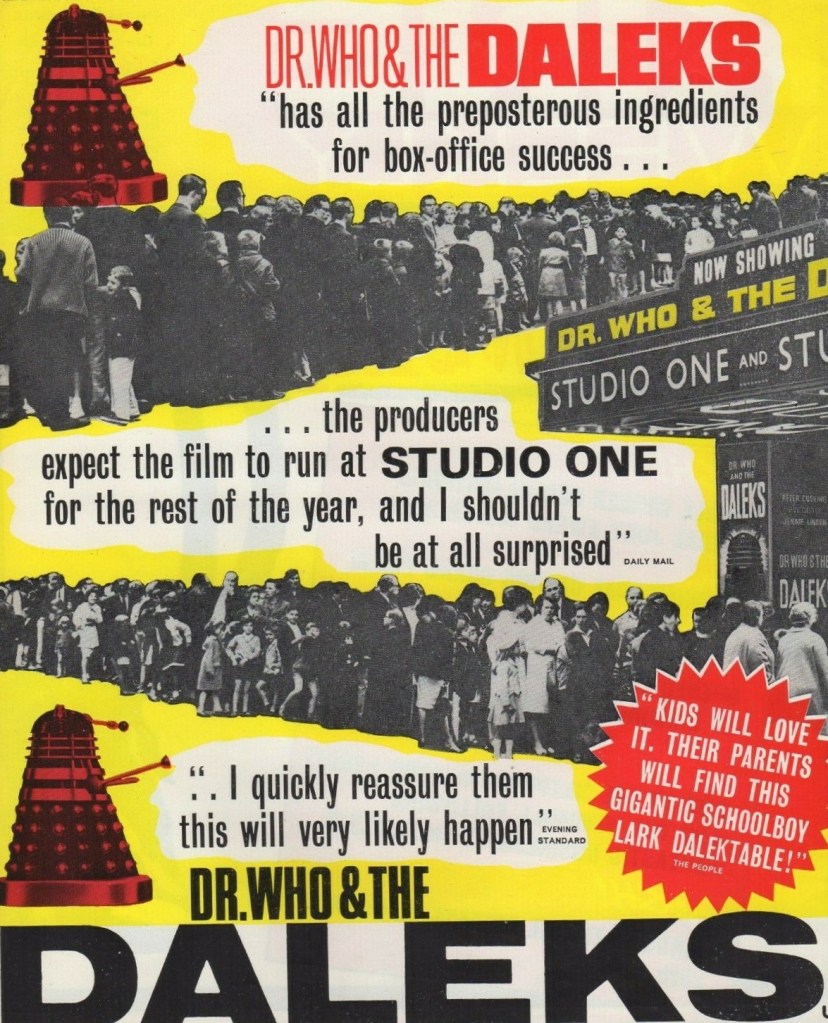
Studio One was one of the smallest cinemas in London’s West End and often used as the launch pad for Disney pictures. Limited capacity ensured that a hit film would run for months and the crowds queueing outside would attract the attention of other passersby.

Budget restrictions ensure that menace is limited, even as the characters endure a heap of traditional obstacles such as swamp and rocky outcrop. Adults who did not grow up in the 1960s when the BBC television series took Britain by storm and apt to come at this without the benefit of nostalgia will certainly look askance at the sets and costumes. And it doesn’t possess the so-bad-it’s-good quality of some 1950s sci-fi pictures. But since it was primarily made for children, then perhaps it’s better to watch it with a younger person and gauge their response – of course, that may be equally harsh from someone brought up on the modern version of the series or already immersed in superheroes.

On the plus side, it does move along at a clip. Roberta Tovey (A High Wind in Jamaica, 1965) charms rather than annoys as the plucky grand-daughter even if her grandfather has mutated from the sterner figure of the television series into an eccentric inventor. Peter Cushing (She, 1965) is only required to ground the production which he does adequately. The innate comic timing of Roy Castle, in his leading man debut, brings a light touch to proceedings as the bumbling boyfriend and generates some decent laughs. Jennie Linden (Women in Love, 1969) has little to do except look scared.

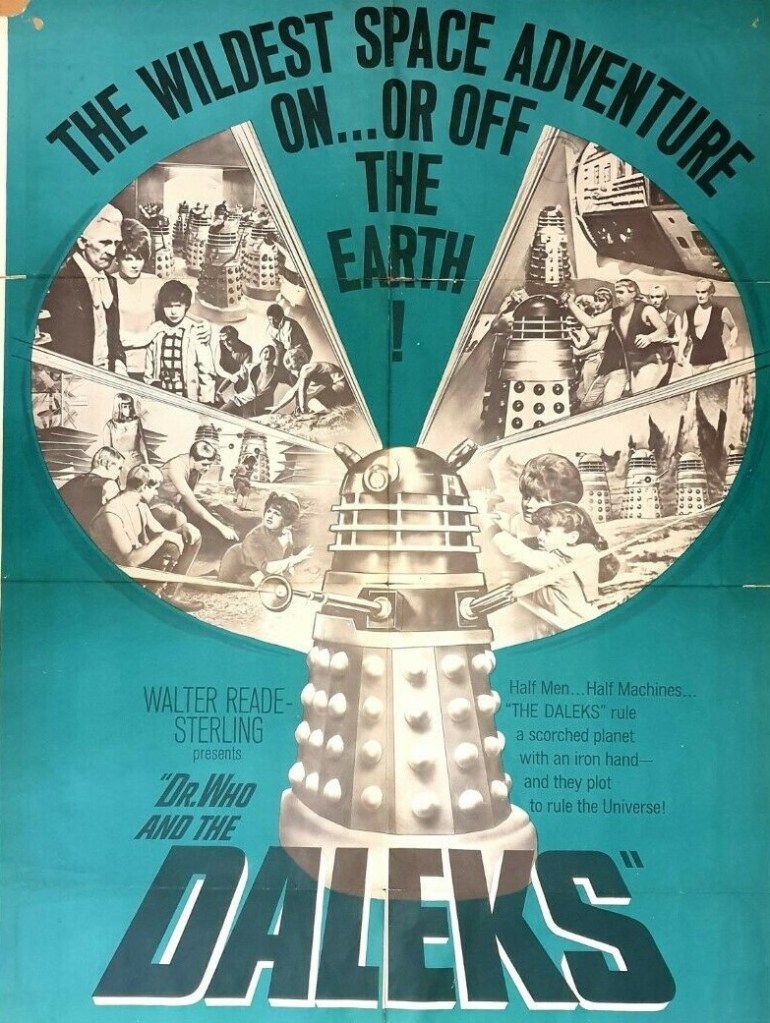
With no built-in audience, the U.S. distributors marketed it in typical fashion – “half men half-machine” – and possibly roped in a bigger adult audience unaware of its origins in children’s television.

Oddly enough, it was American Milton Subotsky who, in opportunistic fashion, brought the project to the big screen, although the BBC had a track record of providing product that might make such a leap, The Quatermass Experiment in the 1950s the leading example. He wrote the screenplay and acted as producer and had previously worked with Cushing on Dr Terror’s House of Horrors (1965) and was about to embark on horror masterpiece The Skull the same year. He has approached the material with some reverence and the fact that the budget allowed for hordes of daleks rather than being seen one or two at a time as on the television probably made some child’s day.

Scottish director Gordon Flemyng (The Split, 1968) would make the leap to Hollywood on the back of this picture and its sequel the following year and you can see what made studios have faith in his ability – he deals with multiple characters, works quickly on a low budget and delivers an attractive picture that was a box office hit.

I suspect that audiences will divide into those who watch the film with nostalgia-colored spectacles, those who think it only as good as a bad episode of Star Trek and those who adore any low-budget sci-fi movie.

You can catch this on Amazon Prime.
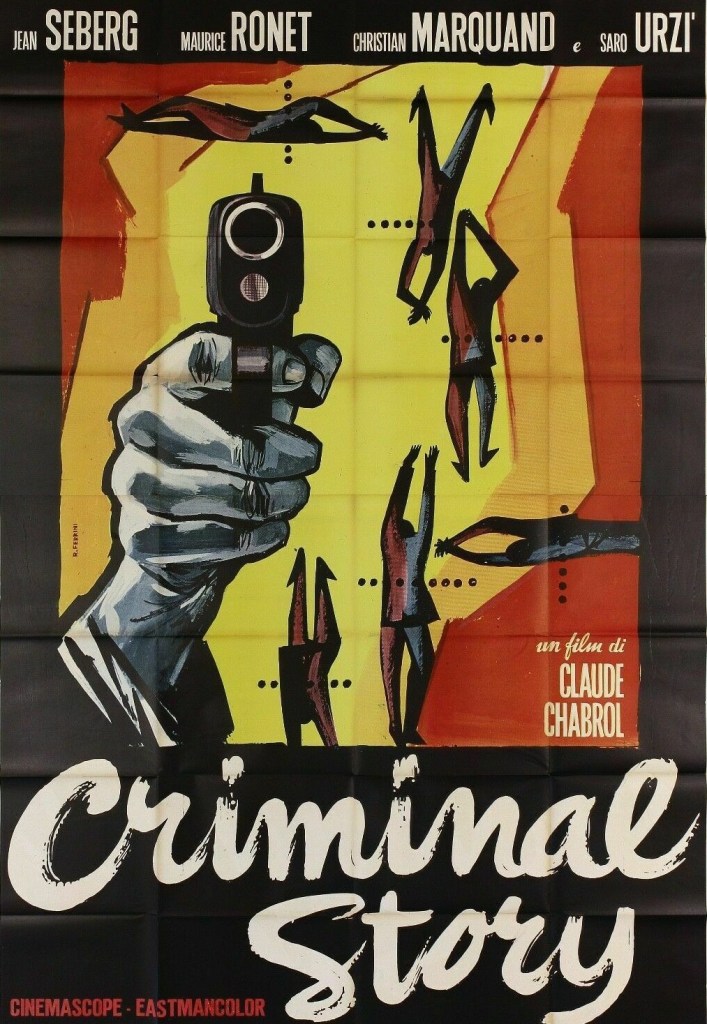
The Road to Corinth (1967) ***

Top-class cast and occasional stylish direction get in the way of a thriller that can’t make up its mind whether it is in reality just a spoof. On the one hand we have a killer in a white suit complete with straw boater and a secret service boss who sells Turkish Delight, on the other hand a story not so much from James Bond but from Bond imitators.

Agent Robert Ford (Christian Marquand) is on the trail of black boxes that prevent missiles launching. When wife Shanny (Jean Seberg) is framed for his murder she determines to uncover the real killer, aided by Dex (Maurice Ronet), and find the maker of the boxes.

But that’s an over-simplification of an over-complicated plot so it’s best to concentrate on the highlights. For example, when customs officials stop a magician they find white rabbits and doves in his vehicle and, despite severe interrogation, he can, magically, release himself from his bonds enough to swallow a concealed cyanide pill. Instead of the usual cute children that proliferate in these kind of films, there’s a really annoying one. Shanny, imprisoned, has to make dolls. Greek Orthodox priests play a significant role.

Throw in kinky secret service boss Sharps (Michel Bouquet) who relishes being slapped for his inappropriate overtures to Shanny, a porn film starring Madame Phiphi, the heroine dangled from a crane and later lashed down to a dumper, and a villain willing to give up his villainy for the love of a good woman.

But mostly it’s a picture in a rush. There are chases galore and nods to Hitchcock and lush Greek scenery.

It would be easy to assume that in eye-catching outfits Jean Seberg (Moment to Moment, 1966) is mostly there to provide eye candy but she does manage to outwit her pursuers from time to time although she seems equally to have a knack for being caught. Maurice Ronet (Lost Command, 1966), Christian Marquand (The Corrupt Ones, 1967) and especially Michel Bouquet (La Femme Infidele, 1969) bring an air of quality to the proceedings.  

Apart from the occasional stunning image, this is not the Claude Chabrol (Les Biches, 1968) that lovers of his thrillers would expect.

There’s a print of this on Youtube. Amazon Prime has this for certain regions. Otherwise it will be Ebay.

Book into Film – “Ice Station Zebra” (1968)

Many liberties have been taken with the work of Alistair MacLean but there is little to match the arrogance of director John Sturges in deciding that the author’s original ending just wasn’t good enough. Setting aside the achievements of The Magnificent Seven (1960) and The Great Escape (1963), he was known for lapses of cinematic judgement, namely in switching completely the tone of The Satan Bug (1965) and assuming audiences shared his sense of humour with The Hallelujah Trail (1965).

According to Glenn Lovell, Sturges’ biographer, the director had “cringed” when presented with the Chayefsky screenplay, claiming the book had no “finish.” Closer, in Lovell’s words, to Agatha Christie than Ian Fleming. You have to ask if Sturges, or Lovell for that matter, had ever read Alistair MacLean’s astonishing tour de force of an ending.

The MacLean version climaxes in the submarine not on shore. And it takes to the ultimate the problems of confinement. You would have thought Sturges would have had little problem with the deadly incarceration of the MacLean climactic chapter given that had been a main element of The Great Escape, especially in the scenes with the claustrophobic Charles Bronson.

What Sturges passed up was what films like Das Boot (1981) later did so well – the sheer terror of being trapped underwater. MacLean’s book envisages the survivors of the fire at Ice Station Zebra rescued and returned to the submarine with the knowledge in the mind of David Jones (Patrick McGoohan in the film) that among them is a murderer, a Russian spy who caused the fire. The vessel is then subjected to further sabotage. A fire in the engine room causes the submarine to stop. That in turn causes the temperature to plummet, leaving the men in an “ice cold tomb.” Worse, they are running out of oxygen. Carbon monoxide is poisoning the atmosphere. In a short time a hundred will be dead. And to top it all, they have lost their bearings, the compasses don’t work, they are going round and round in a circle.

Can you imagine the possibilities? Absolute chaos. Not just thick acrid smoke everywhere, men strewn unconscious, the fire still burning, panic, terror. A submarine that was slowly becoming an underwater grave with still a killer on the loose.

Sturges could not imagine the possibilities. Perhaps he had not read the book either and Chayefsky had skipped through that part of the novel to get to the “trial,” the uncovering of the traitor that had been deemed too much like Agatha Christie. But The Guns of Navarone, one of the most successful movies of all time, had enjoyed a similar scene, when a surprise traitor was unmasked.

The ending Sturges slapped on the picture had its genesis in a couple of lines from the book where the British secret agent explained that Russian airplanes had come to the Arctic in the guise of helping the rescue but in reality looking for the film from the satellite. All the stuff about the new type of camera being stolen by the Russians and of film containing sensitive information about American missile sites needing to be recovered had come from the book. In the MacLean version, the traitor would dump the film out into the sea via the sub’s garbage chute but tagged with a floating device and a yellow marker so it could be picked up by a Russian vessel.

Instead, Sturges went for some kind of direct confrontation with the Russians, a shoot-out on the ice. It seemed a mighty odd decision, given the opportunities in 70mm Cinerama for a full-scale panic on board an immobilised submarine drifting to its doom.

In order to make his version work, Sturges had to draft in a squad of marines eventually led by Capt Anders (Jim Brown). The introduction of Russian defector Boris Vaslov (Ernest Borgnine) makes less sense, especially as, snooping around the submarine, he is obviously up to no good, but that might be for sound cinematic reasons since otherwise the traitor would only turn up once the movie reached Zebra and even then would need to come to the fore for some obvious reason.

Interestingly, the screenplay omits one element. Heading the Zebra Arctic operation is the older brother of the British secret agent, giving him a secondary reason for his mission, and the potential for emotional reaction on finding his sibling dead.

Sometimes screenwriters just seem to earn their keep by changing names for no apparent reason. So the book’s Commander Swanson becomes Ferraday (Rock Hudson) and British agent Dr Carpenter is renamed David Jones minus medical degree. All the initial sabotage comes from the fertile mind of the author and long before Tom Clancy, beginning with The Hunt for Red October, invented a brand-new publishing genre concentrating on military detail, MacLean reveals an extraordinary grasp of every detail of a nuclear submarine, the Arctic, the weather and what exactly might go wrong from a fire on board or should the vessel lose speed.

Neither would you recognise Rock Hudson in MacLean’s description of the submarine commander as “short, plump…(and) a pink cherubic face.” MacLean’s British agent is less arrogant and acerbic, keeps much more to himself, revealing his character at appropriate moments spaced through the book, than does the film’s David Jones. That Dr Carpenter, the narrator, knows massive amounts about everything means that he does not need to showboat like the filmic David Jones to prove he is in charge.

The book is a turbo-charged thrill ride. That the final piece of sabotage and its consequences last nearly 50 pages is proof of MacLean’s skill as a page-turner. Much as I enjoyed the film as it stands, it’s just a shame that Sturges did not follow the author into his astonishing climactic sequences.   

Discover WordPress

A daily selection of the best content published on WordPress, collected for you by humans who love to read.

The Atavist Magazine

by Brian Hannan

WordPress.com News

The latest news on WordPress.com and the WordPress community.