Banned, Ignored, Shelved: Part Two

It wasn’t just the censor who put paid to the chances of some films receiving a cinema release. Even more likely, a movie fell foul of distributors or cinema circuits especially in countries where chians were more dominant such us Britain.

Some cultural boundaries were never meant to be crossed. A country like Britain that barely saw a drop of sunshine from one year to the next could hardly be expected to appreciate the joys of endless sunshine instanced in the sub-genre of movies revolving round surfing and beach activity. This was slightly surprising given that every spy picture came with a bevy of beauties in bikinis, but the slight stories and even more miniscule budgets of the beach movies failed to find an audience in Britain. Although Beach Party (1963) with Robert Cummings and Bikini Beach (1964) starring Frankie Avalon and Annette Funicello got the series off to a decent start, it was quickly downhill thereafter, the bulk of this kind of picture never shown not even the likes of The Ghost in the Invisible Bikini (1966) boasting an impressive cast in Boris Karloff, Basil Rathbone, Elsa Lanchester and Nancy Sinatra.

Whether or not they might have fared better at the box office will never be know because they were not given a chance. In Britain two cinema chains – ABC and Odeon (also including Gaumont) – predominated and if a movie failed to win a circuit release on either there was little chance of it opening at all. In general, assuming a programme did not always comprise a double bill, ABC/Odeon/Gaumont  between them showed around 200 films a year. Allowing that Hollywood produced 300 movies on an annual basis and the domestic industry produced about 75-100 and space had to be found for the occasional reissue or foreign blockbuster, it was no surprise that some films were just ignored altogether – never seen in Britain or received a derisory release.

This was not a situation that would be restricted to Britain. Every country in the world in the 1960s wanted to protect its domestic output, limiting audience access to American or British films by various embargoes or through the censor. Spain, for example, had 370 films on its backlog in 1962. But Britain is an interesting example since culturally it was closest to America and in theory at least there should have been no bar to movies making the Atlantic crossing.

As well as the beach party anathema, Britain film bookers proved resistant to the charms of country-and-western music, no homes found for the likes of Hootennany Hoot (1963), Nashville Rebel (1966) starring Waylon Jennings and That Tennessee Beat (1966). A variety pictures concerning serious subjects like racism, politics, drug addiction, or mental illness put paid to the prospects of, respectively, Black Like Me (1964), The Best Man (1964) – directed by Franklin J. Schaffner and starring Henry Fonda and Cliff Robertson – Synanon (1965) with Stella Stevens and Andy (1965).

Neither did stars necessarily open doors. Henry Fonda led the field in circuit disfavor with The Best Man, The Dirty Game (1966) and Killer on a Horse (1966). Also out in the exhibition cold: Act One (1963) with George Hamilton, Jason Robards and George Segal, Virna Lisi and James Fox in Arabella (1967), Who Has Seen the Wind (1965) with Edward G. Robinson, Maximilian Schell in Beyond the Mountains (1966), Ginger Rogers and Ray Milland in The Confession (1965), Rossano Brazzi and Shirley Jones in Dark Purpose (1964), Anthony Perkins in Violent Journey (1965), Robert Taylor and Anita Ekberg in The Glass Sphinx (1966), and Alec Guinness and Gina Lollobrigida in Hotel Paradiso (1965).
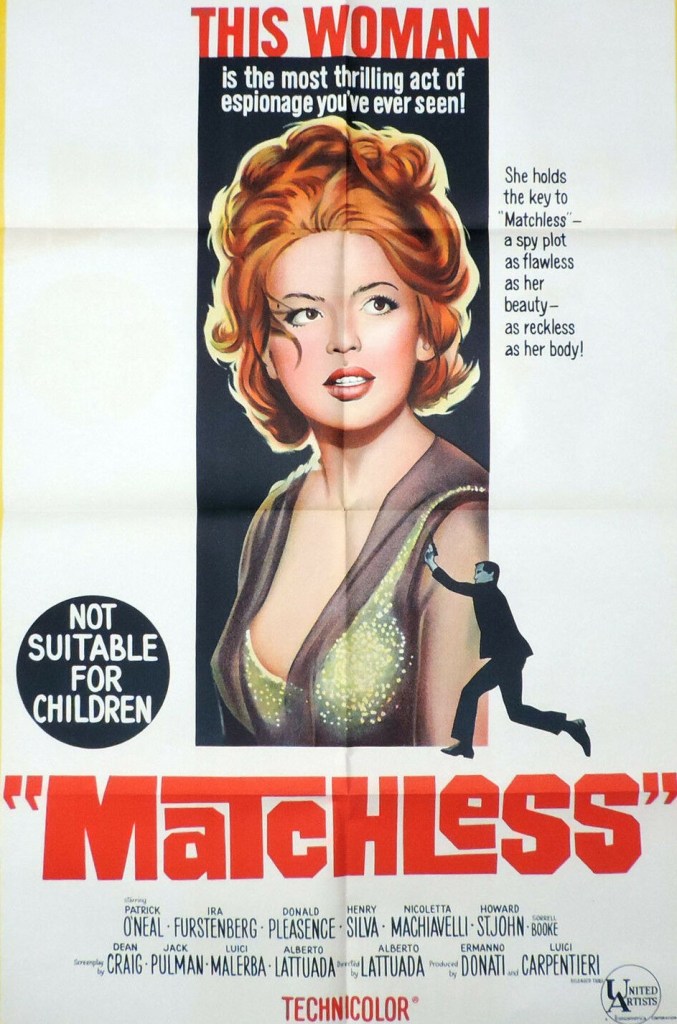
Other big names unwanted by the circuits: James Mason in Love Is Where You Find It (1967), Patrick O’Neal in Matchless (1966), Marcello Mastroianni and Pamela Tiffin in Paranoia (1965), Anthony Quinn and Rita Hayworth in The Rover (1967), Raquel Welch in Shout, Shout, Louder, I Don’t Understand (1966), Rod Steiger in Time of Indifference (1966), Troy Donahue in Come Spy with Me (1967), Angie Dickinson in I’ll Give My Life (1960),  and Elke Sommer in The Wicked Dreams of Paula Schultz (1967)

On the comedy front add to that list: Jackie Gleason in Papa’s Delicate Condition (1962), The Outlaws Is Coming (1965) with The Three Stooges and Woody Allen in What’s Up, Tiger Lily? (1966). Despite headlining Jayne Mansfield, Las Vegas Hillbillies (1966) found no takers. But that was not unusual for Mansfield. Other films never considered for the circuits were Promises, Promises (1963), The Fat Spy (1966), Panic Button (1964) co-starring Maurice Chevalier, and Single Room Furnished (1968). No room was found for  Jeffrey Hunter trio – Battle Royal (1965) with Luciana Paluzzi hot after Thunderball, The Christmas Kid (1967) and Witch without a Broom (1967). John Saxon – generally appreciated as a supporting actor – found no circuit support for pictures in which he was top-billed such as The Ravagers (1965) and The Cavern (1965) with Rosanna Schiaffino.

There was very low interest in William Castle gimmick-ridden horror films 13 Ghosts (1960), Mr. Sardonicus (1961) and 13 Frightened Girls (1963) and none at all in Project X (1967) while  the films of Samuel Fuller scarcely got a look-in, in part due to censorship, Underworld USA (1960) the only one to get any bookings. Despite the general demand for horror, The Blood of Dracula’s Castle (1969), Blood Bath (1966), Queen of Blood (1966) directed by Curtis Harrington, and Orgy of Blood (1968) did not get onto the bookings starting grid. Nor did Michael Rennie in Cyborg 2087 (1966) or Scott Brady in Destination Inner Space (1966) or Women of the Prehistoric Planet (1966).

Tammy and the Millionaire (1967) was one too many in the previously popular series. While topping the pop music charts, Sonny and Cher were considered box office busts, Wild on the Beach (1965), Good Times (1967) directed by William Friedkin and Chastity (1967) all failing to bag a booking.

The term “shelved” had a different meaning in the United States and tended to means films which had been cancelled at the production stage, rather than completed but not finding their way into the release system. In 1969, when Warner Brothers tied up with Seven Arts, around 40 projected pictures bit the dust including Sam Peckinpah pair The Diamond Story and North to Yesterday, Heart of Darkness to be directed by Andrej Wadja, William Friedkin’s Sand Soldiers, Edward Dmytryk’s Act of Anger, Paradise from a story by Edna O’Brien, and Sentries from the Evan Hunter novel.  Some movies killed off at this point would eventually be filmed: The Man Who Would Be King (filmed in 1975), 99 and 44/100%  Dead (1974) and a musical version of Tom Sawyer (1973)

While not on this scale, movies were cancelled all the time. Some movies carried hefty price tags. Shirley MacLaine nabbed $1 million after a pay-or-play deal after the cancellation of musical Bloomer Girl to be directed by George Cukor. the director was also initially involved in a version of Lady L to star Tony Curtis and Gina Lollobrigida. it was scrapped in 1961 but later filmed with different stars in 1965.

Even so, the shelf of unreleased films in the U.S. was at times very crowded. Although the vast majority of studio pictures received some kind of release, either in the arthouse or drive-in circuits if not deemed commercial enough for first run, sometimes they sat around for an unusually long time. When Variety determined in 1967 that the Hollywood vaults were bulging with over 125 completed pictures, among them were several movies that would not see the light of day until well into 1968 including Dark of the Sun, Planet of the Apes, Hang ‘Em High and The Odd Couple.

Although there were circuits in the United States, they were not national nor as dominant as in the U.K. so most films managed to find a way into the system somewhere, and therefore until the likes of The Picasso Summer (1969) and The Extraordinary Seaman (1969) – as previously mentioned in the Blog – were deemed to not hold sufficient commercial attraction and were dumped more or less straight into television then the number of movies not screened was considerably lower than in Britain.

SOURCES: David McGillivray, “The Crowded Shelf,” Films and Filming, September 1969, p15-22; “Lady L Cold,” Variety, June 21, 1961, p19; “Spain’s Unreleased Backlog: 370,” Variety, May 2, 1962, p120; “Shirley Yens $1-Mil on Fox’s Unmade Bloomer,” Variety, September 7, 1966, p7; “H’wood Backlog Hefty at 125,” Variety, September 13, 1967, p3; “Courtesy of the Film Road,” Variety, July 23, 1969, p 5; “Deferred Film Deals at W-7,” Variety, July 23, 1969, p 5; “Projects Scratched at Warners,” Variety, October 22, 1969, p6.

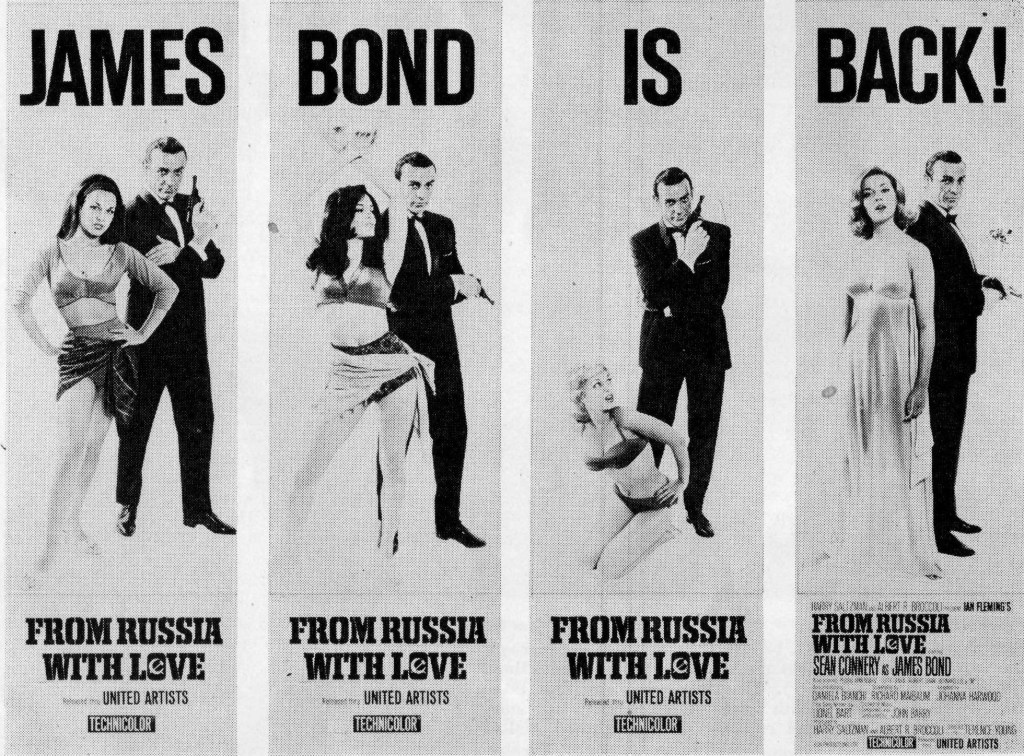
Selling James Bond – Pressbook for “From Russia with Love” (1963)

United Artists had two concepts in mind when it came to marketing the second in the James Bond series From Russia with Love (1963). The first, and quite audacious notion, was to tell anyone who hadn’t seen Dr No (1962) much they had missed. Producers Cubby Broccoli and Harry Saltzman reckoned 69 million moviegoers across the world had seen Dr No, but America only accounted for a small fraction of that total. So their mission was to ensure that American audiences did not miss out again on the “throbbing world of hot-blooded excitement.”

To target that marketplace, the adverts were more like a relaunch, not a sequel, and the taglines began with “Meet James Bond, Secret Agent 007.” And then, “For those unlucky few who missed Dr No…You are unprepared for the sophisticated mayhem and polished lovemaking. The James Bond bug has not bitten you. But take heart! There is still time to jump on the Bond bandwagon with the second James Bond adventure From Russia with Love. See it and we guarantee – you will be hooked for good.” The final exhortation: “Don’t you think it’s time you met secret agent 007?”

But of course James Bond already had some kind of fan club in the States. “James Bond Is Back!” screamed the alternative advertisements. For both, however, the emphasis was on the new. “His incredible new women! His new incredible enemies! His new incredible adventures!”

“Target: the unkillable James Bond 007. Blast him! Seduce him! Bomb him! Strangle him!” The tone of the adverts suggested something entirely new. While heroes in thrillers could expect to face danger at every turn, and while a romance might sweeten the pot, there would not be a selection of alluring scantily-attired women. “For those who saw Dr No, consider yourself fortunate. Now you are prepared for the further fantastic adventures of that master of intrigue and women, secret agent 007 James Bond, join him in his new thriller From Russia with Love.

To whet the appetite of local newspapermen there was a host of snippets. Oxford University had organized an 007 Society whose members included three lords and the heir to one of the the country’s largest department stores. While James Bond never uses a Windsor knot in his ties, Sean Connery does. Ian Fleming’s Bond novels had sold 30 million copies including six million of From Russia with Love. Four Istanbul mosques featured in the new film as well as an underground cistern a millennium old.

Door posters five feet high.

Beauty queens were always a good bet for coverage – Miss Universe runner-up Daniela Bianchi  won the role of James Bond’s girlfriend after a screen test and former Miss Israel Aliza Gur and former Miss Jamaica Martine Beswick played the fighting gypsy girls. Lotte Lenya was married to Kurt Weill who, with Berthold Brecht, wrote The Threepenny Opera. Sean Connery was fitted out by his own Savile Row tailor Anthony Sinclair and during filming got through ten customized shirts, eight suits, two top coats and a dress suit.

Highly sought-after these days in the memorabilia market are the door panels – measuring 20 inches x 60 inches – which exhibitors would stick to lobby doors but which could also be utilized as displays in stores. Signet brought out a movie tie-in paperback which came with its own promotional material. As there were already other books in the series, booksellers would be inclined to set up a Bond display. As well as the John Barry original soundtrack album, other artists recording material from the film included Matt Monro, Jackie Gleason, Kenny Ball, Al Caiola and Si Zetner, all creating promotional tools.

“Bondmanship” was the overall name given to lifestyle items worn by Bond or which he might wear so tie-ups with fashion stores and retailers were encouraged “no direct endorsement is necessary.” So, for example, restaurants were encouraged to offer “ a menu good enough for James Bond.” It didn’t matter that Bond did not wear a manufacturer’s shoes, ties or suits in the film, just that he might wear them if they were of sufficient quality.

The marketeers came up with a simple stunt: send a set of keys to a newspaper, turn up the next day with a dispatch box handcuffed to your wrist, open it and find inside various promotional items. Or the keys don’t open the case and you need to send for a locksmith. Either way it was important to have a photographer to hand.

Behind the Scenes: “The 7th Dawn” (1964)

Originally intended to pair Audrey Hepburn with William Holden and entitled variously Wherever Loves Takes Me, Ten Days to Penang, The Durian Tree (title of the source novel), Year of the Dragon, The Third Road, and Ten Days to Kuala Lampur, the picture eventually released as The 7th Dawn marked the entrance of British director Lewis Gilbert (HMS Defiant/Damn the Defiant, 1962) into the Hollywood big-time courtesy of producer Charles K. Feldman (Casino Royale, 1967). Gilbert had already been assured of a step-up from the budgetary confines of Britain to something more substantial after being signed in 1962 to direct Susan Hayward in Summer Flight, but that had fallen through.

William Holden was always interested in making movies outside the United States, in part down to a sense of adventure, in part to avoid paying taxes. He hadn’t worked in the States since 1958. “I’ve got a reputation for going to various part of the world to take advantage of background. There’s always new stories,” he said, adding, “I have to do things that satisfy me.” Actually, he could afford not to work. He had pocketed by far the biggest-ever Hollywood payout – over $3 million from his share of the profits from Bridge on the River Kwai (1957) and his current fee was in excess of $750,000.

Gilbert agreed to take the assignment on the basis of a script by Karl Tunberg (Ben-Hur, 1959) who had adapted the novel by Michael Keon. But what appeared relatively straightforward was soon anything but as the British director became enmeshed in clashes over production, the script and the casting. While Gilbert was tussling with the problems of working on location, where he was expecting the imminent arrival of a film crew, he was summoned to Hollywood and told that two-time Oscar-winning screenwriter Ben Hecht (Circus World, 1964) had rewritten the script.

Feldman was known for playing fast and loose with scripts, much to the surprise of director Edward Dmytryk and the frustration of star Laurence Harvey when new writers were  brought in for Walk on the Wild side (1962), earning the producer a reputation for interference.  On reading the new script Gilbert recalled, “The basic plot was similar, but apart from that it wasn’t like the old script at all. Bill Holden’s part kept shrinking while the part of the mixed race girl kept getting bigger.” This may have been a ruse to attract Audrey Hepburn. Although Holden and Hepburn were due to be paired in June 1962 on Paris When It Sizzles in a part more in keeping with her screen persona, that film was delayed (not released till 1964) leaving both free for the Malaysian picture. Despite Feldman’s assurances,  Gilbert later questioned whether Hepburn had ever been committed.

Gilbert hated the new script so much that he threatened to quit, only placated when Feldman promised he could work with Hecht on a revised version of the new script. But Hecht insisted on working closer to his home near New York. Their flight from Los Angeles to New York was delayed because of engine trouble, but by the time passengers were instructed to leave the plane, Hecht, who was addicted to sleeping pills, was fast asleep and could only be removed by ambulance. Facing a three-day deadline, Gilbert discovered that Hecht refused to work in the New York hotel assigned them by Feldman so they were decanted to the writer’s home in upstate New York. That scarcely improved the script, described by Gilbert as a “cockamamie affair.” However, that would not have unduly worried the producer who was of the opinion that performers with box office clout “can make successes of weak properties.”

Six months before release “The 7th Dawn2 was still being promoted as “Ten Days to Penang.” Incidentally, “The Dubious Patriots” was released as “Secret Invasion” (1964),
although its original title did not go to waste, used as an alternative to the
Charles Bronson-Tony Curtis “You Can’t Win ‘Em All” (1970).

The script in whatever version offered a key role for a Eurasian woman. Initially Gilbert and director of photography Freddie Young planned to scour the Shaw Brothers portfolio of budding stars to fill the role, and if not finding what they wanted in Malaysia aimed to head for Hong Kong and “seek her among the actresses there” according to Holden. However, once the compromise script was approved, Feldman proposed his real-life mistress Capucine (North to Alaska, 1960) for the part.

That was the first difference of opinion between director and producer, not to mention star and producer, and an education for Gilbert on just how little power he wielded when it came to confronting Feldman. William Holden objected strenuously to the involvement of Capucine, his opposition based on his experience of working with her on flop The Lion (1962). It may have counted against the actress that the duo had engaged in an affair on the African set. Holden may have wanted to treat the affair as one of those things that happened on location – and ended once the film is completed. “Whatever you do, Lewis,” Holden advised the director, “you must resist having her in the picture. I’ve just made a movie with her…and she was not very good. I think, really, the picture suffered for it and so if I make my next movie with her I’m going to look pretty stupid.”

Expecting Holden to back him up, Gilbert was surprised when the actor shied away from any confrontation with the producer, only learning later that Holden was somewhat in awe of Feldman, who had given him his big break in Golden Boy (1939) and, in his capacity as agent – the first to demand a $750,000 fee plus hefty percentage for his client – helped oversee his career. Although her three-year contract with Columbia had begun in 1961, Capucine had only made one film for the studio, Walk on the Wild Side (1962), more likely to turn up in pictures for Twentieth Century Fox, United Artists or independents. Feldman claimed Capucine was “in greater demand for roles after being starred in Walk on the Wild Side.” His position as star-maker-supreme was strengthened when he merged his agency with Ashley-Steiner and bought the rights to Mary McCarthy bestseller The Group, which boasted great parts for four women. Probably Gilbert did not quite realize what he was taking on when he raised his and Holden’s objections to  Capucine. Feldman responded, “We’re not making the film for Bill, we’re making it for the world.”

Gilbert was also having problems with Karl Tunberg who was also functioning as a co-producer “and therefore my producer,” according to the director. “As I’ve often done the job myself I haven’t worked with many producers but I can safely say this one was hopeless.” As a result of Tunberg’s “inertia” the production manager Bill Kirkby resigned, and Gilbert ended taking on the role of producer as well.    

Holden’s career, while not yet in the box office trough that would envelop him later in the decade, was enjoying an unexpected movie hiatus, his planned starring role in The Americanization of Emily, to be directed by William Wyler, having fallen through. Paris When It Sizzles was on the shelf for an interminably long time given the supposed box office pulling power of the stars. Made in 1962, it was not released until 1964, by which time Hepburn was back on top thanks to Charade (1963) and My Fair Lady (1964). By the time The 7th Dawn hit theaters, Holden had four box office flops on the trot.

Jack Hawkins was originally intended to play the Governor and for the role of his daughter Candace, who makes a play for Holden, Gilbert suggested Susannah York who had worked on his Loss of Innocence (1961), and who was beginning to attract attention in Hollywood. By the time the crew got to Malaya, where the film was to be shot, there was one notable absentee – the wardrobe mistress. Gilbert’s wife Hylda supplied York with a beautiful sarong purchased from a girl she spotted passing on a bike. Shooting was delayed due to a strike by Asian extras on the first day. They claimed discrimination because white extras were being paid more. Around 1,000 extras were required to play peasants and the security forces.

Although it was known Holden had an alcohol problem, prior to filming he had undergone aversion therapy in Switzerland and consequently remained dry throughout the filming. Gilbert admired the actor’s approach: “Bill Holden was a delight. He was an old time star.” If you asked him to crawl across a room, and climb up onto a chair, he would do it. “Whatever the director says, you do it. That’s how film actors were trained in his day and that was certainly his training.”

Capucine was the opposite. “Because she was untrained and didn’t understand what you were saying anyway, there was little you could do with her.” When the actress complained to her lover that she was being ignored on set, Gilbert had to take the producer aside and explain her deficiencies. “She doesn’t know about working with other actors. When I’m doing a scene where Susannah’s talking to her, I’m not just working with Susannah. I’m working with her too because I will be filming her reactions, how she listens to Susannah, that sort of thing. When I get back to the cutting room I can put all that together and even improve her performance.” (That said, I felt Capucine gave the best performance of her career.)

Unlike many top productions of the era, the film was not given an exclusive run at a New York city center cinema, but went straight into a Showcase (wide) release in 300 theaters simultaneously with its opening at the Astor and Trans-Lux East arthouses in the Big Apple.

William Holden, unable to stay off the wagon, succumbed to his affliction, hitting his head while on a bender alone in a cabin and dying at the age of 63 from his injury. Capucine was 62 when she committed suicide in 1990.

SOURCES: Lewis Gilbert, All My Flashbacks, (Reynolds & Hearn, 2010) p213-231, p234-235; Matthew Field, “Gilbert Goes to War,” Cinema Retro, Vol 6, issue 18, p46; “Capucine Option Renewed,” Box Office, November 27, 1961, NC2; “Mary Magdalene to Star Capucine,” Box Office, January 29, 1962, p13;  “Feldman Sees Wild Side as New Break-Through,” Box Office, February 5, 1961, p14; “Actor Harvey no Fan of Feldman,” Variety, May 9, 1962, p5; “Ransohoff Signs William Holden,” Box Office, May 28, 1962, p15; “Lewis Gilbert to Direct Summer Flight for UA,” Box Office, June 11, 1962, pE8; “William Holden Plans Continue Produce Pix in Overseas Spots,” Variety, November 20, 1963, p2; “Bill Holden Party Primes Malaya Pic,” Variety, December 19, 1962, 4; “Chatter,” Variety, April 10, 1963, p69; “West Side in Malaya,” Variety, April 17, 1963, p21; “Liz’s Cleo 10% Mebbe Soon; But Holden Coin Tops,” Variety, May 15, 1963, p1; “Holden Follows Wyler Leaving Emily,” Box Office, October 7, 1963, pW2;  “Feldman Acquires Rights to Mary McCarthy Novel,” Box Office, December 16, 1963, pE11;  “New UA Title,” Variety, December 23, 1963, p6; Advertisement, Variety, January 8, 1964, p51; “300 July Dates for Dawn,” Box Office, June 1, 1964, p8; Advertisement, “UA’s Blockbuster for Summer Release,” Variety, June 17, 1964, p12-13; “UA Opens 7th Dawn as Showcase Presentation,” Box Office, August 31, 1964, pE2.

Sergeants 3 (1962) ***

There’s a terrific western directed by John Sturges (The Magnificent Seven, 1960) inside this Rat Pack offering, the second of four in the series. On the plus side are plenty twists on traditional scenarios, Frank Sinatra and Dean Martin displaying a certain kind of easy screen charisma, and three exceptional and well-choreographed battle scenes.

Sinatra, Martin and Peter Lawford play the eponymous sergeants, Lawford committing the cardinal sin of wanting to quit the regiment to get married, with Sammy Davis Jr. as a former slave, bugler (an important plot point) and horse-lover wanting to sign up, and Joey Bishop (television star and occasional movie actor) as their sergeant-major boss.

A fair bit of time is spent on the usual Rat Pack shenanigans, getting drunk, brawling, playing tricks on each other, and exploring odd comic notions such as playing poker with a blacksmith’s implements as chips. But when it gets down to proper western stuff, it fairly zings along, with a decent plot (a Native American uprising) and excellent action scenes. You could have had William Goldman writing the script for the number of reversals involved as the picture keeps one step ahead of audience expectation.

For a start, rather than flushing out outlaws from a town, the troopers have to remove Native Americans who have taken it over. Instead of the cavalry pursuing Native Americans, it is mostly the other way round. It is the soldiers rather than the Native Americans who attack a wagon. Sinatra finds himself employing a bow-and-arrow and then a tomahawk rather than being on the receiving end of such weaponry.  Instead of dynamite, the good guys make do with fireworks. Where Native Americans are usually pinned down, this time it is Sinatra’s merry band. And when it comes to resorting to serious violence, that, too is usually the remit of the Native Americans, not as here, Sinatra chucking man off a cliff.

When it sticks to action, the picture is very well done and involving. When Sinatra has to take charge instead of larking about, the movie has focus. Both Sinatra and Martin were undertaking serious roles around this time, the former in The Manchurian Candidate (1962), the latter in political drama Ada (1961) so this might have appeared welcome relief.

The comedy isn’t along the laugh-out-loud lines of Support Your Local Sheriff (1969) or Blazing Saddles (1973) and the action of so full-on you wonder why anybody thought this required comedy at all, although there is a pretty good punchline ending. Action aside, It’s almost the equivalent of easy listening. The Rat Pack was a particular 1960s institution, the members joining each other on stage in Las Vegas or featuring in television programs, but there’s no real modern correlative.

It was interesting to see how the Rat Pack concept developed. This movie chucked out the idea of including a few songs as with Oceans 11 (1960) while the next one in the series, 4 for Texas (1963) was more of a serious straight western. But the final picture Robin and the 7 Hoods (1964) went in the opposition direction and was a full-on musical as if by the time they came to making that picture everyone had realized the film would make more sense if it played to their inestimable talents.

The series developed in other ways, too. Romance was minimal in Oceans 11, barely seen here, but was a major element of 4 for Texas – who would want to waste the talents of Ursula Andress and Anita Ekberg – but just as Andress is a smooth operator in 4 for Texas when it came to the last Rat Pack picture Barbara Rush was also a significant player for whom romance was merely a means to an end. You could also argue that the disappearance of Lawford and Bishop allowed the supporting roles to be played by actors who were not in on the joke.

CATCH-UP: the entire Rat Pack quartet has now been reviewed in the Blog with Oceans 11 (1960) and 4 for Texas (1963) also to be found here. Other Frank Sinatra films reviewed are Can-Can (1960), Cast a Giant Shadow (1966), The Naked Runner (1967) and The Detective (1968) while for Dean Martin the list, so far, comprises Texas Across the River (1966) and Rough Night in Jericho (1967).

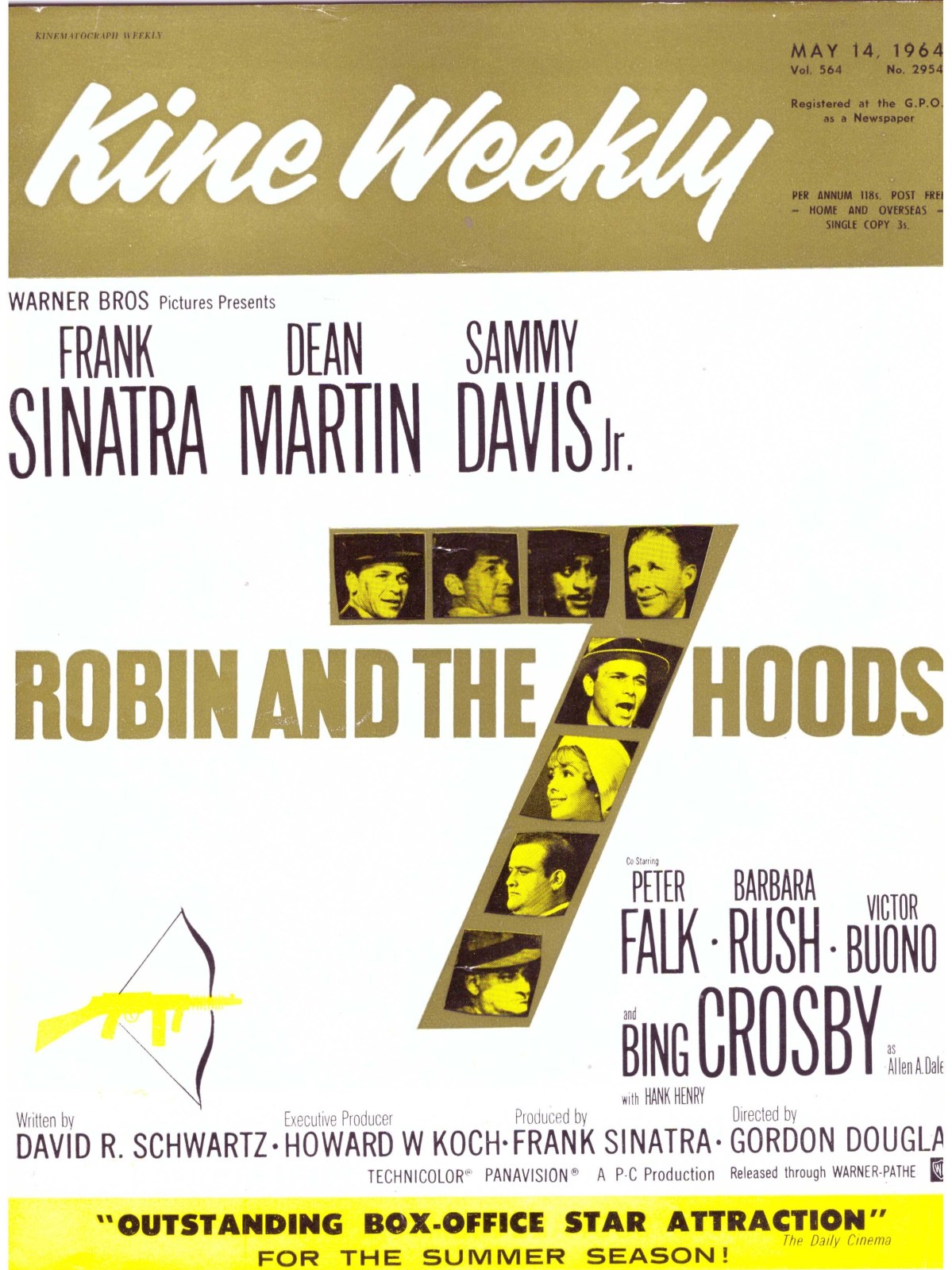
Selling The Rat Pack: Pressbook for “Robin and the 7 Hoods” (1964)

Warner Brothers pushed the boat out for Robin and the 7 Hoods with this lavish Pressbook. Apart from roadshows, most pressbooks of the era were around 16-pages A3. But this stretched to 28 pages with a tremendous range of advertisements, taglines and tie-ups plus, easier to accommodate from the exhibitor’s perspective, a healthy number of relatively straightforward marketing suggestions. On top of that, always a great incentive for cinema managers to rack their brains for good promotional ideas, the studio was offering seven cash prizes worth a total of $1,500 – about $14,000 today – for the best individual campaigns as well as a “special bonus prize” of the golf clubs used by Frank Sinatra, Dean Martin, Sammy Davis Jr. and Bing Crosby for the most original stunt.

With Pressbooks popping through a cinema manager’s door at the rate of one or two or three a week – dependent on how often a picture house changed its program – this one would certainly have made an impact, not so much from its size, but its commitment to the exhibitor. Most Pressbooks began either with information on the stars and the filming or with the advertisements and there was a sense of exhibitors being called upon to fit in with a pre-conceived campaign. Warner Brothers was not the first studio to go down the prize-giving route as a means of attracting attention, but in making the competition the first item on the promotional agenda – two of the first four pages were devoted to it – it certainly ensured it was high priority.

Following the competition came four pages of suggestions for gimmicks, stunts and tie-ins. WB had already tied-up with the The Antique Automobile Club of America and its members were being encouraged to lend out their vehicles to any movie theater planning a stunt. Exhibitors were told that car owners were “pleased to show them off.” There were over 100 chapters/branches of the Club so no shortage of eager participants. A parade of old-time cars in the town or a rally outside the cinema or even a race was guaranteed to attract publicity.

The Roaring 20s was another concept easily adopted – flapper fashions, the Charleston being performed outside the theatre or a dance competition, or girls dressed up in the outfits of the day strolling around town “carrying phonographs and camp stools; at busy intersections they can sit down and play one of the Robin tunes.”  Reward posters could be put up for famous gangsters of the speakeasy period, with photographs of the film’s characters included. A jazz parade was another possibility complete with straw hats and blazers. Setting up a gambling den was another suggestion using “actual gambling equipment captured by the police.”

And all this was before exhibitors could let fly with ideas based on the archery motif since “the words Robin Hood and archery and practically interchangeable.” Archery contests could be staged in a sports store, park, shopping mall or in front of the cinema. Robin Hood hats made of simulated felt with a feather sticking out – or bullet-riddled – were available at a low cost and ideal for giving away to children and to be worn by ushers and other staff as well as employees in other organisations participating in any promotion. Or just handed out to a local restaurant.

On top of that, since this Rat Pack picture was actually a denoted musical in which all the principals sang, there was the best tie-in of all – an original soundtrack album, an easy marketing tool for record shops. WB had also arranged for a book tie-in with Pocket Books, novelization written by Jack Pearl and stocked in 120,000 outlets.  The record, promised WB, would be “on every radio station night and day.” Even though Sinatra was no longer a top recording artist – “My Kind of Town” did not break the Cashbox Top 100 singles chart – his voice and that of his co-stars were exactly the kind of easy listening that appeared to radio addicts fed up with the British Beatle invasion.

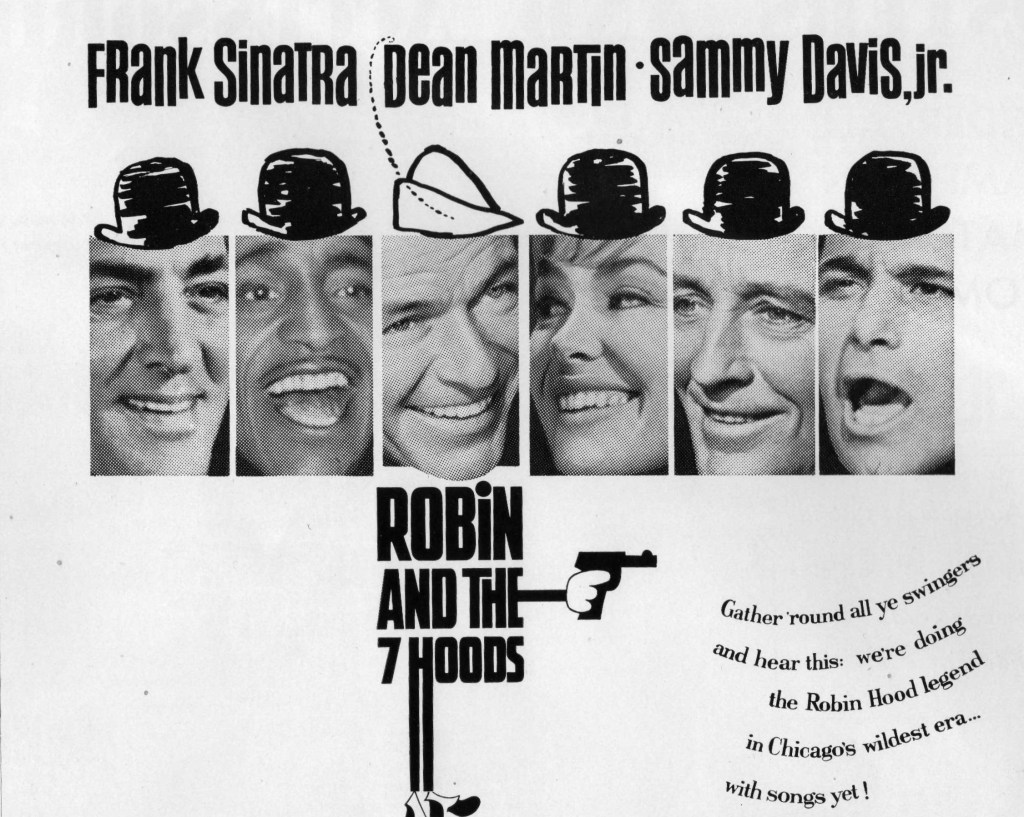
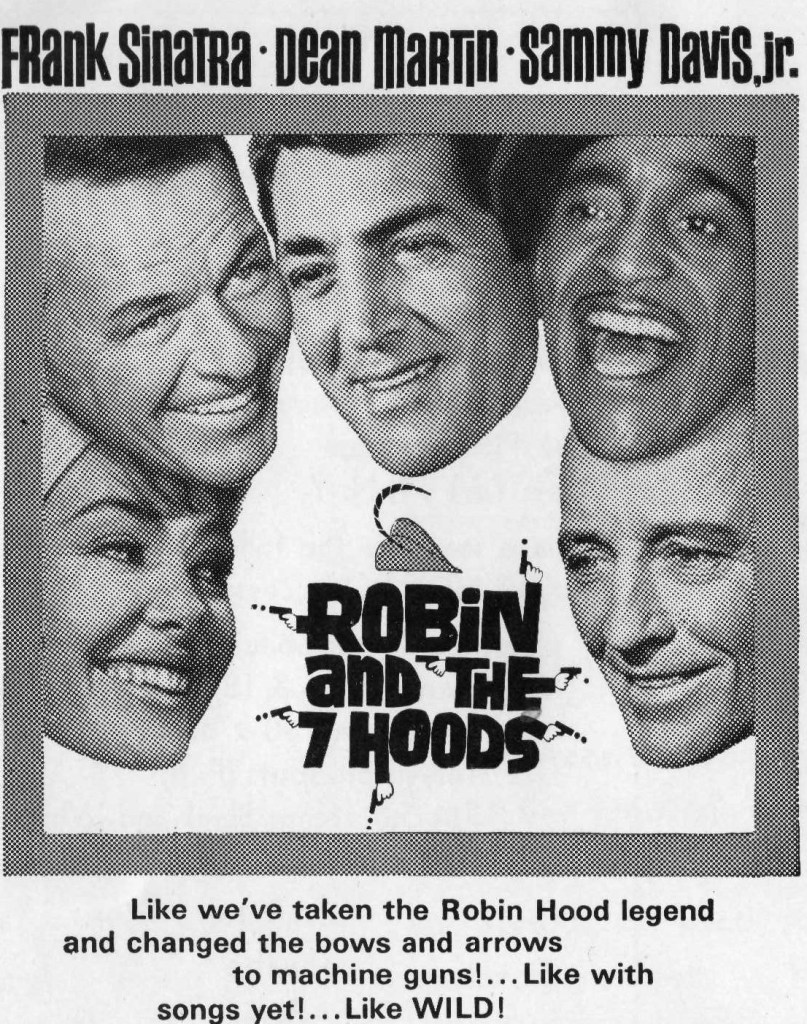
The advertising campaign was fairly straightforward consisting of as many of the stars as could be crammed onto a poster – usually the main four plus either Barbara Rush or Peter Falk, occasionally all six. The tagline went hip: “Like we’ve taken the Robin Hood legend and changed the bows and arrows to machine guns…! Like with songs yet!…Like Wild.” The last word might be changed to “Wow.”  An alternate tagline along similar lines went: “In Merrie Olde Chicago, in the days when King Al ruled the land…” And “Gather round all ye swingers and hear this…we’re doing the Robin Hood legend in Chicago’s wildest era…with songs yet!” A final version ran: “Warner Bros right merrily presents the wild idea of doing the Robin Hood legend in Chicago’s wildest era.”

With the box office and recording firepower of Sinatra, Martin, Davis and Crosby and the range of promotional ideas, there was little need to jazz up the Pressbook with journalistic nuggets, but WB did not stint on this count. The appearance of Edward G. Robinson in the genre and studio where he made his name three decades before in the like of Little Caesar was too good an opportunity to miss – more so when the wardrobe department discovered his suit size had not changed. Other cinematic stalwarts from the early gangster picture days included Allen Jenkins and Jack La Rue, now a restaurant owner and making his first WB movie in 23 years.

Elegance was a keynote for Barbara rush’s femme fatale. Designer Don Feld created a range of dinner gowns, coats and negligees which served almost as a disguise for the hard-as-nails operator. Commented Rush, “I am as tough as daddy and just as blood-thirsty. But I play it sweet throughout and never become hard or evil. The role has more substance when you realize this sweet girl has the ruthlessness of a cobra.” Pool hustler Harold ‘Red’ Baker was hired to teach Dean Martin how to perform like a champion player and also set up the shots for the game between Sinatra and Martin. Baker. But the editorial section ran for only two pages, which was a mighty small proportion of the overall Pressbook.

24 Hours To Kill (1965) **

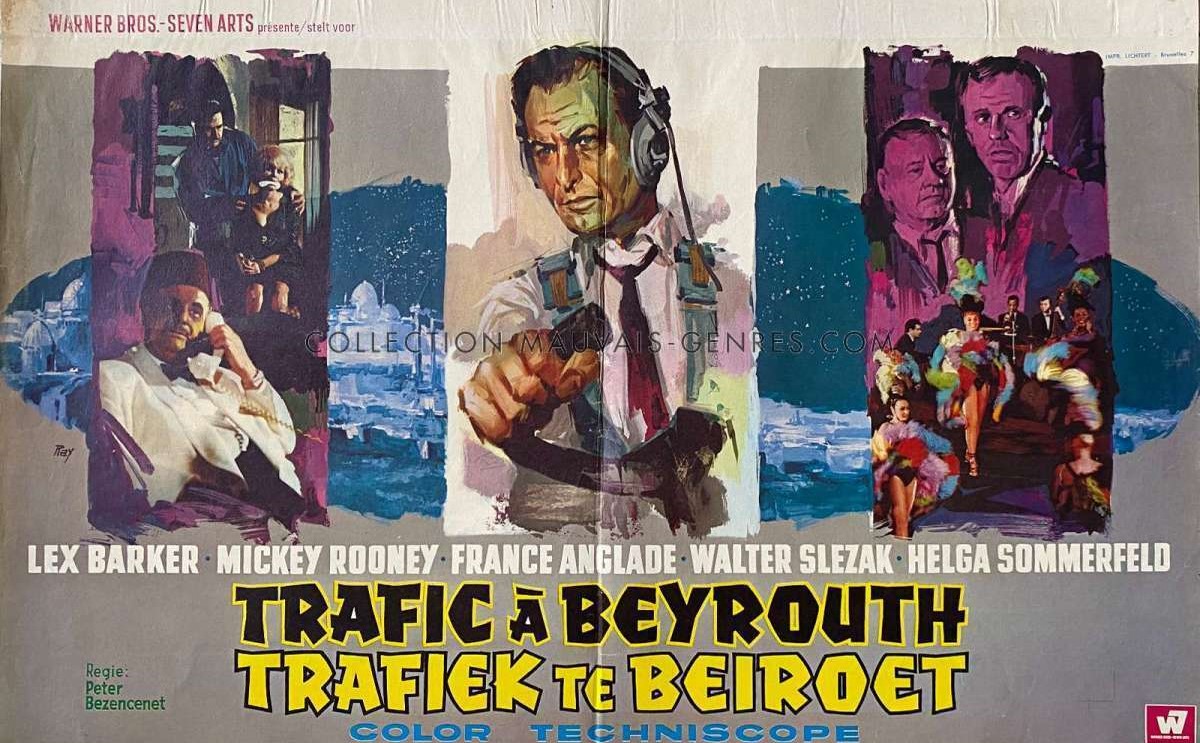
When engine problems force a plane headed for Athens to land in Beirut, the past catches up with purser Norman Jones (Mickey Rooney). He manages to convince captain Jamie Faulkner (Lex Barker) and the crew that claims by ruthless gangster Malouf (Walter Szelak) claiming he has stolen his money is a mistake. But once the kidnappings begin, the doubts set in.

Producer Harry Alan Towers (Five Golden Dragons, 1967), though he remained wedded to the exotic locale, would soon learn to prioritize action over romantic entanglement and this suffers from too much romance – married Faulkner trying to resolve his relationship with stewardess girlfriend Louise (Helga Summerfeld),  co-pilot Tommy (Michael Medwin) ignoring another stewardess Franzi (France Anglade) in favour of local girl Mimi listed in his little black book of previous conquests.

After a failed attempt to kidnap Jones, the gangsters turn their attentions to female members of the crew. Slim built Tommy proves handy with his fists and soon the crew are either running from trouble or running into trouble even as they attempt to enjoy the city high life. The title has a double meaning – the crew take it to mean that they have time on their hands to pass in as pleasant manner as possible only later realizing that their accidental landing provides the gangsters with a complete day to apprehend/kill Jones before the plane’s rescheduled take-off.

Although a good sight more attractive in the 1960s than when  war destroyed the city, Beirut still had comparatively little to offer a visitor beyond a historic site claimed to the Garden of Eden, posh hotels, swimming pools and the kind of belly dancers that you could get anywhere in the Middle East. Still, the movie does its best to convince the audience they are in for an exotic treat. Unfortunately, locale and girls in bikinis do not make up for poor plotting and lack of action.

In terms of casting Towers had hit upon a decent formula in the international coproduction line, Hollywood stars who didn’t cost too much but still retained marquee value and up-and-comers who might be sold as the next best thing to their respective countries, thus bringing in global revenue.  Former MGM child star Mickey Rooney (Secret Invasion, 1964) is the requisite Hollywood star, his credentials buffed up by the hit It’s A Mad, Mad, Mad, Mad World (1963), and continually newsworthy for his love life – he was currently on marriage number five.

All-purpose action hero Lex Barker was the surprise box office package. A former Tarzan he was enjoying a new lease of life as a huge star in Germany thanks to the Old Shatterhand series of westerns. Veteran Walter Slezak (Come September, 1961) completed the small group of actors who audiences might automatically recognize.

Heading the newcomers was Englishman Michael Medwin (Crooks Anonymous, 1962) who would later turn producer of If…(1968) ably supported by a stewardess trio played by German Helga Sommerfeld (The Phantom of Soho, 1964), French starlet France Anglade  (The Oldest Profession, 1967) and Austrian Helga Lehner (Games of Desire, 1964). Likely more memorable for purveyors of the European scene would be a brief appearance by another Austrian, Maria Rohm (Five Golden Dragons), wife of the producer. You might also spot Wolfgang Lukschy (A Fistful of Dollars, 1964).

British director Peter Bezencenet (Bomb in the High Street, 1963) was better known for his editing skills but didn’t cover himself in glory in either department here. Australian Peter Yeldham (The Liquidator, 1965) wrote the screenplay along with Towers. While not a great film, you can see the Towers style in embryo, this being only the fourth of the around 100 films that would go out under his banner.

The Box Office Equalizer: Part Four

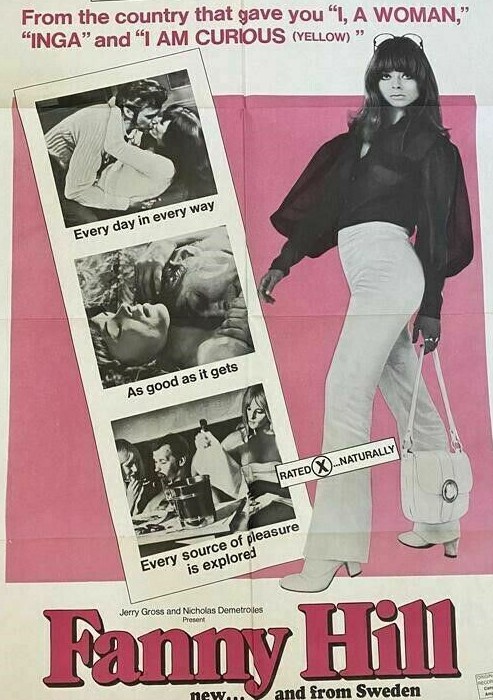
For three weeks at the end of November 1969 through to mid-December, the top films on the Variety weekly box office Top 50 chart were sexploitation films. The Swedish Fanny Hill (1968) was the first to hit the top and I Am Curious, Yellow, also from Sweden, took the top place for the next fortnight.  

This was something of a slap of cold reality in the face of Hollywood which had assumed that by and large its product was sufficient to meet the needs of exhibitors nationwide. The slump in production due to the financial issues facing the top studios led the industry to expect that the traditional low-budget pictures that would make up the shortfall would come from the usual sources – westerns, crime, horror. Few would have bet on sexploitation taking up the slack.

The new Variety system of collating box office was in part to blame for the influx of sexploitation films being so transparent. Until the magazine instituted its weekly Top 50 grossing pictures in April 1969 and widened the net for gathering in those figures, box office was reported from just 200-300 first run houses in the major cities. This now expanded substantially to five times as many cinemas and included smaller houses in a greater number of cities as well as cinemas that belonged to a Showcase (wide release) circuit.

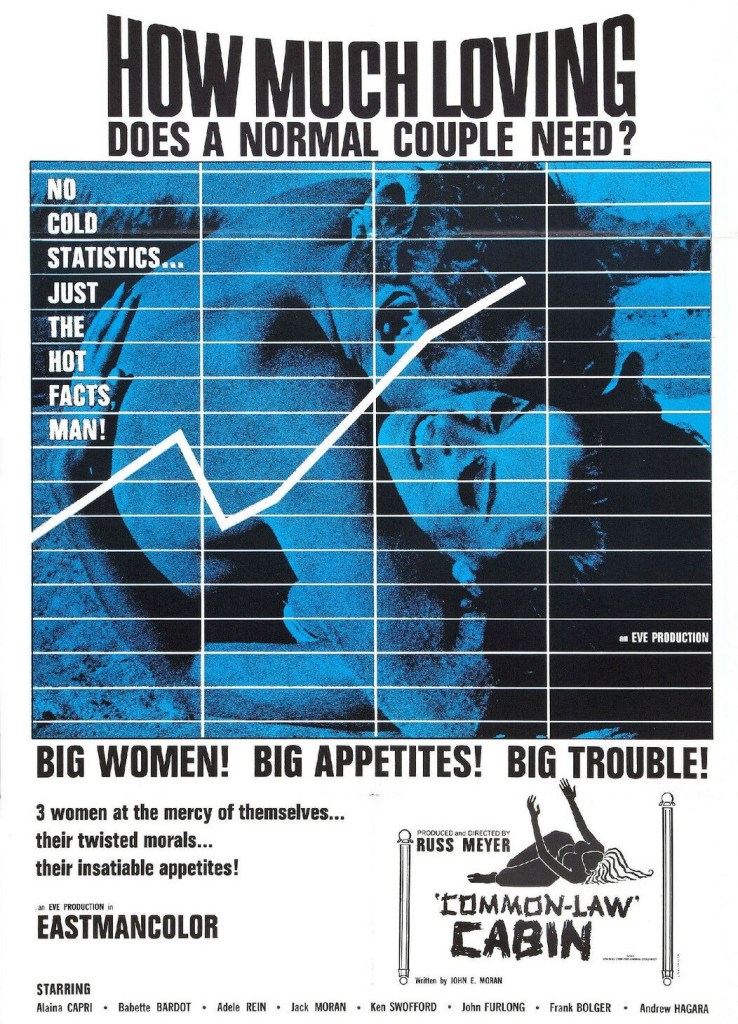
That resulted in a greater breadth of films being reported. Except on first run arthouses, where some art films with greater sexual content could be shown, it was rare for a sexploitation picture to feature in a big city first run. Russ Meyer was the acceptable face of sexploitation, especially since his films contained humor. Even so, eyebrows were raised when the exploits of Common Law Cabin (1967) made headlines in Variety (“Sexploitation pair: $22,000 at Fox”) at Detroit’s biggest cinema, the 5,100-seater Fox, a major first run venue. That film found slots in first run in Chicago at the Center and the Fine Arts in Portland. Another Meyer opus Finders Keepers found a berth at the Randolph in Philadelphia (“Russ Meyer’s Nude Pic Into Philly’s Classy First Run”). But that was the extent of its invasion of first run for that year. And that was pretty much how the industry expected things to stay, a rare sexploitation making a few headlines, but not much more.  

So when Fanny Hill grossed $625,000 – equivalent to $4.7 million today – from 49 houses to hit the top spot it sent the industry reeling in shock. I Am Curious Yellow hit the top spot in successive weeks with $594,000 from 52 houses followed by $454,000 from 90. In some respects it should not have come as any great surprise. I Am Curious, Yellow had already had already featured several times in the weekly top ten, fifth with $213,000 from 16 houses, sixth with $137,000 from 14 and again with $$237,000 from 18.

Sexploitation distribution was handled in much the same way as any other picture. Probably it came closer to replicating an arthouse release, where prints, due to their cost, were in short supply and cinemas undertook to hold onto a movie for several weeks, if not months. But when a movie was clearly pulling in the crowds, the distributors switched to a more mainstream system, combining Showcase with first run.  The big danger when films went wide was that grosses plummeted. But that was clearly not the case here. Yes, the earlier per-screen averages were higher but the later ones certainly did not fall off a cliff.

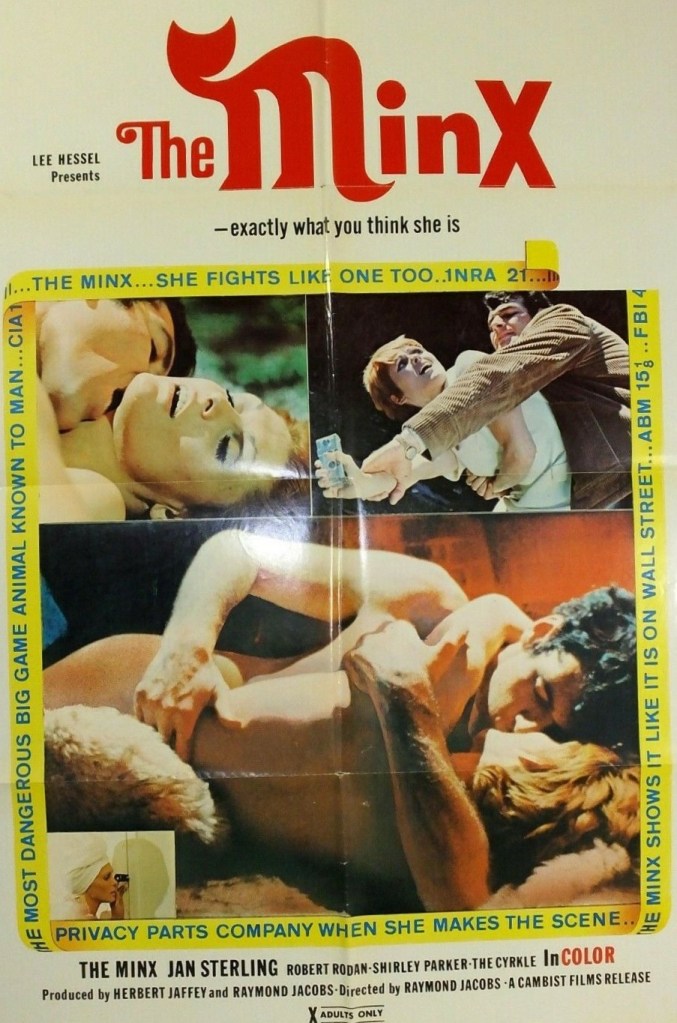
Outside of these two pictures, other sexploitationers had been making an impact on the weekly chart. The Libertine (1968) had placed 11th with $184,000 from 56, Naked Angels (1969) came 17th one week with $148,000 from 11 and lower down the chart The Minx (1969) had showed potential with $52,000 from three while Camille 2000 (1969) had earned $32,000 from two. Sexploitationers absorbed lessons learned from more mainstream distributors in how to use the Top 50 as a promotional tool. A movie that was not only taking in big bucks, but placed high in the chart and had a great per-screen average was inevitably going to attract attention.

Perhaps the oddest part of the sexploitation breakout was that so few had seen it coming. If so, they had not been reading the trade papers. This side of the business had grown so fast in a couple of years that those involved had formed their own association. It turned out a war had broken out between the suppliers of cheaply-made sexploitationers and those willing to increase their budgets in order to entice audiences with better production values.

But this was at the hard-core end of the business, the number of outlets tripling from 300 theaters three years before to 800 in 1969, and operating obviously outside the restrictions of the Production Code or the new censorship system. Initially, movies costing $8,000-$15,000 could have been put together in a weekend. Now up to 100 movies budgeted at at a maximum of $45,000 were being made every year with a potential profit of $125,000-$300,000 each. About half a dozen companies had annual million-dollar turnovers.

But this business had also filtered down to the more easily exhibited soft-core, which fitted into the “X” category under the new censorship rules. The 100 cheap soft-core efforts financed by individual theaters or small chains which filled a supporting spot on a double bill produced meagre returns so it made more sense to edit down a hard-core feature to suit a soft-core audience. The demand for hard-core, most prominently seen in Detroit, where hard-core pictures often outgrossed first run, was filtering down into soft-core, hence the growth in bookings for the likes of Fanny Hill and I Am Curious, Yellow.

The other reason for moving into the soft-core market was that the hard-core end was saturated resulting in lower rentals and consequently lower profits which inhibited production. Theaters struggling to cover overheads from the thin stream of movies emanating from the major studios or finding there was little juice left in blockbusters by the time they drifted down the exhibition food chain increasingly turned to soft porn.

SOURCES: “Sexploitation Filmmakers, Showmen Form Adult Motion Picture Ass’n,” Box Office, January 20, 1969, p8; “Over-Seated for Sex,” Variety, July 2, 1969, p1; “Sexpix of $25,000-$45,000 Negative Cost See Bright, Not Clouded, Future,” Variety, July 16, 1969, p17. Results for the “Top 50 Chart” in Variety were taken from the following issues in 1969: Jun 4, Jul 2, Jul 9, Jul 23, Sep 24, Oct 1, Oct 15, Nov 5, Nov 26, Dec 3, Dec 10, Dec 17, Dec 24.  

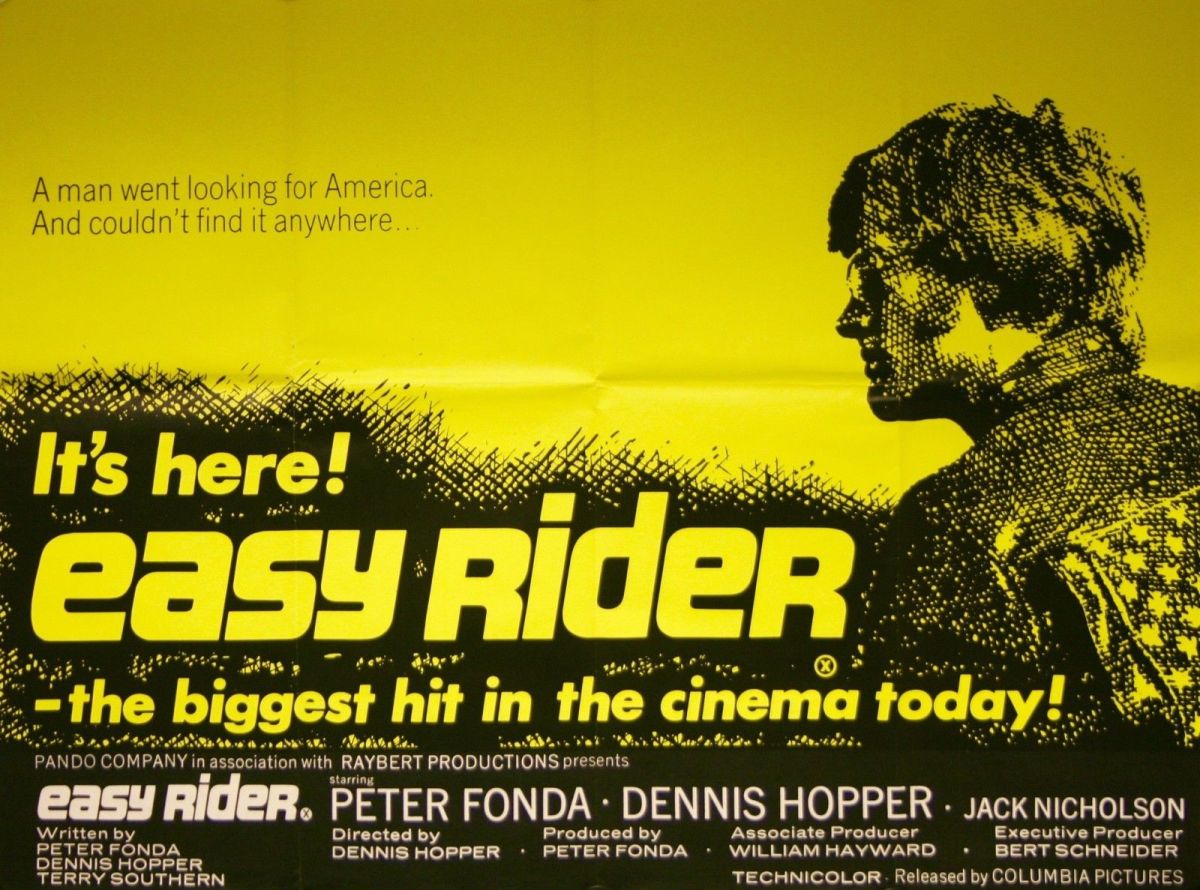
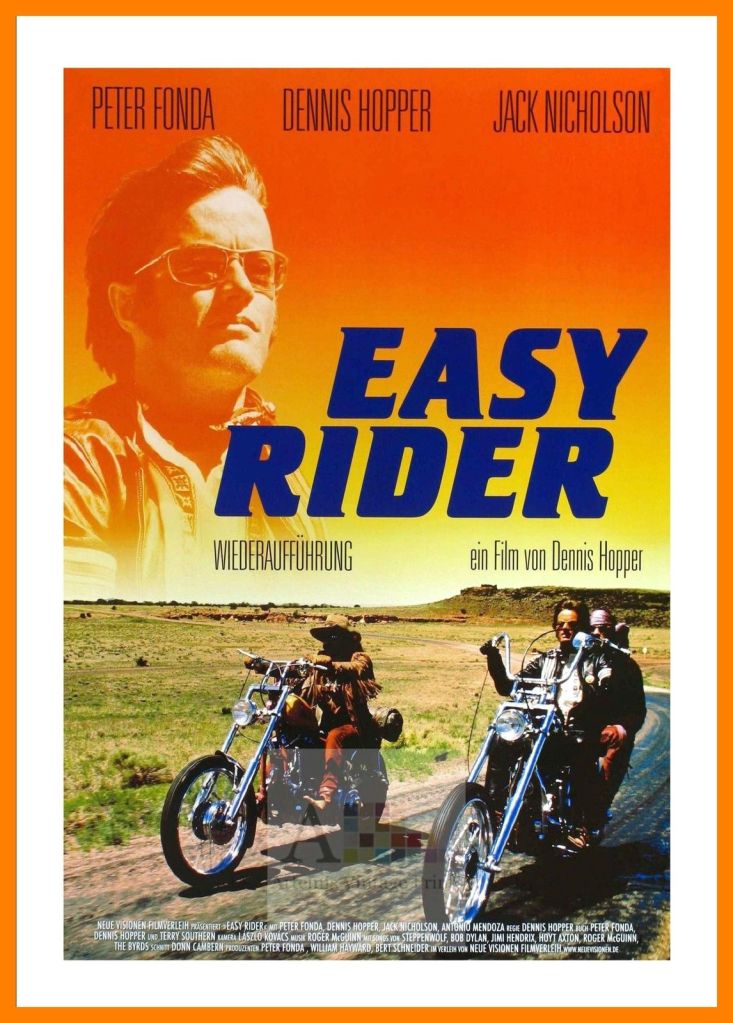
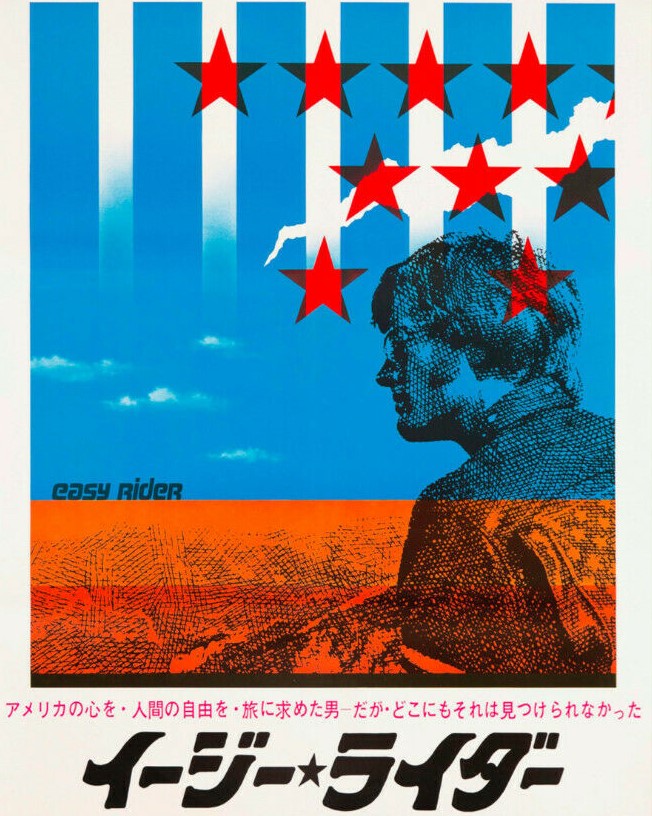
Easy Rider (1969) *****

Just goes to show what a little bit of reimagining can do. A companion piece to The Wild Angels (1966) but which takes the viewer in the opposite direction, turning the characters from perpetrators of violence to its victims, adding in a stonking soundtrack and a bit more philosophy, though holding on to the long tracking shots of motorbikes that defined the Roger Corman approach. From the bare bones of the Corman movie emerged a cinematic – and box office – miracle.

You could be forgiven for thinking that the movie’s main influences were the early Cinerama pictures that focused on extensive tracking shots of scenery (in this case, the open road) and unusual customs (ditto, alternative lifestyles, dope-taking etc) and Mike Nichol’s use of contemporary pop music in The Graduate (1967). But it also drew on the assumption, as did Hitchcock in Vertigo (1958) and Kubrick with 2001: A Space Odyssey a decade later, that a camera doing nothing can be hypnotic.

Message pictures were the remit of older directors like Stanley Kramer and Martin Ritt and films that had something to say about the human condition generally emanated from Europe and not low-budget efforts coming out of Hollywood. Easy Rider has a European sensibility, an almost random collection of unconnected episodes with no narrative connection to the main story, itself incredibly slight, of two mild-mannered dudes heading to New Orleans to see the Mardi Gras.

Road trips were not particularly unusual in American cinema but the form of previous locomotion was horse-related – westerns. The journey has been a central theme to movies. This is an 80-minute picture masquerading as a 95-minute one, a good fifteen minutes of screen time taken up with endless shots of Peter Fonda and Dennis Hopper on bikes passing through the landscape, with a contemporary soundtrack as comment.

Unusually, it’s also a hymn to ancient values, heads bowed in prayer at meals as different as you could get, the Mexican family and the commune, a marching band playing “When The Saints Go Marching In” and the recitation of prayers in the cemetery.

What marks the film out stylistically, perhaps enforced by the lean financing, is the sparing way it is told. The most dramatic scenes – the three murders – are filmed in shockingly simple fashion. There are often long pans along groups of characters. While innovative, the flash-cut flash-forward editing adds little to what is otherwise a very reflective film. Inspired use is made of natural sound, the muffled thumping of oil derricks at the cemetery, the soundtrack to one death is just the battering of unseen clubs by unseen assailants.

The dialogue could have been written by Tarantino, none of the confrontation or angst that drives most films, but odd musings that bring characters to life. At the beginning of the trip, Hopper and Fonda are welcomed wherever they travel, but towards the end resented, treated as though a pair of itinerant aliens. They entrance young girls but are vilified by authority, jailed for no reason except the threat to traditional values they apparently represent.

Elements not discussed at the time of release make this more rounded than you would imagine. The excitable Hopper, a nerd in hippie costume, is driven by the American dream of making money. The more reflective Fonda, developing a character trait he revealed in The Wild Angels, senses something is not only missing from his life but has been lost forever. He has the rare stillness of a top actor, face reflecting unspoken inner turmoil. As revelatory is the performance of Jack Nicholson, here effectively making a bid for stardom in a part that would snare an Oscar nomination.

It remains an extraordinary film, a series of accumulated incidentals holding up a mirror to an America nobody wanted to acknowledge and the brutal climax no less powerful now. 


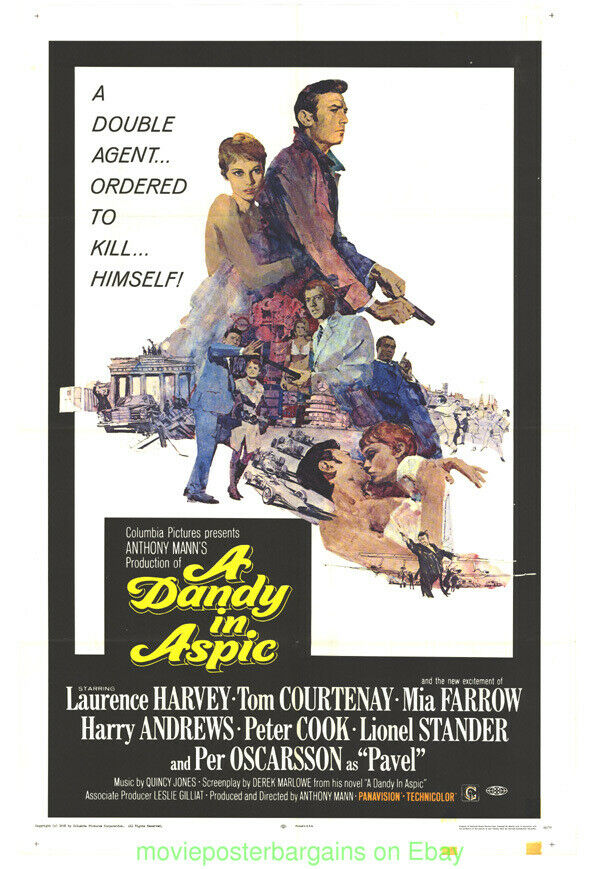
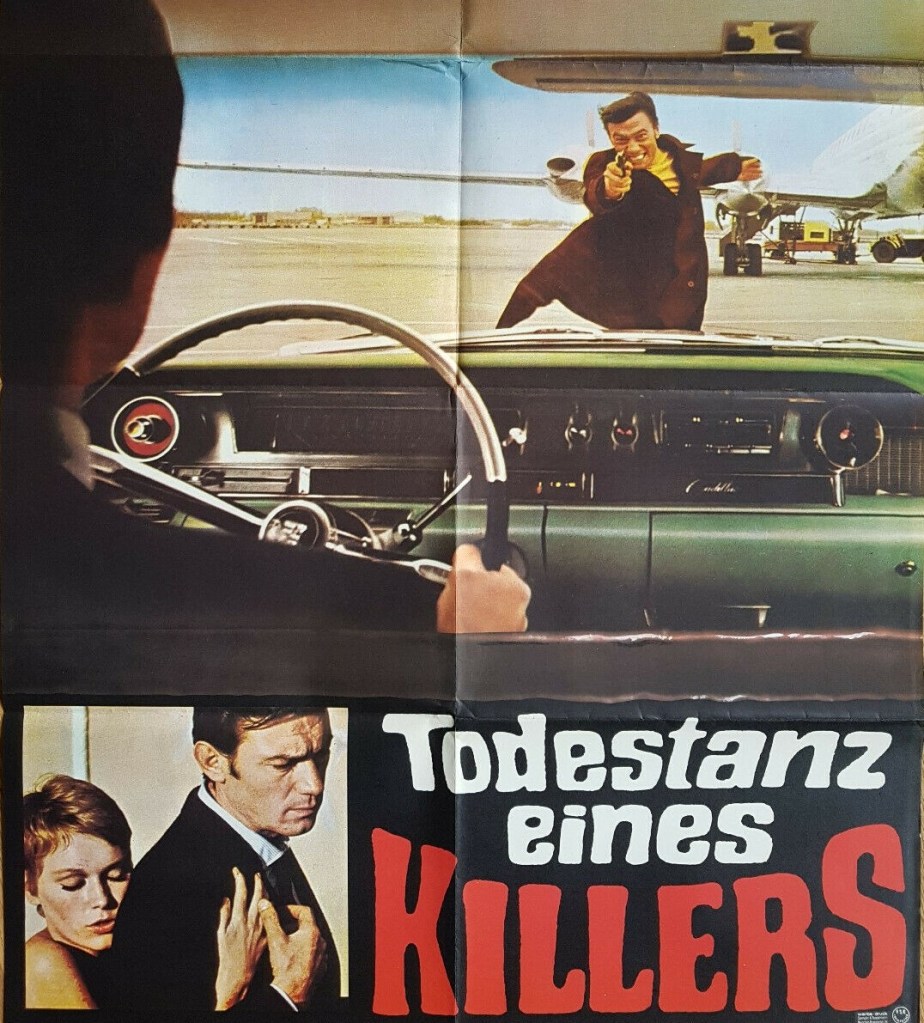
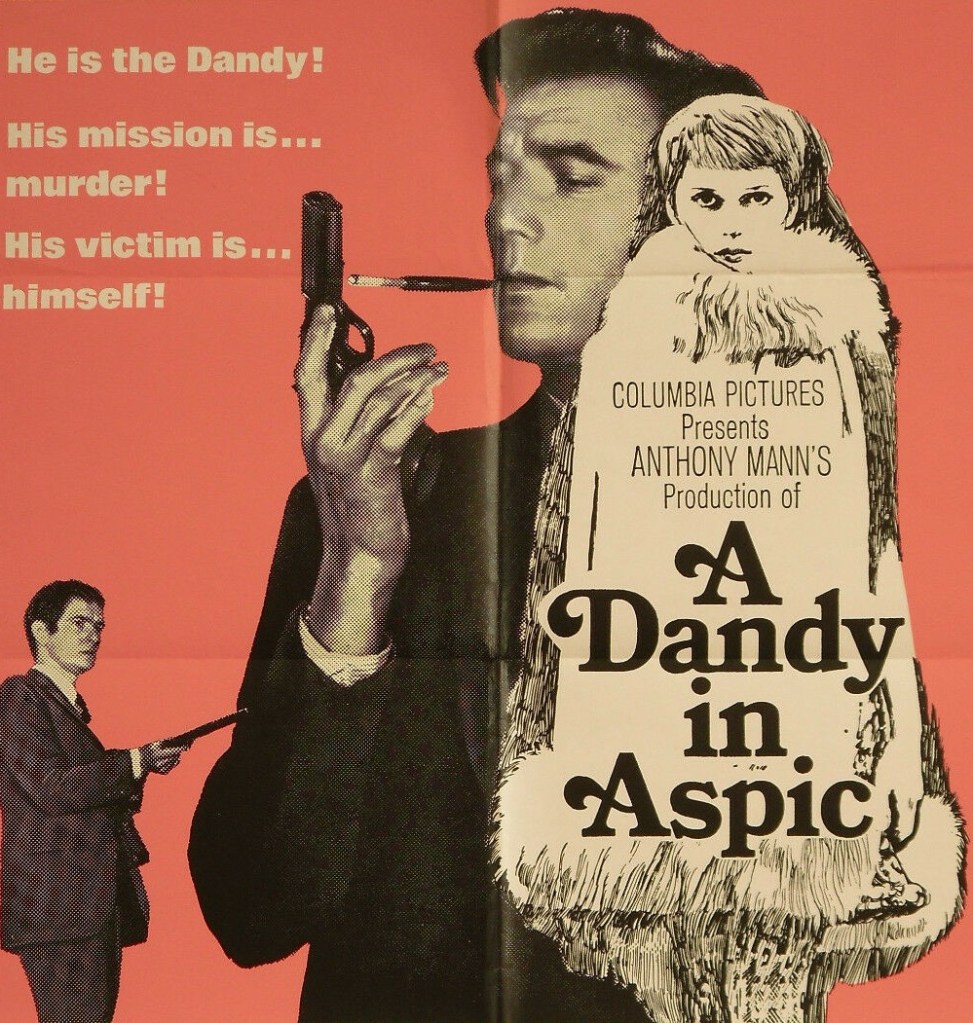
A Dandy In Aspic (1968) ***

Belongs to the “serious spy” genre that exposed the nitty-gritty espionage business, often more concerned with the impact of the job on the spy than on the mission on which they have been sent. The biggest successes came early on – The Spy Who Came in from The Cold (1965), The Ipcress File (1965) and The Quiller Memorandum (1966). A Dandy in Aspic is one of the latest in the series of sad spies and like The Defector (1966) it’s more of a character study than an action picture. The tone is set with the credits, a puppet dangling to the point of being tormented, on a string.

The character in question is Eberlin (Laurence Harvey), a spy who wants to quit and go home. He knows only too well what happens to the burnt-out case, one of his colleagues is a drug addict. Only in this case home is Russia. But the feedback he receives is that nobody back home wants him to quit. His British bosses send him to go to Berlin to assassinate a dangerous Russian spy called Krasnevin. The only problem is, Eberlin is Krasnevin and so begins a game of bluff and double bluff while he fails to uncover the supposed foreign assassin his ruthless British unwanted colleague Gatiss (Tom Courtenay) is helping him locate.

Thrown into the mix is a girl, Caroline (Mia Farrow) a casual pick-up, a photographer he met in London who turned up in Berlin. Happenstance? Perhaps. But there is no such thing for a suspicious spy and to tell the truth even the moviegoer will treat her as just too good to be true even though she is a delightful personality and beautiful to boot. The fact that Eberlin has a girlfriend Miss Vogler (Barbara Murray) doesn’t seem to bother him, spies, as you will know by now, discarding women like old shoes.

If a noose is closing in, it’s a strange one, and feels more like it’s coming from the East rather than the West. He is blocked from taking a trip to East Berlin. Cops are tipped off when he makes contact with someone who could get him over/through the Wall. His Eastern masters seem willing to pay good money to find out the identity of Krasnevin.

It’s all twisted and complex and all sorts of strange characters come out of the woodwork. For no reason at all one sequence is set at a Grand Prix race, one of the drivers paid to cause a distraction to allow someone to be shot. Like The Defector, this is a movie that unravels backwards. Once you get to the end it makes a lot more sense. If you were asked to choose, on the basis of the characters presented, whether the Russians or British had more principles you would be hard put to decide.

Laurence Harvey (The Running Man, 1963) is one of the few actors with the vicious fragility to carry this off. He is coming apart at the seams. He can hold onto his good looks far longer than his mental stability. His rare acts of violence seem petulance. And since we are never allowed inside his head, since he cannot confess his feelings to Caroline, he cannot explain what it’s like to be abandoned by your native country, cast aside like an old lover. It’s left to the audience to work this out for themselves, that a true patriot risking his life for his country is refused sanctuary.

He’s doomed and soon he knows it, nowhere left to run, the sense that the trap is closing and perhaps the few hours spent with Caroline are like a condemned man’s final wishes.

Filmed in bleak London and Berlin, the setting reflects the character’s mindset. There’s a bit too much fancy cinematography and sound effects, but otherwise it’s solid entry into the “more real than reality” subgenre. Director Anthony Mann (The Heroes of Telemark, 1965) died during the making of the film, Laurence Harvey taking the helm for the last two weeks of shooting and post-production so it’s possible this is not quite the film Mann had in mind.

You can see here elements of the documentary style Mann developed in The Heroes of Telemark and it’s possible that when it came to the editing director Harvey accorded himself more prominence than Mann might have, leaving a complex tale more difficult to follow than necessary.

Harvey is very good in the role of the ruthless narcissist, Mia Farrow – she followed this with Rosemary’s Baby (1968) – with a creditable English accent is excellent as the lover though Tom Courtenay (Operation Crossbow, 1965) seems miscast. Excellent support is provided by Lionel Stander (Once Upon a Time in the West, 1968), Harry Andrews (Danger Route, 1967) and Per Oscarsson (Who Saw Him Die?. 1968). Look out for comedian Peter Cook (Bedazzled, 1967) as an unlikely lothario, Barbara Murray (television series The Power Game, 1965-1969) and Calvin Lockhart (Dark of the Sun, 1968).

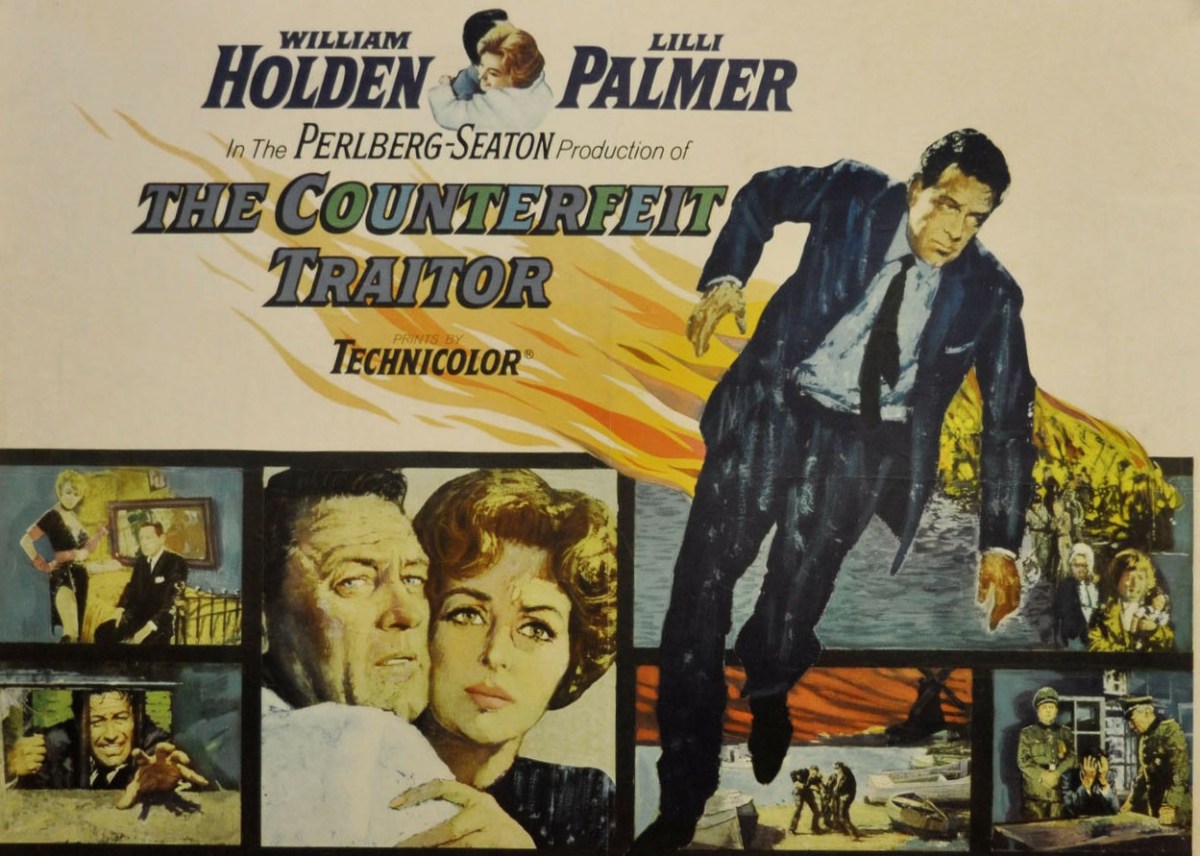
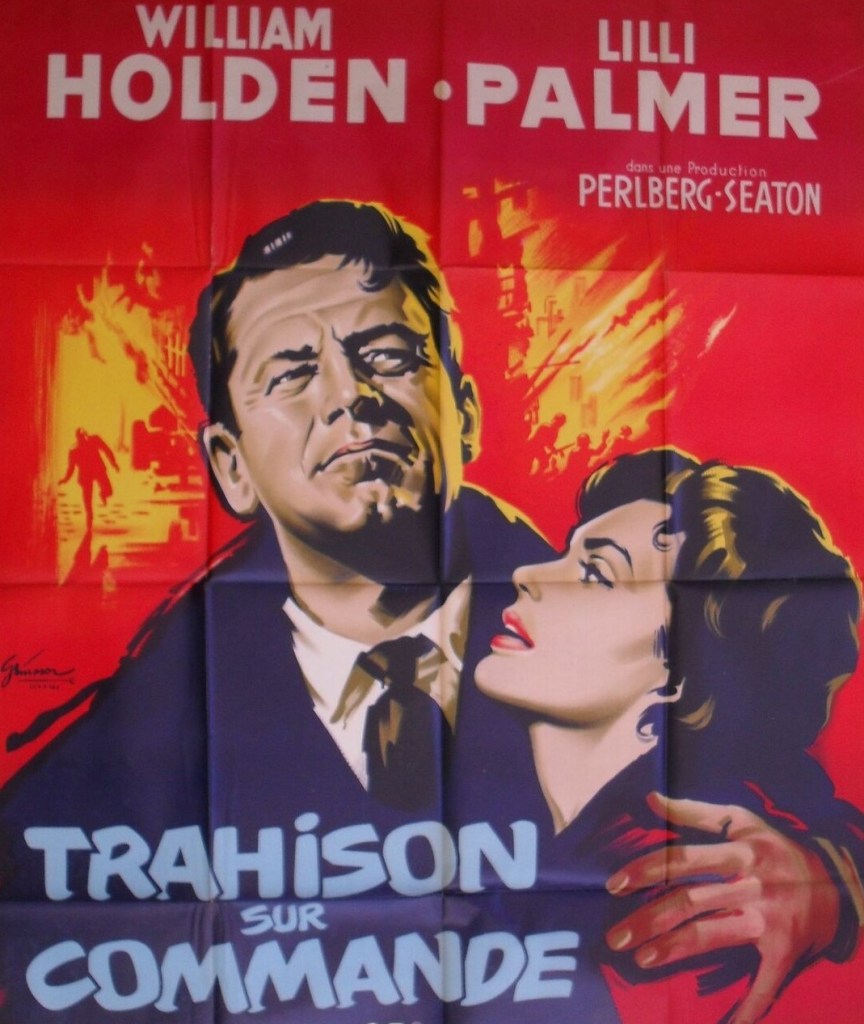
Behind the Scenes: “The Counterfeit Traitor” (1962)

Authenticity came at a cost. In electing to film in Europe veteran producer-director team of William Perlberg and George Seaton, their partnership stretching back two decades, incurred the ire of U.S. movie unions campaigning against “runaway” productions and tax-avoiding stars like William Holden. Feelings ran so high the movie was picketed on release, even though it had received a Presidential seal of approval after John F. Kennedy requested a screening.

Perlberg and Seaton were lucky not to be indicted for a further act of anti-Hollywood behavior, the hiring of so many European actors and actresses in favor of the home-grown variety, but with the incursion of Sophia Loren, Brigitte Bardot and Gina Lollobrigida into the U.S. box office introducing another big female star into the Hollywood firmament would likely have been welcomed.

Producer Perlberg bluntly defended the decision to film abroad a movie set in war-torn Europe (where much of the damage caused by the war had not been rectified). “Where would you find three solid blocks of rubble but Berlin?” he demanded. “Or a prison like Moabit? Our company was yesterday filming in a partially bombed out section of the Altona railway station, six stories high. Action involved a 14-car German train (which Union Pacific can’t reproduce). How can we build Stockholm in Hollywood.” More to the point, he added, “Of course where in the world can you get weather like this? It’s been raining every day.”

Perlberg and two-time Oscar winner Seaton (Airport, 1970), separately and together, had considerable experience of war pictures, having between them made The Proud and the Profane (1956) and The Bridges at Toko-Ri (1954), both pictures, incidentally, starring Holden. The Alexander Klein bestseller The Counterfeit Traitor, purchased in 1957 for a modest $75,000, appeared to follow a similar trajectory. “Competition for the entertainment dollar has wedded us to big films and global stories,” maintained Perlberg despite complaint by Hollywood unions that such films, in the face of shrinking U.S. production, denied their members work.

Although the European locations would shave $500,000 from the budget of The Counterfeit Traitor, still coming in at a hefty $3.4 million and originally to be filmed under the title Man in the Middle, Perlberg was adamant that “the picture could never be made in Hollywood with justice to the subject and story… We are shooting this picture where it happened. On the streets that Eric Erickson (the character William Holden plays) walked; in the houses that were his hideouts.”

Perhaps key to this philosophy was the ability to shoot inside the notorious and still-active Moabit Prison, housing 1,300 prisoners and located close to Berlin’s famous Tiergarten. Amazingly, the prison warden granted permission not just to shoot in the courtyard but also inside the actual building. The prison officials initially denied that anyone was shot in the courtyard (a key scene in the film) until Erickson turned up and testified to the contrary, standing in the cell through whose bars he had witnessed the execution. You could not buy such authenticity and certainly not recreate it in a Hollywood back lot.  

Paperback movie tie-in.

The 100-day shooting schedule included a month in Berlin, two months in Hamburg and scenes set in Copenhagen and Stockholm. It was the epitome of a multi-country adventure – the cameraman French (Jean Bourgoin who shot Tati’s Mon Oncle), wardrobe coordinator Italian, sound mixer German and assistant director British. But in Denmark, they worked with a Danish crew, in Sweden a Swedish crew. “I doubt that any other picture has been made with this type of operation – changing crews with each country involved. It has certain pitfalls but we’ve found in Germany alone that it would have been foolish to do it any other way,” added Perlberg.

“Hollywood set dressers, for instance, are great but no amount of research can match actual experience. Our interior decorators lived in the environment, witnessed the events and dressed the sets accordingly.” Apart from language problems, in Germany, where the bulk of filming took place, the lack of a centrally located “movie town” like Hollywood caused issues. Actors and crew were drawn from Berlin, Munich and Hamburg, with all the cast put up in first class hotels and paid a per diem of $15. With over 70 speaking roles, the movie also called on 2,000 extras.  The producers also worked in the oldest film studio in the world, Nordish Film in Copenhagen built in 1906, and the rebuilt Palladium, which had been blown up by the Germans during World War Two.

Actors and directors worked abroad to limit their U.S. tax exposure. Anyone taking advantage of foreign income was viewed as a tax cheat. William Holden, who would only make one movie in Hollywood in seven years, epitomized the wealthy tax dodger. Living abroad also cut down on paying U.S. tax. Switzerland, for example, where Holden took up residence, calculated tax on the amount you spent on the annual rental of your home, resulting in huge savings – Yul Brunner claimed this legitimate move alone had saved him $2 million.

Holden complained that he was unfairly being singled out. “How about Clark Gable in Naples, Tony Quinn, Charlton Heston in Ben- Hur? Why do they pick on me? I pay U.S. taxes in the highest brackets and will continue doing so for years.” He was a prime target not just because he was outspoken about living and working abroad but because he was, along with John Wayne, the highest-earning male actor, on $750,00 per picture plus percentage. He had the pick of the projects, linked with The Guns of Navarone (1961), The Alamo (1961), The Americanization of Emily with William Wyler in the director’s chair, The Visit with Ingrid Bergman and Melody for Sex where he would be paired with both Sophia Loren and Gina Lollobrigida. He had followed up The World of Suzie Wong (1961) filmed in Hong Kong, with Satan Never Sleeps (1961) filmed in Britain, and then was lining up The Lion in Kenya, Together in Paris (aka Paris When It Sizzles) in France and The 7th Dawn in Malaya.

Although Prussian-born Lili Palmer (Sebastian, 1968) was an established Hollywood import, the movie offered a wide range of parts to fast-rising European talent. Most major studios had already invested in “new faces from abroad” so Perlberg-Seaton were not going against the grain on this one. Paramount, for example, had hired the German Hardy Kruger and the French Gerald Blain and Michele Girardon for Hatari! (1962). Columbia lined up Frenchman Alain Delon for Lawrence of Arabia (1962) and Greek actress Irene Papas in the female lead in The Guns of Navarone (1961). MGM chose Ingrid Thulin for The Four Horsemen of the Apocalypse (1962) and United Artists set Maximilian Schell in Judgement at Nuremberg (1961). Claudia Cardinale was intended to make her Hollywood debut opposite Sidney Poitier in Iron Men – never made.

Heading the list of potential break-out stars were Ingmar Bergman protegees Sweden’s Eva Dahlbeck (Smiles of a Summer Night, 1955) and Ulf Palme (Dreams, 1955). They had appeared in two films together, Dreams and Meeting in the Twilight (1946). German Wolfgang Preiss would later appear in The Train (1965) and Von Ryan’s Express (1965). But the biggest casting coup was Klaus Kinski. “No German producer lightly engages him because most of his engagements in German theaters have ended with a resounding quarrel or scandal,” explained journalist Peter Baker, “(but he is) nevertheless regarded with awe and respect as one of the greatest actors to merge from post-war Germany.” His three days in The Counterfeit Traitor won him a role in Perlberg-Seaton’s next picture The Hook (1963).  

SOURCES: William Perlberg, “Searching Europe for Authenticity,” Films and Filming, February 1961, p9; Peter Baker, “The Tour of Babel,” Films and Filming, February 1961, p10-11, 41; “Lazar Percenting Ericson Spy Tome,” Variety, October 16, 1957, p3; “Lament for B.O. Stars,” Variety, January 29, 1958, p14; “Holding Money via Residence in Switzerland,” Variety, August 5, 1959, p12;“Par’s Sex Stars,” Variety, September 2, 1959, p3; “Holden, Seaton Invade Berlin for War Film,” Variety, October 28, 1959, p7; “H’wood – O’Seas Row Boils Up,” Variety, August 24, 1960, p7; “Bill Perlberg’s Back and Loves Hollywood,” Variety, November 2, 1960, p7; “New Faces from Abroad To Make Debuts in U.S. Films During 1961–62 Season,” Box Office, September 4, 1961, p12-13; “President Kennedy Sees Counterfeit Traitor,” Box Office, May 7, 1962, pW8; “Warm-Up for Picketing Strategy,” Variety, June 6, 1962, p4.

Discover WordPress

A daily selection of the best content published on WordPress, collected for you by humans who love to read.

The Atavist Magazine

by Brian Hannan

WordPress.com News

The latest news on WordPress.com and the WordPress community.