Mirage (1965) ****

“I owe you some pain,” barks the heavy to hero in one of the memorable lines in this classy thriller with surprisingly contemporary overtones. Underlying this tale of amnesiac David Stillwell (Gregory Peck) recovering his memory are themes of personal commitment, commitment to cause (“if you’re not committed to anything you’re just taking up space”), of individuals taking a stand against powerful forces seeking to thwart democracy, and of malevolent pandemic, the oldest of them all, greed, that infects even the most philanthropic enterprises.

The structure is brilliant. To every question David Stillwell (Gregory Peck) asks in trying to establish his identity, the answers are mystifying. He doubts his sanity and is plunged into a  life-threatening conspiracy.   

The film opens superbly. The camera pans across a New York skyline at night, every skyscraper lit up. Suddenly, one of the buildings goes dark. Cut to confusion inside as workers deal with the electricity cut-out. Among them Stillwell who is surprised to meet a woman on the stairs, Shela (Diane Baker), who not only recognizes him but seems to know a lot about him that is unfamiliar to him. They end up in the fourth level of the basement and on leaving discover that Charles Colvin (Walter Abel), a name that’s only vaguely familiar to Stilwell, has committed suicide by jumping from the building.

When he gets home to his apartment he is accosted by gunman Lester (Jack Weston) who tells him “The Major” wants to see him. Stillwell escapes but on reporting the incident to the police can’t remember his date of birth. After his amnesia being rejected by a psychiatrist he turns to private eye Ted Caselle (Walter Matthau) who takes up the case. But in Stillwell’s apartment a fridge he recalls as being empty is now full, the same with a dispatch case, the opposite with a closet, and in the building where he thinks he works there is now a wall where his office should be.

Stillwell believes he was employed as a cost accountant without a notion what that job entails. The building has no fourth level. Another gunman Willard (George Kennedy) is also in pursuit. Corpses pop up with increasing regularity. To add to the mystery, nobody actually wants him dead. He is too valuable alive. He has a secret only he doesn’t know what. The police connect him to the suicide.

And so the movie plays out brilliantly, with the audience only knowing what Stillwell knows, as confused as he, until piece by piece the jigsaw comes together although at times with cunning sleight-of-hand the pieces are the wrong shape or, worse, don’t fit the jigsaw in hand. There’s an emotional jigsaw to be put back together too, one that requires proper commitment, Shela’s “togetherness is not enough” could have been a mantra for today’s generation.

All the time Shela bobs in and out, hard to tell whether she is a victim or conspirator, whether to be trusted or merit suspicion, and she has an interesting philosophy of her own in terms of the trapped and caged.

As in the best thrillers we have been given the clues all the time, just not realized them for what they were, and in a series of brilliant scenes you cannot help but applaud the entire mystery is carefully stitched together. You will never in a million years guess the cause of Colvin’s mysterious death.

The ending is satisfying on a variety of levels. Yes, mystery solved, the secret Stillwell holds a good one, but the climax involves characters taking sides, displaying commitment, challenging their consciences, circumstances reflecting very much the world in which we find ourselves now.

One of the beauties of the movie is how it plays with our expectations. Peck has done amnesia before in Hitchcock’s Spellbound (1945) but since then his screen persona has been men of upstanding character, Atticus Finch in To Kill a Mockingbird (1962) the personification, confusion not a trait readily identified with him. Equally, the heavies look anything but,  Jack Weston small and rotund, George Kennedy bespectacled and slim.

Diane Baker, enigmatic throughout, far from the glamorous thriller female lead (think Audrey Hepburn in Charade or Sophia Loren who partnered Peck on Arabesque or Claudia Cardinale in Blindfold teamed with Rock Hudson), describes herself as a “lonely woman with a low opinion of herself due to many mistakes.” In the middle of the high tension, with Stillwell being pursued by cops, there is a wonderful scene where a little girl lets him hide in her apartment and on making him coffee it turns out to be the pretend coffee little girls make.

Gregory Peck (Arabesque, 1966) is superb, his face absorbing shock at his condition, at once welcoming unravelling mystery at the same time as doubting its source, wending his way through a past he cannot believe is true, a personality that occasionally appears abhorrent, and having to make the same decisions that he feared making in the past. Diane Baker (Marnie, 1964) has a difficult role, introspective where most heroines in this kind of film are more voluble, and frightened of her own vulnerability.

You can see from here how much George Kennedy bulked up for his breakthrough movie Cool Hand Luke (1967). Walter Matthau, too, was a stage away from interesting supporting roles to full-blown star in The Fortune Cookie (1966). Jack Weston might have been rehearsing his role as the stalker in Wait until Dark (1967). I am not going to mention the other sterling supporting players since that will give the game away.

Diane Baker makes the cover of Films in Review magazine.

Veteran director Edward Dymytryk (Alvarez Kelly, 1966) is on song, stringing the audience along beautifully, extracting wonderful performances, not frightened to give the film deeper meaning. The theme of commitment, of standing up to malevolent forces, seems an odd one for a straightforward thriller but it reflected Dmytryk’s experience as a victim of the anti-Communist witch-hunt of the 1950s.  

On the debit side, I can’t see any reason why this was made in black-and-white and it certainly served to put off the public, the film’s box office poor, but I dispute the criticism of what appeared too-frequent flashbacks. Rather than re-emphasizing plot points for the audience, I saw this instead as Stillwell holding up a mirror to a memory he doubted he could trust.  

Top-notch screenplay by Peter Stone who knows his way around this genre, having previously written Charade and with Arabesque round the corner, from the novel called Fallen Angel by ,surprisingly, given he is best known for Spartacus, Howard Fast under the pseudonym Walter Ericson. At least a dozen quotable lines included this cracker relating greed to a pandemic: “You’re a carrier, you infected him and he died from it.”

All told, an excellent thriller with modern resonance.

Oddly enough, Mirage was remade a couple of years later as Jigsaw (1968), directed by James Goldstone and starring Harry Guardino.

P.S. I see you that the “I owe you” line was adapted for use by Willow in the Buffy, The Vampire Slayer TV series. There’s even a link to that scene on YouTube. Glad to see it has found some kind of immortality. It’s the kind of line that should be a gimme for t-shirt manufacturers.  

Isadora / The Loves of Isadora / The Incomparable Isadora (1968) ***

We’re two years away from the 100th anniversary of the death of feminist icon and pioneering dancer Isadora Duncan, but this movie has been in cold storage virtually since its release, so I’m wondering whether its sudden appearance on Amazon will trigger any interest in this long-forgotten, heavily edited, commercial flop of a movie.

Due to the clumsy structure it’s occasionally heavy going. We start off in Nice in the South of France where Isadora (Vanessa Redgrave) is dictating her memoirs to journalist (not lover) Roger (John Fraser) and the whole picture is rendered in flashback. And there’s something morbid about this structure, because essentially we’re waiting for her to die. Unfortunately, what she is most remembered for is getting her trademark long scarf tangled in the wheels of a moving Bugatti and snapping her neck. So we’re sitting around waiting for her to hop into a passing Bugatti with a Bugatti (Vladimir Leskovar).

The rest of her life was somewhat fractured, consisting of her leaping from one lover/husband – Gordon Craig (James Fox), Paris Singer (Jason Robards), Romano Romanelli, Sergei Essenin (Ivan Tchenko) – to the next so characters appear and then disappear. Never mind her rebellious nature and determination to forge her own way  and reinvent dance, her life was peppered with tragedy – all three of her children died, two drowning in the Seine (a fact repeated in a variety of ways to get the full emotional punch) – so there’s more than enough angst.

Her dancing is exuberant and uninhibited – she wore flowing dresses which looked as though any minute they would slip off her slender frame and there was scandal at one point when she bared her breasts during a performance. The first time she hits the stage is exceptionally ho-hum because it’s in a Paris nightclub and she’s a conventional, if very attractive, dancer of the ooh-la-la persuasion. But when she gets into her stride as a serious dancer, then visually it’s a treat, as she commands the stage – and screen- in a series of sexually provocative sinuous movements.

But, unfortunately, once is enough. You’d have to know a lot more about artistic dance than I do – and I guess the bulk of the original and contemporary cinematic audience – to know what changes she implemented and how, apart from her individual style (she danced solo not as part of an ensemble), her act developed and how it impacted on dance. She ran her own dance schools which probably liberated a ton of young women who were in the mood to be liberated.

But, as a biopic, even with 30 minutes knocked out, it’s way too long at the remaining 140 minutes, and the rest of the cast struggle to offer any competition to the lustrous Isadora.

Vanessa Redgrave, Oscar-nominated, is the best reason to watch and she is certainly compelling and, oddly enough, though there is plenty of incident and drama it somehow isn’t dramatically compelling.

She is generally naïve in her politics and her innocence in this department works to the advantage of the character. But mostly, we flit like a mobile time capsule through different periods, each well defined cinematically, and even though it’s clearly much harder to (in visual terms on film) convince as a genuine dancer than as, for example, a pianist, unless you were an expert on dance you wouldn’t know what to complain about.

You end up with a biopic about an interesting woman rather than a fascinating biopic. Vanessa Redgrave (Blow-Up, 1966) delivers another of her flawed characters and holds the screen effortlessly. The same cannot be said of the insipid males, James Fox (Thoroughly Modern Millie, 1967) and a miscast Jason Robards (Hour of the Gun, 1967).

Hard to know what the plans were of director Karel Reisz (Morgan!/Morgan, A Suitable Case for Treatment, 1966) because this isn’t his 168-minute version (the one that was released in the U.S. after disastrous opening weekend was trimmed to 128 minutes and in the UK to 140 minutes). Written by Melvyn Bragg (Play Dirty, 1969) and Clive Exton (10 Rillington Place, 1969) from a number of sources.

Sheds an interesting, but not enough, light on a legendary character.

Que La Bete Meure / This Man Must Die (1969) ****

Heavily-layered Claude Chabrol revenge thriller that concentrates as much on the tricks the human mind can play rather a string of unusual twists. Self-justification and redemption go hand in hand. The director sucks us in to sympathize with an obsessed killer on the grounds that his victim deserves to die and then at the end makes us question everything we’ve been led to believe.

As usual, with this director, there’s more than enough atmosphere and his exposure of small-town life in France and the flaws in families and relationships almost serve to turn this into more of a drama than a thriller. But then that is Chabrol’s distinctive trademark.

When the police fail to track down the hit-and-run driver who has killed the young son of Charles Thenier (Michel Duchaussoy), the father, an author, determines to find the killer and, as he confides in his diary, not report him to the authorities, but finish him off himself. He makes the smart deduction that since there was no trace of a repair to a damaged car, the killer must own a garage. By a stroke of luck, he discovers a well-known actress Helen Lanson (Caroline Cellier) was a passenger in the car. Hiding behind his pen-name Marc, he seduces Helene, who has been hit by depression as a result of the incident, and discovers the driver was her brother-in-law Paul (Jean Yanne).

Convincing her to allow him to accompany her on a visit to his sister, his self-justification rises a notch as he notes that Paul is exactly the kind of guy who might well come to a sticky end given the detestable way he treats his wife Jeanne (Anouk Ferjac) and teenage son Phillippe (Marc Di Napoli) and is a womanizer to boot. While Charles bonds with Phillippe, who reveals he wants to kill his father, his relationship with Helene takes a knock when he discovers she’s had a brief affair with her brother-in-law.

So Charles plans to stage an accident at sea but Paul is one step ahead. The driver has found Charles’ diary and has taken a gun on the sailing trip to defend himself. But after Charles and Helene leave, Paul is discovered dead by poisoning. Charles’ diary makes him a suspect. And while he argues that it would be foolish of him to disclose his plans to a diary that is in the dead man’s possession, the police take the view that that would exactly what a clever murderer would do to deflect suspicion.

The police can’t find the poison so Charles is released. Phillippe confesses to the murder. But there is a further twist. The tale on which this is based was called The Beast Must Die, and from the various revelations we would be assuming that the beast in question, the remorseless despicable hit-and-run driver with not a single redeeming feature would be the most likely to fit this category.

But on reflecting on his own obsession, Charles clearly realizes that he is as likely a candidate to be termed a “beast.” It turns out he has let the son take responsibility for the murder and now he sets out to make amends, confessing to Helene that he did it and then heading off to sea presumably to jump overboard at a suitable spot.

Justified killing is never, it turns out, justifiable because in reality it turns the innocent into the guilty, and there’s little distinction between killers. When we cast our minds back, we become aware, as he does, that Charles has transitioned from grieving father to ruthless seducer of a vulnerable woman, preyed on a youngster who in consequence of their supposed friendship is happy to carry the can so Charles can escape, and is in any case going to complete his plan regardless of the cost to others.

Michel Duchaussoy (La Femme Infidele, 1969) steps up to the plate. The supporting cast are excellent. After the abysmal Road to Corinth (1967), Claude Chabrol established his name as the inheritor of the Hitchcock mantle after this and La Femme Infidele. Written by the director and Paul Gegauff (More, 1969) from the novel by Nicholas Blake (the pen-name of Irish poet Cecil Day-Lewis, father of Oscar-winning actor Daniel Day-Lewis).

No shortage of tension, upends your expectations, totally involving.

Woman of Straw (1964) ***

In a plot worthy of Hitchcock without that director’s sly malice, rich playboy Tony (Sean Connery) conspires with not-so-innocent nurse Maria (Gina Lollobrigida) to rid himself of  heinous upper-class racist misogynistic bully Charles (Ralph Richardson), his uncle. Beyond  a savage case of entitlement, Tony has good reason to hate the wheelchair-bound multi-millionaire, blaming him for his father’s suicide and for seducing his widowed mother, now dead. Tony’s ploy, in part by opposing the very idea, is to get Maria to marry Charles, inherit his fortune and provide himself a £1 million finder’s fee when the seriously ill old man dies.

Maria’s refusal to kowtow to the old man and her initial resistance to Tony make her all the more desirable to both. When Maria saves the old man from a potential heart attack, he is moved enough to marry her and draw up exactly the will the pair want. But when he suddenly dies, Maria surprises herself by the depth of emotion she feels.

But that soon changes when she comes under suspicion. A bundle of complications swiftly change the expected outcome. A police inspector (Alexander Knox) doubts cause and place of death.

The first half is the set-up, the various figures being moved into place, not quite as easily as might have been anticipated, which adds another element of tension. Charles is such a hideous person nobody could lament his passing, but still his vulnerability, not just his wheelchair confinement but his love of music, his better qualities coming to the fore as the result of Maria’s presence, accord him greater sympathy than you would imagine.

That the otherwise gallant Tony’s entitled life depends entirely on his uncle’s good wishes lends him an appealing frailty. The nurse’s principles safeguard her against being taken in by riches alone, but there is a sense that she has used her physical attraction in the past to her advantage.

After the first two James Bond pictures, this was Sean Connery’s first attempt to move away from the secret agent stereotype and in large part he is successful. As amoral as Bond, he could as easily be a Bond villain, smooth and charming and larger than life and superbly gifted in the art of manipulation, the kind of putting all the pieces in place that Bond villains excelled in.

It will come as a surprise to contemporary viewers that he is merely the leading man, not the star. Gina Lollobrigida (Go Naked in the World, 1961) receives top-billing because she carries the emotional weight, initially perhaps as cold as Tony, but her attitude to Charles changing after marriage, meeting a need that Tony would not consider his to fulfill, and beginning to regret going along with any devious plan. That she then discovers she may merely be a pawn rather than a partner creates the dilemma on which the final section of the film depends for tension.

Both actors are excellent, exuding star wattage, the screen charisma between them evident, and audiences craving the pairing of Connery with an European female superstar will be well satisfied. Lollobrigida has the better role, requiring greater depth, but it is romance as duel most of the way. Ralph Richardson (Khartoum,1966) has never been better as one of the worst human beings ever to grace a screen. Johnny Sekka (The Southern Star, 1969) brings dignity to the maligned servant and Alexander Knox (Khartoum) is a crusty cop. 

A slick offering from Basil Dearden (The Mind Benders, 1963), with one proviso – see seaparate article for the racism in this film. Written by Robert Muller (The Beauty Jungle, 1964) and Stanley Mann (The Collector, 1965) based on the novel by Catherine Arley.

Could have done with expending less time on the set-up and getting to the meat of the thriller quicker.

Carry On Spying (1964) ***

The potential for leering – given the squads of bikinied beauties, cleavage abounding and partial nudity a prerequisite in the standard James Bond picture  – could have gone into the stratosphere. So it’s to the producer’s credit that they opted to drop ogler-in-chief and Carry On perennial Sidney James from this enterprise. So, automatically, there’s more of a gentler  Ealing or Doctor in the House vibe to the satire.

Given the propensity for inuendo and said ogling, there’s a general perception that doesn’t stand up to scrutiny that women in this series are portrayed as objects existing solely for the pleasure of men. However, as here, women are often in charge and certainly more sensible than the males.

Here dumb Desmond Simpkins (Kenneth Williams), dumber Harold Crump (Bernard Cribbins) and dumbest Charlie Bind (Charles Hawtrey) are easily put in the shade by fellow spy Daphne Honeybutt (Barbara Windsor), she of the photographic memory, and deadly enemy Dr Crowe (Judith Furse) who has the sense to steer clear, unlike James Bond’s deadliest enemies, of cats and heads up an organization called STENCH.

And while generally the focus of the fun is the James Bond series – of which only two at this point had been made – the movie also draws on antecedents such as The Third Man (1949) and, dare I say it, Casablanca (1942) and film noir. And there’s an acceptance that Britain has not shot to the top of the espionage premier league courtesy of one bed-hopping spy but is more likely to drown in officialdom and inefficiency.

We begin with a particularly British joke that a milkman would have access to even the most top-secret laboratories simply because every living person in the country can’t do without their daily hand-delivered pint of milk, thus permitting an enemy secret agent in the most simple of disguises to nip in and steal a top secret formula and blow up the lab.

The four agents are despatched to Vienna, primarily so the movie can take advantage of jokes about sewers and zithers a la The Third Man, and prove how inadequate our quartet actually are. From there, they hare over to Algiers, because that’s the kind of locale where Crump and Honeybutt can infiltrate a club disguised as belly dancers. Naturally, they are captured by STENCH and while enemy agents are often as comfortable in bikinis and the cleavage-showing malarkey here the females, while wearing skintight outfits, reveal no flesh, and there’s – shock! horror! – no ogling.  

Typical British small town cinema requiring three changes of program a week to survive. Generally, horror pictures were limited to single showing on a Sunday, but that was when cinemas screened oldies. This one was contemporary and yes that’s Roy Scheider from “Jaws.” The movie expected to be most lucrative played the weekend. Public response to “Paris When it Sizzles” was as poor here as anywhere else, thus the midweek slot.

There’s a very humorous twist on the trope of a spy eating top secret material wherein our quartet need soup and bread to help it go down. However, there’s a clever reversal when Honeybutt’s photographic memory, allowing her to instantly recall the secret formula, makes her prey to Dr Crowe.

There’s a stab at romance, although hapless males Simpkins and Crump are ill-prepared to deal with the advances of, respectively, double agent Lila (Dilys Laye) and Honeybutt. Pratfalls are limited though Inspector Clouseau would have welcomed the comic relief afforded by doors.

This was Barbara Windsor’s first Carry On venture. Most of the rest of the cast were series regulars and pretty much played the characters they always play.

Cleaner fun than it might have been had Sid James headed the cast. One of the better spoofs in the series. Directed as usual by Gerald Thomas and written by Talbot Rothwell (Three Hats for Lisa, 1965) and Sid Colin (Up Pompeii, 1971).

Well up to standard.

The Mind Benders (1963) ****

As far as Hollywood was concerned brainwashing was ascribed to foreigners intent on disrupting democracy as with The Manchurian Candidate (1962). Such inherent hypocrisy will come as no surprise since scientists at McGill University in Canada had been carrying out C.I.A.-funded sensory deprivation experiments in the 1950s. Where the John Frankenheimer paranoia thriller went straight down the political route, The Mind Benders, based on the McGill tests, is more interested in the personal cost, although ruthless politicians and unscrupulous scientists still abound.

The suicide of renowned scientist Professor Sharpey (Harold Goldblatt), possibly selling secrets to the Russians, sends MI5 agent Major Hall (John Clements) to Oxford to investigate sensory perception tests. The guinea pigs have all been volunteers, keen to expand knowledge of human mental endurance. The latest volunteer, Dr Longman (Dirk Bogarde), is on leave recovering from his participation. To avoid branding Sharpey a traitor it is proposed that he was actually brainwashed by long immersion in a water tank and subsequent sensory deprivation.

In order to prove the point, Longman, a driving force behind the research having shifted the focus from sub-zero temperatures to water, is the unknowing guinea pig, a jealous colleague Dr Danny Tate (Michael Bryant) who fancies his wife Oonagh (Mary Ure) suggesting that the experiment would be deemed a success if Longman was turned against his wife. It transpires that sensory deprivation has already had an effect on Longman, his wife complaining his lovemaking has grown rough.

The callousness with which this stage of research is undertaken, the disregard not so much for human life but emotion and love, in a country that prides itself on honor and fair play, sets up a different register to the Frankenheimer film where at issue is the assassination of the most important person in the United States. Longman, fed lies about his wife’s infidelity, becomes a different character, distrustful, aggressive, embarking on an affair of his own, putting in jeopardy the happiness he has constructed.

Ahead of its time in analyzing the importance of the hidden persuaders (as television advertising would later be termed) and lacking a thriller element to drive the narrative, nor devised as a self-indulgent experiment like the later Altered States (1980), nonetheless this achieves tremendous power through the deliberate dislocation of individual life, personalizing in a way that others in the paranoia thriller genre do not the dangers of tampering with the unknown.

And perhaps because it is so British, with the Longman family living in a big rambling house, the children involved in myriad games, the scientist a loving husband, that the outcome is so horrible. Brainwashing was seen as a form of torture, with subjects susceptible to ideas they may have once opposed, almost forming a new identity.

The structure here sucks in the audience. It’s ostensibly initially about spies, outing a traitor, a notion that every British citizen would go along with, the film especially relevant in the wake of the Kim Philby affair the year of the film’s release, when the idea of “spies among us” took root. Then we move on to a scientific account of the deprivation experiment, the first one taking place in the Arctic Circle, footage of a volunteer emerging in a fugue state. When Longman does another experiment, himself the guinea pig, to show what is involved, the various changes the body and mind undergo, it still seems far removed, captivating and intriguing though it may be, from any human horror.

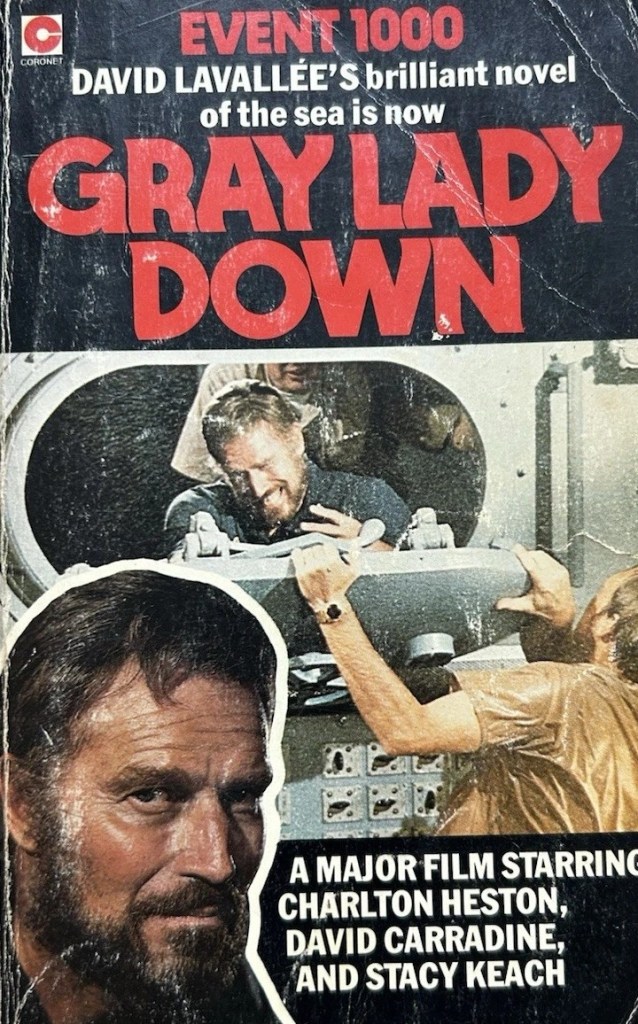
James Kennaway wrote the movie tie-in paperback based on his original screenplay.

But when Longman becomes the unknowing victim, the audience becomes privy to the worst aspects of the brainwashing. The personal price paid would put every member of the audience off endorsing its use.

This is a very measured film, cunning in its construction, that puts the viewer at the heart of the story. Without spelling out the psychological terror, the implications are nonetheless clear, a nightmare from which there is no escape, no guarantee the process could be reversed, men turned into different personalities at the behest of government for who knows what end.

Dork Bogarde (Hot Enough for June, 1964) does this kind of role so well, the well-meaning person whose life is thrown into disarray. Mary Ure (Where Eagles Dare, 1968) is superb as the fun-loving wife, fighting for her husband, Michael Bryant excels as the sly friend, determined to win his wife by illicit means. Michael John Clemens only made two films this decade and his portrayal of the MI5 agent, as dispassionate as any scientist, putting country above individual, is almost as frightening as the experiment he provokes.

The idea came from an original screenplay by Scottish novelist James Kennaway (Tunes of Glory, 1960) who had come across the Canadian research. He was adept at placing stories within institutions in some respect with their own sacrosanct traditions and while the army barracks of Tunes of Glory could not be further removed from Oxford academe both reek of unchallenged hierarchy, of sacrifice to a cause.

Basil Dearden (Woman of Straw, 1964) directs this brilliantly, the attractive countryside location in contrast with the gloom of the experimental rooms, the warmth of a happy marriage evaporating in the face of insidious threat. He returned to the theme of identity in The Man Who Haunted Himself (1970).

This is one of these films that lives on in the mind long after the viewing has ceased and will  strike a contemporary note where identity, and its shifting values, is such an issue.

A Shot in the Dark (1964) ***

A pratfall still works wonders. An open door or window, anything that happens to be on the floor, or for that matter any object of any description – billiard cues, for example – within easy reach offers the opportunity for havoc – and a steady stream of laffs. Which is just as well, because this complicated farce, which might get a few extra brownie points today for its satire on serial killers, doesn’t do the movie any favors.

Inspector Clouseau (Peter Sellers) has acquired a more pronounced French accent than since his last incursion in The Pink Panther (1963) but it’s nothing like as excruciatingly hilarious as would be in later episodes. He still falls in love at the drop of a hat though this time the object of his affection is maid Maria (Elke Sommer) who, unfortunately, happens to be the prime murder suspect. She should be in jail but she is constantly released. Clouseau should be sacked for incompetence, but he is constantly reinstated.

The repertory team of his frustrated boss Dreyfus (Herbert Lom) and karate teacher (Burt Kwouk) interrupt proceedings from time to time but don’t really add to the laugh quotient. A bit more effective is the satire on French bureaucracy, a running gag on the need for an official permit, for example, before you could think of selling balloons on the street or trying to earn a buck as a street artist.

I won’t go into the plot since it’s a series of baffling murders and you could argue that Peter Sellers needs neither plot nor love interest. All he needs is an open door beckoning.

I was astonished how often I laughed out loud at something I knew was coming. The minute someone walked through a door you knew Clouseau would be the other side of it waiting to be buffeted. Any open window and he’d be through it and likely as not water would await.

He doesn’t just get tangled up in words but ask him to replace a billiard cue and you’d think billiard cues had declared war on him. He’s forgetful to the point of forgetting to switch off his cigarette lighter and naturally ignores the signs that he’s set his coat on fire.

For those more censorious times, there’s a foray into a nudist colony which is primarily an exercise in the various ways that private parts can be hidden from the camera while suggesting the salacious opposite. Clothed or unclothed you can rely on Clouseau to fall down. The only hilarious scene that doesn’t involve him falling down is when Maria miraculously appears in his office and when an attached key tears a whole in his trousers.

The various twists – Dreyfus is the assassin stalking Clouseau – and the lax French attitude to adultery keep the plot going and when the narrative slackens you can always stick a bomb into the mix.

From the outset, there is plenty opportunity for farce, the wrong people entering the wrong doors, continuous mix-up, plenty occasions for the innocent person to be caught red-handed clutching the murder weapon.

It almost looks as though the two aspects of the picture are clashing. Director Blake Edwards (The Pink Panther) appears to be helming a farce within which Inspector Clouseau is encased. You might think there’s a limit to the number of pratfalls you can stick in a picture, but my answer is “try me”.

With Peter Sellers so dominant, the only way the supporting cast could compete was by over-acting (Herbert Lom) or under-acting (all the rest).  Elke Sommer (The Prize, 1963) needs do little more than look winsome.

Written by Edwards and William Peter Blatty (Gunn, 1967) based on the play by Harry Kurnitz.

Occasionally drags but lifted by the genius of Sellers.

The Maltese Bippy (1969) *

The start is promising. Three decent laughs in the first three scenes, all jests at the expense of Hollywood. But when the movie settles down to a werewolf spoof, there’s a nary a chuckle to be found. It was rare in the 1960s for television shows to be given a big-screen outing, but it did occasionally happen. This came two years into the six-year run of Rowan and Martin’s Laugh-In television show, an innovative mixture of gags, punchlines and sketches stitched together in random fashion. A huge hit in the U.S., it was considered a slam dunk to turn it into a movie. Perhaps if they had stuck to the same format it might have worked.

Sam Smith (Dan Rowan) and Ernest Grey (Dick Martin) are down-on-their-luck soft-porn movie makers living in a mansion on the edge of a cemetery. After suffering a bite on the neck, Dick turns into a werewolf. You can see the comic possibilities, I’m sure. Either Rowan and Martin failed to find them or lacked the expertise to turn the material into laughs. Sure, there’s a creepy family, the Ravenswoods, next door who could be auditioning for The Munsters but that goes nowhere except the obvious and certainly not in the direction of laughs.

A few good actresses – Carol Lynley (Danger Route, 1967),  Julie Newmar (Mackenna’s Gold, 1969) and Mildred Natwick (Barefoot in the Park, 1967) – were snookered into this alongside Fritz Weaver (To Trap a Spy, 1964) without hope of redemption.  It was almost as though the picture was conceived as a piece of merchandising that Rowan and Martin just had to put their names to and not do much else.

It was strange it was so awful because director Norman Panama had a track record in comedy. Among other pictures he had made The Court Jester (1955) starring Danny Kaye – “the vessel with the pestle” – displayed an abundance of great comic timing and in some respects was a spoof of the historical genre. He had also directed Bing Crosby and Bob Hope in The Road to Hong Kong (1962) so you would expect him to be familiar with the workings of screen comedic partnerships.

The laughs were meant to be supplied by Everett Freeman (The Glass Bottom Boat, 1966)  and Ray Singer, a specialist in television sitcom and creator of Here’s Lucy (1968-1974). But either they couldn’t come up with sufficient gags or Rowan and Martin’s delivery was out of key with the lines. Or something.

Maybe nostalgia was what was missing from my viewing of the picture. I don’t recall holding any particular affection for the television show, though I was aware it provided a star-making platform for performers like Goldie Hawn (Cactus Flower, 1969), Judy Carne (All the Right Noises, 1970) and Lily Tomlin (Nine to Five, 1980) and that John Wayne put in a guest appearance.

But don’t take my word for it. Variety called the picture “as zany and fast a funfest as has come down the pike in years” and a “ cinch for heavy box office reception.” Mainstream critics were less kind, four out of the most prominent five giving unfavorable reviews. Even though the stars made the cover of Life magazine and the film received a seven-page spread inside, the movie barely made a ripple with audiences, a total of just $22,000 garnered in its opening week in two cinemas in New York with a total capacity of over 2,000 seats. British kids film Ring of Bright Water made more at a 360-seater.

The expected audience did not materialize, either from poor word-of-mouth or because customers resisted paying for something they could get for free every week on the small screen. So poorly did it perform that its initial run was truncated and a few weeks later when it went wide in a Showcase opening in New York MGM stuck on a reissue of Grand Prix (1966) as the support. Variety estimated it barely took $1 million in rentals (the amount returned to studios once cinemas take their share of the box office). Final proof of its unpopularity was being sold to television a couple of months after its debut.

After the Fox (1966) ****

There’s a classic MacGuffin in here somewhere, but I can’t make out if it’s the heist serving the satire on movies or the satire on movies serving the heist. Whatever, this is about the funniest picture you’ll watch on the movie business (much better than Paris When It Sizzles two years earlier). You can keep your royalty and your top politicians dropping in from every corner of the globe, but it’s hard to beat Hollywood landing on your doorstep to transform everyone into a sycophant. To facilitate filming, individual streets and solid blocks will be closed and even businessmen whose businesses are threatened will stick their nose out into the road in the hope of being captured by a stray camera. Everyone wants to be in the movies and how brazenly the movies exploit such naked need.

Before we get to the movie part of the story, we find imprisoned top criminal Aldo Vanucci aka “The Fox” (Peter Sellers) escaping from confinement so that he can assist robber Okra (Akim Tamiroff) transport 300 solid gold bars from a heist in Cairo to Italy. Though the heist is deceptively simple (and might even have influenced The Italian Job, 1969), for a time it looks as if this will canter along going nowhere fast while we get bogged down in a subplot concerning the burgeoning acting career of Vanucci’s sister Gina (Britt Ekland). There’s a whole bunch of standard Italian comedy tropes – the dominant Mama, the incompetent crooks and the brother too controlling of his sister.

But once Vanucci hits on a movie shoot as the ideal way to disguise the bringing ashore of the loot into the Italian island of Ischia, he strikes pure comedy gold. The townspeople who might otherwise easily see through a con man are putty in his hands. The local cop comes onside when persuaded he has the cheekbones of actor. Aging vain star Tony Powell (Victor Mature) wearing a trademark trench coat like a latter-day Bogart is an easy catch once you play upon his vanity and even hard-nosed agent Harry (Martin Balsam) is no match for the smooth-talking Vanucci.

Vanucci has mastered the lingo of the film director and can out-lingo everyone in sight. The very idea that he has a hotline to Sophia Loren goes undisputed and Powell is even persuaded that Gina, who has never acted in her life, is the next big thing.

Pick of the marvelous set-pieces is the scene in a restaurant where Vanucci is astonished to find a peach of a girl (Maria Grazia Buccella) speaking in a deep male voice because while she’s opening her mouth the words are being supplied by Okra seated behind her. Not all the best scenes involve Vanucci. Harry tartly batting away Tony’s vanities is priceless while the theft of film equipment while a film director (played by the movie’s director) calls for more dust in a sandstorm is great fun.

Also targeted is the self-indulgence of the arthouse filmmaker determined to add meaning to any picture. Vanucci’s versions of such tropes as lack of communication or a man searching for identity and running away from himself are a joy to behold and one scene of Tony and Gina sitting at opposite ends of a long table at the seashore just about sums the kind of pointless but picturesque sequence likely to be acclaimed in an arthouse “gem.” And you might jump forward to villagers hiding the wine in The Secret of Santa Vittorio (1969) for the sequence where townspeople load up gold into a van, singing jauntily all the time.

Most of all Sellers (A Shot in the Dark, 1964) hits the mark without a pratfall in sight – the only pratfall in the picture is accorded Harry. Unlike The Pink Panther, Sellers doesn’t have to improvise or be funny. He just follows the script and stays true to his character and the one he has just invented of slick director. There’s even a great sting in the tail.

Sellers shows what he can do with drama that skews towards comedy. Though criticized at the time for, effectively, some kind of cultural appropriation – she was a Swede playing an Italian, what a crime! – Britt Ekland (Stiletto, 1969) is perfectly acceptable. Victor Mature (Hannibal, 1960) has a ball sending up the business as do Akim Tamiroff (The Vulture, 1966) and Martin Balsam (The Anderson Tapes, 1971).

Vittorio De Sica (A Place for Lovers, 1969) does pretty well to merge standard Italian broad comedy with several dashes of satire. The big surprise is that Neil Simon (Barefoot in the Park, 1967) wrote the script, helped out by De Sica’s regular collaborator Cesare Zavattini (A Place for Lovers).

I saw this and A Shot in the Dark on successive nights on Amazon Prime. I hadn’t seen either before. They had been received at either ends of the box office spectrum, the Clouseau reprise a big hit, the Hollywood satire a big flop, so I expected my response might reflect that. But, in reality, it was the other way round. I appreciated this one more.

Go figure.  

Paris When It Sizzles (1964) ***

Screen charisma can only get you so far. The pairing of William Holden and Audrey Hepburn must have seemed certain to create a box office tsunami given they had worked together before on the hit Sabrina (1954) and were coming off hits, the former in The World of Suzie Wong (1960) and the latter having reinvented herself as a ditzy fashion icon in Breakfast at Tiffanys (1961). But clearly studio Paramount knew something about the outcome of this production that it was keeping to itself, otherwise how to explain that a movie completed in 1962 languished on the shelves for nearly 18 months.

By the time it appeared Hepburn was still a big box office noise after Hitchcockian thriller Charade (1963) but Holden’s flame was dying out following three successive flops, The Devil Never Sleeps, The Counterfeit Traitor and The Lion all released in 1962. Had the studio played an even longer waiting game and held off release until the end of 1964 when Hepburn was enjoying sensational success with My Fair Lady, audiences might have been more likely to be suckered in to this romantic comedy. Although whether they’d be any more appreciative is doubtful.

Problem is, the narrative hardly exists. And what remains is too clever by half. It might have appealed as an insight into how Hollywood works, but it lacks backbone and is more of a series of spoofs as we wait inevitably for the two stars to fall in love.

Alcoholic Richard Benson (William Holden) has writer’s block and having frittered away his time drinking, traveling and romancing, now has two days to deliver a screenplay for producer Meyerheim (Noel Coward) – who incidentally seems to spend his time in the sunshine drinking and surrounded by beautiful women. Benson hires typist Gabrielle (Audrey Hepburn) both to speed up the process and have someone to bounce ideas off.

Primarily a two-hander and virtually contained on a single set, his swanky apartment in Paris, it only ventures out to assist his imagination by playing out various concepts in which the pair act out various scenes in what turns into a relatively ham-fisted satire of the movie business. The only really interesting Hollywood expose is when Benson explains the tricks of the screenwriting trade, the various reversals (they were called “switches” in those days) and conflicts to keep the audience on their toes and prevent the potential lovers getting to the actual loving stage too quickly.

So we watch Gabrielle initially fending off his moves before becoming entranced and ridding herself of a carapace of dustiness before transforming into a flighty fun lass. But when the dialog often centers on arguments over the meanings of words there’s not a great deal for the audience to get its teeth into.

The concept, such as it is, allows Richard and Gabrielle to act out various scenarios, rattling through the genres – spies, musical, the jungle, horror, whodunit and western – while they manage to find a way to turn his title The Girl Who Stole the Eiffel Tower into a movie.

Even though the last thing this needs is further levity – any more froth and it would disintegrate – Tony Curtis (The Boston Strangler, 1968) has a recurrent role in a variety of cameos and you can spot an uncredited Marlene Dietrich (Judgement at Nuremberg, 1961) and Mel Ferrer (Brannigan, 1975). Perhaps the most unusual angle was that it was a remake of the French La Fete a Henriette (1952) directed by Julien Duvivier. Or that it was the first screen credit for Givenchy, who devised Hepburn’s clothes.

While both Holden and Hepburn are very easy on the eye, the actor often topless, and Hepburn  going through the fashions, it only works if you want to see screen chemistry at work and are not remotely interested in narrative or if you are so unaware – and of course genuinely interested – in the screenwriter’s craft that you are  find out how words on paper are translated into images on the screen. It might well be an audience’s first encounter with such gems as “Exterior:Day.”

Oddly, both Holden and Hepburn are good and it’s solidly directed by Richard Quine (The World of Suzie Wong) from a script by George Axelrod (Breakfast at Tiffany’s) adapting the previous film.

A harmless trifle, you might say, but just too bad that with the talents involved it doesn’t even rise to a soufflé.

Discover WordPress

A daily selection of the best content published on WordPress, collected for you by humans who love to read.

The Atavist Magazine

by Brian Hannan

WordPress.com News

The latest news on WordPress.com and the WordPress community.