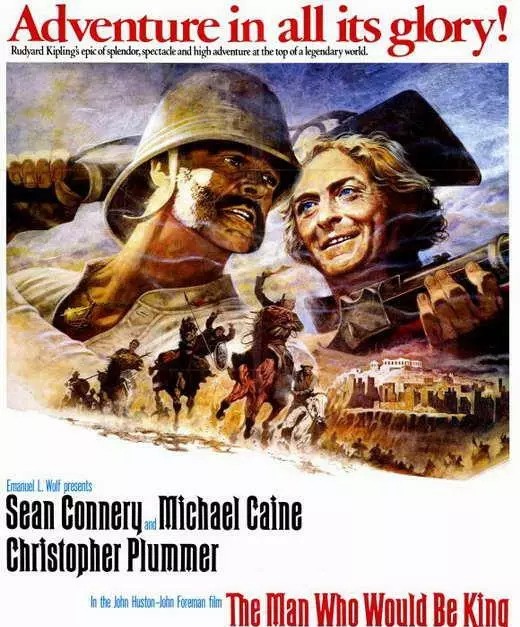
The Man Who Would Be King (1975) ****

Variation on the director’s earlier The Treasure of the Sierra Madre as a pair of British ex-military cheekie chappies whose reach exceeds their grasp come unstuck when confronted by powerful religious elements. Enticingly presents a marvellously ironic puzzle – you can have everything your heart desires except anything that would make you human. And elevated less by John Huston’s cinematic achievement than by terrific performances by the two stalwarts of the British film industry at the time, Sean Connery and Michael Caine, the former taking the acting kudos by a nose as the less intelligent of the duo. Given Connery’s standing at the time, this was somewhat playing against type. Yes, he exudes screen charisma and is a macho as ever, but nonetheless not quite as quick on the uptake as the more calculating Caine.

Story is told in flashback after a maimed Peachy Carnehan (Michael Caine) turns up as the offices of journalist Rudyard Kipling (Christopher Plummer). They originally met when Peachy had stolen the writer’s watch, returning it on realizing they were fellow freemasons. With buddy Daniel Dravot (Sean Connery), they attempt to enlist Kipling in a blackmail scheme and in due course the soldiers set off to make their fortunes in the forbidding land of Kafiristan, at the top of the Indian sub-continent, where no white man has set foot since Alexander the Great.

Their scheme is simple – to hire themselves out as mercenaries to various tribes, bringing modern warfare skills and weaponry to primitive society and ascending the ranks of power. When Daniel appears unhurt after plucking an arrow out of his chest, the natives confer on him the status of god, and so he is elevated to kingshippery and all the gold he could want. But in this Garden of Eden there is a humdinger of a Catch 22, the apple he must not touch.

He can’t take a wife.

You can see the logic. As a god you should be above base earthly desires. A god could not possibly wish such intimacy with a human. Otherwise he would lose his otherworldly sensibilities, not to mention that the chosen woman would expect to physically explode. While the more sensible Peachy has been all the time calculating just how he’s going make a getaway with as much gold as he can carry, Daniel becomes trapped in the notion that he can have his cake and eat it.

The religious hierarchy says otherwise and it doesn’t end well.

Audiences may well have been disappointed at the lack of action. There’s only one battle and it’s over in a minute, albeit that there’s a timeout to make the point about the power of religion. And although our boys endure a momentous trek it’s fairly standard stuff and Huston lacks the vision of a David Lean to turn the journey into anything more dramatically or visually memorable. A whole bunch of indigenous background material – including the ancient version of polo where the ball is a human head – doesn’t make up.

What does transform this relatively slight tale is the playing. Connery and Caine are a delight, the kind of top-of-the-range double act on a par with the cinemagical pairing of Paul Newman and Robert Redford in Butch Cassidy and the Sundance Kid (1969) and The Sting (1973). They spark each other off just a treat. Caine, surprisingly, is the one in charge, Connery adrift in  matters of arithmetic, strategy and, when it comes down to it, common sense even though when called up to judge on civil matters proves himself relatively astute and fair.

The writing, too, seems to understand implicitly how to get the best out of the characters. When they fall out, it is so subtle you would hardly notice. Caine scarcely bristles when Connery explains that Caine really should be falling in line with the rest of his subjects and bowing his head, but if you are astute reader of an acting face you can see the chasm that has opened up in their relationship.

To employ a Scottish phrase, Connery gives it “laldy” – acts with gusto – when playing the part of a madman, whirling around like a demented dervish, but mostly reins it in.

The intricacies of freemasonry would wait a few decades before called to the cinematic altar in The Da Vinci Code (2006) but here the mumbo-jumbo proves less important than, as with the Dan Brown epic, a symbol, and, again with the lightest of narrative strokes, we are left considering its mystic origins.

John Huston (Sinful Davey, 1969) back on top form but he’s more than helped by exceptional acting by Sean Connery (The Hill, 1965) and Michael Caine (Play Dirty, 1968) with Christopher Plummer (Nobody Runs Forever / The High Commissioner, 1968) in unusually subtle form as well. Gladys Hill (Reflections in a Golden Eye, 1967) and Huston were Oscar-nominated for the  the screenplay based on the Kipling short story.

Impressed by this performance I should warn you I feel a Sean Connery binge coming on.

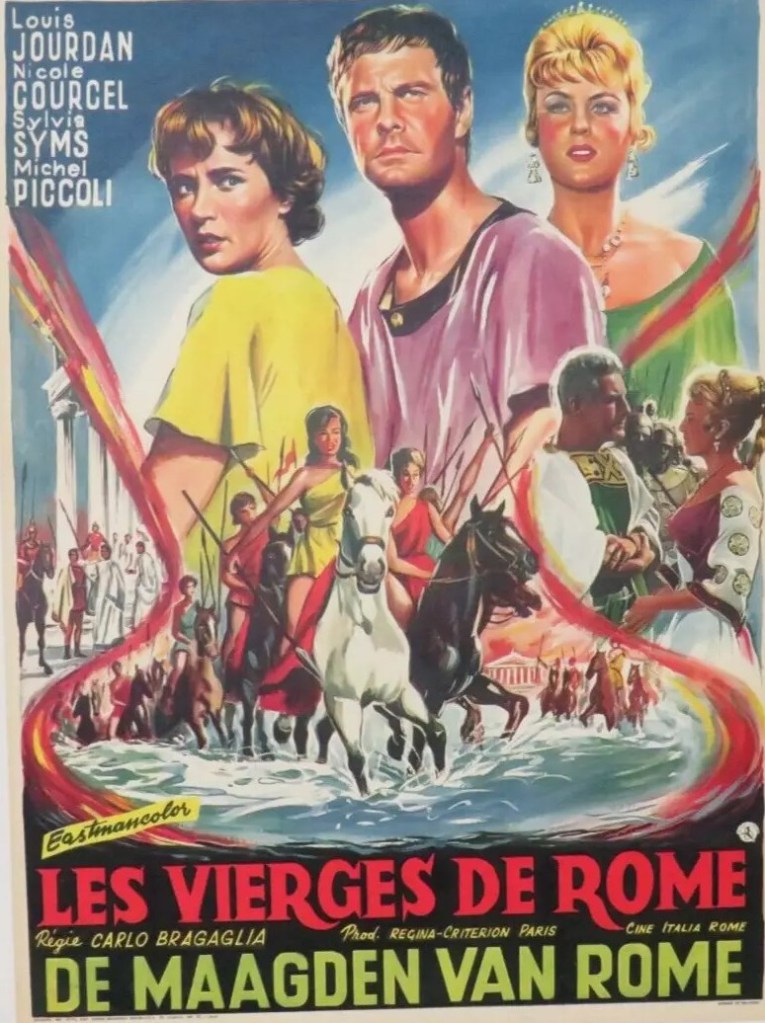
Amazons of Rome / Virgins of Rome (1961) ****

Starting with the cast  and the intelligence of the narrative a pretty unusual addition to the peplum subgenre. While there was no shortage of foreign stars hoping to find marquee redemption in Italy, I was frankly astonished to find leads of the caliber of Frenchman Louis Jourdan, fresh from Twentieth Century Fox big budget musical Can Can (1960), and rising English star Sylvia Syms coming off her biggest Hollywood role to date albeit as second female lead in The World of Suzie Wong (1960).

At the time of release, Jourdan did not seem a good fit for a genre that relied more on musclemen than the kind of suave charmer that he essays here. Syms equally seemed an odd choice, better known for prim Englishwomen than action. In fact, you’d have been hard put to find any American or British actress who would sign up for such a role. Although Sophia Loren in El Cid and Jean Simmons in Spartacus had significant roles in historical mocvies, they weren’t called upon to buckle a sword.

Given they start out as sworn enemies, Drusco (Louis Jourdan),  a barbarian laying siege to Rome, Cloelia (Sylvia Syms)  a besieged inhabitant, it was going to take some considerable narrative sleight of hand to contrive a happy ending. How it’s done is entirely believable, pivoting on ideals of honor that are initially foreign to this vicious war full of scores to be settled, unbridled ambition, deviousness and ruthlessness.

The civilized Etruscans backed by a barbarian horde headed up by Drusco have dealt a killer blow to the Roman armies led by one-eyed Horatio (Ettore Mani). Never mind the lack of obvious muscle Drusco isn’t anyone’s idea of a warrior leader. We are introduced to him munching on a watermelon and then chomping down on an apple on the edge of the battlefield. While other Etruscans, namely Stavros (Renaud Mary), want to raze Rome to the ground Etruscan leader Porcena (Jean Chevrier) wants peace. But it comes at a price – tons of gold in tribute and a thousand hostages. But since Rome is short of able-bodied men to fulfill that part of the deal, the Etruscans make up the numbers with a battalion of untested female warriors led by Cloellia.

Adding spice to the mix is Lucilla (Nicole Courcel), now an aristocratic Roman married to a noble, but originally an Etruscan captive, married to Porcena, who wants revenge on the Romans for her original harsh treatment at their hands. She finds a willing ally in the devious Stavros. 

initially merely amused by Cloelia and her warriors, impounded in a stockade outside the Etruscan camp, Drusco responds to their smarts. Devoid of weapons, the women find clever ways of stealing swords from their captors and secreting them in the stockade. However, when the scam is discovered, Cloelia volunteers to take whatever punishment is meted out. Porcena cedes choice of punishment to Lucilla who wants Cloelia to endure the same humiliation as was once handed out to her – to be whipped and then stripped naked in public.

But she hasn’t counted on Drusco’s cleverness. The minute one lash is administered, Drusco steps in, and pretty much on a technicality, announces that a “whipping” – number of strokes not specified – is complete. When Lucilla starts to strip Cloelia, he musters his soldiers to conceal this from the slavering Etruscans.

Cue some flirting but of course they are still on opposite sides. And in any case Lucilla puts paid to nascent romance, ensuring Drusco is chucked out of the camp for defying her. Infuriated, she sides with Stavros who has decided that mass rape will put the captives in their place. 

His scheme is thwarted by Cloelia who sets fire to the compound, escaping with her army after bullocks stampede. Pursued by Etruscan cavalry, they are saved by the intercession of Drusco. Embarassed by their escape, Porcena is now persuaded to restart the war. Back in Rome, Cloelia disobeys orders not to get involved and leads her army out through the sewers to attack the Etruscan rearguard. Porcena, realizing he has been used, calls for a truce. Lucilla is reunited with her Roman husband and Drusco, made a freeman of Rome, is able to marry the enemy.

Porcena comes over as an enlightened ruler. An early advocate of the zero sum game, his guiding rule for peace is “no victor, no vanquished” and he draws the line at the kind of ruthlessness espoused by his cohorts and although still attracted to Lucilla finds her attitudes distasteful and arranges for her to bury the hatchet with her Roman husband rather than continuing to foment her anger. There’s a lot more interesting dialog  than you’d expect in a picture like this.

But Louis Jourdan is what makes it special. His light comedic touches not only make his character much more human and attractive than the normal musclebound jerk, but also serve to underline his humanity. And since he’s so good anyway on the seductive side, the romantic elements catch fire rather than just limping along as was more normal in the genre. The only downside is he challenges George Hamilton in the over-tanned department.

Sylvia Syms, too, makes it all work. There’s no slacking in the action department and clearly no stand-in for the horse-riding, crossing of a river and a sewer on horseback. And without resorting to the athleticism of a Wonder Woman, the most recent example of the Amazon variety, and perhaps precisely because there’s no kowtowing to that, she is a believable heroine. No feminine wiles are required, either, just genuineness. 

Lucilla’s deviousness reminded me of Ian Bannen in Suspect, that spirit trapped by humiliation, revenge the only release. And though Nicole Carcel isn’t in Bannen’s league, she manages to essay the dark side of her nature with ease.

There are plenty narrative plot holes – how do the women emerging soaking from the river manage to burn the Etrucan battering ram being the pick – but the spirit of the picture more than compensates. 

The elements that made it stand out for all the wrong reasons back in the day are the very elements that make it so appealing to a contemporary audience. 

Highly enjoyable.

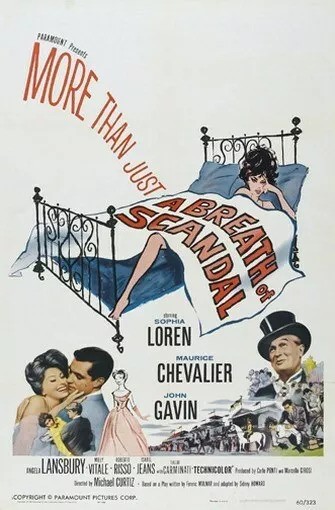
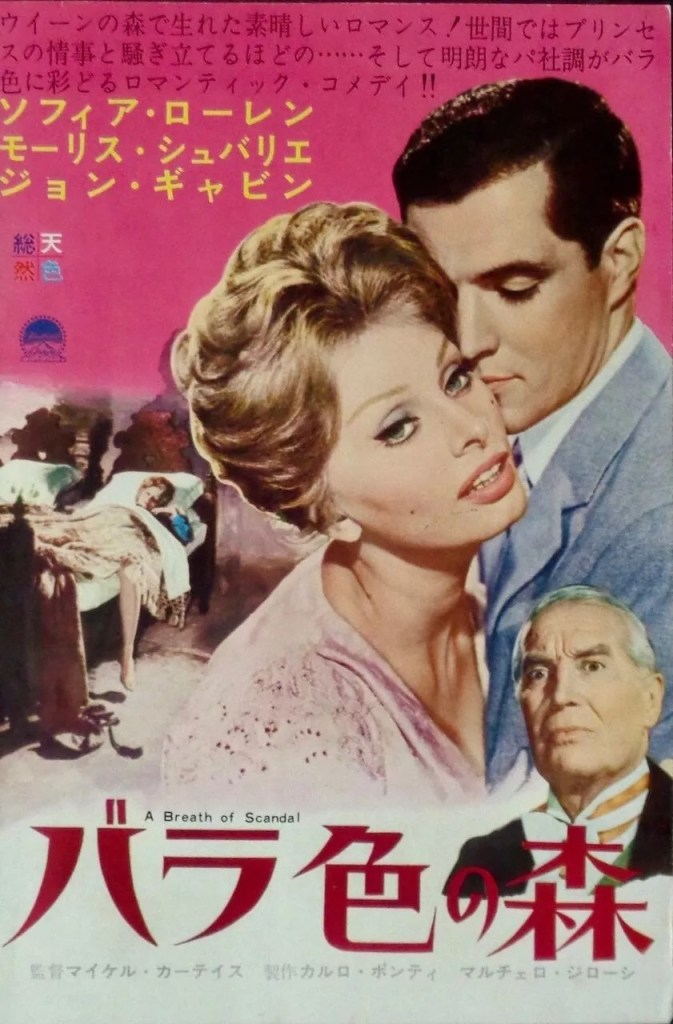
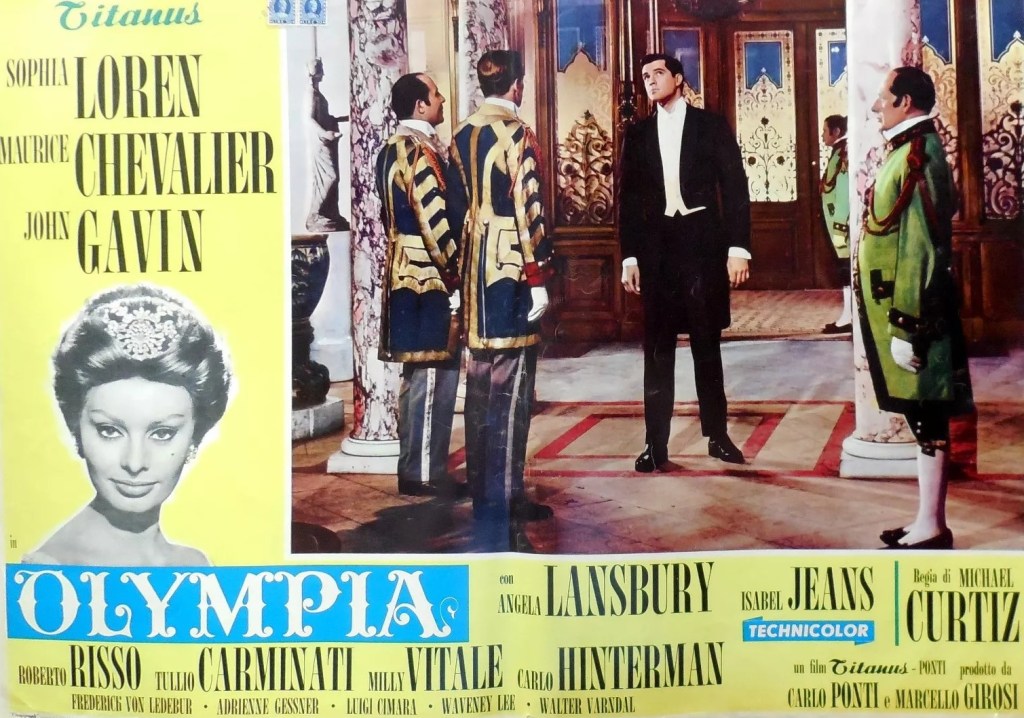
A Breath of Scandal / Olympia (1960) ***

Sophia Loren in playful mood. Not every serious actress could whip up a confection as light as this. She was in the middle of a romance period embracing both comedy and drama that began with Houseboat (1958) and rattled through to The Millionairess (1960) before embarking on a half-decade of more serious stuff starting with her Oscar-winning performance in Two Women (1960).

Easy to dismiss her here as all pout and bosom, but there’s a distinct egalitarianism on show, especially given it’s set in early stuffy 20th century Vienna, where protocol reigns, making life difficult for a lass who wishes an active sex life outside the constrictions of marriage.

There’s not much to the story, in fact it’s as flimsy as heck, but the kind of picture that a top star can swan her way through and charm the audience with her.

When we meet Olympia (Sophia Loren) she’s been exiled to the countryside for one scandal too many and to ease her boredom takes potshots at anyone visiting her quaint castle. Out horse-riding, she tangles with a motor car driven by Yank businessman Charlie Foster (John Gavin) and engineers that they spend the night in a nearby hunting lodge, leading him to believe she’s an ordinary peasant girl and not a princess.

Summoned back to Vienna by her father Prince Philip (Maurice Chevalier) and mother Princess Eugenie (Isabel Jeans) because they’ve found a prospective suitor in Prince Ruprecht (Carlo Hintermann), she encounters Charlie again because he’s trying to sell her father on some business deal.

On the sidelines causing trouble is (Angela Lansbury) who threatens to dish the dirt on Olympia and Charlie and cause a great scandal. And, really, that’s all there is to it except, as had become somewhat de rigeur in his pictures, Maurice Chevalier chips in with a song.

But the settings are glorious and costume design takes the top prize. While everyone else has a whale of a time, John Gavin (Midnight Lace, 1960) looks lost, wooden and out of his depth, unable to respond to the mischievous sparkle of La Loren. This could easily have been devised to show Loren at her marquee best, the belle of the ball, but with a cunning mind, quick repartee, and surprisingly feminist in her approach.

It was one of those Hollywood-Italian co-productions that were starting to take off with little regard for national gridlines. Though set in Austria, the female lead was Italian, male lead American, Maurice Chevalier (Jessica, 1962) as French as they come, Isabel Jeans (The Magic Christian, 1969) is English and director Michael Curtiz (The Commancheros, 1961) Hungarian.

It’s hardly demanding and since Gavin doesn’t step up to the plate lacks the necessary sizzle but all that means is Loren can steal the spotlight. Walter Bernstein (The Magnificent Seven, 1960) and Ring Lardner Jr (The Cincinnati Kid, 1965) turned the Frederic Molnar play into a screenplay.

Easy to criticize if you’re wanting something more demanding, but otherwise effortlessly enjoyable.

Perfect Saturday afternoon matinee material.

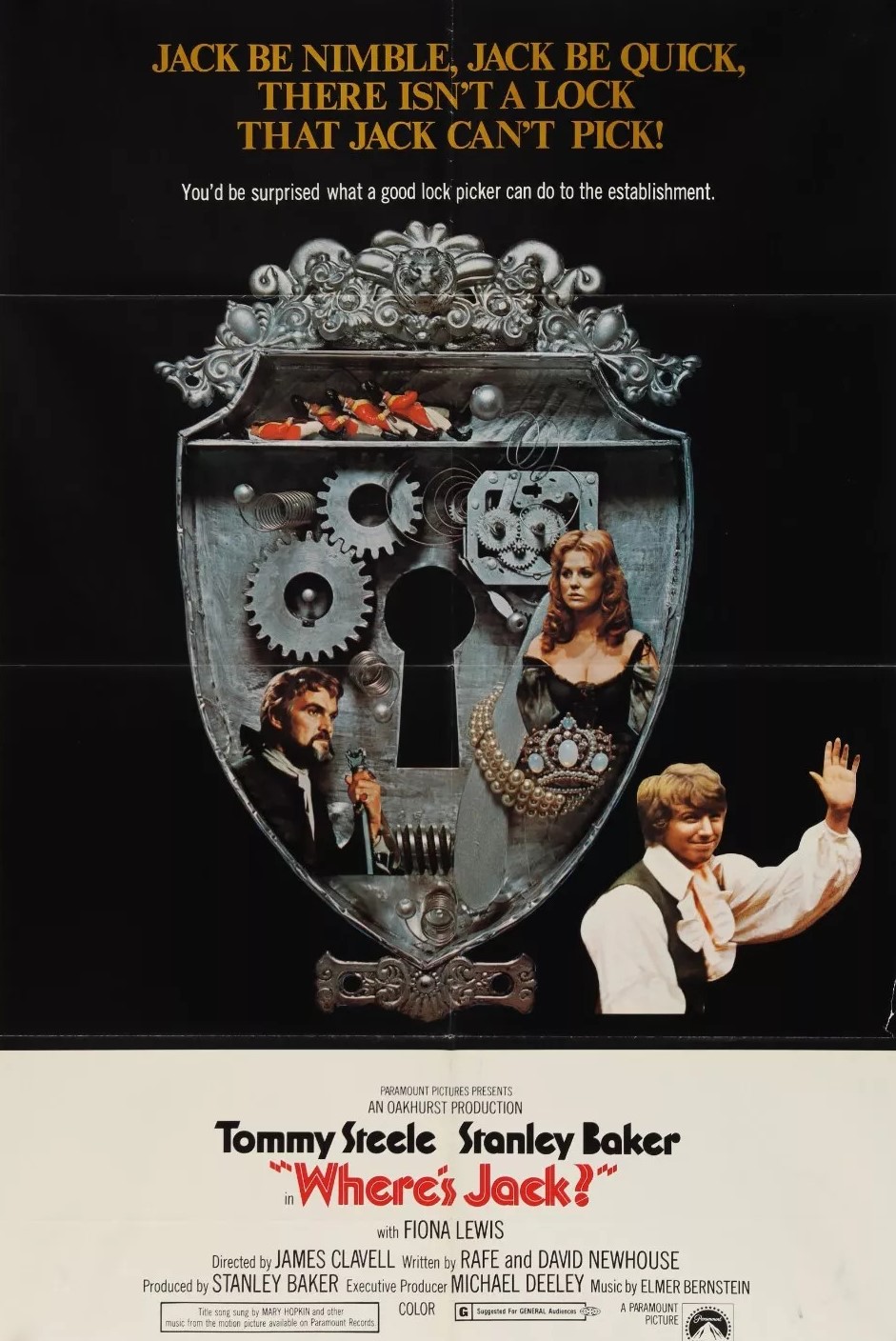
Where’s Jack (1969) ***

Prison escapees tend to conform to a certain type. Think Charles Bronson and Steve McQueen (The Great Escape, 1969), Paul Newman (Cool Hand Luke, 1967) and Clint Eastwood (Escape from Alcatraz, 1979). Admittedly, Tim Robbins (The Shawshank Redemption, 1994) doesn’t fit the bill, but he’s got brains instead of brawn. But he’s not twinkle-eyed or twinkle-toed or diminutive like British hoofer Tommy Steele (Half a Sixpence, 1967) who’s not helped here by being up against a distinctively tough screen character in the shape of Stanley Baker (Zulu, 1964).

Served up as an antidote to the tomfoolery and sexuality of Tom Jones (1963), more interested in the seamier side of Ye Olde England, it ignores the more interesting tale of criminal corruption and hypocrisy of Jonathan Wild (Stanley Baker), the Thief-Taker, in favor of young thief Jack Sheppard (Tommy Steele) who proves his nemesis.

Wild was the ultimate hypocrite, not just stewed in the corruption of the times but taking advantage of it, and not so much poacher-turned-gamekeeper but gamekeeper who had not entirely abandoned his previous profession. Wild, a notorious thief, managed to set himself up as London’s top lawman, keeping other thieves in line and handing over a certain number to the hangman. He had another sideline. He sold back stolen goods to burglarized owners. Most of this was condoned by the authorities who believed that it took a thief to catch a thief.

Wild enrages Sheppard, apprentice locksmith to trade, by reneging on a deal to free Sheppard’s criminal brother. Sheppard sets out to teach the antique godfather a lesson, breaking into his warehouse and stealing the contents.

Wild has him arrested on a variety of occasions, but each time Sheppard breaks out from prisons that had the reputation of the later Alcatraz, in one instance through a sewer, in another via a chimney, turning himself into a local hero in the process. Sheppard’s main trade is not so much burglary as highwayman and further annoying Wild by bringing such criminal solicitation to the streets of posh London, from which it had, by decree of Wild, been outlawed.

In so doing, Sheppard encounters Lady Darlington (Sue Lloyd), so taken with our scamp that had this been Tom Jones there would have been some rollicking in the hay (or the Mayfair equivalent). Instead, she bets her Scottish estate that he will escape from his latest incarceration.

Sheppard has the hots for barmaid Bess (Fiona Lewis) but this not being Tom Jones we don’t go much beyond cleavage. The sub-plot involving Lady Darlington, which I’m guessing forms part of the Jack Sheppard legend (since he was a real-life character), takes up valuable time which could have been spent either developing the romance or on the escapes, which don’t generate the necessary tension, or filling out the crook’s character.

Narrative-wise there’s more at stake for Wild, not just being led a merry dance by Sheppard and losing respect (the crime of crimes against a criminal mastermind) but also by potentially damaging his cosy relationship with the authorities, led by snippy Lord Chancellor (Alan Badel) who is on the other side of the Lady Darlington wager.

Fair amount of rubbish being tossed out of windows, unruly tavern occupants, poverty and homelessness abounding, and general but unspecified bawdiness, in fact a truer perspective of the times, doesn’t compensate for the lack of compelling narrative.

On paper, this should have amounted to a lot more. Mostly, it goes askew from miscasting. Tommy Steele is outshone without much difficulty by Stanley Baker and it’s asking a lot of an audience to accept that a cheeky chappie can outwit the exceptionally clever tough guy. It’s Baker who makes the most of his scenes, either lording it over his gangs, using cruelty to keep them in line, or fearing that he might be toppled from his lofty position and end up either back in the gutter or at the end of a noose.

There’s a bit of complicated jiggery-pokery relating to the effect your weight has on how long you can dangle on the end of a rope. Hangmen in those days did not follow scientific principles and provide some kind of weighting handicap as occurred later to prevent unnecessary suffering and make death as swift as possible.

Anyway, our Jack, being a skinny little runt (and this plot-point key to the climax ensuring the part required a skinny little runt rather than someone hewn from the normal tough guy runt) doesn’t die from the hanging, escaping the fury of Wild and (so legend has it) managing to escape to the colonies.

Put a Michael Caine (The Ipcress File, 1965) in the leading role or Richard Harris (Major Dundee, 1965) or even a Nicol Williamson (The Reckoning, 1970) and you would have quite a different movie, a more believable protagonist. Even Peter O’Toole (Night of the Generals, 1966), while devoid of muscle, would suggest the brains to outwit his opponent.

In the face of the mop-haired pop singers and raucous rock stars, Tommy Steele had reinvented himself from 1950s teen idol into Broadway musical star with Half a Sixpence and then viewed as a squeaky-clean alternative to the more louche movie star turned up in harmless offerings like Disney’s The Happiest Millionaire (1967) and Francis Ford Coppola’s non-grandiose Finian’s Rainbow (1968).

Oddly enough, it was to escape such typecasting that he took on what was perceived as a much tougher role only to discover he lacked the acting cojones to pull it off. Baker, Badel (Bitter Harvest, 1963) and Lloyd (Corruption, 1968) beat him hands down.

Director James Clavell was riding high after To Sir, with Love (1967) as was producer-star Stanley Baker after Robbery (1967) and screenwriters David and Rafe Newhouse following Point Blank (1967). This brought them down to earth.

More Artful Dodger than Get Carter.

Lafayette (1966) ***- Seen at the Cinema in 70mm – Bradford Widescreen Weekend

We are so accustomed to Hollywood rewriting every other country’s history it comes as a something of a surprise when they get a taste of their own medicine. And in such elaborate style. At the time this was by some distance France’s most expensive movie, a roadshow production made in Super Technirama 70, the widescreen technology favored by productions as diverse as Walt Disney’s animated The Sleeping Beauty (1959), Biblical epic Solomon and Sheba (1960), British drama The Trials of Oscar Wilde (1960), Samuel Bronston’s  El Cid (1961) and Zulu (1964).

I wouldn’t have known from this picture how important a figure Lafayette was in French history. On a couple of forays to Paris I had placed no significance on shopping at the retail metropolis known as Galeries Lafayette. However, it turns out he was a major player in the French Revolution and helped to write the Declaration of the Rights of Man. But I wouldn’t have learned anything about his later career as this picture concentrates on his early life.

This long-lost restored picture was the official highlight of this year’s Bradford Widescreen Festival, mostly I assume because until the restoration it hadn’t been seen anywhere for half a century and because Bradford of all places is a sucker for restoration and its audience often includes more than a smattering of ex-industry professionals who can comment on its technical proficiency.

Although released in France in 1962 it didn’t cross the Atlantic or the English Channel until a few years later, but only for short selective engagements, during a period when there were was no shortage of roadshow material what with Its a Mad, Mad, Mad, Mad World still hogging Cinerama screens and My Fair Lady (1964) and The Sound of Music (1965) embarking on extensive runs.

This turned up in London in 1965 at the Casino Cinerama where How the West Was Won had played for over two years and it was also shown in Liverpool and enjoyed a couple of weeks in my home town of Glasgow at the Coliseum.

While the American alliance with France during the final stages of the War of Independence was critical to turning the tide against the British I suspect the exploits of the titular character (Michel Le Royen), an aristocratic stripling of 19 years of age, have become somewhat embellished in Hollywood  Errol Flynn style.

The movie also ignores the irony that the principles of freedom and independence from regal rule spouted by many of the main characters came back to bite them several years later when the French Revolution sought to separate the brains of the aristocrats from their bodies. The French Emperor helped fund the American Revolution, assuming notions of independence were fine for foreign countries rising up against the British, a particular thorn in the French side at that point.

There’s also a considerable tinge of entitlement and for all its democratic principles the nascent new nation bowing down to the aristocratic breeding of the Frenchman and giving this inexperienced soldier the title of Major-General and putting him in charge of their least-disciplined troops, the irregular starving militia.

Never mind his age, he can hardly speak English and his aristocracy is hardly going to endear himself to his raw troops. And you can hardly ignore the ironic entitlement that when all other wounded men are left to look after themselves, our hero is carted off to George Washington’s (Howard St John) palatial servant-heavy mansion.

Still, according to this story and presumably the legend the young commander did indeed snatch defeat from the jaws of victory, in one engagement when his men were racing away in ignominious retreat he seized the torn American flag and inspired his men to return to battle and victory.

For a near three-hour picture it’s short on military action, though presumably that’s in the interests of historical accuracy so that means wading through countless scenes of politics both in France and America. In his home country he’s treated as something of a traitor for embarking on his own private war against the British. In America Congress is always on the back of George Washington, refusing him the funds and help he needs, insisting such would be in ample supply should he win a battle, the future President retorting back that victory would be guaranteed should he be given funds.

The absence of military set pieces is in part in recognition of the strategy endorsed by Washington, of avoiding a pitched battle with a superior enemy in favor of a guerilla  war of attrition. There are more scenes of thousands of extras marching than of them engaging in any meaningful activity, though I’m assuming that could have been a budgetary restriction.

Whether’s it’s true or not there’s some clever stuff on the French political scene, the Emperor Louis XVI (Albert Remy) prone to taking advice from his wife Marie Antoinette (Liselotte Pulver) whose ear is being bent by La Fayette’s wife (Pascale Audret)  but the self-serving attitudes on both sides will be recognizable to everyone.

There’s a stab at an all-star cast, Jack Hawkins (Lawrence of Arabia, 1962) as the British commander Cornwallis though the director – or perhaps the star himself given his idiosyncratic ways – has rendered Orson Welles as American ambassador Benjamin Franklin virtually unrecognizable, even his noted diction smothered. 

The torch of freedom never had a more handsome advocate than in the hands of Michel Le Royer but it’s virtually a one-note performance though admittedly nobody expected much more from Errol Flynn. 

Directed by Jean Dreville (Queen Margot, 1954).

Hero’s Island (1962) ***

There’s a good reason you’ve never even heard of this famous lost film. A fabnulous cast – cult character actors (and occasionally stars) Warren Oates, Harry Dean Stanton, Rip Torn plus a top-billed James Mason – can’t prevent this relatively short film coming over as long drawn out. Proof, too, that cult television producers – in this case Leslie Stevens of The Outer Limits (1963-1965) and Stoney Burke (1962-1963) – shouldn’t always risk stepping into the director’s chair.  

But let’s stick for the time being to the good bits. It’s a historical Lord of the Flies, an almost primitive battle over territory, a small apparently uninhabited island off the coast of the Carolinas in the United States. There’s recognition of the British version of slavery, when, driven off their lands, or to escape dire poverty, people in the eighteenth century went willingly into indentured service in North America. After seven years, you could gain freedom – a contract torn up and rejoined at the indent the legal definition – and wives could equally be bought and if they were very lucky the husband might even agree to marry them in a church. You could buy children in similar fashion. There were other legal niceties, ownership could be challenged, since only a “full working family” could take command of land.

Freed from indenture, Thomas Mainwaring (Brendan Dillon), wife Devon (Kate Manx), two young sons and servant Wayte (Warren Oates) arrive on Bull Island, intending to live off the land, growing crops, fishing, building a house, and honoring God. But brothers – fishermen – Nicolas (Rip Torn), Dixey (Harry Dean Stanton) and Enoch (Robert Sampson) resent the intrusion, murder the husband and attempt to drive the others away, first invoking the law and then threatening violence.

The situation becomes more balanced when  Jacob (James Mason) washes up on the shore, tied hands and legs to a raft, though claiming to be the subject of a shipwreck. Gradually, he sides with the widow although he doesn’t take kindly to her giving orders, refusing to bear arms, and believing that faith in God will see them through. He’s so disenchanted that when pirates descend on the island, he stands back, refusing to help when the widow and then her children are kidnapped.

But eventually, thank goodness, he springs into action, revealing hmself handy with a cutlass, and a pirate, having sailed with Blackbeard, though his captaincy did not go so well, mutiny the true reason for ending up on a raft. Still, he wades into the pirates, retrieves the situation and the fisherman accept the widow’s rights to the island.

So, some interesting historical information, and a touch of swashbuckling. But that hardly makes up for the acres of time when nothing much occurs and the characters jaw about God, the law and life in general. A tinderbox of a set-up barely crawls along, scarcely catching fire.

And that’s despite the all-round good acting, Rip Torn (Sol Madrid, 1968), Harry Dean Stanton (Paris, Texas, 1984) and Warren Oates (The Wild Bunch, 1969) all at the beginning of their careers, their trademark acting styles not yet developed, so talent revealed as fresh, while James Mason (The Deadly Affair, 1967) acts very much against type. In her sophomore screen role, Kate Manx (Private Property, 1960), Leslie Stevens’ second wife (of five), only holds sway until Mason appears to blow her off the screen.

Writer-director Leslie Stevens (Private Property) has way too much to say but not the directorial skill to properly dramatize the material, which is crying out for greater tension, fiercer argument and more action.  

Now that I’ve brought this movie to your attention you may be wondering why, with this knock-out cast, you’ve never heard of it. And the reason is, as I’ve explained, it just doesn’t take off. More like a filmed play than a movie, the camera hardly ever moving. I’m not sure either why James Mason was tempted into becoming joint producer. He had just come off Tiara Tahiti (1962) and Stanley Kubrick’s Lolita (1962) so I would be guessing his career was in decent shape. Though sometimes it’s marquee power that pushes actors into the producing field. Whatever the plan, it backfired, the movie was a financial disaster and he wasn’t top-billed again for four years.

Worth a look for the cast but mostly just to see how even with the best cast a movie can miss the spot.

The Viking Queen (1967) ***

Politics, conspiracy, thwarted romance and historical inaccuracy take center stage in this Hammer romp that attempted to create another sex symbol to follow in the footsteps of Ursula Andress (She, 1965) and Raquel Welch (One Million Years B.C., 1966) in the shape of Finnish model Carita. Let’s put the dodgy historical elements to one side given Hollywood trampled over history all the time, but the title is a misnomer, the story owing more to folk heroine Boadicea than anyone who came from longship land.

On his deathbed British tribal king (Wilfred Lawson), against the wishes of powerful Druid chieftain Maelgan (Donald Houston), signs a peace treaty with Roman governor general Justinius (Donald Murray) against the wishes of his lieutenant Octavian (Andrew Keir). In different ways, the Druid and Octavian conspire to end the peace. Had new queen Salina (Carita), after falling in love with Justinius, been permitted to marry him that would have created a peaceful bond, but that is also prevented.

There’s a lot more sex and violence than you would have expected for the period, plenty scantily-clad slaves administering to the rich and the Romans, an extended brutal flogging sequence involving Salina, an offscreen rape, a cageful of Roman prisoners dropped into a burning pit, and when the British strap scythes onto the wheels of their chariots it’s a bloodbath. (Quite why the Romans never thought of importing their own chariots, given their popularity in the Colosseum, is never explained.) The chariots, whether in a race or battle, are the best thing about the picture, adding tremendous energy.

It takes quite a while for Salina to take up arms but when she does the film catches fire. She leads from the front, tearing through the Roman legions, and handy too with a sword. Ambushes appear the order of the day so any marching column or peaceful village soon ends up in a spot of bother.

There’s some of “what did the Romans ever do for us” with a snatch of Robin Hood thrown in – Justinius takes from the rich to give to the poor – plus religious fanaticism to stir the pot into a heady brew.  But mostly it’s hokum, if rather plot-heavy. Quite how the Oscar-nominated Don Murray (Advise and Consent, 1962) was talked into this is anybody’s guess. Carita, of course, would have believed she was on a surefire route to stardom but in fact this was her last picture. The two stars don’t really have that much to do and do it well enough. In supporting roles you will spot Patrick Troughton (a BBC Dr Who), Nicola Pagett making her movie debut and Adrienne Corri (Africa – Texas Style, 1967). Director Don Caffey (One Million Years B.C., 1966) is better at action than drama.

Directed by Don Chaffey (Jason and the Argonauts, 1963) from a screenplay by Clarke Reynolds (Genghis Khan, 1965) and the movie’s producer John Temple-Smith.

More Olinka Berova than Ursula Andress.

Siege of the Saxons (1963) ***

King Arthur (plus Excalibur) meets Robin Hood (minus Merrie Men). I wouldn’t have been surprised to see Billy the Kid put in an appearance in this kind of history-defying picture. In case you were unaware, or less of a pedant than myself, there were at least two centuries (possibly eight, depending on your sources) between monarch and outlaw. There’s a princess, but going by the more prosaic name of Katherine, rather than the legendary Guinevere, and for that matter Lancelot and Galahad are excused duty, though the wizard Merlin pops up.

I hate to break it to you, but there is no siege. But there is, as if this more than makes up for that omission, marauding Vikings. Or at least marauders pretending to be Vikings, or that might just be my fault, assuming that those helmets with the rounded pointy bits were the preserve of the Norsemen.

And, presumably, for legal reasons (“passing off” in the jargon and there being a British television series and Hammer film to contend with) Robin Hood isn’t called Robin Hood even though he’s an outlaw in a forest who robs the rich to give to the poor. His moniker is Robert Marshall. You’d need to be well up on your history to work out why the Saxons would be considered bad guys when England was populated by Anglo-Saxons.

But when I explain this is made by the same duo that plundered a stock footage hypermarket for East of Sudan (1964) you’ll probably agree that accuracy was not their strong suit. Which is a shame, because it’s a half-decent tale of treachery and revenge and gives the underrated Janette Scott (Paranoiac, 1963) a strong role.

They couldn’t be bothered with all that Saxon confusion in France and just hyped it as a King Arthur gig, even though far from having an adventure he dies.

Anyways, Edmund (Ronald Howard), dastardly lover of Katherine (Janette Scott), daughter of an infirm King Arthur (Mark Dignam), sets up Robert (Ronald Lewis) to take the fall for his murder of the sovereign via his anonymous henchman known as The Limping Man (Jerome Willis). Katherine is reluctant, naturally, to head off into the unknown with the outlaw, especially when he insists on disguising her (none too cleverly it has to be said) as a boy while they seek out Merlin (John Laurie) in the hope that his wizardry can muck things up for the imposter.

It’s a wasted journey, not because he’s not filled with the requisite wisdom, but if they’d just left things to Excalibur in the first place all would be sorted. You see, the villain hasn’t worked out there was a good reason that Arthur managed to yank said sword out of the stone in the first place. Edmund can pull at the sword until he’s blue in the face but it’s not going to shift out of its scabbard, because, well, he ain’t Arthur. Just as well Edmund deprived Arthur of the bedside dying scene beside the lake where the king could chuck it in to ensure nobody of the dastardly persuasion could take advantage of its magical powers.

But, aha, genetics enter the equation. You could have made an entire new film out of chasing down the King Arthur Code, but luckily we are too many decades away from that kind of malarkey. So – feminist alert – it’s Katherine who’s inherited the genes. And – woke alert – who should ascend to the throne alongside her but the outlaw.

So it’s fairly straightforward stuff, swordfights, chases, a battle or two, bad guys and good guys and resolutely old-fashioned except for the feminist climax. Just a shame that nobody can match Janette Scott’s screen charisma, so though Ronald Lewis (Nurse on Wheels, 1963) can deliver a one-liner with aplomb and cut a swathe through bad guys, he’s not in her league. This is B-picture stuff without the redemptive features of noir or general nastiness or maybe a future star director making an impact.

Nathan Juran (First Men in the Moon, 1964) directed from a script by Jud Kinberg (East of Sudan) and John Kohn (The Collector, 1965) loosely based on the work of Thomas Malory who dreamed up the Camelot repertoire.

Undemanding.

Napoleon (2023) ***

I come at this with a disadvantage since I’m all Napoleoned-out what the various Abel Gance projects and that of Stanley Kubrick. So I suffer from over-familiary with the subject matter. Most of the audience won;t have viewed a Napoleon movie in their lifetime, but I’ve already sat through six-seven hours of this material.

In the end length defeats them all, the magnitude of the task of encapsulating an extraordinary career ends up as a mad dash through history. Setting any deliberate distortions aside, those scenes fictionalized for dramatic effect providing directors with a free pass, it’s just too much to find a central thread on which to encompass the man. Here, Ridley Scott makes a good stab at using romance as that glue, but it’s hampered by the great emperor (Joaquin Phoenix) being such an oaf in terms of seduction. Although he is as ruthless as any dictator whose risen from poverty to the absolute heights.

On the other hand, Josephine (Vanessa Kirby) is shown as a more complex character in more complex times, effectively taking up with this oaf for mercenary reasons, her clever plan only coming adrift because she cannot provide him with an heir. I doubt if that many among the audience are looking for an actual history lesson, which is just as well, because it feels, in part because of length restrictions, that this is inevitably going to come up short.

Little is made of the political situation in a world terrified of the revolution that changed France seeping into the countries of Europe. Theoretically, Britain was a democracy, but in reality it was ruled by an elite land-owning cabal, with poverty as rife as in France. Every other country in Europe had an unelected monarch. So Napoleon didn’t so much intend to conquer Europe from power lust but prevent his country being attacked by those who feared an end to the status quo.

Of course, if you had included more history you would have to accommodate an endless stream on one-line characters trying to explain the situation. Scott makes more use of subtitles to provide the audience with its historical bearings but still isn’t afraid to simply fall back on the Austerlitz trick of using protocol to announce a new one-line character.

In terms of actors, this has more the feel of a mini-series than a movie. Hardly anyone of box office significance and being weighed down with British character actors, virtually nobody is on screen long enough to make a mark. Certainly, none command the screen the way the veterans of the old-style all-star cast like Ralph Richardson (Khartoum 1966) or John Gielgud (Becket, 1964), and I’m sorry but Rupert Everett as the Duke of Wellington is sorely miscast.

Anyway, you could go through this entire picture pulling it to pieces, instead of concentrating of what does work. Napoleon’s insecurities contrast nicely with his rampant ambition and arrogance and every now and then someone delivers a historical bon mot. As annoying as it is, I doubt if many males of the period gave any thought to female pleasure during sex, so Napoleon’s amateur love-making can be ignored.

Except for the verbal sparring with Josephine, it’s the military duels that bring this up to scratch at least within the Ridley Scott canon. The taking of Toulon, the bloody putting down of the royalist revolt and Austerlitz are the outstanding scenes, though anybody who has dared to sit through Abel Gance’s Austerlitz might not come out thinking the frozen ice splintering is quite as novel as it might appear.

I’m guessing that the four-hour version planned for streaming might fill in some of the holes, but I’m worried that, like Austerlitz, it will be more of the boring stuff, a potted history filled out with more balls and costume-heavy scenes. If this is all the insight into the life of Napoleon that $200 million buys, then it will take another streamer with even deeper pockets to make a serious dent at tackling the full story of Napoleon.

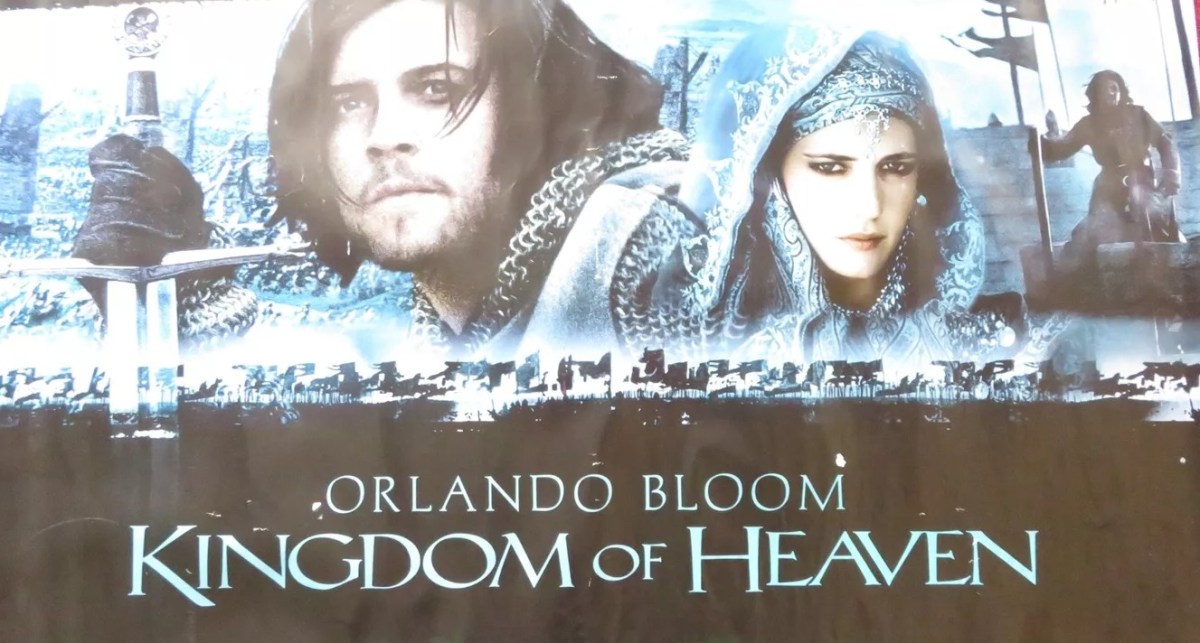
I usually go back to see a Ridley Scott film at least once – I saw The Martian (2015), Gladiator (2000) and American Gangster (2007) four times each in the cinema – but I’m not sure this holds the same attraction. The director’s cut of Kingdom of Heaven (2005) even with a miscast Orlando Bloom totally transformed that movie so I’m hoping the longer version here might achieve the same. But the latter had a marvellous score, which I had bought as a CD and was a virtual earworm for me, whereas the music here is an uneven as the picture.

I’d love to give this a better score, especially as it may be the director’s last cinematic outing, but it’s too disappointing.

Time – or lack of it – does not sit well here.

Austerlitz (1960) ***

If I’d seen this first, I might well have resisted the publicity tsunami that welcomed in 1981 the restoration reissue of Abel Gance’s silent epic Napoleon (1927). It’s the equivalent of John Ford following up The Searchers (1956) with something as clunky as Cannon for Cordoba (1970).

Oddly enough, the first few minutes are outstanding in telegraphing the French leader’s myriad insecurities. He forces a flunkey not only to break in his stiff new shoes – for fear the master of all he surveys be seen limping along – but also his new hat and then cheats when he undergoes the self-imposed ritual of being measured, pushing up on his toes to elevate his height by two inches from its genuine five foot two inches.

After that splurge of exquisite exposition, it goes not so much downhill as up and down ever narrative pathway possible. No wonder Ridley Scott felt that encompassing this particular life required at least four hours (the length of the planned streaming version) and that Steven Spielberg aims to devote seven hours to the subject when he revisits Stanley Kubrick’s script for HBO.

Mercifully, this part of the Napoleon legend is truncated to just three years, from the Treaty of Amiens in 1802, which purportedly brought peace to Europe, to the Battle of Austerlitz in 1805 when the French commander-in-chief demonstrated his military genius and shredded his opponents. But that battle is an almighty time coming.

In between, we have to put up with endless balls and endless characters shuttling through doors, although following the protocol of the time at least we have a clue who they are since they are announced by another flunkey in advance of their appearance. You would need Google open to check out who exactly they all are and what part they play.

Roughly, the story goes: Napoleon (Pierre Mondy) is attempting to achieve the “unification of Europe” (as would occur by more peaceful means over a century and a half later). The rest of Europe, naturally, isn’t in agreement so when foreign countries are not despatching assassins or reneging on treaties they’re lining up armies against him. Things are just as tough domestically. Even though, by overwhelming public vote, he has been named Consul for Life, he hankers after reviving the old title of Emperor, despite the last owner having his head chopped off.   

Plus, there are problems on the romantic front, wife Josephine (Martine Carole) has taken a lover and is jealous of the imminent arrival of his former Italian lover. All in all, it’s a pretty busy affair with countless sub plots, including an attempt to dupe the English into thinking he plans to invade their country via Ireland, and American inventor Robert Fulton (Orson Welles) trying to sell him on the notion of an ironclad steamship and submarine. Even when he gets to war, it’s nothing but chatter and subterfuge, various underlings almost rebelling at his, according to them, lack of military skill and troops disobeying orders.

The battle also lacks that essential ingredient, of the audience being told exactly what’s going on and understanding just how clever a maneuver might be, and although there are thundering horses aplenty it comes nowhere near the scale and grandeur he achieved with Napoleon, nor, it has to be said, the later Waterloo (1970), except for the horses and men disappearing under the frozen lake.

It was the fate of Abel Gance to be ruthless edited, his monster Napoleon chopped by two-thirds for original U.S. release, this one losing one-third of its running time, though I suspect what was cut out was no great loss, assuming it was just more rigmarole and costume drama set around his court, although it might have helped in working out what part his sister Pauline (Claudia Cardinale) and Mlle de Vaudey (Leslie Caron) play in the proceedings. Though we could have done with less of the Austrian General Weirother (Jack Palance with an execrable accent). Pauline has the best line in the whole endeavour, refusing to sit on a couch because its color clashes with her outfit.

Nestling among the all-star cast you’ll find – or not, depending on which version you view – names like Vittorio De Sica (The Shoes of the Fisherman, 1968), Rossano Brazzi (The Battle of the Villa Fiorita, 1965) and Jean-Louis Trintignant (Les Biches, 1968).

Nobody does much to earn their crust and Pierre Mondy (The Night of the Generals, 1967) just looks irritated beyond belief that he got mixed up in this.

Far from director Abel Gance’s finest moment. Little more than an elongated information dump.

https://amzn.to/47wvMeA

Discover WordPress

A daily selection of the best content published on WordPress, collected for you by humans who love to read.

The Atavist Magazine

by Brian Hannan

WordPress.com News

The latest news on WordPress.com and the WordPress community.