Who’s Got the Action (1962) ***

Complication. The keenest weapon in the screenwriter’s armory. And the most overused and, conversely, not employed to its greatest potential. Generally, it’s the only device for a romance – boy meets girl, (enter complication as…) boy loses girl, boy gets girl. But, just occasionally, it appears with some skill, layer after layer of deft complication until a whole story is tied up in acceptable and believable knots.

Before we get into all that it’s worth pointing out how language changes. These days mention of “action” will carry connotations of a sexual nature, so, just to be clear, here we’re talking about gambling, betting on horses, the mythical sure thing. And if you want to take a more cosmic perspective, we can apply the scientific rule that every action has a re-action, in other words consequence.

Attorney Steve Flood (Dean Martin) has a gambling addiction. He’s $8,000 in the hole to illegal bookie Clutch (Lewis Charles). Steve’s wife Melanie (Lana Turner) comes up with a clever idea to wean him off his addiction, by creating a fictional bookie, so that her husband’s losses will come to nothing. So she calls in Steve’s partner Clint Morgan (Eddie Albert) triggering Complication No 1. Clint’s always had the hots for Melanie and hopes to take advantage of Steve’s problems, helping her out by agreeing to act as the mythical bookie.

And that would be fine except for Complications No 2 and No 3. Instead of losing, as has been the trend, Steve wins big on his first bet, so now Melanie has to find a large chunk of dough. In dumping Clutch, Steve has come to the attention of mobster Tony Gagouts (Walter Matthau) who’s wondering about the mysterious new bookie queering his pitch and denying him a good customer (such is the definition of a loser).

Steve’s gambling success creates Complication No 4, attracting the interest of a pair of judges who are happy to stake the gambler, whose winning streak shows no sign of stopping.

Complication No 5 – Melanie turns to nightclub singer Saturday Knight (Nita Talbot), her next door neighbor and girlfriend of Tony, for help in raising cash and she obliges by buying some of the couple’s furnishing while Melanie also pawns jewelry.

Complication No 6 is created by Tony, who, trying to trace the rival bookie, installs a wiretap that leads him to the Flood apartment. And that should be the end of the tale, and little chance of a happy ending, except for Complication No 7. Tony has incriminated himself via the wiretaps and with an attorney ready to exploit the situation, it all works out fine, original debt to the gangster wiped out and the mobster blackmailed into marrying Saturday.

Now, with so many complications and sub-plots, this isn’t a Dean Martin picture the way the Matt Helm series is, especially not with a co-star like Lana Turner (By Love Possessed, 1961) who, not weighed down by the kind of heavy romantic tangle that seemed her remit at this point of her career, has the chance to steal a good deal of the limelight.

But the strong supporting case also do their best to chisel scenes away from the big stars. Eddie Albert’s (Captain Newman M.D., 1963) idea of a seductive lunch is a cracker and Nita Talbot (Hogan’s Heroes series, 1965), fashion ideas like Audrey Hepburn on speed, can’t help but play up to the camera. Walter Matthau is trying out a characterization for Charade (1963).

The beauty of this is that the narrative follows a neat logic. You can’t just muscle in on the illegal gambling business.

Director Daniel Mann ( A Dream of Kings, 1969) whips up an entertaining Runyonesque comedy from a screenplay by Jack Rose (It Started in Naples, 1960) based on a novel by namesake Alexander Rose   who you might have spotted wearing his acting hat in The Hustler (1961).

They seemed to be a lot better at these effortless concoctions back in the day.

Carry On Spying (1964) ***

The potential for leering – given the squads of bikinied beauties, cleavage abounding and partial nudity a prerequisite in the standard James Bond picture  – could have gone into the stratosphere. So it’s to the producer’s credit that they opted to drop ogler-in-chief and Carry On perennial Sidney James from this enterprise. So, automatically, there’s more of a gentler  Ealing or Doctor in the House vibe to the satire.

Given the propensity for inuendo and said ogling, there’s a general perception that doesn’t stand up to scrutiny that women in this series are portrayed as objects existing solely for the pleasure of men. However, as here, women are often in charge and certainly more sensible than the males.

Here dumb Desmond Simpkins (Kenneth Williams), dumber Harold Crump (Bernard Cribbins) and dumbest Charlie Bind (Charles Hawtrey) are easily put in the shade by fellow spy Daphne Honeybutt (Barbara Windsor), she of the photographic memory, and deadly enemy Dr Crowe (Judith Furse) who has the sense to steer clear, unlike James Bond’s deadliest enemies, of cats and heads up an organization called STENCH.

And while generally the focus of the fun is the James Bond series – of which only two at this point had been made – the movie also draws on antecedents such as The Third Man (1949) and, dare I say it, Casablanca (1942) and film noir. And there’s an acceptance that Britain has not shot to the top of the espionage premier league courtesy of one bed-hopping spy but is more likely to drown in officialdom and inefficiency.

We begin with a particularly British joke that a milkman would have access to even the most top-secret laboratories simply because every living person in the country can’t do without their daily hand-delivered pint of milk, thus permitting an enemy secret agent in the most simple of disguises to nip in and steal a top secret formula and blow up the lab.

The four agents are despatched to Vienna, primarily so the movie can take advantage of jokes about sewers and zithers a la The Third Man, and prove how inadequate our quartet actually are. From there, they hare over to Algiers, because that’s the kind of locale where Crump and Honeybutt can infiltrate a club disguised as belly dancers. Naturally, they are captured by STENCH and while enemy agents are often as comfortable in bikinis and the cleavage-showing malarkey here the females, while wearing skintight outfits, reveal no flesh, and there’s – shock! horror! – no ogling.  

Typical British small town cinema requiring three changes of program a week to survive. Generally, horror pictures were limited to single showing on a Sunday, but that was when cinemas screened oldies. This one was contemporary and yes that’s Roy Scheider from “Jaws.” The movie expected to be most lucrative played the weekend. Public response to “Paris When it Sizzles” was as poor here as anywhere else, thus the midweek slot.

There’s a very humorous twist on the trope of a spy eating top secret material wherein our quartet need soup and bread to help it go down. However, there’s a clever reversal when Honeybutt’s photographic memory, allowing her to instantly recall the secret formula, makes her prey to Dr Crowe.

There’s a stab at romance, although hapless males Simpkins and Crump are ill-prepared to deal with the advances of, respectively, double agent Lila (Dilys Laye) and Honeybutt. Pratfalls are limited though Inspector Clouseau would have welcomed the comic relief afforded by doors.

This was Barbara Windsor’s first Carry On venture. Most of the rest of the cast were series regulars and pretty much played the characters they always play.

Cleaner fun than it might have been had Sid James headed the cast. One of the better spoofs in the series. Directed as usual by Gerald Thomas and written by Talbot Rothwell (Three Hats for Lisa, 1965) and Sid Colin (Up Pompeii, 1971).

Well up to standard.

A Shot in the Dark (1964) ***

A pratfall still works wonders. An open door or window, anything that happens to be on the floor, or for that matter any object of any description – billiard cues, for example – within easy reach offers the opportunity for havoc – and a steady stream of laffs. Which is just as well, because this complicated farce, which might get a few extra brownie points today for its satire on serial killers, doesn’t do the movie any favors.

Inspector Clouseau (Peter Sellers) has acquired a more pronounced French accent than since his last incursion in The Pink Panther (1963) but it’s nothing like as excruciatingly hilarious as would be in later episodes. He still falls in love at the drop of a hat though this time the object of his affection is maid Maria (Elke Sommer) who, unfortunately, happens to be the prime murder suspect. She should be in jail but she is constantly released. Clouseau should be sacked for incompetence, but he is constantly reinstated.

The repertory team of his frustrated boss Dreyfus (Herbert Lom) and karate teacher (Burt Kwouk) interrupt proceedings from time to time but don’t really add to the laugh quotient. A bit more effective is the satire on French bureaucracy, a running gag on the need for an official permit, for example, before you could think of selling balloons on the street or trying to earn a buck as a street artist.

I won’t go into the plot since it’s a series of baffling murders and you could argue that Peter Sellers needs neither plot nor love interest. All he needs is an open door beckoning.

I was astonished how often I laughed out loud at something I knew was coming. The minute someone walked through a door you knew Clouseau would be the other side of it waiting to be buffeted. Any open window and he’d be through it and likely as not water would await.

He doesn’t just get tangled up in words but ask him to replace a billiard cue and you’d think billiard cues had declared war on him. He’s forgetful to the point of forgetting to switch off his cigarette lighter and naturally ignores the signs that he’s set his coat on fire.

For those more censorious times, there’s a foray into a nudist colony which is primarily an exercise in the various ways that private parts can be hidden from the camera while suggesting the salacious opposite. Clothed or unclothed you can rely on Clouseau to fall down. The only hilarious scene that doesn’t involve him falling down is when Maria miraculously appears in his office and when an attached key tears a whole in his trousers.

The various twists – Dreyfus is the assassin stalking Clouseau – and the lax French attitude to adultery keep the plot going and when the narrative slackens you can always stick a bomb into the mix.

From the outset, there is plenty opportunity for farce, the wrong people entering the wrong doors, continuous mix-up, plenty occasions for the innocent person to be caught red-handed clutching the murder weapon.

It almost looks as though the two aspects of the picture are clashing. Director Blake Edwards (The Pink Panther) appears to be helming a farce within which Inspector Clouseau is encased. You might think there’s a limit to the number of pratfalls you can stick in a picture, but my answer is “try me”.

With Peter Sellers so dominant, the only way the supporting cast could compete was by over-acting (Herbert Lom) or under-acting (all the rest).  Elke Sommer (The Prize, 1963) needs do little more than look winsome.

Written by Edwards and William Peter Blatty (Gunn, 1967) based on the play by Harry Kurnitz.

Occasionally drags but lifted by the genius of Sellers.

The Maltese Bippy (1969) *

The start is promising. Three decent laughs in the first three scenes, all jests at the expense of Hollywood. But when the movie settles down to a werewolf spoof, there’s a nary a chuckle to be found. It was rare in the 1960s for television shows to be given a big-screen outing, but it did occasionally happen. This came two years into the six-year run of Rowan and Martin’s Laugh-In television show, an innovative mixture of gags, punchlines and sketches stitched together in random fashion. A huge hit in the U.S., it was considered a slam dunk to turn it into a movie. Perhaps if they had stuck to the same format it might have worked.

Sam Smith (Dan Rowan) and Ernest Grey (Dick Martin) are down-on-their-luck soft-porn movie makers living in a mansion on the edge of a cemetery. After suffering a bite on the neck, Dick turns into a werewolf. You can see the comic possibilities, I’m sure. Either Rowan and Martin failed to find them or lacked the expertise to turn the material into laughs. Sure, there’s a creepy family, the Ravenswoods, next door who could be auditioning for The Munsters but that goes nowhere except the obvious and certainly not in the direction of laughs.

A few good actresses – Carol Lynley (Danger Route, 1967),  Julie Newmar (Mackenna’s Gold, 1969) and Mildred Natwick (Barefoot in the Park, 1967) – were snookered into this alongside Fritz Weaver (To Trap a Spy, 1964) without hope of redemption.  It was almost as though the picture was conceived as a piece of merchandising that Rowan and Martin just had to put their names to and not do much else.

It was strange it was so awful because director Norman Panama had a track record in comedy. Among other pictures he had made The Court Jester (1955) starring Danny Kaye – “the vessel with the pestle” – displayed an abundance of great comic timing and in some respects was a spoof of the historical genre. He had also directed Bing Crosby and Bob Hope in The Road to Hong Kong (1962) so you would expect him to be familiar with the workings of screen comedic partnerships.

The laughs were meant to be supplied by Everett Freeman (The Glass Bottom Boat, 1966)  and Ray Singer, a specialist in television sitcom and creator of Here’s Lucy (1968-1974). But either they couldn’t come up with sufficient gags or Rowan and Martin’s delivery was out of key with the lines. Or something.

Maybe nostalgia was what was missing from my viewing of the picture. I don’t recall holding any particular affection for the television show, though I was aware it provided a star-making platform for performers like Goldie Hawn (Cactus Flower, 1969), Judy Carne (All the Right Noises, 1970) and Lily Tomlin (Nine to Five, 1980) and that John Wayne put in a guest appearance.

But don’t take my word for it. Variety called the picture “as zany and fast a funfest as has come down the pike in years” and a “ cinch for heavy box office reception.” Mainstream critics were less kind, four out of the most prominent five giving unfavorable reviews. Even though the stars made the cover of Life magazine and the film received a seven-page spread inside, the movie barely made a ripple with audiences, a total of just $22,000 garnered in its opening week in two cinemas in New York with a total capacity of over 2,000 seats. British kids film Ring of Bright Water made more at a 360-seater.

The expected audience did not materialize, either from poor word-of-mouth or because customers resisted paying for something they could get for free every week on the small screen. So poorly did it perform that its initial run was truncated and a few weeks later when it went wide in a Showcase opening in New York MGM stuck on a reissue of Grand Prix (1966) as the support. Variety estimated it barely took $1 million in rentals (the amount returned to studios once cinemas take their share of the box office). Final proof of its unpopularity was being sold to television a couple of months after its debut.

After the Fox (1966) ****

There’s a classic MacGuffin in here somewhere, but I can’t make out if it’s the heist serving the satire on movies or the satire on movies serving the heist. Whatever, this is about the funniest picture you’ll watch on the movie business (much better than Paris When It Sizzles two years earlier). You can keep your royalty and your top politicians dropping in from every corner of the globe, but it’s hard to beat Hollywood landing on your doorstep to transform everyone into a sycophant. To facilitate filming, individual streets and solid blocks will be closed and even businessmen whose businesses are threatened will stick their nose out into the road in the hope of being captured by a stray camera. Everyone wants to be in the movies and how brazenly the movies exploit such naked need.

Before we get to the movie part of the story, we find imprisoned top criminal Aldo Vanucci aka “The Fox” (Peter Sellers) escaping from confinement so that he can assist robber Okra (Akim Tamiroff) transport 300 solid gold bars from a heist in Cairo to Italy. Though the heist is deceptively simple (and might even have influenced The Italian Job, 1969), for a time it looks as if this will canter along going nowhere fast while we get bogged down in a subplot concerning the burgeoning acting career of Vanucci’s sister Gina (Britt Ekland). There’s a whole bunch of standard Italian comedy tropes – the dominant Mama, the incompetent crooks and the brother too controlling of his sister.

But once Vanucci hits on a movie shoot as the ideal way to disguise the bringing ashore of the loot into the Italian island of Ischia, he strikes pure comedy gold. The townspeople who might otherwise easily see through a con man are putty in his hands. The local cop comes onside when persuaded he has the cheekbones of actor. Aging vain star Tony Powell (Victor Mature) wearing a trademark trench coat like a latter-day Bogart is an easy catch once you play upon his vanity and even hard-nosed agent Harry (Martin Balsam) is no match for the smooth-talking Vanucci.

Vanucci has mastered the lingo of the film director and can out-lingo everyone in sight. The very idea that he has a hotline to Sophia Loren goes undisputed and Powell is even persuaded that Gina, who has never acted in her life, is the next big thing.

Pick of the marvelous set-pieces is the scene in a restaurant where Vanucci is astonished to find a peach of a girl (Maria Grazia Buccella) speaking in a deep male voice because while she’s opening her mouth the words are being supplied by Okra seated behind her. Not all the best scenes involve Vanucci. Harry tartly batting away Tony’s vanities is priceless while the theft of film equipment while a film director (played by the movie’s director) calls for more dust in a sandstorm is great fun.

Also targeted is the self-indulgence of the arthouse filmmaker determined to add meaning to any picture. Vanucci’s versions of such tropes as lack of communication or a man searching for identity and running away from himself are a joy to behold and one scene of Tony and Gina sitting at opposite ends of a long table at the seashore just about sums the kind of pointless but picturesque sequence likely to be acclaimed in an arthouse “gem.” And you might jump forward to villagers hiding the wine in The Secret of Santa Vittorio (1969) for the sequence where townspeople load up gold into a van, singing jauntily all the time.

Most of all Sellers (A Shot in the Dark, 1964) hits the mark without a pratfall in sight – the only pratfall in the picture is accorded Harry. Unlike The Pink Panther, Sellers doesn’t have to improvise or be funny. He just follows the script and stays true to his character and the one he has just invented of slick director. There’s even a great sting in the tail.

Sellers shows what he can do with drama that skews towards comedy. Though criticized at the time for, effectively, some kind of cultural appropriation – she was a Swede playing an Italian, what a crime! – Britt Ekland (Stiletto, 1969) is perfectly acceptable. Victor Mature (Hannibal, 1960) has a ball sending up the business as do Akim Tamiroff (The Vulture, 1966) and Martin Balsam (The Anderson Tapes, 1971).

Vittorio De Sica (A Place for Lovers, 1969) does pretty well to merge standard Italian broad comedy with several dashes of satire. The big surprise is that Neil Simon (Barefoot in the Park, 1967) wrote the script, helped out by De Sica’s regular collaborator Cesare Zavattini (A Place for Lovers).

I saw this and A Shot in the Dark on successive nights on Amazon Prime. I hadn’t seen either before. They had been received at either ends of the box office spectrum, the Clouseau reprise a big hit, the Hollywood satire a big flop, so I expected my response might reflect that. But, in reality, it was the other way round. I appreciated this one more.

Go figure.  

Paris When It Sizzles (1964) ***

Screen charisma can only get you so far. The pairing of William Holden and Audrey Hepburn must have seemed certain to create a box office tsunami given they had worked together before on the hit Sabrina (1954) and were coming off hits, the former in The World of Suzie Wong (1960) and the latter having reinvented herself as a ditzy fashion icon in Breakfast at Tiffanys (1961). But clearly studio Paramount knew something about the outcome of this production that it was keeping to itself, otherwise how to explain that a movie completed in 1962 languished on the shelves for nearly 18 months.

By the time it appeared Hepburn was still a big box office noise after Hitchcockian thriller Charade (1963) but Holden’s flame was dying out following three successive flops, The Devil Never Sleeps, The Counterfeit Traitor and The Lion all released in 1962. Had the studio played an even longer waiting game and held off release until the end of 1964 when Hepburn was enjoying sensational success with My Fair Lady, audiences might have been more likely to be suckered in to this romantic comedy. Although whether they’d be any more appreciative is doubtful.

Problem is, the narrative hardly exists. And what remains is too clever by half. It might have appealed as an insight into how Hollywood works, but it lacks backbone and is more of a series of spoofs as we wait inevitably for the two stars to fall in love.

Alcoholic Richard Benson (William Holden) has writer’s block and having frittered away his time drinking, traveling and romancing, now has two days to deliver a screenplay for producer Meyerheim (Noel Coward) – who incidentally seems to spend his time in the sunshine drinking and surrounded by beautiful women. Benson hires typist Gabrielle (Audrey Hepburn) both to speed up the process and have someone to bounce ideas off.

Primarily a two-hander and virtually contained on a single set, his swanky apartment in Paris, it only ventures out to assist his imagination by playing out various concepts in which the pair act out various scenes in what turns into a relatively ham-fisted satire of the movie business. The only really interesting Hollywood expose is when Benson explains the tricks of the screenwriting trade, the various reversals (they were called “switches” in those days) and conflicts to keep the audience on their toes and prevent the potential lovers getting to the actual loving stage too quickly.

So we watch Gabrielle initially fending off his moves before becoming entranced and ridding herself of a carapace of dustiness before transforming into a flighty fun lass. But when the dialog often centers on arguments over the meanings of words there’s not a great deal for the audience to get its teeth into.

The concept, such as it is, allows Richard and Gabrielle to act out various scenarios, rattling through the genres – spies, musical, the jungle, horror, whodunit and western – while they manage to find a way to turn his title The Girl Who Stole the Eiffel Tower into a movie.

Even though the last thing this needs is further levity – any more froth and it would disintegrate – Tony Curtis (The Boston Strangler, 1968) has a recurrent role in a variety of cameos and you can spot an uncredited Marlene Dietrich (Judgement at Nuremberg, 1961) and Mel Ferrer (Brannigan, 1975). Perhaps the most unusual angle was that it was a remake of the French La Fete a Henriette (1952) directed by Julien Duvivier. Or that it was the first screen credit for Givenchy, who devised Hepburn’s clothes.

While both Holden and Hepburn are very easy on the eye, the actor often topless, and Hepburn  going through the fashions, it only works if you want to see screen chemistry at work and are not remotely interested in narrative or if you are so unaware – and of course genuinely interested – in the screenwriter’s craft that you are  find out how words on paper are translated into images on the screen. It might well be an audience’s first encounter with such gems as “Exterior:Day.”

Oddly, both Holden and Hepburn are good and it’s solidly directed by Richard Quine (The World of Suzie Wong) from a script by George Axelrod (Breakfast at Tiffany’s) adapting the previous film.

A harmless trifle, you might say, but just too bad that with the talents involved it doesn’t even rise to a soufflé.

Roofman (2025) **

This sounds like one of those scams you’re always reading about. Too-good-to-be-true handsome hunk Jeffrey Manchester (Channing Tatum) arrives in the life of struggling single mom Leigh (Kirsten Dunst). Only difference is he’s not ripping her off for cash, but demolishing her emotions and the faith in goodness of her two innocent kids, Jade (Kirana Kulic) and Joselyn (Gabriella Cila).

Another movie glorifying some dude you’ve never heard of, just because, at least in the movie version, he’s cute to the point of goofyness and for some reason has been left behind by society. And like Smashing Machine (2025), there’s virtually no narrative to hang onto or even that makes sense, beyond the delusion inflicted on the God-fearing family who can’t see past the armloads of gifts and fall too easily for the notion that’s he’s some kind of undercover government agent.

Maybe you can live for six months on peanut M&Ms, great piece of promotion for M&Ms should that be the case, and maybe the manager, Mitch (Peter Dinklage),  of the Toys’R’Us store you’re hiding out in is so dumb he doesn’t realize boxes and boxes of the stuff is leaving the store without registering on his till. Or that his store is also being looted of all its computer game inventory.

And it’s true that Jeffrey has an unusual set of skills, and that if he stopped stealing for a moment and found an ordinary job anywhere someone would soon cotton on the fact that he’s a walking encyclopedia of observation and surely it wouldn’t be long before he could bring added-value to any business simply by pointing out such facts.

You could start off with the fact that he’s found a weak spot in the security of most businesses. Most stores have ample security at the front, but nobody’s given a thought to how accessible they might be from the roof for a guy armed with little more than a hammer.

But, wait, Jeffrey isn’t a bad guy’s bad guy, he’d be rejected by the likes of Martin Scorsese, he’s only turning to crime because he can’t afford to buy a bike for his kid. So bringing those observation skills to the fore, he works out that McDonalds is relatively easy prey and before he’s caught he’s collected tens of thousands of dollars in his own version of Happy Meals.

In prison he turns once more to his specific set of skills and in the only interesting scene in the entire picture escapes through an ingenious method, then holes up in a Toys’R’Us where he constructs a little hidey-hole, switches off the security alarms (another set of skills), and comes out to play every night when the store is closed.

Mitch is a hardass and makes life hard for that nice single mom Leigh so Jeffrey intervenes and amends her work schedule to better suit her domestic life. And when Mitch refuses to pony up with a donation for the toy charity event she’s hosting at the local church, Jeffrey steps in.

You wouldn’t know it but these little churches are packed full of single moms just gagging for it. No sooner has Leigh coaxed our hero out on a date than she’s having first-date sex and then, armed with armfuls of gifts, he’s pretty much invading the home, younger daughter delighted with his attention, older daughter a tougher nut to crack.

Are you still interested? I wasn’t. I sat there like a member of the famed Disgruntled Audience, wondering what made anyone imagine this no-story story was worth a good two hours of my time.

So criminals are actually ordinary guys at heart, wanting a home life like the rest of us, and not all going around abusing their wives or beating up on their kids of sitting home stoned?

That’s about as much insight as we’re going to get as long as we (the audience) go in for the delusion that it’s somehow going to have a happy ending.

I’m reminded of the Richard Pryor character in one of the Superman pictures who, despite some genius, was so dumb he was always going to get caught and couldn’t think of a single way outside of criminality to find a home for his set of special skills.

Sure, Channing Tatum (Blink Twice, 2024) is watchable but soon wears out his welcome in  a tale that doesn’t go anywhere fast and Kirsten Dunst’s (Civil War, 2024) character has some surprising aspects. But really?

Derek Cianfrance has a decent track record for interesting drama – Blue Valentine (2010), The Place Beyond the Pines (2012) and The Light Between Oceans (2026) – but this is a serious miscalculation of audience endurance. Kirt Gunn (Lovely By Surprise, 2007) wrote it.

Dud.

Doctor in Trouble (1970) **

Limp ending to a fine series. Torpedoed by too many oddities. Leslie Philips returns in the top-billed role, but he’s not playing the suave Dr Gaston Grimsdyke of the previous iteration, but instead a more hapless version of Dr Paul Burke, the character he played a decade before in Doctor in Love (1960).

Confused? You will be. It’s clearly set up for James Robertson Justice to play two characters, a la Sinners (2025), his usual Sir Lancelot Spratt and his presumably identical brother, ship’s captain George Spratt. But Justice fell ill and the naval part was taken by Robert Morley, of similar bombastic ilk, but in diction more long-winded and fluffy and lacking the bite of the surgeon.

In the last two episodes I’d seen there had been an obnoxious salt-of-the-earth character who turned out to be surprisingly artistic. Here, we have to settle for the nouveau riche Pools-winner (a gambling game of the era) who is channeling his inner Sidney James, all leer and not much else. And if you want proof that it’s never a good idea to hire a television personality merely because he has a large following, look no further than Simon Dee.

Several notions will not endear themselves to the contemporary audience – the cross-dressing, the cliché gays, and the Englishman in brownface playing an Indian. That’s not to mention the pratfalls and endless falling into swimming pools.

There’s even less of a plot than in the last outing. Dr Burke (Leslie Philips) accidentally stows away on a cruise ship after pursuing model girlfriend Ophelia (Angela Scoular) who’s working there. He also comes up against actor Basil Beauchamp (Simon Dee), an old school bete noire, who plays a doctor in a television soap.

Dr Burke is hounded by the ship’s Master-at-Arms (Freddie Jones) so occasionally it lurches into farce. And there’s any number of sexy debutantes either desperate to climb into bed with the TV star or hook the gambler.

If it had settled on one tone – slapstick, sex comedy or farce – it might well have worked even in the face of the poor script. Cor blimey, there’s even some fleeting nudity from Ophelia and Leslie Philips and a striptease that’s way out of place for what was originally a much gentler comedy than the Carry Ons. In terms of style it’s all over the place and not a single member of the cast is appealing enough to rescue it.

Had Leslie Philips been in traditional “ding-dong” comfort zone it might have passed muster but here he’s just the butt of all the jokes without generating an ounce of sympathy. Robert Morley (Some Girls Do, 1969) isn’t a patch on James Robertson Justice. Angela Scoular (On Her Majesty’s Secret Service, 1969) seems off-key, Freddie Jones (Otley, 1969) as if he’s in a different picture while the constantly leering Harry Secombe (Oliver! 1968) belongs in a Carry On. Graham Stark (The Picasso Summer, 1969) is deplorable as the Indian waiter Satterjee.

The only person to rise above their station is Joan Sims (Doctor in Clover, 1966) who makes a cameo appearance as a Russian nurse. In bit parts you might spot Yutte Stensgaard (Zeta One, 1969) and Janet Mahoney in her debut.

Directed as usual by Ralph Thomas. Script by Jack Davies based on a Richard Gordon bestseller.

After this, the series was reimagined for television and returned to its gentle comedy roots.

For completists only – and even then…

Doctor in Clover / Carnaby M.D. (1966) ***

Ding dong! All change. Out go the dithering twerps and in comes the seductive lothario. Dirk Bogarde after one last charge and no longer the country’s top attraction at the box office has departed for the more receptive arthouse climes of King and Country (1964), Darling (1965) and Accident (1966). In his place, at St Swithins, has come Dr Gaston Grimsdyke (Leslie Phillips) who imbues the character with trademark seductive purr.

With Gaston able to be upfront in his intentions, there is less reliance on the innuendo that suffocated rival Carry On series, and seemed to cover all manner of male deficiencies, most obviously the ability to pursue a girl in the normal acceptable manner. The exceptionally slight narrative is more a series of sketches and falls back on slapstick, some of which is hilarious – two doctors covering everyone in foam – and others less so (how many times can you fall fully clothed into a swimming pool?).

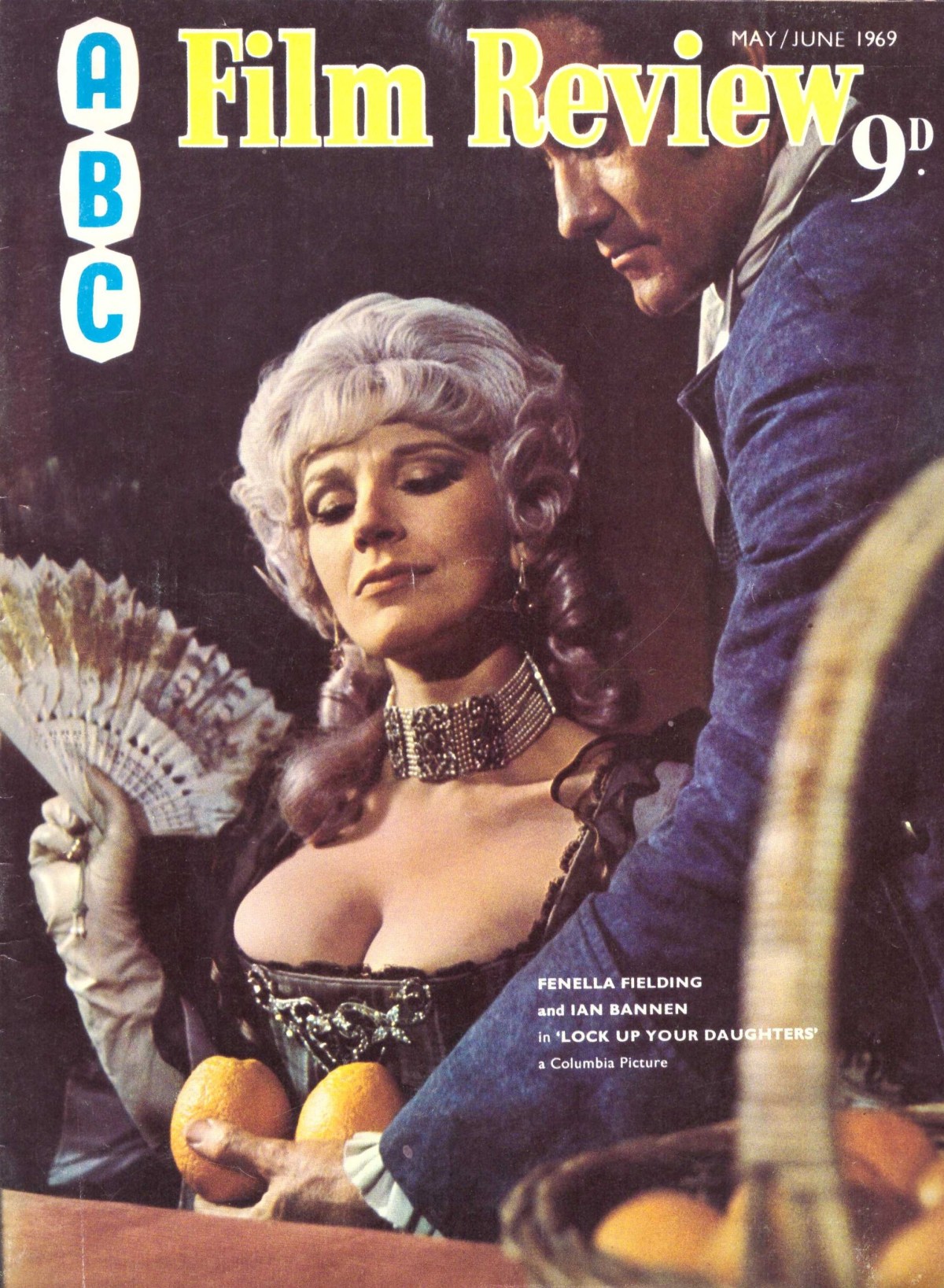
The patients line up to fill any gaps, headed in the main by “I-know-my-rights” walking medical encyclopedia Tarquin Wendover (Arthur Haynes) who despite his rough exterior reveals a penchant for ballet, and Russian ballet dancer Tatiana Rubikov (Fenella Fielding) determined to attract the male gaze.

Now there are two medics to put everyone in their place, Sir Lancelot Spratt (James Robertson Justice) and starchy Matron Sweet (Joan Sims) who revels in handing out a ticking off and takes on Spratt over what might be deemed these days a support animal in the shape of a parrot – and wins. At least she wins round one. But then her steely resolve crumbles as she believes she is secretly being wooed by Spratt.

But in the days when ageing male Hollywood idols were being teamed up, with nary a concern about the obvious age gap, with women half their age, and the likes of James Bond and Alfie never had to countenance rejection, it’s quite amazing that this piece of froth takes a more realistic approach. The main storyline revolves around the 35-year-old Gaston being knocked back by the 20-year-old French physiotherapist Jeannine (Elizabeth Ercy) who, for plot reasons, appears almost constantly in a swimsuit.

In a bid to make himself more appealing, Gaston embarks on a series of rejuvenating activities and treatments, planning to inject himself with a serum which, as you might he expect, he manages to inject into Spratt with hilarious consequence. He then turns to a “mood-enhancing” gas but that rebounds on him when he finds himself instead falling for the matron. As a subplot he is rival with his cousin Miles Grimsdyke (John Fraser) for a plum job – and is passed over, ironically, because he looks too young.

British audiences were taken by the twists to the formula and turned it into one of the top 15 films of the year at the box office. And I can certainly see its continued appeal. The days of the inept romantic are over. This is the permissive sixties after all. And while Gaston is rejected by Jeannine his flirtatious moves are welcomed by the equally seductive Nurse Bancroft (Shirley Anne Field), though since she is already engaged flirtation is as far as she’ll go and Gaston is disinclined to pursue the matter once he notices the size of her future husband.

There’s even a daring, for its time, sequence involving male hands mistakenly caressing each other, with their owners enjoying such fondling before they realize their error.

Leslie Phillips (The Fast Lady, 1962) is in his element – and he has a far better command of comedy than Dirk Bogarde – and a delight especially as his constant amour is constantly curbed. Despite third billing Shirley Anne Field (Kings of the Sun, 1963) has little more than an extended cameo even though she shines in what little she has to do. James Robertson Justice (Mayerling, 1969) remains the grumpy heart of the picture though Carry On regular Joan Sims runs him close. Elizabeth Ercy (The Sorcerers, 1967) has the delightful job of putting Gaston in his romantic place. Suzan Farmer (633 Squadron, 1964) puts in a brief appearance as do a host of British television names including Arthur Haynes (The Arthur Haynes Show, 1957, 1966), Terry Scott (Hugh and I, 1962-1967) and Alfie Bass (Bootsie and Snudge, 1960-1963)

Directed, once again, by series regular Ralph Thomas, taking a break from more serious efforts like The High Bright Sun (1965). Written by Jack Davies (Those Magnificent Men in Their Flying Machines, 1965) from the Richard Gordon bestseller.

Inoffensive Saturday matinee material.

A Very Special Favor (1965) ****

Surprisingly funny for a movie that’s long been out of favor. Starring a Rock Hudson (Seconds, 1966) who was just beginning to lose his grip on the marquee after an incredible run of box office success and Leslie Caron (Guns of Darkness, 1962) who had always seemed to just miss out on the top echelons of audience approval.

You can see why this had rapidly lost whatever appeal it originally possessed and that a contemporary crowd would turn its nose up at a man that has such success with the ladies that he has a whole stream of women carrying out his most basic chores. Except that the tale is really about him getting his come-uppance and everyone enjoys that kind of narrative.

Paul (Rock Hudson) only has to look at a woman and she melts. His job, such as it is, though he is wealthy, is to use his charm to commercial advantage. We open with him in a French court winning a case it transpires because he has seduced the female judge. The opposing lawyer Charles (Charles Boyer) encounters Paul on the way home, observing the American batting back stewardesses with ease, and the Frenchman enlists him to seduce his daughter Lauren (Leslie Caron), so much of a career woman, a high-flying psychologist,  that her father fears she will turn into an old maid.

But Lauren already has a fiancé, Arnold (Dick Shawn) who, like Paul’s harem, is at her beck and call, carrying out the most basic tasks for her. Paul pretends to be a patient, his fake problem being his irresistibility which has caused a girlfriend to commit suicide. Lauren shows very little sign of falling for Paul’s charm. In order to prove that they are making progress, they go to a restaurant. To Paul’s astonishment, Lauren passes out from drinking too much champagne. He takes her back to her apartment and in the morning pretends that she has succumbed to his charms.

So now the twists come. Lauren is upset to discover that she has been seduced by a man she was determined to keep her distance. But when she finds out the truth, the tables are turned. She invents a Spanish lover which knocks Paul’s ego to hell. Plus she accuses him of impotence. Then he turns the tables again, and using one of his many fans – and a ploy that would prove somewhat ironic given Hudson was a closet gay – switchboard operator Mickey (Nita Talbot), makes Lauren so jealous that eventually he contrives to win her back and the two determined singletons, against all odds, get married.

There’s some marvellous stuff here, some slapstick at which Caron is surprisingly adept, but mostly it’s a tale of flustered feathers and vengeance for perceived humiliation, beginning with Boullard who is so annoyed that any of daughter of his is a stuck-up prude. Paul can’t believe Lauren isn’t falling at his feet and equally she is infuriated that Paul isn’t another male slave like her fiancée.

There’s a great turn from Dick Shawn as the slave and his mother (Norma Varden) who keeps on encountering Paul at his least winning. It’s a relief to see Rock Hudson not playing the stuffed shirt of previous comedies and for Leslie Caron not to be a hapless heroine. So it plays as a more effective modern comedy.

Not everyone was so keen on Caron, complaining about the lack of chemistry between the leads and that Paul would never get hooked by such a cold fish. But I disagree. Sure, it called for a lot more from the audience that the leading lady wasn’t the usual ultra-feminine model, but that made the initial romance more believable. Initially, Paul doesn’t fall for her and is seducing her as a “very special favour” to her father but once he sees the other side of her personality he changes his tune.

But I would hazard a guess that, mostly, people were annoyed with Caron because she wasn’t Doris Day and that, while this follows one formula, it steers clear of the Hudson-Day formula in making Caron a high-flying career woman. Dick Shawn (Penelope, 1966) leads an able supporting cast.

Directed by Michael Gordon (Texas Across the River, 1966) from a script by Stanley Shapiro (Bedtime Story, 1964) and Nate Monaster (That Touch of Mink, 1962).

Worth a look.

Discover WordPress

A daily selection of the best content published on WordPress, collected for you by humans who love to read.

The Atavist Magazine

by Brian Hannan

WordPress.com News

The latest news on WordPress.com and the WordPress community.