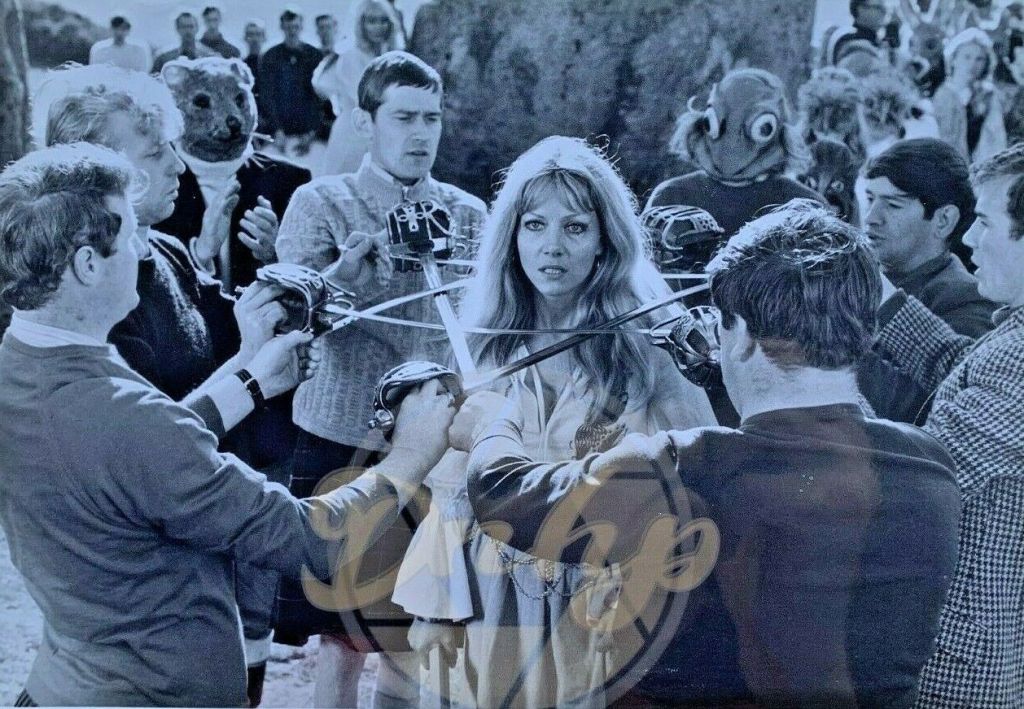
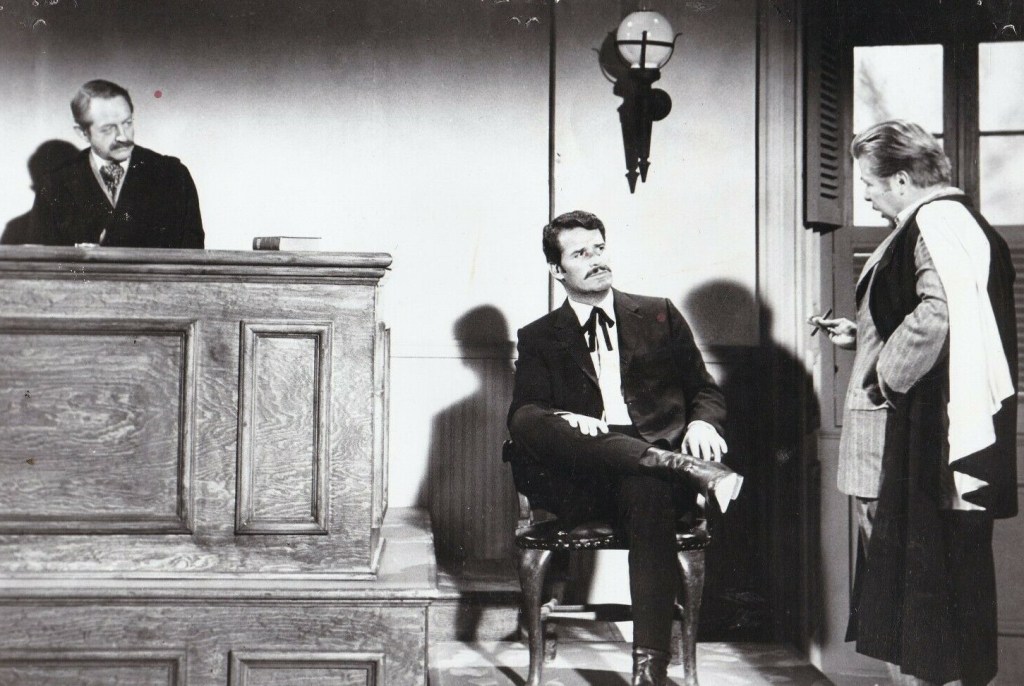
Behind the Scenes – “The Picasso Summer” (1969) Crisis

The making of The Picasso Summer was an odyssey in itself but what happened to the picture on completion generated a crisis in Hollywood.

Pablo Picasso in the early 1960s had apparently given “an enthusiastic endorsement” to American layout artist Wes Herchendson to animate some of his paintings. Some time afterwards, Hershendson came across sci-fi writer Ray Bradbury’s short story In a Season of Calm Weather about an American tourist meeting Picasso on a beach. Developing the scenario with the author, the pair turned the idea into an American couple attempting to meet the artist in the south of France.

Originally, the project was modest. It would run only an hour and be shown on television, sponsored by an airline company to promote foreign travel. But once the idea attracted the likes of British star Albert Finney (Tom Jones, 1963) , who had recently filmed Two for the Road (1967) in France, and Yvette Mimieux (The Time Machine, 1960), who had a percentage of the picture, it became bigger. It was the first film for a fledgling production company part-owned by Bill Cosby and when Warner Brothers-Seven Arts stumped up $1.6 million – a reasonable budget since a WB picture three years averaged just $1.75 million – it turned into a full-length feature intended for theatrical release. Filming began in November 1967 in San Francisco and France without a finished screenplay, working in almost improvisational style to a sketchy 20-page treatment.

Herchendson took care of the animated sequences with  the “live-action” section in the hands of Oscar-winning French director Serge Bourguignon. Although making his name with the French arthouse-oriented Sundays and Cybele (1962) he had also made mainstream western The Reward (1965) starring Mimieux and Max von Sydow and romantic drama Two Weeks in September (1967) with Brigitte Bardot, so his credentials appeared strong enough.

But something went very badly wrong. “The resulting footage was completely unsatisfactory,” went one report. Another claimed it was “incomprehensible.” So WB-7 Arts scrapped the first version and, because the movie, often filmed outdoors, had taken  advantage of the seasons, the film was pushed back a year to ensure footage matched. WB hired a new director Robert Sallin to salvage the picture with the principals returning for reshoots.

Initially, that appeared to have done the trick. WB announced it was considering launching the film as part of a big junket aimed at journalists in February 1969, and then screening it “in whole or in part” at a major conference in June with a view to a late 1969 release. A launch date was pencilled in for December 1969 – the original “X”-certificate issued in the same week as Easy Rider by that time had been amended to an “M” – with the intention of “finally getting it on the market.” And there was the signs of some promotional tie-ins with Barbra Streisand recording the theme tune “Summer Me, Winter Me.” But it didn’t appear. Officially, it was on the shelf.

The shelf, at that time, was not necessarily a bad place to be. Many pictures had been held back for a more convenient release spot during the 1960s, even more had been forcibly delayed when successful movies ate up preferential first run movie theatre space. It was nothing, for example, for The Biggest Bundle of Them All (1968) to wait eight months to be released.

But there was waiting and there was waiting. It soon became apparent that The Picasso Summer was not going to find a release date any time soon and that it was, officially, in limbo. Which was an astonishing state of affairs at the end of one troubled decade and the beginning of another. The hundreds of millions lost in big budget roadshows had seen a dramatic cutback in production. Cinemas were crying out for product, anything with a star, rather than being forced to make do with a flood of imports, spaghetti westerns of the here-today-gone-tomorrow variety and sexploitation vehicles featuring unknowns.

Hollywood had been known for routinely throwing stinkers into the marketplace and while exhibitors might complain about poor quality generally they had little option but to screen what was available because there was nothing else. But the harsh financial climate facing studios meant that every dollar spent had to be weighed up. Releasing a bad movie cost as much as releasing a good one with no guarantee that further expenditure in advertising, promotion and prints would generate profit. No point throwing good money after bad.

So Warner Brothers did the unthinkable. Even as Albert Finney recovered his box office status after Scrooge (1970) and Yvette Mimieux starred in hit sex comedy Three in the Attic (1969) and The Delta Factor (1970) the studio kept The Picasso Summer in the vaults. Even throwing it out in a wide release with no premiere or a trial run in an arthouse was considered too risky.

The number of movies that were completely unrelease-able, as opposed to being withdrawn after failing to attract an audience or turning into big flops during their run, was actually very small – Fade In (1967) coming closest to achieving that notoriety even though it had been occasionally shown in cinemas, and it was also low-budget.

But, suddenly, at the end of the 1960s that number started growing. MGM’s The Appointment (1969) was also shelved. And that had more apparent box office cachet with  Oscar-nominated director Sidney Lumet (The Pawnbroker, 1964) and featuring Oscar-nominated Omar Sharif (Doctor Zhivago,1965), an even bigger star than Albert Finney, and Anouk Aimee (Justine, 1969) also Oscar-nominated with greater box office clout than Yvette Mimieux. After it was booed at Cannes, MGM cancelled the American release after one U.S. test date .

But the trickle of shelved movies was becoming a flood. Into that category fell John Frankenheimer’s The Extraordinary Seaman (1969) starring Faye Dunaway (Bonnie and Clyde, 1967) and Oscar-winner David Niven fresh from hit comedy The Impossible Years (1968). Courtroom drama Hostile Witness (1969) starring another Oscar-winner Ray Milland (Dial M for Murder, 1954) was denied a release as was comedy western A Talent for Loving (1969) with Richard Widmark, on a career high after Madigan (1968), and Adam’s Woman (1970) with Beau Bridges, who would strike a box office mother lode with Gaily, Gaily (1969) and John Mills (The Family Way, 1967). Swelling out the list was Crooks and Coronets / Sophie’s Place (1969) starring Telly Savalas (The Heroin Gang, 1968) and Hammer sci-fi Moon Zero Two (1969).

At a 1970 press conference, questioned about the shelving of The Picasso Summer, a Warner Brothers executive admitted: “We don’t know what to do with it, but not in the sense marketing is a problem; completion into a releasable form would seem to be the nub.”

By 1971, The Picasso Summer was not alone in failing to meet expectations. Some 80 movies funded by the majors had either still to be screened or had already been yanked off screens after poor test showings or minor playoffs failed to garner an audience. A year later Warner Brothers alone had ten completed movies on its books that would never see the light of theatrical day.

There had been one get-out clause for under-performing movies – television. A sale to the networks could bring in a substantial amount, sometimes enough to balance the books. But television was beginning to look askance at product that, in subject matter and in relation to violence and nudity, did not suit the Big Three channels. It was soon obvious that the networks had “lost their omnivorous feature film appetite.”

But there a light on the horizon. One network was interested in more unconventional fare and pictures that it could present as U.S. “premieres.” The CBS  “Late Night Movie” slot airing on a Thursday aimed to attract an adult audience seeking more adult material. The conventions of television would still minimize nudity but the films themselves would have an adult theme. Thus, in 1972 The Picasso Summer, The Appointment, The Extraordinary Seaman and Adam’s Woman were shown on CBS.   

The version of The Picasso Summer shown on American television was not the completed version. Herchendson complained to CBS about the “massacre of my film.” The network had deleted the entire bullfight sequence, the entire animated Eroica sequence and “chopped up the War and Peace” section. In fact it was well known in advance that one of the four animated sequences, the one considered “more sensual than erotic,” would go.

But there was one big plus for Warner Brothers. CBS paid $1.6 million for the movie, making it, according to one wag, the most expensive made-for-television movie. That turned a potential loss into break-even.

SOURCES: Quentin Falk, Albert Finney in Character, (Robson Books, 1992) p122-124; “WB Pacts Cosby Company,” Variety, January 17, 1968, p7; “Yvette Mimieux: Many-Phased Career,” Variety, February 5, 1969, p24; “W-7 Bahamas Junket,” Variety, February 26, 1969, p3. “WB-7 Arts First Global Sales Conference in LA June 8-14,” Box Office, April7, 1969, pW1; “Not Just Passing, WB Bets,” Variety, November 5, 1969, p7; “No “X” for Xmas,” Variety, December 3, 1969, p7; “Press Peek at Calley,” Variety, April 22, 1970, p7; “Unsalvageable Cupboard Item Lucky for WB,” Variety, August 19, 1970, p[3; “Pix in the Shortage Era,” Variety, December 22, 1971, p21; “TV-Bearish WB Cupboard,” Variety, March 29, 1972, p3; “Cannes Jeered Pic Recut By MGM,” Variety, July 19, 1972, p7; “Picasso Summer Twice Shelved  Will Be Seen AT Last, CBS Aug 4,” Variety, August 2, 1972, p22.

Year-End Round-Up Part Two: “Other Stuff” Top 20

Regular readers will know that this blog occasionally turns its attention to what comes under the generic title of “Other Stuff.” In the main and still covering movies I’ve reviewed this comprises behind the scenes looks at movies, examines pressbooks or marketing materials and analyses how books were shaped into films. I also focus from time to time on important issues that shaped Hollywood in the 1960s and write book reviews.

  1. Behind the ScenesThe Guns of Navarone (1961). The ultimate template for the men-on-a-mission war picture with an all-star cast and enough jeopardy to qualify for a movie of its own.
  2. Book ReviewThe Gladiators vs Spartacus Vol 1. Stupendous research by Henry MacAdam and Duncan Cooper explains how close Yul Brynner’s version of the Spartacus legend came to beating the Kirk Douglas movie into production.  
  3. Behind the ScenesThe Satan Bug (1965). The problems facing director John Sturges in adapting the Alistair MacLean pandemic classic for the big screen.
  4. Box Office Poison – 1960s Style. Actors and actresses who had been big box office draws at the start of the decade were floundering by its end. This examines which stars while pulling down big salaries were not pulling their weight.
  5. Behind the ScenesThe Girl on a Motorcycle (1968). Cult classic starring Marianne Faithful and Alain Delon had a rocky road to release, especially in the U.S. where the censor was not happy.
  6. The Bond They Couldn’t SellDr No (1962). Despite the movie’s later success and the colossal global box office of the series, American cinema owners were very reluctant to spend money renting what was perceived as just another British film.
  7. When Alistair MacLean Quit: Part One. Rankled by his treatment by his publishers, the bestselling author gave up his bestselling career. And not once, but twice (see When Alistair Quit: Part Two).
  8. Book ReviewDreams of Flight: The Great Escape (1963) in American Film and Culture. Dana Polan’s definitive book on the making of the POW classic starring Steve McQueen.
  9. Behind the ScenesGenghis Khan (1965). A venture into epic European filmmaking with an all-star cast led by Omar Sharif.
  10. Bronson Unwanted. By the end of the 1970s Charles Bronson was one of the biggest stars in the world, but at the end of the 1960s, although highly appreciated in France, his movies could not get a box office break elsewhere.
  11. PressbookDark of the Sun (1968). How MGM sold the action picture starring Rod Taylor and Jim Brown. Fashion anyone?
  12. Selling Doctor Zhivago (1965). MGM’s efforts to create huge audience awareness of the David Lean epic prior to its British launch.
  13. Behind the ScenesThe Night They Raided Minskys / The Night They Invented Striptease (1968). The convoluted background to the attempts by neophyte director William Friedkin to make a movie celebrating America’s vaudeville past.
  14. Advance Buzz. How Hollywood began to take on board the need for publicity long before the opening of a picture.
  15. Behind the ScenesTopaz (1969). Detailing the problems facing Alfred Hitchcock in turning the Leon Uris bestseller into an espionage classic featuring a non-star cast.
  16. Book ReviewThe Gladiators vs Spartacus Vol 2.  Abraham Polonsky’s longlost screenplay about Spartacus is brought to light.
  17. The Miracle of Mirisch. The Mirisch Bros were the top independent producers in the 1960s – the first of the mini-majors – and while releasing classics like The Magnificent Seven and The Great Escape were also responsible for a pile of turkeys.
  18. Book into FilmDr No (1962). How the filmmakers adapted the Ian Fleming original to create the James Bond template.
  19. Behind the ScenesCast a Giant Shadow (1965). Producer Melville Shavelson wrote a book about his experiences and this and other material relating the arduous task of bringing the Kirk Douglas-starrer to the screen are related here.
  20. Book into FilmA Cold Wind in August (1961). The novel was a lot sexier than the film, since publishing did not face the same restrictions as Hollywood, and this examines how far the movie went to retain the spirit of the book.

Behind the Scenes – “Ice Station Zebra” (1968)

Director John Sturges was not flying quite as high as when he had greenlit The Satan Bug. Since then two films had flopped – big-budget 70mm western The Hallelujah Trail (1965) and Hour of the Gun (1967). Two others had been shelved – Steve McQueen motor racing epic Day of the Champion and The Yards of Essendorf. But his mastery of the action picture made him first choice for Ice Station Zebra.

Independent producer Martin Ransohoff (The Cincinnati Kid, 1965) had snapped up the rights in 1964, initially scheduling production to begin the following spring. He financed a screenplay by Paddy Chayefsky (The Americanization of Emily, 1964). Judging by later reports MacLean appeared happy with the screenwriter’s approach, especially after being so annoyed with the way Carl Foreman had appropriated The Guns of Navarone. Ransohoff put together a stellar cast – The Guns of Navarone (1961) alumni Gregory Peck and David Niven plus George Segal (The Quiller Memorandum, 1966). But each wanted to act against type. Peck, having played a submarine commander in On the Beach (1959), wished the role of an American secret agent, Niven to play his British equivalent with Segal left to pick up the role of skipper. Then Peck objected to the way his character was portrayed.

Sturges, paid a whopping $500,000 to direct, was unhappy with the Chayefsky script commissioned by the producer so he hired Harry Julian Fink (Major Dundee, 1965) and W.R. Burnett (The Great Escape, 1963). But he hated the results so much he suggested MGM drop the entire project. That was hardly what Ransohoff, after forking out $650,000 on screenplays and $1.7 million on special effects, needed to hear. As a last resort, Sturges turned to Douglas Heyes (Beau Geste, 1966) who beefed up the Alistair MacLean story, completely changing the ending, introducing the U.S. vs U.S.S.R. race to the Arctic,  and a bunch of new characters including those played by Jim Brown and Ernest Borgnine, who had previously worked together on The Dirty Dozen (1967).

Six months after its roadshow engagement in New York, the picture went into
general release in continuous performance.

After a string of flops, Hudson, celebrating his 20th year in the business, chased after the role of sub commander. Although it has been reported that Laurence Harvey briefly came into the frame for the part that went to Borgnine, I could find no record of that. Confusion may have arisen because in 1964 Harvey was prepping another MacLean picture, The Golden Rendezvous, which he planned to direct in the Bahamas. Having landed the major supporting role in Who’s Afraid of Virginia Woolf (1966), Segal was the casting coup before he, too, jumped ship.

British star Patrick McGoohan (Dr Syn, 1963) who had not made a movie in five years, was an unlikely candidate for the second lead. Sturges saw him as the next Steve McQueen. But his inclusion only came about because of the sharp increase in his popularity Stateside after fans had bombarded the networks to bring back the Danger Man (1964-1967) television series (renamed Secret Agent for American consumption) after it had initially underwhelmed.  Increased public demand for the “old-fashioned hero with morals” became a feature of an advertising campaign. McGoohan received the accolade of a write-up in the New York Times. It seemed a cinch to have a denoted television secret agent star to play another spy in the film.

The all-male cast prompted the director to consider adding a hallucinogenic dream sequence involving women. Despite his penchant for action pictures, Sturges was a gadget nut and particularly interested in the space race, tracking by ham radio the launch of the Russian Sputnik 1, concerned that the Americans had been beaten. While moon landings remained some way off, the next battle for supremacy was nuclear submarines, of which Sturges was in awe.

Principal photography began in mid-June, 1967 and finished 19 weeks later. The $8 million budget topped out at $10 million. The non-nuclear U.S.S. Ronquil stood in for the book’s sub with U.S.S. Blackfin doubling in other shots. The vessel’s interiors dominated MGM’s soundstages with a 16ft superstructure as the centerpiece with hydraulics creating the tilting and rocking effects. Art director Addison Hehr’s commitment to authenticity saw his team buying real submarine effects from junk yards to fit out the interiors. The conning tower was almost as tall as a five-storey building and the submarine, built in sections, measured 600ft. The Polar landscape was created by draining the MGM tank, at the time the largest in Hollywood, of three million gallons of water and then mounted with snow and rocks and the burnt-out weather station.

While aerial shots of Greenland ice floes and fjords doubled for Siberia, to capture the wild ocean Sturges and cameraman John Stephens took a helicopter ride 30 miles out from the coast of Oahu where a 45-knot wind created “monumental” seas. A 10ft miniature in a tank permitted shots underwater and cameras attached to the Tronquil’s deck and conning tower achieved the unique sub’s-eye-view. The unconvincing Arctic landscape was shot on a sound stage.

Early trade double-page advertisement (hence the lines in the middle).

Not only did screenwriter Douglas Heyes alter the original ending, but Sturges claimed improvisation was often the order of the day.  “We made it up as we went along,” he said, “adding a whole bunch of gimmicks – the homing device, the capsule in the ice, the blowtorch…I don’t think it had any political significance. It just dealt with an existing phenomenon in an interesting way.” (Note: the homing device was in the original novel.)

A major hitch hit the planned roadshow opening in New York, essential to building up the brand. MGM proved reluctant to whisk 2001: A Space Odyssey out of the Pacific East Cinerama theater while the Stanley Kubrick opus was still doing so well. So it opened in the Big Apple on December 20, over two months after its world premiere at the Cinerama Dome in Los Angeles, where MGM had decked out the lobby with a submarine measuring 20ft long and 12 ft high.  From the publicity point-of-view the delay was a drawback since New York critics – who attracted the biggest cinematic readership in the country – would not review the film until it had opened and should they take a positive slant their quotes would come too late for the national advertising campaign.

SOURCES: Glenn Lovell, Escape Artist, The Life and Films of John Sturges (The University of Wisconsin Press, 2008) p262-268; “Film in Focus, Ice Station Zebra,” Cinema Retro, Vol 17, Issue 51, 2021, p18-27; “Harvey Huddles with Maugham on Bondage,” Variety, May 15, 1963, p25; “New York Sound Track,” Variety, April 29, 1964, p18; “Ransohoff-Metro Prep Zebra Via Chayefsky,” Variety, January 20, 1965, p4; “Novelist, Producer Meet On Ice Station Zebra,” Box Office,  April5, 1965, pNE2;“George Segal,” Variety, April 28, 1965, p17; Advertisement, Variety, April 20, 1966, p44-45; William Kirtz, “Out To Beat Bond,” New York Times, Jun 23, 1966, p109;  “Ponti Seeks David Niven,” Variety, October 26, 1966, p3; “Cinerama Process for Metro’s Zebra,” Variety, May 17, 1967, p24;   Advertisement, Variety, June 21, 1967, p8-9;“26 Probable Roadshows Due in Next Two Years,” Variety, January 17, 1968, p7; “Poor Ratings But Film Plums Going To Pat McGoohan,” Variety, July 3, 1968, p3.”Premiere Display Built for Ice Station Zebra,” Box Office, October 14, 1968, pW2; “Ice Station Zebra Frozen, No N.Y. Cinerama Booking,” Variety, October 23, 1968, p12; “Ice Station Zebra in World Premiere,” Box Office, Oct 28, 1968, pW1; “No Zebra Shootout in N.Y. , Gets 2001 Niche, Latter Grinds,” Variety, October 30, 1968, p3; “Filmways Stake in Ten Features for $55m,” Variety, November 20, 1968, p7.

Behind the Scenes – “The Secret Ways” (1961)

Since this is the most popular review on the Blog, I thought I might delve into the background to the picture.

“The reason I made The Secret Ways,” Richard Widmark told British film monthly Films and Filming, “is that I like spy thrillers. I’ve been in this business quite a long time and to survive you have to do all kinds of pictures, you can’t just specialize on just one kind.”

Widmark wasn’t just branching out into a different genre, he was developing a completely new set of skills – turning producer. His Heath Productions had cut its teeth on Time Limit (1957), a Korean war drama in which he starred with a strong supporting line-up in Richard Basehart, Dolores Michaels, Martin Balsam and Rip Torn. For a neophyte producer, Widmark went out on a limb in his choice of director, Karl Malden, better known as an Oscar-winning actor. So he had no problem taking chances. He had bought the property from Warner Brothers at a time when big studios were running shy of doing small pictures.

Widmark purchased the rights to The Secret Ways in March, 1959, one month after American publication by Doubleday, with the intention of beginning production before the year was out, putting him on target to produce three films in a year. Also on his production schedule were The Seven File for United Artists and bullfighting drama Wounds of Honor which he would direct but not star. Budget for The Secret Ways was set at $1 million.

“I enjoy production,” Widmark later claimed. “I like to act but over the years I find that I can do more and I enjoy setting things up and seeing them through.” But he could have hardly have been happy with his experience on The Secret Ways. Screenplay issues prevented Widmark meeting his initial start date. Peter Viertel (The Old Man and the Sea, 1958) had first crack followed by Scotsman William Templeton who having written the film adaptation of 1984 in 1956 was expected to understand the Cold War elements. But it was left to Widmark’ s wife Jean Hazelwood to take the screenwriting credit, even though this would be her movie debut and she never made another film.

Finalizing roles proved equally last minute. Female lead Sonja Zieman signed up only a few weeks before production rolled, Senta Berger a couple of weeks after. Obstacles arose once filming finally got underway on August 1, 1960. Rather than importing crews from Britain or America, Widmark chose the budget-conscious idea of utilizing a German-only team. Problems proved as much psychological as a culture clash of working principles.

Widmark recalled that it was “like fighting World War Two all over again – you have the Austrians and the Germans fighting like mad with the English and the Americans, they hated us.” Added to that were language barriers, technical obstacles and cultural difficulties, one example being that the foreign crews were not accustomed to going out into the street and shooting all night for five consecutive weeks. Nor, presumably, were they so keen to be filming so close to the borders. Much of the filming, according to assistant producer Euan Lloyd in a six-minute documentary, was “done directly under the guns of communist guards only yards away.”

Worse, star and director Phil Karlson were soon at odds, not helped by the fact that Widmark had little regard for directors. “There are to me about eight to ten efficient directors in the world,” he declared, not counting Karlson among that figure. When the director took ill for a week with a virus, rather than shutting down the production, the star took over the directorial reins. Three weeks later, the director quit, over creative differences regarding the ending. Widmark took up his seat again in the directorial chair.  

Release was delayed due to Widmark’s other commitments. Once he had completed his role in the film he was away from mid-October shooting John Ford’s Two Rode Together and not able to return to post-production until December

The biggest problem was avoiding making an overt political statement. “I was trying to make an adventure story, a sheer adventure story. But some of it (politics) just creeps in.” Hungarians in Detroit complained the movie did not go far enough in depicting the reign of terror. “They had been in contact with the Hungarian Secret Police,” said Widmark, “had gone through this torture, which seems corny with the dope, the needle and the steam room. But it’s not incredible, it goes on every day of the week there.”

Despite tepid box office, Widmark ploughed ahead with plans to make The Tiger’s Roar from the Jack Davies novel as a vehicle for Trevor Howard. But this and his other two features did not come to fruition and the star did not climb back into the producer’s chair until The Bedford Incident in 1965, which proved his last stab at production.

Working with Widmark inspired Zieman to set up her own production arm, announcing Next Stop Paradise, based on husband Marek Hlasko’s novel, in which she would star. But that did not get off the ground either.

SOURCES: “Widmark to Star Self in Secret Ways,” Hollywood Reporter, March 20, 1959, p18; “Viertel Secret Plottter,” Hollywood Reporter, October 2, 1959, p11; ”Widmark Projects Three Heath Prod’ns Next Year,” Hollywood Reporter, November 11, 1959, p2; “Bill Templeton Plots Secret Ways for U-I,” Hollywood Reporter, December 17, 1959, p1; “Widmark Signs Fem Lead,” Hollywood Reporter, July 11, 1960, p2; “ “Widmark Film Rolls,” Hollywood Reporter, August 1, 1960, p3; “Viennese Actress Set,” Hollywood Reporter, August 9, 1960, p3; “Phil Karlson resumes,” Hollywood Reporter, September 6, 1960, p2; “Karlson Exits Widmark Picture Over Different Endings,” Hollywood Reporter, September 22, 1960, p1; “Widmark Reports,” Hollywood Reporter, October 11, 1960, p3; “Widmark Back to U-I,” Hollywood Reporter, December 15, 1960, p2; “Crew Hazards Under Red Guns As Documentary for U’s Secret Ways,” Variety, March 1, 1961, p19; “New Role for Sonja,” Box Office, May 8, 1961, W2; Richard Widmark, “Creating Without Compromise,” Films and Filming, October 1961, p7-8.

Behind the Scenes – “This Sporting Life” (1963)

Star Albert Finney and director Karel Reisz of Saturday Night and Sunday Morning (1960) turned it down. Director Lindsay Anderson, screenwriter David Storey, author of the novel on which the film was based, and star Rachel Roberts all suffered from massive doubt in their own abilities.

Anderson was the last of a generation that included Reisz and Tony Richardson (Tom Jones, 1963) to make a movie. He was better known as film critic and theatre director. As far as the screen went, he had got only as far as five episodes of The Adventures of Robin Hood for television, and some documentaries and shorts. If he was going to make a movie it almost certainly depended on finance from British production outfit Woodfall which had backed Reisz and Richardson. However, Woodfall was outbid for the rights to This Sporting Life and Anderson only came into the frame when Reisz rejected the idea of directing the movie in favor of turning producer and giving Anderson his opportunity.

Cover of the Danish program.

“I was not sure I was up to it,” confessed Anderson. Theoretically a tale of a rugby footballer Frank Machin’s (name changed from the Arthur Machin of the book) rise and fall, Anderson wanted to explore the novel’s “dark poetry” and the ambiguities of the a central character who was by turn overbearing and sensitive and involved in a “tortured, impossible relationship.”

However, Storey, also making his movie debut, struggled with the script. Until the sudden success of This Sporting Life, the aspiring artist had lived a debt-ridden life as a supply teacher (17 schools in three-and-a-half years) in poverty-stricken London boroughs, writing his novels on train journeys north to fulfill his contract to play professional rugby. Reprinted prior to publication This Sporting Life, his debut novel, received excellent reviews and won the inaugural U.S. MacMillan Award worth $7,500.

When the film industry came sniffing Storey took tea with Stanley Baker at the Dorchester Hotel, lunched with Tony Richardson at the Trocadero and was wooed by director Joseph Losey at his Knightsbridge flat. Initial expectations were that the rights would go for £3,000, but a bidding war between Woodfall and Rank sent the bill up to £10,000 with the latter emerging victorious. Karel Reisz agreed to become producer on condition he could choose director, writer and cast. He introduced Storey to Anderson and to an initially interested Albert Finney.

Cover of the first edition of the British hardback.

Storey, a working-class son of a coal miner, and Anderson stood at different ends of British class divide. Initially suspicious of each other, they had opposite temperaments. “Lindsay was an optimist,” explained Storey,” I was a reclusive, and when in doubt, morbid.” Even after Storey completed a treatment and the pair went north to scout locations, the project remained in doubt, in part because Anderson did not understand the book and had a “curious lack of confidence” and in part because Storey resisted reshaping the material into something “new.” In fact, Anderson’s lack of confidence was so deep it took several months before he actually signed his contract.   

Storey, too, suffered from revisiting the area where he had grown up. The death of a sibling  cast a devastating shadow over the rest of his life, the Wakefield rugby ground in fact “scarcely a stone’s throw “from the child’s grave. “Wakefield was being opened up to me in a way I had never known before,” explained Storey, referring to the grand houses visited as possible locations whose exteriors he had glimpsed while working as a marquee laborer.  

Despite “exhaustive consultations” with Anderson and Reisz, the script failed to gell. “I felt the authority I wanted was not there,” commented Anderson. Although actors are often decried for interfering with the script, in this case it was star Richard Harris who arrived at the solution.

British paperback film tie-in.

Anderson had been attracted to Harris from seeing him in the stage adaptation of J.P. Donleavy’s The Ginger Man.  The director flew off to Tahiti where Harris was filming Mutiny on the Bounty (1962) to be met at the airport at five in the morning by the actor, “ his 18th century seaman’s hair down to his shoulders, bursting to tell me what he thought of the script we had sent him.”

Anderson recalled, “Within ten minutes we were at it…we talked and argued right through the day. I quickly realized he was right…we had lost what was most unique and brilliant in the novel…it was Richard, who, with passionate intransigence, brought us back to the book…in the evening after his shooting on the Bounty we sat in his bungalow going through the script and his own heavily-annotated copy of the novel…and slowly a conception emerged which began to satisfy us.”

Storey agreed with the new look which basically followed a subjective point-of-view rather than being cluttered by the novel’s flashbacks. “With an unequivocal endorsement of the book and the rejection of a script which had wearied me more than I’d imagined, I found rewriting the script in the manner in which the book had been written, from the inside looking out rather than the outside looking in, a surprisingly exhilarating task…Once Richard Harris had become identified with the part …the material was no longer a problem.”

Retaining that subjectivity was Anderson’s biggest issue  An Oxford scholar, he had little innate understanding of Frank Machin’s world and in consequence “was liable to slip into an objective view of scenes that needed to be presented through Machin’s own temperament.” Harris proved instrumental in keeping the director on course.

Rachel Roberts twice turned down the role – Mary Ure (Look Back in Anger, 1959) was also in the frame with four other actresses – and failed to turn up for a screen test. Karel Reisz once commented how odd it was that “the two films that made this great-hearted flamboyant woman best-known (the other being Saturday Night and Sunday Morning) were ones in which she played withdrawn, bleak, ungiving women. Rachel’s great talent was to sink her personality into the part without losing access to her own sensuality. You felt the tension.”

Of This Sporting Life, Reisz added, “She had great doubts about her ability to play Mrs Hammond because she’s a very held back, undemonstrative woman. A passionate person, certainly, but someone who’s turned puritanical through so much constant repression of her feelings. Rachel was afraid of this: she didn’t know out of which part of herself to play the role.”

Lindsay Anderson was as unsure as Roberts: “She didn’t appear to me to be the Mrs Hammond character…Rachel was anything but repressed.” Actress Sybil Williams remembered finding a whole sheaf of notes in Rachel’s script about “the Mrs Hammond character she appeared to be playing so intuitively.” Said Anderson, “Richard Harris was bit awed by Rachel. She could acquit herself with a first-rate reading in just a couple of takes. Richard took a few more to feel he had got it right. Rachel’s security as an actress made him feelmore respectful towards her.”

The scenes between Harris and Roberts were endlessly rehearsed, involving a full 10 days prior to shooting and then during evening and weekends while in production. Roberts was playing a woman “whose feelings, though fierce, are almost continually suppressed: the relationship deepens without self-explanation…through incessant conflict…It called for an actress of exception ‘interior’ quality with real wildness within as well as the capacity for an iron restraint.”

Somewhere in the BBC archive is a programme, never aired, about the making of the film shot for its Monitor arts strand, although Storey was interviewed later on the show by Huw Wheldon, later BBC managing director.

Although Lindsay Anderson only made four more movies, the most memorable being If…(1968), and David Storey never wrote another screenplay, the pair achieved considerable success together when the author turned to writing plays such as Home (1970) and The Changing Room (1971), set in a rugby club.  

If This Sporting Life appears to have two main characters driven by demons, part of the explanation as to how such creatures emerged from David Storey’s imagination can be found in his riveting memoir A Stinging Delight  which traces a core of depression from his earliest days through to the times in later life when he was in and out of mental hospitals. Rachel Roberts also suffered from mental illness and committed suicide in 1980.

SOURCES: Lindsay Anderson, “Sport, Life and Art,” Films & Filming, February 1963, pages 17-20; David Storey, A Stinging Delight (Faber, 2021), pages 217-218, 221-223, 227-231, 233, 240-242; No Bells on Sunday, The Journals of Rachel Roberts, Edited with a documentary biography by Alexander Walker, Pavilion, 1984, pages 37, 55, 56, 58.

When Alistair MacLean Quit – “The Satan Bug” (1965)

Scrolling down the credits for The Satan Bug (1965) you might have been surprised to discover that the film was based not on a book by Alistair MacLean but by one Ian Stuart. Yes, this turned out to be a pseudonym but you might be asking yourself why on earth did a world-famous thriller writer need to employ a pseudonym.

Pseudonyms were generally used for two reasons, and most often in genre fiction. Firstly, they were utilized by authors who were far from world-famous and needed to churn out four or five books a year to make a living. In those days only the likes of Agatha Christie or Simenon could get away with producing three or four books annually without the public getting fed up with their output. Long before the likes of the prolific Danielle Steel or James Patterson showed publishers that the public would devour anything they produced, it was considered ruinous to your career to be seen to be turning out more than one book a year.

Salvatore Lombino wrote under the pseudonyms of Ed McBain (the 87th Precinct series), Evan Hunter (The Blackboard Jungle etc), Richard Marsten, and Hunt Collins. Most famous under his own name, British author John Creasey (The Toff series) had 27 pseudonyms including J.J. Marric (the Gideon books) and Anthony Morton (The Baron series) as well as a number of different names for his westerns and romances.  A famous author wanting to dip a toe into a new genre was the other common reason a pseudonym came into play, the outstanding recent example being J.K. Rowling who turned to crime under the name of Robert Galbraith.

Alistair MacLean fell into neither of these categories. An unexpected success, the Scottish schoolteacher hit the jackpot with his debut HMS Ulysses in 1955, a straightforward war novel, and two years later bestseller The Guns of Navarone which was turned into a movie. He followed up with another four thrillers in four years under his own name, the last being Fear Is the Key (1961).

The reissued 1969 hardback while retaining the Ian Stuart name on the cover
links the book to Alistair Maclean in the inside flap.

By this point, MacLean, a somewhat touchy individual, had become exceedingly annoyed at the treatment his manuscripts received at the hands of his publisher Collins. In particular, he was often taken to task by editors for making simple errors like confusing “of” with “off.” But more importantly, editors treated his books as if they should be met with a rejection slip – in fact it was strongly suggested that the author set aside his third book South by Java Head in favor of something else – rather than slung out to an adoring public. As his biographer Jack Webster put it, he felt “very much like a pupil under severe pressure from a master.” It would have been humiliating for an English teacher to be told off for his use of English. The editors also complained there were too many incidents which made the books hard to read rather than enrapturing the reader.

While no doubt every author gets picked up for momentary lapses or for elements of the story that need reconsideration, it was clear to MacLean that his publishers were taking a very snobbish attitude to his output rather than falling over themselves to have in their possession such a cash cow. MacLean also felt that his books only sold so well because his name was attached. Every book was “by the author of HMS Ulysses” or, after the fantastic success of the movie, “by the author of The Guns of Navarone.” He was beginning to feel more of a unwelcome commodity than a cherished asset. And he had already made so much money from his millions of books sales and additional revenues from film studios -£30,000 for HMS Ulysses for example – that he did not need to listen to his publishers.

In fact, matters had come to a head with Fear Is the Key (1961), his least successful book. Clearly this provided his enemies in the publishing house with the opportunity to gloat and to attempt to force him to listen to their superior wisdom and toe their line But for MacLean Fear Is the Key was an experiment, a deliberate change of writing style. “What I’m trying to do is develop a technique of completely impersonal story-telling in the first person”  – in essence the reader would see action unfold as if through the eye of a camera. His publishers, who appeared to view sales as the only measure of a book’s success, felt otherwise. After one too many clashes with the Collins hierarchy, he took himself off to renowned agent Curtis Brown who welcomed him with open arms and none of the niggling that marked his dealings with the publishers. While Collins would remain his British publisher, Curtis Brown took on the task of invigorating foreign rights.

Having snared what they expected was a golden goose, you can imagine Curtis Brown’s astonishment on being told that the first book they were to sell under this new deal would not bear the name of Alistair MacLean. It would be by an unknown author – Ian Stuart. The Dark Crusader (retitled The Black Shrike for U.S. readers) was set in Australia and concerned a hunt for missing scientists. Never mind previous antipathy between author and publisher, Collins hated this book, complaining about over-complicated plot, boring characters, and improbable action. It was “a thoroughly bad book.” MacLean was incensed: “If the book is as bad as you say and you obviously lack faith in it, can you genuinely imagine that I believe you will honestly and sincerely get behind it in promotion, publishing and selling?”

Desperate to retain the author and hoping that this experiment would be short-lived, especially if sales showed a marked downturn from the MacLean books, Collins agreed to publish it. Naturally, the only way to ensure that it reached any kind of sales peak rather than vanish into the chasms of oblivion that faced most new authors, Collins gave the book “by a new author” a heavy publicity campaign. The poorer sales did not dampen MacLean’s ardour for his pseudonym and he went to produce The Satan Bug by Ian Stuart, his faith in his decision justified when a Hollywood director of the caliber of John Sturges (The Magnificent Seven, 1960), clearly seeing far greater potential in the novel than the publishers, snapped it up for production.

The rule breaker – the back cover of the 1962 U.S. paperback gives the game away and clearly, judging by the quote from King Features, the true author’s identity must have been in the public domain.

Myth has it that both The Dark Crusader and The Satan Bug played by the rules laid down by the author. But that did not turn out to be the case. The paperback edition of The Satan Bug published by Popular Library in 1962 on the back cover reveals the true author. In any case in due course the book was reissued under the MacLean moniker and is a far better example of the cinematic style the author was attempting to achieve than The Dark Crusader and became the template for his later books.

But, as it turned out, this was not the first time that Alistair MacLean would go on strike.

Catch Up: movies made from Alistair MacLean novels featuring in the Blog are The Guns of Navarone (1961), The Secret Ways (1961) and The Satan Bug (1965).

SOURCESAlistair MacLean by Jack Webster (Chapmans Publishing, 1962, paperback edition), pages 73, 89-90, 94-96, 112-117.  

Behind the Scenes – “The Satan Bug” (1965)

In 1963 John Sturges made a deal for his Kappa Productions outfit with United Artists.  The director was keenest on The Hallelujah Trail (1965) and what became Hour of the Gun (1967) but The Satan Bug was greenlit first because of the production difficulties inherent in developing westerns. To cut down on travel, Sturges decided to shoot in and around the desert area close to his home turf of Palm Springs and the Joshua Tree National Park. He called in James Clavell, responsible for the screenplay of The Great Escape (1963), and Edward Anhalt (Becket, 1964) to Americanize  and update the English-set Alistair Maclean thriller written before the Cold War escalation of the Cuban Crisis and the increasing fears of nuclear arsenals.

Hardly a director known for “message pictures” – more likely to emanate from the likes of Stanley Kramer – nonetheless he recognized the implicit threat of biological warfare for “its terror potential” and envisioned a powerful climax in the evacuation of Los Angeles. He swapped the married, lame and disfigured hero of the novel for a hip loner in the Steve McQueen mold.

Unable on a $6 million budget to afford a leading man of the McQueen calibre – a strange notion when Two for the Road’s $5 million budget included $1 million for Audrey Hepburn – he settled on rising star George Maharis (Quick Before It Melts, 1964) who had graduated from television’s Route 66 (1960-1963). “We were disappointed that we were not able to get a major star to play the leading role,” commented producer Walter Mirisch, whose company Mirisch Pictures bankrolled the picture. “The idea of using… George Maharis was suggested… John (Sturges) pressured us to cast him. I had felt the subject required a major action-adventure star. George Maharis wasn’ t that, nor did he ever become a major shooting star. ”

Richard Basehart was also plucked from television – the star of Voyage to the Bottom of the Sea (1964-1968) – as was Frank Sutton (Donald in the film) from comedy Gomer Pyle, USMC (1964-1969). Initially cast as the general’s daughter, Joan Hackett (The Group, 1966)   – in what would have been her movie debut – was replaced by Anne Francis. In fact, Hackett worked on the movie for two weeks. “John called,” explained Mirisch,” and told me he was very dissatisfied with Joan.” Sturges had worked with her replacement Anne Francis before on Bad Day at Black Rock (1955).

Sturges biggest problem was creating imposing research facility Station 3. Sticking it underground saved a chunk of cash on the budget, since interiors were minimalist. “The set cost us nothing,” said Sturges. But to add a sense of tension, the set was lit with an ominous amber glow.

However, it proved impossible to achieve the one effect Sturges had set his heart on – the panic-crazed evacuation of Los Angeles. City officials put a block on the gridlock called for in the script. Recalled Sturges, “The sons-of-bitches wouldn’t let me stop traffic…we didn’t get the panic on the streets, the motorists trapped on the freeways…the nightmare of the evacuation.” The director was forced to resort to “glass shots” and background noise to create the sense of pandemonium, the gridlock limited to the roadblock.

Also hampering production was a sense that the director’s mind was not fully on the job. Screenwriter John Gay (The Hallelujah Trail) was often on set conferring between shots with Sturges. The laughter they enjoyed dreaming up ideas for the comedy western seemed at odds with the mood of the pandemic thriller, leaving some actors annoyed.

Commented Mirisch, “It never developed any momentum on its (U.S.) release and wasn’t successful commercially.” According to the Mirisch internal records, the picture’s negative cost (excluding marketing and advertising) was $1.78 million. It only brought in $850,000 in rentals from the U.S. release though foreign business was better, $1.75 million, but the combined total was not enough, once the promotional costs were included, to turn a profit.

SOURCES: Glenn Lovell, Escape Artist: The Life and Films of John Sturges, University of Wisconsin Press, 2008,p243-248; Walter Mirich, I Thought We Were Making Movies, Not History, University of Wisconsin Press, 2008, p211-212; Mirisch Financial Records for 1965.

The Bond They Couldn’t Sell – “Dr No” (1962)

United Artists almost had to give away this picture in the United States in order to gain bookings. Astonishingly, it was the picture the studio felt it could not sell. And for good reason – the studio hated it. “To them it was a B-picture,” recalled producer Harry Saltzman. “They said Hammer made the same kind of picture for one-third of the price.”

Dr No, produced on a miserly budget of $840,000 – $40,000 over budget –  had triumphed in London after snagging an opening run in 1962 at the Leicester Square Theatre primarily because the cinema needed to fulfil its quota of showing British pictures. Although it set a London box office record that would stand for more than a decade and proved a huge draw throughout Britain, U.S. studio United Artists had been burned once too often by British films that did well at home only to flop spectacularly in America.

Since box office statistics began to be gathered in earnest in the 1930s only a handful of British pictures mustered the $1 million in rentals required for entry into the annual list of box office champions. The bulk of the Ealing comedies had not made the grade, nor had such diverse successes as Doctor in the House (1954), Reach for the Sky (1956), Room at the Top (1959) and Saturday Night and Sunday Morning (1960). American audiences rejected British films as too slow, technically backward, and with accents it was often impossible to understand. Putting together an advertising, public relations and marketing package for them could easily cost as much as the film itself.

“When we had an answer print ready there were about eight people from United Artists including (chairman) Arthur Krim who came to see it,” Saltzman told Variety a quarter of a century later. “We started the film at 10am and when it was over a few minutes before twelve the lights came up and nobody said anything except a man who was head of the European operation and he said, ‘the only good thing about the picture is that we can only lose $840,000.’ Cubby (Broccoli) and I were just shattered,” confessed Saltzman.

That didn’t stop Saltzman and Broccoli embarking on their own campaign to raise awareness. They went right to the heart of the American exhibition community, taking space at the annual Show-a-Rama event in Kansas City in March, bringing along Sean Connery and models to represent the Bond girls. In addition, around the same time UA held a sneak preview in New York attended by the likes of Johnny Carson, Zsa Zsa Gabor and Rudy Vallee i.e. not that high-falutin’ an audience but at least the festivities were filmed and broadcast on NBC Monitor and Armed Forces Radio. Sean Connery also featured in a 12-minute segment in the middle of ABC Sunday Night at the Movies.

The Bond promotional bandwagon set up shop for a couple of days each in New York, Chicago and Los Angeles between March 7 and March 15 and pulled in journalists from the surrounding areas. There was also a touring show comprising 150 stills. And the marketeers had some success in targeting exhibitors through the trade magazines although the two-page article featuring in Box Office attempted to interest exhibitors on the basis of a marketing campaign in Connery’s native Scotland, which hardly seemed to be ideally suited. Nor did the marketing team really care what tricks exhibitors pulled to bring in the customers – for no particular reason one cinema employed a safe-cracking stunt even though the film’s story did not lend itself to that.

Dr No’s biggest marketing tools were photos of Ursula Andress in a bikini and copies of the Ian Fleming novels which since 1961 had the endorsement of President John F. Kennedy. Cheap paperbacks sold in drug stores and newsstands had created greater awareness of the character as well as acting as unpaid advertising for the forthcoming film.

But, basically, that was as much – or as little – as the film had going for it. In effect, no great marketing energy.

As it happened, exhibitors were beginning to organise their own marketing programs – “box office building campaigns” – and the Bond team were able to convince exhibitors in the Midwest and Southwest to kick off the idea with Dr No.

That meant shifting away from the conventional release pattern where a film opened in one cinema in a big city and then fanned out week-by-week to smaller venues and towns. Instead it was everywhere all at once which meant it cannibalized its own audience since it could not be held over in any cinema for a further week because the prints were already scheduled elsewhere.

Although most historians pinpoint New York as the launch pad for Dr No, United Artists did not want to risk the picture potentially flopping in that territory.  According to Harry Saltzman the first commercial showing, effectively a trial run, was in Atlanta, Georgia, where it ran for eleven weeks and was considered a success. But not enough for UA to consider shifting its release strategy. A movie that launched anywhere other than New York was considered a dodgy proposition.

From May 8 it was launched in 450 cinemas in the Midwest and southwest. This was the same release strategy as had been employed on another film about which UA had its commercial doubts – The Magnificent Seven (1960) – and that had turned into a flop. It opened in New York in June in 18 cinemas including two in the city centre, the Astor and the Murray Hill, both arthouses.

But here’s the kicker.

In order to get the bookings, United Artists had to dramatically lower its asking price.

Normally new pictures were sold to exhibitors on a 50/50 basis – meaning the studio received 50 per cent of the gross. “The funny things is,” recalled Saltzman, “they booked it for 30 percent. The theaters took it at first because they got it for 30 per cent.” That meant UA sold Dr No to cinemas on the basis that any exhibitor booking the picture would retain 70 per cent of the gross.

This was not unheard-of. In fact, it was often the standard deal for foreign movies going into arthouses. But arthouse pictures with the occasional exception of a La Dolce Vita were usually hard sells to a very finite audience. James Bond was anything but.

As a result of this approach, the movie did not register particularly well on the annual box office rankings. In fact, it placed 42nd. Not a disaster, but not a particularly brilliant showing. However, that did not represent the film’s true appeal. Had it been sold on a 50/50 basis, the rentals would have been high enough to pitch it just outside the Top 20, which would been seen as a genuine success. On the other hand, if UA had not been so generous in handing the exhibitors the bigger share of the box office, perhaps it might have elicited far fewer bookings and the James Bond story might have been completely different.

SOURCES: “United Artists Sell Campaign in Its Dr No Film,” Box Office, February 25, 1963, p10;  “Festivities Mark Dr No Sneak Preview in New York,” Box Office, March 11, 1963, pE-2; “450 Situations Play Dr No at Opening,” Variety, April 3, 1963, 19; “Producer Saltzman Faces Big Decision on 2nd James Bond Thriller,” Variety, April 25, 1962, p13; “Feature Reviews,” Box Office, April 1, 1953 pA-11; “Showmandiser: Premiere Showmen Say Yes to Dr No, Ticket Buyers Too,” Box Office, April 29, 1963, pA1; “Harry Saltzman Recalls Early Coolness to Bond Features,” Variety, May 13, 1987, p57; “Dr No in 17 Theatres,” Box Office, May 27, 1963, pE-8; “Picture Grosses,” Variety, June 5, 1963, p10; “Smash Business General for 4-Day Holiday,” Box Office, June 10, 1963, pE-2; “Box Office Barometer,” Box Office, June 17, 1963, pA3; “Safe Crackers Invited,” Box Office, June 24, 1963, pA3.

Behind the Scenes – “The Cincinnati Kid” (1965)

As you can see from the advertisement above, this was originally intended to be quite a different film, directed by Sam Peckinpah and starring Spencer Tracy in the role of ageing poker champ Lancey. The director had just come off one troubled shoot, Major Dundee (1965), and was seeking Hollywood redemption. Two-time Oscar winner Tracy was also hoping to revive his career. Except for what amounted to little more than a extended cameo on It’s A Mad, Mad,, Mad, Mad World (1963) he had not worked since Judgement at Nuremberg (1961). Also initially on board in a small role was Sharon Tate (Valley of the Dolls, 1967)

This was also a big gamble for industry outsider Martin Ransohoff who had moved to the forefront of independent production after The Americanization of Emily (1964) with Julie Andrews and James Garner and The Sandpiper (1965) starring current top-billed royalty Elizabeth Taylor and Richard Burton. He had wheeled and dealed with top studios – MGM, Columbia and United Artists – desperate for quality product. He was planning the biggest movie of his career having purchased the rights to the Alistair MacLean bestseller Ice Station Zebra. Ransohoff was a marketing innovator and long before Robert Evans pumped tens of thousands of Paramount dollars into advertising the book of Love Story (1970) to ensure it rode high on the bestseller charts and thus increased public awareness, Ransohoff had pulled off the same trick for Richard Jessup’s novel The Cincinnati Kid.

Tracy was first to quit, infuriated that he was denied script approval. Essentially, he wanted his role beefed up. But Ransohoff “would not expand his role in any way” and angered at the prospect of playing second fiddle to McQueen the actor walked out, to be replaced by a star with considerably less marquee appeal, Edward G. Robinson.

At least Tracy was able to depart with head held high. Peckinpah was ignominiously fired after shooting had begun. The intemperate director had already locked horns with the producer over a story which had now taken the efforts of four screenwriters – Oscar-winner Paddy Chayefsky (The Americanization of Emily), Oscar-winner Ring Lardner Jr. (Woman of the Year, 1943), Oscar nominee Terry Southern (Dr Strangelove, 1964) and newcomer Charles Eastman (Little Fauss and Big Halsy, 1970) – to knock the book into a workable screenplay without the extra bother of Peckinpah adding his own scenes.

Trade newspaper Variety reported: “Peckinpah’s problems stemmed from his filming of a nude scene that wasn’t in the script but which the director wrote on his own. Last Friday (November 4, 1964) he reportedly excused the featured cast and began to lense the nudie scene using an extra from the cast.” Whether this was indeed Sharon Tate, of whom Peckinpah was reported to have filmed in a flimsy shirt without a bra so that her nipples were showing, is unclear. And although there is an undertone of sex in the actual picture, as delivered by Ann-Margret, it was considerably more discreet.

Strangely enough, Ransohoff was no stranger to the benefits of nudity in his pictures and had fought a losing battle with the all-powerful MPAA, the industry ruling body in matters of censorship, to have nude scenes included in The Americanization of Emily. The nude statue of Elizabeth Taylor in The Sandpiper was permitted, however, and Ransohoff sent hundreds of miniature statues out to influencers as a gift.

Peckinpah did not have final cut so Ransohoff could easily have excised any nude scenes from the finished movie. What was considerably more alarming was that Peckinpah was shooting in black-and-white. Later, Ransohoff would contend that he was outraged by this notion but he surely must have signed off on it at the outset. Whatever the reasons, and some believed fisticuffs were involved, Peckinpah was sacked, leaving a $750,000 hole in the budget.

Production closed for over a month while Ransohoff scrambled for a new director. McQueen was pay-or-play, so if the film was cancelled, the actor was due his entire fee. McQueen had signed on for a fee of $200,000 – or $350,000 depending on who you believe – and $30,000 a week in overtime plus 25 per cent of the profit and a host of extras. McQueen had been initially lined up for a Ranoshoff remake of Boys Town to co-star James Garner, but that proved little more than a publicity flyer.

Replacement Norman Jewison had no reputation for hard-line drama – more at home with light comedy such as Send Me No Flowers (1964) – but was available and more likely to toe the Ransohoff line. However, initially he demurred. It was against the rules of the Directors Guild to step in in such a manner and Jewison required reassurance that Peckinpah was indeed out of the picture, and the film had been shut down, before accepting the job. Theoretically, Jewison received more control of the final cut than Peckinpah. His contract called for him to be in sole charge of the completed picture until after the third public preview. If it wasn’t working by that point, Ransohoff had the right to take over. Jewison exerted control in other ways, denying actors a chance to look at the rushes

Theoretically, McQueen had conceded top billing to Spencer Tracy, but that was not reflected in the artwork MGM put out – the illustration at the top of the Blog appeared in the trade press prior to production. To keep McQueen sweet during the layoff, Ransohoff handed him $25,000 to play the tables in Vegas. Edward G. Robinson had the same worries as Spencer Tracy, fearing his part would be cut to build up the star. In reality, McQueen welcomed going head-to-head with an older star, a situation he had not experienced since The Magnificent Seven (1960) with Yul Brynner.

But if the male stars, under the confident direction of Jewison, gave no trouble, that was not the case with the female contingent. Tuesday Weld came with a heap of personal issues related to becoming, as a child model,  the family breadwinner at an early age – nervous breakdown at nine, alcoholic at ten, suicide attempt at twelve. She had never quite achieved stardom, in part as a result of turning down roles like Lolita (1962)

Ann-Margret was the opposite. She could earn nearly as much as McQueen – her fee at some studios was $250,000. However, Twentieth Century Fox was holding her to an earlier four-picture deal which paid a miserly $25,000 per movie, forcing her to lose out on a $150,000 payday in Europe for The 10th Victim (1965) with Marcello Mastroianni – known at the time as The Seventh Victim, Ursula Andress her replacement – in order to take up a contracted role in the remake of Stagecoach (1966). Her over-sexed screen persona had caused playwright William Inge to remove his name from Bus Riley’s Back in Town (1965).

One of the hottest young stars in the business, she intended to stay that way, and her portrayal of Melba in The Cincinnati Kid pretty much fitted in with audience expectation. She was in such demand that she was under contract to make a total of 17 pictures for five separate studios plus Frank Sinatra’s independent production company. Her deals were with Universal (six pictures), Fox (four), MGM (three), Columbia (three) and United Artists (one). But after dropping out of Marriage on the Rocks (1965) with Sinatra her output for the rest of the decade comprised one movie apiece for Paramount, MGM, Fox and Columbia and four independent pictures in Italy.

MGM spent big bucks promoting the picture and, in particular, the Ann-Margret connection. The studio had put a marker down on Thanksgiving 1965 for the launch date, but was marketing the movie more than six months ahead, the kind of exposure that was normally only allotted to roadshow features.

SOURCES: Christopher Sandford, McQueen: The Biography, Harper Collins paperback (2002) pages 165, 170-176; Penina Spiegel, Steve McQueen: The Untold Story of a Bad Boy in Hollywood,  Collins, 1986, p162, 169-173; “Ransohoff To Start Five Films in 6-Month Period,” Box Office, June 17, 1963, p27; “Marty Ransohoff To Seek Code Changes,” Box Office, November 25, 1963, p6; “Ann-Margret Into The Cash Splash,” Variety, July 22, 1964, p5; advert, Box Office, October 9, 1964, p9; “More Cincinnati Kid Books,” Box Office, October 24, 1964, pW-5; “Refuse Spencer Tracy Xincy Kid Script Okay So Actor Takes Powder,” Variety, November 11, 1964, p24; “Jewison Replacement for Sam Peckinpah,” Variety, December 9, 1964, p24; Advert, Variety, March 10, 1965, p80; “Fear Ann-Margret Going Wrongo In Her Screen Image,” Variety, March 24, 1965, p5; “Fox Holds Ann-Margret To Stagecoach, Denying Her For Mastroianni,” Variety, April 14, 1965, 4; Advert, Variety, May 19, 1965, p20.

Selling Ursula Andress – The Pressbook for “She” (1965)

Dr No (1962) had only enjoyed moderate success in the United States so it was far from given that Ursula Andress meant much to American audiences. The first Bond outing had finished 43rd in the annual box office rankings and Andress had not exactly swept Elvis Presley off his feet in her only Hollywood offering so far, Fun in Acapulco. However, she was the immediate beneficiary of one of the most extraordinary pieces of luck to fall to a barely-known star.

The gargantuan success of Goldfinger (1964) had sent studio United Artists back to the vaults to resurrect the first two films in the Bond series and put them out in a double bill – the first of many such Bond pairings – in April 1965, a couple of months before She hit the big screen in the U.S. Dr No/From Russia with Love was a record-breaking sensation, attracting three times the numbers that had attended the first release of Dr No.  So outstanding a performer was the double bill that it hit number five on the annual box office chart.   So by the time She was launched Ursula Andress’s iconic bikini-clad entrance in Dr No was fresh in audience memories.

MGM, the U.S. distributor of the Hammer picture, had wisely not counted on the unexpected resurrection of Dr No and had a stack of other promotional wheezes up its sleeve. The 12-page A3 Pressbook kicked off with a “phone stunt” whereby exhibitors would set up a message on a telephone line purportedly from “She-Who-Must-Be-Obeyed.”  The statuesque figure of Ursula Andress in figure-clinging costume was a natural for a standee in a cinema lobby as was the setting up of an artificial flame.

There were any number of ideas for competitions held in conjunction with a radio station or local newspaper: famous women who had ended up as film titles – Cleopatra and so on; famous female rulers; or a list of “love goddesses” to whose ranks it was decreed Andress deserved a place – in posters MGM had no hesitation is calling the actress “the most beautiful woman in the world.”

Journalists were to be hooked into running editorial pieces by a variety of interesting facts that could be cobbled together for an interesting article. The luxurious furs used to decorate the queen’s inner sanctum had been insured for $300,000. Andress had worn a total of nine gowns, designed by Cal Tomms, but none weighed more than a few pounds, the gossamer-like material both free-flowing and clinging to her natural assets. The crown weighed 3lb, a heavy object to carry around on your head for a week, as Andress had. Her cloak contained 3,000 feathers. No doubles were used for the duel between John Richardson and Christopher Lee, both being accomplished swordsmen.

There were human interest items as well. Both Andress and Richardson had previously signed contracts with major studios without ever being given any roles. Andress, shy in real life, had learned to claim to be someone lese when approached by fans.  Filming Dr No, she was grateful it was shot in Jamaica: “I didn’t want anyone to see what a fool I might be making of myself,” she said.

However, she was certainly self-assured in general. Interviewed exclusively for the Pressbook, she said, “Beauty gets you everywhere. It is a gate opener. It takes a long time to discover a good mind, but a beautiful woman attracts attention right away. Only stupid people think that a woman who is attractive must be silly.”

She added: “I will give you a list of the qualities that are most important for a woman – emotional range, beauty, intelligence, education and talent. Emotions are the most important, the ability to feel and love. Beauty next, and intelligence after that. Education is less important than intelligence because if you have the latter you’ll acquire education.

“I have never made a study of acting,” she explained. “I just do it if and when I feel like it. I have no desire to work on the stage and what I do in front of the camera is instinctive and spontaneous. My best takes are the first. Repetition distracts from the quality of my performance. Ayesha in She was a difficult part because this mysterious queen is 2,000 years old  and I had to be very stylized.”

Andress was central to the advertising campaign and although there were a number of different adverts, the actress featured in all, the only difference being her position on the poster, left, right or central. “She had waited 2,000 years waiting for her lover to be reborn – the lover she had slain by her own hand.” To whet audience appetite, a variety of scenes were included at the foot of some posters. 

To grab the attention of the exhibitor, and ensure full cooperation in selling the picture, MGM was offering a treasure chest of rewards for the best local campaign – a total of $10,000 in prize money. To gain additional publicity there was a single record and, more important, a new tie-in edition of the famed novel by H. Rider Haggard, which had already sold 20 million copies in America.

Discover WordPress

A daily selection of the best content published on WordPress, collected for you by humans who love to read.

The Atavist Magazine

by Brian Hannan

WordPress.com News

The latest news on WordPress.com and the WordPress community.