Behind the Scenes: Sherlock Holmes and Other Stories, Thumbs Up or Thumbs Down, United Artists 1966 – Part Two

Although Billy Wilder had written a script based on The Life of Sherlock Holmes, he was not considered as its director. Mirisch was looking at a budget in the region of $2 million, which would rule out any big star. However, there were issues with the Conan Doyle Estate which was in the process of firing up other movies based on Sherlock Holmes, A Study in Terror (1965) being the most recent. That had been the brainchild of Henry Lester and perhaps to general astonishment these days Mirisch had  agreed Lester would be allowed to make more Sherlock Holmes pictures as long as they remained very low-budget, on the assumption, presumably, that the marketplace would treat them as programmers rather than genuine competition.

However, Mirisch and UA retained the upper hand as regards the Conan Doyle Estate and “could cut him (Lester) off at such time as we have made definite plans to proceed.”

There was another proviso to the deal. The Estate would agree to forbid any further television productions unless Mirisch decided it wished to go down the small screen route itself. It was odd that Mirisch had eased Billy Wilder out of the frame given the mini-major had enjoyed considerable success with the director on Some Like it Hot (1959) and The Apartment (1960), a commercial partnership that would extend to The Fortune Cookie (1966).

Instead, Mirisch lined up British director Bryan Forbes who would be contracted to write a screenplay based on the Wilder idea. The sum offered – $10,000 – was considered too low, but it was intended as enticement, to bring Forbes into the frame as director. If Forbes refused to bite, “the only other name suggested and agreed upon was that of John Schlesinger.”  Although David Lean was mooted, UA were not in favour. Mirisch didn’t want to risk paying for a screenplay before there was a director in position.

The offer of the Sherlock Holmes picture was seen as a sop to Forbes. At this meeting, Mirisch had canned The Egyptologists, a project which Forbes believed had been greenlit. And why would he not when he was being paid $100,000 for the screenplay. In bringing the project to an untimely close Mirisch hoped to limit its financial exposure to two-thirds of that  fee. Should Forbes balk at Sherlock Holmes, he was to be offered The Mutiny of Madame Yes, whose initial budget was set at $1.5 million, plus half a million for star Shirley Maclaine. Another Eady Plan project, this was aimed to go before the cameras the following year. If Forbes declined, then Mirisch would try Norman Jewison with Clive Donner and Guy Hamilton counted as “additional possibilities.”

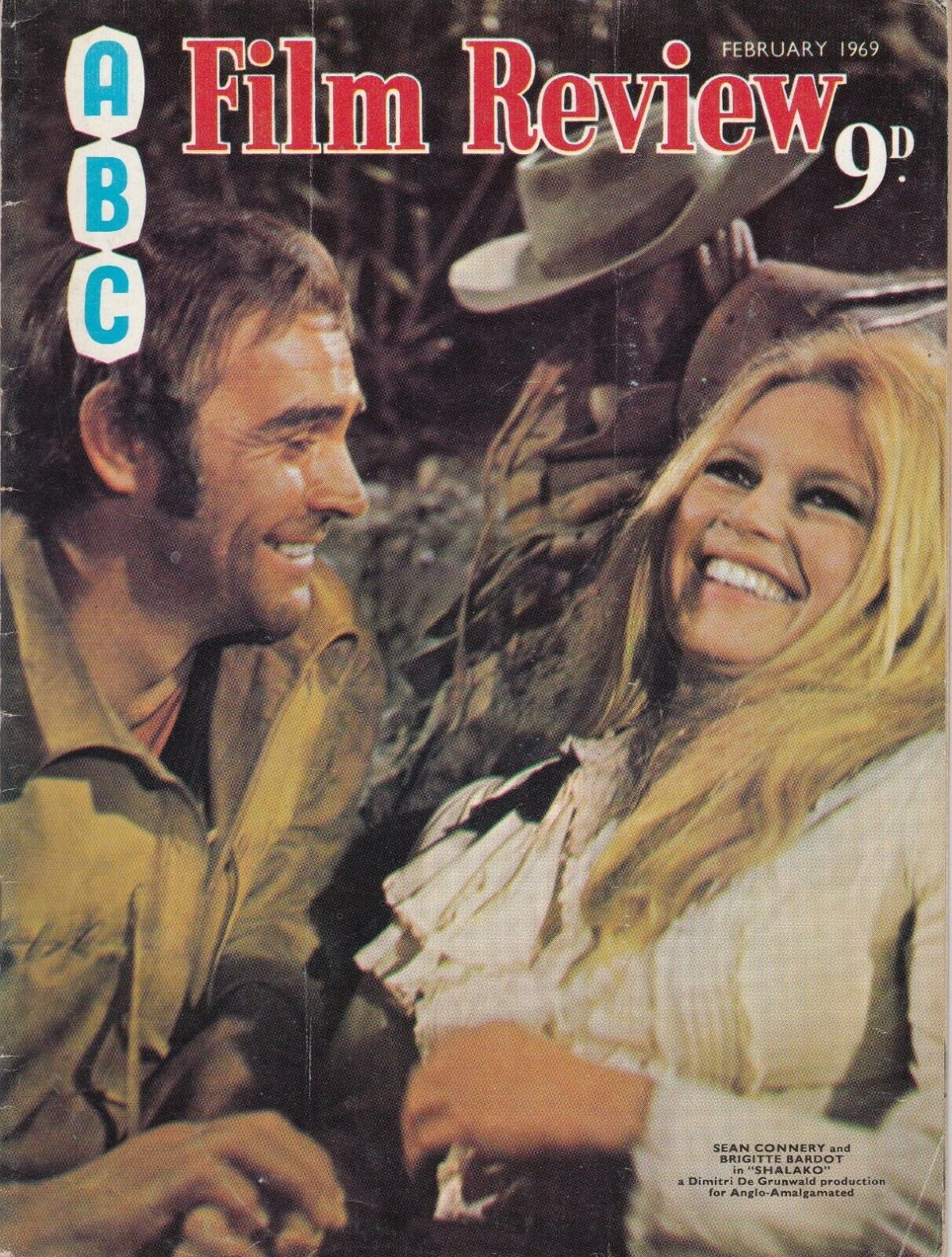
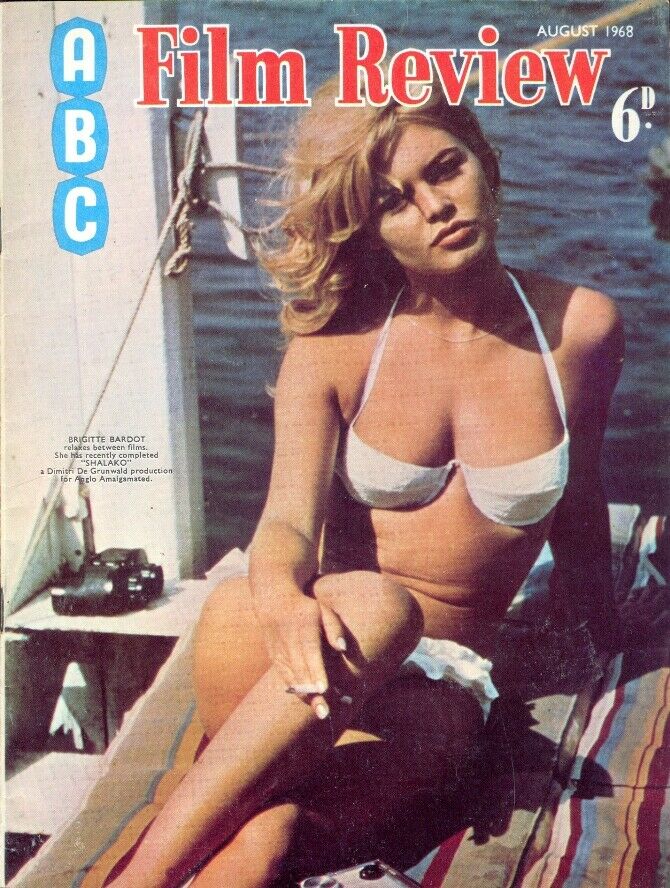
As for Billy Wilder he had much bigger fish to fry. He was seeking a budget of $7.5 million to adapt into a film the Franz Lehar play The Count of Luxembourg to pair Walter Matthau and Brigitte Bardot. Should Matthau pass, Wilder would try for Cary Grant (whose retirement had not yet been announced) or Rex Harrison. Both sides played negotiation hardball. UA currently in the hole for $21 million for The Greatest Story Ever Told (1965) and Mirisch, having pumped $13 million into the yet-to-be-release Hawaii (1966), didn’t want to commit to another unwieldy expensive project. So Mirisch insisted the project advance on a “step basis” allowing UA to reject the project after seeing the screenplay. Wilder countered by insisting that if it went into turnaround he, rather than the studio, would have the right to hawk it elsewhere (generally, studios tried to recover their costs if a movie was picked up by another studio). But Wilder was also in placatory mood and even if UA rejected this idea he was willing to work with the studio on a Julie Andrews project called My Sister and I.

However, UA and Mirisch were all show. “After Billy left the meeting,” read the minutes, “it was agreed we would not proceed with The Count of Luxembourg since we did not want to give Billy the right to take it elsewhere if United Artists did not agree to proceed.” Harold Mirisch was detailed to give Billy the bad news, but use a different excuse.

Mirisch was also on the brink of severing links with Blake Edwards. Negotiations for a new multiple-picture deal were to be terminated, which would mean the director would only earn his previous fee of $225,000 for What Did You Do in the War Daddy? It was also sayonara for Hollywood agent Irving Swifty Lazar, whose current deal was not working out to the studio’s satisfaction.

Other long-term deals with directors were under discussion. While its previous John Sturges movie, The Hallelujah Trail (1965), had flopped, UA was still keen on the Mirisches pursuing a long-term deal with the director, feeling that he was a “good picture-maker with the right project.” To that end, it was suggested Mirisch reactivate Tombstone’s Epitaph, but emphasising Stuges had to bring the cost down.

At this point nobody knew Norman Jewison was embarking on all almighty box office roll – The Russians Are Coming, The Russians Are Coming set to hit the screens, In the Heat of the Night at screenplay stage, so Mirisch was prescient in trying to put together a long-term deal with the director. Wind on Fire and Garden of Cucumbers were seen as tentpoles for a multi-picture deal. Mirisch had already agreed a $50,000 producer’s fee for Wind of Fire, payment of one-third of which was triggered for supervising the screenplay.

The meeting also gave the greenlight to Death, Where Is Thy Sting-A-Ling, a project that would be later mired in controversy with shooting ultimately abandoned. The go-ahead was given with the proviso the Mirisches secured the services of Gregory Peck or an actor of his stature.  Budget, excepting Peck’s fee, was just over $3 million and it was another one hoping to take advantage of the Eady Plan.

This kind of production meeting was probably more typical than you would imagine, studios trying to keep talent sweet while not committing themselves to dodgy product. It’s perhaps salutary to note that of the projects under discussion, only a handful found their way onto cinema screens. Garden of Cucumbers (as Fitzwilly), How To Succeed in Business, having met budget restraints, and Tombstone’s Epitaph (as Hour of the Gun) with James Garner all surfaced in 1967 and Inspector Clouseau the following year. Neither of the Steve McQueen projects survived nor the pair proposed by Billy Wilder. High Citadel, Saddle and Ride, The Narrow Sea, The Great Japanese Train Robbery, and The Cruel Eagle failed to materialize. Billy Wilder eventually made The Private Life of Sherlock Holmes under the Mirisch auspices but not until 1970. 

Behind the Scenes: Thumbs Up or Thumbs Down, United Artists 1966 – Part One

Most observers don’t have a clue why some films are made in preference to others, or even of which movies have sat in turnaround hell for years. When I was researching my book The Making of The Magnificent Seven I came across some priceless material that gave some clues regarding the process. An “Inter-Office Memorandum” dated February 3, 1966, provided an insight into how independent producers Mirisch, then allied to studio United Artists, set about giving the thumbs up or thumbs down.

The memo referred to a meeting held at the Beverley Hills Hotel on January 29-30, 1966, attended by the three Mirisch Brothers – Harold, Marvin and the recently-deceased Walter – as well as UA head honcho Arthur Krim, Herb Jaffe and David Picker. On the agenda: Inspector Clouseau, Sherlock Holmes, The Mutiny of Madame Yes, The Egyptologists, Garden of Cucumbers, Wind on Fire, High Citadel, Saddle and Ride, The Narrow Sea, The Great Japanese Train Robbery, Lydia, In the Heat of the Night, The Cruel Eagle, How To Succeed in Business, and Death, Where Is Thy Sting-a-Ling.

Separately, the group examined commitments to various talents including John Sturges, Norman Jewison, Bryan Forbes and Billy Wilder.

Top of the agenda was Inspector Clouseau, a sequel to the successful Pink Panther series, from which Peter Sellers had withdrawn. The budget was set at $3 million including $466,000 for director and star. Alan Arkin was not yet a lock, UA reserving its opinion on Arkin’s marquee’s credentials until it saw how The Russians Are Coming, The Russians Are Coming (1966), in which he was the star, performed at the box office. Should it bomb, second choice was Zero Mostel. Jonathan Winters, viewed as a “questionable choice,” was also in the running. Clive Donner was the preferred director. If he passed, next up was Guy Hamilton. (In the end both rejected the offer and it was released in 1968 with Bud Yorkin at the helm.)

Two projects on the table were mooted as vehicles for Steve McQueen. The first, Wind of Fire, was intended as “immediately following Sturges’ racing picture.”(This was Day of the Champion but a legal battle with MGM would derail this and McQueen was five years away from releasing Le Mans). Wind of Fire, to be directed by Norman Jewison, suffered from an incomplete script which restricted discussion. John Wayne had shown an interest but UA “was not really interested in Wayne,” possibly as a result of the fall-out from The Alamo (1960). The second McQueen project was the thriller Lydia based on the book by E.V Cunningham (the pseudonym of Howard Fast of Spartacus fame). Here, the script was complete and in the actor’s hands. Doris Day had been touted for female lead but Mirisch had nixed her involvement. When dealing with any major star, greenlighting a picture depended on schedules not clashing. (In the end neither project saw the light of day.)

Mirisch was also juggling two properties to star Dick Van Dyke.  The Great Japanese Train Robbery was due to commence filming in June 1966, although that meant cooperation from Columbia and Disney who had first call at that point on the actor; Disney had excused him, Columbia had not. Virna Lisi, the intended female lead, was dunped for demanding too much money, $300,000 her current asking price. In her place were suggested Claudine Auger, Catherine Deneuve, Stefania Sandrelli or Luciana Paluzzi. Although the budget was approved at around £3.3 million, the movie never went ahead.

Garden of Cucumbers with Van Dyke, though minus a female lead, was already scheduled to start shooting in August-September 1966. Proposed director, in order of preference, was Norman Jewison, Arthur Hiller or Elliott Silverstein. This project did make it over the line though the title, changed to Fitzwilly, was helmed by Delbert Mann and co-starred Barbara Feldon in her biggest role to date.

A budget of $1.89 million had been set for High Citadel, based on the Desmond Bagley thriller. UA was locked into a pay-or-play deal, which meant star James Garner would receive his salary whether or not the picture was made. However, there was a get-out clause. The studio could use Garner for another picture as long as it slotted into the same timeframe. The other options were Saddle and Ride and The Narrow Sea. Of these Mirisch preferred the former, UA the latter. But there was a directorial issue with The Narrow Sea. Mirisch had a moral commitment though not a legal contract with producer Robert Relyea to make this his directorial debut and UA didn’t want him. (In the event neither film was made.)

There were budget issues on How To Succeed in Business. UA had given the go-ahead on the basis that it would cost no more than $3.25 million but the budget had since soared by over half a million. To meet the May 1 start date, the budget had to be trimmed back to the original amout. (This was presumably done, since the movie appeared the following year). In the Heat of the Night was in the early stages of development, the production company still to see the Stirling Silliphant script, but at this stage no objections were raised. Fred Zinnemann was being considered as the director of The Cruel Eagle by Frederick E. Smith, author of 633 Squadron. (It was never greenlit).

Making movies in Britain – in order to take advantage of the tax advantages of the Eady Plan – was central to the Mirisch strategy. While Inspector Clouseau, Death, Where Is Thy Sting-a-Ling,  and The Mutiny of Madame Yes– budgets totalling around the $10 million mark – were already committed to the Eady Scheme, Mirisch was also seeking backing to set up a low-budget unit in Britain to maximize the government’s largesse. Budgets per picture would be limited to $1 million or less. In the memo they were described as “disciplined” or “service” pictures to be “produced in color.” In essence that meant basic programmers that could be sold to drive-ins and cinemas with a high movie turnover, on a rental basis if they topped the bill, for a flat fee if they were supports. This would have the added benefit, for those houses whose customers demanded a double bill, of being able to offer a program where all the revenue would end up in the Mirisch pocket.

Behind the Scenes: Top of the Flops, United Artists 1965-1969, Global Box Office – Part Two

United Artists took an unholy bath on George Stevens’ all-star The Greatest Story Ever Told (1965), shouldering a colossal loss of $9.1 million in global rentals (not gross), one of the biggest financial disasters of the decade. In second place, by a long margin, was Blake Edwards’ anti-war comedy What Did You Do in the War, Daddy? (1966). The presence of James Coburn at  a career-high thanks to the Flint spy pictures couldn’t prevent this ending up $2.75 million in the red.

Another all-star prestige war movie, though this time set in the Crimea, Tony Richardson’s The Charge of the Light Brigade (1968) ran it close, registering a deficit of $2.59 million. This was not the first time the studio’s faith in Richardson proved unfounded. He had lost $1.17 million on Sailor from Gibralter (1967) and another $1 million Mademoiselle (1966), both starring French actress Jeanne Moreau, cited in divorce proceedings brought by his wife Vanessa Redgrave.

History was also unkind to John Huston, coming unstuck with romp Sinful Davey (1969), also set in Britain, and starring newcomer John Hurt. With only $250,000 in rentals in the U.S. market it dropped a total of $2.4 million. Richard Lester was also well off the mark with anti-nuke comedy The Bedsitting Room (1969) which imploded to the tune of $1.42 million.

Although Dick Van Dyke justified his fee for the studio’s Chitty,Chitty Bang Bang, his marquee status proved decidedly unjustified in two other pictures. Some Kind of Nut (1969) lost $1.36 million while Fitzwilly (1967) was $312,000 short of break-even.

British star Michael Caine also fell into the questionable category. Billion Dollar Brain (1968), his third outing as spy Harry Palmer, proved a dud, $1.18 million down while Second World War picture  Play Dirty (1968) lost out at the box office wickets to the tune of $350,000.

Others in the million-dollar-loser class were: The Honey Pot (1967) despite the presence of Rex Harrison and Cliff Robertson; Alan Arkin’s ill-fated attempt to emulate Peter Sellers as Inspector Clouseau (1968); Jules Dassin’s 10.30pm Summer (1966); and A Twist of Sand (1967) with Richard Johnson and Honor Blackman.  And Peter Sellers himself misjudged the material for After the Fox (1966) for it came home $432,000 short of the target.

The Witches (1967) failed to coast home on the back of new sensation Clint Eastwood in the cast plus an all-star directing team including Vittorio De Sica, Luchino Visconti and Pier Paolo Pasolino and lost $880,000.

World War Two pictures proved too often problematic in registering global appeal. Michael Winner’s Hannibal Brooks (1969) starring Oliver Reed shed $650,000, John Guillermin’s The Bridge at Remagen (1969) was on the downside of $526,000, Richard Lester’s How I Won the War (1967) was $257,000 shy of budget and even low-budget numbers that were expected to at least break even failed to do so, The 1,000 Plane Raid (1969) missing out by $316,000 and Submarine X-1 starring James Caan by $156,000.

The notion that westerns had universal appeal turned out to be a dodgy proposition for some products. Whereas foreign made a distinctive impact in the box office for a film like Guns of the Magnificent Seven (1969) it did not always play out that way. Though John Sturges’ Hour of the Gun (1967) toplining  James Garner and Jason Robards did better aboard than at home that still wasn’t enough to offset losses of $627,000. Overseas rentals matched domestic for Young Billy Young (1969) starring Robert Mitchum but that still kept it out in the cold with another half a million needed to get over the line.

You would think minimal budgets would be a guarantee against outright failure, but too often promise remained unfulfilled. Charlotte Rampling and Sam Waterston were touted as rising talents when cast in Three (1969). The budget was a miserly $355,000. Yet it still lost $305,000, generating rentals of just $25,000 both at home and abroad. Bryan Forbes’ The Whisperers (1967), with Edith Evans winning an Oscar nomination, lost $180,000 on a budget of just under $400,000. The Russian version of Hamlet (1966) dropped $55,000 on a $75,000 budget.  Don’t Worry We’ll Think of a Title (1966) starring Morey Amsterdam only earned back $50,000 on its $181,000 cost.

Some movies came pretty close to break-even – another $16,000 would have seen Danger Route (1968) also with Richard Johnson reach the magic mark, American football drama Number One (1969) with Charlton Heston required another $40,000.  

SOURCE: “United Artists Corporation and Subsidiaries Motion Picture Negative Costs for Pictures Released in the Year Ended 1965, 1966, 1967, 1968 and 1969,” United Artists Files, Wisconsin Center for Film and Theater Research, University of Wisconsin.

Behind the Scenes: “The Deadly Companions / Trigger Happy” (1961)

There was enough controversy surrounding the launch of this picture without even invoking the behavior of director Sam Peckinpah. For a start its production heralded a revolution in exhibition. Cinema owners were intent on breaking the industry’s one sacrosanct law.

Since 1948 and the Paramount Decree which forced studios to shed their cinemas, it had been forbidden for a studio to operate as an exibitor and vice-versa. But the financial tsumani that hit the business at the end of the 1950s resulted in a shortfall of new releases and left exhibitors scratching around for product.

Taking the view that the situation was so dire that studios could not resolve it and imagining that the government would not look unkindly on the idea, exhibitors set up a company called Motion Pictures Investment Inc. Initially, the outfit was not so confrontational. The plan was simply to repackage old movies and send them out as reissues. There was no law against that since the exhibitors were not acting as production companies.

It was ambitious scheme, calling in 1958 for $25 million to be raised to fund a whole stream of old movies, sending them into reissue achieving the double aim of filling release gaps and preventing them from falling into the maw of television – Twentieth Century Fox in the process of selling 50 pictures dating from 1950-1955 to television for $10 million. 

The Actors’ Strike of  1960 halved production, making a dire situation intolerable. MPI bought the rights to Gary Cooper western Friendly Persuasion (1957) and put together a hefty marketing campaign to get that picture back on the market. Recognising that studios were likely to prevent their gems from being reissued when they could be sold so easily to television, MPI bit the bullet and moved into production. Pathe-America was the vehicle, “a production-distribution-exhibition project predicated on the theory that exhibitors can sense better than anybody what the pubic want on the screens.”

First film on the agenda – The Deadly Companions.

The driving force behind that picture was a female star intent on a bit of revolution of her own – Maureen O’Hara. The flame-haired actress – a star for over two decades, as comfortable in westerns like Rio Grande (1950) as dramas (The Quiet Man, 1952) and swashbucklers (The Spanish Main, 1945) had  decided her career was in need of a rejig. Demand for her services was slowing down – only four movies in the second half of the 1950s compared to 14 in the first half. 

In reality, her career was sinking fast and it felt like panic to imagine she could reconfigure herself at this late stage as a singer, signing a contract for an album first with RCA Victor in 1958 and then CBS in 1960 and starring in the Broadway musical Christine in 1960, a flop despite her “good singing voice and assured stage presence.”

But a bigger measure of her fall was that she ended up in television, spurred on initially by her brother, Charles B. Fitzsimons, who thought he could help better manage her career. Initially an actor, he had segued into production via independent producer Edward L. Alperson but without particular distinction.

They set up Tarafilm in 1958 with the aim of co-producing a series Women In the Case with CBS, profits to be evenly split. But that never surfaced and instead she was an actress for hire and at modest fees at that for, even for bigger stars, the small screen did not pay fees comparable with the movies. For the first time in her career a year passed without a single movie. In 1960 only television beckoned – Open Window, The Scarlet Pimpernel, Mrs Miniver and the DuPont Show of the Month. And there was something plaintive when O’Hara, who had espoused the freelance approach to her career, advised young stars to take a studio contracts if offered.

But Fitzsimons was feverishly working behind the scenes, trying to raise money for their Carousel movie production shingle, even going so far as applying to the U.S. Government’s Small Business Loan scheme. Without exhibitors determined to break the law, it’s doubtful they would have sourced the funding for The Deadly Companions. MPI put up nearly half the $390,000 budget for The Deadly Companions after Fitzsimons had commissioned a screenplay from novelist A.S. Fleischman.

Brian Keith was available because the television series The Westerner (1960) that had made him temporarily a star was cancelled after not even lasting a season.  He came cheap – a steal even for a low-budget picture – at $30,000. Sam Peckinpah, who had originated The Westerner, was primarily a television writer and director thirsting for an opportunity to make his mark on the big screen. So, also out of work after The Westerner was canned, he came cheap too, earning half Keith’s salary.

Peckinpah later complained about script problems, but that was par for the course with the director; if a movie failed it was someone else’s fault. O’Hara, who had worked with the best including Hitchcock and Ford, and like most top stars knew a fair bit about how and where to point a camera, later complained that Peckinpah was out of his depth. But that, too, was par for the course. Her autobiography Tis Herself was almost a litany of complaints.

The problem for O’Hara was more financial. While Peckinpah was guaranteed payment, she was not. As producer, she would be working for a fraction of her normal fee of $150,000, expecting to make that back – and more – when the movie went into profit. There was no reason to assume it would not make a decent sum, low-budget westerns having a habit of making money.

The movie was filmed on location in Arizona. The picture’s Gila City, where the bank robbery took place, was based on the Tucson of a hundred years before. Seeking authenticity, the set was constructed following artist drawings culled from the early 1860s. Props were also authentic – the doctor’s chair was from the period, the surgical instruments remnants from the era and even the apothecary jars had come from an early pharmacist shop.

Extras were genuine cowboys or Native Americans. Apaches and Papagos were hired as Native Americans. At a casting call at the Ramada Inn, producer Fitzsimons found the genuine cowboy article in the in the lobby “their Stetsons stained by sweat and faded by the sun and most of them wore working jeans and multi-colored shirts that had been washed but not ironed…leathery-faced men…speaking in low voices of how bum the cattle business was from all this drought and how fine it was a man could pick up a few dollars riding with the movie company.” Even the cactus was authentic, the director favoring scenes which featured the giant Sauaro species.

The cave for one scene was also genuine, not a stage set,  the result of an earthquake fault, 50-foot high and 40-foot across at the opening, spiralling hundreds of feet into the mountain. The roof, made up of boulders, was particularly precarious as any rumble could send it tumbling to the ground. Only essential crew were permitted for the scene which saw O’Hara firing a shotgun at an Apache. Fearing the sound of detonation might affect the roof, flash powder was used instead of cartridges.

Stunts involved included overturning a stagecoach and falling 35-feet. Stuntman Chuck Hayward nearly died during rehearsal when the horse bolted and the stagecoach struck a tree. He was married to Ellen Hayward, daughter of Joan Blondell and Dick Powell.

Perhaps the most immediately unusual aspect of the movie was the score. Among instruments used by composer Marlin Skiles were a toy trumpet, xylophone, vibraphone, kettle drum and cracked belt.

To help promote the picture the screenplay was novelized and went on to sell half a million copies, though it went out under the title Yellowleg and was not noticeably a movie tie-in.

The movie received good reviews. Box Office, which might be expected to back any exhibitor initiative, deemed it a “well above average western” with “superb performances” and “exacting direction.” Variety, which sided more with studios than exhibitors, nonetheless was mostly positive, except for “lapses and weaknesses” finding it “fairly engrossing” with O’Hara’s performance “one of her best for some time.”

As you might expect, exhibitors, too, got behind the picture. There was double “Gala World Premiere” in Tucson and Phoenix, on June 6 for the former the following night for the latter, attended by the stars. Surprisingly, given it was a target for saturation (i.e. multiple release region-by-region) and a low-budget number, it was shown in some major houses, in Detroit the 5,000-seater Fox, in Pittsburgh the 3,700-seater Stanley, a 3,600-seater in St Louis, in Buffalo the 3,000-eater Lafayette, in Cleveland the 2,739-seater Palace and in Seattle the 2,200-seater Music Hall. But bookings were scattered between June and September 1961.

But giving a  movie a helping hand would not necessarily translate into decent box office. Takings were poor – the best result a “good” $15,000 in Detroit. Cleveland produced a “fair” $9,000, St Louis a “fair” $10,000, Pittsburgh a “drab” $8,500, Buffalo a “thin” $5,000 and there was but $2,500 in Seattle. No major first run theaters signed up in Los Angeles or Kansas City, in each location going out in small multiple release, edging a “dim” $8,5000 from three cinemas in the former and a “moderate” $15,000 from three in Kansas City. Nor did first run line up to host it in New York and by the time it reached Portland it was playing on the lower half of a double bill.

In an attempt to recover some of its $60,000 loss, MPI changed the title in 1962 to Trigger Happy, altered the poster to focus on action rather than sex, and programmed it in a double bill with its second production The Checkered Flag. That proved a failure and MPI was wound up.

Buoyed by the unexpected success of The Parent Trap (1961), O’Hara’s career recovered and she was paired with James Stewart in Mr Hobbs Takes a Vacation (1962) and reunited with John Wayne for McLintock (1963). Brian Keith never became a major star but still had a very decent career toplining smaller-budgeted films and in supporting roles. Charles B. Fitzsimons made a success of production, though mainly in television. We all know what happened to Sam Peckinpah.  

SOURCES: Brian Hannan, Coming Back to a Theater Near You, A History of Hollywood Reissues 1914-2014 (McFarland, 2016) p117-120;  Pressbook, The Deadly Companions; “Maureen O’Hara As Disker,” Variety, May 7, 1958, p59; “Maureen O’Hara Bagged for Series,” Variety, August 27, 1958, p27; “Christine Gives Columbia 3 On Showtime Shelf,” Variety, March 23, 1960, p45; Review, Christine, Variety, May 4, 1960, p56; “Longplay Shorts,” Variety, September 28, 1960, p58; “Family Classics,” Variety, November 2, 1960, p27; “MP Investment Trust Puts Coin into Pathe America Release,” Variety, January 25, 1961, p5; “Pathe America’s First Star: Maureen O’Hara,” Variety, November 9, 1960, p4; “Pathe Companions into Saturation Playoff,” Variety, June 7, 1961, p5; Review, Variety, June 10, 1961, p10; Review, Box Office, Jun 12, 1961, pA11; “Gala World Premiere for Deadly Companions,” Box Office, June 12, 1961, p10; “Don’t Do As I Do,” Variety, August 2, 1961, p4; “Fitzsimons Switches Pitch,” Variety, August 29, 1962, p16; “Motion Pic Investors Draws Criticism for Faltering Achievement,” Variety, December 12, 1962, p3; “Missouri-Made Feature in Second Round,” Variety, June 5, 1963, p18. Box office results: “Picture Grosses,” Variety – June 14 and 28, July 19, August 16 and 23, September 6, 13 and 20.

Behind the Scenes: When “Worldwide” Didn’t Exist – Global Box Office Part One

Box office fans, excited no doubt at how Avatar: The Way of Water (2022), is charging up the all-time charts, might be surprised to discover that the concept of “worldwide” box office figures didn’t exist in the 1960s. Although foreign markets had proved important to Hollywood since the 1940s, there was no accepted way of measuring their impact.

Box office results in certain countries – Italy, France, Brazil, Australia etc – were reported only on an occasional basis and were never considered front page news. Global box office figures were more likely to appear courtesy of one of the profit participants. Star William Holden’s share of Bridge on the River Kwai (1957) and producer Sam Spiegel’s earnings on Doctor Zhivago (1965), for example, were widely reported. Or a studio might want to defray rising investor discontent by pointing how well a Stateside flop such as The Magnificent Seven (1960) had performed overseas.

But these were one-offs and it was impossible to get a handle on the worldwide results for an entire year of Hollywood output. The kind of global box office reporting we take for granted did not appear until the 1990s and often even then, for many pictures, it was only as a year-end figure.

However, during my digging into hordes of records for my book The Making of “The Magnificent Seven” I came upon a tranche of reports on foreign box office figures relating to United Artists for the years 1965 to 1969. And they make for fascinating reading, not least to discover which Stateside hits did poorly abroad and, conversely, what flops in the domestic market made up for it in foreign countries.

Volume of production at UA more than doubled over the period, from 17 pictures in 1965 to 38 in 1969, but the average budget came down from $3.68 million per movie to $2.14 million. 

You won’t be surprised to learn that James Bond pretty much reigned supreme, taking three of the top four spots. But you might be taken aback to discover just how profitable this series was – over $100 million in rentals (the studio share of box office once cinemas have taken their cut) for three movies mentioned here – more than four times what they cost to make, and that would not take into account the colossal revenues accruing from merchandising.

The 1965-1969 worldwide winner by some margin was Thunderball (1965), clocking up $48 million in worldwide rentals. In second place was You Only Live Twice (1967) on $36 million. but the prospect of a cosy one-two-three was nipped in the bud by Oscar-winning Midnight Cowboy (1969) on $26 million with On her Majesty’s Secret Service (1969,) hampered by losing the services of Sean Connery, settling for fourth after pulling in $23 million.

Fifth spot went to big-budget roadshow Hawaii (1966) starring Julie Andrews and Max von Sydow which sank $18.8 million worldwide followed by Norman Jewison’s low-budget crime story In the Heat of the Night (1967) on $16 million helped by Sidney Poitier at a box office peak and Rod Steiger, courtesy of an Oscar, at a career one. Placing seventh was big-budget all-star British World War Two epic The Battle of Britain (1969) which soared, largely on foreign grosses, to $15.5 million. Next, on $14.8 million, came roadshow musical Chitty Chitty Bang Bang (1968) starring Dick Van Dyke. 

Biggest surprise of the year was the performance of family melding comedy Yours, Mine and Ours (1968) with out-of-favor stars Lucille Ball and Henry Fonda which closed in on $13 million. Rounding out the Top Ten was George Stevens’ Biblical roadshow The Greatest Story Ever Told (1965). However, its global figures of $12.1 million were a disappointment given its budget topped $21.2 million.

Just behind, on $12 million worldwide, setting another comedic hot pace, was Clive Donner’s What’s New Pussycat (1965). Despite having no roadshow credentials it boasted an all-star cast consisting of Peter O’Toole, Peter Sellers, Woody Allen, Ursula Andress, Romy Scheider and Paula Prentiss. Comedy also accounted for twelfth – the unfancied, though timely, Norman Jewison effort The Russians Are Coming, The Russians Are Coming (1966) starring Alan Arkin and Eva Marie Saint which coasted in with $11.8 million.

Thirteenth was Steve McQueen-Faye Dunaway romantic thriller The Thomas Crown Affair (1968) directed with considerable elan also by Norman Jewison. That flew in with $11.25 million, a cool million ahead of the second picture, Help!, by British pop sensation The Beatles.

Fifteenth place went to the final picture in the Sergio Leone trilogy The Good, the Bad and the Ugly (1968) starring Clint Eastwood which crested $10.2 million. John Frankenheimer’s World War Two thriller The Train (1965) with Burt Lancaster trying to outfox Paul Schofield tracked $9.75 million. But, as if to emphasize Clint Eastwood’s growing box office power, his first American western Hang ‘Em High came next on $9 million worldwide.

Second World War mission picture The Devil’s Brigade (1968) starring William Holden and Cliff Robertson in a Dirty Dozen-style knock-off paraded $8.6 million for eighteenth position. Comedy filled out the final two places in the Top 20. Jack Lemmon scored a suprise hit in Richard Quine’s How To Murder Your Wife (1965). Co-starring Virna Lisi and Englishman Terry-Thomas it romped away with $8.4 million. Although The Graduate (1967) had been a massive global success, United Artists only held the rights to certain territories but that was enough to pull in $7.7 million worldwide.

There wasn’t actually an informal Top 20 reported by United Artists over this five-year period. I’ve concocted it out of the reports below.

SOURCE: “United Artists Corporation and Subsidiaries Motion Picture Negative Costs for Pictures Released in the Year Ended 1965;” “United Artists Corporation and Subsidiaries Motion Picture Negative Costs for Pictures Released in the Year Ended 1966;” “United Artists Corporation and Subsidiaries Motion Picture Negative Costs for Pictures Released in the Year Ended 1967;” “United Artists Corporation and Subsidiaries Motion Picture Negative Costs for Pictures Released in the Year Ended 1968;” “United Artists Corporation and Subsidiaries Motion Picture Negative Costs for Pictures Released in the Year Ended 1969,” United Artists Files, Wisconsin Center for Film and Theater Research, University of Wisconsin.

Behind the Scenes: “100 Rifles” (1969)

100 Rifles was easily the most underrated film of the year. Even if the sum of all its parts did not add up to greatness, it had a lot more going for it than has generally been attributed. For a start, there was the attempt to build Jim Brown into a mainstream African American star. Secondly: the return of the bold female character that had largely disappeared since the heyday of Barbara Stanwyck, and Joan Crawford. Thirdly: the conjunction of these first two elements in a sex scene raised the issue of miscegenation that Hollywood had otherwise sought to avoid.

Fourthly, and perhaps most hard- hitting of all: the issue of genocide, the mass slaughter of the Yaqui Indian population providing an uneasy parallel not just to the United States treatment of its own indigenous Native American population but also to its actions in Vietnam.

But there was a danger that, without both incisive direction and potent performances, the movie would spiral downwards into another simple case of “When Beefcake (Jim Brown) Met Cheesecake (Raquel Welch).” Since nobody had expected Sidney Poitier to ascend the Hollywood ladder so fast, and in so doing set a trend, the industry had nobody lined up to ride in his wake and exploit what now appeared to be, at the very least, acceptance of African Africans as stars in their own right, with an audience ready to embrace a new kind of hero. Although MPAA president Jack Valenti called for more African Americans in more African American films, the number of highly touted big- budget African American–oriented pictures that offered stardom potential rarely made it out of the starting blocks.

But there was one potential crossover star waiting in the wings: Jim Brown. While lacking Poitier’s acting chops, he had the physique, looks and charisma. Cleveland Browns football legend with strong supporting roles in The Dirty Dozen (1967), Dark of the Sun (1968) and Ice Station Zebra (1968), top-billing had been limited to low-budgeters like Kenner (1968), The Split (1968) and Riot (1969).

But Variety had singled him out at the start of 1969 as one of its “new stars of the year” and judged him “the strongest contender to inherit some of Sidney Poitier’s earning power.” 100 Rifles had double the budget of any of his previous pictures.

Raquel Welch was in a similar situation to Jim Brown regarding Hollywood acceptance. However, she was not in a minority as far as female stars were concerned. The 1960s had been dominated by the likes of drama queen (in more ways than one) Elizabeth Taylor,  comedy queen Doris Day and musical queen Julie Andrews, not to mention Audrey Hepburn, (Breakfast at Tiffany’s, 1961), Italian import Sophia Loren (El Cid, 1961), Jane Fonda (Cat Ballou, 1965), Natalie Wood (Sex and the Single Girl, 1964) and Shirley MacLaine (Sweet Charity, 1968). There was also an overabundance of new talent in Julie Christie (Doctor Zhivago, 1965), Vanessa Redgrave (Blow Up, 1966), Lynn Redgrave (Georgy Girl, 1965), Mia Farrow (Rosemary’s Baby, 1968) and Faye Dunaway (Bonnie and Clyde, 1967).

But those stars had more to offer than mere beauty, whereas Welch, having made her name primarily as a pin- up and as eye candy in movies like One Million Years B.C. (1966) and Fantastic Voyage (1966), had trouble shaking off the idea that she won more parts on the basis of her body than for the acting skills, appearing in a dry bikini in Fathom (1967) and a wet one in Lady in Cement (1968).

However, like Jim Brown, she was actively looking to fill a niche, and set out her stall as a player of dramatic intensity, and she found it in the most unlikely of places: the western. That she chose 100 Rifles was interesting given her other choices. She was offered the Katharine Ross part in Butch Cassidy and the Sundance Kid when the lead roles had been offered to Steve McQueen and Warren Beatty and again when Paul Newman came into the frame. She was also up for the Faye Dunaway role for The Crown Caper (title later changed to The Thomas Crown Affair), again with McQueen, and a film with Terence Stamp (which was never made). But she clearly felt those roles were more decorative.

At one time, the female western star had been a staple. Claire Trevor was the star of Stagecoach (1939) and Texas (1941). Gene Tierney made her name with The Return of Frank James (1940) and Belle Starr (1941). Barbara Stanwyck carved out her own niche as a western icon after taking top billing in Union Pacific (1939), California (1947), The Furies (1950), Cattle Queen of Montana (1954), The Maverick Queen (1956) and Forty Guns (1957). While Maureen O’Hara took second billing in Rio Grande (1950), McLintock! (1963) and The Rare Breed (1965), she was the star of Comanche Territory (1950), The Redhead from Wyoming (1953) and The Deadly Companions (1961). Yvonne De Carlo headlined Black Bart (1948), The Gal Who Took the West (1949) and Calamity Jane and Sam Bass (1949). Rhonda Fleming had the female lead in The Redhead and the Cowboy (1951), The Last Outpost (1951), Pony Express (1953) and Gunfight at the O.K. Corral (1957). Johnny Guitar (1954) achieved classic status largely on the performance of Joan Crawford.

There had even been modern precedent: Inger Stevens had nearly cornered the recent market after A Time for Killing (1967), Firecreek (1968), Hang ’Em High (1968) and 5 Card Stud (1968) while Claudia Cardinale went from a supporting role in The Professionals (1966) to top billing in the forthcoming Once Upon a Time in the West.

Raquel Welch set out to follow suit. In Bandolero (1968) she proved capable not only of holding her own against veterans James Stewart and Dean Martin but as adept on the pistol- packing side of things. While Welch professed herself “no Anne Bancroft,” she was pleased that she was not “running around half- naked all the time.” After that punched a hole in the  box office, she was offered the female lead in 100 Rifles to be directed by Tom Gries who had made his name as a director with his unflinching portrayal of the cowboy in Will Penny (1968).

The basis of the film was Robert MacLeod’s The Californio, published in 1966, and the essence of the story concerned a “reckless stranger” who refused to turn the other cheek while innocent people were being killed. After Clair Huffaker turned in his screenplay, Gries wrote two further drafts. It is safe to assume that the casting of Jim Brown came after the Huffaker script had been handed in. When Huffaker did not like the way his work had ended up on screen, he insisted on using the pseudonym Cecil Dan Hansen, as he had done on The Second Time Around.

For 100 Rifles, he was so upset at the end result that he demanded either his name removed or the pseudonym installed, complaining that the finished product “bears absolutely no resemblance to my script.”

The story of The Californio bears little resemblance to 100 Rifles. Not only is the hero of the book, Steve McCall, white, he is a rawboned young man and not a lawman in his 30s. He is not a gunman either, being more proficient with the lasso. In fact, when forced into bloody action, he discovers that he abhors violence. The book could more aptly be described as a “rite of passage” novel where a young man, sent south “on legitimate business in the interests of the (U.S.) Federal Government,” leaves home for the first time, becomes a man, loses his virginity and kills his first man.

Nor is Yaqui Joe a bank robber in the book, and after meeting up with McCall, they embark on further legitimate business. Maria, named Sarita in the film, is most like her feisty movie counterpart, and although in the MacLeod version she is married, that does not prevent her taking Steve’s virginity. Of the villains, Verdugo (the name means “Hangman”), while not elevated to general, is still as ruthless, but the foreign adviser is not.

Most of the film’s action was invented by the screenwriters, including the concept of the 100 Rifles, Sarita’s sexy shower as a way of stopping the troop train, and the children being taken hostage (although in one episode in the book, children are shot). Trying to reshape the book to suit the new requirements of the characters makes the picture unnecessarily complicated. Burt Reynold’s solution was simpler: “Keep his shirt off and her [Raquel Welch’s] shirt off and give me all the lines,” he reportedly advised producer Marvin Schwartz.

The movie was shot over a ten- week period in Spain beginning in July 1968. Although that country had become a viable alternative for westerns looking to keep budgets low, in part in 1968 due to the devaluing of the peseta against the dollar, the volume of films shot there had declined by nearly a third compared to the previous year.

Despite the popularity of the location, Almeria, the actual area of countryside where most spaghetti westerns were shot, was very small. This resulted in a limited variety of available landscapes compared with films shot in the U.S. such as The Stalking Moon. The actors had to contend with extreme heat, and Gries was laid low for three days after contracting typhus. Gries decided to get the sex scene out of the way on the first day of shooting, probably to ensure that tension about the content was not allowed to linger until later in the shoot. However, it had the opposite effect. Neither Brown nor Welch had been given time to get to know one another nor to adjust to different styles of acting and to understand the perspectives of each other’s characters. Welch was not happy with the scene and tensions between the two stars continued throughout the film, some press reports putting this down to squabbles over close- ups, others to unresolved sexual tension. Welch later complained that scenes edited out of the picture had reduced audience understanding of her motivations. The MPAA also did some judicial trimming, axing Welch’s shrieks during lovemaking.

Critical reception ranged from sniffy to downright hostile. Perhaps like The Stalking Moon, advance publicity, although not this time pointing in the direction of the Oscars, had served to put critics off what sounded like an exploitative film. For the western traditionalist, sex scenes were off- putting, and although naked breasts had started appearing in a handful of movies, there were precious few full- on sex scenes, never mind one that featured miscegenation. Variety judged it a “routine Spanish- made western with a questionable sex scene as a possible exploitation hook.” On the plus side, Welch’s performance was “spirited” as was the Jerry Goldsmith score; Brown and Reynolds were just “okay.” The Showmen’s Servisection took a different view: “Fast pace, fine performances lift western several notches above the ordinary.” Roger Ebert in the Chicago Sun- Times called it “pretty dreary.” Howard Thompson, the New York Times’ second- string reviewer, said it was a “triumphantly empty exercise.”

Twentieth Century–Fox had been affected by recent financial disasters such as Doctor Dolittle (1967) and Star! (1968); the former collecting $6.2 million in domestic rentals on a budget of $17 million, the latter $4.2 million in rentals after costing $14.5 million. To counter mounting exhibitor panic about production being slashed, Fox had drawn up an ambitious program for 1969, promising one new movie every month. The program kicked off with a $7.7 million adaptation of the Lawrence Durrell classic Justine with Dirk Bogarde (January), followed by Michael Caine and Anthony Quinn in the $3.77 million film of the John Fowles bestseller The Magus (February) and the trendy $1.1 million Joanna from new director Mike Sarne (March). British star Maggie Smith in the $2.7 million The Prime of Miss Jean Brodie (April) came next with 100 Rifles (May) and another Marvin Schwarz production, Hard Contract starring James Coburn, costing $4 million (June). Summer highlights were Omar Sharif in the $5.1 million biopic of Che! directed by Richard Fleischer (July) and Gregory Peck in the $4.9 million Cold War thriller The Chairman (August). Come fall it was the turn of Paul Newman and Robert Redford in the western Butch Cassidy and the Sundance Kid coming in at $6.8 million (September), Richard Burton and Rex Harrison as aging homosexuals in The Staircase costing $6.3 million (October) and Warren Beatty and Elizabeth Taylor in George Stevens’ $10 million The Only Game in Town (November). The year ended with John Wayne and Rock Hudson in the $7.1 million Civil War western The Undefeated (December).

The studio needed several box office home runs because the following year it was already committed to three roadshows—Tora! Tora ! Tora!, Hello, Dolly and Patton—costing over $60 million. By spring it was clear that the first two movies in the schedule had been major flops, Justine bringing in only $2.2 million in rentals, The Magus $1 million. Income from Joanna and The Prime of Miss Jean Brodie barely exceeded costs.

By the time 100 Rifles swung into action with two largely untried leads and a director making only his second major picture, the pressure was on. “

At the box office 100 Rifles got off to a great start and Twentieth Century–Fox reported with delight that it had outgrossed Bandolero! by 40 percent in Washington (and by 500 percent in the ghetto areas), and by 300 percent in Philadelphia. In Baltimore it grossed $50,000 from a single theater compared to $80,000 from eight for Bandolero! and in Atlanta first run it had been $61,000 for the new film compared to $38,000 for the previous one. However, while Brown and Welch fans were out in force in certain areas, that did not make up for less interest in regions where westerns were associated with bigger or more traditional names. Ultimately, 100 Rifles fell short of expectations given the budget. U.S. rentals amounted to $3.5 million, and it registered in 29th position on the annual chart— the sixth highest- grossing western of the year and ahead of Mackenna’s Gold, The Stalking Moon, Paint Your Wagon and Once Upon a Time in the West.

But, of course, the domestic performance did not take into account the popularity of westerns overseas and the distinct following Raquel Welch had accumulated. So where some of the studio’s major dramas stumbled in the global market, 100 Rifles hit the ground running.

SOURCES: This is an abbreviated version of much longer chapter devoted to the film that ran in The Gunslingers of ’69: Western Movies’ Greatest Year (McFarland, 2019) by Brian Hannan (that’s me). All the references mentioned can be found in the Notes section of that book.

Oldies Every Day of the Week

In the 1960s you could watch old films in the cinema in virtually every country in the world every day of the week. Except in the United States, television had not impacted so much on the availability for booking films made within the last decade, so there was generally plenty of scope to operate a picture house that specialized in old movies. They were called “repertory” theaters. Of course studios dipped in and out of the repertory business themselves, yanking out of the vaults old blockbusters, but on an irregular basis, that particular supply rapidly diminishing as old movies were sold off for small screen presentation. 

Pre-television, in the United States in the 1940s a small industry had grown up, both in distribution and exhibition, either buying up the rights to old movies and recycling them as instituted by the Producers’ Releasing Corporation and Realart and PRC or establishing mini-chains of cinemas like the Academy of Proven Hits. But when television made such big inroads into old stock in the U.S. you were more likely to find old pictures turning up in arthouses, and even then that was limited to known attractions like Garbo and Bogart and occasional retrospectives of Bette Davis and Joan Crawford. Or arthouses would slip in a series of oldies one day a week.

In the 1960s “no cinema in the United States except the Thalia in New York and the Cinema Guild in Berkeley has ever made a serious attempt at presenting cinema repertory.” Occasionally, a U.S. distributor acquired a bundle of old pictures as the basis of an ongoing program distributed through arthouses, such as the 27-film series from Janus or Tom Brandon’s batch of 75. Paris, on the other hand, was a paradise for lovers of old movies. 

The 1960s saw the beginning of the film studies phenomenon, so cinemas showing old movies found new custom. Prior to that, the most common way to view classics was via a film society, another booming sector. While boasting four million members worldwide, access was limited to one movie – in 16mm not 35mm – a week for one screening only and a program that ran for about half a year.

Surprisingly, Britain was at the forefront of the repertory industry. When I was growing up in Glasgow in the 1960s I was astonished to discover a commercial chain – the Classic – operating three cinemas in the city center. Two of the operations, the Classic Grand and the Tatler Classic, while retaining the company name gradually shifted into the sexploitation business, the latter as a private members’ club. But the flagship Classic, just down the road from the Odeon, one of the city’s most prestigious houses, ran a weekly program of old films.

Realart reissue from the 1940s.

At the start of the decade, Classic operated ten cinemas in London and another 80-plus  throughout the United Kingdom. Programmes changed midweek if showing just one film while a double bill would run a full week. Several cinemas ran late night screenings, usually on a Saturday, but these could also be found on a Wednesday or Thursday.

Sometimes the movies shown were foreign, other times there might be a short season of Marx Bros comedies or Hitchcock thrillers, but mostly they were British or American pictures whose quality or reputation suggested they deserved repeat viewing on the big screen. One print would be enough to feed the entire system, shunted from screen to screen.

Quite a few of the films would be hired on a flat fee basis, no sharing the box office with a distributor or studio. Older audiences, fed up with the sex and violence prevalent in current movies, took refuge in safer, older films. Younger audiences, wanting to catch up with great films, found the screenings an unexpected bounty, especially to see them projected in their original dimensions.

Just how old the offerings were varied. In 1968 over the period March 10-April 6 the youngest film presented on the Classic chain was Bonnie and Clyde (1967), the oldest Animal Crackers (1930), The Lady Vanishes (1938), Carol Reed’s The Stars Look Down (1940) and The Song of Bernadette (1943). In between you could choose between The Third Man (1949), Barbara Stanwyck as The Cattle Queen of Montana (1951), Viva Zapata (1952), The Brides of Dracula (1960), Billy Liar (1963), The Birds (1963), The Pawnbroker (1964) and Peter Sellers comedy After the Fox (1966).

On the foreign front, you could sample Vilgot Sjoman’s My Sister, My Love (1966), Godard’s A Woman Is A Woman (1961), offbeat French film Do You Like Women (1964) about cannibals owning a vegetarian restaurant, and Elke Sommer and Virna Lisi in Four Kinds of Women/The Dolls (1965). It was relatively easy to structure programs to cash in on a current picture by, for example, Peter Sellers or Marlon Brando or directors such as Alfred Hitchcock or Carol Reed.

By the 1970s repertory cinema was booming in America, 400 theaters in operation, major cities accommodating several, while in Britain the Classic chain was acquired by the Tigon production company.

SOURCES: Brian Hannan, Coming Back to a Theater Near You (McFarland, 2016) p48-49, 54, 63, 72-73, 77, 80-81, 72; Gideon Bachmann, “A New Generation of Critical Fans,” Variety, June 1, 1960, p5; Advertisement, Films and Filming, October 1961, p2;“One Night Revivals Add to Arthouse Profits,” Box Office, June 29, 1964, pA3; Gideon Bachmann, “International Film Societies Number 2,500,” Variety, April 20, 1967, p13; “Films in Repertory Set for Reade-Sterling House,” Box Office, February 8, 1965, pE5; “Brandon Lines Up Chain of 30 Arties for Medleys of Oldies and Offbeat Pix,” Variety, Septmeber 6, 1967, p5; “Repertory,” Films and Filming, April 1968, p23;“Squeeze More Coin on Last Run of Classic Films,” Variety, April 24, 1968, p7; “Classic Try Switch To Cinema Club,” Kine Weekly, February 8, 1969, p6; “Tigon Aims Complete Classic Deal by End July,” Kine Weekly, June 12, 1971, p3; Marianne Cotter, “Survival of Revival House,” Box Office, March 1, 1993, p24.

Behind the Scenes: Exposing the Myth of the “Sound Revolution”

It’s only according to film historians and movies like Babylon (2022) that the transition to sound in 1927 was instantaneous. Maybe from a contorted academic perspective, but not for audiences and not for exhibitors. That The Jazz Singer (1927) proved momentous required not one revolution, but two. For it was responsible for nothing less than the beginnings of the wide release.

There had been sporadic attempts at day-dating, day-and-date, simultaneous openings, saturation bookings, whatever you wanted to call it, from 1913 to 1920. You might find an occasional picture released all at once into 20 houses in New York, but more likely it was a picture that showed up on two or three screens in Detroit, San Francisco or St Louis. In 1921 there were 300 day-and-date bookings for Chaplin’s The Kid with 70 prints allocated to New York and 40 to Chicago. But wide release remained rare.

In 1924 in Cleveland 65 nabes signed up to day-date Let Not Man Put Asunder and First National attempted to interest 100 theaters in day-dating Lilies of the Field. In 1927 MGM promoted Greta Garbo-John Gilbert in Love as opening, without specific dates, in “approximately” 100 theaters while Fox claimed 90 had signed up for Colleen Moore in Her Wild Oat (1927).

However, “simultaneous” was widely open to interpretation, not necessarily meaning day-dating.  The kind of release system we know today remained rare and sporadic. Wide release did not take off because there was no reason for it to do so.

While The Jazz Singer single-handedly thrust Warner Brothers into the higher echelons of the industry, it did not herald a tidal wave of talkies. Despite its success, the jury was still out – was it a gimmick or a revolution? Without the complications of sound, movies were a $1.5 billion ($25 billion today) business and the idea that theater owners would cotton on to the potential of sound and rush to become “wired” was soon demolished. Predictions of 350 sound installations by the end of 1927 proved wildly optimistic, less than 100 theaters obliging.

Exhibitor antipathy could be laid in large part at the studio door. Owners had to pay the cost of changing to sound – plus a weekly royalty to Vitaphone of 10 cents per seat – with no guarantee that the trend would last or, more importantly, that it would iron out existing inequalities.  Studios and exhibitors were at war. Exhibitor anger against studios was demonstrated by the volume of complaints to the 32 Film Boards of Trade, over 23,000 in 1925-26 – more than one for every theater in existence – wrongs righted to the tune of $4.6 million in damages.

The studios had their own complaints against exhibitors: of the $650 million paid by the public for theater tickets in 1926, only $185 million found its way into their coffers as rentals, around 28 per cent of the gross, remarkably low by modern standards. With profit margins on film production hovering around 15 per cent, studios, preparing to invest $159 million in movies in the 1927-1928 season, could be forgiven for believing they were taking all the risk, with exhibitors hiving off so much profit they could afford more – $250 million – in theater construction.

Exhibition was a sore point for studios since they had so little share of it. By the end of 1926, they owned around five percent of the total. Neither studio-owned chains nor independent circuits had anything approaching a monopoly, or even a dominant share, most being regional-based rather than nationwide. The biggest theaters were the most important. Super-theaters on Broadway and big city downtown areas could charge $2.20 admission compared to the national average of 28-35 cents. In 1927, 68 of these behemoths generated a total of $47 million ($790 million in today’s figures), the 5,450-seat Capitol in New York alone nabbing $2.7 million ($45 million).

The traditional method of releasing silent features depended on, effectively, withholding them. Each sector of exhibition obediently waited its turn while competition for new pictures between rival exhibitors served to stoke bids. The release system was littered with gaps of up to three weeks clearance, during which movies did not play at all as they worked their way down the ladder, this being the accepted method to ensure that the public still flocked to the more expensive houses rather than holding off till they turned up in a cheaper nabe, the waiting theaters prohibited from even advertising in advance such forthcoming attractions in local newspapers.

Studios also used hits as a way of enticing theater owners to commit to annual contracts. In theory, New York, Chicago and Los Angeles would get the biggest movies first. In reality, because big hits were allowed to run as long as first run theaters wanted them, it was virtually impossible to arrange the simultaneous release, on any scale, of a new feature. The long runs were permitted in part because of the grosses that could be achieved and in part because the amount of money taken in first run was the measure by which rental rates were set for further down the line.

A movie that ran for months at top prices (“a $2 hit”) in New York would attract higher rental prices in smaller cities than one lasting a week or two.  Some runs were exceptional: The Big Parade (1925) and Ben-Hur: A Tale of Christ (1925) ran on Broadway for a year, Mare Nostrum (1926) and The Scarlet Letter (1926) for seven months, The Merry Widow (1925) for six months and La Boheme (1926) for four months.

Even had studios desired it, length of run, dictated by different exhibitor circumstances and public reaction in various cities, conspired to make simultaneous first run openings well nigh impossible. Fifteen cities constituted the peak of movie first run box office in 1926: Baltimore, Boston, Buffalo, Chicago, Kansas City, Los Angeles, Milwaukee, Minneapolis, New Orleans, New York, Philadelphia, Portland, Providence, San Francisco and Washington.

But it proved impossible throughout that year for a single picture to complete a run in all of these cities. The Big Parade opened in New York, Los Angeles and Washington on the same day, January 2, but in no other city in this list that year, its simultaneous opening therefore limited to just 20 per cent of first run in these major cities. Ben Hur also opened on January 2 in New York but did not reach Philadelphia, its only other port of call that year, until June. Aloma of the Seven Seas managed 80 per cent penetration, but it was a lengthy enterprise, beginning on May 22 in New York and ending on November 20 in Washington. The Sea Beast opened in only six cities within a four-month period.

So it was entirely feasible that, following the combined restraints imposed by both exhibitors and studios, The Jazz Singer may have taken as long as any of these features to traverse the country and still, within year of its premiere, not been seen in all the major cities.  In the first few post-premiere months, only three of the key fifteen cities showed it.

So a movie that was a sensation in New York remained a New York sensation only. There was nothing immediate, as film scholars have suggested, as regards the rest of the nation’s audiences and exhibitors.

However, Warner Brothers, using the prospect of immediate payback to entice theater owners to install sound, broke with tradition and unleashed an unprecedented release onslaught.

In so doing, the studio invented the modern wide release.

In March 1928 The Jazz Singer opened simultaneously in 235 theaters natonwide. But that was not all that was revolutionary. For a start, exhibitors had to contract to pay a percentage of the receipts, on a sliding scale from week one, rather than a flat rental. Secondly, the studio dictated the length of run, rather than the exhibitor, Warner Brothers demanding a minimum eight-week run. Thirdly, the studio expanded the initial day-and-date idea into second- and third-run bookings, triggering a series of simultaneous multiple releases in the nabes. After first runs were completed, large numbers of nabes took part in wider day-dating programs, in Philadelphia, for example, after twelve weeks in first run, twenty other houses throughout the city lined up for simultaneous wide release, a situation repeated across the country. Fourthly, those theaters way down the release chain that normally played a split week had to commit to a full weeks.

In one fell swoop, Warner Brothers challenged the existing order. Multiple release meant that studios would no longer be held to ransom by giant picture houses determining not just when a major movie played but, unintentionally perhaps, the restrictions that followed in its wake. By dictating minimum length of run, Warner Brothers took back control of “exclusive” engagements. Clearance stipulated that the theater at the top of the release hierarchy had exclusive rights to exhibition and could hold onto the movie for as long as it wished. Obviously, studios were not averse to this as the biggest theaters attracted the biggest audiences. But if a movie was a sensation, the studio could not cash in on media attention by yanking it from downtown and sending it out wider while public interest was at a peak.

With The Jazz Singer, Warner Brothers guaranteed exclusivity, but on its terms. A big city first run theater had to cede control over length of run in order to show the picture. On the other hand theaters all over America would have access to new movies in a way that, heretofore, had been virtually forbidden. The arrival of sound spurred studios to shorten release patterns and widen openings in order to reassure those installing the new equipment that it was going to be worthwhile and, also, that they would not have to wait ages to receive a return on their investment.

Simultaneous opening became the way forward both in first run and in nabes, the size of saturation varying enormously from those who topped The Jazz Singer theater count to those who came nowhere near, and not just for sound. In fact, The Jazz Singer saturation record barely lasted a month, beaten by new silent comedy Speedy starring Harold Lloyd at Easter in 250 theaters nationwide.

The main limitation to simultaneous opening was the shortage of prints. Studios and independents produced 800 pictures a year and the average life of a print was 59 showings (around 100 working days). Typically, an ordinary feature would require 150, increasing to 200-250 for studio “specials,” roadshows receiving 300-plus (although this included prints for overseas), so, annually, a studio might have upwards of 7,500 prints of new films in circulation. With prints costing 4 cents per foot, around $280 for a seven-reel movie, Hollywood’s annual expenditure was in the millions.

Sound necessitated an increase in prints. Availability rather than restricted access was key, so studios were forced to place sound pictures in those houses which could play them, and that incurred a faster play-off than before. But since relatively few cinemas were wired, movies appeared in silent and sound versions. For Two Lovers (1928) starring Ronald Colman only 55 of the 320 prints were specified as sound, a similar ratio for DeMille’s King of King.

By now, whether exhibitors were complicit or not, studios were committed to sound, having set aside $5 million for sound stages, although, in cautious contradiction, leasing equipment rather than buying it. For the 1928-1929 season Paramount scheduled up to 50 movies with synchronized sound, Warner Brothers 30, of which five (Lights of New York, The Desert Song, The Terror, Conquest and Home Towners) would be all-talkie, First National 31, and Universal nine. MGM and Columbia were slower to respond, MGM’s first talkie White Shadows in the South Seas not available till late summer 1928, Columbia’s talkie debut The Lone Wolf’s Daughter not ready until the following year

By summer 1928 only 400 theaters had switched to sound – barely four percent of the total – hardly suggesting a revolution had taken hold. In some areas, the availability of sound was negligible or non-existent, only five wired theaters in West Virginia, four in South Carolina, three in Maine, Utah and Nebraska, two in Louisiana, one in Delaware, Vermont and Wyoming, but none at all in New Hampshire or Nevada.  

Theaters which had managed the conversion encountered a dearth of new sound product. In an era when most theaters got through up to two hundred features a year, the bulk of what was on offer sound-wise was dominated by shorts comprising comic and dramatic monologues and dialogues or featuring bands, orchestras, and operatic or semi-operatic numbers. Talkie feature production was less straightforward than silent, considerable gaps between movies. It took Warner Brothers six months after Lights of New York to bring out another all-talking picture, The Terror, which hit Broadway as a two-a-day roadshow on August 15, 1928. 

The slow uptake from exhibitors was not just due to natural caution but fear about making the wrong choice. There was a baffling array of equipment to assist in the conversion to sound, ten versions of what were termed “sound picture devices” and nearly as many “synchronization devices.” Installation cost was substantial, $2,500 for a 2,000-seater for Qualitone, for example ‘Uncertainty, unrest, indecision’ choked the business. Cities like Memphis, Minnesota and Omaha and entire areas like the northwest and the Cornbelt simply refused to countenance sound.

The impact on the existing inventory was catastrophic. Exhibitors stopped renting new films, in what amounted to a “buying strike” in 1928 especially of companies which only made silents. The boycott affected all films and continued through 1929 as exhibitors were “now wary of signing up for product too far in advance lest revolutionary developments are in store again.’   

With booking paralysis threatening the industry, studios took coherent action. Warner Brothers focused on increased accessibility; ‘day-dating with Broadway’ became an integral element of Warner Brothers launches. In order to rouse theaters from their torpor, Hollywood took the unusual step of creating a generic campaign, promoting talkies to the public. ‘How to focus the attention of the public,’ was a tall order when there was ‘no precedent to fall back on.’

Studios realized theaters would be more susceptible to public pressure and in August 1928 Paramount promoted the concept of sound through “the greatest advertising campaign in the history of pictures” to the 100 million readers of 695 newspapers in 413 cities while a month later Warner Brothers launched a million-dollar advertising campaign promoting sound via 125 daily newspapers.

During 1929 other studios followed the Warner Brothers example of day-dating with Broadway and to find a way round the Broadway logjams, new movies were launched away from New York, Fox, for example, opening Sunnyside Up starring the popular duo of Janet Gaynor and Charles Farrell in Cincinnati, Louisville, Indianapolis and Milwaukee long before it reached New York. United Artists’ Trespasser starring Gloria Swanson only found its way to New York after a string of bookings including Buffalo, Omaha, Atlanta, Detroit and Cincinnati. Paramount “pre-released” Close Harmony (‘Hear Charles Buddy Rogers and Nancy Carroll Sing and the Whole Cast Talk!’) in five cities, but not Chicago and New York.

Exasperated by exhibitor inertia regarding sound, which had threatened to throttle the burgeoning technology, and wishing a bigger share of the overall pie, studios had also embarked on a theater-buying spree, acquiring both first run theaters and chains of nabes, the “Big Six” studios now in control of 3,800 houses. 

But in 1929 Warner Brothers remained king of the wide release, setting a new simultaneous multiple release opening record, the 558 theaters involved in the launch of Queen of the Night Clubs ‘on or about March 16’ more than doubling the previous high-water mark. And it charged ahead with unprecedented numbers of simultaneous openings to satisfy demand (5,000 houses wired by August, 43 per cent using Vitaphone), maintain its position as the market leader in sound, build market share,  drive up its stock price, and to capitalize on profits from the exhibition sector now that the company had invested more in that field.

But it had taken a full two years since The Jazz Singer for the industry to reach a turning point. The schedules for 1929-1930 revealed that for the first time the production of talkies outweighed that of silents, 504 vs. 403. Such volumes would more than satisfy the needs of the average theater.

So, yes, the slowest recorded revolution in history. And it took another revolution in wide release to make it possible.

SOURCE: Brian Hannan, In Theaters Everywhere, A History of the Hollywood Wide Release, 1913-2017 (McFarland, 2019) p11-21. There are over 100 references for these pages so I’m not going to print them all here. You can get them in the book if you so desire.

Behind the Scenes: “Vanishing Point” (1971)

The easiest method to get a film designated a cult is to claim it was a flop on release but, hey presto, thereafter acquired a new following. Classic examples might include It’s A Wonderful Life (1946), The Magnificent Seven (1960) and The Shawshank Redemption (1994).

According to Wikipedia, Vanishing Point fits that niche. Based on the testimony of star Barry Newman “Fox had no faith in the film and released it in neighborhood theaters only to disappear in less than two weeks.” But after it did much better overseas, the studio was prompted to reissue it as a supporting feature to The French Connection (1971). Subsequently, it produced rentals of $4.25 million. The “cult following” developed after a television showing in 1976.

How much of that is true? The short answer – none.

Vanishing Point preceded The French Connection into cinemas by a good six months. Twentieth Century Fox, which had just escaped bankruptcy, had cut down on budgets. Vanishing Point was one of 11 movies sent into production with budgets under $2 million, extremely small potatoes for a studio that had thought nothing of spending upwards of $20 million on big budget musicals the previous decade. While costs of The French Connection  soared way above that initial ceiling to $3.3 million, Vanishing Point remained on budget which was a paltry $1.58 million.

The star of Vanishing Point wasn’t a star at all. Certainly not one you could build a marquee around. Barry Newman’s previous film The Lawyer (1970) hadn’t cost much to make either and it didn’t earn much. And Vanishing Point lacked the inbuilt counter-culture appeal of Easy Rider (1969) while studios were extremely reticent about trying to attract a youth audience after the disastrous showings of a stream of movies targeting that sector. The film had nothing in common with racing picture Le Mans headlined by huge star Steve McQueen and scheduled for a summer 1971 release with a big bucks marketing campaign.

Vanishing Point was released in the U.S. in March 1971 and followed an initial staggered distribution pattern running three months. Fox didn’t just rush it into nabes at all, as per Newman. The studio made a good stab at first-run. In New York it played the 1463-seat DeMille, in Denver the 1270-seat Centre, in Cleveland the 1560-seat Embassy, in Philadelphia the 1200-seat Milgrim, in Boston the 1685-seat Sack, in Seattle the 1870-seat Coliseum and in Minneapolis the 1077-seat Mann.

All were solid first run houses. The only cities where you would consider there were doubts about initial performance prospects were Pittsburgh, where it opened at the 235-seat Fulton Mini, and perhaps San Francisco (the 600-seat Regency) and Los Angeles (the 810-seat Vogue).

But except for Boston (a “hotsy” $30,000) and Los Angeles (a “zingy” $16,000), opening weeks were disappointing: a “slow” $3,400 in Cleveland and $4,500 in San Francisco, a “sluggish” $8,000 in Minneapolis at the lower end of the box office scale, but first run receipts in general did not get much higher. So the chances are a studio would be looking to write it off, and, given the miserly budget, not too worried about the size of the potential loss.

But it wasn’t a flop. It was received far better in nabes and drive-ins than in first run. And by the end of the year it was well into profit, taking $3.2 million in rentals, enough for 35th spot on the annual chart.

That put it not so far behind The French Connection ($6.1 million in rentals for the year) at this point. That Gene Hackman picture was a hit was not in question. And it was the kind of hit that didn’t require a supporting feature, certainly not while it was gobbling up box office in first run and being retained for months on end.

But by the end of 1971 Vanishing Point was also well into being a certifiable global hit. British audiences had a bigger yen for speed than their American counterparts. Bullitt (1968) had been one of the top films of the year but so had The Italian Job (1969) which had flopped in the U.S. So much so that new studio Cinema Center didn’t think it was much of a gamble to open Le Mans in London as a 70mm separate-performance roadshow (tickets $1.20-$3.60) at the 1994-seat Odeon March Arch.

Le Mans – opening salvo $29,000 – hit London West End three weeks ahead of Vanishing Point. Big star film vs movie with star of no consequence. Fox opened Vanishing Point at the 1994-seat Odeon Leicester Square on the same day in the West End as another action picture, equally with little in the way of a marquee star but with the decided bonus of being based on a thriller, Puppet on a Chain, by Alistair Maclean whose Where Eagles Dare (1968) had cleaned up in the UK.

There’s not a chance in hell of Fox being able to persuade the Rank circuit to hand over the jewel in its West End crown to a picture that had flopped in the U.S. Logic dictates that the only reason the Odeon Leicester Square would entertain Vanishing Point was because it had been an unexpectedly big hit in the U.S. In expectation of turning it in a first run success in Britain, there was perhaps a harder sell than in the U.S., coupled with the ability to roll it out quickly into suburban cinemas on a coordinated national release.  

Where critics in New York had been sniffy about Vanishing Point (just one favorable review), in London it received raves from 12 out of 14 of the top critics and it had been targeted asa prospect by the Berlin Film Festival.

London audiences went mad for action. Vanishing Point scooped an opening week $25,930. Puppet on a Chain dangled an impressive $19,800 at the 1004-seat London Pavilion. Le Mans kept up the heat with a fourth week of $24,900. Vanishing Point ran for another four weeks to excellent returns, before moving over for one week to the 2600-seat New Victoria and then into the 155-seat Cinecenta 2, still in the West End (in fact in a side street just off Leicester Sq), where it ran for another 12 weeks. On national release it performed well above average.  

Although banned in Australia on the grounds of “violence, incitement to crime and encouraging drug use,” it was a top performer in Europe, most notably in France where it was ranked 11th for foreign pictures during the year. In Japan the critics called it one of the top ten foreign films.

So, just taking into account its first year at the box office there is no way this could be classified as a dud.

But to everyone’s surprise it just kept going. Yes, in 1972, Fox did pair it with The French Connection but it also went out as support with The Other (1972)  and was top-billed in a reissue double bill with Valley of the Dolls (1967). And by the end of that year rentals had climbed to $4.25 million (the figure erroneously given by Wikipedia as its peak).

And kept going. In 1973 you could find it supporting Fox numbers The Last American Hero and The French Connection (again0 but also Columbia’s The Valachi Papers and Warner Bros’ Steelyard Blues. In 1974 it formed a reissue double bill with, separately, other Fox hits Mash (1970) and The Poseidon Adventure (1972).

Come 1975 and Fox decided on one big car-chase finale and it hit the road all over again in a reissue double bill with Peter Fonda-Susan George pedal-to-the-metal thieves Dirty Mary, Crazy Larry (1974), a combo that ran so well it snapped up bookings well into the following year.

By the time it was pulled out of cinemas U.S. rentals had topped $5 million, more than three times production costs, and probably the same again from foreign revenues.

So, nothing like a flop.

It didn’t, therefore, need to rely on a television screening for any kind of audience redemption. In fact, you would be hard put to call it cult on the evidence of its television screenings. The first year it was seen it ranked among the top 20 movies of the year, but the second time it placed 130th, hardly the sign of a movie that had grown in word-of-mouth. But it was exactly the kind of movie to benefit from the VHS/DVD explosion, where you could rent a movie to watch with your buddies. But the reason for that, most likely, was not that you had just heard of this picture, but that you had already checked it out in the cinema.

That it still commands an audience today is probably down to the fact that Barry Newman never became a big star and that as existential issues took greater precedence it fitted a new dynamic.

Wikipedia, hang your head in shame.

SOURCES: “Name of New Fox Game: Sane,” Variety, January 27, 1971, p3; “Alfred Bauer Yens 3 American Features,” Variety, March 10, 1971, p22; “New York Critics’ Opinions,” Variety, March 31, 1971, p5; “London Critics’ Opinions,” Variety, August 18, 1971, p7; “Native Pix Win 55% of French Mkt,” Variety, November 3, 1971, p27; “Big Rental Films of 1971,” Variety, January 5, 1972, p9;  “Aussie Censor Bans Five Films,” Variety, January 2, 1972, p24; “Best Picks in Japan Include 6 US Films,” Variety, February 2, 1972, p5; “All-Time Box Office Champs,” Variety, January 3, 1974, p34; “All Time Rentals,” Variety, January 7, 1976, p48; “All-Time Film Rental Champs,” Variety, January 5, 1977, p50; “Theatrical Movie Rankings,” Variety, August 7, 1977; “Theatrical Movie Rankings 1977-78,” Variety, 1978; Paul Zazarine, “Kowalski’s Last Ride,” Muscle Car Review, March 1986.

Box office as reported on Variety’s “Picture Grosses” and “London West End” pages on the following dates – 1971: March 24, March 31, April 7, April 28, May 5, May 12, May 26, June 2, June 16, June 30. August 18, August 25, September 15, December 3;  1972 – March 8, September 27, October 4; 1973 – January 10, March 26, May 2, August 8; 1974 – April 10, May 1; . bookings were sampled via Variety for 1975 and 1976.

Behind the Scenes: All-Time Top 20

The “Behind the Scenes” articles have become increasingly popular in the Blog. This used to go out under the more generic title of “Other Stuff” but now, whoopee, is a category of its own. As regular readers will  know I am fascinated about the problems incurred in making certain movies. In many instances, a “Behind the Scenes” story was backed up by another article on how the book was adapted into a movie or how the film was released. In the Blog, these stories run one after the other, but in the book I wrote I put them all together to make access easier.

Perhaps one of the more interesting aspects of this category is that every now and there is out of nowhere massive interest in the making of a particular movie and it shoots up the all-time tree. Most of the material has come from my own digging, and sources are always quoted at the end of each article, but occasionally I have turned to books written on the subject of the making of a specific film.  

  1. (5) The Girl on a Motorcycle (1968). Cult classic starring Marianne Faithful and Alain Delon had a rocky road to release, especially in the U.S. where the censor was not happy.
  2. (3) The Satan Bug (1965). The problems facing director John Sturges in adapting the Alistair MacLean pandemic classic for the big screen. One of four Alistair MacLean titles in the top 20.
  3. (1) The Guns of Navarone (1961). The ultimate template for the men-on-a-mission war picture with an all-star cast and enough jeopardy to qualify for a movie of its own.
  4. (NE) Waterloo (1970). Massive flop but intriguing reading, based on a book on the subject.
  5. (NE) Ice Station Zebra (1968). A complete cast overhaul and ground-breaking  special effects are at the core of this tale.
  6. (NE) Cast a Giant Shadow (1965). Producer Melville Shavelson wrote a book about his experiences and this and other material relating the arduous task of bringing the Kirk Douglas-starrer to the screen are related here.
  7. (2) Spartacus (1961).Not so much about the making of theStanley Kubrick epic, but about the rival Yul Brynner version.
  8. (NE) Secret Ceremony (1969). Quite how director Joseph Losey persuaded uber glam-queen Elizabeth Taylor to go dowdy in this creepy drama.
  9. (NE) Cincinnati Kid (1965). Sam Peckinpah sacked as director, nudity controversy, Sharon Tate and Steve McQueen, what a combination.
  10. (NE) The Ipcress File (1965). The other iconic 1960s spy picture that brought Michael Caine fame.
  11. (NE) In Harm’s Way (1965). Otto Preminger black-and-white epic about Pearl Harbor and after.
  12. (19) Genghis Khan (1965). A venture into epic European filmmaking with an all-star cast led by Omar Sharif.
  13. (NE) The Biggest Bundle of Them All (1968). Raquel Welch, release delay controversy.
  14. (NE) Battle of the Bulge (1965). There were going to be two versions, so the race was on to get this one to the public first.
  15. (NE) Valley of the Dolls (1968). Sensational story behind the sensational adaptation of the sensational bestseller.
  16. (NE) The Secret Ways (1961). A family affair – star Richard Widmark was producer and sometime director, his wife wrote the script. Not necessarily what author Alistair MacLean intended.
  17. (NE) The Wicker Man (1973). Cult film and its release problems.
  18. (NE) The Birds (1963). The most controversial film Alfred Hitchcock ever made.
  19. (NE) Once Upon a Time in the West (1969). How Sergio Leone put together what is now acclaimed as the greatest western ever made.
  20. (NE) Hour of the Gun (1967). Complicated story behind the re-telling of the gunfight at the O.K. Corral.
Discover WordPress

A daily selection of the best content published on WordPress, collected for you by humans who love to read.

The Atavist Magazine

by Brian Hannan

WordPress.com News

The latest news on WordPress.com and the WordPress community.