The Family Way (1966) ****

Nudity was not an option for previous child stars attempting to make the leap into adult roles. Shirley Temple in the 1930s and Margaret O’Brien in the 1940s were kids when they played kids and when they outgrew their cuteness audiences proved indifferent.

Being older when playing younger characters increased the chances of career survival. Silent movie superstar Mary Pickford was 22 when she first tackled child heroine Tess of the Storm Country (1914) and 30 for the remake and she made an absolute fortune from these kinds of roles. Judy Garland was 17 when The Wizard of Oz (1939) appeared and managed another 15 years at the top before drugs and drink took their toll, still worthy of supporting roles after A Star Is Born (1954) and even star billing in her last film I Could Go On Singing (1963). But she was fired from Valley of the Dolls (1967), ironically enough given the film’s subject matter, due to alcohol and drug dependency.

Hayley Mills was 14 when her first Disney picture Pollyanna (1960) was released and for the next five years at that studio never played anyone approaching her true age. She was protected from studio abuse because this was Disney and because her father was actor John Mills, who often appeared in her movies. When the Disney contract ended, Sky, West and Crooked (1966), her father’s directorial debut, attempted to refashion her screen persona with a more challenging role.

But The Family Way forced audiences to set aside all preconceptions. Not only did she show her naked derriere, but this was a film essentially about sex. No sex is actually shown because  newly-weds Jenny (Hayley Mills) and Arthur (Hywel Bennett) have problems consummating their marriage. You can thank the Carry On films for the snigger-snigger British mindset to sex. The promiscuous and often predatory characters of Darling (1965) and Alfie (1965) occupied a different world, almost a foreign country as far as the inhabitants of this solid working-class town were concerned.

They would have looked askance at such permissiveness. Here, at this particular point in history, both sexes were still expected to be virgins when they married. Sex in Darling and Alfie, for example, carries little emotional overtones. The Family Way is novel in treating sex as fundamental to happiness within marriage.

The subject of impotence would not be first on your list when you set out to make a warm-hearted drama. But here screenwriter Bill Naughton (Alfie) in adapting his play All in Good Time uses the theme to explore family values. But where recrimination – and subsequent confrontation – might be the first port of call for another writer, Naughton foregoes that obvious route to concentrate on the way impotence eats at a man’s self-worth. Two secrets drive the plot but the second is preserved right to the end, resulting in possibly the most moving finale you will ever watch.

In documenting working-class life it is superior to the earlier Saturday Night and Sunday Morning (1960). It is life without inbuilt bitterness. Families are still crammed into small houses, a visit to the housing department – to get a new council house or just be put on the waiting list – an invitation to humiliation, but there is full employment and enjoyment to be found in simple pleasures.

Family dynamics are expertly explored. Arthur, with a shelf load of books and penchant for classical music, is diametrically opposed to his down-to-earth but exceptionally obtuse father Ezra (John Mills), and there is a wonderful scene early on where Arthur seeing how badly his father takes defeat allows him to win an arm-wrestling competition.

Ezra is the standout, devoted to the memory of a long-departed childhood pal and struggling with his position as patriarch especially in the face of perennial sniping by wife Lucy (Marjorie Rhodes). Ezra is so expressive of longing and emotion, and it is he who has the heart-breaking final scene.

The older characters are fully rounded, bluff exteriors concealing fragile emotion. Hard-faced Lucy appears almost fey when she recalls a moment of love. Jenny’s burly father (John Comer) cannot cope with her departure from his household, especially as that leaves him at the mercy of his shrewish wife (stand-up comedienne Avril Angers).

Hywel Bennett begins a successful movie career with a difficult part, an introspective role calling for him to contain his emotions – not venting his spleen like the endlessly complaining Arthur Seaton of Saturday Night – until they erupt in a spectacular fist fight that does not go at all the way you would expect.

Barry Foster (Frenzy, 1972) has the showy part as the rough-edged  workmate and Murray Head (later part of the love triangle in Sunday, Bloody Sunday, 1971) also makes his debut in an equally showy role as Bennett’s brother who makes advances to his frustrated sister-in-law.

Even without the nudity, Hayley Mills, the denoted star, makes the transition to movie adulthood with ease. In part, all she had to do was drop the unnatural excitement that appeared essential to her Disney portfolio. Her delivery, her reading of a line, had always been good and she had clearly worked out she was going to be an actress not a sex symbol so there was no exaggerated use of her physicality.

Even the nudity worked in her favor, startled to be disturbed emerging from a bath, genuinely shy, not the mock-shy or reveling in her naked state that was de rigeur in Hollywood. She was also helped by being a light foil to the brooding, gloomy Bennett, her natural bright personality, while affected by their problem, still capable of enjoying harmless pleasures.  

This was a distinct change of pace for the fraternal producer-directing team John and Roy Boulting, stalwarts of British production since the 1940s with a host of well-regarded dramas and comedies, often with Peter Sellers, to their name.  Generally, they took turns about in the director’s chair – the former putting his name to thriller Brighton Rock (1948) and comedies Lucky Jim (1957)  and I’m Alright, Jack (1959), the latter claiming credit for drama Fame Is the Spur (1947), thriller Run for the Sun (1956) and comedy A French Mistress (1960). Occasionally, they shared the directing chore as with thriller Seven Days to Noon (1950), comedy Heavens Above (1963) and in this contemporary drama.

Their approach to The Family Way went against the grain of the gritty working-class dramas in the vein of Saturday Night and Sunday Morning and This Sporting Life (1962). Nobody here has a job they hate or comes home covered in grime. In fact, since the central thrust (pardon the pun) of the movie is about pleasure (sexual, that is), it is set against a background of enjoyment. Both principals have jobs in entertainment, Arthur an assistant projectionist in a cinema, Jenny working in a record store and also seen at a disco and a motocross event. Alcohol plays a role, of course, but not to the extent of over-indulgence, not drinking yourself to oblivion like Arthur Seaton, and its main purpose is to present the father as an amiable host.

What impact the burgeoning affair between Hayley Mills and Roy Boulting (33 years her senior) had on the production is anyone’s guess but possibly it helped steady the star’s nerves when it came to the nude scene. From today’s perspective the nudity appears gratuitous. And certainly back then it was shocking, ensuring an X-certificate (although the subject matter probably already guaranteed that).

Actually, it was social comment. While living in a decent-enough house, the family lacked one particular amenity – an indoor toilet. Washing took place at a communal sink or in the privacy of a bedroom with a bowl of water. A bath was a mobile unit, a zinc item dragged out of the scullery into the living room, filled with endless pots or kettles of hot water.

But for a young woman to take a bath demanded privacy. So when Jenny is interrupted in her ablutions, males and females in the audience had opposite reactions. It would not be unreasonable to suggest that males simply enjoyed the sight of the naked posterior. Women, on the other hand, would wince.

Aversion to nudity may have played a part but more likely women would feel deeply the humiliation at the lack of privacy in such a household, that someone could come upon you at your most vulnerable at any time. Sure, nothing went hidden in such houses, the sounds of any activity would carry through walls, but such a deep personal activity as exposure while taking a bath said far more about the brutal congestion of family life than jokes about hearing someone urinating into a container in the next room.

Paul McCartney contributed a very hummable melody as part of his debut movie score.

American audiences did not respond so well to Hayley Mills’ emergence as an adult actor and the movie failed to click at the box office there. But by that point it was already in profit, a runaway British hit (among the top twelve films of the year) and set the female star up for an adult career, pointed Hywel Bennett in the right direction and gave John Mills one of his most memorable turns.  

Very entertaining with terrific acting.
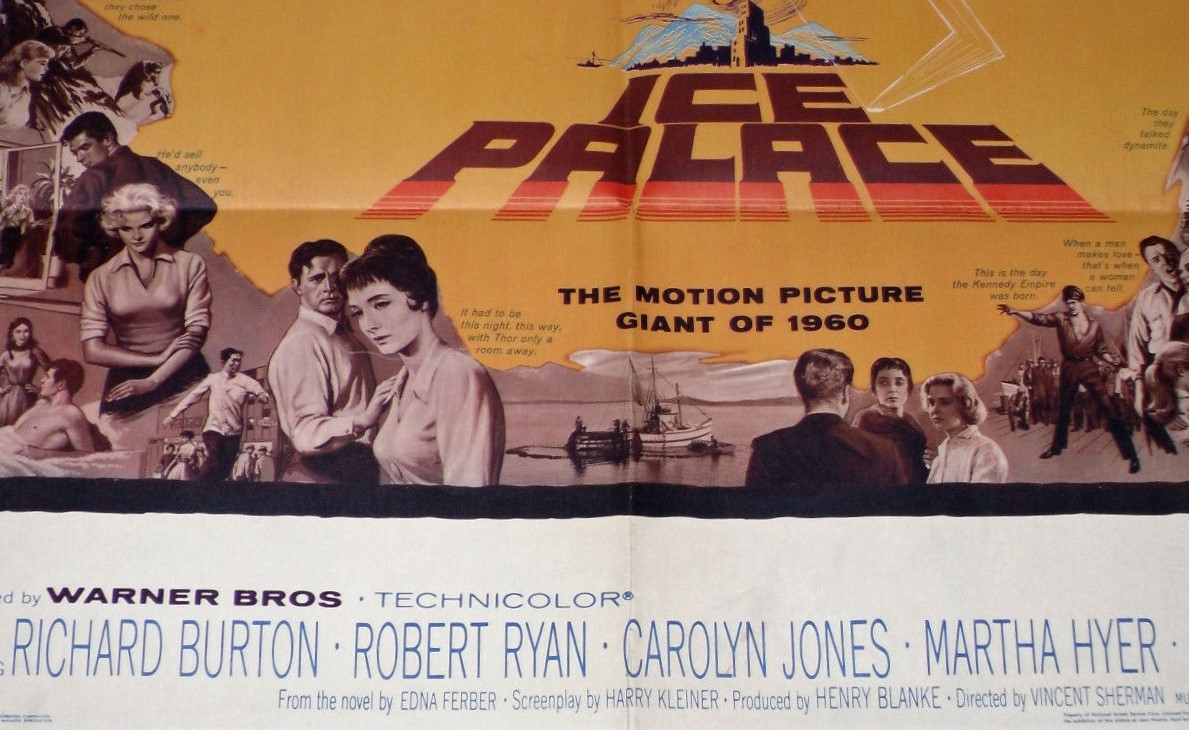
Ice Palace (1960) ***

Adaptations of sprawling novels require a firm hand at screenplay stage. Exodus (1960), for example, excised the first couple of hundred pages depicting the first two millennia  relating the history of the Jews in the Leon Uris bestseller. Hawaii (1966) sliced the James Michener epic in two, the sequel The Hawaiians (1970) taking up the slack. Otherwise, like here, you end up with a multi-generational sprawl.  

The producers clearly felt that the endzone – two grandfathers warring over a grand-daughter that was also  somehow a metaphor for the battle for Alaskan statehood – was too good to miss. Except author Edna Ferber (Giant, 1956) had already dealt with that problem, in her book beginning at the end, where feminist icon Christine Storm is given a voice and the story unfolds in flashback. Instead, it’s Christine who has to wait ages to make an appearance and scarcely in the manner outlined by the novelist.

Initially, ex-World War One soldier Zeb (Richard Burton) and Alaskan fisherman Thor (Robert Ryan) become friends after the latter saves the former from drowning, Zeb having lost his job in a cannery for fancying boss’s daughter Dorothy (Martha Hyer). The pair then decide to go into business together, Thor catching the salmon, Zeb canning them. But illicit love tears the incipient partnership apart, Thor’s fiancée Bridie (Carolyn Jones) falling for Zeb.

Finding banks are against funding a nobody, Zeb hits the mother lode in capitalizing his business by marrying the wealthy Dorothy, while a distraught Thor hits the snowy wastes and returns with an Eskimo son. Bridie hangs around long enough to sew the seeds of suspicion and take a hand in bringing up the baby, though holding back on the marriage that might seal the deal.

So then we are quickly onto the second generation. Thor’s son Einer (Barry Kelley) and Zeb’s daughter Grace (Shirley Knight) elope to the snowy wastes where, guess what, she gets pregnant, but, guess what, he is killed by a bear and she dies giving birth to Christine (Diane McBain).

So that takes us to the final act, Dorothy now also conveniently dead, grandfathers sharing custody, and the metaphor for the birth of Alaska in full swing. Zeb, now  a greying ruthless industrialist who finds it easier to feed his multiple canneries by catching fish in traps as they exit the Alaskan rivers, opposes statehood, fearing legislation will curb his entrepreneurial tendencies and that, more to the point, he will be hardest hit by the taxation required to fund the government apparatus. Thor, meanwhile, has turned greying politician, fighting Zeb every inch of the way, Christine now mere collateral damage.

An Australian daybill hence the date “1961” rather than “1960”
the date it appeared in the U.S.

It’s certainly a full-throated melodrama, and might have worked better if it had skipped a generation and got to the warring grandparents sooner, or worked the love triangle up to a higher pitch, but that might have felt like the bloodbath required to kill off Dorothy, Einer and Grace would have looked even more calculated. And it could have done with more actual high drama, fishermen battling mighty waves on the high seas, for example, as in The Perfect Storm (2000), and to be honest watching caught salmon shooting along cannery travelators is no substitute.

The other problem is that neither Richard Burton (Becket, 1964) nor Robert Ryan (The Wild Bunch, 1969) has settled into their screen persona. In the former’s case it’s the voice. Except in fleeting instances, we are deprived of his whisky-sodden sonorous tones. In the latter it’s the stillness, all the work done with the eyes or a grimace instead of an overworked marionette, body jumping, arms pumping. In both cases, and with the entire cast for that matter, there’s over-reliance on flashing eyes, a mainstay of overwrought melodrama.

If you’re searching out subtlety you’d have to watch the women, the look on Dorothy’s face on first meeting Bridie and recognizing a rival, the various expressions on Bridie’s face – for virtually the whole picture – as she observes the unobtainable Zeb grow even more distant, and Grace as she realizes she is being duped into a marriage of political convenience. And with so much story to pack in, the best scene in the picture just whizzes by, when, in the absence of the town doctor, Bridie is called upon to be  midwife to Zeb’s child, knowing that it should, if only she had the courage at the time, be hers.

The Alaskan statehood element was, I imagine, lost on non-American audiences, the statehood metaphor probably lost on everyone except discerning critics, and as far as I can work out from the box office nobody anywhere gave two hoots for the picture. Bear in mind Richard Burton was far from a major star, having burned his boats after star-making roles in The Robe (1953) and Alexander the Great (1956) failed to provide the necessary glue to bind actor and moviegoer.  In fact, Burton was so little in demand he was scarcely making a movie a year – and only The Robe entered positively in the box office balance sheet – until Cleopatra (1963) revived his career.

So with a cut-price Burton and an over-extended Robert Ryan there’s little the women can do to rescue the picture, though Carolyn Jones (How the West Was Won, 1962), Martha Hyer (The Sons of Katie Elder, 1965), the debuting Diane McBain (Claudelle Inglish, 1961) and Shirley Knight (The Group, 1966) put in more heartfelt performances.

Vincent Sherman (A Fever in the Blood, 1961) directed from a screenplay by Harry Kleiner (Bullitt, 1968). One look at the gem George Stevens created from Giant and all you can see here is missed opportunity.

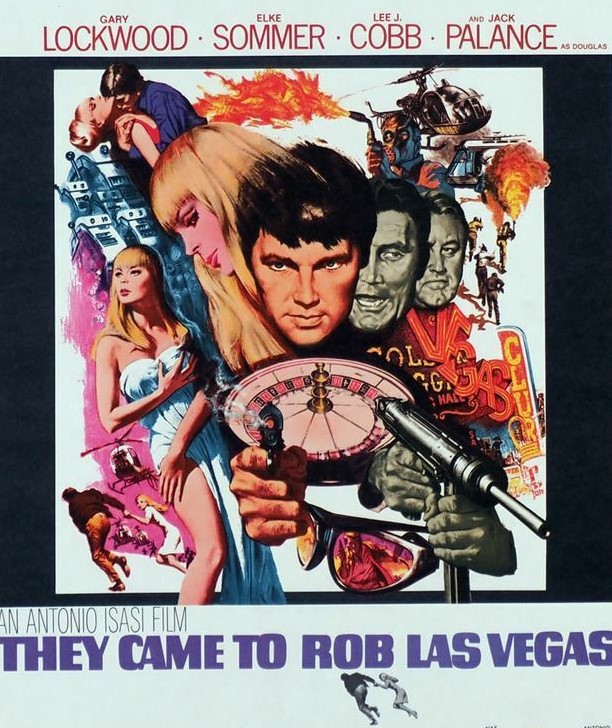
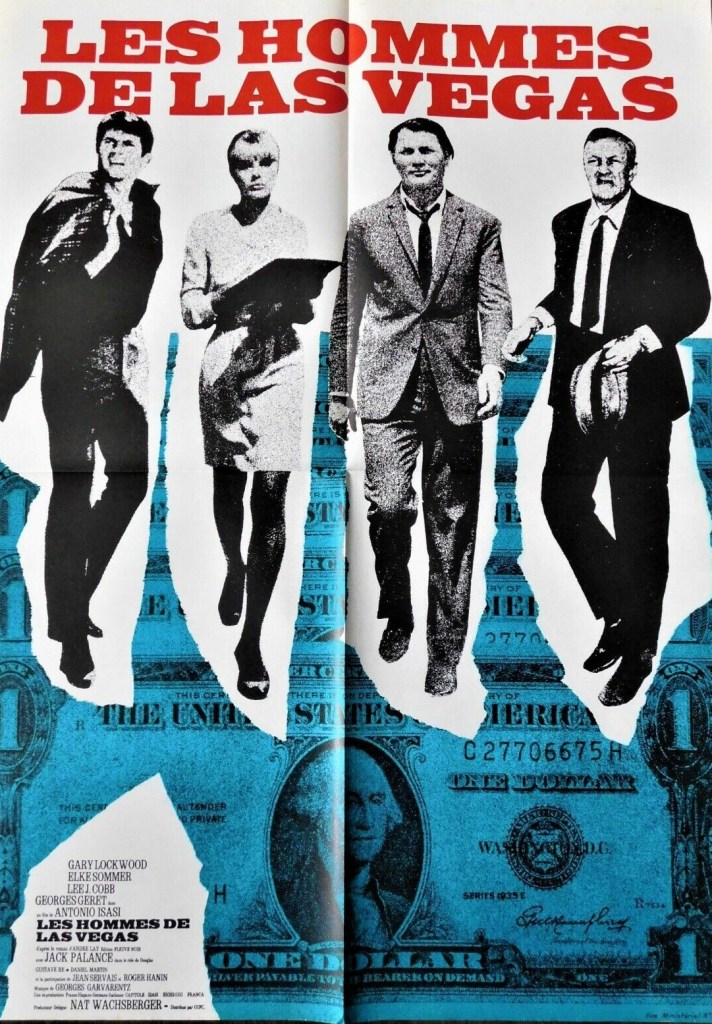
They Came To Rob Las Vegas (1968) ***

Actually, they didn’t. The thieves planned to pull off a heist of $7 million from a security truck as it travelled through the Nevada desert en route to Mexico. Las Vegas pops into the story every now and then, criminal mastermind Tony (Gary Lockwood) employed there as a croupier in order to romance the girlfriend Ann (Elke Sommer) of millionaire Steve (Lee J. Cobb) who owns the security business being targeted.

The picture’s overlong and a shade complicated but the robbery is terrific, if a bit unbelievable, while the ending is existential and almost Boorman-esque. It’s futuristic, too, with computers programming routes for security vehicles to make them harder to follow, pretty sophisticated visual communications for the era. The trucks are more like armored cars,  tough as tanks, steel so thick it’s impervious to an oxy-acetylene cutter, and with machine guns mounted on the roof.

You’ll scarcely have heard of the director, Spaniard Antonio Isasi (That Man in Istanbul, 1965) whose career only spanned eight movies. And while you might be familiar with Gary Lockwood (2001: A Space Odyssey, 1968), Elke Sommer (The Prize, 1963), Lee J. Cobb (Coogan’s Bluff, 1968), and Jack Palance (Once a Thief, 1965) who plays Douglas, an F.B.I. agent investigating Steve’s Mafia connections, you’ll struggle to keep tabs on the myriad other characters who flit in and out of what ends up as a four-way narrative.

So we start out with Tony’s brother (see, I told you it was complicated) who has bust out of jail and wants to go back to old-style heists that involve shoot-outs in the street, nostalgia getting the better of him as he winds up dead. Then we’ve got Steve who wants to quit the underworld. That seems to be a trope of the time, The Brotherhood (1968) and Stiletto (1969) going down a similar route.  When the truck is hijacked, Steve comes under suspicion from his Mafia buddies, who reckon he’s looking for an easy way to fund his retirement.

Meanwhile, as well as the $7 million in legitimate cash, the truck is also carrying millions in Mafia loot to be laundered across the border in Mexico, a notion that’s already attracted the attention of Douglas and his team.

Meanwhile, meanwhile, Tony is carrying out some low-grade casino theft, as croupier dealing Ann some very helpful cards and topping up his salary to the tune of $400-$500 a day. Ann, who could as easily be water ski-ing or living the high life in Acapulco with the married Steve, still takes time out of the mistress gig to undertake her ordinary job at the security company’s head office where she is in charge of the seemingly mindless task of feeding route cards into the computer.

While this takes quite a while to get all the wheels in motion and the various sub-plots and characters to fall into line, when finally we get to the robbery, it’s a cracker. Though you might find yourself asking who was funding the heist, with its five-man crew, helicopter, flame-thrower,  machine guns, plus what can only be described as a giant vault buried in the desert.  

At first, the heist appears patently old-fashioned. Gangsters dressed as guards replace the real guards but once in the back of the truck they have neither access to the loot nor the driver’s cabin. No matter, they know where the truck is headed, out into the desert, where they have made the road impassable with heaps of sand and just in case that didn’t work shoot out a tyre. The flame thrower finishes the job.

Thomas Crown would be impressed by their planning for they have another tyre buried in the sand to swap for the useless one and they also have metal tracks that can be laid over the sand to ease passage. They need the tracks because the truck goes off-road over the top of a dune and is lowered into the vault while the rotary blades of the whirligig serve to cover the top with a layer of sand, returning the desert to its normal pristine condition.

But we’re far from finished. We still have betrayal, underground paranoia, Steve being stalked by Douglas, the Mafia getting uppity with Steve, Steve becoming suspicious of Ann, a hapless motorist caught in the crossfire, squads of cops and goons descending on the hijack spot, and Tony still having to work out how to open the unbreakable truck.

At times, the plot comes together with devastatingly simplicity, but at other times the various strands merely serve to blow the whole thing apart. None of the principals is on their A-game, most appearing overly stiff and clichéd, while you’re still trying to work who all these other characters are.

The heist itself is splendidly done and the twist ending worthy of comment. Most of the time it’s pretty watchable but what should be a relatively seamless narrative is undone by over-plotting.

While the time was ripe for an ingenious heist, the crime thriller had taken one of those periodic leaps into new territory, what with Point Blank (1967) and The Thomas Crown Affair (1968), so it was virtually impossible to accommodate a movie with so many narrative jumps, where motive was unclear, characters diffuse and the tone widely variable.

On the other hand, as I said, the heist had me enthralled and the twist ending had me intrigued.

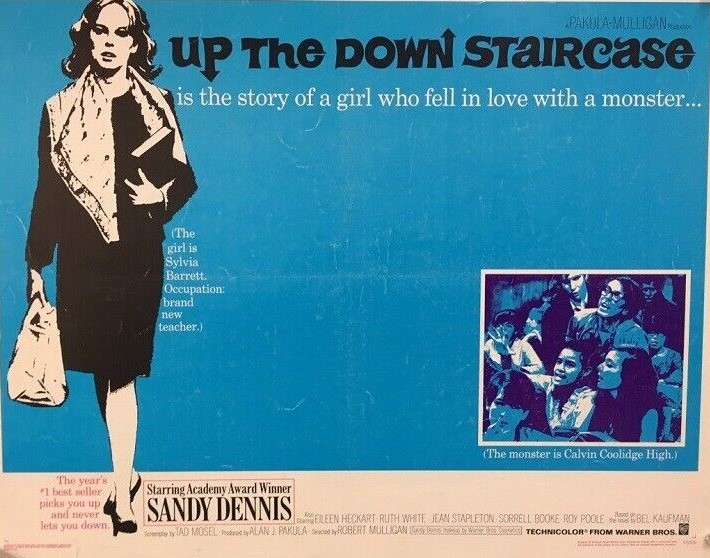
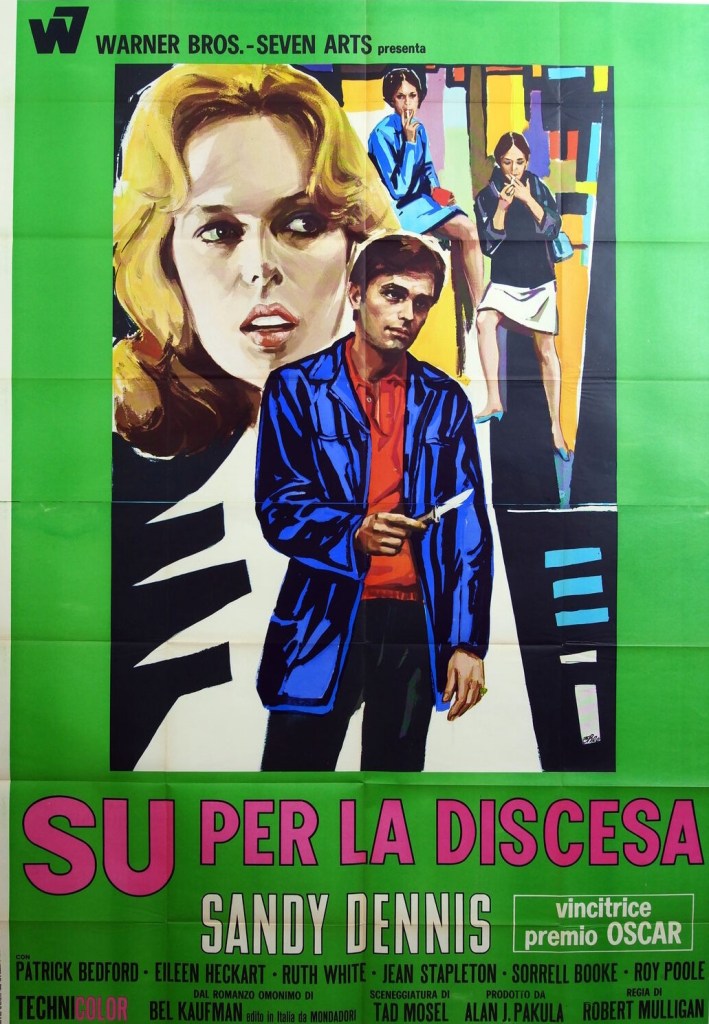
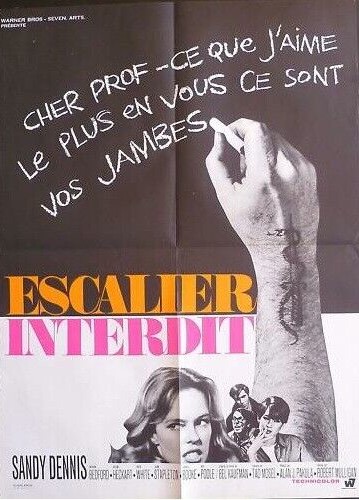
Up the Down Staircase (1966) ****

Impressive impressionistic tale of naïve young teacher and her travails in a rough inner city New York high school, a world away from the preppie hi-jinks of The Group the previous year and a good bit more realistic and less sentimental than To Sir, With Love the same year. If you thought teachers had a tough time these days, it was no better half a century ago.

We get no insight into the home life of idealistic singleton Sylvia (Sandy Dennis) beyond that once a week she gets a phone call from her annoying mother. Outside the school, she is warned to walk slowly in order to show she is not frightened to walk down these mean streets.

The school appears chaotic, hordes of almost-adult kids rampaging along corridors, hellbent on causing anarchy. And it takes some objective observation to realize that the endless rules,  sometimes delivered by intercom and very often improvised on the spot, imposed by the tough headmaster McHabe (Roy Poole) have created a semblance of order.

But if the kids are led astray by inherent attitude, the adults are undone by bureaucracy and petty infighting. A list of rules on the wall forbids the school nurse from actually treating any patients. There’s a marvellous librarian whose reaction to an attempted suicide is to demand the return of an overdue book. Teachers squabble about who has precedence to use a particular drawer. Budding novelist and lothario Barrington (Patrick Bedford) spends his mornings in a local café, an adoring secretary covering for his absence.  

The end-zone in all movies about schools (excepting If…a couple of years later) focuses on a struggling teacher who doubts her abilities but finds worth in her calling. Although that cliché pops up towards the end, mostly it’s an examination of the terrible home lives, seen in snippets, of the pupils and their parents, possibly who had the same experience, of viewing schools as obstacles to life and nothing more than the existing hierarchy’s way of keeping them in their place, education peeceived as akin to a police force exacting penalty.

With her fragile beauty, posh voice, and ideas of converting teenagers to the joys of Chaucer, Dickens and myriad poets, you would expect Sylvia to be gobbled up by the system. And at times, her quivering lip goes into overdrive, but that masks an inner determination not to fall for any sob stories – no matter that the audience will lap them up – and to extricate herself from dangerous situations with the macho Joe (Jeff Howard) who is convinced she won’t hand in him for carrying a switchblade and that she must be in love with him.

Pupils fall into three categories: those who fall in love with their teachers, those who want to kill them and those who are dying of boredom, living day-to-day in catatonic indifference.

Sylvia’s understated refusal to be intimidated carries the day and, while she encourages, realizes that she can’t resolve the endemic social issues – children battered at home or who have to work at night or who are brought up by a series of neighbors – by inflating a pupil’s mark just to help out. There’s none of the grandstanding of Dead Poets Society (1989) or Mr Holland’s Opus (1995) either, no individual or group who, in dramatic fashion, demonstrates allegiance, sides with the teacher or proves a test case for the teacher’s brilliance.

If Sylvia makes any impact, it’s shown in a small way by awkward pupil Alice (Ellen O’Mara) who believes all literature is about love and is humiliated by Barrington. Sylvia hasn’t the personality to collect a coterie of adoring pupils as in Dead Poet’s Society, nor like Robin Williams there have the confidence to chuck away set texts and do it his own way. But it would be a close run thing as to who would be the better teacher. Williams should win by a neck given his exuberance, but Sylvia, the mouse, is actually the better teacher.

It’s pretty bold of director Robert Mulligan (Inside Daisy Clover, 1965) to actually force the audience to watch Sylvia dissect the opening paragraphs of A Tale of Two Cities in order not just to prove what an insightful teacher she is but to demonstrate her command of her once-rowdy class. The show of hands of pupils desperate to ask questions is testimony to her quiet methods.

Superb performance from Sandy Dennis (The Fox, 1969), showy one from Patrick Bedford, touching one from Ellen O’Mara and with Jeff Howard attempting to channel his inner James Dean, but, for the last three, unusually in a film stuffed with newcomers, their roles did nothing for their careers. You might spot Bud Cort (Harold and Maude, 1971),  Eileen Heckart   (No Way To Treat a Lady, 1968), and Jean Stapleton (Emmy award winner for All in the Family, 1971-1979) but mostly it’s cameos in an ensemble picture.

Expertly mounted by Robert Mulligan with a screenplay by Tad Mosel (Dear Heart, 1964) from the Bel Kaufman runaway bestseller.

As much as it has you rooting for the little guy, it doesn’t gloss over the calamities schools are left to deal with.

Behind the Scenes: “The Loss of Innocence / The Greengage Summer” (1961)

Director Lewis Gilbert’s career was at an impasse. He had made his name primarily in a string of typically British stiff upper lip World War Two pictures including Reach for the Sky (1956) and Sink the Bismarck! (1960). It will come as a surprise to many British people to learn that virtually no British movie, not even the WW2 films that were big hits domestically, made any impact at the U.S. box office, Sink the Bismarck! a rare exception.

Ferry to Hong Kong (1959) starring Orson Welles had flopped  and WW2 comedy Skywatch/ Light Up the Sky (1960) had died the death.

British director Victor Saville, who had made a name for himself in Hollywood with Greer Garson sequel The Miniver Story (1950) and Kim (1950) starring Errol Flynn, had turned producer, purchasing the rights to the bestseller by Rumer Godden (Black Narcissus, 1947).

Saville had entered into a partnership with veteran independent producer Edward Small (Solomon and Sheba, 1959) who had a deal with United Artists. The duo had three films on their slate, the others being movie version of The Mousetrap (delayed due to the length of a stage run that still prevents it being turned into a movie) and Legacy of a Spy (never made). Cary Grant was initially touted as the lead for Loss of  Innocence.

When that deal foundered, it shifted from UA to Columbia after the intervention of British producer John Woolf (The African Queen, 1951),  a relation of Saville, who had an ongoing relationship with Columbia. The script found its way to Kenneth More (Sink the Bismarck!) still a highly-rated draw at the British box office. He had to lose weight for the role. Later, Gilbert intimated he was not right for the part and would have preferred Dirk Bogarde.

More’s wife Mabel was friends with Gilbert’s wife Hylda  and it was at the former’s suggestion that Lewis was roped in. Gilbert was initially wary of working with Saville who, although highly respected as a director, had a reputation of being difficult to work with. A director turned producer was all too likely to have ideas about the direction rather than sticking to the production side. As it turned out, Savile “didn’t interfere at all.”

Hayley Mills (The Family Way, 1966) was first choice for the female lead. Her Disney contract was not exclusive and at 15 she might have been ideal casting. But such a role would almost certainly impact on her future with Disney.

Mrs Gilbert was instrumental in the casting of Susannah York (aged 21) having called her husband down the stairs to see the young actress in a television production of Arthur Miller’s The Crucible. As it happened, Saville was on the same page, also having witnessed that performance, calling the director the following day to suggest York. Coincidentally, the Gilberts had been invited to dinner with Sylvia Syms, female lead in Ferry to Hong Kong, only to find York was a guest. Auditioned for the role of Jos, the oldest of the four sisters stranded at a chateau in France after their mother is taken ill, York won the part.

“The hard part to cast,” according to Gilbert, was Hester, Jos’s younger sister, wise beyond her 14 years “who can see trouble where Jos couldn’t.” Contrary to received wisdom, the bulk of children who attended stage schools were working class. “Their parents needed the income. Middle-class parents, preferring their children to be properly educated, discouraged them from going to stage schools.”

In consequence, the bulk of the girls turning up for auditions spoke Cockney whereas the part called for a “nicely-spoken girl.” Just as Gilbert was about to give up on the process, he received a phone call from an agent, promising a new discovery. “Her name was Jane Asher…a pretty 14-year-old with long red hair.”

Other casting gambles didn’t work out so well. Seeking a young man to play a French gardener, Gilbert hit on the notion of hiring a real Frenchman, having found a young lad with curly hair who appeared just right for the part. The only problem was – he couldn’t speak English. But it didn’t seem so insurmountable since he was cast three months before shooting began. But when the cameras rolled “he was unintelligible.”

Gilbert surmised that “someone so chaotic as that curly-haired Frenchman would never amount to anything.” He was wrong. The man was Claude Berri, later the highly successful screenwriter and producer of Jean de Florette (1986).  

The movie’s original title –  The Greengage Summer – caused a massive problem. Naturally, it was expected that greengages (plums) would feature prominently in the background. But there were no greengages thanks to a blight that had ruined the harvest all across France. As a consequence, British greengages were used, removed from their sacks by the thousands and sewn onto trees by the art department.

Susannah York created another problem when, in her naivety, she decided that the most authentic way to play drunk was to be drunk. Gilbert tried to dissuade her, explaining that the scene would go on all day not just last five minutes and in order to play a drunk you needed your wits about you. York ignored the advice and a day’s filming was ruined. Filming, split between England and France, began in August 1960.

Although it received “extraordinarily good notices” in both Britain and America it failed to light a spark with audiences in either country. Gilbert’s retrospective assessment, citing previous movies like Billy Wilder’s  Love in the Afternoon (1957) with Gary Cooper and Audrey Hepburn and Sabrina (1954) with Bogart and Hepburn, was that “very few films where you get a young girl in love with an older man have ever been successful.”

SOURCES: Lewis Gilbert, All My Flashbacks (Reynolds and Hearn, 2010) p207-210; Kenneth More, More or Less, (Hodder and Stoughton, 1978);  Roy Fowler, “Interview with Lewis Gilbert,” British Entertainment History Project; Philip K. Scheuer, “Saville to Resume Producing Career; Godden Novel First of Three,” Los Angeles Times, November 3, 1958, pC13; Richard Nason, “Small and Saville Planning Dear Spy,” New York Times, October 7, 1957, p47; Stephen Vagg, “Movie Star Cold Streaks, Hayley Mills”, Filmink, March 19, 2022.

Loss of Innocence / The Greengage Summer (1961) ***

The alternative title assumed nobody in America knew what a greengage was – it’s a type of plum – but the new title was actually pretty apposite. Until then director Lewis Gilbert had been known mostly for Second World War pictures like Reach for the Sky (1954) and Carve Her Name with Pride (1955) so this was a considerable change of pace, and filmed on location in France.

Joss (Susannah York) takes center stage as a girl on the brink of womanhood who experiences powerful emotions for the first time – love and its perpetual bedfellow jealousy – as well as rite-of-passage experiences like getting hammered on champagne. She is the oldest of four siblings stranded in a French chateau when their mother takes ill.

Left to her own devices, she promptly falls for the suave and much older Eliot (Kenneth More) who has interceded on their behalf when the hotel owner is against putting up with a bunch of motherless children. Matters are complicated because Eliot is having an affair with chateau owner Zizi (Danielle Darrieux) and by Joss attracting the attention of Paul (David Saire), a hotel worker closer to her own age. In short time, the situation is brimming over with suppressed emotion.

Hester (Jane Asher), suddenly aware of the romantic havoc being wreaked by her older sister, is going through her own transformation, jealous that the unrequited love of Paul is not directed towards her, her emotions flying off the handle when she triggers a violent altercation with a local lad.

Despite the distributor’s best efforts – the tagline promises “A Summer of Evil” – by modern standards this is a gentle tale, but not without a harsh undercurrent. York is superb as she undergoes a transformation from uncertain schoolgirl to a woman realizing the power her beauty can exert. She flares from child to adult and back again in seconds.

The main U.S. poster and this one seem determined to add seediness to the tale.

Susannah York (They Shoot Horses, Don’t They, 1969) had won her big break after a sparkling performance in a small role in Tunes of Glory (1960) and she floats effortlessly between chalet school pranks and more serious misdemeanors including drunkenness.

Sometime child actor Jane Asher (still better known as Paul McCartney’s girlfriend or for her cakes rather than stunning turns like Deep End, 1970) also achieves a career breakthrough and you could argue that she edges out York in a role that calls for more balance.

Kenneth More (Sink the Bismarck!, 1960) was at his charming best in the kind of affable role he had generally moved away from, but his character has a darker side. More importantly, as an older adult infatuated with a young girl, he manages to steer well clear of any inherent  creepiness. There is no sense of him exploiting the situation, rather trying to guide the young woman in the art of love.

The dialogue is surprisingly good and Danielle Darrieux (better known as one of Darryl F. Zanuck’s girlfriends rather than for the likes of Romain Gary’s The Birds Go To Die in Peru, 1968) is convincing as an aging beauty willing to do anything to hold onto her man.  There is an interesting under-developed subplot too dangerous to explore at this point in the decade of the hotel manager Madame Corbet (Claude Nollier) clearly being in love with Zizi.

The young Elizabeth Dear (The Battle of the Villa Florita, 1965), making her debut, also enhances her career and British character actor Maurice Denham (Danger Route, 1967) has a small role. 

Lewis Gilbert’s subtle direction set his career on a new course that would ultimately deliver an Oscar nomination for Alfie (1966).  The Howard Koch (The Fox, 1967) screenplay draws heavily on the source novel by Rumer Godden, an expert in the suppressed complexities of female life, best displayed in Black Narcissus (1947) and The Battle of the Villa Florita

The scenery is a bonus as are the snatches of provincial French life. All in all, an engaging piece of work, with Susannah York delivering a star-is-born kind of turn.      

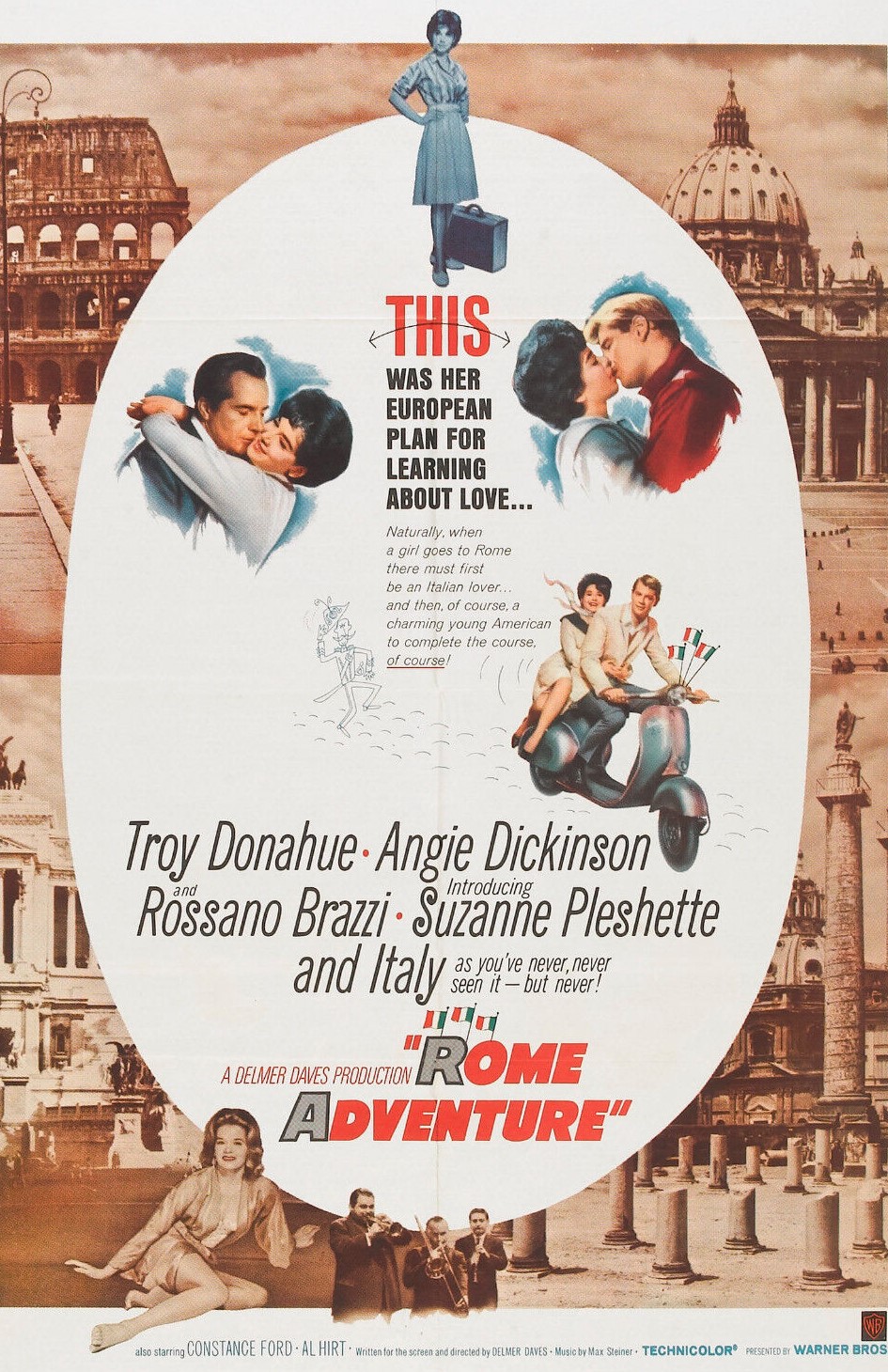
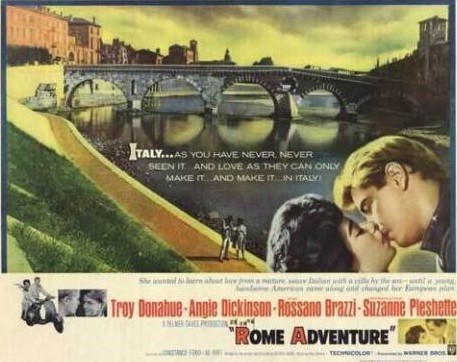
Rome Adventure / Lovers Must Learn (1962) ***

Angie Dickinson fans would be entitled to cry foul after the top-billed female star appears to be engaged in a bait-and-switch tactic. After a lengthy wait, when she finally does appear it’s only to high-tail it off to Switzerland leaving behind in Rome lover Troy Donohue. Her departure creates romantic opportunity, her return complication.

And is this the same Delmer Daves, you might ask, who made his name in a series of male-dominated westerns such as Broken Arrow (1950) and 3:10 to Yuma (1957)? Yes, it is, but once Daves had finished applying intense pressure to his male coterie, he did the same, in a different genre, to women.

Young teacher Prudence (Suzanne Pleshette) exerts her independence by quitting her job after being hauled over the coals in Small Town U.S.A. for teaching her pupils a controversial novel. On the boat to Rome she encounters Italian lothario Roberto (Rossano Brazzi), who holds the lofty sexist opinion that only a man can turn a girl into a woman, and the nerdy Albert (Hampton Fincher), both of whom come a-courting, the youngster’s diffidence ruling him out of serious contention.

Roberto is friends with student Don (Troy Donohue) but the minute he is introduced to Prudence he has to rush off to try to persuade artist Lyda (Angie Dickinson) not to leave. Roberto turns gracefully aside after Prudence denies him sex (put more subtly than that of course) and she, finding employment in an American bookshop (speaking the language no deterrent there),  embarks on romance with Don, fluent in Italian, who teaches her how to drink strega, takes her to jazz clubs and acts as tour guide.

A good chunk of the picture, it has to be said, is a travelogue, and when neither Roberto nor Don are on hand to point out this or that monument or embark on a potted history, suddenly she discovers an interior monologue to do the job. And at one point it turns into If It’s Tuesday It Must Be Pisa as the couple take off on a longer trip, bouncing from one tourist city to another, the route only complicated by some slight comedy over whether they should share a bed.

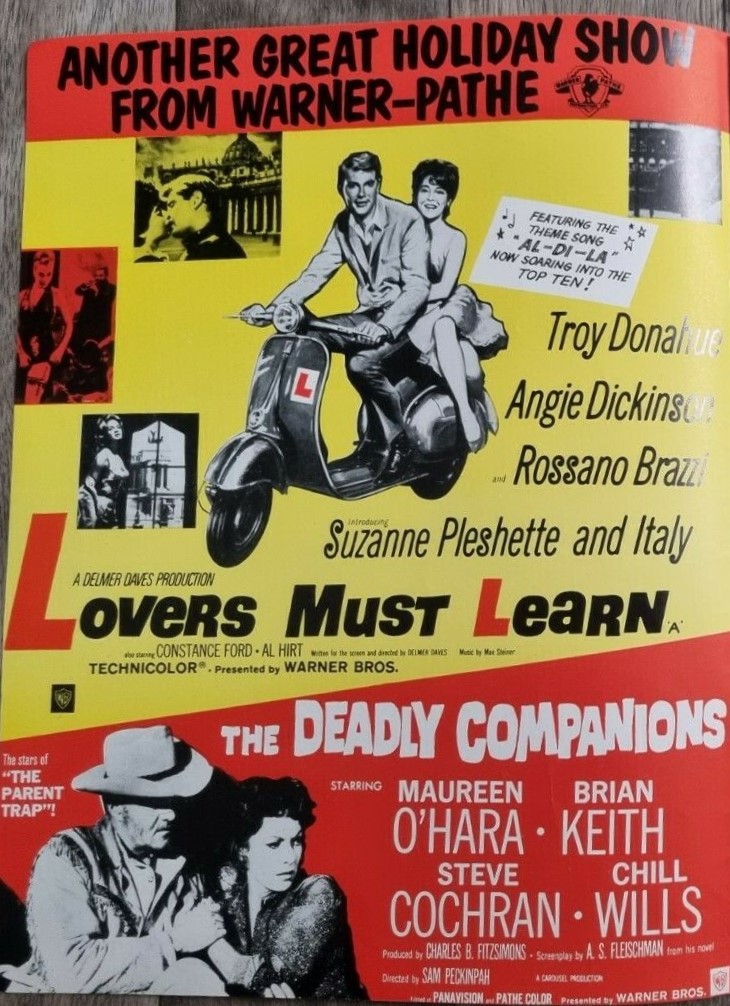
Re-titled in the U.K. and sent out with the most curious support.

Another decade and sex would most definitely be on the cards and the story would sink under an unplanned pregnancy or a fit of pique and scenes in a bedroom where they are separated by an open suitcase as one or other makes an effort to leave. But it’s the virginal aspects that makes this so sweet and for sure no director has managed to clear entire streets in usually heavily-congested tourist spots to deliver beautiful scenes in such scenic spots.

Actual drama might be light on the ground, but there’s no denying Delmer Daves knows how to apply pressure, this time on the woman, who can either treat romance as a  fleeting youthful episode or use it to launch big time into marriage and womanhood. Without a chaperone, unlike the hapless Albert, Prudence has only the example of her predatory employer who takes a male every season.

Just when the romance looks all set, back in Rome she catches Lyda and Don in a clinch and this sparks some good old verbal sparring between the two women as Lyda makes it very clear that Don is no virgin and that Prudence is out of her league.

You can guess how it will end. It’s as lightweight a confection as you will ever watch and yet it is worth watching because the director, close-up at the ready, scarcely gives Prudence a moment’s peace and if ever a director know how to gauge female intent and rely on eyes to express emotion it’s Daves.

Look beneath the façade of the travelogue and you find a woman trapped on the brink, that spark of independence misleading men into thinking she will surrender her virginity, and the woman not wanting to be another notch on a bedpost no matter if that fulfils the dual purpose of achieving womanhood. Daves’ name on the picture should be warning enough this isn’t quite your normal fluffy romance.

If you can ignore the sexism that dictates that a woman’s role is to “anchor” a man, turn his flightiness to one side and by some alchemy make him the best he can be, the narrative edges towards the independence of women, both Lyda and the bookshop owner pick and choose and sometimes abuse their men, and Prudence rejects romance on the rebound with Roberto.

But, of course, if that’s all you want, and you don’t want to hover near consequence, then writer-director Daves delivers a seamless concoction. If there’s an old-fashioned conceit to the whole thing, it’s perhaps because the source material, Lovers Must Learn, was written three decades before and preceded the likes of The Group in presenting a young woman as independent rather than merely yearning for marriage and motherhood.

It seems odd for Angie Dickinson to be relegated to the supporting cast but possibly having already done her Vespa-riding number in Jessica (1962) she preferred a stab at a more mature role, though she had already gone down that route in The Sins of Rachel Cade (1962). Maybe she upset someone in the studio. Maybe her role was bigger but ended up on the cutting room floor when Daves realized the talent he had uncovered in Suzanne Pleshette (A Rage To Live, 1965).

Daves worked again with Rossano Brazzi on the director’s final picture The Battle of the Villa Florita (1965) and Pleshette had a short-lived marriage with Troy Donohue.  

Behind the Scenes: All-Time Top 30

Just like the All-Time Top 40, this is based on views on the Blog. I realized I didn’t do a catch-up last year and haven’t done one in two years so it kind of feels redundant to do a previous-year’s-position in brackets number.

All of these movies incurred problems – budget, changes of director or star, censorship issues, studio indifference – and for some it’s a surprise they ever made it onto the big screen.

  1. Waterloo (1970). Sergei Bondarchuk’s roadshow epic with Rod Steiger and Christopher Plummer.
  2. The Satan Bug (1965). John Sturges adaptation of Alistair MacLean pandemic thriller, striking a stronger note now than when originally release.
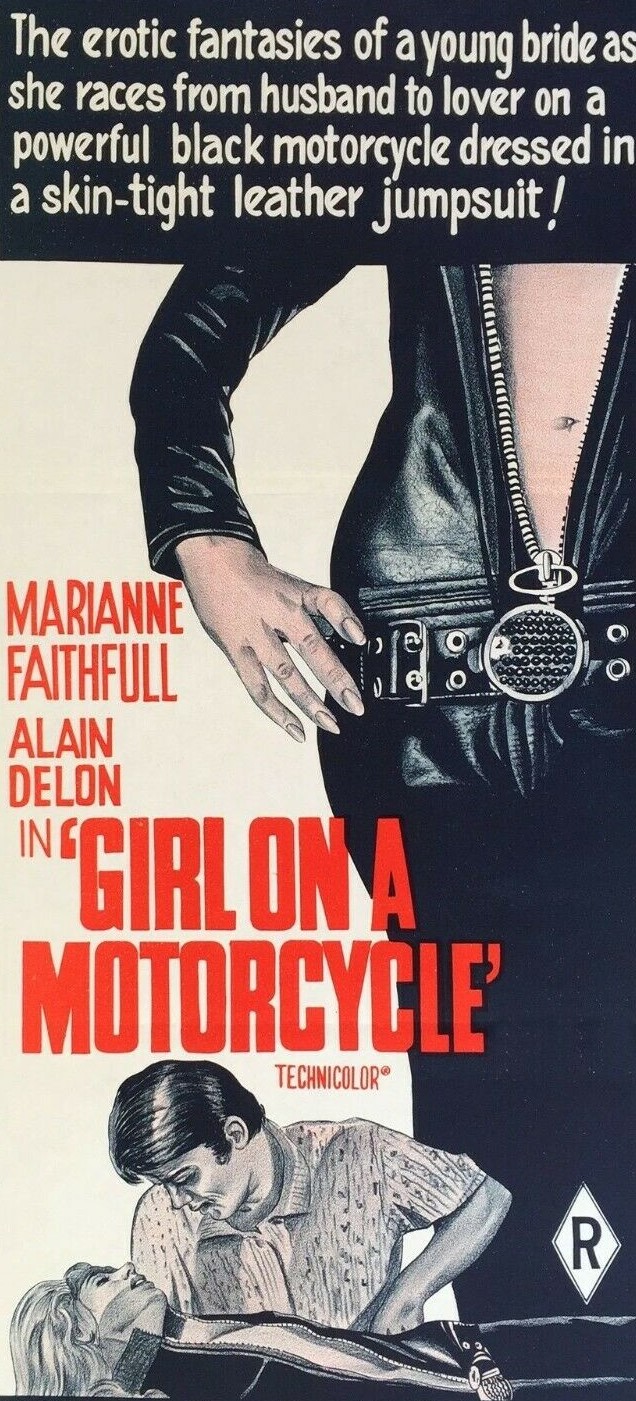
  3. The Girl on a Motorcycle / Naked Under Leather (1968). Marianne Faithful in leathers, what more can you say, except the U.S. censors took umbrage and cut out most of what Europe went crazy for.
  4. Ice Station Zebra (1968). John Sturges again. Alistair MacLean again. Big budget roadshow set mostly under the polar ice cap.
  5. The Guns of Navarone (1961). All-star cast for J. Lee Thompson WW2 epic.
  6. Cast a Giant Shadow (1966). Comedy director Melville Shavelson goes straight with Israeli action picture starring Kirk Douglas, Frank Sinatra, John Wayne and Senta Berger.
  7. In Harm’s Way (1965). John Wayne and Kirk Douglas (again) in Otto Preminger’s examination of Army politics pre- and post-Pearl Harbor.
  8. Spartacus (1961). Battle between the Kirk Douglas vehicle and a rival production from Yul Brynner.
  9. Battle of the Bulge (1965). Cinerama to the fore in the battle of the tanks in WW2.
  10. The Cincinnati Kid (1965). Sam Peckinpah fired, Norman Jewison takes over, Steve McQueen perfects his iconic loner in poker drama.
  11. Secret Ceremony (1969). Elizabeth Taylor, Mia Farrow and a creepy Robert Mitchum in odd Joseph Losey drama.
  12. The Ipcress File (1965). The spy picture that attempted to upend the Bond applecart. Michael Caine’s most iconic role.
  13. Genghis Khan (1965). Though way down the credits, Omar Sharif in the title role.
  14. Sink the Bismarck! (1962). British war film starring Kenneth More that does what it says on the tin.
  15. They Shoot Horses, Don’t They (1969). Decades in the making, finally surfacing with a dream cast of Jane Fonda, Michael Sarrazin and Susannah York.  
  16. Doctor Zhivago (1965). Selling the David Lean epic.
  17. The Shoes of the Fisherman (1968). Whoever imagined this would work as a roadshow? Anthony Quinn headlines.
  18. The Biggest Bundle of Them All (1968). Raquel Welch effortlessly steals the show in Italian caper.
  19. Night of the Living Dead (1968). Horror was never the same after George A. Romero went to work on zombies.
  20. The Way West (1967). Underrated Andrew V. McLaglen western with top-notch cast in Kirk Douglas, Robert Mitchum and Richard Widmark.
  21. Valley of the Dolls (1967). Would have been Judy Garland’s last hurrah except she was fired.
  22. When Alistair MacLean Quit: Part Two. Not content with serving up concepts that were turned into some of the best films of the decade, the bestselling author had his own demons to battle.
  23. The Wicker Man (1973). The trap is sprung on naïve Scottish cop in movie that was flop on release but is now considered one of the best horror films ever made.
  24. The Secret Ways (1961). Richard Widmark hunted in Hungary in adaptation of Alistair MacLean thriller. The star finished off the picture when Phil Karlson quit/was fired.
  25. Humphrey Bogart: 1960s Revival Champ. The reason Bogart became so iconic for a new generation: his reissued movies proved box office dynamite.
  26. Once Upon a Time in the West (1969). The inside story of the Sergio Leone classic.
  27. 100 Rifles (1969). Raquel Welch, need I say more…well, yes, because Jim Brown brings a helluva lot to the action.
  28. The Bridge at Remagen (1969). Producer David Wolper didn’t count on Russia invading Czechoslovakia when he scheduled his shoot.
  29. The Man in the Middle / The Winston Affair (1964). Robert Mitchum defends an apparently guilty man.
  30. When Box Office Went Worldwide. In the 1960s nobody reported foreign box office so you had to dig deep like I did to find the information all hidden away. Fascinating reading especially as it shows what films touted as successes were actually flops.

All-Time Top 40

It’s Angie Dickinson vs Ann-Margret at the top of the All-Time Top 40. The two female stars take four of the top seven spots with Ann-Margret’s The Swinger replacing at the top long-time favorite The Secret Ways. These two have been duking it out over the past year, in which time the top spot has changed hands four times, with Jessica and Once Upon a Time in the West also taking a turn in the premier position. It’s also noticeable that women are top-billed in seven of the pictures in the Top Ten.

I started this Blog three years ago in June. Last year it was being read in 120 countries but that’s now gone up to 182 (out of the 193 recognized by the United Nations plus the Vatican state and the State of Palestine). Reviews have also increased and I’m now approaching 7,000 views a month, so thanks to you all.

I’ve been doing an Annual Top 40 since I started so this is the third iteration of that idea based on those reviews – out of the 900-plus posted so far – which have attracted the most attention over the three-year period. This isn’t my choice of the top films in the Blog, but yours, my loyal readers. The chart covers the films viewed the most times since the Blog began, from June 1, 2020 to July 31, 2023. (Yeah, it should have been May 31, but I’ve been remiss.)

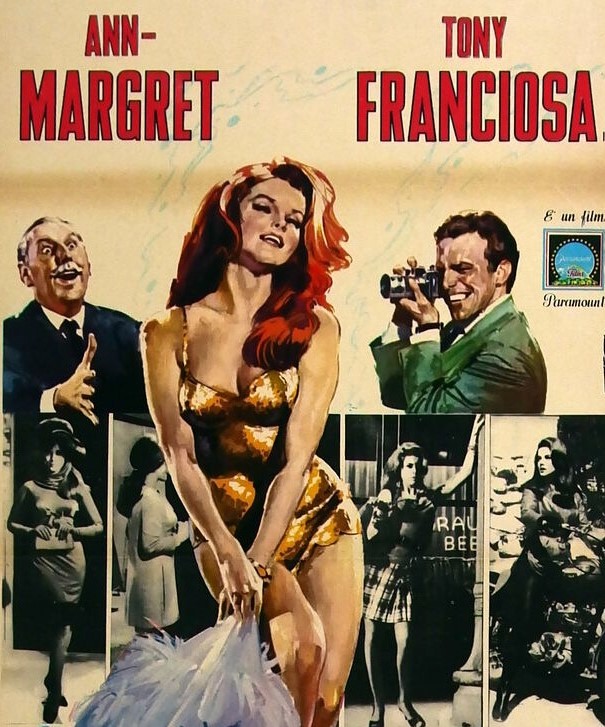
  1. (7) The Swinger (1966). Ann-Margret struts her stuff as a magazine journalist trying to persuade Tony Franciosa she is as sexy as the characters she has written about.
  2. (-) Once Upon A Time in the West (1968). Rated the top western of all time, Sergio Leone’s operatic epic with Claudia Cardinale, Henry Fonda and Charles Bronson and the astonishing Ennio Morricone score.
  3. (2) Jessica (1962). Innocently gorgeous widow Angie Dickinson finds her looks turn so many male heads in a small Italian town that the female population seek revenge.
  4. (5) Fraulein Doktor (1969). Suzy Kendall in the best role of her career as a sexy German spy in World War One.
  5. (-) Stagecoach (1966). Ann-Margret, Alex Cord and Bing Crosby in decent remake of classic John Ford western.
  6. (1) The Secret Ways (1961).  Richard Widmark exudes menace in this adaptation of an early Alistair MacLean spy thriller set in Hungary during the Cold War. Senta Berger  has a small role.
  7. (-) The Sins of Rachel Cade (1961). Angie Dickinson as a missionary who falls in love with Peter Finch in war-torn Africa.
  8. (-) Gerry Anderson’s Fireball XL5. Colorized version of the famed sci fi television show.
  9. (11) Moment to Moment (1966). Hitchcockian-style thriller with Jean Seberg caught up in  murder plot in the French Riviera. Also features Honor Blackman.
  10. (3) Ocean’s 11 (1960). In the Rat Pack debut Frank Sinatra, Dean Martin, Sammy Davis Jr. et al plan an audacious Las Vegas robbery. 
  11. (17) Can Heironymous Merkin Ever Forget Mercy Humpe and Find True Happiness? (1969). Off-the-wall musical awash with nudity and Fellini-esque cavorting, directed by star Anthony Newley. Has to be seen to be believed. Joan Collins pops up. 
  12. (4) Pharoah(1966). Priests battle kings in Polish epic set in ancient Egypt. Fabulous to look at and thoughtful.
  13. (-) Sisters (1969). French drama bordering on the incestuous starring Nathalie Delon and Susan Strasberg.
  14. (-) Vendetta for the Saint (1969). Feature length version of the television show sees Roger Moore and Rosemary Dexter battling the Mafia in Sicily.
  15. (6) The Golden Claws of the Cat Girl (1968). Cult French movie starring Daniele Gaubert as a sexy cat burglar.
  16. (-) Baby Love (1969). Orphan Linda Hayden finds herself in a predatory middle-class London household.
  17. (-) Pendulum (1969). The under-rated George Peppard as a cop accused of murdering cheating wife Jean Seberg.
  18. (-) Lady in Cement (1969). Frank Sinatra reprises private eye Tony Rome as he tangles with Raquel Welch.
  19. (15) Subterfuge (1968). C.I.A. operative Gene Barry hunts an M.I.5 mole in London. Intrigue all round with Joan Collins supplying the romance and a scene-stealing Suzanna Leigh as a villain.
  20. (-) Plane (2023). Gerard Butler goes Die Hard as stranded pilot outwitting terrorists on a remote Pacific island.
  21. (18) Pressure Point (1962). Prison psychiatrist Sidney Poitier must help racist Nazi Bobby Darin.
  22. (31) Fade In (1968). Long-lost modern western with Burt Reynolds serenading low-level movie executive Barbara Loden whose company is actually filming Terence Stamp picture Blue.
  23. (16) A House Is Not a Home (1965). Biopic of notorious madam Polly Adler (played by Shelley Winters) who rubbed shoulders with the cream of Prohibition gangsters.
  24. (19) Deadlier than the Male (1967).  Richard Johnson as Bulldog Drummond is led a merry dance by spear-gun-toting Elke Sommer and Sylva Koscina in outlandish thriller.
  25. (-) The Girl on a Motorcycle (1968). Marianne Faithful dons – and slips out of – leathers in erotic drama with Alain Delon.
  26. (-) Some Girls Do (1969). Daliah Lavi and Beba Loncar get tough with Bulldog Drummond in sequel to Deadlier than the Male.
  27. (-) Beat Girl / Wild for Kicks (1960). London teenager heads for shady Soho. Starts out in milk bars, ends up in strip clubs.
  28. (-) Sodom and Gomorrah (1962). Robert Aldrich biblical epic sees Stewart Granger giving way to temptation in the infamous locale.
  29. (-) A Dandy in Aspic (1968). Director Anthony Mann died during shooting of spy picture so star Laurence Harvey took over. Mia Farrow co-stars.
  30. (-) The Brotherhood (1968). Martin Ritt’s Pre-Godfather take on the Mafia starring Kirk Douglas and Alex Cord as duelling brothers.
  31. (23) Once a Thief (1965). Ann-Margret (again)  is a revelation in crime drama with ex-con Alain Delon coerced into a robbery despite trying to go straight. Supporting cast boasts Jack Palance, Van Heflin and Jeff Corey. . 
  32. (-) Uptight (1968). Jules Dassin remake of John Ford classic The Informer set among black revolutionaries.
  33. (9)  A Place for Lovers (1969). Faye Dunaway andMarcello Mastroianni in doomed love affair directed by Vittorio De Sica.
  34. (-) The Misfits (1961). Stunning last hurrah for Marilyn Monroe and Clark Gable in John Huston tale of ageing cowboys.
  35. (-) Father Stu (2022). Biopic of boxer-turned-priest with Mark Wahlberg and Mel Gibson.
  36. (-) Blonde (2022). Andrew Dominik’s controversial take on the life of Marilyn Monroe with Ana de Armas.
  37. (12) 4 for Texas (1963). Frank Sinatra and Dean Martin face off in a Robert Aldrich western featuring Ursula Andress and Anita Ekberg with Charles Bronson in a smaller part.
  38. (-) Istanbul Express (1968). Gene Barry, John Saxon and Senta Berger involved in nefarious dealings on the other famous trans-European express.
  39. (33) P.J./New Face in Hell (1968). Private eye George Peppard is duped by shady millionaire Raymond Burr and mistress Gayle Hunnicutt in murder mystery.
  40. (10) The Venetian Affair (1966). Robert Vaughn hits his acting stride as a former C.I.A. operative turned journalist investigating suicide bombings in Venice. Great supporting cast includes Elke Sommer and Boris Karloff.

Dropping out of the Top 40

The surge of new entrants and other films attracting a vast new audience has meant some previous favorites tumble out of the Annual Top 40. (Previous year’s position shown in brackets).

(8) It’s Not All Rock’n’Roll (2020).  Ageing rocker Dave Doughman aims to mix a career with being a father in this fascinating documentary

(13) Age of Consent (1969). Helen Mirren stars as the nubile muse of jaded painter James Mason returning to his Australian roots.

(14) The Double Man (1967). Yul Brynner chases his doppelganger in the Swiss Alps with Britt Ekland adding a touch of glamour.

(20) Valley of Gwangi (1969). Special effects genius Ray Harryhausen the star here as James Franciscus and Gila Golen encounter prehistoric monsters in a forbidden valley.

(21) The Naked Runner (1967). With his son held hostage, Frank Sinatra is forced to carry out an assassination in east Germany.

(22) Orgy of the Dead (1965). Bearing the Ed Wood imprint, mad monster mash-up with the naked dead.

(24) The Sicilian Clan (1969). Stunning caper with thief Alain Delon and Mafia chief Jean Gabin teaming up for audacious jewel heist with cop Lino Ventura on their trail. French thriller directed by Henri Verneuil. Great score by Ennio Morricone.

(25) Dark of the Sun / The Mercenaries (1968). More diamonds at stake as Rod Taylor leads a gang of mercenaries into war-torn Congo.  Jim Brown, Yvette Mimieux and Kenneth More co-star. Based on the Wilbur Smith bestseller

(26) Stiletto (1969). Mafia hitman Alex Cord pursued by tough cop Patrick O’Neal. Britt Ekland as the treacherous girlfriend heads a supporting cast including Roy Scheider, Barbara McNair and Joseph Wiseman.

(27) Maroc 7 (1967). Yet more jewel skullduggery with Gene Barry infiltrating a gang of thieves in Morocco who use the cover of a fashion shoot. Top female cast comprises Elsa Martinelli, Cyd Charisse, Tracy Reed and Alexandra Stewart.

(28) The Rock (1996). Former inmate Sean Connery breaks into Alcatraz with Nicolas Cage to prevent mad general Ed Harris blowing up San Francisco. Michael Bay over-the-top thriller with blistering pace.

(29) The Swimmer (1968). Burt Lancaster’s life falls apart as he swims pool-by-pool across the county. Superlative performance. 

(30) Hour of the Gun (1967). James Garner as a ruthless Wyatt Earp and Jason Robards as Doc Holliday in John Sturges’ realistic re-telling of events after the Gunfight at the O.K. Corral.

(32) Dr Syn Alias the Scarecrow (1963). The British movie version of Disney American television mini-series sees Patrick McGoohan as a Robin Hood-type character assisting local smugglers.

(34) Sol Madrid/The Heroin Gang (1968). In his second top-billed role David MacCallum drags hooker Stella Stevens to Mexico to capture drugs kingpin Telly Savalas.

(35) A Twist of Sand (1968). Diamonds again. Smugglers Richard Johnson and Jeremy Kemp hunt long-lost jewels in Africa. Honor Blackman is along for the voyage.

(36) Genghis Khan (1965). Omar Sharif plays the legendary warlord who unites warring Mongol tribes. Stellar cast includes Stephen Boyd, James Mason, Francoise Dorleac, Eli Wallach, Telly Savalas and Robert Morley.

(37) Interlude (1968).Bittersweet romance between famed conductor Oskar Wener and young reporter Barbara Ferris.

(38) Woman of Straw (1964). Sean Connery tangles with Gina Lollobrigida in tangled tale of the killing of wealthy uncle Ralph Richardson.

(39) Bedtime Story (1964). Marlon Brando and David Niven are rival seducers on the Riviera targeting wealthy women.

Behind the Scenes: “The Sons of Katie Elder” (1965)

The property had been bouncing around Hollywood for over decade. It had its origins in the true-life tale of the five Marlow brothers involving murder, revenge, and jailbreak, the story making national headlines when the case was heard at the U.S. Supreme Court in 1892. Based on the book The Fighting Marlows by Glenn Shirley,William H. Wright (Assignment in Brittany, 1943) shopped around a screenplay, jointly written with Talbot Jennings (Northwest Passage, 1940), that was purchased by Paramount in 1955.

Alan Ladd (Shane, 1953), who owed the studio a movie, was cast in the lead and the script went through rewrites by Frank Burt (The Man from Laramie, 1955) and Noel Langley (Knights of the Round Table, 1953) with shooting scheduled for 1956. John Sturges (The Magnificent Seven, 1960) was set to direct until Ladd quit, having bought his way out of his contract. Burt Lancaster (The Train, 1966) was brought in as his replacement.

When Lancaster dropped out, producer Hal Wallis took over the movie in 1959 and considered replacing him with James Stewart (Shenandoah, 1965) or Charlton Heston (The Hawaiians, 1970) with Dean Martin (Rio Bravo, 1959) as the second lead. But still the movie stalled for another five years before Wallis settled on John Wayne who signed on for $600,000 plus a one-third share of the profits and one-third ownership of the negative (a bounty that would continue to pay off through reissues and leasing to television). Henry Hathaway was paid a flat $200,000.

Wayne and Hathaway had history dating back to The Shepherd of the Hills (1941) based on the million-copy bestseller by Harold Bell Wright, and groundbreaking in its use of Technicolor, then in its infancy. They didn’t work again until desert treasure hunt Legend of the Lost (1957) which teamed Wayne with Sophia Loren. A few years later came North to Alaska (1960) followed by Circus World / The Magnificent Showman (1964).

Despite this long-term relationship, the most the director could offer about his star was that “Wayne is more particular about the pants he wears than anything in the world…unless he gets the thinnest kind of material it drives him crazy.”

When the script was finally knocked into shape, the Marlow siblings had been trimmed from five to four, and that family had been replaced by the Elders, a nod to western aficionados who would recognize the name Katie Elder (“Big Nose Kate”), occasional companion of Doc Holliday whose story Wallis had previously filmed as Gunfight at the O.K. Corral (1957). Even though Elder wasn’t dead enough – she lived till 1940 – to conform to this picture, it seemed an odd decision to choose that name unless resonance was expected.

But it was still far from a done deal because Wayne’s cancer threatened to scupper the picture. Start of shooting scheduled for October 20, 1964, was shuttered when the disease was diagnosed on September 13 following the completion of Otto Preminger WW2 epic In Harm’s Way (1965). Aware surgery might jeopardize the picture, Wayne suggested Wallis replace him with Kirk Douglas (Cast a Giant Shadow, 1966).   

Hathaway rejected the notion, but while neither star nor producer had any idea whether the operation would be successful, and whether Wayne would be even fit enough to work, or – God forbid, that the actor might already have made his last picture – Wallis took an optimistic approach and announced the picture would be delayed for a month and “even a little later.” Hathaway’s optimism was based on the fact that he had survived colon cancer a decade before.

At least the surgeon moved fast, operating four days after diagnosis, and again five days later. As well as fighting the damage surgery and pain had done to his body, Wayne found himself slipping into depression, convinced the operation would render him unemployable. “I’ll never work again if they find out how sick I am. If they think an actor is sick, they won’t hire him,” he said, a legitimate observation given the cost of shutting down a picture should the actor be unable to play his role.

Wallis’s business partner Joseph Hazen shared Wayne’s pessimism and urged the producer to recast with either William Holder (The 7th Dawn, 1964) or Robert Mitchum (The Way West, 1967). Paramount, too, fretted about insurance, the studio couldn’t risk hiring an uninsurable actor. Wallis refused to abandon Wayne and the studio finally agreed to tough conditions from the insurance company. So, on January 6, 1965, the principals gathered in Durango to commence the 46-day shoot on a production budgeted at $3.19 million.

The high elevations – 8,500 ft in places – were not conducive to someone recovering from a lung cancer operation and Wayne found it difficult to breathe. It didn’t help that on the fourth day of shooting Wayne was expected to jump into icy water for the sequence where the brothers were ambushed by the villains. It didn’t help, either, that Wayne was too big to wear a rubber suit to stave off the cold like his fellow actors.

Wayne never complained that Hathaway “worked me like a damn dog.” He realized that it “was the best thing ever happened to me. It meant I got no chance to walk around looking for sympathy.” The star put on a brave front, publicly acknowledging his battle with cancer as a way of giving hope to others while privately terrified not so much of dying but of being helpless. “I just couldn’t see myself lying in bed…no damn good to anybody.”

“He had to be the macho man,” commented Earl Holliman (The Power, 1968), a late substitute for original star Tommy Kirk (Swiss Family Robinson, 1960) who was sacked after being caught smoking marijuana, “he had to have more drinks than the next guy.” And despite the severity of his condition, and although publicly pretending he had given up tobacco, he continued smoking cigars.

Recalled Dean Martin (Rough Night in Jericho, 1967), “He’s two loud-speaking guys in one.” George Kennedy (Cool Hand Luke, 1967) asserted, “If you put him in a group with other movie stars, the eye went to him and that is the ultimate marker of respect. He was John Wayne. He was very real. It didn’t matter if he wasn’t Olivier; Olivier wasn’t John Wayne.”

But there were outward signs of the effect the illness had upon him. He was less sure of himself on a horse, riding with a shorter rein out of fear a horse would get away from under him, trying to minimize the chances of falling or being bucked from the animal. And as the film wore on, an oxygen inhaler was set up beside him on set.

Dennis Hopper (Easy Rider, 1969) was wary of working again with Hathaway after a difficult experience with him on From Hell to Texas (1958) starring Don Murray and Diane Varsi where the actor suffered the indignity of endless takes. Hopper quit three times and for good measure the director put the word around and virtually grounded the actor’s career. Hopper only made one movie in six years. In the interim he had married Brooke Hayward, daughter of actress Margaret Sullavan whom Hathaway respected, and peace was brokered.  

Although on his best behavior on the shoot, Hopper was no less impressed. “He was a primitive director, he rarely moved his camera, the movement came from the actors.”

“Westerns are art,” declared Wayne. “They’ve got simplicity and simplicity is art…There’s simplicity of conflict you can’t beat…Westerns are our folklore and folklore is international…In Europe they understand that better than we do over here. “

Whether it was public sympathy for an ailing star and his resolve to fight cancer, or audience delight that he was back in a western after a gap of a few years, The Sons of Katie Elder was a huge hit with $5 million in initial rentals (what studios were left with after cinemas had taken their share). It earned more later in reissues but that initial sum was enough for thirteenth spot in the annual box office rankings though beaten by both Shenandoah and Cat Ballou. Its foreign earning would probably match domestic, to make it one of Wayne’s biggest earners for the decade.

SOURCES: Scott Eyman, John Wayne: His Life and Legend (Simon and Schuster Paperbacks, 2014) p111, p387-396 ; Ronald L. Davis, Duke: The Life and Image of John Wayne (University of Oklahoma Press, 1998) p266; Hal Wallis Collection, Margaret Herrick Library; Hedda Hopper, “Ladd To Star in Film of Pioneers’ Reunion,” Chicago Daily Tribune, November 9, 1955, p16; Thomas M. Pryor, “Hecht-Lancaster Obtains 2 Novels,” New York Times, January 12, 1956, p22; Oscar Godbout, “TV Movies Extras Get Salary Rises,” New York Times, July 3, 1956, p17; John Wayne, “Me? I Feel Fine,” Los Angeles Times, January 18, 1965; James Bacon, “Wayne’s Biggest Bout vs. Killer Cancer,” Los Angeles Herald Examiner, March 14, 1965; Roderick Mann, “John Wayne – A Natural as The Shootist, Los Angeles Times, March 7, 1976.

Discover WordPress

A daily selection of the best content published on WordPress, collected for you by humans who love to read.

The Atavist Magazine

by Brian Hannan

WordPress.com News

The latest news on WordPress.com and the WordPress community.