I am a published author of books about film - over a dozen to my name, the latest being "When Women Ruled Hollywood." As the title of the blog suggests, this is a site devoted to movies of the 1960s but since I go to the movies twice a week - an old-fashioned double-bill of my own choosing - I might occasionally slip in a review of a contemporary picture.
Whether you enjoy the latest offering of Roland Emmerich (Independence Day, 1996) depends very much on how you liked your sci-fi served up. If you require your characters to wear long robes, spout cod philosophy, use superpowers and exist in empires with deposed heirs and family conflict, and whose story cannot be told in one sitting, this may not be for you. Emmerich protagonists tend to be ordinary people, albeit of the planet-saving variety if push comes to shove, and in this case not only does he prioritize diversity but the two most courageous are the wrong shape for heroes.
Where his previous films have enjoyed a longer build-up before catastrophe or invasion, here we are almost straight into the action. The moon is out of orbit, the government wants to hush it up against the advice of senior scientist Jo Fowler (Halle Berry), but conspiracy theory geek K.C. Houseman (John Bradley) activates social media to send the world into panic. Into the mix comes disgraced astronaut Brian Harper (Patrick Wilson) and it falls to these three not to just save the world, but first save the moon in order to prevent Earth’s destruction. They are certainly not quick enough off the mark to stop tidal waves swamping Manhattan, a bombardment of moon debris, and assorted earthquakes and tectonic activity, and in a piece of sfx bravura a gigantic gravity wave.
The trio leave behind loved ones, who are basically left to their own devices to combat the onslaught of destruction. And that is in stark contrast to officials in high office who abandon their positions in order to head for the hills (literally). In one spicy exchange two generals who hold the keys to a nuclear weapon are divided over who to save. In the various sub-plots which all coalesce, the theme is character transition.
The trailer doesn’t give away the movie’s big secret and I’m not about to either but it’s a whopper as Emmerich tracks back to favored ruminations about Earth’s origins. You can chuck away Genesis and the Big Bang as he settles on a different explanation. There are nods to Ridley Scott and even Stanley Kubrick’s 2001: A Space Odyssey, but in the end Emmerich ploughs his own path of originality. The second half is amazing and really lifts the picture.
One of the problems of science fiction movies is that virtually every one falls apart under micro examination. They are filled with plot holes and make up for lack of genuine characterization by having heroes plagued by preposterous villains and back stories that lack any sense. But who the hell cares?
Emmerich films tend to take a hammering because the hero is a close relative of Tom Hanks, the dependable guy whose life has gone a little awry but wants to make amends. Here, both Brian and Jo have family issues and make wrong decisions, both, in effect, abandoning their children for the greater good, and while that might seem to set up a series of sub plots it’s no different to any superhero picture where a beloved relative is put in harm’s way because said superhero unleashes devastation in order to rein in the villain.
Emmerich could easily have anchored this with younger talent. Will Smith was in his late 20s when he starred in Independence Day. But going for older actors allows Emmerich more leeway with the family issues he brings to the fore. Nor do his disaster movies tend to top-bill a female star. That changes here with Oscar-winning Halle Berry (Bruised, 2020), who hasn’t had a hit in years, receiving a well-deserved career boost for a thoughtful role. Patrick Wilson, usually relegated to horror, also steps up.
John Bradley (Game of Thrones) is the wide-eyed geek who sees disaster as another name for adventure and as far removed from the clever-clogs Jeff Goldblum of Independence Day as you can get. Michael Pena (Fantasy Island, 2020) is the pick of the supporting roles. Donald Sutherland (The Hunger Games) has a cameo. Younger players worth a mention are Charlie Plummer (All the Money in the World, 2017) and Wenwen Yu (Forever Passion, 2021) and
Admittedly, the dialogue is cheesy in places, occasionally overburdened with scientific gibberish, but that’s par for the course.
Screen chemistry, a great racing sequence and some good songs set alight this typical Presley vehicle. Unlike previous recording giants Frank Sinatra and Bing Crosby, Elvis Presley had not made much attempt to be anything other than himself on screen, nor elevated his status by taking on adaptations of hit Broadway shows, so his movies tended to need a certain extra something to set them apart, if only from his other pictures – he was churning them out at the rate of three or four a year. The certain something, a whole bag of je ne sais quoi, came in the shape of Ann-Margret.
Garage mechanic Lucky (Elvis Presley), a racing driver wannabe, gets the hots for Rusty (Ann-Margret) after he tunes up her car. Chasing her to Las Vegas where she is a swimming instructor rather than a hot-shot performer, he takes a job as a hotel waiter. He has a rival, both in driving and romance, in Count Emo Mancini (Cesare Danova). Initially, Rusty brushes Lucky and even when they get closer she fears getting too close since the consequences of falling in love with a man who chases danger are obvious.
There’s no danger of a picture like this straying from the most obvious path and helping fill in the screen time are nods to tourism, excerpts from Vegas shows, some water ski-ing and a helicopter ride over the Boulder Dam (Rusty supplying an earnest educational lecture). There is some lackluster comedy and not much in the way of subplot.
The race is well done for the times (i.e. pre-Grand Prix, 1966) with plenty of crashes, and it looks realistic enough although probably the cars were speeded up in the cameras.
But the pairing is dynamite. Rusty, all sizzle, smoky eyes and pout, dances Presley off the screen. She has the curves and she has the moves. Not a great deal of acting is required by either – they were in the early throes of an affair – but Rusty, a homely girl after all, keeps her sexuality in check long enough to hook her suitor.
The title song – shot in one take – is a winner but what lingers in the memory is the dazzling choreography (involving multiple camera) for Lucky’s dance numbers. And Lucky dancing. Only so many ways to say that that woman can shake her booty, but she shakes it in so many different ways the outcome is sensational.
But in the end just as dancing in an Ann-Margret picture was never enough to hit the box office heights so singing, except in his first screen forays, was not enough to create the longest queues for a Presley picture. Although previous Presley movies had featured the likes of Ursula Andress (Fun in Acapulco, 1963) and Stella Stevens (Girls! Girls! Girls!, 1963) none had the impact of Ann-Margret.
Perhaps fearful that audiences might respond more to his co-star, Ann-Margret’s musical contribution was limited. The pair performed a duet on one number, “The Lady Loves Me” – two other duets were recorded but dropped from the film – and she contributed two solo songs. By comparison, Presley was accorded eight solos. The theory being, I suppose, that audiences had come to hear Presley sing. And that might have been correct, in theory, but once the public saw Ann-Margret on screen they would surely have been calling for more.
It was both the shortest film of Presley’s career and the highest grossing. While Ann-Margret was entitled to have her name above the title – not equal billing as some would have it since his name came first (equal would have put them in alphabetical order) – some cinemas took matters into their own hands and on the marquees, over which studios could exert no contractual control, put Ann-Margret’s name first.
Perhaps more interesting was the question of career development. Presley kept on doing the same old stuff until Charro (1969) by which point it was too late to save his career. Within a year, however, she was moving on to more serious roles such as Once a Thief (1965) and The Cincinnati Kid (1965).
Taking the helm was veteran George Sidney who had directed Ann-Margret in Bye Bye Birdie (1962) and was also responsible for Pal Joey (1957), Show Boat (1951) and Anchors Aweigh (1945). He could have done this kind of picture in his sleep, so all credit to him that he brought it to such life.
Succession has a lot to answer for. Even demons stuck in the attic are now looking for an heir. Even demons who either puke up or give birth to hairless bats – it’s unclear which. A lot is unclear here, deliberately opaque, artistically opaque or, worst, carelessly opaque, like someone who can’t be bothered to join up any dots. Horror films rich in atmosphere are often short of the elements that make a good horror film.
Eastern European (no clue as to which country) Tomas (Alec Secareanu) who was once a border guard (or two miles away from the border and no clue as to why two miles away from the border was important) is working on a London building site when a fire renders him homeless. Spotted on the street by Sister Claire (Imelda Staunton), she provides him with shelter in a run-down house inhabited by Magda (Carla Juri) on the assumption he can spruce the place up a bit. Although a handyman, he does nothing, doesn’t scrape down any walls, fix a roof, or anything sensible. Instead, he takes a chisel to the ceiling (reason unexplained) where he uncovers something only he can see.
Magda is clearly unhinged, though she is a good cook. The longer the film went on I was hoping she was secretly poisoning him because the movie takes too long to go anywhere and by that time you’re already far ahead of the film. One of the reasons the movie is so reluctant to engage in a proper narrative is that the director delights in loitering over images of a snail, or the inside of a gutted fish or pans with what appears longing to the tops of very tall trees.
Occasionally, we get a flashback. Let me tell you how important this guard post is. It’s in a forest road in the middle of nowhere (all right then, two miles from the border). Tomas guards it during the day, but at night anyone could walk past. He’s not one half of a shift. He spends his time reading philosophy which makes him an “interesting character.”
Given he’s got nothing else to do all day it eventually occurs to Tomas there’s something odd going on what with banging on the ceiling and the occasional eye appearing through the cracks and someone nasty stabbing Magda when she peers through a keyhole. Turns out she is “looking after” her dying mother, although her definition of care leaves a lot to the imagination. When not adding to the world’s supply of bats, her ancient crone of a mother crawls around in a bare attic.
Not surprisingly, the good nun turns out not to be even a bad nun but not a nun at all – who would have guessed it? But in on the whole Succession business.
All this would have been fine – many horror films are pure barmy – if there was even one tiny scare, even an inkling of one. Horror movies, in case anyone has forgotten, are meant to scare the living daylights out of you. Either you get to jump in the cinema or if it’s the more subtle kind of horror picture it keeps you up at night worrying about the potential implications. The amulet turns out not to be a red herring as such but definitely not up to scratch.
I’m sure Carla Juri and Alex Secareanu are good actors, but the material here is so scant you never get the chance to find out. I never believed for a minute that Imelda Staunton was a nun, whether good or bad.
I thought we might at least be able to blame the National Lottery, the British Film Institute, the BBC or Channel four – the most common funding sources for stinkers – but it seems this was independently made. Debut director Romola Garai can’t even blame the script since she wrote the damn thing. Her talent as an actor (Miss Marx, 2020) hasn’t been duplicated here though she may improve given a second chance and a better script or script editor.
In cinemas now – where I saw it. I should point out that I pay for my cinema ticket.
With the 50th anniversary imminent it’s no surprise to see a further addition to the already weighty library of works on The Godfather. What is surprising is just how good it is, wrapping up all previous research as well as adding copious new information about the making of the Mafia saga, in particular relationships between the filmmakers and the Cosa Nostra itself. A battle of egos as much as anything else with a budget that lay in tatters, quite how such a masterpiece emerged could have been a film in itself. Journalist Robert Seal has delivered a riveting book, replete with fascinating anecdotes, and with an insider’s knowledge of how a movie gets put together.
Some of the drama is certainly overplayed, the financial threats to Paramount at the end of the 1960s, the presence on the set of an auditor (hardly unusual with a director who had never handled such a big budget before), and the conflict with legendary producer Robert Evans who, after the event, claimed a greater share of the glory than he was entitled to. Evans at least had a track record – Rosemary’s Baby (1968), True Grit (1969) and Love Story (1970) among his successes during his tenure at the studio – compared to official producer Albert Ruddy with three flops to his name including Little Fauss and Big Halsy (1970) and best known for television hit Hogan’s Heroes. But Ruddy was known as a producer who could bring a project in under budget. As an indication of the kind of penny pinching that Evans expected, he made Ruddy buy his own copy of the novel.
Australian distributors took a different approach to advertising the movie.
Paramount had little interest in Mafia movies after the under-rated The Brotherhood (1968) – reviewed in the Blog – had flopped at the box office and Burt Lancaster was waiting in the wings ready to take the project off the studio’s hands. Compulsive gambler and impoverished author Mario Puzo had no screenwriting credits when brought in to work on the picture. And no idea how to write a screenplay. So he mostly played tennis. His biggest contribution when he was sitting in meetings with little to show for his efforts was to suggest Marlon Brando as star. A suggestion that met with complete silence because Brando was box office poison.
Francis Coppola – himself the creator of three flops and as impoverished as Puzo had once been – was hired as director in part because Paramount got the notion that the reason The Brotherhood had failed was lack of cultural assimilation, director Martin Ritt having no Italian heritage. Coppola was pushed as having an insider’s knowledge of Italians even though as Paramount executive Peter Bart pointed out that he “may have had pasta now and then but I don’t think their family is any more Italian than my family.”
Paramount took out an eight-page ad in “Variety” (March 29, 1972) to publicize the colossal initial gross and listed the receipts from every cinema where it had been playing for mostly three or five days.
As the makers of Succession have realised, there is a classic story to be told about business inheritance. Coppola wanted to make a movie that was about “more than guns and goons and sex and spaghetti.” He envisaged a “classic succession concerning a great king who had three sons, each of whom had a single element of what made the king great.” Prior to Coppola making his presentation to the studio, Ruddy told him to play up the low budget. Instead, the director gave “one of the great sales jobs of all time” convincing executives to at least give him a shot at doing it his way. He was hired for $175,000 and six per cent of the profits. “I had two kids, a pregnant wife, and no money. I was terrified,” said Coppola.
As well he should have been. Not only did he have mobsters knocking on his door complaining on the one hand about how the film could adversely present Italian Americans and on the other hand determined to land a role in the picture to the extent of paying for their own screen tests. So many talent schools charged $100 to shoot screen tests for any gullible schmuck that Paramount had to take out restraining orders. But made man Gianni Russo did land the role of Carlo Rizzi. Al Lettieri’s brother was involved in the business. Ex-wrestler Lenny Montana with no acting experience was picked out of a crowd watching the shooting to play hitman Luca Brasi.
Not the ideal balladeer to sing about the Mafia.
Although Frank Sinatra, Burt Lancaster, Ernest Borgnine, Laurence Olivier and Rod Steiger were among the stars pitched for the Brando role, Puzo had sent a handwritten letter to Brando imploring him to consider the role. The Brando test, with the star improvising his own make-up, was electric. But the greatest actor of his generation had to accept a pitiful deal – $50,000 for six weeks’ work – though, thankfully, a percentage had been tagged on.
Robert Evans wanted Robert Redford, Dustin Hoffman, Warren Beatty or Ryan O’Neal for Michael. “One of the reasons I got the job,” said Coppola, “was because they thought they could push me around.” He stuck to his guns, holding out for his dream team of James Caan, Al Pacino, Robert Duvall and Diane Keaton, “eccentric and kind of weird in a way…to enliven the straight boring character” of Kay Adams.
But the casting was just the beginning of a momentous battle to keep Coppola’s vision intact. He came close to getting fired several times (“I was getting fired every other week,” recalled Coppola), especially as the budget, initially figured at $2 million, headed towards $6 million. The story of the shoot is told here in forensic detail. Come post-production, Evans wanted Henry Mancini to do the score so Coppola threatened to take his name off the picture unless the Nino Rota music was kept.
Finally, when the film was ready it was met with – deafening silence. Paris premiere – silence. New York premiere – silence. When Albert Ruddy and Al Pacino watched it in an ordinary cinema with an ordinary audience the result was the same – silence. But the lines around the block indicated something else – a phenomenon.
The only area where author Seal gets it wrong is in his understanding of release strategy. “Its distribution was a revolution,” claimed Mark Seal. Only it wasn’t. I know because I wrote a book on the subject (In Theaters Everywhere if you’re interested) and there was nothing at all novel in releasing a movie in New York in 26 cinemas all at once.
But apart from that glitch, Seal has produced a brilliant, incredibly readable book, that covers the saga of the making of the film in as much detail as an aficionado would want. Drawing on the dozen other books written previously about the film and adding his own fulsome research, Seal has created a book that will be as much a monument to this film as the film is to Hollywood cinema in the 1970s.
For some reason the guy who created the best movie of the year wasn’t good enough to be named Best Director at the Oscars- that went to Bob Fosse for “Cabaret.”
In 1972, there was no such thing as a global wide release. Although it was shown in the U.S. in March that year, in Glasgow, Scotland, where I lived, The Godfather did not get its first showing until the end of August. It opened at the ABC 1 in Sauchiehall St in the city centre as well as over the River Clyde at the ABC Coliseum. It was competing with two roadshows, Young Winston and Mary, Queen of Scots at the Odeon 1 and Odeon 3, respectively, Robert Redford in heist picture How to Steal a Diamond at the Odeon 2 and What’s Up Doc? at the ABC 2. Western The Hired Hand was playing the arthouse Cosmo and the arty Made for Each Other at the gigantic Green’s Playhouse. The La Scala had the double bill of Dr No/Thunderball and the Regent was in the second week of Dirty Harry, somewhat unusual in that this was a second run house where pictures were rarely retained.
There were three performances a day for The Godfather but no advance booking – as would have been the case if it had gone into roadshow – so the queues outside both cinemas were huge. It had such an impact on me I saw it twice in the same day. When I moved to London I used to take regular advantage of the double bill The Godfather / The Godfather Part II when it used to play a cinema in Regent St on occasional Sundays, so I have no idea how many times I have seen both. Never enough, I would guess.
Where were you when you first saw The Godfather?
And where will I be on February 26 when The Godfather will be reissued in cinemas all over Britain (and possibly worldwide for all I know)? I leave it to you to guess.
To cash in on the 50th anniversary, cinemas all around the world are planning to screen all three parts of the trilogy. So watch out for them.
Variety’s experiment in extending its box office coverage beyond main city roadshow and first run showed its first results when analysis of a full year of statistics for 1968 produced data for over 700 pictures rather than the hundred or so that qualified for its annual rentals chart.
The drawback with the existing annual chart was limitation – films had to earn more than $1 million in rentals (the amount returned to studios from the overall gross) to qualify. The tabulation process simply ignored how hundreds of other films performed and therefore as far as Variety was concerned failed to offer the information exhibitors required to run their businesses in more complicated times when increased product shortage was exacerbated by long runs of either roadshow pictures or movies held over for months on end in first run in the big cities.
The business still primarily operated on a stepped released basis. Movies that opened in roadshow or first run remained in their initial theaters until demand was exhausted and only then moved into second-run or multiple run (Showcase) or the drive-ins, leaving those cinemas further down the food chain crying out for fresh product. What companies were meeting that demand and how their films performed at the box office was generally a mystery.
The expanded chart for 1968 covered grosses rather than rentals (the former the overall take, the latter the part of that that went back to the studios). A sample of up to 800 cinemas nationwide first of all cast light on a whole section of mainstream underachievers. To come to an accurate assessment of how these grosses reflected overall a film’s overall annual performance, Variety suggested tripling the numbers. To reach a rental figure, the measurement of profit, you would need to halve that. (More straightforwardly, add 50% to the figures below to work out the annual amount returned to studios in rentals in 1968 and multiply by eight – for inflation – to put these figures into perspective from today’s point of view.)
Among the films mentioned were Burt Lancaster in The Swimmer which was now shown to have grossed $1.314 million, Burton-Taylor fiasco Boom ($557,000), Albert Finney as Charlie Bubbles ($526,000) and films reviewed in the Blog such as The Shoes of the Fisherman ($611,000), P.J./New Face in Hell($415,000), The Lost Continent ($338,000), Sol Madrid ($268,000), Hammerhead ($233,000), Sebastian ($162,000) and The Girl on a Motorcycle ($104,000).
Others worth mentioning were Duffy ($709,000), Elizabeth Taylor, Mia Farrow and Robert Mitchum in Secret Ceremony ($671,00), Michael Caine in Deadfall ($614,000), Lee Marvin in Sgt Ryker ($417,000), How I Won the War ($321,000), Night of the Living Dead (318,000). When we casually refer to movies as flops, we often have no idea just how big a failure they were – these figures redress that balance.
Reissues pulling in decent business included Thunderball ($867,000), The Carpetbaggers/Nevada Smith ($244,000) and on the back of Sidney Poitier’s elevation to box office peaks the seven-year-old A Raisin in the Sun ($159,000)
Much further down the line came Danger: Diabolik on $24,000 and Subterfuge with just $8,500. At rock bottom, ranked 729th, was Tony Richardson’s The Sailor from Gibralter with $1,000 in the kitty.
The survey also served to highlight the impact of the growing number of foreign imports. While sophisticated fare like Therese and Isabelle ($2.19 million), Francois Truffaut’s The Bride Wore Black ($511,000), Claude Lelouch’s Live for Life ($495,000) and Scandinavian medieval drama The Red Mantle ($396,000) had broken out into the mainstream from their arthouse launchpads, the various strands of the spaghetti western genre would have headed straight for the drive-in or Showcase led by A Minute to Pray, A Second to Die ($865,000) and Any Gun Can Play ($230,000).
In part what Variety sought to show by covering such a wider stream of releases was to assess the growing dominance of the sexploitation picture. Around one-third of the movies featured fell into this category. The Female ($492,00), The Filthy Five ($322,000), Inga ($267,000) and Aroused ($168,000) boasted impressive numbers, especially given the limitations of the survey. The fact that many others – Alley Tramp, Touch of Her Flesh, I, A Woman, Hot Spur, Professor Lust and Brand of Shame – even made an appearance on the extended chart showed inherent demand for this kind of product. That most of these achieved only low grosses in the Variety chart was an indication more of the types of cinemas surveyed. It would be a rare first run house that would book a sexploitationer and even the Showcases steered clear. But that they were mentioned at all was indication of a sea change.
Sources: Syd Silverman, “Computerized Tally of 729 films,” Variety, May 7, 1969, pages 34, 36, 198, 213.
Except for people trying to kill him, this would be a heart-warming tale of young Buddy (Jude Hill) growing up in a tight-knit community in Northern Ireland in the late 1960s. In the vein of John Boorman’s Hope and Glory (1987) with war – civil war in this case – seen through the eyes of a child, instead we witness how religious differences taken to the extreme tear neighbourhoods apart.
With violence taking up so much of the foreground, there was a danger the lives of the characters would be solely dictated by their reaction to the conflict. But, in fact, a whole world of family comes very much alive, mostly in understated and often subtle fashion, with Buddy very much on the fringes of the adult world. Just as a film about childhood it is simply marvellously evocative, the boy wanting to join a secret gang, stealing from a shop, playing in the street, going to the pictures, agog at old westerns on television, dressing up as someone from Thunderbirds. On top of that you had to somehow accommodate the deranged habits of teachers that you accepted without question, priests that scared you half to death and trying to work out in your head the insoluble problems of a universe nobody can understand anyway.
Buddy is at just at the right age of wide-eyed innocence before teenage problems take their toll and his wee romance with the girl he fancies is as cute as this rough-edged movie gets. Romance is a big thing here. Clear-sighted romance, not the kind that sends characters spinning off into passionate delirium or screaming at their partner non-stop. His mother (Catriona Balfe) is a vividly-drawn character, mother most of the time while her husband (Jamie Dornan) is away working, the kind of mother who is forced to be stoic, with bills mounting up, and yet high on romance when the opportunity arises, the Everlasting Love sequence a stand-out.
The father, except for not paying his taxes, is almost a Gregory Peck of a father, an upright, stand-up type of guy, a fount of wisdom for a son, and yet as a man never backing down. And any grandfather (Ciaran Hinds) that has the savvy to continue a half-century of romance with his wife (Judi Dench) by singing the love song from Camelot will rise in anyone’s estimation. In some senses, this is simply a rite of passage picture, Buddy engaging in first romance, doing some good things and some bad, encountering the death of a loved one.
Some of the scenes of violence are stunning, the tanks rolling through the streets, men patrolling at night with flame-lit torches, the riots. But you are more likely to remember the moments of tenderness and the family coming together whether opening presents at Xmas or thinking they are going to hurtle over the cliff along with Chitty Chitty Bang Bang though you were more likely to be interested in duelling dinosaurs at that age than Raquel Welch at her most “Raquel” (One Million Years B.C).
And all of this gets you asking: Kenneth Branagh, what have you been doing all this time? Almost two decades of throwing away your directorial talent and only Hercule Poirot memorable on the acting side. This is a brilliant autobiographical story with a crisp script with superb performances all round.
But why on earth was it in black-and-white? Directors film in black-and-white due to a) artistic pretension b) shortage of money or c) because they disdain the mass audience. Sticking on a few minutes of touristy Belfast stuff in color at the start in order to satisfy the funders seems bizarre. My hope is that worth of mouth will bring it the audiences it deserves and that people are not put off by the arrogance of a mainstream picture being made in black-and-white.
Blame Robert Wise for falling behind on The Sand Pebbles (1966), otherwise John Sturges would have pressed ahead with Steve McQueen pet project Day of the Champion (later resurrected as Le Mans, 1970, though minus Sturges). Needing another hit after the consecutive box office failures of The Satan Bug (1965) and The Hallelujah Trail (1965), Sturges fell back on an equally favoured project, The Law and Tombstone, a revisionist and darker look at the Wyatt Earp legend, with “a few liberties taken so it doesn’t become a documentary.” Despite the failings of the last two films, Mirisch had just re-signed Sturges, expanding his current deal from two to four pictures.
“It seemed like a first-rate idea,” recalled producer Walter Mirisch, who had worked with Sturges on The Magnificent Seven (1960) and The Great Escape (1963). In his memoir he said, “If there was still a market for Western pictures, John Sturges was certainly the ideal director to test it.” (Mirisch’s memory is a bit hazy here regarding the commercial prospects for westerns – 1966 had seen box office success for El Dorado, Nevada Smith, The Professionals and The Rare Breed while 1967 would usher in The War Wagon and Hombre among others). The initial idea was to re-team Burt Lancaster and Kirk Douglas from Gunfight at the O.K. Corral, to which this was a sequel, but Paramount, which had made the original picture, nixed the notion.
The image for the Japanese poster was taken from the initial shootout at the O.K. Corral that opened the picture.
James Garner came on board in the main because he still owed Mirisch, marking a decade in the business, a picture. He had originally worked for Mirisch in The Children’s Hour (1961). He was hired for “not much,” a straight salary, but credited Mirisch with kick-starting his career after his battle with Warner Brothers. Mirisch had also funded By Love Possessed (1962) in which Sturges had directed Jason Robards, “a brilliant actor though one with problems” (something of an understatement).
There was some surprise in Hollywood when Sturges returned to Mexico after the difficulties – censorship, threats to boycott the film, union issues – he had encountered shooting The Magnificent Seven there. Having vowed “never to make another picture” in that country, “one of the reasons we’re back here is because they’ve eased up on regulations.” Having expected to import most of the cast from Hollywood, the producers were delighted that “six of the ten other featured parts” went to Mexicans, as a result of extensive auditions. Although Lucien Ballard (The Wild Bunch, 1969) remained director of cinematography, a Mexican camera crew was hired with Jorge Stahl in charge.
James Garner takes the stand in court defending himself against allegations of murder.
Shooting began on November 9, 1966, at Torreon, “a quiet little agricultural town with a single hotel and bar,” where a fake town had been built at a cost of $100,000. Filming shifted to Churusbusco Studios in Mexico City on December 20 and four weeks later production wrapped after exteriors at a hacienda near San Miguel de Allende for the face-off with Ike Clanton (Robert Ryan in the film).
James Garner (The Great Escape, 1963) was keen to be reunited with Sturges. “I was happy to play the character,” reminisced Garner, “because John always knew what he was doing. He would take five, six, seven factions in a story and bring them together.” Garner saw Earp as “a guy taken with his own power, who nobody could defy.”
Jason Robards, as Doc Holliday, with a well-known wild side, was difficult to manage. Assistant directors were dispatched every morning to find out where, bar or brothel, the actor had ended up the night before. Sturges rounded on him when Robards turned up at lunch for a scheduled 8am start. He was perfect after that. Unusually, Sturges would invite the cast to watch the dailies. Producers Mirisch were not happy with the title which was eventually changed to Hour of the Gun.
“My mistake,” rued Sturges, “was that I thought people would be fascinated by the real story about the quarrel between the Earps and the Clantons. You didn’t just shoot people, there were trials, lawyers, citizens’ committees…I got preview cards that said of all the stories told about Earp and Holliday this was the dullest. They (the audience) considered them fictional characters. They couldn’t have cared less that that’s the way it really was.”
As Variety pointed out in its review: “Probing too deeply into the character of folk heroes reveals them to be fallible human beings – which they are of course – but to mass audiences …such exposition is unsettling.”
Edward Anhalt’s screenplay was based on this book published in the late 1950s.
There were clearly reservations about the project. Mirisch announced it was “ready for release” at the end of March 1967 but it did not see the light of day for another seven months. Although the film was budgeted at just over $3 million – $1 million more than In the Heat of the Night (1967), another Mirisch project – and received tremendous support from the industry-wide “Fall Film Fair” promotional campaign (“commended…for excellence in entertainment”) it was a huge flop in the U.S. bringing in a miserable $900,000 in rentals (the amount studios receive once the cinemas have taken their share of the gross). It did better abroad with $1.5 million but the total was nowhere near enough to recoup the costs.
“Also playing a large role in the reaction to the picture was the continued loss of interest by audiences in Western pictures,” said Mirisch. “I was again guilty of thinking that this trend would reverse and that Westerns, led by a hit picture, would return to favour stronger than ever. I was wrong. As a new generation arose, their interest in westers had been satiated, probably by television, and they now embraced the so-called Easy Rider era of movie-making.”
This is another piece of faulty memory. The year after the release of Hour of the Gun commercial success was enjoyed by Bandolero!, Hang ‘Em High and The Scalphunters to name a few and Will Penny and The Stalking Moon, both revisionist westerns, won critical favour. And, apologies for harping on about it, but, as I showed in my book The Gunslingers of ’69, that year proved a box office bonanza for westerns despite Easy Rider.
SOURCES: Glenn Lovell, Escape Artist (University of Wisconsin Press, 2008) p257-262; Walter Mirisch, I Thought We Were Making Movies, Not History (University of Wisconsin Press, 2008), p259-260; United Artists Archive, Appendix II, University of Wisconsin; “Mirisch, Sturges Revamp Pact for Two More Films,” Box Office, July 25, 1966, W-1; “James Garner Moves from Actor To Future Producer Status,” Variety, October 5, 1966, 5; “Director John E. Sturges Returns to Mexico for Law and Tombstone,” Box Office, November 7, 1966, pW-2; “Mirisch Schedules Five Major Films,” Box Office, March 13, 1967, p10; “Film Title Changes,” Box Office, April 24, 1967, p18; Advert, Box Office, Aug 28, 1967, p4-5; Review, Variety, October 4, 1967, p16.
Enjoyed this sequel to Deadlier Than the Male (1967) far more than I expected because it sits in its own little world at some point removed from the espionage shenanigans that dominated the decade. Hugh (nee Bulldog) Drummond is neither secret agent nor involved in espionage high jinks, instead employed in the more down-to-earth domain of insurance investigator, albeit where millions are at stake. Although his overall adversary is male, the smooth-talking Carl Petersen (James Villiers), adopting a series of disguises for most of this picture, the real threat comes from a pair of villainesses in the shape of Helga (Daliah Lavi) and Pandora (Beba Loncar – the latter, yes, having her own deadly Box. If anything, this pair are a shade more sadistic than Irma and Penelope from the previous outing.
The sequel doubles up – or doubles down – on the female villainy quotient, Petersen having created a race of lethal female robots who spend their time dispatching scientists working on the world’s first supersonic airliner. Global domination is only partly Petersen’s aim since he also stands to gain £8 million ($134 million today) if the plane doesn’t launch on schedule. Livening up proceedings are Flicky (Sydne Rome), a somewhat kooky Drummond fan who has her own agenda, Peregrine “Butch” Carruthers (Ronnie Stevens), a mild-mannered embassy official assigned bodyguard duties, and chef-cum-informant Miss Mary (Robert Morley).
Villiers has found a way of turning an ultrasound device intended originally to aid cheating in a boat race into something far more dangerous. But, of course, for Helga seduction is the main weapon in her armoury, and Drummond’s first sighting of her – a superb cinematic moment – is sitting on the branch of a tree wielding a shotgun. Equally inviting are the squadron of gun-toting mini-skirted lasses guarding Petersen’s rocky fortress.
The movie switches between Helga, Pandora and the robots raining down destruction and Drummond trying to prevent it. Dispensing with the boardroom activities that held up the action in Deadlier than the Male, this is a faster-moving adventure, with Drummond occasionally outwitted by Helga and calling on his own repertoire of tricks. Dialogue is often sharp with Drummond imparting swift repartee.
The action – on land, sea and air – is a vast improvement on the original. The pick is a motorboat duel, followed closely by Drummond in a glider coming up against a venomous aeroplane and saddled with a defective parachute. And there are the requisite fisticuffs. Various malfunctioning robots supply snippets of humour.
Richard Johnson (A Twist of Sand, 1968) truly found his metier in this character and it was a shame this proved to be the last of the series. Although Daliah Lavi never found a dramatic role to equal her turns in The Demon (1963) and The Whip and the Body (1963) and had graced many an indifferent spy picture as well as The Silencers (1966), she is given better opportunity here to show off her talent. Beba Loncar (Cover Girl, 1968) is her make-up obsessed bitchy buddy. Sydne Rome (What?, 1972) makes an alluring her debut. James Villiers (The Touchables, 1968) is the only weak link, lacking the inherent menace of predecessor Nigel Green.
There’s a great supporting cast. Apart from Robert Morley (Genghis Khan, 1965) look out for Maurice Denham (Danger Route, 1967), Adrienne Posta (To Sir, with Love, 1967) and in her first movie in over a decade Florence Desmond (Three Came Home, 1950). The robotic contingent includes Yutte Stensgaard (Lust for a Vampire, 1971), Virginia North (Deadlier Than the Male), Marga Roche (Man in a Suitcase, 1968), Shakira Caine (wife of Sir Michael), Joanna Lumley (television series Absolutely Fabulous), Maria Aitken also making her debut, twins Dora and Doris Graham and Olga Linden (The Love Factor, 1969). Peer closely and you might spot Coronation Street veteran Johnny Briggs.
The whole package is put together with some style by British veteran Ralph Thomas (Deadlier than the Male).
CATCH-UP: Chart through the Blog how Richard Johnson’s career went from supporting player to star via The Pumpkin Eater (1964), Operation Crossbow (1965), Khartoum (1965) Deadlier than the Male (1967), Danger Route (1967) and A Twist of Sand (1968). Conversely, see how Daliah Lavi went from European star of The Demon (1963) and The Whip and the Body (1963) to Hollywood supporting player in Lord Jim (1965).
Network has this on DVD currently at a bargain price in a double bill with Deadlier Than the Male.
The making of The Picasso Summer was an odyssey in itself but what happened to the picture on completion generated a crisis in Hollywood.
Pablo Picasso in the early 1960s had apparently given “an enthusiastic endorsement” to American layout artist Wes Herchendson to animate some of his paintings. Some time afterwards, Hershendson came across sci-fi writer Ray Bradbury’s short story In a Season of Calm Weather about an American tourist meeting Picasso on a beach. Developing the scenario with the author, the pair turned the idea into an American couple attempting to meet the artist in the south of France.
Originally, the project was modest. It would run only an hour and be shown on television, sponsored by an airline company to promote foreign travel. But once the idea attracted the likes of British star Albert Finney (Tom Jones, 1963) , who had recently filmed Two for the Road (1967) in France, and Yvette Mimieux (The Time Machine, 1960), who had a percentage of the picture, it became bigger. It was the first film for a fledgling production company part-owned by Bill Cosby and when Warner Brothers-Seven Arts stumped up $1.6 million – a reasonable budget since a WB picture three years averaged just $1.75 million – it turned into a full-length feature intended for theatrical release. Filming began in November 1967 in San Francisco and France without a finished screenplay, working in almost improvisational style to a sketchy 20-page treatment.
Herchendson took care of the animated sequences with the “live-action” section in the hands of Oscar-winning French director Serge Bourguignon. Although making his name with the French arthouse-oriented Sundays and Cybele (1962) he had also made mainstream western The Reward (1965) starring Mimieux and Max von Sydow and romantic drama Two Weeks in September (1967) with Brigitte Bardot, so his credentials appeared strong enough.
But something went very badly wrong. “The resulting footage was completely unsatisfactory,” went one report. Another claimed it was “incomprehensible.” So WB-7 Arts scrapped the first version and, because the movie, often filmed outdoors, had taken advantage of the seasons, the film was pushed back a year to ensure footage matched. WB hired a new director Robert Sallin to salvage the picture with the principals returning for reshoots.
Initially, that appeared to have done the trick. WB announced it was considering launching the film as part of a big junket aimed at journalists in February 1969, and then screening it “in whole or in part” at a major conference in June with a view to a late 1969 release. A launch date was pencilled in for December 1969 – the original “X”-certificate issued in the same week as Easy Rider by that time had been amended to an “M” – with the intention of “finally getting it on the market.” And there was the signs of some promotional tie-ins with Barbra Streisand recording the theme tune “Summer Me, Winter Me.” But it didn’t appear. Officially, it was on the shelf.
The shelf, at that time, was not necessarily a bad place to be. Many pictures had been held back for a more convenient release spot during the 1960s, even more had been forcibly delayed when successful movies ate up preferential first run movie theatre space. It was nothing, for example, for The Biggest Bundle of Them All (1968) to wait eight months to be released.
But there was waiting and there was waiting. It soon became apparent that The Picasso Summer was not going to find a release date any time soon and that it was, officially, in limbo. Which was an astonishing state of affairs at the end of one troubled decade and the beginning of another. The hundreds of millions lost in big budget roadshows had seen a dramatic cutback in production. Cinemas were crying out for product, anything with a star, rather than being forced to make do with a flood of imports, spaghetti westerns of the here-today-gone-tomorrow variety and sexploitation vehicles featuring unknowns.
Hollywood had been known for routinely throwing stinkers into the marketplace and while exhibitors might complain about poor quality generally they had little option but to screen what was available because there was nothing else. But the harsh financial climate facing studios meant that every dollar spent had to be weighed up. Releasing a bad movie cost as much as releasing a good one with no guarantee that further expenditure in advertising, promotion and prints would generate profit. No point throwing good money after bad.
So Warner Brothers did the unthinkable. Even as Albert Finney recovered his box office status after Scrooge (1970) and Yvette Mimieux starred in hit sex comedy Three in the Attic (1969) and The Delta Factor (1970) the studio kept The Picasso Summer in the vaults. Even throwing it out in a wide release with no premiere or a trial run in an arthouse was considered too risky.
The number of movies that were completely unrelease-able, as opposed to being withdrawn after failing to attract an audience or turning into big flops during their run, was actually very small – Fade In (1967) coming closest to achieving that notoriety even though it had been occasionally shown in cinemas, and it was also low-budget.
But, suddenly, at the end of the 1960s that number started growing. MGM’s The Appointment (1969) was also shelved. And that had more apparent box office cachet with Oscar-nominated director Sidney Lumet (The Pawnbroker, 1964) and featuring Oscar-nominated Omar Sharif (Doctor Zhivago,1965), an even bigger star than Albert Finney, and Anouk Aimee (Justine, 1969) also Oscar-nominated with greater box office clout than Yvette Mimieux. After it was booed at Cannes, MGM cancelled the American release after one U.S. test date .
But the trickle of shelved movies was becoming a flood. Into that category fell John Frankenheimer’s The Extraordinary Seaman (1969) starring Faye Dunaway (Bonnie and Clyde, 1967) and Oscar-winner David Niven fresh from hit comedy The Impossible Years (1968). Courtroom drama Hostile Witness (1969) starring another Oscar-winner Ray Milland (Dial M for Murder, 1954) was denied a release as was comedy western A Talent for Loving (1969) with Richard Widmark, on a career high after Madigan (1968), and Adam’s Woman (1970) with Beau Bridges, who would strike a box office mother lode with Gaily, Gaily (1969) and John Mills (The Family Way, 1967). Swelling out the list was Crooks and Coronets / Sophie’s Place (1969) starring Telly Savalas (The Heroin Gang, 1968) and Hammer sci-fi Moon Zero Two (1969).
At a 1970 press conference, questioned about the shelving of The Picasso Summer, a Warner Brothers executive admitted: “We don’t know what to do with it, but not in the sense marketing is a problem; completion into a releasable form would seem to be the nub.”
By 1971, The Picasso Summer was not alone in failing to meet expectations. Some 80 movies funded by the majors had either still to be screened or had already been yanked off screens after poor test showings or minor playoffs failed to garner an audience. A year later Warner Brothers alone had ten completed movies on its books that would never see the light of theatrical day.
There had been one get-out clause for under-performing movies – television. A sale to the networks could bring in a substantial amount, sometimes enough to balance the books. But television was beginning to look askance at product that, in subject matter and in relation to violence and nudity, did not suit the Big Three channels. It was soon obvious that the networks had “lost their omnivorous feature film appetite.”
But there a light on the horizon. One network was interested in more unconventional fare and pictures that it could present as U.S. “premieres.” The CBS “Late Night Movie” slot airing on a Thursday aimed to attract an adult audience seeking more adult material. The conventions of television would still minimize nudity but the films themselves would have an adult theme. Thus, in 1972 The Picasso Summer, The Appointment, The Extraordinary Seaman and Adam’s Woman were shown on CBS.
The version of The Picasso Summer shown on American television was not the completed version. Herchendson complained to CBS about the “massacre of my film.” The network had deleted the entire bullfight sequence, the entire animated Eroica sequence and “chopped up the War and Peace” section. In fact it was well known in advance that one of the four animated sequences, the one considered “more sensual than erotic,” would go.
But there was one big plus for Warner Brothers. CBS paid $1.6 million for the movie, making it, according to one wag, the most expensive made-for-television movie. That turned a potential loss into break-even.
SOURCES: Quentin Falk, Albert Finney in Character, (Robson Books, 1992) p122-124; “WB Pacts Cosby Company,” Variety, January 17, 1968, p7; “Yvette Mimieux: Many-Phased Career,” Variety, February 5, 1969, p24; “W-7 Bahamas Junket,” Variety, February 26, 1969, p3. “WB-7 Arts First Global Sales Conference in LA June 8-14,” Box Office, April7, 1969, pW1; “Not Just Passing, WB Bets,” Variety, November 5, 1969, p7; “No “X” for Xmas,” Variety, December 3, 1969, p7; “Press Peek at Calley,” Variety, April 22, 1970, p7; “Unsalvageable Cupboard Item Lucky for WB,” Variety, August 19, 1970, p[3; “Pix in the Shortage Era,” Variety, December 22, 1971, p21; “TV-Bearish WB Cupboard,” Variety, March 29, 1972, p3; “Cannes Jeered Pic Recut By MGM,” Variety, July 19, 1972, p7; “Picasso Summer Twice Shelved Will Be Seen AT Last, CBS Aug 4,” Variety, August 2, 1972, p22.
Timing is everything in the movie business. Had British film studio Rank shifted into top gear to adapt the best-selling thriller TheNight of Wenceslas by Lionel Davidson soon after its publication in 1960 it would probably have been a completely different film to Hot Enough for June which took four years to reach the screen. Davidson had produced a ground-breaking espionage thriller that had critics reaching for the superlatives and putting him in the same bracket as Graham Greene and Eric Ambler. A film appearing, for example, in 1961 would not have been lost in the box office tsunami, in Britain at least, that greeted Dr No on its movie debut in 1962.
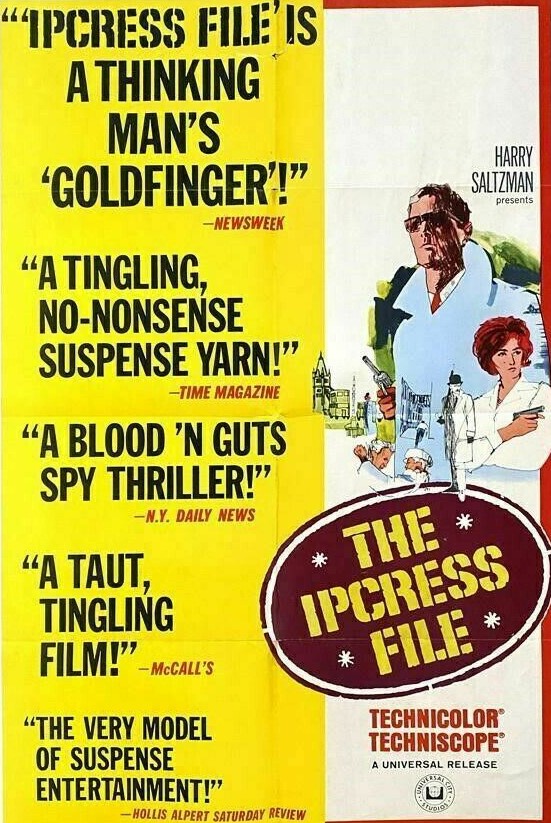
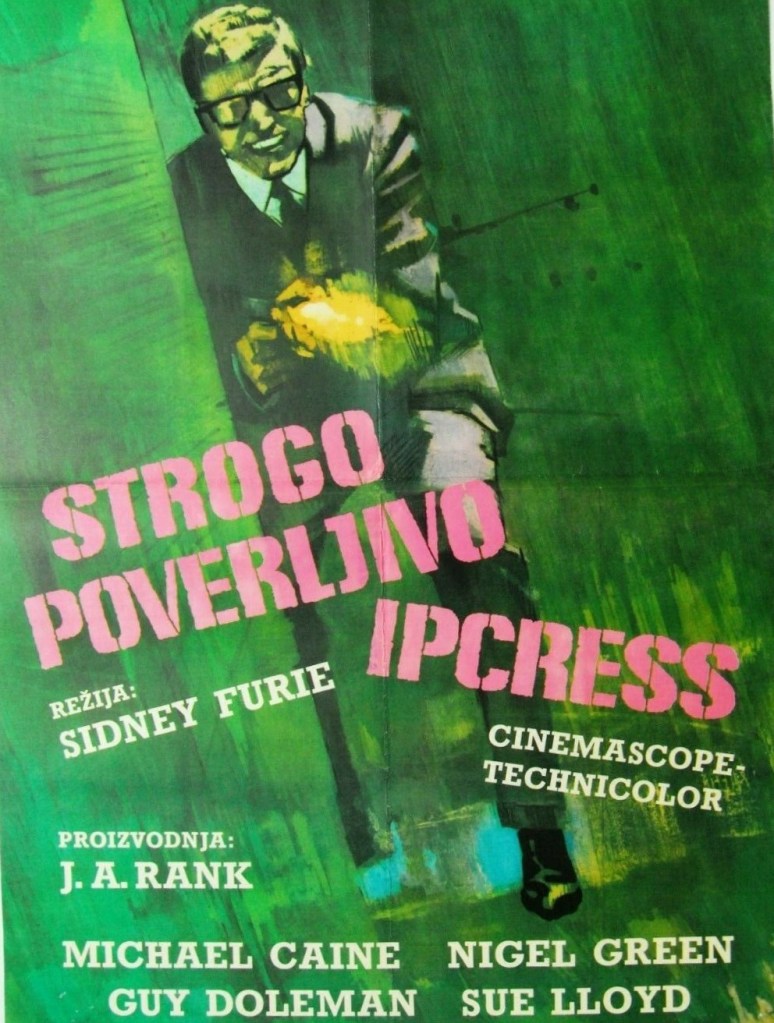
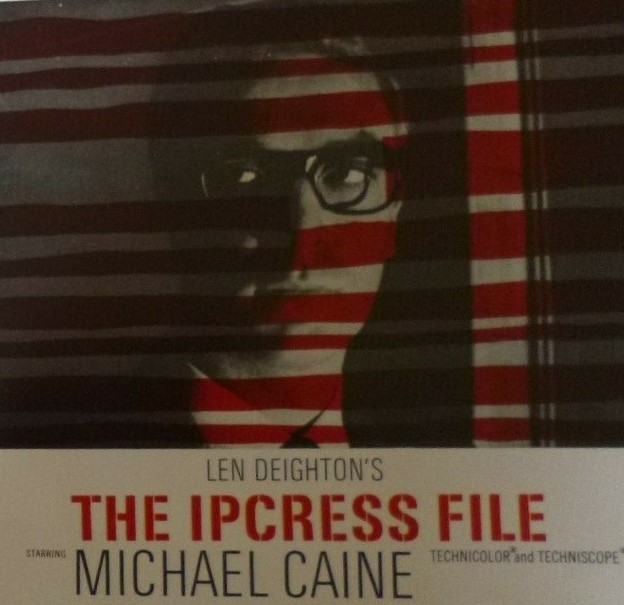
But by the time Hot Enough for June was released a second Bond – From Russia with Love (1963)- had changed public attitudes to spy films and in addition readers were reeling from two blockbuster spy novels, Len Deighton’s The Ipcress File (published in 1962) and John Le Carre’s monumental bestseller The Spy Who Came in from the Cold (published 1963). In preproduction in May 1963, minus any cast, the projected film was still being known as TheNight of Wenceslas. Star Dirk Bogarde dithered so much about his involvement that at one point he was replaced by the considerably younger Tom Courtenay (Billy Liar, 1963).
U.S. cover of the Davidson novel.
As was often the case in adaptations of best sellers, the screenwriter, in this instance Lukas Heller (Whatever Happened to Baby Jane, 1962) both added to and subtracted from the original material. For example, the Nicholas of the Lionel Davidson novel was not a particularly attractive character, truculent, snippy, with a bad case of self-entitlement, a bit of a ne’er-do-well, scrounging to pay bills, with expensive tastes and far from charming in his relationship with his girlfriend. He is also employed, rather than unemployed and with hankerings to be a writer as in the film, and comes into the orbit of Cunliffe (Robert Morley in the film) who dupes him into thinking an uncle has left him an inheritance.
Sensibly, Lukas Heller dispenses with Nicholas’s back story which posits him as a Czechoslovakian exile, albeit leaving his native land at the age of six, and various other complications concerning that country. He is sent to collect a formula for unbreakable glass. The “hot enough for June” password is a Heller construct and feels as if belongs to an earlier era of spy pictures. In the book all Nicholas has to do is leave his guide book lying around in the factory for the contact to write there the formula. However, rather than discovering he is working for the British Secret Service, the novelist employs a different twist, that the young man is, unknowingly, in the pay of foreigners plotting against Britain.
Davidson envisaged a different kind of Czech girl, more of a Valkyrie, statuesque (“her breasts stood out like bombs”) rather than the slimmer Sylva Koscina. It is Heller who adds the complication of her father heading up the secret police. In the book, her father is merely a musician and conveniently absent for most of the time, freeing up his house for romantic interludes. And the book has none of the James Bondesque features since the first of the series had not been written when The Night of Wenceslas was published.
However, the film having established the alternative world of rival secret agencies, of the girl being under suspicion and of her father being a senior official in the espionage business, the screenwriter then follows the bulk of the novel’s romance and the thrilling episodes involving Nicholas on the run. The swimming pool, cigarette burn, the parade and the milkman can all be found in the book.
There is one element that had to be changed. In the book, Nicholas makes two trips to Prague. But it is a golden rule of screenwriting that a character visits a location only once. Davidson ends his book with a touch of irony: Nicholas is swapped for Cunliffe.
At whose behest, it was decided to insert the comedy is anybody’s guess. Possibly the feeling that the book as written would be too unsophisticated for audiences accustomed to the rattling action and glamour of a James Bond. The Bond-style connections at the beginning of the film are clunky and the later references to espionage at the highest level also seemed to have been slotted in with no regard to retaining the essence of the book.