I am a published author of books about film - over a dozen to my name, the latest being "When Women Ruled Hollywood." As the title of the blog suggests, this is a site devoted to movies of the 1960s but since I go to the movies twice a week - an old-fashioned double-bill of my own choosing - I might occasionally slip in a review of a contemporary picture.
In an ideal world there’d be someone you could complain to if an advertiser stepped out of line. In an ideal world, the agency that won a pitch would be the one that had put in the hard yards researching the marketplace and coming up with the most creative idea rather than the one who took the easy way out by simply wining and dining the client and laying on a bevy of women.
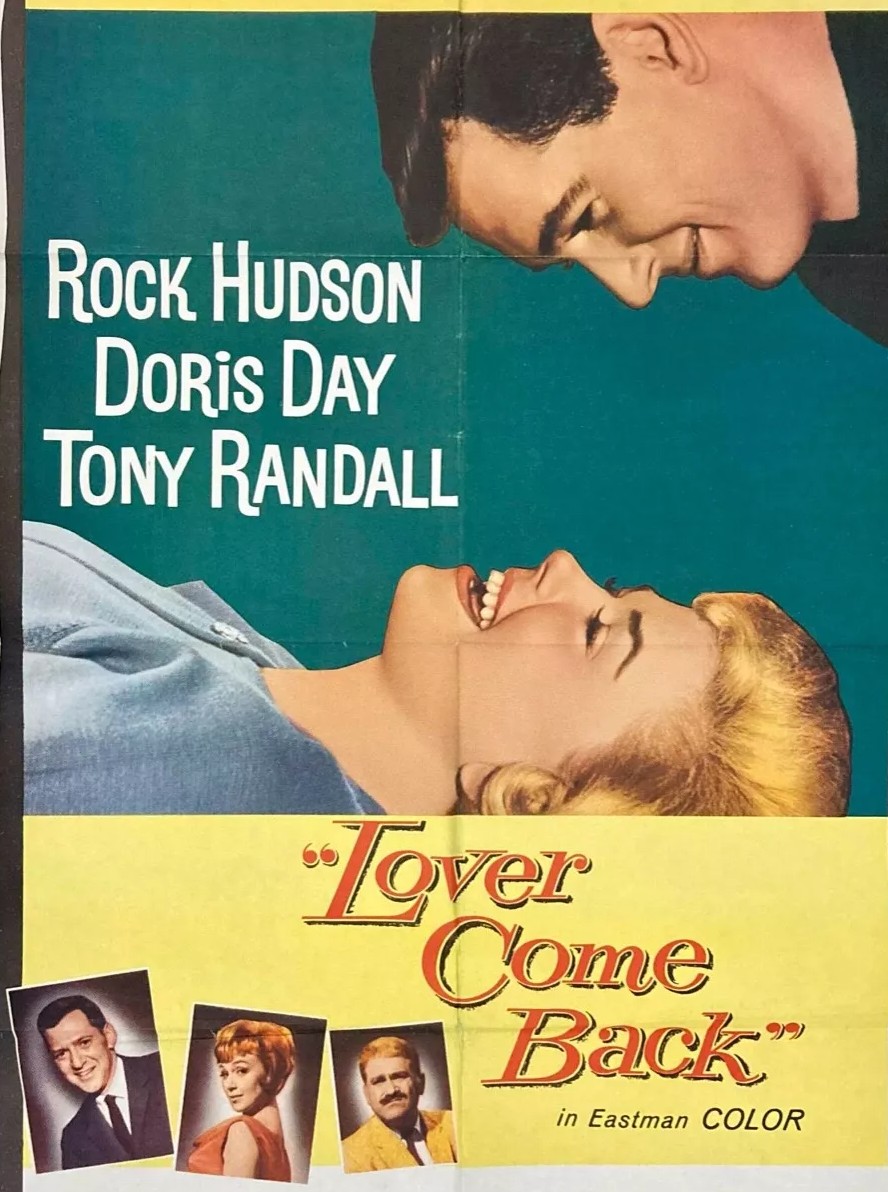
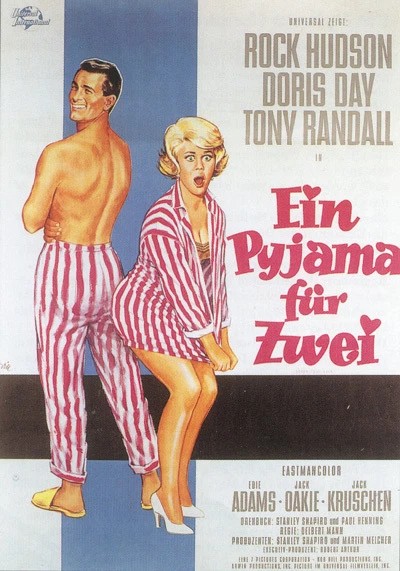
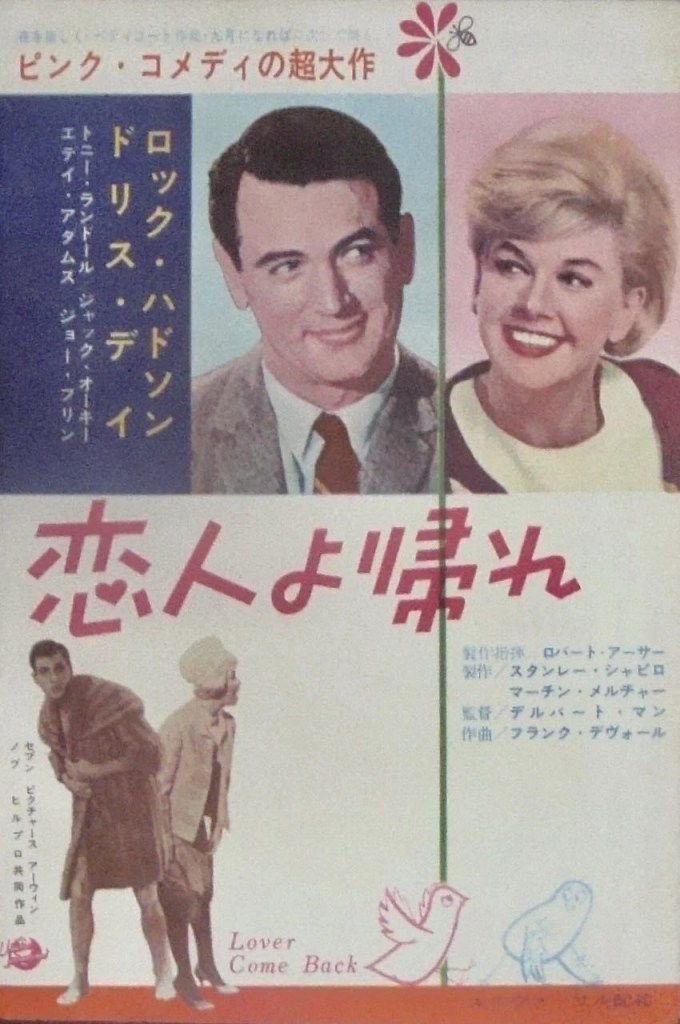
As you might imagine on Madison Ave it will be the prim intense Carol (Doris Day) who will play by the rules and stay up all night honing her pitch. And it would be louche smarmy executive Jerry (Rock Hudson) who puts in the hours but only as far as schmoozing the client and appealing to his primitive nature. Given this is a fiction, I’m assuming the idea of a code of ethics by which advertisers can be brought to book is a figment of the writer’s imagination.
No worries, whether fictional or not, Carol still loses out, Jerry more than capable of winning over the members of the ethics panel by seducing them with seductive chorus girl Rebel (Edie Adams) whom he has promised to turn into a star by featuring her as the model for a new product called VIP.
The only problem is, once Rebel’s usefulness is over, and once the ethics team is satisfied, Jerry has no intention of making such an unlikely candidate for stardom a star. Which is just as well because VIP doesn’t exist. He invented it solely to shoot enough of a commercial to convince Rebel he would honor his part of the deal.
Carol sees through the scam and hauls him up before the ethics board once again. However, Jerry has the sense to bring with him an actual product, a seemingly innocuous candy except it turns out to be highly intoxicating.
Screenwriters had long realized that a drunken Doris Day (The Ballad of Josie, 1967) is a banker and that she’ll use it to hit a comedic home run. And that’s the way it plays out with the complication that the pair have a one-night stand and a subsequent speedy marriage which leads to exactly the kinds of complications you’d expect from a Rock Hudson-Doris Day comedy and with a not unexpected twist at the tail end of the tale.
The only problem here is that we spend so much time satirizing the advertising industry, which, let’s face it, is easy meat, that it takes too long to get to the comedic hard yards the pair eventually put in. Doris Day makes a very persuasive top dog, and with that pinched-up intensity you could easily see her playing such a role in a drama and be very convincing. Generally, when she’s adopting her in-charge mode, there’s plenty inanimate objects to get in the way and create the pratfalls and physical comedy at which she excels. But when she’s just being undone by someone else’s cleverness, she might win sympathy but that doesn’t translate into big laffs.
So it only really gets going when the pair get into a romantic tangle, helped along, as I said by Day’s trademark inebriation. Rock Hudson (Seconds, 1966) is at his best when he’s constantly being taken down a peg or two by a clever woman or is himself ambushed by inanimate objects, so he’s somewhat out of his comfort zone in, here, always sitting in the winner’s circle.
There are certainly some high points but for too long it just drifts along, and much of the sharpness of the satire has been superseded by the more ruthless antics exposed on Mad Men (2007-2015), so it’s lost some of the bite which may have made up for the lack of comedy in the earlier sections.
But there’s no diminishing the screen charisma of the Hudson-Day partnership. It brought out the best in both actors. Tony Randall (Bang! Bang! You’re Dead! / Our Man in Marrakesh, 1966) puts in an interesting shift as Jerry’s boss who is bullied by his underling. Edie Adams (The Honey Pot, 1967) adds scheming to sultriness.
Directed by Delbert Mann (Buddwing, Mister Buddwing, 1966) from a screenplay by Stanley Shapiro (A Very Special Favor, 1965) and Paul Henning (Bedtime Story, 1964).
Since I’ve expanded the All-Time Top Movies to 100 it seems only fair to enlarge the Behind the Scenes section. So this is now a Top 30. The rankings here relate to this time last year.
Includes three Alistair MacLean adaptations. John Wayne and Gregory Peck feature three times and Kirk douglas, Dean Martin, James Stewart, Steve McQueen and Omar sharif twice each. Andrew V. McLaglen leads the directorial charge with three mentions.
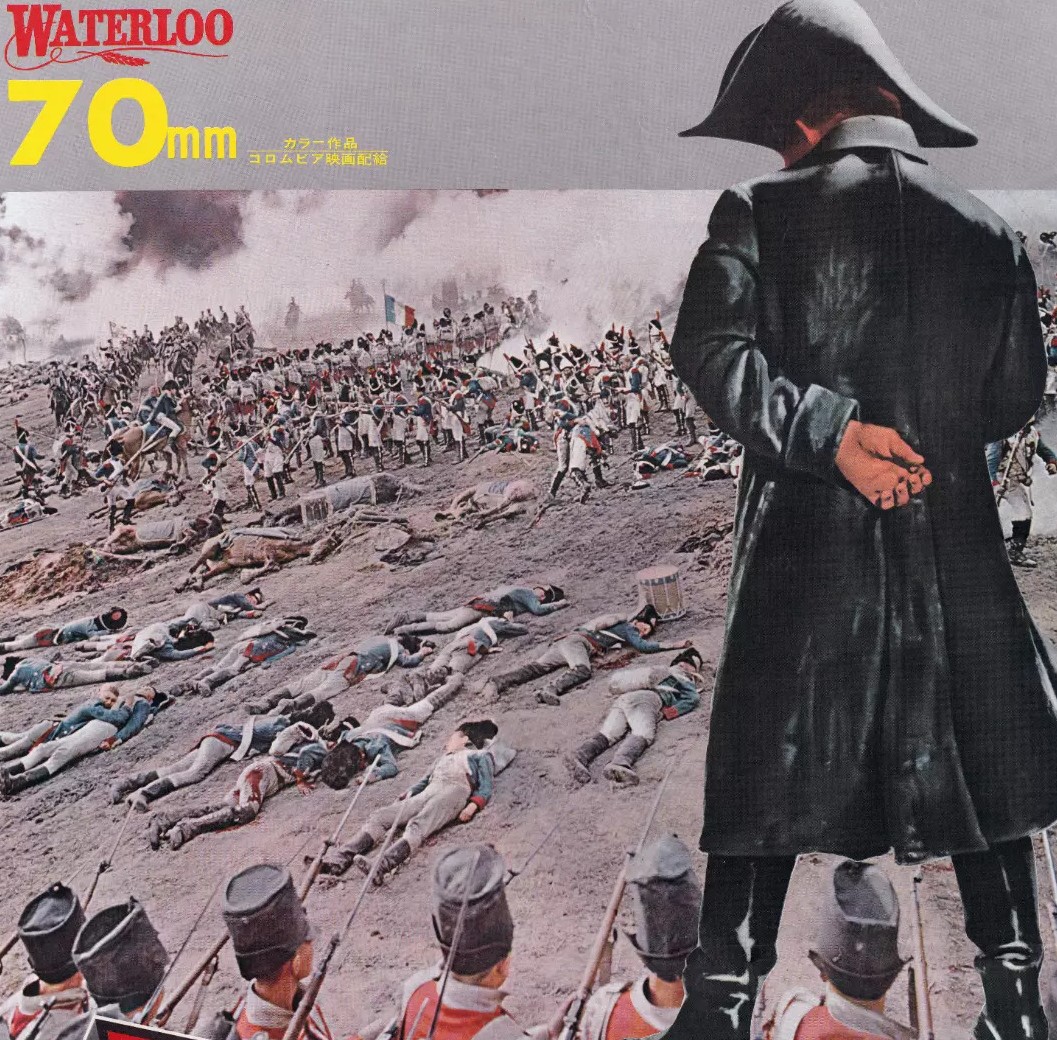
(1)Waterloo(1970). No doubting the effect of Ridley Scott’s Napoleon in increasing interest in this famous flop that had Rod Steiger’s French emperor squaring off against Christopher Plummer.
(3) In Harm’s Way(1965). Otto Preminger takes off the gloves to expose problems in the American military around Pearl Harbor. John Wayne and Kirk douglas head an all-star cat.
(2)Man’s Favorite Sport (1964). Howard Hawks back in the gender wars with Rock Hudson being taken down a peg by Paula Prentiss.
(4) The Guns of Navarone (1961). Alistair MacLean created the template for the men-on-a-mission war picture. Gregory Peck, David Niven and Anthony Quinn topline. Nominated for five Oscars including Best Picture, Best Director (J. Lee Thompson) and Screenplay (Carl Foreman) and enough jeopardy throughout the filming to qualify for a movie of its own.
(7) The Satan Bug(1965). The problems facing director John Sturges in adapting the Alistair MacLean pandemic classic for the big screen.
(6) Battle of the Bulge (1965). There were going to be two versions, so the race was on to get this one to the public first. A Cinerama number.
(5) Ice Station Zebra(1968). A complete cast overhaul and ground-breaking special effects are at the core of this filming of another Alistair MacLean tale. Second Alistair MacLean outing for John Sturges.
(New Entry) Barbarella (1968). Jane Fonda was fourth choice after Brigitte Bardot, Sophia Loren and Ira von Furstenberg. Should never have been directed by Roger Vadim who was out of favor with Paramount. One of the first movies to be given a global simultaneous release.
(8) Cast a Giant Shadow (1965). Producer Melville Shavelson wrote a book about his experiences and this and other material relating the arduous task of bringing the Kirk Douglas-starrer to the screen are told here.
(12) Mackenna’s Gold (1969). Tortuous route to the screen for Carl Foreman-produced roadshow western, filmed in 70mm Cinerama, with an all-star cast including Omar Sharif, Gregory Peck and Telly Savalas.
(9) The Girl on a Motorcycle / Naked under Leather (1968). Cult classic starring Marianne Faithful and Alain Delon had a rocky road to release, especially in the U.S. where the censor was not happy.
(12) The Sons of Katie Elder (1965). First envisioned nearly a decade before, Henry Hathaway western finally hit the screen with John Wayne and Dean Martin.
(11). Tora! Tora! Tora! (1970). Richard Fleischer dispenses with the all-star cast in favor of even-handed verisimilitude.
(15) The Trouble with Angels (1966). Less than angelic Hayley Mills sparring with convent boss Rosalind Russell. Directed by one-time star Ida Lupino.
(New Entry) The Misfits (1961). Robert Mitchum turned down the male lead. Clark Gable failed the medical, both Montgomery Clift and Marilyn Monroe had drug problems. It went 40 days over schedule and half a million over budget.
(14) The Bridge at Remagen (1969). British director John Guillerman hits trouble filming World War Two picture starring George Segal and Robert Vaughn.
(16) For a Few Dollars More (1965). Sergio Leone sequel to first spaghetti western brings in Lee van Cleef to pair with Clint Eastwood.
(20) The Collector (1963). William Wyler’s creepy adaptation of John Fowles’ creepy bestseller with Terence Stamp and Samatha Eggar.
(13) Sink the Bismarck! (1960). Documentary-style British World War Two classic with Kenneth More exhibiting the stiffest of stiff-upper-lips.
(18) Bandolero! (1968). Director Andrew V. McLaglen teams up with James Stewart, Dean Martin and Raquel Welch to fight Mexican bandits.
(19) The Train (1964). John Frankenheimer replaced Arthur Penn in the directorial chair to steer home unusual over-budget World War Two picture with Burt Lancaster trying to steal art treasures from under the nose of German Paul Schofield.
(17) How The West Was Won (1962). First non-travelog Cinerama picture, all-star cast and all-star team of directors tackling multi-generational western and all sorts of logistical problems.
(New entry) The Way West (1967). Burt Lancaster, James Stewart and Gary Cooper were the original cast. Charlton Heston turned it down. Robert Mitchum couldn’t make up his mind. Director Andrew V. McLaglen claimed it had been savaged by the studio.
(New Entry) The Wicker Man (1973) at the Box Office. A flop on initial release, U.S. release delayed, it took a long long time before the movie achieved both cult status and came out of the red.
(New Entry) The Stalking Moon (1968). Should never have been made, according to existing legislation, even with Gregory Peck’s participation long delayed in part due to original director George Stevens pulling out.
(New Entry) “Barbieheimer” Recalls the Old Double Bill. The perfect double bill aimed to attract different segments of the audience.
(New Entry) Judgement at Nuremberg (1961). Laurence Olivier was first choice to play the role taken by Burt Lancaster. United Artists was not at all keen on the proposition. Innovative use of the camera. Judy Garland and Montgomery Clift overcame personal problems while Marlene Dietrich was acquainted with one of men on trial.
(New Entry) The Thomas Crown Affair (1968). Sean Connery, Jack Lemmon and Brigitte Bardot turned it down. Director Norman Jewison thought Steve McQueen “completely wrong” for the part.
(New Entry) The Cincinnati Kid (1965). Sam Peckinpah was fired. Spencer Tracy quit. Sharon Tate declined.
(New Entry) The Appointment (1969). Booed at the Cannes Film Festival. Denied a release in the U.S., even with Omar Sharif as star and after being heavily edited by MGM. Only shown on American TV. The biggest financial flop of Sidney Lumet’s career.
Given that I’m now closing in on 2,000 reviews, it seems the correct time to expand the scope of the All-Time Views List. So instead of a Top 50, from now on it’s a Top 100. In case it’s not obvious I should point out that these are not necessarily my favourites, but yours, the movies most viewed since The Blog began five-and-a-half years ago. Since this little exercise is undertaken twice a year the rankings are compared to the previous standings in the all-time list from July this year.
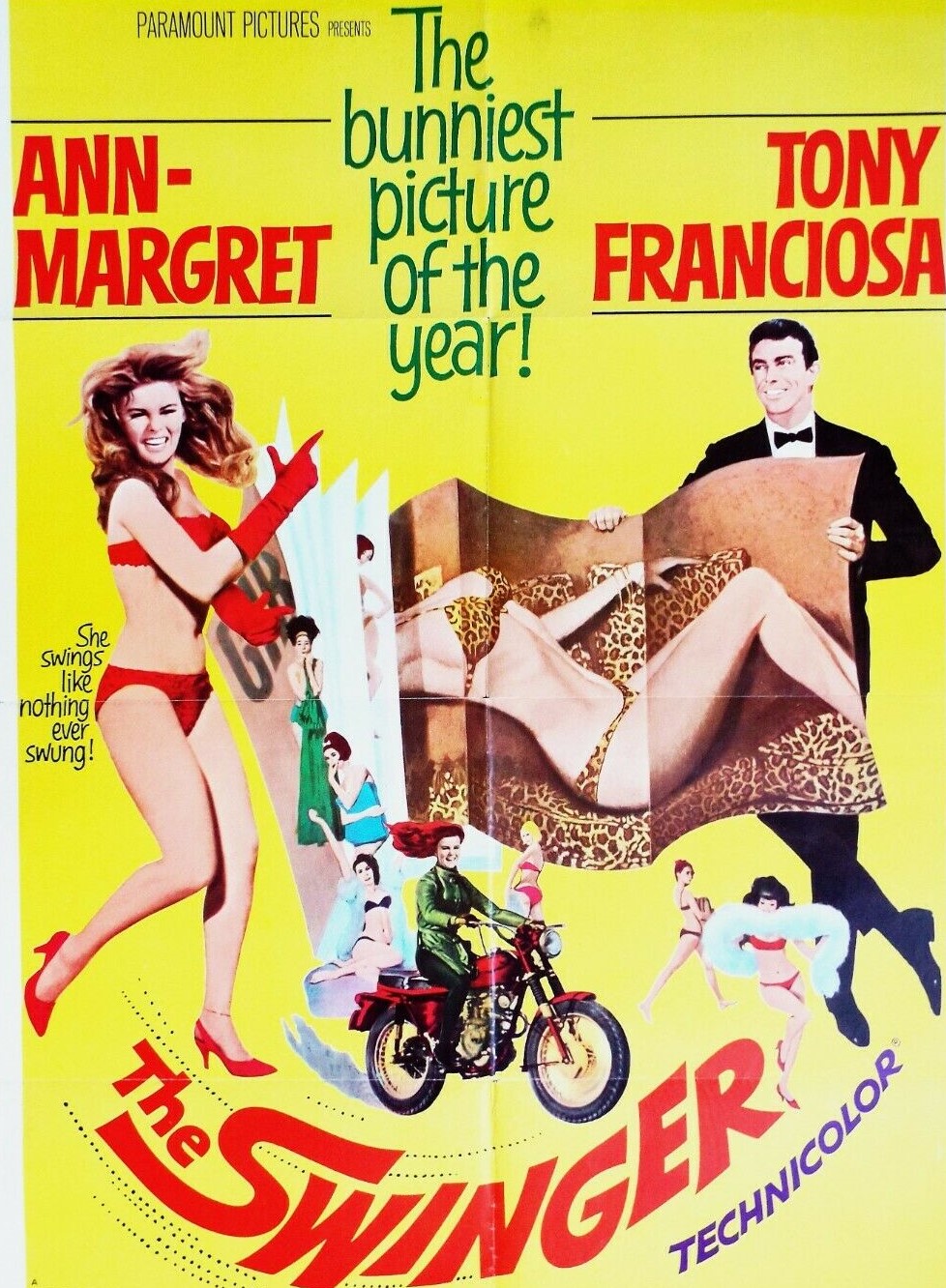
There’s still no shaking Ann-Margret, a brace of her movies – The Swinger (1966) and western remake Stagecoach (1966) – embedded in the top three. In terms of number of entries, Dean Martin is in pole position thanks to a quintet of westerns – Bandolero (1968), Rough Night in Jericho (1967), 4 for Texas (1963), Five Card Stud (1968) and The Sons of Katie Elder (1965).
On four apiece are Raquel Welch and George Peppard, the former in spy adventure Fathom (1967), western Bandolero (1968), crime drama Lady in Cement (1968) and One Million Years B.C. (1966), the latter in House of Cards (1968), Pendulum (1968), Operation Crossbow (1965) and Rough Night in Jericho.
Also making a fine showing are Hayley Mills, John Wayne, Charlton Heston, Senta Berger, Alain Delon and Omar Sharif with three entries each. Mills headlines The Family Way (1966), The Trouble with Angels (1966) and The Chalk Garden (1964). Wayne shows up for war picture In Harm’s Way (1965) and two westerns, The Sons of Katie Elder and Andrew V. McLaglen’s under-rated The Undefeated (1969). Heston shows his marquee power in Diamond Head (1962), The Hawaiians/ Master of the Islands (1970) and The War Lord (1965). Senta Berger is seen in Istanbul Express (19668), Our Man in Marrakesh (1966) and The Secret Ways (1961). Alain Delon tried to go straight in Once a Thief (1965), is intent on crime in Farewell Friend / Adieu L’Ami (1968) and is the lover in Girl on a Motorcycle.
Sharif stars in little-seen The Appointment (1969), Genghis Khan (1965) and J. Lee Thompson Cinerama western Mackenna’s Gold (1969). Ann-Margret also has three after you add Once a Thief (1965) to her list. On the directorial front, Robert Aldrich and Andrew V. McLaglen clock up three apiece, the former with Sodom and Gomorrah (1962), 4 for Texas (1963) and The Flight of the Phoenix (1965) and the latter with western trio The Way West (1967), Bandolero! (1968) and The Undefeated (1969).
Oscar-winner Anora (2024), Pamela Anderson as The Last Showgirl (2024) and French crime thriller Squad 36 / Bastion 36 (2025) head up the contemporary list, although only a handful of recent films have made their way into the Top 100.
If, like me, you’re interested in statistics, you might like to know the genre breakdown. Drama is top with 30 per cent of all the movies featured, crime comes next on 24 per cent, followed by westerns on 14 per cent then spy (11 per cent), war (nine per cent), sci fi/fantasy (five per cent), historical (four per cent), horror (two percent) and musical (one per cent).
The figures in brackets represent the positions in July 2025 and New Entry is self-explanatory. .
(1) The Swinger (1966). Despite shaking her booty as only she knows how, Ann-Margret brings a sprinkling of innocence to this sex comedy.
(2) Anora (2024). Mikey Madison’s sex worker woos a Russian in Oscar-winner.
(3) Stagecoach (1966). Under-rated remake of the John Ford western. But it’s Ann-Margret who steals the show ahead of Alex Cord in the role that brought John Wayne stardom.
(5) In Harm’s Way (1965). Under-rated John Wayne World War Two number. Co-starring Kirk Douglas, Patricia Neal, Tom Tryon and Paula Prentiss, director Otto Preminger surveys Pearl Harbor and after.
(6) Fraulein Doktor (1969). Grisly realistic battle scenes and a superb score from Ennio Morricone help this Suzy Kendall vehicle as a World War One German spy going head-to-head with Brit Kenneth More and taking time out for romantic dalliance with Capucine.
(4) The Last Showgirl (2024). Pamela Anderson proves she can act and how in this touching portrayal of a fading Las Vegas dancer.
(9) Squad 36 / Bastion 36 (2025). Corruption and interdepartmental rivalry fuel this French flic directed by Olivier Marchal.
(8)Once Upon a Time in the West (1969). Along with The Searchers (1956) now considered the most influential western of all time. Sergio Leone rounds up Claudia Cardinale, Henry Fonda and Charles Bronson and that fabulous Morricone score.
(32) Age of Consent (1969). Helen Mirren frolics nude in her debut as the freewheeling damsel drawn to disillusioned painter James Mason.
(16) A Dandy in Aspic (1968). Cold War thriller with Laurence Harvey as a double agent who wants out. Mia Farrow co-stars.
(New Entry) Our Man in Marrakesh / Bang! Bang! You’re Dead (1966). Humorous spy offering with Tony Randall and Senta Berger.
(7) Fireball XL5. The famous British television series (1962-1963) from Gerry and Sylvia Anderson, now colorized. “My heart will be a fireball…”
(14) Baby Love (1969). Controversy was the initial selling point but now it’s morphed into a morality tale as orphaned Linda Hayden tries to fit into an upper-class London household.
(New Entry) The Chapman Report (1962). Jane Fonda, Claire Bloom and Shelley Winters lead this investigation into contemporary sexual mores.
(18) The Family Way (1966). Hayley Mills comes of age in this very adult drama. Co-starring her father John Mills and Hywel Bennett.
(21) The Appointment (1969). Inhibited lawyer Omar Sharif discovers the secrets of wife Anouk Aimee in under-rated and little-seen Italian-set drama from Sidney Lumet.
(23) Pressure Point (1962). Nazi extremist Bobby Darin causes chaos for psychiatrist Sidney Poitier. Stunning dream sequences.
(11) Jessica(1962). Angie Dickinson doesn’t mean to cause trouble but as a young widow arriving in a small Italian town she causes friction, so much so the local wives for on a sex strike.
(16) Pharoah (1966). Polish epic set in Egypt sees the country’s ruler at odds with the religious hierarchy.
(12) Young Cassidy (1965). Julie Christie came out of this best, winning her role in Doctor Zhivago as a result. Rod Taylor as Irish playwright Sean O’Casey.
(30) TheSisters (1969). Incest rears its head as Nathalie Delon and Susan Strasberg ignore husbands and lovers in favor of each other.
(New Entry) Signpost to Murder (1964). Joanne Woodward trapped in a millhouse with escaped lunatic Stuart Whitman in twisty thriller.
(23) Istanbul Express (1968). Gene Barry plays a weird numbers game in spy thriller that sets him up against Senta Berger.
(13) Thank You Very Much/ A Touch of Love (1969). Sandy Dennis dazzles as an academic single mother in London impregnated by Ian McKellen.
(New Entry) Five Card Stud (1968). Gambler Dean Marin faces off against preacher Robert Mitchum and a serial killer in Henry Hathaway western also featuring Inger Stevens.
(20) Go Naked in the World (1961). Gina Lollobrigida finds that love for a wealthy playboy clashes with her profession (the oldest). Look out for highly emotional turn from the usually taciturn Ernest Borgnine.
(37) The Demon / Il Demonio (1963). Extraordinary performance by Daliah Lavi in Italian drama as she produces the performance of her career.
(17) Claudelle Inglish (1961). Diane McBain seeks revenge for being stood up at the altar in the Deep South.
(27) Fathom (1967). When not dodging the villains in an entertaining thriller, Raquel Welch models a string of bikinis as a skydiver caught up in spy malarkey.
(24) Pendulum (1968). Fast-rising cop George Peppard accused of murdering unfaithful wife Jean Seberg
(New Entry) They Came to Rob Las Vegas (1968). Gary Lockwood and Elke Sommer head up a heist thriller.
(19) Vendetta for the Saint (1969). Prior to James Bond, Roger Moor was better known as television’s The Saint. Two television episodes combined sees our hero tackle the Mafia.
(39) Operation Crossbow (1965). George Peppard is the man with the mission in Occupied France during World War Two. Co-stars Sophia Loren.
(25) The Sins of Rachel Cade (1961) Angie Dickinson (again) as African missionary falling foul of the natives and Commissioner Peter Finch. Roger Moore (again) in an early role.
(15) The Girl on a Motorcycle / Naked under Leather (1968). How much you saw of star Marianne Faithfull depended on where you saw it. The U.S. censor came down heavily on the titular fantasizing heroine, the British censor more liberal. Alain Delon co-stars.
(New Entry) The Battle of the Villa Florita (1965). Maureen O’Hara runs off to Italy to join lover Rossano Brazzi. When her kids follow, trouble ensues,
(New Entry) Assignment K (1967). Stephen Boyd in spy caper tangles romantically with Camilla Sparv and is on the receiving end of some tough thugs.
(New entry) Sands of the Kalahari (1965). Stanley Baker, Stuart Whitman and Susannah York are stranded in the desert. Instead of working together, it’s every person for themselves.
(New Entry) The Double Man (1967). Yul Brynner is the target for a kidnapping plot in complex spy thriller co-starring Britt Ekland.
(42) The Chalk Garden (1964). Wild child Hayley Mills, trying to break out of her Disney straitjacket, duels with governess Deborah Kerr.
(26) Diamond Head (1962). Over-ambitious hypocritical landowner Charlton Heston comes unstuck in love, politics and business in Hawaii. George Chakiris, Yvette Mimieux and France Nuyen turn up the heat.
(New entry) Gunn (1967). Blake Edwards turns hit television series into a movie with star Craig Stevens.
(45) A Fine Pair (1968). Rock Hudson and Claudia Cardinale join forces for a heist picture.
(New Entry) 4 for Texas (1963). Only Frank Sinatra and Dean Martin survive from the Rat Pack, but Ursula Andress and Anita Ekberg more than compensate in Robert Aldrich fun western.
(32) Farewell, Friend / Adieu L’Ami (1968). A star is born – at least in France, the States was a good few years behind in recognizing the marquee attractions of Charles Bronson. Alain Delon co-stars in twisty French heist thriller featuring Olga Georges-Picot and Brigitte Fossey.
(35) Once a Thief (1965). Ann-Margret again, in a less sexy incarnation, as a working mother whose ex-jailbird thief Alain Delon takes a detour back into crime.
(36) Woman of Straw (1964). More Hitchockian goings-on as Sean Connery tries to frame Gina Lollobrigida in a dubious scheme.
(New Entry) Jason and the Argonauts (1963). Ray Harryhausen steals the show in cracking fantasy.
(29) The Golden Claws of the Cat Girl (1968). Cults don’t come any sexier than Daniele Gaubert as a French cat burglar.
(New Entry) TheFlight of the Phoenix (1965). When James Stewart, Richard Attenborough, Peter Finch and Hardy Kruger crash in the desert they come up with an ingenious plan to escape. Robert Aldrich directs.
(51) Prehistoric Women / Slave Girls (1967). Martine Beswick attempts to steal the Raquel Welch crown as Hammer tries to repeat the success of One Million Years B.C.
(43) Dark of the Sun / The Mercenaries (1968). Rod Taylor’s guns-for-hire break out the action in war-torn Africa. Jim Brown and Yvette Mimieux co-star.
(31) Moment to Moment (1966). Hitchcockian thriller set in Hitchcock country – the South of France – as unfaithful Jean Seberg is on the hook for the murder of her lover. Also featuring Honor Blackman.
(New Entry) The Red Tent (1969). Sean Connery adds his weight to a rescue mission for an airship crashed in the Arctic. Based on a true story. Claudia Cardinale and Peter Finch co-star.
(New Entry) The Best House in London (1969). David Hemmings heads up a moralistic tale of rescuing sex workers in Victorian London.
(New Entry) The Sons of Katie Elder (1965). John Wayne and Dean Martin join forces to find out what happened to their mother in top-notch Henry Hathaway western.
(New Entry) Anatomy of a Fall (2024). Critically-acclaimed artie thriller starring Oscar-nominated Sandra Huller. The screenplay took the Oscar as well.
(New Entry) Invitation to a Gunfighter (1964). Yul Brynner cleans up the town in under-rated western. Janice Rule adds interest.
(34) Genghis Khan (1965). Omar Sharif as the titular warrior up against Stephen Boyd. Co-starring James Masion and Francoise Dorleac. Robert Morley is hilariously miscast as the Chinese Emperor.
(33) Horizon: An American Saga – Chapter 1 (2024). Kevin Costner’s majestic western that became one of the biggest flops of the year was underrated in my opinion.
(New Entry) Mickey One (1965). Cult Arthur Penn thriller with Warren Beatty as comedian on the run.
(New Entry) House of Cards (1968). Ex-boxer George Peppard gets tangled up in an international fascist conspiracy and with Ingrid Stevens. Orson Welles has a cameo.
(41)Can Heironymus Merkin Ever Forget Mercy Humpe and Find True Happiness? Fellini would turn in his grave at the self-indulgence of singer Anthony Newley who manages to lament that women falling at his feet cause him so much strife. Joan Collins co-stars.
(New entry) Rough Night in Jericho (1967). Corrupt lawman Dean Martin tangles with George Peppard in under-rated western Jean Simmons is the woman who comes between them.
(New Entry) Deadlier than the Male (1967). Richard Johnson as Bulldog Drummond in the clutches of femme fatales of Elke Sommer and Sylva Koscina.
(New entry) The Undefeated (1969). John Wayne and Rock Hudson duke it out in superb Civil War western directed by Andrew V. McLaglen.
(New Entry) Ten Little Indians (1965). Agatha Christie whodunnit. Hugh O’Brian and Shirley Eaton are among the suspects.
(New Entry) The Trouble with Angels (1966). Hayley Mills has the nuns on the run as she causes chaos at a convent school run by Rosalind Russell.
(New Entry) 633 Squadron (1964). You remember the soaring score more than the performances of Cliff Robertson and George Chakiris in World War Two aerial mission.
(New Entry) Black Butterflies (2022). Twisty French mini-series majoring on sex and murder in enjoyable film noir throwback.
(New Entry) The Shoes of the Fisherman (1968). Anthony Quinn is the unlikely candidate for the Papacy in Vatican drama co-starring Laurence Olivier, Oskar Werner and David Janssen.
(44) La Belle Noiseuse (1991). Emmanuelle Beart is the mostly naked model taking painter Michel Piccoli to his artistic limits.
(48) The Venetian Affair (1966). Robert Vaughn investigates spate of suicide bombs. Elke Sommer provides the glamor.
(New Entry) Bandolero! (1968). James Stewart and brother Dean Martin team up with Raquel Welch to evade George Kennedy’s posse in another Andrew V. McLaglen under-rated western.
(46) Lady in Cement (1969). Raquel Welch models more bikinis as the gangster’s moll taken on as a client by private eye Frank Sinatra in his second outing as Tony Rome.
(49) The Secret Ways (1961). The first of the Alistair MacLean adaptations to hit the big screen features Richard Widmark trapped in Hungary during the Cold War. Senta Berger in an early role.
(New Entry) Lost Command (1966). Algerian War picture sets Anthony Quinn and Alain Delon against George Segal.
(38) Guns of Darkness (1962). David Niven and Leslie Caron on the run from South American revolutionaries.
(New Entry) The Adventurers (1970). Adaptation of a Harold Robbins bestseller so it’s sex and violence and more sex as playboy Bekim Fehmiu turns revolutionary. Co-stars Charles Aznavour, Candice Bergen and Leigh Taylor-Young.
(New Entry) The Way West (1967). Andrew V. McLaglen again with an under-rated western again starring Kirk Douglas, Robert Mitchum, Richard Widmark on the long trail. .
(New Entry) One Million Years B.C. (1966). Ray Harryhausen’s models cede center stage to Raquel Welch in a fur bikini in the picture that launched her career..
(40) She Died with Her Boots On / Whirlpool (1969). More sleaze than cult. Spanish director Jose Ramon Larraz’s thriller sees kinky photographer Karl Lanchbury targeting real-life MTA Vivien Neves.
(New Entry) The Hawaiians / Master of the Islands (1962). Charlton Heston picks up where Hawaii (1966) left off and it’s chock full of corruption, racism and misogyny.
(New Entry) Subterfuge (1968). CIA agent Gene Barry hunts a mole in British MI5. Joan Collins lends a hand.
(47) Carry On Up the Khyber (1968). The most successful of the Carry On satires poking fun at the British in India.
(New Entry) Mirage (1965). Compelling thriller with Gregory Peck convinced he’s suffering from amnesia.
(New Entry) The War Lord (1965). Very realistic historical drama directed by Franklin Schaffner with Charlton Heston defending his land from invaders.
(New Entry) Petla (2020), Cracking Polish thriller as a cop loses his way in a world of sex, bribery and corruption.
(New Entry) Two for the Road (1967). Audrey Hepburn and Albert Finney try to get their marriage off the rocks by retracing their romantic steps when younger.
(New Entry) Battle of the Bulge (1965). World War Two epic filmed in Cinerama with a topline cast including Henry Fonda, Robert Shaw, Charles Bronson and Telly Savalas.
(New Entry) Sodom and Gomorrah (1962). Robert Aldrich biblical epic sees Stewart Granger facing off against treachery. Co-stars Pier Angeli, Rossana Podesta and Stanley Baker.
(New Entry) Joy in the Morning (1965). Touching romance starring Richard Chamberlain and Yvette Mimieux.
(New Entry) The Appaloosa / Southwest to Sonora (1966). Striking performance from Marlon Brando trying to recover a horse stolen by Mexican bandit John Saxon. Interesting western from Sidney J Furie.
(New Entry) The Titanic (1997). I saw this on reissue in 3D and was knocked out all over again.
(New Entry) Lonely Are the Brave (1962). Prison escape picture featuring cowboy Kirk Douglas who can’t cope with the modern world. Walter Matthau co-stars.
(New Entry) The Woman Who Wouldn’t Die / Catacombs (1965). Cult director Gordon Hessler at his best with husband Gary Merrill finding out trying to kill wife Georgina Cookson isn’t as easy as he expected.
(New Entry) The Lost World (1960). Arthur Conan Doyle fantasy features dinosaurs plus Michael Rennie and Jill St John.
(New Entry) Mackenna’s Gold (1969). J. Lee Thompson big-budget western treasure hunt starring Gregory Peck, Omar Sharif, Telly Savalas, Camilla Sparv, Eli Wallach, lee J Cobb, Edward G Robinson, Julie Newmar and Eli Wallach.
(New Entry) Beat Girl / Wild for Kicks (1960). Teenager Gillian Hills prefers becoming a striptease artist rather than hanging out with her pals in Soho milk bars. Cult with a capital C.
(New Entry) Some Girls Do (1969). Sequel to Deadlier than the Male and Richard Johnson has no easier time of it with Daliah Lavi and Beba Loncar preferring murder to seduction.
Normally around this time of year I’m – to use a Scottish expression – “bumming my load”, that is, boasting (there’s no other word for it if I’m being honest) about all the books I’ve written which IMHO you should be putting on your Xmas list.
But this time it’s different – because I’m “bumming your load.”
This time I’m celebrating your input into my humble Blog.
Last month I hit 50,000 views and this month I’ve already passed that figure.
So these kind of stats are phenomenal and though I contribute by doing the writing the bigger part in this is down to you, the reader, who has remained with me constantly and clearly informed others about the Blog.
When I first started the Blog I had no idea I’d still be writing it five years later. In the early days I was lucky if I could attract 200 views a month. Gradually, my figures crept up, but still nothing really to boast about. Every year I seemed to attract more views. By May this year I was at 10,000 views a month.
And then the Blog just exploded.
To go from 10,000 a month to 50,000 a month in just six months is beyond my comprehension. At this rate I’ll be easily surpassing half a million a year.
And this is all without the help of social media. I don’t post on Instagram, X or Facebook. I’m not on Rotten Tomatoes or any other critic-friendly or aggregate site.
The only place you can find my Blog is where you’re supposed to find it – on WordPress.
My Xmas has come early so many thanks to you all.
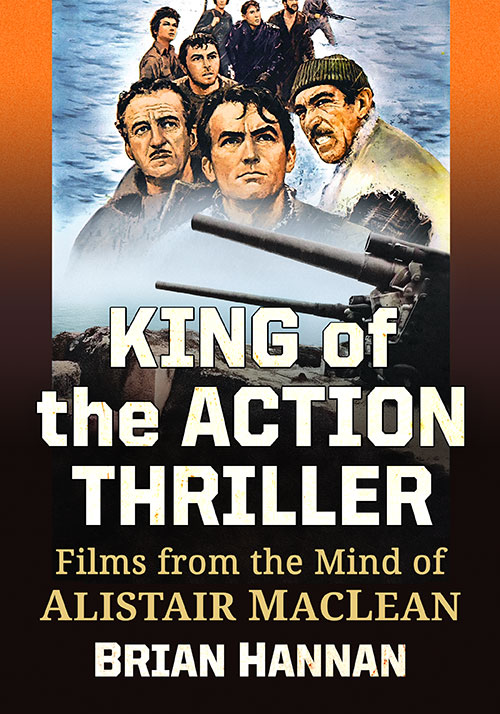
Now back to the shameless stuff. My latest book King of the Action Thriller – Films from the Mind of Alistair MacLean has been a long time coming but now it’s at the final stages of editing and is due out in February 2026. MacLean’s imagination, you might recall, was responsible for, among others, The Guns of Navarone, Where Eagles Dare, Breakheart Pass, Bear Island, Ice Station Zebra, Fear Is the Key and Puppet on a Chain.
I even found a long-lost screenplay he wrote that was never made. Eighteen of his books found their way onto the big and small screen.
You can order King of the Action Thriller it direct from the publisher McFarland or on Amazon and other sites and bookshops.
If you fancy going further into films of the 1960s I can recommend some other books to you. Admittedly, these are all books I’ve written but I did say this was a shameless plug.
Here are some of the titles:
The Making of The Magnificent Seven – Behind the Scenes of the Pivotal Western;
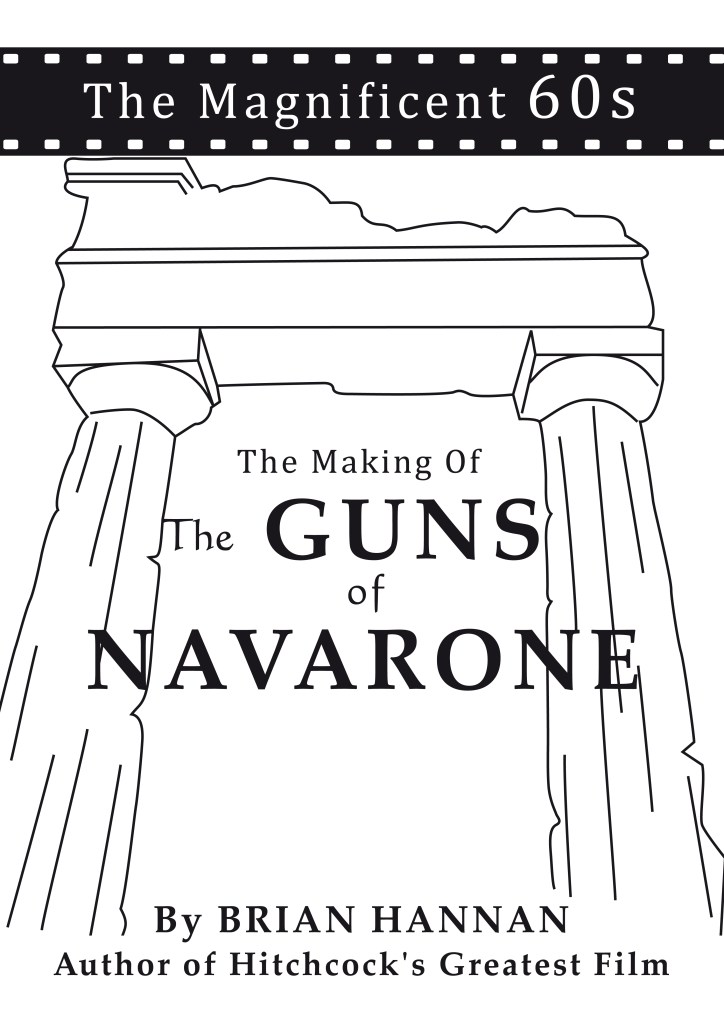
The Making of The Guns of Navarone;
The Making of Lawrence of Arabia;
The Gunslingers of ’69 – Western Movies’ Greatest Year;
and The Magnificent ‘60s – The 100 Most Popular Films of a Revolutionary Decade.
If you’re interested in more about the actual business of the movies you could dip into my books about reissues/re-releases and how Hollywood came to release new movies everywhere all at once. Check out my 250,000-word tome Coming Back to a Theater Near You, A History of Hollywood Reissue 1914-2014 and In Theaters Everywhere, A History of the Hollywood Wide Release 1913-2017.
I’m in the process of making available in printed form the reviews from the Blogs. I originally published these under the title 1960s Movies Redux but I’ve revamped these to now include illustrations and they’ll be available shortly in paperback and Kindle format under the title 1960s Movies Vol 1 (then Vol 2, Vol 3 etc).
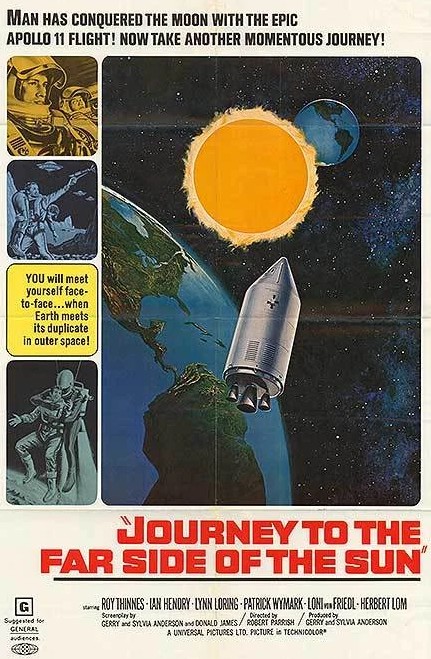
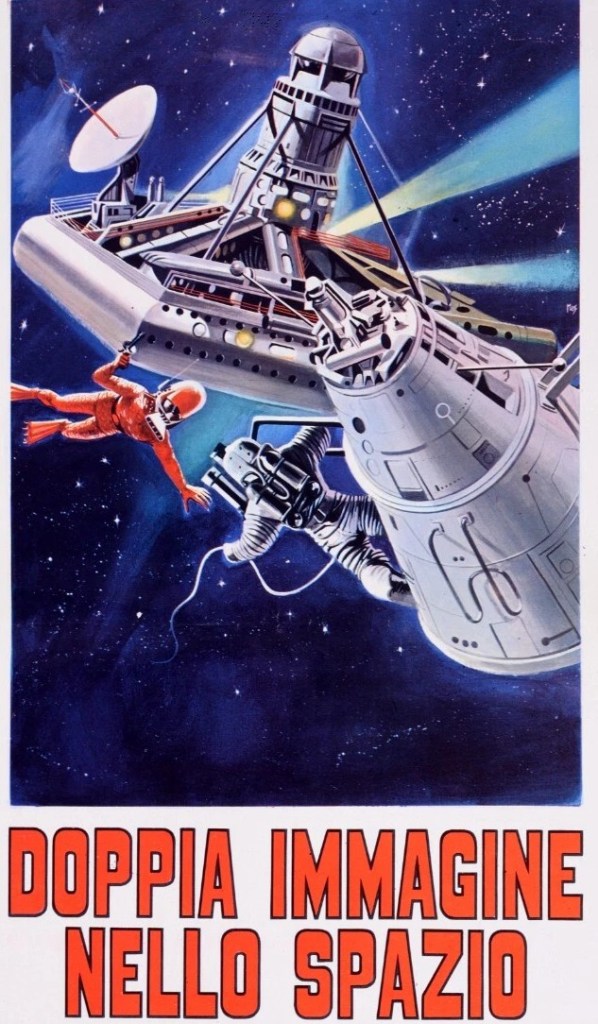
Bring Gerry and Sylvia Anderson into the equation and it’s a straightforward free pass of the cult kind. For the fanboys, the inventors of Supermarionation (Thunderbirds Are Go!, 1966) live on an exalted plane immune from criticism. however, sci fi buffs have tended to be less than impressed by the pair’s first venture into (to use a Walt Disney phrase) “live-action.” So response swings between these extremes. I fit into neither category so I come at this with something of an open mind and for a variety of reasons found it a far more enjoyable experience than I had anticipated, though I hazard a guess that on the big screen the flaws in the special effects would have been more obvious.
Some aspects even have a contemporary chime, the X-ray security screening machines, for example, and the fact that there’s no such actual entity called Europe and if you want to advance a project you have to navigate your way through the representatives of several countries as well as the hovering financial weight of the United States, bristling at being asked to pay more than its share but worried about being excluded.
And there’s no ice-cool scientific boffin. Instead we have the choleric, not to mention bombastic, Jason Webb (Patrick Wymark). Nor do non-combatants scoot through training. The rigors potential astronauts are put through in the likes of The Right Stuff (1983) or Apollo 13 (1995) are nothing to the body-wringing and mind-blowing experience of John Kane (Ian Hendry).
His companion space buddy Col John Ross (Roy Thinnes) is well-drawn for a sci fi adventure. He’s worried that exposure to radiation and worse in space has knocked his masculinity on the head, his wife Sharon (Lynn Loring) complaining it has left him sterile. Though it turns out she’s a wily creature, secretly using contraception.
We also get a spy, Dr Hassler (Herbert Lom), and it’s not so much that he has a gadget – a mini camera secreted in a false eyeball – than the detail involved in him retrieving the film. In most movies there would be no gap between the reveal of the gadget and the production of its secrets. But here Dr Hassler has to go through a whole procedure, dipping the eyeball into four solutions and dabbing it with this and that, before he can view a single frame.
The picture breaks down into a straight three-act vehicle. The first section getting to lift off, then the journey including the kind of phantasmagorical event you found in 2001: A Space Odyssey (1968) and which even Christopher Nolan relied upon in Interstellar (2014), and arrival.
Most sci fi movies play fast and loose with audiences, rarely remaining true to the logic of their invented worlds or concepts. This sticks to its original notion even if that means ending up with a distinctly downbeat ending. Initially, the astronauts are searching for a new planet, whose orbit is similar to Earth, but on the other side of the sun. This being the year 2068, distance is no object and they reckon it’s a six-week return trip.
But what the astronauts discover on arrival at the new planet is a nightmare situation, that in terms of ability to drive you mad skews close to enigmatic British TV series The Prisoner (1967) or Lost (2004-2010) before it jumped the shark. Ross and Kane have landed on a doppelganger planet and the movie takes this world to its logical conclusion. It’s the real parallel universe, or multiverse in the current vernacular, except everything happens the same as on Earth.
So the choleric Webb initially accuses the astronauts of cowardice, to have turned back and failed to complete their mission which would have led them to our Earth. Doppelganger literally means mirror image which eventually explains why writing goes left to right and everything is a step out of normal kilter. Identical except not quite. And stuck in a world where everything that seems real is one step away from your known reality. The kind of situation that would have been created by a mad scientist intent on torturing minds.
Ross determines to attempt to return to Earth but that means connecting what remains of his spaceship with a space vessel made on the new planet but the parts that should fit exactly don’t fit because they have designed in mirror fashion. So that’s it for your chances of a happy ending.
Left me with a nightmare feeling, the ultimate what if. As far as stings in the tail go, comparable with Planet of the Apes (1968).
For the concept as much as the clever detail, I’ve given it a higher mark than maybe it deserves.
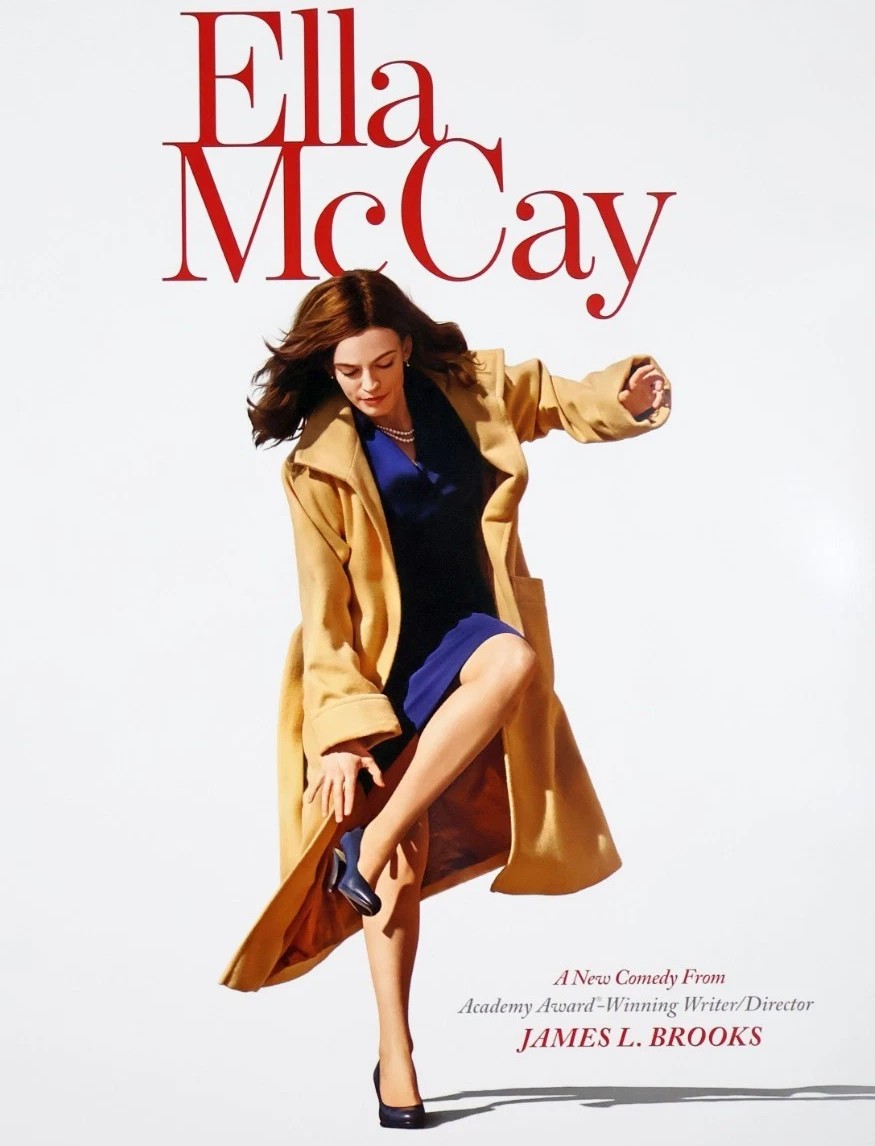
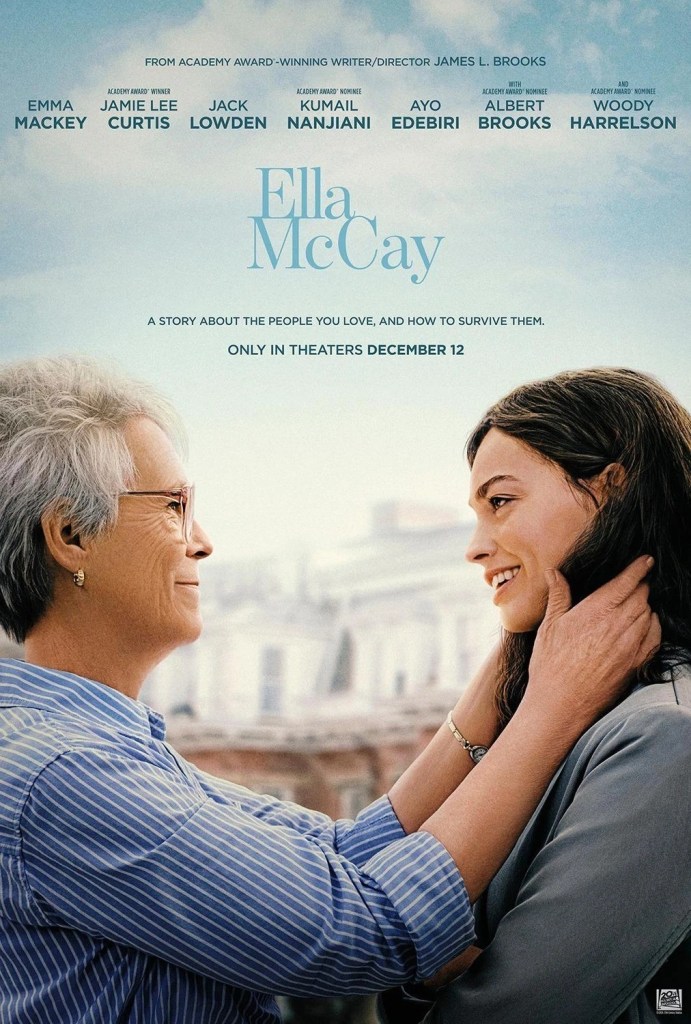
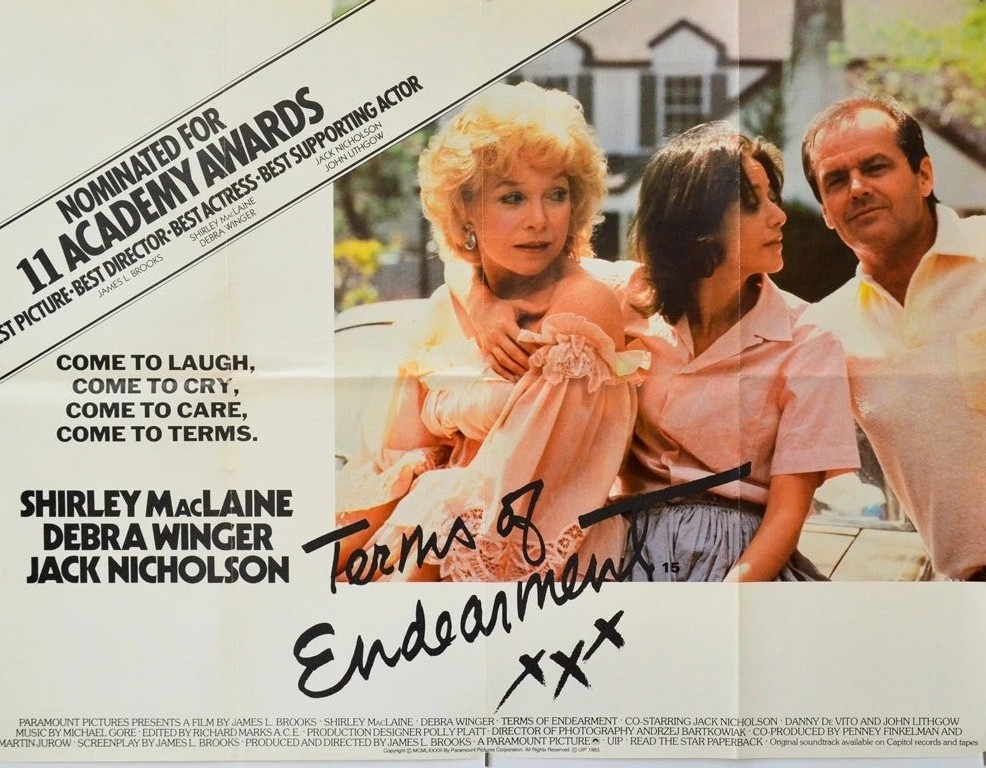
I should have taken notice of the horrific opening weekend for Ella McCay – just $2 million return on a $35 million budget. But it seemed unfair to ignore a new picture by the Oscar-winning writer-director of Terms of Endearment (1983), Broadcast News (1987) and As Good As It Gets (1997). Maybe I should have taken into account his cinematic rustiness, this is his first picture in 15 years, though that’s leavened by the fact he’s not exactly been prolific, including this a career spanning just eight pictures, so this could just be another gem a long time in the making.
Alas, no. It’s an unholy mess. From the set-up it presents as an expose of politics in the sharply satirical manner of Broadcast News. But all we learn about politics is the amount of time politicians spend drumming up money from sponsors in boiler rooms filled with begging employees working the phone and that be careful who you choose as a running mate because if the top person dies or – in this case – gets promoted, you’re left with someone nobody voted for and who has such little grasp of the humans she’s meant to be working for that in her ideological frenzy she bores everyone to death.
This looks as if it started one way and went another. A simple plot device could have been used to explore the problems of politicians squaring family lives with duty. Ella McCay (Emma Mackey) – promoted to governor of an unnamed state because the incumbent, Bill (Albert Brooks), is promoted elsewhere – has been caught out using a room in the government building to have lunchtime sex with restaurateur husband Ryan (Jack Lowden).
This might have done wonders for her career, given she’s such a stuffy uptight lady, and the issue would have deserved no more than a mild slap on the wrist for illicit use of government property, and highlighted the problems of work-life balance in the business. Instead, it’s forced to do triple duty in a bizarre manner.
A journalist with so little grasp of politics is dumb enough to think this is actually an expose worth blackmailing someone over. And a politician with so little grasp of PR is dumb enough to think this poses a threat. And a husband with probably a very good grasp of how business works tries to pay off said journalist only for the whole farrago to explode in everyone’s face and result in a vengeful husband instigating divorce proceedings and blaming her for the bribery.
Oh dear, these bad men damaging a young woman’s promising career. Except the head of her political party calling her to book is a woman and it’s Ryan’s mother who puts him on collision course with his wife. Ella is just tone-deaf to everyone except herself. In her inauguration speech she fails to thank Bill or her husband and in her first meeting with her staff drones on for so long fails to notice they are falling asleep.
Reminder of just how good James L. Brooks could be.
It’s not just Ella who’s tone-deaf it’s the director. There’s a just terrible scene where having decided to spend the night at her brother’s apartment she fails to notify her police guard and then blasts them in the morning for watching over her overnight and wasting taxpayer’s money by clocking up overtime and this is presented as if in fact her anger is proof of her innate goodness.
Rammed into this bizarre concoction is estranged dad Eddie (Woody Harrelson) whom Ella refuses to forgive for his womanizing – and in fact the only scene that actually carries any heft is the one where as a teenager she refuses to play the happy family game when he’s been caught out in a misdemeanor.
Oh, and while we’re at it, her brother Casey (Spike Fearn), an agoraphobic computer geek who happens to pocket $2 million a year on a spread betting hustle, is on hand to listen (unwillingly it has to be said) to her self-justifying rants and effort is put in to justifying his continued presence in the picture with a dumb plugged-in romance.
The main problem is that mostly Ella is on the verge of a nervous breakdown, constantly whining, bursting into tears (or screaming – the apparent alternative) and what sets out to show how women are constricted in politics actually instead reveals how someone constitutionally unfit for the hard graft of politics becomes a liability. But, wait, hooray, she does good in the end.
Everyone overacts. So there’s no excuse except directorial slackness for usually dependable actors like Woody Harrelson (Now You See Me, Now You Don’t, 2025) and Jamie Lee Curtis (The Last Showgirl, 2024) and for Emma Mackey (Emily, 2022), face in constant fidget, inexperience might mitigate. Jack Lowden (Tornado, 2025), done no favors by the script, and veteran Albert Brooks (Concussion, 2015), in his first movie in a decade, are better, but that’s not saying much.
Just awful. American moviegoers were right to give this a body swerve.
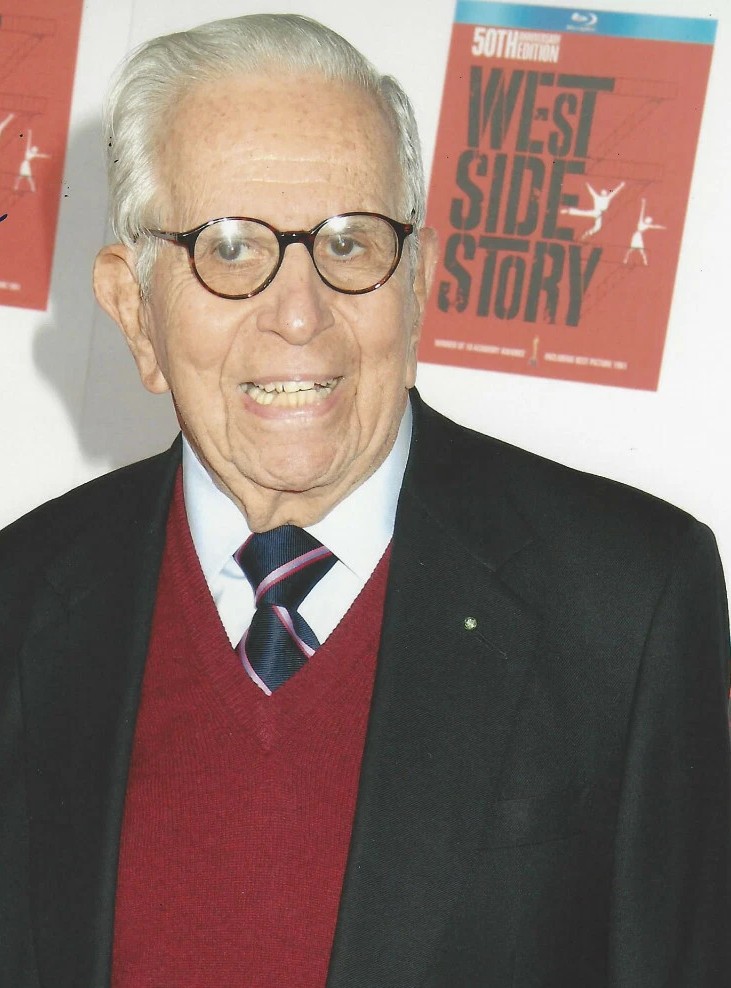
You don’t just waltz into Hollywood and start churning out classics like Some Like it Hot (1959), The Magnificent Seven (1960), West Side Story (1961) and The Great Escape (1963). Usually, there’s a long apprenticeship, especially for a producer. Walter Mirisch spent nearly a decade at the B-picture coalface. And before that a year as a gofer, working his way up in the business, but on one of the smallest rungs of all, at Monogram.
Born in 1921, the of a Polish immigrant tailor specializing in custom-made garments, one of whose customers was George Skouras, owner of a cinema chain, Walter, not surprisingly in the Hollywood Golden Age, started out an even lower rung, as an usher in the State Theater in Jersey City, owned by Skouras, an hour’s commute from his home in the Bronx, earning 25 cents an hour. He was quickly promoted to ticket checker.
His older brother Harold was a film booker, receiving an education in negotiation, and then as a cinema manager in Milwaukee flexed his entrepreneurial muscles by starting a concession company. After the family moved to Milwaukee, Walter attended the University of Wisconsin and then Harvard Business School. Physically unfit for active duty during the war, he worked for Lockheed in Los Angeles on its aircraft program in an administrative capacity.
While Harold was a highflyer at RKO, acting as chief buyer and then managing its cinema chain, Walter entered at a lower level in 1946 as a general assistant to Steve Broidy, boss of Monogram, maker of B-pictures of the series variety – Charlie Chan, The Bowery Boys, Joe Palooka, shot within eight days and at budgets under $100,000.
After badgering Broidy for a bigger opportunity, he was granted permission to hunt for a property he could produce. For $500 he found a Ring Lardner short story about a boxer, but Broidy felt the main character was unsympathetic. Stanley Kramer did not and snapped it up to make Champion (1949).
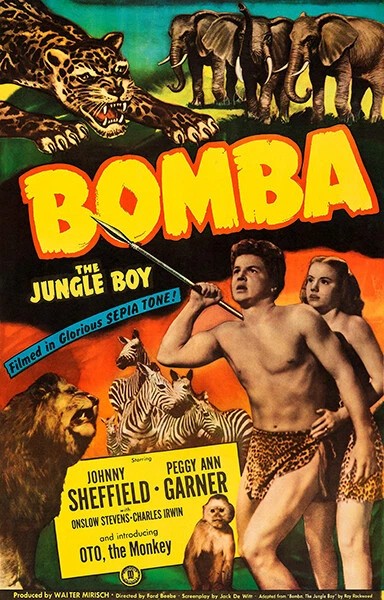
Walter’s first ventures were in film noir. Fall Guy (1947), based on a story by Cornell Woolrich, made for $83,000, broke even. I Wouldn’t Be In Your Shoes (1948) followed, from a Woolrich novel but there was a drawback to being a producer. He was taken off the payroll and his $2,500 producer’s fee didn’t compensate for the loss of a $75 weekly salary. The answer was to invent his own series, ripping off the Tarzan pictures for Bomba the Jungle Boy (1949), starring Johnny Sheffield who had played Tarzan’s son and utilizing stock footage from Africa Speaks. Apart from his fee, Walter had a 50 per cent profit share.
For six years, these appeared at the rate of two a year, earning Walter a minimum of $5,000 and he soon branched out into other genres, sci fi like Flight to Mars (1951) and westerns such as Cavalry Scout (1951) and Fort Osage (1951), both starring B-movie stalwart Rod Cameron.
Monogram had decided to move upmarket with the introduction in 1951 of Allied Artists, its sales division run by Walter’s brother Harold, with Walter acting as an executive producer and other brother Marvin as treasurer, turning out solid B-picture-plus hits like Riot in Cell Block 11 (1954).
When the threat from television hit the B-picture market Allied went properly upscale, investing in William Wyler western Friendly Persuasion (1956) and Billy Wilder’s Love in the Afternoon (1957), both starring Gary Cooper. Their failure at the box office sent Monogram back to basics.
But the Mirisches wanted more of the big time. The three brothers turned to United Artists and negotiated a deal for that studio to finance four pictures a year, cover the brothers’ overhead and salaries and throw in a profit share. The Mirisch Company was born and their creative credit within the industry was so high – and the deals they offered, it has to be said, so advantageous to their creative partners – that soon they were scooping up big names like Wilder (he made his next eight pictures for Mirisch), William Wyler, Gary Cooper, Tony Curtis, Doris Day, Audrey Hepburn and Lana Turner. One of the first pictures announced was a remake of King Kong (1933). Wilder planned My Sister and I with Hepburn. John Sturges was attached to 633 Squadron. Doris Day would star in Roar Like A Dove and there were two-picture deals with Alan Ladd and Audie Murphy.
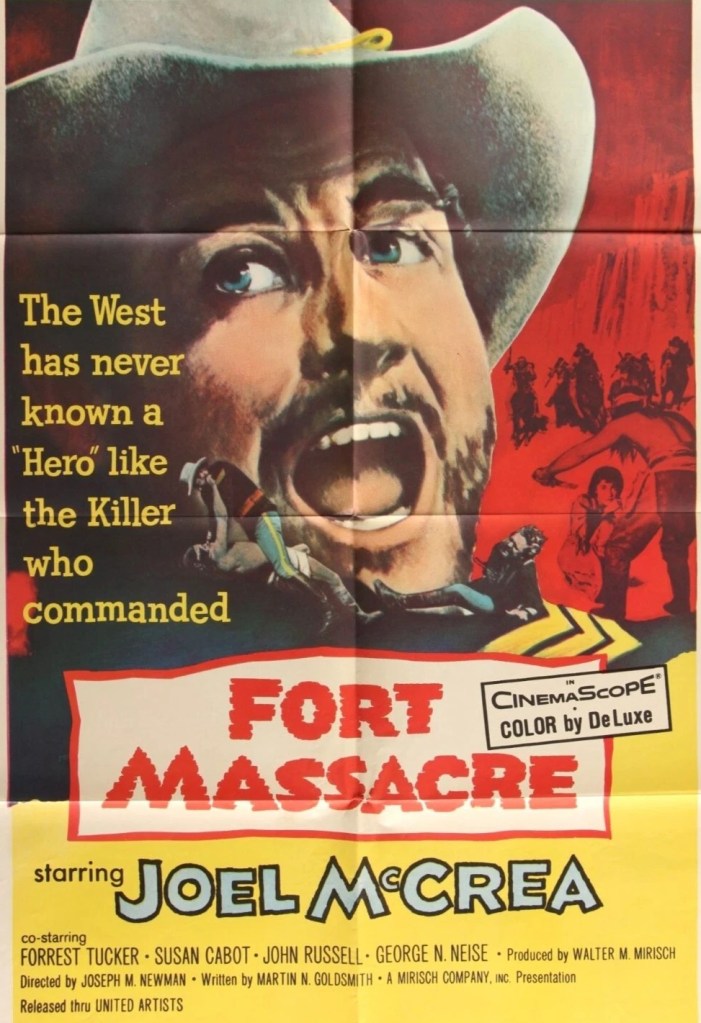
Their first two efforts didn’t break the budget bank, Fort Massacre (1958) starring Joel McCrea, and Man of the West (1958) headlined by Cooper, but neither were they hits. Hoping to provide ongoing financial sustenance, Walter turned to television, turning Wichita (1955) into the series Wichita Town (1959), and further television contributions were mooted for UA Playhouse but that and Peter Loves Mary and The Iron Horseman failed.
Movies proved a better bet and Walter struck gold with the third picture in the Mirisch-UA deal, Some Like it Hot (1959), costing $2.5 million, an enormous financial and critical success and tied down a triumvirate of top talent in John Wayne, William Holden and John Ford for western The Horse Soldiers (1959), the actors pulling down $750,000 apiece.
Such salaries sent the nascent company on a collision course with traditional Hollywood. The majors “screamed” that independents were overpaying the talent, hefty profit shares accompanying the salaries.
On top of that in 1959 in the space of two weeks Mirisch spent a record $600,000 pre-publication on James Michener blockbuster Hawaii and tied up a deal to film Broadway hit West Side Story. Within two years of setting up, Walter Mirisch announced a $34.5 million production slate, earning the company the tag of “mini-major,” as part of a shift in attitude to a “go for broke” policy. By the start of the new decade it was by far the biggest independent the industry had ever seen, handling $50 million worth of product, including The Magnificent Seven and The Apartment (1960). Average budgets had risen from $1.5 million to $3.5 million.
To outsiders, assuming the Mirisch venture was Walter’s first, it might look as if Walter had knocked the ball out of the park in a very short space of time, but, in reality, by the time he produced Some Like it Hot, he had been responsible for thirty-three pictures. Not bad for a “beginner.”
Explained Walter Mirisch, “Producing films is a chancy business. To produce a really fine film requires the confluence of a large number of elements, all combined in the exactly correct proportions. It’s very difficult and that’s why it happens so infrequently. It takes great attention to detail, the right instincts, the right combinations of talents and the heavens deciding to smile down on the enterprise. Timing is often critical.”
What would have happened to Allied Artists, for example, had Wilder made Some Like it Hot there instead of Love in the Afternoon?
Added Walter, “Where is the country’s or the world’s interest at that time? What is the audience looking for? Asking them won’t help because they themselves will tell you they don’t know what they’re looking for. They don’t know what it is until they’ve seen it. All the elements must come together at exactly the right time. So to say one embarks with great certainty on such an endeavor is an exaggeration.”
After 33 films Mirisch hit a home run with Some Like It Hot and continued to do so throughout the 1960s chalking up further critical and commercials hits like The Pink Panther (1964), In the Heat of the Night (1967) and The Thomas Crown Affair (1968) and vacuuming up a stack of Oscars.
SOURCES: Walter Mirisch, I Thought We Were Making Movies, NotHistory (University of Wisconsin, 2008); “Mirisch Freres Features Outlet Via United Artists,” Variety, August 7, 1957, p16; “3 Mirisch Bros Set Up Indie Co for 12 UA Films,” Variety, September 11, 1957, p7; “RKO vs Mirisch Kong,” Variety, September 11, 1957, p7; Advertisement, “United Artists Welcomes The Mirisch Company,” Variety, November, 13, 1957, p13; “Brynner, Mirisch Pledge UA TV Tie,” Variety, January 1, 1958, p23; “Mirisch Freres 6 By Year-End,” Variety, March 19, 1958, p3; “Majors Originated Outrageous Wages,” Variety, December 10, 1958, p4; “UA-Mirisch’s $600,000 For Michener’s Hawaii,” Variety, August 26, 1959, p5; “Mirisch West Side Story,” Variety, September 2, 1959, p4; “Mirisch Takes on ‘Major’ Mantle With 2-Yr $34,500,000 Production Slate,” Variety, October 21, 1959, 21; “Mirisch Sets $50,000,000 14-Pic Slate; Biggest for Single Indie,” Variety, August 17, 1960, p7.
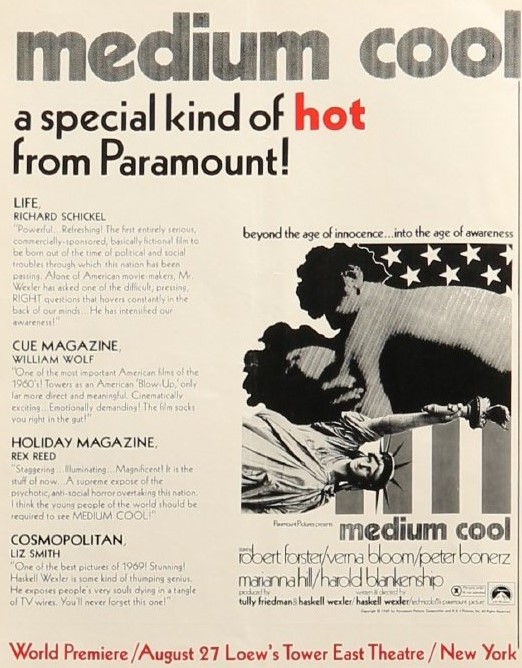
Self-important essay on the self-entitlement of journalists who see themselves as victims, hated by the authorities whose activities they expose and hated by the public for being so cold-blooded – it opens with a television cameraman getting footage of dead people in a car crash before phoning for an ambulance – and for filming stuff that genuine victims did not want filmed.
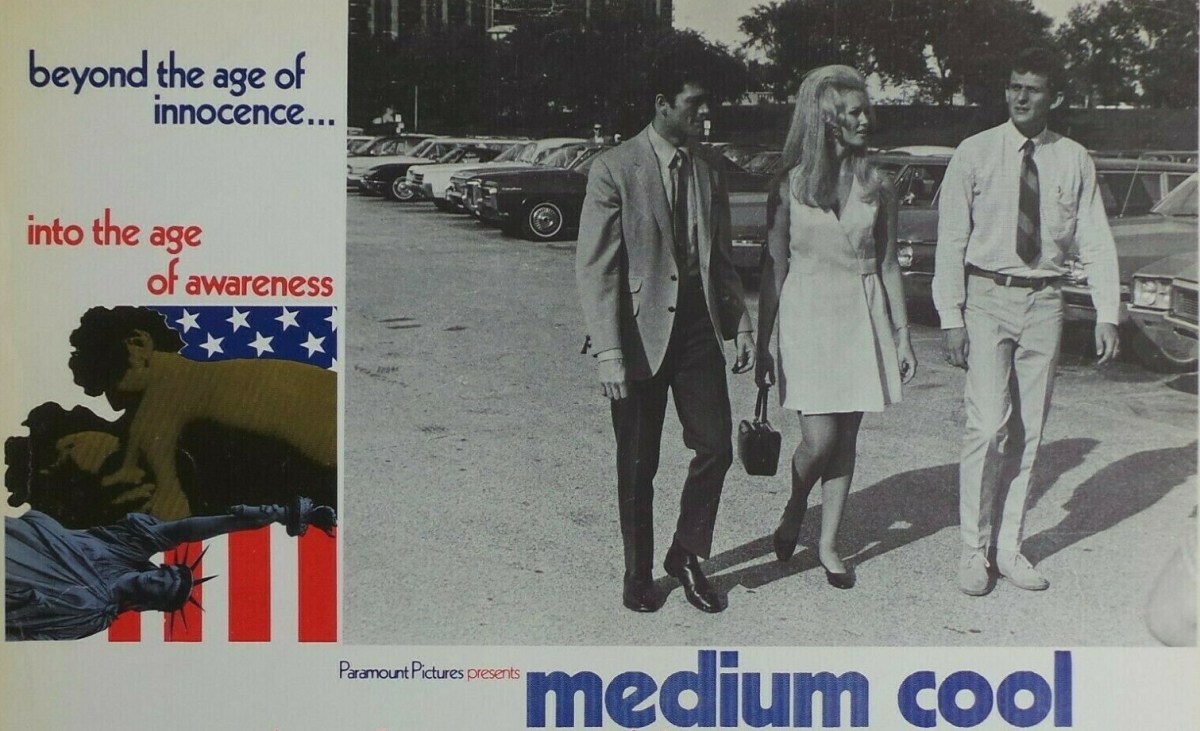
Filmed in cinema verite style and covering much of what went down in Chicago 1968 when demonstrators clashed with police and the National Guard and tanks rolled through the streets. Certainly strikes a contemporary chord when filming is an universal pastime and many criminals have been brought to book and various issues highlighted by social media.
As if making its point about action and controversy versus talking heads, the movie begins with talking heads, discussing the role of television and journalism in society, with cameramen telling stories of occasions when the public they were trying to help turned on them. The narrative is slight, following television cameraman John Cassells (Robert Forster) going about his business, and betraying girlfriend Ruth (Marianna Hill) with single mother Eileen (Verna Bloom). John is fired after objecting to his television station handing over to the cops and the F.B.I. footage he has filmed of demonstrations and incidents.
Because of the documentary style, much of what has been filmed carries particular resonance as a sign of the times, not so much the police violence because that is widely available elsewhere, but simpler scenes that seem far truer to life. Eileen’s son Harold (Harold Blankenship) is interviewed by an off-screen canvasser about his home life, age, brothers and sisters and so on. Questioned about his father, he explains his father is not at home. “Where would I find him?” asks the interviewer. “Vietnam.”
The boy’s mother Eileen, a teacher who has to manage five grades in one classroom, and John are skirting round the physical side of their romance until jokingly John takes the plunge. “I know your husband’s not going to come charging through the door.” “Buddy’s dead.” The director could already have delivered this information to the audience in talking-heads-fashion but this carries probably the biggest dramatic punch in the picture. This family provides a solid core for a movie which makes its points in more hard-hitting style.
Questions of respect and ethics loom large. Making no bones about finding audience-grabbing material, John is disgusted that people steal hubcaps and the radio antenna from his car when clearly he feels news journalists should be given more respect. But that the public hold an opposite view is clear from Ruth who instances turtles filmed going the wrong way after nuclear explosion distorted their instincts and they went inland to lay their eggs (where they would die) rather than out to sea. She complains that none of the cameramen present thought to turn the turtles round and show them the correct way.
A plot point allows Eileen and John to mingle with the demonstrators during the actual Democratic Convention. There is a shock – and ironic – ending in which John is himself photographed by a passerby after being involved in an accident.
Robert Forster (Justine, 1969) carries off the arrogant victimized reporter well and in her debut Verna Bloom (High Plains Drifter, 1973) is excellent as the real victim of the system while Mariana Hill (El Condor, 1970) raises the tempo as the volatile girlfriend. Peter Boyle (Taxi Driver, 1976) has a small part.
Oscar-winning cinematographer for Who’s Afraid of Virginia Woolf (1966), Haskell Wexler (who also wrote the script) makes a notable debut as director, mixing fact and fiction, taking a political stance and introducing a revolutionary camera technique. Half a century on, not much has changed in attitudes to media ethics although it is another photographic revolution via social media that is leading the discussion in what takes top billing in terms of news. Its content has led the film to be seen as a landmark of the cinema.
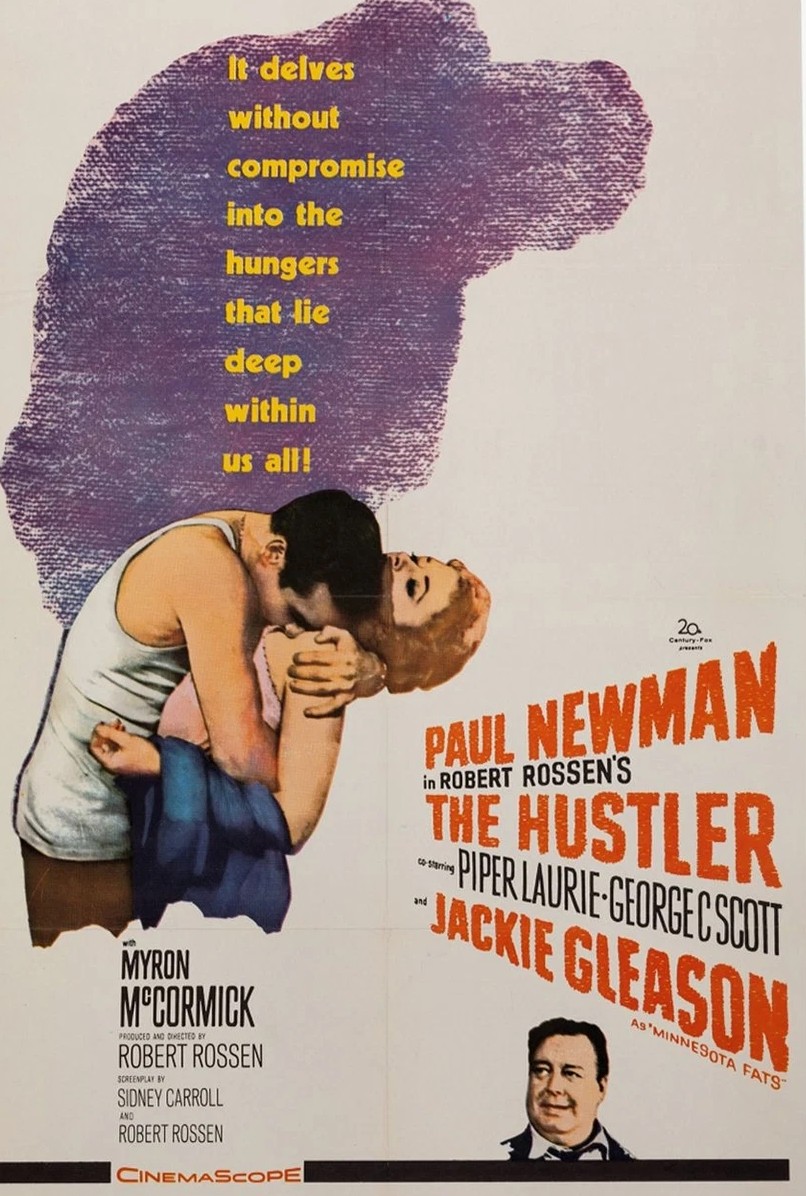
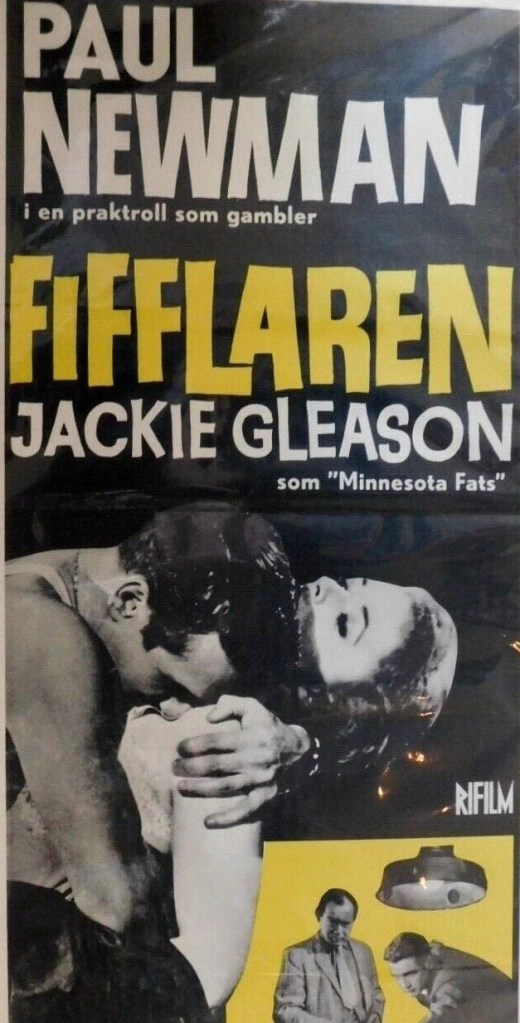
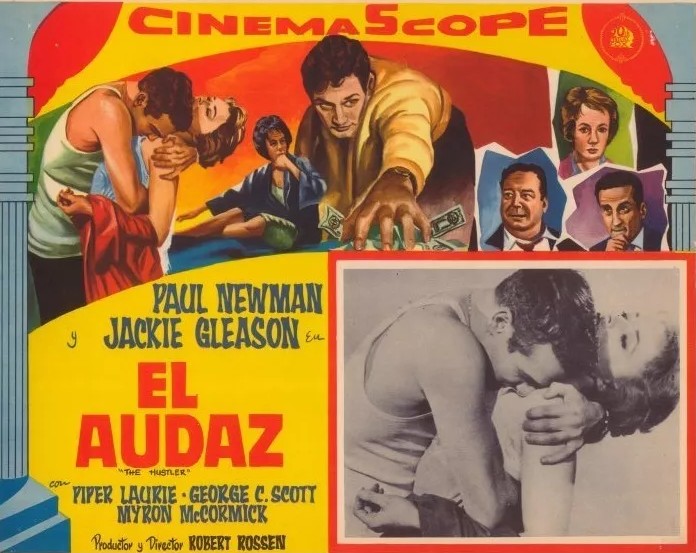
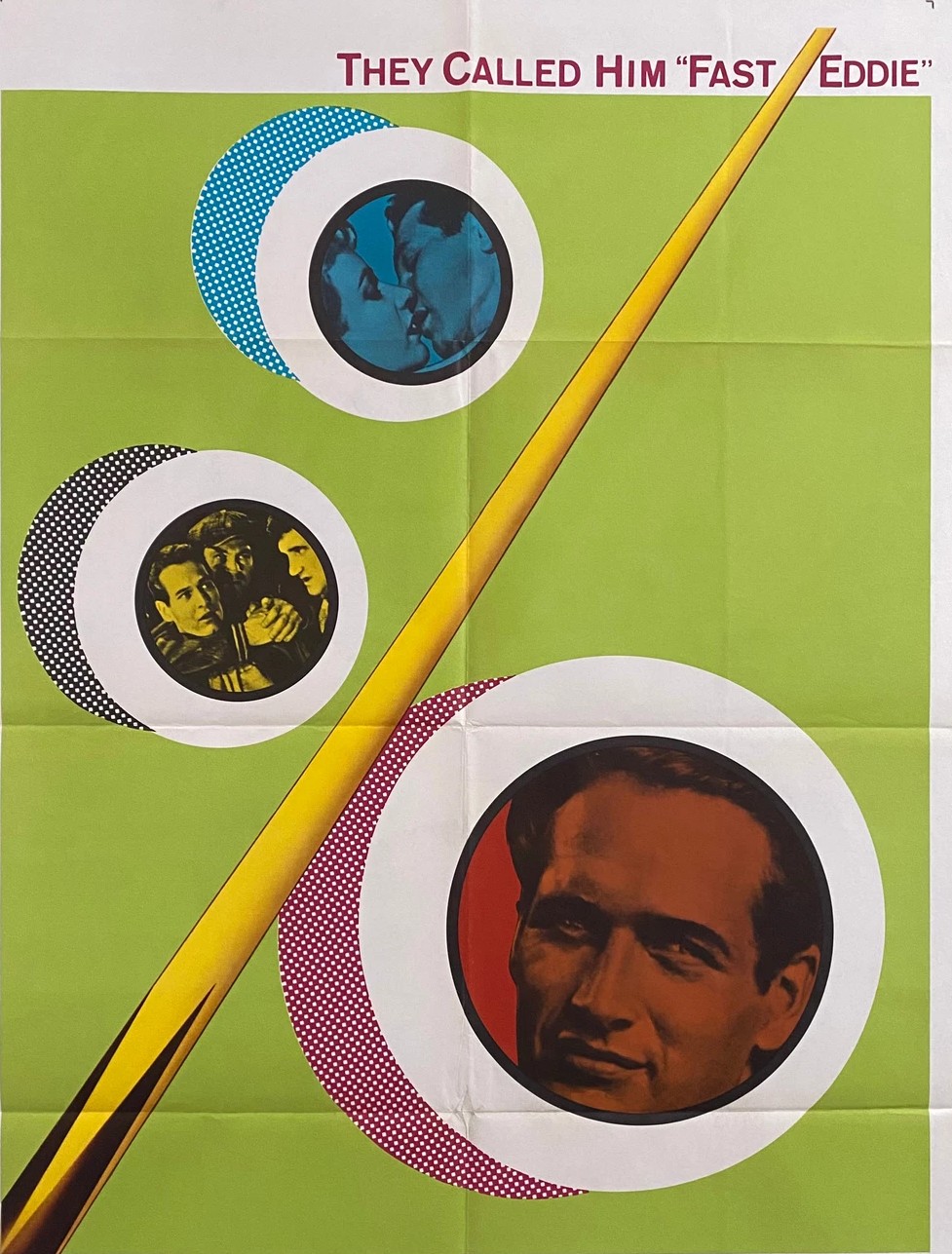
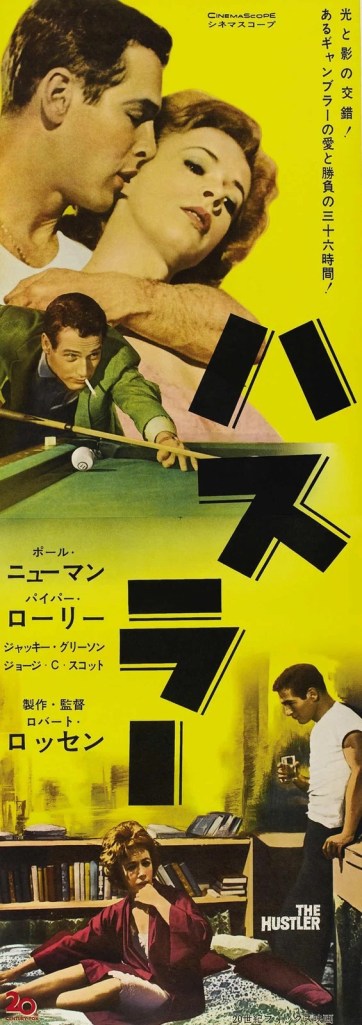
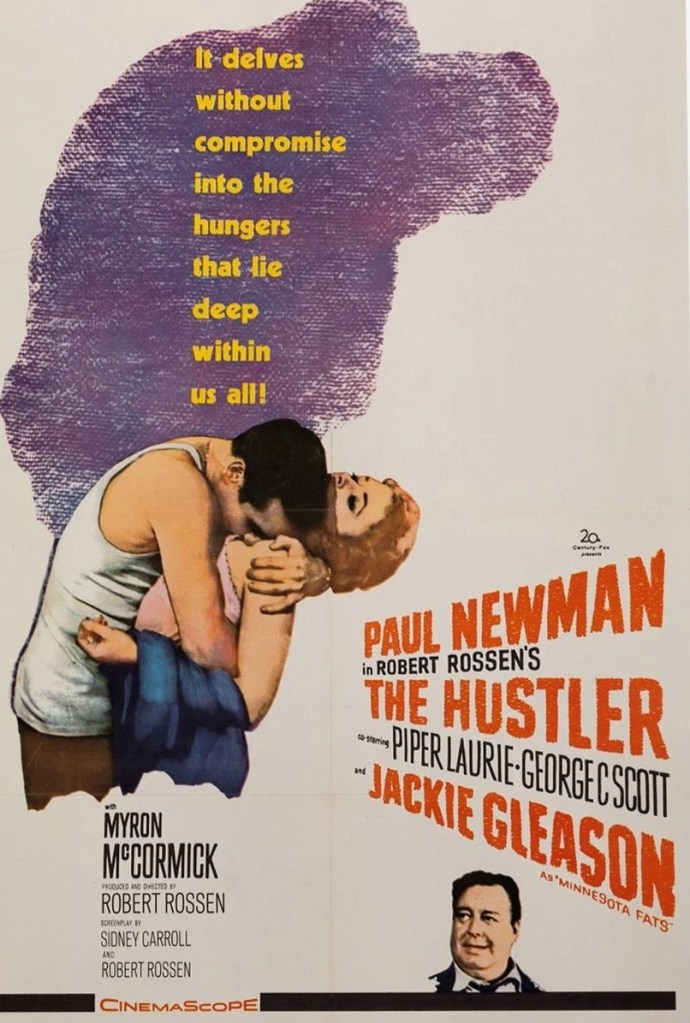
While Twentieth Century Fox head honcho Spyros Skouras initially balked at the title, with its connotations of prostitution, by the time the movie appeared that subject matter was less contentious thanks to critical and commercial big hitters Butterfield 8 (1960) and Never on Sunday (1960). Given that the idea of a movie set in a poolroom was going to be a hard sell to a female audience, despite the marquee lure of Paul Newman, the studio gave marketeers free rein to pitch it as a raw, sex-oriented drama.
There’s little sign of a pool cue in some of the artwork. Instead, we have Paul Newman lustily nuzzling Piper Laurie’s neck or bosom. The taglines promise something far removed from a sports picture.
“It probes the stranger…the pick up…the savage realities,” screamed the main tagline. Another tempted with: “It delves without compromise into the inner loneliness and hunger that lie deep within us all!” In other words we’re talking about sex, not love, and casual sex at that, the world of the one-night stand between consenting adults for whom marriage is the last thing on their minds. “The word for Robert Rossen’s The Hustler is prim-i-tive” suggested out of control lust.
Fast Eddie Felson (Newman) has “the animal instinct.” Sarah (Piper Laurie) has a “bottle, two glasses and a man’s razor always in her room.” Bert (George C. Scott) is on the look-out for the “sucker to skin alive.”
Those images which did show a cue and pool balls did not suggest an august sport like football or baseball, not with a tagline like “he was a winner, he was a loser, he was a hustler.”
With such talented actors to hand, the Pressbook wasn’t short of good stories relating to the actual movie rather than the kind of snippets that might appeal to an editor on a slow news day. So we learn that Piper Laurie continually limped, Method-style, around on the set. “When I limp in the picture, I don’t want to act it. It’s something that has to be a part of me, something of which I am no longer conscious, apart from its being a physical defect. I must be able to limp as if I had a bad foot from birth.”
Laurie had made so few pictures that her name wouldn’t be on any director’s wanted list and what she was best known for – ingénue roles when a contract player for Universal (who gave out that she bathed in milk to keep her skin soft) opposite the likes of Tony Curtis – wouldn’t have inspired confidence. Robert Rossen might well have spotted her in two Emmy-nominated performances in successive years including Days of Wine and Roses (1958), but instead said he remembered her for “a sensitive characterization” from a stage production of Rosemary.
Ames Billiards Academy had once been a Chinese restaurant so boasted a balcony. This was unseen in the picture but allowed director Robert Rossen to shoot from widely varied overhead angles. The crew took over the Manhattan Bus Terminal for a day and a night. A row of lunch booths was constructed in front of the existing lunch counter. “It looked so real,” we are told, “that passers-by sat down and waited for their orders to be taken.” A nice story, and the kind often furnished by Pressbook journos, but rather fanciful, since it would be obvious what with the crew milling around and the lights and cameras and miles of cable that this was a movie set with security posted to prevent trespassing.
Just how good a pool player was Jackie Gleason, who came to the picture with a reputation for handling a cue? Well, at one point, the affable television comedian with a top-rated show, potted 96 consecutive balls.
Paul Newman plays the iconic hero as a “figure cut from the fabric of our time.” He had a firm grasp of the character. “With him it’s a question of commitment. He is so wrapped up in his drive to win and be somebody that he has no time to give of himself that which others need. It is a disease of our time, both the ambition and the isolation. I want him to be understood.”
Needless to say there was no mention of author Walter Tevis. That wasn’t so unusual in the make-up of Pressbooks, but if the marketeers these days were looking for something to write about the eclectic Tevis would be prime. He followed up The Hustler, published in 1959, four years later with sci fi The Man Who Fell to Earth, filmed in 1976 with David Bowie. A sequel to The Hustler, The Color of Money, was directed in 1986 by Martin Scorsese with Newman reprising his role and managing Tom Cruise. Tevis also wrote The Queen’s Gambit, turned into an acclaimed television mini-series in 2020 with Anya Taylor-Joy.
It should have been Frank Sinatra in the leading role, not Newman. Sinatra acquired the rights to the Walter Tevis semi-biographical novel published in 1959. When Sinatra moved onto something else and director Robert Rossen took up the slack still Newman should have been ruled out courtesy of a planned re-teaming with Elizabeth Taylor – they had worked together on Cat on a Hot Tin Roof (1959) – for the screen adaptation of Broadway hit Two for a Seesaw. Bobby Darin (Pressure Point, 1962) was being lined up instead. When illness put paid to Taylor’s involvement, Newman would have remained tied to Two for the Seesaw except he had co-star approval and none of the actresses suggested measured up.
Based on reading half the script, Newman, calling his agent at six o’clock in the morning to confirm interest, jumped at the role. Though Exodus (1960) had been a success, and he had managed to ease himself out of his contract with Warner Bros, he was not considered hot box office and he needed a part not just to consolidate his commercial standing but to provide a professional springboard that would shape his career. His previous outing, Paris Blues (1961), hadn’t carved out a clear path. As well as his salary, the actor was in line for ten per cent of the profits.
Initially, the picture was backed by United Artists and it featured in their adverts in the trade magazines in 1959. The studio had shelled out an advance to Rossen to option the rights. But when the director couldn’t find a “box office star as insurance” UA pulled out. By this point, the end of 1959, there was at least a screenplay, Rossen having called upon the services of Sydney Carroll (Big Deal at Dodge City, 1966).
Rossen shopped the package to Twentieth Century Fox which, somewhat surprisingly, signed up to the project when no major star was attached, especially as, according to Rossen, the picture “pulled no punches” with its “frank approach to people and life.” UA had promoted itself as the go-to studio for independents but by Rossen’s reckoning Fox was superior in that department because backing the movie “took some guts.”
Fox chief Spyros Skouras wasn’t keen on the title, believing, understandably, that The Hustler might signal to audiences that it was a story about prostitution. It was changed first of all to A Stroke of Luck and then to Sin of Angels. However, UA objected to the latter title on the grounds it had already registered a similar title The Side of the Angels and with some reluctance Skouras agreed to go with the original title.
It was a critical picture for Rossen, who hadn’t had a solid hit in a decade and hadn’t made a picture that could be mentioned in the same breath as All the King’s Men (1949). In part his low output was due to being blacklisted during the anti-Communist witch hunt of the early 1950s, although finally cleared. But it was as much due to his unusual method of working. “You gamble time which is money,” he said, “because you may work for six months or a year then realize the property is not quite right and your drop the while idea.” That ran counter to the general Hollywood practice where studios would press ahead with inferior product precisely because so much time and money had been spent on it. Rossen’s office was littered with abandoned projects.
Female lead Piper Laurie was also in the market for a comeback. She had bowed out of the business after Until They Sail (1958) – also starring Newman – fed up with ingénue parts, although the director had initially favored daughter Carole Rossen (The Arrangement, 1969) for the role. At one point Rossen identified Yves Montand for a top supporting role. Co-star Jackie Gleason (Soldier in the Rain, 1963), known at this time as a television comedy actor, was already a decent pool player and Newman was coached by Willie Mosconi, a fourteen-time world billiards champ. Except for one maneuver the two actors managed to achieve all the shots caught on camera. Newman believed he was good enough to beat Gleason and it cost him $50 to be proved wrong.
George C. Scott, primarily known for his work on the stage, had attracted attention with an Oscar-nominated turn in Otto Preminger courtroom drama Anatomy of a Murder (1959).
The film, budgeted at $2.1 million, was shot on location in New York City in the winter and spring of 1961. “You get certain values,” noted Rossen, “ in New York that you can’t get on the Coast (Hollywood).” The pool scenes were filmed at Ames Billiard Academy, established in 1946, near Times Square and McGirr’s. Other locations included a townhouse on East 82nd St which doubled as the Louisville home of the billiard player Findley and the Greyhound Bus Station in Manhattan even though it lacked a dining area and the one built on the premises confused regular customers.
Rossen spent five weeks of the 10-week schedule on the pool action. Sarah’s apartment, however, was located on a sound stage. The director, under pressure to revive his career and suffering from diabetes, was tough on the crew but went easy on the cast. He hired street thugs as extras to add authenticity. He fell foul of electricians and they fell foul of him after he exposed a blackmail scam whereby the electricians responsible for inspecting the unit complained of code violations when it was the same inspectors who should have ensured everything complied with regulations. .
The part was custom-made for Newman. “I spent the first thirty years of my life looking for a way to explode,” recalled the actor. He found an outlet for that problem through acting and he reckoned for Fast Eddie Felson it was pool. “It was one of those movies when you woke every day and could hardly wait to get to work because you knew it was so good that nobody was going to be able to louse it up.”
Though studio 20th Century Fox did its best to louse it up, originally objecting to the location shoot, looking to cut down the running time, especially telescoping the pool sequences it felt might bore the female audience. Desperate to hold onto his vision, Rossen hired Arthur P. Jacobs, then a top-flight PR honcho (and later producer of Planet of the Apes, 1968), who contrived to set up a celebrity screening where the positive response stopped Fox in its interfering tracks. Due to the Actors Strike the previous year, product was in short supply, so although The Hustler was one of 19 pictures opening in September 1961 it didn’t face tough competition, the biggest movies it contended with were Rock Hudson-Gina Lollobrigida comedy Come September and upscale horror The Innocents with Deborah Kerr.
Reviews were positive although in an editorial Box Office magazine railed against a picture which cinemas could not sell to a family audience for a matinee performance.
A surprise box office hit, at least initially, in first run in the big cities, The Hustler creamed a “wow” $64,000 in opening week at the 3,665-seat Paramount in New York. There was a “boffo” $36,000 in Chicago, a “fast” $20,000 in Detroit, a “hotsy” $15,000 in Cleveland, a “wow” $14,000 in Pittsburgh and a “smash” $11,000 in Providence. The poster which effectively showed Paul Newman thrusting his head into Piper Laurie’s bosom attracted adverse criticism and caused Chicago newspapers to take a stronger line on movie ads.
It was nominated for nine Oscars with Newman, Laurie, Gleason and Scott all earning acting nods, and Rossen up for two gongs in his capacity as director and producer, as well as potentially sharing one with Sydney Carroll for the screenplay. In the event the only winners were for Eugen Schufftan for Cinematography and Harry Horner and Gene Callahan for Art Direction. At the Baftas it was named Best Film while Newman won Best Foreign Actor and Piper Laurie was also nominated.
Oscar nominations ensured the picture went out on speedy reissue in February and March 1962 resulting in domestic rentals of $2.8 million and a decent run abroad.
Robert Rossen only made one more picture. Paul Newman reconfigured his career and George C. Scott added to his lustre. Jackie Gleason got a shot at top billing with Gigot (1962) but Piper Laurie didn’t make another movie until Carrie (1976).
SOURCES: Daniel O’Brien, Paul Newman (Faber & Faber, 2005) pp79-85; Shawn Levy, Paul Newman, A Life (Aurum, 2009) pp 175-182; Aubrey Solomon, Twentieth Century Fox, (Scarecrow Press, 2002) p229 and p253; Advertisement, United Artists, Variety, June 24, 1959, p21; “New York Sound Track,” Variety, August 12, 1959, p17; “Gleaned on a Gondola,” Variety, August 26, 1959, p20; “New York Sound Track,” Variety, November 16, 1960, p17; “Fox Nicer to Indies than UA,” Variety, March 8, 1961, p3; “New York Electrical Inspectors,” Variety, March 29, 1961, p5; “Sins of Angels Tag disputed,” Variety, March 29, 1961, p7; “Artistic Comeback,” Variety, May 24, 1961, p4; “Skinpix Can’t See,” Variety, October 18, 1961, p17; “Hustler Re-Release,” Box Office, January 22, 1962, pSW8. Box office figures: Variety October-November 1961.





 The Magnificent 60s