The Split (1968) ***

You could not have a more explosive start. In the wake of the seismic slap Sidney Poitier delivered to an arrogant white man in In the Heat of the Night (1967) heist mastermind McClain (Jim Brown) bursts out of the traps by: picking a down-and-dirty knuckle-duster of a fight with hardman Bert (Ernest Borgnine); ramming a limo driven by Harry (Jack Klugman); locking technical wizard Marty (Warren Oates) in an electronic cell; and bracing marksman Dave (Donald Sutherland). It turns out these are all auditions for a $500,000 robbery from the Los Angeles Coliseum during a football match. Nonetheless, the point is made. Despite explanation for the ferocity it scarcely masks the fact that here was a hero unwilling to take any crap from anybody.

The Split follows the classic three acts of such a major crime: recruitment, theft, fall-out. Gladys (Julie Harris) sets up the daring snatch, entrusting a down-on-his-luck McClain –   attempting reconciliation with divorced wife Ellie (Diahann Carroll) – with pulling together a gang with particular sets of skills. The clever heist goes smoothly, the cache smuggled out in a gurney into a stolen ambulance, itself hidden in a truck, and spirited away to Ellie’s apartment until the ruckus dies down.

But someone else has a different plan. The stolen money is stolen again. McClain, responsible for its safekeeping, is blamed for its loss, while he suspects all the others. Adding to the complications is a corrupt cop (Gene Hackman). So it’s cat-and-mouse from here on in, McClain dodging bullets as he attempts to clear up the mess, find the loot and evade the cops.  

British release in a double bill with “Woman without a Face
originally released in the U.S. as “Mister Buddwing.”

The title refers to the way the way the money is intended to be shared out but it could as easily point to a film of two halves – recruitment/robbery and fall-out. The first section has several stand-out moments – a split-screen credit sequence, Marty’s desperate strip inside the cell to prevent the electronic door closing, an asthma attack mid-robbery, the beat-the-clock element of the heist, Dave’s targeting of tires to create the massive gridlock that facilitates escape. Thereafter, the tension grows more taut, as the thieves fall out with murderous intent.

One of the joys of the picture is watching a bunch of actors on the cusp. Jim Brown (The Dirty Dozen, 1967) was in the throes of achieving a stardom that would soon follow for Hackman (Bonnie and Clyde, 1967), Sutherland (also The Dirty Dozen) and Oates (Return of the Seven, 1966). Brown is tough and cynical in the Bogart mold, a loner with lashings of violence in his locker. Of the supporting cast, Sutherland’s funny maniac, complete with mordant wit, is the pick and he has the movie’s best line (“The last man I killed for $5,000. For $85,000 I’d kill you seventeen times.”) Hackman reveals an intensity that would be better showcased in The French Connection (1971) and Borgnine, Oscar-winner for Marty (1955) reverts to his tough guy persona. Having said that, you only get glimpses of what they are capable of.

Making the biggest step-up is Scottish director Gordon Flemyng whose last two pictures were Dr Who and the Daleks (1965) and Daleks’ Invasion Earth A.D. 2150 (1966). He helms the picture with polish and confidence, allowing the young bucks their screen moments while wasting little time in getting to the action and pulling off a mean car chase.

Crime writer Richard Stark’s (pseudonym of Donald E. Westlake) was careful to sell the rights to his books one-by-one so that no single studio could acquire his iconic thief Parker. That accounted for him being renamed Walker in Point Blank (1967), Edgar in Pillaged (1967) and McClain in The Split, which was based on Stark’s The Seventh (that fraction being the character’s share of the loot).
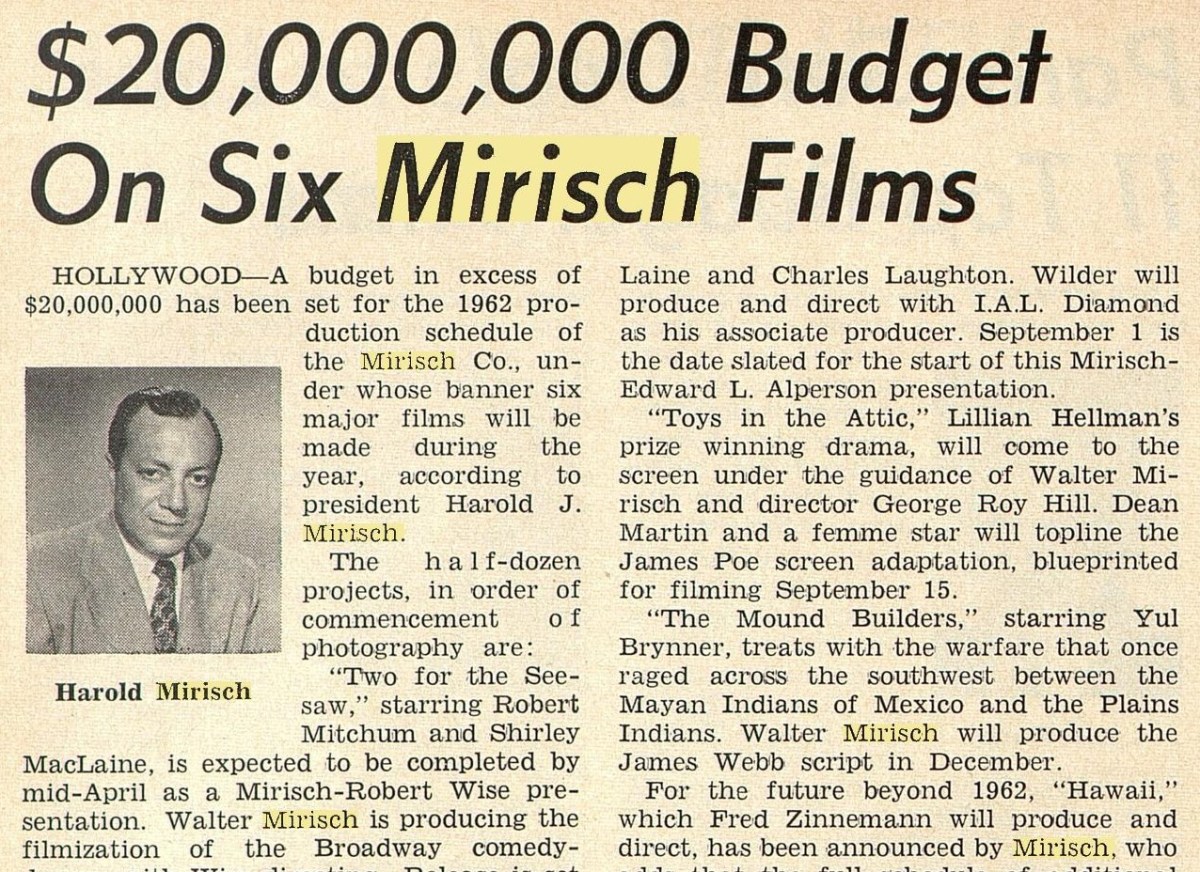
Hollywood Myths No 1 – The Mirisch Brothers

The Mirisch Brothers, the first of what would be called the “mini-majors,” ushered in a Hollywood production revolution in the 1950s by employing a number of cute devices. They paid over-the-odds for top directors and actors – $750,000 apiece for John Wayne and William Holden for The Horse Soldiers (1959) plus $250,000 for John Ford, for example. They gave them greater control over scripts and the finished pictures. Possibly as an attractive a hook, they handed out a bigger share of the profits.

This approach went down very well with the talent – lucrative long-term pacts were struck with Yul Brynner, Billy Wilder and John Sturges among others – less so with rival studios who complained their generosity was driving up costs at a time when Hollywood was on the brink of collapse with  major studios teetering on the edge of bankruptcy as, thanks to television, audiences plummeted.

Walter Mirisch was the name best known to moviegoers since he worked as producer on the company’s output. Harold was best known to the studios since he was the guy who set up the deals and found the funding. Marvin was the backroom boy who ensured the whole process kept ticking over.

Mirisch had secured a deal with United Artists to supply a series of pictures, the first contract calling for 20 movies. Generally, the company was lauded by the trade press as innovative thinkers producing a stream of noteworthy movies such as Some Like it Hot (1959), The Magnificent Seven (1960), The Great Escape (1963), Irma La Douce (1963) and later pictures like The Russians Are Coming, The Russians Are Coming (1966), Hawaii (1966), In the Heat of the Night (1967) and The Thomas Crown Affair (1968). As independent producers they had more than their fair share of Oscar successes.

But like every player in Hollywood, they employed sleight of hand, convincing the media that they were highly successful operators when the reality was exactly the opposite.

The Wisconsin Center for Film and Theater Research, part of the University of Wisconsin, holds a vast archive relating to United Artists. Within that archive, I was able to source the materials that cast an alternative light on the Mirisch Brothers’ initial foray into the Hollywood big-time.

The figures revealed that the first 20 pictures – including Some Like it Hot, The Great Escape and Irma La Douce – in the Mirisch-United Artists deal racked up a cumulative $8 million loss.

In fact, one of the factors driving down the company’s potential profitability was the amount of money it gave away in profit-share. In addition, the bigger profits in the movie business were often to be found in distribution and exhibition. For a start, about 50% of box office revenue found its way into the exhibitor’s pockets. From what was left over, another big chunk went to the distributor, in this case United Artists, and once profit-participants had been paid off, there was sometimes remarkably little finding its way back into the Mirisch Brothers’ coffers.

For example, Some Like it Hot, which according to these figures generated a total of $12.9 million in domestic and foreign rentals* (i.e. what’s left after exhibitors have taken their share), racked up less than half a million dollars in profit for the Mirisch Brothers. The Magnificent Seven earned three times as much overseas as in the U.S. so though viewed as a flop at home it ended up with $321,000 in the bank. The Great Escape brought in a profit of $326,000 on total rentals of $11 million while Irma La Douce topped that with $440,000. The latter picture illustrated a typical problem for Mirisch in that at the outset they were bound to share profits with three other partners. The Apartment (1960) delivered Mirisch’s biggest profit of $1.09 million.

But those were the only films – out of the 20 launched in Mirisch’s first few years of operation – to turn a profit. The other 15 all hit the buffers. That was not a healthy win-lose ratio at all. That three-quarters of the Mirisch picks turned into losers was hardly cause for celebration.

Some of the losses were stratospheric for the time. The Children’s Hour (1961), with Audrey Hepburn picking up a colossal upfront fee, was in the red to the tune of $2.7 million. The loss on The Horse Soldiers amounted to $1.8 million with Billy Wilder’s ill-fated One, Two, Three (1961) suffering a $1.5 million loss and Toys in the Attic (1963) turning into a $1.2 million liability.  Stolen Hours (1963) with Susan Hayward added nearly $1 million to the company’s overall debt. Even Elvis Presley, at that point a guaranteed box office draw, offered no respite – the loss on Kid Galahad (1962) above $430,000 and that of Follow That Dream (1962) $195,000.

So you might be wondering with such a poor ratio of hits to flops why the Mirisch Brothers managed to stay in the game. Well, before the final figures were in on the contract to deliver the first 20 pictures, United Artists were already committed to a further 20 movies, some of which were already in production. But there were two other elements acting in Mirisch’s favor. The first was that exhibitors were desperate for new movies, the industry only beginning by 1963 to turn a financial corner, and it was expected that Mirisch would have learned from its mistakes and stop underwriting expensive pictures (which turned out to be untrue).

But second, and more importantly, the Mirisch losses did not impact so badly on United Artists. That studio made the bulk of its revenue from distribution. Even if a picture was a flop, UA’s 30% distribution fee was based on the gross, so a movie that maybe ended up as an overall financial flop could still generate enough revenue to keep UA happy.

Also, UA, now seeing record profits from the likes of its investment in Tom Jones (1963) and on the brink of a James Bond bonanza, could afford to carry its production partner. So Mirisch kept on pretending it was a huge success and the trade press kept on believing it.

* These figures do not including television sale or future reissues. But initial television sales in the early 1960s averaged about half a million dollars for successful movies. What television would pay was based on the original domestic gross (i.e. perceived popularity). Only a couple of pictures, most notably The Magnificent Seven, significantly added to their initial release income through reissue. So it is extremely unlikely that the Mirisch Brothers would have gone into profit on those first 20 pictures through reissues and television sales in the 1960s, and doubtful if they would have even halved the losses. 

SOURCE:  “Mirisch Pictures First 20 Picture Deal,” Appendix II, United Artists Archive, Wisconsin Center for Film and Theater Research; “Mirisch and UA Sign New 3-Year Contract,” Box Office, June 12, 1961, 8; “Multi-Million Deal,” Box Office, May 22, 1961, p20; “Irma La Douce Is Split four Ways from Start,” Box Office, June 11, 1962, W-2; “Billy Wilder To Produce Three Films for Mirisch,” February 5, 1963, p12.

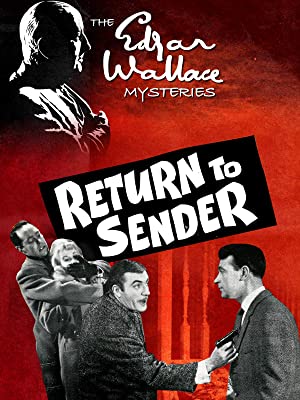
Return to Sender (1963) ***

The B-film’s B-film. Where American B-pictures invariably focused on sleaze, sci-fi, horror or violence, their British counterparts often exuded class with solid acting, clever plots, excellent though simple sets and good composition. Edgar Wallace, the world’s most prolific writer, had regained sudden popularity thirty years after his death, and movies made from his works made ideal subjects for B-pictures fed into the British double-bill system. His thrillers are all story, racing along with twist after twist.

On the verge of being arrested for fraud, high-class businessman Dino Steffano (Nigel Davenport) hits on blackmail as a means of forcing investigator Robert Lindley (Geoffrey Keen) to drop the case. He sets up associate Mike Cochrane (William Russell) to fake photographs involving sexy Lisa (Yvonne Romain) and Lindley in compromising positions. So Lisa, pretending to hold vital evidence, lures him to her flat where this can be staged.

Meanwhile Lindley’s daughter Beth (Jennifer Daniel) chats up Cochrane after overhearing him asking questions about her father’s cottage. Cochrane has history with Lindley, an 18-month prison sentence the result of a previous encounter. He also resents Steffano over previous double-dealing and is planning to take his own revenge while carrying out the master plan.

I doubt if you will be able to see the twists coming. Suffice to say, nothing is what it seems. The closer Lindley gets to uncovering the mystery, the darker it becomes and the more danger he appears to be in. Even when characters reveal their plans, you can be sure they will have a different one up their sleeve. Steffano’s exceptional charm masks his ruthlessness. While Lindley is dogged, he is no match for the slinky Lisa who can play the vulnerable female with ease. Artist Beth treasures her independence so much that it takes her down some devious alleys, especially when trying to pump Cochrane for information. And it all leads to a terrific climax, involving further twists and double-dealing.

Most of this is played out in classy apartments with log fires burning and Steffano drinking brandy and smoking cigars, or on a yacht, or Lindley’s equally splendid chambers.

The cast are either up-and-coming movie stars or destined for small-screen fame. Many of these Edgar Wallace thrillers would prove stepping stones for new talent.

Nigel Davenport (The Third Secret, 1964) is the pick and would become an accomplished supporting actor in films like Play Dirty (1969). Yvonne Romaine had already made a splash in The Frightened City (1961) and would go on to play the female lead in Devil Doll (1964) and The Brigand of Kandahar (1965). Geoffrey Keen (Dr Syn, Alias The Scarecrow, 1963) would make a bigger impact on television in Mogul (1965-1972). As would William Russell (The Great Escape, 1963) who went on to become a long-running sidekick of Dr Who (1963-1965). Jennifer Daniel became a horror favorite with the female lead in The Kiss of the Vampire (1963) and The Reptile (1966).  

Making his movie debut director John Hales clearly benefits from a couple of decades as an editor in films like The Seventh Veil (1945) and Village of the Damned (1960) and he nips quickly from one scene to another to keep the plot ticking along while showing some gift for framing characters within a scene.  

I should point out you will easily find flaws. Strictly speaking, if you know your British police procedural, Lindley would not be an investigator, and it would not be too hard to find strains of implausibility showing. But that should not detract from this enjoyable movie.

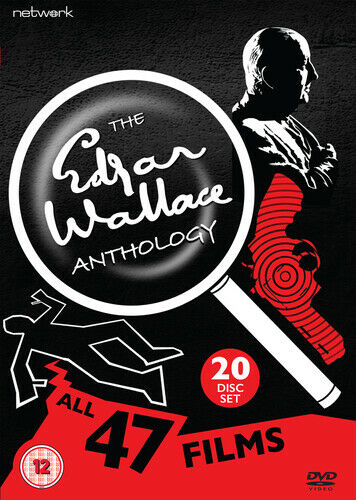
British studio Anglo Amalgamated churned out these Edgar Wallace thrillers as double-bill fodder and, even though compromised in the budget department, they were generally well-made. Wallace was a brand-name, the country’s best-selling author on account of his 200-plus novels, most still in print long after his death, and a byword for a good read. American networks edited the features down to fit into a television series. So if you are hunting these down make sure you get the original features rather than the edited versions.

You could try this sampler on Amazon Prime but if you like what you see you would be better to buy one of the box sets.

Book into Film – “Breakfast at Tiffany’s” (1961)

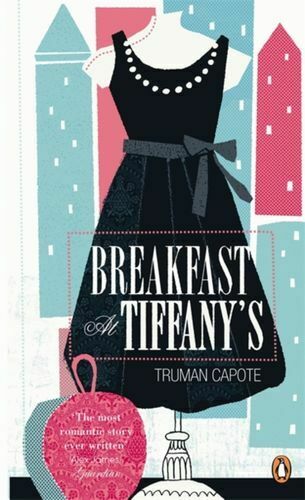
For a start the book – a novella really, scarcely topping the 100-page mark – by Truman Capote was set during the Second World War. And the book’s narrator Paul (George Peppard in the film) is more of an observer in the vein of in Nick Carraway in The Great Gatsby and as such is not privy to every action of Holly Golightly (Audrey Hepburn) rather than, say, the redoubtable Dr Watson  who, as confidante of Sherlock Holmes, can faithfully record his every action.  

So the first task set screenwriter George Axelrod was to update the picture to the contemporary era of the early 1960s. Fashion-wise, this proves a tremendous boon, allowing the director the give Holly her iconic look. And it does permit more leeway with acceptable sexual mores. However, while in both book and film Paul is an aspiring writer, in the book he is initially unpublished, while in the film he has had a book of short stories published, but is living as a gigolo. In the book he is an innocent 19-year-old, mouth clearly agape at Holly’s shenanigans, while in the film he is clearly more mature.

Since Hollywood is intent on providing a happy ending, it was essential for the screenplay to make Paul an acceptable suitor rather than a young swain largely in awe of the captivating Holly.

Axelrod did not have to do much to capture the book’s Holly. In fact, he appropriated wholesale chunks of dialogue. Capote had done such a wonderful job of describing her unique personality that it made a lot of sense to retain her vocabulary and diction.

Axelrod turns Paul into a more dramatic figure, such that he is able to both challenge himself and Holly, emerge from his own self-destructive trap, and develop his own narrative arc, and play a more significant role in Holly’s life, so that the romantic possibilities, which appear distant in the book, can be more easily realized.

The input of other characters is enlarged or diminished. The Japanese neighbor Mr  Yunioshi (Mickey Rooney), who only appears at the beginning of the book, is called into more extensive comedic duties by the screenwriter. Mag Wildwood (Dorothy Witney), only seen in passing in the film, has a more significant role in the book, becoming for a time Holly’s flatmate and rival in love. There is no room in the film for Madame Spanella, held responsible in the book for informing the police about Holly’s arrangement with the gangster. For structural reasons, Axelrod is also able to dispense with bar owner Mr Bell, a pivotal character at the book’s opening.

Otherwise, the book acts as a pretty useful treatment, from which the screenwriter need only occasionally depart. Sometimes this is for clarification. In the film Holly insists her marriage to Doc was annulled whereas in the book this is far from clear, leaving her open to charges of bigamy. Axelrod turns into dialogue some of Paul’s observations and turns some dialogue into scenes. In addition, in the book Holly becomes pregnant by her Brazilian lover, thus expecting marriage to automatically follow.

The couple do steal masks from a dime store, but do not visit Tiffany’s together to have the cheap ring inscribed, but the scene has its origins elsewhere in the book. Nor does Paul in the book introduce Holly to the public library and though he finds evidence of her mugging up on South America it is only in the film that that becomes a scene.

The book avoids the happy ending Hollywood was so desperate to reach. Holly goes off on her own. The cat is chucked out of the cab and although a remorseful Holly immediately chases after it, she is too late.

The notion that a creature as wild and individual as Holly Golightly would submit to marriage to an impoverished writer seems a fantasy too far. Unhappy endings were not unknown in Hollywood, look at Casablanca, but for whatever reason Paramount or Blake Edwards dictated otherwise.

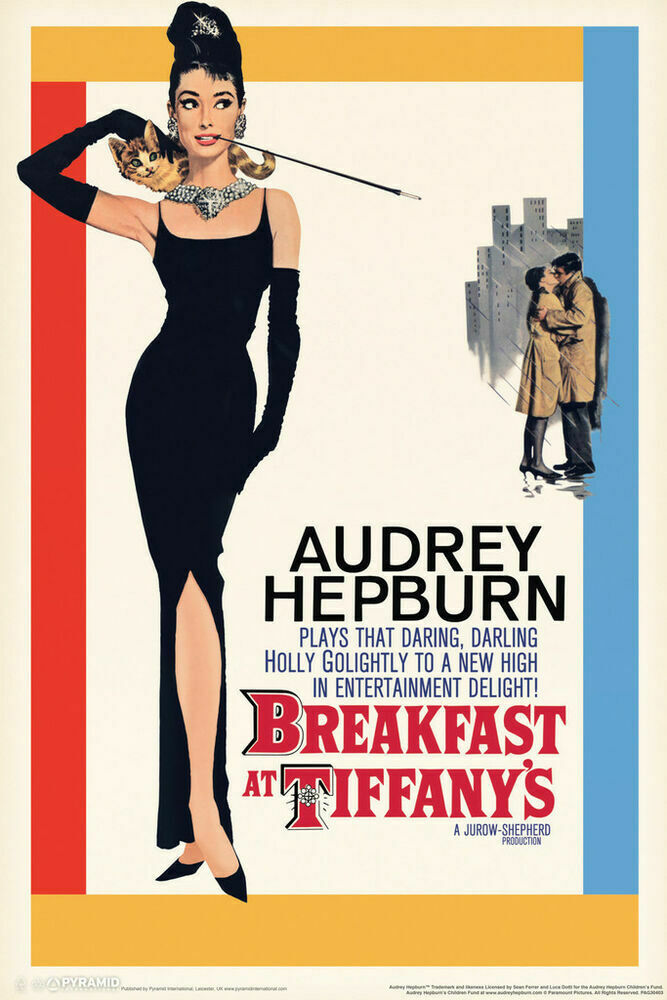
Breakfast at Tiffany’s (1961) **** – Back on the Big Screen

Reassessment sixty years on – and on the big screen, too – presents a darker picture bursting to escape the confines of Hollywood gloss. Holly Golightly (Audrey Hepburn) is one of the most iconic characters ever to hit the screen. Her little black dress, hats, English drawl and elongated cigarette holder often get in the way of accepting the character within, the former hillbilly wild child who refuses to be owned or caged, her demand for independence constrained by her desire to marry into wealth for the supposed freedom that will bring, contradictory demands which clearly place a strain on her mental health.

Although only hinted at then, and more obvious now, she is willing to sell her body in a bid to save her soul. Paul Varjak (George Peppard), a gigolo, being kept, in some style I should add with a walk-in wardrobe full of suits, by wealthy married Emily (Patricia Neal), is her male equivalent, a published author whose promise does not pay the bills. The constructs both have created to hide from the realities of life are soon exposed.

There is much to adore here, not least Golightly’s ravishing outfits, her kookiness and endearing haplessness faced with an ordinary chore such as cooking. the central section, where the couple try to buy something at Tiffanys on a budget of $10, introduce Holly to the New York public library and boost items from a dime store, fits neatly into the rom-com tradition.

Golightly’s income, which she can scarcely manage given her extravagant fashion expenditure, depends on a weekly $100 for delivering coded messages to gangster Sally in Sing Sing prison, and taking $50 for powder room expenses from every male who takes her out to dinner, not to mention the various sundries for which her wide range of companions will foot the bill.

Her sophisticated veneer fails to convince those whom she most needs to convince. Agent O.J. Berman (Martin Balsam) recognizes her as a phoney while potential marriage targets like Rusty Trawler (Stanley Adams) and Jose (Jose da Silva Pereira) either look elsewhere or fear the danger of association.

The appearance of former husband Doc (Buddy Ebsen) casts light on a grim past, married at fourteen, expected to look after an existing family and her brother, and underscores the legend of her transformation. But the “mean reds” from which she suffers seem like ongoing depression, as life stubbornly refuses to conform to her dreams. Her inability to adopt to normality is dressed up as an early form of feminism, independence at its core, at a time when the vast bulk of women were dependent on men for financial and emotional security. Her strategy to gain such independence is dependent on duping independent unsuitable men into funding her lifestyle.  

Of course, you could not get away in those days with a film that concentrated on the coarser elements of her existence and few moviegoers would queue up for such a cinematic experience so it is a tribute to the skill of director Blake Edwards (Operation Petticoat, 1959), at that time primarily known for comedy, to find a way into the Truman Capote bestseller, adapted for the screen by George Axelrod (The Seven Year Itch, 1955),  that does not compromise the material just to impose Hollywood confection. In other hands, the darker aspects of her relationships might have been completely extinguished in the pursuit of a fabulous character who wears fabulous clothes.

Audrey Hepburn is sensational in the role, truly captivating, endearing and fragile in equal measure, an extrovert suffering from self-doubt, but with manipulation a specialty, her inspired quirks lighting up the screen as much as the Givenchy little black dress. It’s her pivotal role of the decade, her characters thereafter splitting into the two sides of her Golightly persona, kooks with a bent for fashion, or conflicted women dealing with inner turmoil.

It’s a shame to say that, in making his movie debut, George Peppard probably pulled off his best-ever performance, before he succumbed to the surliness that often appeared core to his later acting. And there were some fine cameos. Buddy Ebsen revived his career and went on to become a television icon in The Beverley Hillbillies. The same held true for Patricia Neal in her first film in four years, paving the way for an Oscar-winning turn in Hud (1963). Martin Balsam (Psycho, 1960) produced another memorable character while John McGiver (Midnight Cowboy, 1969) possibly stole the show among the supporting cast with his turn as the Tiffany’s salesman.

On the downside, however, was the racist slant. Never mind that Mickey Rooney was a terrible choice to play a Japanese neighbor, his performance was an insult to the Japanese, the worst kind of stereotype.

The other plus of course was the theme song, “Moon River,” by Henry Mancini and Johnny Mercer, which has become a classic, and in the film representing the wistful yearning elements of her character.

CATCH IT ON THE BIG SCREEN: This is a restoration of the classic. The Showcase chain is showing it all this week in various cinemas throughout the United Kingdom (I caught it last week at my local Showcase). It is also showing in Barcelona on July 26; Amsterdam on July 31-August 3; Stockholm on August 5; and Gent, Belgium, on August 6.

A company called Park Circus – which has offices in London, Paris, Los Angeles and Glasgow – has the rights to the reissue and if you want to find out if the picture will be showing in your neck of the woods at a later date you can contact them on info@parkcircus.com  

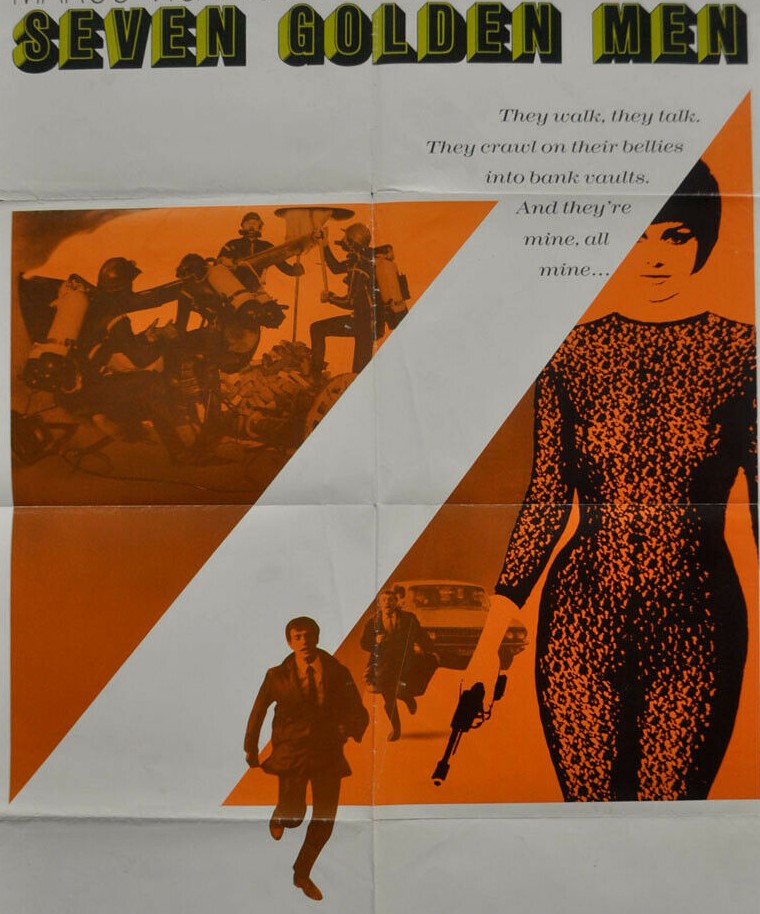
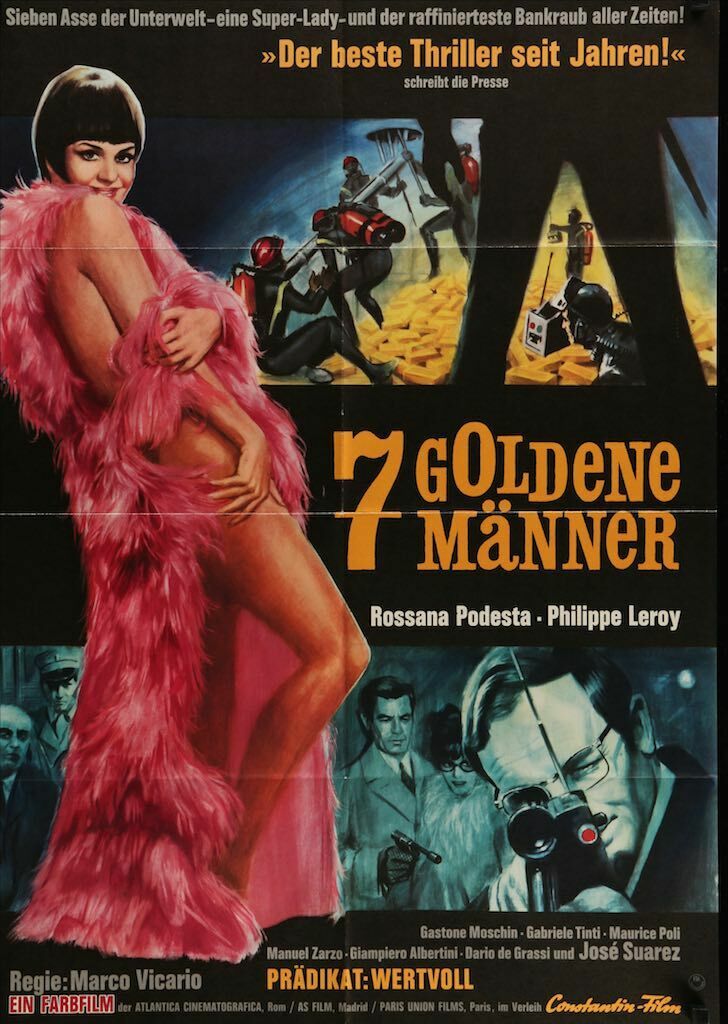
Seven Golden Men (1965) ****

Very stylish caper picture that dispenses with the recruitment section, the ingenious hi-tech robbery accounting for the first half, escape and double-cross the second, a slinky Rosanna Podesta (the eponymous Helen of Troy, 1956, in case you’ve forgotten, and also appearing in Sodom and Gomorrah, 1962) an added attraction/distraction. The Professor (Phillippe Leroy), in bowler hat and umbrella, orchestrates the gold bullion theft from an uber-secure bank using hidden microphones, cameras and a host of electronic equipment, the inch-perfect heist organized to mathematical precision and timed to the second.

His team, disguised as manual workers, dig under the road, don scuba gear to negotiate a sewer, drill up into the gigantic vault and then suck out the gold bars using travelators and hoists. Giorgia (Podesta), sometimes wearing cat-shaped spectacles, a body stocking and other times not very much, causes the necessary diversions and plants a homing device in a safety deposit box adjacent to the vault. Occasionally her attractiveness causes problems, priests in the neighboring block complaining she is putting too much on show.

It’s not all plain sailing. A cop complains about the workmen working during the sacrosanct siesta, a bureaucrat insists on paperwork, a radio ham picks up communication suggesting a robbery in progress, the police appear on the point of sabotaging the plan.

But the whole thing is brilliantly done, the calm professor congratulating himself on his brilliance, Giorgia seduction on legs. The getaway is superbly handled, the loot smuggled out in exemplary fashion, its destination designed to confuse. Then it is double-cross, triple-cross and whatever-cross comes after that, and with every reversal no idea what is going to happen next. It is twist after twist after twist. Some of the criminals are slick and some are dumb so as well as the high drama there are moments of exquisite comedy.

Italian writer-director Mario Vicario (The Naked Hours, 1964) handles this European co-production with considerable verve and although, minus the normal recruitment section, we don’t get to know the team very well except for The Professor and Giorgia each is still given some little identity marker and in any case by the time they come to split the proceeds we are already hooked. Frenchman Phillippe Leroy (Castle of the Living Dead, 1964) is the standout as a mastermind in the British mold, a stickler for accuracy, calm under pressure, working with military discipline. Podesta (also The Naked Hours) has no problem catching the camera’s attention or playing with the emotions of the gang  to fulfill her own agenda. The gang is multi-national – German, French, Italian, Spanish, Portuguese, Irish – with only Gabriel Tinti likely to be recognized by modern audiences.

And there is a terrific score by Armando Trovajoli (Marriage Italian Style, 1964) that changes mood instantly scene by scene. One minute it is hip and cool jazz, the next jaunty, and then tense.

If ever a picture was pure cult, this is it.

The Blogger Speaks

This weekend I am one of the very few male speakers at the “Doing Women’s Film and Television History” international conference being hosted by Maynooth University, Dublin, on July 10-11. Naturally it is a virtual conference but it is packed with speakers from all over the world who have been researching issues relating to women working in film and television. I am not an academic so it is signal honor for me to be invited to speak at a university-run conference.

My topic is “When Women Ruled Hollywood” which looks at female salaries in the movie business from 1910 to 1970. Although most people think women were hard-done-by in Hollywood and generally considered as second-class citizens, I found this was not at all the case. In the 1910s, Mary Pickford earned double the earnings of Charlie Chaplin. In the 1920s, the top earning star of either gender was Corinne Griffith.s

At the start of the 1930s, Greta Garbo was the dominant figure when it came to salaries. In 1935 Mae West was the second-highest earner in the whole of America, beaten only by William Randolph Hearst, immortalised as Citizen Kane.

In the annual salary league for the remainder of the 1930s and 1940s, Claudette Colbert (twice), Irene Dunne, Ginger Rogers, Joan Crawford and Deanna Durbin all topped the rankings and in the years when males came out on top the female stars were not far behind.

While female salaries dipped in the 1950s, by the 1960s women were again beating the males at the salary game, Elizabeth Taylor way ahead of everybody, Audrey Hepburn on $1 million a picture, Julie Andrews out-earning Paul Newman in Torn Curtain and newcomer Barbra Streisand reaching unheard-of commercial heights.

I had written a couple of business histories of Hollywood, the research for which took me back to 1910 and in the course of writing those books I discovered information about salaries that would have been out of place in those works, so I dug around some more and came up with the information for this talk.

If you want an idea of my speech, you can check out this short sample on Youtube.

Maroc 7 (1967) ***

With a string of Swinging Sixties fashion models providing the requisite bevy of beauties, a gang of thieves, a Moroccan heist, superb locations, great cast and a touch of archaeology with secret chambers and a long-lost relic thrown in, this splendid espionage frolic proves a welcome return to big screen top billing for Gene Barry after nearly a decade in television in Bat Masterson (1958-1961) and  Burke’s Law (1963-1966).

Something of a cat burglar himself, Simon Grant (Barry) infiltrates a gang which uses fashion as a cover and whose ingenious speciality is to steal famous heirlooms and replace them with fake ones in the assumption that on their departure from a foreign country the customs officers will not be able to tell the difference. Louise Henderson (Cyd Charisse) and Raymond Lowe (Leslie Phillips) head up the gang while Claudia (Else Martinelli) may or may not be in on the act.

Her dalliance with Simon suggests an inclination towards the right side of the law but the fact that she has been involved with the pair for so long sets up the intriguing notion that she is stringing the American agent along. Initially, she rejects Simon’s advances until told by Louise to comply and pump him for information leading to one of the movie’s best lines (and innuendo that a British audience in particular would adore). Says Simon: “We haven’t done much about pumping but maybe that will come later.”  Doubts also surround the intentions of Michelle Craig (Alexandra Stewart).  On their trail is Inspector Barrada (Denholm Elliott).

There is mystery aplenty and a fair quotient of punch-ups, romance, shoot-outs and murder while the unearthing of the hidden treasure is less heist amd more straightforward Indiana Jones. The fashion is the icing on the cake. The Moroccan fashion shoots are more than merely decorative, or an excuse to bare the charms of the gorgeous models. Instead, the shoots would not disgrace Vogue or any of the other glossy magazine temples to haute couture, with that Sixties focus on fabulous clothes, genuine location and outlandish hairstyles.

On top of that, several of the stars are either playing against type or out of their comfort zones. Legendary Hollywood dancer Cyd Charisse famed for such classic musicals as The Bandwagon (1953) and Silk Stockings (1957) sets such fluff aside to essay a criminal mastermind, whose cunning often gets the better of Simon. Leslie Phillips (Crooks Anonymous, 1962), better known as a charming Englishman with an eye for the ladies, is as ruthless a photographer as he is a criminal. Director Gerry O’Hara (The Pleasure Girls, 1965) has managed to get both Phillips and Denholm Elliott to drop their standard methods of delivery, usually embracing a drawl, making their characterisations a good bit more fresh than normal. Phillips was clearly intending to make some kind of career change since he was the producer.

Gene Barry makes a perfect entrance as an adventurer-spy, as confident in his seduction techniques without women falling at his feet like James Bond, with a nice line in self-deprecation and more than able to look after himself. Before being side-tracked by television, Barry had shown movie star potential in War of the Worlds (1953) and Thunder Road (1958) and now he delivers on that earlier promise. Elsa Martinelli (Hatari!, 1962) is the femme fatale who may or may not wish to play that role, keeping the audience completely on edge as to which side of the law she is likely to come down on. Added bonuses are Alexandra Stewart (Only When I Larf, 1968), Angela Douglas (Carry On Screaming!, 1966), Tracy Reed (Hammerhead, 1968), dancer Lionel Blair (A Hard Day’s Night, 1964) and Maggie London.

Advance Buzz – The Phenomenon Created in the 1960s

In 1964, Twentieth Century Fox created a new way of selling pictures by inventing the advance buzz.

Of course, movies had always had some kind of pre-launch push but mostly on a small-scale via gossip columnists, who, while they had some influence, did not actually receive much space in a newspaper. Fox set out to change all that and put movies on the front pages and gain big feature spreads inside, an event that only usually occurred through  unwanted scandal (Cleopatra, for example), death  or a photo of a big female star.

Fox revamped the press junket – at that time primarily used as a vehicle to announce a movie premiere – and turned it into a method of creating advance publicity and expanding awareness on new pictures long before they reached the screen. And did so with enormous style, transporting over 100 American journalists to Europe to watch the production of three major big-budget roadshows.

Cecil B. DeMille of all people had invented the movie press junket – for the world premiere of his swashbuckler The Buccaneer in 1938. At a time when world premieres were confined to New York and Los Angeles, Hollywood had begun experimenting on a small scale with different locales for a first showing – whaling picture I Conquer the Sea (1936) was unveiled in New Bedford, Massachusetts, The Petrified Forest (1936) in St Louis and Sutter’s Gold (1936) in Sacramento. But these were all local affairs, the selected city putting on a big show for local dignitaries but the media were drawn only from the immediate surrounding area with stories syndicated to bigger newspapers.

When he selected New Orleans for his world premiere, DeMille, as skilled in marketing as he was in direction, hired a deluxe train to bring journalists from the top newspapers and magazines down from New York and Chicago. The train had a special compartment kitted out with typewriters, telephones, radio, Dictaphones and even stenographers to “relay hot news as it happens.”

All expenses – accommodation, meals, alcohol and various other sundries – for an entire week were picked up by Paramount. Three radio stations made daily broadcasts and the journalists filed news stories and features about the stars and the city, and, most important of all, reviews of the film they were privileged to be the first to see. The city went to extraordinary trouble, proclaiming a local holiday, organizing parades, enlisting the help of local organizations to ensure there was some event worth reporting every day. Local retailers, hoteliers and restaurateurs made a fortune as hundreds of thousands of people piled in to see the stars and witness the festivities.

The press junket was born.

In the following years, world premieres were held all over America either in locations where the movie was filmed or places linked with a star or character. These varied from major metropolises like Detroit (Disputed Passage, 1939), Houston (Man of Conquest, 1939), Memphis (Dr Erlich’s Magic Bullet, 1940) and Philadelphia (Intermezzo, 1939) to smaller locales like Littleton, New Hampshire (The Great Lie, 1941) and South Bend, Indiana (Knute Rockne, All American, 1940).

But by the 1960s, the world premiere idea had been done to death. There was scarcely a town, city or venue that had not been the subject of premiere marketing.

So in 1964 with an unprecedented three roadshow pictures in production Twentieth Century Fox upped the press junket ante by flying a fleet of 110 journalists on a specially chartered Boeing 707 to Europe to watch filming on actual locations in Britain, Austria and Italy.

Over 40 cities were represented by reporters and included representatives of the New York Post, Los Angeles Times, UPI, Detroit Free Press, Kansas City Star, Boston Globe and the Seattle Times as well as The Mike Wallace Show (television) and NBC Radio and magazines as diverse as McCalls, Cue and Newsweek.

At the reconstructed Booker Airport in Britain, journalists watched stunts for Those Magnificent Men in their Flying Machines (1965) and interviewed stars like Sarah Miles, Terry-Thomas and Robert Morley. Each journalist had a photograph taken as a personal souvenir alongside a replica of a 1910 Antoinette airplane specially built for the film, but undoubtedly many such photographs found their way into the newspapers and magazines.

When the media cavalcade shifted to Austria they were treated to a massive banquet at Schloss Klessheim in Salzburg where The Sound of Music (1965) was being filmed. Julie Andrews was interviewed with her feet on a table and the reporters watched choreographer Marc Breaux rehearsing the “I Have Confidence” number (the music had been recorded in Hollywood and then played back synchronized to the action). Andrews and co-star Christopher Plummer were interviewed at Frohnburg Castle.

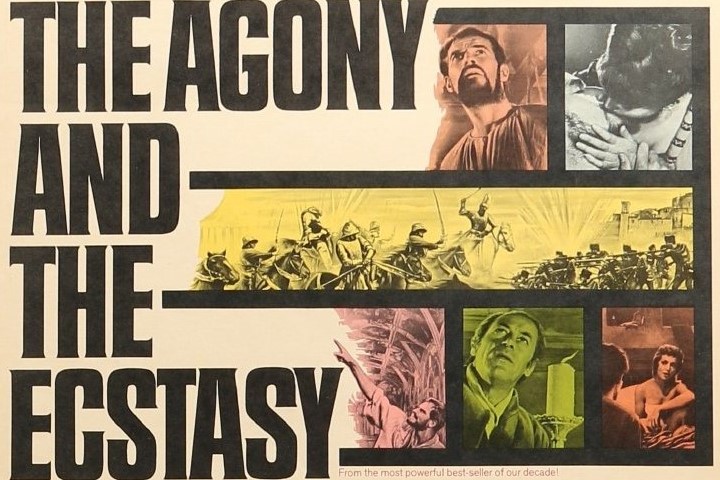
Italy – where The Agony and the Ecstasy (1965) was being shot – was the final destination. The visitors were conveyed up the perilous Carrera Mountains to the 4,700 ft Monte Altimissino to watch a scene being filmed in a quarry usually closed to visitors of a 200-ton block of marble being cut. Director Carol Reed, producer Darryl F. Zanuck and star Charlton Heston were on hand to welcome them. Rex Harrison (playing the Pope) was interviewed outside a restaurant in Rome that bore the Pontiff’s name 

Even before the journalists returned from the seven-day trip, they were sending stories back – over $8,000 (worth about $70,000 today) was spent on cable fees and nearly one million words had been written. Many of the journalists had never been to Europe before and took full advantage of the opportunity. Newspaper and magazines would not permit journalists to spend such a length of time away from the office without expecting a substantial bounty in the shape of news stories – the trip itself received extensive coverage.

Feature editors were deluged with stories and interviews that ran in the main sections of the newspaper and in weekend supplements, shifting the coverage of movies away from the  entertainment sections. In addition, to justify their time away, stories ran in the food, travel and fashion sections.

It was an unprecedented publicity bonanza for films that were still a full year away from release, creating a tsunami of public interest. For the first time a studio had created movie awareness on its own terms. While movies filmed in Europe had often received coverage based on reports by journalists living in that continent, this was rather cursory, had always appeared piecemeal in American newspapers, largely depended on an editor’s decision about reader interest in a particular star, and, more importantly, such stories usually coincided with the film’s launch rather than well in advance.

This huge media onslaught whetted public appetites well in advance. In addition, there were enough articles left over to be used up when the movies actually did open.

The trade press also widely reported on the event and Box Office magazine ran a 12-page feature one month later. In its evaluation of the junket, the studio concluded that it was the “most advanced type of industrial marketing.”

SOURCES: Brian Hannan, In Theaters Everywhere: A History of the Hollywood Wide Release 1913-2017, p32-36 (McFarland Publishing, 2019); “That Was the Week That Was…Fantastic,” Box Office, Jul 6, 1964, p10-21.

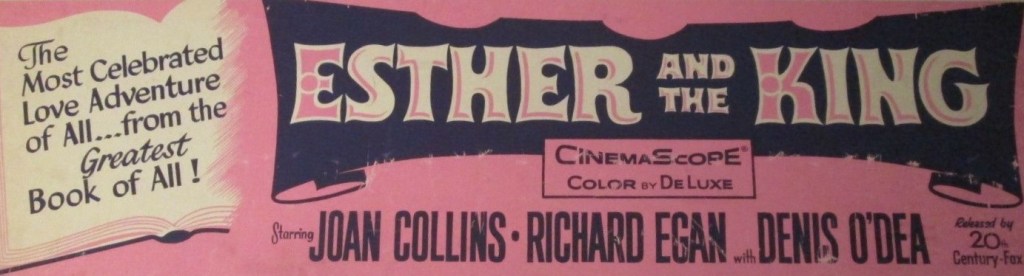
Esther and the King (1960) ***

Taking a Biblical tale as a starting point, veteran director Raoul Walsh (White Heat, 1949) stirs up heady brew of intrigue, rebellion, politics and romance. Returning home victorious, King Ahasuerus (Richard Egan) discovers his wife Queen Vashti (Danielle Rocca) has committed adultery and that his minister Klydrathes (Renato Baldini) has been squeezing the people blind with punitive taxes, hanging them for non-compliance.

Casting his wife aside, the king seeks a new bride. Since he has conquered all the known world except Greece, marriage to make a political alliance is not an option, so, given women are treated as mere chattels and the king is all-powerful, all the likely virgins are rounded up including Hebrew Esther (Joan Collins) on her wedding day.

Her husband-to-be Simon (Rik Battaglia) kicks off, attacks Klydrathes and becomes a wanted man. The queen’s lover and the king’s chief minister Prince Haman (Sergio Fantoni) attempts to fix the bridal selection, inserting his hardly-virginal choice Keresh (Rosalba Neri) into the proceedings while attempting to murder clear favorite Esther. When that fails, Haman plots to usurp the crown. With the Hebrews facing possible annihilation, Esther is put in the position of giving in to the king in order to save her people. As her serenity soothes the savage beast, her initial hate turns to growing attraction.

Meanwhile, Simon is on a rescue mission and Prince Haman cooks up a devilish plot that will see the Hebrews blamed for passing on military secrets to the king’s enemies. Naturally, all hell eventually breaks loose.

More a drama than a typical big-budget DeMille offering, with battles taking place off-screen, action is limited to a few chases and skirmishes. There is a fair amount of sin on show what with a tribe of concubines at the king’s disposal, a whipping, a striptease by Vashti in a last gasp attempt to win back the king, and some very seductive dancing routines by female slaves who, at times, look as if they were coached by Busby Berkeley. Substantial amounts appear to have been spent on costumes and production design, so historical atmosphere is well captured.

Once you realize there’s not going to be any kind of big battle or major action centerpiece common to the Biblical genre, it’s easy to sit back and enjoy the political machinations, the initial torment of Esther, introduced as a rebellious soul, and the king, more at home with soldiers, shaking off his despondency at marital betrayal as he responds to Esther’s coaxing.

It was 1961 before it reached Britain.

Top-billed British actress Joan Collins (Seven Thieves, 1960) has a difficult role. Normally, you would expect expressions of passion or depths of anguish, but the rebellion she displays at the start soon disappears when she enters the palace and is helpless to change the situation except by, initially against her will, accepting the king’s desires. In that sense, her portrayal is understandable but the understated performance gets in the way of a woman who is supposed to be devastated by the loss of her husband and then trapped by the needs of her people into making the marriage.

Taking second billing, Richard Egan (300 Spartans, 1964) makes a thoughtful king, showing very little temper, possibly because he doesn’t need to with everyone, beyond the conspirators, cowering in his presence.   Regal and stately suits him fine rather than the more common explosions we are accustomed to seeing from people in that line of work.

Both stars were in need of box office redemption. It should have been a screen pairing made in heaven, both Collins and Egan coming to the fore in the mid-1950s, and if they had sustained their early promise, it would have been a star-studded picture. As it was, Collins had been billed above Richard Burton in The Sea Wife (1957) and above Jayne Mansfield in The Wayward Bus (1957) but had gradually drifted down the pecking order, in her previous outing credited behind Edward G. Robinson and Rod Steiger in Seven Thieves (1960).

Egan’s career had followed a similar trajectory – top-billed in pictures as diverse as drama The View from Pompey’s Head (1955), western Tension at Table Rock (1956), film noir Slaughter on 10th Avenue (1957), and romance A Summer Place (1959) but for his previous film, Pollyanna (1960) billed behind both Jane Wyman and Hayley Mills.

While Egan would enjoy a career resurgence it was the end of the line, at least temporarily, for Joan Collins. She was coming to the end of her seven-year Twentieth Century Fox contract but fell out with the studio after being rejected for Cleopatra, and on the evidence here you can see why. After leaving Fox, she only made five more films during the decade. This was the final picture for Irish actor Dennis O’Dea (The Fallen Idol, 1948). Director Raoul Walsh made only another two.

Sergio Fantoni (Von Ryan’s Express, 1965) excels as the spurned lover and Rik Battaglia (The Conqueror of the Orient, 1960) as the schemer. Rosalba Neri (Top Sensation, 1969) and Danielle Rocca (Behold a Pale Horse, 1964) both make striking appearances. Look out also for Gabriele Tinti (Seven Golden Men, 1965).

Discover WordPress

A daily selection of the best content published on WordPress, collected for you by humans who love to read.

The Atavist Magazine

by Brian Hannan

WordPress.com News

The latest news on WordPress.com and the WordPress community.