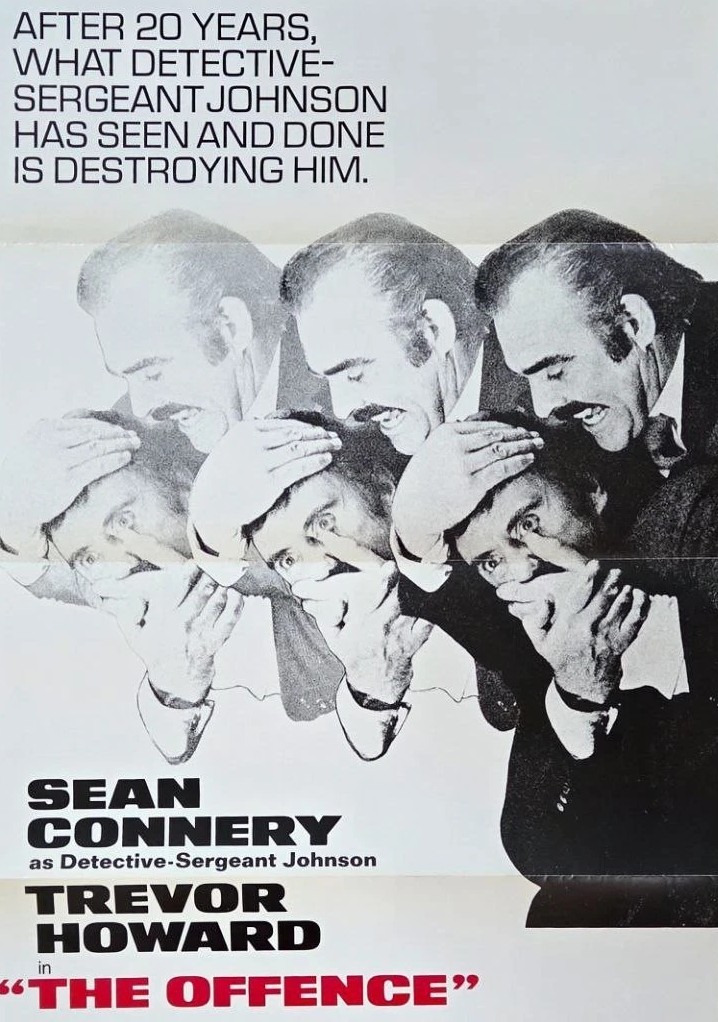
Surprised no one figured to put Sean Connery on the stage. I know he did some hoofing in his early days and no doubt lacking the classical training of a Richard Burton, Laurence Olivier or Peter O’Toole, the theater snobs might have objected. We know Connery had a commanding screen presence but generally there was never any need for him to be in long shot. Here, that’s exactly what director Sidney Lumet does, setting the camera out as if the set was a stage and allowing Connery to take charge in a theatrical fashion.
Lumet and Connery had worked before, on The Hill (1965) and The Anderson Tapes (1971), and they would work together again on Murder on the Orient Express (1974) and Family Business (1989), and generally when actors and directors align it’s because the director is looking for some specific quality the actor can supply, and mostly that’s kind of a shorthand, the presence of Denzel Washington, for example, in a Tony Scott picture gives you an idea just what to expect.
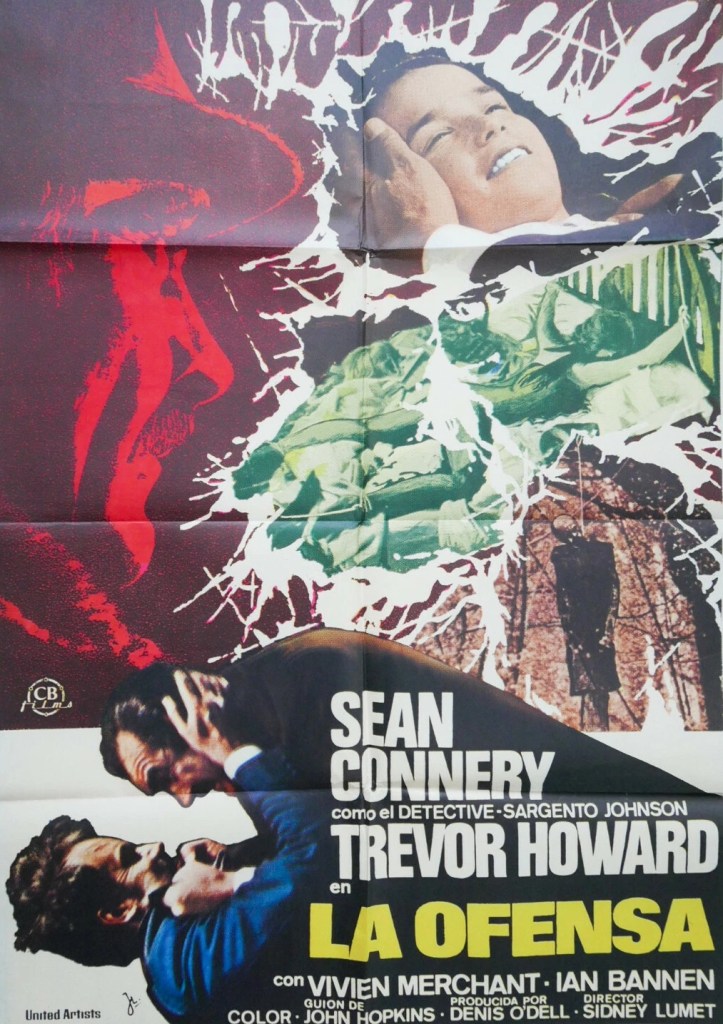
But on their first three pictures together, Lumet draws something different out of Connery every time. This was something of a vanity project for the actor, made for well under a million bucks, and presented the actor in a completely different light. It was a bold, not to say dangerous move, to move so far away from his screen persona.
Fans of Christopher Nolan will find much to admire. There’s a tricky structure, flashbacks and flash forwards intermingle, we begin at the end and work our way back to the beginning. As well as the audience trying to work out what’s going on, the main character, Johnson (Sean Connery), a detective sergeant, is also trying to work out what he’s doing, why he reacts the way he does and what do his actions (and words) mean about himself. So, tricky in an intriguing way.
There are some unusual aspects. For a start, the other cops try to prevent cop Johnson (Sean Connery) from getting too aggressive with suspect Baxter (Ian Bannen), accused of paedophilia – at a time when British cops were just as skillful as their Yank counterparts in getting prisoners to fall down stairs or accidentally bang their heads into doors.
There’s a slightly arthouse feel to Lumet’s direction. We begin with slo-mo, for goodness sake, and there’s a bright light that pops onto the screen every now and then.
Three stories develop in parallel. The first is that Johnson is close to burn-out, fleeting flashbacks fill us in on his memories of victims he may have failed. The second is that he’s so determined to get his man, so convinced of the suspect’s guilt, that he doesn’t stop to consider his innocence and becomes so infuriated at Baxter’s continued assertion of innocence that he turns to violence, the old adage of beating the truth out of the man. But the third and most disturbing element is that Johnson is closer to temptation than you’d think, skirting an uneasy border into fantasies of murder and rape.
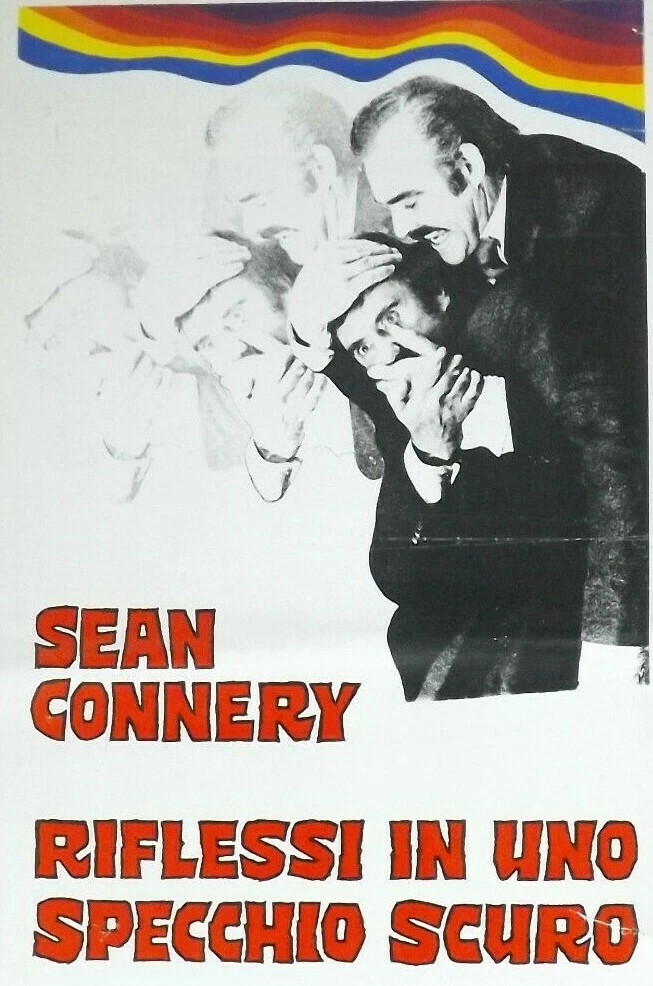
You might as well have shuttered the movie. Who was going to believe in Sean Connery as a rapist? Worse, who was going to watch him play one? It’s a wonder this saw the light of day at all even on a miniscule budget.
This rises or falls on Connery’s performance. We’ve got no problem – on past screen performance – on viewing the actor as a tough guy, even one who plays hard and fast with the rules. But it’s much harder for him to convince as a man on the verge of the mental breakdown and someone willing to accept he is harboring malevolent thoughts.
If you don’t believe in Connery it won’t work at all. So it’s entirely down to him that it works so well.
This must be the greatest amount of dialog he has ever spouted, huge monologues, intense arguments, and doesn’t look for a moment as if he’s struggling. His intensity is awesome. But for all that it relies on speechifying, some of the best moments involve no words. Johnson flinches at the touch of another man, even if it’s a gesture of sympathy.
The cast is superb. Ian Bannen (Lock Up Your Daughters, 1969) is superb, especially when the tables are turned and he gets to crow over his assailant’s weakness. The ever-choleric Trevor Howard (Von Ryan’s Express, 1965) is at his best when he doesn’t have to rein it in and he doesn’t here. Vivien Merchant (Alfred the Great, 1969) has a small role as the disillusioned childless wife.
Sidney Lumet has the good sense to give Connery the freedom of movement and expression he needs. Written by John Hopkins (Thunderball, 1965) from his play.
This tends to be overlooked because of the darkness into which the character delves but it’s well worth a look just to see what else Connery has to offer.

