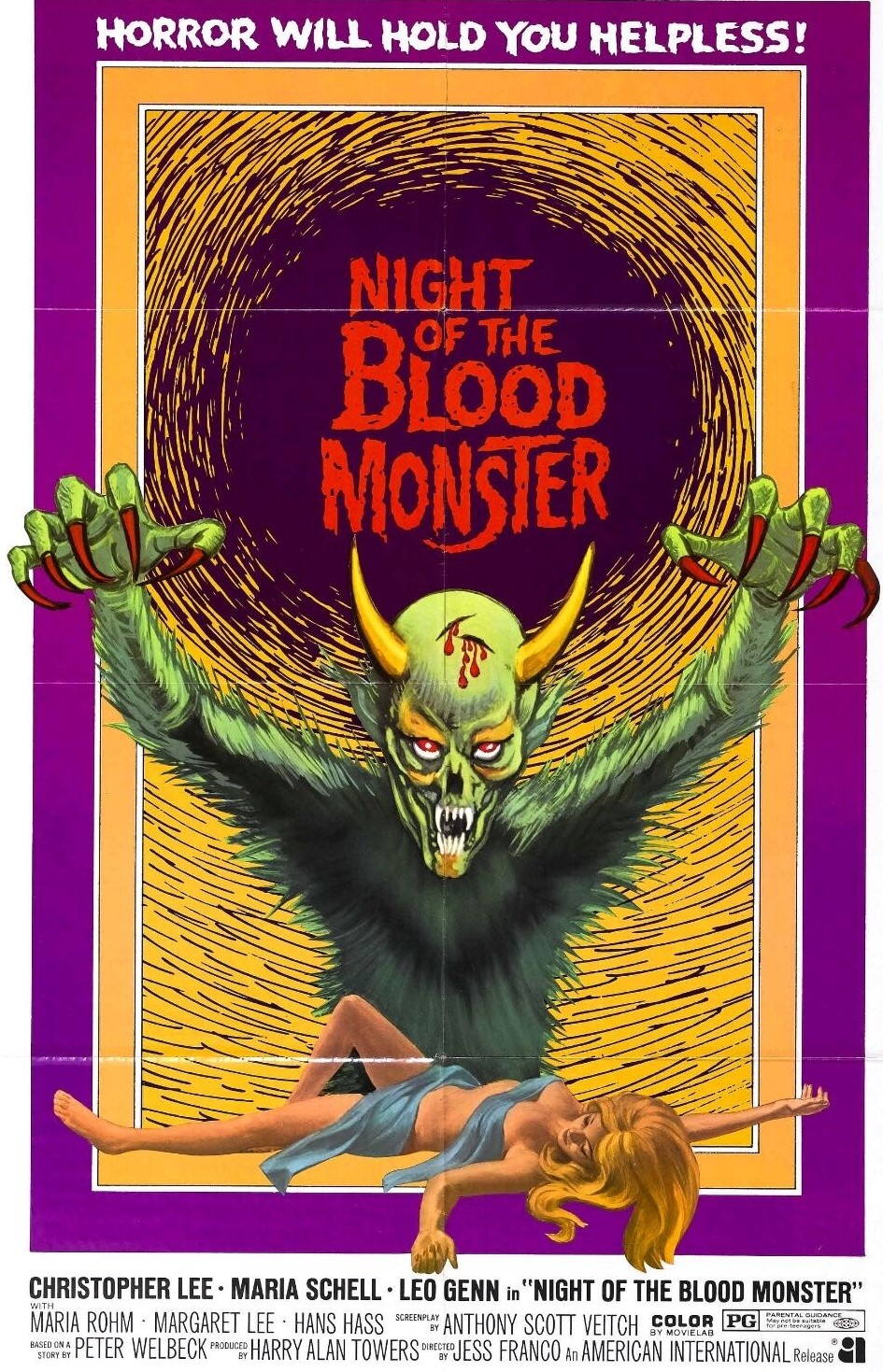
Handsomely mounted historical drama set in 17th century England on the brink of revolution meets Son of Witchfinder General. An uprising headed by the Duke of Monmouth in the south-west threatens to overthrow King James II. Involved in the plot are Harry Selton (Hans Hass), son of suspected agitator Lord Wessex (Leo Genn), whose beloved Mary Gray (Maria Rohm) is in the sights of Judge Jeffreys (Christopher Lee) after he has condemned her sister Alicia (Margaret Lee) to be burned as a witch.
The minute witchcraft enters the equation the narrative thrust is constantly interrupted by scenes of nudity, blood and torture, mostly involving women, but actually the film does attempt to cover the rebellion and its notorious aftermath when hundreds of rebels were executed, the “Bloody Assizes” with “Bloody Judge” Jeffreys to the fore. Conflating witchcraft with a genuine historical episode does not work very well and unlike Witchfinder General (1968), the murder of innocent women is more of a sideshow, despite the brutality involved, and you get the impression the story has been hijacked to accommodate supposed witch Mary in the interests of adding titillation.
Even as the story of the rebellion unfolds, the threat to the crown spelled out, the origins of the revolt mostly made clear (Monmouth being the illegitimate son of Charles II, and nephew to James II) although the sectarianism behind the rebellion is ignored, the narrative keeps jumping back to the witch element. Jeffreys connects the parallel narratives, hunting down rebels and witches, while handling most of the exposition. Given the budget, there’s a surprisingly good battle sequence, cavalry charging cannon. Given his later reputation, Jeffreys also reflects on the meaning of justice.
And while there are some camp moments – Jeffreys playing the organ while attired in grand robes, dancing girls sticking pins in his effigy – the twists and turns (Mary captured and rescued, captured again) are effective enough. Despite the copious nudity, there a couple of low-key love scenes and, oddly enough, a touching moment when Mary licks the blood from a dead prisoner. And for all the blood, that is effect rather than cause, nothing too gory.
But with the powerful all-mighty, and investigators able to plant evidence, and the innocent forced into immoral acts to save their loved ones, lawlessness is apparently next to godliness. But in reality the wicked did not get away with their crimes so various villains get their come-uppance.
Most peculiar sight is Christopher Lee in a love scene where he is not about to sink his incisors into a neck. Occasionally, the film bursts into German with English subtitles – as if various versions were pillaged to produce this copy – or has lines like “you turn me on.”
However, fans of Spanish cult director Jess Franco (The Girl from Rio) who expected something more along the lines of 99 Women (1969) and Venus in Furs (1969) may be disappointed that he spends so much time on the historical elements and less on the random T&A. You might not be surprised to learn of the involvement of ubiquitous producer Harry Alan Towers (Five Golden Dragons, 1967).
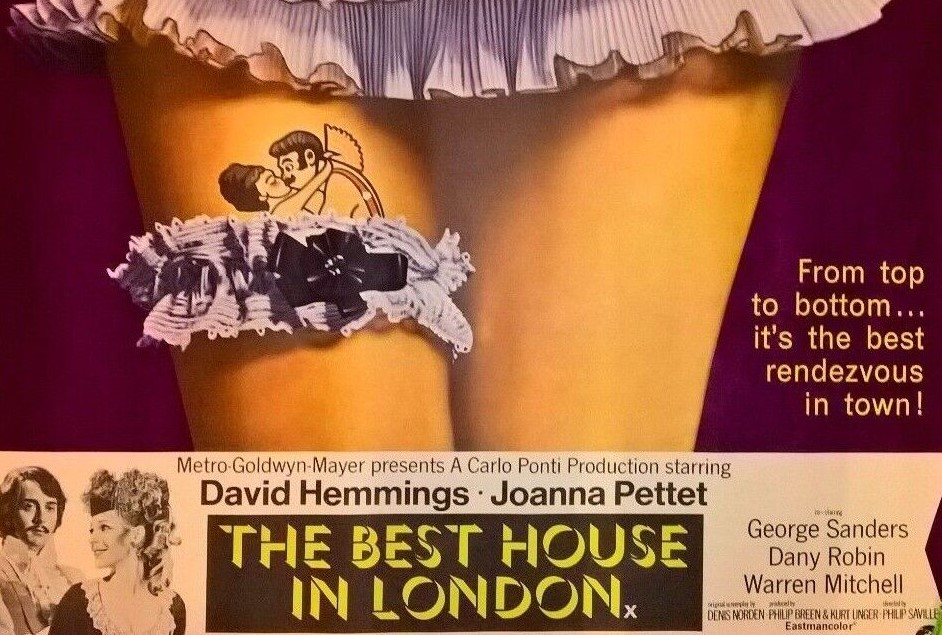
One of the worst – and certainly among the most repellent – films ever made. A hymn to misogyny under the guise of the not very difficult task of exposing Victorian hypocrisy, it labors under the bizarre thesis that all women want to be prostitutes. Screenwriter Denis Norden’s befuddled sense of history is awash with the same kind of contempt for audiences. Elizabeth Barrett (of Wimpole St fame) rubs shoulders with Lord Alfred Douglas (Oscar Wilde’s illicit lover) even though they lived half a century apart, the Chinese Opium Wars and The Indian Mutiny feature despite being separated by 15 years.
Sex workers had proved the basis for many good (and occasionally excellent) pictures in the 1960s ranging from Butterfield 8, Never on Sunday, Irma la Douce and Go Naked in the World at the start of the decade to Midnight Cowboy at its end, but these all featured well-rounded characters facing understandable dilemmas. But here the cynical and demeaning plot – more Carry On Up the Brothel than political satire – makes you wonder how this concept was perceived as either plausible or an acceptable subject for comedy
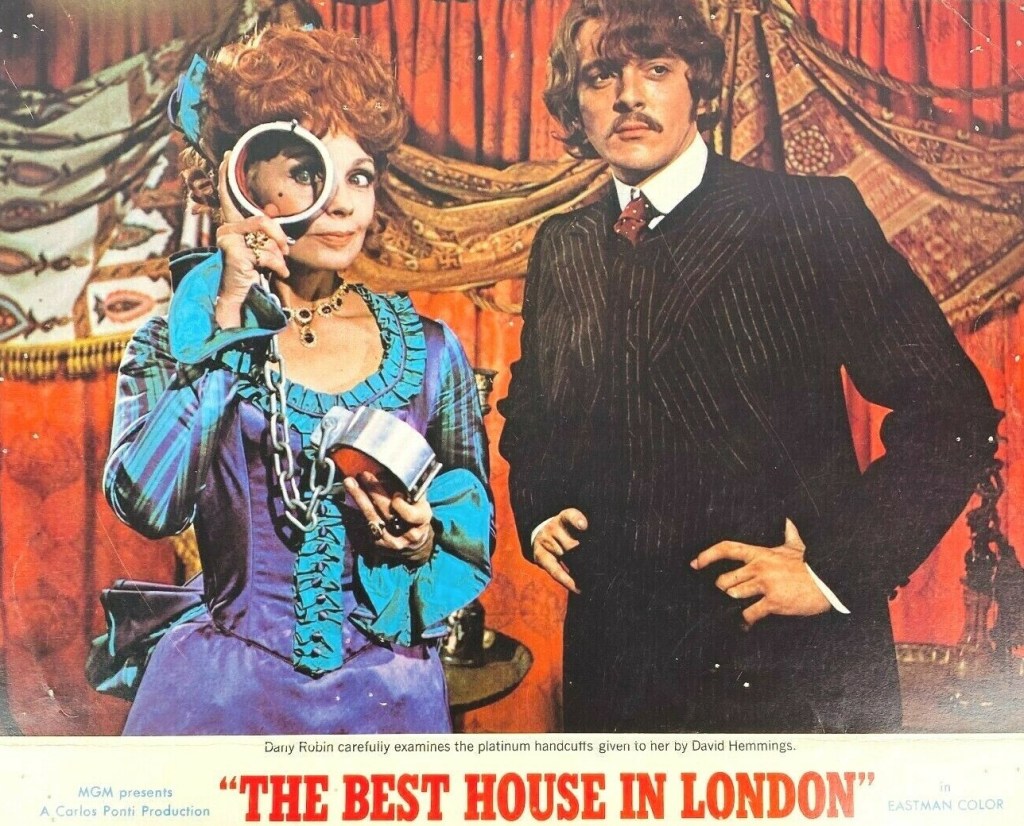
The monocle joke. Dany Robin sports the manacles her idiotic girls were supposed to wear rather the monocles they did wear.
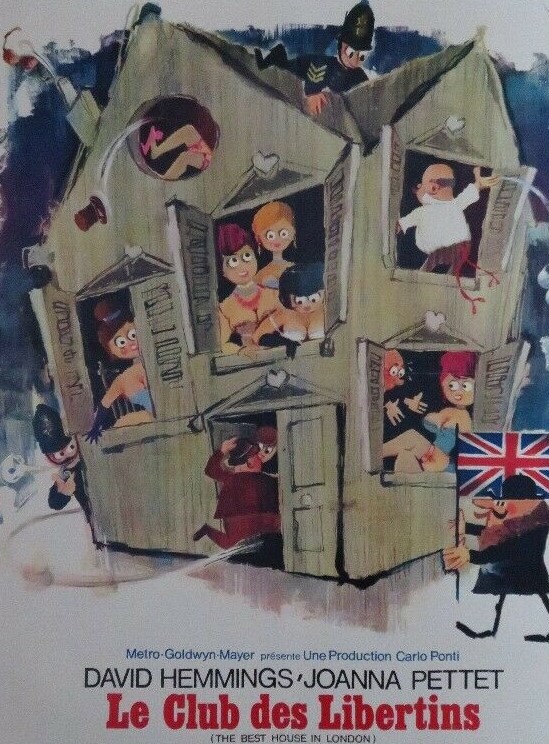
Feminist philanthropist Josephine Pacefoot (Joanna Pettet) – a character based on the real-life campaigner Josephine Butler – has set up the Social Purity League to rescue fallen women. Walter Leybourne (David Hemmings) is hired as a publicist to bring the issues raised to a wider audience. When Josephine inherits the fortune of Uncle Francis (George Sanders) the pair come up against the nefarious Benjamin Oakes (also played by Hemmings), her cousin and his half-brother, who has purloined his uncle’s mansion in Belgravia as the premises for London’s first brothel – The Libertine Club. This venture is backed by the Home Secretary (John Bird) as a way of getting streetwalkers away from upmarket shopping streets where their presence discourages wealthy females. Josephine also has to deal with a caricatured “evil” Chinaman (Wolfe Morris) through her uncle’s investment in opium. There’s also for no particular reason apoplectic airship inventor Count Pandolfo (Warren Mitchell).
All the women rescued from the oldest profession by Josephine are soon recruited by Oakes and a good chunk of the middle section of the movie involves various excuses to give the viewers intimate glimpses of what goes on in the brothel, involving an abundance of nudity. Oakes also aims to seduce Josephine while the shy Walter struggles to entice her into romance.
Excepting Josephine and Oakes’ mistress Babette (Dany Robin), the women are uniformly stupid. The story begins with Oakes’ duping a woman in a hot air balloon into removing her clothes on the grounds that it was the only way to reduce height enough to land. And it does not get any better. Women supposedly forced onto the streets after bad experiences with men turn out to be the seducers. Walter has the devil’s own job getting any of the girls to agree they had been raped. Walter, hoping to sell a story to The Times, is no less crass: “I can get five columns for a good rape.” Flora (Carol Friday), rescued much to her displeasure, is “gagging” for it. And there’s just an awful scene where a young girl sings about her “pussy” which even in the 1960s surely raised adverse comment.
The humor is largely of the sniggering variety. The brothel girls wear monocles instead of manacles, the only game on display in the Card Room is strip poker, and naturally there is a peeping tom, lawyer Sylvester (Willie Rushton).
As if to display his erudition, but without raising the laughter quotient, Norden chucks in literary cameos by the score – Charles Dickens (Arnold Diamond), Alfred Lord Tennyson (Hugh Burden), the aforementioned Elizabeth Barrett (Suzanne Hunt) and Lord Alfred Douglas (George Reynolds), Sherlock Holmes (Peter Jeffrey) and Dr Watson (Thorley Walters), plus explorer David Livingstone (Neil Arden) and department store entrepreneurs Fortnum (Arthur Howard) and Mason (Clement Freud).
That the movie actually gets one star is thanks to a number of excellent visual jokes: one scene of Uncle Francis defying the mutineers by raising the Union Jack cuts to the blood-splattered flag decorating his coffin; Sylvester frustrated at the keyhole but still hearing the moans of seducer-in-chief Oakes is followed by the sight of the wannabe lover struggling to get out of his bonds, having been attacked by Chinamen.
There’s not much difference, beyond hair color, between the characters essayed by David Hemmings (Alfred the Great, 1969). Both are one-dimensional, the pop-eyed virgin astonished by the goings-on at the brothel, the suave villain who might as well be twirling his moustache for all the depth he brings to the role. Thankfully, Joanna Pettet (Blue, 1968) is at least believable though even she could not act her way out of scenes where she was suspended by the Chinaman above a vat of boiling acid.
George Sanders (Sumuru, Queen of Femina aka The Girl from Rio, 1969) has a ball as the hypocrite-in-chief who knows how to monetize vice while Dany Robin (Topaz, 1969) brings some finesse to an otherwise one-dimensional part. But everyone else is a cipher which is a shame given the talent on show – John Bird (A Dandy in Aspic, 1968), John Cleese (A Fish Called Wanda, 1988), Warren Mitchell (The Assassination Bureau, 1969), Bill Fraser (Masquerade, 1965) and Maurice Denham (Some Girls Do, 1969). Among the girls, you might spot Veronica Carlsen (Dracula Has Risen from the Grave, 1968) , Margaret Nolan (Goldfinger, 1964) and Rose Alba (Thunderball, 1965).
Director Philip Saville (Oedipus the King, 1968) should have known better and certainly made amends later in his career with among other projects BBC series Boys from the Blackstuff (1982). But Denis Norden (Buona Sera, Mrs Campbell, 1968) never wrote a more misguided piece in all his life.
For sure, a film like this is not going to do down well in these times but I was surprised how vilified it was on release, critics like Roger Ebert insulted by its endless attacks on women, the public no less hostile and it died a death at the box office.
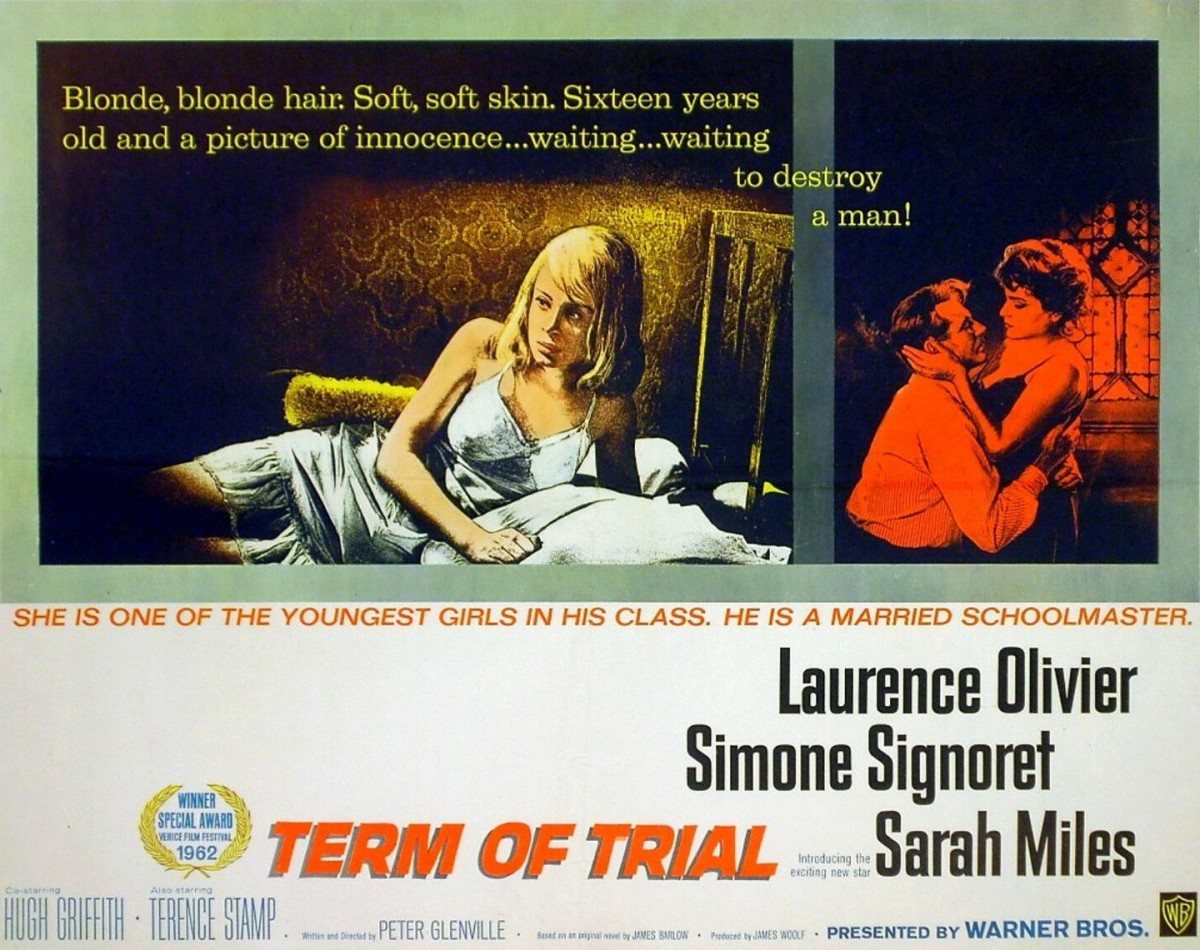
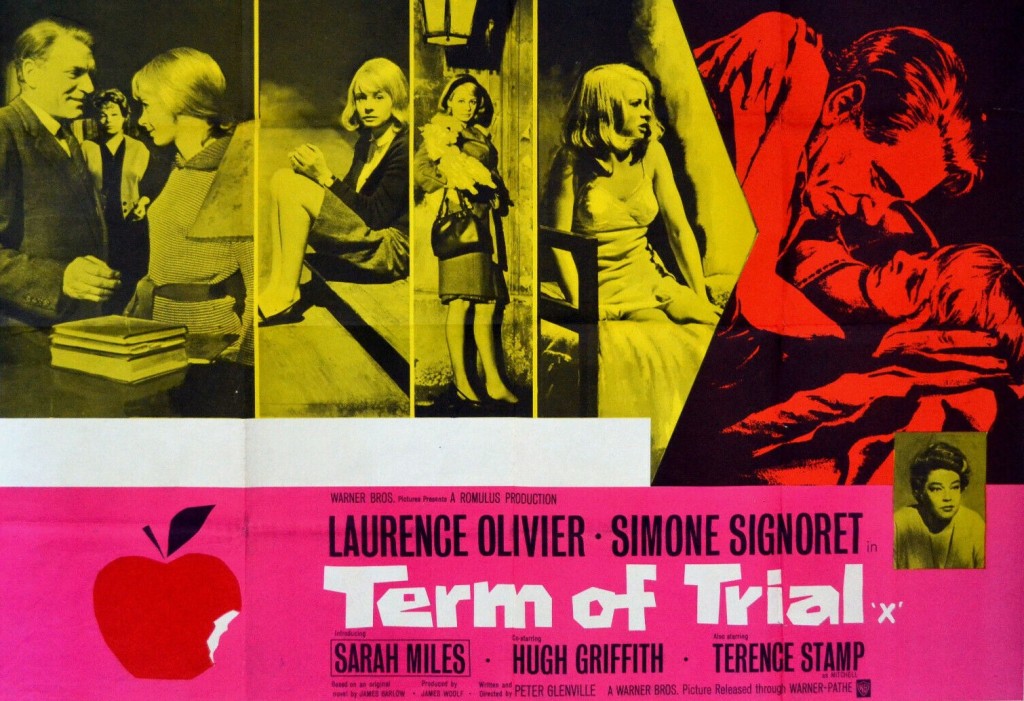
Notable for the debuts of Sarah Miles (Ryan’s Daughter, 1970) and Terence Stamp (The Collector, 1963) and an ending that even in those misogynistic times was wince-inducing. The halcyon era of dull English schoolteachers being celebrated (Goodbye, Mr Chips, 1939) or finding redemption or even just managing to overcome pupil hostility (The Browning Version, 1951) were long gone, replaced by a more realistic view of the casual warfare endemic in education establishments, not quite in The Blackboard Jungle (1956) vein but running it close, with bullying, sexual abuse and ridicule running riot.
Self-pitying Graham Weir (Laurence Olivier) has failed to achieve his ambitions in part due to alcoholism, in part to antipathy to his conscientious objection during World War Two. And although he has a sexy French wife Anna (Simone Signoret) in the days when any Frenchwoman was deemed a goddess, she is embittered that the future he promised has not materialized. Like To Sir, with Love (1967) his classroom is filled with no-hopers so that he responds to the meek and innocent wishing for educational betterment.
Weir’s only defence against endless indignity is a stiff upper lip and slugs of whisky. His lack of character contrasts with a young lad who takes revenge against constantly being chucked out of his house by his mother’s lover (Derren Nesbitt) by blowing up the man’s sports car.
Spanning the twin cultures of religion and the razor, one falling out of favor, the other holding violent sway, opportunity to rise above kitchen-sink England lies with the self-confident such as thug Mitchell (Terence Stamp) who smokes in class, gives the teachers lip, takes photographs of girls in their underwear in the toilets, physically threatens classmates and when his target is bigger gets older men to give him a good thumping.
A somewhat unlikely development is an end-of-term trip to Paris where the infatuated Shirley (Sarah Miles), who the good-hearted Weir has been giving free private tuition, ends up in the teacher’s bedroom and later accuses him of abuse. The impending court case and threat of imprisonment scupper Weir’s chances of promotion, make him consider suicide, and Anna to leave him.
The court scenes allow a number of famous character actors a moment of acting glory. Laurence Olivier (Bunny Lake Is Missing, 1965) must in part have been attracted to the role by a terrific court monologue. The movie is very downbeat in a country universally known never to enjoy an ounce of sunshine justifying the black-and-white movie rendition. If there is liveliness in the streets, cinemas, shops, it never translates into any of the main adult characters, all determined to uphold ancient values and endure constricted lives.
Exploiting audience expectation for verbal fireworks, the tension in Laurence Olivier’s finely judged performance comes from his untypical, unshowy delivery. You can almost hear him grinding his teeth. Simone Signoret (The Sleeping Car Murder, 1965) also acts against the grain, battening down her inherent sexuality, and her very presence speaks of lost hope, the fact that she was once attracted to Weir indicating he was once a very different prospect.
Sarah Miles excels as the wannabe seducer, that hesitant voice that would become her hallmark, struggling here to turn innocence into lure, expressing her adoration in heart-breaking simplicity, and yet aware that to catch Weir would require more than just the submission a guy like Mitchell requires. While hers is a stunning debut, I’m at a loss to see what marked out Terence Stamp’s typical surly teenager for speedier stardom.
Oscar-winner Hugh Griffiths (The Counterfeit Traitor, 1962) is the pick of the supporting roles. A remarkable scene-stealer, a shift of his head, a flicker of his eyelashes is all he needs while sitting in the background to attract the camera from another character in the foreground. Look out for Barbara Ferris (Interlude, 1968), Derren Nesbit (Where Eagles Dare, 1968), Allan Cuthbertson (The 7th Dawn, 1964), Roland Culver (Thunderball, 1965) and Thora Hird (television’s Last of the Summer Wine, 1986-2003).
Surprisingly un-stagey direction from Peter Glenville (Becket, 1964) who was far better known as a theater director in London and Broadway. Probably in those days if you were setting a movie outside sophisticated London you had to present a gloomy version of Britain so you can’t really blame him for that and Olivier was hardly a major box office attraction so a budget trimmed of color would be a requisite. Although the older characters display grim determination, the younger ones have not had the spirit knocked out of them in the Saturday Night and SundayMorning (1960) manner and the location shots reveal a buzzy atmosphere.
Glenville also wrote the screenplay based on the bestseller by James Barlow.
Given the severity of the crime involved, you leave Frank Perry’s coming-of-age-drama wondering what happened to the four principals. Did the aggressive three young demi-gods of a golden age go on to pursue similar acts of cruelty? While one of them might show remorse, or at least suffer from guilt, of the other two I have my doubts. They would find ways to blame the injured party. And what about the victim? Would she have the courage to report the crime, or suffer in shame for decades.
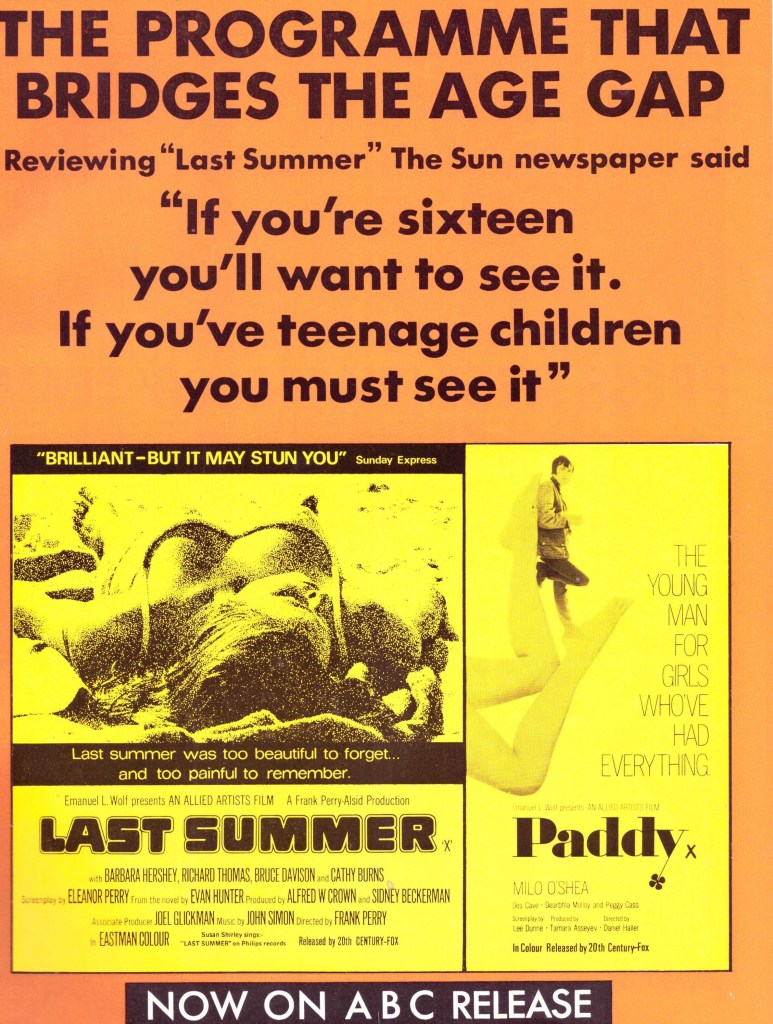
It’s odd how time changes entirely the shape of a movie. In its day this was seen as a bold exposition of frank adventure by teenagers seeking their first experiences of growing up and experimenting with sex and drugs (pilfered from a parental stash). Although there is little focus on dysfunctionality, both Sandy (Barbara Hershey) and Rhoda (Cathy Burns) are missing a parent, the former’s father running off with another woman, the latter’s mother drowned by stupid misadventure. Both have been abused, unable to prevent the wandering hands of males. All are vulnerable, if only by youth.
Of the boys, Dan (Bruce Davison) is the more confident, Peter (Richard Thomas), while easily swayed, the gentler of the two. Dan merely seeks his first taste of sex, Peter the more likely to need love as well. Sandy is sexually precocious, somewhat on the exhibitionist side, peeling off her bikini top with apparently at times no idea of the effect it will have on the boys, at other times clearly uncomfortable with the notion that the guys might have nothing else on their minds but staring at her breasts. But she is the one who wants to continue watching a gay couple cavorting on the beach while Dan is embarrassed. Sometimes the frank sexuality is rite-of-passage stuff, other times it is distinctly creepy. In the cinema both men grope her breasts. She claims to have been excited by the experience, but you can’t help thinking at least one of the men should have shown restraint, not treating her as if she was some kind of sex toy.
The movie begins on a clearer note. The guys come across Sandy nursing a wounded gull and perhaps entranced by her good looks help her remove a hook from the bird’s throat, provide convalescence and eventually help the bird recover the confidence to fly again. It’s a cosy trio, but edgy, too, Sandy allowing them considerable latitude. But, of course, the guys do the same to her. When she bludgeons the bird to death because it bit her (“the ungrateful bastard”), the pair, initially shocked, are not shocked enough to reject her, afflicted by unassailable male logic, the kind that drove film noir, that maintained a beautiful woman could not have a black heart.
Separated from the other two, Peter displays a gentler side, teaching the shy Rhoda to swim, kissing her in far more considerate fashion than the boys treat Sandy. But, effectively, she is a pet, and it’s only a matter of time before the unsavory aspect of Sandy’s character breaks out. After setting Rhoda up on a date, the trio do everything they can to spoil it, angry at the poor girl for not getting the “joke.”
Worse is to follow. Date-rape we’d call it today. Retreating to the cool forest, Sandy taunts Rhoda by removing her bikini top. When the horrified Rhoda refuses to do the same, Sandy attacks her, holding her down along with Peter while Dan rapes her. That’s where the film ends, no consequences, no repercussion. Back in the day it was a shock ending, an act of violence to mar an otherwise relatively innocent summer. After the deed is done, the camera pulls back into an aerial shot to observe the guilty trio walking back to the beach, but without drawing conclusion or offering moral judgement. It’s hard to know what to make of the ending. These days, of course, we’d be appalled. But back then it didn’t appear to appall, certainly not drawing the outrage that accompanied similar scenes in The Straw Dogs (1971) or A Clockwork Orange (1971) perhaps because the perpetrators were so attractive and it was, after all, a coming-of-age picture, as if such things could be expected.
Roger Ebert, writing in the Chicago Sun-Times, for example, judged that the conclusion “is not really important to the greatness of the movie.” Andrew Sarris of Village Voice noted that “Perry retreats from the carnal carnage” to end with a shot that “prefers symbolic evocation to psychological exploration.” In other words adolescence is fraught with risk and Rhoda is just collateral damage.
Certainly the acting is uniformly excellent for such inexperienced actors, coping with many changes in dramatic focus, from early exhilaration through growing pains to violence. Barbara Hershey (Heaven with a Gun, 1969) would go on to become a major star. Amazing to realise that Bruce Davison (Willard, 1971) and Cathy Burns, Oscar-nominated for her role, were making their movie debuts and for Hershey and Richard Thomas (Winning, 1969) their sophomore outings.
Director Frank Perry (The Swimmer, 1968) had a special affinity with the young as he had proved with David and Lisa (1962) and at times the whole affair had an improvised free-wheeling style. Eleanor Perry (David and Lisa) wrote the screenplay based on the novel by Evan Hunter (The Birds, 1963).
This is very hard to find, it turns out, so Ebay might be your best bet.
My thanks to one of my readers, Mike, for digging up this story of the disappearance of Catherine Burns from the movie business.
From attending to director Michael Winner’s parking meter and falling foul of the British film censor to interviewing David Lean at the National Film Theatre in London, Tony Sloman’s autobiography casts a fascinating light on the British film industry. A marvellous string of anecdotes relating to Othello (1965), One Million Years B.C. (1966), Chitty, Chitty, Bang, Bang (1968), Wonderwall (1968), De Sade (1969) and cult television series The Prisoner (1968) are augmented by insights into the less well-known aspects of how movies are made.
Most commonly associated with the sound and editing departments, he also directed two British sex films Sweet and Sexy (1971) and Not Tonight, Darling (1971). In addition, he is also a walking encyclopaedia on film – he later lectured on the subject – and a riveting part of the book involves how he fell in love with the movies. I’ve read countless biographies of actors and directors who made it big in pictures and rarely, if ever, do their stories focus on their love of the medium, of the films they saw when growing up and the experiences that entailed. So the first part of this book plays off to the soundtrack of inveterate filmgoing in the 1950s at his local cinema in London and then up to the West End, one expedition to view a revival of Gone with the Wind ending up instead with the saucier Femmes de Paris (1953).
Getting into the business was very difficult for a tailor’s son from Streatham and, having determined to become a film editor, even attending evening film classes failed to open any doors until he responded to a newspaper advert and became a dispatch boy and soon after an editor for a small suite of cutting rooms in Soho in the same building as Private Eye magazine, thus beginning a long apprenticeship in this particular discipline, working in all the British studios from biggies like Shepperton, Elstree and Pinewood to smaller outfits such as Merton Park.
Except for this book I would be unaware of the how menial are some of the tasks essential for a film to be made. One of his earliest jobs was to attend the screening of rushes and “tick the selected takes in the rushes notebook…and then after numbering them break them out in script order for the editor to assemble the next day in the cutting copy.” He learned not to count frames or measure length when dictating a particular cut but to put himself in the position of the character and the audience, how much of what they see needs to be shown to register.
One of the refreshing elements of this biography is that the author is happy to own up to professional and personal mistakes. As he didn’t drive he was unable to synchronise car engine sounds in the correct manner. He got into trouble for labelling cans containing film in pen and not stencil. As a result of personal mishap, he learned the hard way never to film anything without a continuity person present.
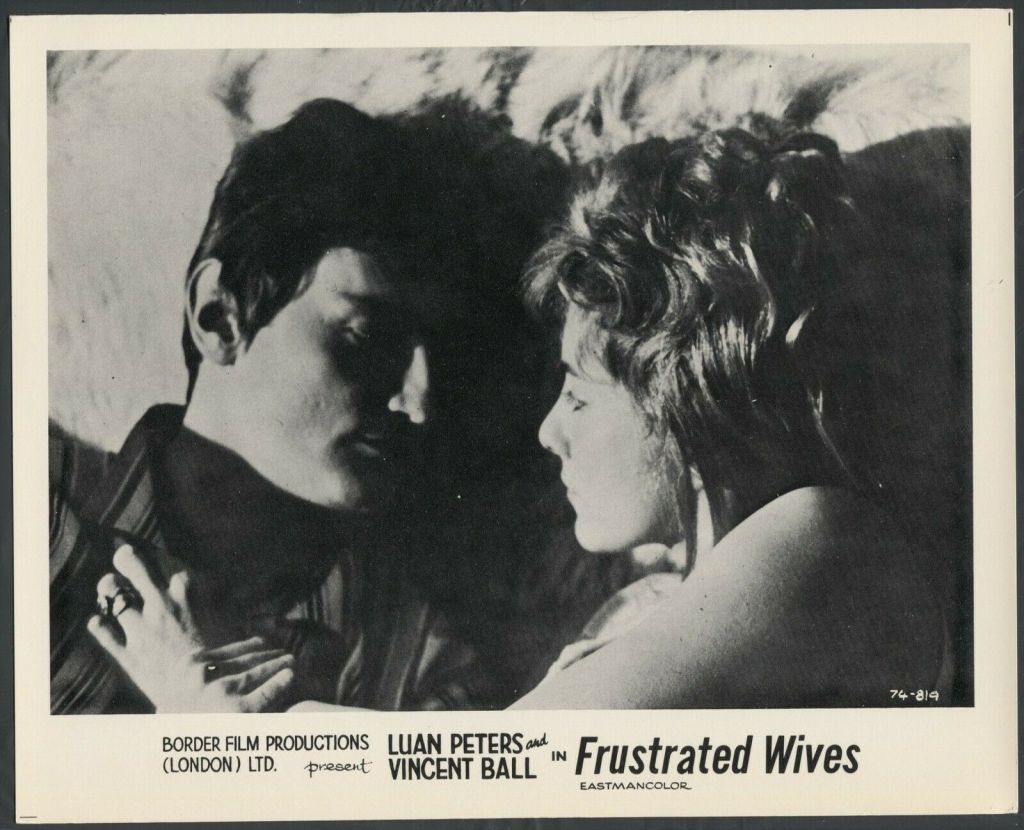
His second directorial effort“Not Tonight Darling” was renamed “Frustrated Wives.”
And he has a fan’s delight at meeting stars in the flesh, walking down the street with a David Niven determined to be swamped by fans, recounting that Maximilian Schell is shorter than expected, James Mason taller. He reveals that Dana Andrews’ favorite of his own films is not a Hollywood classic like Laura (1944) or The Best Years of Our Lives (1946) but the lesser known Three Hours to Kill (1954) because when the producer ran out of cash he paid the actor in Mexican artefacts that came to be worth a quarter of a million dollars. Former silent film star Bessie Love tried to convert him to Christian Science when the author would have rather she reminisced about her days in early Hollywood. Eating in a restaurant in Cannes he watched at another table Federico Fellini and Luchino Visconti share a bowl of bouillabaisse and later bumped (literally) into Graham Greene and encountered in the hills working as barman a former camera operator for Jean Renoir.
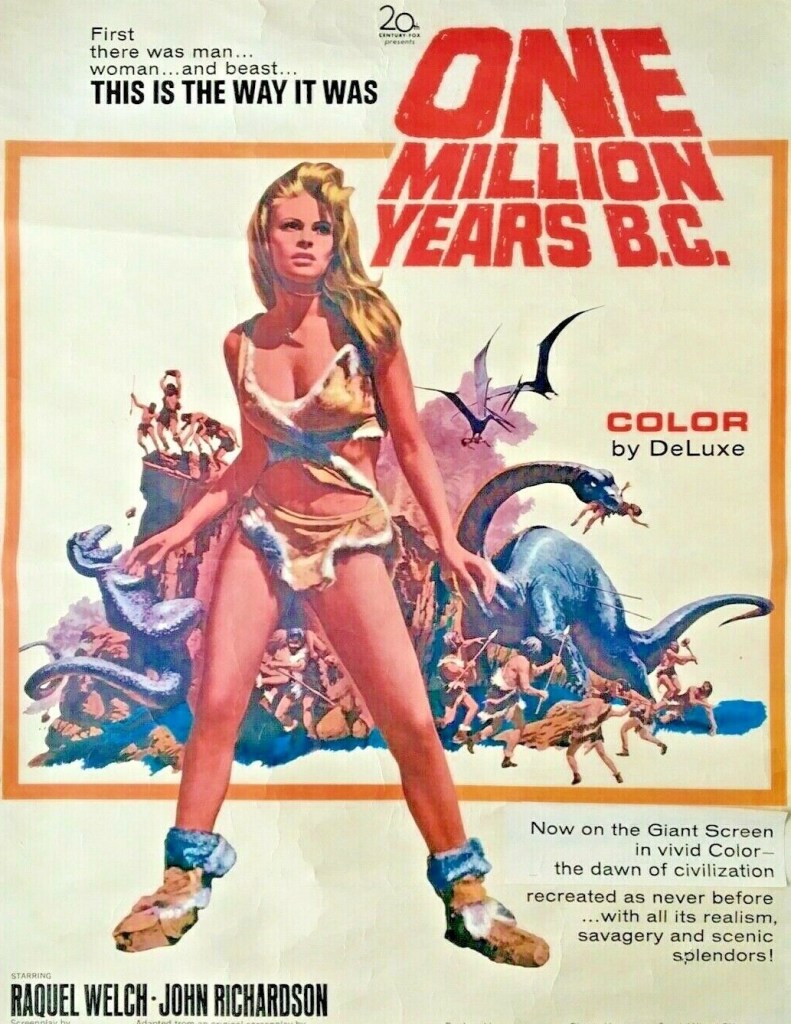
He met the entire Dirty Dozen at lunch in the studio canteen, heard Maggie Smith swear and enjoyed an up-close-and-personal encounter with Raquel Welch over the moviola “pressing closer to me in that tiniest of bikinis.” Working with Ray Harryhausen on One Million Years B.C. (1966) “my main function with him was to be his own personal soundstage at Elstree with the moviola…to see where his newly-shot material would go into the sequence as cut…Ray needed to see them over and over and do frame counts before shooting his effects.” On the same film he was responsible for writing “dialogue” – in other words” a series of grunts and sounds that would match up with the actor’s mouth movement.”
There are other fascinating nuggets. He played an unsung part in the success of The Prisoner, coming up with the ideal piece for the beginning of the Arrival episode – the “Radetzky March.” He had an unusual job title, too, “Film Librarian,” which consisted of getting all the back projections which had already been filmed ready for the actual set. Supplying library material as and when, shooting inserts, and matching new film to location work. “The secret of finding music for mute material was not merely finding music that was appropriate but to find music that would positively enhance the image to which it would be matched.”
There are other fascinating nuggets. Donald Sutherland was revoiced in his role in Oedipus the King (1968) but after the success of Mash (1970) his original voice was put back in. The first screening of Wonderwall (1968) was for the Beatles because George Harrison had expressed an interest in writing the score. In the course of this when his Indian-style slippers were ruined by rain someone on the set whipped up for him a “customized pair of cardboard shoes made from Technicolor delivery boxes.” Composer John Barry was set to co-finance a film called The Jam but the screenplay was shown to Jean-Luc Godard who promptly went out an made Weekend (1967).
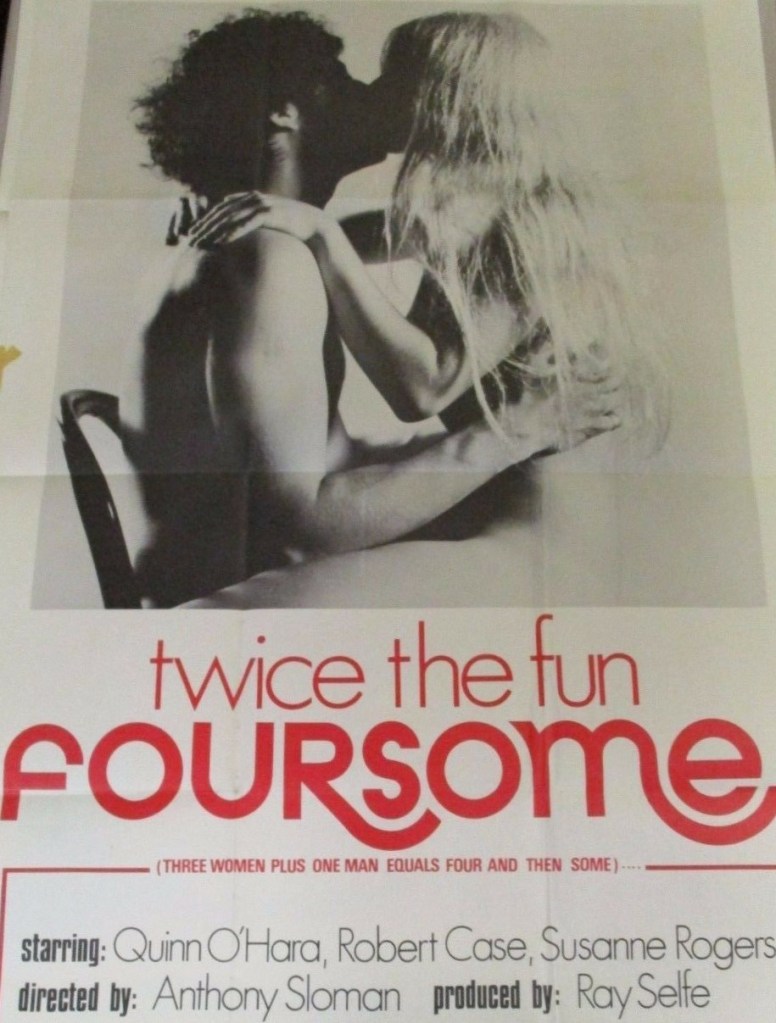
“Sweet and Sexy” was renamed “Foursome” for the U.S. market, even though no such activity takes place. At one point Scottish actress Quinn O’Hara had been engaged to U.S. pop star Fabian.
He shared a flat with Michael Billington (Alfred the Great, 1968) – who holds the record for most auditions for the role of James Bond. Billington was a lover of Liza Minelli, Barbara Broccoli and Quinn O’Hara and was slated to direct Sloman’s first film but when he was offered a starring role in the UFO series (1970-1971), Sloman took over the directorial reins and recruited as leading man Billington’s UFO stand-in Robert Case. Quinn O’Hara (Cry of the Banshee, 1970), Billington’s girlfriend, had the female lead. It began life with the relatively harmless title of City Suite.
But when it was funded by Miracle Films, the title changed to City, Sweet and Sexy and finally plain old Sweet and Sexy (though it goes by the name of Foursome on imdb). What the Americans called “sexploitation.” The initial budget only ran to £15,000 but was increased to £20,000. But when submitted to the British Board of Films Censors in October 1970, it was refused a certificate unless 40 minutes were cut. After nearly 18 months of wrangling it was finally granted an X-certificate – minus 21 offensive minutes – and the 69-minute picture finally opened at the Cameo Royal in London in March 1972.
Sloman had better luck with his second feature, Not Tonight Darling (1971) – also known as Frustrated Wives. Luan Peters (Lust for a Vampire, 1971) came on board as star and Sloman had the good luck to snare pop band Thunderclap Newman, who had enjoyed a big hit with “Something in the Air”, for the score. There were also appearances by Jason Twelvetrees, who had also been in Sweet and Sexy, Fiona Richmond (Let’s Get Laid, 1978) and James Hayter (A Challenge for Robin Hood, 1967).
The book ends in the early 1970s and I can only hope Tony Sloman is hard at work on a second volume as his memoirs are a welcome antidote to the raft of books about big stars which are often far less entertaining. An excellent read, especially if you are interested in the behind-the-scenes aspects of movie making.
EXTRA: This is not in the book but I did a bit of digging on my own account to see if any of his movies were ever screened in the U.S. I found out, as noted in the article above, that “Sweet and Sexy” was released in the U.S. as “Foursome”. Despite the concerns of the British film censor, it was not that out of line otherwise it would not have received an “R” rating when it could easily have been rated “X.” I couldn’t find any sign of a review, either in “Variety” or “Box Office,” the two main trade magazines. But I did find some evidence that it had been screened in some big cities.
It was distributed by AIP in the U.S, and C-P in Canada. “Variety” and “Box Office” had different methods of measuring revenue. The former simply listed the gross. But the latter employed a different approach. It related the receipts for each film according to the average weekly take of a particular cinema. This was in some senses a better idea. Strong figures might not necessarily mean a good result if that cinema was used to movies knocking up big numbers.
In January 1972 “Foursome”, playing solo, had a “sexy” opening week, according to “Variety,” at the 1,200-seat Midtown in Philadelphia (tickets priced at $1.50-$3.00) with $14,000 (equivalent to $96,000 today) followed by s second week of $9,500. The same month, supported by “Freedom to Love” (1969), a documentary about sexual behavior, “Foursome” ran for three weeks at the 609-seat World (tickets $1.25) in Chicago. The first and third weeks both accounted for $3,800 but the second week was tops with $4,000. In April there was a “lusty” (presumably intended ironically) $3,100 at the 2,809-seat Loews Downtown (tickets $2.00-$2.50) in Dayton where it played solo.
In August at the 676-seat Suburban World (tickets $2.25) in Minneapolis it scored a “fair” $4,000, again the only film on the program. In December it turned up at the 250-seat Playhouse (tickets $2.50) in Washington, as the supporting feature this time to “Together” (1971) starring Marilyn Chambers and directed by Sean S. Cunningham, later responsible for the first “Friday the 13th ” (1980). The outcome was a “sharp” $4,500. By comparing seating capacity and ticket prices you can get a better idea of the film performed.
Box Office magazine marked performance on a percentage basis against a basic mark of 100, which represented an average week. According to this magazine, the movie was also to be found in Hartford where it scored 175 (i.e. almost double the average week’s takings), New Haven (175), Boston (150) and Buffalo (100). The takings in Minneapolis were no great shakes according to this method of analyzing results, reaching only 100 on the magazine’s measuring system.
Box Office also noted a couple of outings in Canada, where it played as the supporting feature to “Love Me Like I Do” (1970) starring Dyanne Thorne, later immortalised as “Ilsa”. However, Canada appeared not to subscribe to the percentage system. Instead, in Winnipeg at the Downtown in March 1972 it was judged “very good” while in Toronto at the Coronet in November 1972 it was judged “fair.”
SOURCES: “Variety” – January 12, 1972, p8; January 26, 1972, p10; April 5, 1972, p14; August 30, 1970, p14; December 6, 1972; p14. “Box Office” – September 11, 1972, pB4; “Box Office Barometer,” September 18, 1972 pB4; November 6, 1972, p16; November 13, 1972, pK2; March 5, 1973, pK3.
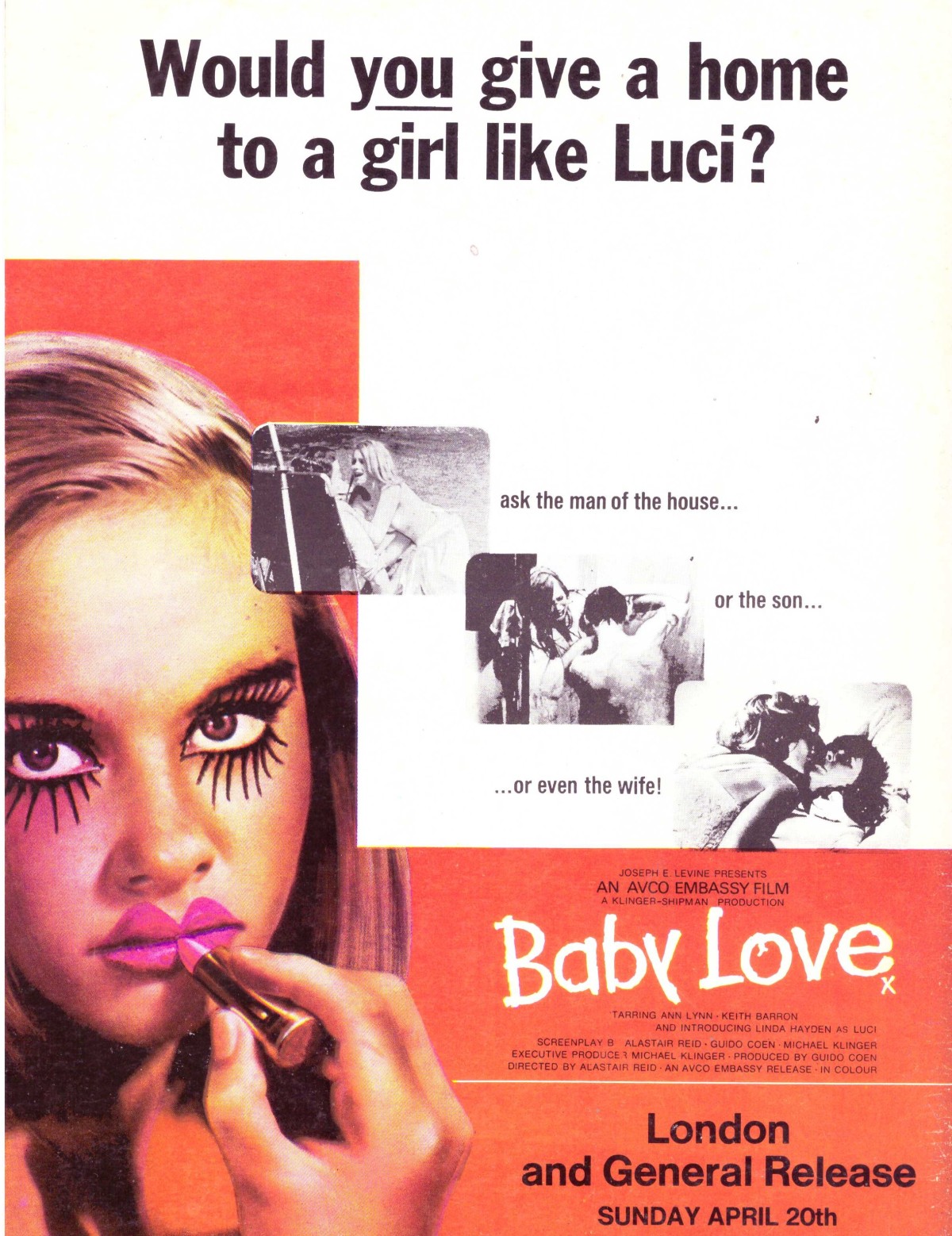
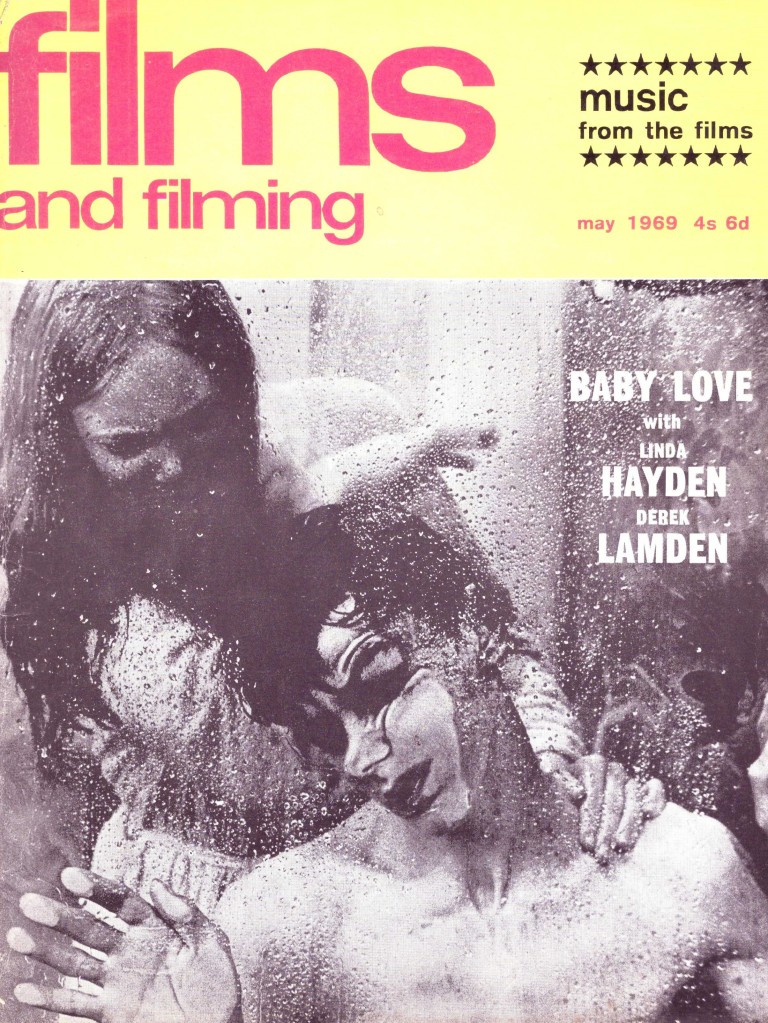
Disturbing tale about grooming marking the debut of Linda Hayden could not more accurately reflect changes in public perception from over half a century ago. What had originally seemed a movie about a young woman wreaking havoc on a middle-class family is now more easily recognized as a more sympathetic study of a young girl denied familial attention attempting to find a stable and welcoming home.
After the suicide of her mother (Diana Dors) Luci (Linda Hayden) is taken in by Robert (Keith Barron), a highly successful doctor and ex-lover of her mother, and his wife Amy (Ann Lynn). His marriage to sophisticated housewife Amy is distinctly rocky. They live in a fabulous three-storey house on the bank of the Thames with son Nick (Derek Lamden), a typical teenager the same age as Luci but who is sexually naive, confused and hypersensitive. Amy comforts Luci when the young girl has terrible nightmares and ends up sleeping in the same bed until she realizes how inappropriate is such behavior.
Nick chances his arm with Luci but is continually rejected, not surprisingly since his approach is more than a tad creepy, spying on her in the bathroom, entering her bedroom when she is naked, leching after her in the garden. Robert is the only one to try and keep his distance and in the absence of her own father becomes the subject of a father fixation.
Conditioned to accept the advances of older men finds her in potentially unsavory situations in a cinema, a club, and with a friend of the couple (Dick Emery). That she apparently welcomes such attention reveals the depth of her grooming, not just forced to watch her mother make love, but, as suggested in a flashback, the mother complicit in not preventing her lovers making a play for her. If Luci appears sexually confident that only disguises her inner turmoil, a desperate need to be loved, lack of proper parenting and setting of boundaries and having chanced on a proper home determined to do whatever it takes to remain there.
It is actually Ann who is the disturbing element, eventually overcoming her own inhibitions and not only seducing the girl but telling her that if she wants to remain in the house she will need to twist Robert round her little finger. And the only way she knows how to do that is follow her mother’s example and exploit her sexuality. If Luci appears exploitative in the context of the family that is only because they are not privy – as is the audience – to the depth of her nightmares, the constantly reappearing image of her mother dead in the bath, her mother’s leering lovers. Even when she goes over-the-top with make-up or clothing there is an innocence to such behavior, little more than a young woman testing boundaries and trying to find her way. Any intelligent assessment of what is going on would clearly see the child as the victim.
The grandeur of her new potential home bears no comparison to the poky working-class council house she occupied up north. For a child with such an impoverished upbringing, she is fairly grounded. She is not the wild child you might expect from her upbringing. She fits well into family life, happy to listen to classical music, and to Ann’s astonishment can actually cook breakfast and knows how to lay a table, skills her spoiled son patently lacks.
Considerable efforts are made to make each character more rounded. Robert hates his wife’s sophisticated parties and is an insomniac judging from the stack of books on his bedside. The guilt he feels for abandoning Luci’s mother, apparently his one true love, in favor of ambition, is exacerbated by Luci’s presence that reminds him not only of a path wrongly chosen but of what he has lost, that relationship ripped asunder when abortion entered the frame.
Ann clearly needs to project success, expensive clothes and champagne the least of their lifestyle, and with little outlet for pent-up emotion and a need to mother settles on Luci as the object of, initially at last, her affection. Nick hides his cigarette ends in a matchbox, would accept Luci as just a friend, occasionally rising to the role of protector, delighted to be seen in the company of a beautiful girl. Teenage fantasy in other words but with an edge of entitlement that goes too far.
In her debut Linda Hayden (Taste the Blood of Dracula, 1970) is superb in an extremely difficult role and it was a shame that it was the sexual part of her portrayal that made its biggest impact on future movie producers rather than the sensitivity of her performance, the look in her eyes when she is shown her bedroom for the first time is amazing. Also making a movie debut Keith Barron (Nothing But the Night, 1973) lacks the mellifluous tones that were later his hallmark and his performance as unloved husband and guilty ex-lover is very well observed.
Ann Lynn (I’ll Never Forget Whatsisname, 1967) has the most challenging role of a woman tortured by desire she has until now kept hidden or under control. Derek Lamden did not make another movie. Diana Dors (Hammerhead, 1968) has a fleeting role.
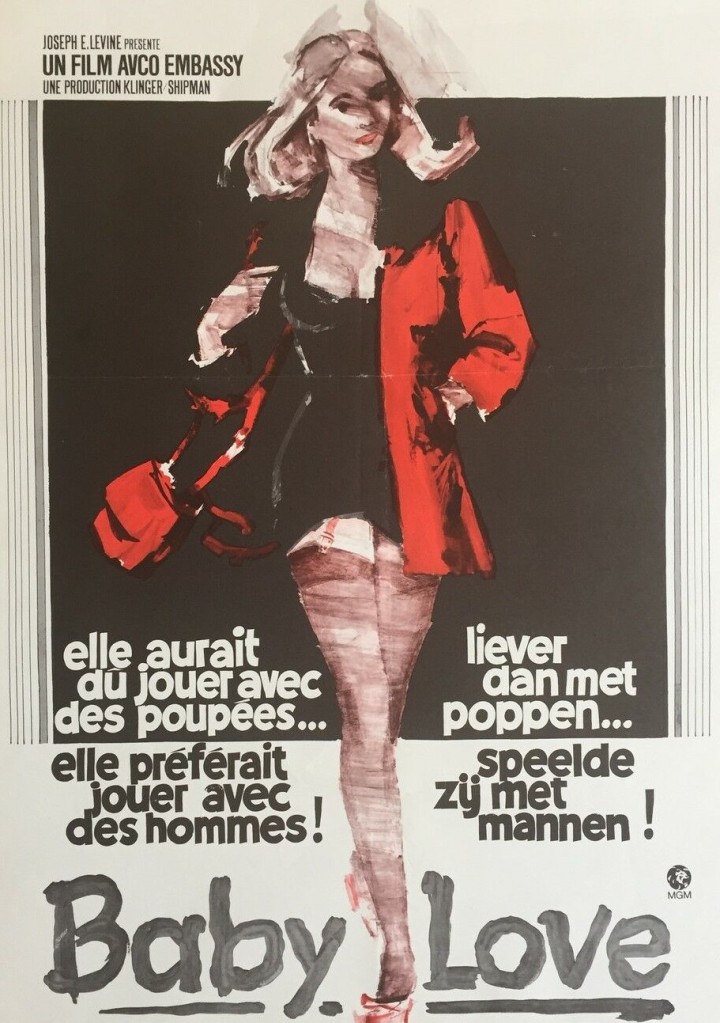
It wasn’t the fault of director Alasdair Reid that uber-producer and marketing kingpin Joseph E. Levine (The Carpetbaggers, 1964) wanted to sell a different movie from the one that was made, focusing on titillation and turning Luci’s sexual confusion into something predatory. The idea that this movie is a sexualized film noir is a marketing trick. Closer re-examination reveals that Luci is entering a disturbed household, one she lacks the skills to negotiate and is in reality the exploited one.
In fact, Reid (Something to Hide, 1972) did a very commendable job. He made some bold decisions especially relating to sound. The opening credits are accompanied by the sound of a dripping tap that would turn into a cascade of water. That would become a recurring motif, along with steam. Most scenes lacked music. Although most nightmares are image-driven, the initial one is full of clashing sound as well as disturbing sights. As the movie hits its stride, a clever device is adopted, showing disturbing images outside the house that are actually, you quickly discover, another nightmare. Mostly the camera remains fairly static but it occasionally swoops to represents anxiety from one point-of-view. The bulk of the story takes place in the house but when the camera goes outside, to a disturbing scene on the river for example there are original ideas, one character speaking through a megaphone.
Passed by the British censor with an X-certificate then and an 18-certificate DVD today, it still has the power to shock. However as far as I can see it was last classified in 1994 and I have written to the BBFC to see if that classification should still stand.
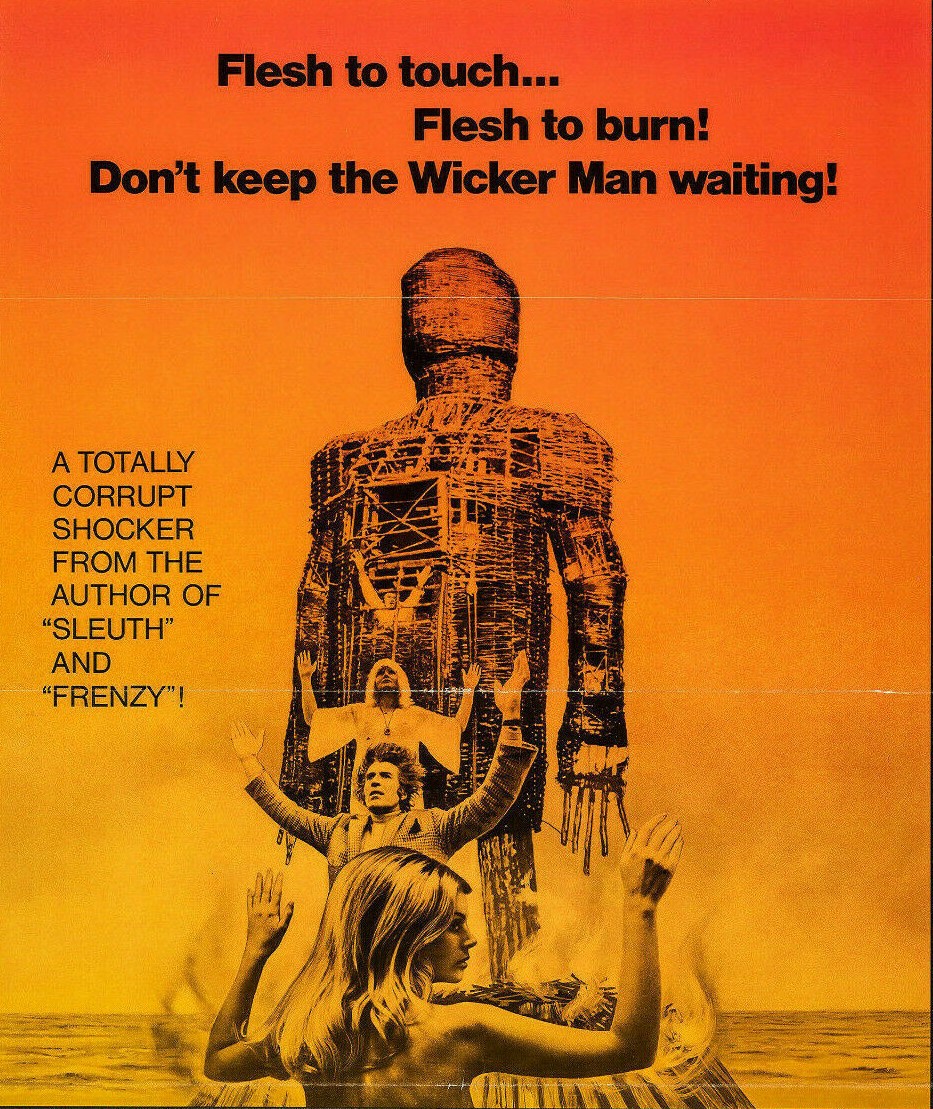
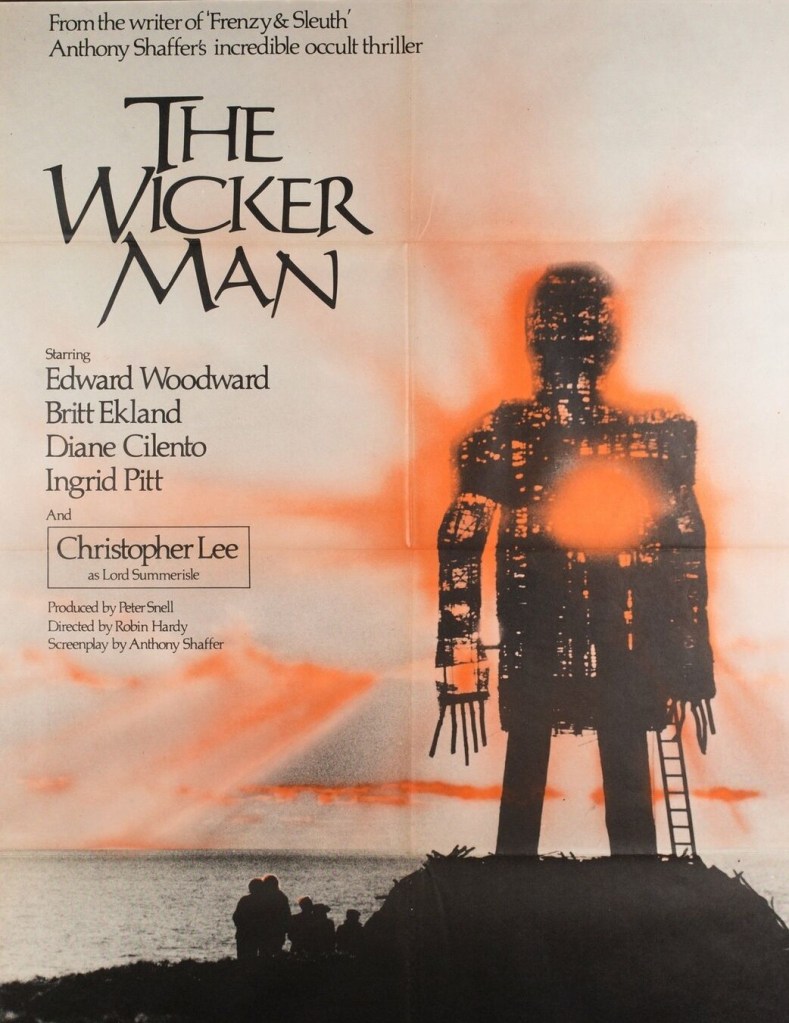
I first saw The Wicker Man in 1973, dismissed by critics on release, on the lower half of a double bill with Nicolas Roeg’s ecstatically-reviewed Don’t Look Now (1973), the films connected less by the horror elements than that they both made by British Lion. t’s now rubbing shoulders with the most superior kind of cult picture, the ones that the public will actually fork out hard-earned cash to see on the big screen, as was my experience this week. Some clever marketing person had the bright idea, given the picture concerns May Day activities of a dark nature, of running a special revival on May Day. What surprised me more was that the cinema was full (on a Monday night, no less), the audience was 20- and 30-year-olds and younger, and judging from overheard chatter afterwards they clearly enjoyed the experience.
What struck me most when watching this was the clarity of the pagan worship, compared to, for example, The Northman where I had no idea what they were worshipping beyond a rough notion. The procreation element was very well thought-out, the idea that such paganism should be taught in schools the way in the era when the film was made religion was on the curriculum. Most horror films do not take religion seriously, But here, even if it’s not your idea of true religion, the entire community invested in the symbolism of animals and trees and fertility rites such as jumping over a fire naked (otherwise your clothes would catch fire) in order to become pregnant. A naked woman weeps over a headstone in a graveyard. You can cure a cough by letting a toad sit in your mouth. And the entire soundtrack, often performed by folk singers in the pub, is filled with songs where the emphasis is on sex. But the detail is really quite extraordinary. Beyond The Wicker Man itself which I understand comes from the Druids, I’ve no idea if this is patchwork of other religions imbued with fictional elements, but it doesn’t matter because, no matter how fantastical it appears, it all rings true.
Policeman Sgt Howie (Edward Woodward) pilots a small seaplane to Summerisle to investigate the disappearance of a young girl, Rowan Morrison. At first the villagers deny knowing about the girl’s existence, and then provide conflicting reports, even going so far as to claim she is dead, or has transmogrified into the hare that lies in her supposed coffin. The villagers appear to either discreetly or openly mock him and certainly find much humor in his steadfast Christian beliefs. The schoolteacher Miss Rose (Diane Cilento) denies that the empty desk in her classroom belongs to Rowan. Island chieftain Lord Summerisle (Christopher Lee) debates Christianity. Landlord’s daughter Willow (Britt Ekland) and the librarian (Ingrid Pitt) are on seduction duty.
Frustrated, and threatening to return with more officers, Howie intends to leave but his airplane engine has broken down and soon he is convinced Rowan has been kept alive for ritual sacrifice on May Day as a way of providing rebirth for the island’s failing crops and fruit. In disguise as Punch, he joins the villagers in their parade only to discover that is the hunter who is hunted and that he has been tricked into coming onto the island. The climax is horrifying, in part because the lack of CGI or a bigger budget, in part down to the delight of the observers, has meant that most of what occurs is left to the imagination.
What at one point appeared an idyllic spot populated by relatively harmless if somewhat wayward people with a highly-developed sense of community and none of the infighting that might common in such a remote location. In another reversal to audience expectation there was none of the bloodlust surrounding the burning of a witch or monster. The smile on the face of a killer indeed!
The audience is brilliantly enmeshed. The investigation appears to drive the narrative, the various obstacles in the way of the policeman just par for the course in this kind of mystery. Just as we are beginning to become more enchanted by this community’s open attitude to sex especially when compared to Howie’s repressed Christianity, the story takes a sudden switch as the deeper level of meaning is revealed, that fertility actually means rebirth and that the ancient ways of achieving that are not for the faint-hearted.
Edward Woodward (File of the Golden Goose, 1969), making a debut as the star after hitting the television ratings heights as Callan (1967-1972), is excellent as the stern God-fearing policeman who gradually loses his power in a community where there is no tolerance for his kind of law. Christopher Lee (The Devil Rides Out, 1968) breaks out of his typecasting, especially with the wigs, with a very affable performance as a benevolent landlord. It’s hard to view him as an outright villain his actions are for perceived betterment. Britt Ekland (The Night They Raided Minsky’s, 1968) is convincing as the free-as-a-bird aphrodisiac-on-legs damsel with vulnerability to the fore. Diane Cilento (Negatives, 1968) and Ingrid Pitt (Where Eagles Dare, 1968) have little to do but keep the plot ticking.
Robin Hardy, on his debut, does a remarkable job of setting the seductive atmosphere although the film’s box office failure meant he only made two further films. Anthony Shaffer (Sleuth, 1972) adapted the novel Ritual by David Pinner.
The movie celebrates its 50th anniversary next year so look out for more showings especially if it becomes inextricably linked to the May Day festival the way Casablanca had been adopted by St Valentine’s Day marketeers.
If anybody in Britain told you they saw Wild Angels (1966) when it came out that year you could safely accuse them of being liberal with the truth for that was one of the many films banned by the censors there. Global censorship remained a major issue for studios during the 1960s, every country imposing its own system, and very rarely did they conform with each other. At the beginning of the decade, the biggest issue was sex, by the end it was joined by violence and drugs.
Films were rarely banned in the United States since scripts for movies liable to violate the agreed guidelines tended to be submitted in advance and a compromise reached prior to production. However, local U.S. censorship bodies acting independently prevented some films being shown, This Rebel Breed (1960) in Memphis, Room at the Top (1959) in Atlanta. Movies banned in different countries included: Operation Eichmann (1961) in Israel and Germany, Queen Bee (1963) in Italy, The Collector (1965) in New Zealand, Wild Angels (1966) in Denmark, Lady in a Cage (1964) in Sweden and Geneva, Ulysses (1967) in Glasgow and Edinburgh, and Easy Rider (1969), despite winning a prize at Cannes, in France. Doctor Zhivago (1965) was banned in Thailand for being pro-communistic and in India for the opposite reason. Ireland banned 56 movies in 1960, Finland 12 in 1962, Sweden 10 in 1963 and West Germany 19 that same year. In South Korea in 1962 you still could not see any Japanese movies.
Being banned of course became a promotional tool. It was a regular joke in America that a low-budget picture had no chance of box office success unless it was banned in Boston. In France, Les Teenagers (1968), Young Wolves (1968), The Nun (1966) and Paris Secret (1965) all benefitted from being released after tussles with the censor and the controversy over Ulysses saw it break box office records in Dundee in Scotland.
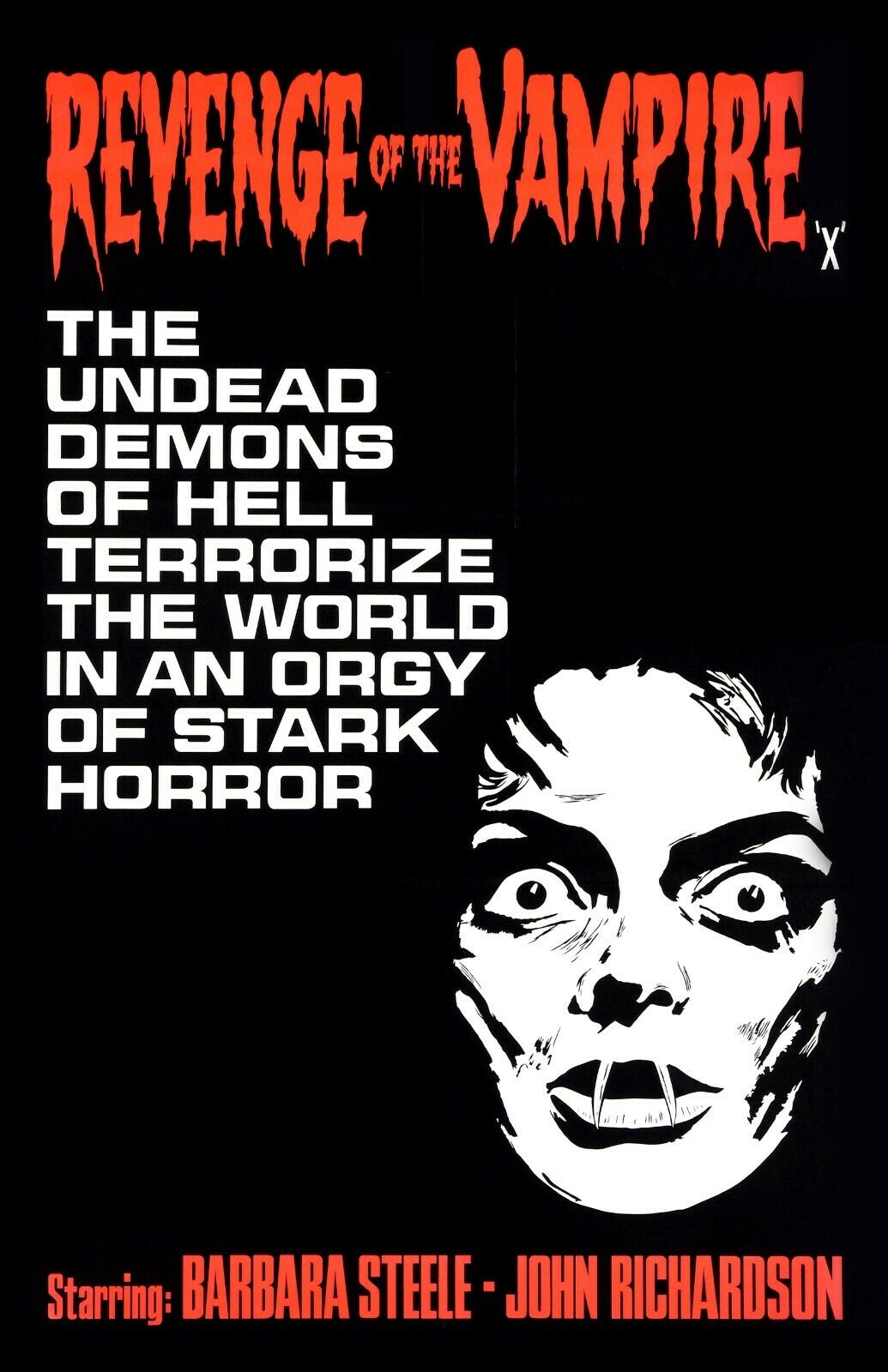
The British censor prevented screening of films deemed too violent including The Couch (1962) about a serial killer, Samuel Fuller’s Shock Corridor (1963), Violent Midnight (1963), The Thrill Killers (1963), Shock Treatment (1963) – despite a cast that included Lauren Bacall and Stuart Whitman – Fuller’s The Naked Kiss and Weekend of Fear (1966). Among horror films denied a showing were Blood Feast (1963), Two Thousand Maniacs (1964) and, initially, Mario Bava’s Black Sunday (1960) which was later reprieved and shown as Revenge of the Vampire.
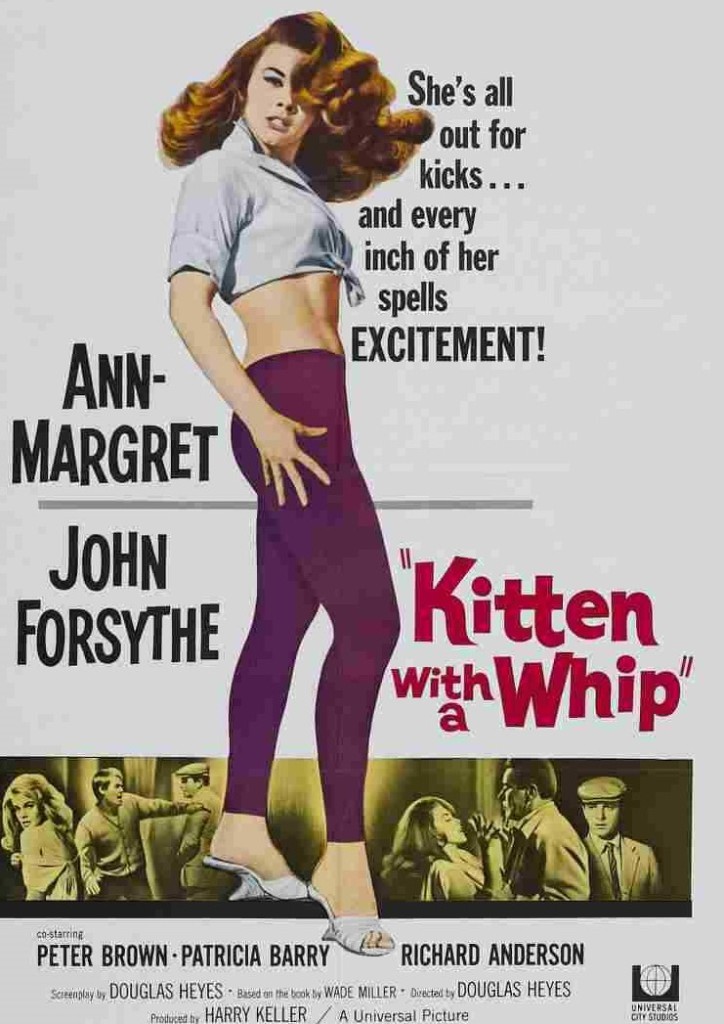
Juvenile delinquency, often straddling the biker world, was another subject to fall foul of the British Board of Film Censors. Among them The Choppers (1961), Jacktown (1962), The Cool World (1964), Kitten with a Whip (1964) starring Hollywood sensation Ann-Margret, the aforementioned Wild Angels (1966), Rat Fink (1966), Hot Rods to Hell (1966) with Dana Andrews and Mickey Rooney, Riot on the Sunset Strip (1967), Born Losers (1967), Devil’s Angels (1967) and virtually anything that mentioned Hell’s Angels.
Drug taking was also forbidden to be seen, thus accounting for the absence on British screens of The Trip (1967), Hallucination Generation (1967), Mary Jane (1967), LSD Flesh of the Devil (1967) with Guy Madison and Revelation – The Flowering of the Hippies (1967). Easy Rider (1969) was passed for “being actively concerned with human beings and the effect of drug taking.” Films considered too morally dubious or too sexually open to let loose on British audiences included Sinderella and the Golden Bra (1964), 3 Nuts In Search of a Bolt (1964) starring Mamie Van Doren, 90 Degrees in the Shade (1965) with Anne Heywood, Russ Meyer’s Motorpsycho (1965), Good Morning…And Goodbye (1967) and Lee Frost’s The Animal (1968). Explicit language was the objection to Warrendale (1967) and Ulysses (1967), homosexuality the problem for Deathwatch (1965) starring Leonard Nimoy and Shirley Clarke’s documentary Portrait of Jason (1967).
In Britain, to get round the censor’s strictures, the “cinema club” was invented in 1960 by Gala Film Theatres, an offshoot of a distributor specializing in racy fare, and within a month had 7,500 members, the operation launching with a showing of The Wild One (1953). Local authorities could also take exception to the national censor’s findings and grant a reprieve for various films, Wild Angels and The Trip eventually achieving exposure in this fashion. Most cinema clubs would eventually segue into becoming outlets for soft porn but some stuck with the original concept of showing arty movies considered too risqué by the censor. The New Cinema Club in London, for example, in August 1969 programmed Wild Angels and Kenneth Anger’s Scorpio Rising (1963)
But the censor was not the only reason why films were not shown and ended up either ignored by the distributors or stuck on the shelf and we’ll come to those in another article.
David McGillivray, “The Crowded Shelf,” Films & Filming, September 1969, 14-15; “High Cost of Censor Fights vs. Principles,” Variety, March 2, 1960, 1;“If Banned in Britain, All Is Not Lost,” Variety, April 20, 1960, p48; “Theatre, Not Censors, Banned Breed,” Variety, June 1, 1960, p24; “Room at the Top Ban,” Variety, July 27, 1960, 4; “Operation Eichmann Banned in Germany, ” Variety, May 3, 1961, 1; “211 Pix Scissored, 56 Banned in Ireland,” Variety, May 3, 1961, p15; “Operation Eichmann Banned by Israeli,” Variety, November 1, 1961, p2; “12 Pix Banned by Finland Censors,” Variety, March 28, 1962, 17; “Singapore Censor Gets Tough with U.S. Pix; Satan, Suzie Banned,” Variety, August 8, 1962, 21; “Japanese Pix Still Banned by S. Korea,” Variety, December 12, 1962, p16; “Bee Banned by Italian Censor,” Variety, January 23, 1963, p18; “W. Germany Claims Only 19 Pix Banned, “ Variety, December 4, 1963, p11; “Swedish Censors Banned 10 in ’63,” Variety, February 5, 1964, p2; “The Group Banned,” Variety, April 8, 1964, p84; “Lady in Cage Banned by Sweden Censors,” Variety, July 15, 1964, 2; “New Zealand Censors Turn Down Collector,” Variety, November 3, 1965, 11; “Cage Banned By Geneva Censors,” Variety, January 19, 1966, 16; “Can’t Second Guess Global Censors,” Variety, November 30, 1966, 20; “Banned in Australia,” Variety, May 24, 1967, 26; “Scot Exhib, Whose Town Disapproves Censorship, Cleans Up with Ulysses,” Variety, May 1, 1968, 27; “Film Censors in France Spark B.O.,” Variety, May 8, 1968, 131; “Dracula Sole Film Banned in Israel Last Year,” Variety, May 28, 1969, 39; “Britain gives ‘X’ Tag to Fonda’s Rider Pic,” Variety, June 18, 1969, 30; “Eire Banned 35 Films in ’68,” Variety, August 20, 1969, 32.
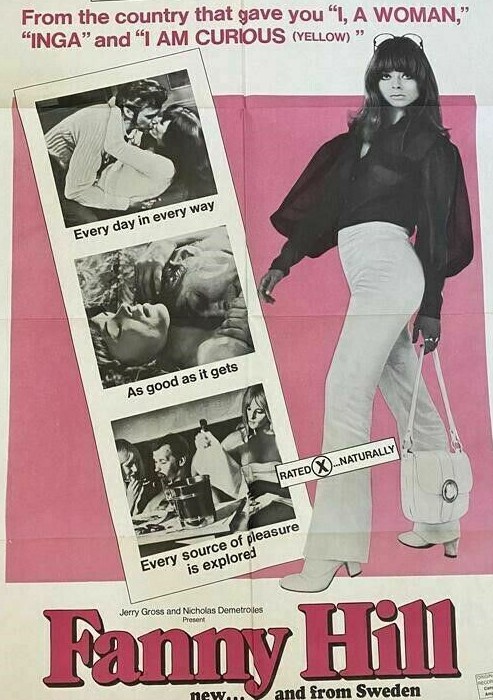
For three weeks at the end of November 1969 through to mid-December, the top films on the Variety weekly box office Top 50 chart were sexploitation films. The Swedish Fanny Hill (1968) was the first to hit the top and I Am Curious, Yellow, also from Sweden, took the top place for the next fortnight.
This was something of a slap of cold reality in the face of Hollywood which had assumed that by and large its product was sufficient to meet the needs of exhibitors nationwide. The slump in production due to the financial issues facing the top studios led the industry to expect that the traditional low-budget pictures that would make up the shortfall would come from the usual sources – westerns, crime, horror. Few would have bet on sexploitation taking up the slack.
The new Variety system of collating box office was in part to blame for the influx of sexploitation films being so transparent. Until the magazine instituted its weekly Top 50 grossing pictures in April 1969 and widened the net for gathering in those figures, box office was reported from just 200-300 first run houses in the major cities. This now expanded substantially to five times as many cinemas and included smaller houses in a greater number of cities as well as cinemas that belonged to a Showcase (wide release) circuit.
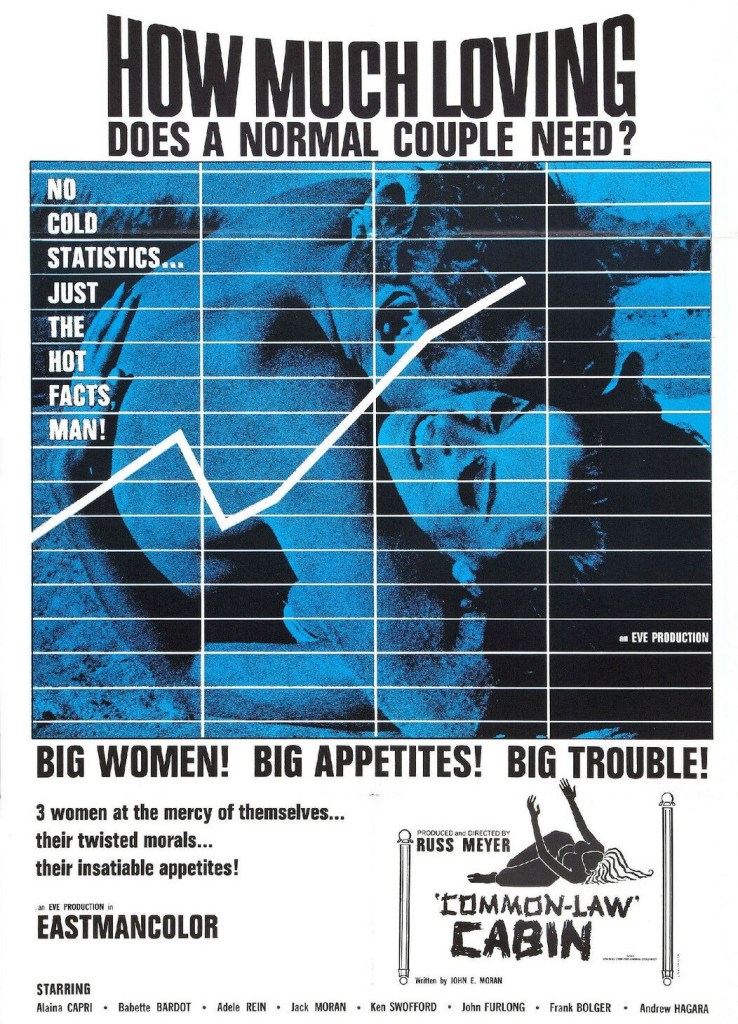
That resulted in a greater breadth of films being reported. Except on first run arthouses, where some art films with greater sexual content could be shown, it was rare for a sexploitation picture to feature in a big city first run. Russ Meyer was the acceptable face of sexploitation, especially since his films contained humor. Even so, eyebrows were raised when the exploits of Common Law Cabin (1967) made headlines in Variety (“Sexploitation pair: $22,000 at Fox”) at Detroit’s biggest cinema, the 5,100-seater Fox, a major first run venue. That film found slots in first run in Chicago at the Center and the Fine Arts in Portland. Another Meyer opus Finders Keepers found a berth at the Randolph in Philadelphia (“Russ Meyer’s Nude Pic Into Philly’s Classy First Run”). But that was the extent of its invasion of first run for that year. And that was pretty much how the industry expected things to stay, a rare sexploitation making a few headlines, but not much more.
So when Fanny Hill grossed $625,000 – equivalent to $4.7 million today – from 49 houses to hit the top spot it sent the industry reeling in shock. I Am Curious Yellow hit the top spot in successive weeks with $594,000 from 52 houses followed by $454,000 from 90. In some respects it should not have come as any great surprise. I Am Curious, Yellow had already had already featured several times in the weekly top ten, fifth with $213,000 from 16 houses, sixth with $137,000 from 14 and again with $$237,000 from 18.
Sexploitation distribution was handled in much the same way as any other picture. Probably it came closer to replicating an arthouse release, where prints, due to their cost, were in short supply and cinemas undertook to hold onto a movie for several weeks, if not months. But when a movie was clearly pulling in the crowds, the distributors switched to a more mainstream system, combining Showcase with first run. The big danger when films went wide was that grosses plummeted. But that was clearly not the case here. Yes, the earlier per-screen averages were higher but the later ones certainly did not fall off a cliff.
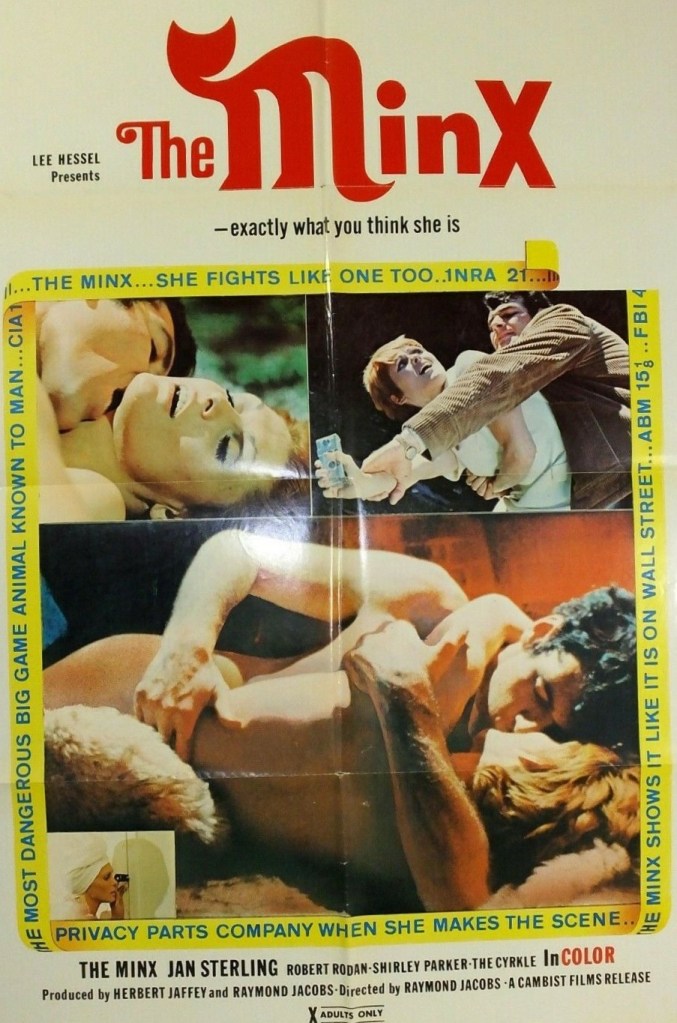
Outside of these two pictures, other sexploitationers had been making an impact on the weekly chart. The Libertine (1968) had placed 11th with $184,000 from 56, Naked Angels (1969) came 17th one week with $148,000 from 11 and lower down the chart The Minx (1969) had showed potential with $52,000 from three while Camille 2000 (1969) had earned $32,000 from two. Sexploitationers absorbed lessons learned from more mainstream distributors in how to use the Top 50 as a promotional tool. A movie that was not only taking in big bucks, but placed high in the chart and had a great per-screen average was inevitably going to attract attention.
Perhaps the oddest part of the sexploitation breakout was that so few had seen it coming. If so, they had not been reading the trade papers. This side of the business had grown so fast in a couple of years that those involved had formed their own association. It turned out a war had broken out between the suppliers of cheaply-made sexploitationers and those willing to increase their budgets in order to entice audiences with better production values.
But this was at the hard-core end of the business, the number of outlets tripling from 300 theaters three years before to 800 in 1969, and operating obviously outside the restrictions of the Production Code or the new censorship system. Initially, movies costing $8,000-$15,000 could have been put together in a weekend. Now up to 100 movies budgeted at at a maximum of $45,000 were being made every year with a potential profit of $125,000-$300,000 each. About half a dozen companies had annual million-dollar turnovers.
But this business had also filtered down to the more easily exhibited soft-core, which fitted into the “X” category under the new censorship rules. The 100 cheap soft-core efforts financed by individual theaters or small chains which filled a supporting spot on a double bill produced meagre returns so it made more sense to edit down a hard-core feature to suit a soft-core audience. The demand for hard-core, most prominently seen in Detroit, where hard-core pictures often outgrossed first run, was filtering down into soft-core, hence the growth in bookings for the likes of Fanny Hill and I Am Curious, Yellow.
The other reason for moving into the soft-core market was that the hard-core end was saturated resulting in lower rentals and consequently lower profits which inhibited production. Theaters struggling to cover overheads from the thin stream of movies emanating from the major studios or finding there was little juice left in blockbusters by the time they drifted down the exhibition food chain increasingly turned to soft porn.
SOURCES: “Sexploitation Filmmakers, Showmen Form Adult Motion Picture Ass’n,” Box Office, January 20, 1969, p8; “Over-Seated for Sex,” Variety, July 2, 1969, p1; “Sexpix of $25,000-$45,000 Negative Cost See Bright, Not Clouded, Future,” Variety, July 16, 1969, p17. Results for the “Top 50 Chart” in Variety were taken from the following issues in 1969: Jun 4, Jul 2, Jul 9, Jul 23, Sep 24, Oct 1, Oct 15, Nov 5, Nov 26, Dec 3, Dec 10, Dec 17, Dec 24.
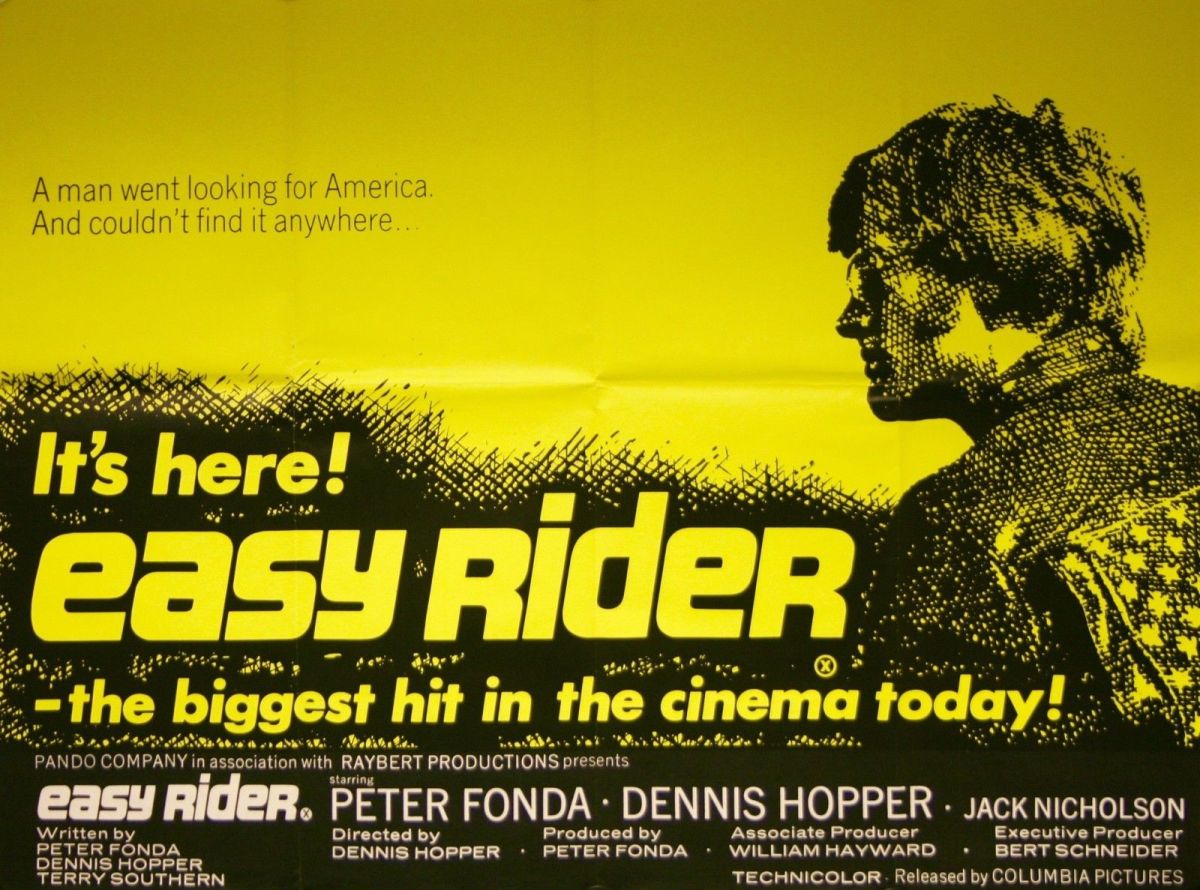
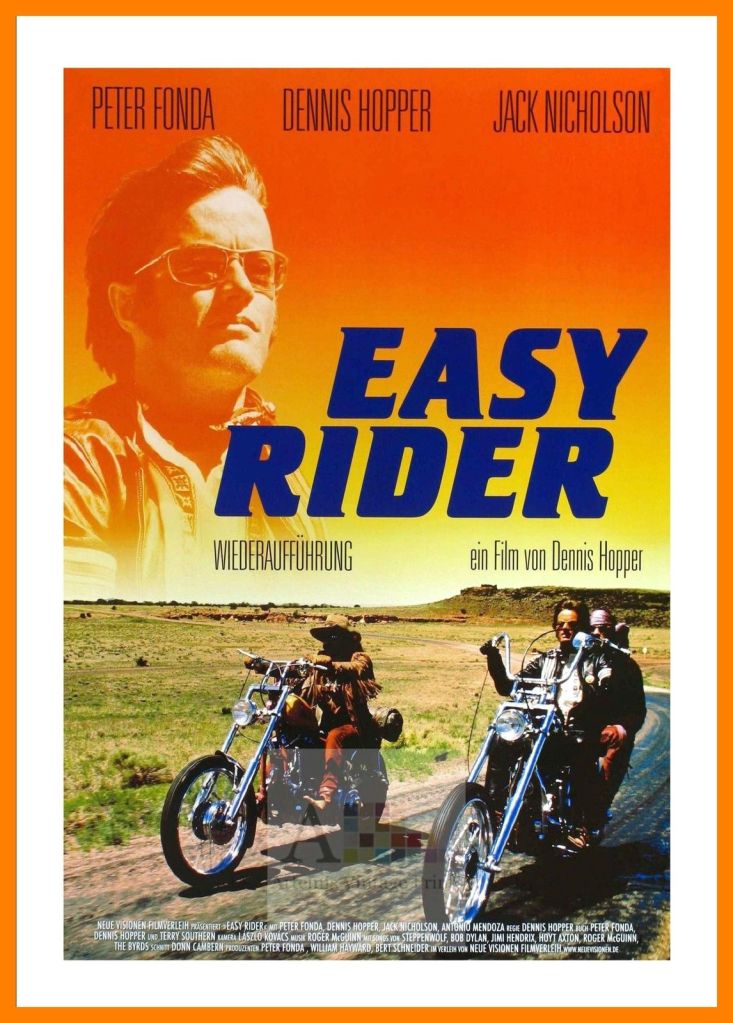
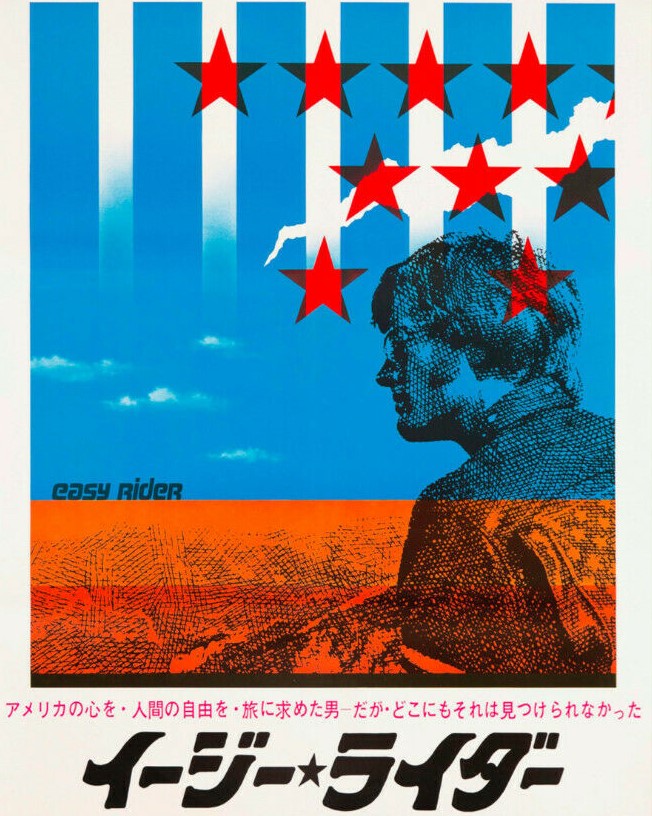
Just goes to show what a little bit of reimagining can do. A companion piece to The Wild Angels (1966) but which takes the viewer in the opposite direction, turning the characters from perpetrators of violence to its victims, adding in a stonking soundtrack and a bit more philosophy, though holding on to the long tracking shots of motorbikes that defined the Roger Corman approach. From the bare bones of the Corman movie emerged a cinematic – and box office – miracle.
You could be forgiven for thinking that the movie’s main influences were the early Cinerama pictures that focused on extensive tracking shots of scenery (in this case, the open road) and unusual customs (ditto, alternative lifestyles, dope-taking etc) and Mike Nichol’s use of contemporary pop music in The Graduate (1967). But it also drew on the assumption, as did Hitchcock in Vertigo (1958) and Kubrick with 2001: A Space Odyssey a decade later, that a camera doing nothing can be hypnotic.
Message pictures were the remit of older directors like Stanley Kramer and Martin Ritt and films that had something to say about the human condition generally emanated from Europe and not low-budget efforts coming out of Hollywood. Easy Rider has a European sensibility, an almost random collection of unconnected episodes with no narrative connection to the main story, itself incredibly slight, of two mild-mannered dudes heading to New Orleans to see the Mardi Gras.
Road trips were not particularly unusual in American cinema but the form of previous locomotion was horse-related – westerns. The journey has been a central theme to movies. This is an 80-minute picture masquerading as a 95-minute one, a good fifteen minutes of screen time taken up with endless shots of Peter Fonda and Dennis Hopper on bikes passing through the landscape, with a contemporary soundtrack as comment.
Unusually, it’s also a hymn to ancient values, heads bowed in prayer at meals as different as you could get, the Mexican family and the commune, a marching band playing “When The Saints Go Marching In” and the recitation of prayers in the cemetery.
What marks the film out stylistically, perhaps enforced by the lean financing, is the sparing way it is told. The most dramatic scenes – the three murders – are filmed in shockingly simple fashion. There are often long pans along groups of characters. While innovative, the flash-cut flash-forward editing adds little to what is otherwise a very reflective film. Inspired use is made of natural sound, the muffled thumping of oil derricks at the cemetery, the soundtrack to one death is just the battering of unseen clubs by unseen assailants.
The dialogue could have been written by Tarantino, none of the confrontation or angst that drives most films, but odd musings that bring characters to life. At the beginning of the trip, Hopper and Fonda are welcomed wherever they travel, but towards the end resented, treated as though a pair of itinerant aliens. They entrance young girls but are vilified by authority, jailed for no reason except the threat to traditional values they apparently represent.
Elements not discussed at the time of release make this more rounded than you would imagine. The excitable Hopper, a nerd in hippie costume, is driven by the American dream of making money. The more reflective Fonda, developing a character trait he revealed in The Wild Angels, senses something is not only missing from his life but has been lost forever. He has the rare stillness of a top actor, face reflecting unspoken inner turmoil. As revelatory is the performance of Jack Nicholson, here effectively making a bid for stardom in a part that would snare an Oscar nomination.
It remains an extraordinary film, a series of accumulated incidentals holding up a mirror to an America nobody wanted to acknowledge and the brutal climax no less powerful now.




 The Magnificent 60s