Gray Lady Down (1978) ****

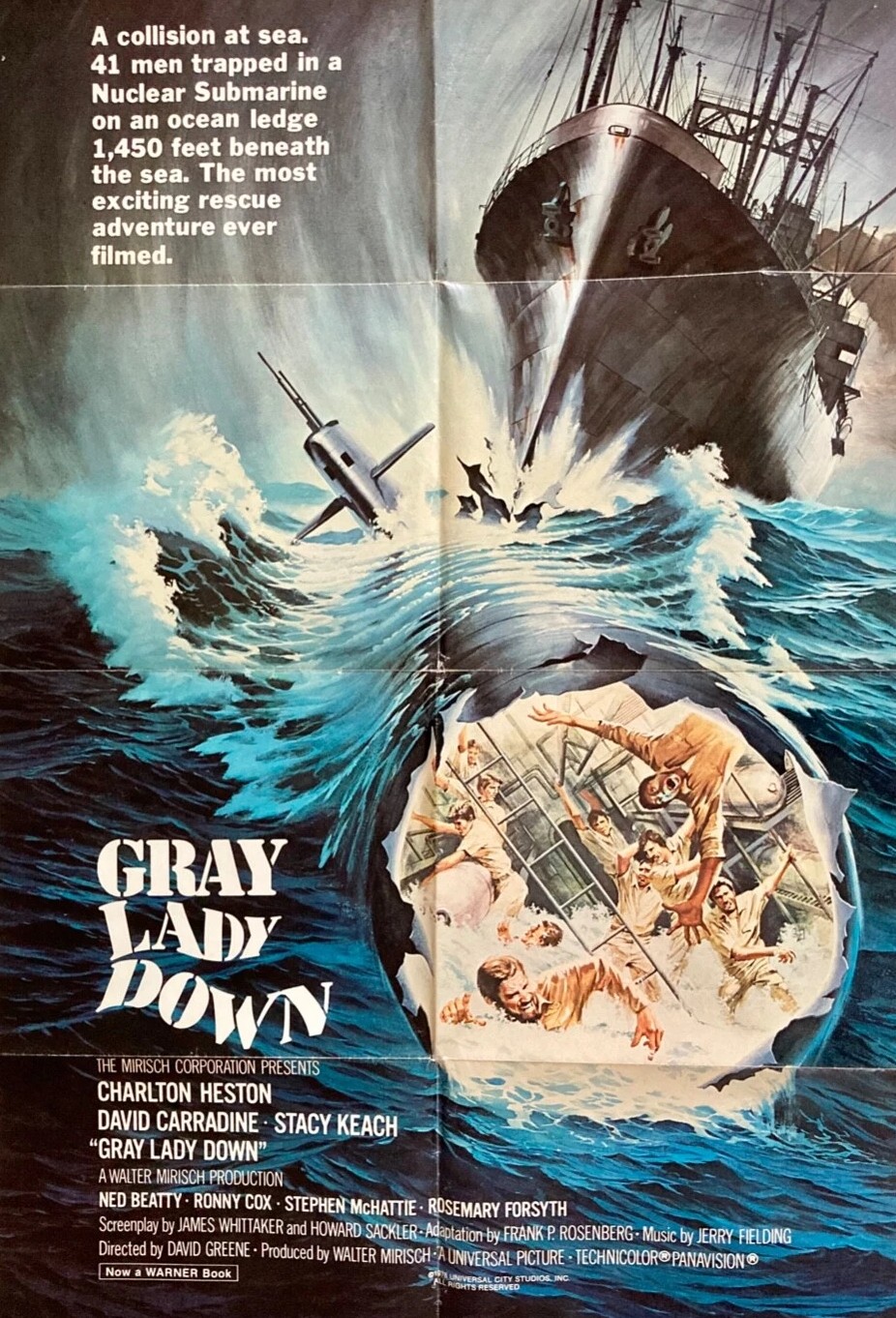
The best of the late 70s disaster pictures and possibly the best of the whole short-lived genre, mixing technology, hair-rising tension and restrained emotion on top of a belter of a concept, sailors trapped in a submarine on the seabed with oxygen running out. But what lifts this above the norm is that it doesn’t follow the normal disaster picture template. Men do not rise easily to this challenge. Courage drains away as fast as time. Tempers flare and more than one of these hardy men collapse under the pressure.

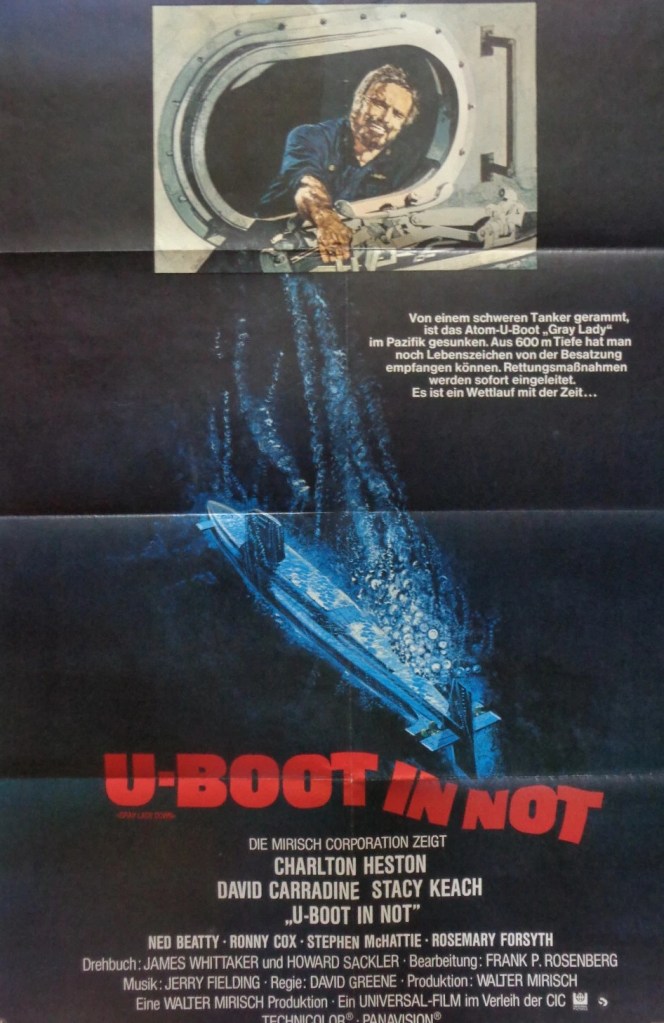
The best scene in the picture is a man dealing wordlessly with loss and being a male of a certain era unable to shed a tear. So it’s all on the face. Capt Blanchard (Charlton Heston) has to shut himself away to grieve. And there’s a somber tone throughout. Corpses, covered only in a blanket, are laid out alongside the injured in an improvised sick bay. More than one person cracks. Even in a major crisis, bureaucracy gets in the way.
Blachard isn’t exactly the strong-jawed hero. As the situation grows more serious, his equanimity fails and he gets very snappy with the crew. And he’s also dealing with a heavy dose of guilt. Luckily, his major failing isn’t exposed to the crew, but his second-in-command points the finger.

Although the sub has been sent to the bottom courtesy of a collision in thick fog with a merchant ship boasting faulty radar, the accident should never have occurred. The sub shouldn’t have been on the surface. The only reason for that was Blanchard’s pride. This is his final voyage and he wanted to sail into harbor with is vessel atop the waves.

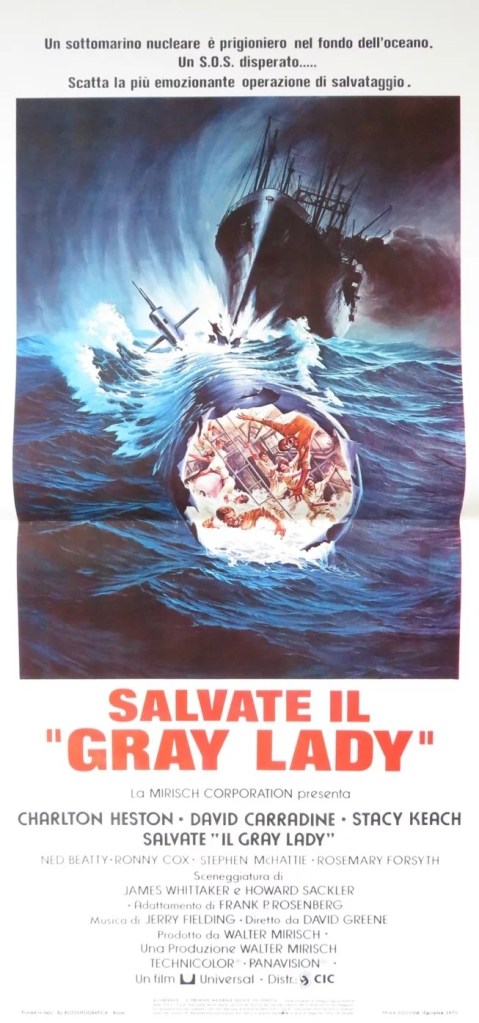
Now the sub is laid up in a deep trench and subject to “gravity slides”, the technical term for rock falls, which not only shift its position every now and then, pushing it deeper into the trench, but seal up the top of the escape hatch.

So the U.S. Navy’s new-fangled DSRV (Deep Submergence Rescue Vehicle) can’t do its job  and an even more new-fangled experimental submersible, operated by Captain Gates (David Carradine) and his sidekick Mickey (Ned Beatty) is called in. But its operation is sabotaged when officious Capt Bennett (Stacy Keach), tasked with the rescue mission, insists on one of his own men going down instead of the more experienced Mickey.

The underwater scenes are thrilling, and there’s plenty of technical know-how on view and a bunch of impression jargon spouted, as the sub slips further away and the submersible moves into more perilous depths. In the days before CGI, this is superb stuff. And since the sub is now upside down you certainly see more than normal of your typical submarine.
Unlike earlier disaster numbers like Airport (1970), The Poseidon Adventure (1972) and Towering Inferno (1974), no time is wasted setting up the various characters, usually embroiled in emotional entanglement, and for sure there’s no nuns or pregnant women to get in the way of a tight narrative. Comic relief, if that’s what you’re looking for, is provided by the chirpy Mickey.

But when you get right down to it, this holds all the narrative aces. You know rescue is going to get complicated. The unexpected always gets in the way.

But the men under pressure a thousand feet blow the surface are really under pressure and it’s not long before the cracks begin to show and widen.

Unfortunately, this came at the tail end of the disaster cycle when public interest was waning, and perhaps precisely because there was a lack of male-female interaction and no nuns it proved less appealing.

Charlton Heston (Will Penny, 1968) is very impressive, especially when he strains to hold it together and the scene I mentioned is one of his most best pieces of acting. Ned Beatty (Deliverance, 1971) also has a top-notch stiff-upper-lip scene.

Topping the supporting cast are David Carradine (Heaven with a Gun, 1969) and Stacey Keach (Fat City, 1972). You can spot Christopher Reeve (Superman, 1978) in an early role. Rosemary Forsyth (The War Lord, 1965) has a small part, but onshore.

Ably directed by David Greene (Sebastian, 1968) from a screenplay by James Whittaker (Megaforce, 1982)  and Howard Sackler (The Great White Hope, 1970) based on the book by David Lavallee

If you’re in the mood for a thrilling ride, hang on to your hat.

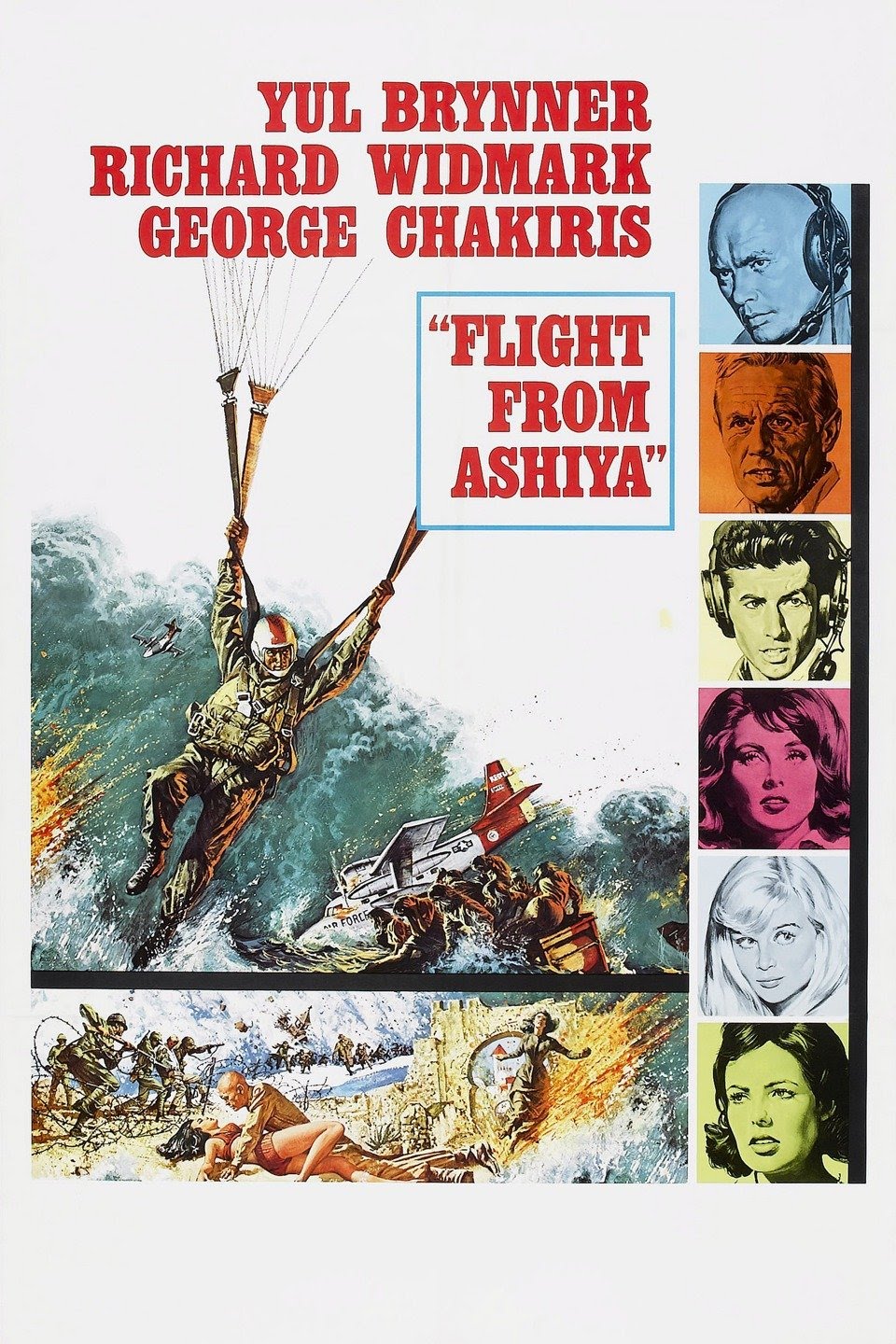
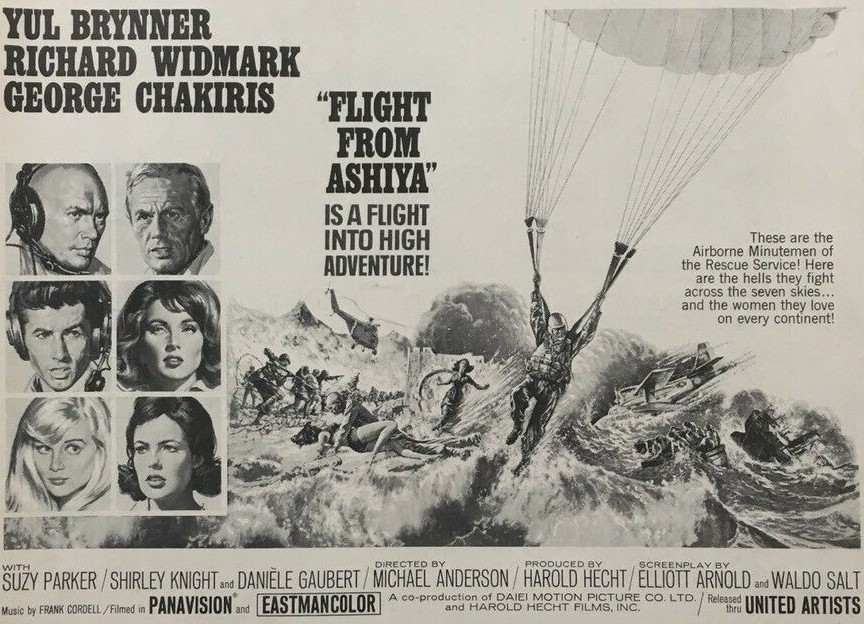
Flight from Ashiya (1964) ***

A post-WW2 operation to save a handful of Japanese adrift at sea in a storm is endangered when three members of the U.S. Air Force Air Rescue Service confront conflicts from their past. Despite tense rescue action, this is basically a three-hander about guilt and how men deal – or fail to deal – with emotions. Extended flashbacks illuminate the tangled relationships between Sgt Takashima (Yul Brynner), Lt Col Stevenson (Richard Widmark) and Second Lieut Gregg (George Chakiris). Unusually, for the period, tough guys actually emote.

So really it’s like one of those portmanteau films that are occasionally popular – like Trio (1950) made up of Somerset Maugham short stories or similar to something like the Oscar-winning  Crash (2004) where characters interconnect after an accident. While each of the episodes stands up in its own right, the thrust of the narrative revolves around actions taken in the past having a direct bearing on the present situation.

Gregg is haunted by causing an avalanche after flying his helicopter too close to a mountain and, as a result, by having to leave behind many of the victims, due to restricted capacity on board, and now he is terrified of flying solo.  As a consequence Stevenson has no faith in abilities as a pilot.

Stevenson also has an abiding hatred of Japanese – colleague Takashima of Japanese ancestry also bears his wrath – because his ill wife Caroline (Shirley Knight) and child died in a Japanese prisoner-of-war camp because medical supplies were reserved only for the Japanese. Faced with rescuing Japanese, he is enraged.

For his part, Takashima, a paratrooper during the war, inadvertently caused  the death of his Algerian girlfriend Leila (Daniele Gaubert). It’s not so much an examination of tough guys under pressure as about their inability to deal with the consequences of action. There’s certainly a sense that the only way men like these have of dealing with trauma is to throw themselves into dangerous action.

Yul Brynner (The Double Man, 1967) gives a more thoughtful performance than you might expect while Richard Widmark (The Secret Ways, 1961), himself dabbling in production elsewhere, was good value. Goerge Chakiris (The Young Girls of Rochefort, 1967) was a weaker link. The presence of Suzy Parker (Circle of Deception, 1960) and especially Daniele Gaubert (The Golden Claws of the Cat Girl, 1968) strengthen the film.

Unusually, at a time when product was in short supply and for a film boasting a strong cast, the picture was shelved for two years after completion. Presumably explained by the demise of Harold Hecht’s production company after he split with Burt Lancaster. Michael Anderson (The Shoes of the Fisherman, 1968) directed from a screenplay by Waldo Salt (Midnight Cowboy, 1969) based on the novel by Elliot Arnold (Kings of the Sun, 1963).

The title’s a bit of a misnomer, suggesting someone is trying to escape from Ashiya when, in fact, that is just the name of the air base where the rescue team are located.

Critics complained it was neither one thing nor the other, but in fact I found it a perfectly satisfactory combination of action and drama, especially as it dealt with rarely-recognized male emotions.

https://amzn.to/47p3xP6

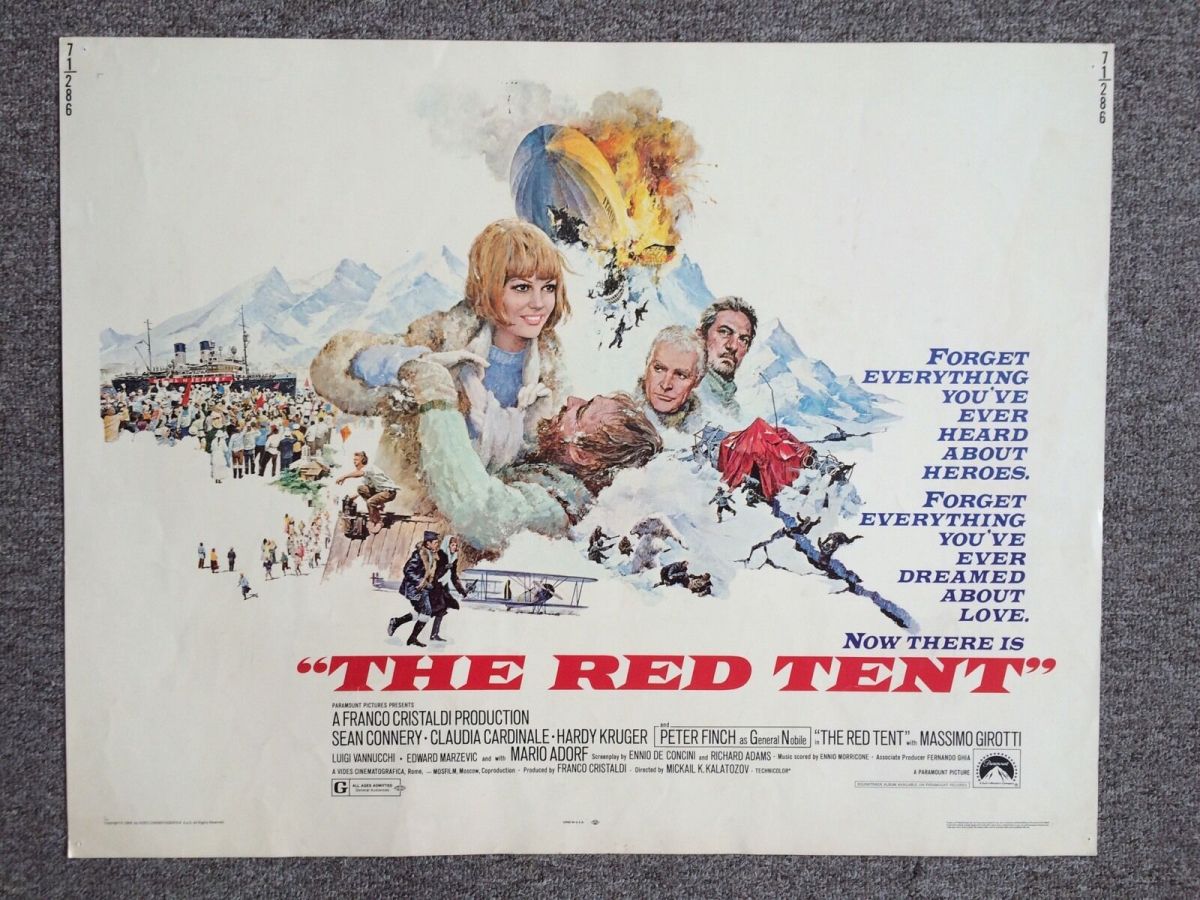
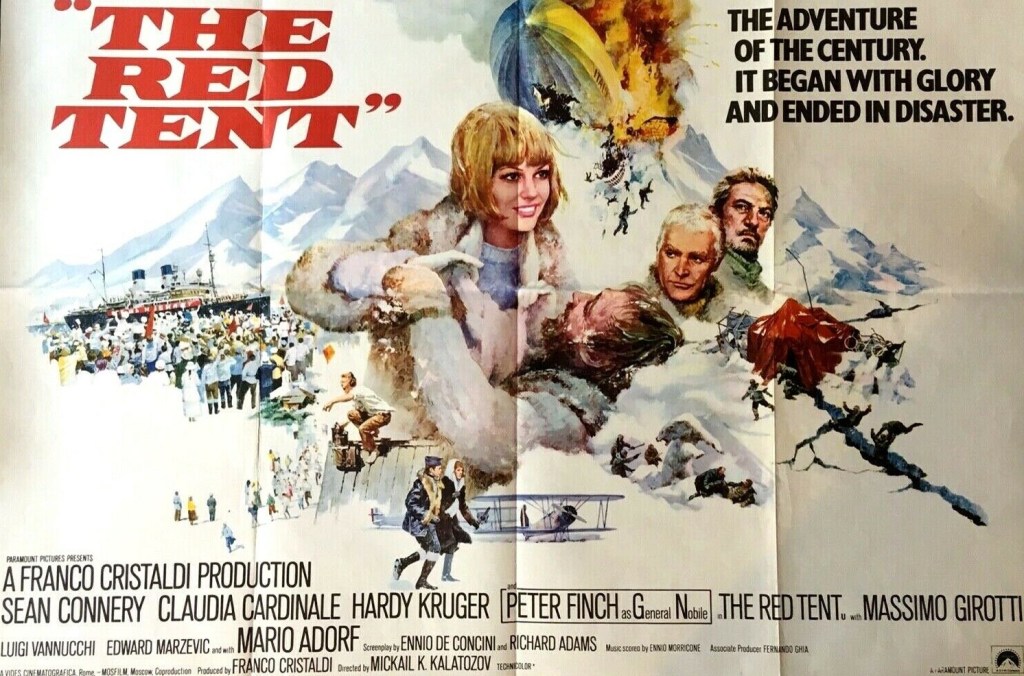
The Red Tent (1969) ***

If you’re unfamiliar with the abortive Italian airship expedition to the North Pole led by General Umberto Nobilo (Peter Finch) in 1928, you’ll find this an absorbing tale. If you are familiar then you will probably appreciate the film-makers’ attempts, via an unusual framing device, to carry out a post-mortem and to apportion blame for the disaster. If you know your history you’ll also be aware both poles had already been conquered, American Robert Peary first to the North Pole in 1909, Norwegian Roald Amundsen (Sean Connery) claiming South Pole bragging rights two years later. So you’re also probably wondering what was the point nearly two decades later of the Nobilo operation?

But the sled-led efforts of Peary and Amundsen were feats of endurance i.e. man vs.  nature. This was science vs. nature. The dirigible was the apex of aviation advancement and nations still battled for exploration glory. So to travel in some comfort and fly over the North Pole in a few days would be a demonstration of scientific supremacy. Conquest of one of the most inhospitable places on earth was almost a PR exercise. With no intention of landing it was also a glorified tourist trip.

Connery and Cardinale lock horns over tea.

However, the science was flawed. Nobody had counted on the build-up of ice. The airship crashed and since this was a joyride nobody was equipped to walk their way out. Just surviving would be difficult enough. Loss of radio transmission (science) indicated a problem to those waiting back at the base so rescue airplanes were deployed. But without a location to pinpoint, the searchers had about two million square kilometers cover. Luckily, a brilliant scientific deduction by expedition member Finn Malmgreen (Eduard Martsevich) saves the day and a ham radio user (amateur science) picks up the location. Game on!

Except airplanes are too easily thwarted by blizzards, fog and the inhospitable. Home base, set up simply to welcome home a successful jaunt, is not capable of organizing a proper rescue. A Russian ice-breaker joins the rescue attempt. Taking greater risks is aviator Einar Lundborg (Hardy Kruger), fired up by the promise of sex with desperate nurse Valeria (Claudia Cardinale), who happens to be Malmgreen’s girlfriend, and a bounty from Nobilo’s insurers. The redoubtable Valeria does not have to sell her body to persuade the more highly-principled Amundsen to join the rescue effort.

So it’s gripping clock-ticking-down stuff, action shown in considerable detail, almost over-populated in one sense as director Mikhail Kalatozov (The Cranes Are Flying, 1957) covers multiple storylines, the various disjointed rescue efforts, the survivors weakening by the day, imperiled by marauding polar bears and the ice cracking up beneath their feet.

In the main it’s a true story, Valeria the only fictional element, inserted for dramatic purpose, to give the audience someone to emotionally root for back on land and for her character to guide us in almost contemporary fashion through the ghoulish carnival onshore as thousands gather to witness first-hand news of disaster.

What’s patently untrue is the framing device, given that it shows the still-living Nobilo summoning up the ghosts of others involved in the event for a post-mortem, in which his guilt drives him into the position of sacrificial lamb. Although on first encounter it appears a bizarre idea, that, too, soon achieves dramatic purpose. Clearly there was intense discussion at the time and in the immediate aftermath by those who survived the disaster and there must have been high-level talks behind closed doors that usually excluded the main characters of the kind that was played out in a host of historical pictures made during the decade. Lawrence of Arabia (1963) and Khartoum (1965) had many such set-pieces where reputations were shredded.

This approach permits opportunity for all the principals to come together for confrontational purposes in the one room. Not all discussion follows the expected path and there is an interesting argument between Nobilo and Amundsen about leadership. From an audience perspective, it is, of course, quite satisfying to see Sean Connery facing off against Peter Finch with Hardy Kruger and Claudia Cardinale embroiled in the debate.

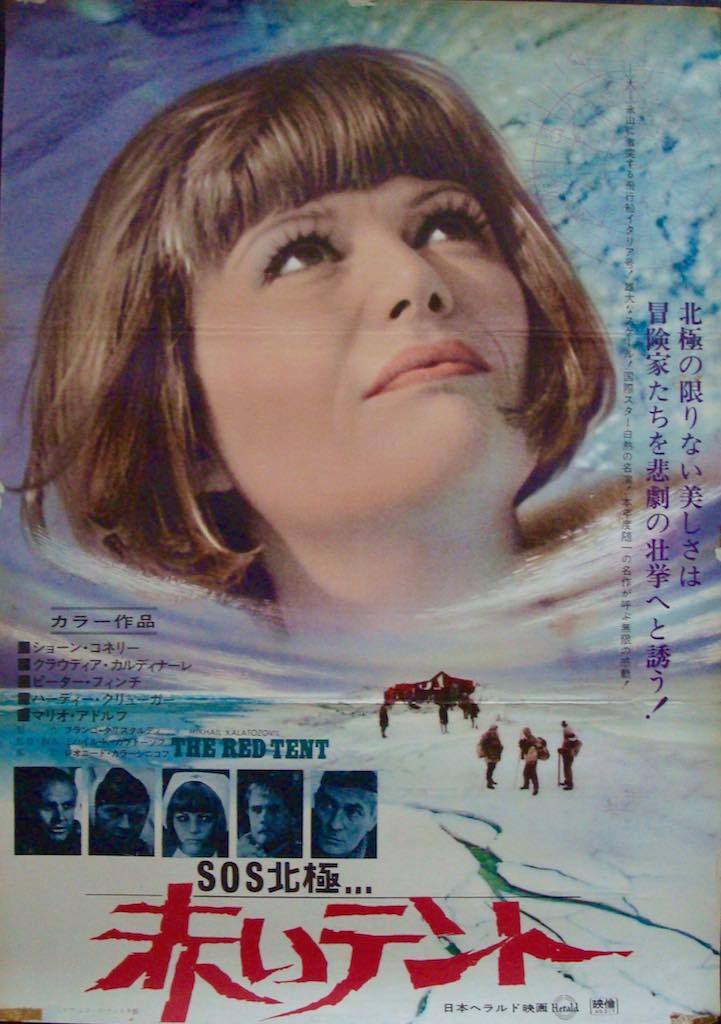
All eyes on Claudia Cardinale in the Japanese poster.

There is the bonus of fabulous cinematography of the majestic Arctic, the icy waste and breaking up of ice floes and collapsing icebergs never before captured in such widescreen glory. Further pluses are in the performances, especially Connery as an aged Amundsen, Finch as the glorious pioneer bewildered the sudden turn of events and Cardinale as a woman willing to go to any lengths to save her lover. Ennio Morricone provided the score.

However, you are best going into this to be aware that while Finch has a goodly amount of time onscreen, Connery and Cardinale (the ostensible stars judging by the credits) are not seen so frequently. That said, the movie happily falls into the survival sub-genre. The DVD version I saw was just a shade over two hours – cut by about 30 minutes from original release – but reportedly the longer version adds little more than some extra angst.

Flight from Ashiya (1964) ***

A post-WW2 operation to save a handful of Japanese adrift at sea in a storm is endangered when three members of the U.S. Air Force Air Rescue Service confront conflicts from their past. Despite tense rescue action, this is basically a three-hander about guilt and how men deal – or fail to deal – with emotions. Extended flashbacks illuminate the tangled relationships between Yul Brynner, Richard Widmark and George Chakiris.

So really it’s like one of those portmanteau films that were occasionally popular – like Trio (1950) made up of Somerset Maugham short stories or the more recent The VIPs (1963) or The Yellow Rolls Royce (1964). Each of the episodes stands up in its own right, actions taken in the past having a direct bearing on the present situation. Chakiris is haunted by causing an avalanche after flying his helicopter too close to a mountain and by having to leave behind many of the victims, due to restricted capacity on board, and now he is terrified of flying solo. 

As a consequence, Widmark has no faith in abilities as a pilot. Widmark has an ongoing hatred of the Japanese – colleague Brynner of Japanese ancestry also bears his wrath – because his ill wife (Shirley Knight) and child died in a Japanese prisoner-of-war camp where medical supplies were reserved for the Japanese. Faced with rescuing Japanese, he is enraged.  For his part, Brynner, as a paratrooper during the war, inadvertently caused  the death of his Algerian girlfriend.

It’s not so much an examination of tough guys under pressure as about their inability to deal with the consequences of action. There’s certainly a sense that the only way men like these have of dealing with trauma is to throw themselves further into harm’s way. Unusually, at a time when product was in short supply and for a film boasting a strong cast, the picture was shelved for two years after completion. Michael Anderson (Around the World in 80 Days, 1956) directed.

The title’s a bit of a misnomer, suggesting someone is trying to escape from Ashiya when, in fact, that is just the name of the air base where the rescue team are located. Critics complained it was neither one thing nor the other, but in fact I found it a perfectly satisfactory combination of action and drama, especially as it dealt with rarely-recognised male emotions.

Many of the films from the 1960s are to be found free of charge on TCM and Sony Movies and the British Talking Pictures as well as mainstream television channels. But if this film is not available through these routes, then here is the link to the DVD and/or streaming service.

Discover WordPress

A daily selection of the best content published on WordPress, collected for you by humans who love to read.

The Atavist Magazine

by Brian Hannan

WordPress.com News

The latest news on WordPress.com and the WordPress community.