Otto Preminger (Hurry Sundown, 1967) returns to his film noir roots (Laura, 1944; Whirlpool, 1950) for this crisply-told tale, mixing police procedural with psycho-drama, of a missing child who may the figment of her mother’s imagination. It’s beautifully filmed and for anyone brought up on modern cinema of short takes and the camera bouncing from one close-up to the next, it will be a revelation, as Preminger favors classic Hollywood style, long takes, in a single shot the camera often following a person in and out of several rooms, and equally classical composition, scenes containing three or four characters where everyone acts within the frame.
Single-mother Ann (Carol Lynley) turns up to collect her four-year-old daughter Bunny from her first day at a London nursery only to discover not just the child gone but nobody has any recollection of the child being there in the first place. That is, apart from the school cook (Lucie Mannheim), who promised to look out for the child but who has subsequently disappeared. Ann is anxious anyway because she is moving house and in her new apartment has an encounter with her creepy landlord Horacio (Noel Coward), a master of the innuendo and the casual stroke of the arm.
It’s a very English school with stiff-upper-lip not to mention snippy teachers. “We mustn’t get emotional,” school administrator Miss Smollett (Anna Massey) warns the distraught mother. Ann’s brother Steven (Keir Dullea), a journalist, kicks up more of a stink, arguing with staff, and with a very threatening manner. Things get creepier still. Upstairs, they hear voices but it’s just the school’s founder Ada (Martita Hunt) who records children talking about nightmares. Steven seems over-protective towards his sister, which is understandable, and somewhat over-affectionate, which is not.
Detective Superintendent Newhouse (Laurence Olivier) and sidekick Sgt Andrews (Clive Revill) investigate. He is an unusual cop. A university graduate but not of the excitable Inspector Morse persuasion for one thing, and reasonable to an irritating degree in that he keeps all his options open. But the cops are thorough, descriptions of the missing child issued, search of the premises and surrounding area undertaken. But it turns out there is no record of Bunny in the school ledger, no sign of her existence in the flat, and it transpires that as a child herself Ann had an imaginary companion called Bunny.
As Steven becomes more obstreperous and the intense Ann verges on the hysterical, not helped by the unwanted attentions of the landlord, a BBC performer with a melodious voice he believes irresistible to women and more than a passing interest in sadism, the case appears to be heading in the direction of a quick visit to a psychiatry ward. The usual anchor in these situations, the policeman, is not as definite as normal, Newhouse not pushing the investigation in a direction the audience will find acceptable, but largely standing back, as if yet to make up his mind, which adds to the sense of mystery.
Carol Lynley with the potential landlord from hell Noel Coward.
Preminger isn’t in the business of piling twist upon twist, but as these arrive in due course, the options they offer are even more psychologically damaging. And from setting off at a steady pace with everything apparently settled down by the steady superintendent, the minute he departs the scene, the story takes on a different dimension and there are three superb chilling scenes, one in hospital, another in a doll’s hospital and the last in a garden as the question of just who is unhinged becomes more apparent. There is certainly madness in the movie but it comes when you least expect it and from a direction you may not have considered. On another level, the world of children is entirely alien to the adult and the reconciliation between the two worlds impossible to bridge.
Preminger extracts a performance from Laurence Olivier (Khartoum, 1966) that cuts the character to the bone, eliminating many of the actor’s tropes and tics, but at the same time making him perfectly human, unable to resist, for example, a traditional school pudding, and finding ways to curb Steven’s excesses while comforting Ann. By controlling the actor who always exerts screen presence, Preminger makes him come across with even greater authority. It’s an achievement in itself to ensure that Olivier never raises his voice.
Carol Lynley (The Pleasure Seekers, 1964) is excellent as the distraught mother, one step away from losing her mind and Keir Dullea (The Fox, 1967) constantly raises the stakes. Noel Coward (The Italian Job, 1969) possibly does the best job of the lot, his normal high levels of sophistication eschewed in favour of the downright creepy. In supporting roles look out for Clive Revill (Kaleidoscope, 1966), Finlay Currie (Vendetta for the Saint, 1969), Anna Massey (De Sade, 1969) and Adrienne Corri (The Viking Queen, 1967). Pop group The Zombies featuring Rod Argent and Colin Blunstone put in an appearance.
Husband-and-wife team John Mortimer (John and Mary, 1969) and Penelope Mortimer (The Pumpkin Eater, 1964) wrote the screenplay from the besteller by Evelyn Piper. But it is most assuredly an Otto Preminger production. He has a surprisingly good grasp of British custom and character, shot all the movie on location, but in black-and-white so it is not dominated by the tourist London of red buses or red pillar boxes, and his probing camera and long takes are a marvel for any cinematic scholar.
For the first four decades of the Hollywood business, success in markets other than domestic was random. Many countries restricted the number of U.S. films that could be shown, others like Britain prevented American studios for a long time taking out of the country money earned at the box office. There was always the chance it could be less profitable if a dominant foreign cinema chain or distributor demanded a larger slice of the box office. In addition, some genres that worked in America stiffed abroad – musicals and comedies found it hard to translate.
Except in extremely sporadic fashion, foreign box office was not reported in the trade media until the 1990s. So there was no such thing as worldwide grosses available on any real scale. These days for many films overseas receipts bring in more than domestic – Zootropolis a current example with around 70 per cent of takings coming from abroad – but that was virtually never the case until the arrival of the James Bond pictures, which acquired a genuine global brand, in the 1960s.
However, the United Artists archives held by the University of Wisconsin provide some fascinating insights into the growing power of the foreign box office in the 1950s. Movies released into the foreign market would make a percentage of their domestic take. But that varied enormously. Even the star-studded Around the World in 80 Days (1956), the second-biggest blockbuster of the year Stateside, with a colossal $16 million in domestic rentals took in less than a quarter of that abroad, just $3.9 million.
For some films, the percentage was better. Controversial William Holden drama The Moon Is Blue (1953) notched up $1.3 million abroad compared to $3.5 million at home. War picture Beachhead (1954) starring Tony Curtis bundled up $1 million overseas as against $1.4 million in domestic. The Barefoot Contessa (1954), boasting Humphrey Bogart and Ava Gardner, added $2.2 million in foreign coin to its domestic tally of $3.25 million.
Richard Burton as Alexander the Great proved the breakthrough, domestic’s $2.5 million matched by the exact same amount abroad. Robert Mitchum in Foreign Intrigue (1956) went one further, reversing the usual situation, foreign of $1.14 million ahead of domestic’s $1 million.
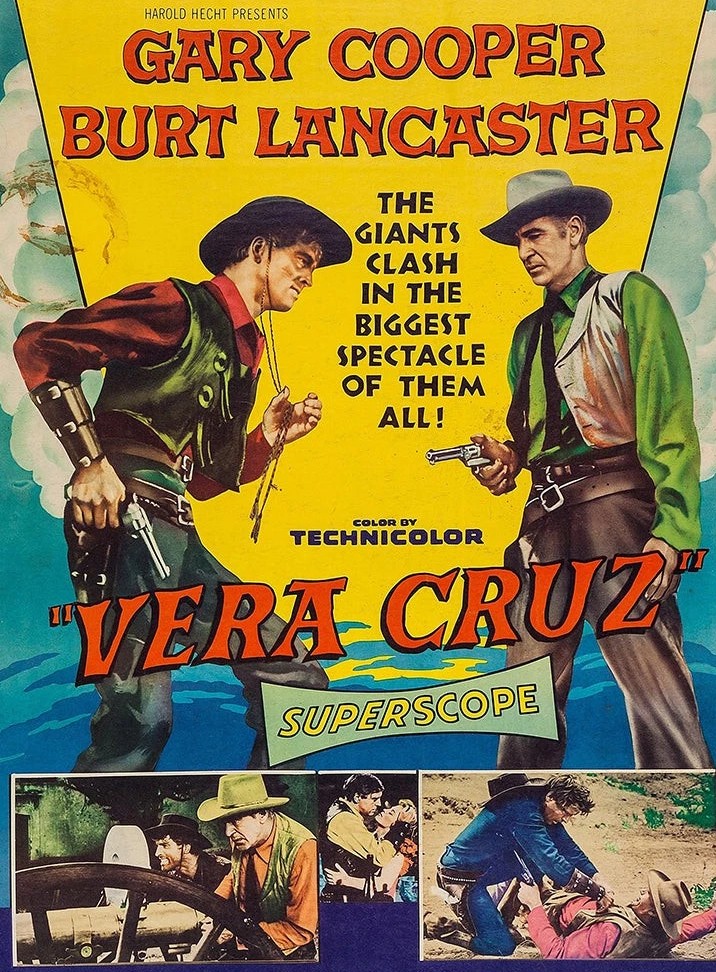
But the UA star with the biggest consistent pull overseas was Burt Lancaster. Robert Aldrich’s Apache (1954) knocked up $1.75 million abroad compared to $3.25 million at home. Vera Cruz, (1954) also directed by Aldrich and coupling Lancaster with Gary Cooper, hit a home run – the $3.94 million abroad being just short of the $4.5 million at home. The actor’s first venture into directing The Kentuckian (1955) kept up the pace with $1.97 million overseas versus $2.6 million at home.
While these were all action pictures, it was acrobatic drama Trapeze (1956), with Lancaster and Tony Curtis fighting over Italian sex symbol Gina Lollobrigida, that made Hollywood wake up. In the U.S, it came third on the annual box office charts with $7.5 million in rentals. If that took the industry by surprise that was nothing compared to foreign where the movie racked up $7.4 million.
Lancaster remained potent. Submarine war picture Run Silent, Run Deep (1958), co-starring Clark Gable, did virtually as well abroad as at home – $2.42 million overseas compared to $2.5 million at home.
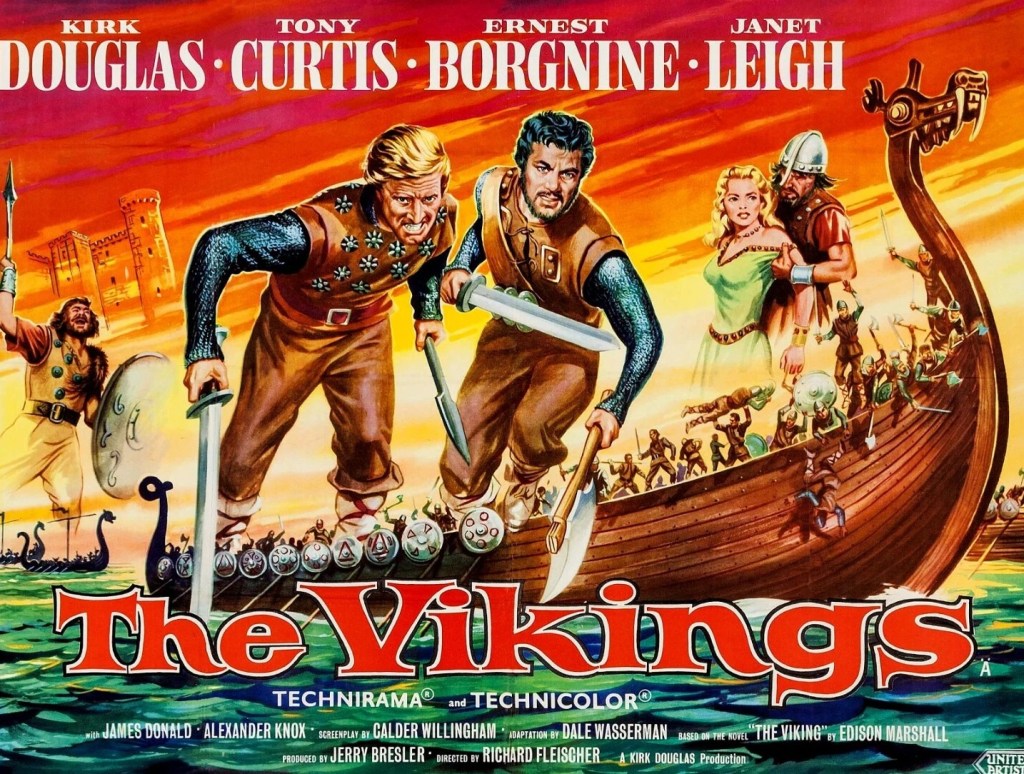
Perhaps learning from the experience of Trapeze, UA went for broke with historical actioner The Vikings (1958) starring Kirk Douglas and Tony Curtis. Domestic of $7 million, enough for fifth place in the annual box office league, was beaten by an overseas count of $7.34 million.
For the first time it appeared that Hollywood could count on overseas to swell the box office in sizeable fashion, thus allowing studios to invest more, especially in historical movies with an action angle, thus opening the door for the spate of 1960s roadshows. Such results also cemented star salaries. If a Burt Lancaster picture could make the same again abroad as at home that put him in a new category of dependable stars and allowed studios to gamble on increasing his salary.
That Charlie Chaplin proved a better draw overseas than in the U.S. was largely by default. The actor-producer-director had fallen foul of American politics with the result that his latest release Limelight (1952) flopped. Abroad it was a different story and Limelight hit a tremendous $5.1 million. With the U.S. reissue market also showing resistance to Chaplin oldies, it was left to overseas audiences to show what cinemas were missing as Modern Times (1936) racked up $2.1 million and The Gold Rush (1925) $1.25 million. For comparison the reissue of Red River (1948) pulled in just $19,000 overseas.
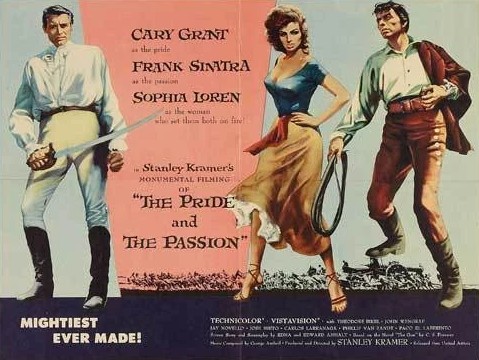
Other notable leaders in the overseas market included: Frank Sinatra, Cary Grant and Sophia Loren in The Pride and the Passion (1957) with $3.17 million ($5.9 million domestic); Billy Wilder’s Agatha Christie adaptation Witness for the Prosecution starring Tyrone Power and Marlene Dietrich on $2.81 million ($3.75 million domestic); and Love in the Afternoon (1957) with $2.7 million ($2 million domestic) starring Gary Cooper and Audrey Hepburn.
Also making a noise overseas were: Stanley Kramer medical drama Not As a Stranger (1955) toplining Olivia De Havilland, Frank Sinatra and Robert Mitchum on a $2 million haul ($7.1 million domestic): Sinatra again in Otto Preminger’s study of addiction The Man with the Golden Arm (1953) on $1.87 million ($4.35 million domestic); Sinatra in war picture Kings Go Forth (1958) on $1.83 million ($2.8 million domestic) and Kirk Douglas as The Indian Fighter (1955) with $1.84 million ($2.45 million domestic).
Bob Hope went against the grain when his overseas tally for Paris Holiday (1958) at $1.8 million bested the $1.5 million of domestic while John Wayne and Sophia Loren’s foreign engagements for Legend of the Lot (1957) counted as a disappointment with just $1.66 million compared to $2.2million domestic.
Low-budget Oscar-winner Marty (1955), produced by Burt Lancaster’s company, was as big a surprise abroad as at home, sprinting to $1.43 million ($2 million domestic). Others worth noting included: Bandido! starring Robert Mitchum on $1.42 million overseas ($1.65 million domestic); David Lean’s romantic drama Summertime (1955) with Katharine Hepburn on $1.3 million ($2 million domestic); Anthony Mann’s Korean War venture Men in War (1957) on $1.26 million ($1.5 million domestic); and Clark Gable in The King and Four Queens (1956) hauling in $1.24 million ($2.5 million domestic).
Olivia De Havilland as The Ambassador’s Daughter (1956) tabbed $1.1 million overseas ($1.5 million domestic) and Gary Cooper in Mark Robson’s Return to Paradise (1953) tallied $1.1 million ($1.8 million domestic). Slow burners numbered Dale Robertson in Sitting Bull (1954) with $1.1 million ($1.5 million domestic) and Stanley Kubrick’s anti-war picture Paths of Glory (1957) with Kirk Douglas shooting up $1 million ($1.2 million domestic).
SOURCE: “Foreign Distribution Gross Estimates,” United Artists Archives, Box 1, Folder 8, University of Wisconsin. Note that in this case “gross” means “gross rentals” not “box office gross.”
Charlton Heston was as hot as they come. He was coming off what would prove one of the biggest pictures of all time – and tucked away an Oscar as well – with Ben-Hur (1959) and followed it up with another hit El Cid (1961). He had no shortage of offers. He had pulled out of The Comancheros (1961), part of proposed three-picture deal with Twentieth Century Fox but with an unknown director rather than veteran Michael Curtiz who later helmed it with John Wayne. He had turned down Let’s Make Love (1960) with Marilyn Monroe and a remake of Beau Geste to co-star Dean Martin and Tony Curtis.
He entered into discussions with Nicholas Ray to film the bestseller The Tribe That Lost Its Head (never made) and The Road of the Snail (never made), rejected William the Conqueror (never made) and Cromwell (1970). He was turned down in turn by Otto Preminger for Advise and Consent (1961). “Zanuck’s man called from Paris,” he notes, “they have a new role for me in The Longest Day (1962).” That was another false lead.
In due course he signed up for Easter Dinner for producer Melville Shavelson (Cast a Giant Shadow, 1966) released as The Pigeon That Took Rome (1962). By this point he was being pursued by Samuel Bronston. “I had no idea how determined Sam was to have me follow El Cid with another film for him.” Bronston eventually got his wish. “No sooner had I turned down The Fall of the Roman Empire (1964) than they shoved it back a year on their schedule and began work on 55 Days at Peking (1963), converting the enormous and half-built set representing Rome into an equally enormous and even more beautiful set representing Peking.”
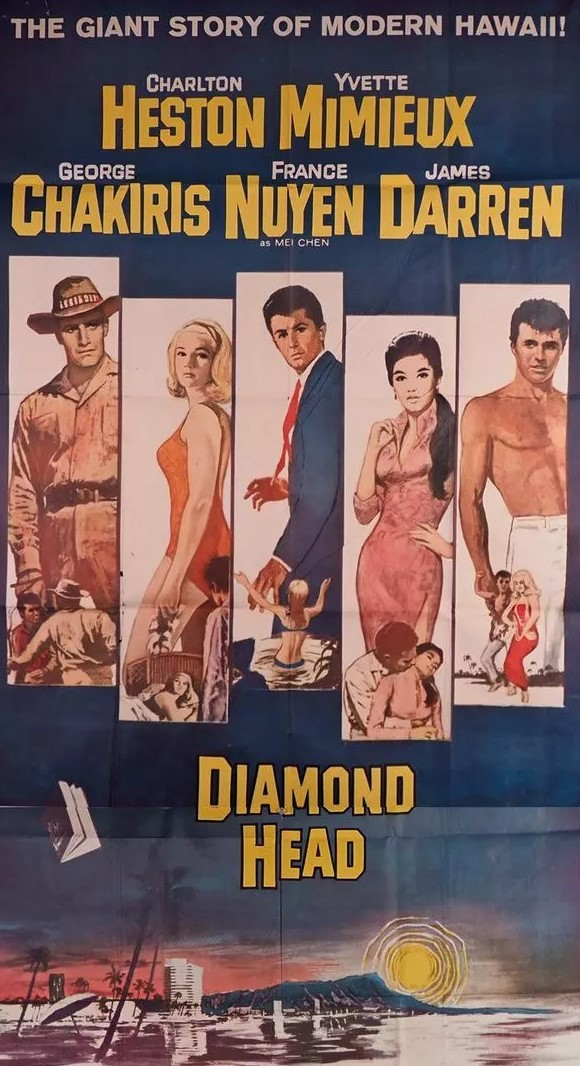
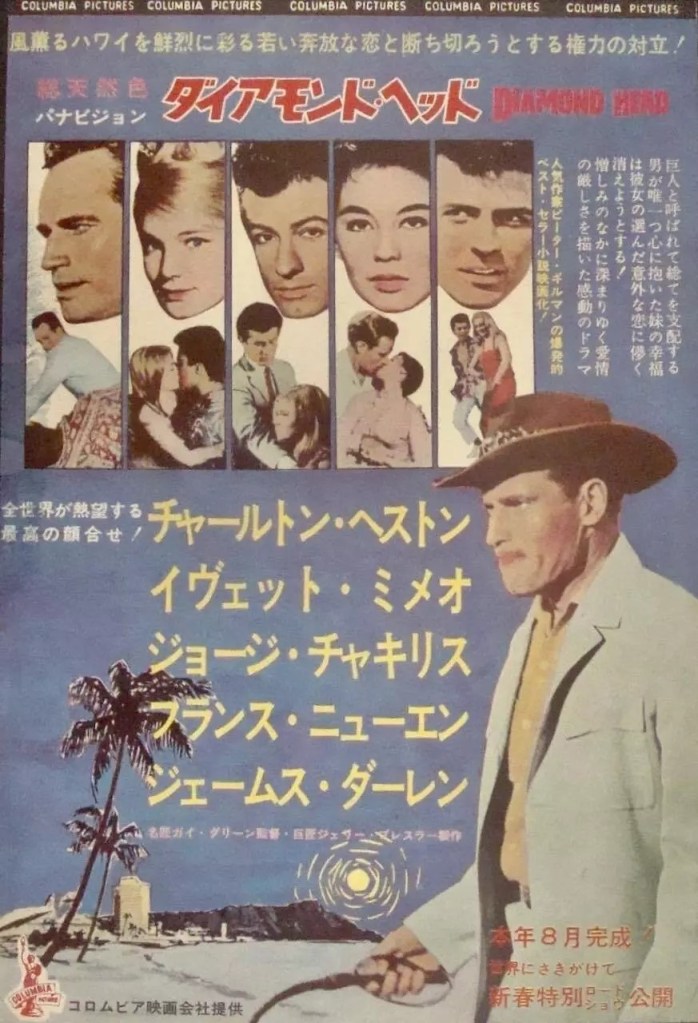
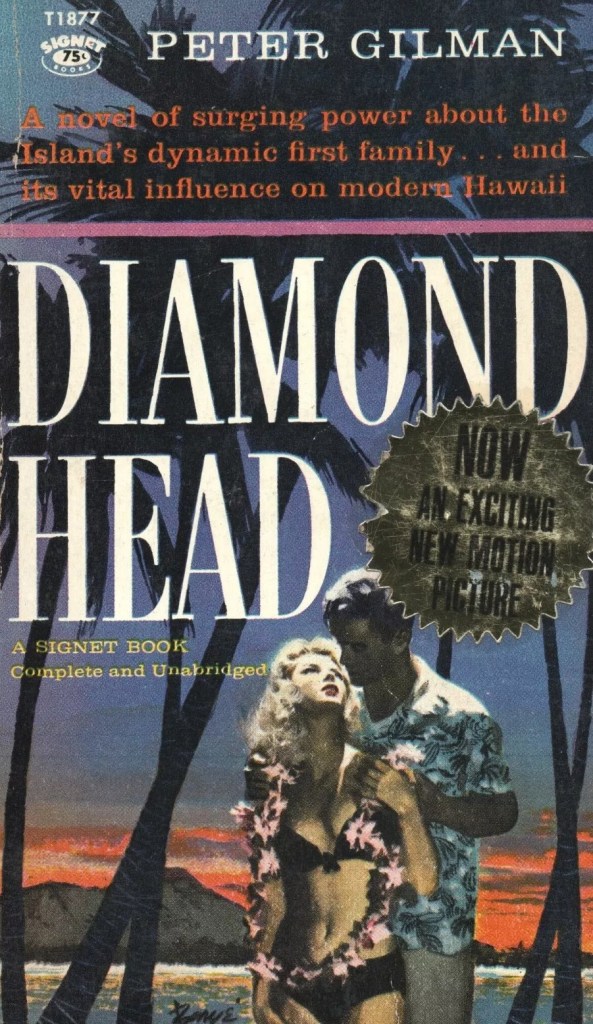
But that meant delay while the massive Bronston machine kicked into gear. In the meatime Heston was “attracted a bit by the opening pages” of Diamond Head with Columbia. “A good part in an overwritten and melodramatic script,” he observed, concluding, “If it’s treated with great care, it might work out all right.”
The project moved along apace. A couple of weeks after receiving the script in December 1961, he was in London meeting director Guy Green (Light in the Piazza, 1962) and producer Jerry Bresler, “an amiable man” though Sam Peckinpah might beg to differ after his experiences on Major Dundee, 1965. “He seems a very intelligent fellow,” Green observed, but queried, “how could a man refer with pride to the fact he had made a film called Gidget Goes Hawaiian?”
George Chakiris (hot after West Side Story, 1961) was already fixed as second male lead and Yvette Mimieux (Light in the Piazza) was being chased for female lead. She wasn’t available but Heston wasn’t keen on second choice Carroll Baker. Luckily, it turned out Mimieux could do the picture. “On the basis of what we saw in Light in the Piazza, she’s ideal for the part.”
But Heston reckoned the script needed work. He was also disgruntled with the costumes for Diamond Head, complaining, “Why is it designers like to costumes instead of clothes? It’s a grievous fault in a period film, but there’s no excuse in a modern story.”
By March, a few months after committing to the picture, he was out in Hawaii, on the island of Kauai, though the trip itself was not without incident, Heston “sick enough to call a doctor.” They were met with unseasonal rain. They were assured this was very unusual. But it wasn’t. In consequence, the first day’s filming was scrapped, filling the actor with the conviction “the whole project was doomed.” It was another three days before filming commenced – the shoot was plagued with rain.
While Heston was impressed enough with the director (“Guy Green works carefully and thoughtfully”) he was distracted by the lighting.
“Those brutes and reflectors loom larger in my mind…One of the banes of my career has been acting in exterior locations with arc lights and reflectors focused in my eyes, which are very light sensitive. (Dark-eyed actors have an unfair advantage, I’ve always felt.) Most people have no idea of the dimensions of this problem. They always ask you how you can remember the lines…they should wonder instead how you can concentrate on the scene when your every nerve is straining simply to keep your eyes open.” Negotiation with the cinematographer ameliorated the situation.
Similarly, Heston found the director responsive to his concerns. For a key scene with Mimieux, he believed “we can both do better” and taking this on board the director agreed on a reshoot the next day. “I have to project Howland’s need to be loved, though he conceals it. You can’t play this, of course, but it has to be in the scene, in the whole film, if we’re going to bring it off.”
As well as a multitude of media – Hawaii at this stage still a rare location, public interest boosted by the publication of James Michener’s Hawaii in 1958, and to a lesser extent, Diamond Head, a more modest bestseller. Swelling the ranks of visitors to the set was John Ford, obliquely sounding Heston out for an unspecified film, possibly Young Cassidy (1965).
Another issue proved to be the horse-riding. While Heston was an accomplished rider, others were not. “Anxious horse-riding…makes for anxious acting.” Even so, Heston found his mount “harder to handle than I figured.”
Heston’s last day of work was May 18. “I waited round most of the day to do one piddling shot from the dream. No dialog, just my face looming up out of the fog. It’s hard to tell what I think now except that I’m still high on Green. He may have made a film that rises above the melodramatic qualities of the script. He didn’t push me as hard as I should be pushed, but he gave me a lot all the same.”
It was October before Heston viewed the completed picture. His verdict: “Diamond Head looks very slick, smooth, not terribly real, and as though there might be some money in it.” Ever the critic, he added, “I have acted better.”
I’ve mentioned in other Blogs the part played by foreign markets in a star’s appeal – Clint Eastwood and Charles Bronson both owed their breakthroughs to foreign box office. Turns out that Heston was in the same league, though an established name when first discovering the size of his fan club abroad.
“My films did invariably well in the Far East and throughout Southeast Asia. Films that flopped elsewhere did fairly well, those that were hits elsewhere did incredibly. The fact that this pattern has continued unchanged accounts in no small degree for my continued viability in films.” Apparently, this was because he represented the Confucius virtues of responsibility , justice, courage and moderation. As if to emphasize his overseas appeal, Diamond Head opened first in Japan, in December 1962.
SOURCES: Charlton Heston, The Actor’s Life, Journals 1956-1978 (Penguin, 1980).
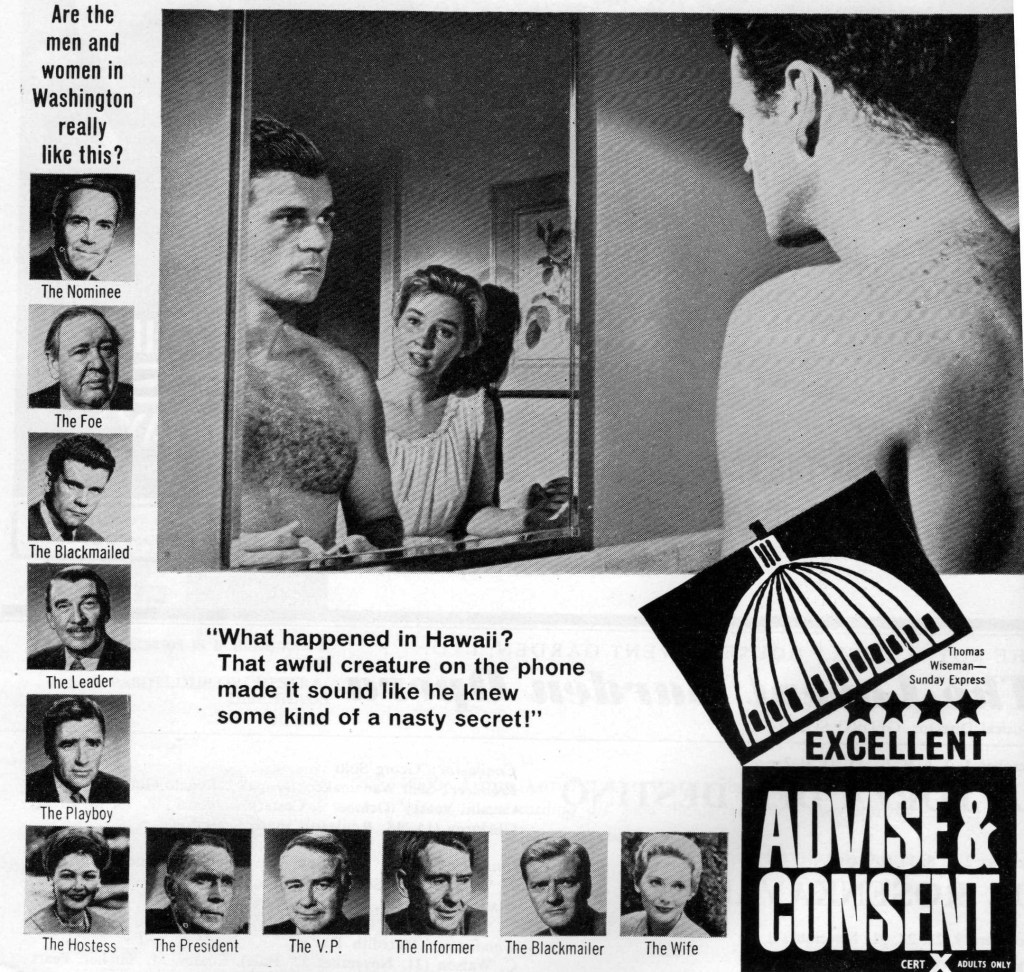
Excoriating engrossing political drama in which the unscrupulous take the moral high ground and the principled are destroyed. In other words, the reality of power – gaining it and keeping it and all the skullduggery that involves. And it has resonance in today’s cancel culture for it is minor indiscretions from the past that bring down the most upstanding of the species.
Theoretically, director Otto Preminger (Hurry Sundown, 1967) broke one major taboo in touching on the subject of same-sex relationships. But in reality he took an even bolder step from the Hollywood perspective of giving center stage in the main to older players. Many had first come to the fore in the 1930s or earlier – Walter Pidgeon (Turn Back the Hours, 1928), Lew Ayres (All Quiet on the Western Front, 1930), Charles Laughton (Oscar winner for The Private Life of Henry VIII, 1933) Franchot Tone (Oscar nominated for Mutiny on the Bounty, 1935), Henry Fonda (You Only Live Once, 1937).
This was the kind of all-star cast you used to get in 1960s big-budget pictures filling out supporting roles. But in this ensemble drama, they all, at various times, hold the floor. And this approach lent the movie greater authenticity. Even if few viewers today recognize any, that, too, works in the movie’s favor, giving it an almost documentary feel.
Movies about politics are never heavy on plot, so if you’re looking for a thriller in way of All the President’s Men (1973) go elsewhere. It has more in common with The Trial of the Chicago Seven (2020) with multiple viewpoints and opposing perspectives. What the best movies about politics have in abundance is repartee. Virtually every exchange is a verbal duel, the cut and thrust, the slashing attack, the parry, sometimes the knockout blow delivered through humor.
Given politicians spend most of their lives making speeches, even the shortest of sentences, even the bon mots, have a polished ring. And that, frankly, is the joy of this picture, brilliantly written by Wendell Mayes (Anatomy of a Murder, 1959) from the Allen Drury bestseller. In some respects the plot is almost a MacGuffin, a way into this labyrinthine world, where characters duck and dive like a more elevated breed of gangster
A lesser director would have given in to the temptation of filming these duels in close-up. Instead, Preminger’s direction is almost stately, keeping characters at bay.
A seriously ill President (Franchot Tone), distrusting his feeble Vice-President Harley Hudson (Lew Ayres), decides to fill the vacancy for Secretary of State with highly-principled Senator Robert Leffingwell (Henry Fonda). This not being the beginning of the President’s term, he can’t just do what he wants, his nomination must go before a committee and then face a vote in the Senate.
The Senate Majority Leader Bob Munson (Walter Pidgeon) isn’t too happy with the idea, seeing Leffingwell as a dove, likely to appease the growing Soviet threat. Others on the committee, namely Senator Brigham Anderson (Don Murray) feel the same and the committee hearing has the tone of an interrogation. The fine upstanding Leffingwell parries well until Senator Seabright Cooley (Charles Laughton) introduces a witness Herbert Gelman (Burgess Meredith) who says Leffingwell belonged to a Communist cell, an accusation Leffingwell denies.
Twist number one: Leffingwell has lied on oath. He confesses this to a friend Hardiman Fletcher (Paul McGrath) who then stitches up the witness. The committee apologies to Leffingwell, which means he is a sure thing for the post, but Cooley smells a rat and starts his own investigation. Leffingwell tries to get out of the job but the President won’t allow this. The Majority Leader and Anderson are let in on the secret, the former willing to accommodate the President but the latter outraged and planning to thwart the nomination when it reaches the voting stage at the Senate. Anderson comes under pressure, phone calls to his wife about something that went on in Hawaii.
And so the stage is set. The pressure builds on Anderson. The President becomes more unwell, making the appointment of Leffingwell more crucial. Aware of Anderson’s intentions, the Majority Leader starts whipping up votes, with Cooley doing the same for the opposition. Machinations take over. And for a movie that was initially light on plot, and it ends with three stunning twists, and proving once and for all there is nothing quite so standard as the self-serving politician.
This was the first movie for several years for Henry Fonda (Broadway and television his refuge) and for society hostess Gene Tierney (Laura, 1945) who suffered from mental health problems and the last screen appearance of Charles Laughton. The acting is uniformly excellent and the direction confident and accomplished.
A slow-burner for sure, but a fascinating insight into the less savory aspects of politics and the human collateral damage.
The “Behind the Scenes” articles have become increasingly popular in the Blog. As regular readers will know I am fascinated about the problems incurred in making certain movies. Perhaps one of the more interesting aspects of this category is that every now and there is out of nowhere massive interest in the making of a particular movie and it shoots up the all-time tree. Most of the material has come from my own digging, and sources are always quoted at the end of each article, but occasionally I have turned to books written on the subject of the making of a specific film.
As with the All-Time Top Movies section, the top 20 comprises the choices of my readers. Alistair MacLean still exerts an influence, which is reassuring because my next book is about the films made from his books.
While Waterloo remains firmly out in front there are some interesting new entries such as The Cincinnati Kid, The Appointment, Mackenna’s Gold, The Train, The Sons of Katie Elder and The Trouble with Angels while Man’s Favorite Sport has made a steady climb upwards.
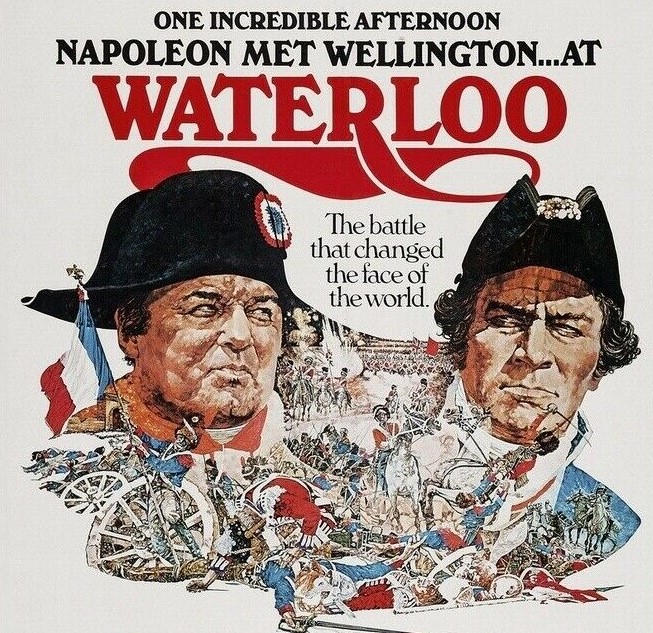
(1)Waterloo(1970). No doubting the effect of Ridley Scott’s Napoleon in racketing up interest in this famous flop.
(2) Ice Station Zebra(1968). A complete cast overhaul and ground-breaking special effects are at the core of this filming of an Alistair MacLean tale.
(3)In Harm’s Way(1965). Otto Preminger black-and-white epic about Pearl Harbor and after.
(7) The Guns of Navarone (1961). Alistair MacLean again, setting up the template for the men-on-a-mission war picture with an all-star cast and enough production jeopardy to qualify for a movie of its own.
(6)The Satan Bug(1965). The problems facing director John Sturges in adapting the Alistair MacLean pandemic classic for the big screen.
(9) Man’s Favorite Sport (1964). Howard Hawks back in the gender wars with Rock Hudson and Paul Prentiss squaring off.
(4)Battle of the Bulge (1965). There were going to be two versions, so the race was on to get this one to the public first.
(5) Cast a Giant Shadow (1965). Producer Melville Shavelson wrote a book about his experiences and this and other material relating the arduous task of bringing the Kirk Douglas-starrer to the screen are told here.
(10) The Girl on a Motorcycle (1968). Cult classic starring Marianne Faithful and Alain Delon had a rocky road to release, especially in the U.S. where the censor was not happy.
(8) Sink the Bismarck! (1962). Documentary-style British WW2 classic with Kenneth More with the stiffest of stiff-upper-lips.
(11). Tora! Tora! Tora! (1970). Richard Fleischer dispenses with the all-star cast in favor of even-handed verisimilitude.
(New Entry) The Cincinnati Kid (1965). Once Sam Peckinpah was fired from the poker epic, Norman Jewison took over. Steve McQueen, Ann-Margret and Edward G. Robinson are top-billed.
(New Entry) The Trouble with Angels (1966). Hayley Mills causes trouble at a convent school where Rosalind Russell tries to rein her in.
(13). The Bridge at Remagen (1969). John Guillerman WW2 classic with George Segal and Robert Vaughn
(17). The Collector (1963). William Wyler’s creepy adaptation of John Fowles’ creepy bestseller with Terence Stamp and Samatha Eggar.
(New Entry) The Train (1964). Another director fired, this time Arthur Penn, with John Frankenheimer taking over in this cat-and-mouse WW2 struggle between Burt Lancaster and Paul Schofield.
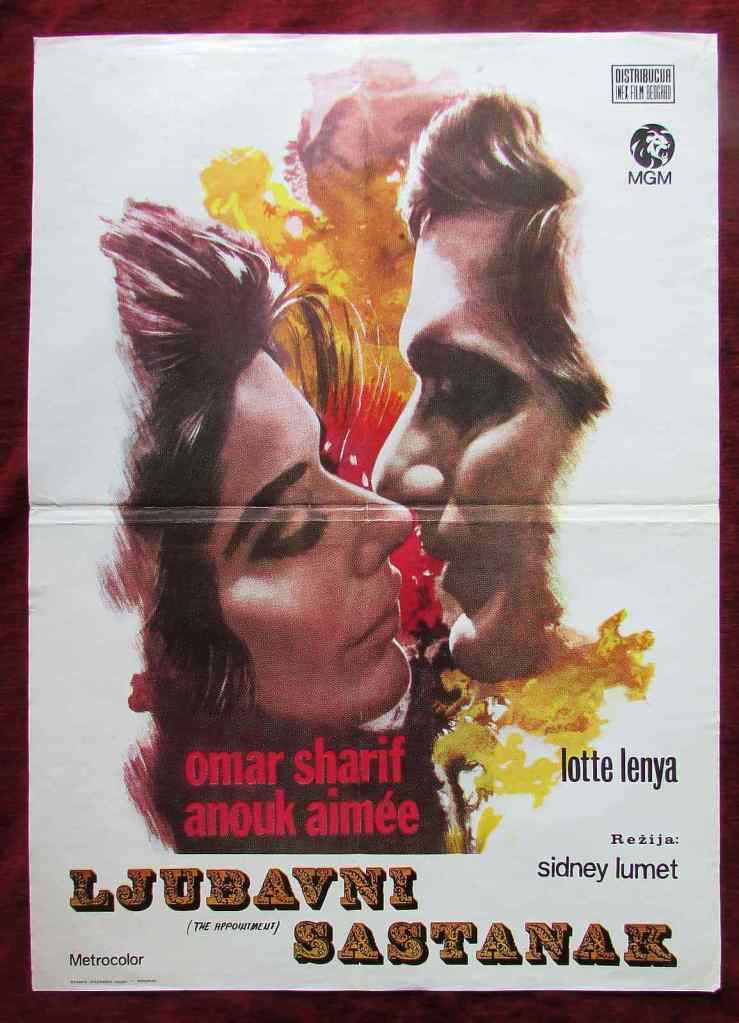
(New Entry) The Appointment (1969). Sidney Lumet has his hands tied in Italian drama with Omar Sharif and Anouk Aimee.
(20) The Way West (1967). Kirk Douglas and Robert Mitchum face off in pioneer western.
(New entry) Mackenna’s Gold (1969). Producer Carl Foreman has his work cut out bringing home western Cinerama epic starring Gregory Peck and Omar Sharif.
(New entry) The Sons of Katie Elder (1965). Long-gestating Henry Hathaway western with John Wayne and Dean Martin as brawling brothers.
Traditionally, this is an opportunity for me to blow the trumpet on behalf of my loyal and growing band of readers. But this time out I’m also taking the opportunity to blow my own trumpet or in the patois of my home city “bum ma load.” I began this blog in June 2020 and my monthly viewing figures scarcely topped a few hundred in the first year. Now I’m hitting 10,000 views a month. Being a self-effacing kind of guy, I thought the world should know.
Now, back to the main task in hand. It’s been a major aspect of the Blog to see which films are most favored by my readers. As regular readers will know, I run this feature every six months.
It’s worth pointing out that for such a testosterone-driven decade the Top Ten is dominated by female stars with Ann-Marget and Angie Dickinson in the ascendancy. Raquel Welch, Hayley Mills and Jean Seberg also make a splash. As well as top male figures like Frank Sinatra, John Wayne, Robert Mitchum and Dean Martin readers have been highly appreciative of underdogs like Alain Delon, Richard Johnson and Alex Cord.
Surprisingly high number of new entries include Young Cassidy, Fathom, The Appointment, Diamond Head, The Family Way and The Venetian Affair.
The figures in brackets represent the previous year’s position.
(1) The Swinger (1966). Queen of the Blog Ann-Margret in bouncy sex comedy that manages a sprinkling of innocence.
(2) Stagecoach (1966). Double whammy from Ann-Margret in this more than acceptable remake of the John Ford western with the male lead taken by Alex Cord, another star in need of reassessment.
(4) Fraulein Doktor (1969). German spy Suzy Kendall out-foxes Kenneth More in this World War One adventure with surprisingly grisly battle scenes and a superb score from Ennio Morricone.
(3) Jessica(1962). Angie Dickinson as a young widow incurring the wrath of wives in a small Italian town.
(7) Once Upon a Time in the West (1969). For many, including myself, the greatest western ever made. Sergio Leone fashions a masterpiece from a stunning cast of Claudia Cardinale, Henry Fonda and Charles Bronson and that fabulous Morricone score.
(6) Fireball XL5. (1962) The height of a television cult. Famous British series from Gerry and Sylvia Anderson, now colorized. “My heart will be a fireball…”
(5) The Sins of Rachel Cade. (1961) Angie Dickinson (again) as African missionary falling foul of the natives and commissioner Peter Finch. Roger Moore in an early role.
(10) Vendetta for the Saint. (1968) More television cultism. Movie made by combining two episodes of the series featuring the immortal Simon Templar. Roger Moore tackles the Mafia.
(12) TheSisters (1969). Complicated French love triangle featuring Nathalie Delon and Susan Strasberg.
(11) Baby Love (1969). Controversy was the initial selling point but now it’s morphed into a morality tale as orphaned Linda Hayden tries to fit into an upper-class London household.
(13) Pharoah (1966). Sensational Polish epic set in Ancient Egypt centering on the battle between the country’s ruler and the religious hierarchy.
(9) Moment to Moment (1966). Hitchcockian-style thriller set in the south of France with Jean Seberg caught out in illicit love affair. Co-starring Honor Blackman.
(21) Go Naked in the World (1961). Steamy drama with Gina Lollobrigida discovering that her profession (the oldest) and true love (with rich Anthony Franciosa) don’t mix. Great turn from Ernest Borgnine as a doting father.
(8) The Secret Ways (1961). The first of the Alistair MacLean adaptations to hit the big screen features Richard Widmark trapped in Hungary during the Cold War. Senta Berger has a small role.
(36) In Harm’s Way (1965). Otto Preminger’s Pearl Harbor epic sets John Wayne and Kirk Douglas at each other’s throats.
(20) The Golden Claws of the Cat Girl (1968). Genuine French cult film with Daniele Gaubert as a sexy cat burglar.
(14)Can Heironymus Merkin Ever Forget Mercy Humpe and Find True Happiness? (1969) Self-indulgence reaches new heights as singer Anthony Newley invokes his inner Fellini that somehow involves bedding lots of women. Then-current wife Joan Collins co-stars.
(New Entry) Young Cassidy (1965). Rod Taylor and Julie Christie in Jack Cardiff’s Irish drama. He took over from an ill John Ford.
(22) Pressure Point (1962). No escape for racist patient Bobby Darin when psychiatrist Sidney Poitier is around.
(New Entry) The Appointment (1969). Complete change of pace for Omar Sharif in unusual Italian drama directed by Sidney Lumet. Anouk Aimee is the tantalizing female lead.
(New Entry) Fathom (1967) Raquel Welch swaps her skydiving kit for the more comfortable environs of a bikini in thriller. Anthony Franciosa co-stars.
(22) Pendulum (1969). Cop George Peppard accused of murdering unfaithful wife Jean Seberg.
(New Entry) The Family Way (1966). Hayley Mills grows up – and how – in marital drama with new British star Hywel Bennett.
(New Entry) Diamond Head (1962). Ruthless hypocritical land baron Charlton Heston causes chaos in Hawaii. With Yvette Mimieux and George Chakiris.
(26) A Dandy in Aspic (1968). Cold War thriller with Laurence Harvey as a double agent who wants out. Mia Farrow co-stars.
(New Entry) The Venetian Affair (1966). Robert Vaughn turns in a terrific performance as an ex-alcoholic spy dealing with former lover Elke Sommer in slippery Venice-set thriller.
(21) The Best House in London (1969). That’s a euphemism for a brothel, let’s get that straight. David Hemmings tries to do right by the sex workers.
(25) Lady in Cement (1969). Frank Sinatra reprises private eye Tony Rome with mobster’s moll Raquel Welch as his client.
(31) The Girl on a Motorcycle / Naked under Leather (1968). Heavily-censored in the U.S., erotic drama with singer Marianne Faithfull as the titular fantasizing heroine. Alain Delon co-stars.
(New Entry) Genghis Khan (1965). Omar Sharif as the all-conquering Mongol chieftain. Stephen Boyd, James Mason, Eli Wallach, Telly Savalas and Francoise Dorleac lend support.
(New Entry) The Chalk Garden (1964). Hayley Mills again, being brought to heel by governess Deborah Kerr with a hidden secret.
(New Entry) Plane (2023). Gerard Butler channels his inner Bruce Willis as he attempts to avoid dying hard on an island inhabited by rebels.
(23) Oceans 11. Frank Sinatra heads the Rat Pack line-up, inspiring an industry of remakes and with everyone starting with Tarantino ripping off one scene.
(New Entry) Five Card Stud (1968). Surprising mix of feminism and noir in revenge western. Dean Martin, Robert Mitchum and Inger Stevens topline.
(34) The Misfits (1960). Last hurrah for Clark Gable, fabulous turns from Montgomery Clift and Marilyn Monroe in John Huston tale of losers.
(28) Once a Thief (1965). Change of pace for Ann-Margret as working mother whose ex-jailbird husband Alain Delon is forced into another job.
(27) Deadlier than the Male (1967). Espionage with a sting in the tale as venomous female villains including Elke Sommer and Sylva Koscina target Bulldog Drummond
(35) Rage (1966). Glenn Ford and Stella Stevens combat pandemic in Mexican town.
(New Entry) Blonde (2022). Ana de Armas in stylized biopic of Marilyn Monroe
(33) She Died with Her Boots On / Whirlpool (1969). Sleazy British film from cult Spanish director Jose Ramon Larraz sees kinky photographer Karl Lanchbury seduce real-life MTA Vivien Neves.
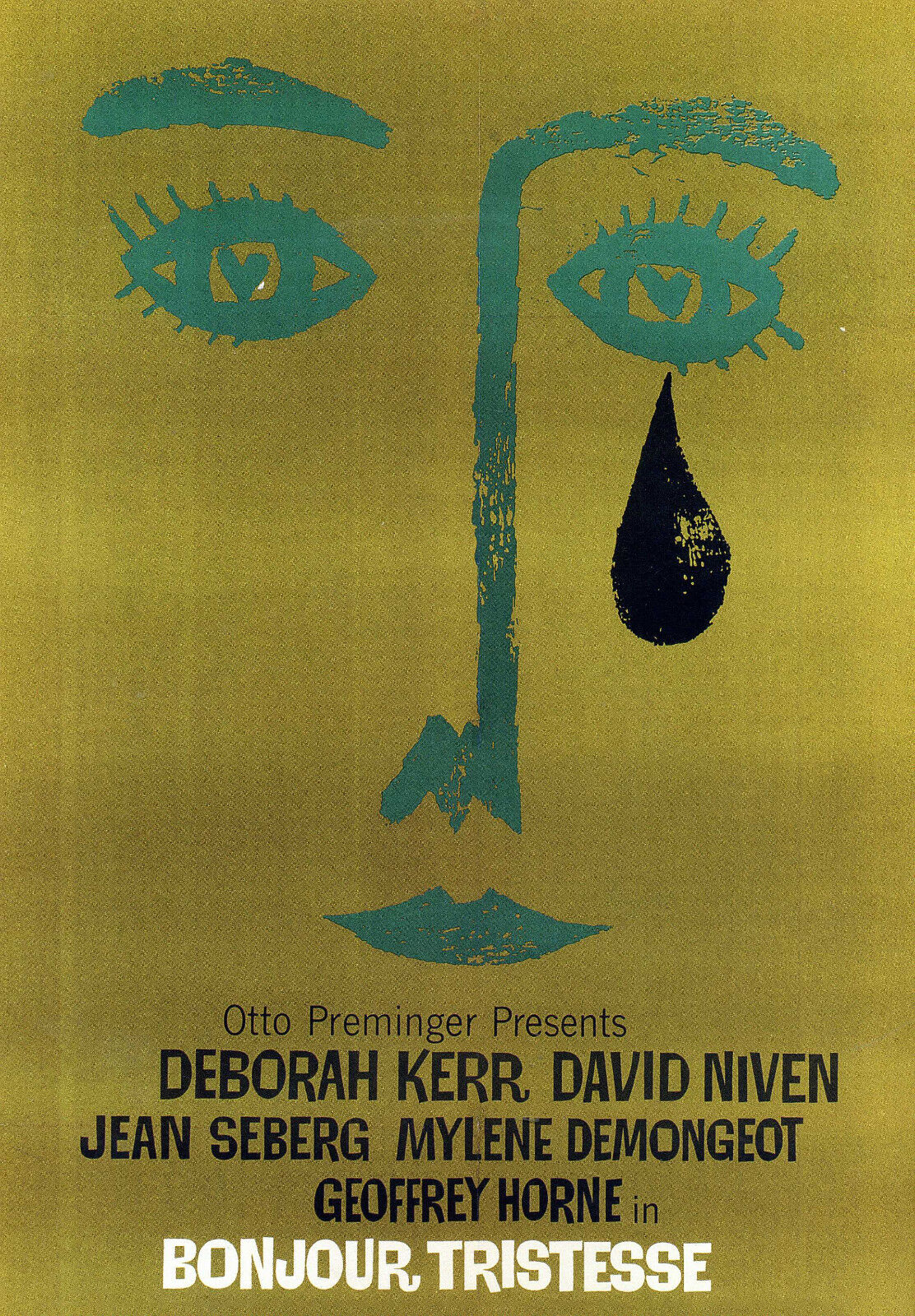
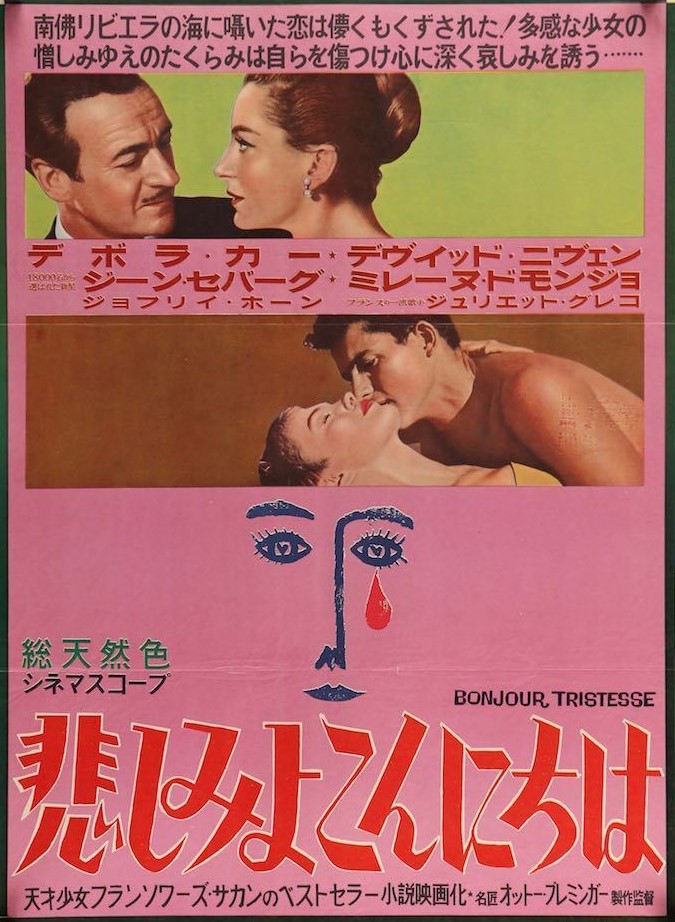
Audrey Hepburn and Cary Grant (later a famous duo in Charade, 1963) were the first names associated with Bonjour Tristesse. The former was mooted soon after the movie rights were sold to French producer Ray Ventura. She remained in the frame after Otto Preminger took over in 1955, when the project was intended for MGM rather than Columbia, at which point Grant was being targeted.
But, unfortunately, this was not being proposed as a dream team. Vittorio De Sica was being lined up to play the father in the Hepburn version that was to be directed by Jean Negulesco.
(You can see why uncovering this information prompted me to have a second shot at a “Behind the Scenes” for this picture. When I did the original article, I didn’t have access to my usual online sources. But after a query from a reader over the success/failure of the movie, and with internet access restored, I began to check out its box office and, in so doing, found a treasure trove of new data.)
Even after Preminger dumped Hepburn – and Maggie MacNamara, star of The Moon Is Blue (1953) for that matter – as being too old, at this point Preminger was not looking in the direction of Jean Seberg either. Instead, he was going down a more traditional route to find an actress to play disturbed teenager Cecile. He embarked on a publicity-driven new star hunt. After in 1956 holding a “talent search for femme lead” in France, the director selected 17-year-old Gisele Franchomme for the role.
But she never made the grade either and was quickly jettisoned for Francoise Arnoul (French Cancan, 1955), aged 25 at the time, with another Frenchwoman, Michele Morgan (Lost Command, 1966), as the older woman who snares Cecile’s father, still to be played by Grant.
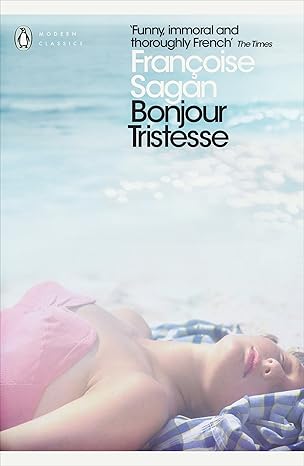
It’s hard to visualize now just what a hot number the source material was. The novel by Francoise Sagan had been a massive U.S. bestseller. By September 1955 it was in its ninth hardback printing, shifting 110,000 copies, and in 1956 became Dell’s top-selling paperback of the year. The movie rights had originally sold for just $3,000 to Ventura before Preminger ponied up $100,000 (or $150,000 depending on who you believe and in either case still the highest price ever paid for a French novel) and set the movie up at MGM.
So that studio was determined to strike while the novel was hot, taking advantage of the sensational sales figures achieved by Dell. Preminger had different plans. He had a double whammy in mind, planning to pre-empt the movie with a play written by S.N. Berhman (on loan-out from MGM who took first stab at the screenplay) initially scheduled to hit Broadway more than a year before the film appeared.
Preminger had worked the play-into-movie magic before, directing The Moon Is Blue on Broadway in 1951 two years prior to his controversial movie version. In the end Preminger concluded there was “insufficient time” to put a play into production before he was due to begin shooting.
Although it had originally gone along with the idea of the play to the extent of funding the stage production, MGM grew increasingly anxious about the delay in moving onto the picture-making part of the deal. Originally, it was planned as Preminger’s follow-up to The Man with the Golden Arm (1955) which would have seen it released either in later 1956 or early 1957.
The notion of turning the book into a play first probably caused the parting of the ways between MGM and Preminger, the studio unable to pin him down to a start date that would take advantage of phenomenal public interest. He was a hard guy to pin down, already commissioning Alec Coppel to write the screenplay of The Wheel, his proposed biopic of Gandhi, and he also had an ongoing deal with United Artists. So when MGM pulled out, the director turned to Columbia, planning Bonjour Tristesse as the first film in a multi-picture non-exclusive deal.
You could see why MGM were so anxious to get going. The studio was leading the way in a new trend, “the newest film cycle is controversy,” trumpeted Variety in a front-page splash in 1956, tagging Bonjour Tristesse “an unpleasant tale.”
But there was a better reason to act fast rather than just to be seen as with-it. Not only was the paperback market booming, its fastest-growing sector was the movie tie-in. While the 4,500 titles appearing annually accounted for sales of around 200 million copies, publishers also printed movie tie-ins for another 200 titles.
Movie tie-ins had turned into a publishing phenomenon. Sales of Dell movie tie-in paperbacks rocketed year on year, so much so that the rise in 1959 was 23 per cent over the previous year. Ironically, Preminger’s Anatomy of a Murder (1959) has been the publisher’s top title for that year. Peyton Place had taken the top spot in both 1957 and 1958 – 4.2 million copies in print – with Bonjour Tristesse its top seller in 1956.
Typically, a movie tie-in was, in effect, a follow-up to the initial paperback. Often the tie-in print run was much higher than the initial printing. The tie-in edition for Bridge on the River Kwai, for example, topped 750,000 copies, for Sayonara it was 900,000. Don’t Go Near the Water sold one million in a month. The average movie tie-in print run for Bantam was 200,000-350,000 copies; for Dell 250,000-300,000; for Signet 300,000; Popular Library 250,000-300,000; and Pocket 225,000-375,000.
Paperbacks accessed a new market. Apart from traditional bookshops, they were available in drugstores, newsstands, supermarkets, impulse buys when the reader was purchasing something else. But they provided for studios a powerful marketing tool. Dell advertised that its paperback “bestsellers were movie pre-sellers” and for good reason. Front covers adorned with stills from a forthcoming movie offered studios fresh promotional opportunity. When a big picture was due you could hardly walk down a street without your attention being called to a tie-in.
Paperback sales were also viewed as a providing a strong indication of box office potential. Based on its sales, it was predicted that Bonjour Tristesse would do as well as Old Yeller and Don’t Go Near the Water, which turned into, respectively, the 10th and 14th biggest films of the year. Columbia sales chief Rube Jackter was so confident of success for Bonjour Tristesse that he departed from convention, taking a groundbreaking approach, personally undertaking a nationwide tour to sell the project to his local sales teams. Perhaps he didn’t want to be beaten to the punch by A Certain Smile (1958), Sagan’s sophomore novel, rights selling for $150,000 and eight per cent of the gross.
Newcomer Jean Seberg was in the vanguard of a new talent hunt. Undaunted by his experience with Seberg in Saint Joan and the critical pummelling she had personally taken, Preminger defended his protégé. “I think she has talent. If I’m wrong, I’ll pay for it. I don’t say I’m infallible, but neither are the critics.”
Preminger backed new talent, taking a chance on Maggie MacNamara in The Moon Is Blue, Lee Remick in Anatomy of a Murder and, later, Tom Tryon in The Cardinal (1963) and Carol Lynley in Bunny Lake Is Missing (1965). In the late 1950s, Twentieth Century Fox was particularly active in developing younger – and cheaper – stars. But other studios such as Universal and Paramount (who had picked up Audrey Hepburn in a talent hunt in the earlier part of the decade) were also keen.
Lynley and Remick were among those being tipped for the top in 1959 in addition to Rod Taylor (Dark of the Sun, 1968), Jill St John (Tony Rome, 1967), Stuart Whitman (Rio Conchos, 1964), Troy Donohue (Rome Adventure, 1962), Bradford Dillman (The Bridge at Remagen, 1969), Sandra Dee (A Man Could Get Killed, 1966), John Gavin (Psycho, 1960) and Cliff Robertson (Masquerade, 1965).
Preminger’s cinematographer George Perinal (who had taken over Saint Joan, 1957, at short notice) hankered after using Technirama for the picture until the director pointed out “the difficulties of using such a large camera in the tiny interiors of the locations.” These included an art gallery in Montparnasse round the corner from Notre Dame where Preminger negotiated a one-day rental (and the purchase of a Picasso) from the Japanese owner. Following Saint Joan, Perinal was so taken with the experience of working with Preminger that he had turned down several other offers in order to keep himself free for a possible shot at Bonjour Tristesse.
“A large part of my job,” noted Perinal, “ is keeping out of the way once I had lit the set as Preminger wanted,” leaving the physical shooting to the cameraman. He had “great admiration for Preminger’s methods” since “unlike most directors he doesn’t protect himself by having one or two extra cameras covering the scene from different angle. He knows the angle he is after, and he gets it.” If the rushes proved the scene didn’t go as planned, he simply shot it all over again.
The scene in Maxim’s was filmed for a day and a night, extras being rehearsed in the morning. Most of the takes concentrated on chanteuse Juliette Greco. Francoise Sagan was tapped to write the lyrics for the movie’s theme song, but that didn;t work out instead it’s credited to Jacques Datin.
It’s worth remembering the ease with which top stars travelled. Deborah Kerr had booked passage on the Queen Mary sailing from New York to Cherbourg in the north of France for herself and two children, Melanie and Francesca, and after docking took a leisurely drive down to St Tropez.
As well as paperbacks offering marketing opportunities, the theme song to Bonjour Tristesse was also a promotional tool, Gogi Grant released it as a single, Les Baxter as an instrumental and Janet Blair sang it on British television top show Sunday Night at the London Palladium while the soundtrack album was a premier release for RCA Victor, which backed it up with an advertising campaign.
Released in February 1958 in the U.S., Bonjour Tristesse was one of 35 pictures distributed by Columbia over a six-month period. Thanks to the book sales and the cast, expectations were high. David Niven was riding a commercial (blockbuster Around the World in 80 Days, 1956, still in cinemas) and critical wave (Separate Tables, 1958, would earn him an Oscar). Deborah Kerr remained one of the industry’s most sought-after stars, her commercial and critical standing (three Oscar nominations 1956-1958 in a row) far higher than Niven’s. She had hit box office heights in The King and I (1956) and played opposite such top male stars as William Holden (The Proud and the Profane, 1956), Cary Grant (An Affair to Remember, 1957) and Robert Mitchum (Heaven Knows Mister Allison, 1957).
Robert Coyne of exhibitor alliance Compo rated it potentially one of the year’s “big pictures” along with The Young Lions and Peyton Place. But while enjoying some reasonable results in prestigious first run theaters in hi-hat locations, Bonjour Tristesse quickly fizzled out.
Although a dud in the United States – in terms of rentals it didn’t even clear $1 million – it enjoyed greater success elsewhere, ranking fifth in Japan, 20th in the annual Italian box office race, and in the Top 50 in France, “bang-up business” in journalistic parlance. But it was banned in Ireland. However, suggestions it was a box office smash elsewhere had to be taken with a pinch of salt. It only earned $195,000 in rentals in Japan. So, it is doubtful if it ever reached profitability on initial release.
There was some respite in the critical pummeling of Seberg. Hollywood Reporter, in a favorable review, tabbed her a “delicious little eyeful” noting her style was better suited to this than Saint Joan. And despite her experience of working with the director, the actress, one year later, was reported as “hoping Otto Preminger will come through with a commitment to her” not realising he was on the stage of ducking out of her contract, explaining that there wasn’t a suitable role for her in his next three planned pictures. So that contract, too, went the way of Columbia who tested her for a supporting role in The Beach Boys, a starring vehicle for Kim Novak to be helmed by Charles Vidor.
There was some reassessment of the title post-release. When Columbia sold a batch of 60 movies to television in 1964, Bonjour Tristesse was hailed in the trade advertising campaign as the main attraction, photos of the three stars adorning a full-page advert in Variety. It was reissued in Tokyo in 1981. It was featured in a 15-picture Columbia retrospective at the Museum of Modern Art in New York in 1985.
SOURCES: “Europe,” Hollywood Reporter, August 18, 1954, p7; “Otto Preminger Acquires Bonjour Tristesse Novel,” Hollywood Reporter, April 27, 1955, p2; “Tristesse Legit Version Being Financed by MGM,” Hollywood Reporter, May 31, 1955, p1; “Preminger Gets Behrman To Script Play and Film,” Hollywood Reporter, August 5, 1955, p3; Mike Connolly, “Rambling Reporter,” Hollywood Reporter, August 24, 1955, p2; “M-G Bankrolls Tristesse Legiter,” Variety, September 7, 1955, p3; “Literati,” Variety, September 7, 1955, p69; “Preminger Sets Coppel To Script Wheel,” Hollywood Reporter, January 12, 1956, p3; Stuart Schulberg, “Europe’s Unpampered Stars,” Variety, February 15, 1956, p7; “Chatter,” Variety, February 15, 1956, p74; “Paris,” Hollywood Reporter, May 22, 1956, p20; Mike Connolly, “Rambling Reporter,” Hollywood Reporter, June 8, 1956, p2; “Chatter,” Variety, June 13, 1956, p78; “Looky – We’re Controversial,” Variety, June 26, 1956, p5; “Bonjour Tristesse,” Variety, July 25, 1956, p4; “Chatter,” Variety, August 22, 1956, p62; ”Niven and Kerr Will Star in Tristesse,” Hollywood Reporter, February 21, 1957, p2; “Broadway Ballyhoo,” Hollywood Reporter, April 19, 1957, p10; “Insufficient Time for Tristesse Stage Version,” Variety, March 28, 1956, p2; “Cameraman on the Sidelines,” American Cinematographer, August 1957, p510; “The Note-Book,” Hollywood Reporter, August 5, 1957, p7; “Broadway Ballyhoo,” Hollywood Reporter, August 13, 1957, p4; “Broadway Ballyhoo,” Hollywood Reporter, August 20, 1957, p4; “Preminger,” Variety, October 16, 1957, p75; “Jackter Hits Sticks for Bonjour Release,” Variety, December 18, 1957, p3; “Foreign TV Follow-Up,” Variety, December 18, 1957, p38; Advert, “Dell Book Best-Sellers Are Movie Pre-Sellers,” Hollywood Reporter, January 8, 1958, p5; Review, Hollywood Reporter, January 15, 1958, p3; Advert, Variety, January 22, 1958, p56; RCA Victor advert, Variety, January 29, 1958, p56; Advert, Billboard, January 27, 1958, p49; “Columbia Feeds 35 by August,” Variety, February 5, 1958, p18; “A Film ‘Still’ Big Sell on Paperback,” Variety, March 5, 1958, p7; “Irish Want New Film Censoring,” Variety, June 11, 1958, p11; “Broadway Ballyhoo,” Hollywood Reporter, July 1, 1958, p4; “Sindlinger: And Rebuffed,” Variety, July 2, 1958, p5; “Paris First Runs,” Variety, July 16, 1958, p12; “New York Sound Track,” Variety, July 30, 1958, p21; “Columbia To Test Seberg for Beach Boys Role,“ Hollywood Reporter, August 15, 1958, p1; “Yank Films Still Dominate Italy,” Variety, December 3, 1958, p12; “Top Grossers* of 1958,” Variety, Jan 7, 1959, p48; “Kwai Tops in Japan,” Variety, March 18, 1959, p24; “Nine U.S. Pix,” Variety, May 13, 1959, p12; “Hollywood Takes To Tyros,” Variety, September 2, 1959, p3; “Paperback-Film Zowie Tandem,” Variety, February 3, 1960, p5; Advert, Variety, September 9, 1964, p39; “Bull Takes Charge,” Variety, May 25, 1981, p32; “MoMa Columbia Retro Set,” Variety, January 30, 1985, p4.
* NOTE: Just to confuse things, Variety headlined its annual rentals report as “Top Grossers of 1958” but in the small print clarified that these figures related to “domestic market rentals accruing to distributors (i.e. studios) a distinguished from total theater gross.”
Otto Preminger was initially beaten to the punch, rights to Francoise Sagan’s 1954 bestseller already sold to Ray Ventura, forcing the director to ante up $150,000 a year later to retrieve them. The director started working on the script with S.N. Behrman (Quo Vadis, 1951) but, dissatisfied with the result, turned to Arthur Laurents (Rope, 1948), who was permitted to complete his screenplay without any interference.
Shooting began in July 1957 in Paris and locations included Maxim’s and jazz club La Hachette where Preminger filmed Juliette Greco singing the title song. The main locale, a villa in Le Lavandou in the South of France, was rented from French publisher Pierre Lazareff.
By casting Deborah Kerr (The Night of the Iguana, 1964) and David Niven, who had starred in The Moon Is Blue (1953) as principals, it was officially turned into a British production, providing access to Eady Levy monies, although it was shot with a French crew who proved largely hostile to the director’s personality and went on strike on the second day. Due to a scheduling misunderstanding, Niven and Preminger got off on the wrong foot.
But the chief victim of the director’s ire was Jean Seberg, star of his previous effort – and substantial flop – Saint Joan (1957). While not entirely happy with the neophyte’s performance in her debut, he decided to give her the benefit of the doubt. “I refused to believe that I was so wrong and the critics so right, that this girl was so completely devoid of talent,” he complained, offering her a second chance. “He showed a faith in me nobody expected him to show,” commented a grateful (at the time) Seberg.
But Preminger soon regretted his decision. “I don’t like the way you talk, walk or dress,” he told her. Unable to get a better performance from her after four or five takes he would just give up. At one point, she was drenched with buckets of water for a scene where she was emerging from the sea. However, that scene only took seven takes, something of a triumph for Seberg. And it’s worth noting that seven takes was nothing for Preminger if he really wanted to make an actor suffer.
If you think the movie takes a very melodramatic turn, the screenplay toned down much of the book’s melodrama and especially its more serious overtones. Preminger stuck to the script. He invented camera movement and blocking during the day’s rehearsals rather than arriving at the studio with fixed ideas. To allow the camera to move more freely, the floor of the set was treated with gelatin. He relied on only a few takes, expecting the actors to deliver what he wanted, so in some respects it was no surprise he reacted badly when Seberg failed to follow his instructions, although as a last resort he knew he could always cut to another actor.
Niven and Kerr both braced the director about his treatment of Seberg, telling him “to lay off this girl, because she’s had it, and if you continue, we don’t want to keep working. ”
The movie was completed at Shepperton Studios in England. The last shot of the film took an entire day to shoot, Cecile removing her makeup with cold cream in front of the mirror and tears form. Preminger wanted “the face to remain a child’s face.” Two days of flashback shoots had to be re-done as they had by mistake been processed in color rather than black-and-white
Preminger should have been a happy man. He was falling in love with costume coordinator Hope Bryce, a model who had worked with Givenchy, and in due course she became his third wife. Ditto, Seberg, who had fallen for lawyer and nobleman Count Francois Moreuil – a relationship that also ended in marriage – and as a result of the romance grew more relaxed on the set and “didn’t let Preminger’s demands bother her.”
Opinions differ regarding Seberg. Arthur Laurents deemed her “a shrewd cookie, I don’t care what they say about her.” Deborah Kerr averred: “I think any other woman would have collapsed in tears or walked out, but she took calmly all the berating and achieved a very interesting and true Sagan-type heroine.” Co-star Mylene Demongeot said, “For a while she had everything in her hands to have a successful career.” From Seberg’s perspective she viewed Preminger as a father figure, with the attendant hate that often comes with that.
Demongeot, however, fought fire with fire, calmly warning the director he would get a heart attack if he kept on yelling at her. Standing up to him and occasionally dissolving into fits of laughter at his instructions kept him at bay. She saw a different side of the director, although tagging him as “ a nasty man,” she also recalled him as “a very funny, intelligent man…and he could even be charming…outside of work.” Seberg and Demongeot had become friends after the American had stayed with the French actress and her husband in order to learn the lines of French required for her role.
After filming ended, Preminger’s current wife Mary Gardner sued for divorce and Twentieth Century Fox threatened to take him to court for repayment of $60,000 for a film bever made. Preminger sold Seberg’s contract to Columbia. “He used me like a Kleenex and threw me away,” said Seberg. But, interestingly, it was only after that relationship ended that she took acting lessons.
In truth Seberg’s Hollywood career never recovered although she enjoyed a brief mainstream revival a decade later through Paint Your Wagon (1969) and Airport (1970). Hollywood has its revenge on Preminger. After the failure of Skidoo (1968), Paramount chief Charles Bluhdorn exacted “a very slow death” on the director.
NOTE: There’s an update to this called Part Two which is published on Oct 19, 2023. When I did this original article I didn’t have my normal online access which permits me to check through trade magazines. Because I received a query about box office I decided, once the online issue had been cleared up, to check that issue and in the process I uncovered so much fascinating information I took a second stab at it.
SOURCES: Chris Fujiwara, The World and Its Double, The Life and Works of Otto Preminger (Faber and Faber, 2008) pp210-217; Eric Braun, Deborah Kerr ( W.H. Allen , 1977) pp164-165; Garry McGee, Jean Seberg, Breathless, Her True Story, (2017) pp42-48.
You might be forgiven for wondering why Otto Preminger, a past master at film noir, did not simply adapt the source novel by Francoise Sagan by tilting the material in that direction. After all, Preminger had helped create the genre with Laura (1944) and followed up with noir trilogy Whirlpool (1950), Where the Sidewalk Ends (1951) and Angel Face (1952).
The purported saving grace of the Sagan novel is the main character’s guilt at the disaster she triggers, although, from another perspective that could be viewed as author cunning, employing acceptance of culpability to render her more sympathetic. In other words, she gets away with it, and that’s a completely different twist.
Whereas, in another world, she would be doing jail time or at least undergoing psychiatric care, her action appears to make her even more independent, discarding men at whim, turning into the character whom Jean-Luc Godard would use as the inspiration for Breathless (1960).
The tale is told in flashback, allowing a peppering of grief into what otherwise would be a straightforward story of spoiled little rich girl Cecile (Jean Seberg) plotting to rid herself of interloper Anne (Deborah Kerr) who has disrupted the perfect life she shares with doting father Raymond (David Niven).
In some respects it applies a coming-of-age template to all the main characters, adults as well as young required to adjust to the consequences of love and alter their behavior. It’s not just the teenage Cecile who’s spoiled – nothing to do but laze in the sun, swim in the sea and attend parties and night clubs – but Raymond, a charming philanderer/perfect cad, new girlfriend on tap, the beauty of current one, Elsa (Mylene Demongeot), undercut by her propensity to blister under the sun and despite her overall shallowness a mathematical whiz in the casino, a skill which would probably allow her to dispense with her apparent dependence on an older rich lover.
Into this cosy set-up arrives, by an accident of timing, old flame Anne, a successful couturier, whose mental fragility is disguised by an outwardly strong character. Her presence is accepted until Elsa is sent packing and Raymond proposes marriage. Anne makes the fatal mistake of overdoing the maternal, seeking to rein in Cecile, instructing her to chuck her boyfriend Philippe (Geoffrey Horne) and spend her time studying. It says a lot about Anne’s character that she couldn’t have more seriously miscalculated not just Cecile’s character but that of Philippe, who, intending to become a lawyer, seems a sensible choice for a boyfriend.
So, Cecile hatches a plan to bring Elsa back into Raymond’s orbit knowing that fidelity is scarcely his strong suit. Oddly enough, this kind of plotting, especially given the South of France atmosphere, would play better as a standard rom-com ploy, daughter trying to push father in the direction of preferred lover.
Instead, it exposes the cracks in Anne’s psyche and drives her to suicide. But since no one is aware, and Elsa too dumb ostensibly to recognize the part she plays, of the machinations, Cecile gets off scot-free, and in reality using the guilt to make her appear more sympathetic. This probably worked better in the Sagan novel which, with a first-person narrative, allows the author to form the other characters in a manner that makes Cecile’s actions more understandable or at least acceptable, nudging the reader towards sympathy rather than repulsion.
Whatever way the story is pitched, it doesn’t really work. All the characters, save Elsa, are exposed as inherently fragile, unable to accept change and/or reality. The suicide seems a mundane narrative ploy. Raymond is never presented as the love of Anne’s life and her death seems an incredible over-reaction, intended to give the story a more dramatic climax.
However, the characters are all well-drawn and the vivacity of the French lifestyle brings the picture to life, but hardly suited to Preminger who, by this stage, had a tendency to look for a bigger issue to chew over.
Jean Seberg (Moment to Moment, 1966) never managed a successful Hollywood career but this film was a big hit with emerging French filmmakers, and she was a far bigger box office attraction in France. The iconic short haircut and Givenchy attire seemed to present her as a latter-day Audrey Hepburn, but it was her screen independence that appealed more. Deborah Kerr (Prudence and the Pill, 1968), portraying a complex character, would be the pick of the actors except David Niven (Prudence and the Pill) exerts effortless charm and in terms of screen splash you could scarcely fault the effervescent Mylene Demongeot (The Singer not the Song, 1961).
Preminger, as ever, toys with convention. It’s the present day that’s shot in black-and-white rather than the past. Just as he rid John Wayne of his trick of breaking sentences in two in In Harm’s Way (1965), here Deborah Kerr is revealed without make-up, her freckled face providing her with an innocence. He had some fun with the house servants, apt to glug champagne, literally, behind their employer’s back. Arthur Laurents (Rope, 1948) wrote the screenplay.
Not quite sure how it ended up at the Bradford Widescreen Weekend since although it is in Cinemascope it was not one of that process’s more outstanding champions. Nor why it was introduced as Deborah Kerr’s movie when as far as the public was concerned the star was Jean Seberg. Nor even why Kerr was deemed a “Queen of Scope” since you could apply that term to virtually every female star who appeared in the 1950s in Cinemascope (20th Century Fox), VistaVision (Paramount) or Panavision (MGM).
If this were made now, there would be a scene at the end where Cecile tips the wink to the audience and enjoys rather than feels guilty about her clever ploy.
The property had been bouncing around Hollywood for over decade. It had its origins in the true-life tale of the five Marlow brothers involving murder, revenge, and jailbreak, the story making national headlines when the case was heard at the U.S. Supreme Court in 1892. Based on the book The Fighting Marlows by Glenn Shirley,William H. Wright (Assignment in Brittany, 1943) shopped around a screenplay, jointly written with Talbot Jennings (Northwest Passage, 1940), that was purchased by Paramount in 1955.
Alan Ladd (Shane, 1953), who owed the studio a movie, was cast in the lead and the script went through rewrites by Frank Burt (The Man from Laramie, 1955) and Noel Langley (Knights of the Round Table, 1953) with shooting scheduled for 1956. John Sturges (The Magnificent Seven, 1960) was set to direct until Ladd quit, having bought his way out of his contract. Burt Lancaster (The Train, 1966) was brought in as his replacement.
When Lancaster dropped out, producer Hal Wallis took over the movie in 1959 and considered replacing him with James Stewart (Shenandoah, 1965) or Charlton Heston (The Hawaiians, 1970) with Dean Martin (Rio Bravo, 1959) as the second lead. But still the movie stalled for another five years before Wallis settled on John Wayne who signed on for $600,000 plus a one-third share of the profits and one-third ownership of the negative (a bounty that would continue to pay off through reissues and leasing to television). Henry Hathaway was paid a flat $200,000.
Wayne and Hathaway had history dating back to The Shepherd of the Hills (1941) based on the million-copy bestseller by Harold Bell Wright, and groundbreaking in its use of Technicolor, then in its infancy. They didn’t work again until desert treasure hunt Legend of the Lost (1957) which teamed Wayne with Sophia Loren. A few years later came North to Alaska (1960) followed by Circus World / The Magnificent Showman (1964).
Despite this long-term relationship, the most the director could offer about his star was that “Wayne is more particular about the pants he wears than anything in the world…unless he gets the thinnest kind of material it drives him crazy.”
When the script was finally knocked into shape, the Marlow siblings had been trimmed from five to four, and that family had been replaced by the Elders, a nod to western aficionados who would recognize the name Katie Elder (“Big Nose Kate”), occasional companion of Doc Holliday whose story Wallis had previously filmed as Gunfight at the O.K. Corral (1957). Even though Elder wasn’t dead enough – she lived till 1940 – to conform to this picture, it seemed an odd decision to choose that name unless resonance was expected.
But it was still far from a done deal because Wayne’s cancer threatened to scupper the picture. Start of shooting scheduled for October 20, 1964, was shuttered when the disease was diagnosed on September 13 following the completion of Otto Preminger WW2 epic In Harm’s Way (1965). Aware surgery might jeopardize the picture, Wayne suggested Wallis replace him with Kirk Douglas (Cast a Giant Shadow, 1966).
Hathaway rejected the notion, but while neither star nor producer had any idea whether the operation would be successful, and whether Wayne would be even fit enough to work, or – God forbid, that the actor might already have made his last picture – Wallis took an optimistic approach and announced the picture would be delayed for a month and “even a little later.” Hathaway’s optimism was based on the fact that he had survived colon cancer a decade before.
At least the surgeon moved fast, operating four days after diagnosis, and again five days later. As well as fighting the damage surgery and pain had done to his body, Wayne found himself slipping into depression, convinced the operation would render him unemployable. “I’ll never work again if they find out how sick I am. If they think an actor is sick, they won’t hire him,” he said, a legitimate observation given the cost of shutting down a picture should the actor be unable to play his role.
Wallis’s business partner Joseph Hazen shared Wayne’s pessimism and urged the producer to recast with either William Holder (The 7th Dawn, 1964) or Robert Mitchum (The Way West, 1967). Paramount, too, fretted about insurance, the studio couldn’t risk hiring an uninsurable actor. Wallis refused to abandon Wayne and the studio finally agreed to tough conditions from the insurance company. So, on January 6, 1965, the principals gathered in Durango to commence the 46-day shoot on a production budgeted at $3.19 million.
The high elevations – 8,500 ft in places – were not conducive to someone recovering from a lung cancer operation and Wayne found it difficult to breathe. It didn’t help that on the fourth day of shooting Wayne was expected to jump into icy water for the sequence where the brothers were ambushed by the villains. It didn’t help, either, that Wayne was too big to wear a rubber suit to stave off the cold like his fellow actors.
Wayne never complained that Hathaway “worked me like a damn dog.” He realized that it “was the best thing ever happened to me. It meant I got no chance to walk around looking for sympathy.” The star put on a brave front, publicly acknowledging his battle with cancer as a way of giving hope to others while privately terrified not so much of dying but of being helpless. “I just couldn’t see myself lying in bed…no damn good to anybody.”
“He had to be the macho man,” commented Earl Holliman (The Power, 1968), a late substitute for original star Tommy Kirk (Swiss Family Robinson, 1960) who was sacked after being caught smoking marijuana, “he had to have more drinks than the next guy.” And despite the severity of his condition, and although publicly pretending he had given up tobacco, he continued smoking cigars.
Recalled Dean Martin (Rough Night in Jericho, 1967), “He’s two loud-speaking guys in one.” George Kennedy (Cool Hand Luke, 1967) asserted, “If you put him in a group with other movie stars, the eye went to him and that is the ultimate marker of respect. He was John Wayne. He was very real. It didn’t matter if he wasn’t Olivier; Olivier wasn’t John Wayne.”
But there were outward signs of the effect the illness had upon him. He was less sure of himself on a horse, riding with a shorter rein out of fear a horse would get away from under him, trying to minimize the chances of falling or being bucked from the animal. And as the film wore on, an oxygen inhaler was set up beside him on set.
Dennis Hopper (Easy Rider, 1969) was wary of working again with Hathaway after a difficult experience with him on From Hell to Texas (1958) starring Don Murray and Diane Varsi where the actor suffered the indignity of endless takes. Hopper quit three times and for good measure the director put the word around and virtually grounded the actor’s career. Hopper only made one movie in six years. In the interim he had married Brooke Hayward, daughter of actress Margaret Sullavan whom Hathaway respected, and peace was brokered.
Although on his best behavior on the shoot, Hopper was no less impressed. “He was a primitive director, he rarely moved his camera, the movement came from the actors.”
“Westerns are art,” declared Wayne. “They’ve got simplicity and simplicity is art…There’s simplicity of conflict you can’t beat…Westerns are our folklore and folklore is international…In Europe they understand that better than we do over here. “
Whether it was public sympathy for an ailing star and his resolve to fight cancer, or audience delight that he was back in a western after a gap of a few years, The Sons of Katie Elder was a huge hit with $5 million in initial rentals (what studios were left with after cinemas had taken their share). It earned more later in reissues but that initial sum was enough for thirteenth spot in the annual box office rankings though beaten by both Shenandoah and Cat Ballou. Its foreign earning would probably match domestic, to make it one of Wayne’s biggest earners for the decade.
SOURCES: Scott Eyman, John Wayne: His Life and Legend (Simon and Schuster Paperbacks, 2014) p111, p387-396 ; Ronald L. Davis, Duke: The Life and Image of John Wayne (University of Oklahoma Press, 1998) p266; Hal Wallis Collection, Margaret Herrick Library; Hedda Hopper, “Ladd To Star in Film of Pioneers’ Reunion,” Chicago Daily Tribune, November 9, 1955, p16; Thomas M. Pryor, “Hecht-Lancaster Obtains 2 Novels,” New York Times, January 12, 1956, p22; Oscar Godbout, “TV Movies Extras Get Salary Rises,” New York Times, July 3, 1956, p17; John Wayne, “Me? I Feel Fine,” Los Angeles Times, January 18, 1965; James Bacon, “Wayne’s Biggest Bout vs. Killer Cancer,” Los Angeles Herald Examiner, March 14, 1965; Roderick Mann, “John Wayne – A Natural as The Shootist, Los Angeles Times, March 7, 1976.











 The Magnificent 60s