Bye, Bye, Birdie (1963) ***

Marketeers employ a cute trick to get round the contractual billing required on movie posters. The position and size of a star’s name in any movie – even now – is stipulated long before a single camera rolls. This is where all the “name above the title” malarkey stems from comes from, that stipulation setting the reals stars apart from the wannabes.

However, whoever was in charge of drawing up the standard boilerplate template was only concerned with names, not images. That left a loophole to be exploited. Should you have a female rising star, whose face or figure might be a darn sight more attractive than the top-billed male, well, by heck, there was nothing to stop you plugging the contractually-less-dominant person all over the poster at the expense of the top-billed star.

The marketeers did it with Marilyn Monroe, they did it with Audrey Hepburn, and now they’re stooping to the same loophole to promote Ann-Margret as virtually the only star of any importance. Admittedly, this was before top-billed Dick Van Dyke achieved much of a reputation as a hoofer in such spectaculars as Mary Poppins (1964). But his second-billed female lead, Janet Leigh, whose features the camera had very much taken a shine to, was also elbowed out of poster prominence.

And small wonder. Excepting Monroe, no actress ever in the last decade burst onto the screen with such pizzazz. By the time Bye Bye Birdie  – her third movie – opened Ann-Margret’s asking price had zoomed to $250,000 and she had struck a two-picture deal with MGM, was contracted to five for Twentieth Century Fox, three for Columbia and another three for Frank Sinatra’s movie production arm.

So a heck of a lot was in the balance. And, boy, does she deliver. Her energy is untouchable and, excepting again Monroe, there was never a sexier singer.

Shame the musical itself is so trite, at its best in homage to those innocent days of the 1950s, that were a more Technicolor version of those 1940s musicals that invariably were sugary confections. The story rips off the Elvis Presley legend. Conrad Birdie (Jesse Pearson) is a pop singer who has been drafted. Songwriter’s secretary Rosie (Janet Leigh) comes up with a publicity gimmick, Conrad singing a song, “One Last Kiss,” written by Albert (Dick Van Dyke) sung on the Ed Sullivan Show, his last gig before joining the Army, with a specially-chosen gal to be recipient of said smooch.

To fill you in, Rosie has had a tough time getting boyfriend Albert, eight years into their relationship, across the wedding finishing line. Bridie fan Kim (Ann-Margret) also has a boyfriend Hugo (Bobby Rydell) who naturally objects to his beloved kissing the pop singer on air in front of millions even it is a publicity stunt. Meanwhile, Albert’s Mama (Maureen Stapleton) is trying to drive a wedge between Rosie and her son. The out-of-sorts Rosie and Hugo conspire to sabotage the television show.

So pretty much the will-she-won’t-she is delivered in wishy-washy style with the plot (call that a plot!) interrupted every few minutes for a song. The narrative seems out of place for a section involving arrest for statutory rape and racism, but that gives the movie some much-needed muscle.

No question that Ann-Margret (The Swinger, 1966) steals the show. That would hardly be surprising given the lack of competition. But she certainly has the song-and-dance chops, and her energy is second to none. She gets a march on everyone by singing the title number over the credits, the credits themselves very much pushed into the background. The other prospective breakout musical star Dick Van Dyke only has one solo and Janet Leigh (Psycho, 1960) wasn’t going to effect a change of screen persona any time soon.

George Sidney directed from a screenplay by Irving Brecher (Oscar-nominated for Meet Me in St Louis, 1944) and Michael Stewart (Hello, Dolly!, 1969) from the original Broadway hit by Charles Strouse (music), Lee Adams (lyrics) and Stewart (book).

Refreshingly lightweight. Ann-Margret lights up the screen.

The Mephisto Waltz (1971) ****

Jacqueline Bisset’s good looks often got in the way of her acting. Or, more correctly, in the way of producer perception about what she could do.  Too often she was the female lead that simply hung on the arm of the male lead. But, here, to my surprise, she is not only the narrative fulcrum, but steals the show from Alan Alda, mostly remembered these days for TV’s M*A*S*H (1972-1983) but at the start of the 1970s being heralded in Hollywood as the next big thing and top-billed.  

Alda’s character here is little more than his screen persona in embryo – glib, wise-cracking, cocky. In an earlier Hollywood he would have been the smooth-talking gangster beefing up B-pictures.

Appearing between the demonic high-spots of Rosemary’s Baby (1968) and The Omen (1976), director Paul Wendkos (Cannon for Cordoba, 1970) escapes his journeyman roots to suffuse the picture with nightmarish scenes, and clever use of the fish-eye lens, treating Satanism with the most subtle of brushes, restricted to a mark daubed in a forehead and a pentagram on the floor but minus any chorus of witches or warning from priests or sundry other holy persons.

Myles (Alan Alda), piano prodigy who never made the cut, now a journalist, is encouraged by interviewee, concert pianist Duncan Ely (Curt Jurgens), to take it up again. Under the older man’s tutelage, he thrives, promising career beckons, plus an entrée into quite a heady world of parties, sex and wealth. Wife Paula (Jacqueline Bisset) is more sceptical especially once Duncan and his buddies start buying up everything in sight in her new antiques emporium. She’s especially perturbed to see Duncan sharing an intimate kiss with his married daughter Roxanne (Barbara Parkins) never mind wondering whether her husband is going to fall prey to the daughter’s seductive technique.

Just what’s going on is never entirely obvious, making the audience work rather than bombarding them with shock scenes. I’m not sure what you’d call it in demonic terms, some kind of transference, body and soul. Once Duncan dies, Myles’s life is transformed, not just thanks to an extremely generous bequest in the old man’s will, but a dramatic increase in his piano-playing prowess, plus, almost as a bonus, the increased attentions of Roxanne.

True scares are limited, mostly a huge drooling black mastiff who may or may not be a killer, and so the tale remains more subtle and eventually boils down to whether Paula will follow her husband on his satanic journey or lose him to the wiles of Roxanne and, perhaps more importantly, never enjoy him as the personality he once was.

We all know that, where money and career is concerned, Myles has a cynical bone in his body and has already demonstrated a capacity for the finer things in life, whether they be animate or inanimate. So his character carries little dramatic tension. And so Paula carries the dramatic burden and she bears that, too, with surprising subtlety.

There’s almost a reverse Gaslight vibe to the whole exercise, Paula convincing herself that she must take this step into what would otherwise be considered madness. It’s worth noting that nobody’s pushing her. She makes the decision herself, although takes you a while (that subtlety again) before you cotton on to consequence. And while we’re on the subject of subtlety, full marks to Wendkos for treating two scenes in particular of Bisset nudity with commendable restraint.  

Quite where Satan’s apparent mission to bring classical music to the masses fits into his plans for global domination is never made clear, leanings of such an esoteric nature rarely a prerequisite of the evil mastermind.

Still, a much classier feast than I was expecting, Bisset (The Sweet Ride, 1968) the standout. Her performance served to give Hollywood notice of a classier star than merely the barely seen girlfriend of Steve McQueen in Bullitt (1968). From here on in she would catch the eye of a better grade of director, including Francois Truffaut in Day for Night (1974) though it can be arguedthat it was her looks that sent her into the stratosphere after the wet t-shirt modelling in The Deep (1977).

Alda, meanwhile, jumped straight into M*A*S*H and didn’t resurface as a creditable movie marquee name until California Suite (1978) and The Seduction of Joe Tynan (1979).  Curt Jurgens (Psyche ’59) as ever is good value, Barbara Parkins (Puppet on a Chain, 1970) his rather slinky associate and Bradford Dillman (The Bridge at Remagen, 1969) also pops up.

Wendkos in top gear. Screenplay by Ben Maddow (The Way West, 1967) from the Fred Mustard Stewart bestseller. Excellent Jerry Goldsmith score.

Well worth a look.

Dr No (1962) *****

Minus the gadgets and the more outlandish plots, the James Bond formula in embryo. With two of the greatest entrances in movie history – and a third if you count the creepy presence of Dr No himself at the beds of his captives – all the main supporting characters in place except Q, plenty of sex and action, plus the credit sequence and the theme tune, this is the spy genre reinvented.

Most previous espionage pictures usually involved a character quickly out of their depth or an innocent caught up in nefarious shenanigans, not a man close to a semi-thug, totally in command, automatically suspicious, and happy to knock off anyone who gets in his way, in fact given government clearance to commit murder should the occasion arise. That this killer comes complete with charm and charisma and oozes sexuality changes all the rules and ups the stakes in the spy thriller.

 Three men disguised as beggars break into the house of British secret service agent Strangeways (Tim Moxon) and kill him and his secretary and steal the file on Dr No (Joseph Wiseman). A glamorous woman in a red dress Sylvia Trench (Eunice Gayson) catches the eye of our handsome devil “Bond, James Bond” (Sean Connery) at a casino before he is interrupted by an urgent message, potential assignation thwarted.

We are briefly introduced to Miss Moneypenny (Lois Maxwell) before Bond is briefed by M (Bernard Lee) and posted out immediately – or “almost immediately” as it transpires – to Jamaica, but not before his beloved Beretta is changed to his signature Walther PPK and mention made that he is recovering from a previous mission. But in what would also become a series signature, liberated women indulging in sexual freedom, and often making the first move, Ms Trench is lying in wait at his flat.

Another change to the espionage trope, this man does not walk into the unknown. Suspicion is his watchword. In other words, he is the consummate professional. On arrival at Jamaica airport he checks out the waiting chauffeur and later the journalist who takes his picture. The first action sequence also sets a new tone. Bond is not easily duped. Three times he outwits the chauffeur. Finally, at the stand-off, Bond employs karate before the man takes cyanide, undercutting the danger with the mordant quip, on delivering the corpse to Government house, “see that he doesn’t get away.” 

Initially, it’s more a detective story as Bond follows up on various clues that lead him to Quarrel (John Kitzmiller), initially appearing as an adversary, and C.I.A. agent Felix Leiter (Jack Lord) before the finger of suspicion points to the mysterious Dr No and the question of why rocks from his island should be radioactive. Certainly, Dr No pulls out all the stops, sending hoods, a tarantula, sexy secretary Miss Taro (Zena Marshall) and the traitor Professor Dent (Anthony Dawson) to waylay or kill Bond.

But it’s only when our hero lands on the island and the bikini-clad Honey Rider (Ursula Andress) emerges from the sea as the epitome of the stunning “Bond Girl” that the series formula truly kicks in: formidable sadistic opponent, shady organization Spectre, amazing  sets, space age plot, a race against time. 

It’s hard not to overstate how novel this entire picture was. For a start, it toyed with the universal perception of the British as the ultimate arbiters of fair play. Yet, here was an anointed killer. Equally, the previous incarnation of the British spy had been the bumbling Alec Guinness in Our Man in Havana (1959). That the British should endorse wanton killing and blatant immorality – remember this was some years before the Swinging Sixties got underway – went against the grain.

Although critics have maligned the sexism of the series, they have generally overlooked the female reaction to a male hunk, or the freedom with which women appeared to enjoy sexual trysts with no fear of moral complication. Bond is not just macho, he is playful with the opposite sex, flirting with Miss Moneypenny, and with a fine line in throwaway quips.

Director Terence Young is rarely more than a few minutes away from a spot of action or sex, exposition is kept to a minimum, so the story zings along, although there is time to flesh out the characters, Bond’s vulnerability after his previous mission mentioned, his attention to detail, and Honey Rider’s backstory, her father disappearing on the island and her own ruthlessness. The insistently repetitive theme tunes – from Monty Norman and John Barry – was an innovation. The special effects mostly worked, testament to the genius of production designer Ken Adam rather than the miserable budget.

Most impressive of all was the director’s command of mood and pace. For all the fast action, he certainly knew how to frame a scene, Bond initially shown from the back, Dr No introduced from the waist downwards, Honey Rider in contrast revealed in all her glory from the outset. The brutal brief interrogation of photographer Annabel Chung (Marguerite LeWars), the unexpected seduction of the enemy Miss Taro and the opulence of the interior of Dr No’s stronghold would have come as surprises. Young was responsible for creating the prototype Bond picture, the lightness of touch in constant contrast to flurries of violence, amorality while blatant delivered with cinematic elan, not least the treatment of willing not to say predatory females, the shot through the bare legs of Ms Trench as Bond returns to his apartment, soon to become par for the course.

Future episodes of course would lavish greater funds on the project, but with what was a B-film budget at best by Hollywood standards, the producers worked wonders. Sean Connery (The Frightened City, 1961) strides into a role that was almost made-to-measure, another unknown Ursula Andress (The Southern Star, 1969) speeded up every male pulse on the planet, Joseph Wiseman (The Happy Thieves, 1961) provided an ideal template for a future string of maniacs and Bernard Lee (The Secret Partner, 1961) grounded the entire operation with a distinctly British headmaster of a boss.

Masterpiece of popular cinema.

The Fugitive Kind (1960) ***

Audiences were promised sparks that never appeared. Marlon Brando (The Chase, 1960) remained electric but his charismatic screen presence wasn’t matched by miscast co-stars Anna Magnani (The Secret of Santa Vittoria, 1969) and Joanne Woodward (Paris Blues, 1961).  That was three Oscars right there. Throw in a Pulitzer Prize for playwright Tennessee Williams and the project should have been home and dry.

Instead, it struggles to get going as the screenplay flounders under a flotilla of old maids, alcoholics, drug fiends, racists and deadbeats while the central conceit of a May-December romance fails to catch fire. That last element is something of a contemporary trope, and one that even now is exceptionally hard to pull off and it was no easier back in the day.

Itinerant guitarist and sometime criminal Valentine (Marlon Brando), desperate to go straight, ends up in a small Mississippi town when his car breaks down on a stormy night and he finds shelter in the home of Vee Talbot (Maureeen Stapleton), wife of the sheriff. Given his good looks, it’s likely that Valentine would be viewed as a catch, but in this small town he appears to have stumbled upon a nest of sexually frustrated and/or voracious women, way too many dependent on the kindness of a stranger.

First to throw her hat, and virtually everything else, into the ring is the young vivacious unfettered alcoholic Carol (Joanne Woodward), outcast of a wealthy family, barred from shops and bars alike for her uninhibited behavior. But Valentine’s seen too much of her kind. Next up is middle-aged dry goods shop owner Lady Torrance (Anna Magnani) who gives him a job as a counter hand. Bitter and frustrated, she has to run after morphine-addicted husband Jabe (Victor Jory). Vee hovers around trying to pick up the pieces.

Small town, jealousy rife, word bound to get back to duped husbands, tragedy the outcome. By this point the Deep South on screen was pretty much played out as are the various basket cases who inhabit it and there’s not much fresh ground to be ploughed here. Valentine is called upon to do “double duty” as employee and lover, and finally responds to her sense of desperation.

He can’t quite cut his ties to the illicit, stealing from the cash register to fund a gambling stake, and when caught is subtly blackmailed.

The backstory mostly concerns Lady. Her father’s wine plantation was destroyed by vigilantes in revenge for him selling liquor to African Americans. She wants to establish her independence by setting up a confectionary stall. Turns out of course it’s her husband that led the vigilantes. Valentine totes around a guitar that he never plays, as if it’s a reminder of a previous life. He’s running away from a past in New Orleans without any idea of the future to which he aspires. He doesn’t know what he wants but won’t make a move in case it’s the wrong one. He may desire  a mother more than a lover.

It’s all set for a violent melodramatic ending, though the climax doesn’t ring true. Mostly, it’s about loneliness, both within and outside marriage. Relationships fester rather than last. The males are brutal or impotent.

While Joanne Woodward is determinedly over-the-top with her good-time-bad-girl routine, way out of control, and using over-acting as a crutch, Brando’s performance is more subtle and Magnani’s heart-wrenching.

But it just doesn’t add up. There’s too much emphasis on seedy background and forced drama. Williams has an alternative of the Raymond Chandler edict of when in doubt have a man come through a door with a gun; with him it’s unwanted pregnancy.

Director Sidney Lumet (The Appointment, 1969), who would later be more sure-footed, seems unsure here, the faux noir adding little, and inclined to indulge over-acting from the bulk of the supporting cast. Meade Roberts (Danger Route, 1967) adapted the Williams’ play.

An excellent Brando can make up for the rest.

Light in the Piazza (1962) ****

Will resonate more strongly today. Never intended as a light-hearted confection, despite the obvious premise of young love catching fire in Italy, this was a bold picture in its day and a more subtle examination of the wider impact of mental illness than those later movies set in institutions such as Lilith (1962) or Shock Treatment (1964). Bold, too, of Olivia de Havilland to take on a role that is so transparently maternal. Instead of her middle-aged character succumbing to romantic opportunity as the billing might suggest, to a holiday affair with a rich handsome Italian, she is first and foremost a mother.

Initially, standard romance meet-cute as young Italian Fabrizio (an unlikely George Hamilton) catches the runaway hat of young blonde Clara (Yvette Mimieux) in a piazza in Florence. His ardent pursuit is thwarted at every turn by Clara’s mother Meg (Olivia de Havilland). At first this appears to be for the most obvious of reasons. Who wants their naïve daughter to be swept away by a passionate Italian with heartbreak and possibly worse consequence (what mother does not immediately conjure up pregnancy?) to come.

Sure, Clara seems flighty and a tad over-exuberant and perhaps prone to tantrums but then back in the day this was possibly just an expression of entitlement by rich indulged young women. Turns out there’s a more worrying cause of her sometimes-infantile behavior. She was kicked in the head by a pony and has the mental age of a child of ten. If she is not protected, she might end up as prey to any charming young man.

Clara needs tucked up in bed with a stuffed toy, and her mother to check the room for ghosts and read her a bedtime story before she can go to sleep. Even when Fabrizio’s credentials check out – his father Signor Naccarelli (Rossano Brazzi) vouches for his good intentions, but, in the way of the passionate Italians, would not want to stand in the path of true love.

Clara’s father Noel (Barry Sullivan) is the one who spells out the reality. That pony didn’t just kick his daughter in the head it “kicked the life out of” his marriage. His wife lives in a dreamland, hoping for a miracle, and if that is not forthcoming quite happy to live with a daughter who never grows up. He wants to send her to “a school,” convincing himself it’s “more like a country club.”

Meg fights her own feelings that she knows better than her daughter and that love will not provide the cure, at the same time as batting away the affections of the elder Naccarelli. When she finally gives in to her daughter’s desire, wedding plans fall apart at the last minute when Naccarelli Snr discovers that his 20-year-old son is marrying not, as he imagined, a woman of roughly the same age or slightly younger, but actually someone six years older. Eventually, the wedding goes ahead. Meg convinces herself she did the right thing in permitting the marriage to go ahead.

But this is one of those happy ever afters that don’t quite wash and you might find yourself wondering exactly how it played out when the husband discovered exactly what kind of wife she had. Her instability isn’t genetic so no danger of a subsequent child encountering the same issue. And having to care for someone other than herself might well bring out the same level of maternity as her mother shows, but equally clearly Fabrizio is unaware of exactly what he’s taking on. How will he feel when asked to read her a bedtime story or scour the cupboards for imaginary monsters.

The movie didn’t do well enough to warrant a sequel – audiences expecting romantic confection were disappointed – and just hope Clara didn’t turn into the kind of inmate seen in Lilith and Shock Treatment.

Still, takes a very realistic approach to the problems of someone with such problems maturing into adulthood.

The Oscar-garlanded Olivia de Havilland  (two times winner, three times nominee), in her first picture in three years, clearly didn’t want to see out her maturity in those May-December roles that others of her age fell prey to. She is excellent here, no attempt to dress herself up as a sex bomb, and refreshing to see her approach. Yvette Mimieux (Diamond Head, 1962) is excellent as the confused youngster. George Hamilton  (The Power, 1968) lets the side down with his speaka-da-Italian Italian but Rossano Brazzi (The Battle of the Villa Fiorita, 1965), who is Italian, has no trouble with the lingo or with being a smooth seducer.

Director Guy Green (Diamond Head, 1962) adds in some unusual Florentine tourist color, but doesn’t shirk the difficult storyline. Julius J. Epstein (Casablanca, 1942) wrote the script.

Worth a look

Go Naked in the World (1961) ***

Overshadowed at the box office by MGM’s other venture into the world of the good-time-girl, Butterfield 8 (1960), under-rated at the time and ever since, this raw slice of emotion delivers on every front and may be even more pertinent today with its unashamed depiction of paternal love. Spoiled brat Nick Stratton (Anthony Franciosca), trying to escape controlling millionaire Greek father Pete (Ernest Borgnine), falls in love with widow Guilietta (Gina Lollobridgida), unaware that she is a high-class hooker, among whose clients number Pete.

Three tales run in parallel – the main love story, Pete’s attempts to drag his son into the family construction business, and the father’s undying love for his son. Guilietta is only too aware that her profession prohibits the development of true love, her world consisting of putting on a happy face for grey-haired men, while avoiding commitment. Where Butterfield 8 evaded the reality of prostitution, that is not the case here, Guilietta tormented by the prospect of bumping into former clients or her lover unable to accept her past. Overwhelmed by guilt, she believes she is beyond forgiveness. Nick wants none of the benefits of a rich man’s son but all the entitlement. 

Never mind the story, which was always going to tumble into tragedy, it’s the performers who steal the picture. Lollobrigida (Strange Bedfellows, 1965) gives a terrific performance, carrying the emotional baggage of the love story, devastation only inches away, self-destruction possibly the only path to destruction, constantly aware that taking he easy path to riches and independence now stands in the way of happiness. The scenes where her self-loathing breaks through the patina of sexy gloss are tremendous as is her touching belief that somehow she can escape destiny.

While this might appear to be nothing but an over-the-top performance from Borgnine (The Split, 1968), it is anything but, and any man in an early 1960s picture who can demand a kiss from his grown-up son and constantly tells him how much he loves him is a pretty unusual character for the period. Of course, this overt show of emotion is explained by him being Greek, but it’s clearly more than that. While attempting to control all around him, with hypocrisy in full spate, as heavy on religion as playing away from home, this is actually a superb piece of characterization, of a powerful man rendered impotent by the loss of love. He has the two best scenes, almost having a heart attack as he watches his son walk across a sky-high girder and later begging Guilietta’s forgiveness for attempting to wreck the romance.

Franciosca (Fathom, 1967) is the weak link. For all that he is saddled with a spineless character, moping and running away his default, he never quite seems worthy of romance with Guilietta nor for that matter of equality with his father. Former child star Luana Patten (Song of the South, 1946) makes an impact as the rebellious daughter while Nancy R. Pollock (The Pawnbroker,1964) brings dignity to her role as the doormat wife.

This was the fourth outing as a hyphenate for writer-director Ranald McDougall (The World, the Flesh and the Devil, 1959) but he was better known for screenplays such as Mildred Pierce (1945), The Naked Jungle (1954) and, later, Cleopatra (1963) and you can see he is accustomed to creating great roles for independent women and filling his picture with sharp dialogue and lines that sound like epithets. There’s more than enough going on to keep the various plots spinning and emotions teetering over a cliff edge.

The Detective (1968) ****

Perhaps the boldest aspect of this raw look at the seamier side of life as a New York cop is that perennial screen loverboy Frank Sinatra plays a cuckold. Prior to what is always considered the more hard-hitting cop pictures of the 1970s – Dirty Harry (1971), The French Connection (1971), Serpico (1973) – this touched upon just about every element of society’s underbelly. Despite an old-school treatment, more a police procedural than anything else, homosexuality, nymphomania, corruption, police brutality, and a system that ensured poverty remained endemic all fell into its maw. And, for the times, several of these issues were dealt with in often sympathetic fashion.

Joe Leland (Frank Sinatra), an ambitious but principled detective gunning for promotion, investigates the murder of a prominent homosexual while dealing with the disintegration of marriage to Karen (Lee Remick) and colleagues on the take. When other cops want to beat confessions out of suspects or strip them naked to humiliate them, Leland intervenes to prevent further brutality. He is not just highly moral, but takes a soft approach to criminals, not just playing the “good cop” part of a good cop/bad cop double-act but genuinely showing sympathy. Not only does Leland leap to the defense of those he feels unfairly treated, but he trades punches with those meting out unfair treatment. In addition, he clearly feels guilt over sending to the electric chair a man he believes should be treated in a mental institution.

Although at first glance this appears a homophobic picture, it is anything but, Leland showing tremendous sympathy towards homosexual suspect Felix (Tony Musante) – whom his colleagues clearly despise – to the extent of holding his hand and gently cajoling him through an interview. Later, rather than condemn a bisexual the film shows empathy for his torment. Certainly, some of the attitudes will appear dated, especially the idea of sexual expression as a brand of deviancy, but the film takes a genuinely even-handed approach.  Through the medium of Leland’s perspective, it is clearly demonstrated that it is other police officers who have the warped notions.  

Having solved the first murder, Leland takes up the case of an apparent suicide at the behest of widow Norma McIver (Jacqueline Bisset), only for this to lead not only to civic corruption on a large scale but back to the original investigation. Leland also has a wider social perspective than most cops and there is a terrific scene where he berates civic authorities for creating a system that perpetuates poverty. The ending, too, casts new light on Leland’s character.

By this point, most screen cops were defined by their alcoholism and ruined domestic lives, but this is altogether a more tender portrait of an honest cop. Leland’s relationship with Karen is exceptionally well done. Normally, of course, it is the man who strays. This reversal in the infidelity stakes adds a new element. Karen has more in common with an independent woman like the Faye Dunaway character in The Arrangement (1969).

While playing the good cop would come relatively easy to an actor like Sinatra, carrying off the role of the hurt husband is a much tougher ask. Coupled with his sensitive approach to criminals, this is acting of some distinction.  This is the last great Hollywood role by Lee Remick (No Way to Treat a Lady, 1968) and she brilliantly portrays a woman trapped by her self-destructive desires.

Jacqueline Bisset leads an excellent supporting cast that includes Jack Klugman (The Split, 1968), Ralph Meeker (The Dirty Dozen, 1967), Robert Duvall (The Godfather, 1972), Lloyd Bochner (Point Blank, 1967) and Al Freeman Jr. (Dutchman, 1966).

While Gordon Douglas (Claudelle Inglish, 1961) was viewed very much as a journeyman director, he brings an inventive approach and some surprising subtleties to the picture. He opens with a very audacious shot. It looks like you are seeing skyscrapers upside down, as if a Christopher Nolan sensibility had entered a time warp, until you realize it is the city reflected off a car roof. There are some bold compositions, often with Sinatra appearing below Remick’s sightline, rather than the normal notion that the star must be taller or at least the same height as everyone else.

Oscar-winning Abby Mann (The Judgement at Nuremberg, 1961) adapted the bestseller by Roderick Thorp who achieved greater fame much later for writing the source novel for Die Hard (1988). Nothing Lasts Forever was a sequel to The Detective. For the Bruce Willis film Joe Leland became John McClane. Sinatra, although 73 at the time, was offered that role first as part of his original contract for The Detective.

Sinatra’s wife Mia Farrow was initially contracted to play the part of Norma McIver but pulled out when Rosemary’s Baby (1968) overshot its schedule. Partly in revenge, Sinatra sued her for divorce.

The Shoes of the Fisherman (1968) ****

Another nod to Conclave. Thought-provoking drama with a contemporary slant set against the grandeur of the Vatican amid geo-political turmoil. At a time of global crisis, dissident Russian archbishop Lakotov (Anthony Quinn) is unexpectedly freed from a labor camp by the Russian premier (Laurence Olivier). Arriving at the Vatican, he is promoted to Cardinal by the dying Pope (John Gielgud) before becoming an unexpected contender for Papal Office.

The spectacular wealth of the Catholic Church is contrasted with the spectacular poverty of China, on the brink of starvation due to trade sanctions by the United States, nuclear war a potential outcome. The political ideology of Marxism is compared to the equally strict Christian doctrine, of which Lakotov’s friend Father Telemond (Oskar Werner) has fallen foul. There is a sub-plot so mild it scarcely justifies the term concerning television reporter George Faber (David Janssen) torn between wife Ruth (Barbara Jefford) and young lover Chiara (Rosemary Dexter).

Lakotov is drawn into the Russian-Chinese-American conflict and the battle for the philosophical heart of the Christian faith while bringing personal succor to the lovelorn and performing the only modern miracle easily within his power, which could place the Church in jeopardy, while condemned to the solitariness of his position.

The political and philosophical problems addressed by the picture, which was set 20 years in the future, are just as relevant now. The film’s premise, of course, while intriguing, defies logic and although the climax has a touch of the Hollywood about it nonetheless it follows an argument which has split the church from time immemorial.

You would not have considered this an obvious candidate for the big-budget 70mm widescreen roadshow treatment, but MGM, after the Church not surprisingly refused access to the Vatican, spent millions of dollars on fabulous sets, including the Sistine Chapel. The roadshow version of the picture, complete with introductory musical overture and an entr’acte at the intermission, is leisurely and absorbing, held together by a stunning – and vastly under-rated – performance by Anthony Quinn (The Lost Command, 1966) who has abandoned his usual bombastic screen persona in pursuit of genuine humility and yet faces his moments when he questions his own faith.

Ruth has a pivotal role in bringing Lakotov down to earth but George has the thankless task, setting aside the quandaries of his love life, of talking the audience through the sacred ceremonies unfolding sumptuously on screen as the cardinals bury one Pope and elect another.

You wouldn’t think, either, that Hollywood could find room in such a big-budget picture for philosophical discussion but questions not only of the existence of God but whether he has abandoned Earth are given considerable scope, as are discussions about Marxism and practical solutions to eternal problems. None of these arguments are particularly new but are given a fair hearing. There is a hint of the Inquisition about the “trial” Telemond faces. Oskar Werner (Interlude, 1968) carries off a difficult role.

David Janssen (Warning Shot, 1967) is mere window dressing and Rosemary Dexter (House of Cards, 1968) mostly decorative but Barbara Jefford (Ulysses, 1967) is good as the wounded wife. Laurence Olivier (Khartoum, 1966) is the pick of the sterling supporting cast which included John Gielgud (Becket, 1964), Burt Kwouk (The Brides of Fu Manchu, 1966) Vittorio de Sica (It Happened in Naples, 1960), Leo McKern (Assignment K, 1968), Frank Finlay (A Study in Terror, 1965), Niall McGinnis (The Viking Queen, 1967) and Clive Revill (Fathom, 1967). In a small role was Isa Miranda, the “Italian Marlene Dietrich,” who had made her name in Max Ophuls’ Everybody’s Woman (1934) and enjoyed Hollywood success in films like Hotel Imperial (1939) opposite Ray Milland.

Michael Anderson (Operation Crossbow, 1965) directed with some panache from a script by veteran John Patrick (The World of Suzie Wong, 1960) and Scottish novelist James Kennaway (Tunes of Glory, 1960) based on the Morris West bestseller.

I found the whole enterprise totally engrossing, partly because I did not know what to expect, partly through Anderson’s faultless direction, partly it has to be said by the glorious backdrop of the Vatican and the intricacy of the various rites, but mostly from the revelatory Quinn performance. And even if the plot is hardly taut, not in the James Bond clock-ticking class, it still all holds together very well. From the fact that it was a big flop at the time both with the public and the critics, I had expected a stinker and was very pleasantly surprised.

All hail Anthony Quinn.

We Live in Time (2024) ****

Approached this with some trepidation as I’m not a huge fan of either star and since, frankly, I was only there because I go to the pictures every Monday and this was all that was on. In fact, I adored the acting. An intelligent adult movie to sit nicely alongside this year’s Conclave, Juror #2 and It Ends with Us without the artsy-fartsy frills that have put me off so many similar. Kept me absorbed even as I noted in passing the several flaws that should have brought me up short. And you should know it’s narrative as mosaic, not an admittedly complicated one, but a series of vignettes over a few timeframes  and backstory chucked in at various points.

But there’s no grandstanding, no auteur forcing an annoying style down your throat, no desperately cute scenes, and none of that will-they-won’t-they that’s virtually impossible to achieve these days outside of Anyone But You (2023). The main characters are ordinary people, stranded loveless in their mid-30s, driven chef Almut (Florence Pugh) out of choice, Tobias (Andrew Garfield) dumped by a more ambitious wife and now living out of cardboard boxes with his widowed father.

There’s major illness brewing but it doesn’t go down the sickly route, nor, despite the couple agreeing to make the most of life, is it a whirl of bucket list activities. In fact, the main source of friction is that that she ignores family duties in favor of entering an upmarket Strictly Come Cooking competition.

But, as I said, the pleasures are all in the acting. The twists are in the dialog. She doesn’t respond to his sudden declaration of love, as she would, gushing like billy-o, in any other picture. He doesn’t have a marriage proposal off pat but has to refer to notes. He’s pretty damn staid, she’s, as you’d expect in an imaginative chef, more free-wheeling. And I did learn the correct three-bowl method to crack eggs, the rest of the cookery malarkey thankfully not entering the angst-ridden territory of The Bear or The Boiling Point or the she-made-it cock-strutting of so many movies about a woman battling her way to the top.

There are a heck of a number of grace notes of infinite shades. Tobias is absolutely delighted, not resentful, that his father (Douglas Hodge) cuts his hair. An asleep cancer patient has her wig adjusted by a nurse to cover her bald patch. A woman giving Tobias the thumbs-up signs constantly through a job interview is never seen again – wife/lover perhaps? A guy at a dinner party looks sour but we never learn why. Almut keeps from Tobias and everyone else that she was a world-class amateur ice skater in her earlier life, giving it up when her father died, unable to continue in the absence of his presence. We could almost have dispensed with how Tobias won Almut back after initial rejection because we know he must have done somehow otherwise we wouldn’t be where we are in the story.

The very ordinariness grounds this. The couple eat Jaffa Cakes in the bath – from a giant-sized packet – and miniature chocolate bars from one of those selections you used to just get at Xmas. And then compare what they selected – he goes for Twix, she Bounty.

Some bits don’t work so well. The meet-cute has been robbed of originality by Australian television comedy Colin from Accounts. I’m not sure if we were meant to laugh at the birth scene. But the sequence you saw in the trailer when Tobias whacks two parked cars in order to get out of a tight parking spot actually has deeper meaning. Tobias, remember, is the kind of guy who takes notes, who examines himself in front of a mirror not out of vanity but to make sure there’s nothing wrong with his attire, a guy, in other words, roughly in command of his emotions, and this is one of the few scenes where that characteristic slips.

Nor are we in for a wheen of sibling rivalry or parental displeasure, so it’s not tumbled-full of repressed anger, but there’s still time for snippets of Tobias standing like an idiot in a roomful of her more excitable friends at a party, something holding him back from even trying to join in.

There was a great ending that was ignored: Almut waving in the distance to husband-and-daughter. The ending chosen luckily worked as well, proving that Tobias, in his lifelong note-taking fashion was a good learner, and was determined to fulfil a promise.

This could have fallen down on some narrative choices, the illness trope or the cooking, but generally these are incorporated into the story in a character-led way. But mostly it works because it is not highwire sturm und drang nor a will-they-won’t-they approach, and especially because their bucket list appears to extend only so far as a trip to a carnival ride. Everyone holds back. No over-playing at all.

I had recently praised Nicholas Hoult in Juror #2 for using his eyes rather than his entire face to express his feeling and Andrew Garfield (Spiderman to you)  here works along the same lines. Florence Pugh (Oppenheimer, 2023) is every bit as good, a quiet inner grit, forthright when required without biting your head off. Douglas Hodge (Joker, 2019) and Adam Jones (Wicked, 2024) have nice turns.

I have to confess I wasn’t too keen on director John Crowley’s previous outings – Brooklyn (2015) and The Goldfinch (2019) – but here he has the sense to stand back and let the actors act. Written by Nick Payne (The Last Letter From Your Lover, 2021).

Worth a punt. A good piece of counter-programming.

Kings of the Sun (1962) ****

With the current Conclave  bringing the subject of organized religion to the fore, no better time to examine a religion that Christianity put to the sword back in the day. While Christianity centers on unwelcome crucifixion transformed into willing sacrifice, in other cultures sacrifice was viewed as the highpoint of a life. And as demonstrated here, not a cruel expression of power, but a person executed in order to carry a message to the gods.

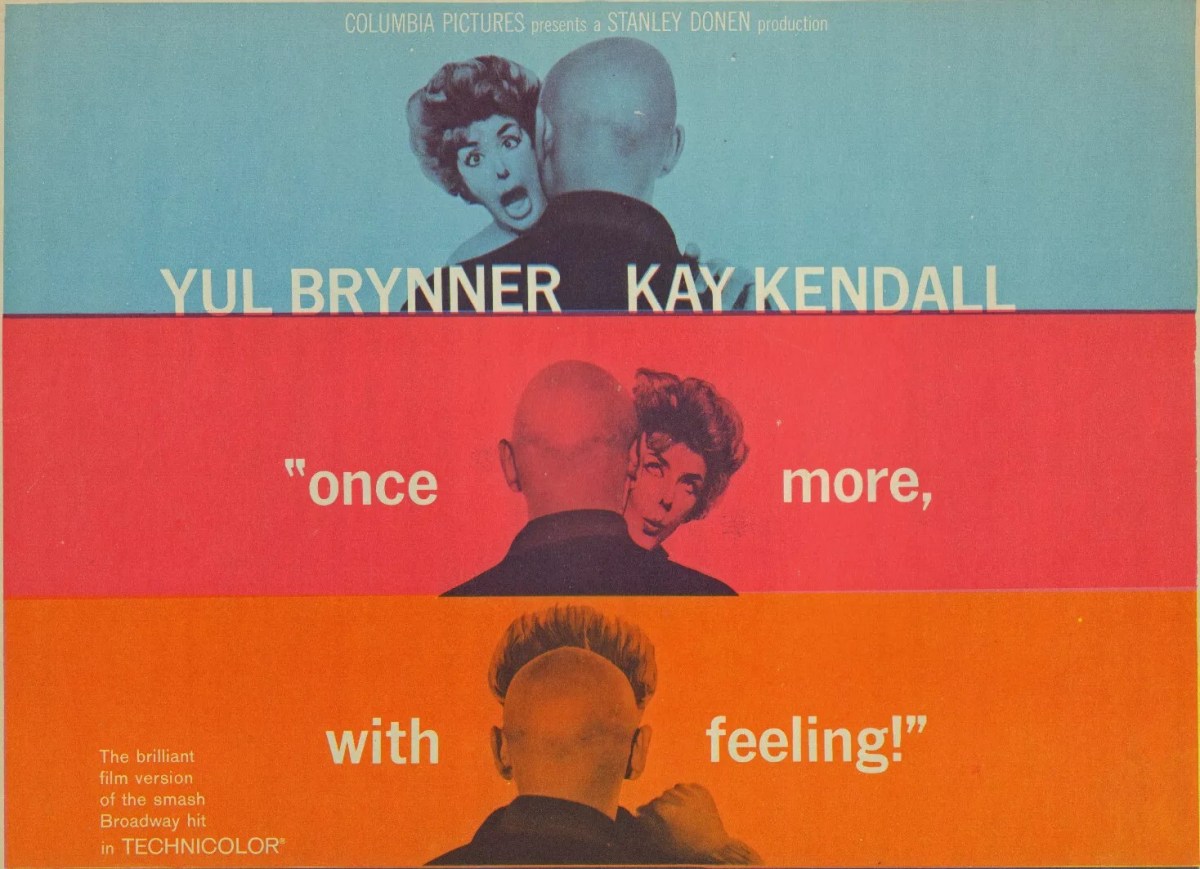
Of course, that could still be interpreted as barbarity and state vs religion is one of several themes here. Sold as an action picture but actually a thoughtful discussion of contemporary issues and worth viewing alone for an extraordinary performance by Yul Brynner, whose screen persona is turned completely upside down. As epitomized by The Magnificent Seven (1960), Brynner was Mr Cool. He was rarely beaten, and if he couldn’t talk his way out of trouble then guns or fists would do the job for him. For the most part here, he’s a prisoner, setting up the kind of template that Clint Eastwood would later inherit, of the brutally battered hero, except in this case there’s no murderous revenge.

And the movie cleverly switches perspective, so we move from sympathy with a defeated fleeing Mayan tribe and their efforts to rebuild their lives in a foreign land to the problems their unexpected incursion creates among the inhabitants of the new country.

Forced out of his homeland by invaders, King Balam (George Chakiris) leads his tribe across the seas of the Gulf of Mexico, trying to prevent high priest Ah Min (Richard Basehart) giving in to a predilection for sacrifice every few minutes. In order to keep the peace between two warring elements of the tribe, an unwilling Ixchel (Shirley Anne Field) has been promised in marriage to the king.

The Mayans adapt quickly to their new circumstances, fishing, building houses, diverting rivers to grow crops and building a pyramid. When they capture Black Eagle (Yul Brynner), a local Native American chief, they plan to sacrifice him to the gods.

Complicating matters is that Ixchel has taken a shine to the prisoner. As a potential sacrificial victim, living like a king for a day, the prisoner is entitled to impregnate any woman he pleases. Although Black Eagle has also taken a shine to Ixchel, he rejects her when she doesn’t come to him with open arms. She, equally, takes against Balam because, while he can’t prevent such congress (to use a Biblical expression), he doesn’t express his dissatisfaction in the process.

While a prisoner, Brynner has been impressed with the Mayan diligence, their ability to extract a living from what appeared harsh soil, and Balam, for his part, was hoping the two tribes could work out a way of co-existence. Where Black Eagle is voluble, Balam suppresses his emotions. It turns out that Ixchel, while responding to Black Eagle’s ardent wooing, would rather it was the more monosyllabic king uttering such words.

The action is kept to the minimum, probably accounting for initial audience disinterest. And the fact that it seems to be hewing towards peaceful co-existence rather than open warfare ensured that the expected battle took a long time coming. Sure, there’s a duel of sorts between the two leaders, but the more important battle of wits concerns who wins the woman.

In the end, Balam turns against this religion and sets Black Eagle free which is convenient because the armies which have chucked Balam out of his native land have pursued him across the seas and now attempt an invasion. Balam and Black Eagle unite to drive back the invaders. However, Black Eagle dies in the conflict, removing the love triangle.

From the moment Black Eagle was captured, I was expecting a different outcome. There’s some allegorical mischief at play here, with the prisoner splayed out in crucificial fashion,  arms and legs tethered by rope. But I was expecting such an obvious muscle-bound angry hero to escape and wreak revenge. However, that scenario avoided, it permits considerable discussion on co-existence as well as the nature of marriage, the old-fashioned manner (to prevent war or build a dynasty) vs the more liberated version (for true love).

Brynner is easily the standout, provided with far more opportunity for emotion than usual. George Chakiris (Diamond Head, 1962), range of expressions limited through both emotional incontinence and immaturity, appears sulky rather than majestic. Shirley Anne Field (Saturday Night and Sunday Morning, 1960) would appear miscast except she can convey so well inner feelings through her eyes.

No idea why anyone thought a disquisition on ancient religion and morality, with an anti-war sub-theme, would play with audiences of the period brought up on blood and thunder, and even when presented with notions of peaceful co-existence, as with any number of westerns featuring stand-offs between settlers and Native Americans, could rely on gun-runners to kickstart the shooting.

The action scenes, when they come, are good but it’s what happens in between that makes this perhaps more worthy of comment now than on initial release. Directed by J. Lee Thompson (The Guns of Navarone, 1961) with a screenplay by James Webb (How the West Was Won, 1962) and Elliott Arnold (Flight from Ashiya, 1964)

Carries surprising contemporary heft and Yul Brynner as you’ve never seen him before.

Discover WordPress

A daily selection of the best content published on WordPress, collected for you by humans who love to read.

The Atavist Magazine

by Brian Hannan

WordPress.com News

The latest news on WordPress.com and the WordPress community.