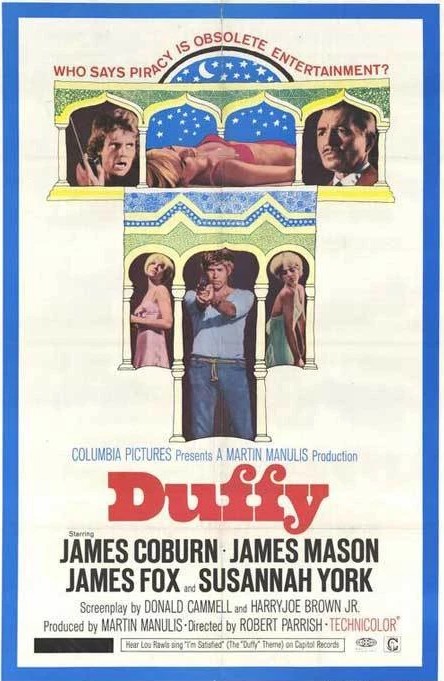
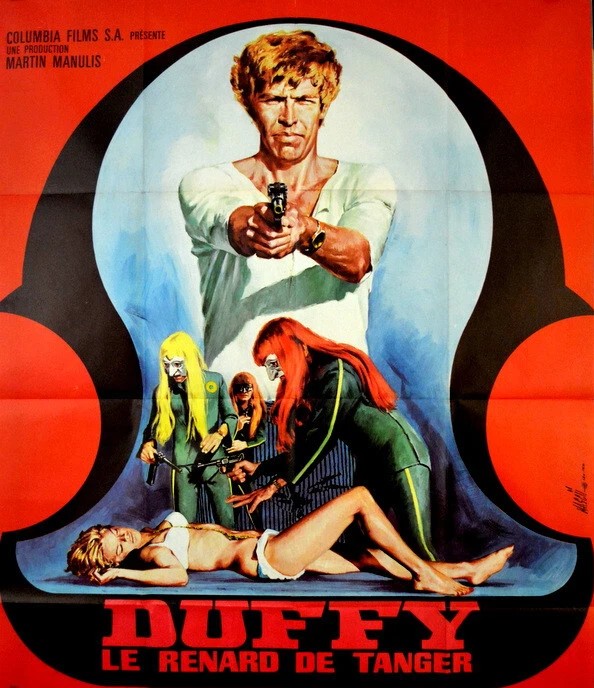
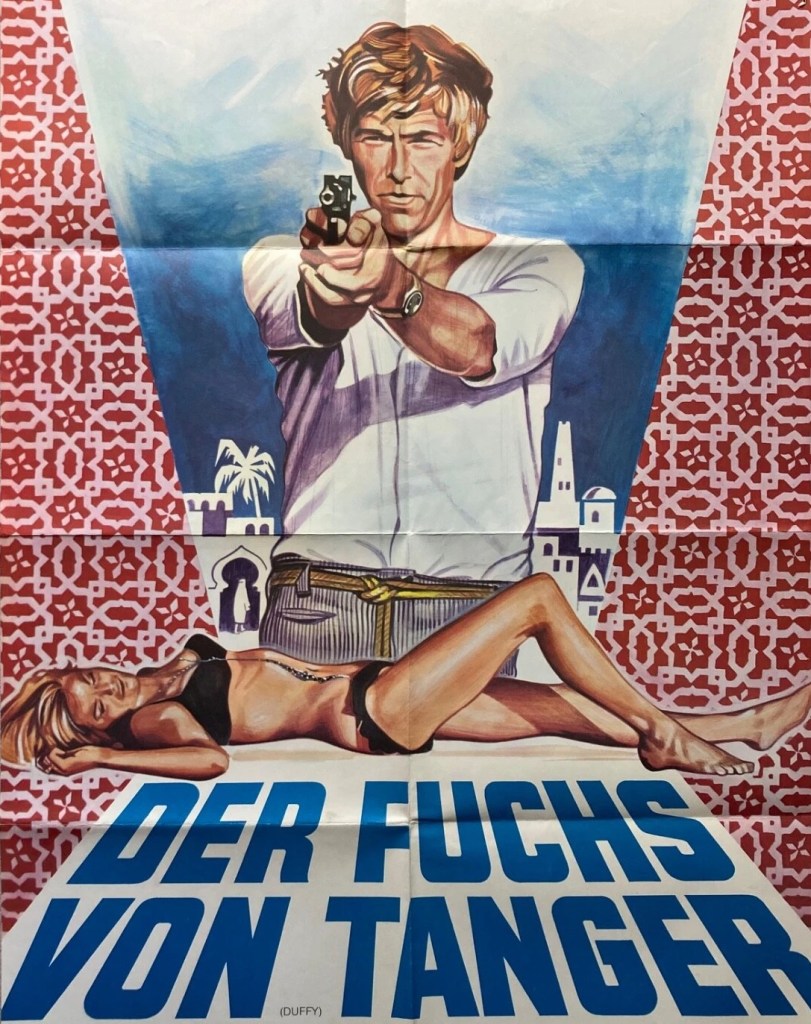
Star James Coburn wasn’t keen on the title. Had it been made today it would have been a contender for the sobriquet of The Nepo Heist. I’m sure many heirs would quite like a large chunk of their inheritance put in their hands long before it was handed over after the death of the father/mother. Luckily, this isn’t about blatant greed. It’s presented as more of a game, a duo of half-brothers, same father/different mother, trying to put one over their arrogant father.
Millionaire businessman J.C. Calvert (James Mason) is as keen on keeping the kids in their place, constantly deriding as incompetent Antony (John Alderton) – an accurate assessment it has to be said – and more than willing to challenge Stefane (James Fox) to any game of skill, even darts, especially if it involves money.
The sons set out to steal £1 million ($3 million) from a shipment of cash their father is transporting aboard the passenger ship Osiris to Naples. To that end they recruit hippy smuggler Duffy (James Coburn). Stefane’s girlfriend Segolene (Susannah York) might have been included as a makeweight except she takes a fancy to Duffy. Given that betrayal is a standard trope of any heist, you are kept wondering if she is, in fact, no matter how she protests her independence, a plant.
It takes quite a while for the plot to gather any steam what with dilly-dallying around Tangier and making considerable adjustments to a yacht. No time is spent either in the planning of the crime, the action just unfolds. The theft itself requires little of the unique set of skills that most thieves possess, nothing more than going on board the Osiris in disguise, both Stefane and Segolene decked out in religious garments, and putting on masks for their incursion into the room containing the safe. The only moment of real tension comes in having to extract the code to the safe.
The escape is better thought-out. The cash is chucked overboard in buoyant bags, connected to Duffy by means of a fisherman’s line which, when reaching the safety of their yacht, transformed for the time being into a fishing boat, Duffy reels in. A helicopter magically appears from the hold and they blow up the yacht before escaping, stashing the loot in 30ft of water in a cove near Tangier.
Assuming J.C. would be able to claim on his insurance then no great harm would be done to the family coffers, and the sons, as well as filling their pockets, would have the pleasure of making a fool of their old man. As you might expect, there’s double crossing still to come. And it’s a gem of a twist. Calvert has been in on the crime from the outset, thanks to the connivance of Segolene who turns out to be his girlfriend.
However, that scam is undone in another twist and it’s Duffy who comes out trumps, though far short of a millionaire.
Relies more than most crime pictures on the charm of the three main characters, with Antony there for nuisance value. However, the will-she-won’t-she games Segolene plays with Duffy and Stefane would have had more impact if Stefane had not been so nonchalant about their romance, and if she had not been so strident as regards her independence and unwillingness to become attached to any man.
That said, she turns out to be the cleverest of the lot, stringing along the two younger men while making a better play for the older one. But there’s something missing in the construction of the picture, so her triumph seems to come out of left field, almost a twist for the sake of it.
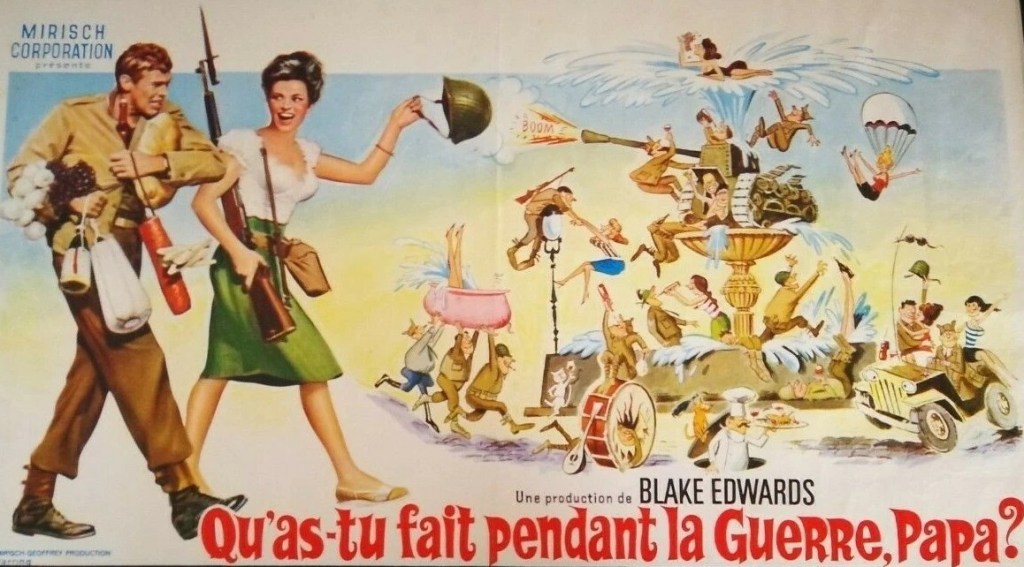
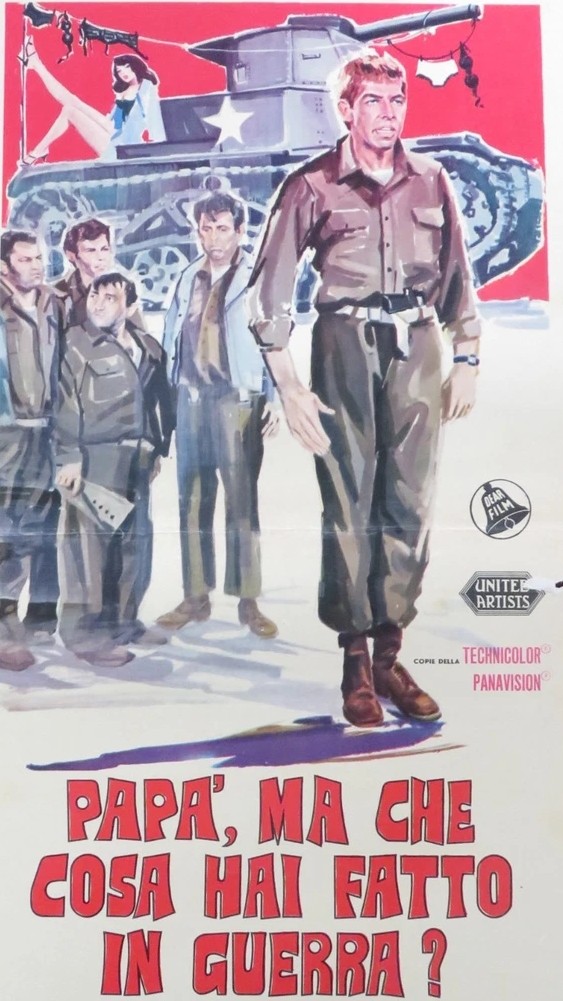
James Coburn (What Did You Do In The War, Daddy?, 1966) gives his screen persona an almighty about-turn, and although he appears useful with a pistol, he comes across more as a free-living hippy of the period, with a penchant for erotic pop art, though he has little regard for ecology, literally littering the planet, chucking wrappers and bottles everywhere.
James Fox (King Rat, 1965) has a whale of a time as an insouciant aristocrat, a character trait he clearly inherits from James Mason (Age of Consent, 1969) as his father while Susannah York (Sands of the Kalahari, 1965) swans around in cool attire all the more to make herself appear nothing more than a mild distraction rather than a criminal genius.
Leisurely directed by Robert Parrish (Journey to the Far Side of the Sun, 1969) from a screenplay by Donald Cammell (Performance, 1971) and Pierre de la Salle and Harry Joe Brown Jr.
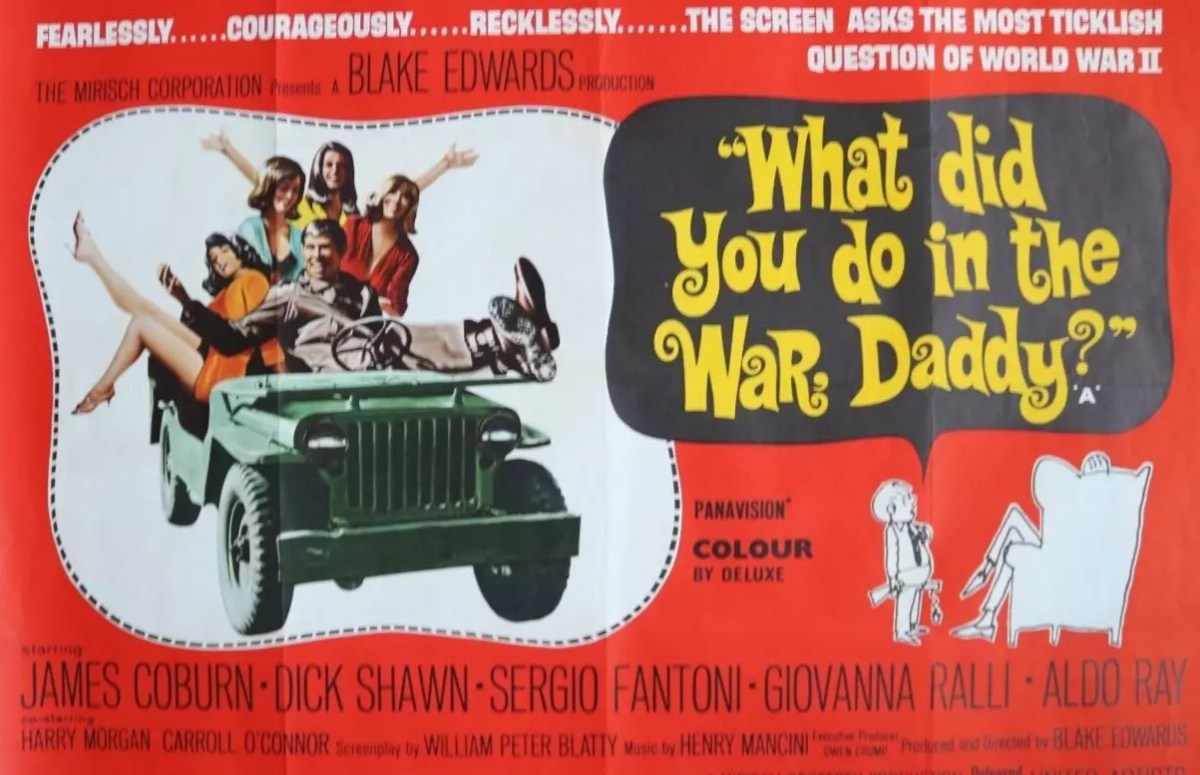
How on earth did James Coburn get mixed up in this mess? I’m assuming that having suddenly been elevated from supporting actor to top billing as a result of Our Man Flint (1966) he took the first job that came along that reflected his ideas about salary. Director Blake Edwards was, to some extent, at something of a loose end. United Artists had passed on The Great Race (1965) and another project with the director had fallen by the wayside. Apparently, this movie was the result of a question asked by his son. During World War Two, Edwards had served in the U.S. Coastguard which meant he did not see active service though did suffer a back injury. Writer William Peter Blatty (A Shot in the Dark, 1964) was too young for World War Two and though he joined the US Air Force he didn’t see active service either, being employed in the psychological warfare division.
So this exercise wasn’t going to be based on personal experience. The mid-1960s wouldn’t exactly lend itself to poking fun at war, although Vietnam was fair game.
You might have thought Coburn, on reading the script, would have realized he’s not much in the movie for the first 20 minutes or so and then is at the mercy of a bundle of subplots.
During the invasion of Sicily in 1943, stickler for discipline Captain Cash (Dick Shawn) is handed command of a disorganized unit headed by Lt Christian (James Coburn) and instructed to take a strategic village from the Germans. Turns out the enemy is long gone and the resident Italian soldiers, commanded by Capt Oppo (Sergio Fantoni), are only too happy to surrender as long as they can continue to enjoy la dolce vita which in this case involves an annual wine festival. Most of the early part of the picture revolves around getting Cash to loosen up, and after imbibing copious amounts of liquor and being seduced by the mayor’s daughter Gina (Giovanni Ralli) he relents.
There are only two obstacles to the merry party. Oppo objects to his girlfriend Gina being used as a makeweight to make Cash see things the Italian way and Cash’s boss General Bolt (Carroll O’Connor) asks to see proof of their success. So, since not a shot has been fired and they can’t boast of a camp full of Italian POWs, they decide to invent the proof and start filming phoney footage. Bolt reckons they need support and sends up reinforcements. Which is just as well because the Germans, either realizing what they’ve been missing or being nudged back into action, decide to reappear. And given the slovenly chaotic opposition it’s not hard for them to re-take control of the town which results in Cash hiding out in drag.
Theoretically, it’s a reasonable idea. There’s been no shortage of swindlers or con-men or black marketeers in war movies – think James Garner in The Great Escape (1963) and The Americanization of Emily (1964) – and various armies have been filled with shysters ranging from Sgt Bilko to the shifty recruits in British films up to all sorts of wheezes or doing their best to stay out of the line of fire.
But once the point has been made that it’s better to make love not war and drink as much wine as possible and become friends with the enemy, the point is made over and over again. There isn’t a single joke that isn’t belaboured and not many laffs to begin with. Going over-the-top is fine for slapstick like The Great Race but it doesn’t work here.
James Coburn has too little to do and Dick Shawn (A Very Special Favor, 1965) too much. Giovanni Ralli (Deadfall, 1968) and Sergio Fantoni (Hornet’s Nest, 1970 ) are wasted. Carroll O’Connor (Warning Shot, 1966) is the pick of a supporting cast that includes Aldo Ray (The Power, 1968) and Harry Morgan (The Mountain Road, 1960) but that’s only because he has a clever reversal of a role as a general who wants to be treated as an individual.
I should point out this has something of a cult following but I won’t be joining the fan club.
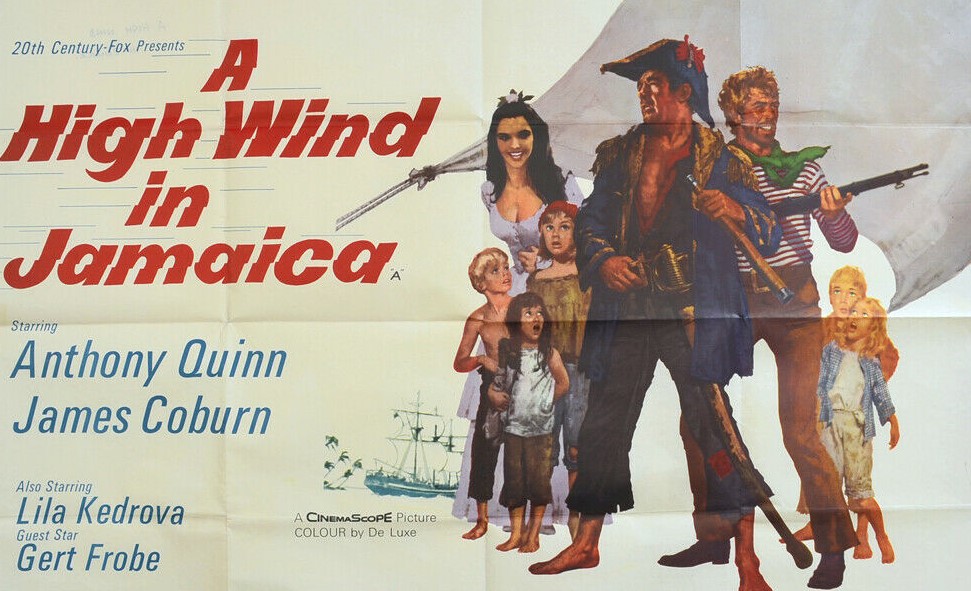
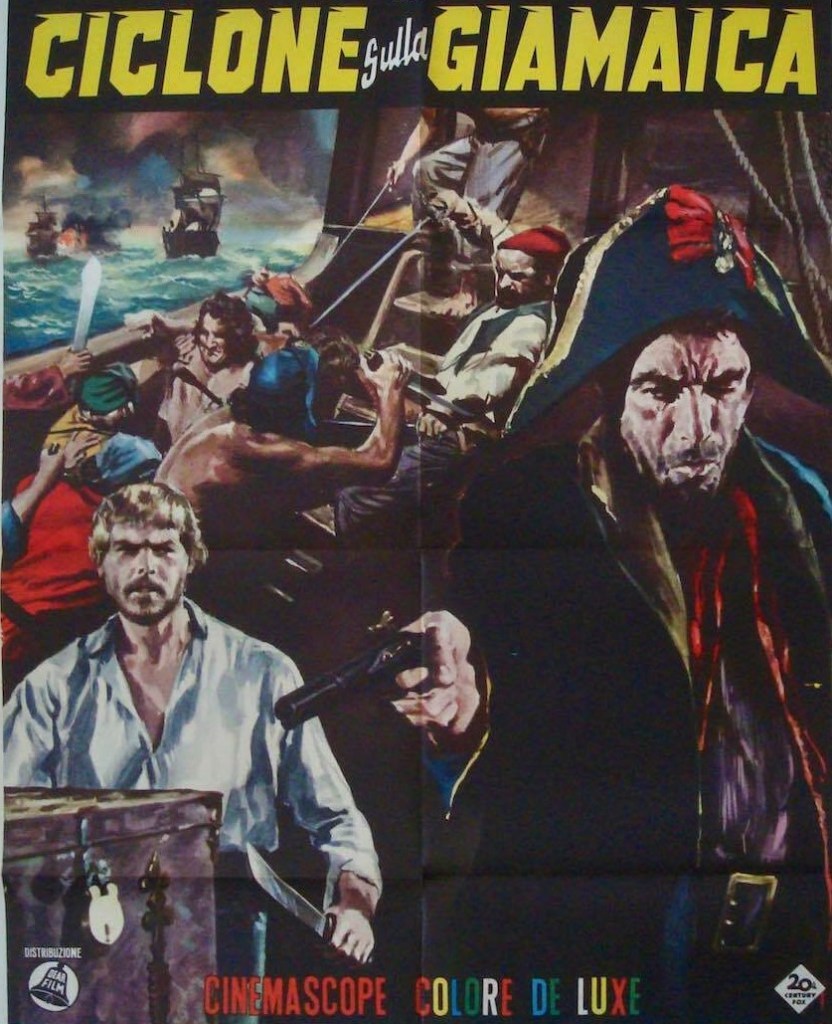
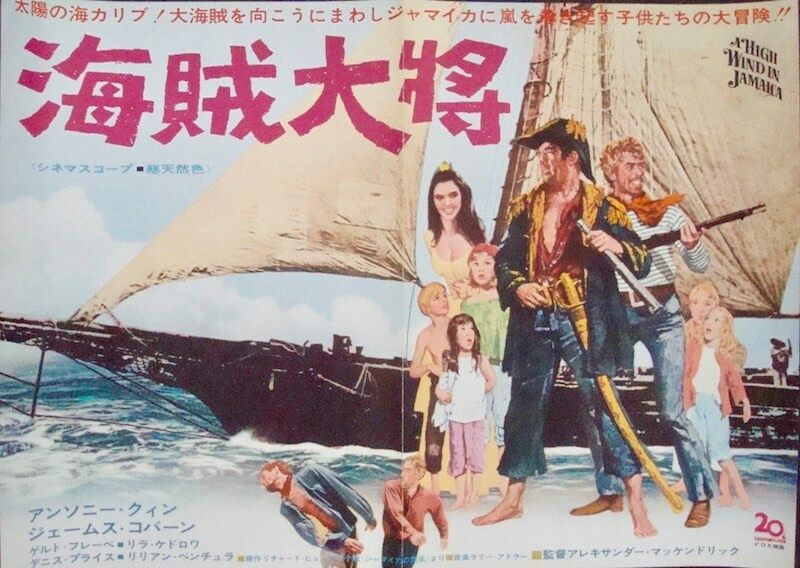
Forget swashbuckling shenanigans in the Captain Blood (1935) and Pirates of the Caribbean (2003) vein, this has more in keeping with Lord of the Flies (1963) as a bunch of third-rate pirates get more than they bargained for after kidnapping a bunch of English children.
The pirates are clever enough when required, using the ruse of pretending to be a ship in distress to defeat an enemy, capable of torturing a captured captain into revealing concealed treasure, or hiding from pursuit by disguising the masts with palm leaves, but generally short on intelligence. That the kidnapping is unintentional, no sensible pirate wanting the British Navy breathing down its neck, gives an indication of the mentality of Captain Chavez (Anthony Quinn) and his mate Zac (James Coburn). Nor are the children Disney-cute and far from being petrified they see it as a great adventure while the crew are superstitious about having the youngsters aboard.
The kids have great fun running rings round the pirates, stealing Chavez’s hat, climbing the rigging, and ringing the bell, while turning round the ship’s figurehead provokes another bout of superstition. When the kids are eventually imprisoned in a rowboat to prevent upsetting the crew they still manage to do so by playing a game that the crew take too seriously.
An attempt to abandon the children on the island of Tampico fails when the oldest boy John (Martin Amis) dies by accident. The children are unperturbed by his death, the only question raised is who can have his blanket. Much to his surprise Chavez discovers he has a strong paternal side, protective when he discovers that one of his captives is a young woman rather than a child, and going against the wishes of his crew when he tends to a knife wound on Emily (Deborah Baxter).
The children are far more grown-up and matter-of-fact than the childish crew, consumed by superstition, and Chavez, consumed by emotion. Although there is considerable comedy to be had from the children’s endeavors, it’s largely an adult film about children. In general, they don’t react the way they would in a Disney picture, nor in the manner which many adults would expect. The sexual tension of the book is considerably underplayed. But the fact that the adults are brought into harm’s way by sheer folly, and their reactions to life are essentially childish, creates a contrast with the more savage attitudes of the children. Emily essentially exposes Chavez’s guilty conscience.
While there is ambivalence aplenty, the depths the book explored go unexplored here, much to the benefit of the picture. The movie dances a tightrope as the children who would otherwise expect to trust an adult grow to learn how to distrust, a rather sharper lesson in growing up than they might have anticipated from their middle-class innocent lives.
Alexander Mackendrick (The Ladykillers, 1955) excels in ensuring the tightrope remains in place while taking advantage of the opportunity for comedy, the realization that this adventure is far from fun only becoming gradually apparent.
Anthony Quinn (Shoes of the Fisherman, 1968) reins in his tendency to ham things up, and his development from unbridled pirate to responsible adult is an interesting one. James Coburn (Dead Heat on a Merry-Go-Round, 1966) reins in the flashing teeth and reveals a more ruthless side than his captain anticipated. Deborah Baxter (The Wind and the Lion, 1975) is easily the pick of the kids although future novelist Martin Amis with his trademark sneer gives her a run for her money.
Lila Kedrova (Torn Curtain, 1966) appears as a brothel madam, Nigel Davenport (Sebastian, 1968) as the father and Gert Frobe (Goldfinger, 1964) as the captured captain. The cast also includes Dennis Price (Tamahine, 1963) and Vivienne Ventura (Battle Beneath the Earth, 1967).
Stanley Mann (Woman of Straw, 1964), Ronald Harwood (The Dresser, 1983) and Denis Cannan (Woman of Straw) wrote the screenplay based on the celebrated Richard Hughes novel.
Mirisch could easily lay claim to be the top independent production outfit of the 1960s generating hits like The Magnificent Seven (1960), West Side Story (1961), The Great Escape (1963), The Pink Panther (1964) and its sequel A Shot in the Dark (1964), The Russians Are Coming, Russians Are Coming (1966), In the Heat of the Night (1967) and The Thomas Crown Affair (1968) plus a shelf load of Oscars and Oscar nominations. But dependence on a partnership with Billy Wilder in the 1970s and a more lackluster performance at the box office – with the noted exception of Fiddler on the Roof (1971) – spelled the end of its 17-year relationship with United Artists, which was reeling from financial losses and under new management.
The company found a new partner in Universal which had a series of deals with other major producers like Alfred Hitchcock, Zanuck and Brown (Jaws, 1975) and George Seaton (Airport, 1970). Mirisch was not in any financial trouble, having severed ties with UA after Mr Majestyk (1974), a major success abroad, and recovered its development costs for Wheels, based on the Arthur Hailey novel but the script rejected by UA, from Universal which turned it into a mini-series.
The Universal deal was initially not as good as that enjoyed at UA. Universal charged a twenty-five per cent overhead whereas UA had charged nothing and Universal was now doing direct deals with directors rather than relying on the likes of Mirisch to tie up the talent.
Many years before, Mirisch had commissioned a script on the Battle of Midway from Donald S. Sanford who specialized in war pictures but of the distinctly low-budget variety – Submarine X-1 (1968), The Thousand Plane Raid (1969) and Mosquito Squadron (1969), none of which had enjoyed any success.
Though all of the Mirisch war pictures had concentrated on Europe, Walter Mirisch, generally the creative driving force for the production company, in his previous incarnation with Allied Artists had some experience of the Pacific War, having produced Flat Top / Eagles of the Fleet (1952), set around an aircraft carrier during the Battle of Leyte Gulf, and was an avid reader of books about the Second World War.
John Ford and Louis de Rochmont had made documentaries about the Pacific naval battles. UA rejected the script twice, a shrewd move in the end because Tora! Tora! Tora! (1970) lost a packet for Twentieth Century Fox. The Sanford screenplay had initially taken more of a documentary approach but after gaining the interest of Charlton Heston, who had starred in Mirisch’s The Hawaiians (1970), the script was tweaked.
Programming a war picture was a risk for the studio. There hadn’t been a big-budget war picture in five years. And while Patton (1970) and Kelly’s Heroes (1970) ended up on the right sight of the ledger book, Tora!, Tora! Tora! and Too Late the Hero (1970) were stiffs.
Mirisch signed a two-picture deal with Universal, for Midway and Wild Card with a screenplay by Elmore Leonard (Mr Majestyk). Mirisch proposed to reduce costs by using footage from naval archives, converting the original 16mm film to 35mm. The producer also took footage from Japanese film Storm over the Pacific / I Bombed Pearl Harbor (1960) – the rights cost him $96,000. Footage of the Pearl Harbor attack in Tora! Tora! Tora! doubled for shots of the attack on Midway Island. A clip of the Dolittle raid on Tokyo from Thirty Secondsover Tokyo (1944) was used in the credit sequence after “subjecting it to a sepia bath.”
After the success of Earthquake (1975), Heston was back in the top ranks of box office stars and his involvement guaranteed the green light. The U.S. Navy offered its support, not surprising since Midway was considered its greatest success.
John Guillermin (The Towering Inferno, 1974) was hired to direct and Stirling Silliphant (In the Heat of the Night) signed up for a screenplay rewrite. Mirisch had determined to employ the all-star-cast device that had been an essential ingredient of many of the 1960s roadshow pictures, kicking off with Henry Fonda (The Boston Strangler, 1968), by now pretty much a spent force at the box office – he hadn’t made a picture in three years – but still a well-known name.
The amount of work involved for the other stars was minimal – mostly just one day – and, astutely, Mirisch called on stars who had worked for him in the past and who, like James Coburn (The Great Escape), Cliff Robertson (633 Squadron, 1964) and Christopher George (The Thousand Plane Raid) owed him something in terms of a career leg-up. Others included Robert Mitchum (The Sundowners, 1960), Robert Wagner (The Biggest Bundle of Them All, 1968) and Tom Selleck in an early role. Mitchum was the first of these stars to sign up, in March 1975, six weeks before the scheduled start date of April 27, followed two days later by Coburn.
Toshiro Mifune (Red Sun, 1971) headed up the Japanese cast and proved so meticulous in his preparations that he had his uniform made by Japanese tailors. The white gloves he wore had a finger shortened on the left hand because his character Admiral Yamamoto was missing a pinky. However, despite coaching in English by actress Miko Taka (Walk, Don’t Run, 1966), his dialog was revoiced by Paul Frees.
Guillermin demanded a bigger budget to accommodate more airplanes and equipment and a longer shooting period. Two months before filming was due to start, Mirisch put his foot down and told the director he couldn’t accommodate his requests as Universal had only provided funding on the basis of Mirisch’s original idea. Guillermin walked. As far as the public was concerned, the parting of the ways was due to a “conflict of schedules.” Jack Smight, who had directed Airport ’75 (1974), a box office success and also starring Heston, was his replacement.
The Navy lent aircraft carrier U.S.S. Lexington – the last remaining World War Two carrier – while it was at sea training pilots as long as the shoot didn’t interfere with those exercises. A limited number of World War Two vintage planes – in great condition having been cared for by their owners – were permitted on board. The Navy charged the crew for accommodation – Mirisch was housed in Admiral Strean’s quarters – and meals. “We had a detailed contract with the Navy,” recalled Mirisch, “in which we agreed to stay out of their way when asked.”
On board, the crew filmed scenes, some silent and others with dialog, and “made plates for rearview projection and aerial shots of our vintage planes so positioned that we could print them into flights of six or nine.” Charlton Heston, Glenn Ford (Rage, 1966) and Hal Holbrook (The Group, 1966) were aboard and the shoot went well. A scene involving Henry Fonda was shot at Pensacola. The Florida coast stood in for the Pacific. Additional exteriors were filmed in Los Angeles at Long Beach and Point Dune with interiors at Universal.
The construction of the interiors for the Japanese aircraft carriers was so authentic Mirisch was later asked to reassemble the set for the Smithsonian Institute for a presentation there. The interpolation of the old footage was crucial and it was planned in advance where such shots would appear. The old footage was precut and scenes were shot with actors with “scene missing” in those sequences into which the old footage could be dropped. Other devices were used to ensure the background in the old footage was more lively.
The final element was in cinematic presentation. Sensurround, a precursor of Imax, had been introduced with great success by Universal to Earthquake and this added greater realism to the battle scenes. While limited to those theaters which had installed the expensive equipment, and although the roadshow was long gone, it created an “event” aspect to those viewing it in that system. In his autobiography Mirisch suggested the addition of Sensurround was last minute and sparked by the success of Earthquake. But, in fact, Universal had announced a year in advance of opening that Battle of Midway would utilize Sensurround.
Some cinema owners were outraged at the stock footage, whose proposed inclusion had been kept from them when they went into the blind-bidding process at the start of the year. Mirisch countered that there was no alternative. “A great many aircraft,” he argued, “used in the battle no longer exist.” Universal’s terms were stiff – a minimum nine-week run starting at a 70/30 split for the first three weeks in the studio’s favor, a $75,000 advance guarantee from cinemas and 5% of the gross for use of Sensurround.
With the budget kept as low as a reported $4 million it was a massive hit, picking up $20.3 million in rentals (what the studio retains of the box office gross) – sixth in the annual box office league beaten only by Oscar-winner One Flew over the Cuckoo’s Nest, All the President’s Men with Robert Redford and Dustin Hoffman, demonic The Omen, Walter Matthau baseball comedy The Bad News Bears and Mel Brooks’ Silent Movie and just ahead of such offerings as Sidney Lumet’s Dog Day Afternoon with Al Pacino, and comedy Murder by Death but nearly doubling the take of the more critically-acclaimed Taxi Driver, Clint Eastwood western The Outlaw Josey Wales and thriller Marathon Man also starring Hoffman. The final domestic figure amounted to $21.8 million.
Foreign figures were astonishing, especially in Japan, where its gross exceeded $4 million. The benefits of the promotional tour undertaken by Heston in the Far East were soon obvious – in Manila it beat both Jaws and Earthquake. In the annual box office league there and Hong Kong, it ranked third. In Italy it proved a “big surprise”, coming in fourth behind King Kong, Taxi Driver and a local offering.
While a successful movie could expect to benefit from television viewings – this was before the video revolution – the movie had an unusual afterlife. NBC, which had bought the rights, wanted the film to be longer, so it could be shown over two nights, thus increasing advertising and setting it up as a more prestigious event. Largely by adding plotlines to the Heston character, the running time increased by nearly an hour, which proved a bonus for the future home screening revolution.
“Of all the films that I have made,” noted Mirisch, “it produced the greatest amount of profit.”
SOURCES: Walter Mirisch, I Thought We Were Making Movies Not History (University of Wisconsin Press, 2008) pp324-339; “Readying Midway,” Variety, February 5, 1975, p6; “Universal in New Shake,” Variety, July 23, 1975, p3; “Admiral Mitchum,” Variety, March 12, 1975, p18; ”Jap Feature Footage Inserted into Midway,” Variety, June 6, 1976, p7; “Midway Big in Manila,” Variety, August 11, 1976, p24; “Big Rental Films of 1976,” Variety, January 5, 1977, p14; “Jaws Led Bangkok,” Variety, February 9, 1977, p39; “International,” Variety, June 29, 1977, p35.
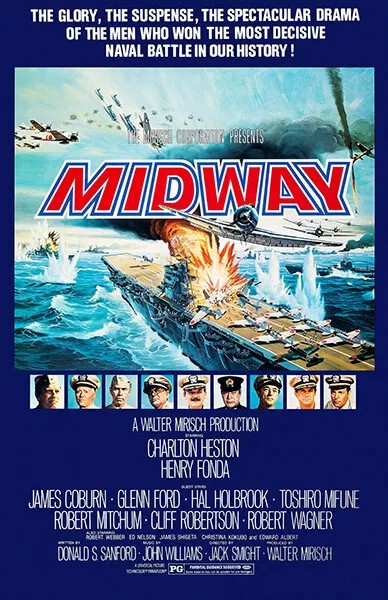
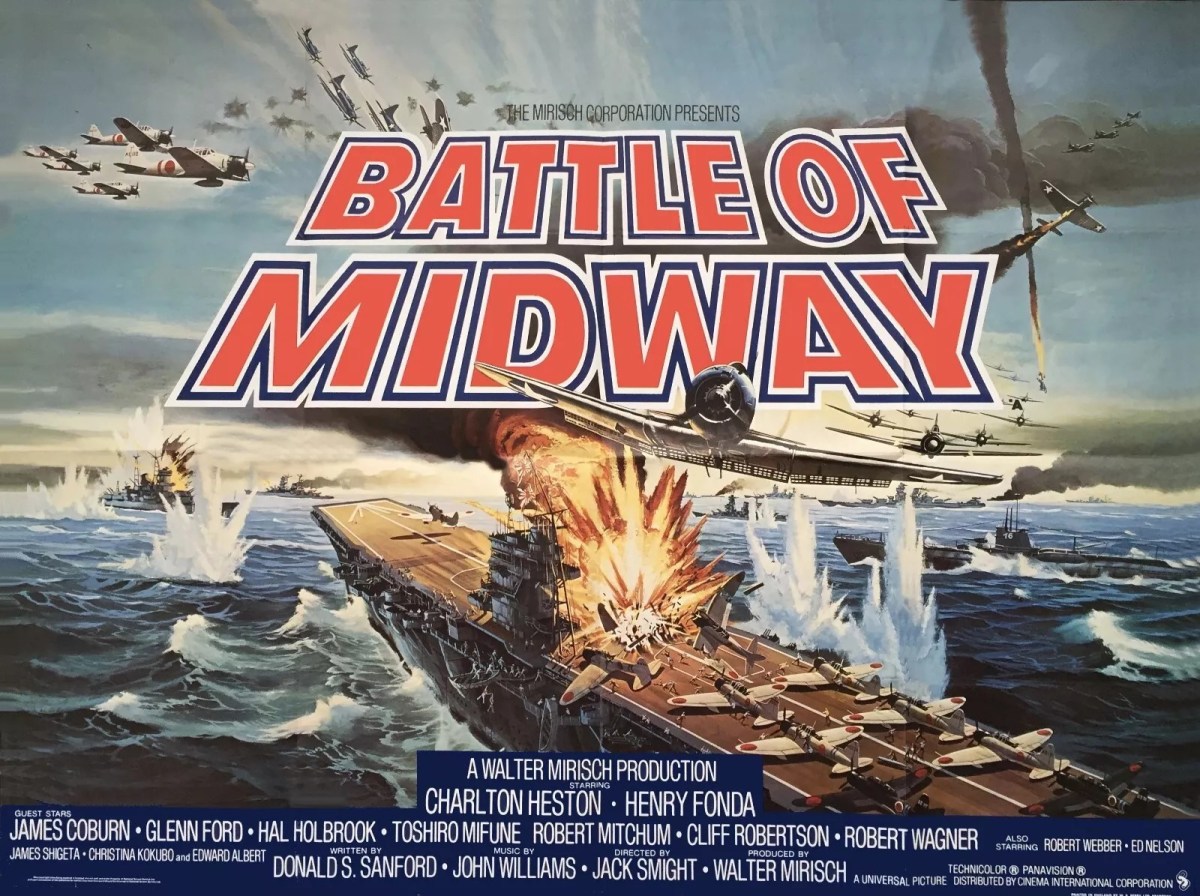
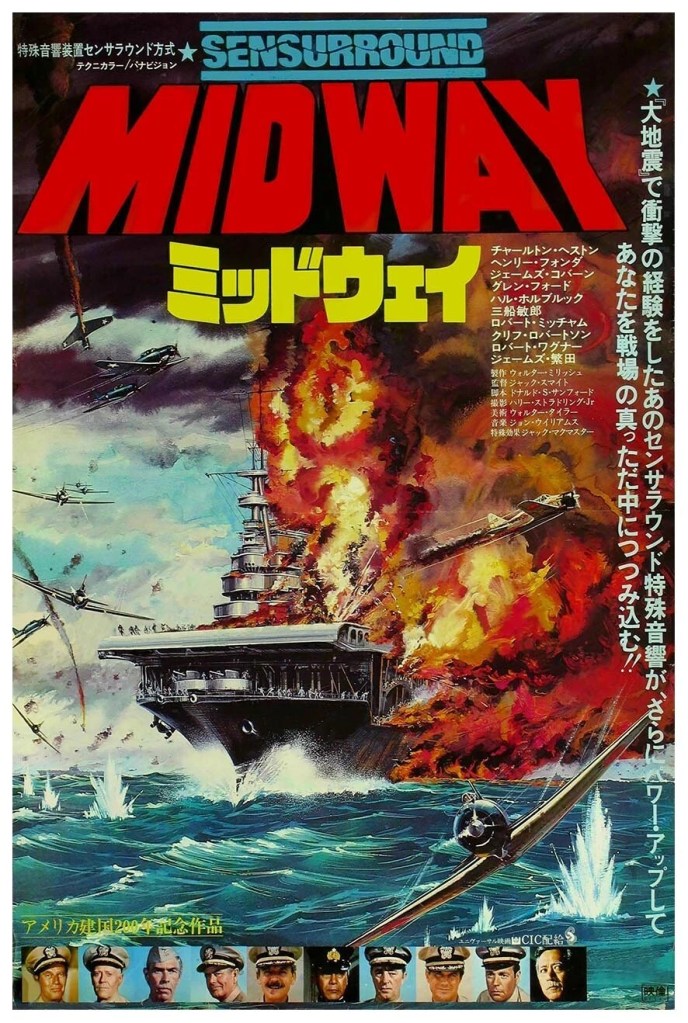
Even-handed documentary-style tale recounting of the most famous U.S. naval battle of all time, a turning point in the struggle for control of the Pacific in 1942. Both sides make mistakes, luck and judgement play an equal part.
I’d always assumed Midway was some abstract geographical position without any idea of its strategic importance – did the name mean it was halfway between the U.S. (or Hawaii) and Japan? But here I learned it was an actual island that the Japs planned to invade and the Americans intended to stop them. In some senses, it was bait, a way to draw the U.S. Navy out of Pearl Harbor. But the bait ran both ways. If the Yanks could coax the enemy out into the Pacific, they had a chance of gaining an advantage, even though the Americans were inferior in shipping tonnage.
The Japs have been stung into action by the audacious American bombing of Tokyo. Admiral Yamamoto (Toshiro Mifune) uses the perceived threat of further attacks to gain official approval for his plan to invade Midway.
This is strictly a male show. However, in a bid to lower the testosterone levels a romantic subplot is inserted. The aviator son, Lt Thomas Garth (Eddie Albert), of top aide and former pilot Captain Matthew Garth (Charlton Heston) has an American-born lover Haruko (Christina Kobuko) of Japanese descent who’s being investigated for espionage and subsequently interned. On intervening, the father digs up a hodgepodge of racism – from both sides, Haruko’s parents against her forming a relationship with a non-Japanese. But the plan backfires causing a breakdown between father and son.
But that’s very much on the fringes and although it raises interesting cultural aspects, the movie concentrates mostly on the nuts-and-bolts of heading into a major engagement.
American intelligence, headed by Commander Joe Rochefort (Hal Holbrook), gets wind of the planned attack. But the clues are scant – the old trope of increased radio traffic not enough to convince – and while the audience knows the Japs are on the move with a mighty naval force including four top-class airplane carriers, the Americans remain ignorant almost until it’s too late.
Luckily, Admiral Nimitz (Henry Fonda), heading up the American naval contingent, is keen to inflict a blow on the enemy, even though he’s limited to two carriers and another just out of the repair yard. Each side relies on spotter planes to detect the enemy. But the Japanese, by imposing radio silence, shoot themselves in the foot, unable to switch tactics until too late. The hunch plays an important part.
There’s rarely much opportunity for individual heroics on a ship under fire, beyond rescuing someone. The fighter pilots are a better bet, especially since some of their forays are nearly suicidal given the firepower they attract. Matt Garth, who for most of the picture is an upscale backroom boy, is called into action with unexpected results.
Most battle films tend to concentrate on the heroics often at the expense of understanding in any detail what’s going on. Thankfully, this is different. We are kept informed of every change in the conflict. And whereas you might think that dull, in fact I wouldargue that it adds substantially to the tension, and the fact that the only one of the commanders who looks as if he could throw a punch (Robert Mitchum) in the manner of John Wayne is confined to his bed thus forcing the movie to concentrate as much on brain as brawn.
Audiences at the time welcomed all the talking and this was a substantial hit. Snippets of old war footage were carefully sewn into the lining of the action, bringing the kind of authenticity that moviemakers reckoned moviegoers craved. For me, there was more than enough going on already.
Nimitz’s decision to go for broke rather than dive for cover results in victory but he’s no gung-ho commander, rather presented as a thoughtful but determined individual. The lack of backstage effort especially in the communications department was partly to blame for the humiliation of Pearl Harbor but here these guys share the glory.
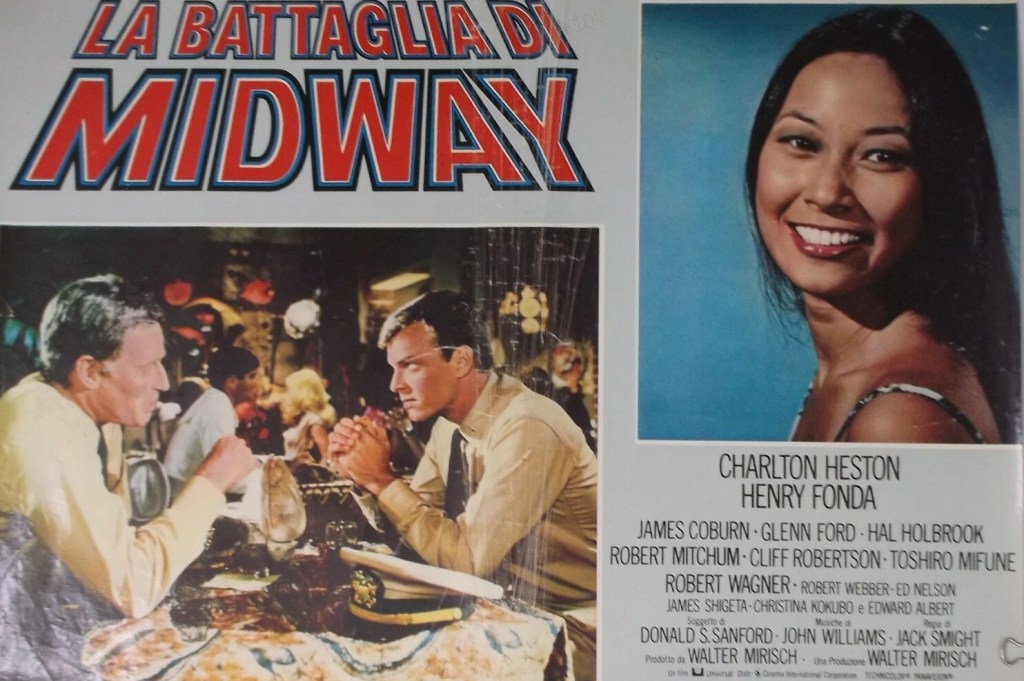
Boasting the kind of all-star cast that used to be the hallmark of the 1960s roadshow, this has a bunch of top-notch actors, albeit most just flit in and out of the picture. Charlton Heston (Planet of the Apes, 1968) effortlessly shoulders the main burden with Henry Fonda (Once Upon a Time in the West, 1969) the fulcrum of all decision-making. Robert Mitchum (The Way West, 1967) , James Coburn (Our Man Flint, 1966), Glenn Ford (Rage, 1966), Cliff Robertson (The Devil’s Brigade, 1968) and Toshiro Mifune (Red Sun, 1971) all feature.
Jack Smight (Harper / The Moving Target, 1966) directs from a script by Donald S Sanford (Mosquito Squadron, 1969).
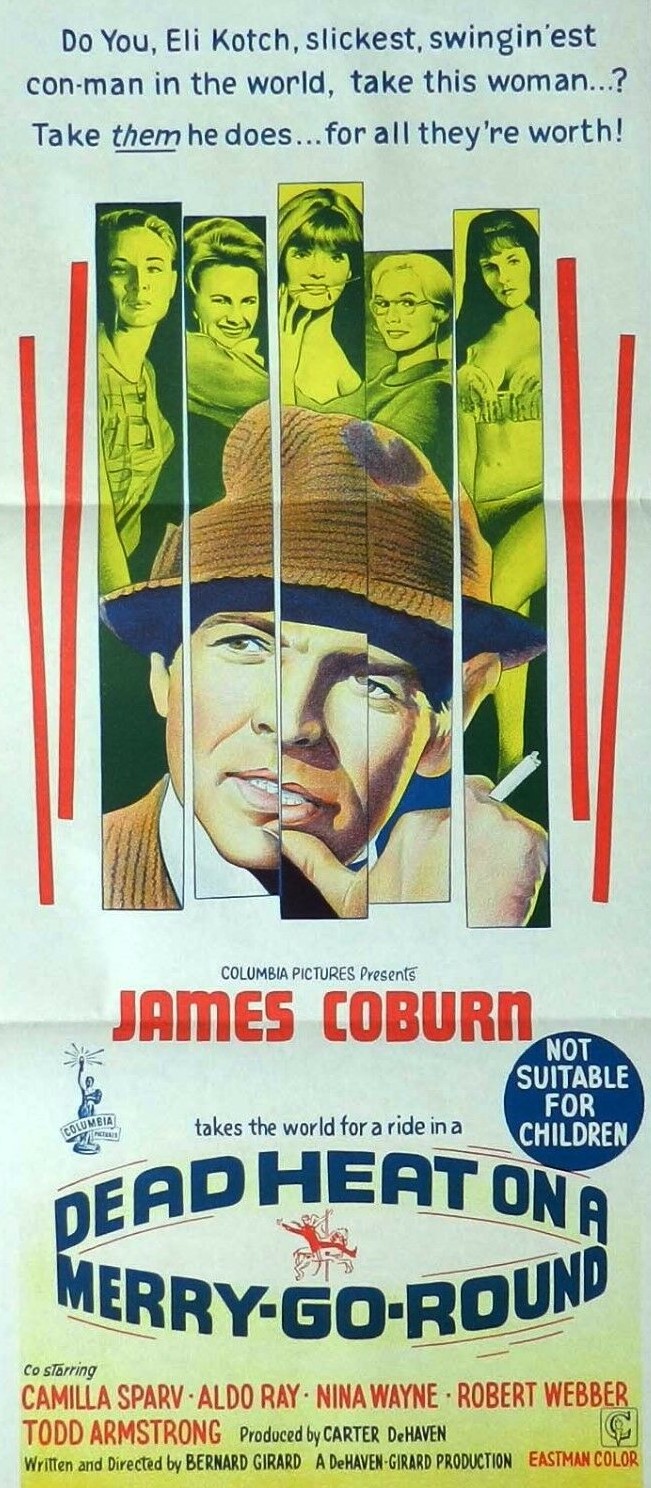
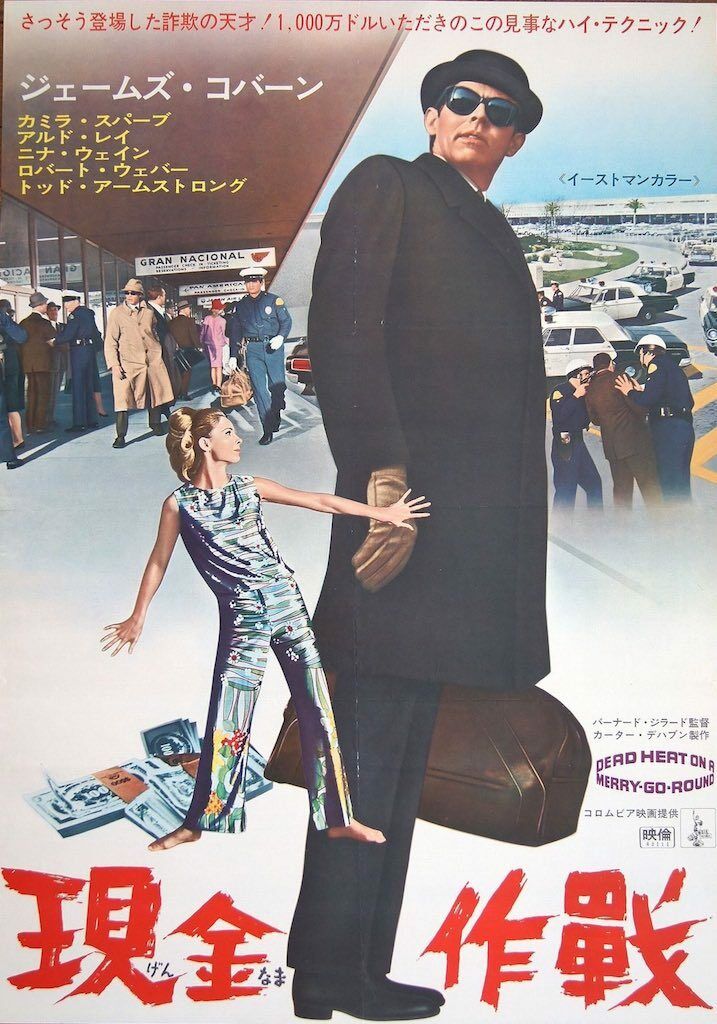
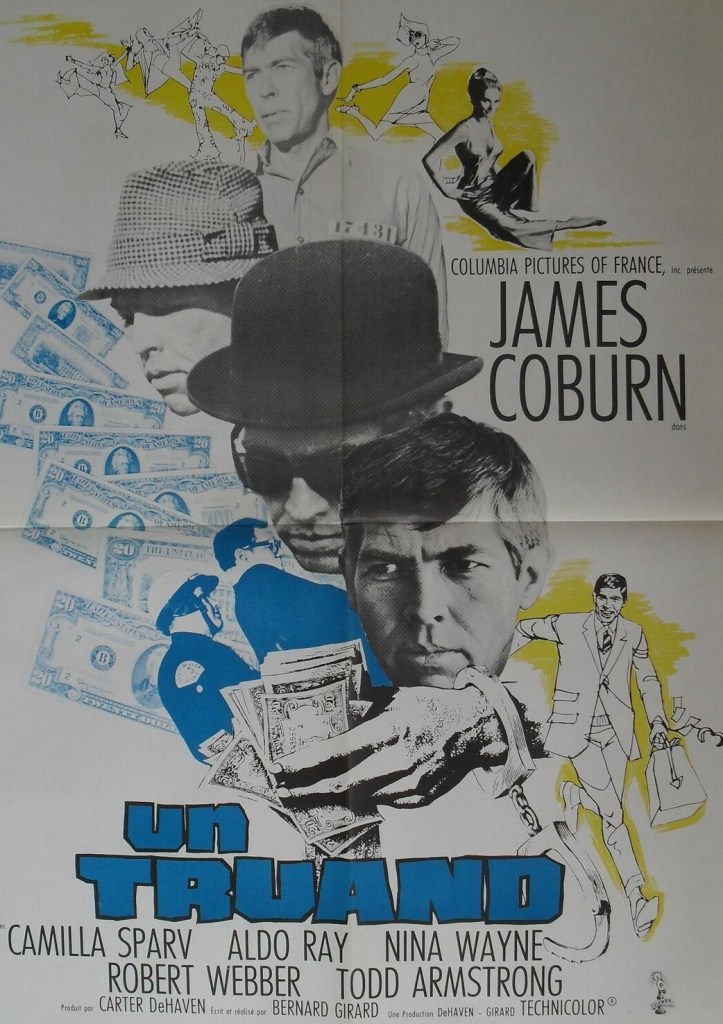
Highly entertaining woefully underrated heist picture with an impish James Coburn (Hard Contract, 1967), Swedish Camilla Sparv (Downhill Racer, 1969) in a sparkling debut and at the end an outrageous twist you won’t see coming in a million years. This is the antithesis of capers of the Topkapi (1964) variety. Not only is it an all-professional job, it takes a good while before you even realise the final focus is robbery or even the actual location. There are hints about the that event and glimpses in passing of material that may be used, and although the theft is planned to intricate detail, none of that planning is revealed to the audience.
The paroled Eli Kotch (James Coburn), who has seduced the prison psychiatrist, immediately skips town and starts fleecing any woman who falls for his charms. He changes personality at the drop of a hat, fitting into the likes of the mark, and in turn is burglar, art thief, car hijacker, in order to raise the loot required to buy a set of bank plans, and yet not above taking on ordinary jobs like shoe salesman to meet the ladies and coffin escort to get free travel across the country. So adept at the minutiae of the con he even manages to impersonate a hotel guest in order to get free phone calls.
He enrols girlfriend Inger (Camilla Sparv) to act as an amateur photographer working on a “poetic essay on transient populations” to get an idea of sites he means to access. He manages to have the head of a Secret Service detail blamed for a leak. Everything is micro-managed and his final masquerade is an Australian cop with a prisoner to extradite which provides him with an excuse to linger in a police station, privy to what is going on at crucial points.
If I tell you any more I’m going to give away too much of the plot and deprive you of delight at its cleverness. The original posters did their best not to give away too much but you can rely on critics on Imdb to spoil everything.
This is just so much fun, with the slick confident Eli as a very engaging con man, the supreme manipulator, and almost in cahoots with writer-director Bernard Girardin (The Mad Room, 1969) in manipulating the audience. There are plenty films full of obfuscation just for the hell of it, or because plots are so complex there’s no room for simplification, or simply at directorial whim. But this has so much going on and Kotch so entertaining to watch that you hardly realize the tension that has been building up, not just looking forward to what exactly is the heist but also how are they going to pull it off, what other clever tricks does Kotch have up his sleeve for any eventuality, and of course, for the denouement, are they going to get away with it, or fall at the last hurdle. There is a great twist before the brilliant twist but I’m not going to tell you about that either.
There’s plenty Swinging Sixties in the background, the permissive society that Kotch is able to exploit, and yet the film has some unexpected depths. You wonder if the memories Kotch draws upon to win the sympathy of his female admirers have their basis in his own life. You are tempted to think not since he is after all a con man, but the detail is so specific it has you thinking maybe this is where his inability to trust anyone originates.
Bernard Giradin was not a name known to me I have to confess, since he was more of a television director than a big screen purveyor – prior to this he had made A Public Affair (1962) with the unheard-off Myron McCormick – and Coburn was the only big star he ever had the privilege to direct. But there are some nice directorial touches. The movie opens with a wall of shadows, there are some striking images of winter, a twist on bedroom footsie, and jabbering translators. But most of all he has the courage to stick to his guns, not feeling obliged to have Kotch spill out everything to a colleague or girl, either to boast of his brilliance, or to reveal innermost nerves, or, worse, to fulfil audience need. There’s an almost documentary feel to the whole enterprise.
James Coburn is superb. Sure, we get the teeth, the wide grin, but I sometimes felt all the smiling was unnecessary, almost a short cut to winning audience favour, and this portrayal, with the smile less in evidence, feels more intimate, more seductive. This may well be his best, most winning, performance. Camilla Sparv is something of a surprise, nothing like the ice queen of future movies, very much an ordinary girl delighted to be falling in love, and with a writer of all the things, the man of her dreams.
The excellent supporting cast includes Marian McCargo (The Undefeated, 1969), Aldo Ray (The Power, 1968), Robert Webber (The Dirty Dozen, 1967), Todd Armstrong (Jason and the Argonauts, 1963) and of course a blink-and-you-miss-it appearance of Harrison Ford as the only bellboy (that’s a clue) in the picture. You might also spot showbiz legend Rose Marie (The Jazz Singer, 1927).
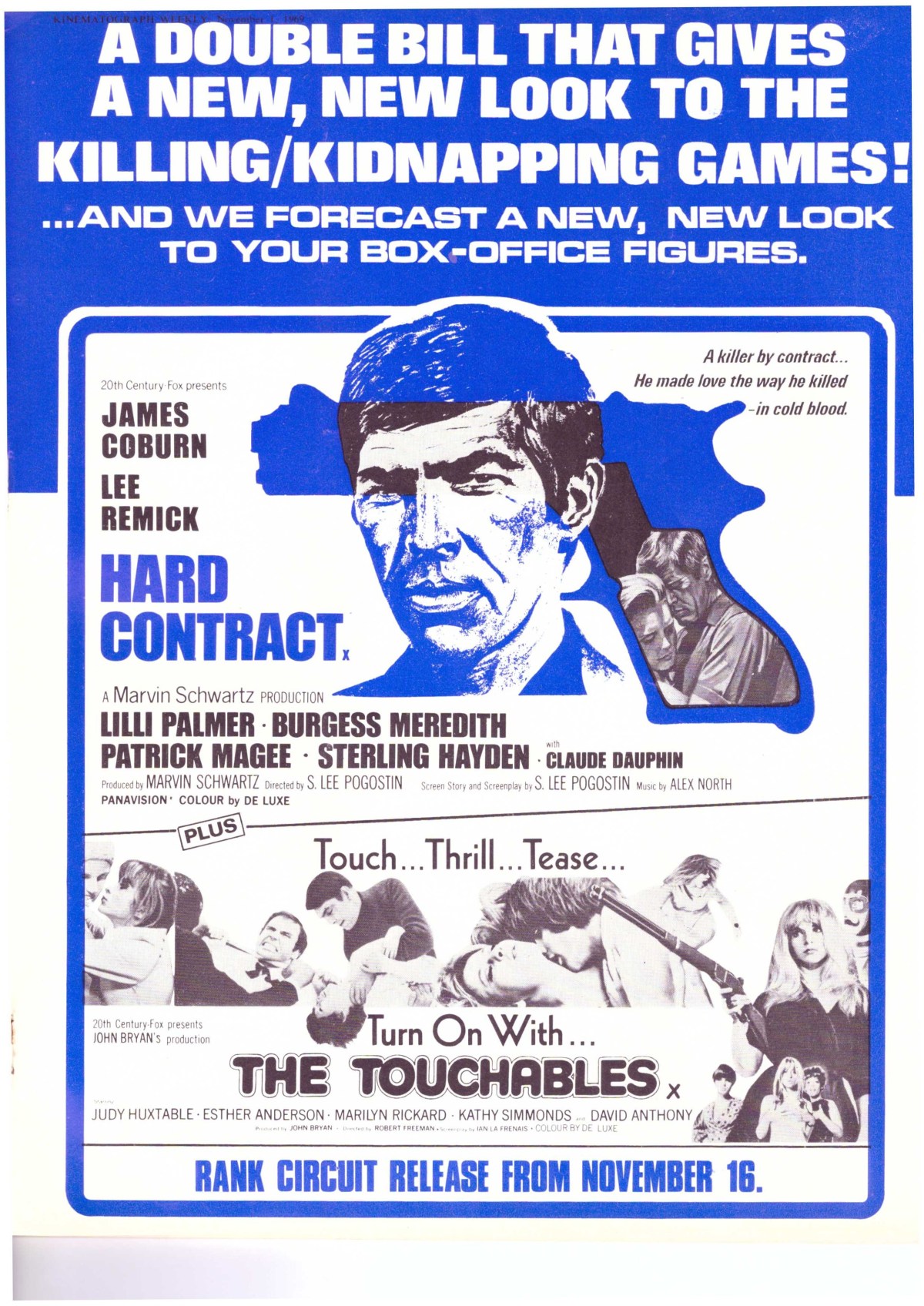
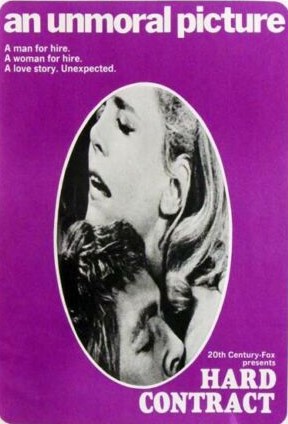
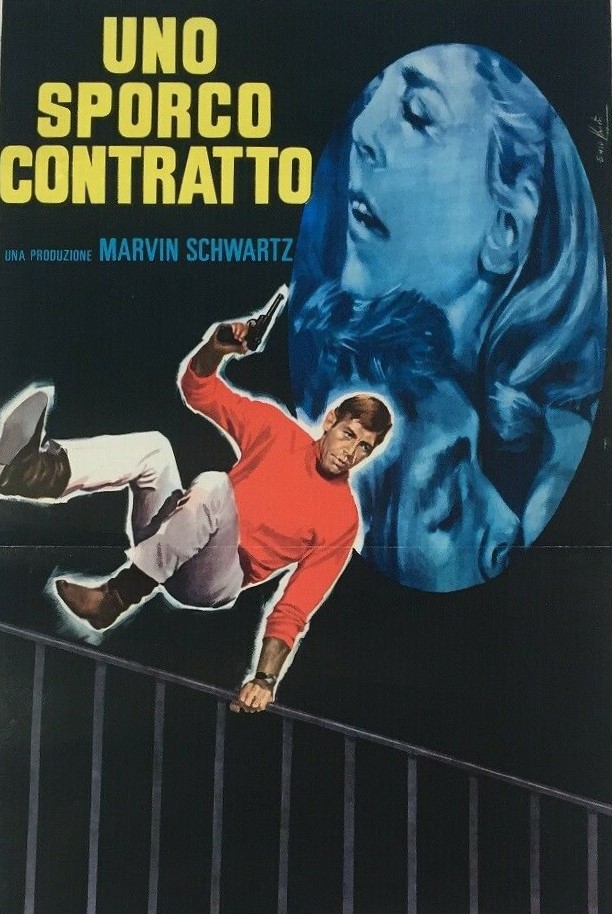
A hitman movie that verges on the existential is always going to be intriguing. Stone cold killer John Cunningham (James Coburn) manages to keep the world at a distance until he runs into the vibrant Sheila (Lee Remick) in Spain. The film is a curiosity of an admittedly small genre dominated by such disparate offerings as The Killers (1946 and 1964), Yojimbo (1961), Le Samourai (1967) and Stiletto (1969) in that although Cunningham does bump people off you never see the violence. We’ve come to expect hitmen to be introspective, but there’s never been anyone as closed-off as Cunningham. No romance in his life, only hookers, no apparent depth, in fact we learn very little about him.
He only runs into Sheila because for a laugh she pretends to be a sex worker. In reality she’s a wealthy divorced socialite running with a fast set that include Adrianne (Lili Palmer) and ex-Nazi Alexi (Patrick Magee) whom she loves to taunt but whose contacts allow Cunningham to be effectively stalked. And as unsavoury that might be from today’s perspective, it sheds light both on her power and whimsicality.
There’s an unusual background. Amid the extensive jet-setting in Torremolinos, Madrid and Tangiers, there are reality counterpoints, reflecting the issues of the decade – violent demonstrations with police using water cannon to control the crowds, the American elections and discussions about God, world hunger, terrorism and population growth.
No doubt the script is wordy, but there’s hardly a word that doesn’t challenge convention. It’s steeped in amorality – a touchstone of the decade – good only occurs “when evil takes a rest” and the world is “immune to murder.” And you certainly get the impression that the rich can confront anything because, not having to live in the ordinary world, they can get away with it. Conversely, this is also one of those films where you wonder who did the wardrobe (Gladys de Segonzac, since you ask, who ran fashion house Schiaparelli in the 1950s) because not only does Sheila sport clothes that would have delighted Audrey Hepburn but Cunningham gets away with wearing a white jacket.
And if Korean vet Cunningham is enigmatic, the insomniac Sheila is cut from a similar cloth, and while a potential source for redemption is as likely to have sex with a casual pickup in a filthy alley. The story does not go quite the way you would expect – Cunningham’s growing dissatisfaction with his profession revealed when he can’t perform in a Brussels brothel. And his mindset allows him to consider mass murder as a solution to an emotional problem he cannot solve.
At core, of course, is whether once Cunningham’s emotional defenses are breached he can continue as a hitman, and whether Sheila can accept his profession. The stakes rise when it transpires that (like Stiletto made the same year) retirement is not an option.
And for all the seriousness on show, there are some imaginative moments of hilarity – Cunningham’s idea of a love song is “To the Shores of Tripoli” and Adrianne proves determinedly indiscreet. In keeping with the paranoia cycle that was about to explode, you never find out why people are being murdered, or even who they are, far less the group which his boss Ramsay (Burgess Meredith) is fronting.
Far removed from the Derek Flint persona that had turned him into a star, James Coburn delved deeper into the amoral territory he had previously explored in Waterhole 3 (1967). Lee Remick (The Detective, 1968) is sheer madcap delight even when espousing her odd takes on philosophy. Lili Palmer (The Counterfeit Traitor, 1962), who by this point in her career was usually the wife or girlfriend, creates a very original character. Veteran Sterling Hayden had only made one film (Dr Strangelove, 1964) during the decade and is excellent as a contemplative retired hitman. Patrick Magee (The Skull, 1965) gives another of his tight-lipped performances. Karen Black (Easy Rider, 1969) has a small role as does Sabine Sun (The Sicilian Clan, 1969).
This marked both the debut and the demise of the directorial career of S. Lee Pogostin, best known at this point as the screenwriter of Pressure Point (1962) and Synanon (1965). In terms of argument over issues it stands comparison with Pressure Point but without that film’s intensity.
I remember being baffled by the picture when it came out and I was a teenager because the action I believed I had been promised never materialized but otherwise I could remember little about it so now it appears as an interesting antidote to the mindless action pictures.
Ode to the male gaze. Once a cult vehicle, this will struggle to find favor these days what with its backward attitudes. Virtually impossible to excuse the rampant self-undulgence. The sexually exploited naïve Ewa Aulin in the title role didn’t even have the benefit of being turned into a star. The satire is executed with all the finesse of a blunderbuss. And while, theoretically, picking off a wild range of targets, if this movie has anything to say it’s to point out how easy it is for men to deify themselves at the slightest opportunity.
Not much of a narrative more a series of sketches slung together with the slightest connecting thread. Most its appeal lies in watching huge marquee names make fools of themselves. Or, if you’re that way inclined, seeing how much nudity will be imposed on the star, intimacy rarely consensual, clothes usually whipped off her.
Teenager Candy (Ewa Aulin) has father issues, daddy (Jack Austin) being a dumb angst-ridden teacher. Randy poet McPhisto (Richard Burton) drives a class of schoolgirls into a frenzy with his lusty reading, inveigles Candy into his chauffeur-driven car, ends up in her basement drunkenly humping a mannequin while Mexican gardener (Ringo Starr) with an accent as coruscating as that of Manuel from Fawlty Towers assaults her on pool table. Scandalized father packs her off to his twin brother in New York, that notoriously safe haven for nymphettes, while on the way to the airport they are almost driven off the road by the gardener’s vengeful biker sisters (Florinda Balkan et al).
For no apparent reason she is hitching a lift on a military plane commanded by randy Brigadier Smight (Walter Matthau) who, on the grounds that he hasn’t had sex for six years, commands her to remove her clothes for the good of the nation. In the Big Apple, rock star surgeon Dr Krankheir (James Coburn), entering the operating theater to the same kind of waves of acclaim as McPhisto, finds an excuse to have her undress and submit to him, this just after she’s managed to avoid the attentions of her randy uncle. It should come as no surprise that Krankheit treats women as his personal property to the extent of branding them like cattle.
In due course, she encounters a gang of mobsters, an underground movie director and a hunchback (Charles Aznavour) who, in return for her showing pity for his condition, proceeds to rape her. She is arrested. Guess who wants to frisk her. Naturally, when she escapes she runs into a bunch of drag queens.
Then she finds sanctuary in a semi-trailer truck, home to guru Grindl (Marlon Brando). He’d be convincing enough as a mystic except he, too, finds an excuse to rip her clothes off. There are more cops to contend with and another guru, facial features obscured by white clay. If they’re going to have sex then naturally it must be in a Hindu temple. Turns out the latest person to take advantage of her is her father but he’s been handed a get-out-of-jail-free card because by now he’s brain damaged.
This might all be a dream/nightmare. Candy might even be an alien. It’s dressed up in enough psychedelia to sink a battleship and its highly likely that any lass as gullible as Candy will find herself at the mercy of any man, so in that context it carries a powerful message. I’m sure many beautiful young girls will attest to the truth that men feel they have the right to paw anyone who comes their way without asking permission. And the other message is just as powerful – how many young actresses have been seduced by thoughts of fame to disport themselves in this fashion only to find that all the industry wants is their nudity not their acting talent.
You might say that the target is so obvious it hardly needs pointing out but the MeToo campaign will beg to differ and you would hope that Hollywood has wised up. It’s just a shame that the satire is so heavy-handed. The military and the medical profession are sorely in need to answering tough questions. Unfortunately, this picture doesn’t ask any. It’s like an endless casting couch.
Directed by Christian Marquand (Of Flesh and Blood, 1963) in, thankfully, his final picture, from a screenplay by Buck Henry (The Graduate, 1967) and Terry Southern (Dr Strangelove, 1962) based on the novel by Southern and Mason Hoffenberg. Nobody comes out of this well and it’s rammed full of cameos from the likes of Elsa Martinelli (The Belle Starr Story, 1968), John Huston (Myra Breckenridge, 1970), Anita Pallenberg (Performance, 1970), Marilu Tolo (Bluebeard, 1972) and boxer Sugar Ray Robinson.
Ewa Aulin (Start the Revolution Without Me, 1971) isn’t given much of chance, her character whimsical, pallid and submissive and she didn’t become a major marquee name.
If only British director Tony Richardson had seen fit to add some meat to the bones, this satirical look at the American funeral business might have emulated the dramatic impact of Elmer Gantry (1960). As it is, the director is so preoccupied with the funereal inanities that it doesn’t so much lose sight of the plot as pretty much ignore it.
So, yes, the burying of a loved is big business and just like weddings some of the trimmings would make your toe curl. But even when reality intrudes, feet swell after death so require larger shoes and the only way to fit a suit on a corpse is to slit open the back, these are treated in humorous fashion.
And that would all be fine if this was the laff-fest Richardson intended but even with a puffed-out roster of cameos – Liberace as a salesman and James Coburn (Hard Contract, 1969) as a truculent customs officer the pick – this ends up as more documentary than movie. And that’s it’s main attraction for a contemporary audience who might be less concerned about the director’s almighty fall from grace after the stunning critical and commercial success of Tom Jones (1963).
In fact, it’s a shame the story goes anywhere near internment because the initial section concentrating on Hollywood is more successful in achieving a modicum of gentle satire. Wannabe poet Dennis (Robert Morse) has won a trip to America as a prize and lands on upper crust uncle Sir Francis, a Hollywood veteran, tasked with improving the elocution of cowboy Dusty (Robert Easton) so that he can play a British spy akin to James Bond.
That section entails gorillas turning up outside telephone booths, all sorts of monsters dawdling through the studio canteen, and head honcho (Roddy McDowell) running his father’s studio by the seat of his pants until he comes unstuck, resulting in Sir Francis being fired after 31 years. There’s some interesting, almost British, issue-dodging and Sir Francis in true British style, unable to deal the embarrassment of being sacked, commits suicide, leading the nephew into the arms of Whispering Glades funeral operative Aimee (Anjanette Comer). She’s in love with the creepy Joyboy (Rod Steiger) leaving Dennis to woo her using other people’s poems.
There’s another nutcase dropping out of the woodwork every two minutes, and occasionally there’s a mild piece of slapstick or physical comedy. Of course, using rampant sex as the basis for comedy, as with Tom Jones, works far better than death. In the absence of a decent narrative or interesting characters, once the initial heavy-handed points have been made there’s nowhere else to go except be more heavy-handed.
Until Brideshead Revisited (1981) was turned into a triumphant mini-series, the works of British author Evelyn Waugh had difficulty being transferred to the screen. In part, this was due to his idiosyncratic style and in part that, even at his most serious, he was viewed as a comedy writer.
Screenwriter Terry Southern (Candy, 1968) wouldn’t have been my first choice to translate the Waugh essence for the big screen, but co-writer Christopher Isherwood (Cabaret, 1968) was no more successful.
Robert Morse (Guide for the Married Man, 1967) offers little beyond mild buffoonery. While Anjanette Comer (Guns for San Sebastian, 1968) is surprisingly good as the angelic ditzy object of his affections, she can’t carry the entire picture. Robert Morley (Genghis Khan, 1965) manages to keep a straight face while delivering his lines.
Without doubt hits the immediate target but somehow misses the bulls-eye.
Even so, there’s one element of the picture that would have contemporary Hollywood salivating. And that is a producer not frightened of taking risks, willing to go outside the envelope in a bid to deliver the different kind of movie that audiences obsessed over with Barbie and Oppenheimer.
Martin Ransohoff had an enviable track record in the 1960s. For MGM, he was the mastermind behind movies as offbeat as The Americanization of Emily (1964), The Cincinnati Kid (1965) Eye of the Devil (1966) and Castle Keep (1969) as well as big-budget offerings The Sandpiper (1965) and Ice Station Zebra (1968). His name was on such later diverse titles as The Wanderers (1979) and Jagged Edge (1985). As you can see from this random selection, his movies didn’t always come off, but at least they were different.
Arguably the slickest thriller ever made. Two stars at the top of their game, three rising stars giving notice of their talent, more twists than you could shake a Hitchcock at, the chance to frighten the life out of the most fashionable actress of her generation, and standout scene after standout scene.
Three characters are presented upfront as bad guys, but whole enterprise is so laden with suspicion you are not all surprised when the finger points at Peter (Cary Grant) and Reggie (Audrey Hepburn), not least because Peter keeps changing his name, but also because audiences with lingering memories of film noir could easily imagine Reggie as a femme fatale especially when she comes on to a man whose got three decades on her.
Basic story: Reggie returns from a ski holiday where she met divorced Peter to find her husband dead and Parisian apartment empty. She is menaced by three men – Tex (James Coburn), Herman (George Kennedy) and Leopold (Ned Glass) – convinced she knows the whereabouts of $250,000 they lay claim to. Bartholomew (Walter Matthau) of the C.I.A. also stakes a claim. Tex has a nasty habit of throwing lighted matches at her, Herman threatening her with his steel hand. And there are doubts about Peter, initially perceived as a savior.
It is a film of such constant twists, you never know quite where you are, and forced to follow the lead of a befuddled and confused Reggie you question everything, so it’s an unsettling watch. Given the permutations, you could easily come up with a number of different endings.
And although this is virtually thrill-a-minute stuff it has the most endearing light romance, full of beautifully-scripted sparkling cross-purpose banter, and managing to work in marvellous scraps of Parisian atmosphere, some tourist-hinged (a market, boat ride on the Seine), others (a subway chase) less exhilarating. At times, Reggie turns spy and comes up with clever ruses to evade pursuit.
You can have this amount of conflict – baffling clues, perplexed French Inspector Grandpierre (Jacques Marin) kidnap, rooftop fight – without corpses soon mounting up. Alleviating the tension are a myriad of little jokes: a small boy with a water pistol, time out in a night club to play the rather frisky orange game, Peter showering with his clothes on. The romance might have helped except every time Reggie trusts Peter he gives her good reason to distrust him. And, of course, she could as easily have squirreled the money away herself.
The whole ensemble is delivered with such style and attention to detail (a bored man at a funeral clips his nails, cigarettes are expensive in France, voices echo when a boat passes under a bridge, phone booths are both refuges and traps) that it’s as if every single second was storyboarded to achieve the greatest effect.
It’s not just the entrance of the bad guys, door slamming in an empty church, that signals a director alert to every nuance, but the fact they all proceed, in different ways, to check Reggie’s husband is actually dead. A man has drowned in his bed. “I sprained my pride,” explains Peter after coming off worse in a fight. Apart from the core tale of suspicion, betrayals, theft and murder, everything else in the thriller genre is completely revitalized, in dialog and visuals this is nothing you have ever seen before.
The principals invest it with a rare freshness. Cary Grant (Walk, Don’t Walk, 1966) and Audrey Hepburn (Two for the Road, 1967) are such natural screen partners you wonder why (expense apart) the exercise was never repeated. And in typical John Wayne fashion, to minimise the May-December romance element, it’s Hepburn who makes all the running in that department, and you get the impression that she had been married to an older man anyway. Grant’s character is surprisingly adept at the old fisticuffs while Hepburn is more feisty than helpless, and devious, too, not above using the old screaming routine as a device to bring Grant running for romantic reasons.
James Coburn has his best role since The Magnificent Seven (1960), Walter Matthau (Lonely Are the Brave, 1962), at this point not considered comedian material, brings very human touches to his role, and George Kennedy (Mirage, 1965) presents a memorable villain.
And that’s not forgetting an absolutely outstanding score by Henry Mancini (Hatari!, 1962), jaunty one minute, romantic the next, and for the most thrilling sequences creating the type of effect David Shire achieved in All the President’s Men (1976) of steadily mounting tension rather than instruments shrieking terror. And the Saul Bass-style title credits were actually conceived by Maurice Binder of James Bond fame.
Outside of his musicals, this is the peak of Stanley Donen’s (Two for the Road) career. The gripping screenplay was the work of Peter Stone (Mirage), based on a story by Marc Boehm (Help!, 1965).
One of the few twist-heavy thrillers that rises effortlessly above the material.



 The Magnificent 60s