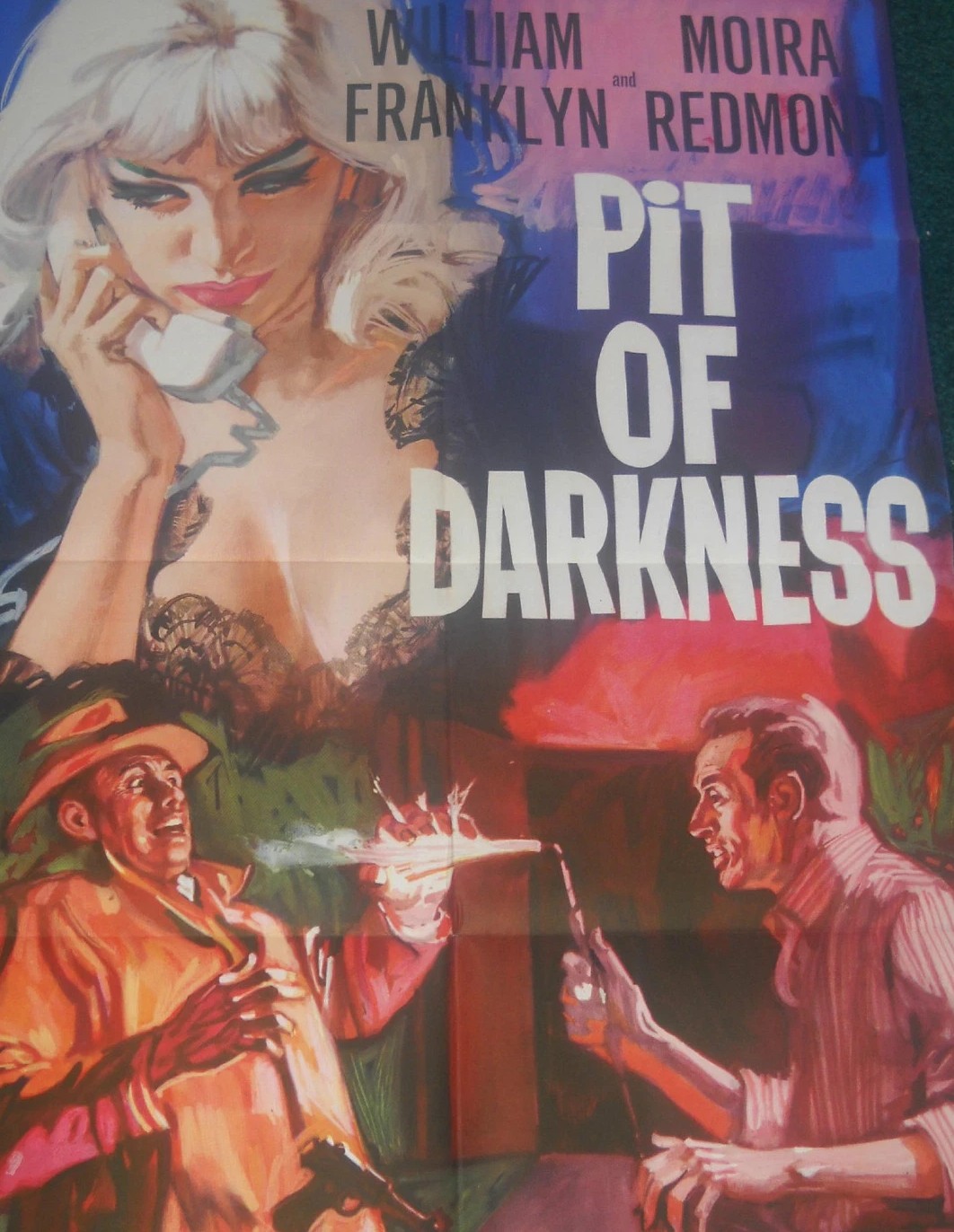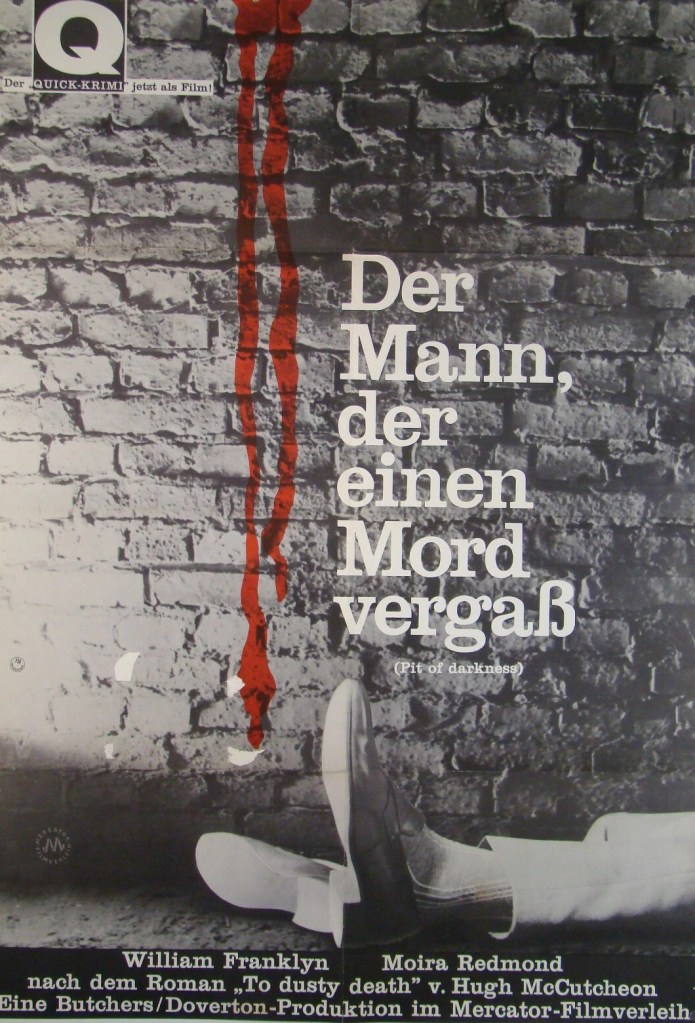
Pit of Darkness (1961) ****

Occasionally I get to wondering when one of these British crime B-pictures is exceptionally well-plotted, refreshing and above all logical, whether it might have benefitted from grander treatment Hollywood-style. You could easily see Cary Grant or Gregory Peck wriggling around in this one and with a Grant or Peck involved they’d be accompanied by a glamor puss of the Sophia Loren, Deborah Kerr vintage. And that would put the whole movie in an entirely different light and ensure it wasn’t lost for decades, as was the fate of this one.

What struck me most about the opening section here, an attitude maintained for about half the picture, was that the actress wife Julie (Moira Redmond) of amnesiac Richard (William Franklyn) didn’t believe for a minute his story that he couldn’t remember where he’d been for the last three weeks. There wasn’t an ounce of sympathy. That struck me as an entirely believable reaction. Rather than going all soppy at his return, she reckoned he’d run off with another woman and only came back because the affair had gone sour.  

And it doesn’t help his case that he was found unconscious on a piece of London waste ground where four days before the private detective she had hired to find him was discovered murdered. Then there are the suspicious phone calls, leaving him to deny the existence of anyone called Mavis.

But just when we start to believe him, suddenly we don’t. He seems to be too familiar with the Mavis who calls him and agrees to meet her at a remote cottage. And then we’re back on his side, as he just avoids being blown up in the cottage. But he leaves his hat behind.

And he doesn’t own up to Mavis about being nearly killed and gives a spurious reason for buying a new hat and not keeping the old one. So we’re on her side, something is going on for sure. And then back on his, when someone tries to sideline him in a hit-and-run accident.

In turn, he’s suspicious of everyone, including his wife, and his colleagues at work, especially Ted (Anthony Booth) who seems an unlikely candidate to have won the heart of his delectable secretary Mary (Nanette Newman).

He works for a firm that makes safes and whatever’s going on appears to be linked to a burglary that occurred in his absence involving one of the safes the company made. Eventually, Julie comes round to his way of thinking. Clues lead him to a nightclub, whose mysterious owner Conrad (Leonard Sachs) somehow seems familiar. He encounters Mavis, a dance hostess, and she agrees to help him but when he goes round to her apartment finds a corpse. There’s something distinctly odd going on in the building across the street from his office. On further investigation, he uncovers an assassin. Luckily, our man is armed with the office pistol and the villain is chucked from the roof.

But, still, nothing makes much sense, even though bit by bit memory is returning. He realizes he shouldn’t have been found unconscious on the waste ground, but dead, murder only interrupted by the sudden arrival of a gang of boys.

But in retracing his steps in order to unlock the lost memories he finds himself undergoing a perilous process a second time. He works out that he was kidnapped and locked in a cellar in the club. When he confronts Conrad, that instigates a repeat.

Conrad locked him away and when bribery and the seductive wiles of Mavis didn’t work, Conrad convinced Richard that his wife was in danger if he didn’t go along with the burglary. And Conrad isn’t one to let a good opportunity go to waste, so second time around, using the same threat that worked the last time, he forces Richard to commit another burglary. But this time there’s a catch and one that Richard’s secretary hasn’t known about to pass on to Ted.

So the bad guys are caught, and in the way of the obligatory happy ending the audience is left to assume that the police will ignore his part in the robbery and the death of the man on the roof.

Not just exceptionally well-plotted, but the addition of the marital strife, the suspicious wife, adds not just to the tension but makes it all the more believable and turns the amnesia trope on its head.

Having wished for a Cary Grant or a Gregory Peck, I have to confess I was more than satisfied with William Franklyn (The Big Day, 1960) who managed to look innocent and guilty at the same time. Certainly Deborah Kerr would have managed more in the acerbic look department than Moira Redmond (The Limbo Line, 1968) but I have no complaints.

Interesting support cast at the start of their careers, so Anthony Booth (Corruption, 1968) displays just a hint of his later trademark sarcastic snarl and there’s no chance for Nigel Green (The Ipcress File, 1965)  to put his steely stare into action or effect his drawl. Nanette Newman (Deadfall, 1968) has little to do except look fetching. Leonard Sachs was taking time off from presenting TV variety show The Good Old Days (1953-1983).

More kudos for the script than the direction this time for Lance Comfort (Blind Corner, 1964).

Given it’s from the Renown stable. I would normally have expected to come upon this picture on Talking Pictures TV, so I was surprised to find it as one of the latest additions to Amazon Prime.

First class.

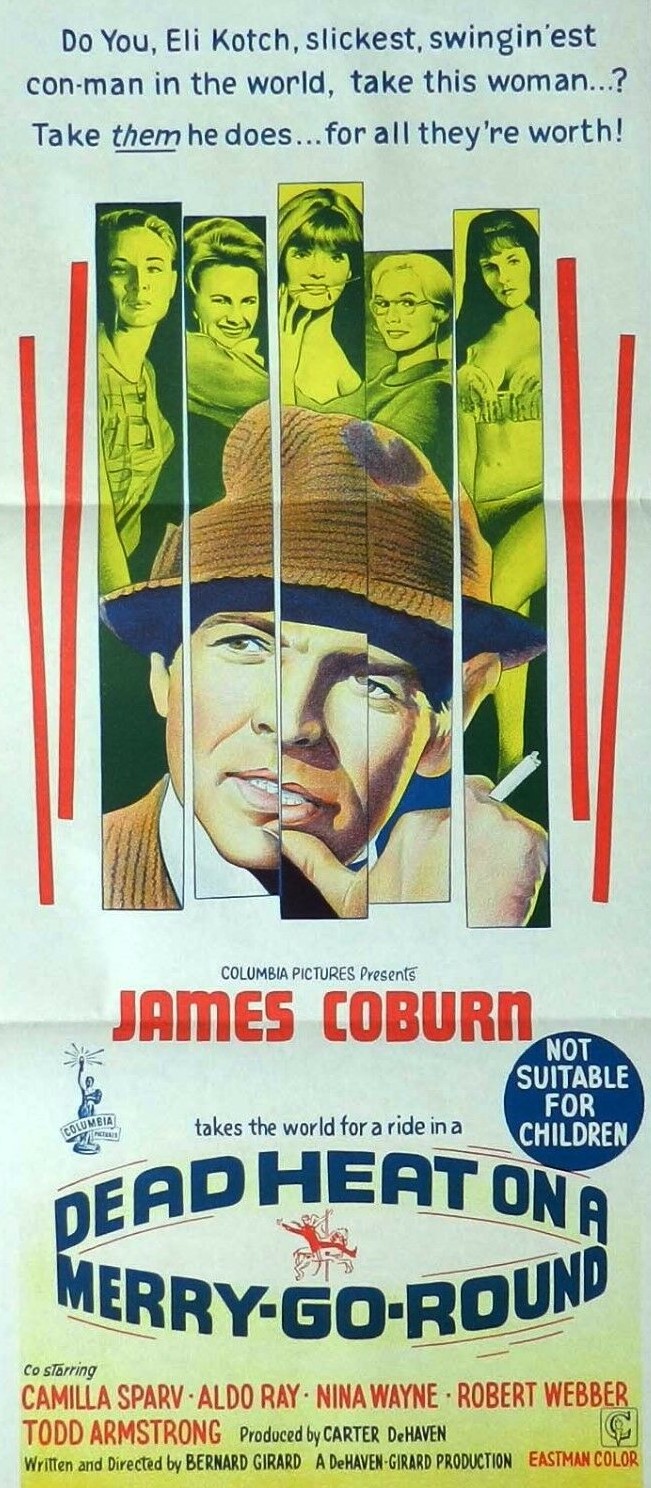
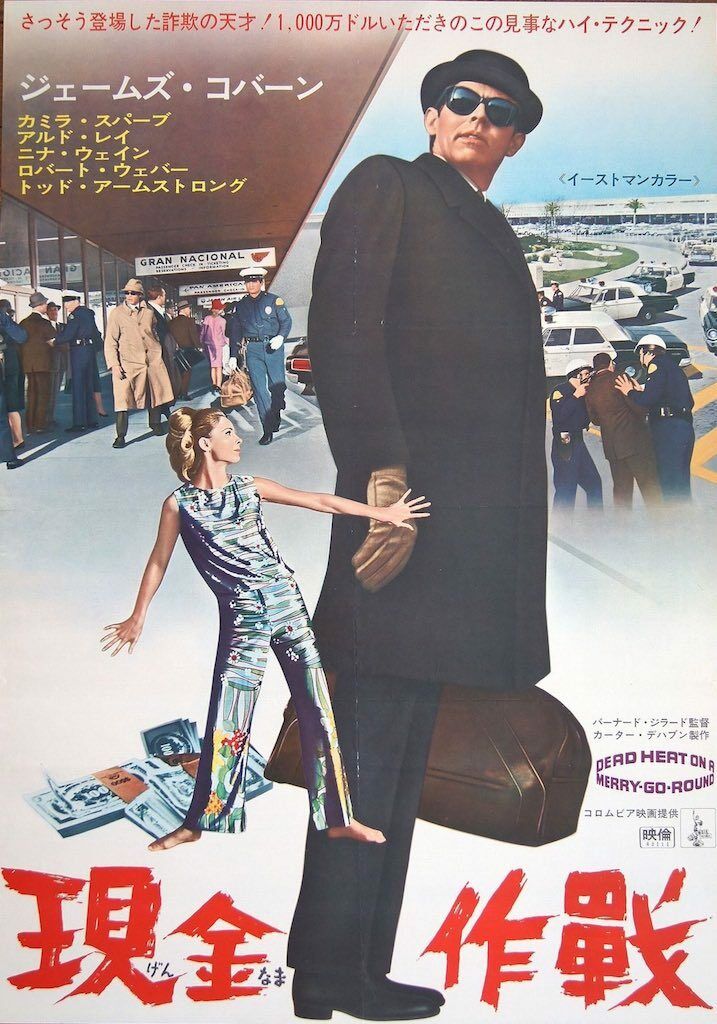
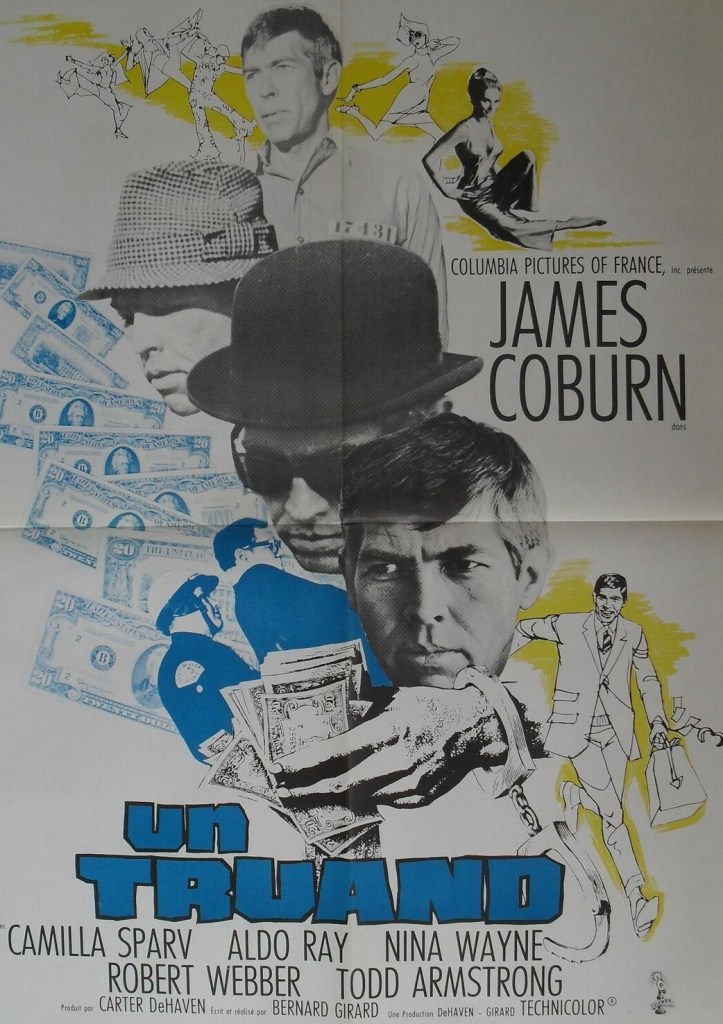
Dead Heat on a Merry Go Round (1966) ****

Highly entertaining woefully underrated heist picture with an impish James Coburn (Hard Contract, 1967), Swedish Camilla Sparv (Downhill Racer, 1969) in a sparkling debut and at the end an outrageous twist you won’t see coming in a million years. This is the antithesis of capers of the Topkapi (1964) variety. Not only is it an all-professional job, it takes a good while before you even realise the final focus is robbery or even the actual location. There are hints about the that event and glimpses in passing of material that may be used, and although the theft is planned to intricate detail, none of that planning is revealed to the audience.

The paroled Eli Kotch (James Coburn), who has seduced the prison psychiatrist, immediately skips town and starts fleecing any woman who falls for his charms. He changes personality at the drop of a hat, fitting into the likes of the mark, and in turn is burglar, art thief, car hijacker, in order to raise the loot required to buy a set of bank plans, and yet not above taking on ordinary jobs like shoe salesman to meet the ladies and coffin escort to get free travel across the country. So adept at the minutiae of the con he even manages to impersonate a hotel guest in order to get free phone calls.

He enrols girlfriend Inger (Camilla Sparv) to act as an amateur photographer working on a “poetic essay on transient populations” to get an idea of sites he means to access. He manages to have the head of a Secret Service detail blamed for a leak. Everything is micro-managed and his final masquerade is an Australian cop with a prisoner to extradite which provides him with an excuse to linger in a police station, privy to what is going on at crucial points.

If I tell you any more I’m going to give away too much of the plot and deprive you of delight at its cleverness. The original posters did their best not to give away too much but you can rely on critics on Imdb to spoil everything.

This is just so much fun, with the slick confident Eli as a very engaging con man, the supreme manipulator, and almost in cahoots with writer-director Bernard Girardin (The Mad Room, 1969) in manipulating the audience. There are plenty films full of obfuscation just for the hell of it, or because plots are so complex there’s no room for simplification, or simply at directorial whim. But this has so much going on and Kotch so entertaining to watch that you hardly realize the tension that has been building up, not just looking forward to what exactly is the heist but also how are they going to pull it off, what other clever tricks does Kotch have up his sleeve for any eventuality, and of course, for the denouement, are they going to get away with it, or fall at the last hurdle. There is a great twist before the brilliant twist but I’m not going to tell you about that either.

There’s plenty Swinging Sixties in the background, the permissive society that Kotch is able to exploit, and yet the film has some unexpected depths. You wonder if the memories Kotch draws upon to win the sympathy of his female admirers have their basis in his own life. You are tempted to think not since he is after all a con man, but the detail is so specific it has you thinking maybe this is where his inability to trust anyone originates.

Bernard Giradin was not a name known to me I have to confess, since he was more of a television director than a big screen purveyor – prior to this he had made A Public Affair (1962) with the unheard-off Myron McCormick – and Coburn was the only big star he ever had the privilege to direct. But there are some nice directorial touches. The movie opens with a wall of shadows, there are some striking images of winter, a twist on bedroom footsie, and jabbering translators. But most of all he has the courage to stick to his guns, not feeling obliged to have Kotch spill out everything to a colleague or girl, either to boast of his brilliance, or to reveal innermost nerves, or, worse, to fulfil audience need. There’s an almost documentary feel to the whole enterprise.

James Coburn is superb. Sure, we get the teeth, the wide grin, but I sometimes felt all the smiling was unnecessary, almost a short cut to winning audience favour, and this portrayal, with the smile less in evidence, feels more intimate, more seductive. This may well be his best, most winning, performance. Camilla Sparv is something of a surprise, nothing like the ice queen of future movies, very much an ordinary girl delighted to be falling in love, and with a writer of all the things, the man of her dreams.

The excellent supporting cast includes Marian McCargo (The Undefeated, 1969), Aldo Ray (The Power, 1968), Robert Webber (The Dirty Dozen, 1967), Todd Armstrong (Jason and the Argonauts, 1963) and of course a blink-and-you-miss-it appearance of Harrison Ford as the only bellboy (that’s a clue) in the picture. You might also spot showbiz legend Rose Marie (The Jazz Singer, 1927).

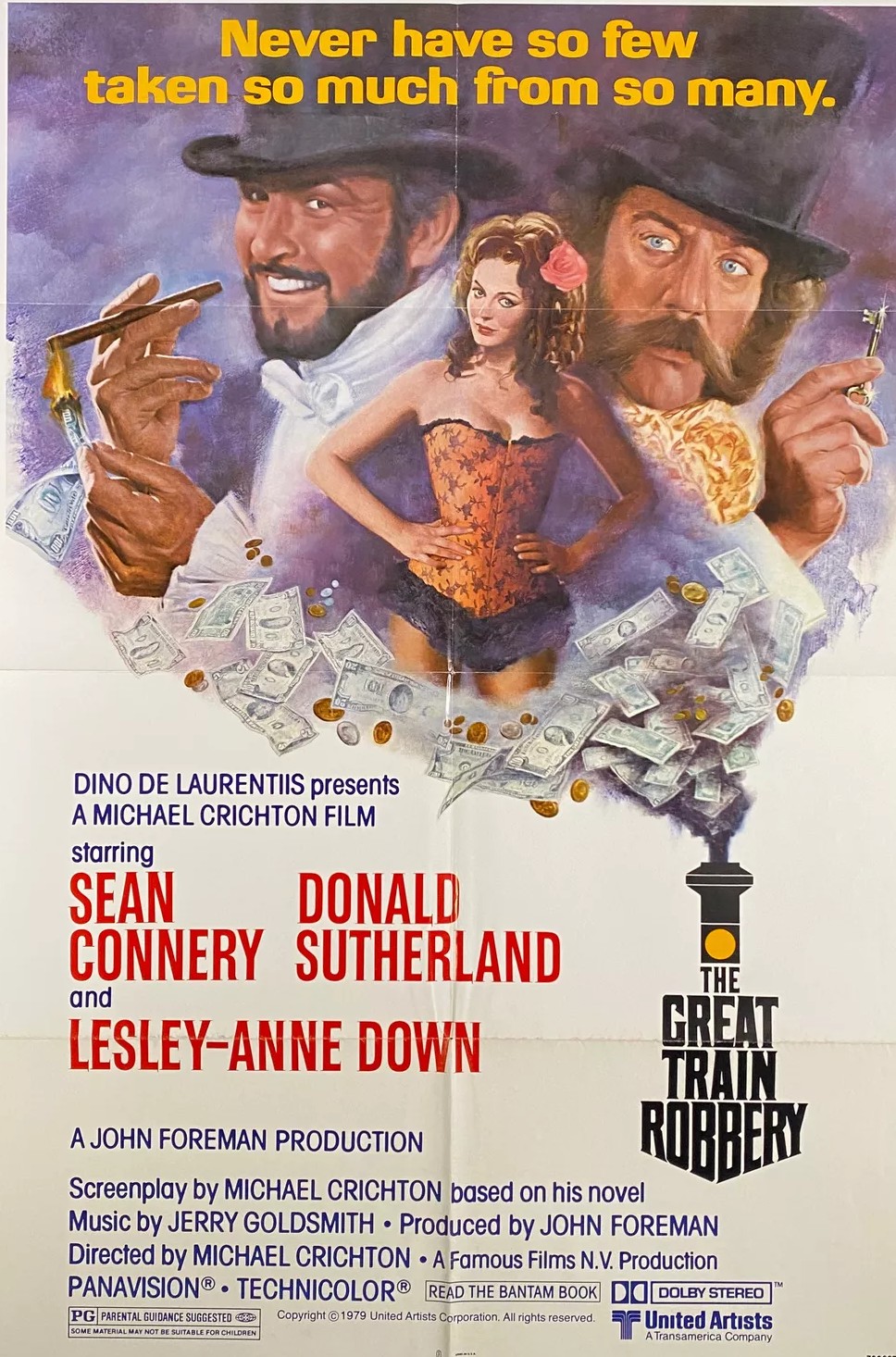
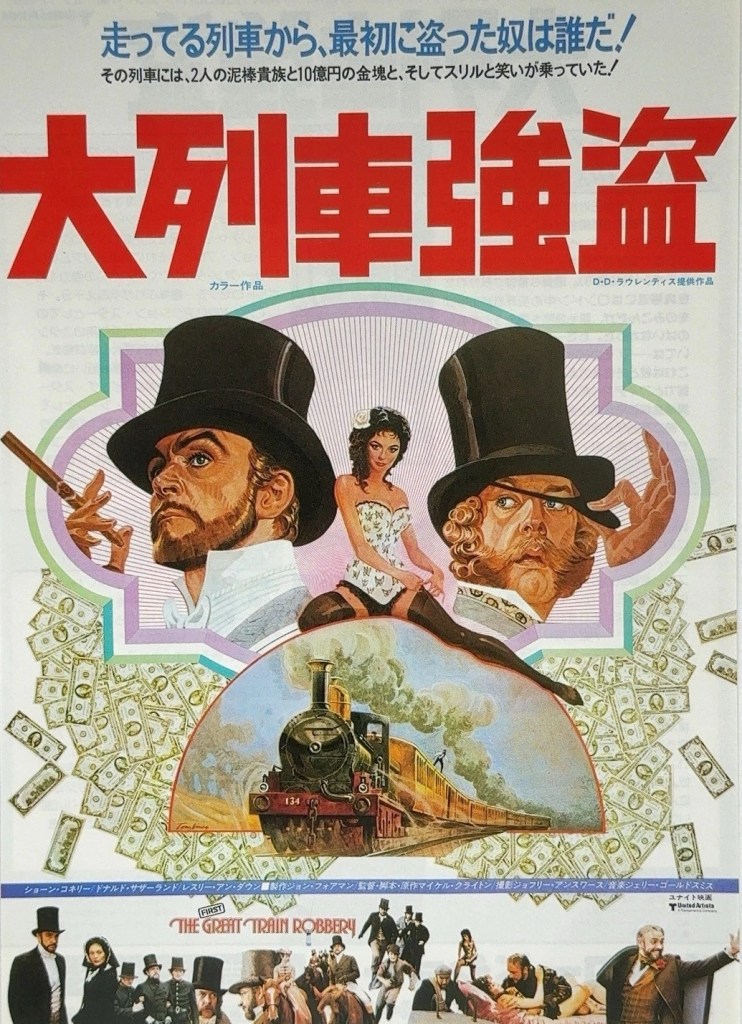
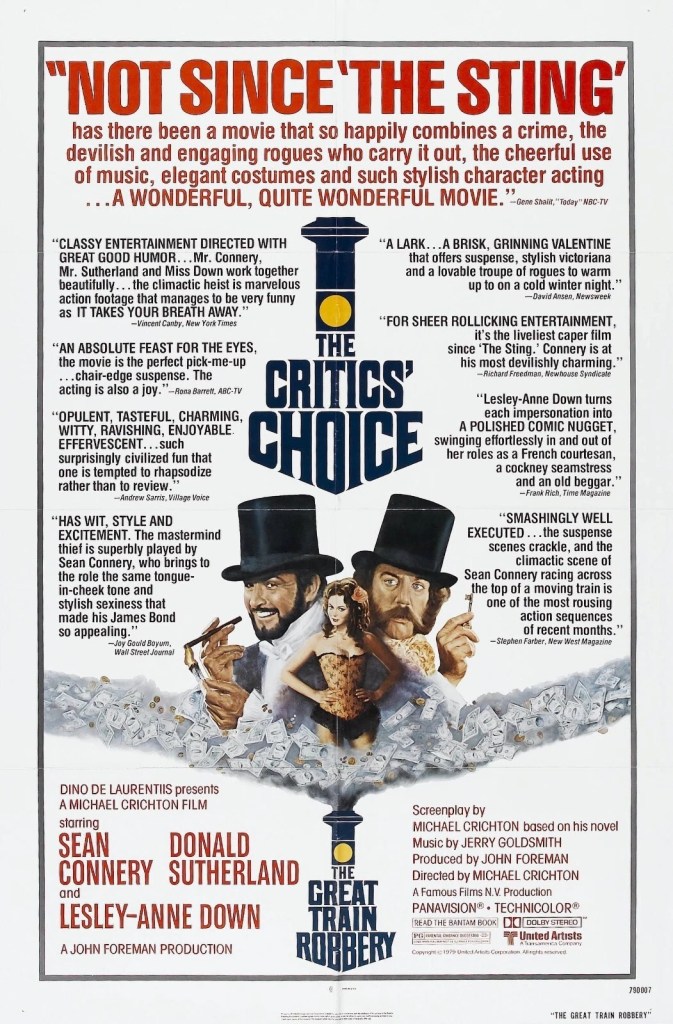
The Great Train Robbery / The First Great Train Robbery (1978) ****

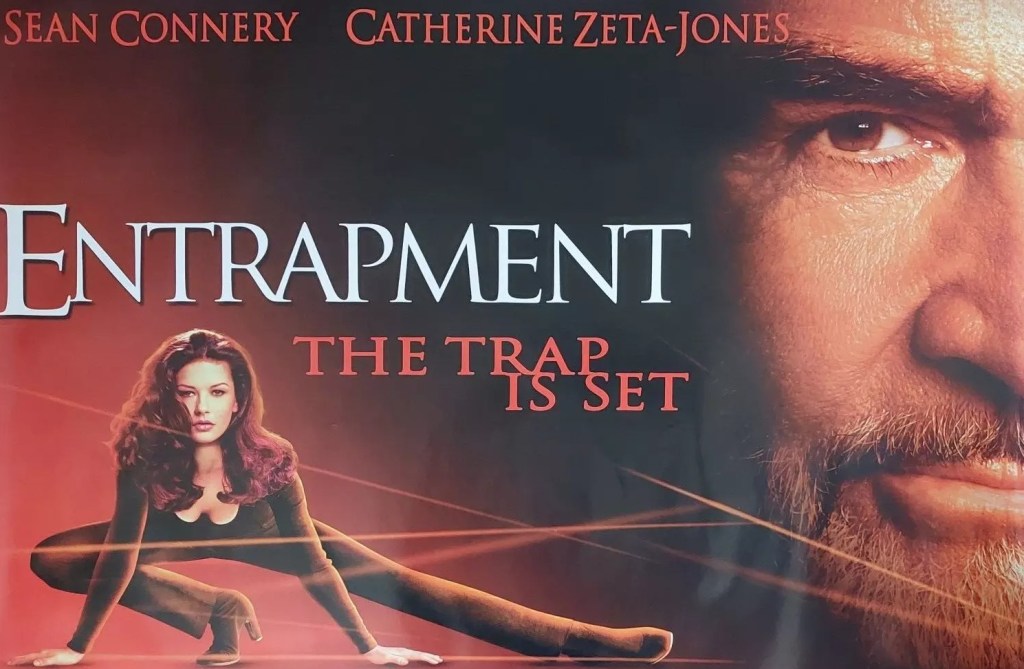
Back in the day your IP was the star. And here Sean Connery (The Hill, 1965) is the essence of that belief. The camera homes in on him. He steals every scene with an effortlessness that takes your breath away even as co-star Donald Sutherland (Don’t Look Now, 1973), complete with bizarre sideburns and winks to the audience, is huffing and puffing to compete.

Come at it as the standard heist movie and you will struggle to enjoy it because it is made up of too many different components. But approach it from a different perspective, that of The Sting (1973) as one critic suggests, and it takes on a different complexion and the getting there becomes a whole lot of fun. The background, Victorian England of the 1850s, doesn’t help so much as the sets look like they’ve been plundered from Oliver! (1968) and dirtied up a bit.

It’s worth remembering that in an era when the Mission Impossible series has been constantly sold on Tom Cruise undertaking his own stunts that Sean Connery did something much more dangerous than anything attempted by Cruise which was to race along the top of a train travelling at 55 miles an hour.  

And if you need some contemporary analogy, look no further than the rich get richer and mostly through plundering. The ending presents the notion of a Robin Hood outwitting the forces of law and order to the acclaim of the public. But that would be to overlook the fact that chief thief Pierce (Sean Connery) is already so wealthy from previous nefarious dealings that he hobnobs with the rich, so accepted in their world of male clubs and high society that, like a financial trader, he is able to pick their pockets of vital information.

Though it’s not quite that easy. The target is a trainload of gold bullion heading for the Crimean War. And the two safes containing the dosh require four keys, each under the control of a different high-up official, requiring several separate audacious thefts. This involves some play-acting from the principals, dressing up in the main from female accomplice Miriam (Lesley Anne Down), clever duping by Pierce and old-fashioned burglary from pickpocket Agar (Donald Sutherland) who waves his fingers around like a demented Fagin, and whose main job is make wax impressions of stolen keys.

So Pierce pretends to be the ardent wooer of the daughter of one of the key holders, and Miriam essays a prostitute to relieve a key holder of the precious possession he wears around his neck. But the other two keys require a more professional approach which involves first of all the springing from prison of cat burglar Clean Willy (Wayne Sleep) to break into the guarded railway premises in a time-dependent operation.

But the cops get wind of the plan and increase security on the train, including adding a new padlock to the outer door. “Find me a dead cat!”, while not quite in the league of “The name’s Bond, James Bond” might well count as one of the best lines ever uttered by Sean Connery.      

Said deceased animal is brought in to supply the necessary stink for a corpse should the cops consider opening the casket containing Agar which is to travel on the train, providing the team with the necessary inside man. But Agar and Miriam as the weeping widow of the supposed dead man have very little to do compared to Pierce who has to climb on top of the train, racing along the speeding top, drop down the side in an improvised harness and pick the padlock, then do the whole thing in reverse.

I may be wrong, and I’m sure someone will correct me if I am, but if this wasn’t the first time running along the top of a moving train was employed in a movie it certainly set a new standard, especially in the willingness of the actor to carry out his own stunts.

Pretty much all that remains after that is the twists that see Pierce captured and then escape. You could pick a few holes in it if you wish. The fact that after Pierce swapping coats (the one that had lain beside a dead cat for hours and provided sufficient stink to convince the lawmen) with Agar, nobody noticed the smell seems unlikely. The same would apply to bank manager Fowler (Malcolm Terris) who fails to spot that the widow he shares a compartment with for the entire journey is the prostitute who duped him, though that prospect does increase the tension.

If you’re expecting a standard heist movie then this takes way too long to come to the boil, but if you go along with the conceit and enjoy the playing especially of Sean Connery and ignore the mugging of Donald Sutherland it is in the forefront of the best robbery pictures.

And it’s worth noting the little gems in Connery’s acting. There’s a scene where Lesley Anne Down is berating him for making her become a prostitute (implicit is her fear she might actually need to have sex with the client). He’s eating an orange. Ignoring her complaints as just part of the job, he offers her some of his fruit as if his main worry is being seen to be rude hogging the fruit to himself.

Connery proves exactly why you hire a star. He carries the picture. There’s a lightness to his overall performance, notwithstanding the few times he needs to take a tougher line, that makes the film a joy. Whereas Donald Sutherland is either too heavy-handed or overacting. This proved a breakthrough role for Lesley Anne Down (British television’s Upstairs, Downstairs, 1973-1975).

Director Michael Crichton (Westworld, 1973) cuts himself too much slack in the first half of the picture which could have been considerably tightened up but comes into his own with the tension and twists of the heist and he has the good sense to rely on Connery’s interpretation of Pierce. He also wrote the script based on his own novel, a fictionalization of the actual original robbery attempt.

There already had been an incredibly famous Great Train Robbery in Britain in 1963, hence the need to differentiate this from that by inserting the prefix “First” to the advertising in Britain.

Great fun and worth a watch.

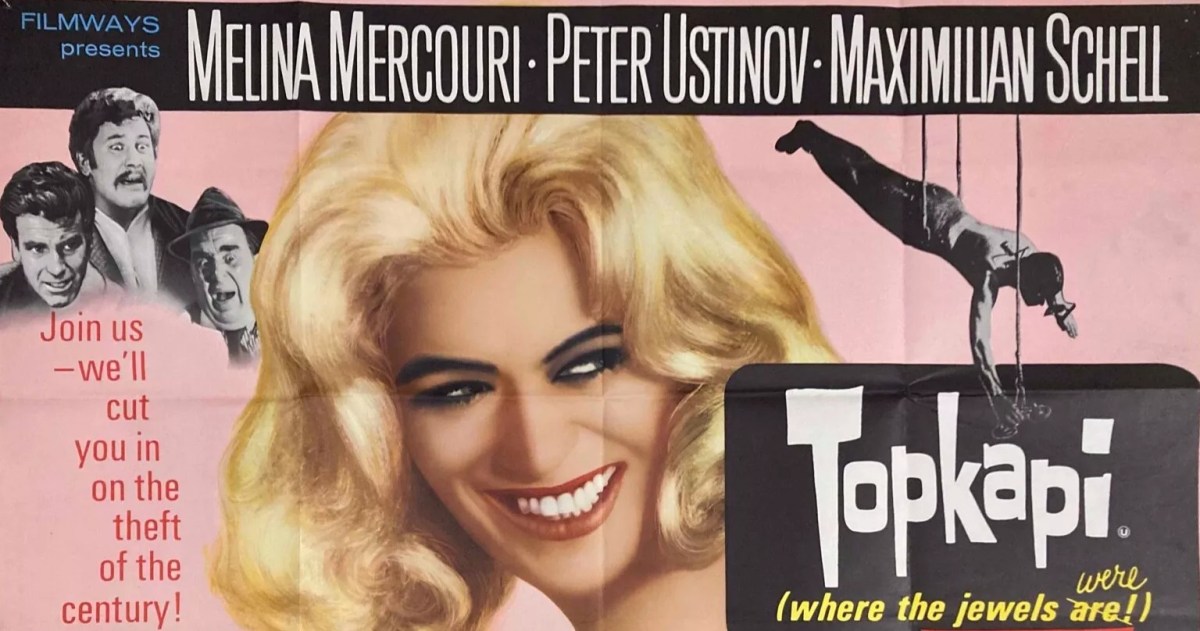
Topkapi (1964) *****

The mother of all heists directed by the father of all heist pictures. Films as diverse as The Italian Job (1969), Mission Impossible (1996) and Ocean’s Eleven (1960) owe director Jules Dassin a massive debt since he pretty much invented this genre with the French-made Rififi (1955). But that involved professional criminals. Outside of masterminds Elizabeth (Melina Mercouri) and Walter (Maximilian Schell), this crew are amateurs, deliberately chosen for their lack of criminal records and with a mind to the specific tasks required. So we have acrobat Giulio (Gilles Segal), upper-class English gadget inventor Cedric (Robert Morley), strongman Hans (Jess Fisher) and driver Arthur (Peter Ustinov).

The target is the impenetrable, complete with sound-sensitive floor, Topkapi Palace in Istanbul where they plan to steal a priceless emerald-encrusted dagger. The plan is ingenious. Arthur is initially only hired to smuggle the weapons essential to the audacious heist across the border. But when he is caught and forced to cooperate with the Turkish secret police, he is enlisted as a replacement for Hans. Minus the rifles and grenades which at first appeared indispensable to the plan, the thieves come up with an even more inspired alternative involving among other things scampering across rooftops, abseiling, a parrot and slowing down the revolutions of a lighthouse.

Originally intending to betray his colleagues as soon as possible, Arthur falls under the seductive spell of Elizabeth and finds himself recruited as the replacement muscles. Elizabeth exudes such sexuality she has the entire gang in her thrall and makes the cowardly, weak acrophobic Arthur believe he can overcome all his fears. Walter engages in a cat-and-mouse game with the police, always one step ahead, with a bagful of red herrings at his disposal, eventually giving the pursuers the slip during a wrestling competition held in a massive outdoor arena.

Interestingly, too, this doesn’t have the trope of gangsters at each other’s throats, planning to double-cross one another or bearing old grudges. Nobody challenges the leader. In fact, the entire crew could not be more docile, content to sit at the feet of Elizabeth and Walter, lapping up the former’s flirtation, wondering at the latter’s skill, as if they are all honored to have been chosen.

The climactic heist, carried out with no musical soundtrack and lasting over 30 minutes, is absolutely superb, setting a very high bar for future imitators, and there is a twist ending. Dassin mixes light comedy and high tension with the sultry attractions of Elizabeth to produce an at times breathtaking picture. As well as the heist itself, the wrestling sequence is stunning and the transition of Arthur forms the acting highlight (Ustinov won the Best Supporting Actor Oscar).

But all four main stars are superb. Audiences accustomed to a more uptight Maximilian Schell (The Condemned of Altona (1962) will have been surprised by his performance. Melina Mercouri (Oscar-nominated for Never on Sunday, 1960) is the archetypal blonde bombshell, liberal with her favors but careful not to favor just one. Although Walter devises the plan, she is actually the criminal supremo, selecting the targets, and then delegating to ensure the tasks are carried out. Robert Morley is having the time of his life. Akim Tamiroff (Lord Jim, 1965) has a cameo as a chef.

A film noir star after Brute Force (1947) and The Naked City (1948) Dassin’s Hollywood career collapsed in the wake of the anti-Communist McCarthy hearings and he was blacklisted. Rififi opened few doors but even the success of Never on Sunday (1960) brought little respite.  Despite returning to the mainstream with such elan through the conduit of Topkapi, albeit with a European cast, he remained on the Hollywood periphery and although Uptight (1968) – previously reviewed in the Blog – involved another heist that was primarily the wrapping for social documentary.

More at home with comedies screenwriter Monja Danischewsky (The Battle of the Sexes, 1960) draws out more humor than the source material, Light of Day by noted thriller writer Eric Ambler, would ostensibly suggest.

A delight from start to finish, the crème de la crème of the heist genre, this is unmissable. Dassin can lay claim to being the John Ford of the crime picture.

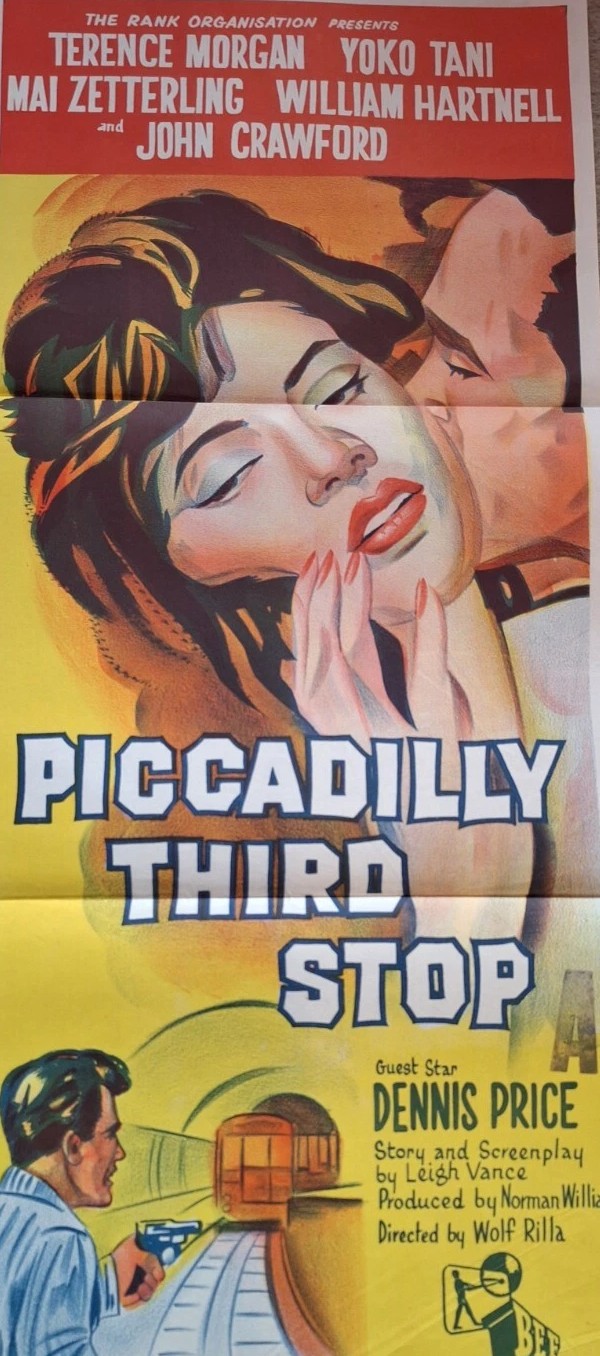
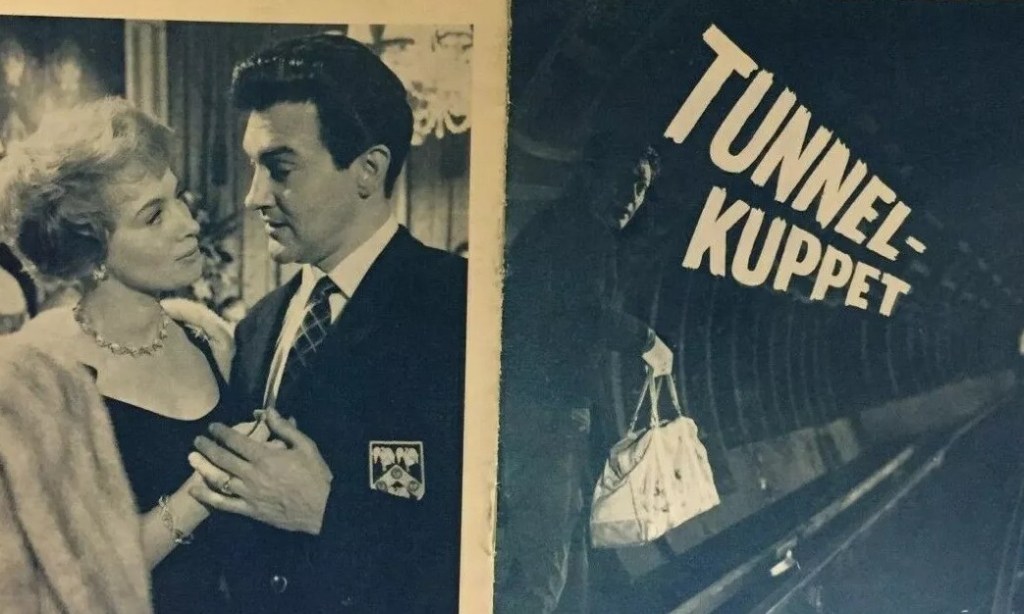
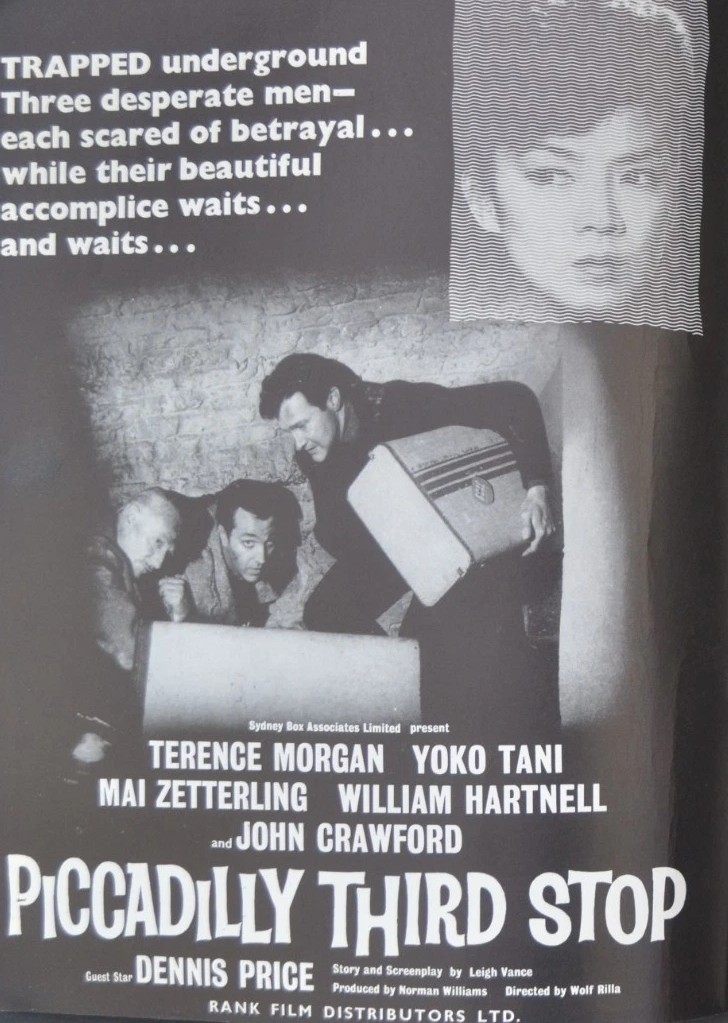
Piccadilly Third Stop (1960) ***

Well-worked full length British thriller that goes against the grain of presenting sympathetic hoods in the vein of Ocean’s Eleven or The League of Gentlemen both out the same year in which audiences largely align with the gangsters in part because they come across as charming and in part because their aims appear thoroughly reasonable.

Unlike the shorter efforts under the Renown umbrella this has time to develop several narrative strands, with deceit the main motivation, and spends a goodly time on the mechanics of robbery, the planning, the percentage split accorded each member, and the heist itself, which is an arduous one, involving digging through a brick wall.

Dominic (Terence Morgan) isn’t exactly a petty thief not when he can dress himself up to the nines, infiltrate a society wedding and make off with an expensive piece of jewellery, which he hides in an unusually clever fashion. But working on his own account is far more lucrative than being an employee in a watch-smuggling ring run by Joe Preedy (John Crawford) who has a classy wife Christine (Mai Zetterling) and life and has so much dough lying around that he’s easy pickings for Dominic who has a side hustle bring dupes to the gambling tables of the pukka Edward (Dennis Price).

Dominic happens to be bedding Christine but that still leaves him time to romance Fina (Yoko Tani), daughter of an ambassador, who casually reveals the embassy safe contains £100,000. She’s so helplessly in love she falls for his tale of them running off together and becomes an accomplice.

With the assistance of Edward, Dominic snookers Joe into supplying the readies to pay for the robbery set-up costs, the tools, gelignite etc. The plan involves digging a hole through the tunnels of the London Underground into the basement of the embassy.

Joe’s share of the spoils will hardly cover his debts so he’s intent on making off with the full amount. As it happens, Dominic has precisely the same idea. Christine is roped in, unknown to her husband, to act as getaway driver.

There’s a hefty dose of characterization unusual in these movies, more than just information dumps about characters. Dominic could easily fund the caper with the cash he would get from selling the stolen diamond, but he holds out for a larger amount from a fence. Joe should easily be able to afford the money, but he’s in dire financial straits because he lost a packet at the gambling tables and his own astuteness in ferreting away all he owns in his wife’s name. That puts his gains well beyond the long arm of the law but leaves him illiquid (I guess is the technical term) and he has to beg Christine to pawn her mink coats.

She’s a smooth operator, an amateur artist, happily living off Joe’s nefarious activities while running around with Dominic and planning to run away with him at robbery end. Joe’s desperate to be seen as a major player, hence his attendance at the casino, and kicking off when he doesn’t get his way, and raging against all the toffs born with a silver spoon in their mouths.

Two of the subsidiary characters are interesting studies. Safecracker the Colonel (William Hartnell) has too much of an eye for the pretty lady and too great a capacity for alcohol, but he’s been careful with his loot, spreading it around in various investments, very secure in his old age, and confident enough in his own abilities that he’s able to negotiate a higher share of the loot. But the prize supporting character is Mouse (Ann Lynn), girlfriend of Dominic’s sidekick Toddy (Charles Kay), who is considered so dumb and harmless that the crooks discuss their plans within her earshot. Except, she’s not concentrating and doesn’t quite get the hang of things and feeds Toddy the wrong information at the wrong time which nearly puts a spoke in the works.

As if the robbery required any more tension. Just how much work is involved in digging a hole through a wall is pretty clear here, should anyone in the audience have ideas of their own. You know double-crossing is also on the cards, not just the Dominic vs Joe and Christine vs Joe but the lovelorn Fina is also due her come-uppance.

And there’s a very nice touch at the end which proves that amateurs are a distinct liability. Any notion Christine has harbored that she would, if only given the chance, prove an ideal getaway driver are misplaced.

Directed by Wolf Rilla (Village of the Damned, 1960) not just with occasional style notes but with a determination to allow his characters room to move from a screenplay by Leigh Vance (Crossplot, 1969). You can catch it on Talking Pictures TV.

All in all a very entertaining little picture strong on tension with a host of interesting characters.

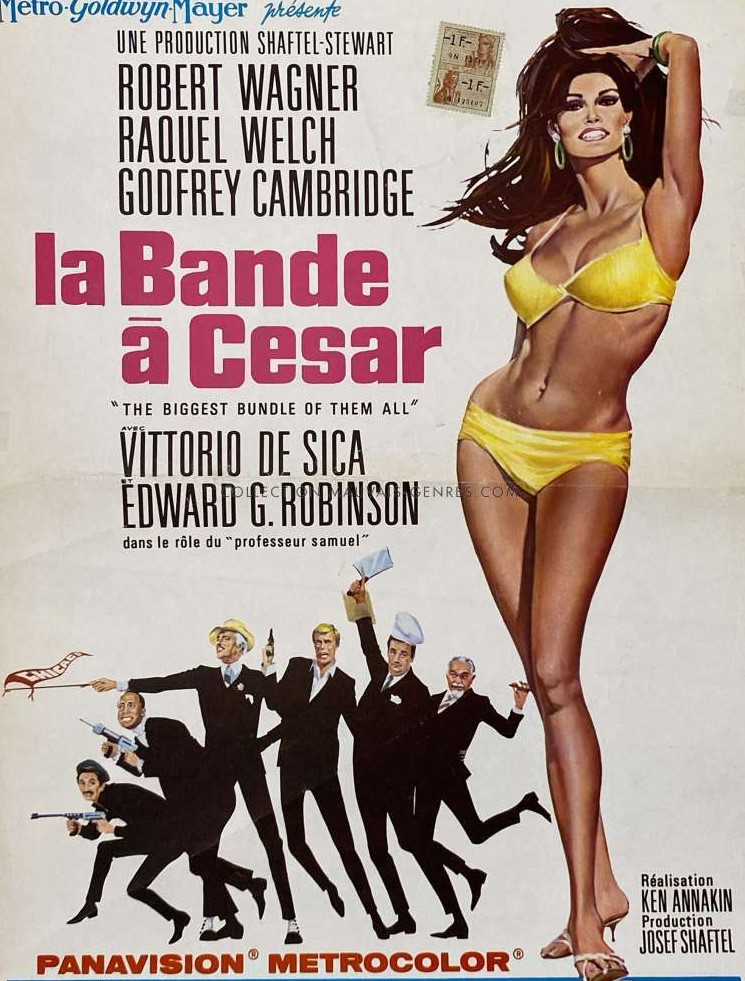
The Biggest Bundle of ‘Em All (1968) ***

Bunch of incompetent crooks kidnap an impoverished Mafia boss who pays his ransom by setting up a major heist. By a stroke of casting alchemy this brings together Cesare (Vittorio De Sica), the epitome of old world Italian charm, knock-out gangster’s moll and scene-stealer-in-chief Juliana (Raquel Welch) replete with scanty knock-out outfits and criminal mastermind Professor Samuels (Edward G. Robinson). In order to acquire the funds necessary to steal $5 million of platinum ingots from a train – the plan involving a tank and an WW2 bomber – the crew, initially headed by American Harry (Robert Wagner), need to carry out smaller jobs.

Problem is, none of them are any good, not even Cesare, who has lost his flair and botches an attempt to rob an old flame of her jewels. They can’t even carry out a simple theft from a restaurant. The heist itself is pretty spectacular and innovative. And the movie is quirky, with a darker edge. While there are few belly laughs, the light tone is enough to carry the gentle humor, mostly inspired by the misplaced team, amateurs for various reasons, not necessarily outright lawbreaking, on the run. These include London Cockney mechanic Davey (Davy Kaye), chef Antonio (Francesco Mule) distracted by hunger at every turn, cowardly violinist Benny (Godfrey Cambridge) and Joe (Mickey Knox) with a helluva brood to feed.

The story does a good bit of meandering, as does the camera, much of its focus on the voluptuous charms of Juliana, but the hurt pride of Cesare and the grandiose machinations of the professor keep it on course. The Italian settings, incorporating grand villas and ruins, do no harm either. The heist is terrific and there is a final twist you may or may not see coming. The interplay of characters works best when it involves Juliana, who attempts to twist Cesare around her little finger, that tactic mutual it has to be said, who keeps the professor on his toes by dancing with him in a disco, and it soon becomes apparent that she has the upper hand over loverboy Harry.

You could be forgiven for thinking the title refers to Raquel Welch – a cinematic infant at this stage with only One Million Years B.C (1966) in her locker – especially when her cleavage and looks receive such prominence, but the caper is classy and different. As well as being obvious she is both sinuous and seductive and clearly has a mind of her own, possibly the most criminally intent of the entire outfit, with weapons the others lack. By this point, she had invented the pop-out bikini, pictures of which had flooded Europe, making her the pin-up par excellence, but those who came to simply gawp quickly realised there was talent behind the body.

De Sica (The Shoes of the Fisherman, 1968) constantly plays around with the idea of being a defunct godfather and Robinson (Grand Slam, 1967) is the antithesis of the gangster roles on which his fame relied. Robert Wagner (Banning, 1967) is less effective, miscast and out of place in such august acting company and losing out to welch in every scene.

This was a considerable change of pace for British director Ken Annakin after Those Magnificent Men in Their Flying Machines (1965) and Battle of the Bulge (1965) and he brings to this the comedy of the former coupled with the narrative complications of the latter, wrapping everything up in an easy inviting style that makes the most of his stars and the locations. Screenwriter Sy Salkowitz was a television veteran (Perry Mason, The Untouchables et al) , this marking his first venture into the big screen.        

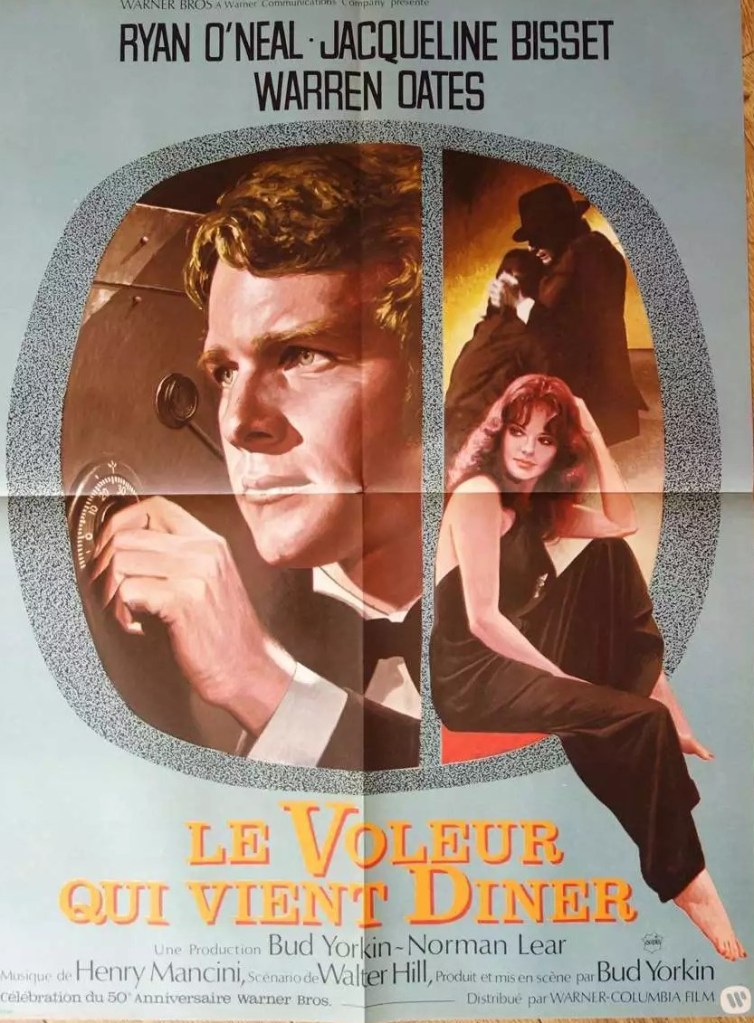
The Thief Who Came to Dinner (1973) ****

Very unusual entry into the cat burglar subgenre since it plays like a bromantic version of The Thomas Crown Affair (1968), investigator and investigated striking up some sort of relationship, though with an elegant dame on the sidelines to take care of the jewel thief’s sexual needs. Might be surprised to see Bud Yorkin – better known at the time for comedy – helming this classy thriller and Walter Hill, not yet known for tough thrillers, relegated to screenplay duties.

Webster (Ryan O’Neal) quits his job as a computer geek to go into the thieving business. He’s pretty business-like about it, too, setting up a deal with fence Deams (Ned Beatty) before he gets started, and none of this no honor among thieves nonsense. The first break-in, to the house of politician Henderling (Charles Cioffi),  delivers a handy bonus of uncovering documents relating to corruption so Webster’s able to blackmail the victim into providing him with an entrée into high society where he can scope the jewellery on show at various parties, and where he meets Laura (Jacqueline Bisset) who appears to be in the same line of work, if at a much lower level.

We never see Laura at work and mostly she hovers in the background, there’s no angst in this relationship, she’s the kind of thief who steals because she’s the bored kind of rich gal looking for kicks. Most of the thieving is interesting one way or another. On his first gig, though Webster had invested in one of those devices that hold onto the glass once you’ve nefariously released it from the frame, he’s so inexperienced the glass breaks.

Instead of quieting guard dogs with doped meat, he sends in a bitch to distract them. He has to deal with illicit lovers turning up in the middle of a robbery. And, of course, with an amazing diamond on show, he just has to organize a way of stealing it.

So with Laura not providing any of the tension, not the usual refusal to become entangled with a criminal, not just the normal lovers’ tiffs, it’s left to insurance investigator Dave (Warren Oates) to provide the friction. He’s not the confident, cocky, kind of detective and it’s diligence that leads him to consider Webster his main suspect. And so begins the cat-and-mouse element, the cat often subverted since Webster knows when he’s being tailed and can lead Dave a merry dance. But, mostly, Webster seems to enjoy the battle of minds.

Webster, and a psychiatrist would have a field day here, leaves a calling card at every robbery in the shape of a chess move, guaranteed to get him the headlines he presumably craves of “The Chess Burglar Strikes Again” variety, which only serves to ratchet up the pressure on the supposed incompetence of his pursuers.

Dave has the bright idea of getting a chess expert Zukovsky (Austin Pendleton) to take the thief up on the game, thus introducing a splendid subsidiary character primarily for comic effect, Zukovsky unaware that Webster’s moves are plotted by computer.

Dave and Webster do spend a lot of time together one way or another, Webster even visiting the detective when he’s hospitalized, and an element of mutual respect evolves. Once their relationship is established, Laura has less to do than be an accomplice, arranging ingenious escapes and so forth, so she’s not entirely out of the picture.

But the most interesting relationship is certainly between thief and ersatz cop. There are some excellent individual scenes, most of the thefts contain some unique element, the confrontations between the two principals play out like a low-key chess game, while the originally cocky Zukovsky, initially relishing the publicity, is reduced to fury at being beaten by an amateur. Webster’s ex-wife (Jill Clayburgh) relishes the change in his personality.

But mostly this is Ryan O’Neal (The Big Bounce, 1969) at the top of his game. No smirking and no screwball comedy. He’s given a well-developed character to play – physically fit, able to hold his own in the boxing gym, capable of cutting a deal with underworld figures – and the screenplay cleverly withholds the one element that all crime movies fall down on, the explanation of why anyone would turn to crime, so Webster weaves a sense of mystery. Jacqueline Bisset (The Detective, 1968) makes an excellent partner. And this is a stripped-down Warren Oates (The Wild Bunch, 1969), eliminating the meanness or exuberance that were his screen trademarks. Jill Clayburgh (An Unmarried Woman, 1978) has a cameo.

Bud Yorkin, who at the time was producer of the top three television comedies on U.S. television, foregoes comedy for tension and thrills. Walter Hill (48 Hrs, 1982) sneaks in some of the elements that would later become trademarks.

Great watch.

The Sicilian Clan / Le Clan des Siciliens (1969) *****

Absolutely cracking, brilliantly structured, gangster thriller featuring two fabulous heists and three legendary French stars in Jean Gabin, Alain Delon and Lino Ventura. Roger Sartet (Delon) is a trigger-happy robber whose terrific prison escape is organized for a hefty fee by French-based Mafia chieftain Vittorio Manalese (Gabin). Le Goff (Ventura) is the rugged cop hunting down the escapee which brings him into the orbit of Manalese, about whose existence he is completely unaware, the gangster having kept an extremely low profile, never engaging in violence, hiding behind the legitimate front of a pinball machine business.  Veteran French director Henri Verneuil (Guns for San Sebastian, 1968) dukes between the twin storylines with ease.

Sartet brings Manalese the opportunity to pull off the most audacious jewel robbery in history, even though the older man despises Sartet’s penchant for violence and sex. We often see Manalese at family gatherings, head of the dinner table, the family watching television together, frowning on one son’s liking for alcohol, playing with his grandson. He is not just a calm and clever businessman, but very quick-thinking, his sharp mind in a couple of instances preventing disaster. Sartet, on the other hand, will happily endanger his life and freedom by consorting with prostitutes and breaking an unspoken code of honor in an affair with Manalese’s son’s wife (Irina Demick).

The result combines dogged detective work by Le Goff and the inspired planning and execution of the jewel robbery until the two worlds collide. The investigation alone would have made this an outstanding picture. Le Goff, always seen with an unlit cigarette in his mouth although he is trying to give up smoking, concentrating initially on Sartet, sets up surveillance on the thief’s innocent sister and begins an involved – and engrossing – process of tracking down every potential lead and when at last he has Sartet in his sights it brings him up close to Manalese.

Le Goff’s professionalism is matched by that of Manalese and the picture develops into an absorbing battle of wits and the latter’s family values and moral compass puts him at odds with loner Sartet. There is some brilliant invention, the sacrificial watch, for example, and the unexpected appearance of a faithful British wife, although you do guess just how long Le Goff will go before lighting his ever-tempting cigarette. 

The ultra-cool Alain Delon (Once a Thief, 1965) excels in this kind of amoral part, but Jean Gabin (Any Number Can Win, 1963) and Lino Ventura (Army of Shadows, 1969) as old-style gangster and cop, respectively, steal the show. Irina Demick (Prudence and the Pill, 1968) thrives as the bored wife of a dull gangster who is attracted by the violent Delon, at one point deliberately putting herself in the line of his potential fire for the thrill. Actually, it’s the jewel heist that steals the show. Unlike other heist pictures where you have fair idea in advance of the details of the theft, here the audience is kept completely in the dark. Just as important in any heist is that the thieves get away with their plunder and the plan in this instance is breath-taking.

As proved by The Burglars (1971) director Henri Verneuil has the nose for a heist, but this tops that for sheer audacity and elan. Verneuil, Delon and Gabin had worked together on Any Number Can Play. Written by Verneuil and Jose Giovanni (Rififi in Tokyo, 1963) from the novel by Auguste Le Breton (Rififi, 1965).

Preceding The Godfather (1972) in its exploration of family and Mafia code of conduct, it offers plenty in the humanity department while dazzling with ingenuity in the criminality stakes.

Unmissable.

The Burglars (1971) ****

First half pure Walter Hill of The Driver vintage – virtually silent heist, blistering car chase – second half rachets up tension with corrupt cop, femme fatale, getaway stymied and a payoff you won’t see coming.

French jewel thieves led by Azad (Jean-Paul Belmondo) using electronic wizardry crack open a safe in Athens full of emeralds while the owner is away. Passing cop Abel (Omar Sharif) happens by but after conversing with Azad, who claims his car has broken down, seems to be satisfied nothing untoward is going on inside the house. But getaway plans are momentarily foiled when the ship they are due to leave on is unexpectedly berthed for repairs, leaving them with five days on their hands.

Azed’s disappointed girlfriend Helene (Nicole Coffen), who acts as watch for the gang, lolling about a swimming pool with too much time on her hands, attracts unwanted male gaze. Azad, followed by the cop, decides to outrun him, fast car style, and soon they are hurtling through the streets of Athens. Thinking that he’s shaken off his pursuer, and seeking a bit of relaxation himself, Azad chats up glamor model and night-club stripper Lena (Dyan Cannon) without realizing she is in cahoots with Abel.  The cop wants in on the action and is willing to trade by letting Azad off scot-free while dumping the crime onto his confederate Ralph (Robert Hosein).

So, mostly, it’s cat-and-mouse stuff between Azad and Abel, as the latter closes the doors, and the former is unaware of just how cunning a corrupt cop can be. There’s some hair-raising action as Azad has to jump between two buses, and a pursuit in a fairground, Abel naturally on horseback, and as if this was one of those cheap films that always had a shoot-out in a quarry, Azad ends up in one, though, thankfully, not for climactic reasons. The climax takes place in a wheat warehouse (I guess the makers of the later Witness, 1985, took a few clues from this.)

Mostly, it’s the character interplay. Two big stars in one film often results in scenes involving  both kept to a minimum – think Paul Newman and Steve McQueen in The Towering Inferno (1974) or Robert De Niro and Al Pacino in Heat (1995) –  but here’s it’s the opposite and watching Belmondo and Sharif dancing around each other, one or other always in the ascendancy or with a neat trick in the back pocket or a get-out-of-jail-free card for later, works a treat.

Sharif, especially, had widened his scope, running away from the matinee idol tag and this came at the end of an impressive stint that included the villain in Mackenna’s Gold (1969), The Appointment (1969), The Last Valley (1971) and The Horsemen (1971). As shabby as Columbo, but with a bit more chic, he knows he’s got to keep one step ahead of Azad, though he could indulge in a few smirks, since he’s so far ahead of the criminal, Abel won’t know what hit him when he realizes he’s been played for a dupe by Lena.

Dyan Cannon (Bob and Carol and Ted and Alice, 1969) plays her role to perfection, hints of sadness that her life is not as glamorous as she might want, possibly considering betraying her real partner, but as seductive as all-get-out. This was a bold career choice, because she had mostly been allotted wife/girlfriend parts rather than, as here, central to the machinations.

Jean-Paul Belmondo (Breathless, 1960) never appealed as much to the American audience as countryman Alain Delon, mostly because he refused to take the Hollywood coin, preferring to do his own thing in France, but he is excellent here and he would have been ideal in plenty mainstream U.S. pictures.

Hats off once again to Henri Verneuil (Guns for San Sebastian, 1968). The heist is deftly done, running a full 24 minutes, give or take a few moments for tense  conversation with the nosey cop. The second unit filmed the chase, of course, but Verneuil is a master at this particular tune. He co-wrote the script with Vahe Katcha (Two Weeks in September, 1967) from the novel by David Goodis (Shoot the Piano Player, 1960). Bonus of an Ennio Morricone score.

Sizzling set pieces, cracking characters.

The Happy Thieves (1961) ****

A triumvirate of art thieves are blackmailed into stealing a famous Goya painting from the Prada museum in Madrid. Jimmy Bourne (Rex Harrison) is the actual thief, Eve Lewis (Rita Hayworth) smuggles the artworks out of the country and Jean-Marie (Joseph Wiseman, soon to be more famous as Dr No, 1962) creates the forgeries that replace the stolen masterpieces. Hayworth is the least reliable of the trio, her drinking (she had a problem in real life) jeopardizes their slick operation. Not only has the painting they have stolen slipped through their hands but the thief, Dr Victor Munoz (Gregoire Aslan), is not above a bit of murder on the side

Bourne is always one-step-ahead but  never overbearing, and the thefts are carried out with military precision. Even when let down by colleagues, who are inclined to scarper when threatened, he takes it all in his stride, the calm center of any potential storm. His marriage proposal is just as cool, coming by way of dictation, “the new Mrs Bourne.”

Bourne is the archetypal gentleman thief (“there is a touch of larceny in all successful men”) and Eve does her earnest best to keep up (“I want so much to be a first-class crook for you, I’m trying to be dishonest, honestly I am.”). But there is never the remotest chance of them being confused with real gangsters. “I thought that stealing was the only honest way Jimmy could live with himself,” says Eve.  In truth, their characters set the template for better-known later heist pictures like How to Steal a Million (1966), Gambit (1966) and A Fine Pair (1968) which couple one determined thief with one less so.   

Of course, heist pictures rely for much of their success on the actual heist. And Bourne’s plan for the Prada is brilliantly simple and carried out, as mentioned, with military precision. The get-out clause, which, of course, is how such films reach their conclusion, is more realistic and human than the other movies I have mentioned.

What’s more, there are number of excellent sight gags and great throwaway lines, while Jean-Marie and Dr Munoz are well-written, the villain’s motivation is particularly good. Other incidentals lend weight – their apartment is opposite a prison, the security guards at the Prada are caring rather than the idiots of How to Steal a Million, and a sub-plot involving a bullfighter (Virgilio Teixeira, Return of the Seven, 1966) also sheds light on Bourne.  There is a jaunty whistling theme tune by Mario Nascimbene (One Million Years B.C., 1966) which maintains levity throughout.

The movie does tilt from the gentleman thievery of the initial section into something much darker, but, so too, do the two principals and, unusually, rather than in the usual contrived fashion, Bourne and Eve undergo personal transition by the end.

Rex Harrison (Midnight Lace, 1960) and Hayworth are a delightful pairing. Hayworth has abandoned the sultry in favor of the winsome, Harrison shifted from sarcasm to dry wit. And there is genuine chemistry between them though his character’s matter-of-fact attitude tends to undercut the kind of passionate romance that moviegoers came to expect from top-class players thus paired. It would have been tempting for Hayworth to act as the ditzy blonde (brunette, actually) but instead she plays it straight, which is more effecting.

I found the whole exercise highly enjoyable. It’s very under-rated. My only quibbles are that it is shot in black-and-white, which seems bizarre when Spain is such a colorful location. The title, too, is an oddity. This was the only picture produced by Hayworth in partnership with husband James Hill. They split up before the picture was released which might explain its poor initial box office. 

Hill was an experienced producer, part of Hill-Hecht-Lancaster (The Unforgiven, 1960), but this proved his final film. Hayworth, too, had previously worn the producer’s hat for The Loves of Carmen (1948), Affair in Trinidad (1952) and Salome (1953). Hayworth was still a marquee attraction at this point, taking top billing here, and second billing to John Wayne in Circus World/The Magnificent Showman (1963). But this is quite a different performance to her all-out-passionate persona or the slinky deviousness of Gilda (1946).   

Director George Marshall (Advance to the Rear, 1964) knew how to stay out of the way and let his stars deliver the fireworks. John Gay (Soldier Blue, 1970) wrote the screenplay from the novel by Richard Condon (The Manchurian Candidate, 1962).

Discover WordPress

A daily selection of the best content published on WordPress, collected for you by humans who love to read.

The Atavist Magazine

by Brian Hannan

WordPress.com News

The latest news on WordPress.com and the WordPress community.