In an ideal world there’d be someone you could complain to if an advertiser stepped out of line. In an ideal world, the agency that won a pitch would be the one that had put in the hard yards researching the marketplace and coming up with the most creative idea rather than the one who took the easy way out by simply wining and dining the client and laying on a bevy of women.
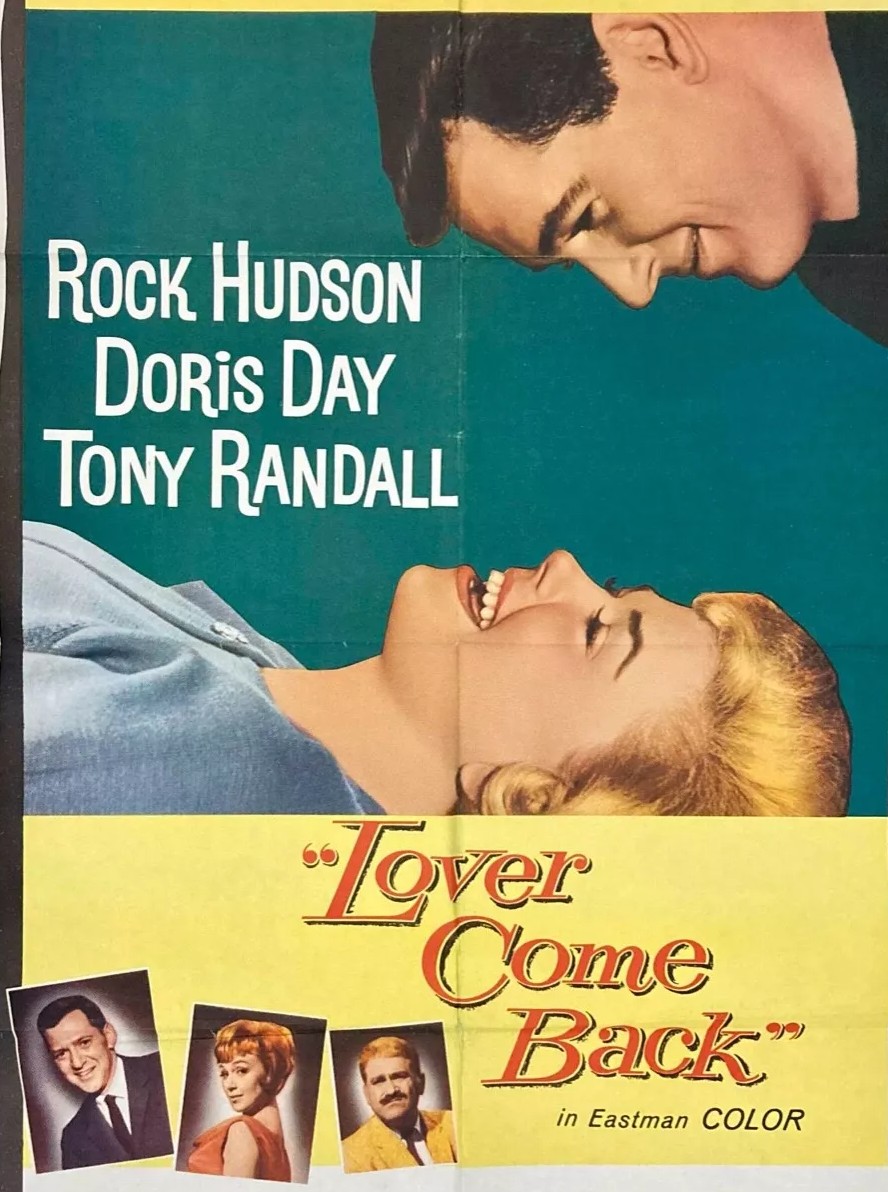
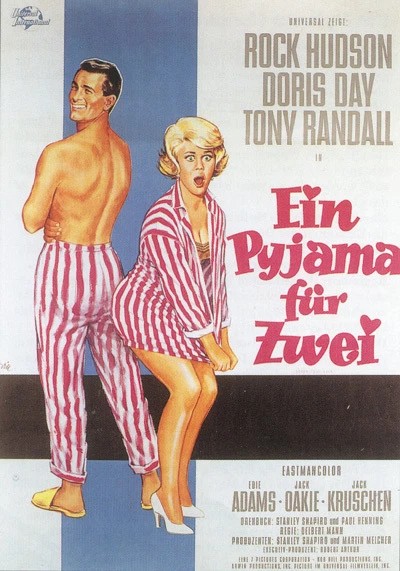
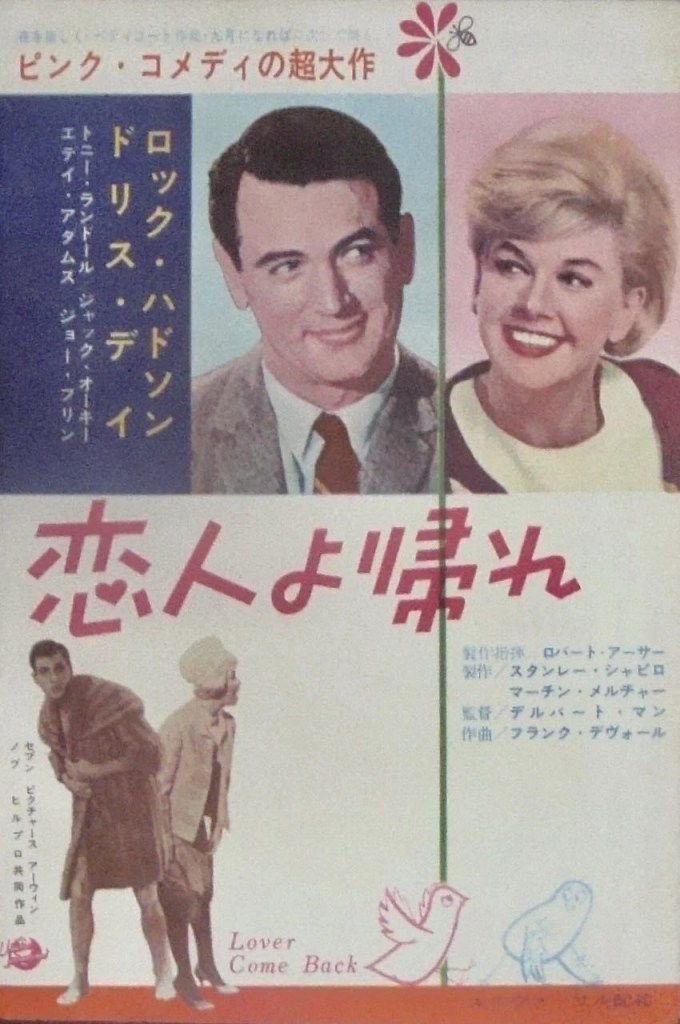
As you might imagine on Madison Ave it will be the prim intense Carol (Doris Day) who will play by the rules and stay up all night honing her pitch. And it would be louche smarmy executive Jerry (Rock Hudson) who puts in the hours but only as far as schmoozing the client and appealing to his primitive nature. Given this is a fiction, I’m assuming the idea of a code of ethics by which advertisers can be brought to book is a figment of the writer’s imagination.
No worries, whether fictional or not, Carol still loses out, Jerry more than capable of winning over the members of the ethics panel by seducing them with seductive chorus girl Rebel (Edie Adams) whom he has promised to turn into a star by featuring her as the model for a new product called VIP.
The only problem is, once Rebel’s usefulness is over, and once the ethics team is satisfied, Jerry has no intention of making such an unlikely candidate for stardom a star. Which is just as well because VIP doesn’t exist. He invented it solely to shoot enough of a commercial to convince Rebel he would honor his part of the deal.
Carol sees through the scam and hauls him up before the ethics board once again. However, Jerry has the sense to bring with him an actual product, a seemingly innocuous candy except it turns out to be highly intoxicating.
Screenwriters had long realized that a drunken Doris Day (The Ballad of Josie, 1967) is a banker and that she’ll use it to hit a comedic home run. And that’s the way it plays out with the complication that the pair have a one-night stand and a subsequent speedy marriage which leads to exactly the kinds of complications you’d expect from a Rock Hudson-Doris Day comedy and with a not unexpected twist at the tail end of the tale.
The only problem here is that we spend so much time satirizing the advertising industry, which, let’s face it, is easy meat, that it takes too long to get to the comedic hard yards the pair eventually put in. Doris Day makes a very persuasive top dog, and with that pinched-up intensity you could easily see her playing such a role in a drama and be very convincing. Generally, when she’s adopting her in-charge mode, there’s plenty inanimate objects to get in the way and create the pratfalls and physical comedy at which she excels. But when she’s just being undone by someone else’s cleverness, she might win sympathy but that doesn’t translate into big laffs.
So it only really gets going when the pair get into a romantic tangle, helped along, as I said by Day’s trademark inebriation. Rock Hudson (Seconds, 1966) is at his best when he’s constantly being taken down a peg or two by a clever woman or is himself ambushed by inanimate objects, so he’s somewhat out of his comfort zone in, here, always sitting in the winner’s circle.
There are certainly some high points but for too long it just drifts along, and much of the sharpness of the satire has been superseded by the more ruthless antics exposed on Mad Men (2007-2015), so it’s lost some of the bite which may have made up for the lack of comedy in the earlier sections.
But there’s no diminishing the screen charisma of the Hudson-Day partnership. It brought out the best in both actors. Tony Randall (Bang! Bang! You’re Dead! / Our Man in Marrakesh, 1966) puts in an interesting shift as Jerry’s boss who is bullied by his underling. Edie Adams (The Honey Pot, 1967) adds scheming to sultriness.
Directed by Delbert Mann (Buddwing, Mister Buddwing, 1966) from a screenplay by Stanley Shapiro (A Very Special Favor, 1965) and Paul Henning (Bedtime Story, 1964).
You don’t just waltz into Hollywood and start churning out classics like Some Like it Hot (1959), The Magnificent Seven (1960), West Side Story (1961) and The Great Escape (1963). Usually, there’s a long apprenticeship, especially for a producer. Walter Mirisch spent nearly a decade at the B-picture coalface. And before that a year as a gofer, working his way up in the business, but on one of the smallest rungs of all, at Monogram.
Born in 1921, the of a Polish immigrant tailor specializing in custom-made garments, one of whose customers was George Skouras, owner of a cinema chain, Walter, not surprisingly in the Hollywood Golden Age, started out an even lower rung, as an usher in the State Theater in Jersey City, owned by Skouras, an hour’s commute from his home in the Bronx, earning 25 cents an hour. He was quickly promoted to ticket checker.
His older brother Harold was a film booker, receiving an education in negotiation, and then as a cinema manager in Milwaukee flexed his entrepreneurial muscles by starting a concession company. After the family moved to Milwaukee, Walter attended the University of Wisconsin and then Harvard Business School. Physically unfit for active duty during the war, he worked for Lockheed in Los Angeles on its aircraft program in an administrative capacity.
While Harold was a highflyer at RKO, acting as chief buyer and then managing its cinema chain, Walter entered at a lower level in 1946 as a general assistant to Steve Broidy, boss of Monogram, maker of B-pictures of the series variety – Charlie Chan, The Bowery Boys, Joe Palooka, shot within eight days and at budgets under $100,000.
After badgering Broidy for a bigger opportunity, he was granted permission to hunt for a property he could produce. For $500 he found a Ring Lardner short story about a boxer, but Broidy felt the main character was unsympathetic. Stanley Kramer did not and snapped it up to make Champion (1949).
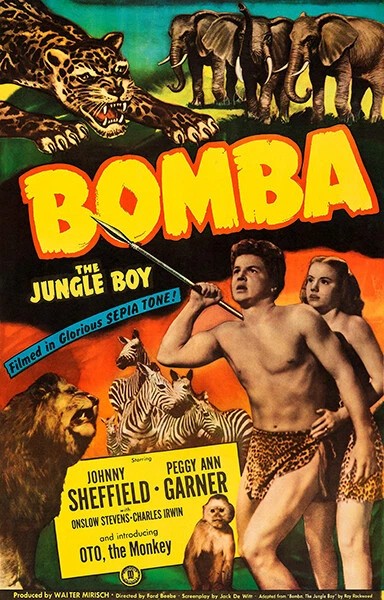
Walter’s first ventures were in film noir. Fall Guy (1947), based on a story by Cornell Woolrich, made for $83,000, broke even. I Wouldn’t Be In Your Shoes (1948) followed, from a Woolrich novel but there was a drawback to being a producer. He was taken off the payroll and his $2,500 producer’s fee didn’t compensate for the loss of a $75 weekly salary. The answer was to invent his own series, ripping off the Tarzan pictures for Bomba the Jungle Boy (1949), starring Johnny Sheffield who had played Tarzan’s son and utilizing stock footage from Africa Speaks. Apart from his fee, Walter had a 50 per cent profit share.
For six years, these appeared at the rate of two a year, earning Walter a minimum of $5,000 and he soon branched out into other genres, sci fi like Flight to Mars (1951) and westerns such as Cavalry Scout (1951) and Fort Osage (1951), both starring B-movie stalwart Rod Cameron.
Monogram had decided to move upmarket with the introduction in 1951 of Allied Artists, its sales division run by Walter’s brother Harold, with Walter acting as an executive producer and other brother Marvin as treasurer, turning out solid B-picture-plus hits like Riot in Cell Block 11 (1954).
When the threat from television hit the B-picture market Allied went properly upscale, investing in William Wyler western Friendly Persuasion (1956) and Billy Wilder’s Love in the Afternoon (1957), both starring Gary Cooper. Their failure at the box office sent Monogram back to basics.
But the Mirisches wanted more of the big time. The three brothers turned to United Artists and negotiated a deal for that studio to finance four pictures a year, cover the brothers’ overhead and salaries and throw in a profit share. The Mirisch Company was born and their creative credit within the industry was so high – and the deals they offered, it has to be said, so advantageous to their creative partners – that soon they were scooping up big names like Wilder (he made his next eight pictures for Mirisch), William Wyler, Gary Cooper, Tony Curtis, Doris Day, Audrey Hepburn and Lana Turner. One of the first pictures announced was a remake of King Kong (1933). Wilder planned My Sister and I with Hepburn. John Sturges was attached to 633 Squadron. Doris Day would star in Roar Like A Dove and there were two-picture deals with Alan Ladd and Audie Murphy.
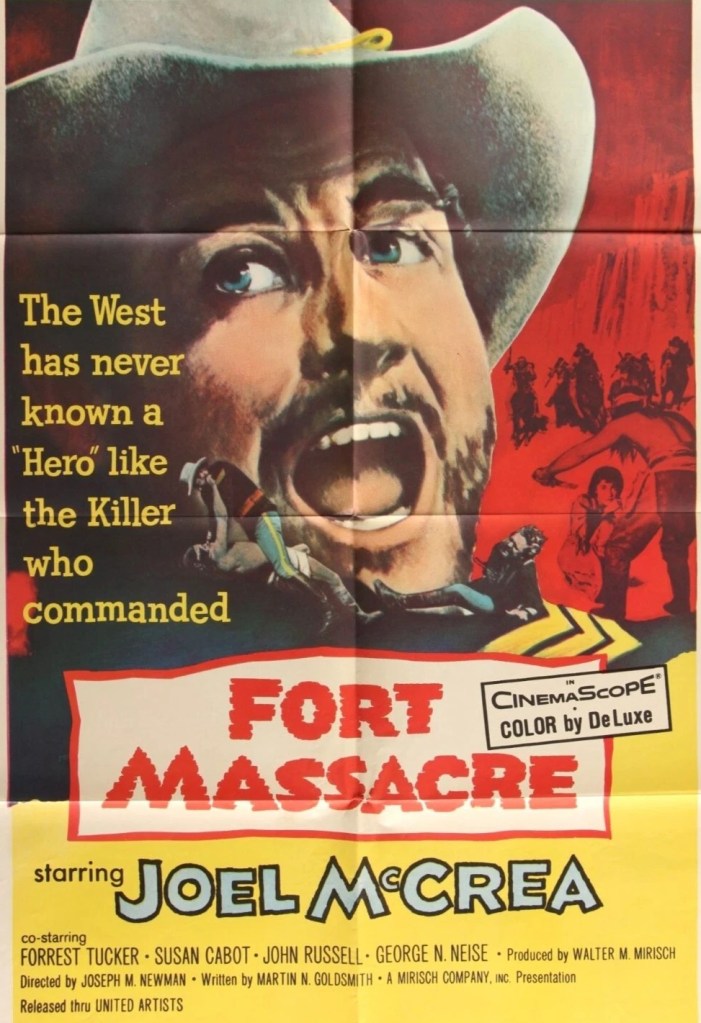
Their first two efforts didn’t break the budget bank, Fort Massacre (1958) starring Joel McCrea, and Man of the West (1958) headlined by Cooper, but neither were they hits. Hoping to provide ongoing financial sustenance, Walter turned to television, turning Wichita (1955) into the series Wichita Town (1959), and further television contributions were mooted for UA Playhouse but that and Peter Loves Mary and The Iron Horseman failed.
Movies proved a better bet and Walter struck gold with the third picture in the Mirisch-UA deal, Some Like it Hot (1959), costing $2.5 million, an enormous financial and critical success and tied down a triumvirate of top talent in John Wayne, William Holden and John Ford for western The Horse Soldiers (1959), the actors pulling down $750,000 apiece.
Such salaries sent the nascent company on a collision course with traditional Hollywood. The majors “screamed” that independents were overpaying the talent, hefty profit shares accompanying the salaries.
On top of that in 1959 in the space of two weeks Mirisch spent a record $600,000 pre-publication on James Michener blockbuster Hawaii and tied up a deal to film Broadway hit West Side Story. Within two years of setting up, Walter Mirisch announced a $34.5 million production slate, earning the company the tag of “mini-major,” as part of a shift in attitude to a “go for broke” policy. By the start of the new decade it was by far the biggest independent the industry had ever seen, handling $50 million worth of product, including The Magnificent Seven and The Apartment (1960). Average budgets had risen from $1.5 million to $3.5 million.
To outsiders, assuming the Mirisch venture was Walter’s first, it might look as if Walter had knocked the ball out of the park in a very short space of time, but, in reality, by the time he produced Some Like it Hot, he had been responsible for thirty-three pictures. Not bad for a “beginner.”
Explained Walter Mirisch, “Producing films is a chancy business. To produce a really fine film requires the confluence of a large number of elements, all combined in the exactly correct proportions. It’s very difficult and that’s why it happens so infrequently. It takes great attention to detail, the right instincts, the right combinations of talents and the heavens deciding to smile down on the enterprise. Timing is often critical.”
What would have happened to Allied Artists, for example, had Wilder made Some Like it Hot there instead of Love in the Afternoon?
Added Walter, “Where is the country’s or the world’s interest at that time? What is the audience looking for? Asking them won’t help because they themselves will tell you they don’t know what they’re looking for. They don’t know what it is until they’ve seen it. All the elements must come together at exactly the right time. So to say one embarks with great certainty on such an endeavor is an exaggeration.”
After 33 films Mirisch hit a home run with Some Like It Hot and continued to do so throughout the 1960s chalking up further critical and commercials hits like The Pink Panther (1964), In the Heat of the Night (1967) and The Thomas Crown Affair (1968) and vacuuming up a stack of Oscars.
SOURCES: Walter Mirisch, I Thought We Were Making Movies, NotHistory (University of Wisconsin, 2008); “Mirisch Freres Features Outlet Via United Artists,” Variety, August 7, 1957, p16; “3 Mirisch Bros Set Up Indie Co for 12 UA Films,” Variety, September 11, 1957, p7; “RKO vs Mirisch Kong,” Variety, September 11, 1957, p7; Advertisement, “United Artists Welcomes The Mirisch Company,” Variety, November, 13, 1957, p13; “Brynner, Mirisch Pledge UA TV Tie,” Variety, January 1, 1958, p23; “Mirisch Freres 6 By Year-End,” Variety, March 19, 1958, p3; “Majors Originated Outrageous Wages,” Variety, December 10, 1958, p4; “UA-Mirisch’s $600,000 For Michener’s Hawaii,” Variety, August 26, 1959, p5; “Mirisch West Side Story,” Variety, September 2, 1959, p4; “Mirisch Takes on ‘Major’ Mantle With 2-Yr $34,500,000 Production Slate,” Variety, October 21, 1959, 21; “Mirisch Sets $50,000,000 14-Pic Slate; Biggest for Single Indie,” Variety, August 17, 1960, p7.
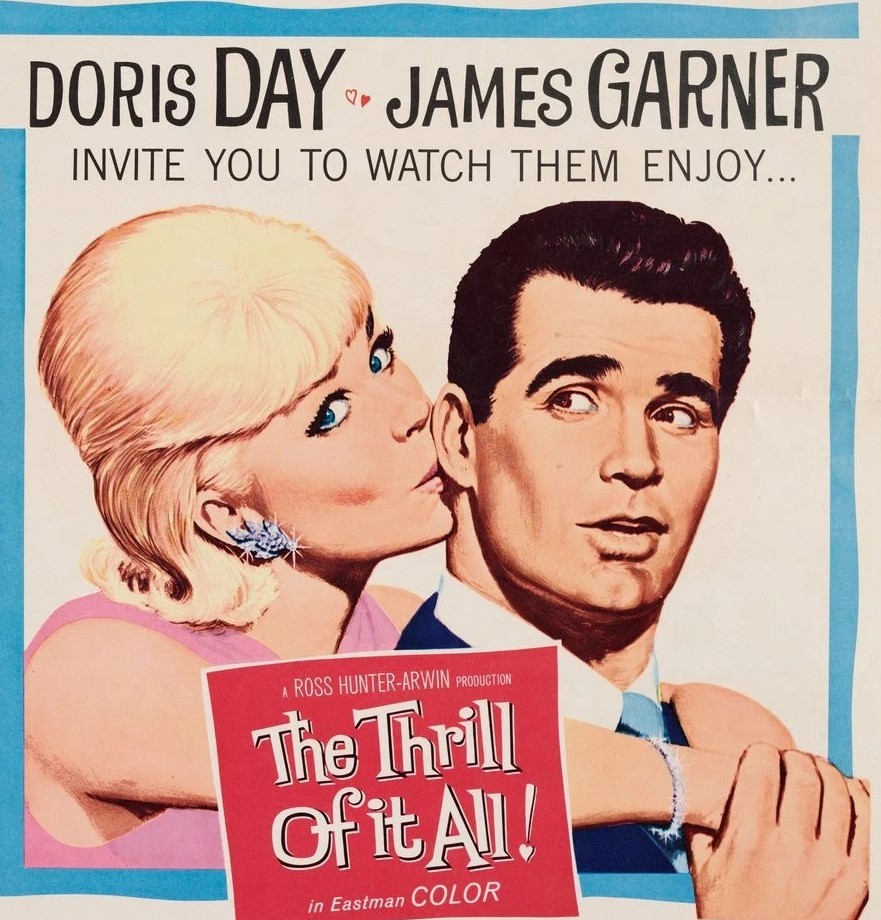
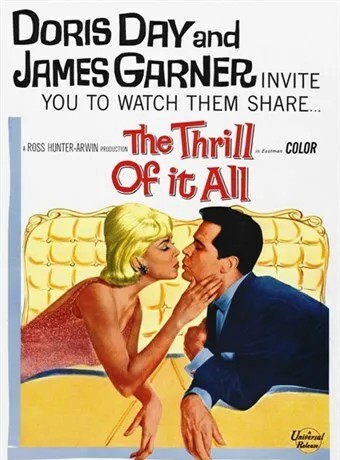
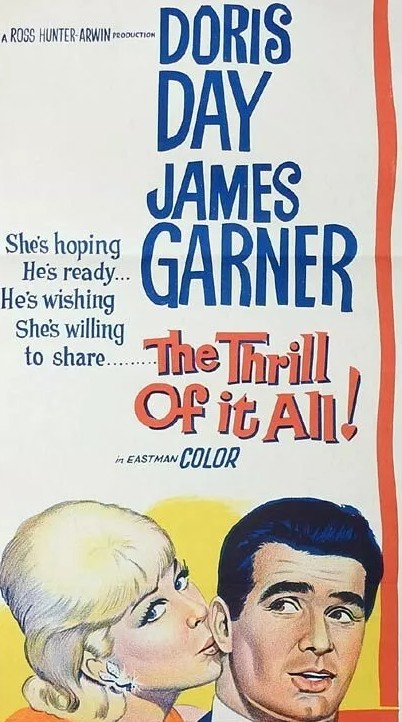
Has three unusual distinctions for a Doris Day comedy. First of all, it’s feminist. Secondly, it’s prophetic. Third, and perhaps most interesting of all, is that it plays exactly into expectations – for completely different reasons – for audiences sixty years apart. Only the ending would split the audiences.
And this is a somewhat mature Doris Day. Having shucked off Rock Hudson and Cary Grant, she was no longer stuck in a relatively mindless, however charming, love story following the usual formula of girl-meets-boy girl-loses-boy girl-gets-boy. Here she’s contented housewife Beverly Boyer married to successful obstetrician Dr Gerald Boyer (James Garner) with two kids apt to cause disruption but whose main purpose, equally unusually, is to make caustic comment about grown-up behavior. There is one magnificent outlandish set-piece involving soap powder but the slapstick is toned down and there’s a gentle satire of the television industry and advertising.
There’s only one downside to the marriage, her husband is being called out at all hours to deliver babies and that’s such a worthy calling what decent wife could complain about such absences even if it means spoiled dinners and missing events.
However, everything is turned upside down when by pure chance Beverly takes on the role of becoming the onscreen spokesperson for a brand of soap called Happy Soap. This being in the days of live television – so this is set strictly in the 1950s hence the more pronounced tone of a woman’s place being in the home – she has to do the advertisement live on air and her fumbling and inexperience touch a chord with audiences who respond with such vigor that she is offered a contract that puts her in the position of earning substantially more than her husband. How dare she?
Naturally, the demands placed upon her by the advertising company turns the domestic tables. She’s the one coming home late and he’s the one seen as her adjunct. The soap powder boss is so determined to keep her he fulfills every whim – even when such wishes are not made with any seriousness. So she wakes up one morning with a swimming pool in the back yard which virtually demands that a car drive straight into it.
The battle of the sexes comes down a battle of women’s rights (yes, they are mentioned) against men’s rights, in other words freedom vs toeing the line. Rather than delighted at her extra dough, he’s infuriated that she’s infringing on his perceived role as being the sole provider for the family.
Eventually, he decides the only way to bring her to her senses is to arouse her jealousy by being seen in the company of other women. But that only works up to a point. And she only gives in when she is made to realize – by the only narrative misstep as far as the contemporary audience is concerned – that his job is much more important than hers.
While this is the first of two pairings – the other being Move Over, Darling the same year – between Doris Day and James Garner (Hour of the Gun, 1967) is lacks the purer screen chemistry she found with Cary Grant and Rock Hudson and you feel the plot has been written to accommodate this deficit. There’s little requirement for intimacy or proper wooing, much less for the misunderstandings that fueled the previous pairings.
Doris Day’s haplessness is put to a different use, as it is initially the reason why she proves so appealing to television audiences.
Whether women in the 1960s had to keep to themselves their rooting for the career women in Beverly being given a chance to shine, or whether – the beginnings of the modern feminist movement dating from the publication of The Feminine Mystique by Betty Friedan published in 1963 – she was seen as a poster girl for the movement I’m not qualified to judge.
These days, however, Beverly would be viewed as an early champion of women’s rights and that, regardless of how important it was that a man tasked with delivering babies had a woman at home to make his dinner and mop his brow, his demands should not take priority.
While there aren’t as many outright laffs as in previous Doris Day comedies, the feminist angle provides the picture with an unusual worthiness, not something you’d go looking for in Day’s portfolio.
Directed by Norman Jewison (The Thomas Crown Affair, 1968) and written by Carl Reiner (The Art of Love, 1965).
Passage of time has made this more important than the material might suggest. Gets extra marks for serious intent.
Despite a heady concept and some excellent acting, Martin Ritt’s Five Branded Women (1960) – reviewed yesterday – was a flop on initial release. So television studios were not exactly lining up to provide it with its small screen premiere. In fact, the length between big screen release and small screen showing had been so truncated by that point (The Magnificent Seven, for example, out the same year was seen on television within two years of release) that it could have been shown on television any time from 1962 to 1966, and probably would have been had initial performance suggested there was a big audience awaiting its small screen premiere.
The other possibility for a flop was that between cinema release and television screening, the stars had gone on to better things so a small screen showing could be promoted off the back of a current big screen success or, better still, series of successes. But that wasn’t the case with Five Branded Women. Star Silvana Mangano had meant little to US moviegoers since Bitter Rice (1949). Jeanne Moreau’s sizzle at the arthouse box office had diminished and the limited success of Viva Maria (1965) was put down to the presence of her compatriot Brigitte Bardot. Vera Miles hadn’t appeared in a movie since The Man Who Shot Liberty Valance (1962). Barbara Bel Geddes was a long way from career revival in Dallas and all she had to show for the intervening years was a small part in By Love Possessed (1961) and a single episode in television. Italian Carla Gravina had no U.S. imprint at all. As a leading actor, Van Heflin was a busted flush.
So there was some consternation when Five Branded Women took ninth place in the television rankings for movies receiving their television premiere between 1966 and 1968. There was just no accounting for it. The same could be said for Your Cheatin’ Heart (1964) which was one place ahead of Five Branded Women. Star George Hamilton had not made it big, the film was an indifferent performer at the box office and its subject, Hank Williams, was long dead.
But television had a knack of providing unlikely redemption for movies that generally ended up on the wrong side of the box office. Cliff Robertson who headed the cast of PT 109 (1963) was still in the category of rising star with no breakout hits to suggest he was capable of rising to greater things. While 633 Squadron (1964) had done reasonable business, thriller Masquerade (1965) and war picture Up from the Beach (1965) had done so badly he was demoted to second billing in The Honey Pot (1967), incidentally another flop. He did achieve a breakthrough with Charly in 1968 but PT 109 was shown on television the year before. So how did that happen? You could maybe point to the continuing popularity of dead President John F. Kennedy, whose wartime heroism this movie recalled, but he had been dead when the movie first came out and that didn’t send it shooting to the top of the box office charts. On the television charts this came in one place behind Five Branded Women, although 633 Squadron could only manage a distant 92nd.
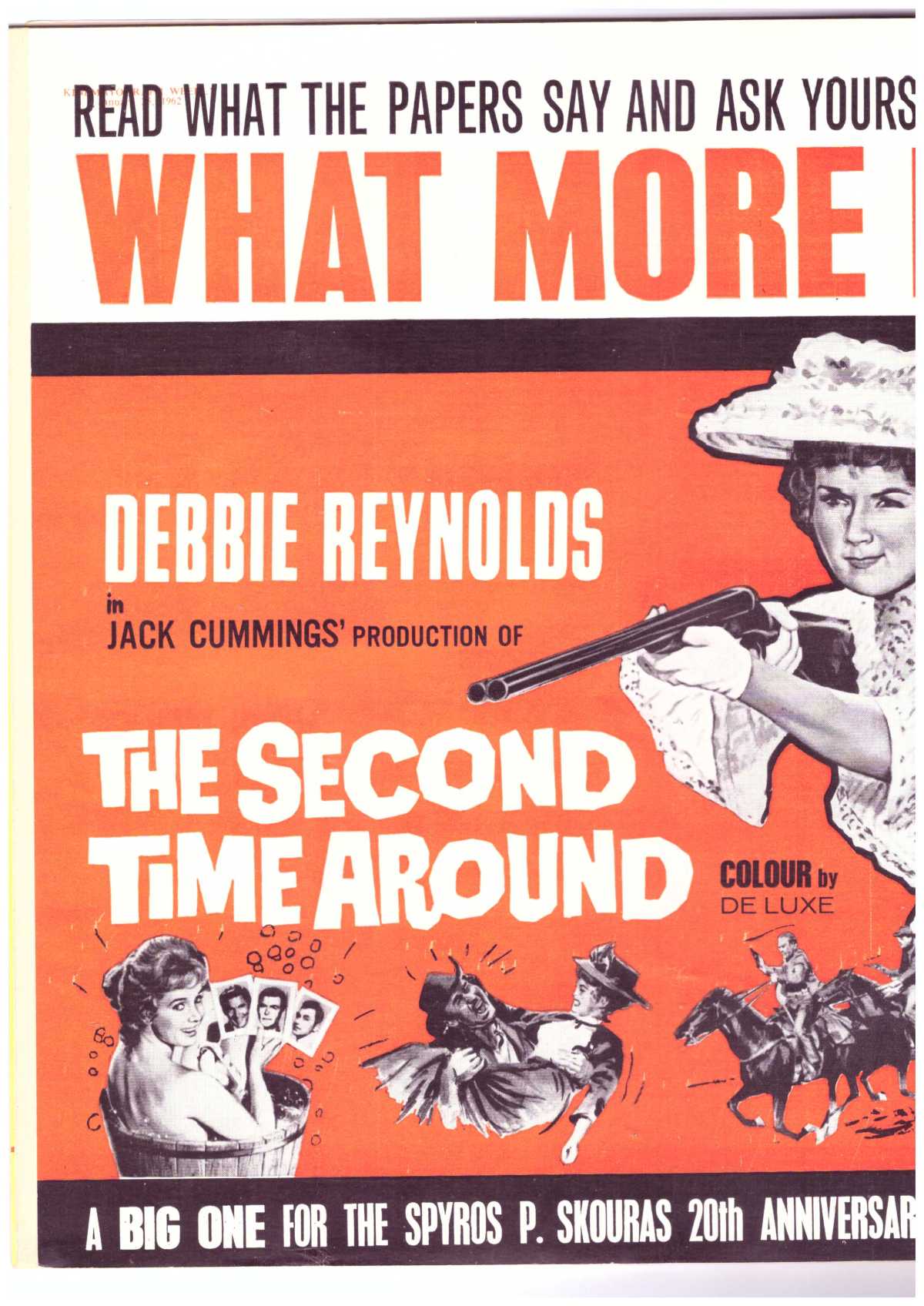
There were other surprises. Second Time Around (1961) placed 15th. But star Debbie Reynolds was still a genuine box office attraction after The Unsinkable Molly Brown (1964) and the unexpected success of The Singing Nun (1966).
Otherwise, the biggest hitters on television were Alfred Hitchcock, Elvis Presley and Doris Day. Hitchcock topped this particular chart with The Birds (1963), though presumably somewhat censored. His North by Northwest (1959) took 14th spot, Marnie (1964) placed 26th and Rear Window (1958) 39th.
Elvis Presley placed 11th with Roustabout (1964), 21st with Blue Hawaii (1961), 25th with Tickle Me (1965) and 41st with Fun in Acapulco (1963). Doris Day clocked in at 12th with That Touch of Mink (1962), 19th with Send Me No Flowers (1964), 23rd with The Thrill of It All (1963) and 35th with Move Over, Darling (1963).
Television had paid record sums to acquire the likes of Bridge on the River Kwai (1957) and The Robe (1963), taking second and sixth positions, respectively, and undoubtedly helped by the ongoing success of director David Lean (Doctor Zhivago, 1965) and Richard Burton (Who’s Afraid of Virginia Woolf, 1966).
Others in the top then were Cat on a Hot Tin Roof (1958), which had been successfully reissued in cinemas in a double bill with Butterfield 8 (1960), both headlining Elizabeth Taylor, to capitalize on her Oscar-winning turn in Who’s Afraid of Virginia Woolf. This came in third followed by The Great Escape (1964) and John Wayne as McLintock (1963) with Maureen O’Hara. Lilies of the Field (1963) was seventh.
The Made-for-TV films were beginning to make an impact. The Doomsday Flight (1966), released theatrically overseas, was 17th, one spot ahead of The Longest Hundred Miles (1967) with rising stars Doug McClure and Katharine Ross and seven ahead of Fame Is the Name of the Game (1967) with Tony Franciosa (Fathom, 1967) and Jill St John (Tony Rome, 1967).
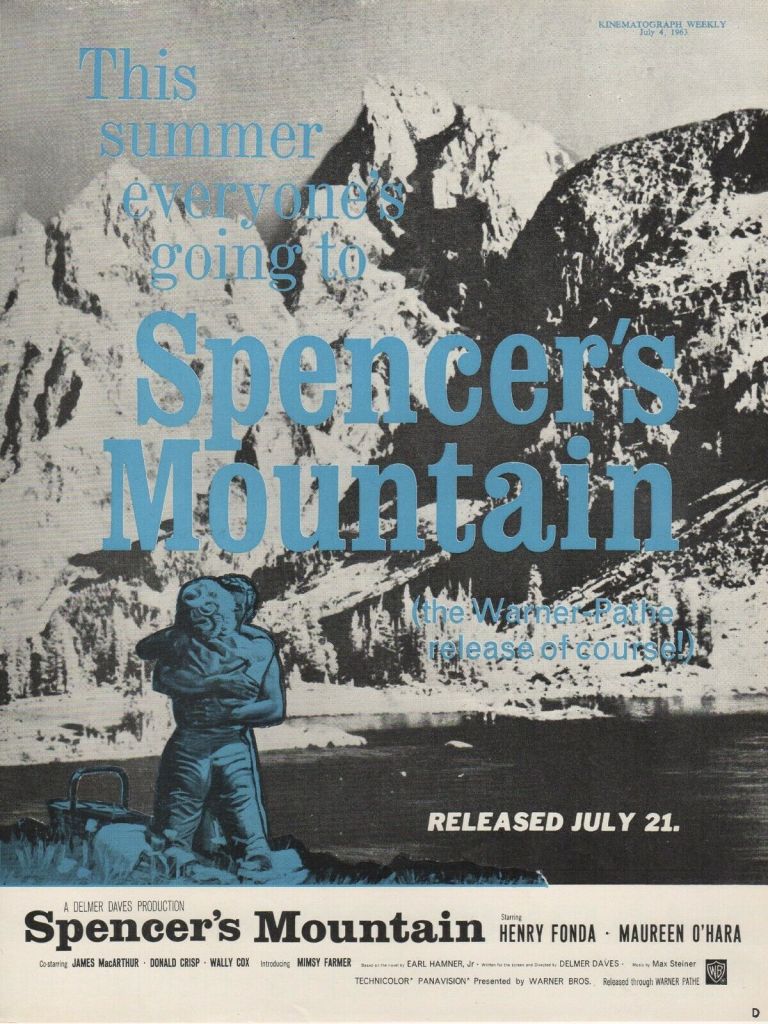
Other notable small screen results were registered by Natalie Wood-Warren Beatty starrer Splendor in the Grass (1961) which took 12th spot, Shirley MacLaine and an all-star cast in What A Way To Go (1964) in 16th, Susan Hayward Oscar-winning weepie I Want To Live (1958) in 21st, and Henry Fonda and Maureen O’Hara in Spencer’s Mountain (1963) in 23rd.
SOURCE: “All Network Prime Time Features” (Seasons 1966-1967 and 1967-1968),” Variety, September 11, 1968, p47.
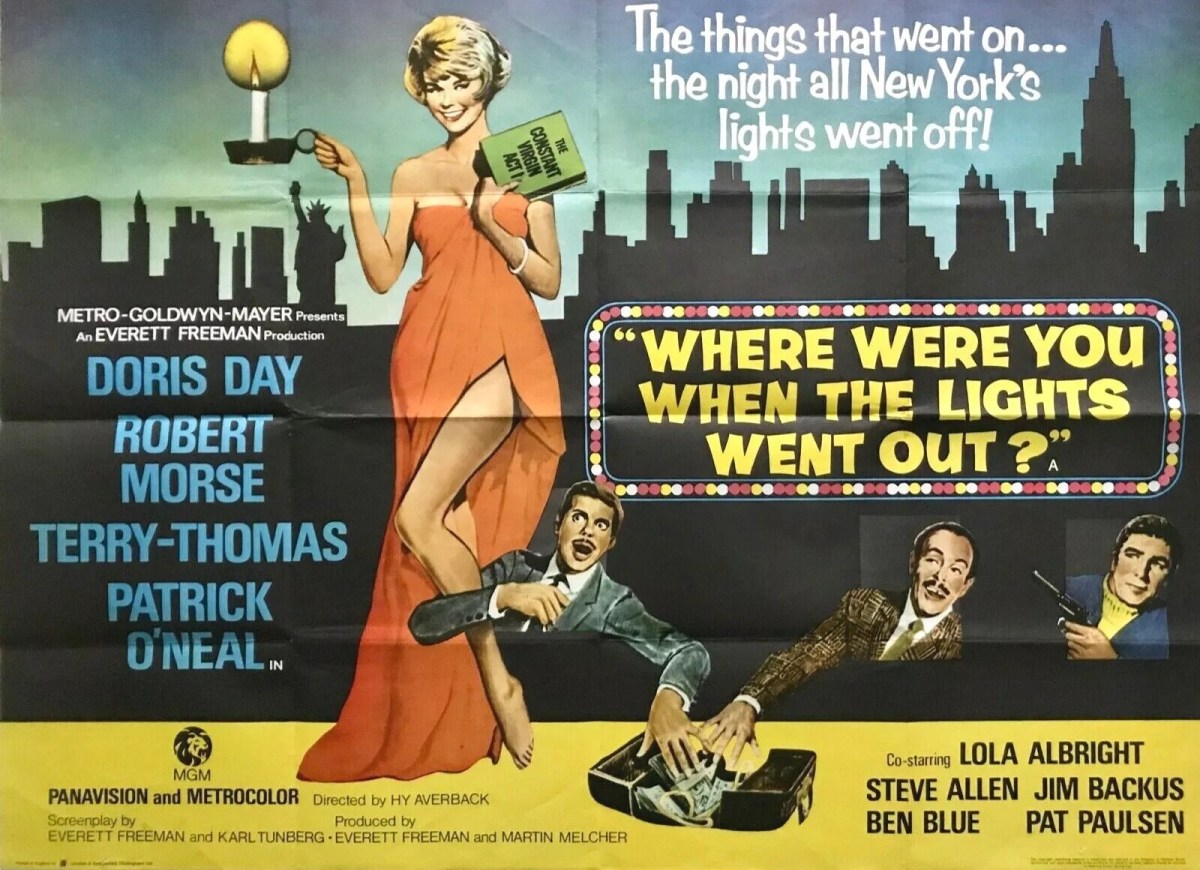
Of the 25 million stories you could have chosen when New York and the surrounding area was hit by an electricity blackout in the mid-1960s, you could have elected for something more interesting than this farce-style comedy that after the opening sections resembles nothing more than a stage play. But that’s because, somewhat surprisingly, it is based on a play and one concerning not the great fracas in the Big Apple but a similar occurrence in Paris almost a decade before. Once you know that, the farce element makes sense, but not much else does.
The three constituent parts that eventually coalesce into little more than a collage of double takes and startled expressions are: thwarted businessman Waldo (Robert Morse) making off with a couple of million bucks; Broadway star Margaret (Doris Day) finding architect husband Peter (Patrick O’Neal) in a clinch with journalist Roberta (Lola Albright); and impresario Ladislaus (Terry-Thomas), the most English-sounding Eastern European you ever came across, terrified Margaret is going to quit his play.
The lights going out malarkey is an ill-judged MacGuffin so that all except Roberta can end up in a classy Connecticut apartment and get into a quandary about who loves who and who’s cheating on who and career choices to be made. It’s pretty hard work all round to make all the pieces misalign and then fit. Waldo’s car has broken down so he has no real reason to be there nor to gulp down a beaker of alcohol that knocks him out without noticing that Margaret is fast asleep on the same couch after imbibing the same concoction.
Cue not much hilarity when guilty Peter turns up hoping to win back his wife, not expecting to find her unconscious from booze and once he discovers her bed partner convinces himself that she is as much of a cheat as himself. Meanwhile, Ladislaus tries to keep the jealousy pot boiling in the hope that she will divorce her husband and be forced to continue working.
I’m not sure I really cared whether it all worked out or not. Sure, comedies often pivot on bizarre instance, but this is just awful. More to the point, the structure doesn’t focus sufficiently on Margaret. The Waldo scenario seems wildly out of place and not enough is made of the chaos of the blackout. More to the point, with streets completely jammed and traffic signals not working, just how all four manage to get out of the city is beyond belief.
Sure, Doris Day grew up fast in the decade; at the start we worry about her losing her virginity; by the end it’s whether she’s going to embark on an affair. She’s always on the brink of the kind of sophistication that might tolerate an affair before drawing back in shock at such a notion.
The laffs are thin on the ground, even Doris Day drunk – one of her trademark touches – seems to lack punch. The best written scenes are those between Ladislaus and his cynical psychiatrist
Doris Day does her best but it’s far from the sparkling form of Pillow Talk (1959) that kicked off her very own rom-com subgenre. The quality of her male co-star had diminished over the years, from the peaks of Rock Hudson and Cary Grant to the acceptable Rod Taylor and James Garner but Patrick O’Neal (Stiletto, 1969) acts as if he is curling his lip and about to belt someone in the harder-edged dramas with which he made his name. Robert Morse (The Loved One, 1965) looks as though he’s still trying to work out what his character’s doing there. However, Terry-Thomas (Arabella, 1967) exudes such charm he’s always a joy to watch. Lola Albright (A Cold Wind in August, 1961) isn’t in it nearly enough.
The original French play by Claude Magnier was a sex farce, but casting Doris Day meant the sex angle was played down, inhibiting the movie. An unlikely vehicle for screenwriter Karl Tunberg – Ben-Hur (1959) and Harlow (1965) – who co-wrote with producer Everett Freeman (The Maltese Bippy, 1969). Director Hy Averback (The Great Bank Robbery, 1969) doesn’t come close to demonstrating the lightness of touch required to make such a ponderous effort work.
Takes a good while to come to the boil, perhaps as a result of trying to find the right chemistry between Doris Day and her latest 1960s partner Rod Taylor, after her highly successful pairings with Rock Hudson in three films. Her turn with Cary Grant (That Touch of Mink, 1962) was also successful, but finding another pairing proved dificult. There was a single outing with David Niven (Please Don’t Eat the Daisies, 1960), a pair with James Garner (The Thrill of It All and Move, Over Darling, both 1963) plus a couple of ventures outside the comedy genre, thriller Midnight Lace (1960) with Rex Harrison and musical Billy Rose’s Jumbo (1962).
One of the curiosities was her billing status, credited below Rock Hudson and Cary Grant, but above all the others. Hudson, Grant, Garner and Niven demonstrated a clear knack for comedy, less so the rest. So one of the elements facing any screenwriter or director was how to make a pairing fizzle. With the top-billed stars, there was more of a guarantee of equal playing time so that they could spark off each other. In the remainder, more reliance on the actress’s pratfalls and slapstick and being some kind of fish out of water.
Here, the Ameican fish is let loose in London waters and good chunk of the opening section is taken up with the oddities of England from an American perspective. First of all, it’s the coinage. A simple transaction with a cab driver soon involves a policeman what with her difficulty in getting to grips with “too many coins”, most of which to add to the confusion often have a nickname, resulting in her paying eight shillings and sixpence for every subsequent ride since that’s the one amount she’s mastered.
Then it’s the problems of driving on the wrong side of the road, using a different gearbox, and the peculiar nature of village names, that either result in a crash or getting lost or both. The difference between electrical plugs lends itelf to electrocution jokes, and the inefficiency of the British telegram system tops off a scene. There’s not much magic even a Doris Day in her prime can add to such standard situations.
She comes into her own somewhat by standing up to the masters of a fox hunt and their snarling hounds. But somehow sheltering a fox appears to give her some affinity with animals and before you know it her country house is awash with unsuitable beasts such as goats.
Still with me? That’s kind of the feeling I had about a third of the way into the picture. So here’s the set-up: businessman Mike (Rod Taylor) and wife Janet (Doris Day) have moved to London. He details her to find an apartment, meaning in central London close to his office. Instead, she lands them in a country cottage, and he immediately resents being so remote from the city and with the extra travelling time plus the evening functions (held in the company flat) in his schedule soon the couple are heading towards estrangement.
He has a pretty secretary Claire (Maura McGiveney) in tow and the functions are meant to be wife-free zones, and when Janet tests out her suspicions she is initially brought down to earth with a thump.
But, of course, suspicion grows horns and with the encouragement of interfering landlady Vanessa (Hermione Baddeley) she decides to play him at his own game. Once handsome Frenchman Paul (Sergio Fantoni) hoves into view she pretends to take up with him to bring her husband to heel. This involves a romantic trip to Paris where, of course, Doris Day is in her comedic element, desperately trying to avoid the advances of her suitor and getting drunk in the process. Day makes an excellent drunk and inebriation cue for many of her best sequences.
Much of the seduction is driven by the foreigner and the secretary so husband and wife find themselves in one compromising position after the other. However, this narrative ploy means the two stars are often apart and the success of the picture depends on two separate individuals rather than the teaming as with the Hudson and Grant movies. To use the old cliché, it’s game of two halves, three-thirds really since the opening section is mostly the fish out of water stuff. They’re an odd combination from the outset, a wife who does the opposite of what her husband wants then complains when, tied down with business, he doesn’t want to live in the country.
There’s an occasional belly laugh but it seems such routine fare that you wonder why Day got involved in the first place – blame husband Martin Melchior for signing her up.
After original director Ralph Levy (Bedtime Story, 1964) – you could view this as a reversal of Bedtime Story with the principals target for seducation rather than doing the seducing – took ill, George Marshall (Advance to the Rear, 1964) finished it off. Written by Milt Rosen (movie debut), Richard L. Breen (Captain NewmanM.D., 1963) and William Fairchild (Star!, 1968)
What was viewed as an oddity by the star’s legion of fans has turned out to have considerable contemporary appeal, situating Doris Day as an unlikely feminist icon. It was almost the opposite of her current template. She didn’t sing and the narrative was not driven by romantic mishap. It didn’t endear director Andrew V. McLaglen to his fans either after the tough-guy heroics of Shenandoah (1965). And you might also ask the question – was the feminism watered down by slapstick in order to make it more acceptable to the general audience.
One issue extremely relevant today is pretty much skated over. Josie (Doris Day) kills her drunken husband after setting about him with a pool cue. His death was largely misadventure, he fell down the stairs escaping her intended blow rather than as the result of it. What’s the world coming to, muse the men of the town, if a woman could get away with defending herself against a brute of a husband in such a fashion, given it’s accepted that a wife needs knocked about once in a while.
That she gets off seems less to do with understanding than narrative convenience. It turns her into a widow, and deprived of her son (removed by the threat of legal action by her father-in-law) that means she will come in handy for married men fancying an affair. Unable to find respectable work, she has one catastrophic shift as a waitress. In narrative terms this is intended to act as the ultimate humiliation but in terms of screen treatment it’s convenient excuse for slapstick.
For some reason best known to screenwriter Harold Swanton (Rascal, 1969), she appears best placed to influence the female townspeople on a delicate political point. Whether such influence is due to her getting away with bumping off her husband is never made clear. Turns out that women in Wyoming have the vote and in their battle for statehood the men believe that will count against them and want Josie to get them to agree to drop that right. (History tells us that the good folks didn’t enforce that and allowed women to keep the vote, so three cheers for Josie.)
Those two elements – wife-beating and voting – would make a darn good movie right there but they seem to just dip in and out of proceedings unless in some lame humorous instance. What does take center stage though is Josie’s battle for independence, not wishing to “be taken care of” by some man. She argues that “you can’t kick under the rug that women are also people” and agin the notion that a woman is “a species of idiot kept in the back closet and spoon-fed three times a day.”
So she decides to become a cattle rancher. That inflames the ire in equal measure of suitor Jason (Peter Graves) and deadly enemy Arch (George Kennedy). And pretty much she is setting herself up for failure until she comes up with the notion of raising sheep rather than cows. The sheep vs. cows argument has been surprisingly well covered in the western – witness The Sheepman (1958), Heaven with a Gun (1969) and, in more recent times, 1923 (2022) – and here they decide the two animals are best kept apart by geographical divide. The sheep are really another narrative device, cue for more slapstick-style sequences, and as you know a sheepdog will tear the britches off anyone foolish enough to get in its way.
It’s somewhat astonishing that within this unwieldy set of confounding narratives that this works at all. And mostly that is down to Doris Day (With Six You Get Eggroll, 1968) junking her previous persona of feisty female willing to be wooed by ardent or cunning male. While her anger often comes over as more like petulance and you would never mistake her for an Elizabeth Taylor or Maureen O’Hara as a woman not to cross, she does comes out of this with some credit. Peter Graves (Sergeant Ryker, 1968) and George Kennedy (The Pink Jungle, 1968) are merely adequate. Andrew V. McLaglen doesn’t show much gift for comedy apart from the most obvious but presumably he’s to be thanked for even venturing into such difficult territory.
Whether it was, as I said, a deliberate attempt to bring feminist issues to the fore, or to sneak them in under the guise of comedy, is a moot point. The star always claimed she was duped into the role, finding her husband Martin Melcher had signed her up for it without her knowing.
One of the joys of writing this blog has been the opportunity to reassess stars that I’ve had a tendency to under-rate. You’ll maybe forgive me for putting Doris Day in that category especially as I’ve had ample reasons now to take a different, Please Don’t Eat the Daisies (1960) just one of the many instances where the actress has confounded my expectations.
Until I started on the Blog I’d never gone out of my way to watch a Doris Day picture with the exception of musical Calamity Jane (1953) when it became a camp classic as well as Hitchcock’s The Man Who Knew Too Much (1956) and films where she happened to be co-starring with Cary Grant.
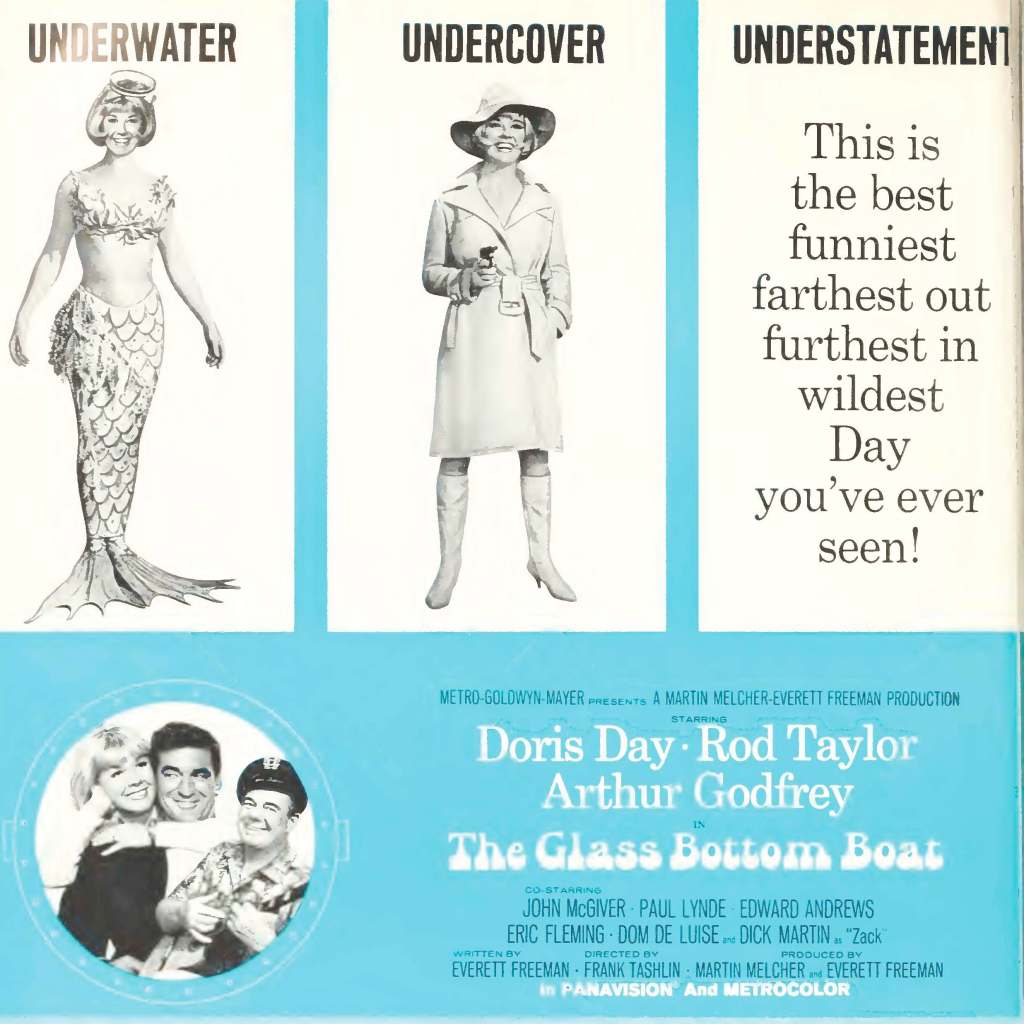
So I came to The Glass Bottom Boat with low expectations, especially as this was towards the end of her two-decades career and her co-star was Rod Taylor, a different level of star to Grant and Rock Hudson. By now, she had dropped the musical and dramatic string to her bow and concentrated on churning out romantic comedies and also been supplanted by Julie Andrews as Hollywood’s favorite cute star.
But it was in part on the evidence here that I changed my tune regarding Day. This is entertaining enough. And she sings – the theme song, one other and a riff on one of her most famous tunes “Que Sera Sera.” Unless there’s a symbolism I’ve missed, the title is misleading since the boat only appears in the opening section to perform the obligatory meet-cute with Taylor as a fishermen hooking Day’s mermaid costume.
The plot is on the preposterous side. The occasionally hapless Jennifer (Doris Day) is suspected as a spy after infiltrating Bruce Templeton’s (Rod Taylor) aerospace research operation. It’s partly a James Bond spoof – when her dog is called Vladimir you can see where the movie is headed – with all sorts of crazy gadgets. But mostly the plot serves to illustrate Day’s substantial gifts as a comedienne. For an actress at the top of her game, she is never worried about looking foolish.
And that’s part of her appeal. She may look sophisticated even when, as here, playing an ordinary public relations girl, but turns clumsy and uncoordinated at the first scent of comedic opportunity. There’s some decent slapstick and pratfalls and some pretty good visual gags especially the one involving a soda water siphon. A chase scene is particularly inventive and there’s a runaway boat that pays dividends. But there are a couple of effective dramatic moments too, emotional beats, when the romance untangles.
She’s in safe hands, director Frank Tashlin responsible for Son of Paleface (1952) and The Girl Can’t Help It (1956). I also felt Rod Taylor (Dark of the Sun, 1968) was both under-rated and under-used, never given much to do onscreen except stick out a chiseled jaw and turn on the charm. Although he had been Day’s sparring partner in her previous picture Do Not Disturb (1965) he’s not in the Cary Grant-Rock Hudson league.
It’s also worth remembering that the actress had her own production company, Arwin, which put together over a dozen of her pictures, including this one, so she would be playing to her strengths rather than those of her co-star. On the bonus side, watch out for a blink-and-you-miss-it cameo by Robert Vaughn (The Man from Uncle), and a featured role by Dom DeLuise as a bumbling spy.
Everett Freeman (The Maltese Bippy, 1969) wrote the screeplay.
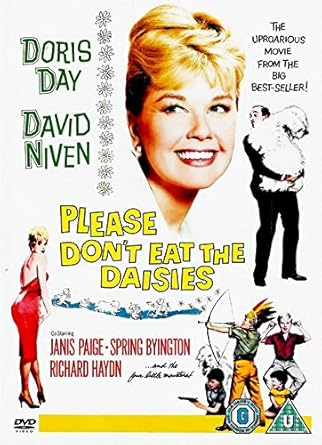
This shouldn’t work at all. The episodic structure breaks all the narrative rules. Doris Day fans should be disappointed as she’s not in typical prim rom-com mode (Pillow Talk, That Touch of Mink), but a mother – and with four kids for goodness sake. And, beyond for some reason a sotto voce rendering of “Que Sera Sera,” she doesn’t sing until late on. Worse, she hardly qualifies as the main character. That privilege falls to David Niven.
But it has charm in buckets, it plays around with the rules, breaking all narrative conventions, setting up traps for the viewer, and the four siblings are superbly realistic, little cute or adorable about them, given their main occupation is dropping water bombs on unsuspected passers-by and, even adopting sedentary positions, can’t help but cause mischief.
Initial focus is on academic Laurence (David Niven), promoted to Broadway critic, making mincemeat of a play produced by best friend Alfred (Richard Haydn), in the process savaging its star Deborah (Janis Paige). He quickly becomes front page news when Deborah’s revenge is captured by a photographer. Fame goes to his head and wife Kate (Doris Day) feels she is losing him.
But then suddenly we switch to the countryside after they swap their New York apartment for a huge house. Cue the usual slapstick caused by holes in floors and the inevitable paint. Laurence’s lofty attitudes rile the locals. But before you know it we’re onto the third storyline, Kate reviving her dancing career by putting on a show with the local dramatic society.
By now we’re also knee-deep in sub-plots. Taxi driver Joe (Jack Weston), budding playwright friend of Kate’s mother Suzie (Spring Byington), weaves in and out of the tale. You are led to expect that his Biblical musical script, initially dismissed by Laurence, is going to play a part, perhaps turning up at the dramatic society, or being reworked by Alfred into a hit. You are almost certainly going to be convinced that Laurence will end up in Deborah’s bed. And you are even more certain that Alfred is going to get his revenge by bringing a huge squad of critics and celebrities to the first night of Kate’s play. Unknown to Laurence, Alfred has passed to Kate a rejected early embarrassingly bad effort by her husband when he harboured ambitions to be a playwright.
That all these set-ups are brilliantly confounded turns the entire movie on its head. And the reversals don’t involve cheating. It’s not a question of bait-and-switch, red herrings or sleight-of-hand, but down to the believable reactions of the characters.
In the middle of this, romance would be taking a back seat except both Kate and Laurence are aware of the growing distance between them so it’s more of a middle-aged love story, marriage on the rocks, but both parties making the same type of mistakes in trying to rectify the situation as in the usual will-she-won’t-she romantic template.
The central focus could not be more topical – sudden fame, its impact on the lucky person and on those around. And I suppose the newspaper stunt that kicks off Laurence’s sudden notoriety is even more common today.
And I have to mention the kids. One of them gets his head stuck in a chair because “nobody told me not too.” That’s the kind of infuriating children they are, parents driven bonkers trying to anticipate their next unexpected venture. There’s a marvellous scene that pinpoints exactly why this whole picture works – by taking reality as its benchmark: Kate, trying to get ready to go out, is surrounded by apparently docile kids. But one, lying on the couch, has lifted his feet, unseen by her, so that he can tap the bottom of a painting on the wall, swaying it gently from side to side behind her head, just waiting for it to fall off.
Doris Day (With Six You Get Eggroll, 1968) digs a bit deeper than normal into her characterization. David Niven (Guns of Darkness, 1962) acts as if he is in a drama, not a comedy, never playing a scene for laughs, which is why he gets so many. When he does turn on the charm it’s not to seduce but to defuse a situation.
Janis Paige (Welcome to Hard Times, 1967) has a ball as the over-the-top star, posterior a matter of public interest, who is rewarded as much as the rest of the cast with deeper characterization than her initial shallowness could expect. Jack Weston (Mirage, 1965), too, goes through various shades before discovering that he has something unexpected to offer.
There’s a bunch of belly laughs, a joke dog, high-class bitchiness among the cocktail set, and a raft of reversals, but mostly it gets by on charm.
Veteran Charles Walters (Walk Don’t Run, 1966) looks as if he’s having a ball too, pulling the audience in different directions, turning up trumps with every reversal. Isobel Lennart (Fitzwilly / Fitzwilly Strikes Back, 1967) created the cunning screenplay from the book by Jean Kerr.
Doris Day (With Six You Get Eggroll, 1968) is such a whiz at physical comedy you wonder why it is ever rationed, as it appears to be here, limited to a fabulous sequence where her coat is caught in the door while collecting supplies from the milkman and a shorter one where she loses control of her golf cart. And until the relevant misunderstandings kick in, this slightly limps along on the tale of hypochondriac George (Rock Hudson) believing he has only a few weeks to live and determining to make provision for his wife Judy (Doris Day) once he is dead.
Unfortunately, he confesses to his neighbor Arnold (Tony Randall) who is overcome with grief, even writing an eulogy along the lines of “when they wanted a good sport in Heaven they called on George Kimble.” Into the misunderstanding mix are innocent Dr Morrissey (Edward Andrews), Bert (Clint Walker), Judy’s college sweetheart, and lecherous bachelor Winston (Hal March) who preys on women with marital issues.
The fun only really starts when Judy, on discovering George kissing a woman in a cloakroom, believes he is having an affair and discovers that he is being more of a hypochondriac than usual in assuming early mortality. And that’s when we come to Doris Day’s other priceless (rather under-rated ) asset – her range of expressions, not just the expected outrage at deception, but the look in her eye that tells you she is planning revenge.
Most of the supporting characters are well-drawn. Dr Morissey, endlessly envious of colleagues making a killing in one speciality or another, is the kind of man who has a ring of white atop his tanned face indicating where he has kept his hat on when out fishing in hot weather. The predatory Winston demonstrates his talents for picking up vulnerable women. The undertaker is ridiculously jolly. And Bert acts as if Judy made a big mistake in throwing him over. For that matter, Judy seems unable to resist his romantic arm around her shoulder.
It’s not until the complications mount up in that Rock Hudson (Seconds, 1966) comes into his own – an excellent scene sharing Tony Randall’s bed when kicked out by Judy during which his neighbor revises the eulogy downwards, and a cracker of a sequence where, taking his neighbor’s advice, he has to invent a lover in order to confess an affair to his wife in the hope of speedy forgiveness.
It’s all effortless fluff but you do wonder how well it would have worked in other hands. You often don’t appreciate the skill of actors at this kind of light-hearted comedy, creating highly believable characters and at the same time leaving themselves open to be ridiculed by the script. The narrative skips through three arcs. First we focus on the hypochondriac, then the “good sport” trying to ensure that his wife is so well looked after following his death that he buys his own burial plot and attempts to find her a second husband, and it’s only in the third act that the engineered complications kick in.
I was surprised to find Norman Jewison’s hand on this particular wheel, having associated him with more serious pictures like The Cincinnati Kid (1965) and In the Heat of the Night (1967) while even The Russians Are Coming, The Russians Are Coming (1966) fits more the category of satire. But comedy was very much his forte in his initial foray in Hollywood.
Of course, you could argue that the Rock Hudson-Doris Day cavalcade needed little steering, the two principals pretty capable of making the whole enterprise run smoothly, so I’m assuming the attention he paid to the supporting cast was where his effort was most noticeable. And, also, given this was based on a short-lived Broadway play, he does an excellent job of widening it out, so that it rarely feels stage-bound. Although maybe that credit should go to screenwriter Julius J. Epstein (Return from the Ashes, 1965) who adapted the play by Norman Barasch and Carroll Moore.
Nothing to exert you here, just sit back and enjoy the fun.