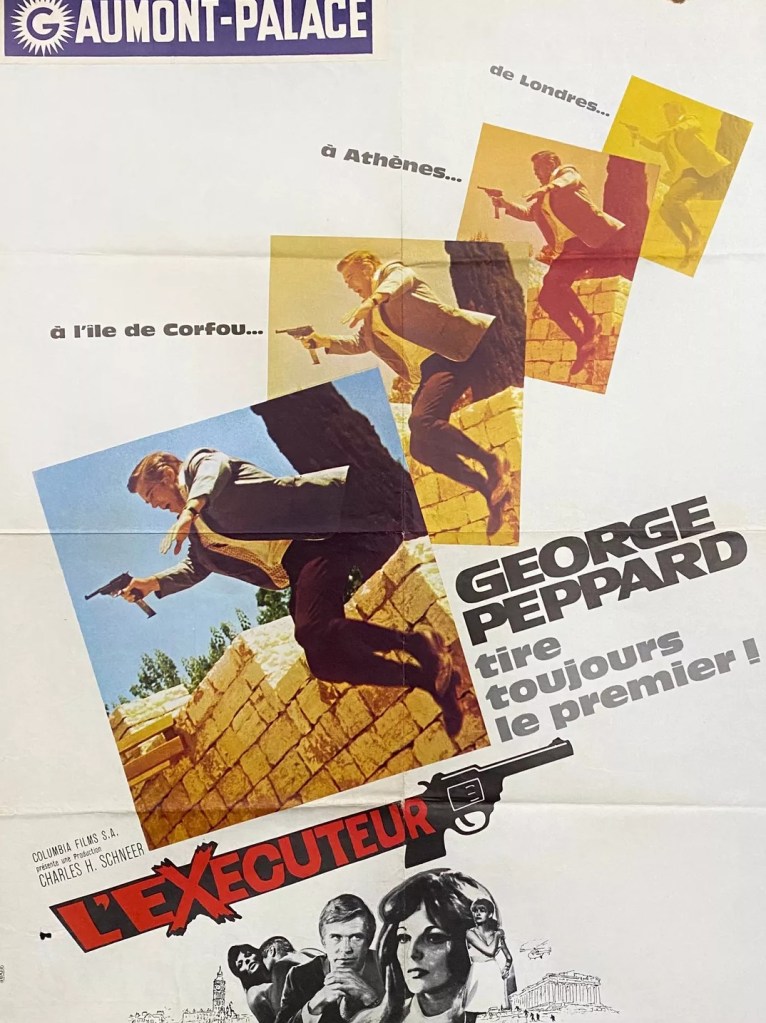
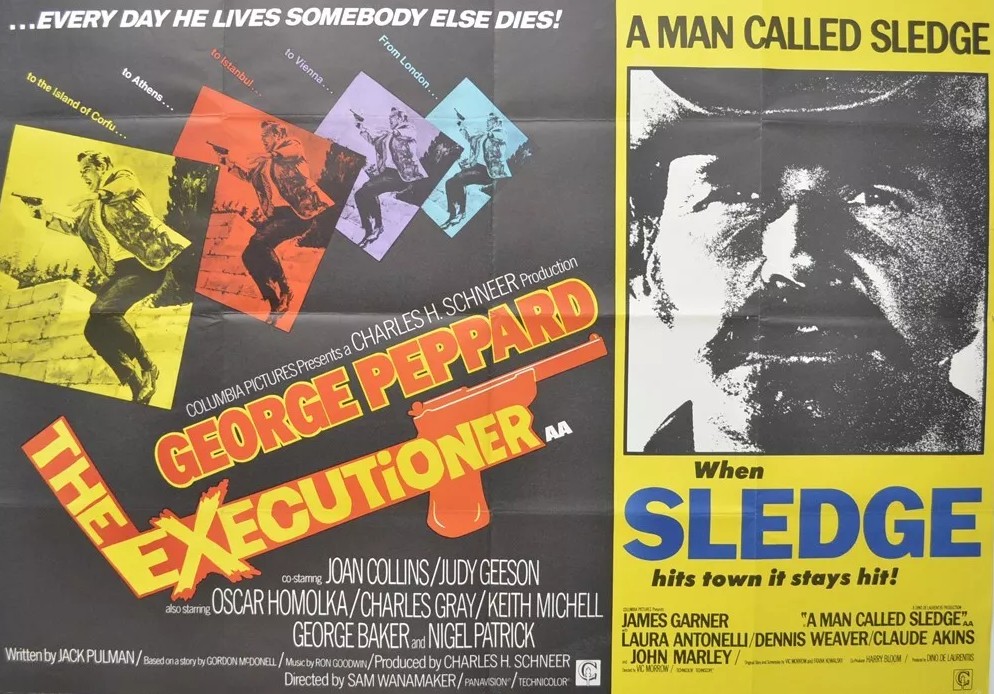
Minor gem. One of the espionage films of the era ignored by audiences because it lacked the verve of James Bond, no car chases or bedhopping hero to maintain interest when the narrative stretched credulity. Ignored by critics because it starred the vastly underrated George Peppard. Yet if you wanted an actor to show pain, to suffer from humiliations to his dignity, there was no one better, in part because on screen (and apparently in real life) arrogance was key to his persona. Here, you can add confusion to that mix of unwelcome emotions.
Beginning a scene with the aftermath of slaughter has become a modern thriller trope – see The Equalizer 3 (2023), The Accountant 2 (2025) for the most recent examples – but this is where the idea began and it’s how this picture opens, the only survivor of the massacre being the wife Sarah Booth (Joan Collins) whom our hero John Shay (George Peppard) covets. An immediate flashback shows them consummating their love. So you’re guessing there’s something of the James Bond in Shay, carrying on an illicit love affair.
But in fact that’s just one of the clever titbits of misdirection director Sam Wanamaker (The File of the Golden Goose, 1969) throws our way. And, gradually, we realize this is not so much about dirty dealings in the espionage business, the usual hunting down of a double agent, our hero clashing with disbelieving and frosty upper class bosses, but more about how the flaws in human nature turn characters inside out.
It’s no surprise that Shay is an outsider, not with that American accent standing out a mile in the British secret service run by the cut-glass accents of the likes of Col Scott (Nigel Patrick) and Vaughn Jones (Charles Gray). He’s not a member of the club, old boy. He bristles at not belonging – “belong to me!” wails girlfriend Polly (Judy Geeson). And he’s been passed over by love of his life Sarah for another agent Adam Booth (Keith Michell) not because the latter has wealth and status but because Shay’s mind is too often elsewhere.
Though you are initially led to believe that Shay is having an affair with Sarah, that turns out to be far from true, although the glances he casts at her are enough to make Polly think they still are. And part of the reason his superiors distrust his assertion that Adam is a double agent is because they think he just wants rid of his rival so he can make another play for his former lover.
Shay is so convinced that he is right that he gets Polly, who also works in the secret service but in the backroom department, to sneak out top secret files. When he stitches up enough information to make the case against Adam, it backfires and he’s suspended. But then, egged on by a discovery by top boffin Crawford (George Baker) working on some top secret stuff, he decides to kill Adam and chuck the body out of a plane into the English Channel – hence becoming the executioner of the title.
Then the twist is truly in when Shay takes Adam’s place on a mission to Greece, which has also been planned as a second honeymoon for Adam and Sarah. This latter fact doesn’t dissuade Shay from making a romantic play for Sarah. However, there are nefarious dealings afoot espionage-wise but in what proves the first of many miscalculations Shay comes unstuck and is beaten up by the opposition and Sarah kidnapped. The ransom the Soviets demand is Crawford.
The massacre that we saw at the start solves that problem.
But it turns out Shay has let desire for Sarah muddle his brain for Adam was not a secret agent. Shay has been further duped into that belief by Crawford who also has romantic designs on Sarah, though it has to be said in her defense that Sarah has encouraged neither of these potential suitors.
There is one final twist but that’s just another nail in the coffin.
So what sets out to be a different kind of spy thriller turns into the polar opposite of what audiences might have expected, playing more on the human frailty of the hero than hitherto in the genre.
George Peppard is excellent, especially when expressing emotional pain and confusion, continuing a superb run of acting roles – ignored by the critics of course but tossing his screen persona away – that ran from Rough Night in Jericho (1967) and P.J. (1967) to Pendulum (1969). Judy Geeson (Brannigan, 1975) has the better female role as the disgruntled but faithful girlfriend. Aside from the occasional acidic remark, Joan Collins (Subterfuge, 1968) is strictly there for the glamor. Written by Jack Pulman (Best of Enemies, 1961) from a story by Gordon McDonnell (Shadow of a Doubt, 1943).
Surprisingly somber, unusually reflective and exceptionally well-constructed. Except for taking the easy way out at the end, could easily have found itself in the classic finale stakes in the same league as Casablanca (1942) or The Third Man (1949) where true love is thwarted. More than enough aerial action for aficionados and an excellent battle sequence.
In addition we have that very contemporary trope of the human shield and the argument by British officers of obeying orders that would take on a different significance from the enemy perspective at the end of World War Two. Throw in an unexpected slug of guilt, a number of understated scenes, and a very clever wheeze from the Germans and you have a movie that rises well above the standard programmer.
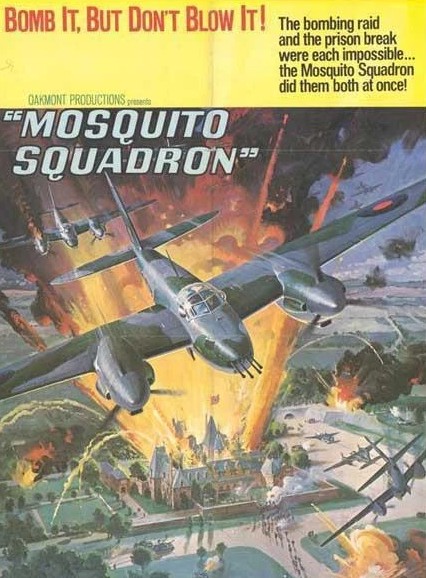
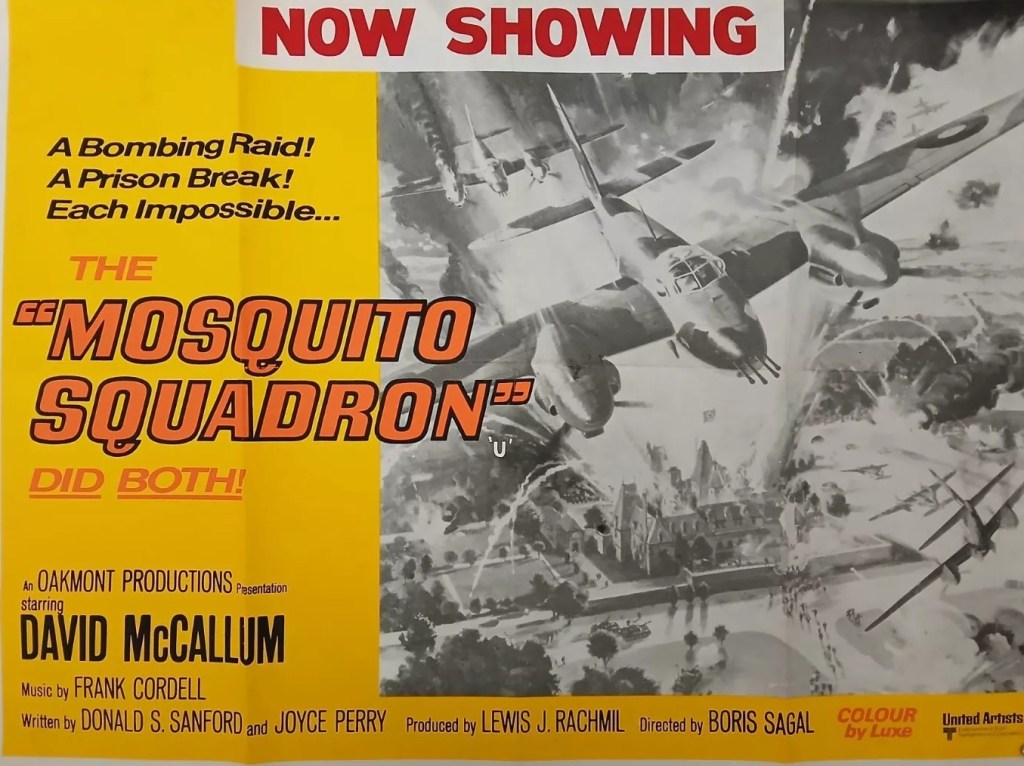
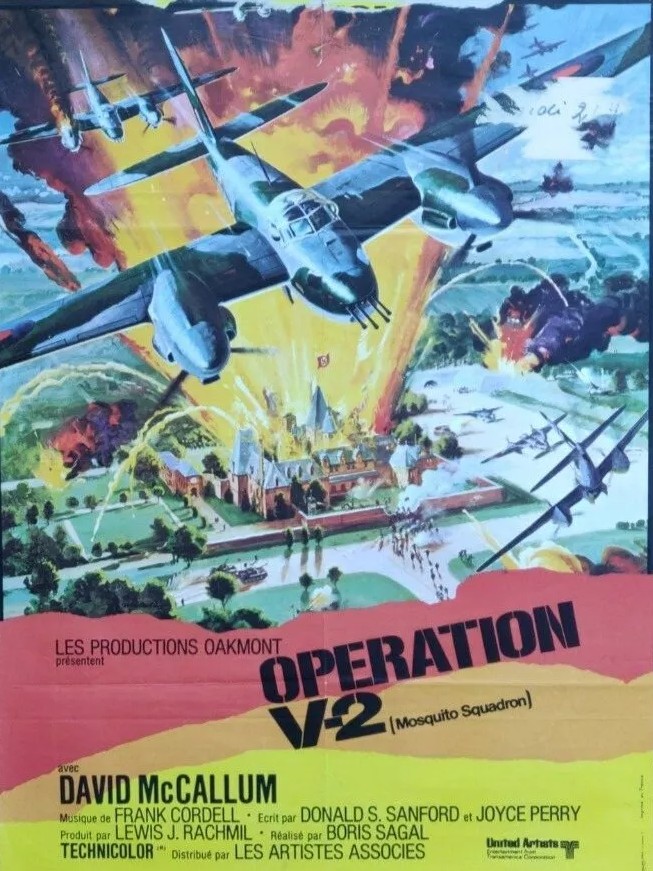
Quint Munroe (David McCallum) is an orphan, taken in at a young age by the family of Squadron Leader “Scottie” Scott (David Buck) whom he regards as a brother. Also a pilot, Quint watches Scottie’s plane explode in a bombing raid over France. Next in line for promotion, Quint, with the usual survivor’s guilt, takes over.
In the first of the sequences that are notably out of place in a standard gung-ho World War Two picture, Quint is sent to tell the bad news to Scottie’s wife Beth (Suzanne Neve). He doesn’t have to say a word. She recognizes the look on his face. Quint had barely escaped from his own burning cockpit, a fact that’s gone unreported to Beth, but when she comes to her husband’s quarters at the air base, she gasps at the burn marks on the back of his jacket. There are four or five instances, again understated, in this scene when Beth is brutally reminded of her husband’s death. And Quint’s colleague Douglas (David Dundas) rejoices in the fact that he’s lost an arm because that’s saved his life, it’s his “ticket” to remain earthbound, and he can safely get married in the knowledge his wife won’t be receiving a knock on the door anytime soon.
This is a mission picture in case you haven’t noticed from my concentration on the other more interesting aspects of the movie. The RAF needs to bomb an experimental station developing the next range of German rockets that’s buried underneath a chateau in France. Flattening the area in the normal fashion won’t do it, the bombers need to be able to hit a very small target indeed, the entrance of the secret hideaway. So they turn to a version of Barnes Wallis bouncing bomb (see The Dam Busters, 1955) and have to practise like billy-oh against a very tight deadline to hit such a target.
Meanwhile…meanwhie…meanwhile. There are three dramatic meanwhiles. Quint begins an understated romance with Beth, he filled with remorse at stealing his dead pal’s wife, she less concerned because there was a hint of earlier romance between them. The Germans protect the chateau behind a human shield of captured RAF pilots. In carrying out the attack, the pilots are condemning colleagues to death, a worry knocked on its head by the gung-ho likes of Air Commodore Hufford (Charles Gray), but other more sensitive high-ranking officers resort to the “obeying orders” routine. Final twist: among the prisoners is Scottie.
Nobody outside the base is permitted to know about the prisoners in case taking such an action damages public morale, so now Quint is in a bind. There’s a final twist to the twists – Scottie has lost his memory so badly that even if he could return to Britain it’s doubtful if he would know who Beth was, though, of course, they would still be married, so that would scupper Quint’s chances unless the story went onto a fourth act in the vein of Random Harvest (1942).
The French Resistance are called in to launch a daring raid to free the prisoners and assuage guilt all-round. Quint is shot down and joins the brutal battle action in which, as predicted by Hufford, the escapees are mown down by superior German firepower. He finds Scottie, who doesn’t recognize him at all. Scottie is also of the gung-ho brigade and dies stopping a German tank.
Meanwhile, Douglas has got into trouble for telling too many people about the prisoners. He’s very good friends with Beth.
You can see the cinematic opportunity. Quint returns knowing he is free to marry Beth only to find Beth turns away from him because he went on an expedition that could kill her husband. But the producers bottle it and go for the happy ending instead.
David McCallum (Sol Madrid/The Heroin Gang, 1968) remains in low gear throughout, and though Suzanne Neve (Naked Evil, 1966) more than makes up for him, you would wonder at the wife of a dead pilot taking up with another flier who could end up the same way.
Director Boris Sagal (Made in Paris, 1966) is to be commended for spending so much time on the themes of guilt and loss and keeping reality to the forefront. Some of the sequences have been stolen from other movies or are stock footage. Written by Donald S. Sanford (The Thousand Plane Raid, 1969) and actress Joyce Perry in her big screen debut.
Raises far more issues than the normal war movie, certainly blown away at the box office by the bigger-budgeted all-star-cast Battle of Britain the same year, but more than holds its own, and if it had been an American low-budgeter with some better-known lesser stars would have probably been re-evaluated long before now.
Absolutely mesmeric. Would be catnip for contemporary audiences with its shifting time frames, juggling perspectives, narrative sleight-of-hand, and heavily feminist-oriented outlook with its slating of misogyny. Ripe for a remake and with the adventurous directors around these days they should be vying for the opportunity. But I should warn you, steer clear of the version that showed on Amazon Prime which cut the four-part television series in half.
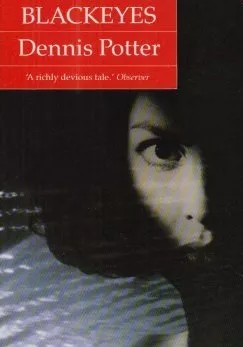
British screenwriter Dennis Potter was something of a national institution before this appeared, the BBC ponying up vast sums (in television terms) for his experimental programs that included the likes of Pennies from Heaven (1978) – remade as a movie three years later with Steve Martin – and The Singing Detective (1986) (remade seventeen years later with Robert Downey Jr) and his blend of pastiche and males struggling with raw emotion had made him not just a household name but accorded him worldwide acclaim.
However, just as Peeping Tom (1960) put the kibosh on the career of Michael Powell, Blackeyes proved a major critical reversal and after the mauling it received and outraged headlines in the national media Potter somewhat lost his mojo and automatic critical favor although Lipstick On Your Collar (1993) helped a certain Ewan McGregor to make his mark.
In part, Blackeyes is way ahead of its time in the use of the stylistic devices mentioned above which when incorporated into the works of, for example, David Lynch or Christopher Nolan, were hailed as groundbreaking.
So this is a three-hour-plus show setting precedents that not only break all the rules of narrative but blows them sky-high and has so many layers you can hardly keep up and that narrative spinning continues to the very end. You could almost entitle it “Whose Story Is It, Anyway?”
Elderly author Maurice (Michael Gough) has fashioned the experiences of his model niece Jessica (Carol Royle) into a bestselling literary novel. Leading character Blackeyes (Gina Bellman) is taken advantage of so often by men that she commits suicide, wading out dressed in sexy night attire into a lake. Although Maurice makes a fine specimen suited-and-booted and talking to admiring audiences at book fairs, in reality he’s a sodden old drunk living in a threadbare apartment with a teddy bear. But he’s intellectually adroit as shown with his verbal duels with a smug journalist who spouts artistic jargon.
Jessica is so annoyed that she has not been acknowledged as the source of her uncle’s novel – he claims it is a work of imagination – that she begins to write her own fictional version of her life story, calling into question some of the events in her uncle’s account. So that’s two perspectives already. Stand by for a third, that turns the entire story on its head.
It appears Blackeyes (Gina Bellman) has not committed suicide. Detective Blake (John Shrapnel) is convinced she has been murdered, especially after he finds a list of names stuck in her vagina (yes, despite Blake gamely searching for every euphemism under the sun, the actual word, to add to the shock and horror of an audience and especially critics reeling from the sex and nudity, was used on the BBC) and later finds her diary which provides another version of events.
He’s an old-school detective, and while not beating anyone up, not above handing out a good thump in the ribs to anyone giving him lip. So while following Maurice and his niece, we are also finding out more about Blackeyes via the cop’s investigations and how she was taken advantage of in the advertising profession and world of photographic modeling. She is even the one who gets the blame when someone tries to rape her.
Her life could be viewed in two ways, as a sexually independent woman or as a victim of MeToo.
To counteract what is presented as a sordid existence there comes into her life a gentler soul, advertising copywriter Jeff (Nigel Planer) and he’s writing and rewriting versions of a more old-fashioned romance where they enjoy a meet-cute (of sorts) and get talking and move onto romantic walks along the seaside. But Jeff’s too diffident a fellow to appeal to Blackeyes and he doesn’t even get to first base. But it also turns out that he’s been watching Jessica through binoculars (they live across the street from each other) and there’s a marvelous moment when he realizes that Blackeyes occupies the same apartment as Jessica and that he could at that very moment be watching himself.
All the way through there’s been a male voice-over, measured, commenting on the action, advising on twists in the story, adding a different perspective to characters, offering many polished bon mots, and it takes you quite a while to realize that this is an entirely new voice, and doesn’t belong to either Maurice or Jeff. In the ordinary run of things, this character would turn out to be the Hercule Poirot of the piece, putting the jigsaw together, explaining all.
In fact, he’s another element of the jigsaw. He’s not just the narrator. Everyone we’ve seen are characters in his fiction. But they don’t always obey the rules and at the very end Blackeyes escapes.
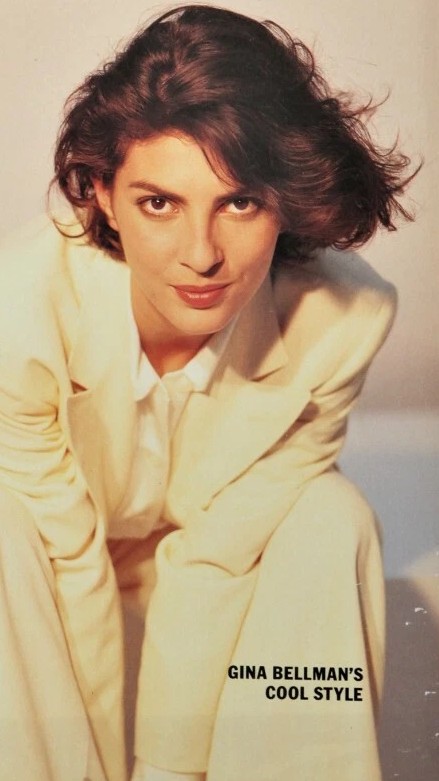
So just a stunning piece of television. Although Michael Gough (Batman Returns, 1992) received the bulk of what little plaudits there were, the series is carried by New Zealand actress Gina Bellman (Leverage, 2008-2012, and Leverage: Redemption, 2021-2023) who is simply superb. She rises above what could easily have been a cliché – and in some respects was written as a cliché version of the “dumb blonde” at male beck and call. Her comic timing for a start turns many scenes on their heads. But what’s often been overlooked is her transitional skill. She moves from male fantasy figure to believable human being and from there to rebel. And that takes some doing.
Gina Bellman hates talking about this series, my guess on account of the nudity and the backlash that created for a young actress, but she should be proud of her achievement. This is more than solid stuff.
Writer Dennis Potter also directed and his camera is always prowling around the edges.
The word auteur was over-used but this genuinely fits that category.
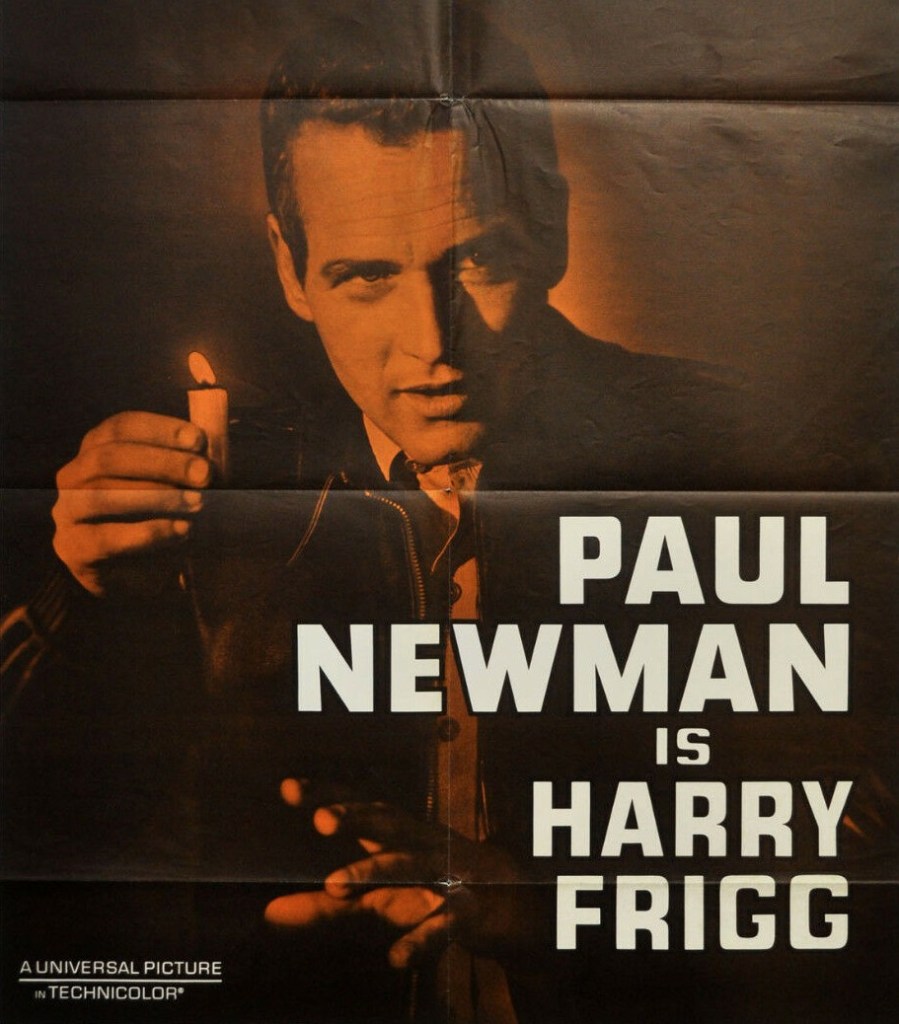
Except for an ingenious escape attempt and Paul Newman spoofing his Cool Hand Luke (1967) persona, this World War Two POW number falls into the “sounded like a good idea at the time” category. Harry Frigg (Newman), the American army’s most notorious escapee (though from British military prisons), is promoted from buck private to two-star general and parachuted into northern Italy to organize a breakout of five one-star generals.
The premise that the war effort is hampered by embarrassment at the generals being captured seems far-fetched as is the notion that the quintet are hopelessly incompetent when it comes to doing anything that sounds like proper army stuff. Adding another offbeat element is that they are being held in effectively a deluxe POW camp, an ancient castle run by Colonel Ferrucci (Vito Scotti), a former Ritz hotel manager with a lapdog attitude to the rich and powerful.
Almost immediately Frigg discovers an escape route through a secret door but is disinclined to go any further since it leads into the boudoir of the Countess Francesca (Sylva Koscina). New Jersey inhabitant Frigg feels out of the place with the high-falutin’ generals and proceeds to get himself a cultural education. Meanwhile, the countess, obtaining her position through marriage rather than birth, trying to bolster his confidence naturally triggers his romantic impulses.
The humor is of the gentlest kind – Frigg taking advantage of his superiority, Italians speaking tortured English – and not much in the way of bellylaffs either. Director Jack Smight, who collaborated so well with Newman in Harper (1966) and manages to achieve a tricky balance in No Way to Treat a Lady (1968), loses his way here, not least structurally, as the movie pingpongs between the generals, the commandant and Frigg and, thematically, issues of power. Crucially, he fails to rein in Newman.
The generals, squabbling among themselves for power, would be caricatures except that their characters are rounded out by the players, Charles Gray (The Devil Rides Out, 1968) as Cox-Roberts and Tom Bosley (Divorce American Style, 1967) as Pennypacker. The other generals are played by Andrew Duggan (Seven Days in May, 1964), John Williams (Harlow, 1965) and Jacques Roux (The List of Adrian Messenger, 1963). Representing the American top brass in England are James Gregory (a repeat role in the Matt Helm series) and Norman Fell (The Graduate, 1967)
After her excellent turn as a mischievous and vengeful villain in Deadlier than the Male (1967), Yugoslavian Sylva Koscina comes down to earth with a less rewarding role as charming leading lady with a sly sense of humor rather than the femme fatale of A Lovely Way to Die (1968). Werner Peters (The Corrupt Ones / The Peking Medallion, 1968) makes a late appearance as a Nazi and you might spot screenwriter Buck Henry (The Graduate) in a bit part.
The screenplay by Peter Stone (Arabesque, 1966) and Oscar-winner Frank Tarloff (Father Goose, 1968) is an odd mixture of occasional sharp dialog and labored story. The set-up takes too long and you keep on wondering when it is going to get to the pay-off.
No doubt looking for some light relief after a quartet of heavier dramatic roles – Harper (1966), Torn Curtain (1966), Hombre (1967) and Harper (1967) – Newman acts like he has escaped the straitjacket of a considered performance and instead indulges in mugging and hamming it up, his body freeing a barrage of mannerisms previously held in check.
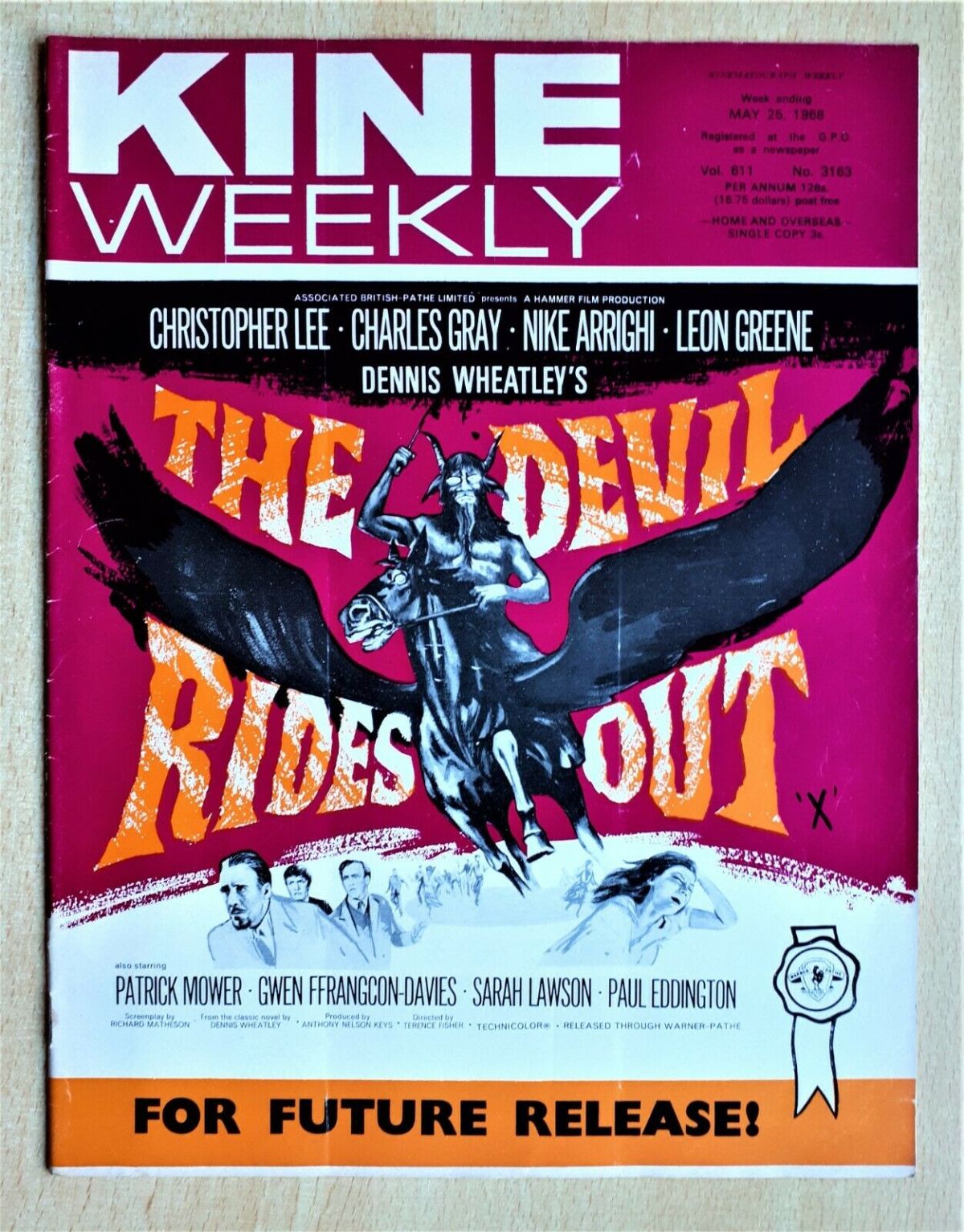
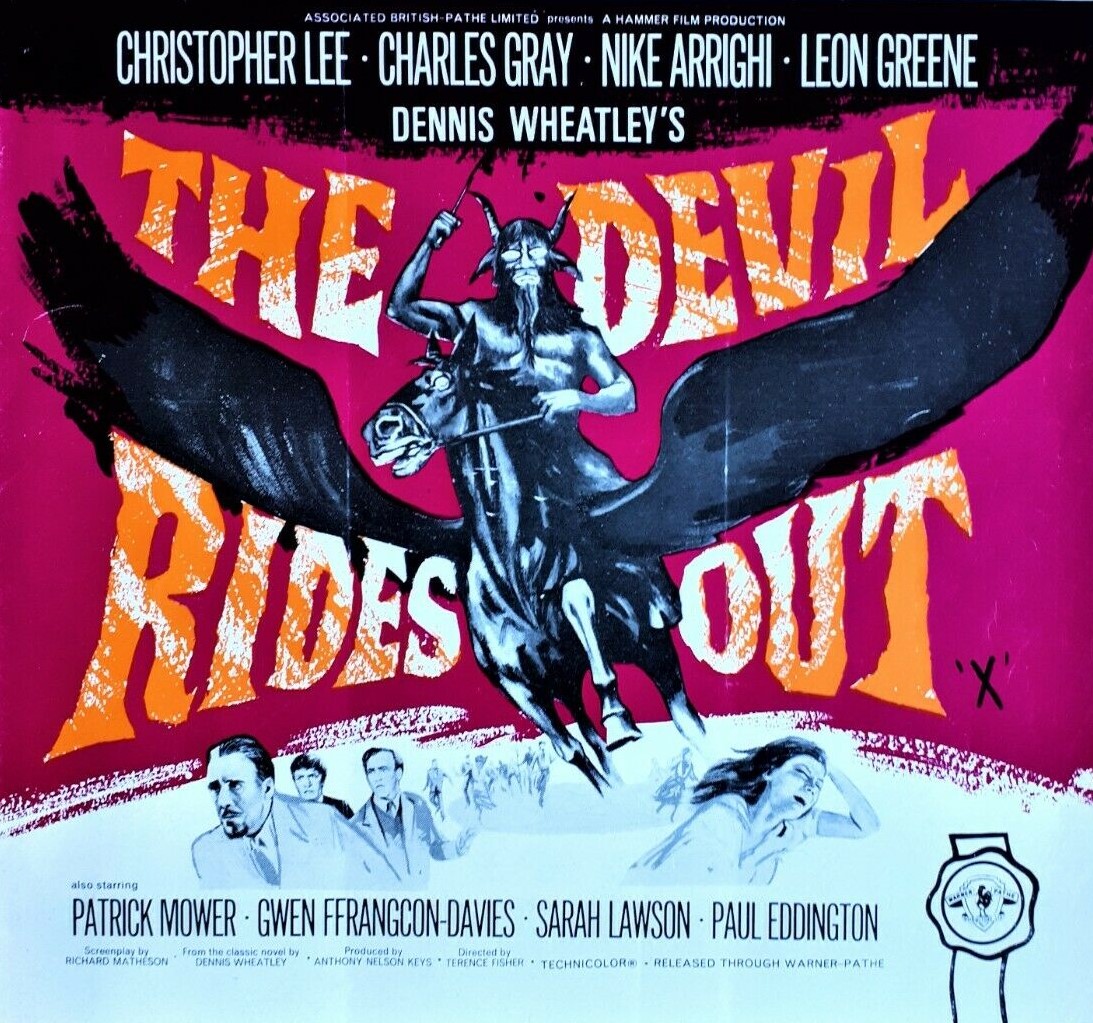
Strong contender for Hammer’s film of the decade, a tight adaptation of Dennis Wheatley’s black magic classic with some brilliant set pieces as Nicholas de Richleau (Christopher Lee) battles to prevent his friend Simon (Patrick Mower) falling into the hands of satanist Mocata (Charles Gray).
Initially constructed like a thriller with Simon rescued, then kidnapped, then rescued again, plus a car chase, it then turns into a siege as Richleau and friends, huddled inside a pentagram, attempt to withstand the forces of evil. Sensibly, the script eschews too much mumbo-jumbo – although modern audiences accustomed to arcane exposition through MCU should find no problem accommodating ideas like the Clavicle of Solomon, Talisman of Set and Ipsissimus – in favour of confrontation.
Unlike most demonic pictures, de Richleau has an array of mystical weaponry and a fund of knowledge to defend his charges so the storyline develops along more interesting lines than the usual notion of innocents drawn into a dark world. In some senses Mocata is a template for the Marvel super-villains with powers beyond human understanding and the same contempt for his victims. And surely this is where Marvel’s creative backroom alighted when it wanted to turn back time. Though with different aims, De Richleau and Mocata are cut from the same cloth, belonging to a world where rites and incantations hold sway.
While special effects play their part from giant menacing tarantulas and the Angel of Death, the most effective scenes rely on a lot less – Simon strangled by a crucifix, Mocata hypnotizing a woman, a bound girl struggling against possession. Had the film been made a few years later, when Hammer with The Vampire Lovers (1970) and Lust for a Vampire (1971) increased the nudity quotient, and after The Exorcist (1973) had led the way in big bucks special effects, the black mass sequence would have been considerably improved.
The main flaw is the need to stick with the author’s quartet of “modern musketeers” which means the story stretches too far in the wrong directions often at the cost of minimizing the input of de Richleau. In the Wheatley original, the four men are all intrepid, but in the film only two – de Richleau and American aviator Rex van Ryn (Leon Greene) – share those characteristics. At critical points in the narrative, de Richleau just disappears, off to complete his studies into black magic. Where The Exorcist, for example, found in scholarship a cinematic correlative, this does not try.
Christopher Lee (She, 1965), pomp reined in, is outstanding as de Richleau, exuding wisdom while fearful of the consequences of dabbling in black magic, both commanding and chilling. Charles Gray (Masquerade, 1965) is in his element, the calm eloquent charming menace he brings to the role providing him with a template for future villains. The three other “musketeers” are less effective, Patrick Mower in his movie debut does not quite deliver while Leon Greene (A Challenge for Robin Hood, 1967) and Paul Eddington (BBC television’s Yes, Minister 1980-1984) are miscast. Nike Arrighi, also making her debut as love interest Tanith, is an unusual Hammer damsel-in-distress.
Hammer stalwart Terence Fisher (The Gorgon, 1964) creates a finely-nuanced production, incorporating the grand guignol and the psychological. Screenwriter Richard Matheson (The Raven, 1963) retains the Wheatley essence while keeping the plot moving. A few years later nudity was no longer be an issue and Hollywood injected big bucks in horror special effects, so with those constraints in mind the studio did a devilish good job.
BOOK INTO FILM
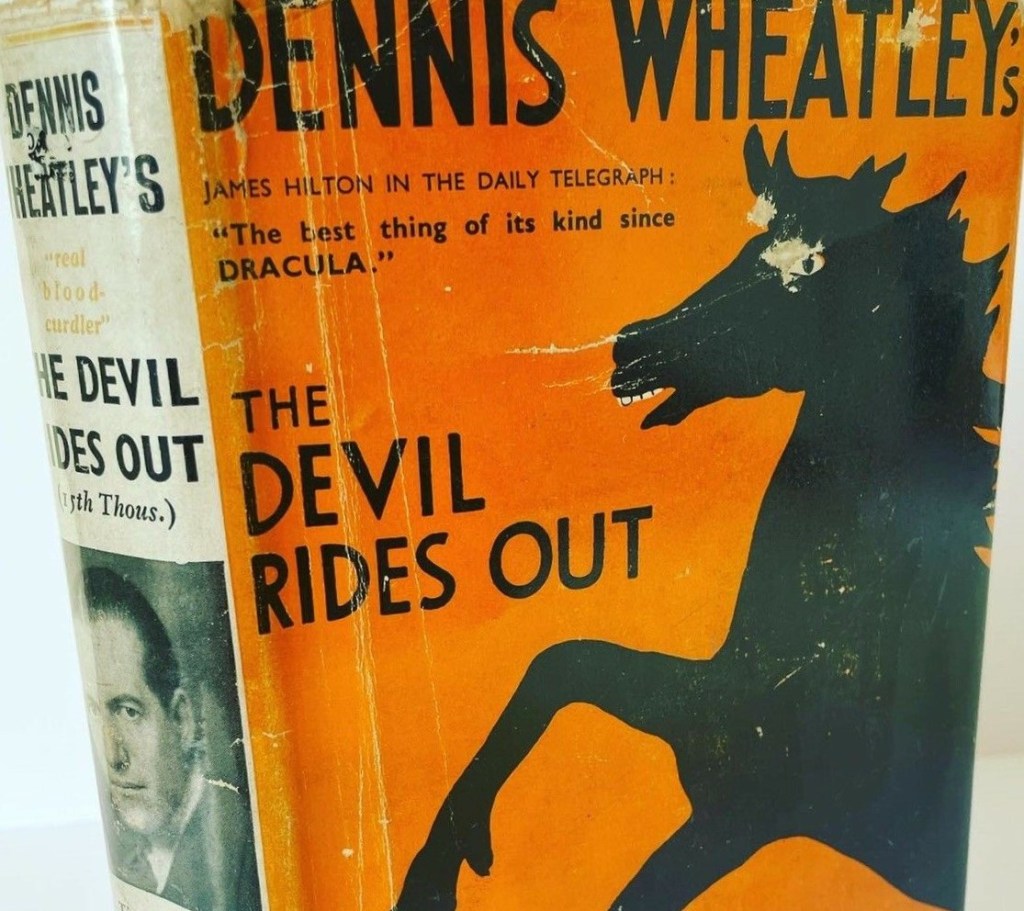
Dennis Wheatley was a prolific bestseller producing three or four titles a year, famous for a historical series set around Napoleonic times, another at the start of the Second World War and a third featuring the “four modern musketeers” that spanned a couple of decades. In addition, he had gained notoriety for books about black magic, which often involved series characters, as well as sundry tales like The Lost Continent. Although largely out of fashion these days, Wheatley set the tone for brisk thrillers, stories that took place over a short period of time and in which the heroes tumbled from one peril to another. In other words, he created the template for thriller writers like Alistair MacLean and Lee Child.
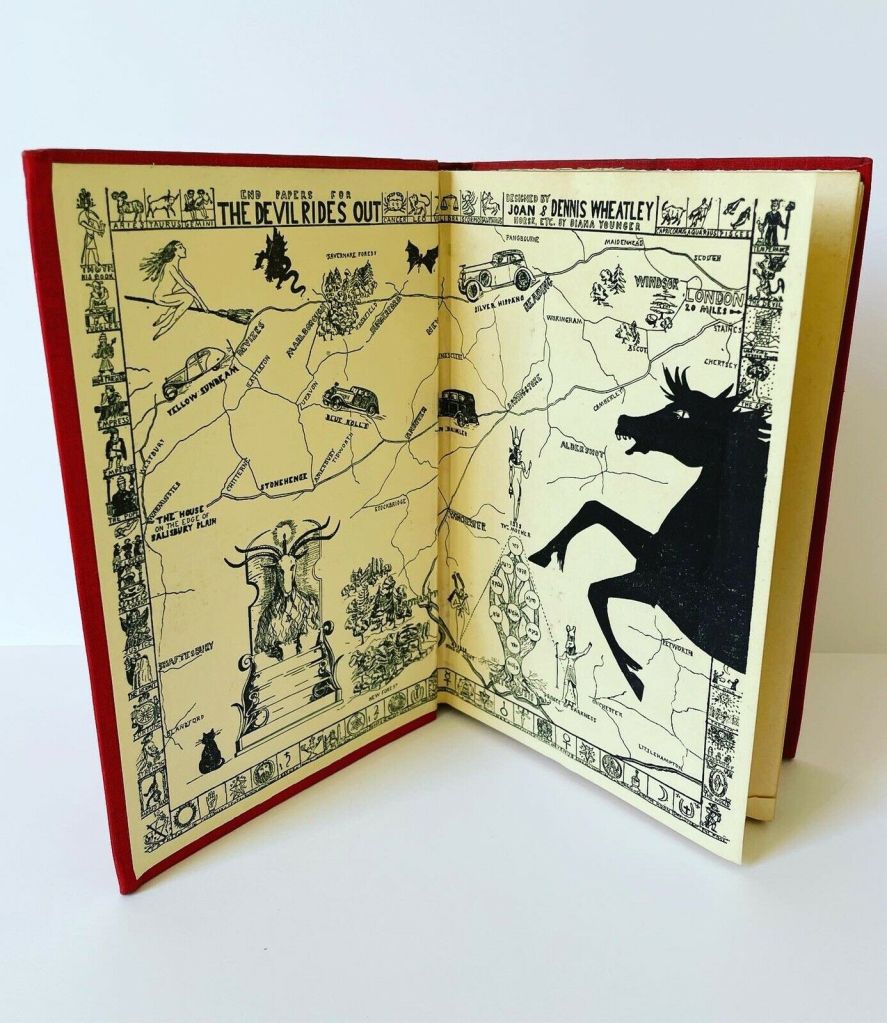
The Devil Rides Out, his fourth novel, published in 1934, featured the “musketeers” involved in his phenomenally successful debut The Forbidden Territory (1933), and introduced readers to his interest in the occult. Although of differing temperaments and backgrounds his quartet – the Russian-born Duke De Richleau (Christopher Lee in the film), American aviator Rex Van Ryn (Leon Greene) and wealthy Englishmen Richard Eaton (Paul Eddington) and Simon Aron (Patrick Mower) – are intrepid. And while screenwriter Richard Matheson stuck pretty much to the core of the Wheatley story, the film was hampered by the actors. The laid-back Paul Eddington hardly connects with the Wheatley characterization and Patrick Mower is too young for Aron.
As with the book, the story moves swiftly. Worried that Aron is dabbling in the black arts, De Richleau and Van Ryn go haring down to his country house where they meet black magic high priest Mocata (Charles Gray) and discover tools for satanic worship. And soon they are embroiled in a duel of wits against Mocata, climaxing in creating a pentagram as a means of warding off evil.
In order not to lose the audience by blinding them with mumbo-jumbo the script takes only the bare bones of the tale, bringing in the occult only when pivotal to the story, and that’s something of a shame. A modern audience, which has grown up on enormously complicated worlds such as those created for Game of Thrones and the MCU, would probably have welcomed a deeper insight into the occult. While out-and-out thrillers, Wheatley’s novels also contained copious historical information that he was able to dole out even when his heroes were in harm’s way. The Devil Rides Out is not a massive tome so it’s a measure of the author’s skill that he manages to include not just a condensed history of the occult but its inner workings. Every time in the film De Richleau goes off to the British Library for some vital information, his departure generally leaves a hole, since what he returns with does not always seem important enough to justify his absence.
But then the screenwriter was under far more pressure than a novelist. In some respects, this book like few others demonstrated the difference between writing for the screen and writing for a reader. With just 95 minutes at his disposal, Matheson had no time to spare while Wheatley had all the time in the world. Wheatley could happily leave the reader dangling with a hero in peril while dispatching De Richleau on a fact-finding mission, the action held up until his return. It’s interesting that Matheson chose to follow Wheatley’s characterization of De Richleau, who didn’t know everything but knew where to look. Matheson could easily have chosen to make De Richleau all-knowing and thus able to spout a ton of information without ever going off-screen.
But here’s where the book scores over the film. The reader would happily grant Wheatley his apparent self-indulgence because in the book what he imparted on his return, given the leeway to do so, was so fascinating. There are lengthy sections in the book which are history lessons where De Richleau gives readers the inside track on the satanic. In the opening section, once De Richleau and Van Ryn have rescued Aron, the author devotes a full seven pages to a brief introduction to the occult that leaves the reader more likely to want more of that than to find out how the story will evolve. He has hit on a magic formula that few authors ever approach. To have your background every bit as interesting as the main story is incredibly rare and it allowed Wheatley the opportunity to break off from the narrative to tell the reader more about the occult, which in turn, raised the stakes for the characters involved.
Dennis Wheatley
Effectively, there was too much material for a screenwriter to inflict upon an audience ignorant of the occult. Some decisions were clearly made to limit the need for lengthy exposition. But these often work against the film. For example, Mocata wants the Talisman of Set because it bestows unlimited power with which he can start a world war, but in order to accomplish that he needs to find people with the correct astrological births, namely Simon and Tanith. But this element is eliminated from the story, making Mocata’s motivation merely revenge. Matheson also removed much of the historical and political background, replaced the swastika as a religious symbol with the more acceptable Christian cross, and deleted references to Marie’s Russian background. Her daughter Fleur becomes Peggy. Matheson also treats some of the esoteric light-heartedly on the assumption that seriousness might be too off-putting.
Overall, the adaptation works, you can hardly argue with the movie’s stature as a Hammer classic, but the more you delve into the book the more you wish there had been a way for much of the material to find its way onscreen and to inform the picture in much the same way as the depth of history and character backstory added to Game of Thrones.
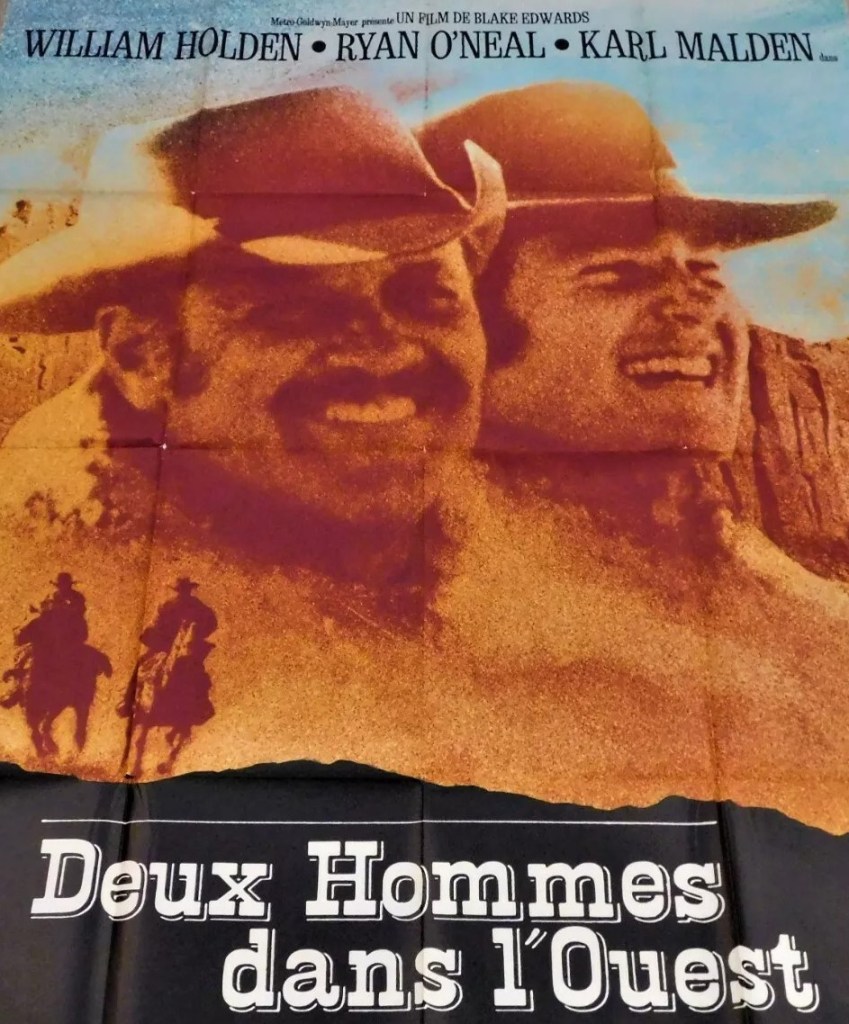
An unlikely candidate for redemption. Savaged by studio MGM, thoroughly trashed by critics, and ignored by audiences. MGM, having just called time on Fred Zinneman’s big-budget Man’s Fate and alarmed by the budgetary excesses on Ryan’s Daughter (1970), wasn’t in the mood for a three-hour elegiac western about nothing much. Reputedly, there was a first version that went out at two hours seventeen minutes, but the trade critics reviewed the version that went out on general release and came in 30 minutes shorter.
Scorn was the most common reaction. It seemed excessively indulgent to allow director Blake Edwards (The Great Race, 1965) anywhere near a western when his forte was gentle or slapstick comedy and the one time he had ventured out of his comfort zone – for musical Darling Lili (1970) – he had turned in a commercial and critical disaster. The first poster for Wild Rovers, the stars cuddled up on a single horse, suggesting home-erotic overtones, was widely derided.
Hollywood was fearful of pictures without a female prominent in the cast. And while William Holden had revived his career with The Wild Bunch (1969), there wasn’t exactly a long queue for his services, not after the disaster that was The Christmas Tree (1969). By the time he had another hit, five years later, it was in a supporting role in Towering Inferno (1974).
There were question marks also over co-star Ryan O’Neal. Despite the commercial success of Love Story (1970), and an Oscar nomination to boot, it seemed insane to opt for what was in some regards a buddy picture sorely lacking in the crackling dialog and hip approach to the nascent genre that made Butch Cassidy and the Sundance Kid (1969) such a success.
This is a very small story on a not-much-bigger canvas. Sure the scenery is splendidly shot, but close-ups are scant, most of the movie filmed in long shot, faces covered by beards and hats pulled down. Unless you were familiar with his distinctive voice, you wouldn’t, for example, recognize Karl Malden. We’re back in the cowboy realism of Will Penny (1968) but where that narrative helped Charlton Heston by transforming him into a stand-up good guy coming to the aid of a widow and subtle romance thrown in, this just about has the dumbest plot ever conceived.
What makes this work is that the characters ring true, no matter how dumb they appear. These are generally people at the end of the line, or at the beginning of one and realizing it’s going nowhere, or with their small patch in danger of being overrun.
The local sheriff holes up in the whorehouse, there’s a range war brewing – sheep farmers invading valuable pastures – a cowboy could be killed in a flash, not from a rampant gunfighter, but from a spooked horse trampling him to death, the upstanding turn out to be corrupt.
Fifty-year-old Ross Bodine (William Holden), no wife or family to berth him, has hooked up with Frank Post (Ryan O’Neal), half his age. They live on a ranch, eating and sleeping in a communal bunkhouse, and when one of their colleagues suddenly accidentally dies, they take to brooding on the unachievable future, one that seems to be drifting fast away from the older man, still a brass ring within potential grasp for the younger.
They decide to rob a bank. But not in the normal fashion of bursting in with guns blazing in the middle of the day. Instead, they do it at night, Frank holding bank manager’s wife Sada (Lynn Carlin) hostage while her husband Joe Billings (James Olsen) fills Bodine’s pockets to the tune of $36,000. They should get away with it. By daybreak they should have put an enormous distance between themselves and any pursuers and once over the state line would be out of the jurisdiction of local sheriff or marshal. Probably, they’d throw a chunk of it away in gambling, women and booze but they still reckon on having enough left to stake themselves to a small ranch, hiring a manager to do the dirty work.
Not wanting to leave their employers out of pocket, Bodine hands the bank manager back £3,000 to return to ranch owner Walter Buckman (Karl Malden). But the money is diverted along the way by Sada. So Buckman attaches sons Paul (Joe Don Baker) and John (Tom Skerritt) to the posse with the instructions not to turn back at the state border. Walter remains behind waiting for the sheepmen to trespass.
Except for the elegiac scenery, the tone appears uneven at the start, and you might think this is going down comedy lines, what with our heroes being drenched with buckets of ordure and generally being knocked around slapstick fashion. But it quickly settles and you realize you’re watching a couple of losers every bit as believable as the pair in Midnight Cowboy (1969). They’ve got nowhere to go and in making the most of what they have liable to make a hash of it. They don’t win saloon brawls, are on the wrong end of a shoot-em-up, squeal like a pig, to coin a phrase, when called upon to be manly and stoical when a bullet needs dug out of a wound, stare into space after making love because they can sense the inevitable. I found myself warming to them much more than I expected.
Frank may be a mean shot and a heck of a gambler but he’s a little boy at heart, picking up a stray puppy while on ransom duty. There’s a fabulous scene – and my guess what attracted Holden to the picture – when Ross talks to his friend about their friendship. Hell, you think, that’s sailing close to the wind, don’t tell me these guys are getting all emotional. Until you realize the only time Ross could ever speak so openly is if his pal is beyond hearing. Because he’s dead.
Beautifully shot, as I mentioned, boldly envisioned with the emphasis on long shot, and in the end more moving than I expected. I’ve no idea what kind of masterpiece lurked in the lost three-hour version, but MGM may have done Edwards a service because this edited version hits the mark.
Written and directed by Edwards. Both Holden and O’Neal, who was generally panned, have never been better. Host of new talent in the wings includes Tom Skerritt (Top Gun, 1986), Joe Don Baker (Walking Tall, 1973), James Olsen (The Andromeda Strain, 1971), Moses Gunn (Shaft, 1971), and Victor French (Little House on the Prairie, 1974-1977). Unexpected appearances from British pair Rachel Roberts (Doctors Wives, 1971) and Charles Gray (The Devil Rides Out, 1968).
Check this one out. Reassessment urgently required.
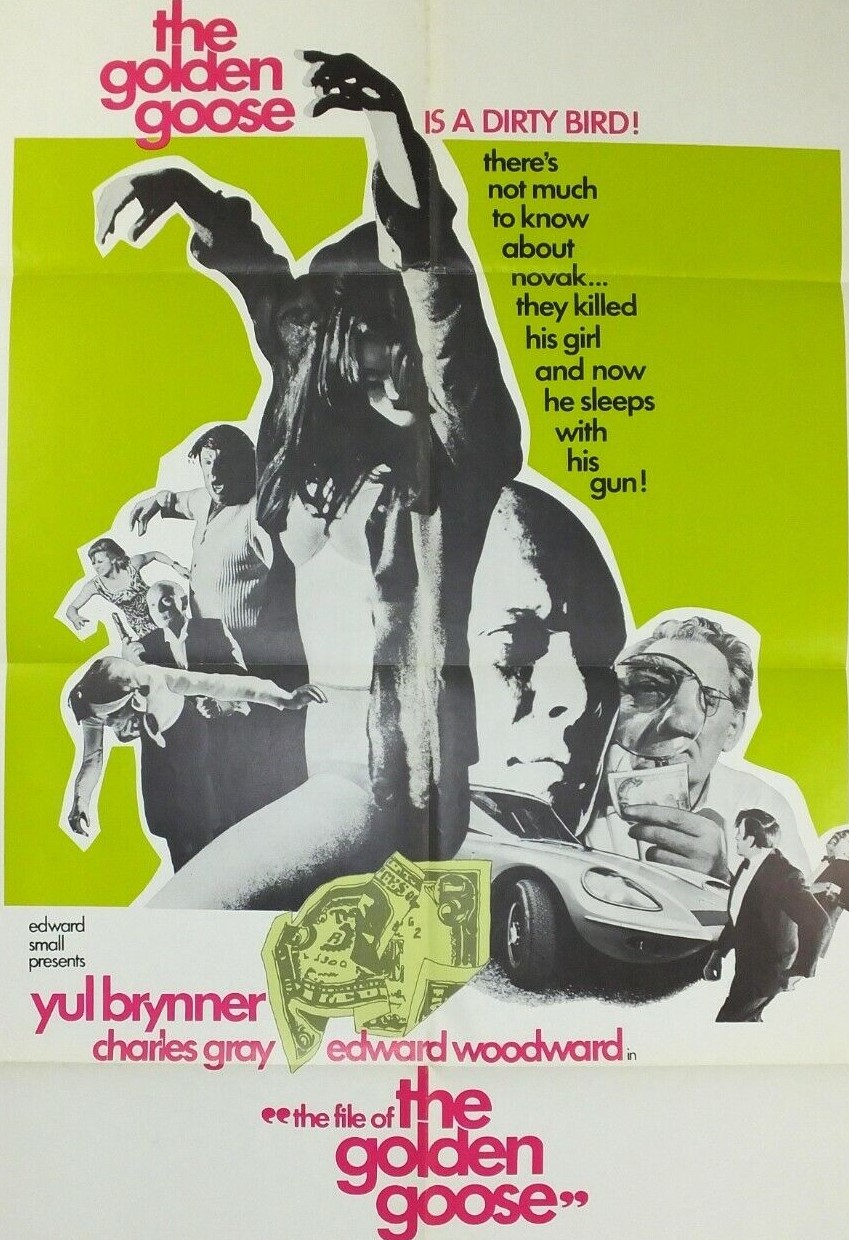
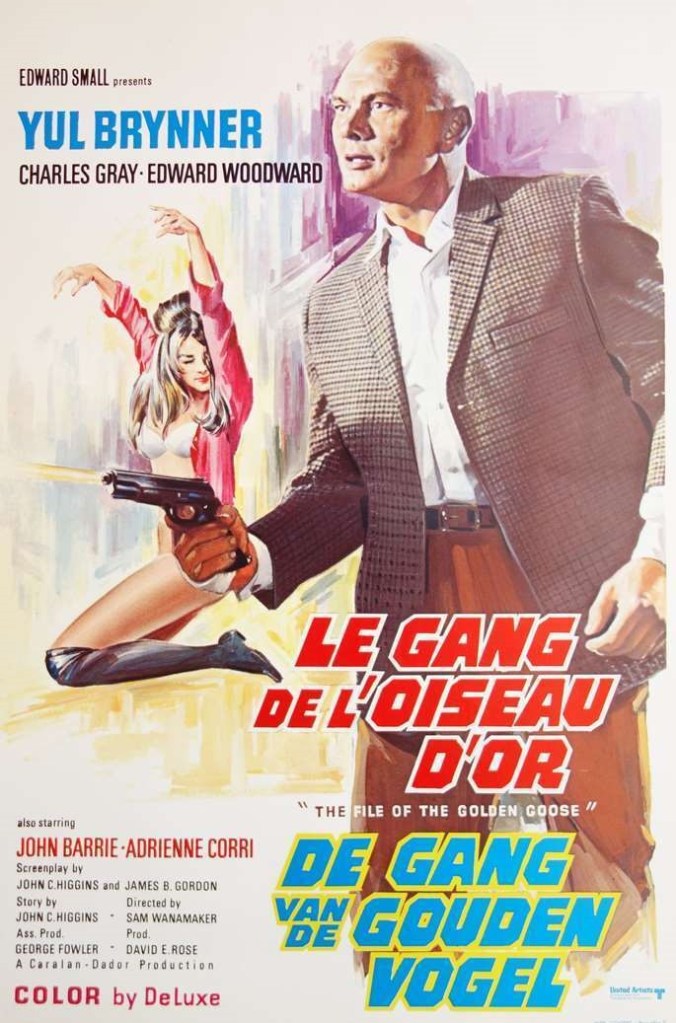
A dud. Not even Yul Brynner, whom I pumped up as under-rated yesterday in Escape from Zahrain (1962), can save it, nor a camped-up Charles Gray (The Devil Rides Out, 1968). Takes too long to get started, meanders all over the place while suspension of audience disbelief breaks new ground.
The first ten minutes or so via voiceover are wasted telling us stuff that one character could deliver in a single line. That is, there’s a worldwide counterfeit operation in place and London is the next target. Hence, American Treasury Agent Novak (Yul Brynner) being seconded to Scotland Yard where he is saddled with ineffective British sidekick Thompson (Edward Woodward).
For no particular reason, they head off to Liverpool where they attempt to infiltrate the gang. The mobsters are so dumb they fall for their lame story, though without first giving them routine warehouse work (cue montage of the pair falling asleep on the job and doing the wrong thing). Novak, it has to be said, is pretty slick at avoiding any traps, cleverly talking himself out of dodgy situations, pinning any blame on whoever is convenient.
But, eventually (thank goodness), they reach London. And if you have been waiting virtually the whole movie with bated breath for the appearance of female lead Adrienne Corri (Africa Texas Style, 1967) you can stand easy for now she turns up as ostensibly the gangster queen-pin.
The journey to here is enlivened by hitman Smythe (Graham Crowden), as English as they come, bowler hat and all, whose weapon of choice is a blade embedded in a walking stick, and The Owl (yep, The Owl, played by Charles Gray) with every fetish under the sun whose presence seems to demand an orgy.
By the time you get to the final shoot-out you couldn’t care less. With a bit more care and attention to detail, this could have been a reasonably thrilling picture. Novak is two-fisted enough to cut the mustard, and naturally treats the English cops as dumb-as-they-come, what with their lily-livered aversion to weapons. Surprisingly, Thompson takes to mobster life and quite enjoys dishing it out in a most un-English fashion.
There’s quite a nice twist when the chief counterfeiter leads Novak into a soundproof vault because he can’t be overheard spilling the beans on his colleagues and seeking witness protection.
But the movie appears to have been not made for a contemporary audience. Given Lee Marvin has reinvented the movie tough guy in Point Blank (1967) and Clint Eastwood the hardnosed cop in Coogan’s Bluff (1968), Novak doesn’t come close, and since British gangsters are slick enough to pull off Robbery (1967) and The Italian Job (1969), it seems the criminals here have lived a very sheltered life.
There’s not even the old reliable comedic standby of American fish out of British water, such as occasionally helped along pictures like Brannigan (1975). In fact, all the humor rests upon the dry-witted Owl.
Television director Sam Wanamaker (Catlow, 1971) makes his movie debut. John C. Higgins (Impasse, 1969) wrote the screenplay along with Robert E. Kent (The Fastest Guitar Alive, 1967).
For Yul Brynner completists only.
Hard to find, but Talking Pictures has this, but only until Dec 10. Strangely enough, I can’t see any rush.
Impressive vastly underrated whodunit that breaks all the rules. Take the length for a start – just stopping short of two-and-a-half hours. The investigation covers multiple time periods – 1942, 1944 and 1965. The killer outwits the detective. Most important of all, the murder is clearly a MacGuffin to examine politics among the German officer class.
A Polish woman who turns out to be a German agent is viciously stabbed to death in Warsaw in 1942 during a period of staunch resistance by the inhabitants. General Tanz (Peter O’Toole), sent in to quell a potential uprising, is one of three generals on the suspect list compiled by Major Grau (Omar Sharif), the others being the alcoholic General Khalenberge (Donald Pleasance) and the philandering General von Seidlitz-Gabler (Charles Gray).
But Grau is no ordinary detective or, put another way, this not an ordinary investigation.
Grau lacks any of the powers we associate with an investigator. Yes, we expect obstruction, perhaps collusion, as the murderer tries to avoid detection. But Grau might well have been a sergeant for the disdainful treatment and lack of cooperation he receives. And there’s a fair chance he’s going to be shot at as he prowls the streets, and resistance fighters in tenement exchange fire with the invaders. None of the generals can account for their whereabouts on the night in question.
While Tanz is benign to children, ordering a hungry bunch fed from his own supplies, he is ruthless with adults, willing to employ flamethrowers (Phase Two of his plan) to drive snipers out of buildings and if that fails move onto Phase Three which simply uses tanks to obliterate everything. Like some knight of old, Tanz stands upright in his jeep directing operations in full view of the enemy, almost taunting them to kill him.
The most powerful image in the film – the one used in the posters – has Tanz standing (on the right of the screen) upright in his jeep with the world on fire behind him. What’s edited out of the poster is that Grau occupies the left side of the screen, standing like a servant awaiting his master’s orders.
That Grau makes no progress at all is down to the power of his superiors. Since he commits the cardinal sin of getting in the way, he is just shuttled out of Warsaw, promoted to Colonel and given other duties in Paris. So the scene shifts to the Parisian capital in 1944 after D-Day. The same three generals are on duty in the French capital, not supervising, as you might expect, the defence of the city against the encroaching Allies, but planning an attempt on the Fuhrer’s life (Operation Valkyrie). This time it’s Tanz, returning from the Russian front where his regiment has been decimated, who is shuttled to one side, ordered to take two days leave so he doesn’t get in the way of the saboteurs.
At this point, the movie boldly switches perspective, in part to encompass the assassination subplot, in part to focus more closely on Army politics, in part to follow Tanz, not just an alcoholic but a poster boy for OCD, as he tries to enjoy some downtime. He is accompanied on his tourist trip through the city and jaunts to visit museums by his chauffer/butler Corporal Hartmann (Tom Courtenay) whose other duties include spying on the general on behalf of the plotters. Grau, meanwhile, recruits French Inspector Morand (Phillippe Noiret) to assist in his investigation, which is otherwise being obstructed on all sides.
I won’t reveal the shocking ending which shows just how clever the murderer is because that’s not actually the ending and the story shifts to 1965 when the generals have been rehabilitated after the war, the case still open because a third woman has been killed in the same fashion.
I may have seen this back in the day and certainly remember it vaguely from a pan-and-scan version edited for television, but I had generally avoided it because of the poor reviews. I wonder how many critics just found it in poor taste, to be spending big Hollywood bucks on a story that treated German generals as pretty well ordinary human beings, the war itself so much in the background you would think it non-existent. Plenty critics sniped at the performance of the principles, perhaps because Peter O’Toole (Becket, 1964) and Omar Sharif (Genghis Khan, 1965) played so much against type. The image I mentioned of O’Toole with the world ablaze is an ironic one, not charged with the glory of David Lean’s vision of the actor in Lawrence of Arabia (1962). Similarly, not once does director Anatole Litvak (Five Miles to Midnight, 1962) rely on Omar Sharif’s soulful brown eyes the way Lean did in Doctor Zhivago (1965), in fact there is no such shot here at all. Sharif looks weary and jaded, kept going in the face of obstruction by his own convictions about justice. O’Toole is so wound up he likes like he’s about to explode and at times certainly teeters off-balance.
Critics seemed so intent on dishing out barbs that they missed two excellent performances, Sharif , in particular, unable to call on his romantic side, delivering very fine work. Donald Pleasance (Soldier Blue, 1970), devoid of his usual physical tics, is also memorable. And there is so much to enjoy from the direction. Litvak, in particular, makes superb use of the tracking shot. Often a scene begins with a close-up, tracks back to reveals others, allows them to deliver their lines, then tracks back into the original character, usually the one with most to lose at this moment. He allows time to develop the other characters. Without ever appearing drunk in the way of Tanz, Khalenberg is always pouring or drinking a shot of alcohol. Seidlitz-Graber is inhibited by family politics as his wife (Coral Browne) attempts to ease their daughter Ulrike (Joanna Pettet) into high society.
I must also mention the brilliant score and the pithy lines that shoot out from cynical mouths. “Making up one’s mind is one thing,” observes Seidlitz-Graber acidly, “speaking it is another.” On hearing of the assassination plot, Grau points out, “when things were going well, the generals enjoyed the war as much as Hitler.” Music came courtesy of Maurice Jarre (Doctor Zhivago) and the screenplay was a joint effort between Joseph Kessel (Army of Shadows, 1969) and Paul Dehn (The Spy Who Came in from the Cold, 1965) who hacked away at the H.H. Kirst novel, retaining only the opening.
Except for an ingenious escape attempt and Paul Newman spoofing his Cool Hand Luke persona, this World War Two POW number falls into the “sounded like a good idea at the time” category. Harry Frigg (Newman), the American army’s most notorious escapee (though from British military prisons), is promoted from buck private to two-star general and parachuted into northern Italy to organize a breakout of five one-star generals.
The premise that the war effort is hampered by embarrassment at the generals being captured seems far-fetched as is the notion that the quintet are hopelessly incompetent when it comes to doing anything that sounds like proper army stuff. Adding another offbeat element is that they are being held in effectively a deluxe POW camp, an ancient castle run by Colonel Ferrucci (Vito Scotti), a former Ritz hotel manager with a lapdog attitude to the rich and powerful.
Almost immediately Frigg discovers an escape route through a secret door but is disinclined to go any further since it leads into the boudoir of the countess (Sylva Koscina). New Jersey inhabitant Frigg feels out of the place with the high-falutin’ generals and proceeds to get himself a cultural education. Meanwhile, the countess, obtaining her position through marriage rather than birth, trying to bolster his confidence naturally triggers his romantic impulses.
The humor is of the gentlest kind – Frigg taking advantage of his superiority, Italians speaking tortured English – and not much in the way of bellylaffs either. Director Jack Smight, who collaborated so well with Newman in Harper (1966) and manages to achieve a tricky balance in No Way to Treat a Lady (1968), loses his way here, not least structurally, as the movie pingpongs between the generals, the commandant and Frigg and, thematically, issues of power. Crucially, he fails to rein in Newman.
The generals, squabbling among themselves for power, would be caricatures except that their characters are rounded out by the players, the pick being Charles Gray (The Devil Rides Out, 1968) as Cox-Roberts and Tom Bosley (Divorce American Style, 1967) as Pennypacker. The other generals are played by Andrew Duggan (Seven Days in May, 1964), John Williams (Harlow, 1965) and Jacques Roux (The List of Adrian Messenger, 1963). Representing the American top brass in England are James Gregory ( a repeat role in the Matt Helm series) and Norman Fell (The Graduate, 1967).
After her excellent turn as a mischievous and vengeful villain in Deadlier than the Male (1967), Yugoslavian Sylva Koscina comes down to earth with a less rewarding role as charming leading lady with a sly sense of humor rather than the femme fatale of A Lovely Way to Die (1968). Werner Peters (The Corrupt Ones, 1968) makes a late appearance as a Nazi and you might spot screenwriter Buck Henry (The Graduate) in a bit part.
The screenplay by Peter Stone (Arabesque, 1966) and Oscar-winner Frank Tarloff (Father Goose, 1968) is an odd mixture of occasional sharp dialogue and labored story. The set-up takes too long and you keep on wondering when it is going to get to the pay-off.
No doubt looking for some light relief after a quartet of heavier dramatic roles – Harper (1966), Torn Curtain (1966), Hombre (1967) and Harper (1967) – Newman acts like he has escaped the straitjacket of a considered performance and instead indulges in mugging and hamming it up, his body freeing up a barrage of mannerisms previously held in check.
Strong contender for Hammer’s film of the decade, a tight adaptation of Dennis Wheatley’s black magic classic with some brilliant set pieces as Nicholas de Richleau (Christopher Lee) battles to prevent his friend Simon (Patrick Mower) falling into the hands of satanist Mocata (Charles Gray).
Initially constructed like a thriller with Simon rescued, then kidnapped, then rescued again, plus a car chase, it then turns into a siege as Richleau and friends, huddled inside a pentagram, attempt to withstand the forces of evil. Sensibly, the script eschews too much mumbo-jumbo – although modern audiences accustomed to arcane exposition through MCU should find no problem accommodating ideas like the Clavicle of Solomon, Talisman of Set and Ipsissimus – in favour of confrontation.
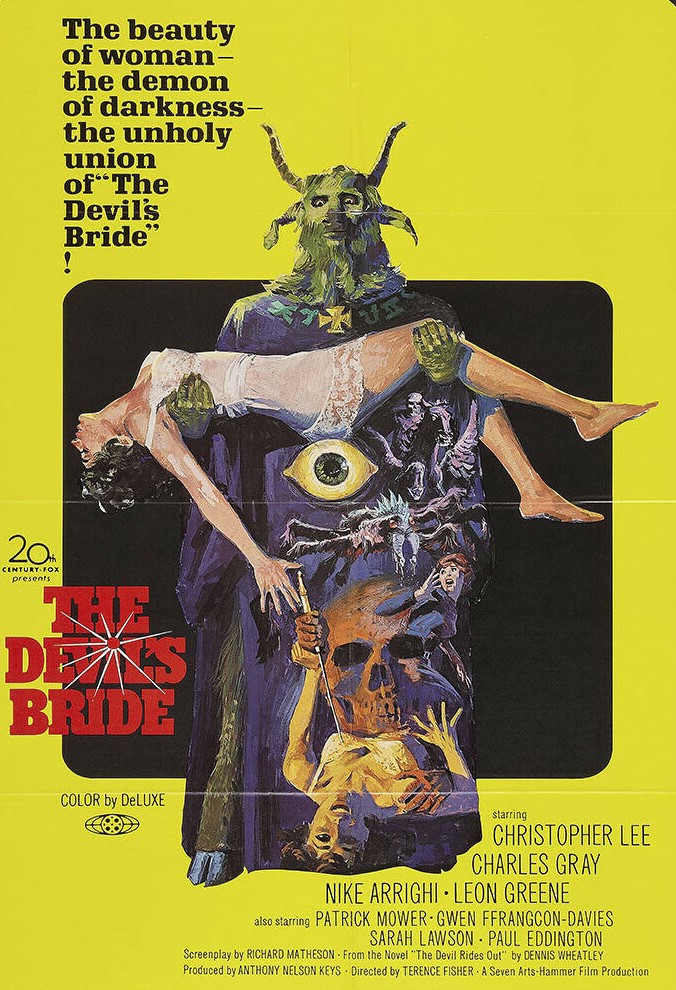
The title was changed for American audiences.
Unlike most demonic pictures, de Richleau has an array of mystical weaponry and a fund of knowledge to defend his charges so the storyline develops along more interesting lines than the usual notion of innocents drawn into a dark world. In some senses Mocata is a template for the Marvel super-villains with powers beyond human understanding and the same contempt for his victims. And surely this is where Marvel’s creative backroom alighted when it wanted to turn back time. Though with different aims, De Richleau and Mocata are cut from the same cloth, belonging to a world where rites and incantations hold sway.
While special effects play their part from giant menacing tarantulas and the Angel of Death, the most effective scenes rely on a lot less – Simon strangled by a crucifix, Mocata hypnotizing a woman, a bound girl struggling against possession. Had the film been made a few years later, when Hammer with The Vampire Lovers (1970) and Lust for a Vampire (1971) increased the nudity quotient, and after The Exorcist (1973) had led the way in big bucks special effects, the black mass sequence would have been considerably improved.
The main flaw is the need to stick with the author’s quartet of “modern musketeers” which means the story stretches too far in the wrong directions often at the cost of minimizing the input of De Richleau. In the Wheatley original, the four men are all intrepid, but in the film only two – De Richleau and American aviator Rex van Ryn (Leon Greene) – share those characteristics. At critical points in the narrative, De Richleau just disappears, off to complete his studies into black magic. Where The Exorcist, for example, found in scholarship a cinematic correlative, this does not try.
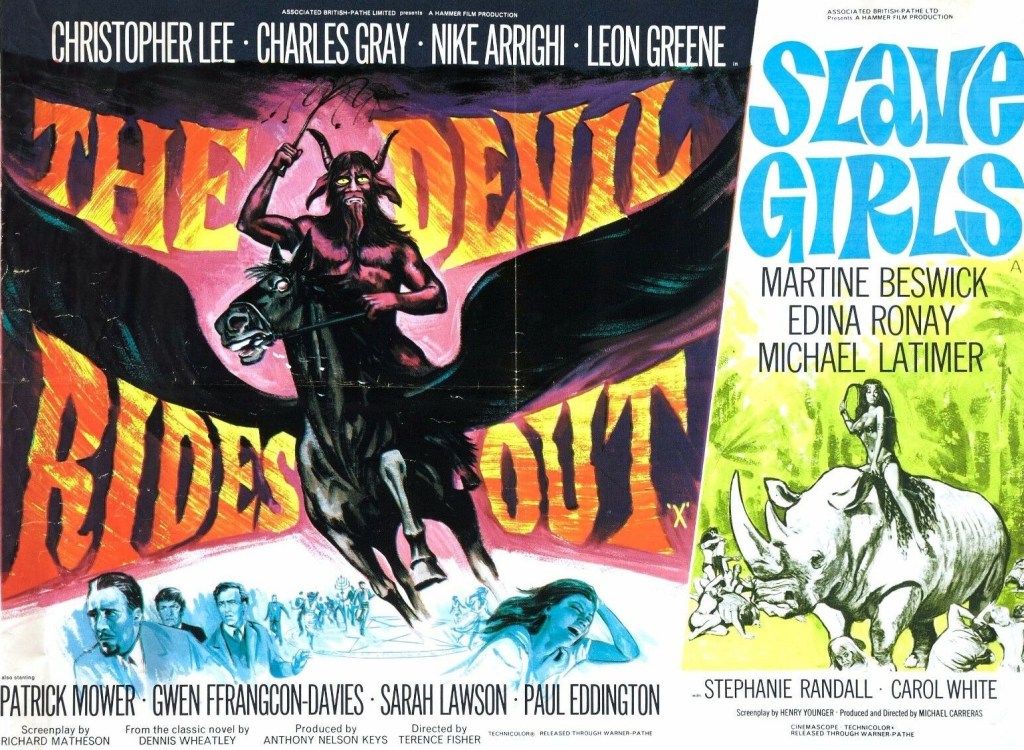
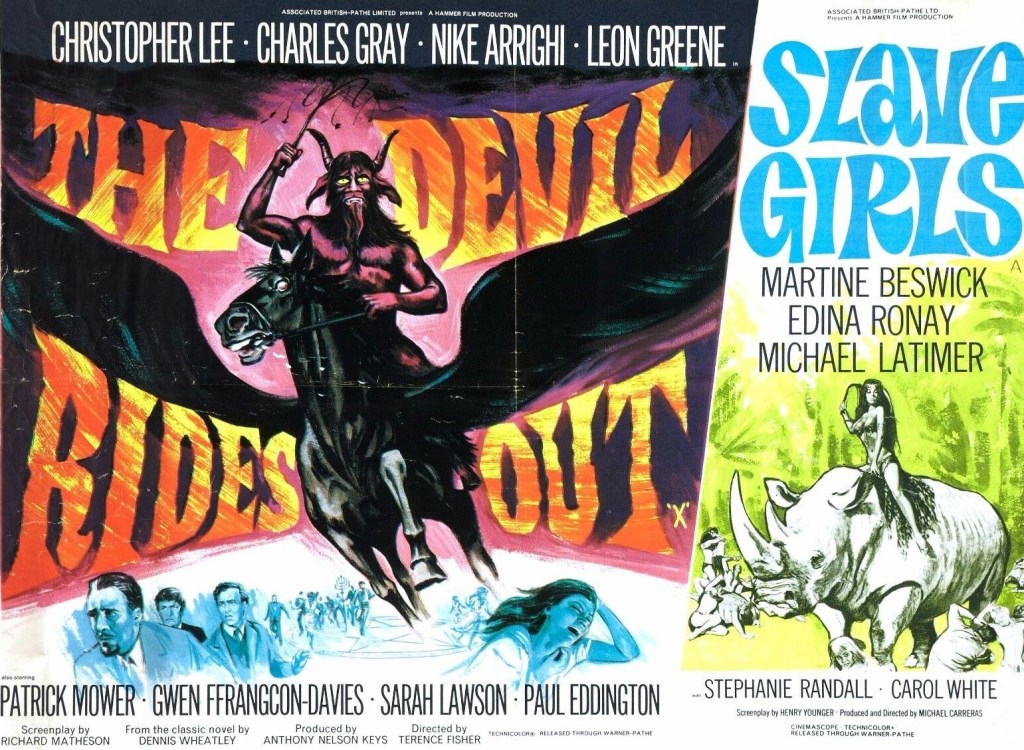
In Britain it was double-billed on the ABC circuit with Slave Girls.
Christopher Lee (She, 1965), pomp reined in, is outstanding as De Richleau, exuding wisdom while fearful of the consequences of dabbling in black magic, both commanding and chilling. Charles Gray (Masquerade, 1965) is in his element, the calm eloquent charming menace he brings to the role providing him with a template for future villains. The three other “musketeers” are less effective, Patrick Mower in his movie debut does not quite deliver while Leon Greene (A Challenge for Robin Hood, 1967) and Paul Eddington (BBC television’s Yes, Minister 1980-1984) are miscast. Nike Arrighi, also making her debut as love interest Tanith, is an unusual Hammer damsel-in-distress.
Hammer stalwart Terence Fisher (The Gorgon, 1964) creates a finely-nuanced production, incorporating the grand guignol and the psychological. Richard Matheson (The Raven, 1963) retains the Wheatley essence while keeping the plot moving.
Catch-Up: far from ubiquitous and with a wide range of roles Christopher Lee has appeared several times in the Blog – for Sherlock Holmes and the Deadly Necklace (1962), The Whip and the Body (1963), The Devil-Ship Pirates (1964), The Gorgon (1964), She (1965), The Skull (1965), The Brides of Fu Manchu (1966), Five Golden Dragons (1967), The Curse of the Crimson Altar / The Crimson Cult (1968) and The Oblong Box (1969).










 The Magnificent 60s