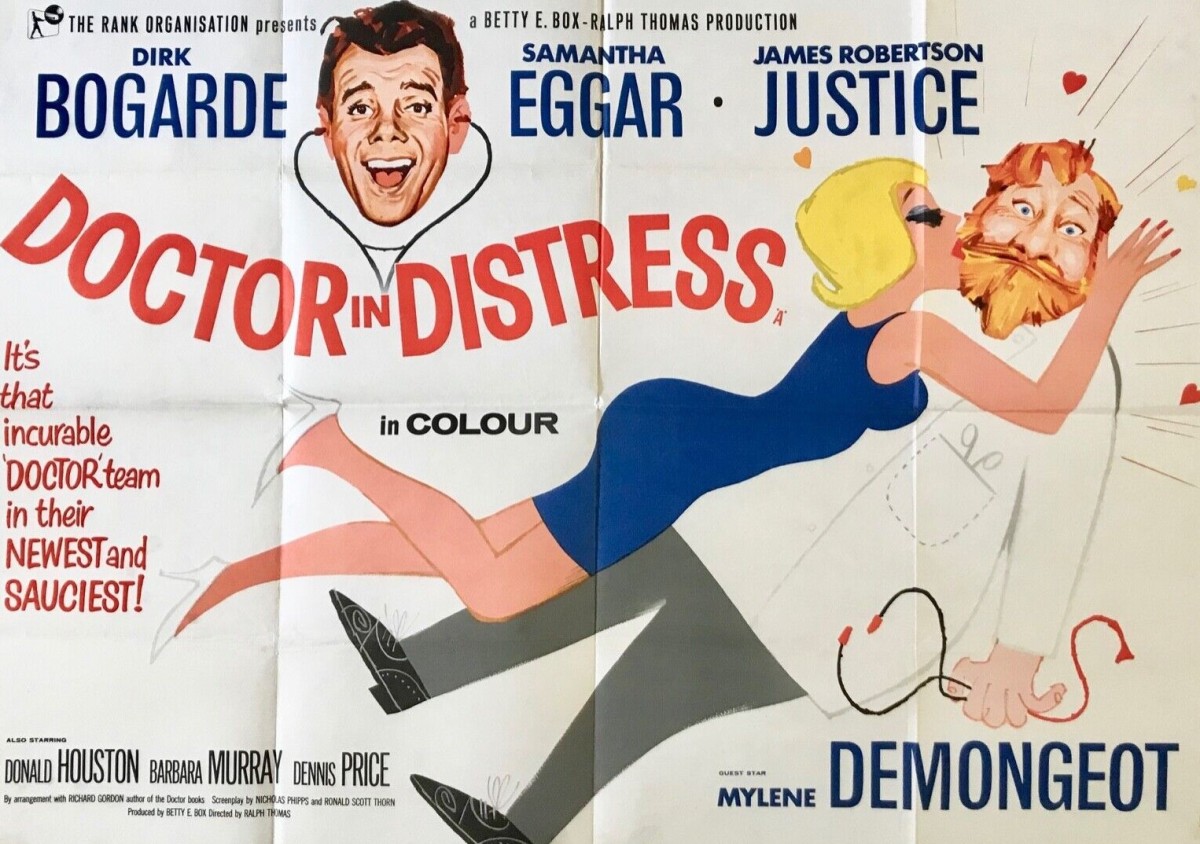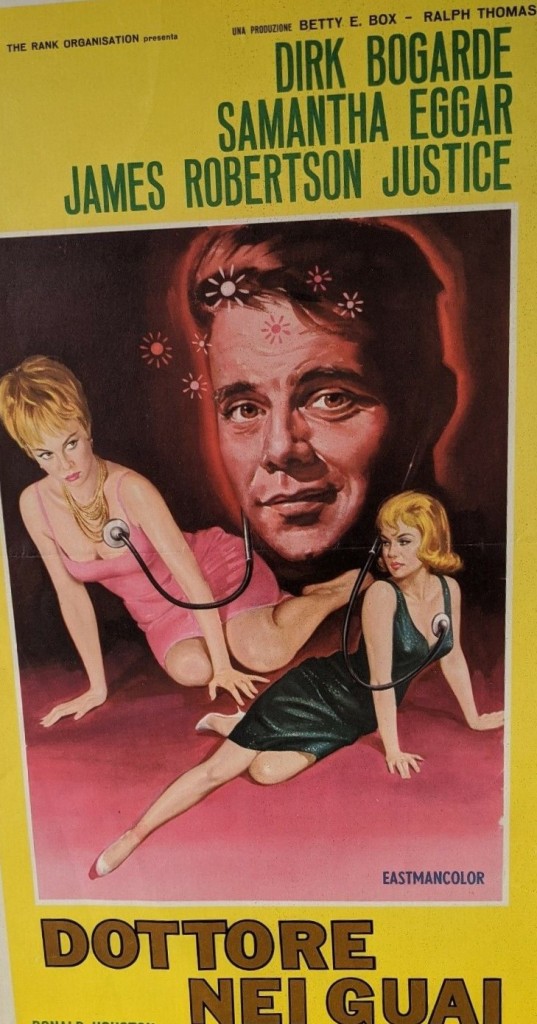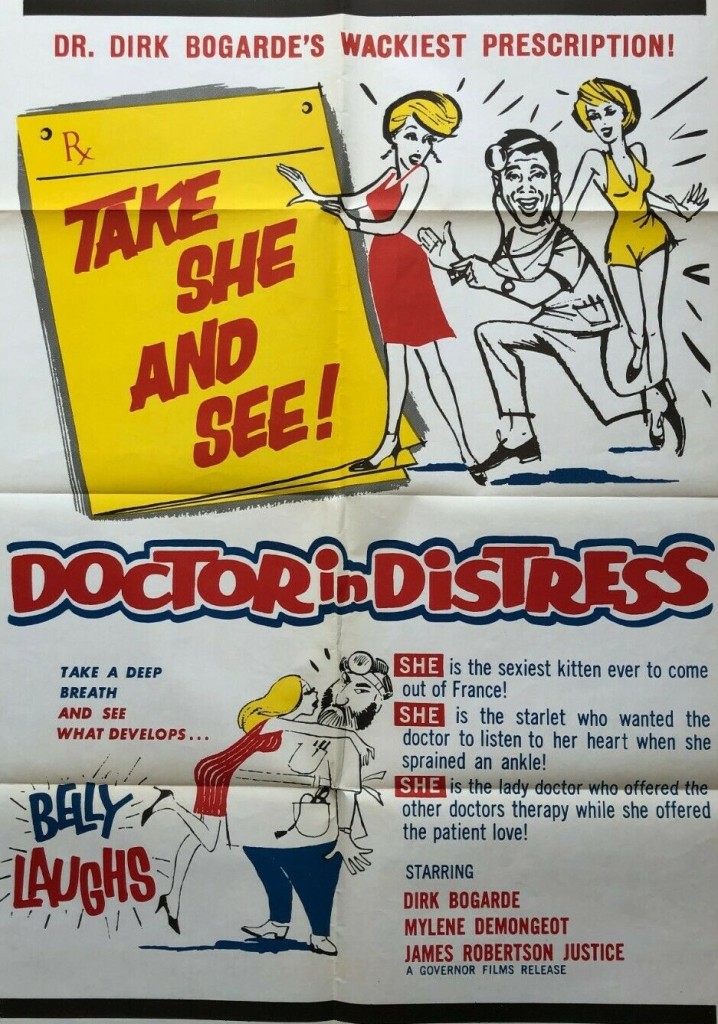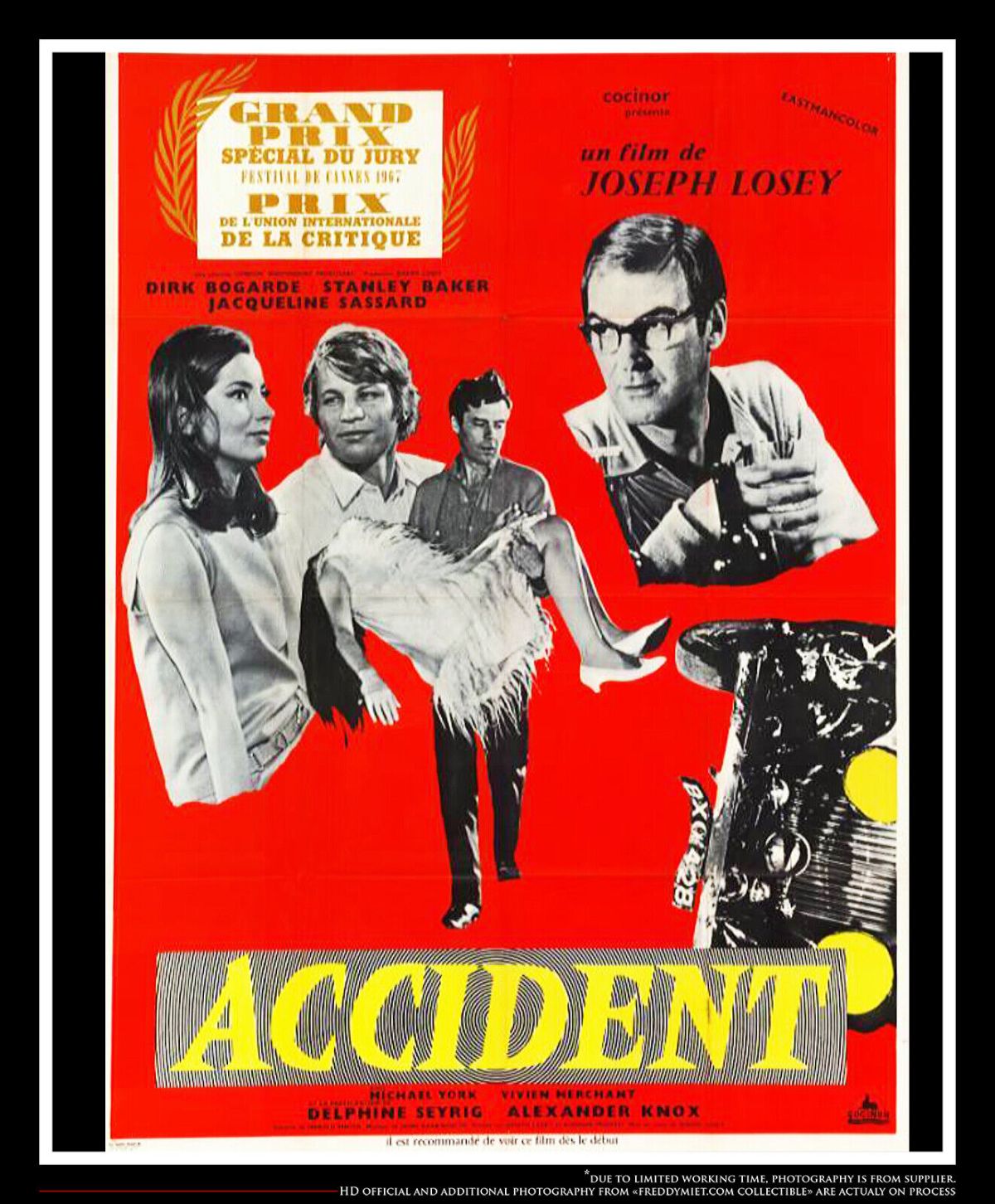
Doctor in Distress (1963) ***

Bait-and-switch as the romantic complications of the grumpy Dr Spratt (James Robertson Justice) take precedence over the by-now pretty competent Dr Sparrow (Dirk Bogarde). Just about getting by on Bogarde’s charm in his fourth and final outing in a role that had made him a British box office star and possibly more notable as his final film as an out-and-out matinee idol before he shifted into the arthouse arena.

Dr Sparrow has come a hell of a long way since being a shy junior doctor, mercilessly bullied by Spratt and a love life that was filled with tangle. Here, he not only stands up to Spratt, but is something of a lothario, happily ditching new love Delia (Samantha Eggar), a model, albeit temporarily, in favor of French masseuse Sonia (Mylene Demongeot).

There is very little of the traditional rom-com-love-on-the-rocks in Bogarde’s relationship with Delia, who arrives as a patient with a sprained ankle at the hospital and is whisked home by Sparrow for a spot of practised seduction. Spratt, on the other hand, has fallen for physiotherapist Iris (Barbara Murray) and in trying to win her hand undergoes weight loss treatment at a health clinic, endures the indignity of wearing a corset, hires a private detective to get the lowdown on her, and finally, donning a disguise of dark glasses and hiding his bulky frame behind an umbrella, proceeds to attempt to discover who is his rival for her affections.

Sparrow is left to occasionally swat out of the way the interfering Spratt and alternatively offer him advice or a shoulder to cry on while trying to prevent Delia pursuing a movie career. So it’s just a series of situations, none of which are particularly funny, apart from the idea of Spratt getting his come-uppance.

It’s worth noting that for a British sex comedy, the females are in charge. Iris knocks back her various suitors, Delia refuses to let romance interfere with her career, jetting off to Rome over Sparrow’s objections, and the diminutive and muscular Sonia is more than a match for any man and just as predatory.

What’s most surprising is that a genial comedy like this can get away with so much permissiveness. This was opposite of the in-your-face snigger-snigger Carry On series so for Sparrow to be successfully spreading his wild oats seemed somewhat out of character. But you can see most of the jokes a mile off though probably in a packed cinema these would provoke more laughter than watching it at home on the small screen.

It’s probably worth it to see Leo McKern (Hot Enough for June, 1964) as a movie producer who envisages Sparrow as his new star and Frank Finlay as a corset salesman, a completely different role to his part in Robbery (1967). Fenella Fielding (Lock Up Your Daughters, 1969) has a cameo as a neurotic passenger on a train and Dennis Price (Tunes of Glory, 1960) as a sadistic health clinic manager while Donald Houston (A Study in Terror, 1965) has a larger part as another of Iris’s suitors.  

Dirk Bogarde (Justine, 1969) can essay this kind of character in his sleep but there is no doubting his screen charisma or charm. But I doubt if James Robertson Justice (Mayerling, 1968) varied his character much from picture to picture, perhaps louder and more bumptious here but unlikely to attract audience sympathy. Samantha Eggar (The Collector, 1965) doesn’t get enough to do and has her thunder stolen by the late arrival of Mylene Demongeot (Fantomas, 1964).

Director Ralph Thomas had made more than a half-a-dozen films with Bogarde including more dramatic ventures like Campbell’s Kingdom (1957) and The Wind Cannot Read (1958) and makes the most of this undemanding feature. You would have thought this was the end of the line for the series but with Leslie Phillips (Maroc 7, 1967) as Bogarde’s replacement it soldiered on for another couple of episodes.

Proof that a true star can always help a film rise above its material.

Robbery (1967) ****

The explosive gut-wrenching high octane car chase that kicked off this thriller – and provided British director Peter Yates (Bullitt, 1968) with a Hollywood calling card – is somewhat out of place in this intriguing documentary-style fictionalised account of the British heist of the century, the Great Train Robbery of 1963. Setting aside that the chase would have been better employed as the climax, it does provide the cops with enough leads to keep tabs on some of the criminals, ensuring the authorities become aware of the gigantic theft planned.

But Yates’ unusual approach takes us away from the usual crime picture. You can say goodbye to the cliched villain for a start. Mastermind Paul Clifton (Stanley Baker) dresses like a suave businessman. Wife Kate (Joanna Pettet) rails against him for betrayal, not sexual infidelity, but for pretending he had given up the life of crime. And there is any amount of nuance. We don’t discover that Clifton lives in a huge mansion with a massive drive until the very end, we don’t know who else the police are tailing until they are picked up, we are not let in on the secret of Clifton’s escape until suddenly he is taking off in a light airplane. And there is the unexpected. A suspect is identified in a line-up by a witness slapping his face, a message sent to Kate from Paul via a dog.

Cop James Booth questions gangster’s moll Joanna Pettet.

Nor, beyond the basics, are we let in on the details of the plan, more time spent on recruitment, and not the usual suspects either, Robinson (Frank Finlay) – broken out of prison for this specific job – brought unwillingly on board because, as a former bank employee, he can check the stolen notes. I should point out, which may not be obvious to a contemporary audience, that banks shifted money over the weekend via the London-Glasgow night train that carried the mail. Given the £3 million being transported, the train is staffed not by a regiment of security guards but by postal workers sorting letters.

There’s nothing desperately clever about the plan anyway beyond its audacity. Signals are changed to make the train stop at the allotted point, the robbery takes place in military fashion, timed to the minute, some sacks left behind when time is up.

What’s cleverest is the hideout, an abandoned airfield, with underground passages. The gang doesn’t intend to run while the heat is at its hottest but some time later, the cash divvied up, Clifton’s share sent as cargo overseas. Clifton knows the consequences will involve road blocks, house searches, cars impounded, arrests but “without the money they can’t prove anything.” A junkyard owner is paid – too handsomely as it transpires – to clean the vehicles used of fingerprints and other potential giveaways (not much else in the days before DNA). And no matter Clifton ruling with a rod of iron, there is always the idiot who doesn’t quite stick to the plan.   

Most of the picture is detail, not just the meticulous planning but the equally meticulous hounding by the cops, interrogating getaway driver Jack (Clinton Greyn), identity parades, telephones tapped (or a crude version of it), with only the occasional hunch to keep the police, led by the dogged Inspector Langdon (James Booth),  on the right track. A few years before cops in movies were uniformly identified as either corrupt or useless, sometimes both, this bunch are shown to be relatively efficient, though still prone to underhand means.

Dominating proceedings is the moustached figure of Stanley Baker (Sands of the Kalahari, 1965) whose brusque no-nonsense manner sets the tone. He’s a cut above the normal criminal not just in ambition but ingenuity and while he rules the roost in the gang he’s less at home at home where Kate gives him a hard time. James Booth (Fraulein Doktor, 1969) is impressive as the pursuer, well-versed in gangland lore, inclined to look beyond the obvious. With only  a few scenes Joanna Pettet (The Best House in London, 1969) makes a mark.

In supporting parts you will spot Barry Foster (The Family Way, 1966), who seems to have the knack of catching the camera’s attention with a look or the turn of his head, and Frank Finlay (A Study in Terror, 1965), and a host of British character actors like George Sewell (The Vengeance of She, 1968) and Glynn Edwards (The Blood Beast Terror, 1968).

But the honors go to Peter Yates (Summer Holiday, 1963), not just for the stunning car chase which Hollywood would forever emulate, but the constant tension, the cutting back and forth between cops and robbers, and between the overtly dramatic and the subtle. He also had a hand in the screenplay along with George Markstein (The Odessa File, 1974) and in his only movie Edward Boyd (The View from Daniel Pike, 1971-1973).

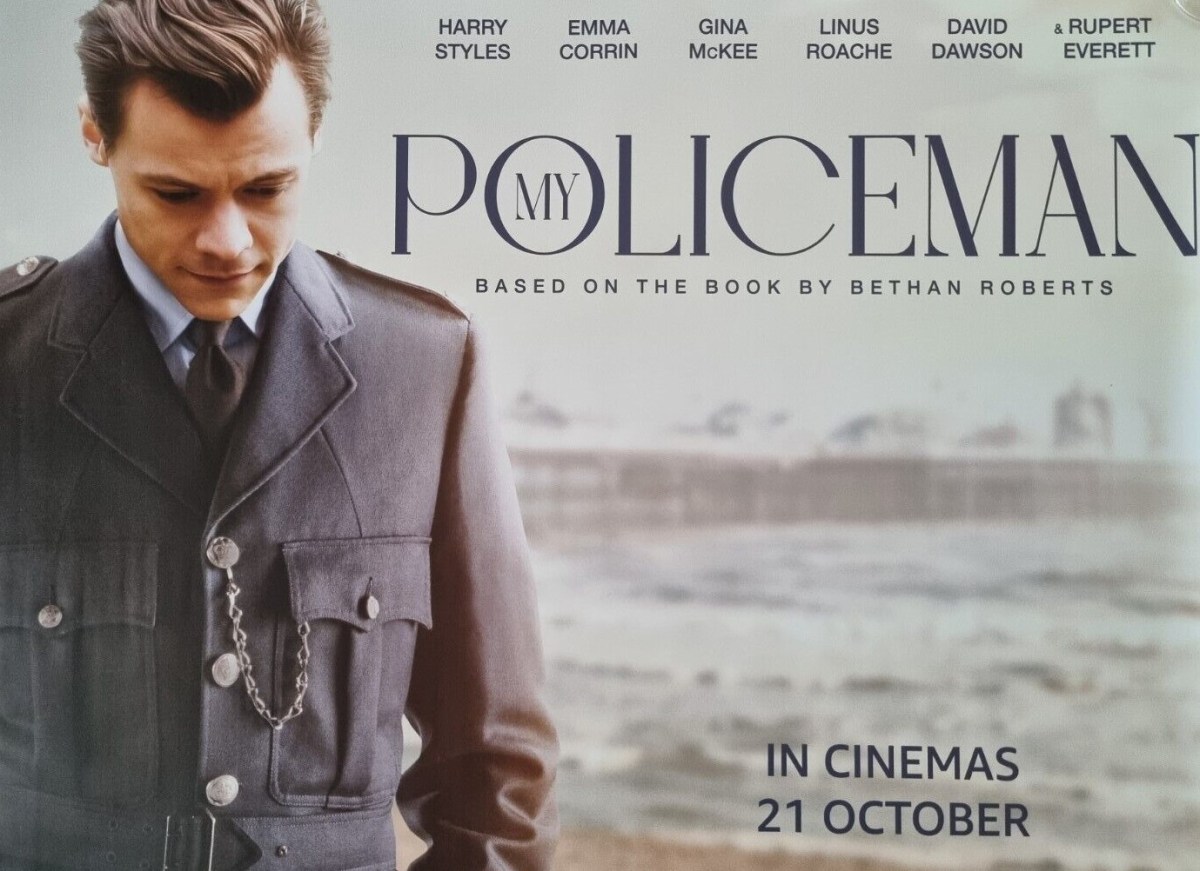
My Policeman (2022) *** – Seen at the Cinema

Understated love triangle set in the 1950s with perfectly-pitched performances and punctured by reticence, repression and regret. Not that I check reviews before I venture into a cinema but I gather this has been poorly-received, perhaps because it’s funded by Amazon, which has no great record in making movies, and partly, I guess, because it’s headed by pop star-turned-actor Harry Styles, credited with giving Don’t Worry Darling (2022) an unexpected, and for some, unfai, box office push.

But I found this to be solid stuff and despite the tragic outcome no overtly dramatic acting (unlike Emily for example), the whole enterprise pared down, soulful more than anything, and all the better for it. Mostly, it takes place in flashback.

In the 1990s, a stroke-ridden Patrick (Rupert Everett) is given accommodation in the household of married but childless Tom (Linus Roache) and Marion (Gina McKee). Tom resents the intrusion although they were all best pals back in the day. Gradually, we find out why, but the movie begins in low-key fashion, the young Tom (Harry Styles), a policeman, and Marion (Emma Corrin), a teacher, hooking up with all the innocence of that era at the beach. Tom teaches her to swim, she introduces him to art.

Turns out Tom has an arty buddy, Patrick (David Dawson), the slightly older museum curator. Soon they are a threesome, attending concerts and eating out, and while Marion appreciates Patrick’s appreciation of the finer things in life, she’s more at home with the more ordinary Tom. While he’s a bit hesitant about making advances towards her, eventually he plucks up the courage to ask her to marry him.

The movie flips between the 1990s featuring the older trio and the 1950s with young bucks in love. And part of the movie’s attraction is the innocence, it takes a while to work out what’s going on, or more correctly for the audience to be told what’s going on, which is that Tom has fallen in love with Patrick. But he is also in love with Marion and wants children and a proper family, so the suggestion that in marrying her he is seeking the perfect disguise for his sexuality is never pointedly made. Mostly, we get his confusion. Remember this is the 1950s when homosexuality in Britain was a crime that could result in a stiff jail sentence.

Gradually, Marion begins to suspect Tom has leanings and there’s a wonderful scene where she confesses this discovery to her best friend only to be told the friend is a discreet lesbian. Does this suddenly make the friend a completely different person, Marion is asked.

Of course, it’s only going to end in tragedy, and even then it’s an ongoing one, the older Tom unable to admit his preferences, married to the stoic Marion, and clearly agonising over the life he could have led had he been bolder earlier on.

I thought this was very delicately done. The scene where Tom shows his true feelings by his finger almost absent-mindedly stroking Patrick’s neck and his subsequent awkwardness at what then transpires as he comes to terms with his own suppressed emotions is subtly done.

I’m surprised Harry Styles has had such a rough ride over his performance. Perhaps I was out of the loop in the brouhaha of expectation. I thought he captured very well the character’s uncertainty regarding his sexuality, the knowledge that career (bachelors found it hard to get promotion in the police) and marriage could be jeopardized by an illicit action too many. This could not be a more different performance than the alpha male of Don’t Worry Darling. From his initial behavior I half-expected a rom-com where shyness is gradually overcome, but the implicit danger ensures we steer clear of such territory.

Emma Corrin (Netflix’s The Crown) comes across very well as the equally shy young woman of her time, anxious to appear not too forward, unaware of what to expect from the sexual side of marriage, remaining innocent until her wrath takes hold, and clearly willing to make do for the sake, in that very English manner, of appearances. David Dawson, in his first starring movie role, is excellent, rarely letting anguish get the better of him but far from the camp cliché.

Rupert Everett (The Happy Prince, 2018)  is the surprise turn, the virtually mute stroke victim, enduring the torture of living in the same house as his former lover who consistently ignores him. Gina McKee (Lies We Tell, 2017) and Linus Roache (A Call To Spy, 2019) are good as the mismatched couple, though I’m not sure I believed in her final action, a shade too romantic a gesture for a wife who one way or another has kept her husband in thrall for 40 years.

Michael Grandage (Genius, 2016) should be applauded for his sensitivity, for coaxing superb performances from his younger actors, and for falling into the trap of overloading the picture either with a sense of doom or of overplaying the dangers of the lifestyle. Ron Nyswaner (Philadephia, 1993) adapted the book by Bethan Roberts.

Well worth seeing and at last Prime might have something decent to watch.

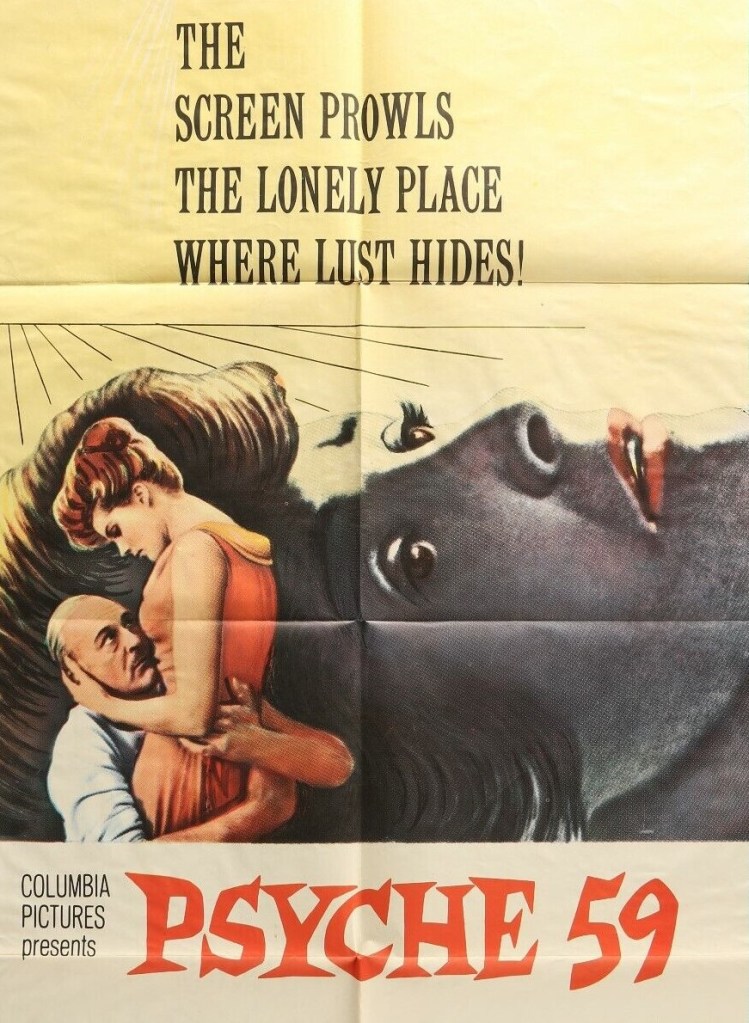
Psyche 59 (1964) ****

This is a low-budget gem, an exploration of the psychological consequences of grooming. You can probably guess from the outset where it is headed but simmering tension has rarely been handled so stylistically.

With the exception of Patricia Neal, an unexpected Best Actress Oscar-winner for her previous film Hud (1963), there were no stars in the cast. Curd Jurgens was only beginning to play characters for whom a German accent was not essential, Samantha Eggar one movie shy of her breakout picture The Collector (1965), Ian Bannen, essentially a character actor, building on his success in Station Six Sahara (1963).

Blinded after an unexplained psychological trauma, Allison (Patricia Neal) welcomes back, over the objections of husband Eric (Curd Jurgens), her much younger sister Robin (Samantha Eggar) to the family home. Family friend Paul (Ian Bannen) cares (possibly overmuch) for Allison while hankering after Robin. The screenplay by veteran Julian Zimet (Saigon, 1947, with Alan Ladd) is taut as a drum, every line a threat, suppressed emotion or piece of exposition that could bring the whole house of cards tumbling down.

The blindness is exceptionally well handled, Allison’s need for physical contact with her husband sensual in its expression. Though she can a ride a horse, her vulnerability is implicit; as she is led across a beach you wonder what would happen were she to be abandoned. What she cannot see becomes central to the movie. That Robin – vivacious but damaged – clearly has some hold over Eric is demonstrated in a tete-a-tete between them but as tensions mount such scenes cannot be kept secret. When Eric grabs Robin’s hair and she retaliates by jabbing him with scissors, neither party emits a sound, leaving Allison oblivious to it all.

Robin takes delight in exposing what has lain on the surface for too long. When Paul begins to fall for Robin, the younger woman astutely remarks to her sister: “Am I taking him away from you?”  Allison, however, is self-aware, convinced she could see if she wanted to, if she was prepared to lift the psychological barrier that keeps the past safely hidden. “I’m afraid to see,” says Allison, “there’s something I’m scared to look at.”

Given the period when it was made there was a lot that could not said – or shown – and even so the film was censored prior to release, but it is the direction by Alexander Singer (A Cold Wind in August, 1961) that lifts the picture up. An acolyte of Stanley Kubrick, the movie teems with imagination, close-ups and extreme close-ups are balanced by long two-shots, a conversation in a car between Eric and Paul mostly direct to camera a prime example.

Emotion is captured at every turn and Singer avoids the cardinal sin of treating Allison like an invalid or focusing on her reaction to what she cannot possibly see, her eyes hidden behind dark glasses for much of the time. Levity is provided by Mrs Crawford (Beatrix Lehmann), Eric’s sci-fi-reading horoscope-obsessed mother and by a couple of excitable children.

The grooming is in the past but the after-effects are very real. In a film like this it is tempting to consider that certain attitudes are dated, but it is clear from this film that nothing has changed, that men believe they can take what they want regardless of the impact on their victims.

The Long and the Short and the Tall / Jungle Fighters (1961) ****

The Brits were onto something in wartime Malaysian jungles in 1942 – sonic warfare. Imagine the franchise possibilities for comic-book or spy villains (The Brides of Fu Manchu, 1966, or Some Girls Do, 1969, anyone?). Fortunately, this ignores such temptations and takes a long hard raw look at the reality of conflict, courage and cowardice, the desire and reality of killing.  

Beginning as a fairly stock examination of men in combat, the usual clash of personalities, bullying loudmouths, and it being British elements of class distinction. But it quickly moves on to something much deeper, initially tough guys worrying about what their wives are getting up in their absence back home, but on capturing a Japanese soldier what exactly to do with him once his usefulness is over. Treat him according to the Geneva Convention as a prisoner-of-war and escort him back to base or just get rid of him and save yourself the trouble.

Five main characters make up this squad. Sgt Mitchem (Richard Todd) is the ruthless leader under pressure. He was busted down to corporal for losing a previous patrol, has got his stripe back and wants to prove his worth. But he appears to be from a different generation to his troops, his stiff upper lip only too evident while the others just give lip.

Corporal Johnstone (Richard Harris) likes to remind him of his previous misdemeanor and question his judgement. Racist Private Bamforth (Laurence Harvey) riles everyone, especially picking on Lance Corporal Macleish (Ronald Fraser) who is as likely to reply with his fists. Radio operator Private Whitaker (David McCallum) is over-keen on the spoils of war, kitbag stuffed with enemy mementoes.

After apprehending Jap soldier Tojo (Kenji Takaki) Johnstone is inclined to bayonet him right away (a bullet would attract attention). Others, more squeamish than principled, balk at the deed. At first Bamforth makes fun of the captive, belittling him, but then views him as a human being caught up in a war not of his making, giving him cigarettes, trying to make him more comfortable. When Macleish starts slapping the prisoner around, Bamforth defends him, though it’s obvious Mitchem and Johnstone have no intention of taking him back.

Then the tide turns. They are surrounded by Japs and it’s battle for real with an enemy who can defend itself. Action determines character. Some are revealed as complete cowards, others will abandon colleagues to save their skin, others are instinctively courageous, others yet again with a bit more cunning.

But the firefight when it comes is nothing like any other battle you have seen where Allied forces invariably triumph. There’s none of the clever ruses more typical of the genre.

This is by far the rawest depiction of British soldiers on the battle. The characters and conversation hit home. Tough guys are nothing but vulnerable. Although it appears that way, none of the characters actually change, it’s more that their real personalities emerge.

This is Laurence Harvey’s (The Running Man, 1963) best performance. In other pictures, his clipped delivery hid an edge of malevolence, and especially to retain audience sympathy he restrained an inner nastiness, even when ruthless as in Room at the Top (1958), this aspect more important if the male lead in a romance or essaying a decent character. Here, the real Harvey is let loose in the sense that his delivery is more normal, as if he delights in taking pleasure in using language to gut his victims. Sure, it’s an ideal central role, the guy who starts off one way and ends another, but he really brings it to life.

Richard Harris (This Sporting Life, 1963) was a rising star at this point. And it shows. He’s always trying to steal scenes, an unnecessary gesture, a roll of the eyes, forceful delivery. He turns out to be nastier than everyone else. Richard Todd (Subterfuge, 1968) also plays against type, no longer the heroic figure of The Dam Busters (1955) but fighting not just the enemy and his fellow soldiers but his internal demons.

Ronald Fraser (Fathom, 1967), often condemned to humorous supporting parts, also has a meatier role as does David McCallum (The Spy in the Green Hat, 1967).

Apart from a heavy dose of rain and some stock shots of animals, it betrays its stage roots, based on a play by Willis Hall, but that hardly matters when the dialog is so sharp, the characters so well-drawn and the drama so intense.

Leslie Norman (Dunkirk, 1958) does an excellent job of focusing on character and making the action believable. Wolf Mankowitz (The Day the Earth Caught Fire, 1961) was credited with the screenplay.

High-quality stuff.

One Million Years B.C. (1966) ****

The three ages of man: child watches this film for the dinosaurs, teenager for Raquel Welch, mature male for the dinosaurs now he knows who Ray Harruhausen is.

Guilty pleasures multiplied. Add the Mario Nascimbene (The Vengeance of She, 1968) score to the delights of Raquel Welch in a fur bikini and Ray Harryhausen’s sensational stop-motion animation.  Generally dismissed as high-level hokum, it features an intriguing gender role reversal, and is virtually, not to be too academic about it, a throwback to silent cinema, minus the title cards that helped audiences a century ago work out what was going on. Everything relies on facial expression and gesticulation.

Luckily, there’s not too much in the way of narrative complication. Tumak (John Richardson), the son of the chief of the Rock Tribe, is chucked out into the wilderness for standing up to his father. He probably wouldn’t be crying too much about that, given the strong rule over the weak, old men are left behind to die, and the feeble are last in line for food.  Plus, his brother Sakana (Percy Herbert) is prone to stabbing people in the back.

Unusually, the picture went straight out into U.S. wide release (saturation). It was an 80-theater break. Twentieth Centry Fox mounted a huge advertising campaign based on the fur bikini image, but by this point she wasn’t an unknown star, already seen in “Fantastic Voyage.” The New York Times might be wincing now at its “monument to womankind” now.

Reaching a distant shore, Tumak is rescued by Loana (Raquel Welch) of the Shell Tribe who takes an instant fancy to him, helping protect him from a huge marauding creature. But his aggressive temperament doesn’t sit too well among this peace-loving democratic group either, despite him saving some kids from another marauding creature. But when he’s chucked out this time, Loana goes with him.

But you know that any journey pretty much takes them into the heart of dinosaur heaven, and Tumak makes the mistake of retuning to his own tribe, where Loana is made unwelcome by Nupondi (Martine Beswick), Tumak’s previous squeeze. It’s power politics all over again until marauding creatures and a convenient volcano intervene and matters can be settled.

All eyes are on Loana and her miraculous bikini until a dinosaur appears, which occurs at frequent intervals. Then you can’t take your eyes off Ray Harryhausen’s creativity, at first expecting the match between humans and his wizardry to be so obvious the illusion will be shattered, but once you realize that is not going to be the case you just sit back in wonder.

Spoof newspaper from the Pressbook.

Harryhausen has made dramatic improvements in his techniques since previous highpoint Jason and the Argonauts (1963). Cleverly, he builds anticipation by matte work to present scenes of live creatures. The first, the warthog, is of normal proportions, and its capture suggests man’s domination over beast. But that proves a false assumption. Anything later is just gigantic – iguana, turtle and tarantula. In normal circumstances only the giant spider might appear a threat but in the distant past it would appear any creature bigger than man looked upon humans as an easy meal.

And that’s before the allosaurus rampages into sight and a pteranodon swoops out of the sky snaring Loana and then has to battle a rhamphorhynchus over its prey, almost as if Harryhausen was determined to animate the most difficult creatures possible in order to prove his innate skill.

Sure, hostility is much easier to telegraph than other emotions and a fair bit of the picture is people getting cross with each other, but meet-cute between Loana and Tumak involves little as significant, glances and eye contact the core of communication. It’s pure cinema. Stripped of any meaningful dialog, the camera captures everything we need to know. It’s a brutal world, dog eat dog, man eat warthog, dinosaur eat woman, every living thing is a snack of one kind or another and when they’re not killing for food they’re battering each other out of power lust, rivalry or jealousy.

And although nobody could have guessed the impact Ms Welch would have on the male pulse, Hammer had previous in the department of introducing a stunning female into a tale, and it may be pure coincidence that both Loana and Ayesha in She (1965) were woman of power, rather than mere playthings of men. Ayesha is introduced in stunning fashion, her presence pre-empted, most of the picture prior to her appearance serving merely to build her up. Obviously, Ursula Andress did not disappoint but she was introduced in majestic fashion rather than catching fish at the seashore. Albeit Loana sported a bikini, so did all the other fisherwomen and director Don Chaffey resisted the temptation to present her in more statuesque fashion, regardless of the image presented on the poster.

Just as it’s hard to underestimate the iconic impact of Raquel Welch in a fur bikini, so, too, is the work of Harryhausen. And I would also add the innovative score of Nascimbene, with sounds Ennio Morricone would have been proud of.

Despite myth to the contrary, it’s rare for an unknown to emerge from a movie a real star, but Raquel Welch certainly did, though her image on a million posters might have had something to do with her sudden success.

As he did with Jason and the Argonauts, Don Chaffey keeps the story spinning along, makes the best of the lunar landscape and raw actors like Welch and John Richardson (She). Michael Carreras (The Lost Continent, 1968) based his screenplay on One Million B.C. (1940).

The problems of creating believable dinosaurs were so evident that nobody really tackled pre-history until Steven Spielberg waded in with Jurassic Park (1993). It’s a measure of how successful this effort is that the director eschews the cute kids that seemed endemic to the later genre and had his characters facing up to the monsters rather than running away like crazy or expecting that somehow man could control them.

Much more entertaining than I expected, high class special effects, strong narrative, and more than enough to wonder at.

You Must Be Joking! (1965) ***

British thriller specialist Michael Winner (Death Wish, 1974) learned all about structure churning out low-budget comedies like this unusually contemporary number. A precursor of the reality television trope of a variety of characters in competition to complete a series of odd tasks, this has a military set-up, aiming to find, oddly enough in an organisation where strict hierarchy dominates, people capable of bending the rules. Initiative, in other words.

Some of the motley crew, of course, have no intention of bending any rules if they can get everyone else to do the work for them, namely upper-class Capt Tabasco (Denholm Elliott) who gets the game rolling by calling in a helicopter as a favor from an old school chum to rescue him from a maze, the first task. He spends most of the time pampered in a hotel suite while dispatching girlfriend Poppy (Tracy Reed) on various expeditions.

Saved by the double bill: Winner’s comedy found a bigger audience
by being booked as the support for hit “Cat Ballou.”

There’s a Yank involved, of course, to target the all-important American market, Lt Tim Morton (Michael Callan) also using assistance in the form of upmarket girlfriend Annabelle (Gabriella Licudi) whose specialty is causing vehicle pile-ups. We’ve got a whisky-drinking Scot, Sgt Major MacGregor (Lionel Jeffries), stiff upper back rather than stiff upper lip with his constant snapping to attention, and two graduates from the Army Hapless Division in Sgt Clegg (Bernard Cribbins) and Staff Sgt Mansfield (Lee Montague). Directing proceedings are Major Foskett (Terry-Thomas) and General Lockwood (Wilfred Hyde-White), at opposite ends of the character arc, the former frantic, the latter laid back.

A couple of the five tasks involve unravelling clues, finding a particular rose, for example, but the whole purpose of the exercise is to have the soldiers constantly getting in each other’s way, trying to outwit one another, falling into bizarre scenarios – a fox hunt the cleverest – and generally getting all muddled up one way or another, so that initiative is the last thing they display.

What the movie does have in abundance is imagination, otherwise how to explain the involvement of a seductive housewife, pop star, television show, tunnelling, Lloyd’s of London, Rolls Royce and a greyhound racetrack. On the other hand this might be a smaller-scale precursor to If It’s Tuesday, It Must Be Belgium (1969) in shovelling together all sorts of British institutions and tourist attractions. And certainly Capt Tabasco with his love of the finer things of life demonstrates just how much fun it can be to be British if you’re upper class, wealthy, went to the right school and are not above a bit of blackmail.

As you might expect, the pace is hectic, which is just as well, because if you stopped to think about what was going on you might well throw in the towel. That’s not to say it’s not enjoyable in a riotous sort of way, running jokes almost in a separate competition of their own, and if you always hankered to see Michael Callan’s dance moves this is for you – suffice to say he’s not in the Fred Astaire class. But everyone here is there to be made a fool of, except Capt Tabasco, who rises above it all in classy fashion and when he’s out for the count appears blessedly delighted.

Denholm Elliott (Station Six Sahara, 1963) comes off best, testing out his lazy scoundrel, but  the top-billed Michael Callan (The Interns, 1962) might never have signed up if he’d known the consequence was being relegated to television for seven years. However, given we are well accustomed to the shtick of the likes of Bernard Cribbins (The Railway Children, 1970), Lionel Jeffries (First Men in the Moon, 1964), Terry-Thomas (Bang! Bang! You’re Dead! 1966) and Wilfred Hyde-White (The Liquidator, 1965), he does at least have the advantage of standing out, if only as a novelty.

And just in case the goings-on don’t hold your attention, Winner has recruited a platoon of top British stars in bit parts including Leslie Phillips (Maroc 7, 1967) and James Robertson Justice (Guns of Darkness, 1962) and rising stars such as Tracy Reed (Hammerhead, 1968), Gabriella Licudi (The Liquidator) and Gwendolyn Watts (The Wrong Box, 1966) and future British television treasures Clive Dunn (Dad’s Army, 1968-1977), Richard Wattis (Copper’s End, 1971) and Peter Barkworth (Telford’s Change, 1979). So if you get fed up trying to work out what’s what you can play who’s who.

Alan Hackney (Sword of Sherwood Forest, 1960) wrote the screenplay based on a story by director Winner.

Not non-stop hilarity but definitely non-stop something with a good few chuckles thrown in.

Mrs Harris Goes To Paris (2022) **** – Seen at the Cinema

How is that the British, way down now in the rankings of global movie production, have come up with a successful genre all of their own – the national treasure. Maggie Smith and Helen Mirren to be sure first came to prominence in the same year, 1969, with The Prime of Miss Jean Brodie and Age of Consent respectively, but whereas Hollywood has turned its back on the ageing female contingent, the British film industry has wrapped its most famous stars in cotton wool and proceeded to give them roles they can take to the Oscar bank.

Mirren was in her early 60s when she romped home in The Queen (2006); you only have to say Downton Abbey and Smith, already two Oscars to the good, is regarded as screen royalty. And that’s before Judi Dench enters the equation, a few years older than Mirren when she nabbed the Oscar for Shakespeare in Love (1998). You can pretty much count on getting funding for any picture if you can rustle up any of this trio. Want to bring back the older crowd? Dangle these carrots!

Elevated into this category now is Lesley Manville, the 66-year-old star of the delightful Mrs Harris Goes to Paris. While largely escapist, there’s enough of a contemporary vibe, a Paris redolent of filth, the downtrodden going on strike, to provide an edge, and a narrative that continually punctures dreams any time fantasy looks like running away with itself. Set in 1950s London and Paris where the poor know their place, and are rigidly kept in it by the arrogant rich, but where aspiration can at any moment take flight.

Cleaner Mrs Harris, dreaming of buying a £500 dress – we’re talking the best part of £14,000 these days – scrimps and saves, and through a couple of more than fortuitous events, finds her way to the House of Dior where she is despised by haughty manager Claudine (Isabelle Huppert), adored by philosophic model Natasha (Alba Baptista) for having such aspirations, and manages to cast a spell, although not for the reasons expected, over rich widower the Marquis de Chassagne (Lambert Wilson).

There’s not much plot. She has to remain in Paris for a fortnight for fittings and whiles away the time helping along the romance between under-manager Andre (Lucas Bravo) and Natasha, assisted by their existentialist leanings, eventually overcoming hostility and putting everything to rights in the Dior empire. But you don’t need plot when you’ve got charm. The English notion of fair play initially comes a cropper when facing French egalitarianism out of whack, when the rich can jump the queue and basically make everyone jump to their tune. But when a character like Mrs Harris settles for second best you can be sure she’ll come up trumps. Whether it’s icing on the cake or to make a rubbish-strewn Paris more palatable, there’s a good ten minutes of oo-la-la devoted to parading the latest fashions.

Not content with conquering one city, Mrs Harris developed sequelitis and headed for New York.

And there’s not just a philosophical undertone – people not what they appear on the surface – but a feminist one, women holding the world together while men whistle. But by and large it’s joyous entertainment, a confection straight out of the Hollywood top drawer, a poor woman having her day in the sun through sheer strength of character.

Unless you’re British or a big fan of arthouse director Mike Leigh or noticed her Oscar  nomination in the largely unnoticed The Phantom Thread (2017) Lesley Manville will probably have passed you by. She nabbed a cult following as the dumped-upon lead in comedy series Mum (2016-2019) and picked up a wider audience as Princess Margaret in The Crown, but mostly she’s known for a certain kind of acting, where she can change expression 20 times in a minute without ostensibly doing anything different. Just like her predecessors, Smith, Dench and Mirren.

You can’t take your eyes off her, which is quite feat when she’s up against French screen royalty (perhaps a “tresor national”) Isabelle Huppert (Elle, 2016). Alba Baptista (Warrior Nun series) could well be the breakout star here though Lucas Bravo definitely runs her close. I saw Bravo in Ticket to Paradise (2022) and the characters there and here could not be more different. Ellen Thomas (Golden Years, 2016), Lambert Wilson (Benedetta, 2021), Anna Chancellor (For Love or Money, 2019) and Jason Isaacs (Operation Mincemeat, 2021) have smaller roles.

Director Anthony Fabian (Skin, 2008) adds deeper issues to a movie that was crying out to be all surface. He co-wrote the screenplay with Carroll Cartwright (What Maisie Knew, 2012) based on the classic Paul Gallico novel.

Never Take Candy/Sweets From a Stranger (1960) ****

Banned in the U.S., box office flop in Britain, consigned to the vaults for over three decades,  and when revived and you wonder how everyone could have been so wrong. A sensitive portrayal of a family caught up in local Canadian politics when their daughter accuses a dignitary of molestation, it carefully avoids the exploitation trap. At times tense, thrilling and heart-rending, with dynamic use of sound – sirens, footsteps, tracking dogs – it’s probably the best Hammer picture of the decade.

Young Lucille (Frances Green) takes her new friend Jean (Janina Faye), daughter of newly-arrived immigrants Peter (Patrick Allen) and Sally Carter (Gwen Watford), to visit an old man Clarence Olderberry Sr (Felix Aylmer). When the child returns home, not initially perturbed by what occurred, it transpires that, in return for a handful of candy (sweets in British parlance), she danced naked.

Sally’s mother Martha (Alison Leggatt), conscious of the disruption accusations might cause, tries to play it down. Sally reports the incident to the police chief Hammond (Budd Knapp) who is reluctant to pursue a case against the town’s most important person. Clarence Jr. (Bill Nagy) warns Peter of disastrous consequences. Lucille’s parents send her away so she cannot back up Jean’s story.

There follows trial by town, the whole family receiving the enmity of the local populace, while Jean is destroyed in the witness box by the prosecutor (Michael Gwynn), ending up so distraught her parents throw in the towel, the accused walking released scot free. Rancour is such Peter quits his job but as they prepare to quit the town, Jean goes off playing in the woods again with Lucille.

Stalked by the old man, they race terrified through the woods and into a rowing boat on the water only for the assailant to grab the tow-line and pull them back.

Movie tie-in by the author of the original play.

What could have easily pandered to the worst possible taste is incredibly well done. Strangers arousing the ire of a local populace is a trope as old as the hills so none of the consequence of their action was surprising. Nor, for the time, was the disgust expressed that such an accusation could be cast, not even if the old man has a history of mental illness, a voluntary patient whose records have conveniently vanished.

Whether the son has any inkling of the truth, or whether he is equally appalled, is never made clear as he is in any case duty bound to defend the family’s good name.  But compromise is the name of the game. And whereas you can understand Lucille’s father not wanting to risk his job, Sally’s mother falls into a different category, the uptight Englishwoman who dare not challenge the existing order. There’s a terrific scene when she is suddenly made aware that she is in the wrong but is too frightened to admit it.

Jean’s experience could easily be repeated today, thousands of women refusing to accuse in case they end up slandered or defamed, or find themselves taking on powerful men with powerful friends. We all know how easy it is for an unscrupulous lawyer to embark on witness character assassination. Initial corruption of innocence can be heightened by testifying in a witness box.

The sub-text of the film, while never remotely explicit, is that adults were only too aware of the existence of paedophiles, regardless of trying to write them off as harmless as Martha does, and it was virtually impossible is those more innocent times to explain to a child the dangers of taking candy from a friendly stranger.

Director Cyril Frankel (Operation Snafu, 1961) has done an excellent job of opening up the stage play by Roger Garis, and yet imposed quite a claustrophobic feel to the enterprise. Having escaped a potential captor, Jean is a prisoner of consequence, initially disbelieved, paraded in front of a hostile town, belittled by the prosecutor, despised by the jury, and let down in the end by her fearful parents who, having put her through the court ordeal, decide it is too much. And when she is free it is only to fall prey once again.

Patrick Allen (The Traitors, 1962) is custom-made for this kind of principled role, but Gwen Watford (Taste the Blood of Dracula, 1970) makes the most of a rare top-billed part, caught between conscience and status quo, battling an entrenched male hierarchy, undone by her own mother. Janina Faye (Day of the Triffids, 1963), only a couple of years older than the character she was playing and hopefully had little knowledge of the background to her role, is excellent as the young girl who discovers that innocence has a guilty side.

Well worth a watch with, unfortunately, a story that still rings true today.

The Day The Earth Caught Fire (1961) ****

A more prescient picture you couldn’t find, tapping into a contemporary audience’s greatest fear – global warming. Its bold cliff-hanger ending would also appeal to a modern audience often left dangling at the climax of a blockbuster. And it cleverly skims on the special effects, relying on the more easily achieved downpours, thick fog, constant sweating, newsreel footage of natural disasters, water rationing and end-of-the-world riots than anything bigger.

But what surprised me more was the sheer pace. Not just a story moving at a frenetic pace but the British characters acting like they had been injected with a heavy dose of New York zap, talking over each other, hardly getting a complete sentence in before interruption, like Howard Hawks had taken command instead of a mere Englishman like Val Guest (Assignment K, 1968), a former journalist.

Front cover of the Pressbook.

It channels the director’s experience into creating the most realistic newspaper office you will ever come across, beating out All the President’s Men (1974) in its representation of how journalism really works, as concerned as much with the general fodder of unheralded stories as the scoops that normally drive such a narrative. And for a story that started off as pure pulp, the dialog is superb, so good it won the Bafta award.

It certainly helped that an actual newspaper editor, Arthur Christiansen (of the Daily Express) lent a guiding hand, playing the role of the editor of this downmarket daily. The summoning of copy boys (actually grown men), the demand for 500 words, the printers ready to switch the front page at a moment’s notice, the inevitable diet of pie and pint, and the emotional casualties as marriages crumble under the strain of a husband more concerned with this next story than wife or children, all serves to ground the film.

And yes, the narrative plays into the usual journalistic tropes, ambitious newspaperman Peter (Edward Judd), career on the line, uses typical wiles, duping lowly scientific secretary Jeannie (Janet Munro) into revealing more than she should. It’s a meet-cute of the old-fashioned variety, she hates him on sight.

Peter is as off-kilter as the world, knocked off its axis by the simultaneous explosion of nuclear devices, unable to come to terms with his divorce, finding solace in the time he spends with his child, and it seems fitting that much of that is spent diving into the darkness of the ghost train ride, the fog equally thematic as he wanders round in circles in that, as aimless as in his life, while a bath is just as cinematically important, not just for the obvious semi-nude scene but as a place of refuge from impending terror.  

These journalists know how to sniff out a story, how to separate the what from the chaff of the official line, digging deeper, and with global connections able to put two and two together far swifter than officialdom. It helps that Peter’s guardian angel Bill (Leo McKern) has a scientific brain and is able to work out the source of the infernal rising temperature.

It’s axiomatic of how clever the screenplay is that Peter and Jeannie come together over a lost child, although Peter, cynical and bitter, but more vulnerable than most, remains a conniving character, happy to risk their burgeoning relationship for the sake of a scoop.

Like Quatermass and the Pit (1967) it’s one revelation after the other as the world hurtles towards oblivion, though not before ending up as the biggest barbecue of all time. The film acknowledges the anti-nuclear demonstrations of the time before piling on proof that man has sown the seeds of destruction on a four-month countdown to doomsday.

We have been here before with end-of-the-world scenarios but this story unfolds not in scientific or official offices, and there’s no President around to add gravitas or take the blame, but in the minds of the dogged journalists, soon appalled by their discoveries, and for once a scoop is unable to save the day or give the villain his just deserts. Whoever is behind the catastrophe remains nameless, although the outcome of superpowers duking it out for supremacy is never in doubt.

Edward Judd (First Men on the Moon, 1964) delivers a star-making performance as the jaded, jagged, journo capable of emotional depths while Janet Munro (Hide and Seek, 1964) escapes Disney tomboy servitude with a very adult role. Leo McKern (Assignment K) has the solid acting chops that would, two decades before television fame as Rumpole of the Bailey, see as a formidable heavyweight addition to any film and a threat to any co-star through jis charismatic ability to steal scenes.

But the film belongs to Val Guest, who constantly turns up the emotional heat and the terror scale, getting the most out of the riveting, sparkling screenplay he co-wrote with Wolf Mankowitz (The 25th Hour, 1967).  

Discover WordPress

A daily selection of the best content published on WordPress, collected for you by humans who love to read.

The Atavist Magazine

by Brian Hannan

WordPress.com News

The latest news on WordPress.com and the WordPress community.